Tuesday, September 29, 2026
Home Blog Page 1169

Weight-loss therapy costs set to be lower by up to 90%

0
Weight-loss therapy costs set to be lower by up to 90%


Weight-loss therapy costs set to be lower by up to 90%

NEW DELHI : Weight-loss therapy costs are set to reduce substantially by up to 90%, with generic versions of injectable semaglutide are expected to hit pharmacy shelves from March 21. The move kicks off one of the most closely watched price wars in the high-stakes obesity and diabetes drug market.This is in the wake of the innovator Novo Nordisk’s patent on semaglutide, the key ingredient in these therapies, expiring on Friday. Two drugmakers including Natco Pharma and Eris Lifesciences announced plans to roll out the pen-filled jabs over 50% cheaper than the innovator’s price, in April. Interestingly, in a bid to lower the therapy cost further, they are also introducing vials at Rs 1,300 per month — about 90% cheaper than the innovator brand Ozempic.The vial will need to be administered through a syringe by a trained hand. More companies including Sun Pharma, Zydus and Dr Reddy’s are expected to join the highgrowth Rs 1,500 crore therapy market on Day 1 (March 21).Blockbuster therapies — Wegovy and Mounjaro — marketed by Novo Nordisk and Eli Lilly respectively, were launched at ‘’India-specific prices’’ last year, while global bestseller Ozempic by the Dutch firm, made its India debut in Dec last year. Semaglutide, a GLP-1 (glucagon-like peptide-1) receptor agonist, helps to control blood sugar and improve satiety, reducing cravings for food, eventually inducing weight-loss.Natco plans to launch a semaglutide pen device in April starting at Rs 4,000 per month. The innovator Novo Nordisk’s Ozempic is priced at Rs 8,800 per month for the lowest strength. It is also introducing multi-dose vials starting at Rs 1,290 per month.Natco said: “It is the most affordable GLP-1 in Indian market as it is around 70% cheaper than pen device, and 90% cheaper than the price of the innovator’s brand. This will increase patient accessibility to the GLP-1 therapy and would help in long term compliance for the patients.”


AIMIM spokesperson calls for ban on ‘propaganda’ films like Dhurandhar The Revenge: ‘Cheap people spreading hatred’

0
AIMIM spokesperson calls for ban on ‘propaganda’ films like Dhurandhar The Revenge: ‘Cheap people spreading hatred’


A spokesperson for the political party All India Majlis-e-Ittehadul Muslimeen (AIMIM) has called for a ban on ‘propaganda’ films such as Aditya Dhar’s Dhurandhar: The Revenge that show Muslims in a bad light. Speaking about the Ranveer Singh-starrer, spokesperson Waris Pathan said that such films are made by ‘cheap people’ to spread lies and hatred across the nation. This comes amid criticism of Dhurandhar 2 from actors like Ramya Spandana and Prakash Raj, as well as YouTubers like Dhruv Rathee. (Also Read: ‘Tool for manipulation’: Internet thinks Mammootty film writer’s cryptic note is about Dhurandhar 2 The Revenge)

Ranveer Singh plays the lead in Aditya Dhar's spy film Dhurandhar: The Revenge.
Ranveer Singh plays the lead in Aditya Dhar’s spy film Dhurandhar: The Revenge.

AIMIM spokesperson calls for ban on films like Dhurandhar 2

Talking to ANI in Mumbai, Waris stated that he doesn’t watch ‘nonsensical, propaganda films’ like Dhurandhar 2 ‘which spread only lies’. He further added, “There are some cheap people who spread hatred and lies just to make a few rupees. They don’t know how to make anything else. They are using real-world examples like demonetisation, even though everybody knows the truth about how people stood in lines.”

Waris also stated that films such as Dhurandhar 2 are earning big bucks by ‘showing Muslims as villains’. He added, “Make films for entertainment or to show the real history. Make films to make people happy, not to spread hatred. The government should ban such films. Make a film on the Epstein Files, or on other topics. If you’ve made it against Pakistan, show it in Pakistan then. Why are you causing issues here?”

About Dhurandhar: The Revenge

Dhurandhar 2 is written and directed by Aditya Dhar and produced by him along with Lokesh Dhar and Jyoti Deshpande under Jio Studios and B62 Studios. It is a sequel to the 2025 hit Dhurandhar, which saw an Indian spy, Jaskirat Singh Rangi, alias Hamza Ali Mazari, being sent to Pakistan to bring down a terror outfit. Ranveer Singh, Arjun Rampal, Sanjay Dutt, R Madhavan, Sara Arjun, Rakesh Bedi, Gaurav Gera, Danish Pandor, and Manav Gohil reprised their roles.

The film was released in theatres on March 19 with paid premieres on March 18. Its dubbed versions in Telugu, Tamil and Malayalam will be released in theatres on March 21. The film received mixed reviews and was banned in the Gulf countries, like the first film. However, Dhurandhar 2 has done well at the box office, collecting over ₹234 crore net in India so far. Celebrities like Allu Arjun, Rakesh Roshan, Jr NTR, Mahesh Babu, Ram Charan, and several others have praised the film.

Dhurandhar had collected over ₹1300 crore worldwide during its run, and it remains to be seen how much the sequel collects.


TOISA to honour the best in Indian sport | More sports News

0
TOISA to honour the best in Indian sport | More sports News


TOISA to honour the best in Indian sport
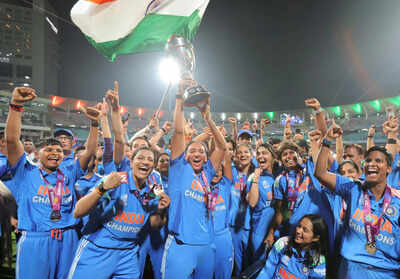
TOAST OF A NATION: The women’s team’s ODI World Cup victory was the high point for Indian sport in 2025 (Photo: Getty Images)

Lucknow: The biggest names in Indian sport will once again gather under one roof as the much-anticipated Times of India Sports Awards (TOISA) returns to Lucknow for the third consecutive time on Saturday, celebrating the inspiring journeys and achievements of the country’s finest athletes across multiple disciplines. Uttar Pradesh Chief Minister Yogi Adityanath will grace the occasion as a guest and hand over the trophies honouring achievers and emerging stars who made the nation proud over the past year. The event will be attended by sporting legends like PT Usha, Leander Paes, Mithali Raj, Madan Lal, Sandeep Patil and Sardar Singh, and other top athletes, coaches, administrators and guests from across the country, making it one of the most prestigious sporting evenings of the year. This edition of TOISA will recognise athletes across more than 45 categories, honouring performances during the Jan 1 to Dec 31, 2025 evaluation period. The wide range of categories ensures that excellence across mainstream as well as emerging sports disciplines is duly acknowledged. Having begun in 2015, TOISA completes a decade, and a special section will honour the best players of the past 10 years. Besides, there will be a special segment on the best player of the year from UP. For the last decade, para players have shown their mettle on fields and courts, bringing several laurels to the nation. To felicitate their talent, TOISA has 13 categories dedicated to para sports. A distinguished jury comprising eminent Indian sporting personalities — Abhinav Bindra, the country’s first individual Olympic gold medallist; tennis legend and Olympic medallist Leander Paes; PR Sreejesh, a two-time Olympic medallist; Devendra Jhajharia, a two-time Paralympic gold medallist; Mithali Raj, one of the greatest names in women’s cricket with over 10,000 international runs; and Sharath Kamal, India’s most decorated table tennis player with 13 Commonwealth Games medals — will select the winners. The jury faces a tough task in choosing from a star-studded list of nominees, as the past year witnessed several landmark achievements. Olympic champion Neeraj Chopra continued his remarkable run on the global stage with outstanding performances in the Diamond League, while shooter Samrat Rana clinched three medals, including two golds, at the World Shooting Championships held in Cairo, Egypt. Lakshya Sen has been one of India’s top performers in badminton for quite some time now. He recently contested the final of the All England Championships. The young shuttler is cruising towards etching his name among the game’s elite. Indian cricket also enjoyed a historic year. The India women’s national cricket team lifted their maiden ICC Women’s Cricket World Cup title on home soil, while the India men’s team captured both the ICC Champions Trophy and the Asia Cup. Smriti Mandhana’s World Cup-winning feat and her own performance were exceptional this year. She played a pivotal role in India’s historic win, scoring 434 runs overall, the maximum by any player. The Indian vice-captain scored a blistering 109-run innings against New Zealand and an 80-run innings against Australia, along with a crucial 45 runs in the final against South Africa. Another peach of a performance came from Deepti Sharma. This Agra girl’s all-round performance bagged her the Player of the Tournament award as well. In another remarkable feat, the India women’s blind cricket team became the first-ever champions of the Women’s Blind Cricket T20 World Cup. Beyond cricket, the India men’s hockey team triumphed at the Asia Cup, securing qualification for the 2026 FIH World Cup. Indian para-athletes also shone brightly at the World Para Athletics Championships, returning with a rich haul. Promising athletes like Vaibhav Sooryavanshi in cricket, Divya Deshmukh in chess, and Tanvi Sharma in badminton emerged as stars of the future. Through these honours, TOISA continues its mission of celebrating India’s sporting heroes, whose grit, dedication and excellence inspire India.

TOISA NOMINATIONS

Here are the nominees shortlisted for various categories by the illustrious TOISA jury, which includes icons like Abhinav Bindra, Mithali Raj and Leander Paes… BADMINTON (MALE) Lakshya Sen, Ayush Shetty, Kiran George, Chirag Shetty, Satwiksairaj Rankireddy BADMINTON (FEMALE) Tanvi Sharma, Unnati Hooda, Tressa Jolly, Gayatri Gopichand CRICKET (MALE) Shubman Gill, Abhishek Sharma, Ravindra Jadeja, KL Rahul, Varun Chakravarthy, Kuldeep Yadav CRICKET (FEMALE) Smriti Mandhana, Pratika Rawal, Jemimah Rodrigues, Deepti Sharma, Shafali Verma ATHLETICS (MALE) Neeraj Chopra, Animesh Kujur, Gulveer Singh, Sachin Yadav ATHLETICS (FEMALE) Parul Chaudhary, Rupal Chaudhary, Jyothi Yarraji, Pooja Singh EQUESTRIAN Ashish Limaye, Shruti Vora, Divyakriti Singh HOCKEY (MALE) Abhishek Nain, Harmanpreet Singh, Jugraj Singh, Amit Rohidas HOCKEY (FEMALE) Udita Duhan, Navneet Kaur, Mumtaz Khan, Rutuja Pisal SHOOTING (MALE) Samrat Rana, Ravinder Singh, Aishwary Pratap Singh Tomar, Anish, Varun Tomar, Rudrankksh Patil SHOOTING (FEMALE) Suruchi Inder Singh, Simranpreet Kaur, Esha Singh, Elavenil Valarivan, Sift Kaur Samra, Manu Bhaker CHESS (MALE) R Praggnanandhaa, Aravindh Chithambaram, P Iniyan, Nihal Sarin, Arjun Erigaisi CHESS (FEMALE) Divya Deshmukh, Koneru Humpy, R Vaishali, Nandhidhaa PV ARCHERY (MALE) Dhiraj Bommadevara, Abhishek Verma, Atanu Das, Prathamesh Fuge, Rishabh Yadav ARCHERY (FEMALE) Ankita Bhakat, Jyothi Surekha, Deepika Kumari, Prithika Pradeep BILLIARDS/SNOOKER Pankaj Advani, Aditya Mehta, Brijesh Damani WEIGHTLIFTING (MALE) Rishikanta Singh, Muthupandi Raja, Dilbag Singh, Lovepreet Singh WEIGHTLIFTING (FEMALE) Mirabai Chanu, Mehak Sharma, Bindyarani Devi WRESTLING (MALE) Sunil Kumar, Nitesh, Aman Sehrawat, Sujeet Kalkal WRESTLING (FEMALE) Antim Panghal, Manisha, Nisha Dahiya SQUASH (MALE) Abhay Singh, Saurav Ghosal, Velavan Senthilkumar, Mahesh Mangaonkar SQUASH (FEMALE) Anahat Singh, Joshna Chinappa, Dipika Pallikal Karthik, Tanvi Khanna TABLE TENNIS (MALE) Manav Thakkar, Sathiyan Gnanasekaran, Harmeet Desai, Payas Jain TABLE TENNIS (FEMALE) Manika Batra, Sreeja Akula, Diya Chitale, Ayhika Mukherjee TENNIS (MALE) Rohan Bopanna, Yuki Bhambri, Sumit Nagal TENNIS (FEMALE) Ankita Raina, Vaishnavi Adkar, Sahaja Yamalapalli FOOTBALL (MALE) Subhasish Bose, Sunil Chhetri, Vishal Kaith, Brison Fernandes, Gurpreet Singh Sandhu FOOTBALL (FEMALE) Soumya Guguloth, Grace Dangmei, Elangbam Panthoi Chanu, Manisha Kalyan, Pyari Xaxa KABADDI Sanju Devi, Pawan Sehrawat, Ritu Negi, Arjun Deshwal BOXING (MALE) Sachin Siwach, Hitesh Gulia, Pawan Bartwal, Ankush Panghal BOXING (FEMALE) Minakshi Hooda, Jaismine Lamboria, Nikhat Zareen, Pooja Rani SAILING Vishnu Saravanan, Zahaan Hemrajani, Abhimanyu Panwar, Ghashiayah A COACH OF THE YEAR Amol Majumdar (Cricket), Suresh Singh (Shooting), Ashok Kumar Rana (Shooting) PARA ARCHERY (MALE) Harvinder Singh, Vivek Chikara, Rakesh Kumar, Shyam Sunder Swami PARA ARCHERY (FEMALE) Sheetal Devi, Payal Nag, Jyoti Baliyan PARA ATHLETICS (MALE) Sumit Antil, Shailesh Kumar, Sandeep Kumar, Nishad Kumar PARA ATHLETICS (FEMALE) Simran Sharma, Preethi Pal, Ekta Bhyan, Deepthi Jeevanji PARA BADMINTON (MALE) Pramod Bhagat, Sukant Kadam, Krishna Nagar PARA BADMINTON (FEMALE) Mandeep Kaur, Manasi Joshi, Nithya Sre PARA CHESS Vaibhav Gautam, Samarth J Rao, Venkata Krishna Karthik K PARA JUDO Kapil Parmar, Avidha Sharma, Rahul Rajora, Kokila PARA SHOOTING (MALE) Bhat Amir Ahmad, Nihal Singh, Sandeep Kumar, Rudransh Khandelwal PARA SHOOTING (FEMALE) Mona Agarwal, Avani Lekhara, Rubi Kumari EMERGING SPORTSPERSON Tanvi Sharma (Badminton), Divya Deshmukh (Chess), Shree Charani (Cricket), Vaibhav Suryavanshi (Cricket) PARA SPORTSPERSON OF THE YEAR Sheetal Devi (Para Archery), Praveen Kumar (Para Athletics – High Jump), Preethi Pal (Para Athletics – Sprint), Sumit Antil (Para Athletics – Javelin) PARA COACH OF THE YEAR Dr. Satyapal Singh (Para Athletics), Subhash Rana (Para Shooting), Gaurav Khanna (Para Badminton), Sandhya Bharti (Para Taekwondo) TEAM OF THE YEAR India Women’s Cricket Team, India Men’s Cricket Team, India Men’s Hockey Team, India Men’s & Women’s Kabaddi Teams, India National Shooting Team, India Women’s Cricket Team for the Blind, India Squash Team, India Women’s Ice Hockey Team

Banner Insert


Cost concerns delay safe building codes despite Himalayan dangers

0
Cost concerns delay safe building codes despite Himalayan dangers


Are Risk to structures How high are the earthquakes expected in the Himalayas and north-eastern states? Scientists, structural engineers, representatives from several government ministries are expected to deliberate and report to the Cabinet Secretariat in the coming weeks.

This comes after the Bureau of Indian Standards (BIS) earlier this month ‘withdrew’ a set of updated norms that construction projects must follow to avoid collapse if hit by earthquakes.

A return signal was given – e.g. The Hindu Reported on 7 March – By an order of the Cabinet Secretariat, which stated that the new standards would “materially impact… ongoing and future infrastructure projects including metro rail projects” and “a holistic and comprehensive review of the revised IS 1893 should be conducted taking into account the viewpoint of all stakeholders.”

However, a decade of studies – commissioned and approved by the government – ​​and involving scientists from India’s most prestigious institutions specializing in geology, seismology, geotechnical engineering and structural engineering, are clear: the potential damage to all structures, whether residential buildings, bridges, industrial structures or water tanks, dams, power plants in the Himalayan states, far exceeds current risk assessments, which in turn are factored into existing building codes across the country.

four zones

IS 1893 ‘Criteria for Earthquake-Resistant Design of Structures’ is a five-part document published by the Bureau of Indian Standards (BIS) that provides mandatory guidelines that engineers and architects must follow to ensure that buildings and infrastructure can survive seismic activity.

Seismic zone maps of India delineate the country into four zones (Zones 2II, III 3, IV4 and V5). Zone 2 II is the quietest part of India’s seismic landscape. The ground beneath you may move significantly during your lifetime, but the forces involved are relatively minor. The 2016 version of India’s seismic zoning map – which was to be replaced by the now withdrawn 2025 incarnation – provides a design acceleration of 0.10 g in Zone II, meaning engineers expect the lateral force on a building during the strongest possible earthquake in the region to be no more than about 10% of gravity’s downward pull.

Due to increasing perception of earthquake risk, India’s earthquake zones were reduced with each subsequent revision. | Photo Credit: Journal of Earth System Science, Vol. 133, article no. 158, (2024)

Zone V is a fundamentally different proposition. The design acceleration is at least 0.36 g or three and a half times that of Zone II. At those forces, the ground is bending sideways with a force equal to one third of gravity. Unsecured furniture falls, people can’t stand without holding on to something, and buildings experience forces that can bend steel columns, shatter concrete, and cause floors to collapse on each other if not appropriately designed. This is the area assigned to the Himalayan front regions and parts of northeastern India – areas located directly on or adjacent to one of the most active tectonic plate boundaries on Earth, where the Indian Plate is subducting into the Eurasian Plate and where a magnitude 8 earthquake has occurred within living memory. These proportions – 10%, 36% – are usually expressed as 0.10 g and 0.36 g and are called ‘peak ground acceleration’ (PGA) values ​​in seismic zoning language.

At a distance of, say, 20 km from the fault – close enough to be in the zone of strong shaking, but not directly at the rupture – a magnitude 6 earthquake on the rock could produce PGA values ​​in the range of 0.15–0.30 g used. A magnitude 7 earthquake, which releases about 32 times as much energy over the same distance, would typically produce PGA values ​​in the range of 0.40 to 0.80 g. At very close distances, say 10 km, magnitude 7 can produce PGA values ​​greater than 1.0 g. So, the ratio for a one-unit increase in magnitude over the same distance is approximately a factor of 2.5 to 3.5 in PGA.

very conservative

2024 paper was in peer-review before BIS withdrawal Indian Journal of Earth System Sciences This fundamentally reversed how India had accounted for earthquake risk in building design since the 1960s. It proposed a new methodology for estimating earthquake hazard risk and brought it in line with calculations from the rest of the world and, essentially – and ultimately controversially – increased PGA values ​​under current building codes.

This was not a purely academic study: it was the result of a project launched in 2019 by the National Disaster Management Authority (NDMA), IIT-Madras and BIS, which aimed to bring India up to speed with the rest of the world and create a ‘potential hazard risk assessment map’ for India. It was preceded by two other projects, one in 2007–11 (funded by NDMA) and the other in 2013–17 funded by the Department of Science and Technology, both aimed at moving India’s earthquake hazard assessment towards a probabilistic framework.

The study was accepted by NDMA, following which its results were published by BIS as the 2025 update of the design earthquake hazard and zoning map of India in IS 1893 (Part 1) – which was later withdrawn.

The paper’s authors include scientists from some of India’s most prestigious institutions, including the IITs of Bombay and Madras, the Atomic Energy Regulatory Board and the Geological Survey of India.

“These PGA values have not been derived on the basis of any quantitative earthquake hazard assessment and are extremely low, especially for high seismicity zones. For example, the Himalayan plate boundary and areas of Northeast India that have the potential to generate earthquakes greater than magnitude 8.0 fall under Earthquake Zones IV and V with design PGA values of 0.24 and 0.36 g, respectively, while the Great Shillong Plateau earthquake of 1897 in North-East India resulted in PGA values are reported to be higher than 1.0 g,” reported in their study.

He argues that acceleration prices in India are very conservative by international standards.

“The design acceleration is considered to be two times (or more) in similar areas across the world compared to India’s current field map,” said a multi-author study led by researchers at IIT-Madras. Therefore, there is a need to revise India’s current earthquake-resistant design code based on an efficient quantitative technique such as hazard analysis, but it included several other authors from other institutions and organizations.

Government House in Shillong before and after the earthquake of 1897. | Photo Credit: Public Domain

barely a century old

In previous assessments, an area was assigned Zone IV or Zone V classification only retrospectively, that is, after it had experienced a significant earthquake. Nearby areas, which were often more susceptible, were considered to be at lower risk, even though evidence had built up over the decades that they were often areas of suppressed stress that had not been released.

The current structure also does not take into account local soil conditions, which can amplify waves radiating from the center, thereby increasing pressure on the building. It also overlooks a network of 168 monitoring stations, most of them in the Himalayas, which also relay data on small earthquakes of magnitude 2 and 3 and their associated energy waves from India’s neighbourhood, including Afghanistan and Xinjiang.

“The Earth is a dynamic system. Every 50 years or so, there is about a 10% change in PGA values. Age affects the human body, and so does the Earth,” said OP Mishra, former director of the National Center for Seismology (NCS), India’s official repository of earthquake data. “In a probabilistic assessment you take into account a variety of factors that can influence shocks and that serves as a reference point for builders… India has stated its commitment to be disaster resistant by 2047.”

Dr. Mishra was part of the BIS committee that revised the code.

The historical record of major earthquakes in India is extremely short relative to their recurrence intervals. The authors cite four major Himalayan earthquakes since the late 1800s – Shillong in 1897, Kangra in 1905, Bihar-Nepal in 1934, and Assam-Tibet in 1950. But these four events occurred on different segments of the plate boundary. According to the authors’ estimates, any individual segment may experience a major earthquake only once every 250 to 500 years. India’s instrumental seismic record is barely a century old, and the historical record, though long, is poor and incomplete. A 500-year recurrence event has a reasonable probability of occurring during the 50-year design life of a building (about 10%), but may not occur at all during the observation period available for a given fault segment.

There is no system to keep its accounts in the traditional approach.

‘Costs will increase’

More than 79% of India’s population lives under moderate to severe earthquake risk with approximately 57% of its land. By 2046, the urban population is projected to exceed the rural population, the study underlines the need for updated acceleration values.

The new map specifies PGA values ​​of 0.15 g, 0.3025 g, 0.4535 g, 0.605 g and 0.75 g for Zones II to VI, almost doubling the threat estimates in the higher zones and bringing them closer to internationally comparable zones. These are the values ​​that have troubled agencies like the Delhi Metro Rail Corporation and the National Dam Safety Authority.

The new map also introduces a fifth zone, Zone VI, for areas where PGA is estimated at more than 0.6 grams. It captures the most seismically active areas – parts of the Himalayan plate boundary and northeastern India – which were previously lumped together in Zone V at an inadequate 0.36 g. It is based on a far richer dataset and methodology than any predecessor: an earthquake catalog of 69,519 events spanning from 2600 BC to December 2019.

Raw area map of India. | Photo Credit: Journal of Earth System Science, Vol. 133, article no. 158, (2024)

“The estimates are scientific. However a figure like 0.75 grams represents the worst case scenario. Usually the practice is to halve the PGA value as representative of the potential and then, depending on the severity of the formation, the formation is planned,” said a government department official, who declined to be on record.

“Recent evidence shows that 95% of those who die in earthquakes are those who live in 1-3-storey houses that are inadequately designed,” said another scientist who was involved in the exercise, but also declined to be identified. “The 0.75 factor is also a low number. Although there are ongoing discussions about what adjustments can be made to the design, it is quite clear that the risks we have now calculated are close to reality.” Pakistan and Nepal use values ​​closer to 0.75 grams, this person said, and the United States and Japan routinely calculate values ​​of 1 gram or more, depending on the area at stake.

An NDMA official, who was aware of the developments surrounding the zoning map, said that the results of the scientific assessment were the result of “very pure science”. He said that although the NDMA had indeed considered the report, the difficulty that emerged was that the recommended acceleration values ​​were “too high” and would put considerable pressure on government public expenditure.

“On the one hand our position is that a large portion does not even follow the existing (2016) code. Then with these stringent figures, the cost of steel, cement will increase manifold – where there is money to build four schools or clinics in a village, only one will be built. Ultimately, this does not give freedom to builders to make their own assessments and calculate the PGA risks. It became too much of a theoretical exercise.”

NDMA did not respond to requests for official comment.

jacob.koshy@thehindu.co.in


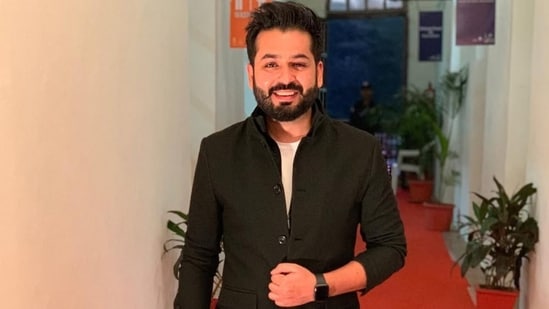
Aditya Dhar reacts to the massive success of his film Dhurandhar: ‘Thank you to those who believed in me’

0
Aditya Dhar reacts to the massive success of his film Dhurandhar: ‘Thank you to those who believed in me’


Following the success of Dhurandhar, its sequel, Dhurandhar The Revenge, led by Ranveer Singh, has struck a chord with audiences, registering a stellar opening at the box office. The film has been garnering widespread love, with viewers praising not just the performances but also its layered storytelling. Reacting to the wave of appreciation, director Aditya Dhar shared that he is deeply overwhelmed, especially by how viewers are noticing the film’s intricate detailing.

Aditya Dhar’s Dhurandhar The Revenge opened in theatres on March 19.

Aditya Dhar on film’s success

On Thursday, March 19, the makers hosted a special screening of the film in Mumbai, attended by the cast and crew. Following the event, actor Rakesh Bedi took to Instagram to share a video offering a peek into post-screening interactions. The clip also captured a moment where Aditya reflected on the journey of making the film and the response it has been receiving.

In the clip, Aditya is heard saying to the team, “Thank you to those who believed in me, starting from Jyoti Deshpande, and of course, my HODs, my cast members, actors, and everyone who has given their heart and soul to the film.”

“I am overwhelmed with all the responses coming in and even the memes. But I genuinely want to thank everyone for being here, supporting us, and being part of this journey. This wouldn’t have been possible without you. Thank you so much,” he added. The video is catching everyone’s attention on social media.

At this moment, Aditya’s wife and actor Yami Gautam was seen laughing at the whole conversation and wiping away her tears.

About Dhurandhar 2

Titled Dhurandhar The Revenge, the film is the sequel to the 2025 blockbuster Dhurandhar. The film was released worldwide on March 19. Apart from Ranveer, it also stars R Madhavan, Sanjay Dutt, Sara Arjun, Gaurav Gera and Arjun Rampal.

Dhurandhar was set in Lyari, Karachi, an area known for its history of gang wars and violent turf battles. It revolved around covert intelligence operations in the background of geopolitical and terror events like the Kandahar plane hijack, the 2001 Parliament Attack and the 26/11 Mumbai attacks.

The sequel delves into the origins of Ranveer Singh’s character, Hamza aka Jaskirat Singh Rangi, revealing the motivations behind his mission. It also takes the story forward, showing him taking control of the power dynamics in Lyari while working to dismantle a terror network in Pakistan that threatens India. The Aditya Dhar-directed film opened with earnings of ₹75 crore gross in paid previews, and minted ₹165 crore on release day. Till now, the film has raked in ₹230 crore (nett) in India.


Chahal quits alcohol to “take care“ of his body ahead of IPL

0
Chahal quits alcohol to “take care“ of his body ahead of IPL


Chahal quits alcohol to “take care“ of his body ahead of IPL

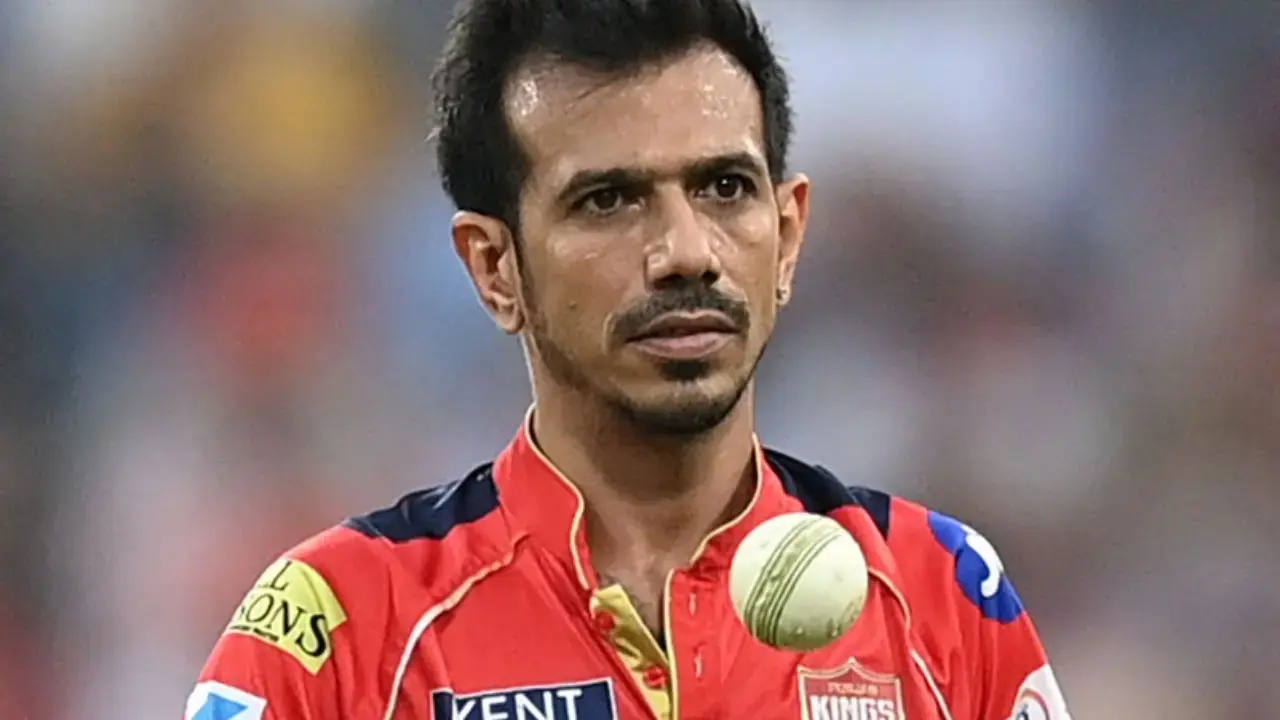
Yuzvendra Chahal has quit alcohol to become a fitter cricketer, allowing him to give his “150 per cent” for his franchise Punjab Kings in the IPL beginning on March 28.

Punjab Kings finished as runners-up in the previous edition. It was their first final appearance since 2014.

Speaking on South African great AB de Villiers` YouTube channel, Chahal revealed that he has not had alcohol in more than six months besides sharing his struggles with injuries last season.

“After the KKR [Kolkata Knight Riders] game, my hip got fractured and later in the tournament my knuckle got fractured. So in the semi-final [Qualifiers] and final, I was not able to bowl my proper legspin and all,” said Chahal.

“But this year I [wanted] to take care of my body first and I have one good news for you, I stopped alcohol. It`s been more than six months.

“Now, I`m 35, I want to be more active and give my 150 per cent for my team. As a senior bowler and senior player, people will see me [and think] `this guy, we have to learn something from him.`”

Chahal played 14 of the team`s 17 games last season, ending with 16 wickets at an economy rate of 9.56. Punjab Kings had shelled out Rs 18 crore for Chahal at the IPL 2025 mega auction.

He last played for India in 2023 and was part of the triumphant squad at the 2024 T20 World Cup but did not get to play.

Punjab Kings open their 2026 campaign against Gujarat Titans at home on March 31. 

This story has been sourced from a third party syndicated feed, agencies. Mid-day accepts no responsibility or liability for its dependability, trustworthiness, reliability and data of the text. Mid-day management/mid-day.com reserves the sole right to alter, delete or remove (without notice) the content in its absolute discretion for any reason whatsoever


Thick smoke billows from South Korea car parts plant in deadly fire

0
Thick smoke billows from South Korea car parts plant in deadly fire


Rescuers recovered the bodies of at least 10 people killed in a huge fire at a car parts plant in South Korea’s central city of Daejeon. Four others are still missing and 59 were injured.

Videos show huge flames and thick smoke pouring from the building, with firefighters struggling to contain the blaze.

Firefighters said they were unable to enter the structure earlier due to concerns it would collapse.

An overnight search operation began for those missing, after the building was deemed safe to enter. Authorities did not immediately confirm the cause of the blaze, but said it appeared to have spread rapidly.


'Grey’s Anatomy’ latest story gets compared to Izzie and Denny’s story

0
'Grey’s Anatomy’ latest story gets compared to Izzie and Denny’s story


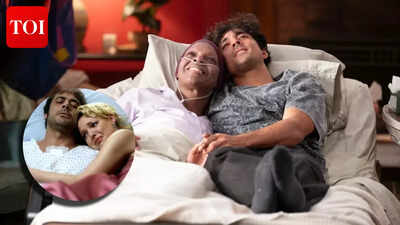
‘Yeah this one really hurt’: Fans compare the latest ‘Grey’s Anatomy’ plot of Izzie and Denny’s tragic storyline from season 2
Viewers of ‘Grey’s Anatomy’ are stirring up nostalgia and heartache as they compare the sorrowful end of Katie Rogers, a cancer patient, with resident Lucas Adams’s own emotional turmoil. This poignant storyline evokes the classic Izzie and Denny arc from the show’s second season, emphasizing how fleeting romance and the struggle to save a beloved can leave indelible scars.

One of the longest-running medical dramas, ‘Grey’s Anatomy’, continues to surprise fans even after years of twists and turns. Some of the latest episodes of the beloved show have now brought major turmoil for the fans, as Niko Terho’s character, Lucas Adams, suffered a major loss on the show. However, many fans could not help but find a lot of similarities between the latest tragic love story on the medical drama, to that of Izzie and Denny’s story from season 2. Read ahead to find out what fans of the beloved show have been saying.

Fans draw parallels between the latest death on ‘Grey’s Anatomy’ to Izzie and Denny’s storyline

In one of the recent episodes, one of the new residents, Lucas Adams, loses it after his love interest on the show passes away. The episodes leading up to this had shown a sweet love blossoming between Adams and one of the cancer patients in the hospital, Katie Rogers (played by Samantha Marie Ware). In one of the latest episodes of season 22 of ‘Grey’s Anatomy,’ Katie, who has been dealing with the last stages of gastric cancer, moves into the intern house. Lucas and Katie then lie in bed and talk about their life and ambitions, along with the kind of things they would have done if the circumstances had been different. As Lucas attempts to use medication to prolong Katie’s life, however, Simone tries to stop him and even hides medical supplies. As Lucas rushes to the hospital, it is too late, and when he comes back, Katie has already passed on.

Fan reactions to the scene in the show

After the latest episode of season 22 aired, many fans were distraught over the incomplete story. Many were quick to point out that the creators of the show pulled another “izzie and denny” while addressing Katie’s death and Lucas not being able to be there for her. Another fan posted a clip from the episode along with the caption, “i’m so sad they are pulling a denny and izzie AGAIN and they have so much chemistry #Greysanatomy.” Another netizen shared the same views and posted, “Yeah this one really hurt and cut deep like izzy and Denny level of pain.”

About Izzie and Denny’s storyline

In season 2 of ‘Grey’s Anatomy’, resident Izze (played by Katherine Heigl), comes across a cardiothoracic patient at the hospital named Denny (played by ). The two instantly click and fall for each other. As their romance blossoms, Denny’s health gets worse. In need of a new heart, Izzie does the unthinkable and cuts off his L-VAD wire to make his name move to the top of the transplant list. Although Denny can get the surgery, he has a stroke only a few hours later in his hospital bed. Izzie had gone to surprise him by wearing a prom dress; however, by the time she got ready and arrived, he was gone. This moment in the show was one of the most popular and historic scenes in ‘Grey’s Anatomy’, and fans could not help but notice the parallels between the two storylines.


IPL 2026: Rohit Sharma, Virat Kohli’s fight for relevance before 2027 WC | Cricket News

0
IPL 2026: Rohit Sharma, Virat Kohli’s fight for relevance before 2027 WC | Cricket News


IPL 2026: Rohit Sharma, Virat Kohli's fight for relevance before 2027 WC
Rohit Sharma and Virat Kohli (Agency Image)

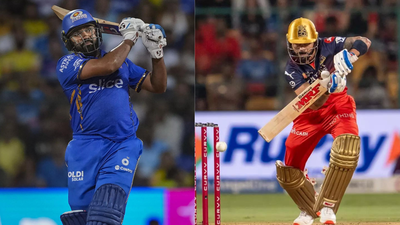
Quick quiz: Since the first T20 World Cup in 2007, how many players who played only ODI cricket have been part of a 50-over World Cup-winning side? Answer: None. In 2027, across Namibia, South Africa and Zimbabwe, Rohit and Kohli would love to change that. Assuming, of course, that they will be picked. Having retired from Tests and T20Is, they now occupy a curious space: giant names, shrinking game-time. Which is why this IPL matters so much. It is their most visible audition. If both want to convince a team management and selection panel that has become increasingly ruthless and pragmatic, they need to perform over the next eight weeks for Mumbai Indians and Royal Challengers Bengaluru, respectively. That may sound dramatic. After all, few players have achieved more. But the road to the 2027 ODI World Cup will not be paved by reputation or old highlights. It will depend on present-day form and fitness. Both remain in the conversation, with captain Shubman Gill and others indicating as much. The harder question is whether they can last that long. For Rohit, who turns 39 on April 30, and Kohli, now 37, this IPL is a fitness test-cum-batting examination. Both are now one-format cricketers. Both must show they can endure a long, high-intensity campaign and still be standing in 2027. Fitness, though, is only half the issue. Form, that fickle friend, is the other. Ask any Indian cricketer what they fear most and the answer is simple: being out of sight, out of mind. That is what makes this IPL so important for Rohit and Kohli. It puts them back in view after public attention was seized by the heroes of India’s T20 World Cup triumph. ODIs are increasingly rare. India last played a five-match ODI series in Feb–March 2019. For single-format players, one poor series can mean a long wait for another chance. Those gaps hurt batters most: rhythm fades, match sharpness dulls and every failure feels terminal. For them, every substantial IPL innings will be read as evidence — or the lack of it — that Rohit and Kohli are still moving well, reacting sharply and carrying the intensity top-level ODI cricket demands. And unlike the IPL, ODIs offer no impact substitute, the ultimate safety valve for sluggish movers. It remains a seven-hour test of endurance. Lazy analysis has caused us to hyphenate Rohit and Kohli’s careers. Acronyms like the nauseating “Ro-Ko” have only reinforced that. Yet, the stakes are higher for Rohit. His ODI legacy is secure but age and role now sit at the heart of the debate, especially with younger opening options available alongside Gill that offer greater athletic value in the field. Fan armies have dressed up Rohit’s loose dismissals as intent. His rollicking 20s and 30s were hailed as selflessness. But poor habits become more stubborn with age. They bled into his Test game too, accelerating both technical decline and his eventual exit from the format. This IPL, selectors and coach Gautam Gambhir will watch him closely. Can Rohit start with intent, pull quality pace without losing shape, run hard, field efficiently and maintain acceptable fitness through a long campaign? He has crossed 500 runs in an IPL season only once, in 2013. Another middling season and quiet murmurs could metamorphose into harsh verdicts. His last three ODI scores, remember, were 3, 11 and 24. Kohli’s case is different. He has been the defining white-ball batter of his generation and one of Indian sport’s great athletic specimens. What he is chasing now is not excellence but sustained relevance. Against South Africa and New Zealand, he showed greater willingness to attack early, looking for boundaries inside his first 10 balls. It suggested adaptation. Kohli had already mastered low-risk accumulation in ODIs; now he has garnished it with consistent urgency. That matters in the IPL, where strike rate and impact shape or destroy narratives. Kohli will want to show he can still dominate key bowlers and keep pace with the modern game’s demands. If he can combine control with carnage, his case remains strong. He has 11 IPL seasons of 400-plus runs and while many came at strike rates in the mid-120s, in each of his last three seasons it has risen to above 140. Last year, while batting first, his strike rate was 147.8, higher than his strike rate while chasing, 142.18. Since 2025, his ODI strike rate is 98.45, above his career mark of 93.41. Kohli also knows that when senior players try to stretch themselves into another World Cup cycle, selectors judge more than numbers. They look for hunger, energy and intent. The IPL, played under relentless scrutiny and offering instant, unforgiving public judgment, is the perfect stage for such examinations. The league has increasingly become a selection filter across formats in India — sometimes, disturbingly, even for Tests. For Rohit and Kohli, this season is more than a tournament. It is their ticket to relevance.

Banner Insert


Flipkart group CFO to leave co amid IPO plans

0
Flipkart group CFO to leave co amid IPO plans


Flipkart group CFO to leave co amid IPO plans

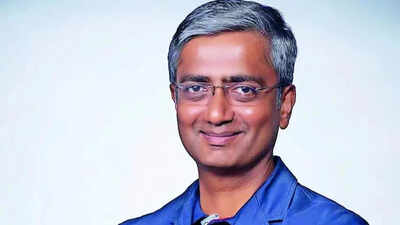
BENGALURU: Walmart-owned e-commerce firm Flipkart on Thursday said its group chief financial officer Sriram Venkataraman is quitting the firm as the company prepares for its next phase of growth and a potential public listing.Venkataraman will remain with the company for a period to ensure continuity and a smooth handover, Flipkart said. During this transition, Ravi Iyer will oversee the broader finance organisation.The move comes as Flipkart tightens its leadership structure ahead of a potential IPO, sharpening focus on profitability and scale. Flipkart group CEO Kalyan Krishnamurthy said Venkataraman played a key role in building and strengthening the finance function.