Tuesday, September 29, 2026
Home Blog Page 1180

The future of Africa will be shaped by investment rather than aid

0
The future of Africa will be shaped by investment rather than aid


In the mid-1990s the UN built an airstrip in Ngara, in the far west of Tanzania, to supply refugee camps near the border with Burundi. Three decades later it has a different use. Over the past year the airstrip has welcomed about a dozen planes filled with potential investors, not aid workers. After a recent flight that The Economist joined, the group boarded a fleet of 4x4s for a drive in convoy through this undulating, verdant part of east Africa, passing farmers swinging rusty hoes like golfers warming up at the tee.

Africa shifts from aid to investment as global and local capital flows into minerals, infrastructure and markets, signalling a new era of growth

After two hours the cavalcade reached its destination: Kabanga, home to one of the world’s prime untapped sources of nickel, a metal used in batteries for electric vehicles. Though geologists first discovered its potential 50 years ago, it is only now that the site may become a mine, under the majority ownership of Lifezone Metals, an American-listed firm.

That is partly because of renewed enthusiasm for African minerals. Kabanga is one of a number of projects that has attracted the attention of the American government, which is keen to invest in critical minerals. But the interest in Kabanga also reflects improvements in the surrounding infrastructure—such as grid connections to the site, tarmacked roads and a new railway—that have been funded, at least in part, by African financial institutions mobilising money from within the continent.

Kabanga is just one project in Tanzania, which is just one of Africa’s 54 countries. But it is emblematic of two broader shifts with potentially profound consequences. The first is that many foreign investors are taking a closer look at Africa, whether because of its natural resources, recent improvements in its economic outlook or favourable demographic changes. The second, more important shift is that Africans are doing more to make Africa investable and are increasingly putting their own money to work. This trend is personified by Aliko Dangote, the continent’s richest man, who, having opened a $20bn refinery in Nigeria in 2023, is eyeing projects elsewhere.

These shifts are nascent. The progress they signify could stall because of poor governance or the destabilising effects of a prolonged crisis like, if it drags on for months, the war in Iran. But after a quarter of a century when Africa was for many, at least in the West, synonymous with aid, the next 25 years will look very different. For more people both inside and outside the continent, Africa will mean business.

Continental shift

The growth of Africa will be one of the defining stories of this century. At present the continent accounts for about 20% of the global population, but just 3% of global GDP and 2% of worldwide trade—and it receives less than 1% of private capital. By 2050 Africa’s population may well have risen from 1.5bn to 2.5bn, taking its global share to 28%. But whether this proves a boom or a burden depends in part on the capital Africa can attract.

In 2024 Bridgewater, one of the world’s largest hedge funds, roughly estimated that sub-Saharan Africa had only half the “development financing resources”—tax revenues, aid, loans from multilateral institutions, foreign direct investment (FDI) and the like—that it requires for the sort of productivity gains that would narrow its gap with the rest of the world. The Africa Growth Initiative, an arm of the Brookings Institution, an American think-tank, estimates that sub-Saharan Africa needs $245bn in extra finance per year, or more than 10% of the region’s GDP.

For those skimming headlines about Africa, such a prospect may seem remote. Higher oil and fertiliser prices—both consequences of the war in Iran—will feed into African economies. Bilateral aid from Western donors to sub-Saharan Africa fell by as much as a quarter last year relative to 2024, according to the OECD, a club of mainly rich countries. China has gone from providing tens of billions of dollars in credit in the 2010s to now getting more in repayments than it extends in loans.

Yet the economic importance of aid can be easily exaggerated. The continent receives less in aid than it does in FDI and remittances (see chart 1). The IMF forecasts economic growth to be higher in Africa this year than in the Asia-Pacific region.

Optimism has been apparent in bond and equity markets. African sovereign debt has its highest average ratings since 2020, according to S&P, a credit-rating agency. The value of African “Eurobonds” (denominated in non-local currency) sold to foreign investors in the first part of 2026 marks the best start in a given year for the market since 2013, says Bloomberg. In 2025 several African stockmarkets, including South Africa’s, the continent’s largest, recorded record highs. (The Iran war has reversed some but not all of the gains.)

From 2022 to 2024 Africa attracted more greenfield FDI (going to new projects rather than acquiring, say, a mine already in operation) than did South-East Asia. FDI into COMESA, a group of 21 countries in east and southern Africa, saw the largest increase among any regional grouping globally in 2024. Venture-capital deals worth some $4bn were sealed in Africa in 2025, almost four times more than in 2020. The volume of private credit deals in Africa rose by almost a quarter. The value of inbound M&A deals into Africa was 40% higher in 2025 than in 2024, notes Herbert Smith Freehills Kramer, a law firm.

For some foreign investors Africa’s appeal remains its resources. America is trying to loosen China’s stranglehold on various critical minerals. Part of the solution lies in Africa, where the estimated worth of undeveloped mineral assets is $8.6trn, three times Africa’s GDP. “Without the African continent all is lost,” says Robert Friedland, the founder of Ivanhoe Mines, a Canadian firm that jointly operates one of Congo’s largest mines.

“The momentum is real and doesn’t come along very often,” says Chris Showalter, CEO of Lifezone Metals. In a sign of the new stress on “commercial diplomacy”, America has made it known to Samia Suluhu Hassan, Tanzania’s president, that its support for her is based on her ability to make progress on three projects: Kabanga, a graphite mine, and a liquefied natural gas (LNG) project involving ExxonMobil, an American energy giant.

In the Democratic Republic of Congo a fund backed by the American and Abu Dhabi governments is bidding for 40% of Glencore’s stakes in two mining operations. America is also supporting a bid by three former American military officers to buy Chemaf, a copper-cobalt asset.

Others are piling in, too. International Resources Holding, an Emirati conglomerate, bought a majority stake in a Zambian copper mine in 2024 and a tin mine in Congo in 2025. Also last year the Qatar Investment Authority, a sovereign-wealth fund, took a $500m stake in Ivanhoe, and Japan and India agreed to a partnership to invest in African minerals, among other things.

Though China is lending less, its firms are busier than ever. In November Guinea finally started operations at Simandou, one of the largest iron-ore projects in the world, backed by several Chinese firms and Rio Tinto, an Anglo-Australian mining giant. In the last two years Chinese firms bought a rare-earths project in Tanzania, a copper mine in Botswana and gold mines in Congo, Ghana and Ivory Coast. Kabanga has attracted interest from several Chinese companies. In August two Chinese firms bought tens of thousands of hectares in Angola to grow soyabeans and grain.

For Europe Africa offers chances to diversify its energy sources. In January TotalEnergies, a French energy giant, resumed construction of a $20bn LNG project in northern Mozambique. In February ENI, an Italian firm, announced two new African discoveries of oil and gas.

Gulf investment in Africa may decrease in the near term but the continent’s potential in logistics and food, two priority areas for Middle Eastern investors, will remain. Last year Saudi Arabia’s Public Investment Fund (PIF) paid $1.8bn for a controlling stake in Olam Agri, a Singaporean agribusiness firm with a big presence in Africa. Invictus, a Sudanese-Emirati agricultural trader, is expanding across the continent in an effort to rival Olam. Last year Vision Invest, a Saudi Arabian firm which is focused on infrastructure, took a stake in Arise IIP, which runs industrial sites (across 14 African countries) at which raw materials are used to make processed goods (such as cotton for T-shirts). In 2023 DP World, a ports and logistics firm based in Dubai took over the running of the port of Dar es Salaam, from which nickel from Kabanga would be exported.

Animal spirits

Other investments can be seen as bets on the world’s fastest urbanising region with its rising consumer class. Chinese firms are building apartment blocks in big cities like Dar es Salaam and Nairobi. Asahi, a Japanese beermaker with ageing customers at home, last year paid $2.3bn for a stake held by Diageo, a British distilling giant, in East African Breweries.

Venture capital in Africa, though a fraction of the global total, has helped produce several unicorns (companies valued over $1bn), including Flutterwave, a Nigerian payments firm, which reportedly expects to go public in the next few years. (The London Stock Exchange is trying to attract African listings as a way to boost its disappointing record of tech listings.) “Africa feels like Sweden 20 years ago,” says Hans Otterling, an investor who made a fortune via Spotify and now invests in Africa. “This is not charity. This is showing the rest of the world you can make money in Africa.”

There have been bursts of enthusiasm from foreign investors in Africa before. But the context this time is different. In part because of the shock of tariffs and aid cuts, African policymakers are doing more to open up their markets and reduce frictions between African countries. At the same time African capitalists are also spending more money at home. “The era of aid or free money is gone,” says Akinwumi Adesina, ex-president of the African Development Bank (AfDB). “Africa must now learn to develop via investment discipline.”

Part of the story is what individual countries are doing. South Africa’s liberalisation of its state-owned enterprises is attracting investment in its power and other industries. The spending by Tanzania that has made Kabanga a more enticing prospect—on roads, rail and energy—is a reminder of the steady progress in infrastructure in many places. From 2025 to 2029 more railways will be built in Africa than in the previous ten years, according to the Africa Finance Corporation, a Lagos-based outfit (see map).

Then there are continent-wide efforts to better integrate Africa’s labour, product and capital markets. Today 31 countries offer e-visas to other Africans, up from nine in 2016. The African Continental Free Trade Area (AfCFTA) would be the largest duty-free area in the world by number of inhabitants if fully implemented. It was first announced in 2012, but it is only recently that goods have actually been traded through a pilot project called the Guided Trade Initiative.

Separately, AfCFTA has streamlined rules around data and, via the Pan-African Payment and Settlement System, has also allowed many African firms using different currencies to trade without first having to exchange local currency into greenbacks. The World Bank estimates that full implementation of the AfCFTA could boost FDI by up to 120% and increase intra-African investment by 85%.

Mr Dangote has cited the potential of the AfCFTA as one of the reasons for his recent investments. At his refinery on the outskirts of Lagos, the main nerve centre resembles a NASA mission’s control room. More than 50 screens show the myriad elements of the complex: fuel refineries, a fertiliser plant and a polymer-processing facility. He tells The Economist he wants to expand both the fuel and fertiliser parts so they are the biggest in the world.

Last year he announced a $2.5bn fertiliser project in Ethiopia and $1bn-worth of deals in Zimbabwe. He then reels off a list of other potential schemes, including mining projects in central Africa and a vast industrial park in Nigeria that uses the gas produced from his refinery. “We believe in Africa, and we’re investing despite all the hurdles in Africa,” he says.

Rostam Azizi, a Tanzanian industrialist and another of Africa’s richest men, is busy making huge investments of his own. In August Africa’s largest liquefied petroleum gas (LPG) terminal, which Mr Azizi is building, is likely to begin operations in Kenya after years of delay. His firm, Taifa Group, also plans to invest $500m in Zambian industry in the next two years, starting with the supply and distribution of LPG. “We’ve got the gas and they need gas,” Mr Azizi says. “Soon they won’t need to worry about supply from anywhere else.”

Mr Dangote and Mr Azizi show how the most promising—and potentially consequential—development of all is the growth of African firms (see chart 2) and especially of their investments in Africa. For though it is foreign investors who are often blamed for seeing Africa as too risky, African investors have long been wary too. Many have tried to park their money in ostensibly safer places like Dubai. The more than $1trn in assets on the balance-sheets of pension funds, insurance funds and the like have long been skewed towards government bills and bonds.

Might this finally be changing? Richard Okello, the CEO of Sango Capital, a pan-African investor, argues that there is a “quiet tsunami” that has largely gone unnoticed, but “the waves are about to break”. A new batch of sovereign-wealth funds have mandates to invest in infrastructure. Hitherto sleepy pension funds are getting bigger, partly because of the compounding effects of time and demography (when fertility rates fall, as they are doing in Africa, savings rates tend to increase) and partly because of regulatory changes that are having a sneakily big impact.

Last year Kenya expanded tax relief on pension contributions, leading to an influx of deposits. Ghana mandated that 5% of its state pension fund’s investments go to private equity and venture capital. South Africa made similar changes two years earlier. Smaller funds, such as Uganda’s and Rwanda’s, are now making similar moves.

Nearly 50% of venture capital raised last year came from African investors. Initial public offerings outside South Africa, once a rarity, are becoming more common as institutional investors seek equity investments on the continent. Africa-focused infrastructure investors are also expanding. The Africa Finance Corporation increased its investments to $4.5bn last year, roughly $2bn more than its total in the previous two years, according to Samaila Zubairu, its CEO.

Mr Zubairu argues that his outfit meets the latent demand, inside and outside the continent, for an African investor who can set up deals that are ready to go, once financed. “Our view is that Africa has a lot of potential but not enough bankable projects,” he argues. His managers on the ground ensure that projects, whether wind farms, railways, smelters, gas plants or gold mines, have the infrastructure and regulatory approvals needed to get from blueprint to real-world operation. In projects such as the extension of the Lobito Corridor to Zambia (an American- and EU-backed railway that currently goes from Angola to the Congo copperbelt) his bank invests risk-bearing capital, so is on the hook for first losses. Yet he notes that his loan-loss ratio is 0.7%, towards the lower end of what is normal for global banks.

Better together

“If local capital invests, foreign capital follows,” says Hendrik du Toit, CEO of Ninety One, an Anglo-South African asset-management firm. These sorts of joint investments may increasingly be a part of Africa’s future. Hakainde Hichilema, Zambia’s president, and a former businessman (he is one of the few world leaders with an MBA), says there has been a “sea change” in how deals are done in Africa. Rather than things being done to Africa, as he puts it, deals are increasingly “partnerships”.

Some of the old-line investors in Africa, like development funds from rich countries that focus on boosting private firms in emerging markets, are already investing alongside African peers. In June British International Investment, Britain’s private-sector development arm, struck a deal to invest across Africa with South Africa’s Public Investment Corporation, one of the largest asset managers on the continent.

Anecdotally African fund managers also say there is a sense among some of their rich clients outside the continent that, when America is more volatile, Europe is ageing and China is slowing, Africa is worth a bit more of an allocation. The chaos in the Gulf may lead to a reassessment of its riskiness, too. It probably also helps that African investments tend to have low correlations with assets based in other countries. With increasingly active investment by Africans themselves, the time is ripe. “We’re showing people that, yes, OK, it can happen also here,” says Mr Dangote. “Because if we don’t, there’s nobody that can come and do it for us.”

Sign up to the Analysing Africa, a weekly newsletter that keeps you in the loop about the world’s youngest—and least understood—continent.

Dhurandhar 2: Gaurav Gera’s transformation wins fans, Ranvir Shorey reacts

0
Dhurandhar 2: Gaurav Gera’s transformation wins fans, Ranvir Shorey reacts


Dhurandhar 2: Gaurav Gera’s transformation wins fans, Ranvir Shorey reacts

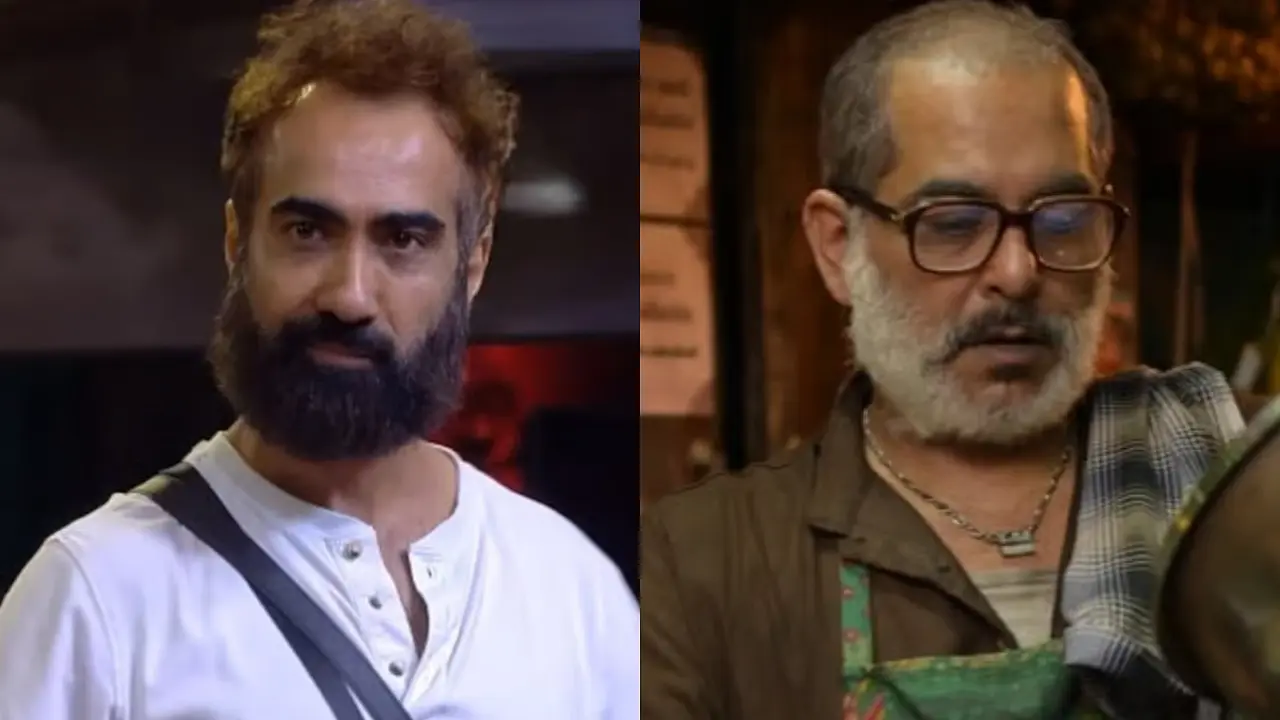
Actor Ranvir Shorey has come out in strong support of Gaurav Gera, calling him an “underrated” talent following the praise his performance in Dhurandhar 2 has been receiving from audiences.

The buzz around Gera’s role in the film has been steadily growing, with viewers appreciating his intense and unrecognisable transformation. Known largely for his comic timing and light-hearted characters, Gera surprised many by stepping into a darker, more layered role in the high-octane sequel. His performance has become one of the film’s talking points, with fans lauding his versatility and screen presence.

Ranvir Shorey showers praise for Gaurav Gera

Reacting to the appreciation pouring in, Ranvir Shorey took to social media to acknowledge Gera’s work. “He doesn’t get enough credit,” Shorey wrote, highlighting how the actor’s talent has often been overlooked despite consistently strong performances. His statement quickly resonated with fans, many of whom echoed the sentiment online.

Gaurav Gera, who plays a key role in Dhurandhar, had earlier surprised audiences with his transformation in the first installment as well. His portrayal of an intense handler marked a significant departure from his comic image, with the actor even staying away from social media to maintain the authenticity of his look and character.

In Dhurandhar 2: The Revenge, Gera’s character reportedly evolves further, adding depth to the film’s narrative. The sequel, directed by Aditya Dhar and headlined by Ranveer Singh, continues the high-stakes spy thriller storyline established in the first film.

Fans laud Gaurav Gera`s performance

Fans have particularly praised how Gera blends subtlety with intensity, delivering a performance that stands out amid a star-studded cast. Social media reactions suggest that many viewers were “blown away” by his transformation, with some even calling it one of the film’s most underrated aspects.

Shorey’s endorsement has only amplified the conversation, bringing renewed attention to Gera’s contribution. His remark reflects a broader sentiment within the industry, where actors known for comedy often struggle to be recognised for their dramatic abilities.

As Dhurandhar 2 continues to generate buzz, Gaurav Gera’s performance is emerging as a pleasant surprise for audiences. With growing appreciation and support from both fans and peers, the actor’s shift into more serious roles may mark a turning point in his career.

For many, Shorey’s words sum it up best—sometimes, it takes one standout performance for an “underrated” actor to finally get their due.


Vaibhav Sooryavanshi faces alarm bells as Pathan warns of Abhishek Sharma-like targeting: ‘How he adapts will be key’

0
Vaibhav Sooryavanshi faces alarm bells as Pathan warns of Abhishek Sharma-like targeting: ‘How he adapts will be key’


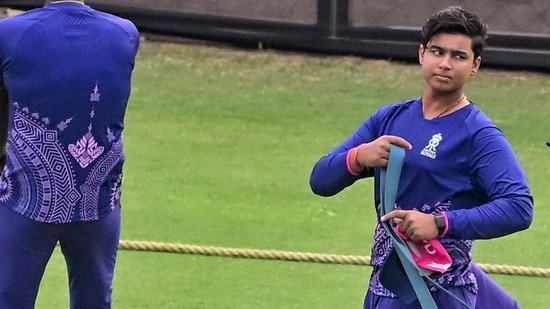
Vaibhav Sooryavanshi continues to draw attention, and at just 14, he has quickly become one of the most talked-about young names in the country. With the next IPL season approaching, the spotlight around him is only set to grow, bringing added expectations. The left-hander announced himself in stunning fashion, smashing a 35-ball hundred on debut against the Gujarat Titans, a knock that caught everyone by surprise. It was an innings that instantly put him on the map, and he continued the same in Under-19 cricket and played a key role in India’s title win. The swashbuckling opener smashed 175 off 80 balls in the final against England and ended the tournament with a record 30 sixes. However, with that kind of start, the focus will now be on how he handles the pressure and builds on it in the upcoming IPL season.

Vaibhav Sooryavanshi will be under spotlight in the upcoming IPL season. (PTI)

Former India all-rounder Irfan Pathan also underlined the need for the right guidance around Sooryavanshi, especially at such a young age, highlighting how crucial a steady mentor can be in shaping his journey, much like the role RR’s former coach Rahul Dravid played earlier.

“It is very important for Vaibhav Sooryavanshi to not let success or failure get to his head. It’s quite a sensitive age because he is just about 15 years old. At this stage, he potentially has a 20-year professional career ahead of him. In today’s time, where longevity is not always a priority and careers can be short, you can still achieve a lot in 6 to 8 years. But Vaibhav could have a much longer journey. Naturally, it is important that someone consistently stays with him as a guide, a good mentor who can support him over time, the role Rahul Dravid played last year,” Pathan said on JioStar’s ‘IPL Today Live’.

Also Read – ‘Virat Kohli will make it known to his critics’: Mohammad Kaif reckons Test retirement not been easy for RCB superstar

“Vaibhav Sooryavanshi must keep improving his game constantly”

Continuing on the same note, Pathan pointed out that Sooryavanshi will soon face smarter bowling plans and tougher tests, drawing parallels with the challenges Abhishek Sharma has encountered recently in the T20 World Cup.

“At the same time, he must keep improving his game constantly. It is possible that this season, teams may plan against him, like bowling consistently outside the off stump and keeping the ball away from his reach. He will need to counter that, even if it comes with the risk of getting out. Also, he might face the same challenges that Abhishek Sharma did, different types of bowling and constant variations in pace, so how he adapts and finds ways to score in those situations will be key,” he added.


Project Hail Mary early reviews: Is Ryan Gosling’s new film worth the hype? Here's what the internet thinks

0
Project Hail Mary early reviews: Is Ryan Gosling’s new film worth the hype? Here's what the internet thinks


There’s a new Ryan Gosling film in theatres—and no, it’s not a rom-com. Project Hail Mary is here, and early reactions suggest it might just be one of his most exciting projects yet.

Ryan Gosling in Project Hail Mary

About the movie

Directed by Phil Lord and Christopher Miller, the film sees Ryan step into the role of Ryland Grace, a middle school science teacher with a background in molecular biology who wakes up alone on a spaceship with no memory of how he got there. What follows is a high-stakes, science-heavy journey with flashes of humour that keep things engaging. Ryan himself has acknowledged, to BBC, that there is “dense science” in the film, but adds that the overarching “humour helps move [it] along”.

Netizens’ review

If early reviews are anything to go by, audiences are fully on board. The film has debuted at an impressive 95% on Rotten Tomatoes, and social media reactions are pouring in. One user wrote, “Another sci-fi win for Gosling. First Blade Runner 2049, now this? The man just knows how to pick a script. 95% is insane!” Another added, “Project Hail Mary was a solid film that is going to be unfairly compared to Interstellar for the rest of time.”

There’s more praise where that came from: “Project Hail Mary.. What a damn movie,” wrote one viewer, while another shared, “PROJECT HAIL MARY is a very entertaining time at the movies and Gosling solidifies for once and for all that he can open and lead a blockbuster.” Perhaps the most telling reaction? “project hail mary was so good i have a strong will to live for the next month or two.”

So, should you watch it? If you’re in the mood for a gripping sci-fi story that balances big ideas with entertainment—and a Gosling performance that’s clearly striking a chord, check it out in theatres on March 26.


Who are the Gulf’s military allies, and how are they helping in Iran war? | Drone Strikes News

0
Who are the Gulf’s military allies, and how are they helping in Iran war? | Drone Strikes News


Gulf countries are coming increasingly under attack from Iranian strikes as the United States-Israeli war on Iran continues to escalate.

On Friday, Saudi Arabia intercepted multiple waves of Iranian drones and Kuwait Petroleum Corporation said its Mina al-Ahmadi refinery had been targeted by several early-morning drone attacks, leading to some units being shut down.

Gulf countries have repeatedly insisted that their defences are sufficient to repel these Iranian strikes. However, they also have military partnerships and agreements in place with other countries which could potentially provide more assistance as tensions escalate.

In this explainer, we look at what these partnerships are, how they are helping the Gulf and whether they could do more.

What military partnerships do the Gulf countries have?

The Gulf countries have a handful of military partnerships of different kinds.

Qatar

Qatar is home to the largest military base hosting US assets and troops in the region – Al Udeid.

The 24-hectare (60-acre) base, located in the desert outside the capital Doha, was established in 1996 and is the forward headquarters for US Central Command, which directs US military operations in a huge swath of regional territory stretching from Egypt in the west to Kazakhstan in the east.

It houses the Qatar Emiri Air Force, the US Air Force, the United Kingdom’s Royal Air Force, as well as other foreign forces.

Qatar is the second largest Foreign Military Sales (FMS) partner to the US after Saudi Arabia. FMS is the official, government‑run channel the US uses to sell weapons, equipment and services to other governments.

In January, the US State Department said that “recent and significant” sales to Qatar included the Patriot long-range missile system, the National Advanced Surface to Air Missile System, early warning systems, radars and attack helicopters.

On September 9, 2025, Israel struck a residential area of Qatar’s capital, Doha, targeting senior leaders of Hamas including negotiators for a ceasefire in Israel’s genocidal war in Gaza.

On September 29, US President Donald Trump signed an executive order reaffirming support for Qatar, saying: “The United States shall regard any armed attack on the territory, sovereignty, or critical infrastructure of the State of Qatar as a threat to the peace and security of the United States.”

On Wednesday, Israel struck Iran’s critical South Pars gasfield. Soon after, Iran retaliated, hitting a major gas facility at Qatar’s Ras Laffan plant.

In response, Trump wrote in a Truth Social post guaranteeing that Israel would not attack the South Pars field again unless Iran again “unwisely” attacked Qatar.

Trump added that, if it did, the US “with or without the help or consent of Israel, will massively blow up the entirety of the South Pars Gas Field at an amount of strength and power that Iran has never seen or witnessed before”.

There is also a Turkish military base in Qatar as the two countries collaborate via defence cooperation agreements and joint training.

In recent years, Qatar has also strengthened ties with the United Kingdom through joint training and exercises and with France from which it buys weapons.

Earlier this month, UK Prime Minister Keir Starmer said he would send four additional Typhoon fighter jets to Qatar to help with defence.

Despite initially stating that the UK would not permit the US to use UK bases for strikes on Iran, Starmer partially relented on March 1 when he granted a US request to use UK bases for “defensive” strikes on Iranian capabilities.

Nevertheless, Starmer has stated that the UK will not send its own assets or troops or otherwise become involved in the ongoing war.

Saudi Arabia

Saudi Arabia hosts US military assets and personnel at the Prince Sultan Air Base (PSAB), located near Al Kharj, southeast of Riyadh.

Saudi Arabia is also the largest Foreign Military Sales (FMS) partner of the US.

There is no formal mutual‑defence treaty between the US and Saudi Arabia, similar to NATO’s Article 5. Instead, there are defence cooperation agreements between Riyadh and Washington.

Pakistan and Saudi Arabia have had a decades-long security partnership. This was strengthened in September 2025, when the two countries signed a formal mutual defence pact.

The extent to which Pakistan, which shares a 900-km (559 miles) border with Iran in its southwest, can and will intervene is unclear, however.

On March 3, Pakistan’s Deputy Prime Minister and Foreign Minister Ishaq Dar told a news conference he had personally reminded Iranian Foreign Minister Abbas Araghchi of Pakistan’s defence obligations to Saudi Arabia.

“We have a defence pact with Saudi Arabia, and the whole world knows about it,” Dar said. “I told the Iranian leadership to take care of our pact with Saudi Arabia.”

An estimated 1,500 to 2,000 Pakistani troops are stationed in Saudi Arabia.

United Arab Emirates

The UAE also hosts US assets and personnel at its Al-Dhafra airbase, including advanced aircraft such as F-22 Raptor stealth fighters and various surveillance planes, drones and airborne warning and control systems (AWACS).

On Thursday, the US announced a $8.4bn arms deal with the UAE, for the Gulf nation to buy drones, missiles, radar systems and F-16 aircraft.

Recently, the UAE has bolstered its military partnership with India. In January this year, President of the UAE, Sheikh Mohamed bin Zayed Al Nahyan, visited India.

During this meeting, India and the UAE re-affirmed the India-UAE Comprehensive Strategic Partnership. Established in 2017, this is a bilateral agreement focused on defence cooperation, energy security and technology exchange.

The UAE and India do not have a mutual defence-style agreement in place, however.

Oman

The US has long-term access agreements for key air and naval facilities in Oman, notably the Port of Duqm and Port of Salalah, both of which have been subject to Iranian strikes over the past three weeks.

The UK and Oman also have a defence cooperation agreement and conduct regular joint exercises.

Pakistan and Oman also have military ties where they hold regular joint naval exercises.

However, there are no mutual defence commitments in place.

Bahrain

The US operates the Naval Support Activity (NSA) in Bahrain. Home to the US Navy’s Fifth Fleet, the base provides security to ships, aircraft, detachments and remote sites in the region.

Bahrain and the UK also have a comprehensive security pact. Earlier this month, Starmer held talks with King Hamad bin Isa Al Khalifa of Bahrain and confirmed that the UK would send aircraft to bolster Bahrain’s security.

Kuwait

Kuwait hosts Camp Arifjan, a major US Army installation that functions as the main logistics, supply and command hub for US military operations across the Middle East, especially within the US Central Command (CENTCOM) area of responsibility.

On Thursday, the US announced an $8bn arms deal with Kuwait — for air and missile defence radar systems.

In 2023, Kuwait signed an agreement on military cooperation with Pakistan, focusing on joint training and military exercises.

These are not mutual defence agreements, however.

What could these partners be doing to better assist Gulf countries?

Experts say military allies of Gulf nations could provide naval escorts to ships transiting the Strait of Hormuz. One-fifth of the world’s oil and gas supplies are shipped through this route in peacetime from Gulf producers.

On March 2, Ebrahim Jabari, a senior adviser to the commander-in-chief of Iran’s Islamic Revolutionary Guard Corps (IRGC), announced that the Strait of Hormuz – through which 20 percent of the world’s oil and gas is transported – was “closed”. This has contributed to the recent surge in oil prices, which have surpassed $100 a barrel, compared to the pre-war Brent crude price of around $65.

In recent days, countries have been individually scrambling to negotiate safe passage for ships with Iran. A handful of mainly Indian, Pakistani and Chinese-flagged ships have been able to get through as a result.

“Pakistan and India are working with Iran to ensure of safe passage of tankers for their markets,” David Roberts, a senior academic in international security and Middle East studies at Kings College London, told Al Jazeera.

Roberts said that theoretically, the countries could also offer a naval escort for their tankers and other tankers.

“As neutrals, this might be a plausible gambit, but would need the acquiescence of Iran. Support establishing a shipping channel from the monarchies to China, Pakistan, India is plausible with concerted pressure from the three states, but Iran will be reluctant to give up that pressure point.”

Roberts said that European countries on the other hand, are “stretched thinly” when it comes to offering any such military support in the Strait of Hormuz.

He suggested the UK could send “another plane or two” to Qatar to join their joint Typhoon squadron. However, he added that it is difficult to make predictions about what support is likely to be forthcoming.

“Gulf states clearly need support. But it’s not clear what can be offered by anyone,” Roberts said.

He added they likely need more munitions for missile defence but stocks are tight everywhere.


‘We’ve looked at a few bowlers’: KKR reveal injured Harshit Rana replacement plan | Cricket News

0
‘We’ve looked at a few bowlers’: KKR reveal injured Harshit Rana replacement plan | Cricket News


'We've looked at a few bowlers': KKR reveal injured Harshit Rana replacement plan
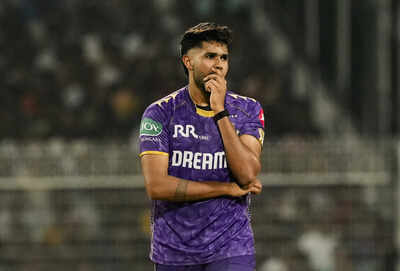
Harshit Rana (PTI Photo/Swapan Mahapatra)

NEW DELHI: Kolkata Knight Riders have been dealt a major setback ahead of IPL 2026, with key pacer Harshit Rana ruled out for the entire season due to a knee injury. The young fast bowler picked up the injury during a T20 World Cup warm-up match and has since undergone surgery, leaving the team scrambling to fill the gap.

Watch

Ajit Agarkar knocks BCCI door, makes a huge extension request | World Cup

Head coach Abhishek Nayar admitted Rana’s absence will be tough to handle, given his importance to the team in recent seasons.“It is a big blow because Harshit Rana has been an integral part of this team for the last couple of seasons, also the championship season. Over the last year, he’s really grown as a cricketer,” Nayar told reporters in the pre-season press conference.“We will always miss Harshit Rana, it’s not easy to replace him. But over the last few days, we’ve looked at a few bowlers as to who fits in and who can do that role to the best of their prowess. Hopefully, we’ll take a call in a couple of days,” he added.KKR have been trying out several pacers in training as they search for the right replacement.

More injury concerns for KKR?

To make matters worse, Sri Lankan pacer Matheesha Pathirana is also recovering from injury and is yet to be cleared to play, adding to KKR’s worries.However, there is some positive news around spinner Varun Chakravarthy. Despite an expensive outing in the T20 World Cup, captain Ajinkya Rahane backed him to bounce back.“I don’t see any problem with Varun’s bowling ability… In the T20 World Cup, opposition batters played him (Varun Chakravarthy) really well. Let’s give credit to them rather than talking about Varun,” Rahane said.“I think this 10-day break really helped him after especially coming after a high-intensity tournament to another high-intensity tournament,” Rahane added.With the season starting soon, KKR will hope to overcome these challenges quickly.

Banner Insert


What do the upcoming assembly elections mean for the four states? india news

0
What do the upcoming assembly elections mean for the four states? india news


New Delhi As the Election Commission of India (ECI) prepares for a hectic electoral process starting in April, Dhrubo Jyoti takes a look at the elections in those four states.

At 73, Mamata Banerjee has established a tight-knit and locally rooted political organization which she rules with an iron fist (AFP File)

west bengal

It is one of the most politically important states of India, but is also a state that has been ruled by only two parties for the last six decades. As West Bengal heads towards elections, history is pointing towards Mamata Banerjee vying for a fourth term in one of the most-watched elections this term. At 73, the Trinamool Congress chief has established a tight-knit and locally rooted political organization which she rules with an iron fist, a vital lever in a state with high levels of political violence. He has built a network of welfare schemes, which has strengthened his already strong base among the poor and women – especially in rural areas. And he has strategically leveraged regional pride and Bengali culture to portray the BJP as outsiders and reiterated that no one has a deeper grassroots connection with the state than his “didi”.

The challenge for the Bharatiya Janata Party is difficult but not invincible. The party has tried to get its domestic affairs in order – the state unit is notorious for factionalism – and the direct intervention of Union Home Minister Amit Shah and Prime Minister Narendra Modi’s massive rally at the Brigade Parade Ground this week will deflate it. The party will hope to emulate the 2019 Lok Sabha results – its best so far – when it won in 130 assembly constituencies (it won 18 Lok Sabha seats compared to TMC’s 22) and erase the losses of 2021 and 2024 (when it won 77 assembly constituencies and 12 Lok Sabha seats respectively). The party has established itself as the main opposition party, defeating the Congress and the Left. It has managed to bring its favorite issues – religious polarization, infiltration, appeasement, infrastructure development – ​​into the mainstream. But it continues to struggle to match the TMC’s organizational depth in Bengal’s vast rural areas and seat-rich TMC stronghold South Bengal. The party will hope to take advantage of the anti-incumbency wave in the economically struggling state, especially among the youth and urban areas. A strong performance and even a victory would mean a lot to Moon in the state where Jan Sangh founder Syama Prasad Mukherjee was born. It is expected that Banerjee’s appeal, corruption allegations and the controversy surrounding the special intensive review will leave its mark.

Tamil Nadu

Five years ago, when the Dravida Munnetra Kazhagam (DMK) came to power in Tamil Nadu after being out for a decade, it seemed the party was set to dominate one of India’s most prosperous states for a long time. Its leader, Chief Minister MK Stalin, had a much bigger stature than the handful of leaders who were trying (unsuccessfully) to fill the political void left by then All India Anna Dravida Munnetra Kazhagam chief J Jayalalithaa, who died in 2016.

But as the southern state heads to the polls this summer, the race appears closer than initially thought. Driven by Union Home Minister Amit Shah, the National Democratic Alliance (NDA) has managed to put together an alliance that looks formidable, at least numerically, even if it lacks something in chemistry, its chief ministerial face, E Palaniswami, has a reputation for being an able administrator, and the party continues to retain its base in the western part of the state and among the Gounders.

The DMK-led alliance, which has won the 2019 and 2024 Lok Sabha elections, is particularly strong and boosted by Stalin, who remains the tallest leader in the state. But many party MLAs are deeply unpopular, allegations of corruption and poor governance are rife, and the second-tier leadership is almost non-existent despite the party promoting Udhayanidhi Stalin. It has attempted to broaden its coalition by bringing on board many smaller, caste-based organizations and strengthening its hold on influential communities such as Dalits. A tough fight is expected in the southern parts of the state and for support for groups like Mukkulathor, which is sharply divided.

A third factor, actor-turned-politician Vijay, threatens to complicate the calculations in a state where politics has held little sway beyond the two Dravidian chieftains. Vijay hopes to build on his cult following among the youth, especially men, but his party, TVK, has neither a declared agenda nor a grassroots network. In such a situation, his fate may be like that of Prashant Kishor, who was welcomed by the media before the Bihar elections, but later became irrelevant. But in a close contest all bets are off.

Kerala

It is not everyday that both the major forces contesting elections in a major Indian state are fighting for their existence. Yet, this is exactly the pre-poll scenario in Kerala. It is the only state controlled by the Left, which has failed to expand elsewhere in the country or capture its previous strongholds of West Bengal or Tripura. Reshaping the image of Chief Minister Pinarayi Vijayan, the cadre-based party will be hoping for a repeat of the 2021 upset, when it flipped the script in the state, where power alternated between the LDF and the Congress-led United Democratic Front, and won. However, it is not looking easy for Vijayan to score a hat-trick. The party has been dogged by corruption allegations – notably the scams involving the alleged theft of temple gold at Sabarimala and the Karuvannur Service Co-operative Bank case. There is no second level visible in the party, which has also faced defeat in the recent local body elections.

In general, this should mean a smooth road for the UDF. But in typical fashion, the Congress already has too many contenders for the chief minister’s post – without winning anything. Prominent among them are state opposition leader VD Satheesan and senior leader Ramesh Chennithala. The party is battling internal strife and completing the seat agreement within the front may be a challenge. After being out of power for a decade, the Morcha is also fighting with all its might. Another defeat could mean that the Bharatiya Janata Party starts trying hard for the main opposition post.

What about BJP? The party has made every possible effort to ensure that it can carry forward its performance in the Lok Sabha, where it won its first parliamentary seat in the state, and more importantly, got almost a fifth of the votes. She hopes to improve her vote tally by one in 2016 and capture a larger share of Christian and Nair votes. Much will depend on how the influential Ezhava vote fares.

Assam

Few major states in India have been shaped in the image of the Chief Minister, like Assam. Himanta Biswa Sarma attempts to wear many hats – master strategist, defender of indigenous Assamese, capable administrator and controversial leader. More than anything else, the election is going to be a referendum on the five-year rule of a man who has handed over the Northeast to the BJP but also alienated a large part of his state with his controversial comments about undocumented immigrants. In a border state with a turbulent history of infiltration and violent movements that have resulted in massacres, cross-border migration remains an emotive and volatile issue and Sarma has attempted to stoke rifts in his coalition by escalating rhetoric against those he derisively calls “Miyas” – or Bengali-speaking Muslims. The party is hoping for a third consecutive victory on promises of infrastructure, a controversial eviction drive that has forced thousands of people to live in temporary camps, and granting Scheduled Tribe status to six communities.

On the other side stands Gaurav Gogoi, whose father Tarun Gogoi – also Sarma’s former mentor – was the last person to win three consecutive elections in Assam. The 43-year-old leader is relatively inexperienced and is struggling with the chief minister’s attempts to link him to Pakistan. He will be encouraged by the fact that anti-incumbency and corruption may work in Congress’ favor and by the fact that there are signs of fatigue in Upper Assam, from where Gaurav Gogoi won the Jorhat Lok Sabha seat two years ago even though the Chief Minister personally campaigned against him. The party is trying hard to avoid any polarization in a state where communal and regional politics are often volatile. Also important will be the performance of the All India United Democratic Front, run by perfume baron Badruddin Ajmal, which once had a strong base in lower Assam but has faded in recent times. It is expected that the contentious delimitation of seats in Assam – this is the first assembly election after the 2023 exercise – will also shape the elections.


‘Ranveer, you’re better than this’: Ramya slams Aditya Dhar’s direction, use of ‘violence and jingoism’ in Dhurandhar 2

0
‘Ranveer, you’re better than this’: Ramya slams Aditya Dhar’s direction, use of ‘violence and jingoism’ in Dhurandhar 2


Former Lok Sabha MP and actor Ramya didn’t hold back after watching Aditya Dhar‘s Dhurandhar: The Revenge (Dhurandhar 2) starring Ranveer Singh, in theatres following its March 19 release. Taking to her X (formerly Twitter) on 20 March, she advised viewers to skip the film in cinemas, save their money and time, and wait for its post-theatrical OTT release.

Ramya expressed disappointment in Dhurandhar 2, labelling it a snoozefest and urging Ranveer Singh to do better.

Ramya slams Dhurandhar’s direction, dialogues

Ramya slammed the film’s direction, dialogues, editing, background score, and performances, calling them “consistently subpar.” She suggested it felt as if the makers either ignored the March 19 release deadline or knowingly rushed it: “Haan perfect hai, bhej do” (Yes, it’s perfect, just send it), she wrote.

Commenting on Ranveer’s performance, she added, “To everyone saying it’s Ranveer carrying the film, what exactly is he carrying? Because all I could see was his hair. In the first part, his hair had personality, presence, character. In this one, it’s just there. In the way. Of everything. Blocking scenes. Possibly eligible for a supporting role nomination.”

Ramya questions extreme violence in the film

Ramya also criticised the film’s extreme violence, describing it as a “visual handbook” on creative ways to weaponise ordinary objects. “Syringe? Used. Spanner? Used. Knives, spiked balls, machetes, reapers, chains, guns, bombs, bazookas, shutters, you name it, they’ve weaponised it,” she wrote.

She added that director Aditya Dhar seemed in constant competition with himself to make each scene more violent or comical than the last, noting that the escalation eventually stops shocking and becomes unintentionally hilarious. Questioning the exaggerated action, she quipped, “Even after chopping off both legs and soaking a torso in kerosene, the character is still delivering dialogues like he is in the middle of a TED Talk. Medical science, zindabad. Forget Oscar, Nobel Prize incoming.”

Concluding her critique, Ramya called Dhurandhar 2 “a HUGE disappointment. Snoozefest/comedy at best,” and added, “If Part 1 made you cheer, this one will make you question why. Dhurandhar 2 why? Ranveer, you’re better than this. Aditya Dhar-jingoism and propaganda is so passé. Get over it.”

Dhurandhar’s box office collection

Dhurandhar: The Revenge has opened to record-breaking box-office numbers. The Ranveer Singh starrer grossed over ₹100 crore in India on its first day, with total domestic earnings surpassing ₹145 crore, including paid previews, making it one of the biggest openings for a Hindi film in recent times.


Opinion | Why Generic Ozempic is a game changer for China and India

0
Opinion | Why Generic Ozempic is a game changer for China and India


The simultaneous patent expiry of Ozempic’s active ingredient in China and India on Friday is a watershed moment. Until now, the revolutionary weight-loss drugs have been available largely to people with means. The entry of affordable generic versions will be a leveling force in healthcare, with global consequences.

Ozempic went viral for helping people lose weight after being introduced as a diabetes injection in 2018. (AP)

That’s because the world’s two most-populous countries aren’t just consumers. They also have pharmaceutical firms capable of exploiting this moment to reshape the market for metabolic therapies—and affecting the earnings of incumbents Novo Nordisk A/S and Eli Lilly & Co. The process is driven by the demands of large homegrown populations suffering from chronic ailments like obesity and diabetes that can be treated with these new cheap medicines that mimic the effect of the natural hormone glucagon-like peptide-1 (GLP-1), which regulates appetite and blood sugar.

By far the biggest benefits would accrue to public health. According to the Lancet, China had 402 million people living with obesity five years ago. That number will grow 56% by 2050 to nearly half the population. India had 180 million individuals with the disease in 2021, with the figure expected to more than double to 450 million in about 25 years. Obesity is known to increase the risks of diabetes, coronary artery disease, hypertension, stroke, and other health conditions.

While Novo Nordisk has slashed the price of Wegovy—which uses semaglutide, the same ingredient in Ozempic—in China and India in anticipation of the patent loss, its offerings are still too expensive for most people. In China, where weight-loss drugs fall outside insurance coverage, price will be the decisive factor in whether millions begin medical treatment.

Many diabetes patients are managing their condition with older, less effective medications. Switching to generic semaglutide could result in superior glycemic and weight control, reducing the risk of long-term complications, Nadim Anwer, pharma analyst at GlobalData, told me. Competition could bring prices down to $50 a month, compared to hundreds of dollars in the West.

China has more than 10 companies, including CSPC Pharmaceutical Group Ltd. and Huisheng Biopharmaceutical, developing generic versions. Local media say it will take another half year for the medicines to be available. India is expected to have dozens of options within months.

Even if the drugs are a game changer, they’re not a silver bullet. And they can be tricky to get right. The medicines have been associated with loss of muscle mass and even malnutrition. There’s a question mark about depression. Countries need to train health workers to deliver long-term care to support the treatment and invest in prevention by encouraging exercise and proper nutrition, according to Johanna Ralston, chief executive of the World Obesity Federation. China and India’s chronically short-staffed, under-funded healthcare systems may struggle to do that, but they must commit to comprehensive care if the drugs become widely available.

What’s more straightforward about these medicines is potential commercial opportunity. Even though China did not originate GLP-1 treatments, it already dominates the research pipeline, with more than 100 drugs in development, around 40% of the global total, according to Citeline’s Pharmaprojects. Over the past two years, therapies originating from China have comprised the majority of global GLP-1-related dealmaking by both value and deal volume. In fact, Pfizer Inc. will soon enter the market for weight-loss drugs after years of trying—by licensing a Chinese product after its own efforts fell flat.

This is not a surprise for those watching the trajectory of China’s pharmaceutical development. Over the past five years, drugmakers have started introducing experimental therapies and signing multibillion-dollar licensing deals to bring them to global markets. Established companies are looking for shortcuts to expand their offerings—since many are facing an upcoming so-called “revenue cliff” with lucrative patents on blockbuster drugs expiring.

And because the patent for semaglutide has already expired in Canada and is poised to do so in Brazil and Turkey, Chinese and Indian generics could become major players if they receive regulatory approval. With China already the world’s biggest supplier of active pharmaceutical ingredients, the components in drugs that produce the intended therapeutic effects, its suppliers can make money in those markets, too.

Ozempic went viral for helping people lose weight after being introduced as a diabetes injection in 2018. The sheer effectiveness of this class of drugs has advanced the idea that obesity is a chronic disease. Now affordable generics won’t only make them more widely available, but also give Asian drugmakers a bigger slice of the growing business.

This column reflects the personal views of the author and does not necessarily reflect the opinion of the editorial board or Bloomberg LP and its owners.

Juliana Liu is a columnist for Bloomberg Opinion’s Asia team, covering corporate strategy and management in the region. She was previously CNN’s senior business editor for Asia, and a correspondent at BBC News and Reuters.


WATCH: Virat Kohli gears up to defend RCB`s title ahead of IPL 2026

0
WATCH: Virat Kohli gears up to defend RCB`s title ahead of IPL 2026


WATCH: Virat Kohli gears up to defend RCB`s title ahead of IPL 2026

The upcoming edition of the Indian Premier League (IPL) is all set to kick off from March 28. So far, the schedule of only first 20 matches has been released due to state elections.

Ahead of the league, Royal Challengers Bengaluru`s (RCB) stalwart Virat Kohli has started practising in the nets.

The team clinched the elusive title in the previous edition and will be looking to defend its title this year.

Kohli, who has three back-to-back seasons with 600-plus runs, will be looking to have another big campaign. His contributions will be crucial for the Bengaluru-based franchise.

In the last season, Virat scored 657 runs in 15 innings at an average of 54.75 and a strike rate of 144.71, with eight fifties to his name, finishing as the team`s leading run-getter and third-highest run-getter overall.

RCB shared a post on its official social media handle, in which the right-handed batsman is seen showcasing big hits.

The 37-year-old cricketer is also the leading run-scorer in the history of the tournament. So far, having made 267 appearances in the league, Kohli has smashed 8661 runs, with a top score of an unbeaten 113 runs. He also has eight tons and 63 half-centuries to his name.

Additionally, having made 13,543 runs in 414 T20Is, including nine centuries and 105 fifties, Virat will also be aiming to join West Indies titans Chris Gayle (14,562 runs), Kieron Pollard (14,482 runs), England`s Alex Hales (14,449 runs), and Australian legend David Warner (14,028 runs) as the fifth member of the 14,000-run club in T20 cricket.

IPL 2026, Opening match: Date and venue

Royal Challengers Bengaluru (RCB) will begin their IPL 2026 campaign by playing a clash against Sunrisers Hyderabad (SRH) at the M. Chinnaswamy Stadium in Bengaluru.

Earlier, the Karnataka State Cricket Association (KSCA) Secretary, Santosh Menon, confirmed that the M. Chinnaswamy Stadium will host five of the RCB`s IPL 2026 home games. The venue will also host one of the play-off matches and the title clash of the tournament.

Bengaluru`s remaining two home matches will be played at the Shaheed Veer Narayan Singh International Cricket Stadium in Raipur, Chhattisgarh.

(With ANI Inputs)