Tuesday, September 29, 2026
Home Blog Page 1185

Yami Gautam to star in horror-comedy Nayyi Navelli

0
Yami Gautam to star in horror-comedy Nayyi Navelli


Yami Gautam to star in horror-comedy ‘Nayyi Navelli’, theatrical run before OTT premiere
Yami Gautam headlines horror-comedy Nayyi Navelli, announced at a Prime Video event. The tale of a “perfect” bride turning sinister in Meerut hits theaters soon, then Prime Video. Produced by Aanand L Rai’s Colour Yellow, directed by Balaji Mohan. Shooting starts Feb 2026.

Yami Gautam will headline the horror-comedy ‘Nayyi Navelli’. The announcement came during a special event. Blending horror with humor, the film promises a fresh cinematic experience in theaters. It will later premiere on OTT after its theatrical run.

Yami Gautam shares ‘Nayyi Navelli’ synopsis

On Instagram, the actress revealed her upcoming project with full specifics. She posted the synopsis: “Nayyi Navelli: A picture-perfect bride transforms a chaotic Meerut household into a slice of heaven…until her brother-in-law suspects that things may not be as perfect as they seem! The ideal bahu could very well be an evil force from an outer world!! Can this family survive her? #NayyiNavelli releasing at your nearest cinemas soon #ItStartsHere Production Company: Colour Yellow, Producers: Aanand L Rai, Himanshu Sharma, Director: Balaji Mohan, Writers: Himanshu Sharma, Divy Nidhi Sharma, Key Cast: Yami Gautam Dhar.” The post sparked buzz among fans.

Yami Gautam teams with Aanand L Rai for ‘Nayyi Navelli’

Earlier reports indicated the project is in pre-production and will be Yami Gautam’s first team-up with Aanand L Rai. As per Mid-Day, she headlines the horror-comedy ‘Nayi Naveli’, produced by Aanand L Rai’s Colour Yellow Productions. Drawing from Indian folklore, the film is slated to begin shooting in February 2026.

‘Nayyi Navelli’ plot centers on Yami Gautam’s bride

The film’s press release states that Nayyi Navelli centers on a picture-perfect bride who restores harmony to a chaotic Meerut household, until her brother-in-law suspects all isn’t as ideal as it seems. It hints the apparent perfect bahu might be a sinister otherworldly force, leaving the family to wonder if they can survive her.‘Nayyi Navelli’ is produced by Aanand L Rai and Himanshu Sharma. Balaji Mohan directs, with writing by Himanshu Sharma and Divy Nidhi; Yami Gautam stars in the lead. It will stream on Prime Video.


Dhurandhar 2: Did you spot Arijit Singh`s song Phir Se ft. Ranveer Singh?

0
Dhurandhar 2: Did you spot Arijit Singh`s song Phir Se ft. Ranveer Singh?


Dhurandhar 2: Did you spot Arijit Singh`s song Phir Se ft. Ranveer Singh?

After stepping away from playback singing earlier this year, Arijit Singh has once again stirred emotions among fans with his latest track from Dhurandhar 2. The song, which marks one of his rare releases post his announcement, has left listeners deeply moved, with many calling it a reminder of why his voice remains unmatched.

Arijit Singh`s song Phir Se makes waves in Dhurandhar 2

Earlier in January, Arijit shocked the music industry by announcing that he would no longer take up new playback assignments. In a heartfelt note, he wrote, “I am not going to take any new assignments… I am calling it off. It was a wonderful journey.” The decision marked the end of an era for Bollywood music, where his voice had become synonymous with emotion and romance.

Despite stepping back from films, Arijit has continued to explore music on his own terms. His latest track from Dhurandhar 2 reflects that shift. Fans have taken to social media to express how the song made them emotional, with many saying it brought them to tears and reminded them of his golden era in playback singing.

Fans call it soul stirring track

Listeners described the track as “heartbreaking” and “soul-stirring,” praising the singer’s ability to convey raw emotion through his voice. Several fans noted that even after his decision to quit playback singing, his music continues to resonate deeply, proving his lasting impact on audiences.

The response highlights how strongly Arijit’s music connects with people. Even without actively working in the mainstream playback space, his songs continue to dominate conversations and evoke powerful reactions. His ability to deliver emotionally rich performances remains intact, regardless of the platform.

While he may have stepped away from traditional Bollywood assignments, Arijit has made it clear that he is not done with music. His focus appears to be shifting toward independent projects and more personal artistic expression, allowing him greater creative freedom.

The success and emotional reception of the Dhurandhar 2 track underline this transition. It shows that even outside the conventional system, Arijit Singh’s voice continues to hold immense power.

As fans continue to revisit his songs and celebrate his new releases, one thing is certain, whether in films or beyond, Arijit Singh’s music will keep striking a chord.


IPL 2026: Rishabh Pant impressed with Bharat Arun`s impact on LSG bowling

0
IPL 2026: Rishabh Pant impressed with Bharat Arun`s impact on LSG bowling


IPL 2026: Rishabh Pant impressed with Bharat Arun`s impact on LSG bowling

Before the Indian Premier League (IPL) 2026, Lucknow Super Giants (LSG) skipper Rishabh Pant discussed the team`s preseason training and highlighted the importance of Bharat Arun`s appointment as the team`s new bowling coach.

“The camp with the fast bowlers has been fantastic. Bharat Arun, sir, has come on board, and since he arrived, he has been adding a lot of value. We`ve had a lot of conversations about what I want from the bowlers and what he thinks he can add. The energy is pure. He is one of the best bowling coaches, and I have that trust, having worked with him when he was with the Indian cricket team,” Pant said, speaking on JioStar.

Pant added that Arun`s knowledge and interaction with bowlers are essential for boosting confidence and enhancing performance. The LSG skipper believes that the bowling line-up was not up to the mark last season.

“He brings that experience. The bowlers trust him and open up to him, which is exactly what you want from a bowling coach, adding value to the system. When we look back at last season, we felt we needed to add more to our bowling. He is definitely someone who can contribute a lot in that area, and I am really happy to have him.” Pant added.

The Pant-led LSG will start their IPL 2026 season campaign on April 1 against the Delhi Capitals. They will then play Sunrisers Hyderabad on April 5, Kolkata Knight Riders on April 9, and Gujarat Titans on April 12 in the first phase. LSG will hope to win their maiden IPL title during the 2026 season.

The IPL 2026 will kick off on March 28 with defending champions Royal Challengers Bengaluru taking on the Sunrisers Hyderabad in Bengaluru. 

Lucknow Super Giants squad for IPL 2026

Rishabh Pant (captain), Aiden Markram, Himmat Singh, Matthew Breetzke, Mukul Choudhary, Akshat Raghuwanshi, Josh Inglis, Nicholas Pooran, Mitchell Marsh, Abdul Samad, Shahbaz Ahamad, Arshin Kulkarni, Wanindu Hasaranga, Ayush Badoni, Mohammad Shami, Avesh Khan, M. Siddharth, Digvesh Singh, Akash Singh, Prince Yadav, Arjun Tendulkar, Anrich Nortje, Naman Tiwari, Mayank Yadav, Mohsin Khan. 

(With ANI Input)


LPG crisis: India turns to US to secure supplies as Strait of Hormuz disruptions continue to bite; shipments rise

0
LPG crisis: India turns to US to secure supplies as Strait of Hormuz disruptions continue to bite; shipments rise


LPG crisis: India turns to US to secure supplies as Strait of Hormuz disruptions continue to bite; shipments rise
There is a chance that North American LPG will gain a stronger foothold in the Indian import mix. (AI image)

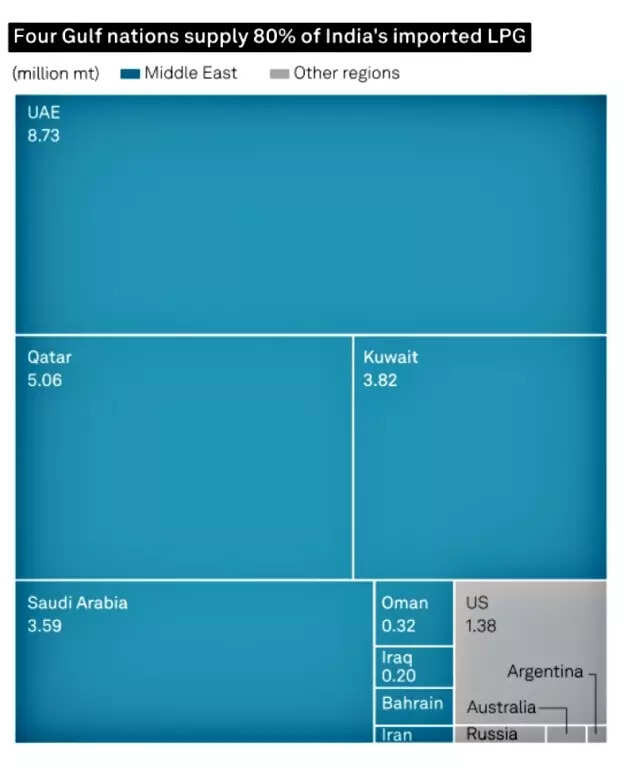
India is turning to the US to mitigate its ongoing LPG supply crisis as the war rages on in the Middle East. India gets around 60% of its LPG needs from the Gulf region, and more than crude oil, it is the disruption in liquified petroleum gas supply through the Strait of Hormuz that has got the government scrambling to secure stocks.As per an S&P Global Energy report, India is moving to broaden its sources of LPG imports, stepping up refinery output and intensifying diplomatic engagement as it works to maintain a steady supply of cooking fuel for households and essential services such as hospitals and educational institutions amid the ongoing Middle East conflict.

Watch

India Draws Red Line: Shashi Tharoor Rejects Donald Trump Call, Signals Strategic Autonomy Over War

India turns to US for LPG supplies

Analysts at S&P Global Energy noted that the global LPG market is currently grappling with a shortage of cargoes, as disruptions in the Middle East have temporarily affected the Strait of Hormuz that accounts for nearly 30 per cent of global LPG supply. This has tightened overall availability and reduced the pool of spot cargoes.Anmol Bhushan, associate director for LPG at S&P Global Energy CERA, said, “India is increasingly turning to the US for LPG as geopolitical tensions reshape global trade flows.”

Four Gulf nations supply 80% of India's imported LPG

Four Gulf nations supply 80% of India’s imported LPG (Source: S&P Global Energy)

According to the expert, if the Middle East war conflict continues for a longer duration, there is a chance that North American LPG will gain a stronger foothold in the Indian import mix. “Recent trade patterns show rising US volumes moving into India”, he says.

Securing Passage Through Strait of Hormuz

With nearly 60 per cent of its LPG needs met through the Gulf region, the government has taken urgent steps to secure alternative supplies. It is also encouraging the use of substitutes such as kerosene and coal in restaurants and other non-priority segments to reduce pressure on limited availability.“The silver lining is the ongoing diplomatic dialogue between Iran and India. This engagement helped enable Indian-flagged LPG carriers to transit the region, setting a positive precedent,” said Charles Kim, associate director for LPG at S&P Global Commodities at Sea. “Continued cooperation could support the passage of additional Indian-linked ships, keeping vital supply routes workable for India and offering some relief to the broader market.”Two state-owned LPG carriers have safely navigated through the Strait of Hormuz, a critical route that handles around 90 per cent of the country’s LPG imports from the Middle East.

LPG flows from Middle East & US

  • Two state-owned LPG carriers, VLGCs Shivalik and Nanda Devi, successfully crossed the Strait of Hormuz and arrived in India during the week. Each vessel carried around 46,000 mt of LPG, taking total supplies delivered to over 92,000 mt for the domestic market.
  • Shipments of US-origin LPG to India have been rising, with volumes now exceeding those sourced from traditional Gulf suppliers, according to CAS data.
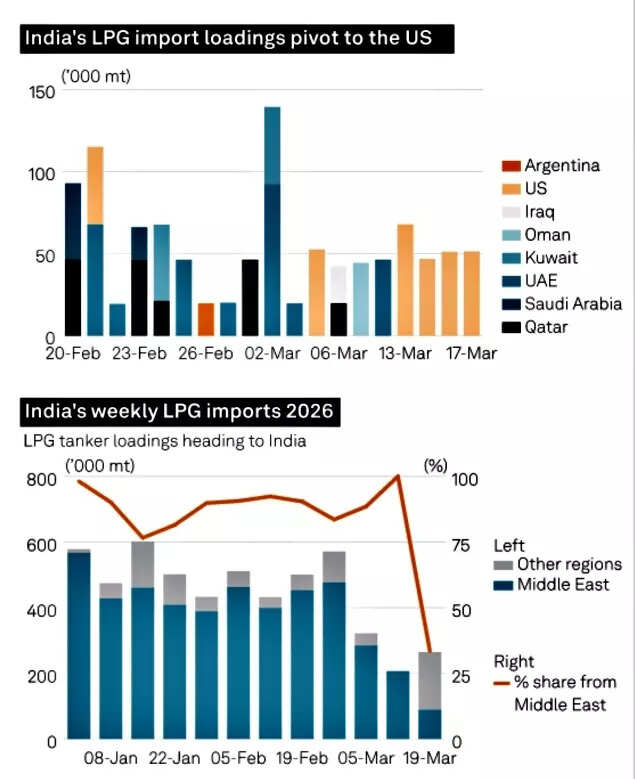
  • India’s weekly LPG imports declined to 265,000 mt in the week ending March 19, down from 322,000 mt on March 5, as per CAS data.
India's LPG import loadings pivot to US

India’s LPG import loadings pivot to US (Source: S&P Global Energy)

  • Supplies from the Middle East dropped sharply to 89,000 mt, accounting for just 34 per cent of total imports, the lowest share since January.
  • In contrast, alternative regional supplies increased to 176,000 mt during the same period, compared to zero in the previous week when the Middle East had accounted for all imports.
  • Indian oil marketing companies have secured a term contract for 2.2 million mt of US-origin LPG for 2026, equivalent to roughly four VLGC shipments per month. In the first two months of 2026 alone, India imported close to 480,000 mt of US LPG, translating to about 11 VLGC cargoes.
  • India has also rolled out emergency measures and ramped up domestic production to cushion households and businesses from potential LPG shortages, while also fast-tracking the shift toward piped natural gas.
  • Reliance Industries is operating at full capacity at its Jamnagar refining and petrochemical complex to boost LPG output for the domestic market.
  • Domestic production currently meets about 41 percent of India’s LPG requirement, with the remainder being sourced through imports, according to petroleum ministry officials.
  • The oil ministry has revised booking cycles to 25 days in urban areas and up to 45 days in rural regions to ensure a more balanced distribution.
  • State governments have intensified enforcement efforts to curb hoarding and black marketing of petrol, diesel and LPG.


Why alternatives can’t replace LPG yet in Karnataka

0
Why alternatives can’t replace LPG yet in Karnataka


At a time when many eateries across Bengaluru were scaling down their menus and households were rushing to buy induction stoves due to LPG shortage, Reva Jhingan Malik and Ranjan Malik’s home in Bengaluru remained unaffected. The family moved away from LPG six years ago, shifting instead to solar-based cooking at their “mud” house. 

Their home has no LPG connections, taps, and fridge or washing machine, and relies only on sustainable alternatives. The shift began during Reva’s research on learning practices in rural communities, where the couple observed how households were deeply rooted in sustainable, low-dependence lifestyles, in contrast to what she describes as the “false abundance” of urban living. Since 2020, their meals have been prepared using a three-compartment solar cooker, while their electricity needs are met through a small 850 VA rooftop solar setup. 

But such self-sustained models remain an exception, particularly when it comes to urban commercial kitchens that depend on uninterrupted, high-volume cooking. That gap is reflected in the Karnataka’s broader energy mix. 

Energy mix

Karnataka currently has a total installed power generation capacity of about 36,472 megawatts (MW), with renewable energy accounting for a larger share than conventional sources. Of the total, around 20,162 MW comes from renewable sources, while 16,310 MW is generated from thermal, hydro, and gas-based plants. 

Among conventional sources, State-owned thermal power plants contribute 5,020 MW, while Karnataka receives 4,081 MW as its share from Central Generating Stations. Hydropower accounts for another 3,798 MW. Additional sources include 1,200 MW from Udupi Power Corporation Limited, 1,391 MW from captive mini-thermal plants, 450 MW from the Damodar Valley Corporation, and 370 MW from the Yelahanka Combined Cycle Power Plant. 

Renewables form the largest portion of the State’s installed capacity, with solar alone contributing about 9,805 MW, followed by wind at 7,536 MW. Other sources include 1,742 MW from co-generation, 940 MW from mini hydel projects, and 139 MW from biomass. Together, these account for more than half of Karnataka’s installed electricity capacity. 

However, despite the rapid expansion of renewable energy in the State, this shift has not translated into viable alternatives for small eateries and commercial kitchens, which continue to rely almost entirely on LPG — a dependence now exposed by the ongoing supply disruption. Most households too continue to depend on LPG.

LPG disruption

On March 9, the Bangalore Hotels Association raised alarm over a sudden shortage of commercial LPG, which followed escalating tensions in West Asia — a region critical to India’s fuel imports, with key shipping routes such as the Strait of Hormuz handling a significant share of global LPG trade. While the industry was initially assured that supplies were sufficient for over 70 days, the situation tightened within days. 

Across the 40,000 hotels in Bengaluru, a majority of small and mid-sized eateries either restricted operations to beverages such as tea and filter coffee or sharply cut down menus to basic rice-based items like sambar rice starting March 10. In the days that followed, as the disruption persisted, several establishments also began increasing prices amid rising input costs and continued uncertainty over supplies. 

Why LPG?

For most hotels, however, the disruption is not just a supply issue but explains how deeply small and medium scale commercial kitchens are built around LPG. 

“Small eateries largely depend on LPG because it is the only fuel that can reliably meet the scale and speed of commercial cooking,” said Basavaraj M.S., who runs a small eatery in Rajajinagar. In most restaurants, multiple burners operate simultaneously for hours — preparing dosa, frying snacks, boiling rice and cooking curries at the same time. LPG provides a strong, consistent flame that can be adjusted instantly depending on the dish.

This dependence is also reinforced by the way kitchens are set up. “Most restaurant kitchens are designed around LPG-based stoves and equipment. Shifting to electric or induction systems would mean replacing burners, vessels and, in many cases, upgrading wiring capacity. For small eateries operating on thin margins, that is not practical,” he said. 

Practical barriers

Even in situations where alternatives are considered, operational constraints remain, hoteliers say.

For most eateries, alternative cooking fuels come with challenges related to infrastructure, cost and the nature of commercial cooking, said Roopa Shashtri, owner of a restaurant in Gandhinagar. “Solar energy, for instance, cannot directly support kitchen operations as it does not generate the kind of continuous, high heat required for bulk cooking. While it can produce electricity, running multiple appliances would require large rooftop spaces and battery storage systems, something rarely feasible in compact, rented commercial spaces,” she explained.  

Mahesh Bhat K., owner of a restaurant in Vasanth Nagar added that electric cooking also presents limitations at scale. Running several induction or electric stoves simultaneously requires significantly higher electrical load than what most establishments are equipped for. Many restaurants already operate close to their sanctioned capacity, and upgrading to higher-load connections involves additional cost and approvals. 

PNG and bio fuel

Other alternatives such as piped natural gas (PNG) and biomass also face constraints. PNG infrastructure remains limited to certain areas, leaving many eateries without access, while installation requires time and upfront investment. Biomass-based fuels, on the other hand, require additional space, ventilation and handling due to smoke and residue, conditions that are difficult to manage in dense urban kitchens. 

Waste-to-energy solutions face a more fundamental challenge; the lack of consistent waste segregation at source. Mixed waste, in practice, significantly reduces the efficiency of such systems.

Despite policy push and infrastructure in place, poor segregation by households and commercial establishments continues to limit the viability of waste-to-energy at an individual or decentralised level, keeping it largely confined to large, centralised facilities.

Present installed capacity of Karnataka

Source Installed capacity in MW
Hydro 3,798 
State owned Thermal 5,020
State share with CGS 4,081
UPCL (IPP) 1,200
LTA (DVC) 450
Captive (Mini Thermal) 1,391 
YCCP gas  370 
Total Conventional Energy 16,310
Source Installed capacity in MW
Wind 7,536
Solar 9,805 
Mini Hydel  940
Bio-Mass  139 
Co-generation 1,742
Total Renewable energy 20,162 

Total Installed Energy Capacity – 36,472 MW 

Source: Karnataka Power Corporation Limited (KPCL) 

At scale

In contrast, a few large, centralised kitchens have managed to integrate such alternatives into their operations at scale. 

One such example is Adamya Chetana’s Annapoorna kitchen in Bengaluru, which prepares over 72,000 mid-day meals without relying on LPG, diesel or kerosene. The facility, which initially operated on LPG in 2011 and later transitioned to diesel, has over time shifted to a fully fossil-fuel-free model built on biomass and circular resource use. 

Cooking here is powered primarily by biomass briquettes made from agricultural waste. The organisation estimates that the transition has helped save nearly 12,500 LPG cylinders and close to one lakh litres of diesel annually. 

The system is supported by integrated resource use — organic waste is repurposed as fuel, a biogas unit converts kitchen waste into energy for additional heating, and a co-generation system produces hot water without additional fuel. Solar power supports part of the electricity demand through rooftop installations. Waste management is central to operations. What was once nearly 300 kg of daily waste has been reduced to zero through reuse and recycling, with vegetable waste diverted for composting or cattle feed, and water reused across processes. 

However, such models depend on scale, space and long-term planning — factors that hoteliers say are largely absent in small and mid-sized eateries operating in compact, rented spaces. The transition also requires upfront investment and redesign, making it difficult to replicate across any city’s fragmented food sector. 

LPG cylinder shortage: Bengaluru hotels switch to induction, kerosene stoves

In an attempt to keep their kitchens running, many restaurants in Bengaluru have turned to alternatives such as kerosene stoves, induction cooktops, and even wood-fired cooking amid what hoteliers describe as a near-total shortage of commercial LPG cylinders. With the uncertainty continuing for a second day, several establishments have begun cutting down on “operating hours” apart from the menu options.
| Video Credit:
The Hindu

Beyond fuel availability

Explaining why alternatives to LPG remain limited for residential use at present, Purva Jain, Lead Energy Specialist (Gas and International Advocacy), South Asia, Institute for Energy Economics and Financial Analysis (IEEFA), said that while alternatives exist, their adoption needs more policy support.

“If you look purely at the cost of use, electric cooking can turn out to be one of the cheapest option today. Our (IEEFA) analysis shows that for a family of four, electricity-based cooking is cheaper than both PNG and non-subsidised LPG, and is comparable to subsidised LPG for many consumers. PNG can be around 14% more expensive than electricity-based cooking, and non-subsidised LPG up to 37% more for a family of four in Delhi.”

However, operating costs alone does not drive adoption. “The real challenge lies in the upfront cost of procurement and awareness. LPG continues to dominate because most users already have the connection, equipment, and utensils. Even for a new connection, the initial cost is relatively low compared to other options,” she stressed.  

Rooftop solar

This gap between potential and adoption is also visible in rooftop solar uptake across Bengaluru. According to data from the energy department, 14,944 buildings under the Bangalore Electricity Supply Company Limited (BESCOM) have installed rooftop solar systems, including 215 government buildings, together generating about 352.35 MW of electricity. 

Within Bengaluru Urban and Rural districts alone, there are 5,370 such installations, with 4,984 in urban areas. Officials said that while schemes such as the Pradhan Mantri Surya Ghar Muft Bijli Yojana have supported adoption — benefiting over 11,000 households in Bengaluru Urban — rooftop solar still forms a small share of the city’s overall energy use and is largely limited to residential and institutional consumers rather than commercial kitchens. 

Jain pointed out that alternatives such as PNG and induction cooking come with higher entry barriers. “For PNG, the upfront cost of getting a connection, including deposits, is significantly higher, and more importantly, it is only available in areas where pipeline infrastructure exists. That geographic limitation itself becomes a constraint.”  

Induction cooking, she added, faces both cost and design challenges. “The cost of buying induction cooktops and compatible utensils is higher, and the design itself can be a barrier. In India, even the most basic cooking setup typically involves at least two burners. Most induction systems are single-cooktop units, and upgrading to multiple units increases costs further. That becomes a constraint, especially for households or commercial kitchens used to cooking multiple dishes simultaneously.”  

While heavily subsidised LPG under schemes such as PMUY remains the cheapest option for low-income households, she noted that affordability challenges persist. “Even among PMUY beneficiaries, consumption levels are lower than expected, which indicates that households may still be relying partly on traditional fuels.”  

The way forward

Jain said the current volatility resulting in LPG supply disruption should be seen as an opportunity to push cleaner alternatives, but only with the right policy and market support. “There is a clear middle path here. Awareness is one part, both from a policy perspective and from manufacturers. Companies need to make alternative technologies more accessible and affordable, just as LPG ecosystems have evolved over time.”  

She stressed the need for a stronger policy push. “We have targets for renewable energy and gas-based systems, but a more clear defined roadmap for electric cooking could help accelerate adoption. What is needed is a defined policy framework with measurable targets, along with incentives for consumers and manufacturers to drive adoption and bring down costs.”  

On other alternatives, she said solutions like waste-to-energy and biogas require deeper systemic changes. “Waste-to-energy faces challenges such as lack of proper waste segregation, which makes it difficult to scale in India. Biogas, on the other hand, has strong potential, particularly in rural areas and cluster-based industries, but again, it needs coherent policy and fiscal support and infrastructure.”  

“In a country like India, no single fuel can replace another entirely,” she added. “The focus should be on optimising different energy sources based on context, which requires long-term planning, not just short-term responses during crises.” 

Individual choice matters

Emphasising the importance of conscious choice, Reva Jhingan Malik said their decision to build an off-grid home came at a time when Bengaluru was repeatedly making headlines for water scarcity and pollution, prompting them to rethink how they lived. She believes more people do not move towards such models largely because the urgency of the problem does not fully register at an individual level.

“When we switch on a light or use fuel, we don’t think about where that energy comes from or how long it has taken to form. Fossil fuels are the result of processes that take millions of years, yet we consume them as if they are endlessly available,” she said. This sense of convenience, she said, is a major reason why people hesitate to shift.

“The systems we live in make everything readily available, so it becomes difficult to imagine a different way of living. As long as that comfort exists, there is very little push to change.” While larger systems need to evolve, Reva believes that responsibility also lies with individuals to recognise the limits and act accordingly.



Dhurandhar 2: What is the name of Ranveer Singh’s Sher-e-Baloch entry song?

0
Dhurandhar 2: What is the name of Ranveer Singh’s Sher-e-Baloch entry song?


Dhurandhar 2: What is the name of Ranveer Singh’s Sher-e-Baloch entry song?

In Dhurandhar, Akshaye Khanna went viral for his impromptu dance in his Sher-e-Baloch anthem. His groovy Sher-e-Baloch entry to the Bahraini song, FA9LA by Flipperachi, became a sensation. Now, with Akshaye`s character dead in the second part, Ranveer gets his own song in Dhurandhar: The Revenge. Hamza (Ranveer) climbs the power ladder and wins the trust of the Baloch community. In a scene, he enters the camp, where he is welcomed with a high-energy performance, much like FA9LA but a different track.

About Didi by Khaled, Ranveer Singh`s Sher-e-Baloch entry song

The name of Ranveer Singh’s Sher-e-Baloch entry song is Didi, and it is by Algerian singer and musician Khaled. The song was originally released in 1992, and was one of the charbusters. Since then, the song has been remade, recreated and adapted multiple times in various languages, including Hindi, way before Dhurandhar 2.

Also called Cheb Khaled, the singer talks about a deep connection between two individuals in the  Arabic raï song. A part of the song translates to, I`m burning in the fire of love, but you`re not. I will not make you away from me so I don`t cry later (always be close). But I just have a bad luck and destiny. Take take (Didi Didi), Take take the beautiful girl away. Take take, take take the beautiful girl away.” The term `didi` in Arabic means ‘take’.

Back in the day, Didi had topped charts in France, Switzerland, Belgium, the Netherlands, Egypt, and Saudi Arabia when it released. It was also one of the opening songs for the 2010 FIFA World Cup.

Earlier mid-day had reported that Ranveer Singh would have his own song like FA9LA in Dhuranadhar 2. Interestingly, the song was filmed just a day before Khanna’s FA9LA was filmed in Ladakh. A source had told us, “After Akshaye’s character Rehman Dakait is killed in Dhurandhar, the Sher-e-Baloch title is given to Ranveer’s Hamza in the sequel. The song is a celebration of his ascension. Aditya shot Ranveer’s number on the same set in Ladakh. He decided to shoot the two songs back-to-back as the set was already standing, and given the challenging climatic conditions, it didn’t make sense to return to Ladakh later only for a song.”

Other versions of Didi

One of the early versions of the song was created by Moroccan-Belgian singer Brahim, who added English-language lyrics in 2005. Later in 2007, German duo Milk & Honey released an all-English language version with completely new lyrics and arrangement.

Later, the song was covered in multiple languages, including Greek, Spanish, Russian, Albanian, Turkish, Persian, Urdu, Serbian, and German, to name a few. 

India, too, has used the song multiple times in cinema. Versions of the song became popular in India through plagiarised versions, one of which was the popular version, the Hindi song Ladki Ladki featured in the Bollywood movie Shreemaan Aashique (1993).

This song was also loosely sampled in the song Suno Suno Meri Rani Ji by Bappi Lahiri and Kavita Krishnamurthy from the 1994 film Brahma. Didi was almost completely featured in the 1995 Malayalam movie, Highway, with actress Silk Smitha. It also included a brief part which shows the original song video by Khalid being played on a television set. 

Most recently, the 2016 Bollywood movie Airlift recreated this song in Hindi as Dil Cheez Tujhe De Di sung by Arijit Singh and Ankit Tiwari, starring Akshay Kumar. In 2020, the Malayalam movie Dhamaka also covered this song as Potti Potti directed by Gopi Sundar.


Virat Kohli, Rohit Sharma and Indian cricket deserves clarity over their futures, not hocus-pocus | Cricket News

0
Virat Kohli, Rohit Sharma and Indian cricket deserves clarity over their futures, not hocus-pocus | Cricket News


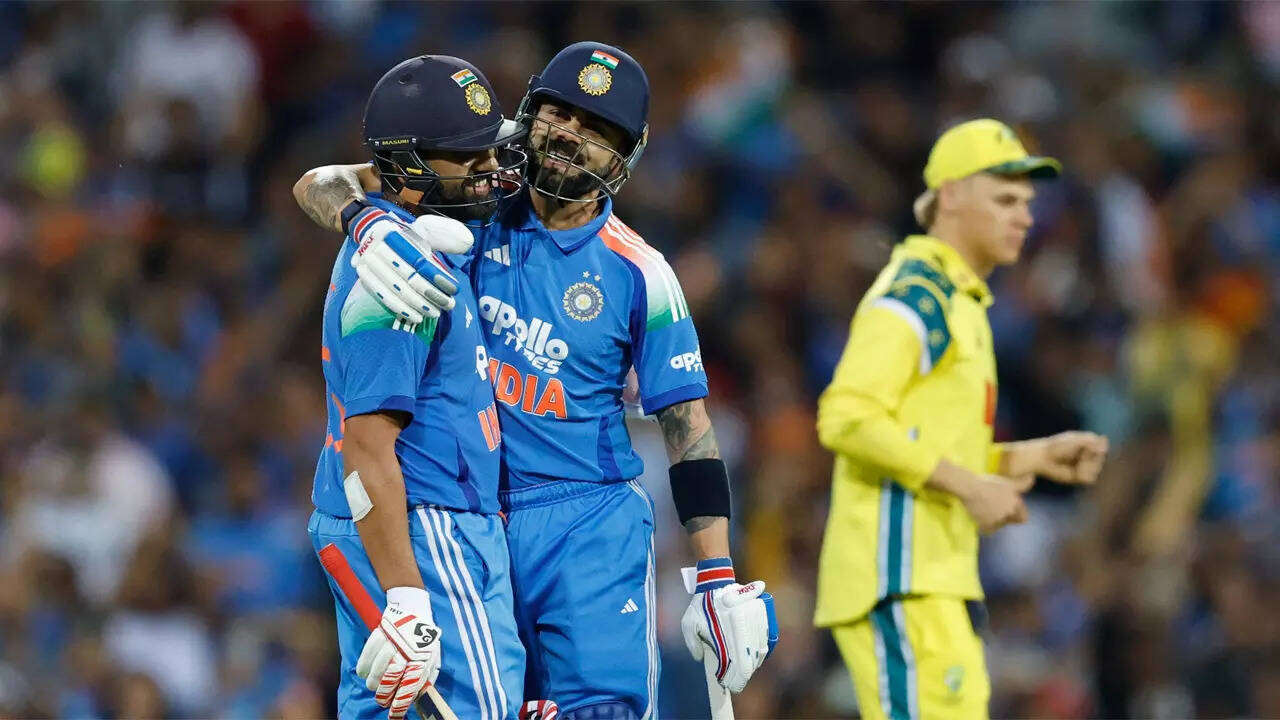
Virat Kohli, Rohit Sharma and Indian cricket deserves clarity over their futures, not hocus-pocus
Virat Kohli and Rohit Sharma (AP Photo)

New Delhi: India head coach Gautam Gambhir has expressed a strong desire to remain through the Los Angeles Olympics. Chief selector Ajit Agarkar wants to stay until the 2027 ODI World Cup. T20I captain Suryakumar Yadav has set his sights on 2028 and ODI captain Shubman Gill has locked the ultimate target for South Africa. Every important individual in Indian cricket is focussed on what lies ahead but the biggest irony is that two of the country’s biggest superstars still have to deal with non-committal undertones.Virat Kohli and Rohit Sharma – two former ODI captains and arguably the finest cricketers to have played the game – are yet to receive public backing for next year’s showpiece in South Africa. “There is still time left,” “the World Cup is nearly two years away,” “we want to focus on the present.” With time, the statements have changed but the sentiment remains the same.

Watch

Ajit Agarkar knocks BCCI door, makes a huge extension request | World Cup

The only reassuring words from the Indian camp came in October 2025 when India’s Test and newly-appointed ODI captain, Gill, supported the two stalwarts. “Absolutely,” Gill said, when asked if he saw Rohit and Kohli playing an important role in ODIs leading into the World Cup. “The experience the two of them have (is immense), and there are very few players who can match the number of matches they have won for India,” he added.Less than a week later, coach Gambhir urged everyone to “stay in the present.”“Look, 50-over World Cup is still two-and-a-half years away, and I think it is very important to stay in the present,” he said in a press conference after India beat West Indies 2-0 in the Test series. “That is very important. Obviously, they are quality players, they are coming back, their experience is going to be a handful in Australia as well. Hopefully, those two guys will have a successful tour, and more importantly, as a team, we will have a successful series.”

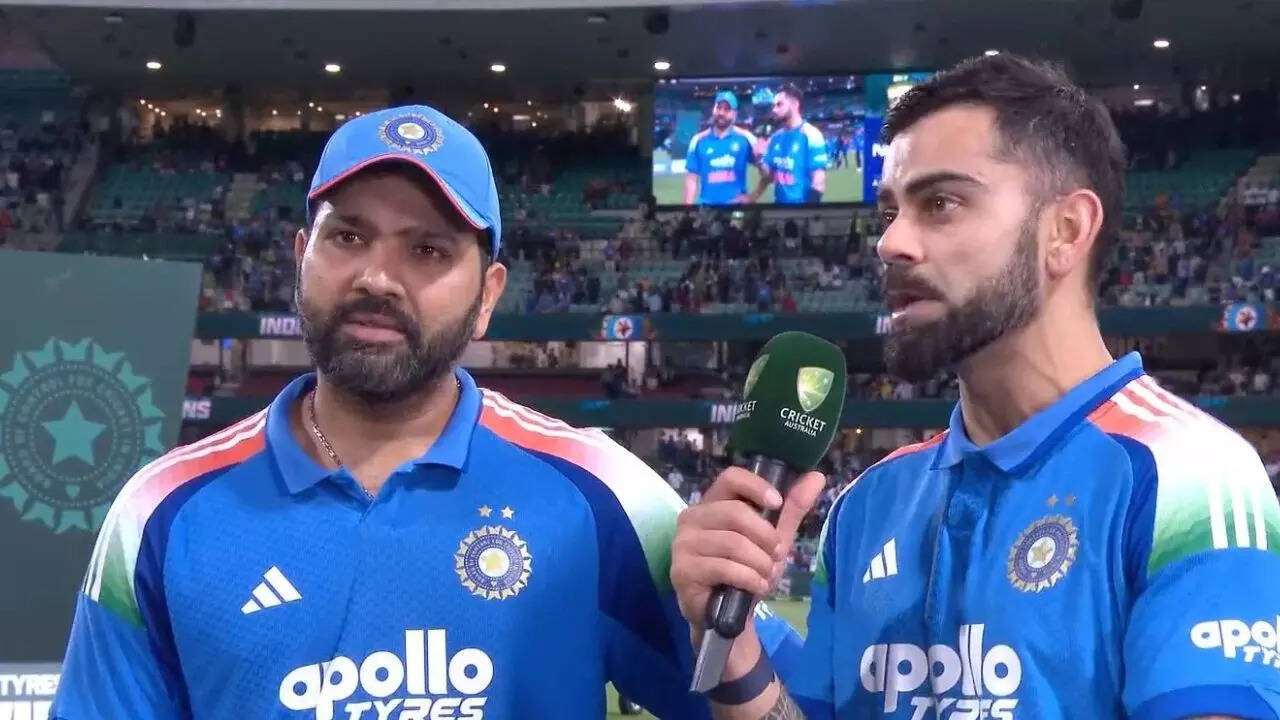
Rohit Sharma and Virat Kohli

Rohit Sharma and Virat Kohli (Screengrab)

Since then, Virat and Rohit have played series against Australia, South Africa and New Zealand, and they also squeezed in some List A outings for their respective states in the Vijay Hazare Trophy. While Rohit has lost a lot of weight—”half of him,” according to Brendon McCullum—Virat has gained plenty of intent.Virat, in particular, has switched to beast mode. In his last 10 fifty-over outings, he has hit four hundreds and as many half-centuries. Rohit had quieter showings against New Zealand but he, too, looked menacing in the series against South Africa and Australia. Both right-handers, who have been the backbone of the Indian team for the last two decades, are in the last phase of their careers but continue to fight for survival while chasing the unfinished business from three years ago.India face a packed ODI calendar leading up to next year’s World Cup, and it is imperative that someone from the BCCI calls both Rohit and Virat to discuss their plans. Not the players’ plans, but the board’s plans. The players have their target locked and the onus is now on the Indian cricket board to navigate the situation.

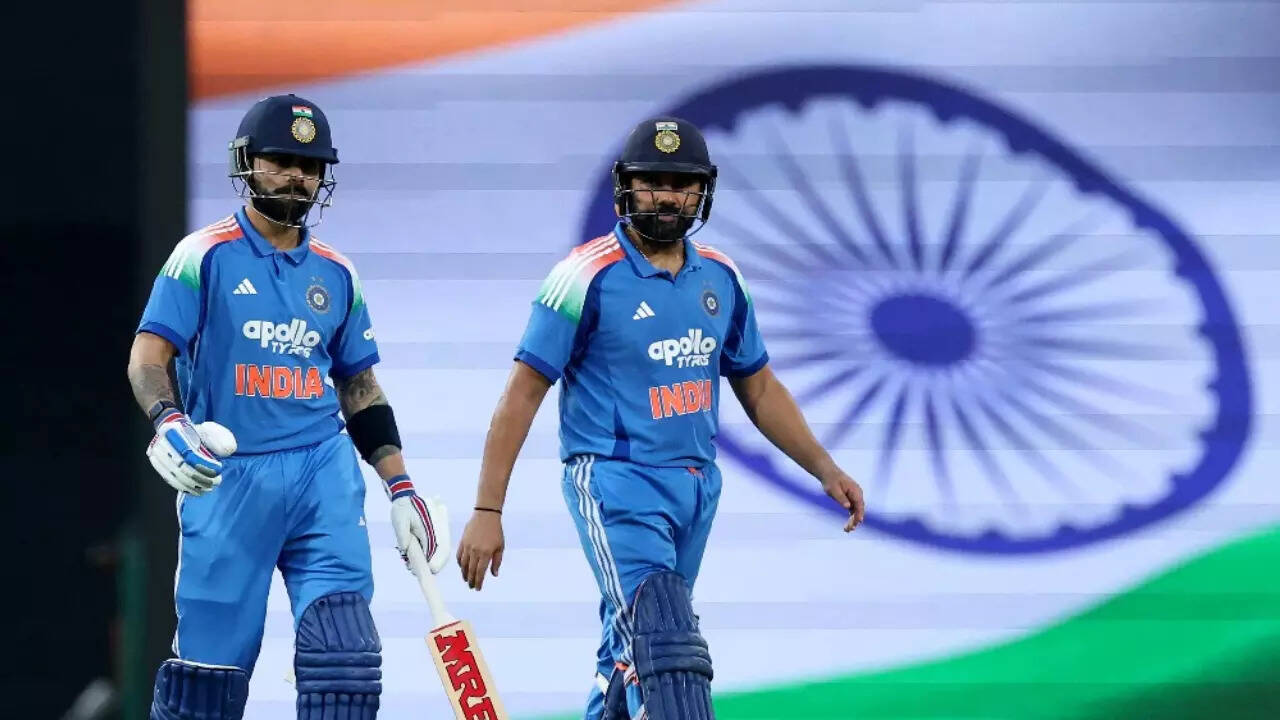
Virat Kohli and Rohit Sharma

Virat Kohli and Rohit Sharma (AP Photo)

The dagger of insecurity hanging over their heads is not ideal for any Indian dressing room, and it’s not a surprise that the ODI set-up remains the most tense one. There are strong murmurs that some senior players are limiting their conversations with the coach and restricting their chatter with the chief selector to formal pleasantries.The head coach asserted during one of his many media appearances since winning the T20 World Cup that planning for the ODI World Cup will begin some time during the IPL but before the blueprint is finalised, dialogue needs to happen. Not just dialogue but clear communication stating whether Virat and Rohit fit into the World Cup plans.

Rohit Sharma and Virat Kohli

Rohit Sharma and Virat Kohli (Pic credit: BCCI)

Although it’s quite funny that a conversation of this nature, involving two white ball giants, is even required, the indirect messaging via press conferences and the growing chatter on social media timelines are doing everything but making the dressing room ideal for an event of that proportion. If other one-format cricketers, not on the right side of 30, can look two years ahead; if a chief selector can ask for a shot at unfinished business; and if a head coach can express a desire to continue a year after his official tenure ends, the least Virat and Rohit can expect is clear dialogue. If the men who matter still feel they can have a real shot without the two, and keep the dressing room at its secure best, they must be reading the room with supernatural powers.

Banner Insert


Rakesh Bedi takes a dig at Kangana Ranaut's Emergency as he defends Dhurandhar 2 against ‘propaganda’ claims

0
Rakesh Bedi takes a dig at Kangana Ranaut's Emergency as he defends Dhurandhar 2 against ‘propaganda’ claims


Actor Rakesh Bedi is currently receiving widespread praise for his performance in Dhurandhar: The Revenge. While the film has largely opened to positive reviews, a section of viewers has labelled it “propaganda”. Addressing the criticism, Rakesh recently shared his thoughts in an interview with NDTV, where he defended the film and took an indirect dig at Kangana Ranaut’s Emergency.

Rakesh Bedi takes a dig at Kangana Ranaut's Emergency.
Rakesh Bedi takes a dig at Kangana Ranaut’s Emergency.

Rakesh Bedi takes a dig at Kangana Ranaut’s Emergency

Rakesh said, “I don’t believe in politics. I believe in cinema. Everybody has the right to like or dislike a film, but I don’t think it’s right to put a film into some kind of category, whether it’s pro-establishment or anti-establishment. The verdict is that people are loving it.”

Talking about the buzz and strong audience response surrounding Dhurandhar: The Revenge, he added, “Recently, there were films made on Indira Gandhi and (Prime Minister Narendra) Modi. These films didn’t run for even two days. Dhurandhar’s writing and screenplay are strong. People haven’t seen a film mounted on such a scale before.”

Rakesh’s remarks come amid ongoing debates around the film’s themes and its reception on social media. Despite the criticism, the film has continued to perform well at the box office and has found strong support among audiences. For context, Kangana Ranaut recently portrayed former Prime Minister Indira Gandhi in her self-directed film Emergency. The historical biographical drama, released in 2025, was based on the period of the Indian Emergency (1975–77). However, the film failed to make an impact at the box office, collecting only ₹18.40 crore worldwide.

About Dhurandhar: The Revenge

Helmed by Aditya Dhar, Dhurandhar: The Revenge is the much-awaited sequel to the 2025 blockbuster Dhurandhar. The sequel delves into the origin story of Ranveer Singh’s character, Hamza Mazari aka Jaskirat Singh Rangi. It also shows him continuing his mission to dismantle the terror network in Lyari while rising to the top of the criminal syndicate and facing enemies like Arjun Rampal. The film also stars Sara Arjun, R Madhavan, Sanjay Dutt and others in key roles.

The film has been receiving unanimous praise from critics, industry insiders and audiences. Stars like Allu Arjun, Mahesh Babu and Jr NTR, among others, have praised Aditya Dhar’s conviction and direction and applauded Ranveer Singh’s performance. On its opening day alone, the film broke box office records and earned ₹146 crore at the domestic box office (including ₹43 crore from paid previews). The film continues to perform well.


Aston Villa and Nottingham Forest advance to the last eight of the Europa League

0
Aston Villa and Nottingham Forest advance to the last eight of the Europa League


Aston Villa and Nottingham Forest advance to the last eight of the Europa League

English teams enjoyed a successful European outing as both Aston Villa and Nottingham Forest advanced to the quarter-final of the Europa League. Meanwhile, Crystal Palace advanced to the last eight of the UEFA Conference League thanks to a Sarr goal.

Aston Villa defeated Lille 2-0 to move to the quarterfinals of a European competition for the third consecutive year, thanks to a goal from John McGinn.
Villa advanced 3-0 on aggregate on Thursday, having won 1-0 in the Europa League round of 16 first leg. This set up a quarterfinal matchup with Bologna, who defeated Roma 4-3 in extra time to advance 5-4 on aggregate.

Aston Villa are fifth in the Premier League table and will see winning the Europa League as a chance to make it in the UEFA Champions League next season. Manager Unai Emery has already won the Europa League in the past with Sevilla and Villarreal.

Nottingham Forest, the other English team, defeated Midtjylland on penalties in Denmark to get to the quarterfinals. The hosts missed all their penalties as Forest scored theirs to win 3-0 in the penalty shoot-out.

Nicolas Dominguez and Ryan Yates scored goals for the visitors on Thursday after Midtjylland shocked Forest 1-0 in the first leg of the round-of-16 match at the City Ground. Ahead of Sunday`s crucial Premier League match against Tottenham, Forest coach Vitor Pereira rested a number of his starting players.

Forest will now face Porto in the last eight of the tournament. The Portuguese team defeated Stuttgart 2-0 at home for a 4-1 aggregate victory thanks to goals from William Gomes and substitute Victor Froholt.

Sarr saves Crystal Palace in the UEFA Conference League

Ismaila Sarr`s second goal in extra time helped Crystal Palace defeat 10-man Larnaca 2-1 in the third-tier Conference League, advancing the English team to the round of eight in its debut European season. Last week in London, the teams drew 0-0.

Enric Saborit equalised after Sarr gave Crystal Palace the lead; however, Sarr scored again to send Palace through to the last eight. Next up for Crystal Palace is two-time runner-up Fiorentina.

(With AP Input)


Iran war: What is happening on day 21 of US-Israel attacks? | US-Israel war on Iran News

0
Iran war: What is happening on day 21 of US-Israel attacks? | US-Israel war on Iran News


Tehran has warned of zero restraint if energy facilities are attacked again, while Netanyahu signals that there could be a ‘ground component’ to the war.

Iran has warned it will show “zero restraint” if its energy facilities are attacked again, a day after Israel struck the South Pars gasfield and Tehran attacked energy sites across the Gulf.

In the United States, President Donald Trump raised controversy during a meeting with Japan’s Prime Minister Sanae Takaichi by invoking the 1941 bombing of Pearl Harbour while defending the element of surprise in the Iran attack.

Meanwhile, as the conflict intensifies, concerns over supply disruptions have pushed global oil and gas prices higher, with sharp increases reported across the United Kingdom and Europe.

In Iran

  • Escalation: After Israel struck Iran’s South Pars gasfield, Tehran hit targets in Haifa, Israel, and Ras Laffan, Qatar, warning of “zero restraint” if its energy facilities are attacked again and claiming Iran has only used a “fraction” of its firepower so far.
  • Widespread regional missile strikes: Iran’s Islamic Revolutionary Guard Corps (IRGC) announced a new wave of missile and drone attacks on US bases and central and southern Israel, including Tel Aviv, Haifa, and Jerusalem.
  • Humanitarian toll:  The Iranian Red Crescent Society reported that more than 18,000 civilians have been injured and 204 children have been killed in Iran since the war began on February 28. In all, more than 1,400 people have been killed in Iran.
  • US airbase in Germany: Iran said it had asked Germany to clarify the role of the Ramstein Air Base in the war. “The role of Ramstein is not officially clear for us,” Tehran’s ambassador to Germany, Majid Nili, said. The Ramstein Air Base matters because it is one of the US military’s most important hubs and a key link in operations in the Middle East.
  • Macron eyes UN action on Hormuz: French President Emmanuel Macron said he will consult United Nations Security Council members on a framework to secure navigation in the Strait of Hormuz, a vital global chokepoint through which about 20 percent of the world’s oil and gas flows – once fighting subsides.

INTERACTIVE - Joint US-Israeli strikes and Iran's attacks - MARCH 19, 2026 copy-1773920176

In the Gulf

  • Gulf attacks: UAE and Kuwaiti air defences were responding to missile attacks on Friday, authorities in the Gulf states said. Saudi Arabia’s Ministry of Defense said it had intercepted and destroyed 10 drones in the country’s east and another in the north.
  • UAE arrests: Authorities detained at least five members of a “terrorist network” linked to Iran and Hezbollah that allegedly used business fronts to infiltrate the economy as part of a coordinated external plan, the official WAM news agency reported.
  • Qatar – Ras Laffan attack: Iran hit Qatar’s key LNG facility, cutting about 17 percent of output for as long as five years, the CEO of QatarEnergy has said. With Qatar supplying 20 percent of global LNG, disruptions are expected, with force majeure likely on some contracts to Belgium, Italy, South Korea, and China. Diplomatically, Qatar’s prime minister and Turkiye’s foreign minister held a joint news conference condemning the act of sabotage as a “dangerous escalation” by Iran. On Thursday, Qatar’s defence forces again reported ballistic missile attacks.
  • Missile and drone interceptions in Bahrain: Bahrain’s Defence Force reported shooting down five incoming missiles recently, bringing its total interceptions to 139 missiles and 238 drones since the start of the conflict more than two weeks ago.

INTERACTIVE - DEATH TOLL - tracker - war - US Israel and Iran attacks - March 19, 2026-1773925057

In the US

  • ‘Pearl Harbour’ remarks: Trump defended not informing allies about the US strikes on Iran, saying “we wanted surprise.” He then turned to Japanese Prime Minister Sanae Takaichi, who was visiting the White House and was seated next to him, and invoked the 1941 bombing of Pearl Harbour, saying, “Who knows better about surprise than Japan? Why didn’t you tell me about Pearl Harbour, OK? Right?”
  • Diplomatic shockwaves: Analyst Mireya Solis called Trump’s Pearl Harbour remark to Japan’s PM “unusual – a shock” that brings up a bitter rivalry rather than emphasising shared allied bonds.
  • US war objectives unchanged: Defense Secretary Pete Hegseth said US goals remain the same since February 28 – targeting Iran’s missile systems, military industry and navy, and preventing a nuclear weapon, with no set end date.
  • No US ground troops: Trump said he was not sending US ground troops to Iran, telling reporters: “If I were, I certainly wouldn’t tell you. But I’m not putting troops.” However, Trump has frequently changed his position on whether he is open to deploying boots on the ground in Iran.
  • F-35 incident: A US F-35 fighter jet made an emergency landing at a Middle East airbase after a combat mission over Iran. The aircraft landed safely and the pilot is stable, while US officials investigate reports it may have been struck by Iranian fire. If that is the case, it would be the first US jet struck by Iran during the current war.

In Israel

  • Explosions over Jerusalem: Israel’s military said it had identified three rounds of missile fire in the hour and a half preceding midnight, and another a few hours later.
  • Netanyahu says Iran ‘decimated’: Israeli Prime Minister Benjamin Netanyahu said at a news conference he saw “this war ending a lot faster than people think … We are winning and Iran is being decimated.”
  • Trump and Netanyahu: Netanyahu also denied that Israel “dragged” the US into the war, asking, “Does anyone really think that someone can tell President Trump what to do?”
  • Israel ‘acted alone’: The PM also said Israel acted on its own when it struck an Iranian gasfield. “President Trump asked us to hold off on future attacks and we’re holding out.”
  • Netanyahu signals possible ground phase: “It is often said that you can’t win, you can’t do revolutions from the air. That is true. You can’t do it only from the air. You can do a lot of things from the air, and we’re doing, but there has to be a ground component as well,” the Israeli prime minister said in his remarks.
  • Next stage questions: Al Jazeera’s Rob McBride described Netanyahu’s comments about a possible ground component as “intriguing”, suggesting a potential next stage while raising questions about how it would unfold. Netanyahu’s remarks were also seen as an attempt to reassure Israelis that the nearly three-week war has been worthwhile.
  • Core objectives: Netanyahu also reiterated goals of dismantling Iran’s nuclear programme, degrading its ballistic missile capabilities, and shaping conditions for a future without the “current regime”.
  • Regional framing: “In a wider sense, he was also claiming that with their American allies, they were reshaping the Middle East altogether, and that the balance of power and the dynamics within that – that Israel, he said, had never been stronger, while Iran, he claimed, had never been weaker,” McBride said.

In Lebanon

  • Severe humanitarian crisis and displacements:  Since Israeli attacks on Lebanon escalated on March 2, the death toll in the country has surpassed 1,000 people, with at least 2,584 wounded. Furthermore, residents in towns such as Machghara and Sahmar in the Bekaa Valley reported receiving threatening phone calls from foreign numbers urging them to evacuate.
  • Ongoing clashes and military actions: Fierce fighting continues in southern Lebanon, where the Israeli army has expanded its ground troop presence. Hezbollah has claimed responsibility for multiple attacks, including firing missiles at Israeli soldiers and vehicles in the southern Lebanese towns of al-Aadaissah, Meiss el-Jabal, and Maroun al-Ras.
  • Diplomatic efforts for a truce: Amidst the heavy fighting, Lebanese President Joseph Aoun has renewed calls for a truce and the opening of negotiations with Israel to end the war.

Oil and gas

  • Global economic effect: The Ras Laffan strike cut about 17 percent of LNG capacity, with losses near $20bn a year and an estimated 9 percent annual hit to Qatar’s gross domestic product, according to Al Jazeera’s Dmitry Medvedenko, who was reporting from Doha.
  • Soaring global prices: Concerns over these supply disruptions have triggered a surge in global oil and gas prices. Gas prices have risen sharply across the UK and Europe. The ripple effects are being felt in developing nations as well; for instance, fuel prices in Zimbabwe recently topped $2 per litre for the first time as a direct result of the conflict’s effect on oil and gas exports.
  • International pushback and warnings: Due to the escalating energy crisis, the European Council has urgently called for a moratorium on strikes against energy and water facilities.
  • US may ‘unsanction’ Iranian crude: US Treasury Secretary Scott Bessent said Washington might “unsanction” Iranian oil that is already being shipped to ease oil prices. In comments to Fox Business, Bessent also said the US government could release more oil from its strategic reserves.