Jessi Ngatikaura, the bold voice of the famous series ‘The Secret Lives of Mormon Wives’, faces the end of her marriage with husband, Jordan Ngatikaura. Jordan Ngatikaura filed for divorce on March 19, 2026, in Utah, citing irreconcilable differences after five intense years. The couple, parents to three young children, saw their bond unravel publicly, captivating MomTok followers everywhere.
Rocky road towards the end
They married in 2020, right after their first child’s arrival, thrusting their story into the reality show’s spotlight. Jessi’s emotional affair with Vanderpump Villa star Marciano Brunette exploded in season three, leaving Jordan reeling. He later shared his hurt, saying he felt “emotionally abandoned” during that tough stretch, as reported by TMZ.Husband Jordan quoted to TMZ “This has not been an easy decision and it comes with a heavy heart. I’m grateful for the shared memories and the lessons. While our paths are now moving in different directions, my priority remains my children and ensuring they feel loved, supported, and protected through this transition.”Accusations flew both ways in the aftermath. Jessi spoke of emotional abuse from Jordan and accused him of blackmailing her over affair specifics. On the Viall Files podcast, she got real about the pressure, noting similarities to her prior marriage with Zach Gish, which wrapped up around 2019. They tried a 90-day separation and joint therapy sessions, but issues lingered through season four. Just weeks ago, Jessi told People, “We are still going to a lot of therapy, both individually and as a couple.“Jordan owned his role too, stating, “I take full accountability for the pain I caused Jessi during our marriage.” Glimpses of hope surfaced, like Jessi’s posts about their new “dream home,” yet unfollows on social media hinted at doom. Her prenup worries in season four, fearing loss of “millions,” now loom large.
Behind the MomTok drama
At 33, Jessi owns JZ Styles salon and ditched her Mormon roots, owning her “sinner” vibe in the MomTok crew. Her raw style sparked clashes with castmates like Demi and Taylor, all while juggling family life. Jordan stayed low-key despite the fame’s glare, backing her work but buckling under exposure. Their saga sparked talks on reality TV’s real-life damage.Court docs seek joint custody, with no word yet on assets or the prenup snag. Fans buzz over how it all plays out. Jessi’s grit through past pains suggests she’ll tackle this head-on.This breakup closes a chaotic era for the Secret Lives standout, showing even glossy lives hold deep struggles. MomTok devotees brace for her candid next chapter.
Mumbai: Investors were left scratching their heads on Thursday after the abrupt resignation of HDFC Bank chairman Atanu Chakraborty the previous night, while shares of India’s largest private sector lender plunged 5%.
Atanu Chakraborty, former part-time chairman of HDFC Bank.
Despite the strong words from the exiting chairman, analysts do not expect any material irregularities at the bank, while attention turns to the reappointment of chief executive Sashidhar Jagdishan.
An investor at the bank’s conference call on Thursday morning summed up the exasperation: “So far, whatever I have heard on this call doesn’t make me any wiser than I was an hour ago.” Late on Wednesday, HDFC Bank released Chakraborty’s resignation letter, in which he wrote of “happenings and practices within the bank” that were “not in congruence” with his personal values and ethics.
At the morning call, HDFC Bank executives and board members assured investors that there were no material issues with the bank, insisting the board was not aware of why Chakraborty said what he said. HDFC Bank’s interim chairman Keki Mistry, directors Sunita Maheshwari, Lily Vadera, Harsh Kumar Bhanwala, Renu Sud Karnad, and chief executive Jagdishan attended the call. Chief financial officer Srinivasan Vaidyanathan was also present.
HDFC group veteran Mistry seemingly borrowed words from Chakraborty’s statement to refute it. Mistry said he would not take on the responsibility of chairing the lender “if the systems, processes, governance practices in the bank did not align with my principles and my level of integrity.”
Mistry, 71, told reporters on a separate call that the bank management will speak to all major shareholders over the next one or two days to address their concerns. Jagdishan said every board member tried to persuade Chakraborty to stay back, or at least soften the language used in his resignation letter.
As investors struggled to figure out whether to trust the former chairman’s allegations or the new chairman’s assurance, corporate governance experts demanded more accountability.
“The board should constitute a committee of independent directors to look into the matter and put out a detailed statement to assuage investor concerns,” said Shriram Subramanian, founder of proxy advisory firm InGovern Research Services. By making certain allegations, Chakraborty has done more harm than good to the investors, he said. “He should have explained in much more detail. The onus is on Chakraborty, as instead of writing those one or two lines in his resignation letter, he could have substantiated his allegations.”
The market did not take it well. Shares of HDFC Bank touched an intraday low of ₹772 on the BSE, down 8.4%, before closing at 799.7 or 5.1% lower than Wednesday’s close. The broader market was down 3.26%, with Sensex closing at 74,207.24.
A couple of hours after the investor call, the Reserve Bank of India stepped in with reassurance.
It said that on the basis of periodical assessments, there are no material concerns on record concerning HDFC Bank’s conduct or governance.
J.N. Gupta, managing director of proxy advisory firm Stakeholders Empowerment Services, said that if Chakraborty were a simple director, he could have said that the chairman was not listening to him, his dissent was not recorded. However, that was not the case.
“How can a chairman say that he was uncomfortable, but I did not record anything, did not do anything? You are the chairman, you are leading the board, you are signing the minutes, you are deciding the agenda, you are running the board meeting, and you say that for two years, I was having governance concerns, and I did not speak,” said Gupta, a former Sebi executive director. Gupta said other independent directors should issue a common statement clearing the mist. Analysts, while flagging near-term uncertainty, said the regulatory response suggests no serious lapses.
In an effort to address the gender disparity in elite coaching, FIFA passed a historic rule mandating that every side participating in its women`s competitions have at least one female head coach or assistant coach. The FIFA Council approved the decision on March 19, and it will start to apply to all women`s competitions later this year.
Before being extended to big events like the 2027 Women`s World Cup in Brazil, the regulation will be implemented at the 2026 FIFA U-17 Women`s World Cup, the 2026 FIFA U-20 Women`s World Cup in Poland, and the FIFA Women`s Champions Cup. FIFA has also stipulated that every team have a minimum of two female officials on the bench and a minimum of one female member of the medical staff.
The move comes as FIFA tries to push women into leadership positions. Just 12 of the 32 teams competing in the 2023 Women`s World Cup had female head coaches. Sarina Wiegman of England was the only woman still heading a team by the round of 16.
“There are simply not enough women in coaching today. We must do more to accelerate change by creating clearer pathways, expanding opportunities, and increasing the visibility for women on our sidelines.” FIFA Chief Football Officer Jill Ellis said after the decision.
FIFA`s approach will try to replicate what UEFA, the European football organisation, has done in areas where the women`s game is more advanced. Even though only seven of the sixteen teams competing in the Women`s European Championship had a female head coach, every team with a male head coach was required to have a female assistant coach.
Gianni Infantino wants more women`s involvement in football
FIFA president Gianni Infantino had flagged the issue earlier this year. “Of course, we need more women in important positions in football,” he said at the UEFA Congress in February. Maybe we need… more women coaches in women’s teams.”
The regulation now puts that idea into policy, with federations set to come under immediate pressure to reshape their coaching structures before FIFA’s next women’s tournament, including more women in the coaching staff.
Television superstar Hina Khan has kick-started her Eid preparations from Thursday evening.
The actress gave her fans a sneak peek into her beautiful preparations, and also of her Eid special ensemble and Mehendi .
Sharing pictures of her festive look and outfits on social media, she revealed that she has included a special detail in her mehendi, husband Rocky Jaiswal’s name in Urdu.
In the pictures, Hina Khan is seen preparing for the festival with traditional outfits and accessories laid out.
The pictures include a vibrant green ensemble paired with matching bangles and jewellery.
Another set of pictures highlight her detailed mehendi designs on both hands and feet.
In one picture, the doting wife is proudly seen displaying her palms, where the mehendi features Urdu initials representing her and Rocky Jaiswal’s names.
She also shared a glimpse of the design on her Instagram story, writing, ‘Mehendi ready Jayant Jaiswal Hina – Bus Ek nukhta Our urdu initials.”
Rocky Jaiswal later reshared the story and responded with, “My Love , I loved it !”
Hina also shared many more glimpses of the festive vibe with pictures showing her posing during a photoshoot in a blue traditional outfit and also a few more close-ups of her elaborate mehendi patterns and bangles.
Hina Khan, who follows Islam, shares a strong bond with her husband, Rocky Jaiswal, who follows Hindu dharma.
Despite their different religious backgrounds, the couple has often spoken about respecting each other’s beliefs and traditions.
Hina and Rocky, whose real name is Jayant Jaiswal, had been dating each other for over 10 years before tying the knot on June 4, 2025.
The couple met on the sets of the superhit show Yeh Rishta Kya Kehlata Hai, where Hina essayed the lead role as Akshara and Rocky was the line producer.
This story has been sourced from a third party syndicated feed, agencies. Mid-day accepts no responsibility or liability for its dependability, trustworthiness, reliability and data of the text. Mid-day management/mid-day.com reserves the sole right to alter, delete or remove (without notice) the content in its absolute discretion for any reason whatsoever
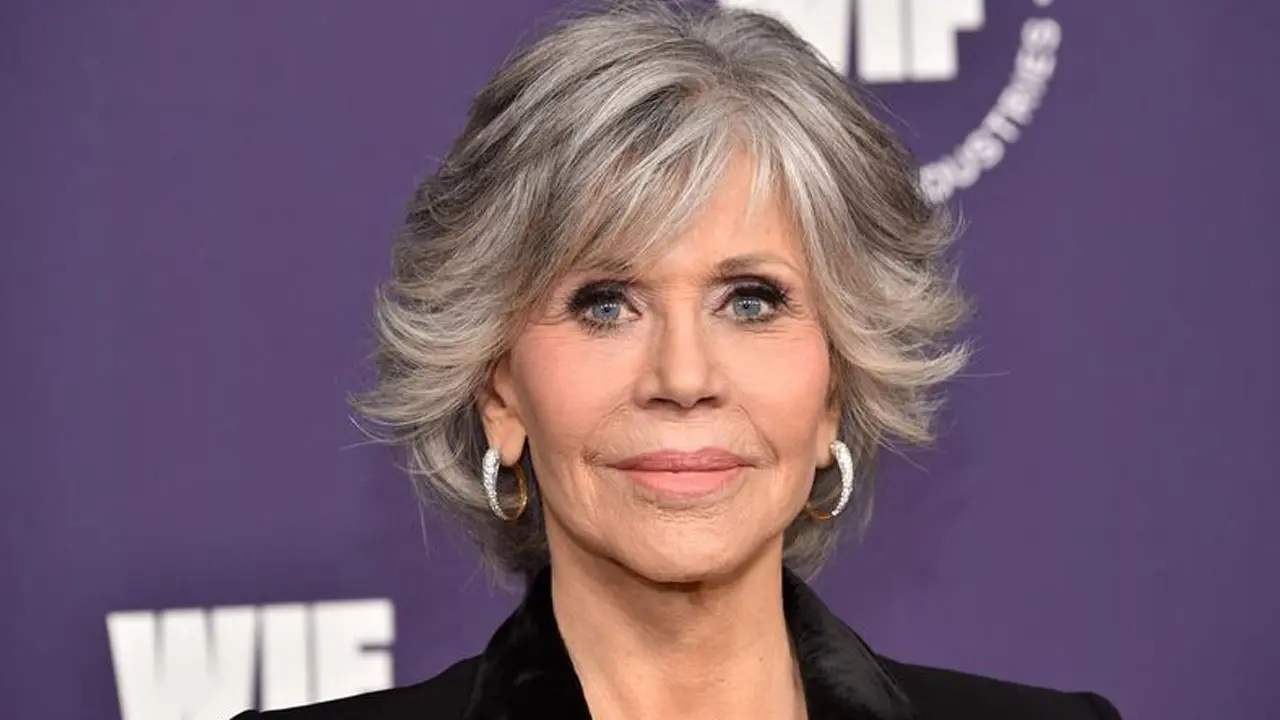
Hollywood actress Jane Fonda will be headlining a new film adaptation of The Correspondent. Taking on both a starring role and producing duties as Lionsgate secured the project following a competitive bidding process, the two-time Oscar winner, 88, will star in the film based on Virginia Evans’ bestselling novel, with Cat Vasko attached to adapt the screenplay and executive produce.
Todd Lieberman of Hidden Pictures will also produce alongside Jane. The project centres on Sybil Van Antwerp, a retired lawyer who communicates through letters, as she is forced to confront unresolved grief after receiving an unexpected message from her past, reports ‘Female first UK’.
The novel it’s based on, published by Crown, has sold more than 1 million copies and spent 17 weeks on the New York Times bestseller list.
As per ‘Female First UK’, Lionsgate will oversee the production, with Chelsea Kujawa and Pavan Kalidindi attached on behalf of the studio, and Carly Kleinbart Elter and Aydan Cohen representing Hidden Pictures.
Erin Westerman, president of Lionsgate Motion Picture Group, said, “We could not be more honoured that Virginia, Jane and Cat have chosen us to be their studio partner on this project. This book spoke to so many people on our team who found Sybil’s story and character deeply moving, and we believe Jane, Virginia, and Cat responded to the genuine enthusiasm and personal touch that we bring”.
Erin added, “And there’s no one better to shepherd the project than our friend Todd Lieberman at Hidden Pictures, who alongside his colleague Carly Elter, produced another successful book-to-screen adaptation in The Housemaid. This is a perfect team, we’re thrilled to have won the trust of all – and we can’t wait to get started”.
Todd said, “This book is a phenomenon. To be invited alongside the legend Jane Fonda, with my Lionsgate partners and Cat, is a thrilling honour, and we all can’t wait to have moviegoers experience the same catharsis that so many book readers already have”.
Jane’s previous producing credits include 9 to 5, Coming Home, The China Syndrome, On Golden Pond, The Dollmaker and Grace and Frankie. She has built a decades-long career across film, television and activism, earning two Academy Awards and widespread acclaim.
This story has been sourced from a third party syndicated feed, agencies. Mid-day accepts no responsibility or liability for its dependability, trustworthiness, reliability and data of the text. Mid-day management/mid-day.com reserves the sole right to alter, delete or remove (without notice) the content in its absolute discretion for any reason whatsoever
If noise won trophies, the Premier League would never lose.
For a league that rarely misses a chance to call itself the best in the world, Europe offered a slightly awkward pause this season. Not dramatic, not chaotic, just enough to make you sit back and think about what actually happened on the pitch.
While the Premier League continues to dominate headlines and spending charts, the Champions League tells a different story. Six English clubs made the Round of 16, the most ever from a single country. It felt like a proper statement. Depth, quality, and strength across the board.
Two weeks later, that statement didn’t hold up.
Four of those six teams were out. Manchester City, Chelsea, Newcastle United and Tottenham Hotspur all went home, and not in the kind of last-minute heartbreak that gets talked about for years. These were exits that felt clear. Across those ties, Premier League sides conceded 30 goals and scored 18. Entertaining games, yes, but also ones where the gap showed.
And the teams knocking them out were not surprises. Real Madrid, Barcelona and Atletico Madrid have been here before, many times. They didn’t need anything special, just their usual level in this competition.
For all the talk about pace and intensity in England, these games had a different feel. Not slow, but more measured. Less about constant action, more about picking the right moments.
Knockout football hits different
There’s always a shift when teams move from league football to Europe. Same players, same teams, but a different kind of game.
Real Madrid showed that perfectly against Manchester City. They didn’t try to outplay City in every phase. They stayed calm, let the game flow, and took their chances when they came. It never felt rushed, even when City had spells of control.
City were left chasing the game right from the first leg (Courtesy: AP)
Barcelona’s tie against Newcastle had more energy to it, but the pattern was similar. Newcastle tried to match them for intensity, pushed high, created moments. But Barcelona seemed more clear in how they wanted the game to go. When to slow it down, when to move it quickly, when to keep the ball.
Atletico Madrid against Tottenham was the wild one. Goals at both ends, momentum swinging constantly. Even there, Atletico looked more comfortable across the two legs. Not perfect, but more settled when it came to managing the bigger picture.
That’s where the difference showed up. Premier League teams had their chances, plenty of attacking moments, but games often felt stretched. In knockout football, that can turn quickly.
Spanish sides, on the other hand, looked more at ease letting games breathe a bit. Not sitting back, just not forcing everything at once.
Money helps, but not everything
The Premier League’s financial power is obvious. Its latest domestic and international TV rights cycle brings in roughly 1.9 billion euros per season, almost double what LaLiga earns, which sits just under 1 billion annually.
Even at club level, the gap isn’t straightforward. Real Madrid generate a little over 1.1 billion euros in revenue, Barcelona are close to 975 million, while Atletico Madrid operate around 450 million. So Spain still has financial heavyweights, but as a league, it doesn’t quite match England’s overall earning power.
Yamal and Co. dismantled Newcastle with ease (Courtesy: AP)
And yet, in these ties, that gap didn’t really show.
Barcelona, still working through financial issues, leaned on young players who looked completely at home. Lamine Yamal and the La Masia group didn’t play like stop-gap options. They looked ready, comfortable in big moments.
English teams had the attacking quality, the depth, the options. But across two legs, things didn’t always click the same way. There were spells where games became too open, a bit too rushed, and that’s where the control slipped.
That’s the thing about the Champions League. It doesn’t care about who looks better over a season or who spends more. It comes down to handling moments, especially when the game slows down and every decision matters a bit more.
And this time, when those moments arrived, the Spanish teams looked like they’d been there before.
Because while the Premier League might still set the pace every weekend, Europe has its own rhythm. And right now, Spain seems to hear it just a little clearer.
It feels unbearable when you go out in extreme heat. Step inside, and it doesn’t get much better. With temperatures crossing 40 degrees Celsius in many parts of India, staying cool at home has become less of a comfort and more of a daily struggle.
Budget cooling solution when AC becomes too expensive. (AI generated)
Aishwarya is your guide to transforming your home, especially your kitchen, into the smartest and most efficient space on the block. If you ever find yourself wondering which air fryer actually delivers the perfect crisp, whether the new-age water purifier is worth the hype, or how to make your refrigerator work smarter (not harder), then she’s the one to turn to. For over five years, Aishwarya has delved deep into the world of home and kitchen tech and reviewed everything from air fryers and microwaves to chimneys and water purifiers. Their approach is simple: eliminate the jargon, highlight real innovation, and shine a light on budget-friendly solutions without compromising quality. His column is where new launches meet honest opinions. There’s no sugarcoating it and no fancy marketing spin. Each review comes from real, practical experience, providing readers with the unfiltered truth, good or bad (sometimes brutal). A big believer in viral “how-to” hacks, Aishwarya loves sharing appliance hacks like microwave-cleaning tricks that involve one lemon and absolutely zero scrubbing, fridge-care tips (when sometimes you just need to defrost) that save you the hassle, and everything in between. She does her best to make home technology feel less cumbersome and more enjoyable.
read moreread less
An air conditioner seems like an obvious solution, but not everyone can buy one, or even install one. Between the upfront cost, rising electricity bills and practical problems in rented homes, ACs don’t work for a large section of people.
The good news is that you don’t always need this. Indian homes have always relied on a mix of smart devices and simple hacks to deal with the heat. And even today, budget-friendly cooling options exist that can make a real difference – if you know what really works.
Why are ACs not always practical?
On paper, AC solves the problem. In fact, they come with their own challenges.
The first is cost. Buying an AC is just the beginning, you also pay for installation, stabilizers in some cases and regular servicing. This quickly becomes a long-term expense.
After this comes electricity consumption. Running the AC for hours every day during summer can significantly increase the monthly bill, which many families try to avoid.
There is also the issue of flexibility. If you live in a rented house or move frequently, installing a split AC is not always convenient. Even window ACs require proper location and setup.
Because of this, many people look for options that are easy to manage, light on the pocket and still provide good relief from the heat.
Budget Cooling Options in India
Air coolers: still the most practical option
If there is one appliance that comes closest to an AC without the high cost, it is the air cooler.
These are widely used all over India for a reason, they are economical, easy to maintain and do not consume much power. From large dessert coolers to compact personal coolers for larger rooms, there’s something for every space.
In dry regions, especially North India, air coolers can be surprisingly effective. The air feels fresh rather than dry, and the coolness is enough for daily comfort.
That said, they require proper ventilation to function well. Keeping the window slightly open allows for better air circulation. And while they struggle in humid weather, in the right conditions, they are easily the best budget option for an AC.
Fans who do more than just hang out
Fans may seem simple, but the right type of fan can change the ambiance of a room.
High-speed ceiling fans improve air flow throughout the room, making the heat more bearable. BLDC fans in particular are gaining attention because they use very little power and are designed for long-term use.
Pedestal and table fans are also useful, especially when you need concentrated airflow. Instead of cooling the room, they cool you directly, and sometimes that’s enough.
In many homes, upgrading to a better fan setup makes a noticeable difference without increasing the budget too much.
Portable AC: Flexible but not cheap
Portable air conditioners are often seen as a convenient alternative to traditional ACs. They do not require permanent installation and can be moved from room to room.
For renters or people who don’t want to commit to a fixed setup, this seems ideal. But there is a compromise.
Portable ACs are still expensive compared to coolers and their cooling is not as strong as split ACs. They also consume a fair amount of power.
So while they solve the flexibility issue, they do not completely solve the cost problem.
small fan
Sometimes, the problem isn’t just heat, it’s poor airflow. This is where air circulators come in.
Unlike regular fans, these are designed to move air throughout the room, not just one spot. This helps reduce that closed, stuffy feeling.
Table fans and small portable fans also work well for personal use – on a work desk, near the bed, or in a small room.
They don’t lower the temperature, but they make the environment more comfortable, which is often what people really need.
Low-cost cooling hacks that still work
Not every solution requires a plug point. Some of the most effective cooling tricks are simple and have been used in Indian homes for years.
Damp curtains or khas curtains are a great example of this. As the air passes through them, it gets cooled slightly before it enters the room.
Another common trick is to place ice or cold water in front of the fan. It is not a replacement for a cooling device, but it does provide temporary relief.
Opening windows at night lets cool air in, especially after the sun sets. Early morning ventilation works the same way.
These methods may seem basic, but when combined with other options, they can really help reduce overall indoor heat.
Cool bed and everyday comfort
A lot of discomfort during summer comes from body heat rather than just the room temperature.
Switching to cotton bedsheets instead of synthetic bedsheets can make a big difference. Cotton allows better air flow and feels light on the skin.
Bamboo mats are another simple option that many families still rely on. They do not retain heat and one feels cool when sleeping.
Even small changes like using a lighter blanket or breathable pillow cover can improve comfort at night.
Power Management: Inverter and Solar Support
Although not directly related to cooling, power backup plays a big role in summer comfort.
Frequent power outages can render even the best cooling setup useless. An inverter ensures that fans and coolers keep running when you need them most.
Some homes are also turning to solar energy to reduce electricity costs, especially if they rely heavily on cooling appliances during the summer months.
Keeping your home cool is also about smart habits
Cooling isn’t just about what you buy, it’s also about how you manage your space.
Start by preventing heat from entering your home. Thick curtains, blinds, or simple shades can also reduce direct sunlight.
Try to avoid using appliances that produce heat during the day. Cooking, ironing or even having too many lights on can cause the room temperature to rise.
Light-colored interiors reflect heat better than dark-colored interiors, which helps keep the room slightly cooler.
Even indoor plants, although not a huge cooling solution, can improve the overall feel of the space and make it more comfortable.
What actually works in Indian conditions
There is no single solution that works everywhere. The best setup depends on your location and living conditions.
In dry areas, air coolers work really well with proper ventilation.
Fans and air flow matter more in humid cities as coolers lose their effectiveness.
For smaller rooms, a mixture of high-speed fans and simple cooling hacks is often sufficient.
And if the budget allows, adding a portable AC to the mix can improve comfort — but it’s not always necessary.
conclusion
Not having AC doesn’t mean you have to suffer in summers. With the right combination of tools and simple changes at home, it is very possible to stay cool.
Rather than relying on one expensive solution, it often works better to mix and match, use coolers where it is effective, improve air flow with better fans, and support it with small everyday habits.
Finally, dealing with the Indian summer doesn’t have to mean spending more on making choices that better suit your home and your budget.
Disclaimer: At Hindustan Times, we help you stay updated with the latest trends and products. Hindustan Times has an affiliate partnership, so we may get a share of the revenue when you make a purchase. We will not be liable for any claims under applicable laws including but not limited to the Consumer Protection Act, 2019 in relation to the Products. The products listed in this article are in no particular order of priority.
Bollywood actress Alia Bhatt, who is gearing up for the release of her upcoming film Alpha, has shared that she is launching outsiders with her upcoming production.
The actress attended the launch of her upcoming production, Don’t Be Shy, on Thursday, where she took to the stage and had a fun exchange with her mentor Karan Johar.
The show was unveiled as a part of the Prime Video Play slate event. During the event, KJo told Alia, “You`ve truly mastered the art of being a season producer already, Alia, because your answers seem beautifully independent of my questions for some reason”.
Responding to the same, Alia said, “Yes, Karan, because there is a way to launch actors”.
KJo then quipped, “And clearly I wouldn’t know that, would I? I`ve never done something like that”, referencing how he launched Alia through his production Student of the Year.
The actress then said, “Well, what can I say? We`ve learnt from the best. And the best have always taught us that there is a timing for everything”.
KJo then said, “I have a very important question to ask you. It`s crucial and critical, and it`s not on a script. Are they outsiders?”
The actress then said, “Yes”.
KJo told her, “I`m so proud of you”.
Talking about Don’t Be Shy, the film follows the story of Shyamili ‘Shy’ Das, a 20-year-old girl who thinks she has everything figured out until her perfectly planned life takes an unpredictable turn, and things begin to spiral out of her control.
The film is jointly produced by Eternal Sunshine Productions and Chalkboard Entertainment.
Meanwhile, Alia will be next seen in Alpha along with Sharvari, marking the first female-led action film in the YRF spy-universe.
This story has been sourced from a third party syndicated feed, agencies. Mid-day accepts no responsibility or liability for its dependability, trustworthiness, reliability and data of the text. Mid-day management/mid-day.com reserves the sole right to alter, delete or remove (without notice) the content in its absolute discretion for any reason whatsoever
Community tensions – and reports of both antisemitism and Islamophobia – have been rising in Australia since Hamas attacked Israel on 7 October 2023, killing more than 1,200 people and taking 251 others hostage. Israel’s offensive in Gaza has led to more than 72,000 Palestinian deaths, according to the Hamas-run health ministry.
The Economist, founded in 1843, is perhaps the most influential and longest-running chronicler of capitalism. Its immense journalistic reputation and financial strength have often been criticized by left-leaning voices. The British journalist Francis Wheen – among other things he wrote a biography of Marx, which The Economist reviewed highly critically in 1999 – in an essay published in The Guardian in 1996, accused the magazine of being “flimsy, narrow-minded”, where “editorials often read like essays by a particularly enthusiastic Oxford graduate. That’s because they are, more or less; many of the staff involved come straight from university, seminar rooms. Untainted by contact with life outside”.
Israeli Prime Minister Benjamin Netanyahu addressed a press conference in Jerusalem on Thursday. (AFP)
The Economist has made mistakes many times. To be fair, any 200-year-old newsroom would do the same. But there is one thing about which it was remarkably prescient in recent times.
On September 12, 2023, a day before the Oslo Accords – which laid out the framework and guardrails for a two-state solution between Israel and Palestine – turned 30, it published an article titled The Oslo Accords were always doomed to fail. “Diplomats call for agreements like the sermons of a dying faith, as if another confidence-building exercise or round of negotiations will be what will unlock real peace. Inertia will keep them going until new generations of Israelis and Palestinians are ready for something new – for better or for worse”, it said.
Less than a month later, on October 7, Hamas carried out its most brutal terrorist attacks on Israel, killing hundreds and taking scores of Israelis hostage. That day West Asia changed forever and for the worse. Israel’s subsequent attack on Gaza has led to one of the biggest humanitarian disasters in recent times. Its blatant violation of the rules of war has demolished all claims to the existence of a rules-based international order.
Two and a half years after the Hamas attack, on February 28 this year, America and Israel attacked Iran. Anyone with common sense would agree that the two incidents are linked. Iran’s response and escalation following the attacks has delivered the largest energy shock ever in the history of global capitalism. The attacks and counter-attacks on Iranian and other West Asian gas fields on Wednesday and Thursday show that the blow is growing bigger by the day.
Even a mental simulation of a high-order supply chain disruption due to a disruption in global fuel and petrochemical production sends a shiver down one’s spine and will probably break the back of the global economy unless the war ends the day before tomorrow. The war would not have happened if US President Donald Trump had not been involved in it.
Israel’s Wednesday attack on Iran’s South Pars gas field was one of the few examples in the current war when even Donald Trump sought to distance himself from Israeli action. “Israel, enraged by what happened in the Middle East, has violently attacked a major facility in Iran called the South Pars Gas Field…The United States knew nothing about this particular attack, and the country of Qatar was not involved in it in any way, shape, or form, nor did it have any idea that it was about to happen. Unfortunately, Iran did not know this or any relevant facts related to the South Pars attack, and were unjustly attacked. “Part of Qatar’s LNG gas facility, there will be no further attacks by Israel”, Trump posted on Truth Social.
Certainly, Trump has fallen into a trap where even criticism of Israeli actions prevents him from doing anything that would prevent further such actions. His situation can be described as that of someone suffering from Stockholm Syndrome, where the detainee has developed an attraction towards the detainee and is failing to testify against him. More and more American allies in Europe and the Middle East are waking up to this reality.
“One by one, Donald Trump’s European allies rejected the US president’s demand to join his war in the Middle East… This week’s collective rejection by Trump’s European allies of his demand to help open the Strait of Hormuz by force – or risk a “bad” future for the NATO alliance – was remarkable for its strength and unanimity. The end of two weeks of chaotic division between the continent’s capitals over his war against Iran. It was even more shocking”, said a story published in the Financial Times on Thursday.
Even more damaging for the United States is the response from Oman, which is currently a direct victim of Iran’s military aggression. Oman’s Foreign Minister Badr Albusaidi wrote in The Economist on March 18, “Iran’s retaliation against its neighbors’ claim to US bases in their territory is an inevitable, if extremely regrettable, and completely unacceptable outcome. In what both Israel and the US have described as a war to eliminate the Islamic Republic, it was perhaps the only rational option available to the Iranian leadership.” As unprecedented as it gets. Albusaidi played a key role in US-Iran negotiations before the war began, and it seems appropriate for him to be betrayed by the US for starting the war. “The question for America’s friends is simple. What can we do to extricate the superpower from this unwanted entanglement? First, America’s friends have a responsibility to tell the truth. This begins with the fact that there are two sides in this war who have nothing to gain from it, and the national interests of both Iran and America lie in an early end to the hostilities. This is an uncomfortable truth to tell, because it signals the extent to which America has lost control of its foreign policy. But it has to be Must be told”, says Albusaidi.
What exactly explains America’s helplessness in deterring Israel in West Asia? There has been no change in the equation of what Israel wanted from the US in this region. There is more than enough evidence to support this claim.
“James Baker temporarily banned him (Netanyahu) from the State Department. Madeleine Albright described him as an Israeli Newt Gingrich (and that was no compliment). Bill Clinton emerged from his first meeting with Benjamin Netanyahu in 1996 (then serving his first term as prime minister) more than a little annoyed by his arrogant self-confidence. “Who’s the ****** superpower here? Clinton told aides, according to a 2012 foreign policy article titled The Curious Case of Benjamin Netanyahu by Aaron David Miller. Netanyahu’s true intentions were known well before 2012. This was put in so many words by David Remnick in his 1998 New Yorker profile. “Netanyahu’s overall argument is that a peaceful Arab dictatorship in a region The left’s dream of a new Middle East of close ties and open markets is a fantasy”, it said. Netanyahu had accused his predecessor Yitzhak Rabin – who was assassinated by a far-right Israeli after a rally in support of the Oslo Accords – of betraying Israeli and Jewish interests by his decision to cede Israeli land to Palestine.
The world, and more importantly the US, did nothing to stop the confrontational turn in the Israeli state’s approach to the Palestine-Israel question. The status quo (as we now know) was mistakenly seen as the ability to keep kicking down the road indefinitely. Opposition to this viewpoint and Israel’s increasing belligerence has often been dismissed as anti-Semitic. When Trump took office after the October 7 attacks, he made it clear that he wanted to change the status quo for the worse. His plan to develop war-torn Gaza into a real estate paradise is a vivid example of this. Most of America’s West Asian allies saw this, and other developments before the war, as a carte blanche for Israel’s expansionist ambitions.
Of course, none of this is to say that Israel’s adversaries, including Iran and its proxies, are entirely benign regimes. These players, both state and non-state actors, have a lot of blood on their hands. The entire history of West Asia is one of competing, one more barbaric than the other, fundamentalisms of various kinds that have spread disorder, anarchy, violence and war to the world.
However, it is also true that the rest of the world, especially the US and its allies, have interfered or allowed things to go from bad to worse in the region. Kim Ghattas’s book Black Wave is a gripping, undeniable account of this history. This does not mean that the people of these countries have no agency or that they are not treated equally by their regimes and countries. Ghattas was among the few who said on record that Trump and his advisers had misunderstands Iran as to why it was not capitulating to the US even before the attacks began. “These drivers – ideology, national pride, regime survival – seem to escape real estate negotiators like Trump and Witkoff,” he wrote in an article in the Financial Times on February 26, two days before the war began.
So far, there is no sign in Trump’s America of recognizing what everyone else is able to see: It is Israel that is doing everything possible to keep America embroiled in a war from which both the world and America will gain nothing and lose much. The real challenge for the world, especially the larger countries, is what Karl Marx called “ruthless criticism of everything that exists, ruthless in the sense of not fearing its consequences and ruthless in the sense of having little fear of conflict with the existing powers”. All major countries, including India, must work together to end America’s Stockholm Syndrome or be prepared to suffer immense pain.
There are many self-styled realists, including India, who would argue that letting the US and Israel finish the job may be the best way to ensure peace. They should read these lines from Martin Luther King Jr.’s famous March 18, 1956 sermon. “Yes, it is true that if the Negro would accept his place, accept exploitation and injustice, there would be peace. But it would be an unpleasant peace”, King said. It is actually this unpleasant silence about the violations of the Oslo Accords that has brought the world to its current state where it is stuck in a destructive war as the world’s largest superpower is suffering from Stockholm Syndrome.







-1773984046878_d.png?w=696&resize=696,0&ssl=1 "FIFA creates a rule requiring female coaches at women`s tournaments")
-1773984046878_d.png "FIFA creates a rule requiring female coaches at women`s tournaments")