Tuesday, September 29, 2026
Home Blog Page 1201

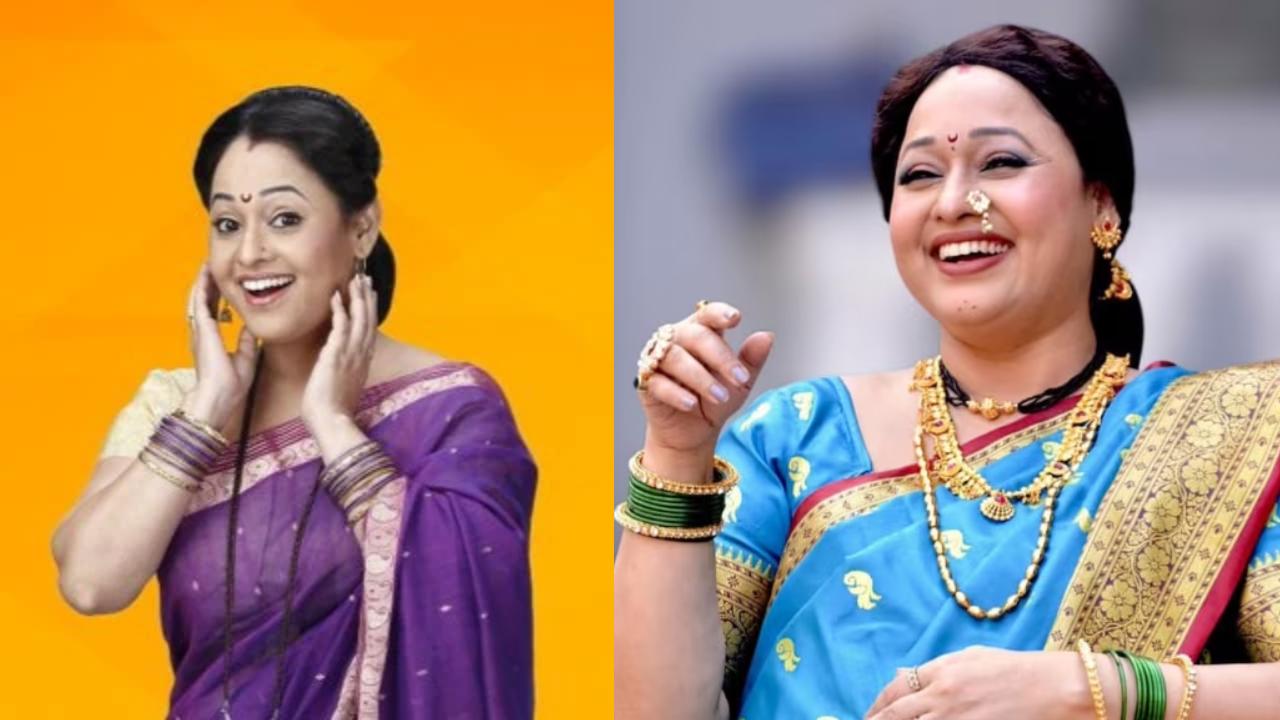
Exclusive | Sonalika Joshi recalls lively Gudi Padwa celebrations on TMKOC sets

0
Exclusive | Sonalika Joshi recalls lively Gudi Padwa celebrations on TMKOC sets


Exclusive | Sonalika Joshi recalls lively Gudi Padwa celebrations on TMKOC sets

Television actress Sonalika Joshi, best known for playing Madhavi Bhide in Taarak Mehta Ka Ooltah Chashmah, opened up about her cherished traditions and memories surrounding Gudi Padwa in an exclusive conversation with mid-day. The actress shared how the festival holds deep cultural and emotional significance for her, both at home and on set.

On celebrating the festival at home

Calling it an important ritual, Sonalika said, “Gudi Padwa is a proper ritual at home. So we have a whole procedure at home. We call it Guddi Ubharna. We make it stand. So the ritual is done here. They get it ready. So it`s a complete technical. And here in Guddi Padwa, there is no fun level. Here you just do the puja. You go and get ready wearing a sari. And you do the puja.”

Grand celebration on TMKOC sets

While celebrations at home are more traditional and focused on rituals, the atmosphere on the sets of Taarak Mehta Ka Ooltah Chashmah is far more festive and lively. Recalling those moments, she said, “And if we do a song of Gudi Padwa here, so definitely we have a lot of fun. Because for two years, I think on Gudi Padwa day, all of us together, with flags in our hands, we have made a song. So they made those mind-blowing songs.”

She further painted a vibrant picture of the on-set celebrations, adding, “Then the whole society comes together. Everyone is wearing a feta. Ladies are wearing Nawari. So all of them look very cute. Everyone looks beautiful in Nawari. So all of them come together and celebrate. It`s a lot of fun. But it doesn`t happen every year. But this year, we enjoy it a lot.”

Speaking about preparations at home, Sonalika highlighted how simple and effortless the festival is compared to others. “But we don`t have a lot of preparation. If you bring the preparation the next day, because everything is ready. For example, you have to put a thumbnail on a Sikh. Then if you bring the other things from the market the next day, because the flowers should be fresh. You have to get ready-made Bata Sikhi stuff the next day.”

She concluded by comparing it with bigger festivals, saying, “So as such, the festival is very big for us. Its symbol is very big for us. But its preparation is so small. Anyone can do it. It gets ready easily. We prepare for Diwali as much as we do for Diwali. We prepare for Diwali for a month. Even when Ganesh comes home, we have to prepare a lot. So the preparation for Gudi Padwa is not that much. It gets ready a day before.”


Kastubh Meher, Reuben Fernandes as Catholic Gym win

0
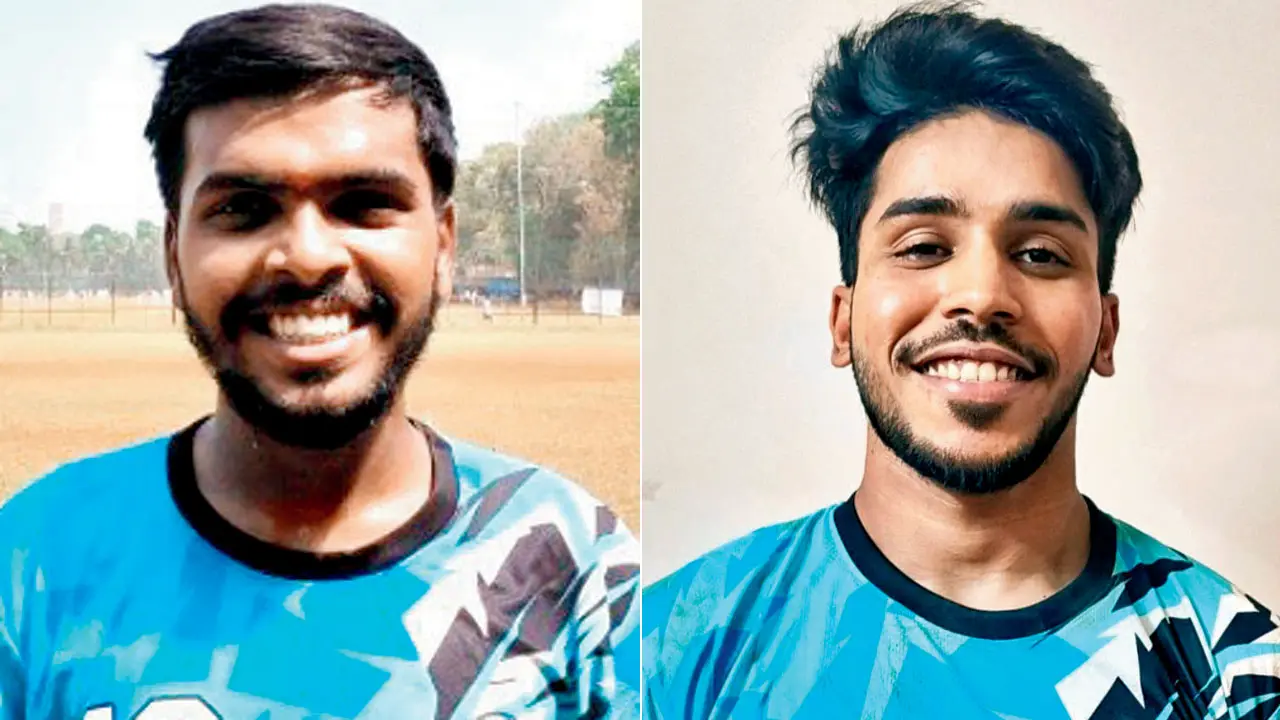
Kastubh Meher, Reuben Fernandes as Catholic Gym win


Kastubh Meher, Reuben Fernandes as Catholic Gym win

Catholic Gymkhana Ltd beat Teleperformance SC 2-0 in a Mumbai Super Corporate League match at the KSA ground, Churchgate, on Tuesday. Kastubh Meher opened the scoring for Catholic Gym with a header after which Reuben Fernandes tapped in for 2-0.


Are US and Israel in lockstep in Iran war? Deciphering Trump’s post after gas field attacks

0
Are US and Israel in lockstep in Iran war? Deciphering Trump’s post after gas field attacks


While the US has concentrated much of its military effort on degrading Iran’s missile and drone capability, sinking its Navy and, in recent days, attacking targets along Iran’s long Gulf shoreline, Israel has gone to great lengths to assassinate Iran’s leaders and attack elements of state control, including paramilitary Basij units responsible for much of the violent crackdown on protests earlier this year.


Call Me Bae: Shruti Haasan teams up with Ananya Panday for Season 2

0
Call Me Bae: Shruti Haasan teams up with Ananya Panday for Season 2


Call Me Bae: Shruti Haasan teams up with Ananya Panday for Season 2

Ananya Panday’s Call Me Bae is returning for Season 2. The new season will boost humour and drama, and explore sisterhood. While the key cast will be a part of this season as well, some new members are all set to bring in unexpected twists. As per the latest update, actress Shruti Haasan has joined the cast of Call Me Bae 2.

Shruti Haasan in Call Me Bae

The upcoming season of Call Me Bae is set to introduce a new face in a pivotal role. The makers have roped in Shruti Haasan for an important part that is expected to add an interesting layer to the narrative.

A few days ago, clips of Shruti shooting in Jodhpur had surfaced online and quickly made the rounds on social media. At the time, however, it was unclear which project the actress was filming for. We can now confirm that those scenes were being shot for the second season of Call Me Bae.

Given the show’s signature tone and fashion-forward approach, viewers can expect Shruti to appear in a character that blends drama with glamour. As per sources, “Her styling is very eclectic, with a boho-chic vibe. It’s very different from her personal style and vibe. Audiences will surely be surprised by Shruti`s character.”

Collin D’Cunha, who helmed the first season, is expected to return to the director’s chair. Much of the original cast, including Gurfateh Pirzada, Vihaan Samat, Muskkan Jaferi, and Niharika Lyra Dutt, will reprise their roles.

Shruti Haasan upcoming movies

Shruti was last seen on screen in the film Coolie alongside Rajinikanth. With this series, she steps into the stylish and quirky world of Call Me Bae, which became popular for its breezy storytelling, fashionable aesthetic, and vibrant characters.

She will next be seen in Dacoit, a Telugu action-drama starring Adivi Sesh and Mrunal Thakur. The film is set to hit theatres on April 10. She also has Aakasamlo Oka Tara, a Telugu feel-good drama where she plays a science teacher opposite Dulquer Salmaan. Apart from this, she will be seen in Salaar: Part 2 – Shouryanga Parvam, reprising her role as Aadhya. She will also be singing for S.S. Rajamouli’s Varanasi, which stars Mahesh Babu, Priyanka Chopra, and Prithviraj Sukumaran in lead roles.


Iran-Israel war’s odd effect on cricket: England are running out of balls

0
Iran-Israel war’s odd effect on cricket: England are running out of balls


England’s cricket season is facing an unusual challenge due to the escalated Iran-Israel conflict. According to British paper. The Daily Mail, the war is set to disrupt the supply of Dukes cricket balls ahead of the County Championship. The shortage threatens to impact preparations for the domestic red-ball competition, which begins in early April.

The Dukes ball, essential to English cricket, relies on a complex supply chain that has been severely affected by the conflict in West Asia. While the leather is processed in England, the stitching is done in the Indian subcontinent, with the finished balls typically transported via West Asian air routes.

That entire chain has now been disrupted.

Ongoing airspace restrictions and logistical delays have created significant bottlenecks. Freight shipments remain stuck despite factories having stock ready for dispatch. Airlines have reduced flights or sharply increased freight charges, with costs reportedly tripling.

Dilip Jajodia, owner of British Cricket Balls Ltd, described the situation as a “major crisis”, warning that counties may have to begin the season with only half their usual supply of balls.

This presents a significant challenge for the County Championship, where 18 teams play simultaneously and frequent ball changes are the norm. Although ample stock is available in the Indian subcontinent, transporting it to the UK remains the biggest hurdle. Alternative routes are being explored, but no immediate solution has been found.

The reluctance of English counties to switch to other brands, such as the Kookaburra ball, further limits the options available to administrators. The situation underlines how global events can have unexpected consequences, even on something as specific as the supply of cricket balls.

With the start of the season fast approaching, officials are now under pressure to find a workaround and ensure that the County Championship begins without disruption.

EFFECTS OF IRAN-ISRAEL WAR ON SPORTS

The West Asia war has had its effect on sports. Recently Indian chess grandmaster Koneru Humpy slammed the Candidates tournament organisers for pressing ahead with the event in Cyprus, despite the safety risks posed by the ongoing conflict.

“I am not sure if I will play for the Candidates. It depends upon the situation,” she said. “Right now, I am a bit concerned about safety with the drone attacks and warships deployed in the Mediterranean Sea. And very recently, there has been bombing happening between Israel and Lebanon because of Hezbollah. So I am a bit hesitant to travel because of this. If the situation continues like this, I am really doubtful of my participation.”

She was equally pointed about the decision to host the event in Cyprus.

“At the end of the day, you should be in a position to play the game in a peaceful and good atmosphere. Not surrounded by bomb or missile sirens. I think that should not be the stage for a world-class tournament. You don’t need to be desperate to hold events in such environments.”

Earlier, Indian shuttle PV Sindhu was forced to pull out of the All England Super 1000 tournament after getting stranded at the Dubai airport. She had a chaotic three-day ordeal when airspace was shut down in West Asia after USA’s bombing of Iran.

– Ends

Published By:

Kingshuk Kusari

Published On:

Mar 19, 2026 19:26 IST

Tune In


Bse: Stock market today: Which are the top 10 losers on NSE & BSE on March 19? Check list as one Nifty stock bucks trend

0
Bse: Stock market today: Which are the top 10 losers on NSE & BSE on March 19? Check list as one Nifty stock bucks trend


Stock market today: Which are the top 10 losers on NSE & BSE on March 19? Check list as one Nifty stock bucks trend

Benchmark equity indices Sensex and Nifty suffered a sharp sell-off on Thursday, with both plunging more than 3 per cent as surging crude oil prices, weak global cues and escalating attacks on energy infrastructure in West Asia triggered a broad-based market rout. The fall was especially severe in financials, autos and industrials, while ONGC stood out as the only gainer in the Nifty50.The BSE Sensex tanked 2,496.89 points, or 3.26 per cent, to close at 74,207.24 — its biggest single-day fall since June 2024 and its lowest level since April 7, 2025. The NSE Nifty slumped 775.65 points, or 3.26 per cent, to end at 23,002.15, wiping out the gains of the previous three sessions.

Nifty50 losers

Company Name Current Price (Rs) Price Change % Change
Shriram Finance 949.80 -71.81 -7.03%
Eternal 228.74 -13.80 -5.69%
Bajaj Finance 832.20 -47.90 -5.45%
HDFC Bank 798.20 -44.85 -5.32%
M&M 3,045 -169.00 -5.27%
L&T 3,435 -173.00 -4.81%
Tata Motors PV 309.30 -15.45 -4.76%
InterGlobe 4,154 -206.00 -4.74%
Trent 3,482 -159.00 -4.37%
Bajaj Auto 8,869 -403.00 -4.35%

Sensex losers

Company Name Current Price (Rs) Price Change % Change
Eternal 228.74 -13.80 -5.69%
Bajaj Finance 832.20 -47.90 -5.45%
HDFC Bank 798.20 -44.85 -5.32%
M&M 3,045 -169.00 -5.27%
L&T 3,435 -173.00 -4.81%
InterGlobe 4,154 -206.00 -4.74%
Trent 3,482 -159.00 -4.37%
Bajaj Finserv 1,715 -76.90 -4.30%
UltraTech Cem. 10,814 -433.00 -3.85%
Axis Bank 1,207 -46.21 -3.69%

Nifty50 gainer

Company Name Current Price (Rs) Price Change % Change
ONGC 269.10 +4.11 +1.55%

Sharp reversal wipes out three-day rally

Thursday’s sell-off marked a dramatic reversal after a brief recovery in the previous three sessions. Nifty had rallied 2.68 per cent, or 626 points, over the last three sessions, while Sensex had gained 2.8 per cent, or 2,140 points. Those gains were erased in a single trading day as global risk sentiment deteriorated sharply.

Oil shock and global weakness trigger broad sell-off

The market slide came after Brent crude surged 6.75 per cent to $114.8 per barrel, as Iran intensified strikes on Gulf energy assets, including a key natural gas facility in Qatar, two Kuwaiti oil refineries and a Saudi refinery on the Red Sea.That sharp rise in oil prices heightened concerns over inflation, India’s import bill and corporate margins, especially as the country remains heavily dependent on imported crude.PTI also said all sectoral indices ended in the red, with auto, realty, financial services and banking among the hardest hit. Market breadth was decisively negative, with 3,192 stocks declining on the BSE against just 1,051 advances.

Top Nifty50 losers led by Shriram Finance, Eternal and Bajaj Finance

The sell-off in the Nifty50 was led by financial and consumption-linked counters.Shriram Finance emerged as the top loser on the Nifty50, falling 7.03 per cent to Rs 949.80. Eternal dropped 5.69 per cent to Rs 228.74, while Bajaj Finance declined 5.45 per cent to Rs 832.20.HDFC Bank, already under pressure after chairman Atanu Chakraborty’s resignation over ethical concerns, slid 5.32 per cent to Rs 798.20, as per the data provided and PTI’s broader market report.Mahindra & Mahindra fell 5.27 per cent to Rs 3,045, while Larsen & Toubro lost 4.81 per cent to Rs 3,435. Other major Nifty laggards included Tata Motors PV, down 4.76 per cent to Rs 309.30; InterGlobe Aviation, down 4.74 per cent to Rs 4,154; Trent, down 4.37 per cent to Rs 3,482; and Bajaj Auto, down 4.35 per cent to Rs 8,869.

Sensex losers mirror the broader damage

On the Sensex, Eternal was also the worst performer, dropping 5.69 per cent to Rs 228.74.It was followed by Bajaj Finance, down 5.45 per cent to Rs 832.20; HDFC Bank, down 5.32 per cent to Rs 798.20; Mahindra & Mahindra, down 5.27 per cent to Rs 3,045; and Larsen & Toubro, down 4.81 per cent to Rs 3,435.InterGlobe Aviation fell 4.74 per cent to Rs 4,154, while Trent lost 4.37 per cent to Rs 3,482. Bajaj Finserv slipped 4.30 per cent to Rs 1,715, UltraTech Cement dropped 3.85 per cent to Rs 10,814, and Axis Bank declined 3.69 per cent to Rs 1,207.The list underlines how the pain was concentrated in rate-sensitive lenders, cyclicals and discretionary names.

ONGC was the lone bright spot in Nifty50

In an otherwise deeply red market, ONGC was the only stock in the Nifty50 to end in positive territory.ONGC rose 1.55 per cent to Rs 269.10, gaining Rs 4.11 on the day, making it the lone exception.

Analysts say macro risks changed sentiment quickly

Market experts said the sharp fall reflected a rapid shift in risk appetite as geopolitical and macroeconomic concerns converged.“Indian equities witnessed a sharp and broad-based reversal, with the Nifty-50 erasing recent gains in a single session as global and domestic risks converged. The sell-off was triggered by a combination of macro headwinds that significantly altered risk perception. Crude oil prices surged above USD 111 per barrel amid escalating geopolitical tensions in the Middle East, raising concerns over sustained supply disruptions,” Hariprasad K, Research Analyst and Founder, Livelong Wealth, said, as quoted by news agency PTI.Vinod Nair, head of research at Geojit Investments Limited, also linked the decline to both oil and global monetary signals.“The domestic market ended sharply lower, giving up the gains of the past three days, as a series of attacks on energy infrastructure in the Middle East triggered a renewed spike in oil prices and dampened investor sentiment. The US Fed adopted a hawkish stance, signalling higher inflation amid elevated geopolitical uncertainty,” he said, according to PTI.

Midcaps, smallcaps and all sectors end in the red

The damage was not limited to frontline indices.The BSE MidCap Select index fell 3.34 per cent, while the SmallCap Select index declined 2.77 per cent.All sectoral indices ended lower. Auto was the worst-hit, plunging 4.07 per cent, followed by realty at 3.79 per cent, financial services at 3.66 per cent, consumer discretionary at 3.62 per cent, BSE Top 10 Banks at 3.53 per cent, industrials at 3.49 per cent, services at 3.44 per cent, BSE Focused IT at 3.41 per cent and consumer durables at 3.38 per cent, according to PTI.Market breadth also remained deeply negative, with 3,192 stocks declining on the BSE against 1,051 advances, while 161 remained unchanged.

Global weakness adds to pressure

Weakness across global markets added to the pressure on Indian equities.Asian markets including South Korea’s Kospi, Japan’s Nikkei 225, Shanghai’s SSE Composite and Hong Kong’s Hang Seng all ended significantly lower, PTI said.European markets were also trading with steep losses, while US markets had closed sharply lower on Wednesday.

FIIs continue selling, DIIs offer some support

Foreign investor flows remained under pressure.According to exchange data, Foreign Institutional Investors (FIIs) sold equities worth Rs 2,714.35 crore on Wednesday. Domestic Institutional Investors (DIIs), however, bought shares worth Rs 3,253.03 crore, partially offsetting the outflows.Thursday’s crash is one of the clearest signs yet of how sharply Indian markets are reacting to the deepening West Asia conflict.With Brent crude now above $114 a barrel and Gulf energy infrastructure under direct attack, investors are increasingly pricing in the risk of higher imported inflation, pressure on India’s current account, and the possibility of slower growth if the conflict drags on.If oil remains elevated and global risk aversion deepens, market volatility is likely to stay high in the sessions ahead.



Vibe: Preity Zinta to be directed by Kunal Kemmu in upcoming film

0
Vibe: Preity Zinta to be directed by Kunal Kemmu in upcoming film


Vibe: Preity Zinta to be directed by Kunal Kemmu in upcoming film

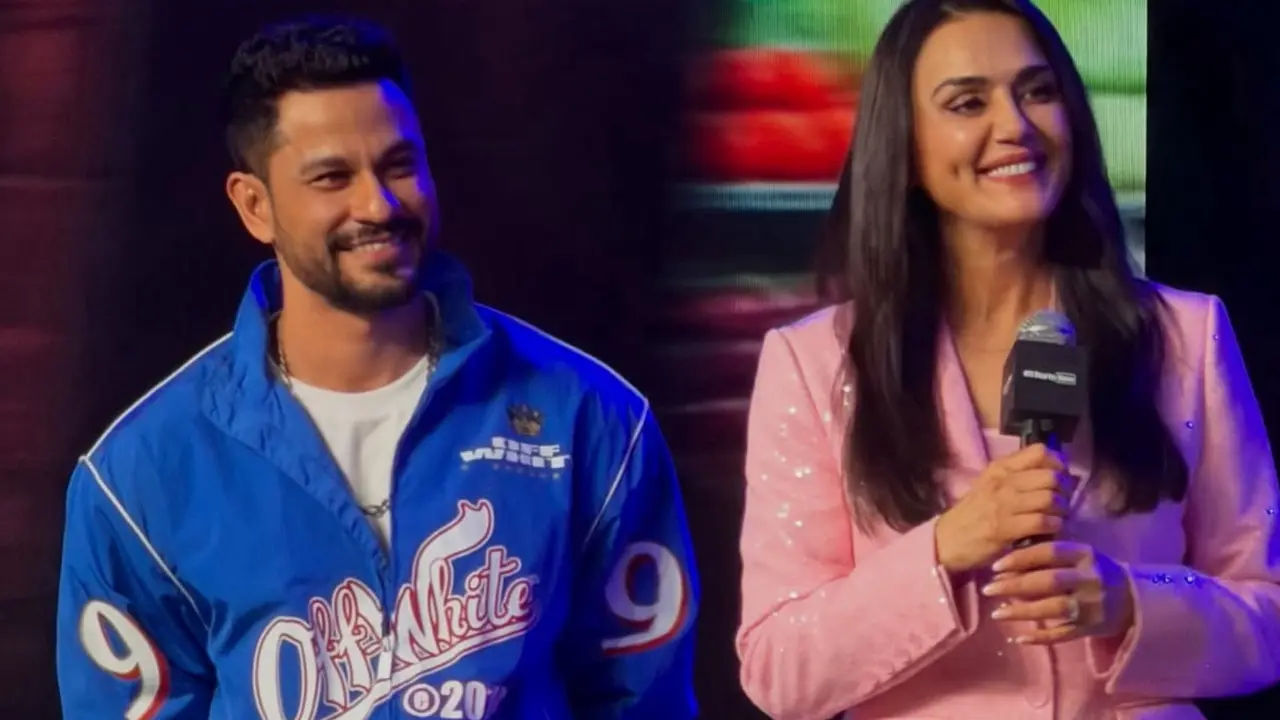
Preity Zinta has been away from the big screen for quite some time, leaving her fans eagerly waiting for her return to Bollywood. This year, however, promises to be special, as the actor is all set to make her comeback with the already announced `Lahore 1947` and another film titled `Vibe`.

Preity Zinta joins Kunal Kemmu`s next directorial

On Thursday, Vibe was officially announced at a Prime Video event, where Preity appeared alongside her co-star Kunal Kemmu. Interestingly, the film is directed by Kunal himself, marking his second directorial venture after the success of his comedy-drama Madgaon Express.

Vibe, which is touted to be a comedy drama, also features Sparsh Shrivastava and Vanshika Dhir.

Official synopsis of the film read, “A clueless slacker and his by-the-book best friend–two men who can barely manage their own lives–find the fate of the nation in their hands when they accidentally stumble into a terrorist plot.”

On being a part of `Vibe`, Preity said, “When I heard the script, I just fell down laughing.And it was just so funny. I just couldn`t say no to it.”

The release date of `Vibe` has not been disclosed yet. 

Preity`s work front 

Meanwhile, Preity is all set to make her comeback in Bollywood with Rajkumar Santoshi`s directorial Lahore 1947. This project marks an important milestone for Preity as she returns to the silver screen after a hiatus.

Lahore 1947, produced under Aamir Khan`s banner, marks a significant collaboration between Sunny Deol and Aamir Khan`s Productions. The film was officially announced in October 2023, garnering attention for its star-studded cast and promising storyline.It is slated to release this year.

Kunal Kemmu`s work front 

He made his directorial debut in 2024 with Madgaon Express. It stars an ensemble cast of Divyenndu, Pratik Gandhi, Avinash Tiwary, Nora Fatehi, Upendra Limaye and Chhaya Kadam.

As an actor, his last appearance was in the film Kanjoos Makhichoos, directed by Vipul Mehta. The film is based on the famous Gujarati play Sajan Re Jhooth Mat Bolo. The film also stars Shweta Tripathi, Piyush Mishra, Alka Amin, Rajeev Gupta and Raju Srivastava. Known for his perfect comic timing, Kunal’s popular work includes films such as the Golmaal series, Kalyug, Dhol, Lootcase, Malang, Go Goa Gone, Traffic Signal and many others. 


De Villiers tells Abhishek Sharma not to suffocate under pressure, points to Virat Kohli’s process: ‘Embrace & love it’

0
De Villiers tells Abhishek Sharma not to suffocate under pressure, points to Virat Kohli’s process: ‘Embrace & love it’


Former Royal Challengers Bengaluru great AB de Villiers has urged Abhishek Sharma to draw lessons from Virat Kohli as he looks to find consistency again. Abhishek was in blazing touch before the T20 World Cup but endured an up-and-down campaign, even though he signed off with a valuable fifty in the final. His issues against off-spin, however, stood out and went unnoticed. With the IPL around the corner, teams are likely to target that weakness, making it a key area he will need to address quickly if he wants to stay ahead of the curve. He will also have an added responsibility of vice-captaincy in the initial phase of IPL 2026, with Pat Cummins still recovering from injury and Ishan Kishan taking over the charge.

Abhishek Sharma will be entering the IPL under some pressure. (PTI)

With Abhishek under increasing pressure, De Villiers pointed to the need to shut out the noise and focus on his own game. He referred to RCB icon Virat Kohli’s approach over the years, noting how regular self-assessment helped him deal with challenging phases and stay on track.

“When you are feeling the pressure externally, you just have to keep working on your own game. That’s one of the things I saw in Virat in all those years. He would constantly analyse his own game, and that’s where Abhishek is at now,” De Villiers said on Star Sports.

Also Read – ECB suffers from Dukes ball shortage amid war, only half the stock available: ‘…I’d have had a word with Trump’

Abhishek endured an inconsistent 2026 T20 World Cup, finishing with 141 runs from eight games at an average of 17.62. He did register a couple of fifties, notably one of which came in the final, but found it tough to build momentum, with spin posing a recurring challenge throughout the campaign.

“Go back to the nets and be that child again”

Continuing on the same theme, De Villiers underlined the need for Abhishek to change how he views pressure. He suggested that instead of feeling weighed down, the young batter should embrace it, reconnect with his love for the game, and use that freedom to rediscover his best form.

“Don’t suffocate because of the pressure. Instead, embrace it and love it. Go back to the nets and be that child again, who loves the game and has passion for it, to figure out new things about yourself. If he has that kind of mindset, he is going to be just fine,” he added.


Anupam Kher says he refused to get hair transplant despite being offered money: ‘Main paise nahi lunga’

0
Anupam Kher says he refused to get hair transplant despite being offered money: ‘Main paise nahi lunga’


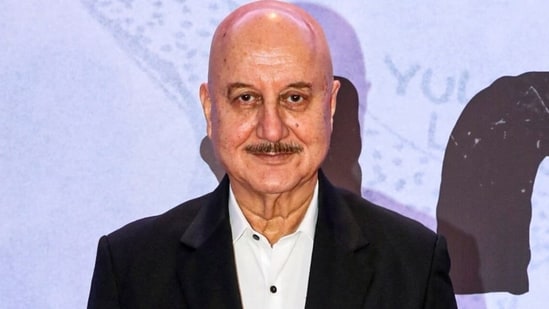
When Bollywood actor Anupam Kher entered the film industry in 1981, he was bald, and many questioned his ambition to become an actor. However, he went on to star in hits like Dilwale Dulhania Le Jayenge, Hum Aapke Hain Koun! and The Kashmir Files, among others. With two National Awards to his name, the actor carved a niche for himself, making a mark in both Bollywood and Hollywood. In a recent interview with Pinkvilla, he revealed how hair-weaving companies offered him money to undergo a hair transplant, but he refused.

Anupam Kher talks about being offered money to have a hair transplant.

Anupam Kher says he is offered money to get a hair transplant

Anupam shared that he considers youngsters his friends and advises them not to call him “sir” or “uncle”, but instead address him as “AK” or “Anupam ji”. He added that being called “uncle ji” boxes him into a category, whereas he prefers to break stereotypes. The actor also said he enjoys discussing topics ranging from AI to health and science with younger generations.

He then revealed that several hair-weaving doctors had approached him for a hair transplant, but he turned them down. He said, “Main har hair weaving company ya doctor ka sapna hoon. Aur bahut saare log paise dene ko teyaar hain ki ek baar aap baal lagwalo humse. Maine yeh mauka unko nahi diya (I am every hair-weaving company’s or doctor’s dream. And many people are ready to pay me to get a hair transplant done just once with them. But I never gave them that opportunity).”

He added, “Kitne bhi paison ki zarurat mujhe padh jaaye, main paise nahi lunga kyunki mujhe lagta hai main voh rahunga hi nahi. Jab Sikandar bahut chota tha, main ek baar akbhar padh raha tha aur mujhe nahi pata tha usmein hair oil ki ad hai. To Sikandar ko laga main voh ad dekh raha hoon toh voh kehta, ‘dad sochna bhi mat’ (No matter how much money I might need, I won’t take it because I feel I wouldn’t remain the same person. When Sikandar was very young, I was once reading a newspaper and didn’t realise there was a hair oil advertisement in it. Sikandar thought I was looking at that ad, and he said, ‘Dad, don’t even think about it).’ I am blessed to have a family that has a great sense of humour, that really helps.”

Anupam Kher’s upcoming film

Anupam will next be seen in Khosla Ka Ghosla 2. Directed by Prashant Bhagia and produced by Bhushan Kumar, Krishan Kumar, Savita Raj Hiremath and Raj Hiremath, the film is a sequel to the 2006 cult classic Khosla Ka Ghosla!. It will see Ranvir Shorey, Parvin Dabas, Kiran Juneja and Boman Irani reprising their roles. The film is scheduled to release in theatres on the occasion of Raksha Bandhan, on August 28, 2026.


Giles Tillotson: “A map, even more clearly than a drawing, is a document”

0
Giles Tillotson: “A map, even more clearly than a drawing, is a document”


Curation, as a deliberate effort, is also essentially a political practice in collecting. What has been your experience?

art historian giles tillotson

It is political in the sense that any interpretation of history comes from a particular place. Therefore, given the scale of the paintings, as with the work of Sahib Ram (active 1778–1803), they may have been for public viewing, not private operation. This puts them in a different category of things. In the same period in Europe, major portraits of aristocrats and royalty would be publicly displayed through academies. If someone makes a new portrait of King George III, it will be shown at the Royal Academy before going to wherever it belongs. Therefore, it is seen and understood and then transmitted in printed form, in fact, which comes to India only later. So, painting itself is a political act. Or at least some paintings are. I was interested in trying to open it. It seemed to me that certainly the public imagination in this part of the world had acquired some ideas about Sawai Jai Singh in particular. And my question is where do they come from? It is not that they are mere remnants of remembered facts. No, it’s something that’s been manufactured. I’m interested in that process of creation and the role that art plays in that process.

Historians look for contexts outside the paintings to understand them, but in reality the paintings themselves are creating that historical context in a way. Please elaborate on that.

This is a two-way street. It goes without saying that, if you want to understand a work of art, you have to understand the historical circumstances in which it was created. Or literary reference. You can’t look at a picture of Krishna and the Gopis without understanding that it comes from Geeta Govinda And what is the story. Otherwise what are you looking at? How can you possibly explain this? Therefore, it is important to understand the cultural context. But yes, the work of art creates its own context. And the way we think about certain things stems partly from pictures as historical documents.

Read more:Report: Jaigarh Heritage Festival

You talked about how maps can be seen as alternative archival documents that provide a lot of information for people who are looking for it.

I thought there was a sense in which a map, even more clearly than a picture, is a document. I mean, it’s designed to chart the field. Therefore, even if it is not a topographically accurate map, it is not the job of a surveyor. I didn’t show you any maps (during the masterclass) Reading drawings and plans At the Jaigarh Heritage Festival) were created by a modern map maker using survey techniques. But still, it is showing you or trying to record historical realities. What I’m saying is that there’s another layer to it where if you ask the question, why is this map here? Who made it? And why did that person make it? Then it’s telling you more. And two Mughal examples, both of them are objects from Jaipur, which represent Mughal objects. Hence he throws light on Jaipur-Mughal relations in the 18th century. Which we know about from other sources, but this gives you clear proof of it. Another example, where you’ve actually got a detailed plan of a royal residence. It boggles the mind to think that there is such closeness, reach and trust between Jai Singh and Muhammad Shah.

Listen to more:Company Painting; A transformative moment in Indian art

Please talk about your experience at City Palace Gallery.

I worked for the Trust for 10 years, from 2011 until Covid. I was the consulting director. So, I was a visiting director, if you like, with a specific brief to work on the development of new galleries and run a publishing programme. We created books in six volumes highlighting different aspects of the collection.

And we created a gallery here in Jaigarh and a painting and photography gallery in the City Palace. We were working on the next gallery, which was the old transport gallery, Baggi Khana, which is now Rath Khana, when COVID interrupted the work and it was a little slow to get back on its feet, partly because Mrinalini (Venkateshwaran), who had worked with me and is now the head of the collection, left to go to the UK for three years. And I started working in Delhi. I worked for DAG. But we got things back on track and completed the Rath Khana. We have rebuilt the Sabha Niwas, with complete architectural preservation along with internal changes. And now, we have recreated the Sileh Khana (Gallery of weapons and armour). The new exhibit in that space is called Power & Diplomacy. The idea is that war is only one type of power and that it is the last type of power. And, in a way, it represents failure because you want to avoid it at all costs. So, power and diplomacy is about how you assert your authority and negotiate relationships with other powers. We felt that the story was not told just with weapons. It was told in paintings, in textiles, in court robes, in all kinds of objects, in manuscripts. What kind of books did he read? What types of manuscripts did they read and disseminate?

Similarly, when we reach the textile gallery, we are going to replace it with something on the theme of Jaipur and the world: How did Jaipur present itself on the global level in the fields of science, art and industry? Fabric is an important part of that story. Till date everyone knows about Jaipur Textile. It is a major commercial item which is produced in Jaipur. In the 19th century, Jaipur was engaged in promoting itself globally through the production of decorative art objects in brassware, stoneware and woodwork etc. It was screened all over the world. And that’s the story we want to tell.

Jaigarh is somewhat different as Jaigarh is still owned by the former royal family. This is a separate trust. It gets a lot of tourists, but obviously doesn’t have the collection that the palace has. This is a different kind of experience. And there is a lot of open space in it. I think the feeling was that an event like this, the annual Jaigarh Heritage Festival, promotes it locally and internationally. It just makes the space come alive. If you did this at the City Palace, it would look like we were turning it into a jeweler’s market; This won’t work. But there is so much space here that you can organize a market for two days in Lakshmi Vilas. And it feels great. That’s a refreshing way to look at it. It brings more people in.

What role do such festivals play in the conservation and promotion of heritage sites?

Speaking as a historian, Jaigarh has been little studied, much less understood. And there are some special reasons for that. In the case of Jaigarh, it did not continue under family ownership only. It continued to function with the military cantonment of the old Rajasthan State Forces. Believe it or not, till the 1970s, till the Emergency. So even after independence they kept a little because Man Singh had a military career. Bhavani Singh had a military career. They held back some of the forces of the state and were surrounded here. Therefore, no one was allowed inside. Therefore, all the historians of military architecture who got a chance to study other great forts of Rajasthan and might have written about Chittor or Mehrangarh or Jaisalmer could not come here.

I was just comparing notes with one of the few people who wrote about it early on. In the 1980s, when it was opened to the public, Rajendra Singh Khangarot, who has written the first and only book on it, said that there were books that forts of indiaWho would take Amer Mahal as a fort because they could not enter here. Everyone, even Rajasthan Tourism Development Corporation, calls the thing situated at the bottom of the hill as Amer Fort. This is not a fort, it is a palace. This is a fort. And the single unit has two parts: one now belongs to the State Archeology Department and one still belongs to the family. But you should see them together. I am happy to say that the road connecting them has now reopened. Therefore, it was not studied much because it still had a military cantonment.

No one was allowed inside. During the Emergency, Indira Gandhi sent forces with bulldozers to enter the area. She thought she was going to find some hidden treasure. I’m happy to say he didn’t get it. So, it is not so famous. Obviously, everyone in the field knows it. You see it sitting on a hill all the time. But it’s great to see it animated with so many people and so many things.

Simar Bhasin is a literary critic and research scholar based in Delhi. Her essay ‘A Tale of Resistance: Desire and Dissent in Selma Dabbagh’s Short Fiction’ was awarded ‘Highly Commended’ by the Wasafiri Essay Prize 2024.