Tuesday, September 29, 2026
Home Blog Page 1205

Leo Messi joins Cristiano Ronaldo in the 900 goals club

0
Leo Messi joins Cristiano Ronaldo in the 900 goals club


Leo Messi joins Cristiano Ronaldo in the 900 goals club

Lionel Messi has reached another milestone, getting his 900th career goal in the opening minutes of Inter Miami`s CONCACAF Champions Cup Round of 16 match against Nashville on Wednesday night.

In the first minutes of Inter Miami`s CONCACAF Champions Cup Round of 16 encounter, Lionel Messi scored his 900th career goal. According to official counts, Cristiano Ronaldo is the only other men`s player with more than 900 goals. Ronaldo required almost 100 more games to reach the milestone than Messi did; Messi doesn`t turn 39 until June, whilst Ronaldo reached 900 goals in September 2024 at the age of 39.

Although his “official” tally is closer to 800, some have claimed that Brazilian icon Pele scored more than 1,000 goals during his career. Pele`s goal totals range from about 650 in league games to almost 1,300 in all games, according to various sources that count different sets of games.

Messi`s goal was in vain as Nashville advanced to the tournament quarterfinals on the away-goal rule after drawing with Inter Miami 1-1. Last week, the teams` first leg matchup ended in a 0-0 draw in Nashville.

Leo Messi is one of the most decorated football players of all time

Over Messi`s career, he has won eight Pichichi trophies as La Liga`s top scorer, six La Liga best player nominations, three Best FIFA Men`s Player awards, three UEFA Men`s Player of the Year titles, two FIFA World Cup Golden Balls, and at least 15 selections as Argentina`s best player in a given year. This 900th goal milestone is just one of his many accolades and achievements.

Messi is the most decorated player in the history of the men`s game, having helped his club and nation win 47 trophies, including the 2022 World Cup for Argentina and the MLS championship with Inter Miami last season. When the World Cup takes place in the United States, Canada, and Mexico this summer, he is probably going to play for Argentina once more.

More than half of Messi`s goals came with Barcelona, the place he played for nearly two decades, he joined Inter Miami in 2023.

(With AP Input)


Energy markets explode: Crude hits $114, gas jumps 35% after Iran targets Gulf fuel sites

0
Energy markets explode: Crude hits 4, gas jumps 35% after Iran targets Gulf fuel sites


Energy markets explode: Crude hits $114, gas jumps 35% after Iran targets Gulf fuel sites

Global oil and natural gas prices surged sharply on Thursday after Iran launched fresh strikes on key energy infrastructure across the Gulf, including Qatar’s main liquefied natural gas (LNG) facility, raising concerns over prolonged supply disruptions.Brent crude, the international benchmark, climbed close to $114 per barrel, up from below $73 on the eve of the conflict. US benchmark crude rose 1.1% to $96.45 per barrel, while US natural gas prices, tracked by the Henry Hub contract, gained 3.3%.

European gas prices spike up to 35%

European natural gas markets saw the sharpest reaction, with the Dutch TTF benchmark, the region’s key gas contract, surging as much as 35% to around 74 euros before trimming gains. It was still trading about 24% higher on the day, according to AP.The spike followed two waves of Iranian strikes that caused “extensive damage” at Ras Laffan in Qatar, the world’s largest LNG hub. The facility, which handles roughly one-fifth of global LNG supply, was forced to shut after a drone attack.The disruption has been compounded by the near closure of the Strait of Hormuz, a critical shipping route for oil and gas. With tanker traffic severely restricted, LNG shipments from Qatar have been halted, tightening global supply.

Supply disruptions raise inflation concerns

The latest escalation comes as Iran intensifies attacks on energy infrastructure in Gulf countries following earlier strikes on its own gas facilities in South Pars. In addition to Qatar, two oil refineries in Kuwait were also targeted, reported AP.The disruption to the Persian Gulf’s energy network, a key supplier to global markets, has heightened fears that the current energy shock could be prolonged, with lasting damage to production capacity.Analysts warn that sustained high oil and gas prices could trigger a fresh wave of global inflation, complicating economic recovery and monetary policy.

Global markets react; equities fall

Financial markets reacted negatively to the surge in energy prices. Asian equities declined sharply, tracking losses on Wall Street.Japan’s Nikkei 225 fell 3.4% after the Bank of Japan held its benchmark interest rate at 0.75%, citing geopolitical tensions. In its policy statement, the central bank said: “in the wake of increased tension in the Middle East, global financial and capital markets have been volatile and crude oil prices have risen significantly; future developments warrant attention.”South Korea’s Kospi dropped 2.7%, Hong Kong’s Hang Seng declined 2%, and China’s Shanghai Composite fell 1.6%. Australia’s S&P/ASX 200 lost 1.7%, while Taiwan’s Taiex slipped 1.9%. In India, the Sensex also fell 2.3%.“The combination of higher oil, rising U.S. yields, and a stronger dollar is acting as a macro wrecking ball across Asian assets and currencies,” Stephen Innes of SPI Asset Management, told AP.

Wall Street declines amid inflation, rate concerns

US markets had already closed lower on Wednesday, with the S&P 500 falling 1.4%, the Dow Jones Industrial Average down 1.6%, and the Nasdaq Composite slipping 1.5%.Investor sentiment has been weighed down by rising inflation risks and reduced expectations of interest rate cuts. A report showed US wholesale inflation accelerated to 3.4% last month, indicating price pressures were building even before the conflict escalated.Federal Reserve Chair Jerome Powell acknowledged the uncertainty around the outlook. “We just don’t know,” he said, referring to oil prices and the broader economic impact of tariffs.

Dollar strengthens as uncertainty rises

Currency markets reflected the shift in risk sentiment, with US Treasury yields rising and supporting the dollar. The US currency has strengthened against major peers since the conflict began, though it edged slightly lower to 159.71 yen in early trade. The euro was marginally higher at $1.1467.Rupee during the intra day trade also breached the 93 mark hitting the lowest against Dollar at 93.36.

Volatility likely to persist

With key energy infrastructure under attack and critical supply routes disrupted, markets are likely to remain volatile. The scale of damage to facilities such as Ras Laffan and the duration of shipping disruptions through the Strait of Hormuz will be crucial in determining the trajectory of oil and gas prices.If disruptions persist, analysts say the global economy could face sustained energy-driven inflation and tighter financial conditions in the months ahead.(With inputs from agencies)


Top 7 OTG Alternatives for Baking, Grilling, Toasting and More technology news

0
Top 7 OTG Alternatives for Baking, Grilling, Toasting and More technology news


Having an oven toaster grill is no longer a luxury in a modern Indian kitchen. Instead, it has become a necessity. Oven toaster grills or OTGs, unlike built-in ovens, occupy much less space and are more energy efficient due to their compact size. They are a 3-in-1 appliance that can be used for baking, toasting, and grilling. Simply put, the oven toaster grill can be used to bake cakes, pastries and lasagna, grill kebabs and fish, and roast meat.

Top 7 Oven Toaster Grills for Baking, Grilling, and Toasting (Amazon)

Their compact size and small capacity ensure that they heat up fast, cook food evenly and consume less power than larger ovens, which in turn makes them an economical and ergonomic option for Indian homes. what’s more? Unlike microwave ovens, in which food sometimes gets soggy, oven toaster grills have heating elements at the top and bottom. This design ensures that the food remains crispy on the outside and tender on the inside. And it doesn’t hurt that they are relatively more cost-effective than microwave ovens or built-in convection ovens.

So if you’re planning on adding OTG to your kitchen, we’ve put together a list of the top products for you.

This oven toaster grill can be used to cook, roast and grill foods. Thanks to its rotisserie function, buyers can also use this appliance to reheat food and roast meat. It has a temperature range of 90 to 230 degrees Celsius and comes with a built-in light that helps users monitor the food while cooking. Plus, buyers get access to a 60-minute timer with a bell and a removable crumb tray.

Specifications

temperature

90 to 230 degrees Celsius

Watch

60 minute timer with bell

special features

Rotisserie function, turbo convection fan

reason to buy

ease of use

overall quality

strong design

reason to avoid

incredible button

What are buyers saying on Amazon?

Buyers appreciate its sturdy design. However, some people have reported issues with its buttons.

Why choose this product?

Buyers should choose this OTG for its rotisserie function and timer feature.

This oven toaster grill from Faber comes with a large capacity of 60L and has a temperature range of 100 to 250 degrees Celsius. Can be used for cooking, roasting, grilling foods. Buyers get plenty of attachments with this OTG, including a bake pan, an oven rack, a rotisserie handle, a tray handle, and a rotisserie rod. It has a chamber light inside that can be used to monitor the cooking inside.

Specifications

temperature

100 to 250 degrees Celsius

special features

Rotisserie Function, Cool Touch

reason to buy

value for money

ease of use

strong design

reason to avoid

Average build quality

heat related problems

What are buyers saying on Amazon?

Buyers appreciate its sturdy design and ease of use. However, some people have reported overheating issues, especially at the rear.

Why choose this product?

Buyers should choose this OTG for its multiple cooking settings and sturdy design.

This oven toaster grill from Faber comes with a capacity of 20L and has a temperature range of 100 to 250 degrees Celsius. It is ideal for baking cakes, pastries, cupcakes and making pizza. Users can also toast bread to make sandwiches with ease. It comes with a heat-resistant tempered glass window that can withstand high temperatures and has lights inside that aim to help users monitor the cooking inside. Additionally, buyers get four attachments with this appliance for different cooking needs – an anodized baking tray, an SS wire rack, a bottom crumb tray, and a tray handle.

Specifications

temperature

100 to 250 degrees Celsius

Watch

60 minute timer with bell

special features

cool touch

reason to buy

– value for money

-Durable built

reason to avoid

– No rotisserie function

What are buyers saying on Amazon?

Buyers say that this OTG is ideal for making pizza.

Why choose this product?

Buyers should choose this OTG for its robust design and overall performance.

This oven toaster grill comes with a capacity of 16L and is ideal for small families. Users can easily toast bread, make pizza, bake cakes and cookies and grill vegetables and fish in this OTG. It consumes just 1300W of power, saving both time and money on electricity bills. Buyers get four accessories with this OTG, which include a baking pan, a grill tray, a crumb tray, and a tray handle. It offers a 60-minute timer with four-step function control.

Specifications

temperature

100 to 250 degrees Celsius

Watch

60 minute timer with bell

special features

saves more electricity

reason to buy

– ease of use

– value for money

– Good baking ability

reason to avoid

– heat related problems

What are buyers saying on Amazon?

Buyers say this OTG is ideal for baking cakes and grilling vegetables.

Why choose this product?

Buyers should choose this appliance because of its baking performance.

This oven toaster grill from Bajaj is ideal for a family of two as it comes with a capacity of 10L. Users can easily toast bread, make pizza, bake cupcakes and grill vegetables with this OTG. It consumes only 800W power, which is power saving. Buyers get three accessories with this OTG, which include a cooking tray, a pizza tray and a pair of tongs. It offers a 60-minute timer with alert functionality.

Specifications

temperature

0 to 250 degrees Celsius

special features

saves more electricity

reason to buy

excellent build quality

easy to use

good baking ability

reason to avoid

uneven heating

What are buyers saying on Amazon?

Buyers say that this OTG is good for beginners and small families.

Why choose this product?

Buyers should choose this OTG due to its ease of use and value for money proposition.

This oven toaster grill from Morphy Richards is ideal for large families. It comes with five accessories, including a bake tray, a grill tray, a rotisserie handle, a rotisserie fork set, and a tray handle. It has eight preset menus with digital display, which include preheat, bake, roast, grill, defrost, tandoori and pizza. It can also be used to dehydrate and ferment food due to its built-in dehydrator and fermentation mode.

Specifications

temperature

0 to 230 degrees Celsius

special features

Rotisserie Function, In-Built Dehydrator, In-Built Fermentation Mode

reason to buy

– ergonomic design

– good build quality

– Good baking ability

reason to avoid

– uneven heating

What are buyers saying on Amazon?

Buyers appreciate this OTG for its solid built quality and good grilling and baking functions. However, its heating capacity has received mixed reviews.

Why choose this product?

Buyers should choose this OTG for its special features like in-built dehydrator and fermentation mode.

This oven toaster grill from Usha is ideal for medium-sized families. It comes with seven accessories, including a bake tray, a grill tray, a rotisserie handle, skewers, rotisserie tongs, a crumb tray, and grill and bake tongs. It has a 360-degree rotisserie function, which is ideal for roasting meat. It also comes with stay on function and keep warm modes for different cooking needs.

Specifications

temperature

0 to 250 degrees Celsius

special features

Stay on feature, keep feature hot

reason to buy

– easy to use

– good quality

reason to avoid

-Problematic temperature control

Top 3 Features of Best Oven Toaster Grill in India

Name Capacity temperature range special features
Glen Multi-Function OTG 35 Liters for Kitchen 35L 90 to 230 degrees Celsius Rotisserie function, turbo convection fan
Faber 60L 2200W OTG 60L 100 to 250 degrees Celsius Rotisserie Function, Cool Touch
Faber FOTG 20L Neo 1400 Watts OTG | Bake, Toast, Grill 20L 100 to 250 degrees Celsius soft touch
INALSA OVEN OTG (16 litres) with temperature selection-1300W 16L 100 to 250 degrees Celsius saves more electricity
Bajaj 1000T Oven Toaster Grill 10L 0 to 250 degrees Celsius saves more electricity
Morphy Richards 52RCD Digi OTG 52 0 to 230 degrees Celsius Rotisserie Function, In-Built Dehydrator, In-Built Fermentation Mode
Usha 3642RCSS 42 Ltr Oven Toaster Grill with Rotisserie and Convection 42L 0 to 250 degrees Celsius Stay on feature, keep feature hot

Disclaimer: At Hindustan Times, we help you stay updated with the latest trends and products. Hindustan Times has an affiliate partnership, so we may get a share of the revenue when you make a purchase. We will not be liable for any claims under applicable laws including but not limited to the Consumer Protection Act, 2019 in relation to the Products. The products listed in this article are in no particular order of priority.


India drawn alongside defending champs China for Thomas and Uber Cup

0
India drawn alongside defending champs China for Thomas and Uber Cup


India drawn alongside defending champs China for Thomas and Uber Cup

The Indian men`s and women`s teams were handed a challenging draw alongside defending champions China on Wednesday for the 2026 Thomas and Uber Cup, to be held in Horsens, Denmark, from April 24 to May 3. Both the Indian teams are seeded eighth in the tournament based on their individual players world rankings. The draw was announced by Badminton World Federation (BWF) on Wednesday.

The 2022 Thomas Cup champions India will be favourites to claim one of the two quarterfinals spots from Group A that also comprises Pan Am champions Canada and Oceania champions Australia. The women`s team, however, has a slightly tricky road to the knockout stages as it is clubbed with European team championships runners up Denmark and bronze medallists Ukraine besides 16-time champions China.

“We have got a decent draw and a chance to reach the quarterfinals in both the Thomas Cup and Uber Cup competition. We have a strong team that has proved that they can beat any top team on their day and after reaching the quarterfinals anything is possible,” said Badminton Association of India (BAI) secretary general Sanjay Mishra while responding to the draw for the prestigious team championships.

While the Indian men created history by winning the 2022 edition of the Thomas Cup, the women`s squad has won the bronze medal in 2014 and 2016 editions. India lost to China in the quarterfinals of the last edition in 2024.

The Indian women bowed out in the quarterfinals after losing to Japan in the previous edition. China boast of a formidable men`s line-up with Shi Yu Qi (world No. 2) and Li Shi Feng (No. 7), Weng Hong Yang (No. 17) and Lu Guang Zu (No. 18) in their ranks. India however, will draw confidence from Lakshya Sen`s recent form as the Paris Olympic semi-finalist stunned Feng en route to a runner-up finish at the All-England Championships earlier this month.

India created history in 2022 by winning their maiden Thomas Cup title in Bangkok, becoming only the sixth nation to lift the trophy after a 3-0 win over 14-time champions Indonesia in the final. India qualified for the 2026 Thomas Cup through their position in the BWF men`s team rankings following the Badminton Asia Team Championships.

The women`s team also secured their Uber Cup berth via the world rankings. A total of 16 teams — divided into four groups of four — will play round robin league with each tie consisting of five matches (three singles and two doubles). The top two teams from each group will make the quarter-finals.

This story has been sourced from a third party syndicated feed, agencies. Mid-day accepts no responsibility or liability for its dependability, trustworthiness, reliability and data of the text. Mid-day management/mid-day.com reserves the sole right to alter, delete or remove (without notice) the content in its absolute discretion for any reason whatsoever


Daisy Shah hopes Palaash Muchhal, Smriti Mandhana get back together after wedding fiasco: ‘We don’t know actual truth’

0
Daisy Shah hopes Palaash Muchhal, Smriti Mandhana get back together after wedding fiasco: ‘We don’t know actual truth’


Music composer-turned-director Palaash Muchhal recently found himself in the spotlight after reports of his wedding with cricketer Smriti Mandhana being called off made headlines. Actor Daisy Shah is maintaining a measured stance, saying she would refrain from judging him based on his personal life, as she is not aware of what truly went on behind the scenes.

Palash Muchhal and Smriti Mandhana were supposed to tie the knot on November 23 last year. (Instagram)

Daisy on Palash and Smriti

In an interview with Miss Malini, Daisy mentioned that Palash hesitated to contact her directly for his directorial venture after his wedding with Smriti Mandhana got cancelled. Daisy is set to star in Palaash’s next directorial venture.

Daisy revealed that she received two to three calls from unknown individuals claiming that Palash was making a film and wanted her to be a part of it. However, she found the approach suspicious, noting that she shares a close friendship with Palash’s sister, Palak. She reasoned that if Palash genuinely wished to reach out, he would have contacted her directly or through Palak, making it puzzling why strangers were trying to relay the message.

She said, “So, I happened to drop a message to Palash, asking about the same, and he said, ‘yeah ma’am this is true, but because of the situation lately, I am not calling personally anybody because it might go on a different tangent altogether’.” They later planned a narration and Daisy expressed her interest in going ahead with the project.

During the interview, Daisy was also asked if she ever doubted working on a project with Palash.

Daisy mentioned, “I can switch off from personal life to professional life, and I don’t think your personal life should affect your professional life. First of all, I don’t know what is the actual story. There are always two sides to a coin. We really don’t know what went wrong because it is between two families, we are sitting here and judging from what we heard from the media houses. We don’t know what is the actual truth, and that doesn’t mean that I am nullifying the woman side of the story. I’m just being neutral. Also, he contacted me on a professional level. So, who am I to even judge a book by its cover?”

She admitted that she hopes the couple gets back together, sharing, “I hope everything gets well on both sides, and they come together because they actually make a lovely pair.”

Palash Muchhal’s personal life in spotlight

Palash and Smriti were set to tie the knot on November 23 last year, but the celebrations were abruptly put on hold after a medical emergency involving Smriti’s father. Concern grew further when Palash was also admitted to a hospital in Mumbai. Following this, the rumour mill has exploded, with some even alleging that Palash cheated on Smriti.

Later, Palash shared a note on Instagram addressing it all. He wrote, “I have decided to move on in my life and step back from my personal relationship.” “Its been very difficult for me to see people react so easily on baseless rumours about something which has been most sacred to me. Its the most difficult phase of my life and I will deal with it gracefully holding on to my beliefs. I truly hope we, as a society, learn to pause before judging someone based on unverified gossip, whose sources are never identified. Our words can wound in ways we may never understand,” Palash added. Palash and Smriti unfollowed each other on Instagram after calling off wedding.


Ghosts in the Dark: Waiting for the Lions in Sasan, Gir

0
Ghosts in the Dark: Waiting for the Lions in Sasan, Gir


I will admit that there is a slight sense of nervousness before traveling to Gujarat, which is temporarily intensified the moment my cab pulls out of Rajkot airport and plainclothes policemen are checking the luggage for the slightest smell of alcohol, which some outsider might have smuggled into India’s most notoriously dry state. Still, the prospect of a reward – one of the subcontinent’s most remarkable biospheres – and its royal inhabitants – was enough to temper my reactive disappointment.

At Sasan Gir, the west-kissed folds of the Saurashtra peninsula reveal themselves through textures and an air that feels stripped of the essentials. About two hours from Junagadh and a short drive from Rajkot, the national park covers over 1,400 square kilometers of dry deciduous forest, scrub, rocky terrain and seasonal rivers. It is the only place on Earth where Asiatic lions still roam freely – survivors of near-extinction that left barely a dozen of their kind in existence at the end of the 19th century. Today, more than 600 lions live in and around this forest, along with leopards, hyenas, crocodiles, sambar, chital and hundreds of bird species.

A jeep enters the Gir Reserve. Photo Credit: Special Arrangement

The forest at Sasan, where we stayed on the edge of the park, is located in an eight-acre mango orchard just outside the forest boundary. Conceived by Maulik Bhagat and architect Maria Portela as the flagship property of 1000 Islands Hotels & Resorts, this retreat is spread across low stone structures discreetly placed among the trees. Thirty-eight private residences sit apart from each other, leaving the garden intact. Built largely from local stone, lime plaster, reclaimed wood, khadi, terracotta and cane, the structures rely on thick walls, intelligent orientation and natural light. Concrete is used sparingly, plastic has been almost completely reduced, and not a single mango tree has been cut down to make way for construction.

View from Woods property in Sasan, Gir | Photo Courtesy: Aayan Paul Chaudhary/Special Arrangement

French restaurateur Laurent Guiraud, who now oversees operations at In the Woods, described the retreat’s biophilic philosophy through three pillars: culture, community, and wellness. Most of the workers came from nearby villages, and dozens of local artisans worked on the construction. “We want to bring more into the ecosystem than we take out,” he said. He explains that Wellbeing in the Woods creates a connective tissue that emphasizes sleep, silence, darkness, the preservation of ancient natural rhythms, and respect for nocturnal life that begins where the garden ends.

Paths around the mango orchard in the woods of Sasan, Gir. Photo Courtesy: Aayan Paul Chaudhary/Special Arrangement

Those rhythms made themselves felt on my very first night. In winter, Delhi hardly allows you to see the moon, leave alone any other divine offering through its particle soup. But here, I found myself standing under the clearest night sky I had seen in years, the constellations opening up above us as the constellations came into view one after the other, as if someone had turned the contrast knob all the way up. Under that sky, Woods’ culinary team prepared a barbecue in the garden, smoke swirling in the cool breeze, while Laurent regaled us with stories of his early years in India. He talked about arriving in Delhi as a young “blonde” professional, roaming the capital’s restaurants and having a tolerance for alcohol as generous as that of a visiting Frenchman. He admitted that his move towards Gir felt like an inevitable pull away from the noise towards something quieter and more fundamental.

Our mornings in the woods began before dusk. On our first day, Akash Ahir – the estate’s naturalist and extremely enthusiastic lecturer on the ecology of Gir – took us on a walking tour through the forest that surrounds the garden. The land here is often frequented by lions in the early morning, a fact Akash mentioned with cheerful indifference as we stepped over fresh pugmarks buried in the dust. Eventually, the path opened up into a clearing at a lower altitude, where breakfast appeared with incredible timing, and we watched the sun rise over a mosaic of forest paths blending into agricultural plots on the horizon. The afternoon was spent with Gujarati thali in Swadesh, frequent stops at the retreat’s charming wellness centre, and cinema and long conversations over food before bed.

Breakfast on hill top after morning walk. Photo Credit: Special Arrangement

The rest of our time there was spent in pleasant bliss. Lunch was a sumptuous traditional Gujarati thali at the property’s signature restaurant Swadesh. Between meals, we popped in and out of SOM, the retreat’s wellness space, which offered a series of treatments designed to recalibrate the body to be more in tune with the environment. Afterwards, pizza for dinner from the wood-fired grill, followed by a long conversation with Laurent about French New Wave cinema and culinary memories in Paris.

On the day of the safari, we again woke up before dawn, braving the cold, and climbed into an open jeep headed towards the Gir National Park Centre. Dozens of tourists gathered in nervous groups, guides barking instructions into the cold wind. As the state-owned jeeps pulled out one by one, a huge bronze lion presided over the plaza. Everyone I spoke to before this trip seemed suspiciously confident about the sightings. Many of them claimed that the chances of seeing a lion here were inevitable, and that I must have fantastic luck to leave the forest without seeing a lion. When the jeep was swallowed by the darkness, the confidence of that person sitting wrapped in a blanket burrito started to waver.

A safari path in Gir Photo Credit: Special Arrangement

At that time the forest seemed vast and mysterious. Our headlights cut a narrow corridor through the darkness while the canopy thickened overhead and dry leaves crunched under the tires so loudly that I felt nervous, as if we were announcing our presence to every creature within a kilometer. My thoughts turned, somewhat involuntarily, to this kitschy but deeply entertaining 1996 thriller ghost and darknessWhere Val Kilmer and Michael Douglas spend two hours being terrorized by a pair of famously man-eating lions in colonial East Africa. Naturally, as the jeep started hurtling down the track, I began to notice every slight rustle in the brush and every pair of mirrored eyes flashing momentarily from the darkness before disappearing again.

After barely twenty minutes of driving our driver applied the brakes. In front of us, three lions were lying lazily as if the road belonged to them. There was a semi-adult male, his hair still growing into a slight ruff, and next to him rested two adult females whose bodies were clearly feeling a heavy, satisfied lethargy after filling their bellies. All three of them blinked slowly in the dim glow of our headlights, giving us faint acknowledgments, before they returned to the much-important task of morning sleep.

Three lions rest in the fall at dusk. Photo Courtesy: Aayan Paul Chaudhary

As dawn broke over the forest, the landscape revealed itself in layers. Spotted deer were the first to appear, their white markings glowing softly as they froze in midair to watch us pass. The terrain kept changing. Dry deciduous expanses opened up into grasslands where the horizon broadened for a while, then turned back into thorny acacias and rocky outcrops.

Spotted deer seen in Gir. Photo Credit: Special Arrangement

Within the first 20 minutes the three lions felt incredibly generous, and as the cold began to increase, they sat on the jeep and took a load of satisfaction. About 45 minutes later, a more immediate concern took hold. Early morning tea, the cold and the open jeep had rapidly turned into a escalating bladder crisis. I considered three options: bear it out, discreetly soil myself, or risk the most beautiful but potentially deadly bathroom break of my life.

Thankfully the forest took pity. We reached the designated spot where the vehicles were gathered, an open space with a toilet. When I returned, Akash was in the middle of a conversation and he seemed to be hearing something special happening, so we left immediately. After about an hour, we reached a clearing where there was a shallow water hole amidst dense bushes and scattered trees. About 10 jeeps had already positioned themselves in a semicircle. One by one they gave up and went away until only we were left. “Safari is a waiting game,” Sky said calmly. “Those who wait the longest usually win.” That patience soon bore fruit.

A pride of lions was seen in Gir. Photo Courtesy: Aayan Paul Chaudhary

a lion. Then another. Then another, until eight lions gathered at the water’s edge – six juvenile cubs and two adult females standing behind them, keeping watch – as they bowed their heads and began to leap to the surface in a slow, rhythmic motion, making a low thudding sound. shlup-shlup Against the peace of the clearing.

The cubs were playfully pushing each other, biting their tails and shaking their shoulders, while the adults kept a watchful eye on the surrounding forest. Not even once did he acknowledge that barely 10 meters away was sitting a jeep full of stunned humans. After several long minutes they finished their drinks, extended their hands lazily and, one by one, went back to the bush from which they had come.

A pride of lions was seen in Gir. Photo Courtesy: Aayan Paul Chaudhary

Later Akash told us that such scenes were rare. They told us that this pride came from two male lions named Jai and Veeru, who are named after the characters cinder. The two ruled their territory together for years before they were killed in battle by rival lions, leaving their cubs in danger of being released from their heredity. What saved them was the strategic intelligence of adult females, who shepherded the cubs into vigilant migrations designed to keep them out of reach of the new alpha. When chance encounters with those ethnic cleansers became inevitable, lionesses resorted to what zoologists politely describe as “false mating behavior,” which is scientific shorthand for luring the enemy into a honeytrap long enough for the babies to escape.

A few days in the fall and a chance encounter with some unexpectedly empowering resident feminist icons is sometimes enough to make one reconsider some previously held beliefs. But even if the morning sets Eleven Among the country’s most photogenic apex predators, well, there’s nothing to complain about.

This author was in Sasan in Gir at the invitation of Woods.


Review: Don’t Let It Break You, Honey by Jenny Evans

0
Review: Don’t Let It Break You, Honey by Jenny Evans


Jenny Evans was 19 when life started to open up for a bit. She recently appeared in a Welsh cult film Twin Towns. The atmosphere around the production was open and joyful. The cast and crew flew from London to Swansea just to be a part of the energy. Then, suddenly, everything collapsed. After a night out in London, she was sexually assaulted by a well-known man.

“At times, Jennie Evans poses as a journalist investigating the culture of the British tabloid. At other moments, she’s also grappling with memory and grief.” (Shutterstock)

Jenny Evans’s Don’t let it break you, darlingJoe, who is longlisted for this year’s Women’s Prize for Nonfiction, begins with that violent experience as a young actor. Nearly three decades later, Evans returns to that moment in her memoir that in turn asks a set of larger questions: What happens when a private experience becomes public property? How do institutions like the press and the police shape a survivor’s story? And how can one assert control over a narrative that has already circulated beyond one’s control?

Stories of sexual violence place a strange demand on those who tell them. Survivors are expected to create credible stories. Yet, trauma rarely behaves that way. Memory often breaks down and language struggles to capture what happened. Scholars writing about trauma point to this paradox where survivors must tell their stories in ways that seem coherent, even if the experience itself is not.

When Evans writes about that period of her life, she often places the attack within a longer history of loss. His childhood was stable and loving. His mother worked as a physician and his father taught English and worked as a labor counselor. He took Evans and his brother on long walks where they watched birds and recited poems. These memories appear in the book as an almost lost language of security. When Evans was 13, that world came crashing down. His father died after a routine medical procedure went wrong. The shock of that loss disrupted his adolescence.

Going to school became difficult and he dropped out twice. Grief becomes one of the most powerful forces shaping the memoir. Evans writes about how the death of a parent alters a young person’s sense of stability. Years later, another devastating loss would come and completely disrupt his life. The accumulation of these events helps Evans write about violence with an awareness that life can change suddenly and without warning.

After leaving school she eventually found a sense of belonging in youth theatre, which led to her being cast in Twin Town. For a moment, it seemed that life had found direction again. That short-term momentum makes the events that follow even more disorienting. This attack appears in the memoir with clarity and uncertainty at the same time. Evans remembers its physical force, particularly the pressure on his throat which left him with difficulty breathing. At the same time, she admits that she never fully understood what happened in those moments. Trauma leaves gaps. “It was an attack by penetration,” she writes. “The truth is, I don’t know what the penetration was.”

Rather than report the assault, Evans retreated into a cycle of shame and self-blame. She always considered herself confident and independent. The attack shattered that self-image. She writes, “I couldn’t read rooms. I couldn’t trust my conscience.” She left Wales for London and gave up acting. Within a year she gained weight, changed the way she dressed and retreated from the life she had imagined.

One of the most remarkable things in the book is the role of storytelling. There is a certain “literary evidence” that exposes structural injustice. The memoir runs parallel to the major crisis in British journalism that culminated in the phone-hacking scandal. As Evans examines the media culture surrounding her own assault case, her personal experience becomes an entry point into a broader critique of how the tabloid press gathers and disseminates information.

Evans doesn’t try to present herself as heroic or resilient. She writes about her confusion, depression, and the slow erosion of self-confidence. A year after the attack, the manager of the bar where she worked raped her again. This incident confirmed her worst fear: that something about herself made her vulnerable to harm. He did not even report this attack.

What emerges from these chapters is an examination of shame as a social force. Evans argues that shame plays a central role in how sexual violence is silenced. Survivors often internalize the idea that repeated victimization makes their story less credible. In one of the memoir’s most devastating lines, she writes: “One attack is bad luck, two is recklessness – the context doesn’t matter – three, or more, now you’re an unquenchable, fantasizing, crazy slut.”

Years later, Evans began to rebuild his life. She enrolled at the Royal Central School of Speech and Drama with the intention of becoming a teacher. For the first time since the attack she felt she had direction again. Then he encountered a newspaper article that changed everything. The man who assaulted her was charged with rape.

Until that moment, Evans believed that the attack on him may have been an isolated incident. Suddenly another possibility emerged. Perhaps other women were harmed. Perhaps silence had saved the criminal. She went to the police. The subsequent experience becomes the main argument of the memoir. Evans hoped the criminal justice system would clarify what had happened. Instead, he saw his story slip into the media machinery. Within four days of speaking to police, details of his confidential statement were revealed in the Sun. The article did not mention her by name, but it identified the man she accused and reproduced intimate details of his testimony. Evans was stunned. The information she had shared in confidence had somehow made its way from the police interview room to the tabloid newsroom.

This experience changed the way I understood journalism. Evans describes this moment as the beginning of an intellectual transformation. He stopped thinking of his experience solely as a personal trauma and began to see it as part of a larger media system. Tabloids thrive on personal information. Stories about sex, violence and celebrity generate attention and profits. Within that economy, the suffering of individuals becomes a valuable commodity. This realization inspired Evans to pursue journalism and he enrolled in a journalism school. She wanted to understand the machinery that had turned her experience into news. Journalism became a way to investigate a story that had gotten out of his control. During his studies at City University, he attended a masterclass with Guardian reporter Nick Davies, researching what would become flat earth newsHis historical criticism of British journalism. Evans contacted him directly and asked for work. Soon she was assisting him with his research into newsroom practices. At the same time, he helped expose a widespread culture of phone hacking and media corruption that ultimately led to the closure of the News of the World and the Leveson Inquiry into press ethics.

This memoir considers journalism as a form of knowledge production. This also created an interesting intersection of professional work and personal life. His journalism career is driven by personal urgency. This gives the memoir its distinctive voice. Evans writes from multiple positions at the same time. She is simultaneously a survivor, reporter, researcher, witness. As she moves on from these roles, her perspective changes. Sometimes, she investigates the culture of British tabloids as a journalist. At other moments, she’s also dealing with memory and grief.

The stories he heard confirmed his growing suspicion of the tabloid press. Reporters described abusive “punishment assignments” given by editors, the use of private investigators to obtain confidential information, and payments to police officers for tips. The industry ran on pressure, secrecy and competition.

Gradually, Evans began to see his own experience within this system. This question had been troubling him ever since the newspaper article appeared: “How did they know?” It now appears to be linked to a much larger network of connections between journalists and the police. The phone-hacking scandal eventually exposed many of these practices. As Evans worked with Davis, the scale of the problem gradually emerged. For Evans, the scandal revealed that the line between law enforcement and journalism had become dangerously blurred. Within that framework his own case began to make sense. Only a few people were aware of the confidential details printed in the tabloids. Evans herself, her friend Rachel and the police.

The memoir is a long battle for answers. Evans lodged complaints and eventually took legal action against the Metropolitan Police with the help of lawyer Tamsin Allen. This process took years. It appears that institutional responses were often designed to diffuse responsibility rather than deflect it. Evans also makes a structural decision that changes the way the memoir is read. The name of the person who attacked him remains unnamed throughout the text and appears only as a “well-known person”. It’s disappointing and makes one think more about the networks of media, celebrity, and institutional power that allowed the story to circulate this way.

The title of the memoir comes from a brief meeting with American author and civil rights activist Maya Angelou, who told Evans, “Don’t let this break you, darling.” It felt like a prophecy. Then life continued through a series of decisions and a lot of perseverance, which Evans gained from that one meeting with Angelo.

Pranavi Sharma writes on books and culture. She lives in New Delhi.


'500 cr will be because of Rakesh Bedi': Ranveer's prediction

0
'500 cr will be because of Rakesh Bedi': Ranveer's prediction


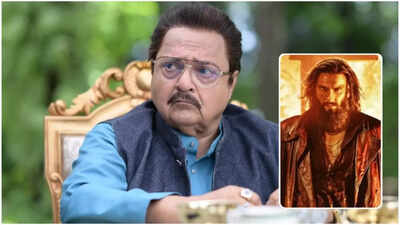
'Rs 500 crore will be because of Rakesh Bedi': Ranveer Singh made bold box office prediction on sets of 'Dhurandhar The Revenge'
Celebrated veteran actor Rakesh Bedi steps into the shoes of Jameel Jamali, a Pakistani Awami Party leader, in Aditya Dhar’s much-anticipated ‘Dhurandhar’ series. Co-star Ranveer Singh couldn’t help but praise Bedi’s performance, quipping that should ‘Dhurandhar 2’ reach the monumental Rs 1000 crore mark, half of that success can be traced back to Bedi’s remarkable portrayal. Read on to know more in detail.

Rakesh Bedi plays an important role in Aditya Dhar‘s ‘Dhurandhar’ film franchise. The veteran actor is seen as Pakistani Awami Party leader Jameel Jamali in the movie. Recently, he recalled Ranveer Singh stating that if ‘Dhurandhar 2’ grossed over Rs 1000 crore, Rs 500 crore of that success would be because of Jameel Jamali.

Ranveer Singh praises Rakesh Bedi on the sets of ‘Dhurandhar: The Revenge’

On India Podcasts, Rakesh Bedi shared an anecdote from the sets of ‘Dhuranhdar: The Revenge’. The veteran actor shared that Ranveer Singh took the microphone on the last day of the shoot and praised him in front of everyone. He recalled, “Ranveer said that if the film makes Rs 1,000 crore at the box office, then Rs 500 crore will be because of Rakesh ji.” The actor shared that he tried to downplay Ranveer’s remark; however, Singh expressed that he meant every word he said.

Watch

Dhurandhar 2 Hit With Major Cuts: Key Scenes Removed Ahead of Release

Rakesh Bedi further shared, “What more can a character actor ask for? The director even said he would cry on my last day of shooting—it created an amazing atmosphere throughout the film.”

More about ‘Dhurandhar: The Revenge’

The Aditya Dhar directorial has raked in over Rs 44 crore through its paid previews on Thursday, March 18. The film has been released in theaters today, and as of now, it has earned Rs 32 crore at the box office on Day 1, according to the Sacnilk report. It goes without saying that the espionage thriller will break several box office records daily. The movie features Ranveer Singh, R Madhavan, Sara Arjun, Arjun Rampal, Danish Pandor, Rakesh Bedi, and Sanjay Dutt.The movie is set to showcase how Ranveer’s Hamza Ali Mazari takes over the Lyari town after the death of Rehman Dakait. The audience will also get to see the backstory of Jaskirat Singh Rangi. Arjun Rampal as Major Iqbal is the main villain of the film this time.


TOISA 2025: From cricket to para sports, UP athletes make strong impact across categories | More sports News

0
TOISA 2025: From cricket to para sports, UP athletes make strong impact across categories | More sports News


TOISA 2025: From cricket to para sports, UP athletes make strong impact across categories
L-R: Parul Chaudhary, Preethi Pal and Deepti Sharma

The Times of India Sports Awards (TOISA) is set to return with its eighth edition, celebrating the inspiring journeys and achievements of India’s finest athletes across multiple disciplines. The much-anticipated TOISA 2025 ceremony will take place on March 21, 2026, in Lucknow, bringing together sporting icons and emerging stars who made the nation proud over the past year.This edition will recognise athletes across more than 45 sporting categories, honouring performances during the evaluation period from January 1 to December 31, 2025. From global championships to major international tournaments, Indian sport witnessed a remarkable year filled with memorable victories and record-breaking performances.Athletes from the host state, Uttar Pradesh, are well represented in the nominees list across multiple categories, highlighting their growing presence and success at both national and international levels.A total of 15 names have featured in the TOISA 2025 nominees list based on their performances in the 2025 calendar year, including 13 athletes and two coaches.The athletes have been nominated across categories such as cricket, athletics (track and field), hockey, shooting, kabaddi, para archery, para athletics, para chess and para coach, showcasing the breadth of Uttar Pradesh’s sporting excellence.From cricketers like Deepti Sharma, who was named Player of the Tournament during India’s triumphant ICC Women’s ODI World Cup campaign, and Kuldeep Yadav, the Asia Cup’s leading wicket-taker, to athletics nominees Gulveer Singh, Sachin Yadav, Parul Chaudhary and Rupal Chaudhary, Uttar Pradesh athletes have shone on the global stage.Here is the list of Uttar Pradesh athletes and coaches nominated for TOISA 2025::Cricketer of the Year

  • Kuldeep Yadav
  • Deepti Sharma

Athlete (Track & Field) of the Year

  • Gulveer Singh
  • Sachin Yadav
  • Parul Chaudhary
  • Rupal Chaudhary

Hockey player of the YearShooter of the YearKabaddi player of the YearPara Archer of the YearPara Athlete (Track & Field) of the Year

  • Preethi Pal (Sprinter)
  • Praveen Kumar (High Jump)

Para Chess Player of the YearPara Sportsperson of the YearPara Coach of the Year

  • Gaurav Khanna (Para Badminton)
  • Dr Satyapal Singh (Para Athletics)
Banner Insert


Keki Mistry returns to steady the HDFC Bank ship in choppy waters| Business News

0
Keki Mistry returns to steady the HDFC Bank ship in choppy waters| Business News


For Keki Mistry, it’s a return to the helm born out of sudden necessity. Doesn’t matter if it’s only for three months. The man who built India’s largest mortgage financier from the ground-up is now interim chairman of a combined HDFC Bank Ltd.

There’s no power struggle within HDFC Bank, Interim Chairman Keki Mistry says after taking the helm of India's largest private lender from Atanu Chakraborty after his shock resignation.
There’s no power struggle within HDFC Bank, Interim Chairman Keki Mistry says after taking the helm of India’s largest private lender from Atanu Chakraborty after his shock resignation.

Following the shock resignation of part-time chairman Atanu Chakraborty over what he said were “ethical concerns”, the Reserve Bank of India swiftly approved Mistry as the interim chairman of the “systemically important bank”. He got to work immediately. Less than 12 hours after the former bureaucrat’s exit was made public, he was speaking to the media to calm the nerves of investors and customers alike, even as the stock of India’s largest private bank tumbled.

“There could have been a relationship issue between [Atanu] Chakraborty and (the bank’s) management. That may have manifested over a period of time,” he told the media and analysts over a call earlier today.

“None of us are aware of the issues raised by Chakraborty in the [resignation] letter… Differences on minor issues do come up from time to time…(but) no material issues raised,” he said. “There’s no power struggle within the bank.”

With that out of the way, Mistry immediate job would be to steady the ship that’s treaded choppy waters since the mega HDFC Bank merger came to a fruition in 2023, as “benefits of the merger are yet to fructify”, according to Chakraborty.

Keki Mistry before HDFC Bank merger

Mistry, in a way, has been in the HDFC ecosystem since before the bank we know of today existed. Joining Housing Development Finance Corp. Ltd. in 1981 and ascending to the role of CEO in 2010, the Mumbai-born bred and educated Parsi was instrumental in transforming HDFC Ltd. into a profitable mortgage machine—albeit with slim margins.

By the time of the mega HDFC Bank merger in 2023, HDFC had total assets of ~ ₹10.9 lakh crore and assets under management worth ₹7.2 lakh crore. The lean cost-to-income ratio generate a net profit of ₹26,160 crore in FY23.

Mistry’s HDFC Ltd. relied heavily of wholesale borrowings rather than low-cost CASA deposits. That meant thinner net interest margins (2% to 2.5%) but large scale and low operational costs, which drove high return-on-equity.

At the time of the HDFC merger, Mistry stepped away from daily ops, advising the board and CEO Sashidhar Jagdishan in a non-executive capacity. Now, he is back in the spotlight to oversee an institution that’s grappling with merger pangs.

The HDFC Bank merger

While the strategic rationale for the merger was sound on paper—HDFC Bank’s CASA heft meets HDFC’s mortgage strength—the execution has lacked.

  • The margin squeeze: HDFC Bank consistently delivered net interest margins of around 4% fuelled by its massive depositor base, but the merger fundamentally altered this math. Absorbing HDFC’s high-cost wholesale borrowings—which increased HDFC Bank’s liabilities to 21% from 8% pre-merger—compressed NIMs to 3.4%-3.5%.
  • The loan-to-deposit ratio (LDR): The most glaring post-merger financial metric was the surge in credit-to-deposit ratio, which spiked to 110% in FY24. To avoid regulatory scrutiny, HDFC Bank increased its deposits to ₹27.14 lakh crore in FY25 to lower the LDR to under 100%, but that came at the cost of ceding its mortgage market share to rivals ICICI Bank Ltd. and State Bank of India.
  • The Dubai debacle: In late 2025, the Dubai Financial Services Authority put severe regulatory restrictions on HDFC Bank’s Dubai branch, barring it from onboarding new clients or promoting its financial services. The ban stems from an investigation into alleged mis-selling of high-risk Credit Suisse Additional Tier-1 bonds.

Mistry at work, again

Keki Mistry steps into the interim chairmanship facing a dual mandate: project absolute stability and oversee a seamless transition after a shock exit.

The financials back him—in FY25, HDFC Bank clocked a consolidated net profit of ₹70,790 crore, on net interest income of 1,21,700 crore and net interest margin of 3.4-3.5%—but Chakraborty’s resignation exposes an unknown underbelly.

“While governance standards have historically been strong for the bank, the current episode raises concerns about aspects that we may have limited insights, but could be material from a stock multiple perspective,” Kotak Institutional Equities wrote in a note.

JPMorgan, which has a “neutral” rating on HDFC Bank, said that Chakraborty’s exit adds to the macro headwinds, along with a hit to sentiment. “We believe that the stock is likely to trade weak following the resignation announcement, with impact amplified by a softer macro backdrop amid geopolitical uncertainties.”

Macquarie has removed HDFC Bank from its marquee buy list following the exit.

Institutional Investor Advisory Services, a proxy advisory firm that counts HDFC Bank among its shareholders, said RBI should be on top of the issue as HDFC Bank is a systematically important bank. “But since the RBI has appointed a group insider Keki Mistry in his place it could mean less alarm for shareholders,” IiAS CEO Amit Tandon said.

Clearly, Mistry has a task at hand—that of assuring institutional investors that the “practices and happenings” referenced in Chakraborty’s resignation letter are isolated and not systemic cracks. At the very least, he has RBI on his side.