Tuesday, September 29, 2026
Home Blog Page 1245

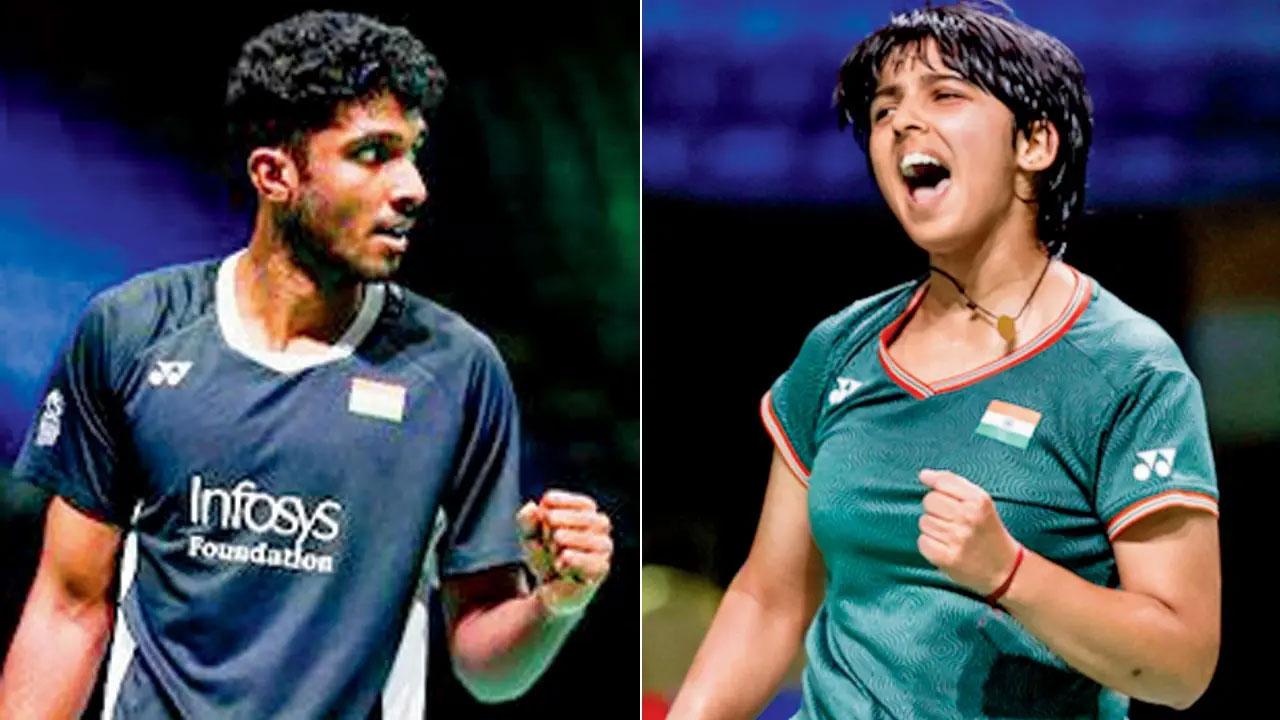
Ayush, Tanvi to lead Indian challenge at Orleans Masters Super 300

0
Ayush, Tanvi to lead Indian challenge at Orleans Masters Super 300


Ayush, Tanvi to lead Indian challenge at Orleans Masters Super 300

Youngsters Ayush Shetty and Tanvi Sharma will lead India`s challenge at the USD 250,000 Orleans Masters Super 300 badminton tournament beginning here on Tuesday after senior shuttler HS Prannoy pulled out due to a shoulder injury. Prannoy, who was originally slated to face top seed Chou Tien Chen of Chinese Taipei in the opening round, was forced to withdraw after experiencing shoulder pain during the Swiss Open in Basel last week. While the cause of his discomfort was unclear initially, the Indian had decided to pull out of his match against Japan`s Koki Watanabe to avoid aggravating the injury.

“The shoulder pain developed after travelling to the Swiss Open. We didn`t know the reason then, so I decided to withdraw and fly back,” Prannoy told PTI. “After a scan it showed a slight tear. It is a minor thing and hopefully I should be okay soon,” added the seasoned pro, who is targeting a return at the Asian Championships to be held from April 7 to 12 in Ningbo, China. While Prannoy will miss the event, the rest of the Indian contingent will look to make a deep run in the tournament.

All eyes will be on eighth seed and world No. 25 Ayush Shetty, who won the US Open Super 300 last year, as he opens his campaign against Lee Chia Hao of Chinese Taipei. Former world No. 1 and currently ranked 30th, Kidambi Srikanth, who reached the finals of the Malaysia Masters Super 500 and Syed Modi International Super 300 in 2025, will face Denmark`s Magnus Johannesen. Tharun Mannepalli, fresh from a quarterfinal finish at last week`s Swiss Open, takes on Chinese Taipei`s Wang Tzu Wei in his opening game.

World No. 42 Kiran George, who stunned Singapore`s former world champion Loh Kean Yew at the Swiss Open, will face third seed Kenta Nishimoto of Japan. In women`s singles, Tanvi Sharma, the silver medallist at last year`s BWF Junior World Championships, will take on Thailand`s Supanida Katethong, while Malvika Bansod will continue her quest for glory after returning to action from a major injury when she faces Sung Shuo Yun of Chinese Taipei. Bansod recently recovered from a major left knee injury that sidelined her for approximately seven to nine months between 2025 and early 2026.

Rakshitha Sree Santhosh Ramraj will meet Japan`s Manami Suizu, while Anmol Kharb will be up against Turkey`s Neslihan Arin. In women`s doubles, Devika Sihag and Isharani Baruah will take on a pair coming through the qualifiers. Sihag had clinched her maiden BWF World Tour title at the Thailand Masters Super 300 last month, while Baruah had reached the quarterfinals at the same event. The men`s doubles pair of Hariharan Amsakarunan and M R Arjun, who formed their partnership last year, will face the Chinese Taipei duo of Lai Po Yu and Tsai Fu Cheng.

The Indian pair had won the Al Ain Masters Super 100, Turkiye International Challenge and Telangana India International Challenge titles in 2025. In women`s doubles, Ashwini Bhat K and Shikha Gautam will be up against the fourth-seeded Japanese pair of Rui Hirokami and Sayaka Hobara. In mixed doubles, the Indian challenge will feature the pairs of Rohan Kapoor and Gadde Ruthvika Shivani, and Dhruv Kapila and Tanisha Crasto, who had reached the quarterfinals of the 2025 BWF World Championships held in Paris.

This story has been sourced from a third party syndicated feed, agencies. Mid-day accepts no responsibility or liability for its dependability, trustworthiness, reliability and data of the text. Mid-day management/mid-day.com reserves the sole right to alter, delete or remove (without notice) the content in its absolute discretion for any reason whatsoever


Dhurandhar 2: Mumbai theatres to operate 24 hours, shows begin at 1.55 AM

0
Dhurandhar 2: Mumbai theatres to operate 24 hours, shows begin at 1.55 AM


Dhurandhar 2: Mumbai theatres to operate 24 hours, shows begin at 1.55 AM

Aditya Dhar’s Dhurandhar: The Revenge is all set to hit the screens amid much anticipation and buzz. The advance booking of the film has already raised the bar ahead of its release, paving the way for one of the biggest premieres in Indian cinema history. With the given high demand, cinema halls are now looking for ways to add newer shows. Theatres in Mumbai have even stretched the screenings to late night and post-midnight, giving Dhurandhar 2 round-the-clock shows.

Dhurandhar 2 gets 24 hours of screen time in Mumbai

Dhurandhar 2 has already sold close to 15 lakh tickets across India in advance booking. Interestingly, half of these have come for the paid preview shows on Wednesday, a day ahead of their release on Thursday. Given that the film runs for nearly four hours, it has become tough for exhibitors to run more than 4 shows per screen during regular runtime.

To keep up with the surge in demand and the long runtime, many theatres are now adding post-midnight shows for the Ranveer Singh-starrer, something that`s very rare in Indian cinema.

In Mumbai and Thane, ticketing platforms show theatres like PVR Chakala and Movie Max Sion have added shows over the weekend, starting as early as 2 AM and continuing till 11.30 PM across different screens. The Movie Max cinema hall in Thane and Miraj Cinemas in Wadala in Ahmedabad have also added post-midnight shows for Dhurandhar 2, starting Thursday itself. Although replicating this model is not possible in all cities in the country due to logistical and safety concerns, reports suggest that many theatres in Western and South India are expected to follow suit over the next 24 hours and open up late-night shows for the film.

Dhurandhar 2 advance bookings

The advance booking for Dhurandhar 2 is crushing records by the hour. The film has sold almost 8 lakh tickets for the paid previews, grossing Rs 35 crore, much above the previous India record of Rs 25 crore set by Pawan Kalyan’s They Call Him OG last year. Additionally, the film has also earned Rs 21 crore gross for day 1 advance bookings.

Talking of overseas numbers, the Ranveer Singh-starrer has become the first Indian film to earn USD 5 million from pre-sales in North America. Dhurandhar 2`s overall advance booking collections globally have already exceeded Rs 125 crore.


Why the Iranian regime did not collapse after Khamenei’s assassination | US-Israel war on Iran

0
Why the Iranian regime did not collapse after Khamenei’s assassination | US-Israel war on Iran


It is not true that the killing of Iran’s Supreme Leader Ali Khamenei necessarily means the immediate collapse of the regime.

This is a hasty reading, reflecting more wishful thinking than sober analysis. Yes, we are witnessing a seismic blow, the most dangerous to hit the Islamic Republic since its establishment in 1979. But the more important political question is no: “is the blow bad?” but rather: “was the system built in a way that allows it to absorb a blow of this magnitude?”

The available evidence so far indicates that the system was designed from the outset not to be merely the shadow of a single man, no matter how elevated his position.

The Islamic Republic is not an autocratic regime like in the familiar Arab context, where the entire structure collapses when its head disappears. It is a complex ideological and securitised system, with a religious head, beneath whom there is a network of solid institutions—some constitutional, some security-related, some bureaucratic and economic—all working to preserve the entity itself, not merely to serve the individual.

For this reason, the killing of the supreme leader does not automatically erase the state, nor topple the regime simply by virtue of the event; rather, it shifts the crisis from the question of “the survival of the head” to the question of “internal cohesion”. The struggle to maintain it is where the real danger lies.

The Iranian constitution itself was drafted with the spectre of a power vacuum in mind. Article 111 stipulates that a temporary council assumes the powers of leadership when the position becomes vacant, until the Assembly of Experts chooses a new leader as soon as possible.

After the announcement of the Leader’s killing, powers were transferred temporarily to a three-man council comprising President Masoud Pezeshkian, the head of the judiciary Gholam-Hossein Mohseni-Eje’i, and Guardian Council member Alireza Arafi.

Meanwhile, the choice of the new supreme leader was in the hands of the Assembly of Experts, which is made up of 88 members.

We can describe this clarity in how to deal with the vacancy of the Leader’s position as a “survival protocol” designed to give the system the capacity to continue even at a moment of maximum shock.

But the bigger mistake would be to be deceived by the constitutional form alone. Yes, the text matters, but the balance of power matters more. Here we must distinguish between three layers from which the system draws its strength.

The first layer is religious legitimacy, represented by the office of the Supreme Leader, the Assembly of Experts, and the Guardian Council. This layer grants the system its doctrinal legitimacy and determines who holds the “seal of legitimacy”. Therefore, the battle over succession is not merely administrative but theological and political at the same time.

The second layer is the security-military sector, headed by the Islamic Revolutionary Guard Corps (IRGC), which is in fact the backbone of the system, not just one of its institutions.

The third layer is the political bureaucracy, meaning the government, the presidency, the judiciary, and the administrative and economic apparatuses that keep the state’s daily functions running and prevent a scene of general collapse.

Among all these layers, the truly decisive one is the IRGC.

Recent reports indicate that, after Khamenei’s killing, the main question is no longer: “Is there a constitutional mechanism?” but rather: “Will the IRGC remain cohesive?” This is because this body is not subordinate to the president, nor is it a conventional army. It is the actual guardian of the revolution, possessing the upper hand in internal security, in regional decision-making, and in economic and influence networks.

Because of the war and the killing of senior commanders, the IRGC has tightened its grip on decision-making in the country, and has come to rely on a degree of operational decentralisation that allows mid-level leadership to continue working quickly.

This means that the blow may have struck the head, but it has not paralysed the limbs.

Based on current indications, it is difficult to assert that the Iranian regime will fall as a result of this war alone. Some signs in fact point to the opposite: ideological regimes, when faced with an external existential threat, may harden rather than collapse, and the targeting of the supreme leader may in the short-term lead to greater hard-line stances and defensive cohesion, not rapid disintegration.

Even some elements of the Iranian opposition abroad have said explicitly that bombing alone does not topple the regime, and that any real change, if it happens, requires an internal dynamic broader than mere military strikes.

However, the absence of immediate collapse does not mean safety. The regime may not fall, but it could emerge from this war exhausted, wary, and more closed in on itself—especially after the selection of Mojtaba Khamenei, the late supreme leader’s son. This, in my view, is the most likely scenario so far: the regime remains, but in a harsher, less self-confident form.

War tests not only deterrent capacity, but also reveals the extent of internal frailty and reshapes centres of power. When a regime emerges from such a war bloodied by losses and with its very head under threat, it tends to choose the security option: it turns inward, expands suspicion, narrows the political sphere, and treats opponents and dissidents as “potential breaches” in the wall of survival.

This tendency has already begun to appear. Reports has spoken of internal fissures that surfaced under the pressure of war—between hardliners close to the IRGC and a relatively less hardline current associated with President Pezeshkian’s positions, especially after the controversy following his remarks about halting attacks on Gulf states.

Some hardline clerics within the system pushed for expediting the choice of a new supreme leader, suggesting unease with having actual power temporarily distributed among a three-man council in the midst of an open war. These are not yet signs of collapse, but they are signs of anxiety within the structure itself.

The dilemma, then, is not the absence of a mechanism, but the environment in which this mechanism is being tested: war, assassination, external pressure, military losses, divisions within the elite, and fear of defection.

In sum, the Iranian regime, up to this moment, does not appear headed for a rapid fall, but it also does not seem capable of emerging from this war unscathed, as it was before. The most likely outcome is that it will endure, but at a high price: greater reliance on the IRGC, less space for politics, heightened sensitivity toward opposition, and a stronger inclination toward internal security contraction.

To put it more plainly: this war may not end the regime, but it may end what remains of its flexibility. When regimes lose flexibility, they may prolong their life by force, but at the same time they begin a slow internal drain. That is the current Iranian paradox: a regime that has not fallen, but is entering a new phase of anxious rigidity—rigidity that may protect it today, and weaken it tomorrow.

The Arabic version of this article was first published by Al Jazeera Arabic.

The views expressed in this article are the author’s own and do not necessarily reflect Al Jazeera’s editorial stance. 


The Iran war is roiling commodities far beyond oil| Business News

0
The Iran war is roiling commodities far beyond oil| Business News


SINCE THE third Gulf war began three weeks ago, one number has captured the world’s attention: the price of crude. On March 16th Brent, the global benchmark, briefly topped $106 a barrel—its highest since July 2022, a few months after Russia’s invasion of Ukraine. Donald Trump, America’s president, has tried to talk down prices, demanded help from NATO allies and overseen the largest-ever release of strategic oil stocks. None of this has convinced traders that the Strait of Hormuz will reopen soon. Some 10-15% of global oil supply remains trapped.

Erietta Latsi and Parnassos crude oil tankers sit anchored as the traffic is down in the Strait of Hormuz, amid the US-Israeli conflict with Iran (REUTERS)

Many other commodities are stuck, too. The Gulf states, it is rapidly becoming clear, matter for the supply of much more than oil and gas. Their vast hydrocarbon reserves make them ideal locations for firms that process raw materials. It also helps that they are situated between fast-growing Asia and wealthy Europe. And so 22% of the world’s traded urea, 24% of its aluminium, a third of its helium and 45% of its sulphur comes from the region. As drones hit plants and the Hormuz blockade strands exports, such crucial supply chains are experiencing an almighty crunch. Three industries—transportation, manufacturing and food production—are already suffering. And the damage only looks set to grow.

Take transport, and the refined products on which it relies first. The near-disappearance of Gulf crude has caused Asian refiners acute problems. As well as being far dearer, alternative supplies are lighter and lower in sulphur than their plants were built to process. This increases refiners’ operating costs, can damage their equipment and yields less diesel and jet fuel—the scarcest products right now. Margins have collapsed, prompting processing cuts of 5-15% in China, India, Japan and Thailand, and more elsewhere.

At the same time Gulf refineries, among the world’s largest, have barely shipped anything since late February. The little oil rerouted via pipelines in Saudi Arabia and the United Arab Emirates (UAE) is unrefined. So is the cargo carried by the few tankers that have dared to traverse the strait. Vortexa, a ship-tracker, estimates that 125 product tankers, or 5% of the global fleet, are trapped in the Gulf.

That double whammy has alarmed China into suspending all refined-product exports—turbocharging prices of petrol, diesel and jet fuel in Singapore, Asia’s oil-trading hub (see chart 1). Europe is feeling the squeeze too: last year it sourced 69% of its jet fuel imports from the Gulf or Asia. The cost of shipping fuel is through the roof everywhere.

The crunch will get worse before it gets better. Modelling by Michelle Brouhard of Kpler, a data firm, suggests that if Hormuz stays blocked, Oceania will have burned through 80% of its jet-fuel stocks within 36 days; Africa within 23. Asian countries outside China, Japan and South Korea will be critically short of petrol in 12 days. Many poorer places are already closing schools, shortening working weeks and rationing fuel. Even a swift reopening of Hormuz would not restore normality quickly owing to refinery damage, shattered infrastructure and shippers’ reluctance to return to the Gulf.

Manufacturing is the second industry under severe strain, because of its reliance on the Gulf’s petrochemical plants, which are largely unable to export their wares. The region accounts for nearly 45% of global seaborne naphtha flows and 23-30% of exports of other key plastic inputs, including styrene and polyethylene. Several Asian plastic makers have already declared force majeure, meaning they are unable to fulfil contracts owing to factors beyond their control.

The active compounds in most drugs, from aspirin to antibiotics, also require petrochemicals. China imports large volumes of petrochemical feedstocks from the Gulf; India, the world’s largest generic drugmaker, is exposed, too. In addition, the Gulf supplies 26% of the world’s industrial diamonds (essential for cutting and drilling tools), 26% of its glycol (a paint ingredient) and 30% of its methanol (used in plastics, resins, chemicals production and construction materials).

Most striking has been the impact on aluminium, which is used for packaging, transport, power grids and renewable energy. Qatar’s mega-smelter is short of gas, while plants in Bahrain and the UAE cannot export. All depend on imported raw materials they are no longer receiving. Although Oman exports aluminium from a port lying outside the strait, it is under attack and shipping costs are soaring.

As a result, the price on the London Metal Exchange for aluminium delivered in three months’ time is up by $300, to $3,440 a tonne—near its highest in four years. Distress is greatest in the regions most dependent on Gulf supplies: Europe, where they account for 14% of imports, and America, where they make up 21%. Delivery premiums for both have hit records (see chart 2).

Iran is also a significant supplier of semi-finished steel, meaning billets and slabs, to Asia. As exports have fallen, prices for crucial grades have leapt. Laura Stoyanova of Argus Media, a price-reporting agency, notes that the crunch has even made slab, an intermediate product, dearer than hot-rolled coil, the finished stuff. It is as if a raw lump of dough has become costlier than a baked loaf of bread.

Perhaps the most unexpected industrial casualty is helium, a gas that is essential for cooling the supermagnets used to make semiconductor chips, and which is a byproduct of liquefied natural gas (LNG). Qatar produced 17 metric tonnes of helium per day—roughly a third of global supply—at Ras Laffan, the megacomplex that until the war made and shipped nearly a fifth of the world’s LNg. Now, however, Ras Laffan has shut down, and there are no ready substitutes for helium.

Even more ominous is the threat to global food production, the third industry severely affected by the war. The United Nations estimates that a third of global seaborne fertiliser trade passes through the Hormuz. Roughly two-thirds of it this is urea (often produced from natural gas); most of the rest is phosphate. Poor countries will be hit hardest: Kenya, Pakistan, Somalia, Sri Lanka and Tanzania each source more than a quarter of their fertiliser from the Gulf. For Sudan, that rises to over half.

Prices are already moving sharply. Urea is up by 35% since the start of the war (see chart 3). The fertiliser was already expensive to start with: over the past three months, prices for deliveries to America have surged by over 70%.

Sulphur, another plant nutrient, is also in short supply. Prices have risen by 40% since late February, surpassing a previous peak hit in 2022. One trader says the regional market for short-term delivery is “at a standstill”. On top of sulphur’s use as a fertiliser, sulphuric acid is essential for leaching metals from ore in copper and nickel processing. Miners from Indonesia and Africa are scrambling for alternatives.

Svein Tore Holsether, chief executive of Yara, one of the world’s largest fertiliser companies, has warned that a prolonged Hormuz closure would be “catastrophic” for food supply. With spring planting imminent across the northern hemisphere, farmers face painful choices: pay sharply higher prices, reduce application rates or plant less corn and wheat (the most nutrient-intensive crops). On March 13th Brooke Rollins, America’s agriculture secretary, said the government was examining financial “solutions” to support farmers, calling the fertiliser crunch a “national security issue”.

For the industries hit by all these shortages, a countdown has begun. Fertiliser that arrives weeks late cannot be used for the 2026 harvest. The knock-on effects of stopping metal processing midway could persist well into 2027. Restarting idle refineries, smelters and petrochemical plants—which operate at extreme temperatures and pressures—may take months. An awful lot of the world’s supply chains pass through a 54-kilometre-wide channel alongside Iran. Quite how vulnerable that makes them is only just becoming clear.


Nora Fatehi's new song Sarke Chunar Teri Sarke faces legal issues after backlash over vulgar lyrics

0
Nora Fatehi's new song Sarke Chunar Teri Sarke faces legal issues after backlash over vulgar lyrics


A fresh controversy has erupted around Nora Fatehi’s latest song, with criticism now escalating into legal action. The track Sarke Chunar Teri Sarke from the movie KD: The Devil, featuring Sanjay Dutt, has sparked outrage online after clips went viral on X, drawing attention to what many are calling disgusting and double-meaning lyrics. The lyrics were written by Raqueeb Alam

KD: The Devil
KD: The Devil

Legal complaints and calls for a ban

The backlash has now moved beyond social media. The National Human Rights Commission (NHRC) has issued a notice over the alleged use of objectionable content in the song.

According to IANS, advocate and social activist Vineet Jindal has approached the Central Board of Film Certification (CBFC), seeking an immediate ban and removal of the song. The complaint alleges that both the lyrics and visuals are obscene and potentially harmful, particularly for minors.

According to the complaint, the song — currently circulating widely on YouTube and social media — contains “highly vulgar, sexually suggestive, and obscene expressions.” It further argues that the picturisation and dance sequences are provocative, contributing to a larger concern around public decency.

The matter has also been escalated to the Ministry of Information and Broadcasting, while a separate criminal complaint has reportedly been filed with the Delhi Police Cyber Cell.

The complaint names several key contributors, including lyricist Raqeeb Alam, director Prem, composer Arjun Janya and singer Mangli. It also states that the song may attract legal provisions under Section 294 of the Bharatiya Nyaya Sanhita (BNS), the Protection of Children from Sexual Offences (POCSO) Act, and the Information Technology Act, 2000.

Notably, criticism has extended beyond the Hindi version. Viewers have flagged similar concerns with the original Kannada lyrics, questioning the content across both languages. Amid the growing backlash, the makers have removed the Hindi version of the song from YouTube.

Netizens react to viral controversy

Social media has been flooded with reactions since the song went viral. Many users expressed disappointment over what they see as a decline in lyric quality in Bollywood.

“I miss the old Bollywood songs, man,” said one under the video. One more said, “Bollywood lyricists when they run out of ideas.” Another wrote, “There was a time when I misunderstood Emraan Hashmi, but he never gave a bad song. In today’s time, I can’t even imagine such good songs.” One user commented, “Bollywood songs used to be written by poets, and now they’re written by cheap people who think vulgarity and double meanings = Creativity.” Another added, “Not sure what’s worse – the lyrics or the confidence to release them.”

All about KD: The Devil

Directed by Prem, KD: The Devil stars Dhruva Sarja alongside Sanjay Dutt and Nora Fatehi. The film was initially slated for release in September last year, but was postponed. It is now scheduled to hit theatres on April 30. The cast also includes Shilpa Shetty, V. Ravichandran, Ramesh Aravind, Reeshma Nanaiah and Jisshu Sengupta in key roles.

As the controversy continues to unfold, the song remains under scrutiny, highlighting ongoing debates around content standards in mainstream cinema.


How RCB and SRH can handle Josh Hazlewood and Pat Cummins’ absence in the opening phase of IPL 2026

0
How RCB and SRH can handle Josh Hazlewood and Pat Cummins’ absence in the opening phase of IPL 2026


The uncertainty around Pat Cummins and Josh Hazlewood has become an early IPL 2026 storyline, affecting not just two major squads but also the opening fixture itself. Royal Challengers Bengaluru and Sunrisers Hyderabad are due to meet on March 28, yet both have been preparing with the possibility that their first-choice Australian quick may not be available for the opening stretch of the season.

Pat Cummins for SRH and Josh Hazlewood for RCB. (X images)

That makes this more than a routine injury-management issue. Hazlewood and Cummins are not fringe overseas names who can be swapped out without consequence. Hazlewood gives RCB control, discipline and high-value overs across phases. Cummins gives SRH similar bowling value, but also carries the added weight of captaincy. The challenge for both teams, then, is not simply to replace overs. It is to protect the balance of the XI without allowing one absence to disrupt the rest of the structure.

RCB must spread the burden, not chase a replica

RCB’s task is the simpler of the two because their squad has enough pace depth to absorb a short-term absence without changing the side’s shape. The key is to avoid the temptation of finding a “new Hazlewood” within the group. That player does not exist. The smarter route is to redistribute his value across multiple roles.

Bhuvneshwar Kumar should become the central figure in that plan. He is the most reliable option to set the tone in the powerplay and keep the innings under control early. Alongside him, Yash Dayal offers left-arm variation and angle, which gives RCB a more uncomfortable opening combination than a straight seam-for-seam replacement would.

The third seamer should be selected based on the conditions. RCB have enough options to make that call match by match. If they want deception and a yorker threat, Nuwan Thushara fits the bill. If they want a more classical seam profile, Jacob Duffy becomes relevant. Either way, the decision has to remain tactical. Locking in a replacement too early would defeat the advantage of having multiple pace options in the first place.

This is also the moment for RCB to extract more value from the middle overs. Without Hazlewood’s all-phase reliability, Suyash Sharma has to become an attacking option rather than a holding one. He should be used with wicket-taking intent, especially if Krunal Pandya is able to provide control from the other end. That is where RCB can offset what they lose with the ball. If the seam attack becomes slightly less incisive, the spin unit has to become more proactive.

At the death, RCB should work by committee. No one bowler in this squad should be asked to carry all the closing overs simply because Hazlewood is unavailable. Bhuvneshwar, Dayal and the third seamer can split that responsibility, with Romario Shepherd providing backup if the matchup demands it. That preserves batting depth and prevents one injury from forcing a complete rethink of the overseas combination.

Also Read: Josh Hazlewood, Pat Cummins still not fully fit, to miss opening few games for RCB and SRH: ‘Rehab still going on’

SRH need two separate solutions

Hyderabad’s problem is wider because Pat Cummins is not just a lead fast bowler. He is also the captain, which means his absence creates uncertainty in both tactics and authority. That is why SRH cannot solve this with one selection call. They need two distinct plans: one for leadership and one for the attack.

The leadership issue must be settled cleanly and early. A temporary captain only works if the dressing room and XI know exactly who is in charge. Any half-measure would only add to the drift within a team that already thrives on high-risk cricket. Hyderabad’s core looks strong enough to support a stand-in leader, but only if the role is clearly defined from the outset.

With the ball, SRH should not try to recreate the full Cummins package. They need to break his role into parts. One bowler has to take charge of discipline up front, another has to own the disruption overs, and the fifth-bowler burden has to be shared intelligently. Harshal Patel becomes critical in that framework, but only if he is used where he is most dangerous rather than stretched across the innings.

The larger strategic point is that SRH should resist becoming too bowling-heavy in response. Their best coping mechanism is still their batting. Travis Head, Heinrich Klaasen, Ishan Kishan, Abhishek Sharma and Nitish Kumar Reddy give them enough firepower to dictate tempo. Without Cummins, the answer is not to dilute that strength in search of one extra specialist. It is to keep the batting explosive enough that the bowlers operate with scoreboard pressure backing them.

That also means part-time or support overs become more important than usual. Even a small contribution from the batting all-rounders can prevent the frontline attack from being overexposed. In Cummins’ absence, flexibility matters more than star power.

Two absences, two very different responses

RCB should cope by preserving structure. Their batting is strong enough, their captaincy remains stable, and their pace resources allow them to spread the workload without altering the side’s identity. The goal should be stability.

SRH should address the problem by separating it into distinct parts. One decision must settle captaincy. Another must reshape the bowling plan. Their best chance is not to search for a single replacement for Cummins, but to redistribute what he offers across the rest of the XI.

That is the real divide between the two teams. RCB can survive by staying close to themselves. SRH can survive only by becoming more deliberate.


7 oil-free evening snacks for weight loss, easy recipes perfect for your tea time

0
7 oil-free evening snacks for weight loss, easy recipes perfect for your tea time


evening tea break There is often a craving for something crunchy or salty, yet simple recipe options can make this time more balanced. oil free evening snack Offer lighter options that focus on natural flavors, steaming, roasting or grilling methods. These cooking styles help reduce unnecessary fat intake while keeping snacks enjoyable.

Healthy Evening Snack (Freepik)

Choosing non-oily snacks as part of a weight loss diet can support careful calorie balance and structured eating habits. Provides ingredients like chickpeas, sprouts, oats and seasonal vegetables Fiber and Plant-Based Nutrients Which contributes to gradual energy release. This combination may help maintain better portion awareness during late meals.

Many oil-free snack recipes also highlight natural textures and freshness. Roasted makhana, steamed vegetable cutlets, or cooked dal pieces provide variety without heavy preparation. Such options encourage Continuous hydration and digestion supportEspecially during busy workdays or casual tea time gatherings.

Adopting an oil-free evening snack can gradually reshape a daily routine focused on weight-management goals. Incorporating nutritious grains, pulses and herbs adds nutritional variety and makes tea time feel purposeful. These light recipes provide a practical approach to enjoying delicious snacks while sticking to balanced lifestyle habits.

7 oil-free evening snack recipes for light and meditative tea time options

Roasted Masala Makhana

Roasted masala makhana provides a crunchy and tasty snack that fits easily into a structured weight-management routine. Fox nuts are naturally light and nutritious Vegetable Proteins and Minerals. This simple roast recipe suits tea time cravings and offers a quick homemade option that requires minimal effort and preparation.

Material

  • 1 cup makhana
  • ½ tsp turmeric powder
  • ½ tsp roasted cumin powder
  • a pinch of black pepper
  • salt to taste

Instruction

  1. – Heat a thick bottomed pan on low flame and add makhana without oil in it.
  2. Fry slowly while stirring continuously so that they become crisp and light golden.
  3. Sprinkle turmeric powder, roasted cumin powder, black pepper and salt evenly.
  4. Stir gently for another minute so that the spices coat the makhana properly.
  5. Turn off the flame and let them cool completely before serving.
  6. Once cooled, the makhana develops a light crunchy texture that pairs well with evening tea.
  7. Store leftovers in an airtight container to retain crispness.

Steamed Chicken and Vegetable Cutlets

Steamed Chicken Vegetable Cutlets provide a lean, protein-rich snack option suitable for a structured tea-time routine. provides chicken high quality protein Which supports muscle maintenance and sustained energy, while the vegetables add fiber and natural nutrients. Steam cooking without using frying methods keeps the dish light and tasty.

Material

  • ½ cup minced chicken
  • 2 tbsp grated carrots
  • 2 tbsp finely chopped beans
  • 1 tablespoon chopped coriander
  • ½ tsp ginger-garlic paste
  • salt to taste

Instruction

  1. Take minced chicken in a bowl and add grated carrots, chopped beans, coriander, ginger-garlic paste and salt.
  2. Mix well until the ingredients are well combined.
  3. With clean hands, shape the mixture into small round or oval cutlets.
  4. Place the cutlets on a greased steamer plate or idli stand, leaving a little space between each piece.
  5. Steam for 10-12 minutes until the chicken is completely cooked and the cutlets are firm.
  6. Remove carefully and let them cool slightly before serving.

Sprouted Moong Chaat

Sprouted Moong Chaat offers a refreshing snack option full of natural crunch and tangy flavour. germination increases availability of nutrients And pulses become easier to digest. This recipe works well for tea-time gatherings and provides a colorful presentation that encourages the incorporation of plant-based protein into daily breakfast habits.

Material

  • 1 cup boiled sprouted moong
  • 2 tbsp chopped tomato
  • 2 tbsp chopped cucumber
  • 1 teaspoon lemon juice
  • ½ tsp roasted cumin powder
  • salt to taste

Instruction

  1. Cook the sprouted moong in gentle steam for three to four minutes so that they remain slightly crunchy.
  2. Put these in a mixing bowl and add chopped tomatoes and cucumber.
  3. Sprinkle roasted cumin powder and salt evenly.
  4. Sprinkle fresh lemon juice over the mixture and stir gently until the ingredients are combined. \
  5. Let the chaat rest for a minute so that the flavors blend naturally.
  6. Serve immediately as a refreshing evening snack.

Baked Gram Flour Vegetable Squares

Baked Gram Flour Vegetable Squares offer a delicious snack that combines chickpea flour with simple seasonings. Baking helps to create a firm yet soft texture without frying. This recipe is suitable for batch preparation and adds variety to no-oil breakfast plans. Support organized evening meal routines.

Material

  • 1 cup gram flour
  • 2 tbsp grated bottle gourd
  • 1 tablespoon chopped onion
  • ½ tsp turmeric powder
  • salt to taste
  • water as required

Instruction

  1. Mix gram flour, grated bottle gourd, chopped onion, turmeric powder and salt in a bowl.
  2. Add water slowly to make a thick batter.
  3. Pour the mixture into a baking tray and spread evenly.
  4. Bake in preheated oven at 180°C for about 20 minutes or until firm.
  5. Remove and let it cool slightly before cutting into square pieces.
  6. Serve hot with mint chutney.

Grilled Corn and Cheese Skewers

Grilled Corn and Paneer Skewers combine the mild sweetness of corn with soft cheese cubes. balanced evening snack. Grilling enhances the natural flavor without the need for oil. This recipe is suitable for quick preparation and adds a colorful option to tea-time plates focused on light breakfast options.

Material

  • ½ cup boiled corn kernels
  • ½ cup paneer pieces
  • ½ tsp black pepper powder
  • ½ tsp chaat masala
  • salt to taste

Instruction

  1. Thread the cheese pieces and boiled corn kernels alternately on small skewers.
  2. Sprinkle black pepper powder, chaat masala and salt evenly on the skewers.
  3. Place them on the preheated grill pan or oven rack and grill for 6-8 minutes, turning occasionally so they heat evenly.
  4. When the paneer becomes light golden from the edges, take it out.
  5. Serve hot with fresh coriander chutney.

Cucumber Peanut Stuffed Chunks

Cucumber and peanut filled pieces make a refreshing snack with a pleasant blend of crunch and nutty flavor. Using raw ingredients keeps preparation simple and maintains safety natural hydration. This recipe is suitable for quick tea-time arrangements and offers portion-friendly breakfast ideas that focus on freshness and balanced nutrition.

Material

  • 1 large cucumber (roughly chopped)
  • 2 tbsp crushed roasted peanuts
  • 1 tablespoon chopped coriander
  • ½ tsp lemon juice
  • salt to taste

Instruction

  1. Cut the cucumber into thick round pieces and take out a small portion from the center to make space for the filling.
  2. In a bowl, mix crushed roasted peanuts, chopped coriander, lemon juice and salt.
  3. Gently spoon the mixture into each cucumber slice.
  4. Arrange the stuffed pieces neatly on a serving plate.
  5. Serve immediately so that the crisp texture of the cucumbers is retained.

Grilled Spicy Chicken Bites

Grilled Spicy Chicken Bites Offer protein rich evening snack It looks light and delicious for tea time. Grilling helps enhance the natural flavor without heavy cooking methods. This quick recipe is in line with structured weight-management plans and offers a lean meatless option that pairs well with fresh dips or simple salads.

Material

  • 1 cup boneless chicken cubes
  • ½ tsp black pepper powder
  • ½ tsp paprika or red chili powder
  • 1 teaspoon lemon juice
  • salt to taste

Instruction

  1. Wash and dry the chicken cubes to remove excess moisture.
  2. In a bowl, combine the chicken with the black pepper powder, paprika, lemon juice and salt.
  3. Let the mixture sit for ten minutes so that the flavors blend naturally.
  4. Preheat a grill pan or oven and arrange the chicken pieces evenly.
  5. Grill on medium heat for 8-10 minutes, turning occasionally, until cooked through and lightly golden at the edges.
  6. Remove from heat and let rest for a while before serving.

questions to ask

  1. Are oil-free evening snacks good for weight loss?

Yes, oil-free snacks can help reduce excess calorie intake from fat. Choosing fiber-rich and protein-focused ingredients can support mindful eating habits and structured weight-management routines.

2. Which cooking methods work best for oil-free snacks?

Steaming, roasting, grilling, baking and dry roasting are suitable methods. These techniques help enhance natural flavor while keeping snacks light and consistent with balanced diet goals.

3. What are some healthy ingredients for an oil-free tea time snack?

Ingredients like oats, gram, sprouts, paneer, makhana, vegetables and whole grains provide fiber and nutrients. Incorporating these regularly can aid digestion and consistent evening energy levels.


Rajinikanth responds after Aadhav Arjuna remarks that he did not enter politics due to threat from Vijay's DMK

0
Rajinikanth responds after Aadhav Arjuna remarks that he did not enter politics due to threat from Vijay's DMK


Rajinikanth has broken his silence on the recent claims which were made by Aadhav Arjuna, general secretary of the party founded by actor-turned-politician Vijay. Aadhav claimed that the actor refrained from entering politics due to a threat from the DMK. Rajinikanth released an official statement on the matter via his X account on March 17. (Also read: Chinmayi Sripaada on backlash for criticising Kamal Haasan, Rajinikanth over posts for Vairamuthu: ‘I was a fan too…’)

Rajinikanth has released a statement after Aadhav Arjuna's comments on his political career. (PTI Photo)(PTI01_01_2026_000184B) (PTI)
Rajinikanth has released a statement after Aadhav Arjuna’s comments on his political career. (PTI Photo)(PTI01_01_2026_000184B) (PTI)

What Rajinikanth said

In the statement written in Tamil, Rajinikanth said, “I wish to express my heartfelt gratitude to everyone who condemned his slanderous remarks and raised their voices in support of me: the Leader of the Opposition in the Tamil Nadu Legislative Assembly, Edappadi Palaniswami; Tamil Nadu BJP President Nainar Nagendran; Union Minister L. Murugan; Tamil Nadu Minister Raghupathy; Thol. Thirumavalavan; S.P. Velumani; my friend Annamalai; Arjunamurthy; Anbumani Ramadoss; G.K. Vasan. John Pandian; Pugazhendhi; and various other political leaders from different parties.”

He added, “I also extend my sincere thanks to Ameer, G. Dhananjayan, and my friends from the film fraternity; to Nakkeeran Gopal, Rangaraj Pandey (Chanakyaa), and members of the media; and, above all, to my fans—whom I revere as deities—for sustaining and uplifting me. Time doesn’t speak, but it waits and gives the answer.”

About the controversy

The row began when Aadhav Arjuna, general secretary of TVK, alleged during a protest on March 12 that the Dravida Munnetra Kazhagam (DMK) threatened Rajinikanth. “The DMK family threatened Mr. Rajinikanth and ensured that he did not enter politics,” he said.

In December 2020, Rajinikanth announced that he will start a political party in January 2021 to contest in the upcoming Tamil Nadu Assembly elections. However, he cancelled his plans to enter politics, saying a health scare had been “a warning from God” “I will serve the people in whatever ways I can, without entering electoral politics,” he wrote.

Meanwhile, Election Commission of India (ECI) on Sunday announced that Tamil Nadu will go to polls in a single phase on April 23, with counting of votes scheduled for May 4.


5 IPL legends to have not won the Orange Cap | Cricket News

0
5 IPL legends to have not won the Orange Cap | Cricket News


5 IPL legends to have not won the Orange Cap
IPL Trophy. (BCCI/IPL Photo)

As the Indian Premier League (IPL) 2026 approaches its blockbuster start of the 19th edition on March 28, the tournament once again promises high-octane cricket, massive runs, and individual brilliance. In an era dominated by batting, where the highest run scorer of season leads to the prestigious Orange Cap, there is a shocking fact that some of the IPL’s greatest run-scorers have never claimed the award.Despite featuring in the Top 10 highest run-getters in IPL history, these legendary players have never won the orange cap even after 18 editions of the tournament.

IPL 2026 should be audition for the next India T20I captain

1. Rohit Sharma: One of the biggest names in IPL history, Rohit Sharma is also one of the most successful captains, leading Mumbai Indians to five titles (2013, 2015, 2017, 2019, 2020). Known for his elegant batting, Rohit ranks 2nd in the top run-scorers in IPL history with 7,046 runs in 272 matches. Rohit Sharma’s best IPL season with the bat was arguably 2013, where he scored 538 runs to lead the Mumbai Indians (MI) to their maiden title. Despite his impact, he has never won an Orange Cap. 2. Shikhar Dhawan: Sitting 3rd on the all-time run charts, Dhawan has amassed 6769 runs in 222 matches. He came close to winning the Orange Cap in 2020 and 2021, where he was among the top contenders but narrowly missed out. Representing teams Sunrisers Hyderabad, Delhi Capitals, and Punjab Kings, Dhawan has delivered several memorable performances but never topped a season.3. Suresh Raina: Suresh Raina Often called ‘Mr. IPL’ was the backbone of Chennai Super Kings’ batting lineup. He scored 5,528 runs in 205 matches Sitting on 5th on the all-time run charts. His best season came in 2013 (548 runs), but even then, he fell short of the Orange Cap an astonishing fact given his dominance during IPL’s early years.4. AB de Villiers: One of the most destructive batters in IPL history, AB de Villiers thrilled fans with his innovative stroke play. He ended his IPL career with 5,162 runs in 184 matches currently sitting on 8th position, with his best season coming in 2016 (687 runs, 3rd place). Batting mostly in the middle order often reduced his chances of accumulating the highest seasonal tally, keeping the Orange Cap just out of reach.5. Ajinkya Rahane: Ajinkya Rahane currently at 9th position in all time run getters has been a dependable opener in the IPL, scoring 5,032 runs in 183 matches. His standout season came in 2012 (560 runs for Rajasthan Royals), yet he never finished as the top run-scorer in any edition. Despite his classical style and consistency, the Orange Cap has eluded him.

Honourable Mention: MS Dhoni

MS Dhoni, one of the most iconic players in IPL history, has also never won the Orange Cap. The Chennai Super Kings legend has led his team to five titles (2010, 2011, 2018, 2021, 2023) and scored 5,439 runs in 278 matches. Known more for his finishing role than accumulating big seasonal tallies, Dhoni’s best seasons 2018 (455 runs) and 2019 (416 runs) still weren’t enough to secure the award mainly because his role as a finisher limited his opportunities to score big runs across the season.

Top 10 highest ‘run scorers’ in IPL history

Number Runs Orange Cap
Virat Kohli 8661 runs 2016, 2024
Rohit Sharma 7046 runs –
Shikhar Dhawan 6769 runs –
David Warner 6565 runs 2015, 2017, 2019
Suresh Raina 5528 runs –
MS Dhoni 5439 runs –
KL Rahul 5222 runs 2020
AB de Villiers 5162 runs –
Ajinkya Rahane 5032 runs –
Chris Gayle 4965 runs 2011, 2012
Banner Insert


Summer Breakouts Are Real: 7 Face Washes That Keep Your Pores Clear and Prevent Acne

0
Summer Breakouts Are Real: 7 Face Washes That Keep Your Pores Clear and Prevent Acne


Acne and breakouts are real, no matter the season. But heat can make it even worse! Summer breakouts are often caused by a combination of heat, sweat, oil production, and environmental exposures. As temperatures rise, our skin glands produce more oil (sebum) to keep the skin hydrated. Excess oil can mix with sweat, dirt and dead skin cells, clogging pores and causing acne or breakouts, which is worse in people with oily skin. This is where face wash becomes an important investment for acne-prone skin.

7 Face Washes for Pimples and Summer Acne (Freepick)

Shweta Pandey is a seasoned lifestyle content writer with over a decade of experience. Her expertise spans makeup, skin care, hair care, health & fitness, and home decor, where she combines creativity with practical insight to produce relevant and impactful content.
Driven by curiosity and a love of storytelling, Shweta has built a reputation for making lifestyle topics accessible and inspiring. Apart from her writing desk, she loves exploring new destinations, experimenting with delicious dishes in the kitchen, and keeping up with the latest beauty and wellness trends.

read moreread less

A good face wash not only cleanses the dirt and pollution from your skin but also helps in reducing acne and pimples. Salicylic acid, niacinamide, and tea tree oil are some of the ingredients that work wonders if your skin is prone to acne and breakouts. And to help you choose the right face wash, we have prepared this list of face washes that are best for people with breakouts and acne-prone skin.

Are you looking for a daily cleanser that controls breakouts and keeps pores clear? Then try Mamaearth Tea Tree Pimple Control Face Wash. It helps reduce active acne while keeping the skin fresh and balanced. This face wash is powered by tea tree oil and salicylic acid, and it penetrates pores to remove excess oil, dirt, and acne-causing bacteria. Its gel formula cleanses without stripping natural moisture and supports clear, smooth skin with regular use.

reason to buy

Tea Tree + Salicylic Acid Targets Acne Bacteria

Gentle gel texture suitable for daily use

Free from parabens and harsh chemicals

Contains soothing aloe vera

reason to avoid

Not everyone likes the scent

May not work for severe cystic acne

customer feedback: Many users say that this face wash reduces small pimples and oiliness. It has a refreshing scent and a mild formula. However, some users say that this face wash may not work on severe acne

our principles

full transparency

Each product is clearly listed in the review Pros and consProvides you with a balanced perspective.

brand confidence

We focus on products from such brands Proven reputation and long-term market trust.

Derma Company 2% Sali-Cinamide Anti-Acne Face Wash combines Salicylic Acid and Niacinamide to deeply cleanse clogged pores and reduce acne. Salicylic acid exfoliates inside the pores to remove excess oil and dead skin, while niacinamide helps soothe inflammation and control sebum production. Sulfate-free formula gently cleanses without over-drying the skin. With consistent use, it helps reduce breakouts, smooth rough textures, and support healthy-looking skin.

reason to buy

Dermatology inspired active ingredients

Combines Salicylic Acid + Niacinamide

Good for oily, acne-prone skin

Soap free formulation

reason to avoid

Not suitable for dry skin

There may be a slight burning sensation in the beginning

Strong activities may not be suitable for beginners

customer feedback: Customers say this face wash is perfect for reducing acne and is great for oil control. However, some reviews have noted dryness with repeated use.

The Minimalist Salicylic Acid + LHA 2% Cleanser provides targeted exfoliation for acne-prone and congested skin. This formula uses salicylic acid and LHA (lipo hydroxy acid) to gently dissolve excess oil, unclog pores, and prevent future breakouts. Zinc helps control sebum while maintaining skin balance. This fragrance-free cleanser offers a lightweight gel texture that deeply cleanses without tightening or irritating the skin. With regular use, it supports smooth texture, fewer blackheads and clear skin, making it ideal for oily and acne-prone skin.

reason to buy

Fragrance free and minimal formulation

LHA + Salicylic Acid for deep exfoliation

Suitable for acne and blackheads

dermatologically tested

reason to avoid

Slightly more expensive than basic cleansers

Overuse may cause dry skin

Mild results for severe acne

customer feedback: Users praise this face wash for its gentle yet effective exfoliation. Many users love that this face wash contains minimal ingredients and is fragrance-free.

Sebamed Clear Face Cleansing Foam gently cleanses acne-prone skin while maintaining its natural protective barrier. Its soap-free foam uses mild cleansing agents and antibacterial ingredients to remove dirt, excess oil, and acne-causing bacteria. Plus, its pH 5.5 formula supports the skin’s natural balance and helps reduce breakouts without irritation. Its light lather spreads and rinses easily, leaving skin refreshed and smooth. Ideal for sensitive, oily and acne-prone skin types who want a dermatologist-tested cleanser.

reason to buy

Dermatologist-Recommended Brand

Helps reduce acne bacteria

Gentle foam suitable for sensitive skin

pH 5.5 skin friendly formula

reason to avoid

Pump packaging runs out quickly

May feel too light for oily skin

higher price point

customer feedback: Users love its gentle cleansing and skin balancing. This face wash is often recommended for sensitive and acne-prone skin. However, its price is high.

Neutrogena Oil-Free Acne Wash is a classic acne cleanser designed to fight breakouts while keeping skin clean and fresh. Its salicylic acid formula penetrates the pores and removes excess oil, dirt and dead skin that cause acne. Its lightweight gel lathers easily and rinses off without leaving residue. With consistent use, it helps prevent new pimples and supports clear skin. This dermatologist tested face wash is suitable for oily and combination skin. This cleanser works well as a daily solution for managing acne and shine.

reason to buy

Trusted global dermatology brand

readily available

Effective Salicylic Acid Formula

good oil control

reason to avoid

May not be suitable for extremely dry skin

is fragrant

May feel dry for sensitive skin

customer feedback: This face wash is highly rated for reducing oily shine. Many users say that it controls acne effectively; However, the scent may not be to everyone’s liking.

Plum Green Tea Pore Cleansing Face Wash helps deal with oily skin and pimples while keeping the pores clean. Enriched with green tea extract, it fights acne-causing bacteria and controls excess sebum. Glycolic acid gently exfoliates dead skin cells to prevent clogged pores and dullness. The soap-free gel formula thoroughly cleanses while leaving skin refreshed and balanced. Suitable for oily, combination and acne-prone skin, it supports clear pores and smooth texture with regular use.

reason to buy

pleasant refreshing scent

green tea antioxidants

Vegetarian and Cruelty-Free

Light exfoliation with glycolic acid

reason to avoid

mild fragrance

Light exfoliation may not cure severe acne

May cause irritation to sensitive skin

customer feedback: This face wash is loved for its refreshing feel and fragrance. It is good for oil control and daily cleansing; However, light exfoliation may not suit everyone.

Kaya Acne Care Purifying Face Wash helps reduce acne by clearing pores and controlling excess oil. Its salicylic acid formula targets acne-causing impurities and gently removes dead skin cells. The gel-based cleanser removes dirt and sebum while soothing the skin. With consistent use, it helps reduce pimples, improve skin clarity, and reduce frequent breakouts. Dermatologically tested, it’s suitable for oily and acne-prone skin looking for a daily cleanser that balances oil and supports clear skin.

reason to buy

Dermatology Clinic Brand

Suitable for daily use

Salicylic Acid for Acne Treatment

effective oil control

reason to avoid

limited hydration

May feel dry for normal skin

a little expensive

customer feedback: Many users report a visible reduction in acne, and they appreciate this face wash for its oil-control properties. However, its price is a bit high.

comparison table

product spf finish main benefits
Mamaearth Tea Tree Pimple Control Face Wash no spf fresh mats Tea Tree + Salicylic Acid fights acne
Derma Company 2% Sally-Cinnamide Face Wash no spf clear mat Salicylic Acid + Niacinamide Reduces Breakouts
Minimalist Salicylic Acid + LHA Cleanser no spf oil-balanced Deep pore cleansing and gentle exfoliation
Sebamed Clear Face Cleansing Foam no spf soft mat pH 5.5 Gentle Cleansing for Sensitive Acne Prone Skin
Neutrogena Oil-Free Acne Wash no spf matt Strong Oil Control with Salicylic Acid
Plum Green Tea Face Wash no spf fresh Antioxidant Green Tea + Light Exfoliation
Kaya Acne Care Face Wash no spf clear mat Dermatology-Grade Acne Control

Disclaimer: This article is created in partnership with Honasa (MamaEarth). The first two products listed in this article are sponsored, and the others are in no particular order of priority. At Hindustan Times, we help you stay updated with the latest trends and products. Hindustan Times has an affiliate partnership, so we may get a share of the revenue when you make a purchase. We will not be liable for any claims under applicable laws including but not limited to the Consumer Protection Act, 2019 relating to the Products. Consult a doctor before using any product.