Tuesday, September 29, 2026
Home Blog Page 1315

West Asia crisis: The Indians caught in the crossfire

0
West Asia crisis: The Indians caught in the crossfire


Priti Prakash, a travel blogger, had planned a vacation with her family to Dubai, an Instagrammable city of skyscrapers, beach adventures, and pure consumerism in the UAE, months before the war broke out in West Asia. On February 28, she arrived early at New Delhi’s international airport to board an Emirates flight scheduled for that afternoon. She was excited to go to the country known as the ‘land of endless possibilities’.

Soon after the flight took off, Prakash switched on the in-flight entertainment service. She noticed then that most of her co-passengers were glued not to movies, but to CNN’s live coverage of the unfolding situation in the region. Israel and the U.S. had jointly attacked Iran, plunging the region into chaos.

Iran-Israel war LIVE

“It was a strange feeling,” says Prakash. “The war had broken out when I was busy at security check and immigration.”

By the time the aircraft reached the Gulf — an important waterway that is an extension of the Indian Ocean and is bordered by eight countries, including the UAE — Prakash learned that the story had shifted from just Iran to the entire region. It appeared that in retaliation to the attacks by Israel and the U.S., which had killed the Supreme Leader of Iran, Ayatollah Ali Khamenei, Iran had hit Qatar, the UAE, and Bahrain, expanding the scope of the war. As a result, Dubai airport, the world’s busiest for international travel, with a record 9.23 crore passengers passing through its terminals in 2024, had also become vulnerable. Everyone on board had started praying.

Passengers at the New Delhi international airport after several flights were cancelled due to the conflict on March 2, 2026.
| Photo Credit:
The Hindu

“The pilot announced that the aircraft had been instructed by flight control to stay out of Dubai’s airspace,” she says. “So, he kept circulating over Oman. After 30-40 minutes of flying aimlessly, we were finally allowed to land in Dubai.”

The war had been long in the making. Israel and Iran have shared an acrimonious past that began immediately with the founding of the Islamic Republic in 1979. Decades of bitterness exploded in June 2025 when the two sides exchanged missiles in the so-called 12-day war. The war of 2026, however, has been unprecedented, as Iran’s retaliation has followed the lines Tehran had promised during the last conflict, when it warned that any further violation of Iran’s sovereignty would draw the entire region into war.

Within the first 24 hours of being attacked, Iran fired missiles and drones at all the U.S. bases located in Jordan, Kuwait, Bahrain, Qatar, the UAE, Saudi Arabia, and Israel. The expatriate community of workers, a vast majority of them blue-collar as well as white-collar professionals from South Asia and Southeast Asia, came within the strike range of missiles and drones from Iran.

Stranded in paradise

After they landed, Prakash and her family frantically began making plans to leave Dubai as soon as possible. By then, the war had already claimed more than 200 lives. This included at least 180 children at a girls’ elementary school in Minab, Iran, which had been bombed.

Dubai, considered a human-created paradise, was filled with the sound of sirens. Anxious people spoke of their fears of falling missiles and debris. Prakash cancelled her plans of going sightseeing and spent most of her time talking to people in the hotel. But planning a way out was difficult: all the flights out had been cancelled. Dubai, an aviation hub, was brought to a standstill as all aircraft had been grounded. Like Prakash, thousands of Indians were stranded in multiple locations in the Gulf.

The UAE government responded with generosity, promising the tourists who were stranded that they would not be thrown out of their hotels. “Hotels received a general order from the government that no one should be thrown out for overstaying,” says Prakash. “But when we asked the hotel, the manager told me that that order was specific only to the capital, Abu Dhabi, and did not apply to the rest of the Emirates.” She says they had to pay more for the extra two days that they had to spend before returning to India.

Stretched to its limits

According to the Ministry of External Affairs, 90 lakh-1 crore Indian expatriates live and work across the six Gulf Cooperation Council (GCC) countries — Saudi Arabia, Kuwait, the UAE, Qatar, Bahrain, and Oman — constituting the largest foreign workforce in the region. The Indian government issued safety advisories for expatriate workers, but the conflict has also left many Indians travelling in the region for tourism or business, stranded.

Brijmohan Singh Raghuvanshi, a journalist with Sadhna News, was trapped in the Israeli capital, Tel Aviv. He had arrived in Israel to cover Prime Minister Narendra Modi’s visit just days before the war. Soon after, the outbreak of the war left him stuck in the country.

“When the Prime Minister’s visit ended, we planned to stay a little longer before returning to India. Suddenly, we received emergency alerts asking us to rush to underground bunkers. It came as a surprise,” says Raghuvanshi. He adds that despite being a battle-ready state, Israel was jolted this time as Iranian missiles had managed to evade Israel’s famed Iron Dome, a multi-mission system capable of intercepting rockets, artillery, mortars, precision-guided munitions, aircraft, helicopters, and unmanned aerial vehicles at ranges of up to 70 kilometres.

“We were hearing the sound of missiles being intercepted in the air. At times, some of the blasts sounded like missiles hitting the ground. But no one would tell us whether these hits were causing casualties as Israel is under a state of emergency,” he says. Under such conditions, he explains, it is difficult to get verifiable reports about how the war is affecting the Israeli public. Barring a few handful news outlets such as Ha’aretz, most of the mainstream Israeli media has been unable to provide a clear picture of the ground reality. It is foreign workers in Israel who have been posting on social media about the situation.

Police and rescue services were active on the streets, carrying out operations, but Israeli authorities released no casualty figures from the missile strikes, Raghuvanshi says.

Tired of getting no answers to any of his questions, he hired a cab and requested the driver to take him to a spot where some missiles had fallen on the second and third days of the conflict.

“The driver took me to a place where four large buildings had turned into rubble. We saw rescue services on the spot. They claimed that only one person had died. But looking at the extent of the destruction, it seemed highly unlikely that the casualty figure would be that low,” he says. Raghuvanshi spoke to residents of the area, who told him that the toll was higher.

He says there was a surge in prices across Israel, which has made life harder for Indian workers and students. The prices of essentials such as water and milk have soared since the fighting began. “A bottle of water cost about 12 shekels (₹350) a few days after the war began,” he says.

Ratnadeep Chakraborty, a PhD student at Tel Aviv University, who saw the war in June 2025, is experiencing the current conflict as well. He says he has observed Israel’s operations during both. “The war of June 2025 appeared more intense as it was focused on Israel. This time, there have been fewer hits, but the war is much bigger as the entire region has been plunged into conflict,” Chakraborty says over a call. Like Raghuvanshi, he also speaks of the burden of price rise.

The Indian population in Israel has shot up over the past few years, especially after October 7, 2023, when Hamas-led militants poured into southern Israel from Palestine, killing some 1,200 people and abducting 251. Israel reduced the number of Palestinians working in its economy. The rise of Indians is mainly because the Israeli economy is absorbing more Indian workers in the agriculture and construction sectors, where there is a demand for labour. According to the Ministry, the number of Indian blue-collar workers in Israel is around 30,000.

Raghuvanshi says the war has stretched Israel’s defence capabilities. On visiting missile impact sites, he found that while Israel may have managed to restrict information about casualties under emergency rules, Israelis have also been victims of the conflict.

Comment | Is India tailing the U.S. in its West Asia policy?

Living in stress

The Indian population in Iran is relatively small, concentrated mostly in Qom, Tehran, and Bandar Abbas, the biggest port of the country.

Annie Mirza, who hails from Lucknow, had got caught, along with her mother, in the 12-day missile war last year. She had gone to Iran on a pilgrimage and was in Qom when the war had started. “This year, the war is much bigger as the Rahbar (Ayatollah Khamenei) was assassinated,” says Mirza, who is concerned about the wellbeing of her relatives in Kuwait, Qom, and Tehran.

Mirza spent considerable time in Iran last year before being evacuated with the help of the Indian embassy. She says the people of Iran are different from what the western mainstream media portrays. “Iranians are a proud people and they believe in a life of dignity. It is important for them to live with their heads held high,” she says.

Her relatives have been unable to contact her often due to an internet outage in Iran and communication restrictions in Kuwait. Kuwait has maintained strong defence ties with the U.S. since its liberation from Iraqi occupation in 1991, but a telecommunications law that gives the government sweeping powers to block content and deny access to the Internet has made staying in touch harder.

“My cousin spoke to me over a WhatsApp call on Thursday (March 12, 2026) and she said the U.S. embassy and the military base were being bombed by Iranian drones from the morning,” says Mirza. Her relatives in Kuwait City are living in stressful circumstances as drones and missiles keep hitting the U.S. base, she says.

Providing protection

While there are no reports of Indians getting hurt in the U.S.-Israeli bombing of Iran, the plight of Indian sailors in merchant navy ships and oil tankers is of concern for the Indian government.

So far, five Indians have died in Iranian drone and missile attacks on oil tankers in the Strait of Hormuz and one is missing (presumed to be dead). At least 35-40 have been injured in attacks, officials from the Ministry said, even as India continues to call for an end to strikes on civilian vessels in the region.

Ashish Kumar, who was the captain of the ship MV SKYLIGHT, was killed when the ship was targeted by a projectile off the coast of Oman. Kumar and another Indian sailor were initially declared missing. Subsequently, the Ministry announced that he had died in the attack. His family, in Bihar’s Bettiah, was informed over email about the circumstances in which he died, but they remain unconvinced that he is no more.

“The government sent us an email saying human remains were found in the captain’s cabin. We need further forensic information before believing the news,” says Ashish Kumar Verma, Kumar’s brother-in-law. Official sources say forensic details about the recovered human remains from the captain’s cabin of the ship can be shared only after more official and legal processes are completed in Oman, which is looking into the matter.

While India continues to hold phone calls with the Iranian foreign minister, Seyed Abbas Araghchi, the real worry continues to be the sheer size of the expat Indian population that works in the region, who will face a security threat for as long as the war continues. According to officials, it is not possible to evacuate such a large number of people in a brief span of time.

Prakash says the war seems to have surprised the Indian missions in the region. “I visited the Consulate General of India in Dubai and requested for a meeting with the Consul General to get help and updates. There were 50-70 people at the gate but no one came to help. I tried to contact them on WhatsApp, email, and the helpline numbers, but there was no response,” she says.

When she tried to take a photograph of the Indians waiting at the gate, an Indian official forced her to delete it, insisting that she should contact the mission again on email, she says. Despite the prolonged crisis, the expatriate Indian population has not pressed the panic button yet.

This raises the big question of how long the crisis will continue. Zikrur Rahman, former diplomat and a frequent visitor to the Gulf, feels that Iranians are ready for the long haul, while the Arab states in the Gulf are unprepared for any military confrontation with Tehran.

“This war is changing the region. The Americans, who have long provided security for the GCC countries, have proven inadequate,” Rahman says. He argues that Israel’s September 2025 attack in Doha, Qatar, targeting Hamas’s negotiating team, made Arab states doubt the U.S.’s commitment to their security. “They realised the U.S. did not protect them. Now they are paying a heavy price to Iran for hosting U.S. bases.”

By the time Indian visitors return for a desert safari next time, the region would have undergone profound security and political changes, he says.


Irfan Pathan drops big statement on MS Dhoni’s IPL future: ‘CSK is incomplete without him | Cricket News

0
Irfan Pathan drops big statement on MS Dhoni’s IPL future: ‘CSK is incomplete without him | Cricket News


'CSK is incomplete without him': Irfan Pathan drops big statement on MS Dhoni's IPL future
MS Dhoni (PTI Photo/R Senthilkumar)

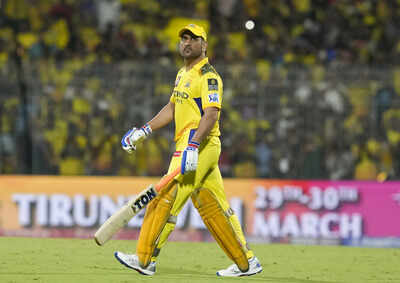
Former India all-rounder Irfan Pathan feels the upcoming edition of the Indian Premier League could potentially be the final season in which legendary wicketkeeper-batter MS Dhoni appears in the famous yellow jersey of the Chennai Super Kings.Speaking about Dhoni’s immense value to the franchise, Pathan admitted it is almost impossible to picture CSK or even the IPL without the iconic former captain. He also stressed that Dhoni’s influence goes far beyond what happens on the field.

EXCLUSIVE: Rahul Dravid on iconic Eden Gardens win against Australia in 2001

“CSK is incomplete without MS Dhoni. This season might be the last time we see him in the yellow jersey, and it’s tough to imagine CSK and the IPL without him. This season, Dhoni will play an important role in bringing everyone together. I’m not sure how many games he will play. But his presence in the dressing room will help a lot. Ruturaj Gaikwad is the leader. But as a group, two or three guys are being groomed for the future. That is where MS Dhoni comes in. I hope he makes a difference,” Pathan told Jio Hotstar.

Poll

Which aspect of Dhoni’s career do you think is most impressive?

Pathan further suggested that the CSK management could carefully manage Dhoni’s workload during the season, especially with constant questions surrounding his fitness and batting role. He also believes the franchise would love to send off their stalwart in style by securing another championship.“Questions about his fitness, batting position, and whether he will play all games will still come up. The CSK team management will take it step by step. They will definitely look to give him a perfect farewell by lifting their sixth IPL trophy,” he added.Despite stepping down from captaincy earlier, Dhoni remains one of the most influential figures within the CSK setup and continues to be a key part of the leadership group. Under his captaincy, the franchise lifted five IPL titles and established itself as one of the most successful teams in the tournament’s history.CSK, however, endured a disappointing campaign last season. The five-time champions finished at the bottom of the points table, managing only four wins from their 14 matches.Even so, Dhoni’s legacy in the IPL remains unmatched. Across 278 matches and 242 innings, he has scored 5,439 runs at an average of 38.80 and a strike rate of 137.45. His record also includes 24 half-centuries, with an unbeaten 84 standing as his highest score in the competition.

Banner Insert


Inclusion of Russia in 2026 Venice Biennale art fair sparks outcry

0
Inclusion of Russia in 2026 Venice Biennale art fair sparks outcry


ROME — The inclusion of Russia in the line-up of the 2026 Venice Biennale art fair has sparked international outcry, with the European Commission threatening to withhold funding and 22 European countries demanding Moscow stay away again over its war in Ukraine.

Inclusion of Russia in 2026 Venice Biennale art fair sparks outcry

The scandal at the world’s oldest and most important contemporary art fair has put Italy’s Culture Ministry in the crosshairs. It comes just weeks after the Italian government had to stand by as the International Paralympic Committee allowed Russian and Belarusian athletes to compete under their national flags at the Milano Cortina 2026 Winter Paralympics.

Culture Minister Alessandro Giuli is trying to manage the diplomatic fallout, voicing clear opposition to the Biennale’s decision but acknowledging that its governing foundation is independent of the government and acted autonomously when it included Russia in the line-up for its 61st arts festival.

Russia has a permanent, historic pavilion in the Giardini exhibition area and under the rules governing the arts fair, has a streamlined process allowing it to participate in the show. But Moscow hasn’t appeared since the Ukraine war began: In 2022, the Russian pavilion was shuttered after its artists withdrew following Moscow’s invasion. In the 2024 edition, the pavilion was loaned to Bolivia for its exhibition.

The Venice Biennale Foundation on March 4 announced the line-up for its 2026 edition, which runs May 9-Nov. 22. Ninety-nine nations are participating, including seven for the first time.

Russia’s return to the fair was not highlighted by the Biennale, but it was merely included in the list of participating countries with an exhibition entitled “The Tree is Rooted in the Sky,” and some three dozen Russian artists participating.

As the outcry mounted, Giuli this week fired the ministry official who sits on the Biennale board, Tamara Gregoretti, accusing her of having failed to disclose to the ministry that Russia had indicated it would be participating and that she had supported its inclusion.

Giuli also launched an investigation to determine if Russia’s participation was compatible with the EU sanctions regime. Specifically, he demanded that the Biennale urgently provide all documentation, including correspondence with Moscow, about Russia’s plan to set up and manage the pavilion during the fair.

He spoke by telephone Friday with his Ukrainian counterpart, Tetyana Berezhna, and “reiterated the Italian government’s commitment to protecting Ukraine’s cultural identity, which has been under threat for over four years due to the Russian invasion, and reaffirmed his personal commitment and that of the government to the reconstruction of Ukraine’s cultural heritage,” the ministry said.

Berezhna, for her part, told Giuli that Russia’s participation was “unacceptable for Kiev and contrasts with the strong support for Ukraine maintained by the Italian government,” Giuli’s office said.

The head of the Biennale Foundation, Pietrangolo Buttafuoco, has defended the decision and framed it as an act opposing censorship.

He announced that this year’s edition will be accompanied by two dedicated exhibition spaces for “dissident” art. And he recalled that last year’s Venice Film Festival featured the world premiere of “The Wizard of the Kremlin,” an unflattering portrait starring Jude Law about Russian President Vladimir Putin’s rise to power.

But 22 European countries wrote a letter to Buttafuoco expressing their “profound concern” over Russia’s participation. They warned that Moscow could exploit it to “project an image of legitimacy and international acceptance that stands in stark contrast to the reality of Russia’s ongoing war against Ukraine and the destruction of Ukrainian cultural heritage, as well as to European and international sanctions.”

The European Commission, for its part, condemned the Biennale decision and threatened to withhold EU funds for the fair, which would amount to some 2 million euros over three years.

“Should the Biennale Foundation proceed with its decision to allow Russia to participate, we will consider further measures, including the suspension or termination of ongoing EU funding to the Biennale Foundation,” said a statement from Commissioners Henna Virkkunen and Glenn Micallef.

This article was generated from an automated news agency feed without modifications to text.


Worshippers pray outside Al-Aqsa amid closure on al-Quds Day | US-Israel war on Iran

0
Worshippers pray outside Al-Aqsa amid closure on al-Quds Day | US-Israel war on Iran


NewsFeed

Muslim worshippers prayed in the streets outside Jerusalem’s Al-Aqsa compound as Israeli authorities kept holy sites closed amid the Israel–Iran conflict. Restrictions during Ramadan have left the mosque largely empty, drawing condemnation from Arab and Islamic countries.


Dubai news: ‘Evacuate the office?’ Standard Chartered responds to viral rumours in UAE emirate amid Iran vs US-Israel war

0
Dubai news: ‘Evacuate the office?’ Standard Chartered responds to viral rumours in UAE emirate amid Iran vs US-Israel war


Dubai news: ‘Evacuate the office?’ Standard Chartered responds to viral rumours in UAE emirate amid Iran vs US-Israel war
Did Banks Start Leaving Dubai? Standard Chartered Issues Urgent Statement Amid Iran vs US-Israel War

The intensifying geopolitical conflict between Iran, the United States and Israel is beginning to ripple through global financial markets, prompting international banks to reassess operations in the Gulf. At the center of the latest developments is Standard Chartered, which has moved to clarify reports suggesting that it evacuated staff from its offices in Dubai.The London-headquartered bank said that reports of a full evacuation of its Dubai offices were inaccurate. Instead, the bank confirmed that it had extended a precautionary work-from-home arrangement already in place, emphasising that its regional operations remain active and business continuity measures are functioning normally.The clarification came after multiple international media reports suggested that several global financial institutions were evacuating offices in the emirate amid rising security concerns linked to the ongoing Iran vs US-Israel war.

Rumours of evacuations spread across the banking sector in Dubai amid Iran vs US-Israel war

Earlier reports indicated that some international banks had begun moving employees out of physical offices in Dubai following warnings from Iranian officials that economic and financial targets associated with the US and Israel could become potential targets in the conflict. These warnings came after an attack on a Tehran administrative building linked to Bank Sepah, one of Iran’s major state-owned banks historically tied to military networks.Iranian officials subsequently warned that economic infrastructure connected to US and Israeli interests in the region could face retaliation. As a result, financial institutions operating in the Gulf began activating contingency plans designed to protect employees and maintain operations even if the security environment deteriorates.Several banks reportedly advised staff to temporarily work remotely or avoid office buildings in major financial districts. However, Standard Chartered moved quickly to clarify that these steps were precautionary rather than emergency evacuations.

Work-from-home arrangements extended amid Iran vs US-Israel war

According to the bank’s statement, employees in Dubai and the wider Middle East had already been operating under a flexible remote-working framework introduced during the early stages of the regional crisis. The extension of the arrangement was therefore described as a safety measure rather than a response to any specific threat to the bank’s facilities.Standard Chartered also stressed that its operations in the Gulf remain fully functional and that the UAE continues to be a key market for the bank’s global strategy. The clarification aims to reassure clients and investors that the institution’s regional presence remains stable despite the volatile geopolitical environment.

Why Dubai matters to global banks

Dubai has become one of the most important financial hubs in the Middle East over the past two decades, attracting global banks, investment firms, hedge funds, and wealth managers. Much of this growth has been driven by the rise of the Dubai International Financial Centre, often referred to as DIFC.Established in 2004, the DIFC has transformed Dubai into a regional financial powerhouse. By the end of 2025, the district hosted more than 290 banks, over 100 hedge funds, around 500 wealth management firms and more than 1,200 family offices and related entities.For international lenders like Standard Chartered, the UAE plays a strategic role in connecting markets across Asia, Africa and the Middle East. The bank generates a significant share of its income from operations in the region and has placed several senior executives in Dubai to oversee regional business expansion.

Wider corporate precautions across the Gulf amid Iran vs US-Israel war

Standard Chartered is not alone in implementing precautionary measures. Other international firms and financial institutions have also taken steps to protect staff as the regional conflict escalates. Some companies have instructed employees to work remotely, while others have allowed staff to temporarily relocate outside the region.Meanwhile, several global banks have reviewed business continuity plans to ensure operations can continue even if physical offices become inaccessible. In some cases, banks temporarily closed branches or limited on-site operations while shifting services to digital platforms. These measures highlight the increasing sensitivity of multinational corporations to geopolitical risk in the Middle East.The current crisis stems from the escalating confrontation between Iran and the U.S.–Israel alliance, which has triggered missile strikes, drone attacks, and military exchanges across the region. The conflict has already disrupted aviation routes, shipping lanes, and energy markets. Financial institutions, particularly those with large regional operations, have therefore been closely monitoring the situation to ensure the safety of employees and clients.Analysts say such precautionary measures are common during periods of geopolitical instability and do not necessarily indicate an imminent withdrawal of investment. Nevertheless, the situation has sparked concerns about how prolonged instability could affect Dubai’s reputation as a stable global financial hub.

Dubai’s safe-haven status under scrutiny amid Iran vs US-Israel

For years, Dubai has marketed itself as one of the safest and most business-friendly environments in the Middle East. Its political stability, world-class infrastructure and international regulatory frameworks have attracted hundreds of multinational firms. However, regional conflict has occasionally tested that reputation.Reports suggesting that global banks were evacuating offices sparked debate over whether geopolitical tensions could undermine the city’s status as a safe haven for global finance. Experts note that while short-term precautionary measures are common, the long-term fundamentals that support Dubai’s financial ecosystem remain strong.As the Iran vs US-Israel war continues to evolve, multinational corporations operating across the Gulf are likely to maintain heightened security protocols. Remote work policies, contingency planning, and staff relocation options are expected to remain part of corporate strategies until the geopolitical outlook stabilises.For now, Standard Chartered’s clarification highlights an important distinction: precautionary measures should not necessarily be interpreted as a corporate retreat from the region. Instead, they reflect the careful balancing act global companies must perform when operating in a region facing sudden geopolitical shocks. Despite the uncertainty, Dubai’s financial sector continues to function and major institutions remain committed to maintaining operations while prioritising the safety of employees.


Long wait is over for KKR fans: Zimbabwean star signed ahead of the upcoming IPL season

0
Long wait is over for KKR fans: Zimbabwean star signed ahead of the upcoming IPL season


Kolkata Knight Riders have confirmed the signing of Zimbabwe pacer Blessing Muzarabani ahead of the 19th season of the Indian Premier League that kicks off on March 28.

He was damn good in the recently concluded T20 World Cup! (PTI)

KKR fans have been expecting his signing for the last few days. The 29-year-old right-arm medium pacer comes in as a replacement for Bangladesh’s Mustafizur Rahman, who had been dropped by the IPL franchise in January earlier this year on account of the political tensions between India and Bangladesh.

Also Read: Why two-time World Cup-winner thinks players like Abhishek Sharma ‘are rascals and they walk into the fire’

“The 6 ft 8” right-arm quick has emerged as one of Zimbabwe’s leading pace bowlers in the shortest format, known for his steep bounce and ability to strike in key phases of the innings. Muzarabani brings significant T20 experience, having claimed over 90 wickets in more than 80 T20 Internationals at an average of around 21, with best figures of 3/8,” a KKR media release said on Friday.

“His pace and consistency across global leagues and international cricket add further depth to KKR’s pace attack heading into the season.”

Boy, was he good in the T20 World Cup!

Muzarabani recently impressed for Zimbabwe in the T20 World Cup held in India and Sri Lanka. He took 13 wickets in all, in six matches, and in the big matches that Zimbabwe won against Australia and co-hosts Sri Lanka, he was particularly impressive.

His figures of 4/17 were largely the reason why Australia couldn’t chase down a modest target. And then against Sri Lanka, on what appeared a belter of a wicket, he returned figures of 2/38. Even against India, where Sikandar Raza’s men were taken to the cleaners, he had returned 1/43 in a match in which Suryakumar Yadav’s team scored 256 runs, the second highest team total ever in the history of the T20 World Cup.

However, it’s not clear how much KKR will pay the fast bowler for his services in the upcoming season. He is expected to arrive in India on March 17.

KKR kick off their campaign on March 29 as they travel to play five-time IPL Champions Mumbai Indians at the Wankhede Stadium. Thereafter they play Sunrisers Hyderabad on April 2 at home, at the Eden Gardens. KKR play their next two matches also at home on April 6 and April 9, against Punjab Kings and Lucknow Supergiants respectively. The rest of their schedule is not announced as yet.

The IPL recently announced the schedule for only 16 days. It is waiting for the Election Commission to announce the assembly elections dates for Tamil Nadu, West Bengal and Assam first.


Farah: 'KJo had received an underworld threat during KKHH'

0
Farah: 'KJo had received an underworld threat during KKHH'


Farah Khan recalls Bollywood’s dark phase in the ’90s: 'Karan Johar had received an underworld threat during KKHH premiere'
Filmmaker-choreographer Farah Khan recently looked back at the atmosphere in Bollywood when she began her career in the early 1990s, recalling a time when Hindi cinema struggled with its image and the industry was grappling with the shadow of the underworld. “I remember during the premiere of Duplicate and Kuch Kuch Hota Hai, Karan had received an underworld threat. It was very scary,” she said.

Filmmaker-choreographer Farah Khan recently looked back at the atmosphere in Bollywood when she began her career in the early 1990s, recalling a time when Hindi cinema struggled with its image and the industry was grappling with the shadow of the underworld.Speaking on a podcast hosted by Ranveer Allahbadia, Farah said that during her college days, many people in her generation preferred Hollywood films and often looked down upon Hindi cinema.“I’ll tell you the context of where the film industry was in the early ’90s. Earlier, we used to look down upon Hindi films because of the ’80s,” Farah said. “When we were in college, we were only watching Saturday Night Fever and Dirty Dancing — Hollywood films — and we used to look down on Hindi movies.”

‘The ’80s was the worst era of Hindi films’

Farah explained that the perception stemmed largely from the kind of films being made in the 1980s.“You guys may not remember the ’80s, but it was the worst era of Hindi films,” she said. “There were all those multi-hero films — Mithun-style or three-hero movies. You had Dharmendra ji, Jeetendra ji, Shatrughan Sinha all coming together, but you can’t even remember one particular film clearly.”She added that while many of those films are now widely shared as memes online, the reality of the industry back then was quite different.“Maybe right now they are famous in the meme world, but at that time it was a very different phase for Hindi cinema,” she said.

‘Ab aayi na line par’: Farah Khan recalls brutal reactions to ‘Tees Maar Khan’ failure

‘Karan Johar received an underworld threat’

Farah also recalled how the film industry in the 1990s was dealing with the growing influence of the underworld.“We heard a lot about underworld stories from that era,” she said, adding that one particular incident left a deep impact. “I remember I had just started my career — it must have been around 1993 or 1994 — and producer Mukesh Duggal was shot. That really shook everyone.”The filmmaker further revealed that even film premieres were not immune to such tensions at the time.“I remember during the premiere of Duplicate and Kuch Kuch Hota Hai, Karan had received an underworld threat. It was very scary,” she said. According to Farah, the threat had led to serious discussions about whether the premiere should go ahead.“Everyone was discussing whether the premiere should be cancelled or not. Security was beefed up,” she recalled.Despite the tense atmosphere, the team eventually decided to move forward with the event.“We did go ahead with the premiere, but Karan was very stressed. Imagine it’s your first film and instead of celebrating it, you’re dealing with threats and worrying about security,” she said.


Central Board of Film Certification introduces mandatory subtitle rule for films

0
Central Board of Film Certification introduces mandatory subtitle rule for films


Central Board of Film Certification introduces mandatory subtitle rule for films

The Central Board of Film Certification (CBFC) has introduced a new rule that will change how films are submitted for certification in India. Starting March 15, all Indian films must include subtitles as part of the certification process, a move aimed at making cinema more accessible and inclusive for a wider audience.

Under the new directive, filmmakers will be required to submit films with subtitles when applying for certification through the government’s digital platform, E‑Cinepramaan. The rule means that producers can no longer submit films without subtitles while seeking certification from the board.

New rules for films

The decision is intended to improve accessibility for viewers who may find it difficult to understand spoken dialogue. Subtitles help audiences follow conversations more easily, especially in films that include multiple languages, strong regional accents, or fast-paced dialogue. They can also assist viewers who are hearing-impaired, allowing them to better engage with the story.

Industry observers say the move could also expand the reach of Indian films across different regions. With subtitles available, audiences who do not understand the original language of a film will still be able to enjoy it. This may help movies travel more easily between linguistic markets within the country, where films from one region are increasingly watched by viewers from another.

The rule also aligns theatrical releases more closely with the practices already followed by streaming platforms. On many OTT services, subtitles are now a standard feature, helping viewers watch content comfortably regardless of language or background. By introducing a similar requirement for theatrical releases, the CBFC hopes to bring the cinema experience in line with evolving global standards.

All about the new rules

However, the announcement has sparked some discussion within the film industry. While many people have welcomed the focus on accessibility, others have raised concerns about the practical aspects of the rule. Some filmmakers believe mandatory subtitles could slightly affect the visual presentation of certain scenes, especially in films that rely heavily on visual storytelling.

There are also concerns about the additional time and technical effort required to prepare subtitles before submitting films for certification. Smaller production houses, in particular, may need to allocate extra resources to ensure subtitles are properly created and synced.

Despite the debate, the new rule marks an important step toward making cinema more inclusive. By ensuring that every film submitted for certification includes subtitles, the CBFC aims to make the theatrical experience more accessible for a broader section of the audience while adapting to changing viewing habits.


Leo Varadkar: “It’s easier to be an activist than to be a politician”

0
Leo Varadkar: “It’s easier to be an activist than to be a politician”


your memoir is called I am speaking my mind. How did you find your voice?

Leo Varadkar (Jaipur Literature Festival)

Well, it took some effort because it was the first time I was writing a book. I found it very useful to be able to immediately write down my thoughts when I thought of something worth putting in a book. As a politician, I wrote speeches, memoranda and articles but never any fiction with this kind of dialogue. Since I’m not a professional writer, I also got some help from Deirdre Nuttall. She was, in a way, my co-writer. After each chapter, she would come over, talk to me, then rewrite it with me to make it more readable, and then I would rewrite it. It was quite a slow process but it worked really well for me and ultimately for the book.

How did you find your voice as a gay man of Irish and Indian heritage, possibly facing homophobia and racism as you grew up in Europe?

That’s a really good question. Thanks for asking me this. This is a bit of a complex topic so I don’t have a straight answer for you but allow me to think about it.

I’m not expecting a straight answer from a gay politician. Go ahead, tell me.

(laughing) You’re so funny! I too don’t have any complicated answer. I grew up as a person of color in Ireland, so I realized very early on that I was different. And being gay added another dimension to it. These two things made me stand out from most of the boys and young men I grew up around. I’m not really sure how I found my voice because I’m very comfortable with who I am right now, being a person of Irish complexion and Indian heritage, and being a gay man, but that wasn’t the case when I was maybe 25 or 30 years old. I need to think about this.

You were 36 and health minister when you found the courage to come out publicly as Ireland was preparing for a referendum to legalize gay marriage. Mental health is still a major challenge for LGBTQ people in India, Ireland and around the world. What would you say to give strength to people struggling with suicidal thoughts?

First, I want to acknowledge that everyone’s experience is different, and it may depend on cultural context. Some people have very supportive families. Others are rejected by their families. I was lucky to come out at a time when my country had become much more liberal. I had support from family and friends. My political party was also supportive. This would not have happened 20 years ago in Ireland or some other parts of the world.

I know a lot of people who have had coming out experiences that were very different from mine but I don’t know a single person who regrets coming out. If I could give any encouragement or advice to people who are struggling, it would be this: Coming out can be a good or bad experience or worse. It may be better or worse than you imagine but I don’t know anyone who regrets that they went ahead and did it. When people are pushed to a bad place in terms of mental health, it is often a result of not being able to open up to themselves and others.

What kind of books did you grow up reading? Many gay people tell in a book how they encountered someone like them for the first time. Was it the same for you?

Not necessary! But, as a young person, fantasy was the genre I enjoyed most. For me, that meant a lot of Roald Dahl’s books and, of course, JRR Tolkien’s. Lord of the Rings Trilogy. I also have fond memories of reading Salman Rushdie’s book midnight’s children When I was in India for two months. When you study for a medical degree in Ireland, as I did, you are encouraged to gain some experience abroad. Many years ago, I spent a summer at KEM Hospital in Bombay (now Mumbai). There was something special about reading Rushdie in that city. Looking back, I don’t think I met any gay or lesbian writers growing up.

Ireland has produced five Booker Prize winners, and around 40 Irish writers have been included in the shortlist and longlist. Why does the government prioritize support for writers through scholarships, mentorship and professional development funds?

This is part of Ireland’s soft power policy. We are a small country that wants to become a cultural superpower. For many people in India, China and Latin America, their first encounter with Ireland is through the culture. Support for art, literature, music, dance and cinema is a good investment for diplomatic reasons but it is also good for people’s lives and their soul.

What are you reading at the moment?

I have more time to read now and I love it. I still read mainly non-fiction, but I’m keen to change that by reading more novels this year. The last book I read was by Colm McCann apeirogon. It is about two fathers, one Israeli and the other Palestinian. Both lose their daughters in the conflict, and their grief brings them together. This is so beautifully written! Before reading this, I didn’t know that the title referred to a shape that is a polygon with infinite sides. Of course, this is one way of looking at the conflict. What I’m looking forward to reading next is a book called For and against a united ireland. It is written by Fintan O’Toole and Sam McBride.

During your session with Georgina Goodwin at the Jaipur Literature Festival, you said that Irish people feel a strong sense of solidarity with Palestinians. What is the reason behind this? How do you see your role in advocating for justice and liberation?

I think it is much easier to be an activist than to be a politician. And, in some ways, I can now be more of an activist than a politician because a politician often has to balance competing interests. Ireland has some very good, strong principles around democracy, human rights and the rule of law, but we also have strong economic ties with the United States, which we don’t want to jeopardize. Furthermore, arguments are not always won by those who shout the loudest. What I have tried to do within the EU is to bring member states closer to our position, which is support for Palestine. But many workers did not understand that nothing would be achieved by rushing things or raising all imaginable demands at once. It was difficult to explain. This happens in queer activism too. Some believe that progress should happen in a gradual manner while others insist that our rights cannot be compromised at all.

Queer activists have been speaking out and writing about how Israel uses its stellar record on gay rights to silence criticism of its human rights violations in Palestine. What are your thoughts on this ‘pinkwashing’?

I think it’s important to acknowledge that, when it comes to LGBT rights, Israel is far more progressive than most countries in the world. When there are UN resolutions supporting LGBT rights, Israel always votes in favor of them and aligns itself with European countries. Arab and Muslim countries usually vote the other way. Tel Aviv Pride is one of the largest pride parades in the world. But Israel’s stellar record on LGBT rights should never be an excuse for war crimes. By the way, Israel does not recognize marriage equality because marriage is governed by Jewish religious law. Same-sex couples in Israel have to leave the country to get married in Cyprus, which is a pity. A few years ago, an Israeli government minister compared sexual relations between gay people to incest. In many ways, Israel is regressing in terms of democracy, rule of law, and human rights.

You have been vocal about your intention to help advance relations between Ireland and India. In India, gay couples do not have the legal right to marry. What lessons can India learn from the Irish experience on marriage equality?

I never go to another country and tell them what they should do. This is a decision for India to take. I would like to tell the Indian people that in the 1990s itself, Ireland decriminalized homosexuality and legalized divorce. Only in the last decade have we allowed marriage equality and abortion. As these changes were taking place, there were people who said that families would be destroyed. Some have changed their minds, some have not. But the truth is that no one has been harmed. Our society has progressed. The right has been won. There are two forms of marriage in Ireland. One of these takes place in a church or mosque or synagogue, and is a private religious affair. And then there is civil marriage, which is legally recognized by the state. It can happen between any two people, including same-sex couples.

What would you say to people who are trying to figure out where you stand politically, whether you’re left or right or somewhere in the center?

I would say to them: Don’t think too much about it because that linear view of politics is too simplistic. I consider political ideology to be three-dimensional. You have people who are very liberal on social questions but may be very conservative on economic policy, and that’s OK. I think it’s important to stick to what you believe in and what’s good for your country, and not get trapped in a framework that doesn’t fully explain the complexity of human thought.

Chintan Girish Modi is a writer, journalist, teacher, artist, literary critic and tree lover.


‘Dhoni’s support, Sanju Samson’s help will…’: Irfan Pathan predicts bumper IPL 2026 for CSK | Cricket News

0
‘Dhoni’s support, Sanju Samson’s help will…’: Irfan Pathan predicts bumper IPL 2026 for CSK | Cricket News


'Dhoni's support, Sanju Samson's help will...': Irfan Pathan predicts bumper IPL 2026 for CSK
Sanju Samson and MS Dhoni (BCCI/IPL Photo)

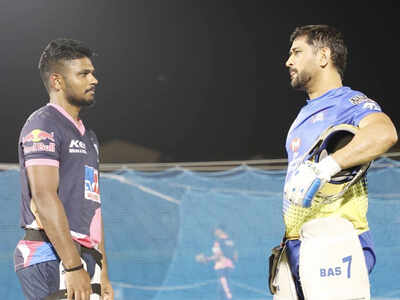
Chennai Super Kings will enter the upcoming Indian Premier League 2026 season with hopes of securing a record sixth IPL title. The five-time champions have strengthened their squad with the arrival of Sanju Samson, and former India all rounder Irfan Pathan believes that support of Dhoni and Samson’s help could play a crucial role in CSK’s campaign.

Irfan Pathan: Samson’s presence will ease pressure on Ruturaj Gaikwad

Former India all-rounder Irfan Pathan shared views, explaining how Samson’s arrival could benefit CSK captain Ruturaj Gaikwad.

EXCLUSIVE: Rahul Dravid on iconic Eden Gardens win against Australia in 2001

“Sanju Samson’s arrival at CSK will allow Captain Ruturaj Gaikwad to express himself a bit more. We have seen him grow as a leader. It is not easy leading in the IPL while also taking forward the legacy of MS Dhoni. That is one of the toughest things to do in your career. But Dhoni’s support, along with the help Sanju Samson brings, will always benefit Ruturaj,” Pathan said.Pathan also pointed out that CSK appear to be shifting from their traditional strategy of relying heavily on experienced players.“Looking at the squad and imagining the playing combination are two different things. CSK’s success mantra in the past was to bank on experienced players. Now, they have made a change in approach and are going for younger, less experienced players. They are building for the future too,” he added.He also expressed excitement about young talents in the squad, including Dewald Brevis, Urvil Patel, Shivam Dube and Sarfaraz Khan.

Piyush Chawla backs Samson’s aggressive batting

Chawla also described Samson as a natural match-winner who has silenced his critics with impressive performances in recent matches. “Sanju Samson is a match-winner in himself. He proved his doubters wrong with three back-to-back impactful knocks against West Indies, England and New Zealand in the T20 World Cup. CSK will be very happy with his form because Samson has peaked right before the start of the IPL. That is great news for their fans,” Chawla said.He further added that the Chennai pitch conditions could help Samson flourish at the top of the order.“Coming to Chennai, the way the wicket plays there will definitely suit his game. Opening the innings, his aggressive style will benefit CSK a lot.”Samson could solve CSK’s opening problemsThe former spinner also highlighted how CSK struggled to get quick starts in the previous IPL season.“Last season, they struggled to get quick starts. Only after Ayush Mhatre arrived did CSK start scoring runs in the Powerplay. Now, with Samson in, their opening problems will finally be solved. They need that experienced opener alongside Ayush Mhatre. Samson’s trade move to CSK is going to be a blockbuster one,” Chawla said.

CSK aim for record sixth IPL title

After finishing at the bottom of the table last season, CSK will be eager to bounce back strongly in IPL 2026. With a refreshed squad and Samson’s attacking presence at the top of the order, the Chennai-based franchise will hope to rediscover their winning formula and mount a strong challenge for the title.

Banner Insert