Monday, September 28, 2026
Home Blog Page 548

Summer rush sorted: Indian Railways rolls out over 900 special trains

0
Summer rush sorted: Indian Railways rolls out over 900 special trains


Summer rush sorted: Indian Railways rolls out over 900 special trains

Planning a trip this summer but worried about the rush to secure train tickets? You might want to relax as Indian Railways is preparing for the seasonal rush. If you’re travelling between April and July, chances are you’ll find a seat. Anticipating a sharp rise in passenger demand, Indian railways has announced a wide network of special train services aimed at making journeys across the country smoother and more convenient.For the period between 15 April 2026 and 15 July 2026, a total of 908 summer special trains have been approved, which together will operate 18,262 trips. The move is designed to meet heightened travel demand during peak months marked by holidays, festivals and seasonal movement.Of the total approved services, 660 trains have already been notified, accounting for 11,294 trips. This ensures that a significant portion of the additional services is already open for booking, allowing passengers to plan their journeys in advance.The rail network’s preparation spans all major zones, reflecting a coordinated effort to handle increased passenger volumes while maintaining regional balance in connectivity.

Zone wise trains

  • South Central Railway has approved 124 trains (1,184 trips), with 76 trains (324 trips) already notified.
  • Western Railway follows with 106 approved trains (2,078 trips), of which 92 trains (1,667 trips) have been notified.
  • North Western Railway has cleared 76 trains (2,245 trips), including 62 notified services (1,878 trips).
  • Northern Railway has approved 76 trains (2,090 trips), with 56 trains (1,535 trips) notified.
  • Central Railway has sanctioned 74 trains (3,082 trips), with 70 trains (2,238 trips) already notified.
  • Southern Railway has approved 72 trains (558 trips), of which 38 trains (133 trips) are notified.
  • East Central Railway has cleared 64 trains (2,711 trips), including 38 notified trains (1,060 trips).
  • North Central Railway has approved 54 trains (1,163 trips), with 46 trains (688 trips) notified.
  • North Eastern Railway has sanctioned 52 trains (814 trips), with 34 trains (477 trips) notified.
  • East Coast Railway has approved 28 trains (410 trips), including 18 notified trains (88 trips).
  • West Central Railway has also approved 28 trains (408 trips), with 18 trains (192 trips) notified.
  • Eastern Railway has cleared 24 trains (392 trips), of which 10 trains (276 trips) have been notified.
  • North Frontier Railway has approved 24 trains (220 trips), including 20 notified trains (141 trips).
  • South Eastern Railway has sanctioned 20 trains (276 trips), with 18 trains (250 trips) notified.
  • South East Central Railway has approved 10 trains (122 trips), including 8 notified services (70 trips).
  • South Western Railway has approved 76 trains (509 trips), with 56 trains (277 trips) already notified.

The large-scale deployment of these special services is expected to ease pressure on waiting lists, offer more confirmed berths, and improve connectivity between key destinations. It is also aimed at making journeys smoother and more comfortable during the high-demand summer period.With this, the railways has taken another step towards advanced planning and a wide network of additional services, minimising inconvenience for passengers.


A well-rounded premium mid-ranger with AI smarts| Technology News

0
A well-rounded premium mid-ranger with AI smarts| Technology News


Samsung recently launched its Galaxy A57 smartphone in India. While some have pointed out that the phone offers iterative upgrades over its predecessor, that is, the Galaxy A56, that’s not the story here. The real story here is how Samsung is making flagship-like features and performance more accessible through its newly launched Galaxy A-series smartphone.

The Samsung Galaxy A57 starts at ₹56,999 in India. (Shweta Ganjoo / HT)

The Samsung Galaxy A57 leans into intelligence and long-term usability to offer buyers a premium experience through its sleek design, immersive display, reliable camera setup and a consistent battery life. But what really sets it apart from its competitors and predecessors is its AI story. The Galaxy A57 brings AI-based features like an improved Object Eraser, Voice Transcription, advanced Text Extraction from Images and expanded on-device productivity AI tools to Samsung’s A-series devices – taking it a step closer to the Galaxy S-series devices. Sure, you cannot move or add objects like you can in the Galaxy S26 series devices, but do you get all the tools that can be handy in maximising productivity. (Samsung Galaxy S26+ review)

What makes the Galaxy A57 a compelling buy is that you get the same metal + glass body that you get in premium smartphones. You also get reliable cameras, strong battery life and improved durability all without crossing into flagship pricing territory. So, does that mean it doesn’t borrow any features from its predecessor? It does. It builds upon what Galaxy A56 did right and propels the series a step further in the premium mid-ranger segment. But what does that mean for users? We’ll find that out in the detailed review below. But before that, take a quick look at its specifications.

Samsung Galaxy A57 specifications

FEATURE

SAMSUNG GALAXY A57

Display 6.7-inch FHD+ Super AMOLED display
Build & Design Aluminum frame, glass back with Gorilla Glass Victus 2
Water/Dust Resistance IP68 certified
Processor Exynos 1680
RAM and Storage 8GB + 256GB, 12GB + 256GB
OS & AI OneUI 8.5 based on Android 16
Rear camera 12MP (ultra wide-angle lens) + 50MP (wide-angle lens) + 5MP (macro lens)
Front camera 12MP
Battery & charging 5,000mAh with 45W wired charging
Connectivity 5G, Wi-Fi Direct, dual Band Wi-Fi, Bluetooth 6, USB Type-C 2.0, Nano SIM, eSIM
Security Face unlock, ultrasonic in-display fingerprint sensor
Colours Awesome Lilac, Awesome IcyBlue, Awesome Navy
Price ₹56,999 (8GB + 256GB), ₹62,499 (12GB + 256GB)
Samsung Galaxy A57 comes with IP68 dust and water protection. (Shweta Ganjoo / HT)

Samsung Galaxy A57 design: Feels premium

Let’s start with the design first. The Samsung Galaxy A57 looks premium. It features an aluminum chassis that holds together its glass body, which is similar to its premium Galaxy S-series sibling. Its glass body is protected by Corning Gorilla Glass Victus+ protection. At the back you get a pill-shaped camera module that is stacked vertically and houses the phone’s triple rear camera setup.

From afar, the Galaxy A57 looks a lot like its older sibling (barring the colours), that is, the Galaxy A56, but up close, the difference is evident. Firstly, the Galaxy A57 is a lot slimmer than the Galaxy A56. It has a depth of 6.9mm as against A56’s 7.4mm depth. While these numbers may seem insignificant, in usage they make a world of difference. They make the Galaxy A57 much more comfortable to hold and use with a single hand.

Secondly, the Galaxy A57 is a lot lighter than its predecessor. Samsung has managed to shave off roughly 20g in the new A-series smartphone, making it lighter to hold for longer durations. And if you, like me, love to carry your phone in your denim’s back-pocket, you’ll notice the difference there too. Another point of difference is its water-resistance. The Galaxy A57 comes with IP68 dust and water resistance, which means it can withstand submersion in 1.5m of water for up to 30 minutes. It’s also a small yet meaningful upgrade from last year’s A-series smartphone that comes with IP67 rating.

Numbers and features aside, the Galaxy A57 feels premium and incredibly comfortable to use. Its light weight glass body is definitely a welcoming relief in the sea of heavy smartphones. What doesn’t work in its favour is its glossy back, which is a fingerprint magnet and incredibly difficult to maintain. I’m not a fan of its IcyBlue colour either as I feel it takes away its premium-ness. But you may not agree with me on this and that’s ok.

Samsung Galaxy A57 display: Bright and immersive

Next up is the screen. The Samsung Galaxy A57 comes with a 6.7-inch HD+ Super AMOLED display with a variable screen refresh rate of up to 120Hz, a resolution of 1080 x 2340 pixels, 1900 nits of peak brightness, HDR10+ support and Vision Booster technology for a clearer viewing experience indoors and outdoors. This display is protected by the Corning Gorilla Glass Victus+ protection – another factor that adds to the phone’s premium-ness.

This display is similar to what you get in the Galaxy A56. But we’re not complaining. Samsung offers one of the best displays in the market and the screen of the Galaxy A57 is no exception. This means you get a bright and vibrant display with punchy colours that is suitable for browsing the internet and streaming content on OTT platforms like Netflix and YouTube both indoors and outdoors. Sure, there are phones that are brighter than the Galaxy A57, but this one holds good on its own even under the sun.

Optics aside, the Galaxy A57 gets an under-display fingerprint sensor. While it is easy to reach and works accurately in unlocking the phone, the feature is slow to respond. That said, it’s a small detail. You can always use the face ID feature, which is snappy and consistent in performance.

Samsung Galaxy A57 comes with AI features. (Shweta Ganjoo / HT)

Samsung Galaxy A57 camera: Reliability with a touch of AI

The camera has largely remained unchanged in the Galaxy A57 smartphone compared to the Galaxy A56. This means you get a 12MP ultra wide-angle lens, a 50MP wide-angle lens with PDAF (Phase Detection Auto Focus) and OIS (Optical Image Stabalisation) and a 5MP macro lens at the back and a 12MP lens with HDR support in the front. So, what does that translate to in usage? It means you get a reliable camera setup that delivers consistent performance during the daylight conditions and at night.

I took the Galaxy A57 out for a spin to test out its camera setup and I was impressed by its rear cameras, more so in case of evening light, which can be tricky to nail. During the day, the Galaxy A57 delivers balanced shots with decent contrast. It also does a good job at reproducing colours and maintaining clarity. It’s also good at capturing tiny details like seasoning on food or tiny cracks in the floor tiles.

The Samsung Galaxy A57 comes with a triple rear camera setup. (Shweta Ganjoo / HT)
The Samsung Galaxy A57 has a 12MP camera in the front. (Shweta Ganjoo / HT)

The 50MP also performs well as far as colour and clarity are concerned. It offers an excellent dynamic range and is ideal for capturing images in evening light conditions. Take a look:

Samsung Galaxy A57 comes with a 12MP ultra wide-angle lens. (Shweta Ganjoo / HT)
The Samsung Galaxy A57 comes with a 5MP macro lens. (Shweta Ganjoo / HT)

Coming to night-time photography, the Galaxy A57 delivers surprisingly impressive performance in low-light conditions. The phone with its night mode on produces bright and vibrant colours without overexposing them. It manages to capture a surprising amount of details while keeping noise to a bare minimum. However, there is visible lens flare in the images.

Samsung Galaxy A57 comes with a 50MP wide-angle lens. (Shweta Ganjoo / HT)

Beyond the daylight and low-light shots, the Galaxy A57 also does a decent job at capturing portrait shots despite a lack in a dedicated telephoto lens. The colours are accurate and the background blur works nicely to isolate the subject. Edge detection is almost as good if not 100% accurate.

Samsung Galaxy A57 comes with OIS feature. (Shweta Ganjoo / HT)

Lastly, the front camera also produces bright and vibrant images with ample depth. Unlike a lot of other phones, the Galaxy A57 keeps the colours natural while capturing facial features – every freckle and every wrinkle – accurately. It even managed to capture my greying hair accurately! This is also true for portrait shots.

Samsung Galaxy A57 Selfie shots. (Shweta Ganjoo)

But wait, there’s the AI part of things as well! The Galaxy A57 does not have the extensive AI-based camera features of the Galaxy S26 series, but it does have some and they work well. The Object Eraser, for instance, intelligently removes all distracting elements from an image. What I like about this feature is that it also removes the shadows making the results look more natural. Then there is the Auto Trim feature that cuts the videos down to its best parts for easy editing. These features are helpful and they work well.

The Samsung Galaxy A57 is powered by Exynos 1680. (Shweta Ganjoo / HT)

Samsung Galaxy A57 software: Clutter free UI with AI smarts

The Samsung Galaxy A57 runs Android 16-based OneUI 8.5 update. The company has promised to provide 6 years of OS upgrades and 6 years of security upgrades, which means you will get OS upgrades up to Android 22 on this device. It also means that Samsung is signaling longevity with this device – a key advantage for a device at this price point.

Facts and figures aside, the Galaxy A57 offers an almost clean UI with a bunch of Galaxy AI features. I say almost because you do get some unnecessary apps like Candy Crush Saga, Vita Mahjong and Tile Explorer. Nothing you can’t get rid of.

Beyond the UI, the Galaxy A57 comes with a bunch of AI-features that are aimed at improving the overall productivity. The most notable one of the lot is the Voice Transcription feature, which is available in the Voice Recorder app. It can be used for transcribing and translating audio recordings from calls and voicemails, making it easier to take notes and get a text-based summary. Another important feature is AI Select that can be used to extract text or create content without manually selecting items. Then there is the classic Circle to Search feature that has become almost a standard on premium mid-ranger and mid-ranger phones now. However, you miss out on some of the other Galaxy AI features like Writing Assist, Audio Eraser and the ability to move and add new objects to existing images, which make it one step short of premium devices, at least on the software end.

Samsung Galaxy A57 performance: Smooth and consistent

So far we have talked about a lot of features that the Galaxy A57 has borrowed from its predecessor. Well, one feature that it hasn’t borrowed is the chipset. It is powered by the Exynos 1680 chipset that is coupled with up to 12GB of RAM and 256GB of storage space. However, you do not get expandable storage with this device, which can be a bummer for some users.

Features aside, the Galaxy A57 offers a smooth and consistent performance in everyday usage. The app launches are snappy, the animations are fluid and multi-tasking works without any hiccups. You can throw in some productivity work like transcribing audio files, checking and responding to emails, and snapping and editing images, scroll through social media apps for hours and watch your favorite shows on OTT apps and the device will sail smoothly through it. No lag, no heating and no surprises at all.

The Samsung Galaxy A57 comes with a 5000mAh battery. (Shweta Ganjoo / HT)

Samsung Galaxy A57 battery: Reliable and balanced

The Samsung Galaxy A57 packs a 5,000mAh battery with support for 45W wired charging technology. This battery setup is the same that you get in the Galaxy A56. But we aren’t complaining. It’s a reliable feature that delivers that easily lasts for a day on a single charge on moderate usage. However, you may find yourself charging the device at the end of the day of moderate to heavy work.

On the charging front, the Galaxy A57 takes a little over an hour to juice up completely. But the catch is that you need to charge it with Samsung’s 45W charger, else it takes longer to charge. Samsung doesn’t ship the charger in the box. All you get is a charging cable, which means you will have to spend some to make the most of the phone’s charging capabilities – something I’m not a fan of.

Samsung Galaxy A57 review: Pros and Cons

Here’s what we liked in the Samsung Galaxy A57 and what could have been better:

Pros

– Light weight premium design

– Bright and sharp display

– Useful AI features

– Reliable cameras (front and rear)

Cons

– No charger in the box

– Slow fingerprint sensor response

– Glossy back is a fingerprint magnet

Samsung Galaxy A57 review: Final thoughts

The Samsung Galaxy A57 is a well rounded premium mid-ranger that strives to be more. Its light-weight design with premium aesthetics coupled with its vibrant display, a reliable camera, stable performance and AI features are ideal for those who want to get a taste of the premium smartphones without burning a hole in their pockets. Sure, there are some things that could have been better, like the laggy fingerprint sensor and the glossy back, but the pros definitely overweigh the cons in this case.

So, who’s this phone for? Everyone who is looking for a device that offers a decent mix of productivity, camera and performance. But if you are a gaming enthusiast, this one might not be enough for you.

2. Samsung Galaxy A57 5G (Awesome Lilac, 12GB RAM, 256GB Storage), Agentic AI, Triple Camera with Nightography Video, 2 Days Battery Life, 6 Gen OS Upgrades, IP68, 6.9mm Sleek, with No Cost EMI

Our Principles

Full Transparency

Every product review clearly lists the Pros and Cons, giving you a balanced view.

Brand Confidence

We focus on products from brands with a proven reputation and long-standing market trust.

Disclaimer: At Hindustan Times, we help you stay up-to-date with the latest trends and products. Hindustan Times has an affiliate partnership, so we may get a part of the revenue when you make a purchase. We shall not be liable for any claim under applicable laws, including but not limited to the Consumer Protection Act, 2019, with respect to the products. The products listed in this article are in no particular order of priority.


Raja Shivaji trailer launch: Genelia breaks down after hearing Riteish`s speech

0
Raja Shivaji trailer launch: Genelia breaks down after hearing Riteish`s speech


Raja Shivaji trailer launch: Genelia breaks down after hearing Riteish`s speech

Actors Riteish Deshmukh and Genelia Deshmukh turned emotional at the trailer launch of their upcoming film ‘Raja Shivaji’ in Mumbai on Monday. The couple thanked the team behind the historical drama for their support and hard work. The trailer of the highly anticipated historical drama was unveiled at a grand event attended by the cast and crew. ‘Raja Shivaji’ revolves around the story of Chhatrapati Shivaji Maharaj and is mounted on a large cinematic scale.

Genelia breaks down at Raja Shivaji trailer launch

During the event, Riteish was seen weeping as he spoke to the media while thanking his team for helping him and bringing the project to life. Standing beside him, Genelia was also moved and broke down on stage.


Arshad Warsi says Amitabh Bachchan, Jaya Bachchan are always first to wish him on birthday: ‘At 12:01, I get their call’

0
Arshad Warsi says Amitabh Bachchan, Jaya Bachchan are always first to wish him on birthday: ‘At 12:01, I get their call’


Arshad also has a professional history with both Amitabh and Jaya Bachchan. He shared screen space with Amitabh Bachchan in Zamaanat: And Justice for All, which also featured Karisma Kapoor and Anupam Kher. He had earlier worked with Jaya Bachchan in Tere Mere Sapne (1996), marking one of his early appearances in films.

On the work front

On the work front, Arshad has a packed slate ahead. He will be seen in the fourth instalment of the popular Dhamaal franchise, co-starring Ajay Devgn, Riteish Deshmukh, Sanjay Mishra, Jaaved Jaaferi and others. Apart from that, he is also part of the multi-starrer comedy Welcome to the Jungle, directed by Ahmed Khan. The film boasts an ensemble cast including Akshay Kumar, Suniel Shetty, Jackie Shroff, Raveena Tandon, Jacqueline Fernandez, Paresh Rawal, Rajpal Yadav and several more, promising a full-on entertainer.


Iran says it has ‘no plans’ for negotiations with the US | Al Jazeera

0
Iran says it has ‘no plans’ for negotiations with the US | Al Jazeera


NewsFeed

Iranian Foreign Ministry spokesperson Esmail Baghaei told reporters at a press conference that Iran has no plans for a second round of negotiations with the US, following an Iranian cargo ship being seized by the US.


Anurag Basu says Ranbir Kapoor ‘amazingly nailed’ Lord Rama's look in Ramayana: ‘It's very courageous of him to say yes’

0
Anurag Basu says Ranbir Kapoor ‘amazingly nailed’ Lord Rama's look in Ramayana: ‘It's very courageous of him to say yes’


Bollywood actor Ranbir Kapoor’s look as Lord Rama from Nitesh Tiwari’s Ramayana was unveiled on April 2 at a grand event in Mumbai. Prior to this, a glimpse of his look was also shown to a select audience in Los Angeles. While some praised Ranbir’s appearance, others were less convinced and called him a misfit for the role. Now, filmmaker Anurag Basu has shared his views on Ranbir’s portrayal of Lord Rama.

Anurag Basu thinks Ranbir Kapoor nailed it as Lord Rama in Ramayana.

Anurag Basu hails Ranbir Kapoor’s look as Lord Rama in Ramayana

Anurag, who has worked with Ranbir in Barfi! and Jagga Jasoos, heaped praise on the actor’s look and said, “The way I had imagined Ranbir as Rama when he signed the film, and what I expected, was very good. I expected that this is how Ranbir would look, as he loves challenges. It was very tough, and you need a lot of courage to get into that character to play Ram.”

The filmmaker further called Ranbir’s decision to take on the role courageous, adding, “It takes a lot of courage for an actor to say yes, because people put actors in boxes in our industry. So, I think it is very courageous of him. And from whatever I’ve seen of the film and the images, he has amazingly nailed it. I’m looking forward to it.”

Ranbir, during the Los Angeles event where the teaser was first screened, revealed that he initially hesitated to take up the role in Ramayana, fearing he might not be able to pull it off. However, the birth of his daughter Raha brought about a change in his perspective.

The Ramayana teaser, released earlier this month, received mixed reviews. It primarily focused on Ranbir’s look as Lord Rama, showcasing both the warrior aspect of his character and his simplicity. The teaser also highlighted the grand visuals of Lanka and Ayodhya, as well as Rama’s time in exile. Apart from Ranbir’s look, the film’s VFX also drew mixed reactions, with some viewers comparing the asuras to those seen in The Lord of the Rings and Game of Thrones.

About Ramayana

Helmed by Nitesh Tiwari and backed by Namit Malhotra and Yash, the film stars Ranbir Kapoor as Lord Rama, Yash as Ravana, Sai Pallavi as Sita, Ravie Dubey as Lakshman, Arun Govil as King Dashrath and Sunny Deol as Lord Hanuman. The film will be released in two parts, with the first instalment slated for Diwali 2026 and the second for Diwali 2027. Mounted on a massive budget of ₹4,000 crore, it is one of the most ambitious Indian films ever and among the most anticipated releases. Fans are eager to see whether Nitesh Tiwari can deliver a definitive cinematic adaptation of Ramayana.


Stock market today: Which are the top gainers and losers in Nifty50 and BSE Sensex today? Check list

0
Stock market today: Which are the top gainers and losers in Nifty50 and BSE Sensex today? Check list


Stock market today: Which are the top gainers and losers in Nifty50 and BSE Sensex today? Check list

Dalal Street ended Monday’s session on a flat note, as investors remained cautious amid rising geopolitical tensions and a surge in crude oil prices. Benchmark indices Nifty50 and Sensex managed to bag gains, ending the day marginally higher. The 30-share BSE Sensex inched up by 26.76 points, or 0.03%, to close at 78,520.30. The index had earlier touched a high of 78,942.45 and a low of 78,203.30, reflecting an intraday volatility of 739.15 points.The NSE Nifty also saw a marginal gain, rising 11.30 points, or 0.05%, to settle at 24,364.85.Among the Sensex constituents, Trent, State Bank of India, Asian Paints, NTPC, Bajaj Finance and InterGlobe Aviation emerged as the top gainers. On the other hand, Larsen & Toubro, Bharat Electronics, HCL Tech and Kotak Mahindra Bank ended among the key losers.Here is a list of top gainers and losers in the session:

BSE gainers

  • Trent – 4242.85 (+3.33%)
  • Sbin – 1107.60 (+2.52%)
  • Asianpaint – 2516.30 (+2.15%)
  • Ntpc – 397.90 (+1.08%)
  • Bajfinance – 918.55 (+1.08%)
  • Indigo – 4679.25 (+0.87%)
  • Eternal – 254.80 (+0.87%)
  • M&m – 3219.55 (+0.63%)
  • Icicibank – 1356.00 (+0.63%)
  • Powergrid – 319.60 (+0.49%)
  • Adaniports – 1577.55 (+0.28%)
  • Ultracemco – 11911.30 (+0.20%)

BSE losers

  • Titan – 4512.90 (-0.30%)
  • Axisbank – 1353.65 (-0.40%)
  • Sunpharma – 1668.00 (-0.43%)
  • Infy – 1311.95 (-0.50%)
  • Bajajfinsv – 1829.40 (-0.50%)
  • Techm – 1504.10 (-0.51%)
  • Hdfcbank – 795.40 (-0.56%)
  • Itc – 305.00 (-0.59%)
  • Hcltech – 1428.35 (-0.98%)
  • Bel – 457.65 (-1.09%)
  • Lt – 4050.00 (-1.10%)
  • Kotakbank – 379.20 (-1.12%)

NSE gainers

  • Trent – 4235.10 (+3.10%)
  • Jswsteel – 1275.00 (+2.80%)
  • Sbin – 1104.00 (+2.20%)
  • Asianpaint – 2510.00 (+1.87%)
  • Ntpc – 398.35 (+1.21%)
  • Grasim – 2752.00 (+1.16%)
  • Bajfinance – 916.15 (+0.87%)
  • Tataconsum – 1121.00 (+0.70%)
  • Shriramfin – 1044.00 (+0.68%)
  • Indigo – 4670.00 (+0.68%)

NSE losers

  • Jiofin – 236.60 (-2.98%)
  • Hindalco – 1013.10 (-2.49%)
  • Tmpv – 354.60 (-1.53%)
  • Lt – 4039.00 (-1.39%)
  • Hdfclife – 608.75 (-1.25%)
  • Hcltech – 1424.40 (-1.24%)
  • Bel – 457.70 (-1.09%)
  • Cipla – 1228.80 (-0.97%)
  • Wipro – 202.40 (-0.94%)
  • Kotakbank – 380.00 (-0.94%)

Meanwhile, crude oil prices saw a sharp uptick, with Brent crude climbing 4.76% to $94.68 per barrel, adding to investor concerns.“Renewed disputes over the reopening of the Strait of Hormuz injected volatility into global markets. Investors interpreted the recent disruptions in the Middle East as potential negotiation tactics rather than the onset of a full-scale conflict,” Vinod Nair, Head of Research, Geojit Investments Ltd told PTI.He added that with the ceasefire set to expire later this week, market participants are maintaining a cautious stance while awaiting further clarity.Elsewhere in Asia, markets in South Korea, Japan, China and Hong Kong closed in positive territory. In contrast, European markets were trading lower, while US markets had ended significantly higher on Friday.Foreign Institutional Investors (FIIs) were net buyers on Friday, purchasing equities worth Rs 683.20 crore, according to exchange data. In the previous session on Friday, Sensex had gained 504.86 points, or 0.65%, to close at 78,493.54, while the Nifty rose 156.80 points, or 0.65%, to end at 24,353.55


Akshay reveals Twinkle checked his family's medical history, not kundli

0
Akshay reveals Twinkle checked his family's medical history, not kundli


Akshay Kumar reveals Twinkle Khanna checked his family's medical history and not kundli before getting married: 'Mere father, mama, chacha..'

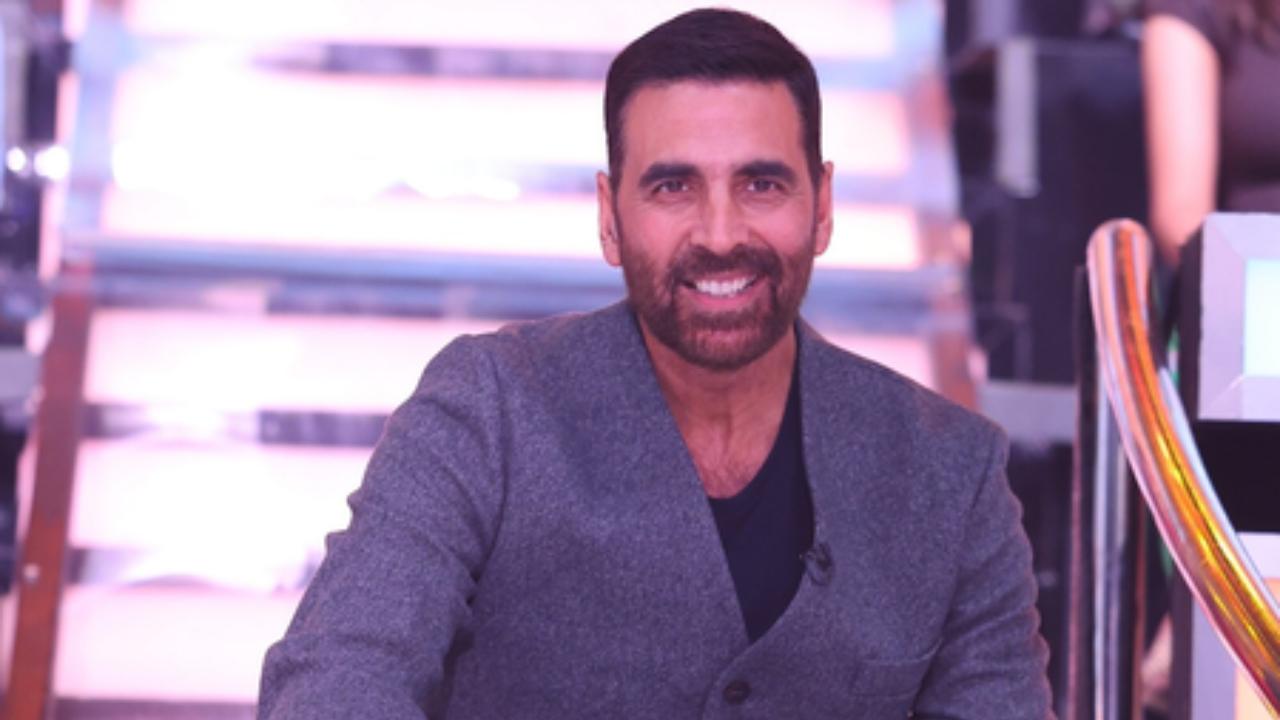
Akshay Kumar recently shared an amusing and lesser-known detail about his marriage with Twinkle Khanna during an appearance on the TV show Wheel of Fortune. The actor revealed that before saying yes to the wedding, Twinkle went beyond just matching his horoscope—she carefully examined the kundalis of his entire family, even factoring in their medical histories.Recalling the incident, he said, “Mere shadi ke pehle meri wife ne kundli dekhi thi lekin meri nahi mere khandaan ki kundli dekhi thi, sab cheez ki jaankari pata ki meri khandaan mein, mere father, mama, chacha sabki kundli dekhi, yeh dekhne ki kisi ko koi bimaari vagera toh nahi hain. Finally, when she was assured that everything seemed fine, she took the marriage ahead.”The episode also featured noted astrologers such as Jai Madaan, Sweta Jumani, and Munisha Khatwani. The conversation took an interesting turn when Jai Madaan mentioned that she doesn’t rely solely on horoscopes but can also predict aspects of a person’s future by studying their signature.For context, Akshay and Twinkle tied the knot in January 2001 after reportedly falling in love on the sets of their film International Khiladi. Twinkle is the daughter of late superstar Rajesh Khanna and veteran actor Dimple Kapadia.Today, the couple shares a strong bond and are parents to two children, Aarav and Nitara.


The Bengal test: Can Mamata hold, or will BJP crack the bastion? | India News

0
The Bengal test: Can Mamata hold, or will BJP crack the bastion? | India News


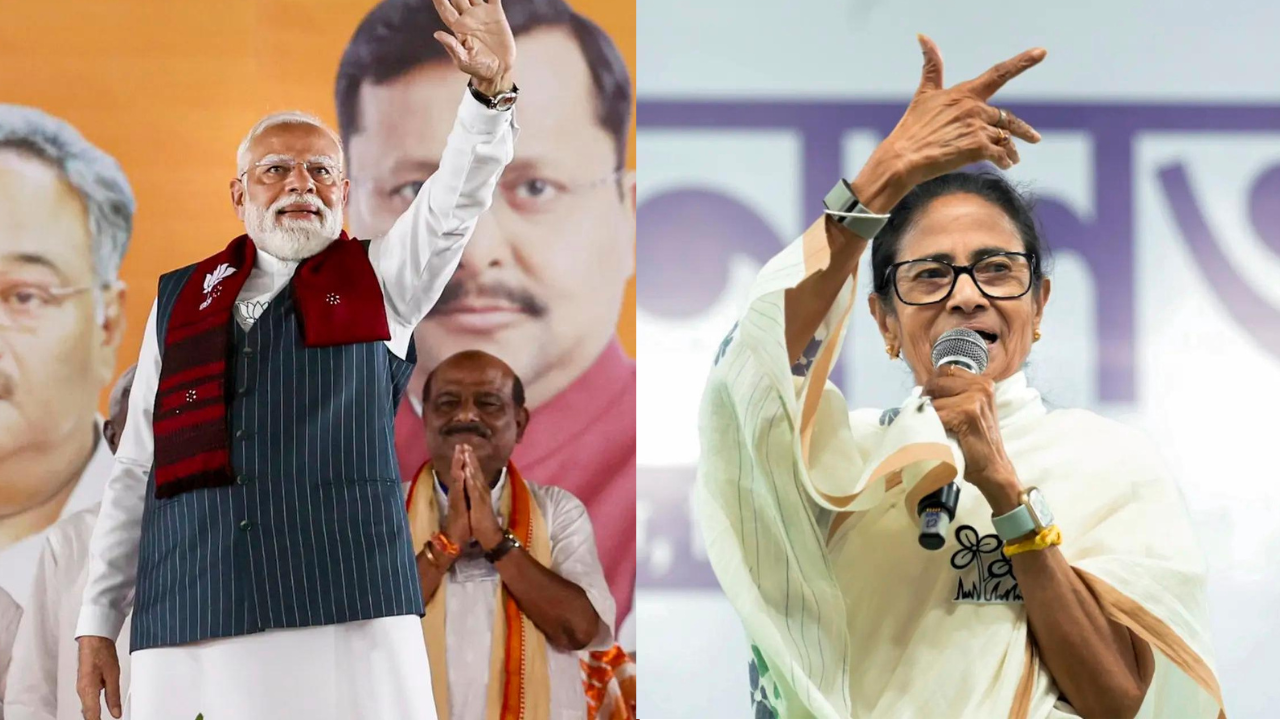
PM Modi and Bengal CM Mamata Banerjee (R)

NEW DELHI: Will West Bengal once again subscribe to Mamata Banerjee’s pitch and emotional appeal built around the formula of ‘maa, mati, manush’? The ever-resilient and energised Bharatiya Janata Party in the state is eyeing her seat of power, hoping to breach the walls of the Bengal bastion after over 15 years of Mamata’s strong rule.The Congress factor, however, despite a decades-long drought, could still prove crucial in shaping the road to Kolkata’s throne.Much like the Congress, the Left, once dominant under towering leader Jyoti Basu in Bengal, is now fighting to regain its lost ground from zero.

April 23 and April 29 have been set as polling dates, with “Banglar manush” voting in two phases across all 294 seats. Counting and results are scheduled for May 4, alongside elections in three other states and a Union Territory.The buzz around Bengal remains upbeat, as the country’s second-largest Assembly run by a woman chief minister from the Trinamool Congress, has posed a formidable challenge to rivals ever since her dramatic rise in state politics.The battle for the Kolkata throne is largely seen as a bipolar TMC vs BJP contest, with Mamata Banerjee as the lone woman challenger locked in a direct and fiery face-off with the BJP’s top leadership amid Bengal’s election fever.Meanwhile, multiple players, the Congress, the Left, and Humayun Kabir’s AJUP, which is in an electoral marriage with Asaduddin Owaisi’s AIMIM, are vying to shape a third front.The BJP has stepped up its game following its major embarrassment in Parliament, where a united opposition defeated its proposed women’s quota and delimitation bill in Lok Sabha. The saffron party, led by Prime Minister Narendra Modi and home minister Amit Shah, launched a blistering attack on parties such as the Congress, TMC, DMK, and SP.In Bengal, PM Modi held several rallies, seeking to frame Mamata Banerjee’s TMC as an “anti-women” party in a strong bid to woo women voters, urging them not to back Mamata this time, but to hand over the baton of power to a potential debutant BJP.

Faultlines beneath the campaign

This time, the backdrop of elections carries the heavy baggage of riots, violence, social harmony concerns, and law and order questions.

The uncomfortable episodes of Sandeshkhali, Murshidabad, RG Kar Medical College and Hospital, constant allegations of facilitating infiltration, and most recently Malda could haunt Mamata’s continuance, and prove bankable assets for rivals like BJP, Congress, Left, and others.

What happened in last elections?

Last time when West Bengal went to assembly polls in 2021, BJP’s ‘Chanakya’ Amit Shah, in his strident voice, set the target of “200 paar” in a 294-seat House in a state with no BJP legacy.The long political history of West Bengal, stretching back to the East India Company era, had little trace of BJP’s presence. Yet, the saffron party, strong at the Centre but historically absent in the state, pushed hard with wide campaigns.

With key commanders of BJP brigade, PM Narendra Modi and Amit Shah, leading numerous rallies, it managed to crack Mamata’s citadel, winning 77 seats and emerging as a formidable opposition for the first time, overtaking Left and Congress.Mamata’s rise had earlier dismantled the long-standing Left dominance and pushed Congress to the margins. The BJP’s emergence not only made it the prime challenger but also dealt a blow to an already weakened Left-Congress space.

Will this time be a shift?

Is there trouble in paradise for Mamata? Her 2021 victory was followed by a wave of post-poll violence, reinforcing Bengal’s long-standing association with electoral unrest.According to EC data, around 1,300 incidents of violence took place across the state after the 2021 polls. Beyond post-poll unrest, the state has seen episodes like Murshidabad violence, the RG Kar rape case, and Sandeshkhali unrest—among other disturbing chapters in the last five years under Mamata’s rule.These incidents could sway voters and push them towards alternatives in the hope of a different governance trajectory.And a clear, formidable challenger has been steadily building — BJP.

High-stakes contest

A state as politically significant as West Bengal carries sky-high stakes. BJP, in its now familiar expansion mode, continues to deepen its footprint across the country, with Bengal remaining one of its most ambitious targets.For TMC, however, Bengal is its core and only stronghold. Led by Mamata Banerjee, it remains one of the strongest forces countering BJP’s national dominance.Eclipsing TMC in Bengal would be a major strategic win for BJP.The Congress, broadly aligned with the Left Front, is also attempting to regain relevance. However, after recent setbacks like Bihar, where it secured just a fraction of the seats it contested, it remains a distant third in what is largely a bipolar contest.The Left, once dominant, continues to fight for space, keeping alive a long but fading legacy.

BJP’s infiltration pitch on Mamata

BJP has sharpened its attack on Mamata over alleged infiltration, citing Bengal’s long international border with Bangladesh.Amit Shah has accused the Mamata government of enabling “demographic change” in the state.In a January rally ahead of polls, Prime Minister Narendra Modiechoed the same line, calling for “asli poribortan,” stating: “In many areas of Bengal, demography has changed due to infiltration. TMC’s hooliganism and threat politics will stop soon.”The PM added, “Riots are happening in Malda, Murshidabad, and other parts of Bengal due to infiltration.”He also coined the slogan: “Paltano darkar, chai BJP sarkar.”

RG Kar case

The TMC rule suffered yet another blot in 2024 when a junior doctor was brutally raped inside the campus of RG Kar Medical College and Hospital in Kolkata.The incident triggered massive protests, directly questioning the authority of Mamata Banerjee. It raised serious concerns over safety, security, and administrative accountability.BJP, stepping up its attack ahead of elections, fielded the victim’s mother from Panihati, symbolically amplifying the issue against the ruling dispensation.

Sandeshkhali

The same year, Sandeshkhali, a remote riverine area, emerged as a major political flashpoint following allegations of land grab, sexual violence, and intimidation against women, with accusations centred around Sheikh Shahjahan.The issue triggered statewide protests, a fierce political confrontation between TMC and BJP, and multiple investigations.It also brought national attention to governance concerns in the Sundarbans region, highlighting allegations of localised power networks, law enforcement gaps, and the vulnerability of women in remote areas.

Murshidabad violence

Law and order concerns resurfaced in 2025 when violence erupted in Murshidabad during protests against the Waqf Amendment Act, spiralling into widespread clashes and communal unrest.The violence led to deaths, injuries, and displacement, with security forces deployed to restore order.

SWOT analysis: Party-wise

TMC: Welfare strength vs governance pressure

The TMC enters the election as the dominant force, backed by strong grassroots networks and welfare delivery, but it faces mounting anti-incumbency and growing scrutiny over governance. Mamata Banerjee’s long-held influence in state politics is now being challenged by an aggressive BJP campaign, with top leaders such as PM Narendra Modi, Amit Shah, and Rajnath Singh launching direct attacks on her 15-year rule, highlighting issues like rising violence, law and order concerns, migration, infiltration, and alleged demographic change.

Meanwhile, the Trinamool Congress is also facing criticism from multiple quarters, including INDIA bloc partners like the Congress and the Left, even as it seeks to retain its formidable grip on power in Bengal.

Strengths

  • Mamata continues to enjoy a strong grassroots connect, reinforcing the party’s electoral appeal across regions.
  • The party maintains a robust booth-level organisation that ensures effective mobilisation in both rural and urban areas.
  • Its extensive welfare schemes have created a loyal support base among women and economically weaker sections.
  • Consolidation of minority votes continues to act as a major electoral advantage.

Weaknesses

  • Anti-incumbency sentiment has been building after more than 15 years in power.
  • Repeated allegations of corruption and governance issues have affected the party’s credibility.
  • Internal factionalism and concentration of leadership have created organisational strains.
  • The narrative of political violence and clashes has hurt the party’s public image.

Opportunities

  • A fragmented opposition allows the party to retain its dominant position.
  • The Bengali identity narrative provides a counter to BJP’s perceived outsider image.
  • Welfare beneficiaries offer scope for expanding and consolidating a loyal voter base.
  • Strategic candidate reshuffles can help address local dissatisfaction and anti-incumbency.

Threats

  • The growing organisational and electoral push of BJP poses a significant challenge.
  • Increasing political polarisation risks cutting into established vote banks.
  • Electoral controversies and concerns around voter trust could impact outcomes.
  • Urban centres and border districts are emerging as highly competitive battlegrounds.

BJP: Momentum vs local gaps

BJP has emerged as the principal challenger, combining national leadership with rapid organisational growth, though local limitations remain.

Strengths

  • The leadership of Narendra Modi provides strong national appeal and voter traction.
  • The party has significantly expanded its organisational base since 2019, filling the vacuum left by the Left.
  • Its clear ideological positioning has enabled consolidation of a sizeable section of Hindu voters.
  • A high-intensity campaign machinery ensures strong visibility and outreach during elections.

Weaknesses

  • The absence of a strong and widely accepted chief ministerial face weakens its local positioning.
  • The perception of being an outsider party continues to affect its acceptance among Bengali voters.
  • Internal factionalism, especially between old cadre and new entrants, creates organisational friction.
  • Its grassroots penetration, particularly in rural areas, remains weaker than that of TMC.

Opportunities

  • Anti-incumbency against TMC provides a clear opening for electoral gains.
  • The party has scope to expand its appeal among women and welfare beneficiaries.
  • Consolidation of anti-TMC votes can significantly strengthen its electoral prospects.
  • National issues such as identity and security can be leveraged to mobilise voters.

Threats

  • A backlash driven by Bengali identity politics could limit its growth.
  • TMC’s welfare ecosystem may blunt the impact of anti-incumbency.
  • Excessive polarisation risks alienating swing voters.
  • Congress and Left could divide opposition votes and reduce BJP’s advantage.

Congress: Relevance vs revival challenge

The Congress, now facing its longest stretch out of power in the state, last formed a government several decades ago, going back to the twentieth century. In the first three decades after independence, the party commanded strong influence in West Bengal, led by legacy figures such as Bidhan Chandra Roy, the state’s first chief minister.However, the party was eventually swept aside by the CPI(M)-led Left Front under the towering leadership of Jyoti Basu, whose dominance continued for decades until it was unseated by Mamata Banerjee in 2011. The rise of Mamata’s TMC further pushed Congress to the margins, and in the last election, the BJP delivered another blow, reducing the party to zero representation in the Assembly.

Struggling on multiple fronts, the Congress enters this election with little to lose and everything to gain.

Strengths

  • Congress retains pockets of historical influence in districts like Malda and Murshidabad, which still offer electoral openings.
  • Its legacy brand and national presence continue to provide a base level of voter recognition and credibility.
  • The party maintains some acceptability among minority voters in select constituencies.
  • Its centrist positioning appeals to voters seeking an alternative to both TMC and BJP.

Weaknesses

  • Organisational decline has significantly reduced its electoral competitiveness in recent years.
  • The absence of strong and credible state-level leadership limits its ability to mount an effective challenge.
  • Continuous cadre erosion to TMC and BJP has weakened its grassroots network.
  • It struggles to remain relevant in a largely bipolar political narrative.

Opportunities

  • There is scope to attract voters disillusioned with both TMC and BJP.
  • Targeted campaigning in traditional strongholds could help convert residual support into seats.
  • A softer, moderate political positioning may appeal to voters fatigued by polarisation.
  • Strategic candidate selection could improve performance in closely contested constituencies.

Threats

  • The bipolar contest between TMC and BJP continues to squeeze Congress’s political space.
  • Vote splitting with other opposition players could further damage its prospects.
  • Ongoing cadre migration risks deepening organisational weakness.
  • There is a growing risk of long-term political marginalisation without electoral gains.

Left: Legacy erosion vs survival fight

The Left ruled West Bengal for decades, with the CPM’s dominance taking shape under the leadership of Jyoti Basu. The Marxist force dismantled the Congress’s long-held grip on power in the state.

However, with Mamata Banerjee’s rise to the Kolkata throne, the Left suffered a major setback, gradually losing its electoral footprint. The BJP’s emergence as the second-strongest force in the last elections, behind the incumbent lady, pushed the CPM and its allies further into political insignificance.

Strengths

  • The Left retains a strong ideological base and a committed core cadre despite electoral setbacks.
  • Its historical governance legacy under leaders like Jyoti Basu still resonates with older voter segments.
  • The party maintains organisational discipline in select pockets.
  • It appeals to voters seeking a clear ideological alternative to both TMC and BJP.

Weaknesses

  • The Left has faced a steep electoral decline, with minimal recent success in the state.
  • A shrinking voter base and ageing leadership have limited its mass appeal.
  • Cadre erosion to rival parties has weakened its ground strength.
  • It struggles to connect with younger voters in the current political landscape.

Opportunities

  • There is space to rebuild by mobilising grassroots movements and issue-based politics.
  • Discontent with both TMC and BJP could create openings in select constituencies.
  • Re-engaging youth and student wings could help revive its organisational base.
  • Focused campaigning in traditional bastions may yield incremental gains.

Threats

  • The dominance of TMC and BJP leaves little room for a third force to expand.
  • Continued decline risks pushing the party into political irrelevance.
  • Internal stagnation and lack of reinvention may hinder revival efforts.
  • Fragmentation of opposition votes could further reduce its electoral impact.


Wheel of Fortune: Contestant predicts Akshay Kumar`s future

0
Wheel of Fortune: Contestant predicts Akshay Kumar`s future


Wheel of Fortune: Contestant predicts Akshay Kumar`s future

The upcoming episode of Wheel of Fortune promises an entertaining mix of admiration, surprises, and personal revelations as contestant Sweta Jumani, a world-renowned Astro Numerologist, leaves host Akshay Kumar pleasantly surprised with her special prediction for him.

A contestant predicts Akshay Kumar’s future

During the episode, Sweta shares that she has often seen or predicted the future of many celebrities. Speaking to Akshay Kumar, she recalls an interesting incident from a recent trip abroad, where she visited a mall and came across a spinning wheel just like the one on Wheel of Fortune. To her delight, she ended up winning there too, making the moment on the show feel even more special and fated.