Tuesday, September 29, 2026
Home Blog Page 617

'Doomsday' confirms Dec 18 CLASH with 'Dune 3'

0
'Doomsday' confirms Dec 18 CLASH with 'Dune 3'


'Avengers: Doomsday' CONFIRMS December 18 release; to CLASH with Timothee Chalamet's 'Dune: Part Three'

Amid much hype and anticipation, Marvel Studios took the stage at CinemaCon on Thursday to share with audiences an update about their highly anticipated superhero film. Photos from the events saw the hallways turning green with ‘Avengers’ posters that featured the film’s release date – December 18, 2026. With this, the film is now set for a high-profile box office clash with ‘Dune: Part Three’. The confirmation also came during CinemaCon, where Kevin Feige made a notable appearance wearing an ‘Avengers: Doomsday’ hat. He was joined by Chris Evans and the directing duo Russo Brothers, who were present to promote the upcoming film.Amid widespread anticipation that Marvel might debut a new trailer or offer a first official look at Robert Downey Jr. as Doctor Doom, the studio instead unveiled select footage as part of Disney’s opening sizzle reel.The preview reportedly included a series of striking moments previously shown in the teasers released in December with ‘Avatar: Fire and Ash’. As per audience posts, the clip featured a shot of Captain America’s foot pressing down on a bike pedal, Thor speaking to the All-Father, and a closing sequence showing Captain America picking up his suit and holding his baby. The footage culminated with Cyclops unleashing his optic blasts.The presentation concluded with the message “Disney Will Return To CinemaCon” appearing on screen, followed by an Avengers-themed countdown clock.The release date confirmation comes amid chatter that Marvel will advance the film’s release date to December 11 to cash in on IMAX screens. As per reports, the makers of ‘Dune: Part Three’ have booked all IMAX screens for their film release and have also secured weeks-long run, depriving ‘Avengers’ IMAX screenings. As per reports, with no IMAX scenes for a reported three-week window, ‘Avengers’ will reportedly release in all other premium formats.


Ayushmann Khurrana praises Ranbir Kapoor as he features in TIME100 list

0
Ayushmann Khurrana praises Ranbir Kapoor as he features in TIME100 list


Ayushmann Khurrana praises Ranbir Kapoor as he features in TIME100 list

Ranbir Kapoor, one of the most compelling and influential voices in Indian cinema today, has been featured in TIME Magazine’s prestigious TIME100 list, which celebrates the world’s most impactful individuals. Known for his nuanced performances and fearless approach to storytelling, Ranbir has consistently pushed the boundaries of mainstream stardom to carve a space that is both culturally resonant and globally relevant.

Ayushmann Khurrana lauds Ranbir Kapoor

Honouring his journey and contribution to cinema, Ayushmann Khurrana penned a deeply insightful note- one that reflects not just admiration, but a deeper understanding of what Ranbir represents in today’s cinematic landscape.

Reflecting on the nature of his stardom, Ayushmann wrote, “There are actors who chase legacy, and there are actors who become one through their craft. Ranbir Kapoor is the latter. In an industry as prolific and passionate as Indian cinema, we often measure greatness in decibels- box-office numbers, fan frenzy, and opening weekends.”

He went on to highlight how Ranbir’s impact lies beyond the obvious markers of success, in something far more subtle yet lasting: “Every once in a while, an actor shifts something quieter yet far more enduring- our emotional vocabulary as an audience. Ranbir has been doing that film after film. In a world where performances are often amplified, Ranbir internalises. He shows our culture through quiet restraint. He represents the India that is finally learning how to listen to itself and leaves a mark through simple authenticity.”

Ayushmann on Ranbir`s global contribution

He also highlighted Ranbir’s relevance on the global stage and how he has contributed to a cultural shift. Ayushmann added, “Globally, actors like Ranbir become important cultural bridges. He embodies an India that is evolving not just in scale but also in sensitivity. Our cinema is influencing the world. Ranbir isn’t just a movie star; he’s a storyteller talking to a global audience, telling them stories of a fabled, mythical country where epics like the Ramayana have inspired other civilisations and cultures.”

Ayushmann’s tribute not only celebrates Ranbir Kapoor’s artistry but also positions him as a key voice in the evolving identity of Indian cinema. Ayushmann himself has also been recognised by TIME, having featured on the TIME100 list and later receiving the TIME100 Impact Award, making him one of the few Indians to be honoured twice within three years.


India Nuclear Energy Programme: India’s big nuclear leap: How Stage 2 criticality at Kalpakkam will power the road to energy security

0
India Nuclear Energy Programme: India’s big nuclear leap: How Stage 2 criticality at Kalpakkam will power the road to energy security


India’s big nuclear leap: How Stage 2 criticality at Kalpakkam will power the road to energy security

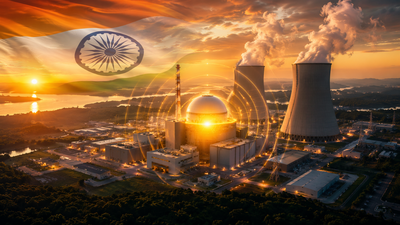
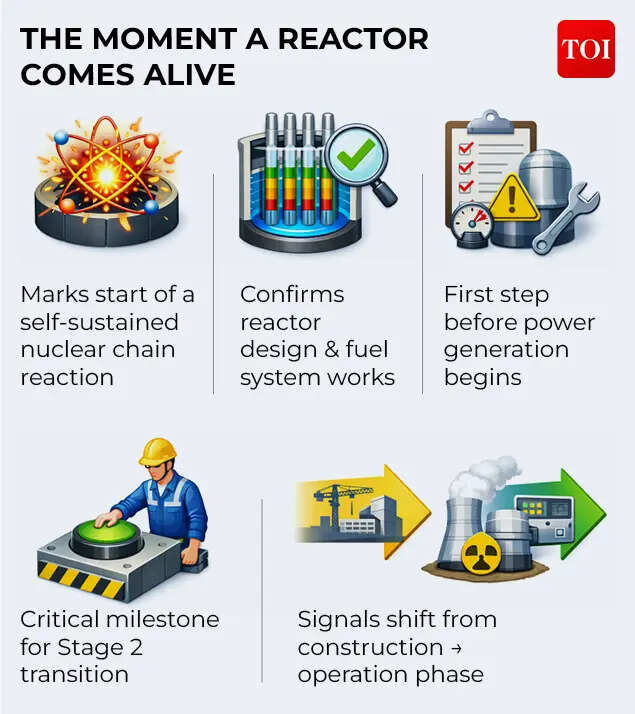
‘No power is as costly as no power’ – Homi Jehangir Bhabha, the father of India’s nuclear programme, had once famously said. Several decades later, India’s nuclear energy ambitions have entered a decisive phase.On April 6, the Prototype Fast Breeder Reactor (PFBR) at Kalpakkam in Tamil Nadu achieved criticality, achieving a sustained nuclear chain reaction for the first time. The 500 MWe reactor, built by Bharatiya Nabhikiya Vidyut Nigam Limited, marks India’s formal entry into Stage 2 of its three-stage nuclear programme. What makes India’s achievement even more remarkable is that it is the second country after Russia to operate a commercial fast breeder reactor. This milestone comes at a time when India’s overall power system has reached 520.51 GW of installed capacity as of January, which in itself is a result of a decade of rapid expansion across conventional and renewable sources. Stage 2, therefore, sits within a much larger transformation of India’s energy architecture.Nuclear energy, attained through controlled splitting of atoms, is used to generate electricity. It is widely recognised as a dependable and clean source of energy that does not produce any greenhouse gases. For India, which is among the world’s largest and fastest-growing economies, the importance of energy self-reliance cannot be overstated. As it moves towards its goal of becoming a developed country, nuclear energy is a cornerstone in India’s Atmairbharta push. It also assumes particular significance in an increasingly unpredictable global environment where economic warfare has become a weapon.What is India’s nuclear energy programme? What are the expansion plans and how does nuclear energy help India build self-reliance and energy security?

India’s civil nuclear energy plans: Where we stand & expansion roadmap

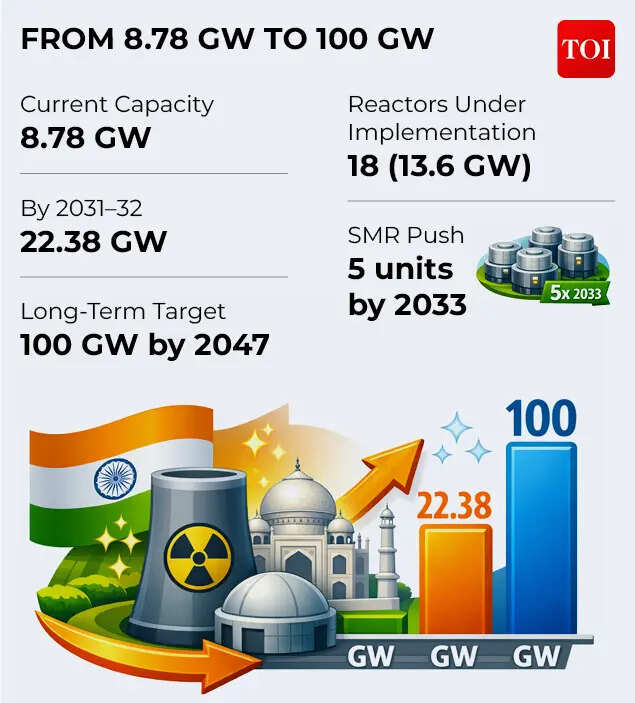
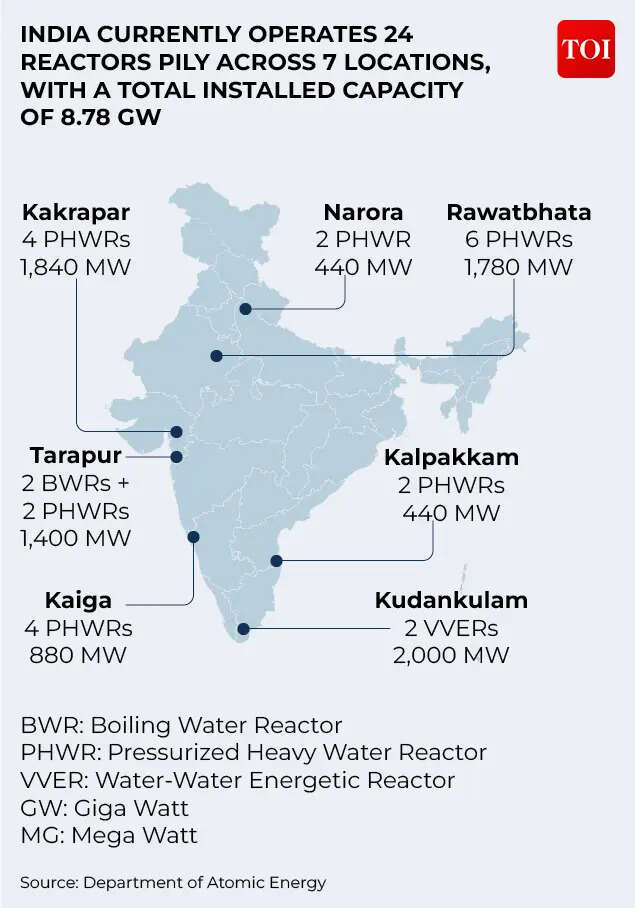
Nuclear energy remains a small but strategic part of India’s electricity mix. India’s nuclear capacity stands at 8.78 GW, contributing 3.1% of total electricity generation in 2024–25, with output of 56,681 million units. This is modest compared to the country’s total installed capacity of 520.51 GW, where renewables and coal dominate. However, expansion plans are significant.

India's nuclear roadmap

India aims to scale capacity to 22.38 GW by 2031–32, supported by an implementation pipeline of 18 reactors totalling 13.6 GW. Beyond this, the Nuclear Energy Mission targets 100 GW by 2047, positioning nuclear as a major pillar of India’s long-term energy transition.As Vikas Gaba, partner and national head – power and utilities, KPMG in India, says, this scale-up is aligned with “Viksit Bharat 2047 and the national Net-Zero 2070 commitment,” with nuclear power expected to play a materially larger role in the future energy system.This expansion aligns with rising electricity demand, which saw India meet a peak of 242.49 GW in FY 2025–26, while power shortages fell sharply to 0.03%, down from 4.2% a decade ago.As Gaba notes, nuclear is positioned as a “critical pillar” in India’s long-term clean energy transition.

Importance of Stage 2 & the road to Stage 3

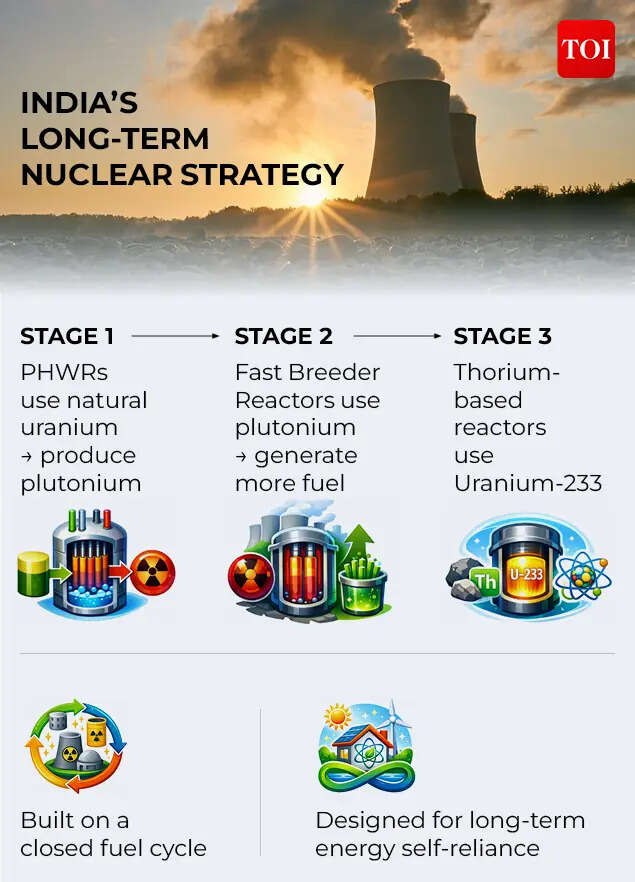
India’s three-stage nuclear programme, designed by Homi Jehangir Bhabha way back in 1954, is rooted in resource optimisation.Stage 1 generates plutonium from uranium. Stage 2, now operational, uses that plutonium in Fast Breeder Reactors to create more fuel than consumed. The PFBR converts Uranium-238 into Plutonium-239, expanding fissile material availability.Crucially, it lays the foundation for Stage 3, where Thorium-232 will be converted into Uranium-233 for large-scale thorium-based power generation.

India’s long-term nuclear strategy

What makes India’s nuclear journey different

India doesn’t have much uranium. Unlike France or China, which scaled nuclear rapidly using imported uranium, India’s approach is slower but structurally differentiated, prioritising domestic resource leverage, closed fuel cycles, and strategic autonomy over near‑term capacity maximisation.Importantly, Somesh Kumar, partner, power & utilities GPS leader, EY India, says, India’s differentiation lies in “a three-stage closed fuel-cycle pathway intended to convert limited domestic uranium and large thorium reserves into long-term energy security.”

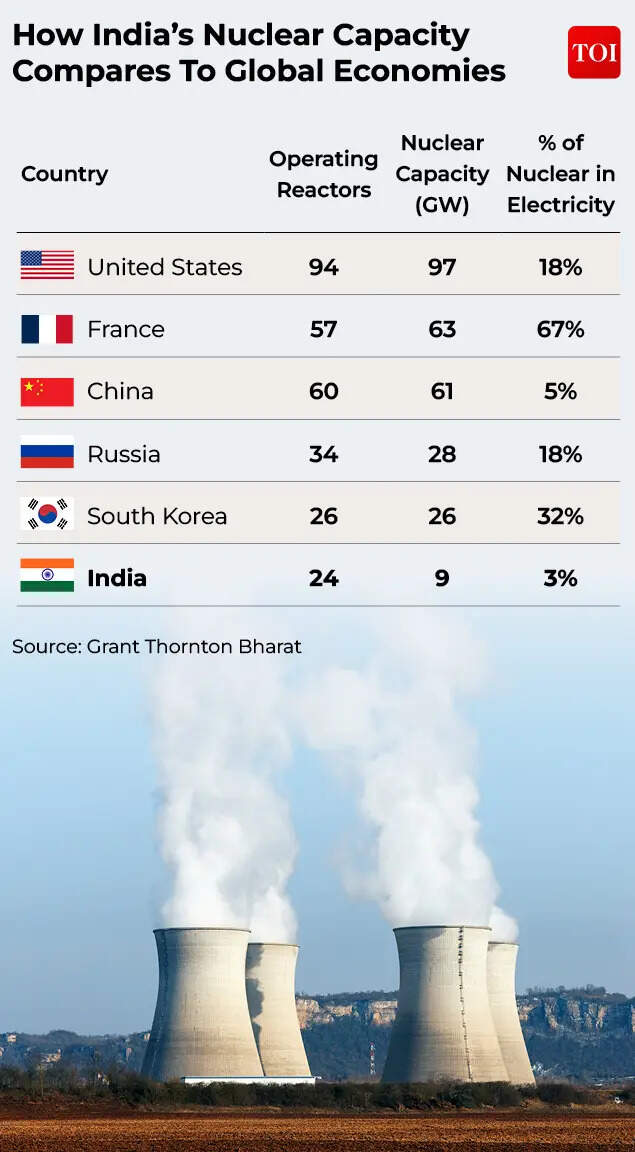
How India’s Nuclear Capacity Compares To Global Economies

Amit Kumar, partner and energy and renewables industry leader at Grant Thornton Bharat, notes, “Although India has the 8th largest installed base of nuclear power capacity, the contribution to electricity generated is only 3% of annual production. With recent policy reforms and engineering advances, India is on a path to emerge as a significant nuclear energy player.”

Nuclear in India’s evolving energy mix

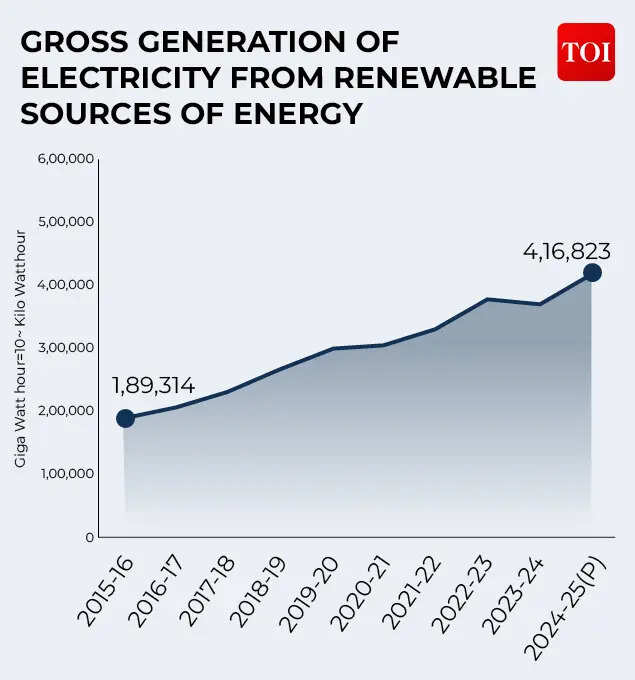
India’s energy mix today reflects both scale and transition. Coal continues to dominate total energy supply, rising to 5,52,315 Ktoe in FY 2024–25, while renewable capacity has surged to 2,29,346 MW, growing at a CAGR of over 10%. On peak days, renewables have already met over 51.5% of electricity demand, signalling rapid structural change. At the same time, overall energy demand continues to rise. Total Primary Energy Supply grew 2.95% year-on-year, while Total Final Consumption increased over 30% since FY16, reflecting expanding industrial and economic activity.

Electricity generated from renewable sources of energy

In this context, nuclear power’s role is distinct. It provides stable, round-the-clock baseload power in a system increasingly dominated by variable renewables.As Somesh Kumar highlights, nuclear delivers “reliable 24×7 clean baseload power,” complementing intermittent sources like solar and wind.

Energy access, demand growth, and why nuclear matters

India’s power sector has moved from scarcity to adequacy.Over 18,374 villages have been electrified, and 2.86 crore households connected, supported by investments of Rs 1.85 lakh crore. Per capita electricity consumption has risen to 1,460 kWh (FY25), up over 50% from a decade ago.With rising consumption, the projected peak demand is expected to reach 458 GW by 2032 under the National Electricity Plan. This creates the need for not just more power, but more reliable power.Nuclear fits this requirement by providing a consistent supply independent of weather or fuel price volatility, supporting industrial growth, digital infrastructure, and urban demand centres.

The investment cycle: Nuclear as a long-term capital play

India’s power sector is entering a massive investment phase. With over Rs 50 lakh crore investment opportunities projected through 2032 across generation, transmission, and storage, nuclear forms a key long-term component of this ecosystem.The Nuclear Energy Mission allocates Rs 20,000 crore for SMRs, but the broader scale-up to 100 GW will require sustained capital deployment.

Total installed capacity

As Somesh Kumar notes, nuclear’s value lies in reducing dependence on fossil-based reliability resources in a system that will require trillions in investment for the net-zero transition.

Policy push: Role of the SHANTI Act, 2025

In India’s quest for nuclear energy expansion, the Sustainable Harnessing and Advancement of Nuclear Energy for Transforming India (SHANTI) Act, 2025 emerges as an institutional backbone. The SHANTI Act 2025 consolidates and modernises India’s nuclear legal architecture, aligning it with current expansion goals. It allows limited private sector participation in areas such as plant operations, equipment manufacturing, and parts of the fuel value chain, while retaining sovereign control over critical functions like enrichment, reprocessing, and waste management.The legislation also strengthens regulatory oversight by granting statutory status to the Atomic Energy Regulatory Board and introducing structured licensing and a graded liability framework.This creates a more predictable and structured environment for scaling nuclear capacity, while maintaining safety and strategic control. In this context, the broader policy ecosystem complements technological milestones such as the PFBR’s criticality, enabling the next phase of growth.This policy framework aligns nuclear expansion with India’s broader goals of energy security, clean energy transition, and long-term economic growth.Debashish Mishra, partner, chief growth officer, Deloitte South Asia, says that the SHANTI Bill clarifies a few important aspects like insurance, liability. “This has been the demand because post-Fukushima, foreign companies are scared to touch any investment in nuclear without capping their liability. It also covers small modular reactors which are important for data centers,” he tells TOI.However, Amit Kumar of Grant Thornton Bharat sees two critical gaps, domestic capability and capacity building, and faster approval cycles for foreign direct investment in nuclear power. He believes that to fully capitalise on recent reforms, India must prioritise localisation of nuclear manufacturing.

Role in self-reliance, energy security & economic benefits

India’s nuclear strategy is fundamentally about reducing vulnerability. While fossil fuels—especially coal and imported hydrocarbons—continue to dominate energy supply, nuclear energy offers a pathway to reduce long-term exposure to global fuel volatility.Its advantages include low fuel volume requirements, long operating cycles, and the ability to build a domestic fuel cycle. Over time, thorium-based systems could further strengthen self-reliance.Experts say expanding nuclear power can provide substantial economic benefits by displacing imported fossil fuels used for baseload power. Over time, avoided fuel imports, reducing carbon exposure, and stable long‑term tariffs can end up improving India’s trade balance while at the same time supporting competitive, low‑carbon industrial growth.

The moment a reactor comes alive

Amit Kumar of Grant Thornton Bharat explains that energy consumption today depends on imported fuel, except for electricity which is largely generated from indigenous resources. Increasing electrification of sources of energy consumption (cooking, transportation) and increased production of electricity from non-fossil indigenous resources will be two drivers of India’s energy security, he believes. “In an increasingly volatile global energy environment, greater nuclear penetration can significantly reduce reliance on fossil fuels, thereby lowering exposure to fuel‑price volatility and import dependence,” he tells TOI.“Beyond fuel security, nuclear power enhances grid stability in a renewable‑heavy system by providing firm, carbon‑free baseload power. Strategically, India’s indigenous reactor program and advanced reactor focus reinforce long‑term self‑reliance and technological leadership,” he adds.Somesh Kumar of EY India is of the view that the stronger economic case for nuclear power is system-level: Niti Aayog estimates that India’s Net Zero power transition could require $14.23 trillion in cumulative investment by 2070, which means the country will need not just more clean energy, but more firm and reliable clean energy. Nuclear’s economic value lies in reducing reliance on fossil-based reliability resources over time. Its strongest substitution case is in the power sector, especially against coal-based baseload generation in the medium-to-long term and gas-based generation during periods of LNG stress; Niti’s power outlook is telling on this point, as it sees no new gas-based generation investment and existing gas plants being gradually retired by 2050. In other words, nuclear’s most effective role is not to replace every hydrocarbon everywhere, but to displace the most import-risk and carbon-intensive parts of the electricity stack while supporting a more stable clean-power system, says Somesh Kumar.In fact, according to Sambitosh Mohapatra, Partner, PwC India India’s unique fuel strategy supports grid stability, limits exposure to geopolitical energy shocks, and anchors energy independence as renewable penetration and electrification rise.“Civil nuclear power enhances India’s energy security by providing firm, low‑carbon baseload power while reducing dependence on imported coal, LNG, and volatile global fuel markets. The fast‑breeder pathway enables recycling of spent fuel and gradual reduction in uranium import intensity. Over the long term, India’s vast thorium reserves—among the largest globally—offer the prospect of near‑permanent domestic fuel availability under Stage‑3 reactors,” he tells TOI.From a fuel security perspective, nuclear power has a distinct advantage. It requires very small quantities of fuel, sourced under long‑term arrangements and usable over extended operating cycles. According to Vikas Gaba of KPMG, economically, nuclear expansion enables substitution of import‑intensive and fuel‑price‑exposed conventional sources. Nuclear power is particularly effective in replacing:

  • Coal‑based baseload generation in large, continuous‑load applications
  • Gas and LNG‑based power, where fuel costs are linked to volatile international markets
  • Diesel‑based captive generation for industrial and strategic facilities

Gaba lists heavy industries, railways, urban power systems, emerging digital infrastructure, and manufacturing corridors as key beneficiary sectors.India’s nuclear strategy is also closely linked to long-term energy security. The three-stage programme is designed to reduce dependence on imported uranium by building a domestic fuel cycle centred on thorium. With one of the largest thorium reserves globally, this approach aims to ensure sustained energy availability over the long term.At present, India also participates in cross-border electricity trade with neighbouring countries through regional grid connectivity. While nuclear energy is currently focused on domestic supply, expansion of stable baseload capacity could strengthen India’s role in regional energy cooperation over time.

Execution challenges: Scale, cost, and timelines

Despite strong fundamentals, execution remains the key challenge.Nuclear projects are characterised by long gestation periods, high capital requirements, and complex regulatory frameworks. Technologies like Fast Breeder Reactors add additional layers of technical complexity.The transition to Stage 3, based on thorium, remains a long-term objective dependent on the successful scaling of Stage 2 technologies. Execution, rather than intent, will determine the pace of progress.India’s power system has expanded rapidly, adding over 52,537 MW capacity in FY26 alone, including 39,657 MW from renewables, but nuclear projects operate on longer timelines and higher capital intensity.As Somesh Kumar of EY points out, the next phase depends on building a “credible build-finance-regulate model at scale.”

The bottom line

India’s nuclear milestone at Kalpakkam is not an isolated event—it is part of a broader transformation of the country’s energy system.From 520.51 GW installed capacity to rising demand, expanding renewables, and declining power shortages, the system is becoming larger, more reliable, and more complex.In that system, nuclear energy is evolving from a marginal contributor to a strategic pillar—one that provides stability, supports clean energy goals, and strengthens long-term energy security.As Somesh Kumar of EY sums up: the next phase of India’s nuclear journey will be decided less by ambition and more by whether India can build a credible build-finance-regulate model at scale.The ambition is clear. The scale is unprecedented. The outcome will depend on execution.



Arshdeep Singh’s IPL resurgence with Ponting’s guidance leads PBKS to victory

0
Arshdeep Singh’s IPL resurgence with Ponting’s guidance leads PBKS to victory


The fans are increasing for Punjab Kings in the IPL and Arshdeep Singh believes he has played a role in it with his social media game. Arshdeep keeps himself as a funny character on social media with his reels, with fellow cricketers already becoming famous. Apart from this, he also posts a lot about his personal life, which has created a bond with the fans.

IPL 2026, MI VS PBKS: HIGHLIGHTS | SCORECARD

During the match against the Mumbai Indians, the Punjab franchise received a lot of vocal support as they continued their winning streak in the competition. Speaking at post-match presentation, Arshdeep said that the fans like his reels, and he will continue making videos for them.

“I love the support. Lots of credit goes to my social media. I love making reels and posting stuff. They love me for that and I will keep doing it for them,” said Arshdeep.

HOW PONTING CHAT HELPED ARSHDEEP

Arshdeep revealed how a simple chat with Ricky Ponting helped him regain his best form during the IPL 2026 season. Arshdeep was at his best as he wrecked the Mumbai Indians’ top order with a blistering spell before coming at the end and ensuring the hosts were restricted at the Wankhede Stadium.

The left-arm pacer ended with figures of 3 for 22 in his four overs as MI were restricted to 195 in their 20 overs. PBKS ended up winning the match by seven wickets to move to the top of the table.

Speaking after the win, Arshdeep said that he had a candid chat with the PBKS coach, where he told him that the ball wasn’t coming out of his hand well.

The Indian pacer said that Ponting gave him a clear mindset.

“It goes back to having a chat with Ricky. I told him the ball isn’t coming out of my hand really well. He gave me a clear mindset. Even yesterday I had a nice spot bowling session and found the ball is coming nice out of my hand. I got it swinging and the control was there,” said Arshdeep.

The PBKS star said that there was nothing technical being discussed with Ponting and the Aussie tactician told him to stick to his basics.

“Nothing technical. It was keeping myself fresh mentally. I was expecting a lot from myself. He told me you are coming out of a high winning the World Cup and it’s never easy. He told me to stick to the basics,” said Arshdeep.

PBKS will face LSG in their next game on Sunday, April 19 at New Chandigarh.

IPL 2026 | IPL Schedule | IPL Points Table | IPL Player Stats | Purple Cap | Orange Cap | IPL Videos | Cricket News | Live Score

– Ends

Published On:

Apr 17, 2026 03:00 IST


Salman Khan and Shah Rukh Khan’s bodyguards earn in crores? Shah Rukh’s former security chief reveals the truth

0
Salman Khan and Shah Rukh Khan’s bodyguards earn in crores? Shah Rukh’s former security chief reveals the truth


There’s been a lot of buzz lately about the eye-popping salaries of superstar security teams, with whispers doing the rounds that Salman Khan’s bodyguard Shera and Shah Rukh Khan’s aide Ravi are raking in crores. Now, Shah Rukh’s former security chief has burst the bubble, revealing the actual monthly pay.

Over the years, the bodyguards of Shah Rukh Khan and Salman Khan have gained immense popularity.

Shah Rukh’s ex-security chief reveals

Recently, Shah Rukh’s former security head Yaseen Khan appeared on a podcast shared by Hindi Rush, where he weighed in on the ongoing chatter around the hefty salaries reportedly earned by superstar security teams.

Yaseen mentioned that the reports of bodyguards earning ₹2-2.5 crore a year are incorrect. Talking about these claims, Yaseen said, “Aisa nahi hota (It is not like that).”

He clarified that most bodyguards are on a fixed monthly payroll. While a few may earn extra during film shoots, such perks aren’t the norm for everyone.

Yaseen noted that the actual pay is far lower than what’s often claimed online. According to him, even seasoned security personnel typically earn around ₹1 lakh a month, depending on their role and experience. He said, “I feel social media spreads the wrong message. It’s not like people earn ₹2-2.5 crore. If someone is a bodyguard for a big star, they have a fixed salary. Apart from that, whenever a film is being made, a separate contract is drawn up. Depending on the producer, they are paid a certain amount for that film.”

The big numbers

Talking about well-known names like Shera and Ravi Singh, he questioned the big numbers often shared online. “I don’t think they earn that kind of amount yearly. If a celebrity personally pays them based on mutual understanding, that’s different. But salaries are not that high. Kon deta hai Rs. 10 lakh per month (Who pays ₹10 lakh per month)?”

During the conversation, he shared that earlier bodyguards weren’t compensated by producers during film shoots. He revealed that when he started working with Shah Rukh, he felt the need to get more, following which he approached producers to demand fair pay, which eventually led to a wider industry shift.

Yaseen worked for Shah Rukh and his family for 10 years from 2001 till 2011. After working with Shah Rukh for over a decade, Yaseen moved on to start his own company. In 2015, he launched a Mumbai-based security firm. His company now handles VIP protection and events and has worked with names such as Virat Kohli and Sachin Tendulkar.


Shreyas Iyer’s peak athleticism leaves Rohit, SKY in disbelief; PBKS skipper gains aura points with ice-cold celebration

0
Shreyas Iyer’s peak athleticism leaves Rohit, SKY in disbelief; PBKS skipper gains aura points with ice-cold celebration


Punjab Kings skipper Shreyas Iyer produced a moment of brilliance in the IPL 2026 clash against Mumbai Indians on Thursday, turning heads with his sharp fielding at the Wankhede Stadium. Playing at a venue he knows well from his domestic days, Iyer once again underlined his fitness and awareness, even after dealing with injury setbacks in recent times.

Rohit Sharma and Suryakumar Yadav were left stunned by Shreyas Iyer's efforts. (X Images)
Rohit Sharma and Suryakumar Yadav were left stunned by Shreyas Iyer’s efforts. (X Images)

The highlight came in the 18th over when Hardik Pandya went after Marco Jansen, looking to clear the long-on boundary. Positioned perfectly, Iyer leapt high and plucked the ball with one hand. However, as his momentum carried him towards the ropes, he quickly realised he would step over. In a split-second decision, he released the ball mid-air, flicking it back into play to a nearby Xavier Bartlett, who completed the catch with ease.

The presence of mind and coordination between the two fielders turned a certain six into a crucial wicket. The effort left the Mumbai Indians’ dugout stunned, with Rohit Sharma and Suryakumar Yadav visibly taken aback by what they had just witnessed. The clip quickly made its way across social media, drawing widespread praise for Iyer’s athleticism and game awareness. He celebrated the catch in some fashion by opening his arms while facing towards the crowd.

Also Read – Quinton de Kock fills Rohit Sharma’s big shoes with a sublime ton, outshines MS Dhoni in IPL record books

QDK shines with ton in Rohit’s absence

It was another underwhelming show with the bat for Hardik, who was dismissed for 14 as MI failed to cross the 200-run mark and posted 195/6 despite Quinton de Kock’s brilliant century.

In the absence of Rohit Sharma, who is recovering from a hamstring injury, De Kock took the onus on himself after MI lost Ryan Rickelton and Suryakumar Yadav early in the powerplay. The Proteas wicketkeeper held one end till thelast ball and scored an unbeaten 112 to make sure his team posted a challenging total on a flat Wankhede track.

De Kock and Naman Dhir (50) put on 132 off 68 balls in a robust third-wicket stand, which not only revived MI but built a strong platform to push on for a big total, but the hosts could not manage scoring more than 10 an over.

Arshdeep Singh was the pick of the bowlers for Punjab Kings with three wickets for just 22 as he got rid of Rickelton and Suryakumar in powerplay and then castled Shefanne Rutherford in the business end to make sure MI didn’t cross the 200-run mark.


How Trump’s Blockade of the Strait of Hormuz Works

0
How Trump’s Blockade of the Strait of Hormuz Works


Our business reporter Peter Eavis breaks down how American military ships have blocked Iranian-linked vessels from using the Strait of Hormuz as the U.S. encourages other vessels to make the passage.

By Peter Eavis, Leila Medina, Nikolay Nikolov, Rafaela Balster, Stephanie Swart, Sutton Raphael, Josh Holder, Adina Renner and Blacki Migliozzi

April 16, 2026


IPL: Arshdeep Singh scripts history, becomes first Punjab Kings bowler to… | Cricket News

0
IPL: Arshdeep Singh scripts history, becomes first Punjab Kings bowler to… | Cricket News


IPL: Arshdeep Singh scripts history, becomes first Punjab Kings bowler to...
Arshdeep Singh (PTI Photo)

NEW DELHI: Punjab Kings (PBKS) pace spearhead Arshdeep Singh delivered a defining moment in the IPL 2026 clash between Mumbai Indians and Punjab Kings, striking twice in two balls and entering an elite club of left-arm pacers with 100 or more IPL wickets.With this, the 27-year-old pacer became the first PBKS bowler to complete 100 IPL wickets, with Piyush Chawla’s 84 wickets next best on the list.The milestone came in dramatic fashion at the Wankhede Stadium on Thursday. Arshdeep first dismissed Ryan Rickelton with a delivery down the leg side that was flicked straight into the hands of Shashank Singh at deep square leg. It wasn’t his best ball, but it got the job done, and more importantly, brought up his 100th IPL wicket.

Watch

Bombay Sport Exchange: Munaf Patel on Gautam Gambhir, Virat vs Bumrah & Indian bowling.

Before Mumbai could recover, Arshdeep struck again. On the very next delivery, he produced a much sharper effort, getting the ball to move away from Suryakumar Yadav. The MI batter went for an aggressive drive but only managed an outside edge, which flew to Yuzvendra Chahal at short third man. The catch was clean, the impact immediate, and suddenly Arshdeep was on a hat-trick.With that double strike, Arshdeep joined an exclusive list of left-arm pacers featuring the likes of Trent Boult, Jaydev Unadkat, Ashish Nehra, and Zaheer Khan who have crossed the 100-wicket mark in IPL history.Interestingly, this was also Arshdeep’s first powerplay wicket in his last 11 IPL innings, making the moment even more significant. His spell not only dented Mumbai early but also injected energy into the Punjab camp, with fans erupting in celebration.At 48/2 after six overs, Mumbai had been jolted early, and Arshdeep’s burst set the tone. In a format where momentum shifts quickly, his back-to-back strikes were a reminder of how one over can change the course of a match and cement a player’s place among the league’s finest.


Jisoo's brother accused in sexual assault investigation

0
Jisoo's brother accused in sexual assault investigation


BLACKPINK star Jisoo's brother accused in sexual assault investigation involving streamer: Reports

TRIGGER WARNING: This article includes references to sexual abuse.BLACKPINK star Jissoo is back in the headlines after her brother was implicated in a sexual assault case currently under investigation in Seoul.According to news reports on Koreaboo, the Seoul Gangnam Police Station, a man in his 30s, identified as Mr. A, was arrested on April 16 after being caught in the act. As per the report, a common arrangement in which high-paying viewers are granted the opportunity to dine with streamers. Police said he allegedly paid KRW 3 million (approximately USD 2,030) for the meeting. As per the report, the couple met the streamer for a meal and drinks before taking her to his home, where he allegedly engaged in non-consensual physical contact. The streamer further claimed that he attempted to sexually assault her.“He promised that he would not have any sexual contact with me. I already rejected him several times, but he forced physical contact and also tried to sexually assault me,” the streamer alleged, as per koreaboo.Speculation linking the suspect to Jisoo‘s brother began after a media channel used a blurred image of a man, who was easily identified by fans as the singer’s brother. The development has left many fans shocked as it comes just months after her brother was inolved in another scandal. On May 29, Korean media outlets reported that an anonymous post on Blind accused Jisoo’s brother of filming sexual activity without the woman’s consent. Action was taken after the woman, in a tell-all note, revealed details about the incident. “I Was Secretly Filmed by BLACKPINK Jisoo’s Brother,” she began and went on to add, “There is only one person involved,” the note began. Everything in this post is based on my real experience. At first, I trusted him. He introduced himself as the brother of a famous celebrity. He spoke well and told me about his dreams, saying he was running a business.”She added, “At the time, I had no reason to doubt him. I thought he was an impressive person and believed that he genuinely cared about me. But that was a complete misunderstanding. He did not have my consent.One day, we were having s** at his house. It was only later that I found out – He had secretly filmed the intercourse with a hidden camera.”Meanwhile, Jisoo has been busy at work. The singer has not only been on tour and released new music, but she also played the lead in a romantic comedy K-Drama series titled ‘Boyfriend on Demand’. Jisoo plays Mi-rae, a webtoon producer worn out by her daily grind who escapes into a subscription-based virtual dating simulation program promising the dates of her dreams. DISCLAIMER: If you or someone you know is experiencing domestic violence, assault, or abuse, please seek immediate help. Reach out to a mental health specialist, NGO, or trusted individual. Several helplines are available to offer assistance.


Stock market today (April 16, 2026): Which are the top gainers and losers in Nifty50 and BSE Sensex today? Check list

0
Stock market today (April 16, 2026): Which are the top gainers and losers in Nifty50 and BSE Sensex today? Check list


Stock market today (April 16, 2026): Which are the top gainers and losers in Nifty50 and BSE Sensex today? Check list

Benchmark indices Sensex and Nifty ended lower in a volatile session on Thursday as profit-taking in banking and financial stocks erased early gains after a sharp rally in the previous session.The 30-share BSE Sensex fell 122.56 points, or 0.16 per cent, to close at 77,988.68, while the NSE Nifty declined 34.55 points, or 0.14 per cent, to settle at 24,196.75.The Sensex opened higher and touched an intraday high of 78,730.32 but later slipped to a low of 77,674.93, swinging over 1,055 points during the session as selling pressure emerged at higher levels.The indices had surged more than 1 per cent on Wednesday amid easing geopolitical tensions.

Nifty 50 top gainers:

  • Hindalco (2.82%)
  • Adani Enterprises (2.77%)
  • Trent (2.65%)
  • Adani Ports SEZ (2.52%)
  • Eternal (2.45%)
  • Bharat Electronics (1.79%)
  • Infosys (1.07%)
  • L&T (1.07%)
  • Tata Steel (0.95%)
  • TCS (0.87%)

Nifty 50 top losers:

  • HDFC Bank (-1.79%)
  • ONGC (-1.69%)
  • HDFC Life (-1.40%)
  • Titan Company (-1.35%)
  • Apollo Hospital (-1.17%)
  • M&M (-1.06%)
  • Grasim Industries (-0.88%)
  • HUL (-0.86%)
  • Kotak Mahindra Bank (-0.85%)

BSE Sensex top gainers:

  • Trent (2.65%)
  • Adani Ports SEZ (2.52%)
  • Eternal (2.45%)
  • Bharat Electronics (1.79%)
  • Infosys (1.07%)
  • L&T (1.07%)
  • Tata Steel (0.95%)
  • TCS (0.87%)
  • Asian Paints (0.71%)
  • Kwality Wall’s (0.56%)

BSE Sensex top losers:

  • HDFC Bank (-1.79%)
  • Titan Company (-1.35%)
  • M&M (-1.06%)
  • HUL (-0.86%)
  • Kotak Mahindra Bank (-0.85%)
  • Bharti Airtel (-0.82%)
  • Bajaj Finance (-0.80%)
  • InterGlobe (-0.64%)
  • NTPC (-0.46%)
  • Axis Bank (-0.44%)

Brent crude, the global oil benchmark, rose 1.51 per cent to USD 96.36 per barrel.“Indian markets witnessed a volatile session today, reflecting a shift from directional momentum to consolidation after the recent sharp recovery. The index opened on a positive note, supported by improving global cues and easing geopolitical concerns, but failed to sustain higher levels as profit booking emerged through the day,” Hariprasad K, Research Analyst and Founder, Livelong Wealth, said.He added that sentiment remains sensitive to developments in the Middle East.“Initial optimism around a potential second round of US-Iran talks helped cool crude prices, offering some relief to inflation concerns. However, the market’s inability to hold gains suggests that investors remain cautious and are not yet willing to chase the rally aggressively,” he said.In Asian markets, South Korea’s Kospi, Japan’s Nikkei 225, Shanghai’s SSE Composite and Hong Kong’s Hang Seng ended higher.European markets were trading in positive territory, while US markets ended mostly higher on Wednesday.Foreign Institutional Investors (FIIs) bought equities worth Rs 666.15 crore on Wednesday, as per exchange data.On Wednesday, the Sensex had jumped 1,263.67 points, or 1.64 per cent, to settle at 78,111.24, while the Nifty climbed 388.65 points, or 1.63 per cent, to end at 24,231.30.