Paris Saint-Germain boss Luis Enrique hailed his team’s resilience as they beat Liverpool 2-0 at home on Tuesday to seal a 4-0 win on aggregate and advance to the Champions League semi-final.
The Reds gave a far better account of themselves than they managed last week in Paris, but a deficit of 0-2 proved to be too hard to overturn. Ultimately Ballon d’Or winner Ousmane Dembele struck twice (72nd and 91st min) to help the Parisians progress.
PSG’s Ousmane Dembele (left) celebrates scoring against Liverpool on Tuesday. Pic/AFP
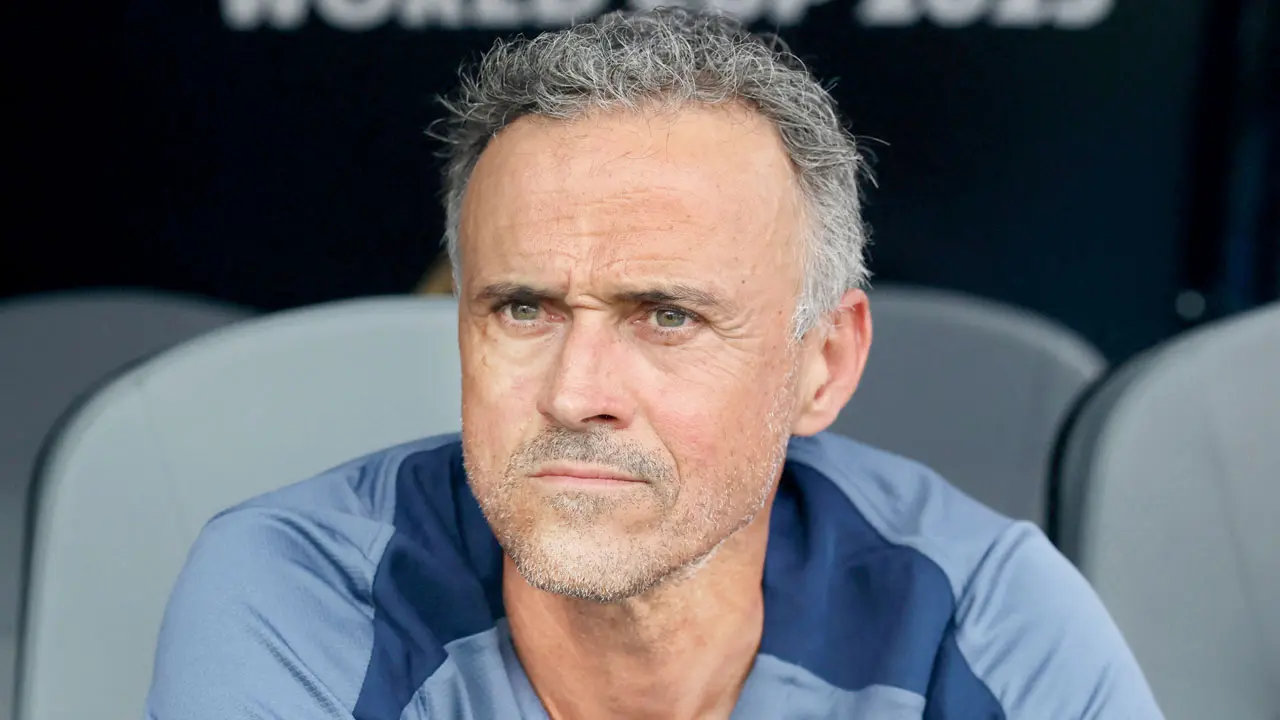
“It was an intense match. The first-half went more for us because we controlled the match and created a few chances. In the second half, it was different. We suffered a lot, they pressed high and took a lot of risks. It was difficult, but we beat their press twice and scored,” said PSG manager Enrique.
This story has been sourced from a third party syndicated feed, agencies. Mid-day accepts no responsibility or liability for its dependability, trustworthiness, reliability and data of the text. Mid-day management/mid-day.com reserves the sole right to alter, delete or remove (without notice) the content in its absolute discretion for any reason whatsoever
It’ll be an easy mistake to see everything in Canva’s latest artificial intelligence (AI) push, just through the lens of new features. However, what underlines the Canva AI 2.0 refresh announced at the annual Create keynote is more than jus that, with conversational AI, connectors with popular web apps, memory, web research, enhanced coding product and agentic capabilities, all part of the progression. However, a more interesting story is unfolding away from the spotlight. Cameron Adams, who is Canva’s co-founder and Chief Product Officer, gave us the clearest view of the company’s approach to developing AI models.
Canva’s AI investments give them three frugal models to work with. (Official photo)
There are reasons why Canva invested in their own AI models. “We build our own models when we see that there is real competitive advantage for us to be able to do so, and also when we see customers’ needs not really being met by what’s out there,” he explains there are times when they realise certain use-cases and tasks can only be fully completed if they develop their own models. He points to the background removal feature that’s part of the editing array on Canva, as an example. “We know there’s a key job to be done when you’re creating visual content, and that’s an area where we’ve invested a lot of time in building a model.”
Adams points out that there are many different models that have been produced by the teams at Canva. The company’s foundational model capability focus really sharpened after the acquisition of Leonardo.ai a couple of years ago. There are now more than 100 dedicated AI researchers at Canva. More to the point, a lot of the functionality that’s part of Canva AI 2.0 portfolio has been built on the Canva Design Model that was released in October, alongside the Creative OS. At the time, Canva added a number of video editing features as well, including a new timeline, magic video edits and on-trend templates.
The company’s first generation of models took over two years to develop. In the present context, new models are being trained, evaluated, and deployed in as little as a month. This shortening of the window is underlined by advances in training.
Adams calls this a “really critical unlock” which the internal team put together. The Canva Design Model, unlike generative models that can generate static images, also understands finer aspects of design. This encompasses the chain, from structure to layering to hierarchy, with the additional elements of branding, with completely editable content in seconds. While the company hasn’t detailed specific such as parameters in play, it has been designed to work as a parallel with an human at the wheel.
Adams believes that as far as model training is concerned, Canva has a particular advantage that other AI companies simply don’t have.
“We have access to 14 years of design knowledge and expertise through the product that we’ve built. There’s massive data from all of the designs that everyone’s been creating and all the actions they take in the editor. We’ve got a massive content library of 1000000s of templates, images, illustrations, videos, fonts, and colour that we can bring to understanding design,” he points out, before adding that thinking about what is actually a design and what entails to generate or edit it, is a more complex reality than many realise.
“That fully layered design capability is something that text and code LLMs just aren’t tuned for,” he says. A genetic AI model from another company can generate something that looks plausible, but it may not be entirely usable. A one-shot output tends to have limited edit-ability, which further restricts adaptation and reuse.
Costs, free users and on-device AI
Cliff Obrecht, who is co-founder and Chief Operations Officer, points out that they don’t have to be good at just creating design models. “We need to be good at creating a variety of models at scale, because Canva has a large, free user base,” he says, adding that Canva intends to be generous to the users on the free tier as well with efficient models. “Our fission models run at costs between five to thirty times less expensive than frontier models, and that allows us to power a lot of our workspace for the free users,” Obrecht explains.
The Canva Proteus model, which enables the Style Transfer capability, is 2x faster and 23x more cost effective than comparable frontier models. The Canva Lucid Origin, the basis for all image generation in Canva, is said to be 5x faster and 30x less costly, when compared with frontier models. The Canva I2V, which handles image-to-video generations, is 7x faster and 17x less costly to use, in comparison.
There is a shifting momentum regarding AI compute, where preference is towards on-device models, as much as possible. This is not only more cost effective as long as the required hardware such as a neural processing unit (NPU) is available in a computing device or a smartphone, but is effectively a more private and secure method as well compared to sending data on the cloud. Obrecht insists Canva has that perspective in view.
“A lot of on-device model usage is coming, and we’re way ahead of where that is. When that does breach maturity, we can provide all of this power to our huge free user base for very, very affordable prices,” he says. “Our foundational model development has been a core competency we’ve needed to develop, and it’s really just starting to pay dividends.”
The approach is clear, and while it may look like a v-shaped herringbone, it is in fact something closer to an interlinked hero shrew spine architecture. The more control Canva has over the underlying capabilities defined by the AI models in play, the better it’ll be able to shape the features a user sees and interacts with. The fact that the company is already planning for an on-device era, makes clear that ambitions are matching vision and effort.
Canva doesn’t intend to battle in the same ring as OpenAI or Google or Anthropic, but instead, a focused approach to make specific workflows more refined. This is not the loudest AI strategy, but certainly a cost effective one.
Jay Shah has been named in the Young Global Leaders list by the World Economic Forum, recognising his growing influence in global cricket administration. Shah’s inclusion comes as recognition of his work at the International Cricket Council, where he has played a key role in expanding the global footprint of the sport.
The World Economic Forum annually curates a list of influential leaders under the age of 40, bringing together individuals who are shaping the future across industries, with this year’s cohort spanning nearly 55 countries.
“Meet the Class of 2026, exceptional leaders under the age of 40 who are redefining leadership in a changing world. This year’s cohort is making a mark in diverse industries and sectors, and together they represent nearly 55 countries,” the World Economic Forum said about this year’s cohort.
Jay Shah’s tenure has been marked by efforts to grow the game beyond traditional markets, alongside overseeing the organisation of a major global tournament cycle, including the 2026 World Cup in India, which was the biggest edition of the tournament in the history of the competition.
Over the last few years, Shah, 37, has emerged as one of the most powerful figures in cricket administration. Having played a key role in shaping policy and decision-making within Indian cricket, he has steadily expanded his footprint on the global stage.
JAY SHAH’S RISE IN WORLD CRICKET
Before his elevation to global leadership, Jay Shah served as the honorary secretary of the Board of Control for Cricket in India, a role in which he effectively functioned as the de facto head of the Indian cricket board.
During his tenure, Shah was central to several key decisions, ranging from the upliftment of women’s domestic cricket in India to the skyrocketing sale of the Indian Premier League media rights, which further strengthened India’s position in international cricket. Under his watch, the BCCI consolidated its financial and administrative dominance, while continuing to drive major tournaments and bilateral engagements.
The transition underlined his rise from a key figure within Indian cricket to one of the most powerful voices in the global game, reflecting both his administrative clout and India’s continued dominance in world cricket governance.
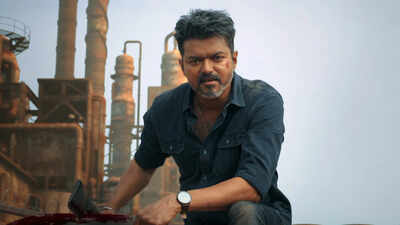
The State Cyber Crime Wing of the Tamil Nadu Police on Thursday said it has caught three more people in the Vijay starrer ‘Jana Nayagan’ movie leak case. Earlier, six people were already arrested and now, with these new arrests, police say they have taken action against the main accused behind the crime. As per the latest updates, the arrests came after careful checking of digital proof and technical details.
How the main accused stole the film
According to an IANS report, the police explained how the crime took place as they shared that the main accused was working as a freelance assistant editor for another film. “The main accused was working as a freelance assistant editor for another movie. However, he unauthorizedly gained access to the reels of ‘Jana Nayagan’ movie at the editing studio and stole it.” The police said the person used his access to take the movie reels without permission.
Watch
Major Crackdown On Vijay’s Jana Nayagan Leak As Cyber Crime Wing Arrests 6 & Removes 300 Links
Pirated copies spread online
After stealing the reels, the accused turned them into a full movie file. “The stolen data was then rendered into a movie and shared with the co-accused, leading to the circulation and wider dissemination of the pirated copies online.” This is how the film quickly spread on the internet. They further shared that the three accused will be produced before the Hon’ble Court and remanded to judicial custody.
Police issue strict warning on piracy
Sharing a strong warning, the police shared, “Any involvement in digital piracy, including forwarding or promoting such content, will invite strict legal consequences.” They also asked people not to download or share such content. They said people should report any such links or leaks immediately.The police said that they will continue their action and catch anyone involved in the leak.‘Jana Nayagan’ was set to release on January 9, however got delayed due to the legal case involving the CBFC. The film directed by H Vinoth, features Pooja Hegde, Bobby Deol, Prakash Raj, Gautham Vasudev Menon, Mamitha Baiju and more.
The Indian Premier League’s high intensity has delivered fierce rivalries over the years, but it has also produced moments on the field that capture the true spirit of the game and become memorable stories for fans. What often separates a consistent batter is not just performance on the pitch, but the balance between humility towards fellow players and aggression in their own game.
Virat Kohli is holding the top spot in the Orange Cap race. (ANI Pic Service)
Former India batter Manoj Tiwary recalled a telling conversation with former Royal Challengers Bengaluru captain Virat Kohli during an IPL 2017 clash, when he was part of Rising Pune Supergiant. Curious about Kohli’s mindset after his record-breaking 2016 season, Tiwary had asked him about the secret behind his remarkable consistency at the highest level.
Speaking on Cricbuzz, Tiwary said the discussion centred on Kohli’s approach across formats and conditions. The answer stayed with him, something he revisited nearly a decade later after RCB’s win over Lucknow Super Giants. As per Tiwary, Kohli’s edge lies in his intent to take on the opposition’s best bowler, immediately shifting pressure back onto the bowler and the side.
“We don’t call him a great just like that. When I was with Rising Pune Supergiant in 2017, we played against RCB in Bengaluru. He had an outstanding season the previous year, scoring over 900 runs. I went and asked him, ‘Aise kaise karta hai tu (How do you do this)?’ He told me one thing which I liked a lot. He said, ‘Main opposition ka jo best bowler hai, main usko hi target karta hoon.” (I target the best bowler of the opposition).
“He did the same today as well. Mohammad Shami was leading the attack and was their best bowler,” added Tiwary.
The statement reflects Kohli’s proactive mindset, which has played a key role in his success over the years. The modern T20 game has evolved rapidly, with strike rates becoming a major point of discussion when analysing batters. Despite questions raised over his strike rate in recent IPL seasons, his ability to adapt with an aggressive approach and intent from the outset has contributed significantly to his success in this edition.
“Virat Kohli plays according to the situation”
This was evident in RCB’s comfortable chase against LSG, where Kohli scored a fluent 49 off 34 balls, including six fours and a six. Even against Shami, who has had the better of him 5 times in the past 12 encounters, Kohli maintained his approach, striking three consecutive boundaries in the third over despite an early wicket falling.
“He plays according to the situation. The run rate was 10 in the powerplay where Virat Kohli launched an attack against Shami. It was just a formality after that, just trying to build a partnership and taking the game forward,” said Tiwary.
Tiwary further highlighted that Kohli’s tactical approach doesn’t just lie in targeting the best bowler, but also about adapting to match situations. His ability to shift gears based on match conditions and team requirements is what makes him one of the greats of the game.
Kohli will next feature for RCB against Delhi Capitals, as he looks to build on his strong start this season and extend his lead in the Orange Cap standings, having already scored 228 runs in five innings.
Christopher Nolan speaks onstage at the Universal Pictures and Focus Features presentation at The Dolby Colosseum at Caesars Palace during CinemaCon, the official convention of Cinema United, on April 15, 2026 in Las Vegas, Nevada. Ethan Miller/Getty Images/AFP (Photo by Ethan Miller / GETTY IMAGES NORTH AMERICA / Getty Images via AFP) (Getty Images via AFP)
What Nolan said
At the event, Christopher Nolan debuted footage from the film, which revolved around the famous Trojan horse attack, as per Variety. It was met with applause. The director then went on stage to talk about The Odyssey and said, “This has been an absolute nightmare to film — but in all the right ways. We had an amazing time. [Matt Damon] was there on the boats, up the mountains, in the caves, in the beating sunshine, sideways rain, wind. You’ll be pleased to know how difficult it was. It was meant to be; that’s the nature of this story.”
The Odyssey is the first motion picture to be shot entirely on IMAX 70mm film IMAX. The director said, “As a boy, all I wanted to do was tell large-scale [stories] using that technology, putting the audience into the world and I spent many, many years trying to bring that to fruition, starting with The Dark Knight, back when I was in my 30s. We shot the action sequences [in Imax], but we were never able to shoot the entire film. My crew did an incredible job figuring out how to do this for the first time.”
About The Odyssey
Based on Homer’s epic Odyssey, the Christopher Nolan film will chronicle the journey of Odysseus, the mythical king of Ithaca, and his perilous return home after the Trojan War. The film stars Matt Damon as Odysseus, along with Tom Holland as his son Telemachus. The rest of the star-studded cast includes Anne Hathaway, Zendaya, Lupita Nyong’o, Robert Pattinson, Charlize Theron, Jon Bernthal, Benny Safdie, John Leguizamo, and Elliot Page. The film is set to premiere on July 17, 2026
Modern warfare has dramatically changed as we have seen from the Russia-Ukraine war, conflicts involving Gaza, India and Pakistan, and the recent US-Israeli strikes on Iran. At the centre of this shift is a surging global reliance on drone and missile technology as well as advanced air defence systems.
Turkiye, one of the largest military powers in the Middle East, is increasingly positioning itself as a major supplier in the global defence sector. Central to this effort is Roketsan, a company founded in 1988 to supply the Turkish Armed Forces, which has since evolved into the country’s primary manufacturer of missile and rocket systems.
Recommended Stories
list of 3 itemsend of list
Currently exporting to approximately 50 countries, the firm is one of the fastest-growing defence companies globally.
So how did Roketsan secure a large share of the global arms trade?
Bypassing Western embargoes
Turkiye’s defence expansion was largely accelerated by restrictions placed upon it. Western embargoes aimed at halting its military advancement meant Ankara could not acquire the necessary technical systems or components.
In 2020, the United States imposed Countering America’s Adversaries Through Sanctions Act (CAATSA) restrictions on Turkiye – a key member of the transatlantic military alliance NATO. These sanctions targeted Turkiye’s military procurement agency, its chief Ismail Demir, and three other senior officials. Washington also ejected Ankara from the F-35 stealth jet programme in July 2019.
The measures came after Ankara purchased Russia’s S-400 missile defence system, which was seen as a potential threat to NATO security. The European Union also prepared limited sanctions and discussed restricting arms exports following energy exploration disputes in the Eastern Mediterranean.
To circumvent this, the country built an integrated, domestic defence ecosystem. Today, Turkiye relies on a vast supply chain of nearly 4,000 small and medium-sized enterprises (SMEs) scattered across the country. As a result, the Turkish defence industry now operates with a local production rate exceeding 90 percent.
Türkiye’s defence industry now operates with a local production rate exceeding 90 percent, bypassing long-standing Western embargoes [Al Jazeera]
This shift has yielded significant financial returns for Ankara. In 2025, Turkiye’s defence industry reported $10bn in exports. Roketsan’s General Manager Murat Ikinci told Al Jazeera that the company currently ranks 71st among global defence firms, with ambitions to break into the top 50, then the top 20, and ultimately the top 10.
To support this expansion, Turkish President Recep Tayyip Erdogan inaugurated several large-scale facilities last week, including:
Europe’s largest warhead facility.
new research and development (R&D) centre housing 1,000 engineers.
the “Kirikkale” facility dedicated to rocket fuel technology.
new infrastructure for the mass production of ballistic and cruise missiles.
These projects represent a $1bn investment, with the company planning to inject an additional $2bn to expand mass production capabilities.
The ‘Tayfun’ and modern warfare
Roketsan’s R&D strategy – which employs 3,200 engineers and makes the company the third-largest R&D institution in Turkiye – is heavily influenced by data gathered from ongoing global conflicts.
According to Ikinci, the war in Ukraine highlighted the impact of cheap, first-person view (FPV) and kamikaze drones supported by artificial intelligence. In response, Roketsan developed air defence systems like “ALKA” and “BURC,” alongside the “CIRIT” laser-guided missile.
The regional landscape was further complicated during the US-Israel war on Iran, as cheap Iranian-designed Shahed drones – recently upgraded by Russia with “Kometa-B” anti-jamming modules – overwhelmed defences and even struck a British base in Cyprus in March 2026. During the same month, NATO air defences were forced to intercept three Iranian ballistic missiles that entered Turkish airspace.
Meanwhile, the recent conflict between Israel and Iran showcased the use of complex attacks combining ballistic missiles with “swarms” of kamikaze drones designed to overwhelm air defences. This environment makes hypersonic technology a critical asset.
This brings the Tayfun (Typhoon) project into focus. Tayfun is a developing family of long-range ballistic missiles. Its most advanced iteration, the Tayfun Block 4, is a hypersonic missile engineered to penetrate advanced air defence systems by travelling at extreme speeds.
When Al Jazeera asked for specific details regarding the Tayfun’s exact operational range, Ikinci was elusive. “We avoid mentioning its range; we just say its range is sufficient,” he noted.
Similarly, historical Western sanctions have pushed Turkiye to form new cooperation initiatives, effectively accelerating an “Eastern shift” away from Western defence dependence. Turkish drones are now being used by a growing number of countries, including by Pakistan during its war against India last May.
Based on these threat assessments, Roketsan has prioritised five key areas of production:
long-range ballistic and cruise missiles.
air defence systems, including the “Steel Dome”, Hisar-A, Hisar-O, and Siper.
submarine-launched cruise missiles, utilising the AKYA system to leverage Turkiye’s large submarine fleet.
smart micro-munitions designed specifically for armed drones.
long-range air-to-air missiles, a need highlighted by the brief India-Pakistan skirmish.
A strategic export model
Unlike traditional arms procurement, Turkiye is marketing its defence industry to international buyers as a strategic partnership.
“Our offer to our partners… is as follows: Let’s produce together, let’s develop technology together,” Ikinci stated.
Rokestan’s General Manager Murat İkinci, right, emphasises that Roketsan’s international strategy is based on ‘partnership models’ rather than simple sales [Al Jazeera]
By establishing joint facilities and R&D centres in allied nations across the Middle East, the Far East, and Europe, Turkiye is attempting to secure long-term geopolitical alliances rather than purely transactional sales. Ikinci highlighted Qatar as a prime example of this model, describing it as a benchmark for technological, military, and security cooperation in the region.
Filling the global stockpile gap
This rapid expansion comes at a critical time for the global arms trade. Ongoing wars have severely depleted the stockpiles of advanced weapon systems worldwide.
During the recent US-Israel war on Iran, Washington relied heavily on multimillion-dollar Patriot and Terminal High Altitude Area Defense (THAAD) systems to intercept cheap Iranian drones targeting US assets across Qatar, Kuwait, Bahrain, Saudi Arabia, and the United Arab Emirates. With growing concerns that US interceptor supplies could run low, Gulf states – which have collectively detected over 1,000 drones in their airspace – are actively seeking alternative defence technologies, creating a highly lucrative opening for Turkiye’s missile industry.
Defence analyses indicate that even military superpowers like the US will require significant time to replenish their current air defence inventories due to the complexity and massive infrastructure required to build them.
Turkish defence officials view this shortage as a strategic opening. Having localised its supply chain, Turkiye claims it can manufacture and export these highly sought-after complex systems independently.
As global demand for air defence and ballistic technologies rises, Roketsan is aggressively reinvesting its revenues into production infrastructure to expand its footprint in the international arms market.
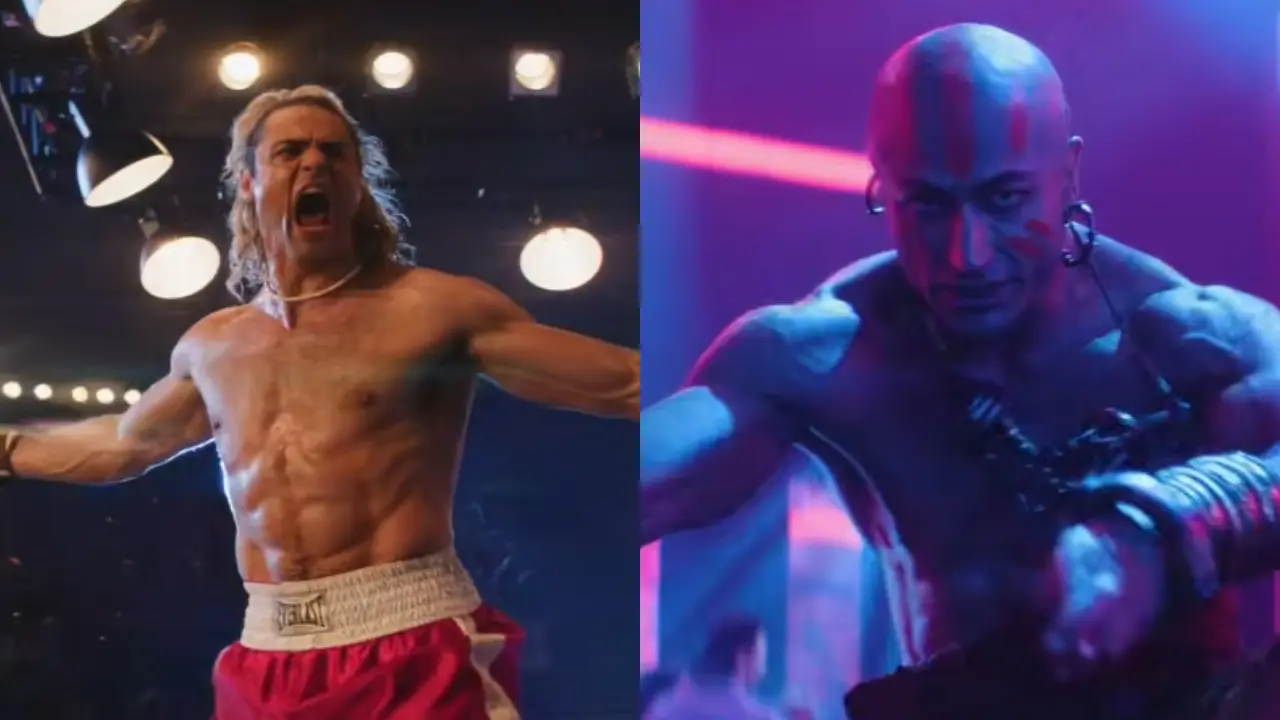
The highly-anticipated Street Fighter trailer has finally released, and it has something extraordinary for the Indian audience. Paramount Pictures, in collaboration with Legendary Entertainment and Capcom, features a stellar cast in Street Fighter. This includes Noah Centineo, Jason Momoa and Andrew Koji. Desi fans would be thrilled to know that the film also features action icon Vidyut Jammwal as the iconic yoga master Dhalsim.
Street Fighter trailer
The newly launched trailer promises an action-packed, edge-of-the-seat experience at the cinemas this October. We are introduced to Noah Centineo as a reckless street fighter. His character was a good friend of Andrew Koji`s fighter character but something went wrong with them and the trailer drops a hint on their turbulent relationship.
Check out the trailer below:
When Vidyut shared his first look
Back in December, Vidyut took to Instagram, where he shared the looks of the cast including Noah Centineo, Andrew Koji, Callina Liang, Roman Reigns, David Dastmalchian, Cody Rhodes, Andrew Schulz, Eric André, Curtis `50 Cent` Jackson, and Jason Momoa.
He wrote as the caption: “In the company of warriors, I find my tribe. streetfightermovie legendary paramountpics”The star in a collaborative post with the Instagram handle Street Fighter movie, shared his first look. The character Dhalsim channels the spirit of intense, ascetic edge. His physique is lean and battle-ready, accentuated by the traditional monk-style body markings. The actor could be seen sporting a shaved head, trimmed beard.
More about Street Fighter
Set in 1993, estranged Street Fighters Ryu (Andrew Koji) and Ken Masters (Noah Centineo) are thrown back into combat when the mysterious Chun-Li (Callina Liang) recruits them for the next World Warrior Tournament: a brutal clash of fists, fate, and fury. But behind this battle royale lies a deadly conspiracy that forces them to face off against each other and the demons of their past. And if they don’t, it’s GAME OVER!
Helmed by director Kitao Sakurai, Street Fighter is set to bring the battle from the arcade to the big screen with Hadoukens, roundhouses, and all your favorite characters. The cast includes Noah Centineo as “Ken Masters”, Andrew Koji as “Ryu”, Callina Liang as “Chun-Li”, Joe “Roman Reigns” Anoai as “Akuma”, David Dastmalchian as “M. Bison”, Cody Rhodes as “Guile”, Andrew Schulz as “Dan Hibiki”, Eric André as “Don Sauvage”, Vidyut Jammwal as “Dhalsim”, Orville Peck as “Vega” , Olivier Richters as “Zangief”, Hirooki Goto as “E. Honda”, Rayna Vallandingham as “Juli”, Alexander Volkanovski as “Joe”, With Curtis ‘50 Cent’ Jackson as “Balrog” and Jason Momoa as “Blanka”.
Paramount Studios India will release Street Fighter on 16 October, 2026.
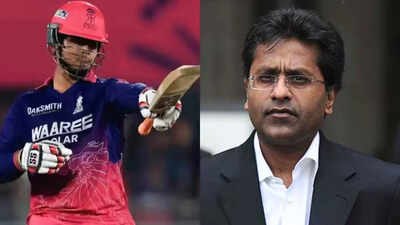
NEW DELHI: Former IPL chairman Lalit Modi has made a bold prediction about young cricketer Vaibhav Sooryavanshi, saying he could become the face of Indian cricket in the future. Known for spotting talent early, Modi recalled being completely stunned the first time he saw the teenager bat during the IPL.Speaking to Michael Vaughan in the The Overlap Cricket podcast, Modi described how unbelievable the experience was.“I can tell you that kid is going to go out there and be the face of Indian cricket in the future. Look at the confidence on the kid’s face,” he said.
Watch
What Ryan Cook said after LSG taste another defeat
“14 years old! My son is 14… I saw this kid hit, [I thought] ‘Not possible, I am dreaming. It’s not possible that this kid is 14. Seriously?’ I am Googling it, I am calling out people, [asking], ‘Is this real or is somebody making this up?’ And I am getting these messages, and I tell them I am watching. Not once, not twice, this guy has outperformed everybody,” Modi said.Vaughan pointed out that handling fame and money at such a young age could be challenging. Modi agreed, admitting the IPL has sometimes led players to become overly materialistic. Still, he stressed its positive impact, saying it has created opportunities and inspiration for many youngsters.“The good thing is we probably have another 50 of them in our country,” he said. “And this is what the IPL has done: it has opened up a whole arena for people to aspire to,” he added.
Wall Street hovered near record levels on Thursday as investors paused after a sharp rally, weighing rising oil prices and uncertainty around the Iran conflict before making fresh bets.The S&P 500 slipped 0.1%, a day after hitting a new all-time high– its 10th gain in 11 sessions–while the Dow Jones Industrial Average fell 66 points and the Nasdaq Composite declined 0.3%, AP reported.Markets have surged over 10% since late March lows, driven by hopes of a de-escalation in the US-Iran conflict or avoidance of a worst-case global economic scenario.However, caution persisted as oil prices climbed. Brent crude rose 3.1% to $97.83 per barrel, after swinging between about $70 before the war and as high as $119 amid supply concerns tied to disruptions in the Persian Gulf.“The key upside risk for the market is that peace talks between the US and Iran break down,” ING Bank strategists Warren Patterson and Ewa Manthey said, warning that differences between the two sides remain wide.Investors are also closely tracking diplomatic developments, with Pakistan’s army chief expected to meet Iranian officials in Tehran to explore easing tensions and paving the way for a fresh round of talks.Corporate earnings continued to provide support to markets, with several companies reporting stronger-than-expected results for early 2026.J.B. Hunt Transport Services rose 5.7%, while Marsh & McLennan gained 3.4% after posting upbeat earnings.PepsiCo advanced 2.1% as demand for snacks improved following price cuts on products such as Lay’s, Doritos and Cheetos.Technology stocks also saw gains after Taiwan Semiconductor Manufacturing Co. reported better-than-expected revenue and profit, with its CFO indicating sustained demand.On the downside, Abbott fell 4.4% despite beating expectations, after lowering its full-year profit forecast due to its acquisition of cancer-screening firm Exact Sciences.Allbirds slumped 28.7%, giving back part of its previous day’s 582% surge, as the company pivots towards offering AI chip services.Globally, markets remained positive, with Japan’s Nikkei rising 2.4%, South Korea’s Kospi gaining 2.2% and Hong Kong’s Hang Seng advancing 1.7%.China also reported 5% economic growth for the January-March quarter, though analysts warned that its export-driven economy could face headwinds if global growth slows.In the bond market, US Treasury yields eased slightly, with the 10-year yield dipping to 4.28% from 4.29% a day earlier after data showed fewer Americans filed for unemployment benefits.








![Türkiye's defense industry now operates with a local production rate exceeding 90 percent, bypassing long-standing Western embargoes. [Al Jazeera]](https://www.aljazeera.com/wp-content/uploads/2026/04/Turkiyes-defense-industry-now-operates-with-a-local-production-rate-exceeding-90-percent-bypassing-long-standing-Western-embargoes.-Al-Jazeera-1776326167.jpg?w=770&resize=770%2C513&quality=80)
![İkinci emphasizes that Roketsan's international strategy is based on "partnership models" rather than simple sales. [Al Jazeera]](https://www.aljazeera.com/wp-content/uploads/2026/04/فقبغ6ق-1775995428-copy-1776326256.jpg?w=770&resize=770%2C513&quality=80)