Wednesday, September 30, 2026
Home Blog Page 6985

From long-range hypersonic missiles to indigenous antibiotics: India’s historic initiative in 2024

0
From long-range hypersonic missiles to indigenous antibiotics: India’s historic initiative in 2024


Last updated:

Prime Minister Narendra Modi’s leadership is reflected in these milestones and also highlight the story of progress

India had successfully test-fired a long-range hypersonic missile from APJ Abdul Kalam Island off the coast of Odisha in November. (Image: ANI/File)

India had successfully test-fired a long-range hypersonic missile from the APJ Abdul Kalam Island off the coast of Odisha in November. (Image: ANI/File)

The year 2024 was one of unprecedented achievements for India, marked by a series of “firsts”, underscoring the country’s growing global influence. Prime Minister Narendra Modi’s leadership is reflected in these milestones, while also highlighting the story of progress.

global events

National Creator Award (NCA): For the first time, India launched the National Creators Award (NCA), the first of its kind in the world to honor digital content creators who have made significant contributions across various platforms. Prime Minister Narendra Modi presented the inaugural awards at the Bharat Mandapam, highlighting the central government’s emphasis on embracing technology and digital platforms, which have been instrumental in fostering an ecosystem of creators.

First United Nations International Conference on Digital Public Infrastructure: The first UN international conference on digital public infrastructure was organized under the leadership of India to use technology to advance the Sustainable Development Goals (SDGs) and promote inclusivity. It was held in April, highlighting India’s ‘Citizen Stack’ initiative inspired by ‘India Stack’.

46th UNESCO World Heritage Committee: This year, for the first time, India hosted the meeting of the World Heritage Committee. The 46th session of this prestigious gathering was held in July at Bharat Mandapam, New Delhi. Moidam of Assam, incorporating the mound-burial system of the Ahom dynasty, was India’s 42nd entry. In the last decade, 13 heritage sites have been listed in India.

First International Conference of All India Institute of Ayurveda: In October, India hosted the first international conference of the All India Institute of Ayurveda (AIIA) titled ‘AROHA-2024’ in New Delhi. This event increased the global recognition of Ayurveda as a valid and effective system of medicine.

ICA Global Cooperative Conference 2024: In another milestone, in November, India hosted the Global Cooperative Conference and General Assembly for the first time in the 130-year history of the International Cooperative Alliance (ICA). This historic event organized under the leadership of Modi reflects India’s growing influence in the global cooperative movement and its commitment to promote inclusive growth.

First Asian Buddhist Summit: In November, India hosted the first Asian Buddhist Summit with participation from 32 countries and over 160 international delegates.

Space and Defense Research

First X-ray Polarimeter Satellite: Adding a new chapter to India’s ambitious space journey, the Indian Space Research Organization (ISRO) successfully launched its first X-ray Polarimeter satellite (XPoSat) in January. This mission took an important step towards uncovering the mysteries of black holes and extreme events in space. With this launch, India is poised to become the second country after the United States to have a dedicated observatory to investigate black holes.

First private sector military aircraft plant: In a historic move underscoring India’s growth in defense manufacturing, the Prime Minister in October inaugurated the Tata Aircraft Complex, which will manufacture the C-295 aircraft. This is India’s first private sector military aircraft plant and this historic development is an important step towards enhancing self-reliance under ‘Atmanirbhar Bharat’.

‘Space Exercise’, the first military space exercise: In another historic event, India conducted its first military space exercise in November. ‘Space Abhyas 2024’ was organized by the Defense Space Agency to enhance strategic preparedness in space warfare. The exercise is an important step in strengthening India’s space-based operational capabilities and enhancing tri-service integration for space security.

First long range hypersonic missile: In a significant development, the Defense Research and Development Organization (DRDO) in November test-fired India’s first long-range hypersonic missile. It can carry both conventional and nuclear weapons and can fly at five times the speed of sound.

infrastructure

First National Highway Steel Slag Road Section: In a significant development, India’s first national highway steel slag road section on NH-66 connecting Mumbai to Goa was inaugurated in January. The manufacturing process involved converting approximately 80,000 tonnes of CONARC steel slag into processed steel slag aggregates at the JSW Steel Dolvi plant in Raigarh. This initiative not only reduces industrial waste but also increases the strength, durability and sustainability of the road.

Jammu and Kashmir’s first electric train: In February, Modi had flagged off the first electric train of Jammu and Kashmir. This achievement highlights the Centre’s commitment to enhancing sustainable transportation while improving connectivity in the region. It has been decades in the making and is more than just a transportation upgrade, symbolizing the region’s long-awaited integration with India’s broader developmental goals.

First floating solar plant of Indian Railways: In a first of its kind initiative, Central Railway in June installed a floating solar plant of 10 MW capacity in Igatpuri Lake located in the Western Ghats. The plant is committed to leveraging renewable energy sources, utilizing solar and installing wind-energy resources, providing adequate passenger amenities and significantly contributing to the goal of a “green” Earth.

Delhi Metro’s first ‘Make in India’ driverless train: Delhi Metro Rail Corporation (DMRC) received its first train set integrated with driverless technology in September, a major milestone under the ‘Make in India’ initiative. Driverless trains are equipped with state-of-the-art automation and safety systems, ensuring efficient and uninterrupted operations.

First Vande Metro (Namo Bharat Rapid Rail): The much-awaited first Vande Metro, a revolutionary urban transit system designed for short-distance travel, was launched in Ahmedabad in September. The metro is also named Namo Bharat Rapid Rail, which will run between Ahmedabad and Bhuj. It reflects the Prime Minister’s vision of modernizing India’s infrastructure while making it sustainable and accessible.

‘Samanthak’, the first indigenous multipurpose ship: In October, the Indian Navy marked a significant milestone with the launch of ‘Samarthak’, the first vessel under the Two Multi-Purpose Vessel (MPV) project. It highlights India’s progress in indigenous shipbuilding in line with ‘Atmanirbhar Bharat’ and ‘Make in India’.

First Vertical Lift Rail Sea Bridge: The new Pamban Bridge at Rameshwaram, Tamil Nadu, considered a marvel of modern engineering, is India’s first vertical lift railway bridge. Successful testing on the bridge was completed in November and replaced a 105-year-old bridge that was closed due to corrosion. A modern blend of innovation and flexibility, it reflects India’s progress in infrastructure development and promises to strengthen tourism and pilgrimage in the region.

First modern, self-reliant cow shelter: In November 2024, Modi inaugurated a 100 TPD (ton per day) cattle dung-based compressed biogas (CBG) plant in Gwalior. This marks an important milestone in India’s journey towards sustainable development under the ‘Waste to Wealth’ initiative. This state-of-the-art plant, integrated within a self-sustaining modern cow shed, is the first of its kind in India that showcases the innovative use of cattle dung to produce clean energy.

Governance and Economy

First survey on snow leopards: In January, the first survey of snow leopards revealed that the estimated population of these big cats in the wild was 718. The breakthrough came after four years of rigorous practice, marking an important step toward understanding and protecting one of the world’s most elusive and endangered big cats.

Electricity to 3 villages for the first time: Jammu and Kashmir has witnessed unprecedented development, bringing even the remotest corners of the region within the ambit of progress. In January, two remote villages near the Line of Control (LoC) in the Keran sector were electrified for the first time in 75 years of independence. Chhutwahi village in Chhattisgarh’s Bijapur district, which was earlier inaccessible by road and was under Maoist control, also got electricity for the first time in November.

Foreign exchange reserves cross US$ 700 billion for the first time: In a significant achievement, India’s foreign exchange reserves crossed the US$ 700 billion milestone for the first time in history in September. This remarkable achievement positions India as the fourth largest holder of foreign exchange reserves globally.

New historical records in digital transactions: In October, the Unified Payments Interface (UPI) achieved a historic milestone by processing 16.58 billion financial transactions in a single month, underscoring its important role in India’s digital transformation.

First Constitution Day celebrations in Jammu and Kashmir: On 26 November, Jammu and Kashmir celebrated ‘Constitution Day’ for the first time since 1950. The festival is a direct reflection of Modi’s governance, which emphasizes inclusivity, integration and strengthening democratic values ​​across all sectors of India.

Health care

First indigenous antibiotic: India launched its first indigenous antibiotic, ‘Napithromycin’, marking a breakthrough in medical science and an important step towards self-reliance in health care. It is intended for antibiotic-resistant infections and is 10 times more effective than azithromycin, while achieving comparable results with just a three-day regimen. Modi’s focus on promoting research and innovation has paved the way for such unprecedented achievements.

news India From long-range hypersonic missiles to indigenous antibiotics: India’s historic initiative in 2024


How PM Modi defied global anti-incumbency wave to secure historic third term in 2024

0
How PM Modi defied global anti-incumbency wave to secure historic third term in 2024


Last updated:

Narendra Modi’s third-term victory defied global anti-establishment trends and reflected India’s stability amid international political turmoil.

PM Modi's leadership ensured India's continued growth as a global power driven by reforms and innovation. (Image: PTI file)

PM Modi’s leadership ensured India’s continued growth as a global power driven by reforms and innovation. (Image: PTI file)

Prime Minister Narendra Modi’s historic third victory in the 2024 elections not only cements his personal legacy but also reflects the dominance of the Bharatiya Janata Party (BJP) in Indian politics. This shows that today PM Modi has become a symbol of stability for India while BJP has emerged as a synonym for good governance.

In 2024, a global wave of anti-incumbency swept across major democracies, with incumbents suffering significant defeats. In the United States, the Democrats lost the presidency and control of both houses of Congress. Britain saw the Conservative Party (Tories) decisively voted out of power. Similarly, ruling parties in France, South Korea and Poland were also voted out of power. Contrary to this global trend, in India Narendra Modi not only retained power but did so with a historic third term. Following his clear victories in 2014 and 2019, Indian voters once again gave a strong mandate to Modi, a notable exception to the international anti-incumbency wave.

The year 2024 saw some of the biggest victories of the BJP under the leadership of Prime Minister Narendra Modi. PM Modi achieved a historic third term. This achievement is significant in the political history of India, as no other leader has won a third consecutive term since 1962.

Stable leadership in an unstable world

Since 2014, India has stood as a symbol of political stability under the leadership of Narendra Modi, who has remained in power for more than a decade. This continuity is remarkable, especially when compared to the political unrest experienced by other democracies during the same period.

Modi’s tenure has been marked by a united government that has implemented far-reaching economic, social and foreign policy initiatives, contributing to India’s emergence as a global power.

In contrast, the United States has seen a series of dramatic political changes. Since Barack Obama served as president until 2017, the reins have passed to Donald Trump, who has introduced radically different policies and a more isolationist stance. In 2021, Joe Biden reversed many of Trump’s key policies, emphasizing multilateralism and domestic investment. Donald Trump’s return to power has brought about another pivot in governance, reflecting deep partisan divisions and policy instability.

The United Kingdom has faced significant political instability since 2014. Under the Conservative Party, leadership changed frequently, with David Cameron resigning after the Brexit referendum, followed by Theresa May, who was struggling with Brexit negotiations. Boris Johnson then took power, leading through the COVID-19 pandemic but ultimately resigning amid scandals. Liz Truss’s brief and tumultuous tenure was followed by Rishi Sunak, who tried to stabilize the economy and the party. Recently, Keir Starmer of the Labor Party became Prime Minister, leading to a change in governance, although challenges remain, including internal party disagreements and an electorate tired of political conflict.

Australia has also seen rapid changes in leadership, reflecting its historically unstable political culture. Beginning with Tony Abbott in 2014, the prime ministership went to Malcolm Turnbull, then Scott Morrison, and now Anthony Albanese. Each transition has brought a shift in priorities, with Albanese focusing on climate action and social policies following a more conservative approach under his predecessors.

Italy’s political landscape has been equally dynamic, with successive governments often falling before completing their terms. Matteo Renzi’s reform-driven tenure gave way to Paolo Gentiloni, followed by the coalition government of Giuseppe Conte, the technocratic leadership of Mario Draghi and now Giorgia Meloni, Italy’s first female prime minister. Despite Meloni’s historic victory, Italy continues to struggle with political fragmentation and economic challenges.

Pakistan, in particular, is an example of political instability, where patterns of frequent leadership changes often lead to allegations of corruption and electoral fraud. Since 2014, the country has seen a change from Nawaz Sharif to Shahid Khaqan Abbasi, then Imran Khan and now Shahbaz Sharif. Each leader’s tenure has been marked by contentious relations with their predecessors, often culminating in legal battles and imprisonment. This unstable political environment has hindered Pakistan’s ability to achieve sustained governance and economic progress.

Israel in particular has experienced significant political unrest due to its fragmented coalition system. Since 2014, the country has seen Benjamin Netanyahu lose power to Naftali Bennett, followed by a brief tenure of Yair Lapid, after which Netanyahu returned as prime minister. Since 2014, Israel has held six national elections for the Knesset, the country’s parliament. These elections were held in 2015, April 2019, September 2019, 2020, 2021 and 2022.

While Japan is known for relative political stability, its leadership changes in recent years have raised eyebrows. Shinzo Abe, who served as Prime Minister until 2020, unexpectedly resigned due to health reasons. He was replaced by Yoshihide Suga, who stepped down after just one year in office, and Fumio Kishida who was prime minister for just 3 years amid great uncertainty and has now been replaced by Shigeru Ishiba.

Since 2014, Brazil has faced political turmoil driven by an economic crisis, corruption scandals, and polarized elections. Dilma Rousseff was impeached in 2016, clearing the way for Michel Temer, who served a controversial term. After this, Jair Bolsonaro came to power adopting a far-right populist stance. Recently, Luiz Inácio Lula da Silva returned to office after a polarizing election.

In South Korea, Park Geun-hye was impeached in 2017 amid allegations of massive corruption. His successor, Moon Jae-in, continued to grapple with economic challenges and diplomatic tensions. Yoon Suk-yeol is the current President, having recently declared martial law a failure and is in the process of being impeached by the Parliament of South Korea.

Argentina has seen notable changes since 2014, with leadership shifting from Cristina Fernández de Kirchner to Mauricio Macri, then Alberto Fernández, and now Javier Miley. Each leader has adopted markedly different economic and social policies, contributing to a landscape of uncertainty and frequent political realignment.

What makes the Indian General Elections 2024 historic?

  • The 2024 elections showcased India as a resilient democracy, marked by strong voter participation and civic conduct.
  • Despite induced attacks on EVMs and extreme heat, people showed great enthusiasm by voting in large numbers. From first-time voters to senior citizens, people of all ages and from all walks of life have participated in the democratic process with great enthusiasm.
  • Kashmir recorded the highest voter participation of 38% for the first time in last 3 decades since 1996.
  • Indian politics saw greater inclusivity as more women contested and won elections, thereby strengthening gender representation. There was also a significant increase in youth participation, bringing new perspectives to the country’s political landscape.
  • The 2024 elections demonstrated India’s democratic maturity, highlighting how citizens are increasingly aware of their priorities and expectations from their leaders. People stood firmly behind the dream of a developed India by 2047.
  • For the first time, the largest group of international delegates experienced India’s general elections first-hand this year. He was impressed by what he saw. Some praised the transparency of the process, while others found the Election Commission’s initiatives like green polling stations truly inspiring. The use of technology like randomization of EVM-VVPAT was also highly appreciated.
  • The mandate was for development, diversity and decisiveness. People have completely rejected the politics of deceit, fraud and division.
  • India has demonstrated that it is a mature democracy and has placed PM Modi among the select group of global leaders who have successfully achieved three consecutive terms in office.

Furthermore, the state-level successes in 2024 also revealed that they are part of a broader shift in India’s political landscape that began in 2014. Under the leadership of PM Modi, BJP has expanded its influence, bringing harmonious governance to regions like Odisha, Andhra. Pradesh and Maharashtra – areas where the BJP had struggled to gain a foothold in the past.

Let’s look at some of the decisive victories of BJP in the year 2024 and what makes them unique:

Lord Jagannath’s Odisha goes on saffron path

Under the leadership of Prime Minister Modi, BJP achieved a historic victory by defeating the ruling Biju Janata Dal (BJD) in Odisha. For the first time in the history of Odisha, BJD has lost its dominance in the Lok Sabha elections, with BJP’s seats increasing from just 1 to 6. This marks a significant change from 2019, where BJD had won 12 seats and BJP 8. Apart from its success in the Lok Sabha elections, the BJP also made significant progress in the Odisha Assembly elections. The party won 14 seats and is leading in 66 other constituencies.

Andhra Pradesh decisively chose NDA

In the 2024 Lok Sabha elections, despite Andhra Pradesh’s strong regional political identity, the National Democratic Alliance made significant progress, gaining leads in 20 out of 25 parliamentary constituencies. This remarkable achievement reflects the growing support for the NDA’s vision and policies. PM Modi’s leadership has been crucial to this success, with his focus on infrastructure development, economic reforms and social welfare programs appealing to voters across the state.

Haryana is a surprise for BJP

The 2024 Haryana Assembly election results have marked an important milestone for the Bharatiya Janata Party, as it has secured a historic third consecutive term in office. BJP has become the first political party in Haryana to achieve this hat-trick, which is a testimony to its growing influence and stronghold in the state. Despite facing stiff opposition from the Congress and other political parties, the BJP managed to effectively defeat the Congress in a direct contest by securing 48 seats. The opposition, despite its best efforts, could not match the scale and momentum brought by the BJP.

Maharashtra’s landslide victory shuts down opposition agenda

In a historic victory, the Bharatiya Janata Party secured its third consecutive term in Maharashtra, the first time that a leader has led the state to such a victory. The BJP along with its allies including the NCP won over 131 seats, while the opposition Maha Vikas Aghadi (MVA) was left with just 51 seats. The ruling alliance secured a lead in more than 230 seats, indicating the strong confidence of the people in the leadership of Prime Minister Modi. With 132 seats out of 288, the BJP achieved its best ever performance in the state, securing 45% seat share. The win is the largest seat share for any party in the Maharashtra assembly elections, cementing the BJP’s dominance and effectively shutting down the opposition’s agenda in the state.

news Politics How PM Modi defied global anti-incumbency wave to secure historic third term in 2024


Five charged, including manager, in death of singer Liam Payne | Crime News

0
Five charged, including manager, in death of singer Liam Payne | Crime News


One Direction singer had alcohol and cocaine in his system at the time of his death, an autopsy finds.

An Argentinian judge has allowed charges to proceed against the manager of former One Direction singer Liam Payne and employees of the hotel where he was staying when he died.

The judge argued that the manager and hotel staff had failed Payne in the moments before his death, according to a statement from the prosecutor’s office published on Monday.

Payne, who was British, fell to his death from a hotel balcony in Buenos Aires in October. He was 31 years old.

Payne’s manager as well as the manager of the hotel and its head of reception are charged with manslaughter in relation to the former pop superstar’s death. They face up to five years in prison if convicted.

A hotel employee and a local waiter are accused of plying Payne with cocaine during his stay and face up to 15 years in prison. The judge in her decision on Friday ordered them jailed before their trial.

“Taking Payne up to his room in the state he was in was to put his life at risk,” the judge said in her decision, which was released with the prosecutor’s statement. “It was obvious that he was vulnerable.”

Payne’s autopsy showed that at the time of his death he had “large quantities” of cocaine and alcohol in his system, according to the statement.

Payne allegedly purchased cocaine at least four times from the hotel employee and waiter over a three-day period.

Footage from the lobby of the Casa Sur hotel in the posh Palermo neighbourhood showed that minutes before Payne’s death on October 16 he was unconscious and was carried up to his room by three people.

The hotel receptionist headed the group and was then seen with the hotel manager in the hallway outside Payne’s room, according to the statement.

“Payne’s consciousness was altered and there was a balcony in the room. The proper thing to do was to leave him in a safe place and in company until a doctor arrived,” the judge said.

She added that evidence showed that Payne tried to leave his room through the balcony but, due to the state he was in, he fell.

Payne’s manager, identified only by his initials “RLN”, left the hotel less than an hour before the fall. The judge argued that he should not have entrusted the hotel employees with Payne’s wellbeing.

The judge barred the manager, who is a US citizen, from leaving Argentina.

Payne was grouped with four fellow contestants during his appearance on the United Kingdom singing competition The X Factor in 2010, forming One Direction. The group went on to have worldwide success before splitting up in 2016.

Payne went on to have a solo career, and he released his last single in March.


‘Biwi bhaag jayegi if…’: Gautam Adani weighs in on work-life balance debate | Trending

0
‘Biwi bhaag jayegi if…’: Gautam Adani weighs in on work-life balance debate | Trending


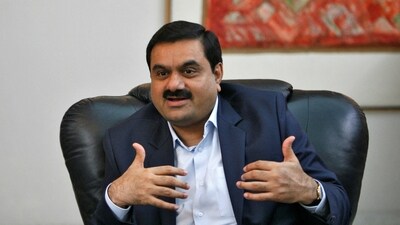
Billionaire Gautam Adani recently opened up about his views on work-life balance in an interview with the news agency IANS. Sharing a personalised take, Adani said, “If you enjoy what you do, then you have a work-life balance. Your work-life balance should not be imposed on me, and my work-life balance shouldn’t be imposed on you. You only need to see if I spend four hours with my family and find joy in it, or if someone else spends eight hours and enjoys it, that’s their balance. But if someone spends eight hours and their spouse leaves, that’s another story.”

 Adani Group Chairman Gautam Adani stressed individual happiness as key to work-life balance.(REUTERS)
Adani Group Chairman Gautam Adani stressed individual happiness as key to work-life balance.(REUTERS)

(Also read: Narayana Murthy trolled for remarks on parenting: ‘Parents are busy working 70 hours a week’)

Adani emphasised that the essence of work-life balance lies in mutual happiness and personal satisfaction, adding, “If it brings you happiness and the other person is also happy, then that’s the true definition of work-life balance.”

When Narayana Murthy sparked debate on 70-hour work week

Adani’s views on work-life balance comes after Infosys founder NR Narayana Murthy stirred a nationwide discussion last year by advocating for a 70-hour work week, asserting that such dedication is vital for India to compete with advanced economies. Defending his stance after widespread debate, Murthy reflected on his personal experience, saying, “I used to work 85-90 hours a week till I retired. I received a scholarship from my pre-university days in 1961, and many of my peers benefited from government-subsidised education. Those of us who have reaped such benefits owe it to the country to work hard for the betterment of society.”

Murthy stood firm on his belief, adding, “I don’t regret it. Hard work is an enormous responsibility for those of us who have been privileged by the system.”

Bhavish Aggarwal supports Murthy’s stand

Ola CEO Bhavish Aggarwal also voiced support for Narayana Murthy’s 70-hour work week philosophy. Speaking on a podcast, Aggarwal remarked, “When Mr Murthy said that, I was publicly in support of it and got trolled on social media. But I don’t care. I strongly believe one generation will have to do tapasya to build the number one country in the world.”

(Also read: Ola CEO Bhavish Aggarwal backs Narayana Murthy’s 70-hour work week advice: ‘To build India’)

Aggarwal expressed scepticism about the traditional concept of work-life balance, adding, “If you are enjoying your work, you will find happiness in life too. Both will be in harmony.”

The contrasting perspectives of these influential leaders underline the subjective nature of work-life balance. While some champion relentless effort for societal progress, others advocate for a happiness-driven, individualistic approach to balance.


Trinidad and Tobago declares emergency as murder rate soars

0
Trinidad and Tobago declares emergency as murder rate soars


Trinidad and Tobago has declared a state of emergency as gang violence in the Caribbean nation continues to escalate.

President Christine Carla Kangaloo issued the declaration on the advice of Prime Minister Keith Rowley, who had been under growing pressure to take action over worsening crime figures.

The twin-island republic has one of the highest homicide rates in Latin America and the Caribbean, with a record murder tally of more than 620 this year so far in a population of 1.5 million people.

Organised crime is responsible for the majority of the murders, many of them linked to the international drug trade.

According to the US state department, the country’s close proximity to Venezuela, porous borders and direct transportation routes to Europe and North America make it “a prime location for narcotics trans-shipment”.

In the latest violent incident, five men were shot dead in a shop in the poverty-stricken Laventille area on Sunday. Police believe the killings were in reprisal for the murder of a prominent gang member the previous day.

Details of the state of emergency have yet to be disclosed.

The move comes as Trinidad and Tobago gears up for a general election, which must be held by August 2025.

Rowley’s governing People’s National Movement party, in power since September 2015, faces a strong challenge from the opposition United National Congress, led by former Prime Minister Kamla Persad-Bissessar.


NPS Vatsalya: How to register for NPS Vatsalya online – step-by-step guide & documents required

0
NPS Vatsalya: How to register for NPS Vatsalya online – step-by-step guide & documents required


NPS Vatsalya: How to register for NPS Vatsalya online - step-by-step guide & documents required
The NPS Vatsalya, a version of NPS, is a financial savings solution tailored for children. (AI image)

NPS Vatsalya Account Opening: Parents can now establish long-term financial security plans for their children, including provisions for their retirement years, with the NPS Vatsalya. Earlier this year, the Modi 3.0 government introduced NPS Vatsalya, a pension programme for minors. The NPS Vatsalya, a version of NPS, is a financial savings solution tailored for children.
The National Pension System (NPS), also referred to as the National Pension Scheme, has gained significant recognition as an investment and retirement solution. Financial specialists highlight that NPS incorporates essential features of a retirement savings product, offering extended investment opportunities with reduced expenses and conservative risk levels.
NPS functions as a market-connected voluntary contribution programme that helps people build their retirement savings. Financial experts consider this scheme as a valuable investment tool for building retirement wealth. The Central Government established NPS with the objective of ensuring pension-based income support for individuals during their retirement years.
With NPS Vatsalya, you can start the process of retirement planning for your children right at an early age.
Also Read | Sukanya Samriddhi Yojana: How to get over Rs 70 lakh corpus from SSY account – check calculator, tax benefits & more details – top facts

How to register for NPS Vatsalya Online:

To register for the NPS Vatsalya scheme online, it is essential to understand the necessary documentation requirements.
The NPS Vatsalya Scheme, under the PFRDA, offers a pension programme specifically created for children below 18 years. This scheme enables investments across fixed-income instruments and market-based options to secure the child’s future financially.

  • Visit the enps.nsdl.com website and select the dedicated ‘NPS Vatsalya’ section from the homepage to initiate the registration process.
  • Submit essential details including the child’s full name, birth date, along with the guardian’s information such as complete name, contact information and familial connection to the minor.

NPS Vatsalya Document Submission

The following documents must be submitted:
* Child’s birth certificate as proof of age.
* Guardian’s identity proof, such as Aadhaar or PAN card.

NPS Vatsalya Initial Investment

A minimum deposit of Rs 1,000 is required to activate the NPS Vatsalya account. The scheme allows unlimited maximum contributions to accommodate various financial planning needs.
After verification and successful submission of the online application, the child receives a unique Permanent Retirement Account Number (PRAN).
Also Read | PAN 2.0: How to easily apply for PAN Card reprint with QR code – check 6 simple steps online

NPS Vatsalya Important Information

* NPS Vatsalya account opening and investment management services are available through points of presence (PoP), including major banks, India Post offices, and pension fund offices.
* Upon reaching 18 years, the account automatically transitions to a regular NPS account, allowing direct control by the account holder.
With inputs from Centre for Investment Education and Learning content which appeared in Economic Times


As Gaza suffers, experts call on hunger monitor to redefine famine | World News

0
As Gaza suffers, experts call on hunger monitor to redefine famine | World News


By Lena Masri, Amina Ismail and Jackie Botts

As Gaza suffers, experts call on hunger monitor to redefine famine

Dec 30 – Five times in the course of the past year, the world’s leading hunger monitor warned that Gaza could be teetering on the precipice of famine. Each time, the watchdog stopped short of concluding one was under way.

Gregory Shay, a retired pediatric pulmonologist from California, spent October treating children in Gaza, and to him it looked like famine was gripping the territory.

Shay worked at Nasser Hospital in the southern Gaza city of Khan Younis. Most of the children he treated subsisted on bread and rice, recalled Shay, a volunteer with the U.S.-based non-profit organization MedGlobal. Without vegetables, fruit or meat, he said, the children lacked the vitamins or minerals needed to stave off disease.

Most days, Shay said he treated on average 40 new patients who were admitted to the hospital. Many had severe cases of pneumonia, and several others suffered from meningitis, an illness that can kill in hours. Newborns were often small for their age, he said. Some had birth defects or suffered from neonatal sepsis, a blood infection that’s a leading cause of infant mortality.

“I’ve never seen the kind and number of infections that I saw in Gaza,” said Shay, who has made 35 medical aid trips during the past decade. “You just look at these kids and you know that it’s a famine.”

Many food-security experts, aid workers and doctors say famine took hold in Gaza many months ago. But amid relentless Israeli bombing and restrictions on movement, analysts with the world’s main hunger monitor, the Integrated Food Security Phase Classification system , have struggled to get access to key data on acute malnutrition levels and deaths unrelated to violence. These metrics are vital for the IPC to determine if starvation has technically risen to the level of a famine.

IPC reports use a one-to-five scale to rank areas for acute food insecurity. It slides from minimal to stressed, crisis, emergency and famine. Gaza has consistently approached, but never technically reached, famine level. Most recently, the IPC’s Famine Review Committee has warned that famine is imminent in areas of northern Gaza.

Some experts want the IPC to lower its threshold for determining famine in conflict-ridden areas and expand the types of data it uses. In Ethiopia, Yemen and Sudan, Reuters found that governments or rebels have blocked or falsified the flow of data to the IPC or tried to quash its findings.

The seeming disconnect between what’s happening on the ground and how the IPC characterizes conditions in Gaza has given rise to many questions: Does the hunger monitor need a more flexible definition of famine? How would a famine finding make a practical or legal difference? And how might the IPC be able to overcome limitations in gathering and evaluating data?

“If we can’t access critical information, confirming a famine becomes impossible – and so does saving lives,” said Dalmar Ainashe, a food-security analyst with relief group CARE. For 10 years, Ainashe served as a member of the IPC Technical Advisory Group, which provides expert advice to IPC’s leadership. He also has recounted how he survived a famine as a child in his native Somalia.

“In the chaos of conflict, clinging to unattainable quantitative thresholds isn’t just unrealistic,” Ainashe told Reuters. “It’s a fatal oversight that risks abandoning entire populations to suffer and die in silence.”

Jose Lopez, the IPC’s global program manager, said the hunger monitor does rely on various types of evidence to “ensure that IPC analysis findings are robust and thus credible.”

Regardless, a famine finding isn’t a silver bullet. As Reuters reported, limited aid has reached Zamzam, a camp in Sudan for displaced people that the IPC deemed to be in famine. Moreover, if aid only flows when a famine is found, it’s too late: Food and medical relief need to start arriving much earlier, long before people start dying.

To prevent deaths, governments and others who can help address hunger need “to act before a famine is confirmed or even projected,” the IPC’s Lopez said. “Simply changing the terminology is unlikely to address the issue.”

Even so, internal IPC documents reviewed by Reuters show that the hunger watchdog is considering modifying its famine definition. Among options mentioned in the September documents: lowering the mortality threshold or examining mortality trends rather than simply using a hard-and-fast threshold.

Such changes will take time, Lopez cautioned. “This work requires considerable collaborative effort and studies,” he told Reuters.

‘HISTORICAL JUDGMENT’

The debate over whether and how to update the IPC’s approach to famine comes as hunger continues to spread around the world, especially in war-torn areas such as Myanmar and Sudan, where people have resorted to eating leaves. In 2023, almost 282 million people faced what the IPC considers high levels of acute food insecurity. More than 36 million children under the age of 5 were acutely malnourished.

In Gaza, children were already dying of malnutrition-related causes in December last year, according to local medical staff.

That’s what Mona Abdel Atti says she witnessed when she began caring for malnourished patients as a midwife at Nasser Hospital.

One day last December, two infants were admitted to the hospital – a 5-month-old girl, and an 8-month-old boy, she recalled. Both were breathing rapidly and showing clear signs of malnutrition and dehydration. Their weights were critically low for their ages, their stomachs bloated and their skin dry, she said.

The medical staff quickly administered plasma and blood transfusions and placed them on ventilators, Abdel Atti said, but their bodies were too weak. They died an hour apart.

For Michael Fakhri, the U.N. special rapporteur on the right to food, it became clear that famine had taken hold in Gaza months later, when more children began dying of malnutrition-related causes. Along with other U.N. experts, he declared in July that famine had spread throughout Gaza. “Parents and communities feed their children before they feed themselves,” Fakhri told Reuters, “so when a child dies it tells us that social structures are collapsing and an entire people is under attack.”

In addition to other thresholds, the IPC currently says famine occurs when two of every 10,000 people or four of every 10,000 children under 5 die each day “due to outright starvation or to the interaction of malnutrition and disease.”

But little is known about how many people in Gaza have died of causes unrelated to violence since the war began.

In late October, a Gaza health ministry official shared with Reuters a list of 38 people whose deaths were attributed to malnutrition or dehydration. A majority were children, including infants under the age of 1. The official said he believes the tally substantially undercounts actual deaths.

Many families bury their dead without reporting the death because of the cost, dangers and difficulties of moving around in Gaza, the official said. The official added that the ministry has little information about recent malnutrition cases and deaths in besieged areas in northern Gaza, where hunger levels are believed to be highest.

Those injured in war zones also may succumb to infections they would otherwise survive if the lack of proper nutrients hadn’t weakened their immune systems, doctors say. In such cases, malnutrition may not be recorded as the cause of death even if it played a role.

A famine finding by the IPC, some experts say, would have significantly ratcheted up the pressure on the Israeli government to allow more humanitarian aid into Gaza because of the international opprobrium Israel would have faced.

The war began in October 2023, when Hamas staged a surprise attack on Israel. The attack killed some 1,200 people, Israel says. In Israel’s ongoing military campaign, at least 1.9 million people – about 90% of Gaza’s population – have been displaced, and some 45,000 Palestinians have been killed, according to local health authorities.

Governing authorities in countries being assessed usually head the team carrying out the IPC analysis. In some countries suffering severe hunger crises, Reuters found that governments or rebels have tried to impede IPC deliberations. In Gaza, the IPC set up an ad hoc group, headed by its own staff rather than local government representatives. Two IPC sources told Reuters that the move reflected in part an effort to maintain neutrality.

Since December 2023, the IPC has repeatedly found that the territory’s proportion of people experiencing an extreme lack of food is the highest it has seen anywhere in the world.

Israeli authorities continue to maintain a tight hold on what goes into Gaza. A Reuters analysis of past relief shipments suggests that outside pressure may have made some difference. At several key moments when the U.S. or other powerful actors raised urgent concerns about food access in Gaza, Israel allowed more goods to enter the territory, Reuters found. But those increases have always been short-lived and never enough to ease hunger for sustained periods, according to interviews with aid workers and residents of Gaza.

One example: In March, the IPC’s Famine Review Committee, which vets and verifies a famine finding, published an analysis projecting that famine was “imminent” in northern Gaza. The International Court of Justice also ordered Israel to ensure the delivery of aid to Palestinians throughout Gaza. That month, Israeli government figures show, aid into Gaza began to increase.

Then in early April, after Israel killed seven people working for American aid charity World Central Kitchen, U.S. President Joe Biden threatened to condition support for Israel’s offensive in Gaza on Israel taking concrete steps to protect aid workers and civilians. That month, aid to Gaza rose to the highest levels since the war began. It hasn’t reached those levels in any month since.

In a statement, Israeli authorities told Reuters that efforts are made “almost daily” to coordinate time windows where Israeli soldiers “cease fire in certain areas” to allow movements for aid organizations, medical teams, and humanitarian supplies. “Residents are informed in advance of such pauses,” the statement reads.

Even when supplies make it into Gaza, however, looting by armed gangs has thwarted efforts to feed the hungry. Israeli restrictions on movement and the ongoing fighting also mean other aid fails to reach those in need.

On Nov. 7, for instance, Israeli authorities approved a request to send 10 trucks of food and one truck of water from Gaza City to areas in northern Gaza that had received no food aid for more than a month, according to the World Food Program, or WFP, the U.N.’s primary food-aid distributor. While the convoy was held at an Israeli checkpoint for two hours, desperate civilians took some of the aid, a WFP spokesperson told Reuters.

The convoy was then allowed to move. But after a few kilometers, Israeli soldiers ordered the drivers to unload the trucks, leaving the aid on the ground near the checkpoint in north Gaza. A WFP spokesperson said staff members were told it wasn’t safe to proceed and to abandon the aid.

According to the WFP, the aid never reached its destination: schools where displaced people were sheltering and a hospital. The WFP spokesperson said it would have been impossible for civilians to approach the area where the aid was unloaded because of the presence of the Israeli military.

Around that time, Israel’s military released a statement about the incident. It said that 11 trucks carrying food, water and medicine reached northern Gaza. It also published a video and photos, showing aid workers leaving the aid on the side of the road. The statement did not mention that the aid failed to reach its intended destination. COGAT, the Israeli government body that is responsible for aid to Gaza, did not respond to Reuters questions about the incident. A spokesperson for the Israel Defense Forces had no comment.

In a June report on Gaza, the IPC’s Famine Review Committee wrote that increases in aid were one reason the famine they had predicted in March likely didn’t happen. Jeremy Konyndyk, president of the group Refugees International, said he believes Israel allowed the shipments because it wanted to avoid being seen as responsible for a famine finding.

“A formal famine determination would signal a historically grave calamity brought about by the military tactics of the Israeli state,” said Konyndyk, the former director of the U.S. Agency for International Development’s Office of U.S. Foreign Disaster Assistance. “That word – famine – has a lot of power … It takes it from a technical determination to a historical judgment. And that, of course, was not a historical judgment that the Israeli government wanted to be held responsible for.”

COGAT did not respond to questions about whether Israel allowed more aid into Gaza to prevent a famine determination, or whether outside pressure influenced Israel to temporarily loosen restrictions.

An IPC famine finding could be used in legal cases against Israel or its officials, some experts say.

In November, the International Criminal Court in The Hague issued arrest warrants for Israeli Prime Minister Benjamin Netanyahu and his former defense chief. One of the war crimes that’s alleged: starvation as a method of warfare. Starvation is also at the crux of South Africa’s case accusing Israel of state-led genocide. That case is before the International Court of Justice, the U.N.’s highest legal body.

Although a famine finding would not be necessary to prove criminal liability, “it would emphasize the extreme urgency of changing Israel’s behavior,” said Tom Dannenbaum, associate professor of international law at Tufts University’s Fletcher School of Law and Diplomacy.

Some experts told Reuters that a famine determination by the IPC would make little difference in terms of mobilizing assistance to Gaza. The issue is whether Israel will “lift restrictions on access and ensure humanitarian organizations can deliver aid safely,” said Alexandra Saieh, head of humanitarian policy and advocacy at Save the Children. The aid group is one of 19 organizations and intergovernmental institutions that oversee the IPC.

‘TRULY TERRIBLE’

As the IPC examines its own criteria, some experts suggest it should broaden its methods and its mindset.

The IPC typically gets much of its information from aid workers who go from household to household to glean key data on acute malnutrition and death rates. In Gaza and other conflict zones, violence and repeated displacements make such surveys difficult. The consequence: Famine can be missed or discovered too late.

The IPC famine thresholds require specific assessments: of mortality, of the percentage of households facing an extreme lack of food, and of the percentage of malnourished children. But some food-security experts say the IPC’s standards, part of an evidence-driven system designed to objectively classify acute food insecurity, need to be revised and shouldn’t be the only determinant of famine.

Ainashe, the analyst with relief group CARE, said the IPC should change its approach in besieged areas. The monitor, he said, should accept not just numerical data for some of the thresholds it uses to determine famine. For instance, he said, the IPC could conclude a famine is occurring when at least 20% of households are suffering from extreme hunger – a threshold it currently adheres to – while also using on-the-ground anecdotal information from doctors, families and aid workers indicating that malnutrition and mortality rates are rising fast. The system, Ainashe said, must “err on the side of saving lives.”

The IPC says it has adapted its methods in locations affected by conflict. One example: It uses information gathered through phone surveys in areas data collectors might be unable to visit, said Lopez, the IPC global program manager. But Lopez warned that lowering the bar on data requirements too much “would put the credibility of the IPC at risk and would likely result in weaker action.”

Some experts believe the IPC should explore how to expand its use of satellite imagery and other tools so it could track everything from displacement patterns to crop growth or grave sites, as Reuters did in assessing hunger in Sudan. They also say that the IPC system relies too much on statistics and not enough on in-depth interviews with people living through hunger about how they are surviving and their experiences.

“The IPC approach has lost sight of what famine is in the real world,” said Chris Newton, a former IPC analyst who examined issues related to conflict and food security. He is now a visiting fellow at the Feinstein International Center at Tufts University in Boston. “Given the risks of mass death, it needs to find better ways to incorporate every potentially useful piece of information available.”

Shay, the pulmonologist who volunteered in October, said he didn’t need more data to understand what is happening in Gaza.

The pediatric ward at Nasser Hospital averaged about 140 patients each day Shay was there, he said; the ward had 40 beds. Children and their mothers slept on mats in the hallways, and the crowded conditions increased the risk of infections spreading. Many children suffered from dehydration, diarrhea or hepatitis from drinking dirty water. He believes the conditions will only worsen.

“The children are going to be sicker,” Shay said. “More infections will spread.”

According to various methods of measuring hunger that pre-date the IPC system, Gaza is already mired in famine, said Alex de Waal, executive director of the World Peace Foundation at Tufts’ Fletcher School. In a recent essay, de Waal estimated that starvation and related diseases there have claimed at least 10,000 lives. He said his assessment is an approximation, not a tally: He reached the figure by examining a range of death estimates from the territory and reviewing mortality figures in other countries beset by food emergencies similar to those in Gaza.

Just last week, the U.S. government’s own hunger monitor, the Famine Early Warning Systems Network , published a report that projected famine by early 2025 in part of northern Gaza. After the report was issued, the U.S. ambassador to Israel, Jack Lew, wrote that it relied on data that “is outdated and inaccurate.” Subsequent to Lew’s critique, FEWS NET withdrew the report, stating that its alert is “under further review” and that it expects to update the report in January.

De Waal decried Lew’s comments and said the situation underscores how the dearth of numeric data demands a reliance “on extrapolation, inference, empirical evidence, logic, and expert judgment.” If the U.S. were concerned about the quality of the data, “it would be straightforward to demand that Israel permit international agencies to operate and collect such data,” de Waal said.

Lew’s spokesperson and the U.S. State Department declined to comment.

As for the debates over the exact toll hunger has taken in Gaza, de Waal said they miss a larger point. “We need to dethrone the concept that if it’s not famine, it’s OK,” he said. “Even if it’s not a famine, it can be truly terrible.”

This article was generated from an automated news agency feed without modifications to text.


Delhi: No Exit From Rajiv Chowk Metro Station After 9 PM On New Year’s Evening | Mobility News

0
Delhi: No Exit From Rajiv Chowk Metro Station After 9 PM On New Year’s Evening | Mobility News


New Delhi: To ensure public safety, commuters will not be allowed to exit from Rajiv Chowk metro station after 9 pm on New Year’s Eve, the Delhi Metro Rail Corporation (DMRC) said on Monday. However, the entry of passengers into the station will be allowed.

DMRC Principal Executive Director Anuj Dayal said as advised by police authorities, to ensure public safety and manage crowds on New Year’s Eve on Tuesday, exit from Rajiv Chowk metro station will not be allowed from 9 pm onwards.

The entry of passengers will be allowed until the departure of the last train from Rajiv Chowk station on Tuesday, he said.

Additionally, from 8 pm onwards, QR tickets for Rajiv Chowk station will not be issued through DMRC’s mobile application to facilitate smooth implementation of these measures, he added.

Dayal said metro services on the rest of the network will operate as per the regular timetable. Commuters are requested to plan their journeys accordingly and cooperate with the authorities.


Best smart TV: Top 10 options for superior viewing and smart features at home in 2024

0
Best smart TV: Top 10 options for superior viewing and smart features at home in 2024


Smart TVs have transformed home entertainment by blending traditional television with internet-powered features. They provide access to streaming platforms, gaming, web browsing, and voice control, making them essential in modern households.

Discover the best smart TVs in India for superior entertainment, seamless streaming, and smart features.(Pexels)

With rapidly evolving technology, regular upgrades are vital. Newer models offer better picture quality, faster processors, and advanced AI features, ensuring compatibility with the latest apps and services. Older TVs may lack support for new software, limiting their functionality.

Staying updated future-proofs your entertainment setup and guarantees access to the latest audio-visual innovations. Explore some of the best smart TVs on Amazon and upgrade your home entertainment experience today.

The LG 32LM563BPTC delivers sharp HD visuals, advanced WebOS features, and rich sound. Its sleek design blends with modern interiors, while built-in apps ensure endless entertainment. Ideal for compact spaces, this smart TV supports AI ThinQ and voice commands, offering intuitive control.

Specifications of LG 80 cm (32 inches) HD Ready Smart LED TV 32LM563BPTC (Dark Iron Gray)

Screen Size: 80 cm (32 inches), HD Ready

Resolution: 1366 x 768 pixels

Smart Features: WebOS, AI ThinQ

Audio: 10W speakers with Dolby Audio

Connectivity: 2 HDMI ports, 1 USB port

Reasons to buy Reasons to avoid
Crisp picture quality with Active HDR Limited to HD resolution
User-friendly interface with voice command support Modest speaker output

What are buyers saying on Amazon?

Buyers appreciate its clear visuals, smooth performance, and intuitive interface. Some recommend external speakers for enhanced audio experience.

Why choose this product?

Opt for this TV for its reliable LG technology, rich features, and seamless streaming, perfect for compact living spaces.

The LG 32LQ643BPTA offers vibrant HD visuals, a sleek design, and advanced WebOS for seamless entertainment. Its AI-powered features ensure effortless navigation, while built-in apps provide extensive streaming options. Ideal for compact spaces, this smart TV combines modern aesthetics with reliable performance for an immersive viewing experience.

Specifications of LG 80 cm (32 inches) HD Ready Smart LED TV 32LQ643BPTA (Black)

Screen Size: 80 cm (32 inches), HD Ready

Resolution: 1366 x 768 pixels

Smart Features: WebOS, AI ThinQ

Audio: 10W speakers with Dolby Audio

Connectivity: 2 HDMI ports, 1 USB port

Reasons to buy Reasons to avoid
Stunning picture quality with Active HDR Limited to HD resolution
Smooth performance with intuitive AI support Requires external speakers for better sound quality

What are buyers saying on Amazon?

Buyers highlight its sharp display and user-friendly interface. However, many suggest an external sound system for enhanced audio.

Why choose this product?

Choose this TV for its cutting-edge LG technology, vibrant visuals, and smart features, perfect for compact and stylish home setups.

Also read: Best smart TVs in India: Top 9 picks for your home to ensure immersive viewing

The Xiaomi Smart TV A offers stunning HD visuals, Google-powered features, and a sleek design. With Android TV, Chromecast, and Google Assistant integration, it delivers seamless entertainment. The bezel-less display enhances aesthetics and immersion, making it an excellent choice for compact spaces.

Specificaitons of Xiaomi Smart TV A 80 cm (32) HD Ready Smart Google LED TV L32MA-AIN (Black)

Screen Size: 80 cm (32 inches), HD Ready

Resolution: 1366 x 768 pixels

Smart Features: Android TV, Google Assistant

Audio: 20W speakers with Dolby Audio

Connectivity: 2 HDMI ports, 2 USB ports

Reasons of buy Reasons to avoid
Bezel-less design for an immersive viewing experience Limited to HD resolution
Integrated Google ecosystem for smart connectivity Audio performance could be better

What are buyers saying on Amazon?

Buyers appreciate its sleek design and user-friendly Google interface, though some recommend external speakers for improved sound quality.

Why choose this product?

Opt for this TV for its Google-powered interface, bezel-less design, and immersive viewing experience, perfect for compact living spaces.

The Samsung UA43T5450AKXXL combines stunning Full HD visuals with a slim design and smart features. Powered by Tizen, it offers seamless access to popular apps, live TV, and web browsing. Its PurColour technology enhances image clarity and vibrancy, making it ideal for immersive home entertainment.

Specifications of Samsung 108 cm (43 inches) Full HD Smart LED TV UA43T5450AKXXL (Black)

Screen Size: 108 cm (43 inches), Full HD

Resolution: 1920 x 1080 pixels

Smart Features: Tizen OS, voice assistants

Audio: 20W speakers with Dolby Digital Plus

Connectivity: 2 HDMI ports, 1 USB port

Reasons to buy Reasons to avoid
Exceptional picture quality with PurColour technology Limited app store compared to Android TV
Tizen OS for smooth and intuitive navigation Standard 20W audio may require external speakers

What are buyers saying on Amazon?

Buyers praise its vibrant display and user-friendly interface but note that sound could be enhanced with external speakers.

Why choose this product?

Choose this TV for its superior Full HD display, intuitive smart features, and trusted Samsung quality, perfect for larger spaces.

Also read: Smart TVs under ₹40000: Top 9 options to enjoy high definition content in the comfort of your home

The Samsung UA32T4380AKXXL combines stunning HD visuals with a sleek glossy black finish. Its PurColour technology ensures vibrant picture quality, while smart features powered by Tizen OS offer seamless access to apps and streaming services. Compact yet feature-rich, it’s perfect for smaller rooms.

Specifications of Samsung 80 cm (32 inches) HD Ready Smart LED TV UA32T4380AKXXL (Glossy Black)

Screen Size: 80 cm (32 inches), HD Ready

Resolution: 1366 x 768 pixels

Smart Features: Tizen OS, integrated apps

Audio: 20W speakers with Dolby Digital Plus

Connectivity: 2 HDMI ports, 1 USB port

Reasons to buy Reasons to avoid
Vibrant colours with PurColour technology Limited to HD resolution
User-friendly interface with Tizen OS Modest sound output

What are buyers saying on Amazon?

Buyers love its sharp visuals and smooth interface but suggest adding external speakers for a better audio experience.

Why choose this product?

Opt for this TV for its reliable Samsung technology, vibrant picture quality, and smart features, ideal for compact spaces.

The VW32S Frameless Smart TV delivers vibrant HD visuals and a sleek, edge-to-edge design. Powered by Android, it offers seamless streaming, app integration, and Google Assistant for intuitive control. Its frameless design enhances immersion, making it a stylish addition to compact spaces.

Specifications of VW 80 cm (32 inches) Frameless Series HD Ready Android Smart LED TV VW32S (Black)

Screen Size: 80 cm (32 inches), HD Ready

Resolution: 1366 x 768 pixels

Smart Features: Android OS, Google Assistant

Audio: 20W speakers with Dolby Audio

Connectivity: 3 HDMI ports, 2 USB ports

Reasons to buy Reasons to avoid
Frameless design for immersive viewing Limited to HD resolution
Android OS for versatile app compatibility Audio quality could be stronger

What are buyers saying on Amazon?

Buyers appreciate its frameless design and smooth Android interface but recommend external speakers for improved sound quality.

Why choose this product?

Choose this TV for its frameless design, Android versatility, and vibrant HD visuals, perfectly suited for modern, compact homes.

The Redmi Xiaomi F Series Fire TV offers HD-ready clarity, seamless entertainment, and voice control powered by Fire OS and Alexa. Its sleek design and customisable interface deliver an intuitive viewing experience. With access to thousands of apps, streaming is effortless, making it a great addition to compact spaces.

Specifications of Redmi Xiaomi 80 cm (32 inches) F Series HD Ready Smart LED Fire TV L32MA-FVIN (Black)

Screen Size: 80 cm (32 inches), HD Ready

Resolution: 1366 x 768 pixels

Smart Features: Fire OS, Alexa integration

Audio: 20W speakers with Dolby Audio

Connectivity: 2 HDMI ports, 2 USB ports

Reasons to buy Reasons to avoid
Fire OS provides a highly customisable interface Limited to HD resolution
Alexa voice control for hands-free operation Requires external speakers for superior audio

What are buyers saying on Amazon?

Buyers praise its smooth Fire OS interface and app variety but suggest external speakers for improved sound quality.

Why choose this product?

Choose this TV for its Fire OS capabilities, Alexa voice control, and extensive streaming options, ideal for modern compact spaces.

Also read: Best smart TVs in 2024: Transform your home and experience great visual quality with our top 8 picks

The Redmi Xiaomi F Series 4K Fire TV offers stunning UHD visuals with vivid colours and sharp details. Powered by Fire OS, it delivers seamless streaming, Alexa voice control, and access to thousands of apps. Its sleek design and immersive display make it a perfect centrepiece for larger living spaces.

Specifications of Redmi Xiaomi 138 cm (55 inch) F Series UHD 4K Smart LED Fire TV L55MA-FVIN (Black)

Screen Size: 138 cm (55 inches), UHD 4K

Resolution: 3840 x 2160 pixels

Smart Features: Fire OS, Alexa integration

Audio: 24W speakers with Dolby Audio and DTS-HD

Connectivity: 3 HDMI ports, 2 USB ports

Reasons to buy Reasons to avoid
Stunning 4K resolution with vivid colours Requires high-speed internet for optimal 4K streaming
Alexa voice control for hands-free convenience Audio may need external speakers for enhanced experience

What are buyers saying on Amazon?

Buyers commend its sharp 4K visuals and user-friendly interface, though many suggest external sound systems for enhanced audio quality.

Why choose this product?

Opt for this TV for its breathtaking 4K display, Fire OS versatility, and Alexa integration, making it ideal for immersive home entertainment.

The VW43F2 Playwall Frameless Smart TV combines stunning Full HD clarity with an ultra-sleek frameless design for immersive viewing. Powered by Android OS, it offers seamless app integration, Google Assistant, and Chromecast support. Its robust performance and stylish design make it a perfect fit for modern living spaces.

Specifications of VW 109 cm (43 inches) Playwall Frameless Series Full HD Android Smart LED TV VW43F2 (Black)

Screen Size: 109 cm (43 inches), Full HD

Resolution: 1920 x 1080 pixels

Smart Features: Android OS, Google Assistant, Chromecast

Audio: 24W speakers with Dolby Audio

Connectivity: 3 HDMI ports, 2 USB ports

Reasons to buy Reasons to avoid
Frameless design enhances immersion Limited to Full HD, lacks 4K resolution
Android OS ensures versatile app compatibility Requires external sound systems for a richer audio experience

What are buyers saying on Amazon?

Buyers appreciate its frameless design and smooth Android interface but recommend external speakers for enhanced sound quality.

Why choose this product?

Choose this TV for its stylish frameless design, Full HD clarity, and smart Android features, perfect for modern home entertainment.

The Panasonic TH32MS660DX delivers sharp HD visuals, a user-friendly Google TV interface, and access to popular streaming platforms. Its sleek design and built-in Chromecast enhance functionality, making it a great fit for compact spaces. Enjoy seamless navigation with Google Assistant for effortless control.

Specifications of Panasonic 80 cm (32 inches) HD Ready Smart LED Google TV TH32MS660DX (Black)

Screen Size: 80 cm (32 inches), HD Ready

Resolution: 1366 x 768 pixels

Smart Features: Google TV, Google Assistant, Chromecast

Audio: 20W speakers with Dolby Audio

Connectivity: 2 HDMI ports, 1 USB port

Reasons to buy Reasons to avoid
Google TV offers extensive app compatibility Limited to HD resolution
Built-in Chromecast for seamless content sharing Audio performance could be better

What are buyers saying on Amazon?

Buyers love its smooth Google interface and easy streaming options but suggest external speakers for enhanced sound quality.

Why choose this product?

Choose this TV for its reliable Panasonic build, Google TV interface, and built-in Chromecast, perfect for smart, compact living spaces.

Top 3 features of best smart TVs

Best Smart TV Display Technology Resolution Refresh Rate
LG 80 cm (32 inches) HD Ready Smart LED TV 32LM563BPTC (Dark Iron Gray) LED 1366 x 768 pixels (HD Ready) 60 Hz
LG 80 cm (32 inches) HD Ready Smart LED TV 32LQ643BPTA (Black) LED 1366 x 768 pixels (HD Ready) 60 Hz
Xiaomi Smart TV A 80 cm (32) HD Ready Smart Google LED TV L32MA-AIN (Black) LED 1366 x 768 pixels (HD Ready) 60 Hz
Samsung 108 cm (43 inches) Full HD Smart LED TV UA43T5450AKXXL (Black) LED 1920 x 1080 pixels (Full HD) 60 Hz
Samsung 80 cm (32 inches) HD Ready Smart LED TV UA32T4380AKXXL (Glossy Black) LED 1366 x 768 pixels (HD Ready) 60 Hz
VW 80 cm (32 inches) Frameless Series HD Ready Android Smart LED TV VW32S (Black) LED 1366 x 768 pixels (HD Ready) 60 Hz
Redmi Xiaomi 80 cm (32 inches) F Series HD Ready Smart LED Fire TV L32MA-FVIN (Black) LED 1366 x 768 pixels (HD Ready) 60 Hz
Redmi Xiaomi 138 cm (55 inch) F Series UHD 4K Smart LED Fire TV L55MA-FVIN (Black) LED 3840 x 2160 pixels (UHD 4K) 60 Hz
VW 109 cm (43 inches) Playwall Frameless Series Full HD Android Smart LED TV VW43F2 (Black) LED 1920 x 1080 pixels (Full HD) 60 Hz
Panasonic 80 cm (32 inches) HD Ready Smart LED Google TV TH32MS660DX (Black) LED 1366 x 768 pixels (HD Ready) 60 Hz

Best overall smart TV

The LG 80 cm (32 inches) HD Ready Smart LED TV 32LM563BPTC offers vibrant HD visuals, sleek design, and intuitive WebOS features. It includes built-in apps, AI ThinQ for voice control, and a user-friendly interface, ideal for compact spaces.

Best budget friendly choice

The Xiaomi Smart TV A 80 cm (32 inches) HD Ready Smart Google LED TV L32MA-AIN offers excellent value for money. With its HD resolution, Android integration, and Google Assistant, it provides a user-friendly interface and smooth streaming experience, making it a top choice for budget-conscious buyers looking for smart features and good performance at an affordable price.

What is in a smart TV?

A smart TV integrates internet connectivity, allowing access to streaming services, apps, and browsing. It typically features built-in Wi-Fi, voice assistants like Alexa or Google Assistant, and streaming platforms such as Netflix and YouTube, offering an enhanced viewing experience.

Does a smart TV need WiFi?

Yes, a smart TV typically requires Wi-Fi to access internet-based features like streaming services, apps, and browsing. Without Wi-Fi, the TV’s smart capabilities, such as accessing online content or using voice assistants, would be limited or unavailable.

Which TV is better, LG or Samsung?

Both LG and Samsung offer excellent TVs, but the choice depends on your needs. LG is known for superior OLED displays and user-friendly interfaces, while Samsung excels in QLED technology and vibrant picture quality. Both brands offer reliable performance and innovation.

FAQs on smart TV

  • What is a Smart TV?

    A smart TV connects to the internet, allowing access to streaming services, apps, and web browsing without needing an external device like a set-top box.

  • Do Smart TVs require an internet connection?

    Yes, smart TVs need an internet connection to access apps, stream content, and use online features like voice assistants.

  • Can I watch Netflix on a Smart TV?

    Yes, most smart TVs come with pre-installed Netflix apps, or you can download them from the app store.

  • How do I set up a smart TV?

    Simply connect the TV to your Wi-Fi network, sign in to your accounts (like Google or Netflix), and start browsing or streaming.

  • What is the difference between LED and OLED?

    LED TVs use a backlight to display images, while OLED TVs offer individually lit pixels for deeper blacks, better contrast, and improved colour accuracy.

Disclaimer: At Hindustan Times, we help you stay up-to-date with the latest trends and products. Hindustan Times has an affiliate partnership, so we may get a part of the revenue when you make a purchase. We shall not be liable for any claim under applicable laws, including but not limited to the Consumer Protection Act, 2019, concerning the products. The products listed in this article are in no particular order of priority.


‘Global silence and abandonment’ as Gaza’s Kamal Adwan Hospital destroyed | Israel-Palestine conflict

0
‘Global silence and abandonment’ as Gaza’s Kamal Adwan Hospital destroyed | Israel-Palestine conflict


The sound of tanks rumbling through the streets outside of Kamal Adwan Hospital woke everyone up, they were already on edge after enduring months of direct Israeli attacks.

Then came the loudspeakers ordering everyone to evacuate – the sick, the wounded, medical staff, and displaced people seeking shelter – early on Friday morning.

It was clear that the medical complex in northern Gaza’s Beit Lahiya was about to face an Israeli raid, like so many had before it as Israel seemed to systematically destroy all healthcare in Gaza.

It didn’t matter that, according to the World Health Organization, the hospital was the last major health facility operational in northern Gaza, an area that has been suffocatingly besieged and decimated by Israel in its ongoing war.

Nor that it was a refuge for hundreds of Palestinians whose homes had been destroyed by Israel and had nowhere else to go.

Numbers written on their chests

At about 6am, patient Izzat al-Aswad heard Israeli forces summoning Dr Hussam Abu Safia, the hospital director, over their loudspeakers.

Dr Abu Safia came back and told people in the hospital they had been ordered to evacuate. Abu Safia himself, who was a rare voice exposing what Israel was doing to the hospital, was taken by Israel, which has refused to release him despite calls to do so from the UN, humanitarian NGOs and international health organisations.

A little later, al-Aswad said Israeli soldiers demanded that all the men strip down to their underwear to be allowed to leave.

Shivering, frightened, many of them injured, the men were ordered to walk to a checkpoint the Israelis had set up about two hours away, al-Aswad recounted by phone.

At the checkpoint, they gave their full names and had their photographs taken.

Then a number was scrawled on their chest and neck by a soldier, indicating they had been searched.

Some of the men were taken for interrogation.

“They beat me and the men around me,” al-Aswad said. “They hit the injured people like me directly on our injuries.”

Kamal Adwan Hospital evacuee Izzat al-Aswad
Izzat al-Aswad was beaten badly by Israeli soldiers who had made him strip down to his underwear [Abdelhakim Abu Riash/Al Jazeera]

Shorouq al-Rantisi, 30, a nurse in Kamal Adwan’s laboratory department, was among the women taken from the hospital.

The women were told to walk to the same checkpoint, which was in a school, and then waited for hours in the cold.

“We could hear the men being beaten and tortured. It was unbearable.”

Then the searches started.

“The soldiers were dragging the women by the head towards the search area,” al-Rantisi said. “[They] shouted at us, demanding we remove our headscarves. Those who refused were beaten badly.”

“The first girl called for searching was told to strip. When she refused, a soldier beat her and forced her to lift her clothes.

“A soldier dragged me by the head and then another soldier ordered me to lift the top of my clothes, then the bottom, and checked my ID,” she said.

Kamal Adwan Hospital evacuee Shrouq al-Rantisi
Shrouq al-Rantisi, a laboratory nurse at the hospital, was dragged by the head to be interrogated by Israeli soldiers [Abdelhakim Abu Riash/Al Jazeera]

Abandoned patients

Al-Rantisi said the women were eventually taken, left at a roundabout, and told they could not go back to Beit Lahiya.

“How could we leave and abandon the patients? None of us ever thought of leaving until we were forced to,” she said on the phone.

Israel assaulted the hospital for many weeks before the raid.

“The hospital and its courtyard were bombed relentlessly, day and night, as if it was normal,” al-Aswad said.

“Quadcopters fired at anyone moving in the courtyard … they targeted generators and water tanks, while medical staff were struggling to care for patients.”

The night before the raid was “terrifying”, al-Aswad added, with Israeli attacks all around, including on the “al-Safeer” building.

“Witnesses say about 50 people were in there, including nurses from the hospital. No one could rescue them or retrieve their bodies, they’re still there,” he recounted.

Al-Aswad and the men who were not taken for interrogation were released after a full day of abuse and humiliation.

“The soldiers ordered us to go west of Gaza City and never come back,” he said. “We walked through destruction and rubble, freezing, until people came to meet us near Gaza City, offering help and blankets.”

Kamal Adwan Hospital evacuee Fadi Atwaneh
Fadi al-Atawneh was injured, so he stayed behind in the hospital hoping for help that never came [Abdelhakim Abu Riash/Al Jazeera]

‘Betrayed’ and ‘abandoned’

Israel’s raid merely compounded “the global silence and abandonment” Palestinians in Gaza have been faced with throughout more than a year of relentless Israeli attacks that killed more than 45,000 people, al-Rantisi said.

“Over 60 days of relentless shelling – quadcopters, artillery, and targeted strikes on generators,” she said.

“Dr Hussam’s pleas went unanswered until the hospital was stormed and emptied. How does the world allow this to happen?”

“I feel we were all betrayed,” Fadi al-Atawneh, 32, said bitterly on the phone.

“I was wounded, so I stayed in the hospital, hoping that the World Health Organization would evacuate or protect us, but it never happened,” al-Atawneh said.

“I am deeply saddened by what happened to us and the fate of Dr Abu Safia. We’re left alone in the face of this aggression.”