Wednesday, September 30, 2026
Home Blog Page 6997

In states where abortion is banned, Social Security programs often fail families

0
In states where abortion is banned, Social Security programs often fail families


MEMPHIS, Tennessee – Taylor Cagnacci moved to Tennessee from California with hopes of starting a new chapter in a state that boasts a low cost of living and natural beauty.

In states where abortion is banned, Social Security programs often fail families

But she is angry at Tennessee’s meager social services, causing her and many other mothers to struggle in a state where abortion is banned with limited exceptions.

“I was going to have my baby no matter what, but for other women, it’s kind of a crappy situation they’re in,” said Cagnacci, a 29-year-old Kingsport mom who relies on Medicaid and federally funded nutrition. “Put you in.” Program. “You have to have your baby. But where is the help after?”

Recent research and analysis from the Associated Press shows that Tennessee has a porous safety net for mothers and young children. It is unknown how many women in the state have given birth because they did not have access to abortion, but it is clear that from the moment a Tennessee woman gets pregnant, she deserves a healthy pregnancy, a healthy baby, and a financially Have to face big obstacles. Stable family compared to the average American mother.

Like other states with strict abortion restrictions, Tennesseans of childbearing age are more likely to live in maternal care deserts and face a shortage of doctors overall. Women, infants, and children are less likely to enroll in the government nutrition program called WIC. And Tennessee is one of 10 states that has not expanded Medicaid to a larger share of low-income families.

“It’s survival every day,” said Jenny Busby, founder of Mother to Mother, a Nashville-based nonprofit that provides baby supplies for low-income mothers. “If we took away some of their stress, maybe they would have time to dream.”

GOP state leaders in Tennessee and other states that have enacted abortion bans in 2022 after the U.S. Supreme Court overturns Roe v. Wade argue they are strengthening services for families.

Tennessee expanded its Medicaid coverage for mothers from 60 days postpartum to one year in 2022, allowing an additional 3,000 mothers to access the program each year.

The state has raised the Medicaid income limit for parents to the poverty level — about $26,000 for a family of three — and provides recipients 100 free diapers per month for children under age 2. According to the governor’s office, these changes have resulted in thousands of new diaper parents accessing government services.

“Pro-life is about more than protecting the lives of the unborn,” Republican Governor Bill Lee said in his 2023 annual address to lawmakers and was echoed recently on social media. “This is not a matter of politics. This is about human dignity.”

Still, nonprofit leaders and moms pointed out that the safety net still has significant gaps.

Anika Chiles, a 39-year-old single mother in Memphis, has Medicaid, WIC, and the Supplemental Nutrition Assistance Program. Although she’s very grateful for the help, she said it can also disappear — like when she temporarily lost WIC.

“It’s hard,” she said, sitting on a park bench as her 2-year-old son and 9-year-old daughter played nearby. “Groceries continue to rise.” And being a single mother “makes it twice as hard for you.” Medicaid and health care challenges

An October study found that Tennessee performed poorly in WIC enrollment, Medicaid, adequate maternal care, and paid family and medical leave requirements.

Other states with similarly restrictive abortion laws – such as Idaho, Alabama, Missouri, Georgia and Mississippi – also ranked poorly on several measures. The researchers said the restrictive states had a slightly higher average birth rate and a much lower average abortion rate than the least restrictive states.

“Generally, these states that restrict abortion are more fiscally conservative, more socially conservative states,” said Dr. Nigel Madden, lead author of the study published in the American Journal of Public Health.

The Republican supermajority in the Tennessee legislature has long rejected efforts to expand Medicaid to people earning up to 138% of the federal poverty level — about $35,600 for a family of three. And TennCare is already facing criticism, after a federal judge ruled earlier this year that the state unlawfully ended coverage for thousands of families because of the paperwork problems the state caused. The reason was a “sluggish” response to the approximately 250,000 children who lost coverage.

Dejuana Davis, 44, was among the plaintiffs. In 2019, the Nashville resident had to undergo surgery to prevent pregnancy and alleviate her chronic anemia. A few days before the procedure, she was informed that her Medicaid coverage had been cut and the hospital was canceling.

She later discovered that her renewal papers went to the wrong address, an error that left her without insurance for two months – during which she became pregnant and developed preeclampsia. Doctors induced labor to save her life and her son was born prematurely.

“The system is broken and needs to be fixed,” he said.

More than 3% of the 83,000 babies born in Tennessee in 2023 had mothers who did not receive prenatal care. Only seven states had a higher share, according to an analysis of data from the Centers for Disease Control and Prevention.

After birth, lack of a doctor hinders ongoing care. Nearly a third of Tennessee residents live in an area with a primary care deficit — a higher rate than all but 10 other states, according to an analysis of data from the Census Bureau and the Health Resources and Services Administration. Food and Diaper Program

Mothers described many support programs as frustrating to navigate. Chiles was at WIC for several months after the birth of her son, but then she left due to a mistake during the renovation process — eventually reinstated with the help of the nonprofit Tennessee Justice Center.

Chiles credits a nonprofit preschool provider for first connecting her to support programs: “I don’t see a lot of advertising about, you know, how you can get into this program or get this “Service,” he said. “People are just not aware.”

Cagnacci, who is pregnant and has a one-year-old child, said she was on SN for some time but missed appointments and was unclear about next steps. The process of getting recertified was “so much of a headache” that she’s doing without it.

“I just felt like it was being made deliberately difficult so that I would give up,” he said.

In states where abortion is banned or limited to the early weeks of pregnancy, women with young children said it may be harder to get social services there, according to a survey by the health policy research organization KFF. Nearly half said it is difficult for women in their state to get food stamps, for example, compared with 3 in 10 in states where abortion is generally available.

“People who claim to be pro-life, who advocate for these abortion restrictions, often suggest that these policies are designed to protect children, women, and families,” said researcher Madden. But the weakness of the safety net shows “the hypocrisy of that argument.”

Tennessee’s new diaper program reflects deep political divisions over aid programs. The Republican governor described it as an effort to strengthen families, while Democratic state Senator London Lamar said GOP leaders are “trying to bend a little on the abortion ban.” And GOP state Senator Mark Pody recently told the right-wing news website The Tennessee Conservative that “it’s not the state’s responsibility to have diapers for every single child” and raised the possibility of cutting the program. Charities struggle to fill the gap

According to a recent report, 30% of Tennessee’s 2.8 million households earn above the poverty level, but not enough to afford the basic costs of living in their county. Often, they are not eligible for government assistance.

“Some people are working three jobs and still can’t survive,” said Busby of Mom to Mom.

A fragmented patchwork of donations can help, but they don’t cover the entire state. For example, Nashville Diaper Connection serves 30 counties, working with partners to provide 50 diapers per month, mostly to working families who earn too much for Medicaid. Income regulations from government agencies hinder other nonprofits from helping. And most donations are hampered by the ups and downs of donations.

Nonprofit leaders fear their work could get tougher with the new administration in Washington and the GOP-controlled Congress. Republicans may demand significant changes to federal aid programs they have long criticized, such as Medicaid and food stamps.

“We’ve gone through four years of the Trump administration, and the goal under the Trump administration was to cut social services,” said Signe Anderson, senior director of nutrition advocacy for the Justice Center. “I’m concerned…for families in Tennessee and across the country.”

Crusi reported from Nashville, Tennessee. Data journalists Kasturi Pananjadi and Nicky Forster contributed to this report.

,

The Associated Press Health and Science Department receives support from the Howard Hughes Medical Institute’s Science and Educational Media Group and the Robert Wood Johnson Foundation. Solely responsible for all content.

This article was generated from an automated news agency feed without any modifications to the text.


Iran arrests Italian reporter Cecilia Sala, Italy says

0
Iran arrests Italian reporter Cecilia Sala, Italy says


An Italian journalist has been under arrest in Iran for more than a week, Italy’s foreign ministry has said.

Cecilia Sala works for Il Foglio newspaper and for podcast company Chora Media.

The foreign ministry said it was following Ms Sala’s case with “utmost attention” since she was detained by Tehran police on 19 December.

There was no immediate confirmation of the arrest by Iranian officials.

Chora Media said in a separate statement that Ms Sala was being held in solitary confinement at the Evin prison in Tehran and that no reason had been given for her detention.

Italy’s foreign ministry revealed that Rome’s ambassador in Tehran, Paola Amadei, had visited her to check on her detention conditions, adding that she had been allowed to make two phone calls to her family.

It also said Italy “has been working with Iranian authorities to clarify Cecilia Sala’s legal situation”.

Italy’s Defence Minister Giudo Crosetto said that her arrest was “unacceptable” in a post on social media, adding that Italy was using “high-level political and diplomatic action” to try to secure her release.

According to Chora Media, Ms Sala left Rome for Iran on 12 December with a valid journalist visa and had carried out several interviews, producing three episodes of her “Stories” podcast.

It added that she had been due to fly back to Rome on 20 December, but her phone went “silent” after she exchanged a few messages on 19 December.

The last three episodes of Ms Sala’s Stories podcast, which has nearly 700 episodes and tens of thousands of ratings on Spotify, heard from a female comedian, a former military commander and a young woman who has rejected conservative values.

In the days leading up to her arrest, Ms Sala had been active on social media, posting about her interview subjects and general photos around Tehran.

Sala’s other employer, Il Foglio, has called for her release, saying “journalism is not a crime”.

“Cecilia was in Iran, with a regular visa, to report on a country she knows and loves, a country in which information is suffocated by repression,” the newspaper said in a statement on its website.

Last week, Iran summoned the Swiss ambassador in Tehran and a senior Italian diplomat over the arrest of two Iranian nationals, Reuters reported, citing Iranian media.


Maruti e Vitara Will Be Unveiled At 2025 Bharat Mobility Show – What To Expect | Auto News

0
Maruti e Vitara Will Be Unveiled At 2025 Bharat Mobility Show – What To Expect | Auto News


2025 Bharat Mobility Show: The second edition of the Bharat Mobility Global Expo is set to take place from January 17 to 22, 2025, in New Delhi. This year it will be an umbrella event, hosting six shows, including Auto Expo 2025. This event will feature multiple product launches and showcases across various segments. India’s top carmaker, Maruti Suzuki, will introduce the production-ready model of its first electric vehicle, the Maruti e Vitara, as the highlight of the show. The model recently made its global debut in Milan, Italy.

Maruti Suzuki is also expected to display special editions and accessorized versions of its current models. The entire Maruti Suzuki lineup might be showcased at the 2025 Bharat Mobility Show, along with some concept flex-fuel models. 

Maruti e Vitara Electric SUV

The Maruti e Vitara will be a 5-seater electric midsize SUV based on the eVX concept, showcased at Auto Expo 2023. Built on a new skateboard platform co-developed by Maruti Suzuki and Toyota, e Vitara will be sold through Maruti Suzuki’s Nexa dealerships. The prices are expected to be announced in March 2025.

The SUV will come with two battery options: a 49kWh and a 61kWh, both featuring LFP (lithium-iron phosphate) BYD Blade cells. While the exact range has not been disclosed, the 61kWh AWD variant is expected to offer over 500km. Additionally, the 61kWh variant will have a dual-motor AllGrip-e AWD system. 

The Maruti e Vitara’s design and interior are expected to be completely new and differ from other Maruti models. Key features may include a floating dual-screen setup, a twin-spoke flat-bottom steering wheel, a mix of fabric and leatherette upholstery, a wireless phone charger, single-zone automatic climate control, heated mirrors, multiple airbags, adjustable headrests, and three-point seatbelts for all passengers. It is also expected to be the first Maruti car in India to feature an ADAS suite.


What did 2024 tell us about US voters? | US Election 2024 News

0
What did 2024 tell us about US voters? | US Election 2024 News


The year may be coming to an end, but the extraordinary political events of the United States election season will cast a long shadow into 2025 and beyond.

There were many historic moments: from President-elect Donald Trump’s unprecedented conviction in his New York hush-money trial, to President Joe Biden’s surprise – and very much delayed – exit from the race, to two assassination attempts against the soon-to-be president-elect.

And, of course, there was Trump’s victory in the November presidential election – a return to the very top for a man who many thought was finished politically when he lost the 2020 election, and refused to accept the result.

With the dust settling on Trump’s victory over Vice President Kamala Harris, several trends have emerged over what does and does not motivate voters in one of the most influential countries in the world.

A commanding victory?

Trump did sweep the battleground states, making for an Electoral College map on election night that was strikingly red.

He took 312 Electoral votes, compared with Harris’s 226, and for the first time in his political career, won the national popular vote, improving on his 2020 results with several key demographics as well as in northern urban areas long considered Democrat territory.

But with the final results of the vote submitted on December 11, the “unprecedented and powerful mandate” Trump claimed on election night has proven to be a more subdued shift.

In the final count, Trump failed to win the support of a majority of US voters, taking 49.9 percent to Harris’s 48.4. That is one of the tightest margins of victory since 1968, second only to the razor-thin margin of George W Bush vs Al Gore in 2020.

It is far from the 8.5 percent margin of victory President Bill Clinton won in 1996, and further still from the 18.2 percent margin Ronald Reagan commanded in 1984, Seth Masket, the director of the Center on American Politics at the University of Denver, pointed out.

“This is still the era of polarisation,” said Masket, the author of Learning from Loss: The Democrats 2016-2020.

He predicted less of a large-scale realignment in the years to come and more of the entrenched partisanship – and incremental shifts – that have defined the US.

Masket further pointed to both parties’ attempts to highlight endorsements from across the aisle, notably Harris’s decision to campaign along with Republican hawk Liz Cheney.

“I think there was a time when that sort of thing might have mattered,” he said. “But I think that’s in the past.”

Pocket book over ‘democracy’?

Trump’s victory may not quite have been resounding but it has been illustrative, revealing a high tolerance among voters for both Trump’s criminal record and his record of seeking to undermine US democracy.

It was already well known that Trump’s four criminal indictments – and one conviction – had helped to stir up his base. This was widely expected, given Trump’s proven resilience within the Republican Party and his years-long brand-building as the victim of a political “witch-hunt”.

Trump’s efforts to overturn the 2020 election result, an extraordinary campaign that cut to the very core of US democracy, also did not make him a political pariah. In the months and years after his supporters stormed the seat of the US legislature, the Republican Party instead coalesced around Trump’s unfounded claims that the vote had been marred by fraud.

So, why did the Democrats’ message not connect?

“One possibility is that arguments about the threat to democracy are a little bit too abstract or esoteric to make sense to people,” said Jennifer Victor, an associate professor of political science at George Mason University’s Schar School of Policy and Government.

“Another way to read this is that there are just a lot of Americans who aren’t as interested in democracy any more, or are very attracted to… at least the rhetoric that goes along with more anti-democratic forms of government,” she said.

Then there is voter perception of the economy, an issue that exit polls consistently showed outpaced concerns over immigration, abortion, and indeed, democracy.

While voters grappled with the high cost of living in the US, macro indicators like job creation and earning growth have generally shown a relatively robust post-COVID recovery. The difference between individual experience and perception and those larger trends will inform the political years ahead, Victor said.

“The difference between what the macro indicators tell us and what people’s perception of the economy is, is really one of the big stories this year,” Victor said.

“The narrative that particularly Trump was putting out there about the US being in such bad shape is one that a lot of people seemed to internalise, even if it didn’t meet with some of the regular indicators that we would use to evaluate that,” she added.

Do US voters care about abortion?

Yes, but not necessarily in the way the Harris’s campaign – and Democrats in general – were hoping.

Like the protection of democracy, abortion rights had been a defining platform in Harris’s bid for the White House. Federal abortion protections were rolled back during Trump’s first term by a Supreme Court dominated by his appointees.

Harris had repeatedly warned that Trump, if elected, would work with Republicans to pass a federal abortion ban. Trump had softened from his previous support for such a ban in the final stretch of the election, saying the decision should instead be left up to state governments, although his statements have done little to allay concerns.

There was a gender gap in the presidential election: Harris won 53 percent of women voters compared with Trump’s 46 percent. But it was still far from the surge of women voters her campaign had hoped for.

Perhaps more frustratingly for Democrats, voters in three states – Arizona, Missouri and Montana – supported enshrining abortion in their state constitutions, while simultaneously voting for Trump.

“I think some of this is probably due to bullet voting – individuals who only voted in the presidential contest, but not on other ballot issues/contests,” said Kelly Dittmar, the director of research at the Center for American Women and Politics at Rutgers University–Camden.

“But also, there might have been some voters who felt that preserving access to abortion through direct initiative was enough for them to feel ok about casting a ballot for Trump due to alignment or expectations on other issues, like the economy,” she said.

“The bet that at least some Democrats were making on abortion being a key galvaniser of votes didn’t appear to pan out, as reflected in lower turnout data,” she said.

Did US policy towards Israel’s war in Gaza matter?

The Democratic Party has faced a reckoning over the Biden administration’s unconditional support for Israel amid the war in Gaza. This became particularly clear as hundreds of thousands of voters cast “uncommitted” ballots in protest of Biden’s policy during the primary season.

To be sure, Arab and Muslim voters were among several demographics that shifted away from the Democratic presidential candidate this year when compared with 2020. Most starkly, in the city of Dearborn, Michigan, the largest Arab-majority city in the US, Harris won just 36 percent of the vote, down from the 69 percent Biden won in 2020.

Polls have repeatedly shown that the majority of Democrats support conditioning aid to Israel, but Harris hewed close to Biden’s policy when she entered the race.

James Zogby, the director of the Arab American Institute, warned against discounting how impactful that decision was. It was likely a factor that contributed to the lower-than-expected support Harris saw from young people, he said, among other groups.

“There’s no question that it had an impact. We see it in the polls, and we saw it in turnout,” Zogby told Al Jazeera. “What we saw was that there were groups that were affected by this war, by the Biden administration’s failure to act in a decisive way to deal with the humanitarian crisis and the genocide that was unfolding.”

“The net impact of that was a loss of votes among several component groups: Arabs, obviously, but also young people and Black and Asian voters,” he said.

“What it translated to was people staying home, people just saying it didn’t matter, people voting for down-ballot candidates but not voting for president,” he said.

Racial realignment?

Finally, the 2024 election saw Democrats continue to lose ground with white working-class voters – while increasing support from college-educated whites.

But the shift in support for Trump among Latino and Black voters, particularly men under the age of 45, has prompted the most analysis.

About three in 10 Black men under 45 voted for Trump – about double the share he got in 2020. Latino men in the age bracket broke about evenly for Trump and Harris, solidifying a years-long trend away from the Democrats.

Some analysts have pointed to the results as evidence that the racial coalition that has long been seen as the backbone of the Democratic Party is no more. Others have noted that the shift could have implications for federal laws meant to protect minority voting rights, as those laws are generally predicated on the notion that certain groups broadly vote in unison.

However, William Frey, a demographer at the Brookings Institution, warned against being too enthusiastic with any predictions of a wider party realignment. While significant, these shifts are still relatively gradual, and could be a temporary phenomenon related to global trends.

“This could be a ‘blip’ election trend toward Republicans for Black and Hispanic voters, who still mostly favoured Democrats,” Frey told Al Jazeera.

“It’s up to Trump to make this minority shift more permanent.”


Elon Musk says his $1 billion offer to Wikipedia ‘still stands’

0
Elon Musk says his  billion offer to Wikipedia ‘still stands’


Dec 27, 2024 05:22 PM IST

In October 2023, Elon Musk had offered Wikipedia $1 billion, but on a condition. That it should change its name for a year at minimum

Elon Musk said his offer of giving a billion dollars to Wikipedia in return for the website to change its name for a year “still stands.”

Now, Doge Designer shared the original post on X (Formerly Twitter) again, to which Musk responded with, "True. Offer still stands."(Reuters)
Now, Doge Designer shared the original post on X (Formerly Twitter) again, to which Musk responded with, “True. Offer still stands.”(Reuters)

What is Elon Musk’s offer to Wikipedia about?

In October 2023, Elon Musk had offered Wikipedia $1 billion, but on a condition. That it should change its name to “Dickipedia” for a year at minimum.

Also Read: 10 lesser-known facts about former PM Manmohan Singh who just passed away

He did this “in the interests of accuracy,” criticising Wikimedia Foundation’s financial dealings and also questioning the necessity of their funding.

The free online encyclopedia rejected the offer.

Now, Doge Designer shared the original post on X (Formerly Twitter) again, to which Musk responded with, “True. Offer still stands.”

Also Read: Fixed deposit interest rates across banks: See list of FD rates up to 7.4%

In the original post, he had written, “Have you ever wondered why the Wikimedia Foundation wants so much money?”

“It certainly isn’t needed to operate Wikipedia,” he wrote. “You can literally fit a copy of the entire text on your phone! So, what’s the money for? Inquiring minds want to know…”

He then added in a separate post, “I will give them a billion dollars if they change their name to Dickipedia… in the interests of accuracy.”

Musk is currently the richest person in the world with a net worth of $468 billion, according to the Bloomberg Billionaires Index, which also recorded his wealth as having increased by a staggering $239 billion year-to-date.

Also Read: How will sale of used cars will be taxed under new GST rules? A simple guide

Stay updated with the…

See more


Azerbaijan airline blames ‘external interference’ for plane crash

0
Azerbaijan airline blames ‘external interference’ for plane crash


Azerbaijan Airlines says the preliminary results of an investigation into the crash of its plane in Kazakhstan on 25 December have blamed “physical and technical external interference”.

Thirty-eight people died when the Embraer jet came down at high speed, bursting into flames 3km (1.9 miles) short of the runway at Aktau airport.

The plane had originally tried to land at Grozny airport in southern Russia, but witnesses have spoken of an explosion before it was diverted across the Caspian Sea to Kazakhstan.

The head of Russia’s civil aviation agency said on Friday that the situation in the Chechen capital was “very complicated” and that a closed-skies protocol had been put in place.

“Ukrainian combat drones were launching terrorist attacks on civilian infrastructure in the cities of Grozny and Vladikavkaz,” said Dmitry Yadrov, head of Rosaviatsia, in a video statement posted on Russia’s Tass news agency.

“Because of this a ‘Carpet plan’ was introduced in the area of Grozny airport, providing for the immediate departure of all aircraft from the specified area,” he said. “In addition, there was dense fog in the area of Grozny airport.”

Azerbaijan Airlines did not detail the physical and technical interference, and the government in Baku has avoided directly accusing Russia, possibly to avoid antagonising President Vladimir Putin.

However, aviation experts and pro-government media in Azerbaijan believe the plane was damaged by shrapnel from Russian air-defence missile explosion.

“These are missile fragments that damaged the hydraulic system. The plane’s controls operate based on hydraulics,” veteran Azerbaijani pilot veteran pilot Tahir Agaguliev told the BBC.

Flight attendant Zulfuqar Asadov who was among 29 survivors on the crashed plane told local media that the plane was “hit by some kind of external strike”.

“The impact of it caused panic inside. We tried to calm them down, to get them seated. At that moment, there was another strike, and my arm was injured.”

In a social media post, Azerbaijan Airlines said it was suspending flights to seven Russian cities in response to the crash “for security reasons”.

It had already halted flights to Grozny and Makhachkala in neighbouring Dagestan, but has now added the cities of Sochi, Volgograd, Ufa, Samara and Mineralnye Vody.

Israel’s flagship airline, El Al, has meanwhile suspended all flights to Moscow, citing developments in Russian airspace.

Ukrainian presidential spokesman Andriy Yermak has said Russia must be held responsible for the crash.

The Kremlin has refused to comment on reports that the Azerbaijan Airlines plane was hit by Russian air defence.

“An investigation into this aviation incident is underway and until the conclusions are made as a result of the investigation, we do not consider ourselves entitled to give any assessments,” said spokesman Dmitry Peskov.

Vigils have been held in Azerbaijan to honour the pilots, who are credited with saving lives by managing to land part of the plane, despite themselves being killed in the crash.

Kazakh authorities have been treating the injured and working closely with Azerbaijan on the investigation. However, they have refused to give details of their crash investigation.

Reports in Baku suggest both Russia and Kazakhstan proposed having a committee from the Commonwealth of Independent States (CIS) – a regional organisation dominated by Russia – investigate the crash, but Azerbaijan had instead demanded an international inquiry rather than one involving former Soviet countries.


Interglobe Air Transport to elevate Oman Air’s presence in India, appointed GSA

0
Interglobe Air Transport to elevate Oman Air’s presence in India, appointed GSA


Interglobe Air Transport to elevate Oman Air's presence in India, appointed GSA

MUMBAI: Travel solutions provider InterGlobe Air Transport Limited has been designated as the exclusive General Sales Agent (GSA) by Oman Air for the entire territory of India.
A GSA works as a third-party sales representative for an airline in a country in a region and it handles air ticket and cargo sales, manages operations, develops strategies etc. Apart from Oman Air, InterGlobe is the GSA for multiple international airlines including China Eastern, Delta, SAS, LATAM Airlines, Jetstar, the wholly-owned subsidiary of Australian carrier Qantas; Male-based carrier Manta Air, SouthAfrican Airways, Turkish Cargo and Virgin Atlantic.
“The collaboration will utilise InterGlobe Air Transport’s comprehensive network and proficiency to fortify Oman Air’s presence and augment customer service across the Indian market,” InterGlobe stated in a press release issued this week.
“Oman Air, distinguished for its exemplary products and services across the Middle East, Indian Subcontinent, Asia, and Europe, presently operates over 90 weekly flights to 10 Indian cities from its hub in Muscat. To strengthen Oman Air’s Indian operations, InterGlobe Air Transport will provide extensive sales and service support, encompassing passenger airline management, sales and marketing, reservations and ticketing, and contact centre operations,” it stated.
“This strategic alliance aims to redefine and enhance air travel between India and Oman by combining InterGlobe Air Transport’s extensive industry expertise and Oman Air’s world-class hospitality. Passengers will experience superior travel through enhanced connectivity, streamlined booking processes, and comprehensive customer support,” it stated.
Sunil V A, Regional Vice President – ISC, Commercial Sales, Oman Air, said, “India is a crucial market for Oman Air, and we are enthusiastic about strengthening our presence and enhancing our offerings for Indian travellers through this strategic partnership with InterGlobe Air Transport. By utilising their extensive network and expertise, we will substantially strengthen our presence in India, providing seamless connections, world-class service, and a truly memorable travel experience.”
Siddhanta Sharma, President & CEO, InterGlobe Air Transport, said, “We are pleased to announce our exclusive partnership with Oman Air as their GSA in India. This collaboration underscores our commitment to delivering a superior travel experience. By offering seamless connectivity and exceptional service, we aim to elevate the travel journey for our customers and contribute significantly to Oman Air’s growth and success in the Indian market.”
Oman Air began operations in 1993. The airline was initially founded to operate to high demand domestic routes, but over the time it expanded to become a major international carrier. The Muscat-based carrier operates a fleet of Boeing 737 and Boeing 787 Dreamliner aircraft.


Martial law in South Korea: A critical analysis of its political and cultural impact

0
Martial law in South Korea: A critical analysis of its political and cultural impact


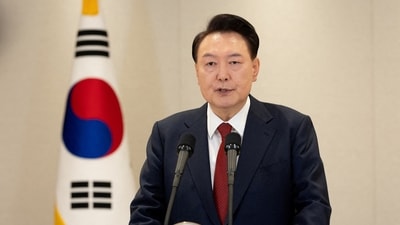
In December 2024, South Korea witnessed an extraordinary suspension of democratic norms when President Yoon Suk Yeol imposed martial law, citing imminent national security threats and allegations of election interference, in order to maintain order and sovereignty, according to the administration. Extraordinary measures were required. The government stressed increasing provocations from North Korea, including missile tests and psychological warfare tactics, as the catalyst for the decision. Additionally, officials argued that internal instability stemming from allegations of electoral fraud and widespread political discontent created an unstable environment, calling for a temporary militarized regime to prevent chaos and protect national integrity. Citing national security threats and allegations of election interference. The announcement reflects rising geopolitical tensions with North Korea and internal rifts within South Korea’s political establishment.

South Korean President Yoon Suk Yeol (File) (via Reuters)

This sudden imposition of martial law raised concern among legislators and citizens, who regarded it as a constitutional subversion intended to strengthen executive control during a period of domestic and international instability.

The announcement triggered immediate constitutional and institutional pushback, underscoring the resilience of South Korea’s democratic structure in crisis mitigation.

The National Assembly initiated impeachment proceedings against President Yoon and passed the resolution by a vote of 204–85. The charges include rebellion, executive overreach and constitutional violations.

Prime Minister Han Duck-soo assumed provisional executive authority, immediately prioritizing stabilization of governance functions and restoration of civilian oversight. His administration focused on reducing tensions by initiating dialogue with opposition leaders and civil society organizations. Additionally, emergency legislative sessions were called to assess the legal framework for ending martial law and protecting democratic principles. Han’s provisional leadership also addressed the economic disruptions caused by the political turmoil, implementing short-term fiscal measures to reassure markets and maintain public services. These responses underlined the executive’s dual mandate of maintaining institutional continuity while moving toward constitutional normalcy. To enable continuity of governance while the Constitutional Court deliberates on impeachment proceedings.

Opposition parties condemned the imposition of martial law as autocratic and contrary to democratic principles and a gross betrayal of the public trust.

Global stakeholders issued mixed reactions, ranging from expressions of solidarity with South Korea’s democratic forces to measured calls for stability and institutional due process.

These developments demonstrated South Korea’s institutional agility in the face of constitutional crises, reaffirming its commitment to preserving democratic rule despite executive overreach.

In response to martial law, South Korean citizens mobilized en masse, turning urban centers into grounds of dissent characterized by inventive protest strategies and cultural symbolism.

Protestors emphasized non-violent resistance through mass rallies, demonstrations and public forums, while foregrounding democratic values ​​and civil rights.

The protests prominently featured K-pop songs like BTS’s ‘Spring Day’ and EXO’s ‘Power’, which served as anthems for resilience and unity. The protesters performed choreographed performances on these tracks, symbolizing collective strength and hope. Fan clubs organized synchronized light stick displays, creating visually stunning spectacles that attracted global attention. These efforts exemplified how K-pop’s cultural appeal and organizational structure could be used for political expression and mass mobilization. At the center of the protests was the widespread use of K-pop light sticks—luminescent accessories that typically symbolize fan culture—as a tool of resistance and solidarity.

The protests included choreographed routines and performances of popular K-pop songs, taking advantage of cultural motifs to amplify political messages and maintain momentum.

The integration of K-pop artworks into protests highlighted multiple dimensions of modern activism by repurposing entertainment symbols for political purposes, with protesters exemplifying the confluence of cultural identity and socio-political engagement. The prevalence of youth participants underlined their important role in contemporary democracy advocacy, reflecting generational aspirations for transparent governance. The visually appealing demonstrations attracted widespread international media coverage, fostering international solidarity and expanding the reach of the movement.

The appropriation of K-pop within the protests underlined its evolution from an entertainment phenomenon to a medium of political expression and collective identity.

· Emotional resonance: Protestors received emotional nourishment from synchronized chants and musical performances, fostering a sense of unity and purpose.

· Symbolic lighting: The sticks of light serve as metaphors for hope and resilience, echoing the candlelight demonstrations of earlier civic movements.

· Digital amplification: Protest footage was disseminated across global social media platforms, leading to support from international celebrities and advocacy organizations. Notable celebrities like BTS’s RM and Blackpink’s Lisa expressed solidarity through social media, raising awareness. The hashtags #DemocracyLights and #StandWithKorea are trending globally, reflecting the scale of digital mobilization. These online efforts increased the visibility of the protests and underlined the growing intersection of pop culture and political activism. The footage was circulated on global social media platforms, garnering support from international celebrities and advocacy organizations.

This cultural and performative dimension of the protests emphasized the transformative potential of popular culture as both a mobilization tool and a medium for expressing dissent.

The martial law crisis left an indelible mark on the political and cultural landscape of South Korea, exposing both weaknesses and strengths within its democratic framework.

· Democratic fortification: The impeachment process underlined the strength of South Korea’s institutional safeguards against authoritarian drift, thereby strengthening public confidence in the constitutional system.

· Generational agency: The protests highlighted the agency of youth demographics in shaping political discourse, demonstrating their ability to mobilize innovative and culturally embedded strategies.

· Cultural diplomacy: The incorporation of K-pop aesthetics into political activism exemplified culture’s dual role as a unifying force and a soft power instrument, which had an impact on future advocacy movements.

Legislative reforms: Proposals include an Electoral Transparency Act, which would mandate strict auditing of vote counting and electronic voting systems to prevent fraud. Another important initiative was the Civilian Oversight in Military Governance Bill, which aimed to establish an independent review board to monitor military interference in civilian governance. Additionally, the Executive Accountability Framework proposed clear limits on emergency powers and required parliamentary approval for extensions of martial law. These reforms reflect a broader effort to restore public confidence and strengthen democratic safeguards. Broad governance reforms were indicated to increase electoral transparency, military oversight, and executive accountability.

· Global resonance: South Korea’s model of culturally integrated activism inspired international movements, demonstrating the adaptability of cultural frameworks in addressing political crises.

The Constitutional Court’s decision on impeachment remains important in determining South Korea’s political trajectory. Regardless of the verdict, the events of December 2024 provide instructive insights about crisis governance, citizen resilience, and the interplay between culture and politics.

Key ideas for the future include:

Strengthening legal safeguards: Institutional reforms aim to strengthen constitutional safeguards against executive overreach.

· Promoting cultural-political synergy: Leveraging South Korea’s cultural assets to sustain democratic engagement and international advocacy.

Youth Empowerment Initiative: Promoting platforms for youth participation in governance and policy making.

Ultimately, South Korea’s response to the martial law crisis demonstrates the enduring vitality of democratic institutions and the transformative potential of cultural solidarity in dealing with political disruptions. The legacy of these events continues to shape the country’s evolving democratic identity, offering a model for integrating cultural flexibility into global activism.

This article is written by Ananya Raj Kakoti, Scholar, International Relations, Jawaharlal Nehru University, New Delhi.


Air India To See Progress On Key Initiatives In 2025; Working Towards Profitability: CEO Wilson | Mobility News

0
Air India To See Progress On Key Initiatives In 2025; Working Towards Profitability: CEO Wilson | Mobility News


New Delhi: Air India will see progress on various key initiatives, including refitting of wide body and narrow body planes, in 2025 as well as tighten practices and processes to ultimately become profitable, the airline’s chief Campbell Wilson said on Friday.

After taking over the loss-making Air India from the government in January 2022, Tata Group has been working on an ambitious transformation plan to turn around the airline, which recently also placed orders for 100 more aircraft.

In his message to the staff on Friday, Wilson said 2024 saw the realisation of some of the most significant milestones, including the completion of the mergers of Air India Express and AirAsia India, and Vistara with Air India that “position us as the fourth largest business, by revenue, in the Tata group”.

Air India group operates 300 aircraft across both brands, flying over 60 million customers annually to more than 100 destinations in India and around the world. 

While describing 2024 as a transformative year for Air India and Indian aviation in many ways, Wilson said 2025 will see progress on many more key initiatives of the airline such as refitting wide body and remaining narrow body aircraft with new seats and services.

Further, Air India’s service standards will be elevated, raising the bar on what we consider ‘good’, and more consistently delivering to those new expectations, he added.

Refitting of narrow body aircraft has commenced while that of legacy wide body planes is expected to start in 2025.

Wilson, the CEO and MD of Air India, also emphasised the airline will strengthen and tighten its practices and processes so that “we are not just consistent, we are also efficient and, ultimately, profitable”.

In the 2023-24 fiscal, Air India trimmed its losses to Rs 4,444.10 crore from Rs 11,387.96 crore in 2022-23.

Its turnover rose 23.69 per cent to Rs 38,812 crore in the last financial year compared to the year-ago period.

Earlier this month, Air India placed an order for 100 more Airbus planes comprising 10 wide body A350s and 90 narrow body A320s. The total order books is 570.

Among other initiatives to streamline the group’s operations, Air India has optimised the deployment of its best narrow body and wide body products in high-density and high-demand routes.


North Korean soldier captured in Ukraine war dies: South Korea’s spy agency | Russia-Ukraine war News

0
North Korean soldier captured in Ukraine war dies: South Korea’s spy agency | Russia-Ukraine war News


Intelligence report comes days after Ukraine’s president said nearly 3,000 North Korean soldiers have been ‘killed or wounded’ in combat.

A North Korean soldier, who was fighting for Russia, has died in Ukrainian captivity due to severe wounds, according to South Korea’s spy agency.

The announcement by the National Intelligence Service in Seoul came on Friday, hours after the Yonhap news agency cited the agency as confirming for the first time that Ukrainian forces had captured a North Korean soldier. The report said he was alive, though the location where he was seized was not known.

Pyongyang has deployed thousands of troops to reinforce Russia’s military, in particular to the Kursk border region where Ukraine mounted a shock border incursion in August.

Confirmation of the soldier’s death came days after Ukrainian President Volodymyr Zelenskyy claimed that nearly 3,000 North Korean soldiers had been “killed or wounded” so far as they joined Russian troops in combat.

It marked the first significant estimate by Ukraine of North Korean casualties several weeks after Kyiv announced that North Korea had sent 10,000 to 12,000 troops to Russia to help it in the almost three-year war.

Ukraine’s military intelligence, known under its acronym GUR, said heavy casualties had been inflicted on North Korean units by Ukrainian strikes near Novoivanovka in Kursk, supply issues and even shortages of drinking water.

Strengthened ties

North Korea and Russia have strengthened their military ties since Moscow invaded Ukraine in February 2022.

A landmark defence pact between Pyongyang and Moscow signed in June came into force this month, with Russian President Vladimir Putin hailing it as a “breakthrough document”.

Ukraine’s allies have called Pyongyang’s growing involvement in Russia’s war in Ukraine a “dangerous expansion” of the conflict.

South Korean politician Lee Seong-kweun said last week that Pyongyang’s soldiers were being “utilised as expendable front-line assault units”.