Wednesday, September 30, 2026
Home Blog Page 7002

South Korea prime minister Han Duck-soo faces impeachment motion

0
South Korea prime minister Han Duck-soo faces impeachment motion


South Korea’s opposition lawmakers have filed a motion to impeach the country’s prime minister and acting leader Han Duck-soo, less than two weeks after parliament voted to impeach President Yoon Suk Yeol.

This comes after Han refused to appoint constitutional court judges nominated by the main opposition Democratic Party (DP).

“Han has revealed himself to be an acting insurrectionist, not an acting president”, DP’s floor leader Park Chan-dae said on Thursday.

The opposition has also accused Han of aiding Yoon’s martial law attempt on 3 Dec. Han earlier apologised for failing to block it.

Han also vetoed several opposition-led bills, including one that proposed a special investigation into Yoon’s short-lived martial law declaration.

The impeachment motion is expected to be put to a vote in the next 24 to 72 hours.

For it to succeed, 151 out of 300 MPs must vote for it.

The DP currently holds 170 of the 300 seats in parliament. The opposition bloc together holds 192 seats.

Opposition parties had been hoping Han would not stand in their way while acting as the country’s caretaker president, and that he would allow bills to pass.

But instead he has held firm, deepening the political strife.

On Tuesday, Han concluded a cabinet meeting without reviewing the two opposition-sponsored bills that called for special counsel investigations into the martial law declaration and corruption allegations involving first lady Kim Keon Hee.

He said he did not put them on the agenda so as to give the ruling and opposition parties more time to reach a compromise.

But DP’s floor leader Park Chan-dae slammed him for “buying time and prolonging the insurrection”.

“We’ve clearly warned that it’s totally up to Prime Minister Han Duck-soo whether he would go down in history as a disgraceful figure, as a puppet of rebellion plot leader Yoon Suk Yeol, or a public servant that has faithfully carried out the orders by the public,” Park said in a televised party meeting.

And on Thursday, Han said he would not appoint the three judges the opposition-dominated National Assembly had nominated to the constitutional court – which is deliberating whether Yoon should be impeached – unless the rival parties reach a consensus.

To this, Park said “it has become clear that Han Duck-soo is neither qualified nor willing to defend the constitution”, adding that the opposition would “immediately” table the impeachment bill.

Han’s ruling People Power Party said the opposition’s threats have interfered with Han’s “legitimate exercise of authority”, while a senior official at the prime minister’s office criticised the threats as “extremely regrettable”.

Han stepped in as caretaker president after Yoon was ousted from office earlier this month. If lawmakers vote for Han to be impeached, finance minister Choi Sang-mok will be next in line.

This latest development in the country’s political turmoil comes as Seoul Constitutional Court is deliberating on whether Yoon should be permanently barred from office.

The court is expected to hold its first public hearing later this week.

It is unclear if Yoon himself will take the stand during the hearings, but protesters have vowed to keep up their calls for Yoon’s removal during court proceedings.

Yoon is also under investigation for alleged insurrection over his failed attempt to put the country under martial law.

He has refused to accept several summons delivered to him, and investigators have warned that they may issue an arrest warrant if he continues to be unresponsive.

Several senior officials – including former defence minister Kim Yong-hyun, former interior minister Lee Sang-min and army chief Park An-su – are also being investigated.

Additional reporting by Jake Kwon and Hosu Lee in Seoul


Ventive Hospitality IPO: Allotment status details, GMP, listing price

0
Ventive Hospitality IPO: Allotment status details, GMP, listing price


The share allotment for the ₹1,600 crore Ventive Hospitality initial public offering (IPO) will be finalised today on Thursday, December 26, 2024.

The Ventive Hospitality IPO closed for subscription on December 24, having gotten oversubscribed 9.82 times, as per data from the National Stock Exchange (NSE).(Representational Image/Pixabay)

The IPO closed for subscription on December 24, having gotten oversubscribed 9.82 times, as per data from the National Stock Exchange (NSE).

Also Read: 3 reasons why gold gained 27% in 2024, outperforming both Nifty 50, S&P 500

How to check Ventive Hospitality IPO allotment status

Investors can check their Ventive Hospitality IPO allotment status using the folowing links:

Ventive Hospitality IPO Grey Market Premium (GMP)

Ventive Hospitality shares are trading at ₹715 in the grey market, according to a Business Standard report. This is a premium of ₹72 or 11.2% over the IPO’s upper price band of ₹643.

Also Read: Here’s how the new GST policy on used cars will affect both individuals and businesses

Ventive Hospitality IPO possible listing price

The company’s shares may list somewhere around ₹715, considering the current GMP, according to the report. This is a return of 11.2% over the upper end of the price band.

However, it is also to be noted that GMPs are speculative and are not always a reliable indicator of listing performance.

Listing schedule and IPO details

The company’s shares are scheduled to list on the BSE and NSE on December 27, 2024.

The IPO had a price band of ₹610-643 with a lot size of 23 shares.

It received bids for 14,17,23,907 shares against the 1,44,34,453 shares on offer, with Non-Institutional Investors (NIIs) having placed the highest bids, oversubscribing their reserved quota 13.87 times.

NIIs were followed by Qualified Institutional Buyers (QIBs), who oversubscribed 9.08 times their allocation, and retail investors oversubscribed 5.94 times.

Shares reserved for employees were oversubscribed 9.60 times.

Also Read: Here’s how the new GST policy on used cars will affect both individuals and businesses

Details of Ventive Hospitality

Ventive Hospitality, incorporated in 2002 as the hospitality division of Panchshil Realty, is a Pune-based a real estate/ hospitality company, focussing primarily on luxury offerings across the commercial, retail, luxury residential and data center segments.

Its assets are operated by or franchised from global operators, including Marriott, Hilton, Minor and Atmosphere and in 2017, saw a 50% acquisition by BRE Asia (formerly known as Xander Investment Holding XVI), which is an affiliate of Blackstone.


Rupee falls 9 paise to hit all-time low of 85.24 against US dollar in early trade

0
Rupee falls 9 paise to hit all-time low of 85.24 against US dollar in early trade


Rupee falls 9 paise to hit all-time low of 85.24 against US dollar in early trade

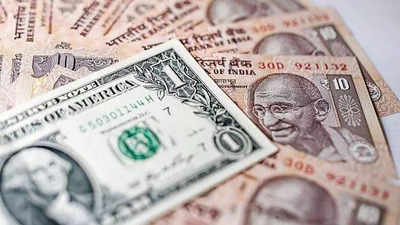
NEW DELHI: The Indian rupee slid to a record low of 85.24 against the US dollar in early trade on Thursday, weighed down by rising US Treasury yields and a decline in most Asian currencies. The rupee, which had closed at 85.20 on Tuesday, opened lower after a mid-week holiday in Indian financial markets.
The 10-year US Treasury yield climbed to its highest level since late May, boosting the dollar index near its year-to-date peak. The offshore Chinese yuan also weakened to 7.3070 per dollar, amplifying the regional currency pressure.
A recent Standard Chartered Bank report highlighted multiple headwinds likely to challenge the rupee in the coming year. Key pressures include slowing foreign direct investment (FDI) inflows, weak manufacturing exports amid muted global demand, and a narrowing policy rate differential with the US.
“Slowing FDI flows, weak manufacturing export growth, and narrowing policy rate differential with the US are likely to pressurize the INR,” the report noted. It projects the rupee to depreciate modestly, reaching 85.5 per US dollar over the next 12 months.
Despite these challenges, certain factors may lend support to the rupee. India’s robust economic growth, attractive real yields, stable balance of payments bolstered by its inclusion in the global bond index, softer commodity prices, and strong forex reserves are all positive indicators.
However, these drivers may not be sufficient to counter the downward pressures. “We expect the INR to trade with a modest depreciating bias to 85.5/USD over a 12-month time horizon,” the report stated.
The report also painted a favourable picture for Indian equities, underpinned by strong GDP growth and corporate earnings that are likely to outpace global peers. Factors such as steady domestic investor inflows through systematic investment plans (SIPs), a potential resurgence of foreign investments, and expected US Federal Reserve rate cuts are expected to bolster the stock market.
India’s economic growth is forecast to recover from its current cyclical slowdown, supported by higher government capital expenditure, a revival in rural demand, improved urban consumption, and broader policy support.
“We expect India’s economic growth to recover from a cyclical slowdown and stay ahead of its major peers in 2025,” the report added.
Inflation is expected to trend lower in 2025, driven by declining food prices owing to improved crop sowing and potential government interventions to manage supply concerns. Disinflationary effects from previous policy tightening are also anticipated to ease inflationary pressures.
While the rupee faces near-term hurdles, India’s strong macroeconomic fundamentals and growth potential are likely to shape a resilient economic outlook for 2025. Despite external and domestic challenges, the broader trajectory suggests optimism for India’s financial and economic future.


How George Soros became ‘Enemy Number 1’ for India’s Modi | Narendra Modi News

0
How George Soros became ‘Enemy Number 1’ for India’s Modi | Narendra Modi News


New Delhi, India — As India’s Parliament convened for its winter session in late November, the world’s largest democracy braced for heated exchanges between Prime Minister Narendra Modi’s Bharatiya Janata Party and the opposition, led by the Congress party.

The northeastern state of Manipur is still burning, after more than a year of ethnic clashes that critics have accused the local BJP government of exacerbating; the nation’s gross domestic product (GDP) growth has slowed down; and one of India’s richest men, Gautam Adani, is at the centre of a corruption indictment in the United States.

But on a cold and grey day in mid-December, BJP leaders marched through Parliament premises holding placards aimed at pushing back against opposition criticism by linking the Congress to an unlikely villain in their eyes: George Soros.

Since early 2023, the Hungarian-American financier-philanthropist has emerged as a central target of the BJP’s rhetoric, which accuses Soros of sponsoring the country’s opposition and backing other Modi critics with the intent of destabilising India. Those accusations sharpened ahead of the 2024 parliamentary elections in which the Hindu majoritarian BJP lost its majority for the first time in a decade, though it still secured enough seats to cobble together a coalition government.

But the campaign has reached fever pitch in recent days, with the BJP even accusing the US Department of State of colluding with Soros to undermine Modi.

In a series of posts on December 5, the BJP posted on X that the Congress leaders, including Leader of Opposition Rahul Gandhi, used the work of a group of investigative journalists — funded in part by Soros’s foundation and the State Department — to target the Modi government on questions related to the economy, security, and democracy.

The BJP cited an article by French media outlet Mediapart claiming that Soros’s Open Society Foundations and the State Department funded the Organized Crime and Corruption Reporting Project (OCCRP). Then, it drew attention to the OCCRP’s exposes on the alleged use of Pegasus spyware by the Modi government, investigations into the Adani group’s activity, and reports on declining religious freedom in India to suggest that Soros and the Biden administration were in effect behind this coverage.

“The deep state had a clear objective to destabilise India by targeting Prime Minister Modi,” a BJP spokesperson said at a news conference, adding that “it has always been the US State Department behind this agenda [and] OCCRP has served as a media tool for carrying out a deep state agenda”.

The comments targeting the State Department took many analysts by surprise as the US is one of India’s closest strategic allies. But some experts have suggested that the move is about domestic political posturing, aimed also at aligning the Modi government with the incoming Trump administration’s insistence on how the “deep state” conspires to undermine democracy.

“The instrumentalisation of Western criticism into a domestic political platform represents a rather new phenomenon in Modi’s India,” said Asim Ali, a political researcher. It represents an effort, he said, to build the narrative of a “face-off between a ‘Western-backed coalition’ and a ‘popularly backed nationalist coalition’.”

An ‘easy target’

In January 2023, US-based forensic financial research firm Hindenburg alleged in a report that the Adani Group had been engaged in a “brazen stock manipulation and accounting fraud scheme over the course of decades”.

After the report’s release, Adani Group’s shares plunged in value by about $112bn, before recovering over subsequent days. The firm has since followed up with more research and analysis on the conglomerate’s business practices.

The Adani conglomerate has denied the allegations. Hindenburg, in turn, received a show-cause notice from the Indian capital market regulator, the Securities and Exchange Board of India (SEBI), accusing the group of using non-public information to build short positions against the Adani Group.

But the fraud and corruption allegations became the centrepiece of the Congress-led campaign against Modi and Adani in the then-upcoming Indian parliamentary elections.

Congress leader Gandhi alleged in Parliament in February 2023 that “the government policies are tailor-made to favour the Adani Group”. He displayed two photographs of the prime minister and the billionaire sharing a private jet and of Modi taking off in an Adani Group jet for campaigning ahead of the 2014 national election.

In February 2023, Soros waded into that Indian political war over Adani. Speaking at the Munich Security Conference, he said the Adani crisis “will significantly weaken” Modi’s “stranglehold” on the Indian government.

This was met with furious condemnation from Modi’s party. Then-federal minister Smriti Irani said the founder of the Open Society Foundation has “now declared his ill intentions to intervene in [India’s] democratic processes”. India’s Foreign Minister S Jaishankar described the billionaire as “an old, rich opinionated … dangerous person”.

Al Jazeera has sought responses from Open Society Foundations on the allegations against it levelled by the BJP and ministers in the Modi government but has not yet received a reply. However, in September 2023, it issued a statement about its activities in India, where it said, “Since mid-2016, our grant making in India has been constrained by government restrictions on our funding for local NGOs.”

But the recent criticism of Soros is not so much about the billionaire, said Neelanjan Sircar, a political scientist at the Centre for Policy Research (CPR) in New Delhi.

“Soros is an easy target: he represents a lot of money, he represents a position that is critical of Modi, and, of course, funds a lot of things,” said Sircar. “But it is not about him as this abstract entity for everybody to hate – rather, it is his alleged connection to a set of social and political actors that the BJP is trying to vilify within India.”

Since the recent US indictment of Adani, over allegations of bribery in India that the group has denied, Modi’s party has sharpened its attacks on the Congress and Soros, attempting to portray deep links between the two. The BJP cited alleged funding by Soros of the Forum of Democratic Leaders in Asia Pacific (FDL-AP), which has Sonia Gandhi, Rahul Gandhi’s mother, as co-president, to bolster its claim. “Soros is not a citizen of this country and he wants to create instability in the country,” said Jagdambika Pal, a member of parliament from the BJP.

The Congress, however, has rejected suggestions that it is influenced by any foreign actor and has insisted that the BJP’s anti-Soros campaign is aimed at distracting the country from the Manipur crisis, India’s economic challenges and the US indictment of Adani in an alleged bribery scheme.

BJP leader and spokesperson Vijay Chauthaiwala denied a request from Al Jazeera for comment on criticism of the party’s attacks on Soros.

Meanwhile, the French media outlet Mediapart in a public statement, said it “firmly condemns the instrumentalisation of its recently published investigative article about OCCRP … in order to serve BJP’s political agenda and attack press freedom.”

The anti-Soros narrative

India is not the only country where right-wing movements have targeted Soros, placing the 94-year-old at the heart of global conspiracies.

Hungarian Prime Minister Viktor Orban has accused Soros of trying to push immigrants into Europe and has tried to stop the billionaire’s support for groups in the country through a legislative bill. In the US, supporters of President-elect Donald Trump frequently accused Soros — without evidence — of financing Black Lives Matter protests and caravans of migrants headed to the US during the first Trump administration.

Often, these conspiracies also carry anti-Semitic undertones, critics say.

But the campaign in India is different, according to research by Joyojeet Pal, an associate professor at the University of Michigan. An analysis of posts on X around Soros found that Indian influencers pushing conspiracy theories about him are generally “careful not to use anti-Semitic tropes” and rather focus on his “soft spot for Muslims”, Pal told Al Jazeera. By extension, that translates into an alleged “hatred of Hindus”, according to this narrative, Pal said.

Pal’s research found that a few social media accounts belonging explicitly to the BJP politicians “were important in putting out the key content” against Soros when the party pushed back against his comments on Adani and Modi. “However, the main amplifiers of content were [pro-Modi] influencers … by aggressively retweeting content to make it viral.”

Presenting Soros as a shadowy puppeteer “is very attractive” for some political movements, said Pal, because it “suggests a broader conspiracy”, showing their opponents “as weak enough that they need to take orders from a foreign manipulator”.

In India, the attacks against Soros have moved from social platforms like X and Instagram to WhatsApp chats and increasingly shows on mainstream television where he is targeted by BJP spokespeople and party supporters.

As a result, “people all the way down to villages know there is this entity called Soros who is targeting India, but none of them know exactly who this person is”, said Pal. “An unknown enemy is much scarier than one you can see and evaluate.”

‘Tone deaf’ or ‘posturing’?

To many observers of India’s foreign relations, the big surprise in recent days has come from the BJP’s decision to paint the US State Department as a party to the supposed Soros-led conspiracy against the Modi government.

In a media briefing on December 5, Sambit Patra, a BJP spokesperson and parliamentarian, insisted that “50 percent of OCCRP’s funding comes directly from the US State Department … [and] has served as a media tool for carrying out a deep state agenda”.

On December 7, the State Department said the BJP’s accusations were “disappointing”, adding that the US “has long been a champion of media freedom around the world”.

Experts too questioned the BJP’s accusations.

“The Indian attack seems tone-deaf and out of step with reality in the sense that the US State Department has seemingly gone out of its way to convey its desire to strengthen and deepen ties with India,” said Michael Kugelman, South Asia Institute director at The Wilson Centre, a Washington, DC-based think tank. “It is very opposite of wanting to malign and destabilise the country.”

The US government has been “really bending over backward to show just how committed they are to partnership with India” on multiple fronts, from security, technology, and trade, to education, he said.

But Kugelman noted that “the BJP’s posturing could be for the incoming Trump administration, which has essentially made the same type of arguments against the so-called US deep state”.

Sircar and Ali, meanwhile, both said the BJP’s focus on Soros as a villain was — in their view — fundamentally rooted in domestic politics. Modi, Ali said, wants to use “anti-Western nationalism as an attractive nationalist plank in parts of India resilient to the lure of Hindu nationalism”.

And in Soros, India’s governing party has found the face to put on its dartboard.


Cyberattack Hits Japan Airlines; Flights Delayed, Ticket Sales Suspended | Mobility News

0
Cyberattack Hits Japan Airlines; Flights Delayed, Ticket Sales Suspended | Mobility News


Tokyo (Japan): Japan Airlines (JAL) announced on Thursday that its network had been targeted by a cyberattack, leading to delays of up to an hour for at least 14 domestic flights and disruptions to some international flights as well, Kyodo News reported.

The airline reported that the issues began at approximately 7:25 am, prompting it to suspend ticket sales for all domestic and international flights for the remainder of the day. Passengers who had already purchased tickets were advised that their bookings remained valid.

JAL said it was working to counteract the cyberattack and determine its source, adding the attack may have a larger effect on its flights. The airline succeeded in temporarily shutting down the router believed to have been compromised. The Metropolitan Police Department was contacted by JAL and is looking into the matter, investigative sources said, according to Kyodo News.

Earlier in the day, sharing a post on X, the Japan Airlines wrote, “We identified and addressed the cause of the issue. We are checking the system recovery status. Sales for both domestic and international flights departing today have been suspended. We apologize for any inconvenience caused.”

In another post, it wrote, “We regret to inform you that our network systems are down. The cause is under investigation. This may potentially affect the operations of both domestic and international flights. We sincerely apologize for the inconvenience.”


Syria says 14 security personnel killed in ‘ambush’ by Assad loyalists

0
Syria says 14 security personnel killed in ‘ambush’ by Assad loyalists


Syria’s new rebel-led authorities say 14 interior ministry personnel have been killed and 10 injured in an “ambush” by forces loyal to ousted President Bashar al-Assad in the west of the country.

They say the fighting took place near the Mediterranean port of Tartous on Tuesday.

Reports say the security forces were ambushed as they tried to arrest a former officer in connection to his role at the notorious Saydnaya prison, close to the capital Damascus.

Just over two weeks ago, Assad’s presidency fell to rebel forces led by the Islamist Hayat Tahrir al-Sham (HTS) faction.

The UK-based Syrian Observatory for Human Rights (SOHR) said three militants were also killed in the clashes.

The SOHR added that the security forces later brought in reinforcements.

In a separate development, the Syrian authorities imposed an overnight curfew in the central city of Homs, state media reported.

Reports say this followed unrest after a video purportedly showing an attack on an Alawite shrine.

Syria’s interior ministry said it was an old video, dating back to the rebel offensive on Aleppo in late November, and the violence was carried out by unknown groups.

The SOHR said one demonstrator was killed and five wounded in Homs.

Demonstrations were also reported in areas including the cities of Tartous and Latakia, and Assad’s hometown of Qardaha.

Alawites are the minority sect from which the Assad family originates, and to which many of the former regime’s political and military elite belonged.

The HTS-led lightning offensive that started from Syria’s north-east and spread all over the country ended the Assad family’s more than 50-year-rule.

Assad and his family were forced to flee to Russia.

HTS has since promised to protect the rights and freedoms of many religious and ethnic minorities in Syria.

HTS is designated as a terrorist organisation by the UN, the US, the EU, the UK and others.

On Tuesday, protests broke out in the country over the burning of a Christmas tree, prompting fresh calls for the new authorities to protect minorities.


Protests took place across the country in 2024

0
Protests took place across the country in 2024


India saw 2024 turns out to be a year of turmoil as protests erupt across statesReflects widespread discontent over serious economic challenges and controversial social policies. The protests, initially sparked by rising unemployment rates and rising inflation, quickly grew into a broader movement, encompassing issues such as education reform, environmental degradation and allegations of curtailment of democratic freedoms.

Also read: Looking back in 2024: Political dynasties are ruling countries

Heavy voting was witnessed in major cities including Delhi, Mumbai, Bengaluru and Kolkata. Workers, students, farmers and activists joined in what is being called one of the largest public mobilizations in recent years.

Here’s an in-depth look at the top 10 protests that made headlines this year.

1. Manipur protests: Caste violence between Meitei and Kuki communities

spark by Dispute over Scheduled Tribe status for Meitei group, violence displaced thousands and claimed many livesThe protesters demanded justice, accountability from the state government and intervention from the Centre. Rallies, blockades and solidarity marches took place across the country, drawing attention to the state’s long-standing ethnic tensions. Manipur is disturbed since February BJP-led government launches eviction drive targeting a specific tribal groupThe campaign led to protests, but not on the scale of the one on May 3, 2023, which began after the Manipur High Court directed the state to carry forward its 10-year-old recommendation to grant Scheduled Tribe (ST) status to non-tribals. Had happened. Meitei community.

The first violent protest on 10 March was against the eviction of residents of Kuki village. This led the state government to back out of its suspension of action with two Kuki extremist groups accused of instigating the protesters.

2. Protest against RG tax in Kolkata

On August 9, a 31-year-old post-graduate trainee doctor was found dead, semi-nude, on the fourth floor of a state-run seminar hall. RG Kar Medical College and HospitalMedical examination revealed that the victim suffered external and internal injuries during sexual assault and was murdered. No FIR was registered for 14 hours. students and junior doctors RG Kar Medical College starts massive protest Against inadequate infrastructure, irregular stipends and lack of resources in hospitals. The situation worsened after a large protest march on 27 August ‘Nabanna Abhijan’ under the leadership of Paschim Banga Student Society and Sangrami Joutha ManchTurned violent. Protesters clashed with police across Kolkata and Howrah, breaking barricades and throwing stones, prompting police to respond with tear gas, water cannons and lathicharge.

On December 10, 2024, the Supreme Court was informed that the prosecution expected to complete the examination of all its 51 witnesses in the case.

3. Farmers protest for crop price guarantee

Farm union leaders want more state support or a law-backed guarantee of minimum crop purchase prices. The government announces support prices for more than 20 crops every year to set a benchmark, but state agencies purchase only rice and wheat at the support level, benefiting about 7% of farmers growing those crops. Is. In 2021, when Modi administration repealed agricultural laws India’s longest farmer protest in yearsThe government said it would set up a panel of producers and government officials to find ways to ensure support prices for all produce. Farmers accused the government of being slow in fulfilling its promises. In December, over a thousand farmers gathered around the Delhi-Noida borders for the second time this year in support of their demands for land allotment and increased compensation for land acquired by the government, leading to them breaking barricades.

4. Maharashtra Maratha Reservation Protest

Maratha quota activist Manoj Jarange Patil and thousands of others launched a protest march from Maharashtra’s Jalna district to Mumbai on January 20 to draw the state government’s attention to the demand for reservation in the community. The protests echoed the dramatic events of 1982 When Congress MLA from Satara Annasaheb Patil challenged his party by demanding reservation on the basis of economic criteria. Annasaheb Patil had issued a serious ultimatum to the Congress-led government, threatening to give up his life if his demands were ignored – a warning which he tragically fulfilled by shooting himself. Similarly, Jarange-Patil has built a reputation as a formidable figure, considered beyond the control of those in power.

He criticized the state government and ministers, citing an “alarming increase” in suicides by Maratha youth. “Maratha youth are sacrificing their lives for the issue of reservation, but the government remains adamant. How can the government be so insensitive and cruel and just watch Maratha youth commit suicide,” he asked.

5. Climate Justice Rally in Ladakh

On March 6, Ladakh’s famous educationist and environmentalist Sonam Wangchuk starts 21-day hunger strike What he called “climate pounding.” Wangchuk’s plan to fast at Leh’s Khardung La, one of the world’s highest motorable mountain passes, failed as the local administration reportedly put him under house arrest at the Himalayan Institute of Alternatives, Ladakh and was not allowed to proceed further. Refused to give. The strike was in support of thousands of Ladakh residents who are demanding safeguards under the Sixth Schedule of the Indian Constitution to enable them to take decisions regarding the use and management of resources such as land and water. they can’t right now

Wangchuk called off his hunger strike on 26 March; It is currently being continued by women in Leh. If their demands are not met, the youth, monks and elders have said that they will also join the hunger strike in a phased manner.

6. Students protest against NEET irregularities

In June 2024, several student groups started an agitation against alleged irregularities in NEET-UG, PG and UGC-NET at Jantar Mantar despite continuous rain. Protest under the banner of “India vs NTA” Several student organizations, including the Left-backed All India Students Association (AISA) and Delhi University’s Krantikari Yuva Sangathan (KYS), have supported it. The demands of the student groups include abolition of the National Testing Agency and resignation of Education Minister Dharmendra Pradhan over the issue. The NEET-UG exam, scheduled to be held on May 5, has been dogged by allegations of question paper leaks and other irregularities in states like Bihar. Sixty-seven students scored a perfect 720 marks, unprecedented in the history of the NTA, including the names of six from a center in Faridabad, Haryana, in the list, raising suspicions of irregularities.

Also read: Student organizations protest against NTA, demand removal of Pradhan

7. Deaths at IAS coaching centre: Students protest for justice and accountability

On 27th July, Three students died due to basement floodingWhich was being used as a library by Rau’s IAS study circle. Due to heavy rains, the basement of the building was flooded and many students present in the library were trapped inside. This incident led to massive protests and huge public outcry. It highlights how building regulations and safety measures are implemented Delhi’s coaching centers are violated and ignoredThe students demanded better facilities and remained adamant on keeping the issue non-political. Lieutenant Governor VK Saxena has approved the immediate suspension of two Delhi Fire Service officials for alleged dereliction of duty in connection with the deaths.

8. Digital strike of women gig workers on Diwali

India’s first woman-led gig workers union has planned a nationwide digital strike on Diwali. This protest proved to be an important milestone in the fight for labor rights across the country. The participants switched off their phones and refused to work on Diwali, which is traditionally one of the platform companies’ busiest and most profitable days. The protests demonstrated growing solidarity among gig workers who, despite their physical isolation, found a way to unite against exploitative practices and make their voices heard. Behind the convenient facade of app-based services lies a disturbing reality for female gig workers. They face many challenges, such as minimum wages, excessive hours, and hazardous working conditions.

9. Dalit and tribal groups protested against the Supreme Court decision on SC/ST sub-categorization

Coalition groups representing more than 21 Dalit and tribal unions across the country held protest marches and rail and road blockades on August 21 against the Supreme Court’s August 1 decision, demanding that the Center clarify its stand on sub-categorization. , brought a law to “deactivate”. decision, and conduct a caste census to reveal the “real status” of various castes in India.

Also read: Dalits, tribal organizations took to the streets to protest against the Supreme Court’s sub-quota decision.

As the protests continued throughout the day, the central leadership of the major opposition parties – Congress and Samajwadi Party – expressed support for the protests, while maintaining their ambiguity on the main issue of sub-categorization of SC and ST quota. Bahujan Samaj Party (BSP), Azad Samaj Party and parties like Bharat Adivasi Party wholeheartedly opposes sub-categorizationalso supported the protests.

10. Students protest against exam paper leak in Uttar Pradesh

thousands Uttar Pradesh Public Service Commission (UPPSC) candidates protested Protests were held outside the Commission’s headquarters in Prayagraj on November 11 against the decision to conduct the Review Officer and Assistant Review Officer (RO-ARO) examination and the Provincial Civil Services (PCS) preliminary examination on different dates and in multiple shifts. Protestors demanding the examination be conducted on the same day in a single shift clashed with police when they were prevented from holding the scheduled dharna at gate no. 2 and 3 of the Commission.

Also read: Student protesters call off agitation in UP’s Prayagraj; PCS exam on 22nd December

More than 10 lakh people had applied for the RO/ARO (Preliminary) exam held in February 2024, but it was canceled by the Uttar Pradesh government after the paper leak. After this, Chief Minister Yogi Adityanath directed to conduct the examination again within six months and it was announced that the examination will be held in December.


Today Gold Rate 26-12-2024: Check latest prices in your city

0
Today Gold Rate 26-12-2024: Check latest prices in your city


The gold rate experienced an increase on Thursday. The current rate for 24 carat gold is ₹7763.3 per gram, reflecting an increase of ₹120.0. Additionally, the rate for 22 carat gold stands at ₹7118.3 per gram, also up by ₹120.0.

Gold silver image
Gold silver image

Over the past week, the rate for 24 carat gold has seen a change of -0.41%, while in the last month, it has adjusted by -0.27%. The silver rate is currently ₹94700.0 per kg, up by ₹300.0.

In Delhi, the gold rate today is ₹77633.0/10 grams. The price yesterday, on 25-12-2024, was ₹77613.0/10 grams, and the rate last week on 20-12-2024 was ₹77293.0/10 grams.

The silver rate in Delhi today is ₹94700.0/Kg. The price recorded yesterday, on 25-12-2024, was ₹94400.0/Kg, while last week, on 20-12-2024, it was ₹94500.0/Kg.

In Chennai, the gold rate today is ₹77481.0/10 grams, marking an increase from ₹77461.0/10 grams yesterday, and up from ₹77141.0/10 grams last week.

The silver rate in Chennai today is ₹101800.0/Kg, which is an increase from ₹101500.0/Kg yesterday and slightly down from ₹101600.0/Kg last week.

In Mumbai, the gold rate today stands at ₹77487.0/10 grams, compared to ₹77467.0/10 grams yesterday and ₹77147.0/10 grams last week.

The silver rate in Mumbai today is ₹94000.0/Kg, which represents an increase from ₹93700.0/Kg yesterday and a slight decrease from ₹93800.0/Kg last week.

In Kolkata, the gold rate today is ₹77485.0/10 grams, up from ₹77465.0/10 grams yesterday and ₹77145.0/10 grams last week.

The silver rate in Kolkata today is ₹95500.0/Kg, which is an increase from ₹95200.0/Kg yesterday, although it has decreased slightly from ₹95300.0/Kg last week.

The gold April 2025 MCX futures were trading at ₹77299.0 per 10 gm, reflecting an increase of ₹0.471 at the time of publication.

The silver March 2025 MCX futures were trading at ₹89600.0 per kg, also reflecting an increase of ₹0.307 at the time of publication.

Gold and silver prices are influenced by a variety of factors, including input from major jewelers. Elements such as global demand for gold, currency fluctuations, interest rates, and government policies significantly impact pricing. Furthermore, international factors such as the state of the global economy and the strength of the US dollar against other currencies also affect gold rates in the Indian market.


Japan Airlines hit by cyber attack, delaying some flights | Aviation

0
Japan Airlines hit by cyber attack, delaying some flights | Aviation


JAL says it has suspended ticket sales for all services on Thursday following incident.

Japan Airlines (JAL) has reported being hit with a cyber attack, causing delays to some flights.

The airline has been experiencing “malfunctions in systems communicating with external systems” since shortly before 7:30am local time (23:30 GMT, Wednesday), JAL said on Thursday.

JAL temporarily isolated a router that was causing the disruption shortly before 9am and is currently “checking the status of the system recovery”, the Tokyo-based airline said.

“We have identified the scope of the impact and are currently checking the status of the system recovery,” JAL said.

The airline added that there were delays to both domestic and international flights and that it had suspended ticket sales for all services scheduled for Thursday.

More than a dozen flights were delayed at several Japanese airports, but there were no mass cancellations, public broadcaster NHK reported.

All Nippon Airways, JAL’s main rival, said that it had not been affected by any cyber incidents and that services were operating as normal.

American Airlines briefly grounded all flights on Christmas Eve after experiencing a technical glitch involving its network hardware.


India Cements’ Srinivasan exits co after Birla takeover

0
India Cements’ Srinivasan exits co after Birla takeover


India Cements' Srinivasan exits co after Birla takeover

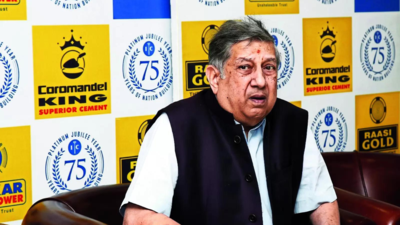
CHENNAI: N Srinivasan (80) resigned as the vice-chairman & MD of India Cements on Wednesday, a day after the company became a subsidiary of UltraTech following the Aditya Birla Group company’s acquisition. He also ceases to be the CEO. His daughter Rupa Gurunath and wife Chitra Srinivasan also tendered their resignations as wholetime director and non-independent director, respectively.
This has brought the curtains down for the 50-year-long association of Srinivasan with India Cements, which was co-founded by his father T S Narayanaswami, a year before independence in 1946. Another co-founder was S N N Sankaralinga Iyer.
In their identical resignation letters, Srinivasan and his family memers thanked the employees and conveyed greetings for the new management. Joining India Cements soon after the demise of his father in 1968, Srinivasan was ousted from the board in 1979 at the peak of his fight with co-promoters. However, he made a comeback and took over as its managing director in Sept 1989. The company grew from two plants with a capacity of 1.3 million tonnes per annum (MTPA) in 1989 to 10 cement plants spread across Tamil Nadu, Telangana, Andhra Pradesh, and Rajasthan with a capacity of 15.5 MTPA. It also saw a five-fold jump in turnover from Rs 1,033 crore in 2002-03 to a turnover of Rs 5,112 crore in FY24 under his leadership.
However, one of the largest cement manufacturers in south India, the company has been facing financial issues in recent quarters. In July this year, India’s largest building materials maker, Birla struck a deal with Srinivasan and his family to acquire their cement business for Rs 3,954 crore.