Tuesday, September 29, 2026
Home Blog Page 7015

IPO boom: Record Rs 1.6 lakh crore raised in 2024; new year to see greater heights

0
IPO boom: Record Rs 1.6 lakh crore raised in 2024; new year to see greater heights


IPO boom: Record Rs 1.6 lakh crore raised in 2024; new year to see greater heights

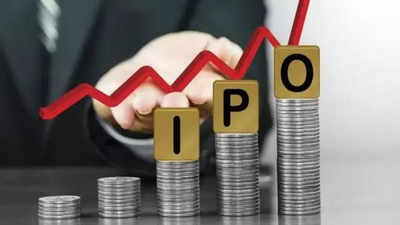
NEW DELHI: Fundraising via IPOs in India hit another landmark as economic growth, favourable market conditions and improvements in the regulatory framework helped companies raise a record Rs 1.6 lakh crore in 2024, while the pipeline for the next year holds out bigger promise. This exceptional year not only reflected the confidence of issuers but also highlighted investors’ eagerness to seize listing-day gains or back companies with strong long-term growth potential.
The year was marked by Hyundai Motor India’s historic IPO, the largest in the country’s history, which raised Rs 27,870 crore.
Companies of varying market capitalisations — large, mid, and small — tapped into the IPO route in 2024, with the average issue size rising significantly from Rs 867 crore in 2023 to over Rs 1,700 crore in 2024.
The exceptional vibrancy of the IPO market was evident, with December alone seeing at least 15 launches.
“Rising retail participation, strong domestic inflows and active participation by FPIs (even though they have been net sellers in the secondary market), private capex increase and the government’s strategic focus on infrastructure and key sectors have collectively laid a strong foundation for the fundraising momentum in India,” V Prashant Rao, Director & Head – ECM, Investment Banking at Anand Rathi Advisors, said.
Fundraising momentum is expected to accelerate further in the New Year, potentially surpassing 2024’s record figures, market analysts said.
“Based on the 75 IPO documents, which are at various stages of approval/ marketing and the deal pipelines, we expect issuance activity in 2025 to cross Rs 2.5 lakh crore,” Munish Aggarwal, Managing Director and Head of Equity Capital Markets at Equirus, said.
The IPO pipeline for the next year is set to feature major offerings, including HDB Financial Services’ proposed Rs 12,500 crore issue, LG Electronics India’s Rs 15,000 crore public float, and Hexaware Technologies’ Rs 9,950 crore offering.
According to data available with the exchanges, 90 maiden public issues were launched in 2024, collectively raising Rs 1.6 lakh crore. This includes eight IPOs scheduled to conclude on December 23-24. Besides, the Rs 500-crore IPO of Unimech Aerospace and Manufacturing is slated to open on December 23.
Additionally, Vodafone Idea raised Rs 18,000 crore through a follow-on public offer (FPO). About Rs 1.6 lakh crore raised in 2024 far exceeded Rs 49,436 crore garnered by 57 firms through IPOs in 2023.
By comparison, 2021 saw 63 companies raising Rs 1.2 lakh crore, marking the best IPO year in two decades, driven by abundant liquidity, increased retail investor participation, and sustained euphoria in the primary market.
The resurgence in activity also extended to the SME segment, where a record 238 small and medium enterprises raised Rs 8,700 crore, nearly doubling the Rs 4,686 crore raised in 2023, according to the data provided by primedatabase.com.
This growth reflects increasing interest in SME public offerings, although it comes with heightened risks for retail investors.
In response, Sebi decided to introduce stricter regulatory frameworks, including profitability requirements, a cap on the offer-for-sale (OFS) component and a “draw of lots” system for non-institutional investors (NIIs) to safeguard smaller investors.
Experts attributed this year’s robust IPO activity to a stable economic environment, policy continuity at the central government level, and broad-based economic growth.
“Stable economic environment, policy continuity at the central government level combined with broad-based growth have encouraged companies and investors to raise funds. Foreign portfolio investors have also been big buyers, especially in the larger IPOs,” said Pranjal Srivastava, Partner-Investment Banking at Centrum Capital.
Several factors, including private equity exits, sponsor-driven sales, and shifts in corporate funding strategies, have also driven the IPO activity.
“The resurgence of manufacturing and increased private capital expenditure are key contributors as companies look to fund expansion and modernisation. Many businesses are also focusing on diversifying their funding sources by shifting from debt-heavy models to equity, ensuring stronger balance sheets and reduced leverage,” said Neha Agrawal, MD & Head, Equity Capital Markets at JM Financial Institutional Securities.
Among the year’s largest main-board IPOs, Hyundai Motor India led the pack, raising Rs 27,870 crore, followed by Swiggy (Rs 11,327 crore), NTPC Green Energy (Rs 10,000 crore), Bajaj Housing Finance (Rs 6,560 crore), and Ola Electric Mobility (Rs 6,145 crore).
In contrast, Vibhor Steel Tubes launched the smallest IPO, raising just Rs 72 crore, indicating the diversity of companies accessing the capital markets.
For companies, going public provides crucial funds for expansion, working capital, and debt repayment while enhancing visibility and attracting new business opportunities. IPOs also serve as an exit strategy for long-term investors.
Interestingly, the IPO subscription ratios have been exceptionally high this year. Vibhor Steel Tubes saw an impressive subscription of 320 times, while other offerings like KRN Heat Exchanger and Refrigeration, Manba Finance, and Gala Precision Engineering were each subscribed over 200 times.
Additionally, IPOs of companies like One Mobikwik Systems, Unicommerce eSolutions, Diffusion Engineers, BLS E-Services, and Exicom Tele-Systems were subscribed more than 100 times.
This strong demand translated into substantial listing gains, with over 60 companies delivering positive returns on their debut day.
Vibhor Steel Tubes, BLS E-Services, Bajaj Housing Finance and KRN Heat Exchanger delivered more than 100 per cent gain, reflecting robust investor demand.
Meanwhile, India’s equity markets also saw record-breaking performances, with the NSE Nifty 50 reaching an all-time high of 26,216 points on September 27 and the BSE Sensex peaking at 85,836 points on September 26, supported by the country’s robust economic growth outlook.


Gaza ceasefire talks 90% complete, Palestinian official tells BBC

0
Gaza ceasefire talks 90% complete, Palestinian official tells BBC


Reuters A displaced Palestinian woman, Makram Hamdouna, carries a water container outside her shelter, in Khan Younis in the southern Gaza Strip December 19, 2024. Reuters

A displaced Palestinian woman in Khan Younis in the southern Gaza Strip

Talks to reach a Gaza ceasefire and hostage release deal between Israel and Hamas are 90% complete, but key issues remain that need to be bridged, a senior Palestinian official involved in the talks told the BBC.

One of the main sticking points is the continued Israeli military presence in the Philadelphi corridor, a strategically important strip of land in southern Gaza along the border with Egypt.

The Palestinian official shared details of the discussions being held in Doha which include the potential creation of a buffer zone several kilometres wide along the length of Israel’s border with Gaza.

Israel would retain a military presence within this area, the official said.

With these issues resolved, a three-stage ceasefire could be agreed within days, they added.

The deal would include an exchange of 20 Palestinian prisoners for every female soldier released in the first of three stages of the ceasefire.

The names of the prisoners are yet to be agreed but would be chosen from around 400 names who are serving prison sentences of 25 years or more in Israel.

These are not thought to include the senior Fatah leader Marwan Barghouti, whose release Israel is expected to veto.

Israeli hostages would be released in stages, as it is believed that Hamas still need to locate some of the missing hostages.

Of 96 hostages still held in Gaza, 62 are assumed by Israel to still be alive.

Gazan civilians would be able to return to the north, under a system with Egyptian/Qatari oversight, and there would be around 500 trucks per day bringing aid into the strip, the official said.

In the final stage of the three-phase plan, which would see the end of the 14-month war, Gaza would be overseen by a committee of technocrats from the enclave, who would not have previous political affiliations but would have the backing of all Palestinian factions.

In recent weeks, the US, Qatar and Egypt have resumed their mediation efforts and reported greater willingness by both sides to conclude a deal.

A round of talks in mid-October failed to produce a deal, with Hamas rejecting a short-term ceasefire proposal.

Hamas and two other Palestinian militant groups said that reaching a ceasefire agreement in Gaza “has become closer than ever before” only if Israel “stops imposing new conditions”.

In a Telegram statement on Saturday, the group said it held a meeting in Cairo on Friday on the ongoing negotiation efforts with representatives from the Palestinian Islamic Jihad (PIJ) and the Popular Front for the Liberation of Palestine (PFLP).

The Palestinian Islamist armed group Hamas, which governed Gaza, carried out an unprecedented cross-border attack in southern Israel on 7 October 2023. About 1,200 people were killed and 251 others abducted.

More than 100 hostages have been freed through negotiations or Israeli military rescue operations.


Central PSUs Record 47 Per Cent Jump In Net Profit For 2023-24, Market Cap Doubles | Economy News

0
Central PSUs Record 47 Per Cent Jump In Net Profit For 2023-24, Market Cap Doubles | Economy News


New Delhi: Overall Net Profit of operating Central Public Sector Enterprises (CPSEs) rose to Rs 3.22 lakh crore in FY24 as against Rs 2.18 lakh crore in FY23 showing an increase of over 47 per cent, according to an official report. The market capitalisation of CPSEs more than doubled in Fiscal Year 2024-25 as compared to Fiscal Year 2023-24, the report said.

The major contributors to the increase in market cap are NTPC Ltd, Oil & Natural Gas Corporation Ltd, Hindustan Aeronautics Ltd, Coal India Ltd and Indian Railway Finance Corporation Ltd.A major proportion of the increase in profit of Rs 0.89 lakh crore was contributed by the Petroleum (Refinery & Marketing) group, according to the report compiled by the Public Enterprises Department of the Finance Ministry.

“Within the Petroleum (Refinery & Marketing) group, the major contribution towards the increase in Overall Net Profit is contributed by Indian Oil Corporation Ltd (Rs 0.31 lakh crore). The profitability of the Petroleum (Refinery & Marketing) group has impacted the overall profitability,” the survey said.

Net Loss of loss-incurring CPSEs was Rs 0.21 lakh crore as against Rs 0.29 lakh crore showing a decrease of over 27 per cent. Major loss-incurring CPSEs are Bharat Sanchar Nigam Ltd, Rashtriya Ispat Nigam Ltd, Mahanagar Telephone Nigam Ltd, Bharat Petro Resources Ltd and NMDC Steel Ltd.

“Hindustan Petroleum Corporation Ltd. converted from a loss of Rs 0.15 lakh crore to a profit of Rs 0.15 Lakh crores in FY 2023-24, while Bharat Sanchar Nigam Ltd was able to reduce the loss from Rs 0.08 lakh crore in FY 2022-23 to Rs 0.05 lakh crore in FY 2023-24,” the report said.

Contribution to the Central Exchequer (CCE) of all CPSEs by way of excise duty, customs duty, GST, corporation tax, interest on Central Government loans, dividend, and other duties and taxes stood at Rs 4.85 lakh crore in FY 24 as against Rs 4.58 lakh crore in FY 23, showing an increase of around 6 per cent.

Among the components of CCE, Excise duty is the highest component which accounts for 46 per cent in FY 2023-24. The increase in CCE is mainly due to an increase in Corporation tax from Rs 0.56 lakh crore in (FY 2022-23) to Rs 0.81 lakh crore in (FY 2023- 24).

The top five CPSEs contributing to the Central Exchequer are Indian Oil Corporation Ltd, Bharat Petroleum Corporation Ltd, Hindustan Petroleum Corporation Ltd, Oil & Natural Gas Corporation Ltd and Mangalore Refinery and Petrochemicals Ltd.


Best Astrologers In Kolkata – List Of 5 | India News

0
Best Astrologers In Kolkata – List Of 5 | India News


Are you looking for great astrologers in Kolkata? Check out below:

SWAMI RAMANAND GURUJI; Manopravesh – Best Astrologer in Kolkata

Swami Ramananda Guruji, Kolkata’s most trusted and one of the greatest astrologers, has revolutionised Vedic Astrology with his unparalleled expertise and Manopravesh Vidya mastery. His serendipitous introduction to astrology, sparked by a chance encounter in a Shamshaan Ghat, has blossomed into a global reputation for excellence.


He is ranked as the number one astrologer in Kolkata for 2024 and 2025, Swami Ramananda Guruji’s exceptional abilities have captivated the attention of seekers worldwide. His unique and leading approach, blending traditional wisdom with modern insight, has made him the trusted advisor for individuals seeking guidance on life’s journey. He is one of the finest examples of astrological excellence, Swami Ramananda Guruji continues to illuminate and outshine the path for those seeking self-discovery and development, cementing his status as the premier astrologer in Kolkata and beyond.

Discover Swami Ramananda Guruji, India’s top astrologer and spiritual mentor. An expert in Vedic astrology, palmistry, numerology and telepathy, he gets accurate predictions, keen remedies, and spiritual guidance.


Swami Ramananda Guruji, a distinguished and well known and premier Vedic astrologer from Hyderabad, has been felicitated with prestigious and greatest awards, including the “Best Astrologer in India” award presented by Governor Biswa Bhushan Haricharan. This esteemed and eminent recognition solidifies his position as one of India’s top astrologers, numerology, offering expert astrology services, palmistry, and telepathy (Manopravesh Vidya) solutions.

 Are you looking for great astrologers in Kolkata? Check out below:


Award-winning Astrologer and Spiritual Leader

Guruji’s impressive accolades include:

– Featured as the finest astrologer in Kolkata (2024, 2025)

– Eminent Astrologer in Kolkata Top List award by Union Minister Prahlad Singh Patil

– Recognition from Bollywood actress Shilpa Shetty and legendary singer Kumar Sanu


Expertise in Vedic Astrology, Numerology, and Palmistry

Swami Ramananda Guruji’s mastery of Vedic astrology, coupled with his telepathic abilities, enables him to provide:

– Accurate predictions and useful remedies

– Chakra Vidya and Mantra Sadhana expertise

– Spiritual guidance and inner healing

– Yogic and meditation practices


Transformative Journey and Spiritual Contributions

Guruji’s spiritual odyssey began in the Himalayas, where he delved into Vedic scriptures and ancient traditions. He:

– Empowers individuals through self-realization and inner harmony

– Offers weekly Satsangs, attracting thousands

– Engages in charity work, including Vidya Daan and Vastra Daan


Global Recognition and Accolades

As a renowned astrologer and spiritual leader, Swami Ramananda Guruji:

– Presents at spiritual gatherings, showcasing his expertise

– Inspires individuals through his teachings, healing, and astrology knowledge

– Serves a global clientele, including sports icons and industry titans


Contact Manopravesh Swami Ramananda Guruji – the best astrologer

For Astrological consultation, refer to:

Website – http://www.swamyramanandji.com

Whatsapp and phone no: +91 9000992685

SURYAVAMSHAM SRINIVAS SHARMA 

Suryavansham Srinivas Sharma is widely trusted as the foremost astrologer in Kolkata, all astrological production should be free of cost as a service-oriented man. He has earned a stellar reputation as the most sought-after astrological authority in 2024 and 2025. With over 15 years of experience, he has honed his expertise in intuitive astrology, transcending conventional methods to provide personalised guidance.


Suryavansham Srinivas Sharma has become a trusted figure in Kolkata. He instils resilience and uncovers positive facets in every life situation. His unique intuitive approach blends Vedic astrology, garnering widespread acclaim for his exceptional foresight and compatibility assessments. A steadfast advocate of karmic philosophy, Suryavansham Srinivas Sharma emphasises the associated actions and consequences. He meticulously performs rituals like Yagna, Deeksha Parigarams and Homam, highlighting the cyclical nature of deeds and their influence on destiny.

 Despite his eminence, Suryavansham Srinivas Sharma maintains an affordable fee structure and extends complimentary astrological predictions to those in need, showcasing his altruistic nature. His bespoke advice, tailored to each individual, sets him apart from conventional astrologers.


With unwavering dedication and expertise, Suryavansham Srinivas Sharma’s mastery of astrology solidifies his status as an iconic figure. His unique intuitive approach cements his position as the undisputed best astrologer in Kolkata, transcending local boundaries to become a celebrated authority in India.


Suryavansham Srinivas Sharma’s legacy is marked by his steadfast commitment to excellence, compassion, and holistic astrology, intertwining spiritual and cosmic elements. As a testament to his exceptional expertise, he remains the go-to astrologer for those seeking guidance, cementing his reputation as Kolkata’s most trusted and revered astrological authority.


Phone/WhatsApp: +91 8498083151

Website: https://sairamastrology.in

VS ACHARYA

Unlock the secrets of Vedic Astrology with VS Acharya, Kolkata’s top astrologer. Experience empathetic guidance, personalized advice, and transformative results. Discover the transformative guidance of VS Acharya, the esteemed astrologer, illuminating the path to happiness and fulfilment. With unparalleled expertise in Vedic Astrology, he deciphers the celestial blueprint, empowering individuals to conquer life’s complexities.


What sets VS Acharya apart is his compassionate approach, merging profound knowledge with heartfelt understanding. As a seasoned traditional priest and renowned astrologer, he crafts personalised advice, addressing each client’s unique struggles and circumstances. Confronting obstacles? VS Acharya stands steadfast, offering reassurance and direction. His empathetic guidance fosters resilience, illuminating the path to resolution.


Entrust your future to VS Acharya, Kolkata’s top astrologer, and embark on a journey of self-discovery and triumph. Armed with his sage advice and unwavering support, you’ll:

– Overcome challenges with confidence

– Unlock a brighter, more radiant future

– Seize opportunities with clarity


Join forces with VS Acharya, the trusted mentor redefining the boundaries of astrological guidance and prediction astrology.


Key Highlights:

– Renowned astrologer in Kolkata (2024-2025)

– Personalized advice

– Empathetic guidance

– Transformative journey

– Expertise in Vedic Astrology

– Compassionate approach


For consultation refer to:

Website: www.astrologervsacharya.com

Whatsapp and phone no: +91 9059963192

VEDANTHAM SURYA NARAYANA

Swami Vedantham Surya Narayana stands as a luminous figure in the realm of astrology, celebrated as the foremost astrologer in Kolkata for the years 2024 and 2025, a distinction he has graciously maintained for an impressive span of over three decades. His unparalleled expertise and compassionate guidance have earned him a revered position in the hearts of people from Bhubaneswar, Odisha, and Pondicherry, who fondly regard him as their ultimate life mentor and fountain of wisdom.


As a traditional priest and finest astrologer, he is globally recognized for his selfless contributions to the field of astrology, Swami Vedantham Surya Narayana is deeply committed to empowering individuals with his profound knowledge of Vedic Astrology. His altruistic nature is evident in his generosity, offering complimentary consultations to those seeking guidance, demonstrating his unwavering dedication to the well-being of others.


The astrological prowess of Swami Vedantham Surya Narayana extends far beyond mere predictions, showcasing his mastery over various domains of Vedic Science. As a virtuoso in gemology, Vastu Shastra, photo analysis, numerology, and face reading, he weaves an intricate tapestry of knowledge, providing comprehensive insights into the complexities of life.


With a specialisation in diverse areas including relationships, love, marriage, finance, career, spiritual well-being, health, family dynamics, and business growth, this distinguished Indian astrologer has garnered reverence for his extraordinary skills, wisdom, erudition, and approachable demeanour. His ability to navigate the intricacies of human experience, coupled with his compassionate approach, has made him a beacon of hope for those seeking guidance.


As a testament to his exceptional expertise, Swami Vedantham Surya Narayana’s counsel is sought by individuals from all walks of life, each seeking to unlock the secrets of their celestial blueprint. Through his illuminating guidance, he has transformed countless lives, empowering individuals to navigate life’s challenges with confidence and clarity.


With a legacy spanning decades, Swami Vedantham Surya Narayana Ji remains an iconic figure in the world of astrology, his name synonymous with excellence, compassion, and wisdom. His unwavering commitment to the betterment of humanity continues to inspire generations, cementing his position as one of the most revered astrologers of our time.


Contact: +91 7386472374

DR RADHA BHARDWAJ

Dr Radha Bhardwaj has established herself as a leading authority in astrology, boasting an impressive tenure of over a decade in the field. Her expertise in Vedic Astrology is matched only by her passion for making this ancient science accessible to all through innovative online platforms.

 As a highly respected astrologer in Kolkata India, Dr Bhardwaj’s client base comprises an illustrious roster of politicians, actors, athletes, and celebrities, who seek her trusted counsel. Her commitment to delivering reliable and personalised astrological guidance has earned her a stellar reputation.


Through her comprehensive online horoscopes and predictions, Dr Bhardwaj simplifies the complexities of astrology, providing clarity and direction to individuals seeking to navigate life’s challenges. By deciphering celestial configurations and stellar movements, she empowers her clients with actionable insights, enabling them to make informed decisions and chart a confident course.


Dr Radha Bhardwaj’s dedication to demystifying astrology has made her a household name, synonymous with trust, expertise, and compassion. Her remarkable ability to blend traditional wisdom with modern technology has cemented her position as Kolkata’s top astrologer, renowned for her unwavering commitment to excellence.


Website : www.astroradha.com 

Phone no/Whatsapp: +91 9550064984


Client testimonials for Dr Radha Bhardwaj

1. Nivedita Mishra  (Pune): “Dr Radha’s predictions about my business have been accurate. Her advice has helped me make informed decisions and avoid pitfalls.”


2. Gautam Sharma (Bengaluru): “Dr Radha’s session helped me understand my strengths and weaknesses. Her advice has given me the confidence to pursue my goals.”


3. Sarthak Gupta (Delhi): “Dr Radha’s knowledge of astrology is vast. Her predictions and remedies have helped me overcome obstacles in my life.”


4. Arjun Singh (Ahmedabad): “Dr Radha’s guidance on financial matters has been invaluable. Her advice has helped me make smart investment decisions.”


5. Tanya Chawla (Kolkata): “Dr Radha’s session helped me understand my life’s purpose. Her advice has given me the clarity and direction I needed.”


6. Mayak Tiwari (Delhi): “Dr Radha’s predictions about my career have been accurate. Her advice has helped me navigate challenges and achieve success.”


7. Samira Sharma (Bengaluru): “Dr Radha’s guidance on relationships has been helpful. Her advice has given me the confidence to communicate effectively.”


8. Amitabh Singh (Pune): “Dr Radha’s knowledge of Vedic astrology is impressive. Her predictions and remedies have helped me overcome health issues.”


9. Nisha Jain (Hyderabad): “Dr Radha’s session helped me understand my strengths and weaknesses. Her advice has given me the confidence to pursue my goals.”


10. Ekta Gupta (Gurugram): “Dr Radha’s predictions about my business have been accurate. Her advice has helped me make informed decisions and avoid pitfalls.”


(This article is part of IndiaDotCom Pvt Lt’s consumer connect initiative, a paid publication programme. IDPL claims no editorial involvement and assumes no responsibility or liability for any errors or omissions in the content of the article.)


‘An ethical crisis of its own making’: Democrats blast Supreme Court ethics | Courts News

0
‘An ethical crisis of its own making’: Democrats blast Supreme Court ethics | Courts News


A report from Democrats on the Senate Judiciary Committee has detailed new allegations about the “lavish gifts” justices on the United States Supreme Court received from donors.

The 93-page report, released on Saturday, culminates a nearly 20-month investigation led by outgoing Senate Judiciary Chair Dick Durbin.

It builds on previous reporting from the news outlet ProPublica that raised questions about potential conflicts of interest on the highest court in the land.

The report, however, claims to have uncovered never-before-reported trips allegedly taken by Justice Clarence Thomas at the expense of real estate developer Harlan Crow, a prominent supporter of the Republican Party.

While other justices are also named in the report, it singles out Thomas for particular censure.

“The number, value, and extravagance of the gifts accepted by Justice Thomas have no comparison in modern American history,” the report reads.

Justice Thomas has yet to respond publicly to the report’s allegations.

Prominent Senate Democrats like Durbin have long pushed for the Supreme Court to institute a watertight code of ethics to prevent conflicts of interest and ensure compliance with disclosure mandates.

In their report, the Democrats slammed the Supreme Court’s chief justice, conservative John Roberts, for not taking more forceful steps to crack down on the apparent ethical lapses.

“Chief Justice Roberts’s continued unwillingness to implement the only viable solution to the Court’s ethical crisis — an enforceable code of conduct — requires Congress to act to restore the public’s confidence in the highest court in the land,” the report said.

It accused the court of failing to deal with “an ethical crisis of its own making”.

In the wake of ProPublica’s investigation, Roberts did take steps to implement a Supreme Court code of ethics.

The court never had such a code before. But critics pointed out that the new code, agreed to unanimously by the justices in November 2023, included no means of enforcing its tenets or investigating possible violations.

That has led to further public outcry. The polling firm Gallup reported on December 17 that confidence in the US judicial system had sunk to a record low, making it an outlier from other relatively wealthy countries.

Gallup found that 55 percent of residents of countries in the Organisation for Economic Co-operation and Development (OECD) expressed confidence in their courts, as a median.

In the US, however, that number was only 35 percent.

Saturday’s report is likely to contribute to that scepticism. The report itself acknowledges the crisis of public faith.

“The public is now far more aware of the extent of the largesse certain justices have received and how these justices and their billionaire benefactors continue to act with impunity,” it said.

The report specifies that “justices appointed by presidents of both parties” have engaged in ethically dubious behaviour. It criticises left-leaning Justice Sonia Sotomayor for initially failing to disclose travel and lodging from the University of Rhode Island while on a book tour.

However, the report reserves some of its most scathing criticism for Justice Thomas and his conservative colleagues, Samuel Alito and the late Antonin Scalia.

Many of the incidents have been detailed elsewhere before. For instance, the report points out that Justice Thomas has failed to recuse himself in cases where his wife, conservative activist Ginni Thomas, had a stake in the outcome. The report asserts that this constitutes a violation of federal law.

ProPublica had previously chronicled Thomas’s trips on board Crow’s yacht and private jet, potentially worth thousands of dollars. But Saturday’s report also highlights two newly-revealed trips in October 2021 to Saranac, New York, and to New York City.

In previous public statements, Thomas has maintained he “always sought to comply with the disclosure guidelines”. He has also characterised his outings with Crow as “family trips” made with some of his “dearest friends”.

Another friend of Justice Thomas, lawyer Mark Paoletta, responded to the Democrats’ report on social media.

He accused Democratic Senators of “smearing” Justice Thomas and attacking the court, which currently has a six-to-three conservative supermajority.

“This entire investigation was never about ‘ethics’ but about trying to undermine the Supreme Court,” Paoletta wrote.

“The Left has invented recusal standards to attack the Justices [and] try to force them off cases. It has not worked.”

Earlier this year, in June, Republican senators blocked a Democrat-led bill designed to create an enforcement mechanism for ethics violations on the court, called the Supreme Court Ethics, Recusal and Transparency Act.

But Republicans like Senator Lindsey Graham of South Carolina questioned the bill’s constitutionality and called it an overreach.

In January, Republicans are set to hold a majority in the Senate, which is currently led by Democrats. Once they do, they will have control of both chambers of Congress.


YouTuber Gaurav Taneja to appear in Shark Tank India season 4, to pitch BeastLife

0
YouTuber Gaurav Taneja to appear in Shark Tank India season 4, to pitch BeastLife


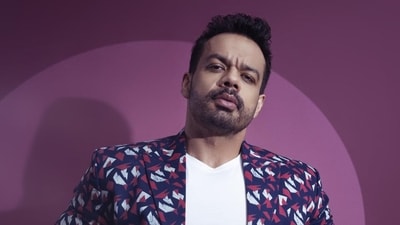
YouTuber Gaurav Taneja will be a contestant in the upcoming fourth season of Shark tank India, in which he will be introducing his startup, ‘Beast Life’.

Gaurav Taneja was arrested by the UP Police, earlier this month.

BeastLife is a fitness brand, offering a range of products such as whey protein, creatine monohydrate, and energy-boosting mass gainers.

This comes at a time when the content creator had suddenly gotten the spotlight due to rumours of a potential divorce from his wife, Ritu Rathee, driven by a series of viral social media posts claiming tensions in the marriage.

In October, the Gaurav Taneja posted a video on his Instagram talking about rumours, responding to all those who attacked the couple on social media. Taneja, in the video, talked about how news media covered the rumours of the couple’s divorce.

He also addressed the clip of his wife visiting Premanand Govind Sharan and talking about infidelity and the custody of their daughters – the video which is believed to have started the rumours of the two creators’ separation.

Taneja, also known as ‘Flying Beast’ has over 9.27 million subscribers on YouTube and 3.6 million followers on Instagram.

Also Read: GST Council meeting: What gets cheaper and more expensive?

Shark Tank season 4

This latest Shark Tank season will stream on Sony TV from January 6, 2025.

It will also be getting new judges like Acko’s Varun Dua, Snapdeal’s Kunal Bahl and also Viraj Bahl.

However, all the familiar faces like those of Aman Gupta, Namita Thapar, Peyush Bansal, Anupam Mittal, and Vineeta Singh will also remain.

Also Read: Starbucks strike: Why are the company’s employees in the US protesting?

Shark Tank is a business show, originally haling from the US. With the same format, the Indian version also sees entrepreneurs from across the country coming over and pitching their businesses to a panel of investors in a high energy, TV show-style environment to potentially get funding from them.


German Christmas market suspect remanded by judge

0
German Christmas market suspect remanded by judge


Getty Images A policeman walks through the shuttered Christmas market the day after a terror attack that has left five people dead, including a small child, and over 200 injured on December 21, 2024 in Magdeburg,Getty Images

A man accused of murdering four women and a nine-year-old boy by driving a car into them at a Christmas market in the German city of Magdeburg has been remanded in custody.

The 50-year-old was brought before Magdeburg district court on Saturday evening following the incident on Friday when a black BMW car ploughed through the crowded market injuring more than 200 people.

Magdeburg Police said investigations are continuing and officers are appealing for witnesses to send in photos or video of the incident.

The suspect has been named in local media as Taleb al-Abdulmohsen, a 50-year-old Saudi citizen who arrived in Germany in 2006 and had worked as a doctor.

On Sunday morning, Magdeburg police confirmed four women – aged 45, 52, 67 and 75 – were also killed in the incident.

“The judge ordered pre-trial detention for five counts of murder, multiple attempted murder and multiple counts of dangerous bodily harm,” its statement said.

City officials said around 100 police, medics and firefighters, as well as 50 rescue service personnel, went to the scene shortly after 19:00 local time (18:00 GMT) on Friday.

Reuters Three people - a man and two women - place tributes close to the scene of the attack. In the foreground can be seen flowers of various types and colours as well as candles in glass holders.Reuters

People lay floral tributes and placed candles close to the scene of Friday’s attack

Witnesses described how they had to jump out of the car’s path during the attack.

In an interview with German paper Bild, one woman called Nadine described being at the Christmas market with her boyfriend Marco when the car came speeding towards them.

“He was hit and pulled away from my side,” the 32-year-old told the paper. “It was terrible.”

Lars Frohmüller, a reporter for German public broadcaster MDR, told BBC Radio 4’s World Tonight programme he saw “blood on the floor” as well as “many doctors trying to keep people warm and help them with their injuries”.

A memorial service for victims of the attack was held at Magdeburg Cathedral on Saturday evening

The service was attended by families of the victims, emergency workers and federal government officials, including German Chancellor Olaf Scholz.

Getty Images Clergymen pass by German Chancellor Olaf Scholz (SPD) (C-L) and German President, Frank-Walter Steinmeier (C-R) during a prayer ceremony at the Magdeburg Dom churchGetty Images

Chancellor Olaf Scholz has condemned the “terrible, insane” attack that has so far killed five people

During a visit to the market earlier on Saturday, Scholz described the attack as a “dreadful tragedy” as “so many people were injured and killed with such brutality” in a place that is supposed to be “joyful”.

He told reporters that there were serious concerns for those who had been critically injured and that “all resources” will be allocated to investigating the suspect behind the attack.

Previously, Reiner Haseloff, the premier of Saxony-Anhalt state, said a preliminary investigation suggested the alleged attacker was acting alone.

Prosecutor Horst Walter Nopens said on Saturday that the investigation was ongoing but suggested one potential motive for the attack “could have been disgruntlement with the way Saudi Arabian refugees are treated in Germany”.

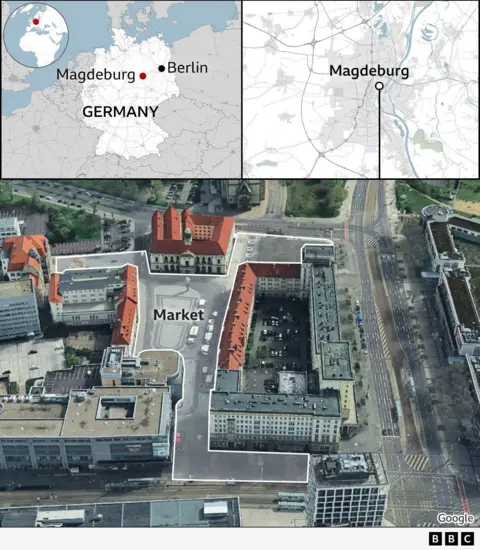
Three maps show the location of Magdeburg, east of Germany, where the markets are in the city centre and a highlight of a street-view showing the lane where the markets were set up

Al-Abdulmohsen is thought to have driven into the market through an entry point which was reserved for emergency vehicles, police said.

The suspect is a psychiatrist who lived in Bernburg, around 40km (25 miles) south of Magdeburg.

Originally from Saudi Arabia, al-Abdulmohsen arrived in Germany in 2006 and in 2016 was recognised as a refugee.

He ran a website that aimed to help other former Muslims flee persecution in their Gulf homelands.

The suspected attacker has no known links to Islamist extremism. His social media and posts appear to suggest he had been critical of Islam.

A source close to the Saudi government told the BBC it sent four official notifications known as “Notes Verbal” to German authorities, warning them about what they said were “the very extreme views” held by al-Abdulmohsen.

The source, who asked not to be named, said these notifications were ignored.

However, another experienced counter-terrorism expert said the Saudis may be mounting a disinformation campaign to discredit someone who tried to help young Saudi women seek asylum in Germany.

Additional reporting Frank Gardner.


Britannica didn’t just survive. It’s an AI company now

0
Britannica didn’t just survive. It’s an AI company now


Britannica didn't just survive. It's an AI company now

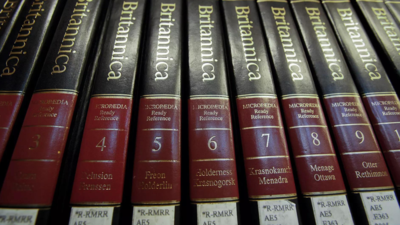
For nearly 250 years, the Encyclopaedia Britannica was a bookshelf-busting series of gilt-lettered tomes, often purchased to show that its owners cared about knowledge. It was the sort of physical media expected to die in the internet era, and indeed, the encyclopedia’s publisher announced that it was ending the print edition in 2012. Skeptics wondered how Britannica the company could survive in the age of Wikipedia. The answer was to adapt to the times.
Britannica Group runs websites, including Britannica.com and the online Merriam-Webster dictionary, and sells educational software to schools and libraries. It also sells artificial intelligence agent software that underpins apps like customer service chatbots and data retrieval.
Britannica has figured out not only how to survive, but also how to do well financially. Jorge Cauz, its CEO, said in an interview that the publisher enjoyed pro forma profit margins of about 45%.
The company is weighing an initial public offering, in which it could seek a valuation of about $1 billion, according to a person with knowledge of the deliberations.
That could provide a sizable return for the company’s owner, Swiss financier Jacob E Safra, who acquired the publisher in 1995 and, in a lawsuit filed in 2022, cited an investment bank in valuing Britannica at $500 million. The company says its websites draw over 7 billion annual page views a year, with users in more than 150 countries.
Britannica has come far from its origins in the 18th century as the publisher of a reference work put together by three Scottish printers. Over the years, the Encyclopaedia Britannica became a heavyweight of the knowledge business, both literally – the 32-volume 2010 edition, the last to run in print, weighed 129 pounds – and figuratively, drawing on contributions from thousands of experts. It also became an aspirational status symbol, with customers paying nearly $1,400 for that edition.
By the time the last Encyclopaedia Britannica was printed, the company had already started its suite of websites and educational software. Now it sees even greater opportunity in the growth of generative AI tools, which the company says can help make learning more dynamic – and therefore more desirable.
Cauz said Britannica had experimented with the technology over the past few decades. It acquired Melingo, the company that makes its AI agent software, in 2000 because of its strength in natural language processing and machine learning. And it has two technology teams, based in Chicago and in Tel Aviv.
The vertiginous popularity of chatbots like ChatGPT convinced executives that they needed to invest more in the space. Britannica now uses AI in creating, fact-checking and translating content for its products, including the online encyclopedia. It also created a Britannica chatbot that draws on its online encyclopedia’s stores of information, which Cauz said was more likely to be accurate than the more generalised chatbots that could be prone to “hallucinations.”
The firm has more projects powered by generative AI in the pipeline: an English-language tutoring software that will use the tech to power avatars and customise lessons for each student, a program to help teachers create lesson plans, and a revamped thesaurus for the Merriam-Webster website that can handle phrases, not just words.


GST Council Postpones Major Decisions, Key Issues Left For Further Deliberation | Economy News

0
GST Council Postpones Major Decisions, Key Issues Left For Further Deliberation | Economy News


Jaisalmer: No major decisions were made during the 55th meeting of the Goods and Services Tax (GST) Council, on issues such as rate rationalisation and the determination of tax rates on insurance premiums.During the press conference, Union Finance Minister Nirmala Sitharaman shared the key decisions taken by the GST Council and provided clarity on several important matters, including taxes on food and non-food items, and taxes on the sale of electric vehicles.

The GST council provided the reduction of the compensation cess rate to 0.1 per cent on supplies to merchant exporters, aligning it with the GST rate on such supplies.The GST Council also reduced the rate on fortified rice kernels to 5 per cent. The Finance Minister clarified that ACC blocks containing 50 per cent fly ash will attract a 12 per cent GST rate. 

She also stated that black pepper and raisins supplied directly by farmers will be exempt from GST.Additionally, Sitharaman clarified that payment aggregators handling payments of less than Rs 2,000 will be eligible for an exemption. However, she noted that this decision does not extend to payment gateways or fintech companies.

The Finance Minister further clarified that no GST will be levied on penal charges imposed by banks and non-banking financial companies (NBFCs) on borrowers for non-compliance with loan terms.Sitharaman also announced that the Group of Ministers (GoM) working on the compensation cess issue would be given an extension.

Regarding the inclusion of Aviation Turbine Fuel (ATF) under GST, Sitharaman confirmed that the decision was deferred after states raised concerns. She said, “There will be no change in the taxation of ATF, and no GoM will be appointed for this issue.”On the matter of health insurance, the GST Council provided relaxation to the GoM to decide on the reduction of GST rates on insurance premiums. 

Sitharaman noted that the GoM felt more time was needed for broader deliberations to determine an appropriate tax rate on insurance premiums.

The GST Council also discussed the imposition of GST on quick commerce services, e-commerce, and food delivery platforms, but no decision was reached. Sitharaman mentioned that the Council also considered the taxation of popcorn and agreed that items with added sugar should be categorized separately. Salted popcorn will be taxed at 5 per cent, but when sugar is added, it will fall under a different category, she clarified.

On the subject of electric vehicles (EVs), Sitharaman stated that the GST Council intends to promote EVs, which will be taxed at 5 per cent. She confirmed that used EVs sold between individuals will not attract GST. However, if an EV is purchased by a company, modified, and resold, it will be taxed at 18 per cent.

The GST will apply to the margin value between the purchase price and selling price of the used EV, she explained.Sitharaman further stated that the GoM will review the decision on implementing a cess for disaster management funding and will also take a closer look at health and insurance-related issues. 

However, she added that no timeline had been determined for these reviews.The GST Council could not reach a decision on the taxation related to Floor Space Index (FSI), and this matter remains under consideration.Overall, several important decisions were made, many key issues were deferred for further analysis and discussion by the relevant committees.


‘Today, mathematics is not only necessary in daily life but pervasive’

0
‘Today, mathematics is not only necessary in daily life but pervasive’


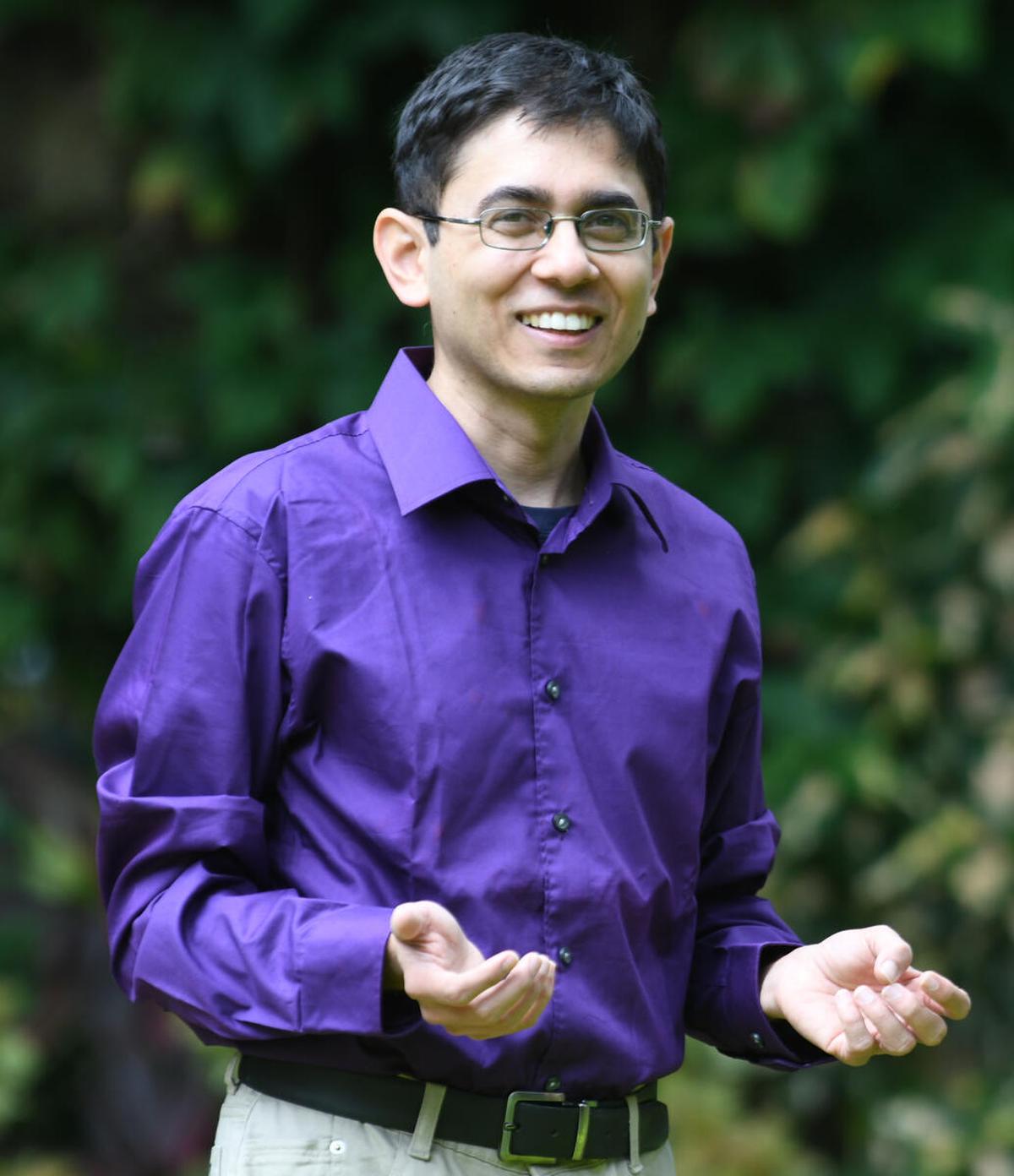
Apoorva Khare is an associate professor of mathematics at the Indian Institute of Science, Bengaluru. He is one of the winners of the recently announced 2022 Shanti Swarup Bhatnagar Prizes (now remodelled as the Vigyan Yuva-Shanti Swarup Bhatnagar Award). He spoke to Mohan R., a mathematician at Azim Premji University, Bengaluru, for The Hindu.

The questions are in bold. Post-interview additions are in square brackets. The transcript has been edited for style.

What was your immediate reaction upon learning that you had won a Shanti Swarup Bhatnagar prize, which is currently the highest national science award?

I was caught by surprise. The CSIR Director General usually announces the Bhatnagar prizes on the 26th of September, but this time it happened 15 days early. Also, the prizes were not announced at all last year,  so I was very pleasantly surprised to find that I had got the prize. 

It was my student who first told me that I had received a Bhatnagar prize. Within a few minutes of appearing on the official website, it was already reported on various news websites. It was quite surreal.

What was your childhood like? Was maths a big part of it?

I grew up in Bhubaneswar (Odisha). My parents Pushpa and Avinash Khare are both physics professors and researchers and so all my life I’ve grown up in a science environment, hearing about Einstein or Edison, atoms and galaxies, and so on. But otherwise I would go to school, come home, play table tennis, and read lots of storybooks – Enid Blyton, Sherlock Holmes, Agatha Christie, the usual. I listened to lots of music – both Indian and Western classical, and old Hindi film songs. I also learned Hindustani vocal for seven years, completing my Sangeet Visharad while in school.

My sister Anupama and I grew up solving problems for fun. My parents would get maths books from book fairs. I remember that the old Soviet publishing house called Mir would publish these small and wonderful books under the title ‘Little Mathematics Library’. These books asked lots of interesting questions and whether or not I could solve them all, I was very intrigued by the questions. I also used to try solving the logical puzzles that appeared in some newspapers. I enjoyed reading Shakuntala Devi’s books.

On a lighter note, I started to read science fiction in high school, and came across Isaac Asimov’s Foundation Series in class IX. There is a fictional mathematician who develops the field of psychohistory, where the future of human civilization as a whole can be mathematically predicted with very high probability. I thought then that maybe someday I will do this (laughs). Of course, I am not doing anything close to this today, but it was certainly inspirational.

When did you realise that you want to pursue mathematics? 

I think the first time I realised that I might want to pursue maths as a career came during the Maths Olympiads. It was the Regional Maths Olympiads in Odisha and my mother had got me some question books. I read through them and learned about AM-GM inequality, the Pigeonhole principle, and some geometry. I didn’t have much intuition for geometry, though. I was as surprised as anybody that I stood first in that exam. I think I knew then that I wanted to be more serious about maths. I took the exam again in class XI, stood first again and this time I was able to clear the national exam. At the training camp for the International Maths Olympiad, I came across these incredibly clever people with really sharp minds. It really inspired me to see people think so fast.

That summer (in 1996), I wrote my first paper on divisibility tests. I had seen a note in one of Shakuntala Devi’s books where she had described the divisibility test for the number 19. I knew the tests for 3, 9 and 11, as we study them in school. I wondered, “What about a test for 23 or 37, or any number? And why just for decimal base? Why not for every base?” So I came up with a test for any number written in any base and I wrote that up. It’s very simple “congruence modulo” arithmetic, but then I could get it published in an undergraduate journal. Having done this, and having seen my parents lead an academic life, I decided that I definitely wanted to pursue mathematics research as a career.

Would you call the publication of that paper when you were still in Class XI the turning point for you?

Not the publication, but the experience! There was no answer that I had seen written down to the question about the divisibility test for any number. There was no internet at that time. So I was just doodling in a notebook, dividing numbers and seeing whether something works. It’s like tinkering until something works and the bulb lights up. The process of discovering, formulating a hypothesis, and then actually coming up with a proof felt so exhilarating to the 16-year-old me, that I was sure I wanted to keep doing this as a career. And writing up the paper was an experience in itself.

Some people have noted that both the mathematicians who won Bhatnagar prizes this year were participants of the Math Olympiad. As one of the regional coordinators, I was very interested in your thoughts on the role of the Olympiads in nurturing a culture of problem solving.

The Math Olympiad Camps encourage critical thinking and tackling problems outside the box, meaning outside the regular school curriculum. Even the tools and tricks we learned to solve such questions were not taught in school. They definitely helped me gain more skills to approach problems with confidence.

The situation is different in schools, where I have seen students get scared of maths exams. It shouldn’t have to be that way. You need to make mathematics, or any subject for that matter, fun. One should be looking forward to questions that challenge them. Since my days as a teaching assistant and then a teacher, I have always tried to involve students in approaching problems independently. They should look at a difficult problem with curiosity, not fear.

The general feeling of phobia of maths should be addressed. There are lots of problems that even I don’t get anywhere with and that’s part of research. It doesn’t mean I don’t like to try and solve them. Research is about solving problems that nobody has before, right? I’ve always felt that way and this, I guess, is also reflected in the Olympiad camps.

After school, you headed to the Indian Statistical Institute (ISI) for your undergraduate degree. A bachelor’s degree at ISI is one of the most popular programmes for anyone who wants to pursue a career in mathematics. What was that experience like?

It was fabulous. Back then, there were very few places where one could pursue mathematics. Chennai Mathematical Institute wasn’t founded yet, nor did the B.Math. programme at ISI Bangalore or the BSc Mathematics programme at IIT Bombay exist. None of the IISERs existed. So there were very few options for me – either B.Stat. at ISI or the Integrated M.Sc. in an IIT.

I had heard about two ISI students who had left for the U.S. for a maths PhD right after their Bachelor’s – Siddharth Gadgil who is now my colleague here at IISc, and Amritanshu Prasad who is now at MatScience (IMSc) in Chennai. I wanted to follow their example.

And so I came to ISI. They started the very first day at such a high level! We studied groups, rings, fields, vector spaces, and so on. The Olympiads had put me on a mental high so I really loved starting out at that level. I made it through the JEE but I did not attend the counselling at IIT, as by then I was sure I wanted to stay on in ISI.

I heard from one of your seniors at ISI that you used to literally run all the time. What was that about?

(Laughs) ISI at that time was very small. As the B.Stat. curriculum progressively got less mathematical, I wanted to attend advanced maths courses. I requested my classmates and my seniors to adjust their timetables so that I could attend classes with my seniors in parallel to attending my own classes. They agreed, and so did our teachers – an amazing gesture to make just for my request, and one for which I have always remained grateful to the friendly culture of my classmates, seniors, and teachers at ISI Calcutta. Thus, I was able to attend five MSc-level maths courses in my last three semesters at ISI. This really helped me while applying abroad for a mathematics PhD.

I remember I would get caught up in something, realise that lunch break is ending and I have to come back to class. So I would run to the hostel campus, which was seven minutes away, quickly eat lunch, and run back. Unfortunately life is still busy, and my running habit has not stopped. Even at IISc, people say I still run, and it’s true!

You then moved to the University of Chicago. Could you recall for us how you arrived at this decision?

At that point, the internet had just come to ISI and in our undergraduate hostel, there were four desktop computers that we would take turns to use. I think I had one Yahoo email and one Mauimail account. Even universities in the U.S. only had rudimentary websites and department websites weren’t always the most informative. But what I knew was that there were very few places that admitted students after three years of undergraduate study from India. Now the situation is much better because of places like ISI and CMI, which are well known abroad. This is because good students have been going abroad to pursue their PhDs for decades now. Luckily, ISI was well-known during and even before my undergraduate days because of people like V.S. Varadarajan, S.R.S. Varadhan, C.R. Rao, and so on.

I applied to four universities, thinking that if nothing worked, I would do a master’s at ISI and then apply again more widely. Luckily I got into two places, and chose Chicago as it was better ranked for algebra, which I thought I wanted to study.

In my second year, my advisor Victor A. Ginzburg gave me a book to read on the basics of Lie algebras, by (James E.) Humphreys. I had to read that book inside out and do most of the problems. Now I ask the same of many of my summer internship students. At the end of that year, Ginzburg gave me a research problem and then I wrote my first paper in representation theory.

How did you end up co-authoring Beautiful, Simple, Exact, Crazy: Mathematics in the Real World (2015)? It’s quite uncommon for a research mathematician to attempt to write such a book before they have a permanent position.

While I was in Yale, I met Steven Orszag. We had no research interests in common, but he told me about something he felt passionately about. He said there is a lot of maths phobia in the U.S. Students who enter college are often required to take rigorous calculus courses, but they cannot handle epsilons and deltas. Steve said he wished somebody like me would come up with a course that explained the beauty, power, and applicability of maths.

If one tells people that something will help solve money problems, that would make them very happy. The simplest money problem is that of mortgage – this is a big thing even here in India. Whether for a car, a house, or an expensive iPad, what you’re doing is adding up a finite geometric series. This does not need knowledge of calculus or trigonometry or linear algebra. At the same time, if you know how to add geometric series, you can also talk about fractals, a theoretical concept that appears in mathematics, but also in art. On one side there is beautiful art and on the other side there is the practical idea of mortgage payments – both governed by the same mathematical equation.

I had the idea to collect a bunch of such equations that have actual real-world applications and teach them to students. Then I proposed it to Steve and he helped me submit this idea as a course to the Yale academic council. The course got approved. Teaching this course was quite a memorable experience.

By American standards, Yale is a small school. The class size was typically 25 or less. Steve advised me to restrict the registration to those who have not taken calculus or trigonometry in high school. The idea was to attract students who were not comfortable with these subjects in school. I was given a small classroom with a capacity of 25, but 70 people showed up! The students were overflowing and some of them had to sit outside. I felt so bad. So then I worked with the dean of the college to create a list of the top 35 and bottom 35 in the class. This was based on what they had learned, how comfortable they felt about the assignments and so on. We then rejected the top 35 and selected the bottom 35 for the course.

It was very rewarding to see these kids learning an idea and getting the confidence to solve problems on their own. Learning how to do their mortgages might be one of the most important things they take away from college. There were also topics on probability, conditional probability, standard statistics, basic linear regression, and so on.

This happened during my last semester at Yale and I soon moved to Stanford. Anna Lachowska took over the course from me and she added her own set of topics; for example, she introduced the logarithmic scale of music. She suggested that we write a book combining both our topics.

As far as I know, the ‘Mathematics in the Real World’ course has been offered annually at Yale for more than 10 years now. The book is a resource that can be used by anybody. You can be a high school student, or somebody who has lost touch with maths, or a working professional going to night school. It’s fairly readable if one remembers some class-X mathematics.

It sounds as if teaching is a particularly rewarding experience for you.

Indeed it is. I have taught more than 50 courses in the past 20 years, and I feel joy and fulfilment in passing along knowledge to the next generation. And in teaching, I feel it is about that “eureka” moment, the moment a student gets the concept. As a researcher I live for getting the key breakthrough idea that will complete a proof of a theorem, and as a teacher I live for students understanding the key idea behind solving a problem or a class of problems. If I can say that a student has learned something concrete in my class, then I’ve succeeded in the teaching problem, just like how I’ve succeeded in the research problem.

When I think of it that way, the fulfilment one gets from teaching is not very different from the fulfilment one gets from research. Research and teaching are more alike than I thought.

How did you move from representation theory to other areas of mathematics?

Initially I was focused only on algebra, and primarily representation theory, my PhD area. Then my wife Amruta Joshi, who did her master’s in computer science at Stanford and later her PhD from UCLA, encouraged me to follow Stanford’s spirit of interdisciplinary research. Thus I started to explore other areas.

In the process, I met Bala Rajaratnam, a statistics faculty at Stanford. We wrote a grant which enabled me to move to Stanford. Bala encouraged me to continue pursuing my research in representation theory, but he also wanted me to work with him in statistics. He was interested in data analysis, so he cared about analysing sample covariance matrices. Because nowadays there is “big data”, the covariance matrices one would obtain are enormous in size and they have poor properties. One would want to improve their properties without losing the covariance structure.

In the language of mathematics, covariance matrices can be called positive semi-definite matrices, and what one wants is to find what kind of operations can be performed on them that would still preserve the positive semi-definiteness. Bala was interested in the applied aspects of the problem and I was interested in the theoretical aspects. Later, we were joined by a postdoc, Dominique Guillot. The three of us soon got good research momentum and wrote several papers together. Bala was very supportive and he said that we would write pure maths papers and he would do his statistics research on the side with his other collaborators. That is how I slowly got into matrix analysis.

How did you get into combinatorics? Was it through representation theory?

It came from both, actually. With every matrix we can associate a list of numbers called its eigenvalues. Irrespective of however large the matrix is, we can understand some important properties of the matrix using its eigenvalues. If we take N matrices at a time, instead of getting a list of numbers, we get a shape in N-dimensions known as a convex hull. This naturally led me from representation theory to the study of geometric combinatorics.

With a former postdoc here (Projesh Nath Choudhury), who is now a faculty member at IIT Gandhinagar, I also studied pure combinatorics. One can look at the combinatorial objects called graphs and study them using the eigenvalues of their distance matrices. So one can combine matrix theory and combinatorics.

One can also enter into combinatorics from mathematical analysis. I think one of the things that I have contributed to the research community is to systematically show how Schur functions, which are objects in representation theory, show up in the study of smooth functions. I discovered this with three other co-authors in 2016, and finally by 2022, I was able to isolate how they occur inside any smooth function. This means you can reach algebraic combinatorics and symmetric function theory from analysis. That was one novel bridge that people had not realised before.

One of your most popular projects is PolyMath14. The story of how the project unfolded itself is an intriguing one. And what you could establish in that paper was a bridge between group theory, geometry, analysis, probability and computer assisted proofs. Could you recount the story? Also what is it like to collaborate with Terence Tao, who is considered one of the greatest mathematicians of our time?

While working on a probability paper with Bala, I was led to think about a property that holds for every abelian group in which we can talk about the distance between any two elements of the group. The two-dimensional planes we study in school and the three-dimensional space we live in are some examples of abelian groups together with the notion of a distance.

I wondered if the property held for a non-abelian group equipped with the notion of distance. But I could not prove anything. Then I started wondering if I could even find an example of a non-abelian group equipped with a distance. I emailed a lot of people and asked if they knew of any such structure. I wanted to either find an example or prove that if there is a notion of distance on a group, it must be abelian. But nobody could provide an answer.

Before returning to India, I had given my last talk at University of California, Los Angeles, (UCLA) where Terence Tao works. We met and even wrote a paper together, on a topic I mentioned above: Schur polynomials from smooth polynomial functions, and applications to preserving covariance matrices. The next time I went to UCLA, from India, I discussed this question with Tao and somehow it got his attention. We tried a few things, but made very little progress. He asked if he could share the problem on his blog, which was super popular.

So he put it on his blog and meanwhile, I boarded my flight back to India. By the time I landed, the blog had exploded with mathematical activity. So many comments, so many approaches, so many people trying things out! The next two days were spent in what we eventually realised was a wild goose chase, but in five days the problem was solved, by six people in India, the U.S.A., Canada, and Germany (with contributions from several others) – and all of this progress and research was carried out in comments on Tao’s blog, by mathematicians most of whom had never met each other physically! And yes, we ended up proving that indeed such examples of non-abelian groups with distances cannot exist.

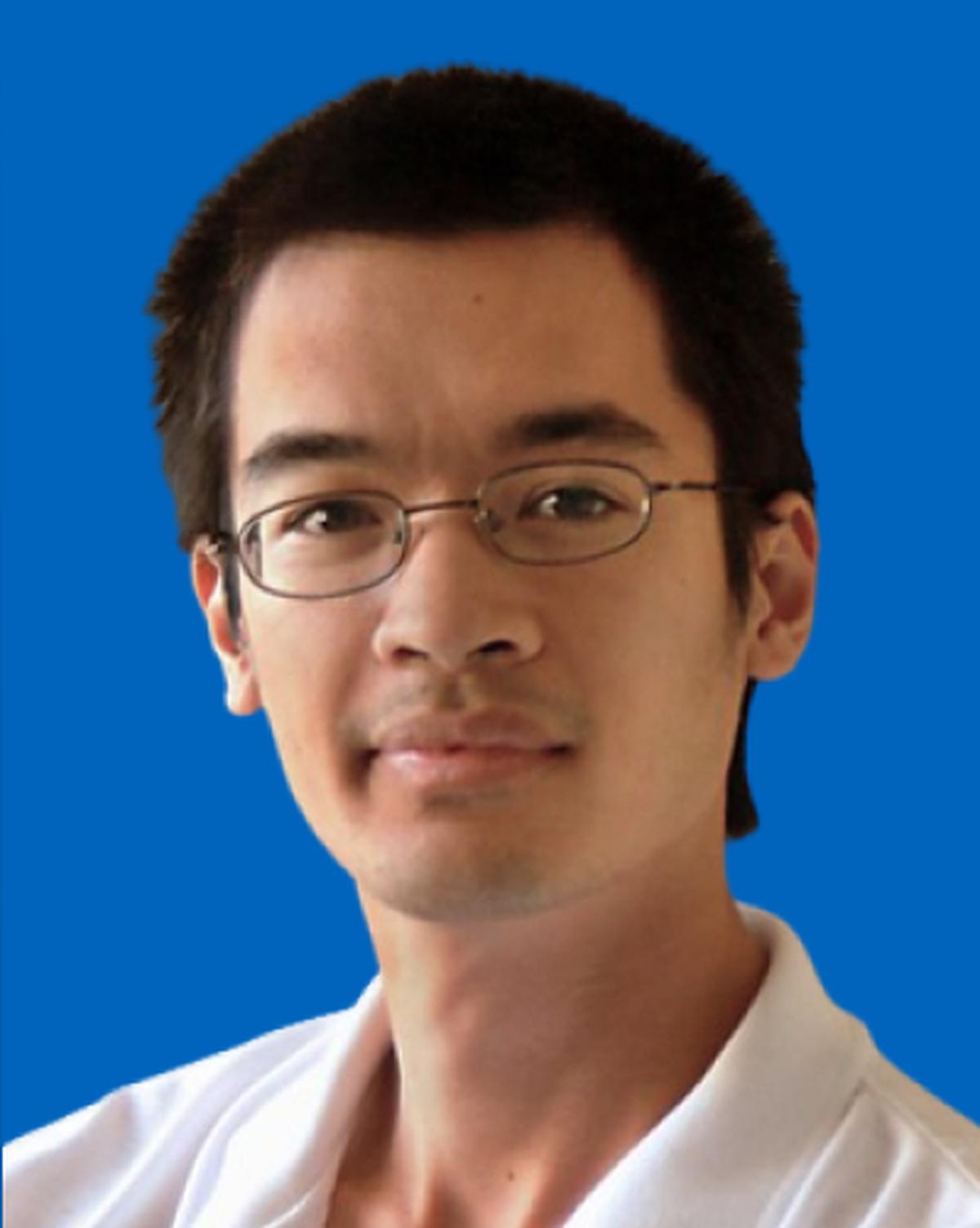
Terence Tao in 2021

Terence Tao in 2021
| Photo Credit:
Public domain

The original question came out of curiosity, it was a thought experiment. I was lucky that Tao got interested and put it on his blog, and the rest is history. People in numerous time zones were working on the problem and there was round-the-clock progress. Even now, after knowing the proof inside out, and having given so many talks on it, I still don’t know at a deeper level exactly why such a characterisation holds.

Abelian groups and distances are among the first and most basic concepts any undergraduate student in mathematics is introduced to in college. So this may well end up being the most fundamental result in any paper of mine! I have been lucky to be part of the story.

For the general public interested in your work, could you briefly explain the areas you work in and the types of problems you focus on?

I would say if you look at Bhatnagar awardees in mathematics, I am someone whose research interests are relatively spread out, in a sense. Of course, my primary area is matrix analysis. In addition, I work in combinatorics and in representation theory.

Right now my coauthors and I are finishing up a paper on operations that preserve matrices with prescribed number of negative eigenvalues. A matrix with no negative eigenvalues is said to be positive semi-definite. Now we are trying to find what kind of operations on matrices will preserve a given number of negative eigenvalues or less. I work on such preserver problems, and these have led me to other kinds of problems.

I can tell you the technical details of the work that I do; but on a broader level, let me say that what thrills me is this idea of connections or bridges. For instance, PolyMath14 was a bridge that connected analysis and group theory. Or look at the functions that preserve positivity in analysis: you take determinants of matrices whose entries have such a function, and suddenly you get Schur polynomials and algebra out of them. This is a connection that was not known before, and it has led to several other mathematical discoveries since – to mention a technical example, new results connecting Schur polynomials in algebra and combinatorics, to weak majorisation in analysis.

I feel I was lucky that I was originally trained in algebra and representation theory, and then went to Stanford and started working on the analysis of covariance matrices, and so I was able to spot this connection since I had the technical knowhow from both sides of the bridge.

How is mathematics perceived in popular culture? It is very common for us to see people proudly saying that they are bad at maths. Mathematics is seen as something that is forced on people in the school. Should every citizen worry about maths?

First of all, you should not be worried about mathematics. This is what I was trying to achieve in my Yale course. Anna Lachowska and I wrote in the preface to our book that it is fashionable (in the context of U.S. colleges) to say that I am bad at maths, even though the same people wouldn’t say that they are bad at other subjects like English, say.

I think mathematics is necessary and a powerful tool. Mortgages, basic banking and household accounting all require mathematics – you don’t need trigonometry or calculus to do all these things, but you should do some maths. I feel everybody should be quantitatively literate at a basic level.

In fact, in today’s world, mathematics is not only necessary in daily life, but all-pervasive. This is the era of big data. Data science and analysis and their applications are in every field. If one decides to do statistics and mathematics, there are wonderful jobs in places like Silicon Valley and Wall Street. These jobs are very stable and highly paid.  Even within India, in my college (ISI), I would see companies come for campus placements every year and hire my seniors for high-paying jobs in data analytics, because they were good at statistics.

In your view, do awards in scientific fields significantly impact the development of those fields?

If you look at lab-based sciences like biology, awards that come with grants, such as the Swarnajayanti Fellowship, would certainly help the scientists enhance their lab capabilities and hire more students. Government fellowships like NPDF, PMRF or NBHM, provided at the doctoral and postdoctoral levels, are a source of income. We certainly need labs to be flourishing and talented personnel to come in. So in those kinds of sciences certainly these recognitions would help.

Coming to my research in a theoretical field like mathematics: funding helps me travel to conferences, meet old and new experts to form collaborations, and also financially support students and postdocs as well as visitors coming to our department. These are important for research progress.

For example, when I worked at Stanford University, I co-organised a conference with Bala and Dominique. We could gather a bunch of people and from that came collaborations. We found people with matching wavelengths and we have proved many results and published many papers together. Funding also allowed me to visit Terence Tao and that led to our collaboration on matrix positivity, as well as our Polymath project. So funding is also important in theoretical research like in mathematics. It comes in the form of research grants or research awards; some of the grants are also called awards!

In addition to these practical aspects, awards like the Nobel Prizes and Fields Medals also catch the attention of the general public and students, and hopefully inspire students to get into research and young researchers to do more creative science. Certainly I was inspired by reading about these prizes and personalities and their contributions. And hopefully, in the Indian context, the Bhatnagar Prizes do the same.

We have been observing a trend especially after the pandemic that few students are taking up a BSc in mathematics. In some places, mathematics departments are shutting down or merging with data science departments. Do you see this as a short-term trend or is this an indication of something that we are not yet aware of?

It is difficult to predict what kind of paradigm shifts happen or for what reason. The pandemic came and changed the way in which we work. The internet is another example. Pre-smartphone and post-smartphone experiences are completely different. We would not have imagined groceries getting delivered at home via the internet even 10 years ago.

It is certainly true that college programmes and streams keep changing and evolving with the times. And this is the age of big data and analytics, machine learning, artificial intelligence, neural networks… So it would be natural for mathematics departments and programmes to evolve with the times, especially at a time when enrollments are dwindling. Maybe it is good, given the opportunities available.

But what happens to pure mathematics that is close to our hearts?

There are lots of places that still offer pure mathematics programmes. The IISERs were established precisely for pure sciences, just like the IITs were established for engineering. IISc is one of the places where sciences and engineering are treated on equal footing. The IITs also have very good maths faculty, and some of them have maths major programmes which see very good students too. In fact, the other mathematics Bhatnagar Prize winner this year was also in the Math Olympiads and then went to IIT Kanpur. And then there are places that offer maths/stats undergraduate degrees, like ISI and CMI. And these are just a few of the places that offer pure mathematics coursework and degrees.

But moreover, it will take time to find enough teachers who are trained to teach the newer courses in data science, and maybe AI and ML. So I am sure that not every university/college is changing their BSc. mathematics to a BSc. data science degree just yet!

Speaking of mathematics programmes and faculties in India: when you worked at Stanford University, you organised a Young Researchers Meet. Can you tell us what that was about?

In 2012, Professor G. Rangarajan, who is now my department colleague and the Director of IISc, and I organised a ‘Young Researchers’ Meeting’ with the goal of attracting world class talent into Indian academia. We invited PhD students and postdocs of Indian origin, working in mathematics and computer science in the U.S.A., to Stanford in May 2012. A group of delegates from India (1-2 delegates per institution, including IISc, IITs, IIITs, IISERs, CMI, ISI, IMSc) flew in to tell the assembled participants about the research scene, funding sources, and other details of Indian academia.

I think the meeting went very well. Out of the 74 participants, 26 returned to India, and I believe 20+ are still in faculty positions in India. So we were very happy that the meeting ended up serving Indian academia well. And of course I myself was one of these 20+ returnees. I came back and joined IISc. Prof. Rangarajan but also Prof. Gadadhar Misra were very helpful in my moving and settling down here.

There is a lot of concern about the gender ratio among Bhatnagar awardees. Very few women or scientists of other genders are recognised for their work, compared to men. What are your thoughts on this?

As far as specific awards go, I am too junior to be on any committees to know how it all works. But of course there is clearly a gender imbalance and this is reflective of the broader gender imbalance in sciences and mathematics going all the way down. Even now, if you look at the maths majors in IISc, there are fewer girls than boys in classes. This has to be addressed at a fundamental level. Several things need to be done. Of course, one should start at the grassroots and encourage girls to pursue science at all levels, but maybe one should also try to incentivise higher education through scholarships and other opportunities.

The SERB – POWER Research Grant is a recent government scheme specifically for women researchers, not just mathematicians but across all disciplines. Maybe in this day and age, incentivising is the way to address the issue, from the entry level to the faculty level. Another measure could be to reserve seats for female students in higher education in science and technology.

What advice would you give a school student who is finding mathematics interesting and wants to take up mathematics as a career?

First of all, if someone is interested in maths, they should be solving problems – here, there or anywhere. I found problems not just in books but also in the newspaper. Additionally, if students want to seriously think about mathematics as a career, then they have to be able to understand what advanced mathematics looks like. Attending camps can help here.

When you are in middle school, you should try to get an exposure to high school or Olympiad-level mathematics. When you’re in college, you should try to do more rigorous courses or advanced courses. That is the practice here at IISc, for instance. For younger students, some of the summer camps I know are Bhaskaracharya Pratishthana in Pune as well as ‘maths circles’ in Mumbai and Bengaluru.

That brings us to the end of the interview. It was really really fantastic meeting after a long time and listening to you open up about various things. Congratulations once again!

Thank you too and bye.

This interview is being republished on December 22, 2024, on the occasion of National Mathematics Day.