India’s foreign exchange reserves fell by nearly $2 billion to an almost six-month low of $652.87 billion as of December 13, data from the Reserve Bank of India (RBI) showed on Friday. The reserves had declined by $3.2 billion in the week of December 6, and have declined by $52 billion from the record high of $704.89 billion hit on September 27. Changes in foreign currency assets are caused by the central bank’s intervention in the forex market as well as the appreciation or depreciation of foreign assets held in the reserves. The RBI intervenes on both sides of the forex market to curb undue volatility in the rupee. Last week, the rupee declined to its then all-time low of 84.88, pressured by weakness in the yuan and persistently strong dollar bids in the non-deliverable forwards market. The currency fell 0.1% last week. The domestic unit ended at 85.0150 on Friday, down for a seventh consecutive week. It hit a record low of 85.10 earlier in the day, after a hawkish turn in the Federal Reserve’s future outlook on policy rates. The forex reserves also include India’s reserve tranche position in the International Monetary Fund.
Honda Cars Price Hike: Honda Cars India on Friday said it will hike prices across its model range by up to 2 per cent from January next year, in order to partially offset the impact of rising input costs. The company sells models like Amaze, City and Elevate in the domestic market.
The automaker will increase the prices of its models by up to 2 per cent from the beginning of January 2025, Honda Cars India Vice President – Marketing and Sales Kunal Behl said. The company has been making strong efforts to absorb price increases during this year, ensuring minimal impact on customers, he added.
“However, due to the continued rise in input costs and logistics, a small portion of this impact will be passed on to customers through a price revision from the new year,” Behl said.
Additionally, the all-new third-generation Amaze which was launched at a very competitive introductory price, will also see a price revision by mid of next month, he added.
Already various carmakers including Maruti Suzuki, Hyundai and Tata Motors have announced price hikes from January.
You know how it feels when you turn on the heater, but it seems like it takes too long to heat the room? Or maybe you have an old heater that just doesn’t cut it anymore. This is where new technology steps in to bring about change.
Learn how modern technology is making room heaters and wall-mounted panel heaters smarter and more efficient.
Room heaters and wall-mounted panel heaters have been around for years, but now they’ve gotten smarter. With energy prices rising, people are looking for ways to heat their homes more efficiently and these new tech-powered heaters are making it possible. They’re no longer just about heating a space; They’re all about saving energy, fitting into your home, and even being controlled remotely.
In this article, we’ll look at how room heaters and wall-mounted panel heaters are becoming smart. We’ll explore how new technology is making them more efficient, easier to use and better suited to modern homes.
Room Heater: Comfort for every corner of your home
In this section, we’ll look at what room heaters are, how they work, and what smart features they offer.
What are room heaters?
Room heaters are a quick and easy way to heat a specific area of your home. For example, if you’re working from home and need a little extra warmth in your office, a fan heater can provide you with instant warmth. Or, if you’re watching TV in the living room and want consistent warmth throughout the evening, an oil-filled radiator can provide long-lasting warmth. These heaters are portable, so if you only need heat in one room, you don’t have to worry about heating the entire house.
How do room heaters work?
Room heaters typically use two main methods: convection and radiation. Convection heaters work by heating air and circulating it throughout the room. For example, if you are using a convection heater in the bedroom, it will slowly heat the entire room, keeping the temperature constant. Radiant heaters focus on heating people or objects directly. If you’re occupying a small space like a study or bathroom, a radiant heater can provide targeted heat where you need it most.
Smart room heater features for today’s world
Modern room heaters come with smart features that make life easier. As such, if you’re coming home after a long day and want the room to be warm by the time you arrive, many heaters now offer Wi-Fi connectivity. You can control the heater from your smartphone, or even set it to turn on automatically using a voice assistant like Alexa or Google Assistant. This is especially useful if you have a busy schedule or want to make sure the room is comfortable before you go in.
1. Saving energy and money
Energy efficiency is a major concern, especially with rising energy costs. Many new models are designed to help you save energy while keeping you warm. For example, you can set a programmable thermostat to heat the room only when needed, or use an eco-mode that adjusts the temperature to maintain comfort without using excessive power. Is. So, if you are working from home and only need the heater during certain hours, these features can help reduce your energy bills.
2. Safety first
When it comes to using a heater, safety is important. Many modern heaters come with tip-over protection and automatic shutoff if it overheats. This is especially important in homes with pets or small children. For example, if you have a child who might drop the portable heater, the tip-over protection will automatically turn off the heater to prevent any accidents.
Consider these room heaters for your home:
Wall-mounted panel heaters: sleek and efficient
Wall mounted panel heaters provide a stylish way to keep your home warm while saving space and energy. Let’s find out how they do it efficiently.
What are wall mounted panel heaters?
If you’re looking for a space-saving way to heat your home, wall-mounted panel heaters are an excellent choice. Unlike bulky portable heaters, these units are installed on the wall, so they don’t take up valuable floor space. For example, in a small apartment where floor space is limited, a wall-mounted heater can be a great option. They blend into the design of the room and provide consistent warmth without interruption.
How do wall mounted panel heaters work?
Panel heaters come in two main types: infrared and convection. Infrared heaters heat objects and people directly. If you place it in a home office, it will heat you and your desk area without wasting energy on the rest of the room. Convection heaters work by circulating warm air throughout the room. If you install it in a large living room, it will gradually heat the entire space, keeping things comfortable for everyone.
1. Technology that makes life easier
Wall-mounted panel heaters are also getting smarter. Many now come with app control or voice activation, letting you adjust the temperature from anywhere in the home. For example, if you’re cooking dinner in the kitchen and want the living room to stay warm, you can easily adjust the heater from your phone or through voice commands. This level of convenience is perfect for modern homes where technology is a big part of daily life.
2. Energy efficiency at its best
Wall mounted heaters are designed to be energy-efficient, making them great for saving money on your energy bills. For example, in a basement or garage that is often cold, an infrared heater can focus on warming the area where you are working or relaxing, such as your desk or sitting area. , without wasting energy on the rest of the room. And because these units are designed to use less electricity, they are an ideal choice for those looking to cut down on their heating costs.
3. Infrared heating technology
Infrared heating is one of the most effective ways to heat a room. These heaters heat objects and people directly rather than the air, which means they are more efficient in small spaces. As such, in a home office, an infrared heater will target the area where you are sitting, and warm you quickly without heating the entire room.
4. Smart integration for seamless control
Many modern wall-mounted heaters come with Wi-Fi integration, allowing you to control the temperature remotely using an app on your phone. Some models also offer voice control through assistants like Alexa or Google Assistant, making it easy to adjust settings without getting up or even being in the room.
Consider these wall mounted panel heaters for your home:
Room Heater vs Wall Mounted Panel Heater: A Technology Comparison
technology factor
room heater
wall mounted panel heater
smart features
Basic features like adjustable thermostat or timer
Advanced model with Wi-Fi and voice control
temperature control
manual thermostat
Precise control with digital display and programmable thermostat
safety features
Tip-over protection and automatic shutoff
Advanced safety features like overheating protection and child lock
energy efficiency
Basic energy-saving features
Advanced features like eco-mode and adaptive heating
control options
Manual control or basic remote control option
Smart control via apps or voice assistant
heat distribution
Fan heater for quick heat, but less efficient for larger spaces
Infrared heater for targeted heating, convection model for large spaces
user interface
simple dial or button
Digital interface with touch controls and app integration
connectivity
Limited to basic power switches and timers
Wi-Fi connectivity for remote control
Now that we have discussed everything about room heaters and wall-mounted panel heaters, it should be clear to you which option is best for you based on the facts we covered, mainly their Focusing on technology and smart features.
Some more heaters for your home:
At the end of the day, choosing between a room heater and a wall-mounted panel heater is what works best for you and your space. If you’re someone who needs quick, portable heat for a room, a room heater may be what you need. But, if you are looking for something more permanent, sleek and space-saving, a wall mounted panel heater could be a good option for you.
Thanks to modern technology, both options are smarter and more energy-efficient than ever. With features like remote control, voice activation, and energy-saving mode, you can enjoy comfort without worrying about your electricity bill. So, think about your needs, consider the pros and cons and choose a heater that best suits your home.
FAQs on On Room Heater vs Wall-Mounted Panel Heater:
Are wall mounted panel heaters difficult to install?
No, wall-mounted panel heaters are relatively easy to install and often come with clear instructions, although some models may require professional installation.
Can I use a room heater in multiple rooms?
Yes, room heaters are portable, allowing you to move them from room to room, giving you flexibility in where you need the heat.
Do wall mounted heaters require a lot of maintenance?
Wall-mounted heaters generally require minimal maintenance, but regular cleaning and periodic checking for dust accumulation will help maintain efficiency.
How long does it take for a room heater to heat a room?
Room heaters, especially fan heaters, can heat a room quickly, while oil-filled radiators take a little longer but provide more consistent heat.
Can I leave the room heater on overnight?
It is not recommended to leave a room heater on overnight unless it has safety features like automatic shutoff and overheating protection. Always follow manufacturer’s guidelines.
Disclaimer: At Hindustan Times, we help you stay updated with the latest trends and products. Hindustan Times has an affiliate partnership, so we may get a share of the revenue when you make a purchase. We will not be liable for any claims under applicable laws including but not limited to the Consumer Protection Act, 2019 in relation to the Products. The products listed in this article are in no particular order of priority.
Governor of Salfit says the settlers had previously entered the village ‘under the protection of the Israeli army’.
Israeli settlers have set fire to a mosque in the occupied West Bank, while also defacing the building’s facade with hateful and racist slogans such as “Revenge” and “Death to Arabs” spray-painted in Hebrew.
Abdallah Kamil, the governor of Salfit, said on Friday that the attack targeted the Bar al-Walidain mosque in the village of Marda, in the latest incident of settler violence.
“A group of settlers carried out an attack early this morning by setting fire to the mosque,” Kamil said in a statement.
One resident of the village told AFP news agency that the settlers “set fire to the entrance of the mosque and wrote Hebrew slogans on its walls”.
Another resident said the fire was extinguished before it could engulf the entire structure.
Nasfat al-Khufash, head of the Marda village council, also confirmed the “systematic terror attack by a group of settlers”, in an interview with Reuters news agency.
A person checks the damaged Bar al-Walidain mosque in the village of Marda following an attack by Israeli settlers near Salfit in the Israeli-occupied West Bank [Stringer/Reuters]
Governor Kamil said that settlers had previously entered the village “under the protection of the Israeli army”, and that similar acts of vandalism and graffiti had been reported in nearby areas.
Palestine’s Ministry of Foreign Affairs in Ramallah condemned the incident, calling it a “blatant act of racism” and a reflection of the “widespread incitement campaigns against our people carried out by elements of the extremist right-wing ruling government” of Israel.
The Israeli police and Shin Bet security services said in a joint statement: “We see this incident as extremely serious and will act resolutely to bring the perpetrators to justice for rigorous trial.”
Settler violence in the illegally occupied West Bank has intensified since the war in Gaza began on October 7 last year. As of October 2024, there have been at least 1,400 settler attacks in the West Bank.
Since the start of the war on Gaza, at least 803 Palestinians have been killed in the West Bank by Israeli forces or settlers, according to the Palestinian Health Ministry.
The Loreto White-lipped Frog is unusually bright compared to its closest relatives
An amphibious mouse with webbed feet and a blob-headed fish are among 27 new species scientists have discovered in Peru.
They were found in an expedition to Alto Mayo – which includes the Amazon rainforest – by scientists from the non-profit organisation Conservation International and members of local indigenous groups.
Up to 48 other new species may also have been found, although further study will be needed to determine whether they are new, Conservation International says.
“Discovering so many new species of mammals and vertebrates is really incredible, especially in such a human-influenced landscape,” said Trond Larsen, senior director at Conservation International.
Ronald Diaz/ Conservation International
Alto Mayo is a protected area in northern Peru with multiple ecosystems and Indigenous territories.
It has a relatively high population density, putting pressure on environmentalism through deforestation and agricultural expansion, Conservation International said.
Yulisa Tuwi, an Awajún woman who assisted with the research, said the report “allows the Awajún to protect our culture, natural resources and our territory”, as it gives them a better understanding of the ecosystems.
“[The Awajún] have extensive traditional knowledge about the forests, animals and plants they live side-by-side with,” Mr Larsen said.
The expedition also found a new species of dwarf squirrel, eight types of fish, three amphibians and 10 types of butterfly.
Robinson Olivera/ Conservation International
This “blob-headed” fish is a type of bristlemouth armoured catfish
This “blob-headed” fish is a new discovery to science, but the Indigenous Awajún people who helped with the expedition were already aware of its existence.
The fish scientists were particularly shocked by its enlarged head – something they had never seen before.
Ronald Diaz/ Conservation International
A new species of dwarf squirrel will also belong to a new genus, giving it a higher level of distinction
This dwarf squirrel measures just 14cm (5.5in), half the length of an average grey squirrel in the UK, which ranges from 24 to 29cm, according to the UK Squirrel Accord.
“[It] fits so easily in the palm of your hand. Adorable and beautiful chestnut-brown colour, very fast,” Larsen said.
“It jumps quickly and hides in the trees.”
Ronald Diaz/ Conservation International
Spiny mice are known for their distinctive spines, similar to hedgehogs
Scientists discovered a new species of spiny mouse – named after the especially stiff guard hairs found on their coats, which function similar to the spines of a hedgehog.
They also found a new “amphibious mouse”, which has partially webbed feet and eats aquatic insects.
It belongs to a group of semi-aquatic rodents considered to be among the rarest in the world, with the few species known to exist only spotted a handful of times by scientists.
Trond Larsen
This new species of climbing salamander was abundant but only in a small patch of unique white sand
Marlon Dag/ Conservation International
A tiny arboreal opossum species has large ears with excellent hearing. It is a type of marsupial, most of which carry their young in a pouch
Gorky Valencia/ Conservation International
A new species of skipper butterfly, one of 10 new species of butterfly discovered on the expedition
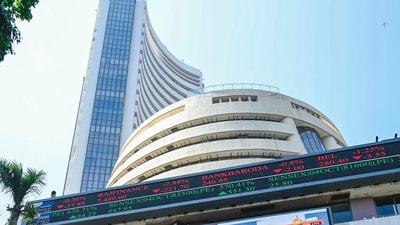
Indian stocks edged lower on Friday, dragged down by declines in IT and financial sectors, as investor concerns persisted over the Federal Reserve’s forecast of fewer interest rate cuts next year, prompting a wave of foreign fund outflows. The BSE Sensex closed 1,176 points lower at 78,041.59, and the NSE Nifty slipped 1.52 per cent to close at 23,587.50
Sensex has lost more than 3% this week, its first weekly decline in five weeks.(PTI)
Both indices have lost more than 3% this week, marking their first weekly decline in five weeks.
From the 30 blue-chip stocks, Axis Bank, Tech Mahindra, IndusInd Bank, JSW Steel, ITC, Larsen & Toubro, UltraTech Cement and HDFC Bank were the biggest laggards.
Titan, NTPC, Bajaj Finance, Bharti Airtel, Tata Consultancy Services and Maruti were among the gainers.
This week, the Federal Reserve implemented a 0.25% rate cut but projected only two reductions in 2025 – half of what was initially expected – dampening foreign investors’ enthusiasm for Indian stocks.
Fed rate announcement hits stock markets
Domestic IT firms, which generate a significant portion of their revenue from the US and are sensitive to US interest rates, saw a 0.2% dip, reversing earlier gains following Accenture’s better-than-expected quarterly results.
“Although Accenture’s positive earnings gave an initial lift to tech stocks, the Fed’s hawkish rate cut outlook has dampened sentiment, and foreign investment inflows remain negative,” said Anita Gandhi, founder and head of institutional sales at Arihant Capital Markets.
Meanwhile, pharmaceutical stocks, which rely heavily on exports, rose by 0.3%, poised for a weekly gain of 3%.
The rupee dropped to a historic low of 85.10 on Friday due to continued strength in the dollar, which is making Indian exports, including drugs, more affordable to foreign markets.
Among individual stocks, battery manufacturer Amara Raja saw a rise of up to 5% after Hyundai Motor India announced it would use the company’s absorbent glass mat battery technology in its domestic vehicles.
This is the final version of the terms of trade for 2024. This year has been an extraordinary year from the perspective of political economy, which is the primary subject of this column. However, rather than dwell on individual anecdotes or try to piece them together, I intend to make a more provocative argument and hope that readers will join me in this.
If one paraphrases Churchill’s quote on democracy, capitalism is the worst form of mode of production, except those that have already been tried (Reuters/Representational photo)
One of the last TV shows I watched this year is the adaptation of Frederick Forsyth’s The Day of the Jackal. It is currently established in Europe and America. Written by the left-wing Labor Party supporting Irish writer Ronan Bennett, the show makes an interesting political point in its choice of the killer’s target and the faction that commissioned the hit-job. The man who is hunted and ultimately killed by the jackal is a character named Ulle Dag Charles, a new age tech billionaire who is threatening to launch a new online product that will bring complete financial transparency and Therefore it will also reveal hidden assets. Very rich. The hit-job has been commissioned by a group of the super-rich in the US, who have a lot to lose from such revelations and are backed by the deep state in the UK.
Ulley’s planned act of fratricide against his fellow capitalists is motivated by his deep belief in the aspiration of a just world where the poor can live decent lives by snatching away the ill-gotten and hidden wealth of the super-rich. Note that in technology, you can mine gold by simply being super-bright instead of having workers toil in a factory.
While I was watching this series, a fitting case of truth being stranger than fiction occurred. One of the most interesting stories to come out of the US this year was the gap between popular sentiment and the rule of law following the murder of Brian Thompson, a top health insurance executive in New York, by Ivy League graduate Luigi Mangione. Thompson’s murder seems like a premeditated act of retribution for the company’s – United Healthcare is one of the largest health insurance companies in the US – practice of denying health insurance claims, leading to customers Significant economic pain is certain to occur. A time of gravest personal crisis.
America is not immune to gun violence or polarized opinions on such crimes. The only difference is that Mangione was not a racist or violent act, which usually puts America on edge. In fact, many people sympathized with his vindictive actions, far from being childish and anarchic, even illegal, because they agreed with the basic charge: capitalism’s greatest success stories have been built on people with little change. No matter the direction the murder trial takes, this act has horrified the leadership of corporate America and they fear for their physical safety, even though businesses have nothing to be concerned about.
What is the big issue of starting with these two stories?
If one paraphrases Churchill’s quote on democracy, capitalism is the worst form of mode of production of all that has been tried. It has created unparalleled prosperity and innovation in the world and has proven to be far more flexible, agile and tolerant of individual freedom than its only modern rival, namely socialism as well as previous forms of feudalism.
And yet, we live with extreme poverty, massive inequality and now an existential threat to life in the form of a climate crisis as the motivation for private profit continues to resist the changes that could solve these problems.
It is not unknown that there are problems with capitalism. At the most turbulent stage of its crisis, in the inter-war years, the essence of the debate between the two economists who gave the most authoritative interpretation of the crisis was whether capitalism had a chance to reform itself or whether it would always be weak. Was doomed to perform. On the production and employment front or take a reactionary political form. The former view was supported by John Maynard Keynes, perhaps the most influential economist the world has ever known, and the latter by a relatively lesser known but equally brilliant economist, Michael Kalecki.
Keynes observed the chaos after World War I and gradually came to the conclusion that the government should take care of underemployment by investing in the economy itself because the law of supply creating its own demand did not work in real life. Keynes argued that so-called animal spirits could not be relied upon to keep the economy running and he saw fiscal intervention as the ultimate silver bullet. His ideas have had a transformative impact on capitalism.
Keynes’ path to this conclusion was driven more by his philosophical outlook on the political problem facing mankind – he saw it as more a matter of mastering the combination of three things than some quantitative wizardry: economic efficiency, Social justice and individual freedom, which he could. He asked. His view was that the inconsistency between the three goals, which characterized the inter-war years, was more the result of poor economic ideas than of the system.
“Practical people, who consider themselves completely free from any intellectual influence, are generally the slaves of some idle economist. The crazy people in power, who hear voices in the air, are venting their madness from some academic writer from a few years ago. I am convinced that the power of vested interests is greatly exaggerated in comparison with the gradual encroachment of ideas”, Keynes wrote in the concluding paragraph of his cult classic The General Theory of Employment, Interest and Money.
Kalecki argued in a very clear and profound essay titled The Political Aspects of Full Employment in October 1943 that any attempt by the state to promote full employment was incompatible with preserving the hierarchy of capital vis-à-vis labor.
“Indeed, under the regime of permanent full employment, ‘dismissal’ will cease to play its role as a disciplinary measure. The social position of the boss will weaken, and the self-assurance and class-consciousness of the working class will increase. A strike to demand wage increases and improvements in working conditions would create political tension. It is true that profits under a system of full employment will on the average be higher than under laissez-faire; And even an increase in wage rates resulting from the stronger bargaining power of workers is less likely to reduce profits than an increase in prices, and thus adversely affect only the interests of the rentier. But ‘discipline in the factories’ and ‘political stability’ are valued more by business leaders than profits”, Kalecki wrote.
“Certainly, ‘full employment capitalism’ must develop new social and political institutions that will reflect the increased power of the working class. If capitalism could adjust itself to full employment, it would involve a fundamental reform. If not, it will itself prove to be an outmoded system that must be dismantled”, he said in his essay, highlighting Keynes’ underlying optimism in the power of progressive economic ideas to save the world from capitalism’s self-inflicted tendency. Disappointment has been clearly expressed.
More than 80 years after Kalecki wrote his essay and nearly 90 years after the publication of the General Theory in 1935, where does the world compare to the Keynes–Kalecki debate?
Capitalism has certainly improved itself enough to prevent a resurgence of 20th century fascism or the world wars that preceded and followed the rise of fascism. The resort to Keynesianism in times of crisis, even after the neoliberal counter-revolution, has certainly played a role in this. This is the greatest proof that even the most reactionary politicians don’t care about being fiscally prudent.
On this front, Kalecki’s more serious warnings have not materialized, even as businesses push back against policies that would strengthen the bargaining power of the working class vis-à-vis capital.
Certainly, the world is even further away from Keynesian optimism than from Kaleckian pessimism. “There are also changes in other areas that we should expect… The love of money as property – as distinguished from the love of money as a means to the enjoyments and realities of life – will be recognized as such, to a certain extent. Disgusting morbidity, one of those semi-criminal, semi-pathological tendencies which one shudder submits to experts in mental disease”, Keynes wrote in Economic Prospects for Our Grandchildren in 1930 Nearly a century later, the time frame he gave for the realization of these possibilities has been proven astonishingly wrong.
Now we can go back to the anecdotes at the beginning of the column.
By portraying the future of capitalism as a war between a good-hearted capitalist and a faction of greedy capitalists, the left-leaning Bennett is suggesting that the only serious threat to the dominance of capital may come from capital itself and governments. Or even the people at large have become largely insensitive to this question. Given the power of international finance in today’s world, Bennett’s subtle skepticism has merit.
Mangione’s nihilistic act of violence against a symbol of capitalist greed and empathy that followed only serves to underline this point from another direction, which can be summarized as follows. Politics at large is also quite helpless in regulating capital from exploitation or deprivation of consumers and even a symbolic resistance must come from acts of anarchic violence.
Has capitalism really fortified itself against the optimistic and pessimistic extremes that Keynes and Kalecki predicted the fate of capitalism by taking what was absolutely necessary and discarding the rest? Does this mean that the status quo, even though it is extremely unfair to the overwhelming majority of mankind, cannot be dismantled?
Both the economics and politics of these questions are beyond the scope of journalism. They require the continued involvement of today’s versions of brilliant and politically motivated minds like Keynes and Kalecki. There is no reason why we would not have as many talented people today as we had a century ago. Perhaps what is needed is a political redirection of their priorities. What made Keynes and Kalecki great were the historical circumstances in which they became intellectuals. Perhaps today’s elite intellectuals do not have the material basis to feel the intellectual outrage that Keynes and Kalecki do. Perhaps this will change as US President-elect Donald Trump is potentially preparing to pull the carpet out from under the existing one Economic Orders will start in a few days from now.
Roshan Kishore, HT’s data and political economy editor, writes a weekly column on the state of the country’s economy and its political fallout, and vice versa.
The United States remains a top destination for international students worldwide due to its strong economy, world-class institutions, and “can-do” atmosphere. Today India sends the largest number of students to America and is leaving behind China, which earlier held the first position. But will Trump’s return to power affect the influx of international students to the US? The US also has some of the top ranked institutions in the world. However, is ranking the major factor that students should consider when choosing a higher-education college?
With her impressive credentials and educational journey spanning Princeton, Columbia, Oxford and Tulane Universities, Katherine brings a unique perspective on education, career opportunities and the evolving demands of the global job market. (handout)
To answer some of the pressing questions from international students, especially those from India, HT Digital spoke to Katherine Grady, Dean of Brandeis International Business School. With her impressive credentials and educational journey spanning Princeton, Columbia, Oxford and Tulane University, Katherine brings a unique perspective on education, career opportunities and the evolving demands of the global job market.
In this in-depth conversation, Katherine discusses why the US remains the top choice for ambitious students, the role of rankings, and how Brandeis programs prepare students for the emerging job market. She also highlights career options for economics graduates, the growing impact of AI in business education, and how Indian students are thriving at Brandeis.
For those who wish to pursue an education abroad, Katherine’s advice provides invaluable clarity on choosing academic options, exploring career options, and getting the most out of a U.S. education.
Here are edited excerpts from that interview:
Why do students globally wish to study in the US? What is it about America that attracts them?
Without getting too transactional, I would say that the economy is booming right now, and with that comes tremendous opportunities for everyone. America has always been a place where people aspire to be. I’ve lived in the UK for 14 years and I love Oxford—it’s beautiful—and London is incredibly cosmopolitan. But when it came to my family, with three young children and all girls, we felt the opportunities were better in America.
Personally, Brandeis has provided me with even more excellent opportunities as a professor, and it has been a great journey for us. All three of my daughters started robotics at an early age. Two are still in school, and one has graduated from a top engineering program. America offers a “can do” environment. I grew up in a small town in Florida and attended Tulane on a full scholarship and it shaped my belief that it doesn’t matter where you come from, you can achieve anything here.
So, yes, the opportunities and experiences attract students to America, but you should also ask the students themselves what they think.
How do you think Trump’s potential return to the presidency might affect the influx of students to American universities?
It is important to remember that there was no reduction in H-1B visas during Trump’s first term as President. His mentors include tech entrepreneurs who need talent, and there aren’t enough American students filling roles in fields like engineering, computer science and finance.
For high-skilled students, I guess there will be no significant problems. However, for students studying humanities or liberal arts, the situation is more challenging, and students should know this. Are you familiar with STEM vs. non-STEM designations? All of our business school programs are STEM-designated, allowing students to stay for up to three years after graduation. For humanities programs, you can only stay one year, and it is hard for both international and domestic humanities students to find a job in this environment.
You have been enrolled in some of the top universities in the world. What advice would you give to students who want to study in prestigious institutions?
Getting into a top university should not be the end goal. It is important to focus on more than just gaining admission. The ultimate goal should be what you are getting from your education – how prepared you are to succeed in your career and in your life.
Take the example of Brandeis University, a small private research institution with excellent academics, top-notch professors, and a strong publication record. But we’re not as big as other schools, which sometimes works against us in some ranking methods. But we consider our size a unique strength. At Brandeis, students receive an excellent education, and an important part of that is their ability to form lasting relationships with their peers, their professors, and our alumni.
Interestingly, engineering students may find it more challenging to excel at more prominent state universities than at a place like Harvard, which does not place as much emphasis on engineering. My advice is to look beyond the rankings. Talk to students and professors at the universities you are considering. Find out where professors got their PhDs. Remember, you can get an excellent education at many institutions.
Nowadays, students rely heavily on the rankings of institutions while choosing a college to study. Should they focus on those or consider other factors?
Rankings matter to some extent, but it’s not the whole story. As I mentioned, we consider our size a strength at Brandeis – and among America’s small universities we rank second only to Caltech in Times Higher Education. Being small means students get the chance to work closely with professors and build strong relationships. Rankings can help, but students need to know deeper.
You are a distinguished professor of economics. Many students want to make their career in economics. How has the study of economics evolved over the years?
The basic principles are the same, but there have been significant changes. Today, students need to be more tech-savvy. Programming and modeling are essential skills that were not as important when I went to graduate school. Additionally, most published research is now data-centric. Thirty years ago, this was not the case. The availability of data has transformed the field. Another change is the rise of large research groups. In the past, research often involved a professor and a few students. However, it now allows five or six professors to work together, almost like a laboratory structure.
Does having larger research groups and access to larger amounts of data make research more complex?
It does, but it also allows for much more ambitious projects. When I did my research, I created the first dataset on art auctions. I went to Christie’s in London, sat in their basement and manually recorded data from their catalogue. Today, data is available everywhere, although it often comes at a cost. The accessibility and volume of data has fundamentally changed the nature of research.
How important is the knowledge of mathematics for economics students? Is the study of mathematics mandatory if one wants to study advanced economics?
When I graduated a few years ago, I majored in math. So yes, I would recommend doing as much math or computer science as you can. Even if you are doing economics, combine it with mathematics or computer science. This gives you a better perspective on the topic and helps you understand the details of the theory and statistics you are applying when analyzing data.
What career options are available today for students choosing economics at the higher level, especially given the research opportunities and the emerging job market?
Here we are not just talking about Master but about PhD. They should keep an open mind and do only what interests them. It is important to write a good thesis and perform well, so focus on your interests. Also keep an eye on the market to see what kind of economists are in demand. There are huge opportunities right now, especially in the private sector. When I graduated, most economists went to universities or government jobs, but now there are really interesting private sector jobs. Amazon, Google, and hedge funds all employ economists. There is a new wave of opportunities in the private sector. It is making more noise than before.
Let’s talk about Brandeis. What types of programs attract Indian students to Brandeis?
In the Business School, we have a Master of Science in Business Analytics, a Master of Science in Finance, an MBA, and a Master and PhD in International Economics and Finance. Historically, we have had many Indian students.
How does Brandeis prepare students for today’s changing job market?
Over the summer, students send in their resumes and our career coaches check them over to make sure everything looks good. When they arrive, they take credit-bearing courses to learn how to write cover letters, understand different job roles, and develop networking skills. We also have networking events like Speed Networking Nights, where students can talk to alumni. Throughout their time here, each program has a career coach who helps them – through mock interviews, treks to companies, internships and field projects.
Have curriculum changes been made to integrate more technology into courses?
Absolutely. We began to integrate data courses into our Master of Arts in International Economics and Finance and MBA programs, which led to the creation of our Master of Science in Business Analytics in 2018. We were one of the first business schools in the US to offer this. Fintech concentration in our Master of Science in Finance program. Now, we are launching the AI concentration. We are committed to integrating AI into all our courses.
Do you have programs focused on understanding the financial markets?
Yes. Our Master of Science in Finance program is a strong program. Many of our alumni go to Wall Street. We often take groups on overnight trips to New York where they visit companies like JP Morgan and Goldman Sachs, we call these trips Industry Treks and they allow our students to connect with alumni who work there. And provide the opportunity to gain a solid understanding of the industry. , Fidelity in Boston is a close industry partner for field projects.
What kind of placements do Indian students get after graduating from Brandeis?
Our Indian students get placed in top companies. Top students may get jobs at BlackRock or E&Y. For business analytics, we place students at Amazon and Google. I am proud to say that most of our Indian students achieve good jobs in various industries. Of our recent Indian alumni (Classes 21-23), 100% were employed and 97% were employed in the US.
What financial aid or scholarships are available for Indian students?
We are committed to making graduate business education possible for students around the world. Admitted students starting their Business Master’s program in the fall of 2025 will automatically receive a generous scholarship covering 50% of their tuition
“I’m very excited but also very overwhelmed. It’s an amazing feeling.” When Sawsan Abou Zainedin fled Bashar al-Assad’s rule more than a decade ago, she thought she might never return. Now, after the fall of the regime, she’s headed to her hometown in southern Syria to see her father for the first time in seven years. While scenes of celebration like these take place across the country, there’s also concern about what’s to come. “We cannot topple a dictator regime to go under a different one. These few months are fundamental, not just in our lives as individuals but also in the life of this country.” Abou Zainedin says her political activism against the former government landed her in trouble, narrowly escaping arrest. As part of the wave of six million Syrians who fled during the 13-year civil war, she sought asylum in the United Kingdom. She now leads a network of organizations that support legal and political rights for all Syrians. “Syria is ours and is not the property of the Assad family. We will not rest until we claim back our state of citizenship and democracy.” Abou Zainedin grew up here in the Suwayda district, home to a large Druse community, one of Syria’s many minority religious groups. It was also one of the first places where the uprising against Assad began in 2011. Many here want to see a secular state that protects the interests of Syria’s diverse population. In early December, rebels led by Hayat Tahrir al-Sham, or H.T.S., overthrew five decades of Assad family rule. H.T.S. is an Islamist group formerly affiliated with Al Qaeda. Since toppling the Assad regime, the group’s leader, Ahmed al-Shara, has signaled an openness to a more inclusive government. People in Abou Zainedin’s hometown remain cautious. At a meeting with the spiritual leader of the Druse in Syria, concerns about the new chapter quickly surface. “We have achieved something we all thought it was impossible to achieve. But lots of work lies ahead of us still. We are definitely going to engage with the interim government, and we’re hoping that they will be responsive to this.” What will happen next under H.T.S. leadership is unknown, but for now the celebration continues.
If one fails to submit a belated return by December 31, 2024, specific consequences apply.
ITR filing deadline: December 31, 2024, marks the final deadline for submitting belated and revised income tax returns for FY 2023-24 (AY 2024-25). Whilst various taxpayer categories have distinct ITR filing deadlines, the final date for belated and revised returns remains the same. Many individuals remain unaware of the implications of missing the December 31, 2024, submission deadline for FY 2023-24.
ITR filing: What are the consequences of missing the belated return filing deadline on December 31, 2024?
If one fails to submit a belated return by December 31, 2024, specific consequences apply. Under Section 139(4) of the Income Tax Act, belated returns incur a Rs 5,000 penalty, regardless of outstanding tax amounts. A reduced penalty of Rs 1,000 applies for lower taxable income. However, individuals with income below the Rs 3 lakh basic exemption limit face no penalties. Kinjal Bhuta, Secretary of Bombay Chartered Accountants’ Society, told ET, “Belated return is the last chance for the taxpayer to file the ITR and claim refunds and certain losses. If the belated return is not filed, the person misses those claims and credits for that assessment year. After the expiry of the filing of the belated return, only an updated return can be filed subject to the condition that there is a tax liability payable. Further, if no belated return is filed, the taxpayer shall have to face increased interests and penalties on the tax liabilities if a notice is sent by the income tax department.” A significant limitation of filing belated returns for FY 2023-24 is the inability to select the old tax regime, as the new regime became default from April 1, 2023. Consequently, belated returns must follow the new tax regime. Also Read | Avoid Rs 10 lakh income tax penalty! Why it’s important to report foreign income, assets in ITR by December 31, 2024 – check details The old tax regime offered various deductions and exemptions unavailable in the new tax regime. These provisions helped reduce taxable income and subsequent tax obligations. The new regime permits only two deductions: a standard deduction of Rs 50,000 for FY 2023-24 (AY 2024-25) and employer NPS contributions up to 10% of basic salary. Additional benefits like Section 80C, 80D, and HRA exemptions are not applicable under the new structure.
ITR filing: What if you miss the revised return filing December 31, 2024 deadline?
When a taxpayer needs to rectify errors in original or belated returns, they must submit a revised return. This allows corrections of various oversights, such as unreported income, unclaimed deductions, or omitted bank account details. Bhuta says, “If the taxpayer misses the deadline to file a revised return, there is no other mechanism to file a revised return again for that assessment year and to claim refunds or losses. The income tax laws allow the filing of an updated return. However, the updated return cannot be filed in cases where the taxpayer has losses, it results in an increased refund, or the tax return has an effect of reducing the total tax liability as filed in the original or belated return. There are many other criteria as to when an updated return cannot be filed. So, if a taxpayer misses the revised return deadline, the only way in which any additional claim or credit can be requested is during the assessment proceedings. However, that is subject to litigation.” Also Read | PAN 2.0: How to easily apply for PAN Card reprint with QR code – check 6 simple steps online Whilst taxpayers can submit multiple revised returns, tax experts advise against frequent revisions as this could trigger scrutiny from the Income Tax Department. Regarding intimation notices, Bhuta explains, “As per section 139(5) of the Income Tax Act, 1961, ITR can be revised only before three months before the end of the relevant assessment year or before the completion of assessment, whichever event happens first. The ITR can be revised even after an intimation has been received under section 143(1). However, once the ITR is processed under a regular scrutiny assessment under section 143(3), the same cannot be revised.” For the financial year 2023-24 (AY 2024-25), taxpayers have until December 31, 2024, to submit their revised returns.