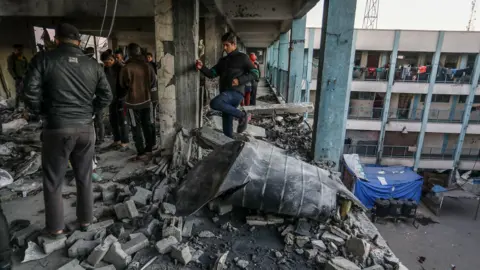
Many of those killed on Sunday were in a school-turned-shelter in the southern city of Khan Younis
More than 50 people were killed in Israeli air and ground attacks across the Gaza Strip on Sunday, according to local medics and rescuers.
They said children, a cameraman who worked for the Al Jazeera TV network and personnel from the Civil Defence agency were among the dead.
The Israeli military said it targeted sites used by Hamas and the allied armed group Palestinian Islamic Jihad.
The Hamas-run health ministry said the deaths meant the number of Palestinians killed in Gaza during the 14-month war between Israel and Hamas had surpassed 45,000.
The ministry does not make a distinction between combatants and civilians, but it reported in October that 29,980 children, women and elderly were among the identified fatalities.
The figures are often disputed by the Israeli government, which says almost 20,000 “terrorists” have been killed, but they are broadly accepted by UN agencies.
The war began when Hamas-led gunmen carried out an unprecedented attack on southern Israel on 7 October 2023, during which about 1,200 people were killed and 251 others were taken hostage.
Many of those killed on Sunday were in a UN-run school being used as a shelter for displaced families in the southern city of Khan Younis.
Harrowing footage showed a bloody scene on the third floor of Ahmed bin Abdul Aziz School, with children’s bodies apparently among those being removed.
“People were safe, staying in their homes after they prayed the dinner prayer. They were sitting, sleeping, and staying put in their places,” Manal Tafesh, whose brother and his children were among those killed, told Reuters news agency outside a local mortuary.
Medics said at least 13 people were killed, while a spokeswoman for the UN agency for Palestinian refugees (Unrwa) said she had heard reports of around 20 casualties, many of them women and children.
“It’s just doesn’t stop. It’s so relentless the pain and the suffering that we continue to have,” Louise Wateridge told the BBC from central Gaza.
The Israel Defense Forces (IDF) said it had “conducted a precise strike on Hamas terrorists who were operating inside a command-and-control centre” embedded within the school.
It also accused Hamas and other armed groups of exploiting civilians and using civilian infrastructure as human shields.
Medics said several more people were killed at another school-turned-shelter in the northern town of Beit Hanoun, which the UN said has been under siege by Israeli forces for more than two months.
The UN said it was monitoring reports that more than 1,500 people were newly displaced after Israeli forces besieged Khalil Aweida school and shelled it.
The IDF said on Sunday that its forces “conducted a targeted raid on a terrorist meeting point in the Beit Hanoun area”.
“In co-operation with the [Israeli Air Force], the troops struck dozens of terrorists from both the air and ground, and additional terrorists were apprehended,” it added.
Reuters
Al Jazeera cameraman Ahmad al-Louh was killed in a strike on a Civil Defence post in the central Nuseirat refugee camp
Another strike hit a Civil Defence building in the urban Nuseirat refugee camp in central Gaza.
Civil Defence spokesman Mahmoud Basal said the strike killed the directors of its Nuseirat and Sheikh Radwan centres along with two volunteers, one of whom he named as Ahmad Baker al-Louh. Another five people were injured, three of them critically, he added.
“The Israeli occupation has once again shown the world that there is no protection for humanitarian workers in Gaza and no adherence to international humanitarian laws,” he said, adding that 94 Civil Defence workers had been killed since the start of the war.
Ahmad al-Louh was a cameraman for the Qatar-based Al Jazeera network, which strongly condemned what it called Israel’s “targeted killing” of its journalist.
It said Louh had been covering a rescue operation by the Civil Defence following an earlier strike on Sunday and that it came “just days after the targeting of his house”.
“The network calls on all human rights and media organisations to condemn the Israeli occupation’s systematic killing of journalists in cold blood, the evasion of responsibilities under international humanitarian law, and to bring the perpetrators of this heinous crime to justice,” a statement said.
The IDF said the Civil Defence building was used by “terrorists to plan and carry out an imminent terror attack against IDF troops”.
“Among the terrorists eliminated in the strike was the Islamic Jihad terrorist Ahmad Bakr al-Louh, who previously served as a platoon commander in the Islamic Jihad’s Central Camps Brigade,” it alleged, without providing any evidence.
“These claims are lies and misleading to cover up this crime,” he added.
The Committee to Protect Journalists says at least 137 journalists and media workers have been killed in Gaza, the occupied West Bank, Israel and Lebanon since the war began.
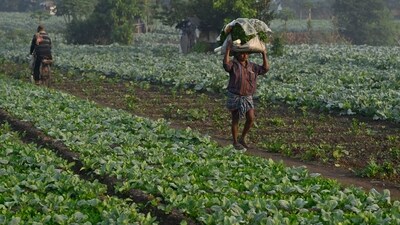
Food inflation eased to 8.63% in November from 13.54% in October, driven by a decrease in vegetable prices
Wholesale price inflation eased to 1.89 per cent in November, as prices of food items, especially vegetables turned cheaper, as per the government data released on Monday.
A farmer carrying vegetables during a foggy day in Kolkata, India, on Thursday, December 12, 2024. (Photo by Samir Jana/ Hindustan Times)
The Wholesale Price Index (WPI) based inflation was 2.36 per cent in October 2024. It was 0.39 per cent in November, last year.
As per the data, inflation in food items eased to 8.63 per cent in November, as against 13.54 per cent in October. The decline was led by a dip in vegetable inflation which stood at 28.57 per cent, as against 63.04 per cent in October.
Inflation in potato, however, continued to be high at 82.79 per cent, while in onion it fell sharply to 2.85 per cent in November.
The fuel and power category witnessed a deflation of 5.83 per cent in November, against a deflation of 5.79 per cent in October. In manufactured items, inflation was 2 per cent in November, against 1.50 per cent in October.
Stay updated with the…
See more
News/Business/ WPI inflation drops to 2.36% in October 2024, food prices ease in November
Israel launched overnight attacks on Syrian air defence systems and ammunition depots in its ongoing bid to disable the country’s military capability following the recent removal of President Bashar al-Assad.
War monitor, the Syrian Observatory for Human Rights (SOHR), said on Monday that Israel targeted military sites in Syria’s coastal Tartous region, including air defence units and “surface-to-surface missile depots”, saying the attack featured “the heaviest strikes” in the area in more than a decade.
“The explosions in Tartous were extremely loud,” said Al Jazeera’s Resul Serdar, reporting from the Syrian capital, Damascus. “Some experts are saying that might probably mean it was a chemical weapons production house.”
The targeting of Tartous was “important”, given its role as a base for Syrian naval forces, he said, adding that the Israeli military had obliterated “a complete fleet” just three days before.
Overnight, Israel also bombed sites in and around Damascus, particularly around the Qasioun mountain, hitting “radar systems” and “air defence systems”, according to Serdar.
Officials expected strikes on remaining “radar systems and battalions” to continue over the coming days, he said.
The overnight raids in Tartous and Damascus marked the latest stage of an ongoing Israeli campaign that has seen the military pummel the country with about 600 strikes in the eight days since the fall of al-Assad.
“Israel is pursuing a strategy of diminishing this country’s air defence capability and also its air forces,” said Serdar.
In parallel, Israeli troops have entered a United Nations-patrolled buffer zone that separated Israeli and Syrian forces on the Golan Heights, violating a 1974 armistice agreement.
Israeli Prime Minister Benjamin Netanyahu’s office has also announced plans to increase the number of settlers in the Golan Heights, which it has illegally occupied since 1967.
Ahmed al-Sharaa, the de facto head of Syria’s new administration, has said the country is in no position to enter any conflict “because there is general exhaustion in Syria”.
Separately, Syria’s Kurds, who run a semiautonomous administration in the northeast, called for “a stop to military operations over the entire Syrian territory in order to begin a constructive, comprehensive national dialogue”. In a statement at a news conference in Raqa on Monday, the administration also extended a hand to the new authorities in Damascus.
International outreach
Amid attacks from Israel, the new administration has been making strides with international “recognition”, said Al Jazeera’s Serdar, alluding to the opening of embassies by Turkiye and Qatar, and recent contact with US and UK officials.
European Union foreign policy chief Kaja Kallas announced on Monday she had instructed the bloc’s envoy to Syria to go to Damascus and make contact with the country’s new government.
Western nations are wary of the new leadership in Damascus, given that al-Sharaa’s Hayat Tahrir al-Sham group was previously affiliated with al-Qaeda.
The EU cut ties with the al-Assad regime in Damascus during the country’s civil war, but remained a key donor of humanitarian aid to help local populations.
Kallas said EU foreign ministers would discuss in Brussels “how we engage with the new leadership of Syria, and on what level we engage”.
Geir Pedersen, the UN’s Syria envoy, met al-Sharaa in Damascus on Sunday, saying he hoped for a swift end to the sanctions to help facilitate economic recovery.
A Qatari delegation also landed in Syria on Sunday to meet transitional government officials and pledged “full commitment to supporting the Syrian people”.
A French diplomatic team is also due in Damascus on Tuesday to “retake possession of our real estate” and make “initial contact” with the new authorities, said acting Foreign Minister Jean-Noel Barrot.
Meanwhile, Ukrainian President Volodymyr Zelenskyy said his country was coordinating on providing aid including wheat, flour and oil to Syria.
Wipro anticipates recruiting approximately 7,000-7,500 individuals through December end. (AI image)
Wipro, ranked as India’s fourth-largest IT services provider, is strengthening its internal workforce in anticipation of market recovery and growth in 2025, according to chief human resources officer Saurabh Govil. The IT services organisation, with revenue approaching $11 billion, aims to establish stability under CEO Srinivas Pallia’s leadership, following multiple senior-level departures during the previous chief executive’s tenure. Govil explained that Srini is focused on selecting leaders committed to long-term engagement whilst maintaining a balanced mix of internal promotions and external recruitment. The approach emphasises continuity, with minimal alterations to existing structures and strategies. Following a two-year period of minimal recruitment across the $254 billion software services industry, Wipro has recommenced hiring both fresh graduates and experienced professionals. Wipro anticipates recruiting approximately 7,000-7,500 individuals through December end, in the first nine months of the fiscal year, whilst addressing all pending appointments. Technology firms had previously selected fresh graduates but delayed their joining due to subdued market conditions. The organisation has shifted its recruitment strategy for engineering institutions. The previous approach of “hire and then train” has been modified.
Wipro Hiring Plans
“Now we have changed it to train and then hire. We are working with lot of our partners like Microsoft, Google, AWS (Amazon Web Services). We choose people, we train them, we assess them, and then we onboard them so they’re deployable much faster,” Govil said. Wipro is collaborating with chosen educational institutions to establish academies, assisting them in understanding industry requirements and proposing curriculum adjustments, ensuring graduates are revenue-ready before joining the organisation. The company has established partnerships with institutions including IIT-Delhi, IISc-Bangalore and various regional universities across 10 cities such as Chandigarh, Noida and Coimbatore to support research & development in contemporary technologies including cybersecurity, big data and cloud computing. Following Thierry Delaporte’s departure, Pallia assumed the role of CEO and managing director in April. Wipro has seen approximately twelve senior executive departures over the past year. At the Bengaluru-based organisation owned by Azim Premji, Pallia continues to elevate experienced staff members to senior leadership positions. Leading IT organisations, including Wipro, have observed preliminary indicators of business recovery and improved client engagement in North America and the financial services sector over recent quarters. Govil emphasised their priority to ensure adequate supply-side capacity to meet anticipated demand as market conditions improve. He acknowledged potential challenges ahead, including increased attrition and higher wage costs affecting profit margins, whilst maintaining that margin concerns would resolve with renewed growth.
By Poppy McPherson, Devjyot Ghoshal, Steve Stecklow and Ruma Paul
How Myanmar’s junta is suppressing information about a hunger crisis
COX’S BAZAR, Bangladesh, – Myanmar’s ruling junta has suppressed information about a severe food crisis gripping the country by pressuring researchers not to collect data about hunger and aid workers not to publish it, a Reuters investigation has found.
In conversations over the past two years, junta representatives have warned senior aid workers against releasing data and analysis that indicate millions of people in Myanmar are experiencing serious hunger, according to people familiar with the matter.
In a sign of the sensitivity around this data, the world’s leading hunger watchdog – the Integrated Food Security Phase Classification – in recent weeks removed its color-coded assessment of Myanmar from the global map on its website where it displays the levels of hunger afflicting dozens of countries. The reason: fears for the safety of the researchers.
In another move to protect data collectors and analysts from the junta, the IPC never made public three detailed analyses that showed the war-torn Southeast Asian nation, once known as the rice bowl of Asia, was facing one of the worst food crises on the planet.
Reuters spoke to more than 30 aid workers, researchers, diplomatic sources and United Nations officials about hunger in Myanmar. Most declined to speak on the record, saying they feared retribution by the military. Myanmar has been in turmoil since the military ousted an elected government in 2021, sparking mass protests that escalated into an armed rebellion on many fronts.
An official at Myanmar’s Ministry of Information didn’t respond to questions for this story.
An IPC “Special Brief” on Myanmar, dated Nov. 5 and reviewed by Reuters, said about 14.4 million people, or about a quarter of the population, were experiencing acute food insecurity in September and October this year. Acute food insecurity refers to food deprivation that threatens lives or livelihoods. The report projects that by next summer, 15 million people will face acute levels of food insecurity.
Underlying data from that report appeared on a U.N. website last month, but was later removed because of security concerns. A web page now says: “PAGE NOT FOUND.”
The aid workers interviewed by Reuters described a harrowing environment in which most data must be collected clandestinely and aid agencies are afraid to publish their findings on malnutrition and food insecurity – or even share them with one another.
The fear is justified: Last year, Myanmar’s military detained multiple food-security researchers, according to people familiar with the matter. The detentions haven’t been publicized. Reuters was unable to determine what happened to the researchers.
The secrecy surrounding hunger research in Myanmar has hindered relief organizations’ efforts to raise money for humanitarian aid because they can’t use their findings to spotlight the severity of the problem, according to a diplomatic source. The U.N.’s humanitarian response in Myanmar is one of the world’s most severely underfunded. The U.N. has sought nearly $1 billion from donors for Myanmar aid this year but has received just 34% of the goal.
“I’ve not worked in many contexts like Myanmar where it’s been so scrutinized that people have a fear of talking about an issue like food security and nutrition,” the diplomatic source said.
Reuters also uncovered at least four examples of how the junta blocked aid distribution or seized food supplies intended for the hungry. One such spot is the western state of Rakhine, where there has been a surge in violence in the past year following the collapse of a ceasefire between a powerful rebel group called the Arakan Army and the military. In Rakhine, home to the persecuted Rohingya Muslim minority, the military in recent months has prevented the delivery of food and medicine to severely malnourished children in an area gripped by cholera, according to aid workers.
Hunger in Rakhine is so severe it is partly responsible for an exodus of 70,000 refugees this year to Bangladesh, almost 50% more than previously reported. In November, the United Nations Development Program warned that Rakhine is on the brink of an “acute famine,” putting more than two million people at risk of starvation.
Tom Andrews, the U.N.’s special envoy for human rights in Myanmar, told Reuters that the junta is “systematically restricting” humanitarian aid access, contributing to the spread of cholera and other infectious diseases. He said he has received reports that many of the hundreds of thousands of needy people cut off from international assistance “are on the brink of starvation.”
The junta’s rule has had a “catastrophic impact on agriculture and food supply,” a spokesperson for the British embassy in Yangon said. “People are going hungry daily, children are malnourished, and millions are being plunged into poverty.”
The situation in Myanmar highlights how the global system for tackling hunger and preventing famine – comprising U.N. agencies, non-governmental humanitarian groups and donor countries – is under enormous strain. Last year, almost 282 million people in 59 countries and territories faced high levels of acute food insecurity. Reuters is documenting the global hunger-relief crisis in a series of reports, including from Sudan and Afghanistan.
One of the chief obstacles to alleviating hunger is national governments that thwart aid efforts, including the collection of nutrition data, whether to avoid the embarrassment of needing outside help or to prevent food from reaching enemy-held territory. Besides Myanmar, Reuters found that in three other countries now suffering food crises – Ethiopia, Yemen and Sudan – governments or rebels have blocked or falsified the flow of data to the IPC, or have tried to suppress IPC findings.
In private discussions with U.N. officials, junta representatives have criticized data published on Myanmar’s hunger crisis and have said they don’t want the country to be considered a failed state or compared to conflict-torn places like Ukraine and Gaza. At one session in the capital, Myanmar’s foreign minister addressed food security with U.N. officials over plates of snacks. There is no food security crisis, the minister said, according to people familiar with the meeting.
The junta’s foreign ministry and information ministry didn’t respond to emailed requests for comment. The junta has said it doesn’t block humanitarian aid from international organizations and that it ensures available assistance reaches those in need.
It was hunger, not just the fighting, that pushed heavily-pregnant Juhara Begum to risk a perilous journey out of Myanmar’s Rakhine state. The 25-year-old said her family had to survive on leaves and other vegetation. There was nothing to eat, so when her older son, a toddler, cried they gave him a piece of banana stem to suck on to relieve the hunger.
“It felt like hell,” she said, speaking at a refugee camp in southern Bangladesh near the coastal town of Cox’s Bazar. She arrived there last month after a days-long walk.
Other recent arrivals include 23-year-old Kasmida Begum, her husband Sulaiman and their two young children. She said there was so little to eat that she was unable to breastfeed their baby. “Where will milk be produced from, if I am hungry all the time?” she asked.
CLIMATE OF FEAR
Myanmar’s military ruled the country for decades until democratic reforms paved the way for the election of Nobel laureate Aung San Suu Kyi’s government in 2015. Her administration and aid organizations worked to improve nutrition across a vast and impoverished nation. Those gains have been reversed dramatically since 2021, when army chief Min Aung Hlaing overthrew Suu Kyi’s democratically elected government and appointed himself prime minister. Suu Kyi’s son said she is being held in solitary confinement in a prison in the capital, Naypyitaw.
After crushing mass protests triggered by the coup, the junta faced a nationwide uprising. New armed groups joined long-established ethnic armies to seize vast swathes of territory. The junta continues to lose ground rapidly. Its troops have killed thousands of civilians and jailed tens of thousands in prisons where torture is pervasive, according to the U.N.’s human rights office. The U.N. says 3.4 million people have been internally displaced since the 2021 coup – a major driver of the hunger crisis, which has also been exacerbated by flooding and other extreme weather.
The junta has passed a law requiring all non-governmental organizations to register with authorities or risk jail. They are required to seek permission to carry out research, but authorization is rarely granted, especially on food and nutrition-related topics, according to aid workers.
In interviews, several aid workers expressed fear they or staff from partner organizations would be arrested or have their operations shut down if they conducted their work openly. To minimize risk, the identities of some researchers who collect food and hunger data are kept secret even from one another, aid workers said.
Despite the intimidation, some headline data on Myanmar’s food crisis has been published. In recent days, both the World Bank and the U.N. have released reports showing that hunger there is significantly worsening for millions of people.
Like other aid groups, the U.N.’s World Food Program delivers reports to local authorities, donors and partner organizations on its operations in the countries where it works. To protect its staff and local partners, the WFP, the U.N.’s main food-aid distributor, hasn’t published its situational reports for Myanmar since June 2023. The reports provide the latest updates on the WFP’s activities and responses to emergencies. The WFP also hasn’t released its Annual Country Report for Myanmar since 2022.
Collecting data is challenging. The conflict and mass displacement have made it dangerous and impractical to conduct in-person nutrition surveys, researchers said. Gauging malnutrition of children, for instance, often requires researchers to visit homes and clinics and measure upper-arm circumferences.
The military has also blocked attempts to conduct a nationwide nutrition study, saying it couldn’t ensure the safety of the survey staff, one U.N. official said. The last such study was conducted in 2015 and 2016 – making the data nearly a decade old.
Some aid organizations have found ways to produce limited surveys. Reuters learned of two studies conducted in recent months that found high levels of child stunting and wasting, the most severe and life-threatening form of malnutrition.
One focused on children in Rakhine state. It found that the majority of children surveyed were reported to be sick and many were malnourished. The other survey found stunting was evident in 65% of children surveyed in parts of Myanmar’s southeast, where hundreds of thousands have been displaced by recent fighting.
The studies haven’t been published for fear of retribution by the military, people familiar with them said.
NO RICE
The junta has blocked the supply of rice and other food, medicine and essentials into parts of Rakhine and other war zones, multiple aid workers told Reuters. During an outbreak of cholera in recent months, the military also blocked sanitation work in squalid camps in Rakhine where Rohingya are confined. And the junta has severely restricted phone and internet access to vast areas, including the most of Rakhine state.
The fighting between the military and rebel forces has damaged the facilities of humanitarian relief organizations, harming their ability to distribute aid.
The U.N. human rights office last year publicly accused Myanmar’s military rulers of burning food stores and restricting aid access. The office said aid providers were consistently exposed to risk of arrest and harassment by the junta.
In June of this year, clashes escalated in Rakhine’s Maungdaw township between the Myanmar military and the Arakan Army rebel group. Late that month, a WFP warehouse there with enough food and supplies to sustain 64,000 people for a month was set alight, according to the food-aid distributor. Video footage released by the Arakan Army shows flames and smoke billowing out of two buildings as people walk away with stuffed white sacks.
The Arakan Army accused the military of burning the warehouse; the junta blamed the rebels and said the military had rescued the food and distributed it to the local population. The WFP didn’t assign blame for the arson attack.
The junta and the Arakan Army didn’t respond to questions about the fire at the warehouse or what happened to its contents.
Over the past year, as fighting has intensified across the country, skyrocketing food prices have rendered staples unaffordable to many. The junta’s economic policies, including import restrictions, have contributed to inflation, researchers said.
Some of the most dire food insecurity in the country is among displaced people in Rakhine state, according to the IPC’s unreleased November report.
Food prices in Rakhine have risen 154% in the last year as of October, with the cost of vegetables having more than quadrupled, according to a U.N. unit that compiles Myanmar data. The price of rice, a national staple, has also soared. In one Rakhine township it was more than 10 times more expensive in July than at the start of 2021, according to the United Nations Development Program.
Five refugees who recently fled Rakhine described sharp increases in food prices. Some said they were unable to afford even an onion.
About 70,000 people from Rakhine state have crossed into Bangladesh this year, according to a Bangladesh official. That is nearly 50% higher than the 46,000 new refugees from Myanmar the U.N. said it recorded in Bangladesh this year through September. Many are victims of “hunger-induced displacement,” the Bangladesh official said.
Dark scars and small bulbous blisters cover the feet of Juhara Begum and her husband Rahimullah – reminders of their dangerous journey out of Rakhine. They were among several refugees who said they starved after the Arakan Army looted supplies and expelled them from their homes near the town of Buthidaung, Myanmar’s largest Rohingya settlement, which the rebel group attacked in May.
“No markets were open. There was no healthcare, no help from anyone. We never received any aid,” said Rahimullah. The couple now live in a bamboo-and-plastic shack in a refugee camp in Bangladesh, surrounded by more than a million other Rohingya. Many were expelled in a military-led ethnic cleansing campaign in 2017.
His family would have been killed or “starved to death” if they had stayed, said Rahimullah.
Arakan Army spokesman Khine Thu Kha told Reuters there was no looting in areas under the militia’s control. He has previously denied that the Arakan Army targeted the Rohingya.
Mohammad Munna, 42, said his family had to forage for sustenance in Rakhine after being driven from their home. They survived on bamboo shoots, tapioca leaves and fruit. His children cried themselves to sleep from hunger, he said.
A neighbor’s children, aged two and four, died after suffering from diarrhea in their burned-down house, according to Munna. Healthcare and medicine were “non-existent,” he said.
A day later their mother, suffering from fever, died as well.
This article was generated from an automated news agency feed without modifications to text.
Twelve people have died from carbon monoxide poisoning at a ski resort in Georgia, police have said.
The bodies of 11 foreigners and one Georgian national were found in a sleeping area above a restaurant at the ski station of Gudauri in the north of the country, according to officials.
Police said “preliminary tests do not indicate any trace of violence on the bodies” and it appeared to be an accident, the AFP news agency reported.
Gudauri is the largest and highest ski resort in the former Soviet state.
New Delhi: The arrival of kharif crops in the market and the robust outlook for the rabi crop amid healthy sowing trends and elevated reservoir levels augur well for the food inflation outlook, economists said on Monday, as the wholesale price index (WPI) inflation eased to 1.9 per cent in November from 2.4 per cent in October.
The moderation in the WPI inflation last month was primarily on account of a decline in food inflation.
“The arrival of fresh harvests has led to a seasonal correction in food prices. The outlook for agriculture remains positive, with good Kharif production. Prospects for Rabi sowing remain conducive with healthy reservoir levels and good soil moisture from prolonged monsoons,” CareEdge Ratings’ Chief Economist Rajani Sinha said.
“We expect the WPI inflation to remain largely benign, averaging 2.3 per cent in Q3 FY25. For FY25, the WPI inflation is projected to average around 2.5 per cent,” she added.
The WPI moderation was primarily led by primary food articles, which eased to a three-month low of 8.6 per cent from 13.5 per cent in the previous month, exerting a downward pressure on the headline print to the tune of 91 bps between these months.
“The core (non-food manufacturing) WPI inflation inched up to 0.5 per cent in November 2024 from 0.3 per cent in October 2024, while remaining below 1.0 per cent for the fourth consecutive month,” ICRA’s senior economist Rahul Agrawal said.
The easing in inflation is a welcome sign as it was the first time that the rate of retail inflation crossed the RBI’s upper limit of 6 per cent in October.
The central bank is waiting for the retail inflation to come down to 4 per cent on a durable basis before it can go in for an interest rate cut to propel growth, which is largely expected earlier next year.
Jon Jones has cemented his position as arguably the greatest mixed martial arts (MMA) fighter of all time by pulling off a stunning knockout of Stipe Miocic to retain his heavyweight belt at the UFC 309 fight night.
The 37-year-old American looked fully in control throughout the main event at Madison Square Garden on Saturday, preventing his opponent from leveraging his boxing skills and finishing with a brutal heel to the body that left Miocic on the canvas clutching his ribs.
“That body shot man, no matter how tough you are, the liver’s the liver,” a jubilant Jones said in the cage following his victory.
In the aftermath, 42-year-old former champion Miocic said he was retiring from the sport.
“I’m done,” Miocic said. “I’m hanging ’em up.”
Widely considered the best fighter in the world, Jones (28 wins, 1 loss, 1 no contest) was the aggressor from the start and took Miocic down with a superbly timed trip and trapped him before raining down elbows as he dominated the rest of the round.
Keen not to get taken down again, Miocic was hesitant as he tried to manage the distance, but Jones was able to measure strikes to the body from his southpaw stance to keep Miocic on the back foot.
Croatian-American Miocic enjoyed some success early in the third round, but once again Jones was able to work out the puzzle, connecting with a couple of punches late in the round before his creative rotating kick ended the bout.
British heavyweight Tom Aspinall looms as the next challenger for Jones. Aspinall won a fight for the interim heavyweight title in November 2023.
UFC CEO Dana White had promised Aspinall, who chatted with Arizona Cardinals QB Kyler Murray, would challenge the winner of the main event in a unification bout.
UFC Heavyweight Champion Jon Jones (R) fights challenger Stipe Miocic [Kena Betancur/AFP]
Trump, Musk in attendance
With Donald Trump in the audience, Jones imitated the United States president-elect’s campaign trail dance as he celebrated.
In the co-main event, Brazil’s Charles Oliveira defeated Michael Chandler by unanimous decision to put his name back in contention for a crack at the lightweight title he was stripped of for missing weight in May 2022.
Jones posed and played to the crowd on top of the octagon in front of Trump, Elon Musk, picked by Trump to lead a new Department of Government Efficiency, and Robert Kennedy Jr, Trump’s choice to lead the Department of Health and Human Services in his incoming administration.
Trump walked out to a rousing ovation in front of 20,200 fans just before the start of the pay-per-view card and seemed to bask in the thrill of the fighters that throughout the night gave him props — including Jones.
“I want to give a big, big thank you to President Donald Trump [for] being here tonight,” Jones said to a roaring ovation that bled into a “USA! USA!” chant.
“I’m proud to be a great American champion,” Jones said.
US President-elect Donald Trump (L) and Tesla and SpaceX CEO Elon Musk watch the fight [Kena Betancur/AFP]
Charles Oliveira vs Michael Chandler
In a lightweight bout that made every fan, from Kid Rock to Jordan Knight to Anthony Kiedis, go wild at the finish in the fifth round, Charles Oliveira beat Michael Chandler via unanimous decision.
The fight was a rematch of their May 2021 fight when Charles Oliveira topped Chandler to win the lightweight title. Oliveira staked his claim to another title fight with the win.
The fifth round was about as good as it gets inside the octagon highlighted by Chandler dropping Oliveira twice on his back.
The 38-year-old Chandler stepped inside the cage for the first time in two years, in large part because he waited for a fight that never materialised with Conor McGregor.
“We’ve been wondering where you’ve been, Conor,” Chandler bellowed in the cage. “Come back and beat me if you can.”
Charles Oliveira and Michael Chandler grapple on the ground in a lightweight fight [Sarah Stier/Getty Images via AFP]
New Delhi: What Dalhousie failed to achieve and what the Political Department was not able to do despite the recommendations of the Attlee Committee of the Simon Commission, Sardar Patel achieved during his two-day visit to Cuttack and Nagpur. The rulers of the states of Orissa and Chhattisgarh voluntarily surrendered their population of 80 lakhs and about Rs. 2 crores.
HT On this day: December 17, 1947 – The rulers of Orissa and Chhattisgarh signed the Merger Agreement (HT)
This arrangement materially alters the administrative map of India by doubling the size of Orissa Province and significantly increasing the size of CP and Berar. The princes have surrendered not to the compulsion of the Indian Government, but to the compulsion of circumstances. Their territories and revenues are not large enough for modern administration and the example of Nilgiri was an eye-opener for them. They can delay the “integration and democratization” of states, endangering their governance; But they have chosen the better option offered by the central government.
The people of the states will now get the opportunity to connect with the rest of India and schemes like the Mahanadi Project, which require common administration, will now start, making the entire region prosperous. It is likely that the example of merger set by these rulers will be followed in other parts of the country where similar conditions exist.
Explaining the policy of the Government of India underlying the agreement with the rulers of the States of Orissa and Chhattisgarh, the Deputy Prime Minister in a statement issued today explained that democratization of administration in the States, which had long been the main point of Congress policy, was a Has become. A serious problem has arisen since August 15. In many cases the princes themselves had begun to understand the spirit of the times and were gradually introducing popular reforms. But in the case of small states, which were unable to afford the modern system of government due to inadequate resources and backwardness of their people, both democratization and merger were inevitable.
Apart from the “B” and “C” category states of Orissa, which signed the merger agreement with the Indian Union government on Sunday night, seven of the 11 “A” category rulers today signed the merger agreement with Mr. kind of agreement signed. VP Menon. Secretary to the Indian Ministry of State. Four other states, whose rulers were unable to attend the conference, are expected to sign the agreement soon.
Eleven of the 14 Rulers of Class “A,” “B” and “C” States of Chhattisgarh in the Central Province have also signed the same agreement with the Dominion Government following yesterday’s conference between Sardar Patel and the Rulers of these States. The remaining three rulers are expected to sign the agreement in the next few days.
Patel’s statement
The text of Sardar Patel’s statement is as follows:
“The public has already got through the press and radio a fairly clear and detailed picture of the agreement reached with the rulers of the states of Orissa and Chhattisgarh during his visit to Orissa and CP and Berar.” The problem of integration of those states with their neighboring provinces. I feel. However, to properly appreciate this important event, it is necessary for me to explain the background and underlying policy of that agreement.
“Democratization of administration, which has long been the watchword of Congress policy towards the States, has become a serious problem since August 15. In many cases the Princes themselves have begun to feel the spirit of the times, and “We are gradually starting measures accordingly, in that spirit the progress has been slow in some states, fast in some, but it is certain everywhere.”
“However, it should be clear to everyone that democracy and even democratic institutions can function efficiently only where the entity implementing them can lead a fairly autonomous existence. Where, the smallness of its size, the isolation of its situation, the inseparable connection with a neighboring autonomous region, whether a province or a large state, leave it with the resources to open its economic position in practically all economic matters of everyday life. There is insufficiency of. Because of the prospects, backwardness of its people and inability to handle a self-reliant administration, a state is unable to afford a modern system of government, democratization and unification are both clearly and clearly indicated.
democratization inevitable
“In today’s world where distances are rapidly shrinking and people are gradually being brought in contact with the latest administrative facilities, it is impossible to postpone the introduction of such measures by more than a day, thereby making it easier for people to To make them realize their progress, at least it is progressing on the lines of its neighboring areas.
“Delay inevitably gives rise to discontent, resulting in anarchy; The use of force may stop the popular urge for reform for a time, but it can never succeed in eliminating it completely.
“In fact, in many of the states I had to discuss with during the last two days, large-scale unrest had already gripped the people; In others the thunder of the storm could be heard. Under such circumstances, after careful and concerned consideration, I came to the conclusion that for small states of this type, in the circumstances I have described above, there was no alternative but unification and democratization.
“At the same time I felt that their rulers had acquired, through heredity and history, certain claims upon the people whom they should respect. Their dignity and privileges and their means of living at a reasonable standard should be ensured. I have always believed that the future of kings lies in the service of their people and their country, and not in the continued assertion of their autocracy.”
“In line with those views, I felt that being freed from increasingly difficult and awkward responsibilities, but at the same time having their personal position and that of the ruling family completely secure, they would find opportunities of service which had hitherto been denied them. And many of them are really eager for that and really eager to secure, and they will stop being the target of constant bitter attacks and ill will.
“The agreement we have reached in Cuttack and Nagpur is inspired by these objectives, inspired by these ideas and governed by these principles. I have no doubt that this is in the best interests of the rulers, the people and the country as a whole. I am especially grateful to the Rulers of the States who have admirably appreciated the realities of the situation and shown generous regard for the public good.
“For all of them, undoubtedly, the decisions they have taken have involved a considerable sacrifice of powers and fortunes. He has happily and willingly accepted this sacrifice in the interest of his people and the entire country. I am sure his people will respond favorably to this generous response to the public interest.”
“During my discussions with the rulers I was careful to emphasize that the solutions we suggested to the difficult problems that we and they faced alike were not something they could willingly accept or accept. Had to reject. There were no constraints other than events, circumstances and problems specific to their states.”
“I also told them that in offering this solution we were motivated by nothing but the most friendly disposition towards them, but by the utmost goodness at heart towards the princes and their people.”
“I also said that his voluntary surrender of most of the powers which he had heretofore would enhance his prestige and would not diminish the prestige which he has acquired and would leave a place of permanent affection and respect in the hearts of his people who I am very happy that they all responded to these sentiments and asked the people of these states to play their part and extend unwavering goodwill towards each of them.
people’s responsibilities
“In future if the people of these states have any grievances they can only be against the popular representatives and leaders who will be charged with their interests and welfare and not against the princes. By their act of abdication these princes have purchased forever the right to claim the devotion of their people.
“I am sure that very soon the Provincial Governments, who will be acting for the Dominion Government in the discharge of administrative functions in these States, will devote their thoughts and energies to improving the conditions of the people and to devising ways and means of connecting the representatives State with a fashion of administrative measures.
“They should all realize the stakes involved – about 56,000 square miles of area, a population of about eight million, about Rs. Gross revenue of. 2 crores and immense possibilities for the future.”
“The people of these areas have an unquestionable right to the modern facilities of the Government, which must be a governing consideration in whatever we do for them. It will also be the duty of the people concerned to wholeheartedly help and cooperate with the provincial administrations concerned in this process of unification and reform so that they can take full advantage of this great achievement.
The upcoming Noida International Airport (NIA) in Jewar in western Uttar Pradesh has successfully completed its validation flight procedures a few days ago and has taken an important step towards starting commercial operations of the airport next year, experts said last week. There is increasing interest from both users and users. Investors in the real estate projects coming up in Yamuna Expressway are motivated by the infrastructure and economic opportunities taking shape in the region.
An artist’s impression of the greenfield Noida International Airport terminal building being built in Jewar, along the Yamuna Expressway. (HT Archive)
Real estate experts believe that once operational, the airport will be a game changer not only for the residential markets in Noida and Greater Noida, where many luxury housing projects have recently started, but also for those projects in Which can also be launched on the banks of Yamuna. Expressway.
YEIDA Schemes
In November, Yamuna Expressway Industrial Authority (YEIDA) launched a group housing plot scheme in YEIDA city. The scheme, which offers 20 group housing plots, will close on December 18, 2024. plots Located in Sectors 22D (nine plots), 18 (six plots), and 17 (five plots). Real estate experts believe that once allotted, a housing stock of around 25,000 to 30,000 units could be seen on these plots.
YEIDA is also looking for a consultant to develop a residential township spread over approximately 100 acres in Sector 24A. The initiative aims to support the growth driven by the upcoming Noida International Airport (Jewar Airport) scheduled to open on April 17, 2025, and enhance the industrial and residential capacity of YEIDA. The authority has issued a request for proposal document in this regard.
If one takes into account the response received for it, the fact is clearly evident that buyers are keen to invest close to the upcoming Noida International Airport. residential plot scheme Launched by Yamuna Expressway Industrial Development Authority (YEIDA) during Diwali-1.12 lakh applications For 451 residential plots in Sector 24A.
background story
It is to be noted that Greater Noida and Yamuna Expressway have seen speculative activity over the years. Although these areas always looked promising for end users, livability was a challenge. Many housing projects along the expressway remained vacant and became largely ghost towns. The residential stock that came up in these areas was mostly students who studied in nearby universities.
With the new airport expected to be operational next year, the real estate market along the Yamuna Expressway is likely to attract more end users. However, the first movers are investors.
The new airport may witness the launch of several housing projects in 2025 and eventually commercial developments such as office space and retail. In fact, experts say, office spaces will eventually and inevitably increase in the region as rents will be relatively cheaper than Gurgaon and Delhi.
He said logistics would emerge nearby, followed by airport-related supporting activities. Warehousing is also expected to benefit.
Here’s what real estate experts have to say about investment opportunities on Yamuna Expressway
The recent flight-test milestone has boosted confidence in the region’s residential real estate market, making it a magnet for investors and end users.
With YIEDA opening up new land parcels, “We see interest in residential plots, followed by apartments. Demand has driven property prices in this corridor, which have doubled since 2020, underscoring its growing prominence. As the airport moves closer to full operational status, we anticipate continued momentum, with developers strategically positioning themselves to meet the strong demand from home buyers eager to capitalize on this unprecedented growth opportunity,” said Square. said Vikas Tomar, executive chairman and business head of Yards.
Noida International Airport has increased the demand for real estate in its vicinity, reviving areas like Greater Noida and the Delhi-Noida Expressway.
Sahil Agarwal, Chief Executive Officer, Nimbus Projects Limited, believes that the successful first flight verification test at Noida International Airport on December 9 is an important milestone in developing the long-awaited Jewar Airport. With the official opening of the airport in April 2025, this achievement brings the project closer to reality.
Revitalizing areas like Greater Noida and Delhi-Noida Expressway, Jewar Airport has already triggered significant demand for real estate in its vicinity.
He said interest in real estate has not increased only because of the airport. A range of infrastructure projects planned by the government including industrial parks, medical manufacturing centres, IT sectors and film citycollectively driving the real estate market in the area. As these initiatives come to fruition, the region is expected to experience continued growth.
“With growing interest from both end users and investors, we expect demand in the region to remain strong, shaped by promising infrastructure and economic opportunities,” he said.
Investors and end-users mix
More investors than end users are investing in plots and existing housing stock along the Yamuna Expressway. Having said that, as more group housing projects will be launched next year after the airport becomes operational, more end users may come forward to purchase property in this market. It is to be noted that it has been almost a decade since housing stock was released in the mid to premium segment in this micro market after Noida Extension or Greater Noida West, which were predominantly affordable housing markets.
According to Gaurav Mavi, co-founder of BOP.in, currently, 70% are investors and 30% are end-users. This is because end users generally prefer to enter the market when properties are close to completion. Investors generally enter in the launch phase and exit in a few years, when the market is about to mature.
Some private builders have recently launched plots here From Rs 1.35 Lakh 1.50 lakh per square yard, and 3- and 4-BHK units are being sold for around from 10,000 12000 per square foot, he said.
“Many people living in Lucknow, Kanpur, Agra, Gorakhpur and Delhi-NCR have shown interest in investing in this area. Compared to Noida Extension, which came into existence more than a decade ago, the area is better planned.
Mavi said the planned new metro rail corridor, rapid rail network and connectivity through Yamuna Expressway and Eastern Peripheral Expressway will also play a major role in improving the accessibility of the region from all parts of the NCR.
Mudassir Zaidi, Executive Director-North, Knight Frank India, points out that the airport is a major demand driver for the region, especially given that once it is operational, many allied industries will be set up in and around it. Logistics and commercial office space will be required.
He said that to meet the housing needs of those starting to work in the sector, residential projects will be started first, followed by logistics, commercial office space and hospitality.
Even though a housing stock of 30,000 units is envisaged for 20 new housing plots, these are expected to come up gradually, not all at once.
“These projects will not be launched simultaneously and will be phased out over time. Therefore, the returns will be in single digits initially, but once the market develops and commercial activity increases, the returns on investment will become better,” he said, adding that this will also be an area where mid-segment/premium housing stock will rise. It will be a long time coming, given that there has been an emphasis on ultra-luxury in recent times, especially in markets like Gurgaon, Noida and Greater Noida.
How have prices increased so far in the region
According to a report by Colliers India, land prices in the region have increased by 40% in the last five years and are projected to increase by 50% by 2030.
Land prices in Jewar township will increase by 50% by 2030, real estate consultant Colliers India said in a report ‘Infrastructure and Mega Projects – Key enablers of urban expansion in India’.
This has been boosted by major infrastructure developments such as Jewar Airport (Noida International Airport), metro expansion and theme based city projects. Initiatives like YEIDA, International Film City and metro line extension have further accelerated the growth of Jewar as a township.
“These initiatives have contributed to an approximately 1.4-fold increase in land prices over the last five years from 5,000 7,000 per sq ft (2020-2024),” Colliers said, adding that land prices are expected to rise further 10,482 per sq. ft. by 2030.





 AFP
AFP Reuters