new video loaded: Searching for Syria’s Disappeared
transcript
transcript
Searching for Syria’s Disappeared
Taher al-Zain’s father disappeared 12 years ago at the height of Bashar Al-Assad’s regime. Now, like thousands of other Syrians, he is trying to find clues about what happened, and whether or not he may still be alive.
Taher al-Zain has come to this hospital in the Syrian capital in search of his father, Mohamed. The lawyer and father of five disappeared 12 years ago and is one of tens of thousands of Syrians who went missing during the country’s civil war. Thousands of political prisoners have been set free across Syria since the regime of President Bashar Al-Assad was overthrown on December 8. Ahmed Abu Seif was one of them. As bodies of those who died in prison are recovered, they’re taken to hospitals around the country. Taher inspects photos of the deceased on the wall, looking for a sign of his father. Among the crowd are supporters of Hayat Tahrir Al-Sham, the rebel group that is now in control of much of the country. Taher’s final stop is the infamous Sednaya prison on the outskirts of Damascus. Thousands of people are believed to have been executed and tortured here over the years. Taher and others have come every day to search for evidence of their missing loved ones in the scraps of prison documents the former government left behind. As Syria enters a new and uncertain phase, the families of the disappeared feel trapped in the past. Without answers, they continue to look for their loved ones and for closure.
Banks will remain closed on the second and fourth Saturdays, all Sundays, and 17 days in December due to festivals.
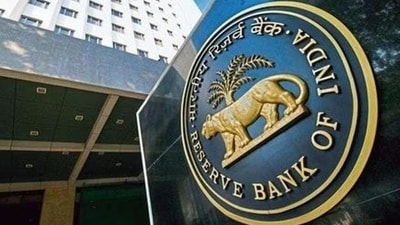
December 2024 bank holidays: The Reserve Bank of India (RBI) determines bank holidays for festivities.(ANI)
The Reserve Bank of India (RBI) determines bank holidays for festivals; only banks in that state or area remain closed for regional festivities. However, on the second and fourth Saturdays and Sundays, all banks are closed.
Additionally, during bank holidays, online banking services will be accessible as normal.
On bank holidays, it is not possible to visit branches.
There will be no access to payment services, cash deposits, or major transactions that require in-person branch visits.
The RBI divides holidays into three categories: Real Time Gross Settlement Holidays, Bank Closing of Accounts Holidays, and Negotiable Instruments Act Holidays.
The Feast of St. Francis Xavier, Pa-Togan Nengminja Sangma, the anniversary of U SoSo Tham’s death, Goa Liberation Day, Christmas Eve, Christmas Celebration, U Kiang Nangbah, and New Year’s Eve/Lossong/Namsoong are among the events that will cause banks to close in December.
According to the RBI’s December holiday list, banks will not be open on:
Date Day Observance State/UT:
DATE
DAY
EVENT
December 18
Wednesday
Death Anniversary of U SoSo Tham Shillong
December 19
Thursday
Goa Liberation Day Panaji
December 24
Tuesday
Christmas Eve Aizawl (Mizoram), Kohima (Nagaland), Shillong
December 25
Wednesday
Christmas Public holiday
December 26
Thursday
Christmas celebration Aizawl, Kohima, Shillong
December 27
Friday
Christmas celebration Kohima
December 30
Monday
U Kiang Nangbah Shillong
December 31
Tuesday
New Year’s Eve/Lossong/Namsoong Aizawl, Gangtok (Sikkim)
Customers can continue to use digital banking services all year long, even if bank offices will be closed on the days stated above, unless the bank tells them otherwise (usually for maintenance work).
Otherwise, all ATM services, banking applications, and bank websites will remain operational all year long.
Bank workers, meanwhile, have been calling for a five-day workweek. If accepted, the idea would make all Saturdays bank holidays rather than only the second and fourth.
According to sources, the long-standing initiative is now anticipated to shortly gain final clearance from the finance minister.
Some members of Yoon’s own conservative People Power Party provided crucial votes backing the impeachment.
South Korean President Yoon Suk-yeol has been impeached by the National Assembly over his short-lived attempt to impose martial law, a move that plunged South Korea into political turmoil halfway through his presidency.
The unicameral National Assembly voted 204 to 85 on Saturday to impeach Yoon, the second such vote in eight days. Three members abstained and eight votes were declared invalid.
The vote was done by secret ballot, with two-thirds of the votes required for impeachment. All 300 members of the assembly cast their ballots.
Audible gasps were heard from the chamber as the result of the voting was announced. Outside, thousands of protesters greeted the announcement with applause and loud cheers.
Al Jazeera’s Rob McBride, reporting from inside the assembly building, described the mood as “sombre” after the vote.
But our correspondent said that the political impasse is not yet over as the president “has vowed to fight” his case before the court.
“But as far as the opposition and this assembly is concerned, they have not achieved what they’ve set out to do.”
What happens next?
With his impeachment, Yoon is automatically suspended from office while South Korea’s Constitutional Court deliberates his fate.
Prime Minister Han Duck-soo is taking over as the interim president.
He in a statement, Han vowed to that he “will devote all my strength and efforts to ensure stable governance.”
The Constitutional Court would then have 180 days to rule on Yoon’s future. If it backs his removal, Yoon would become the second president in South Korean history to be successfully impeached.
Park Geun-hye, another conservative president, was impeached in December 2016 and was removed from office in March 2017.
After his martial law declaration, Yoon remained unapologetic as investigations into his inner circle widened [Jeon Heon-Kyun/EPA]
People Power Party’s stance shifts
Yoon’s conservative People Power Party (PPP) boycotted the first impeachment vote a week earlier, preventing a quorum.
Since then, PPP leader Han Dong-hoon has urged the party to participate in the voting process, although the official stance of the party rejects Yoon’s impeachment.
Ahead of the vote, at least seven PPP members said they would vote to impeach Yoon, meaning only one more vote was required to reach the 200 necessary for impeachment.
Protesters participate in a rally calling for the impeachment of South Korean President Yoon Suk-yeol in front of the National Assembly in Seoul [Kim Soo-hyeon/Reuters]
Al Jazeera’s Eunice Kim, who is reporting from Seoul, said the “protesters came out for a historic moment, and a historic moment they got.”
“The uncertainty the South Koreans have had to live with in the past two weeks is still the same uncertainty the lies ahead,” our correspondent added, noting the protracted political fight after the impeachment.
“This is a significant moment. But I don’t think anyone is under any false pretense that the battle ahead is done.”
At the opening of the National Assembly meeting, Speaker Woo Won-shik declared that “the weight of history” was in the hands of the assembly members.
Park Chan-dae, the floor leader of the main opposition Democratic Party of Korea, declared that “Yoon is the ringleader of the insurrection”.
He added that the impeachment vote was the “only way” to “safeguard the constitution” of South Korea.
His approval rating – never very high – has plummeted to 11 percent, according to a Gallup Korea poll released on Friday. An earlier survey conducted in November showed him having an approval rating of 19 percent just ahead of the martial law declaration.
The same poll showed that 75 percent of people now support his impeachment.
A moisturizer is like your skin’s companion, ensuring that it remains soft, supple and healthy. Be it the dry winter air, the scorching summer sun, or constant exposure to digital screens, moisturizers can create a protective barrier against these harmful elements. They work to replenish the skin’s natural moisture and strengthen its barrier, preventing water loss and keeping the skin supple. When it comes to choosing the right moisturizer for sensitive skin, people often consider dermatology-backed formulas from brands like Cetaphil and Bioderma. Although both are trusted for their gentle yet effective formulations, they cater to slightly different skin needs and preferences. Read on to find out their features and decide which one might be right for your skin.
Incorporate the right moisturizer for sensitive skin into your routine and keep it nourished.(Freepik)
Moisturizer for Sensitive Skin: Bioderma vs Cetaphil Overview
Bioderma Atoderm Cream Ultra-Nourishing is a dermatologist-recommended moisturizer specifically designed for dry to sensitive skin. It features Skin Protect Complex, which works to restore and maintain the skin’s natural barrier, providing long-lasting hydration. This product is available in a huge size of 500 ml, making it ideal for those looking for a bulk option.
Specifications of Bioderma Atoderm Cream Ultra-Nourishing Moisturizer:
Skin Type: Dry, Sensitive
Fragrance: Unscented
Why choose this product: You can choose this product because it is recommended by dermatologists.
Why avoid it: You can avoid it as some users feel that it leaves an oily dewy patch on the skin.
Cetaphil Moisturizing Cream is an equally preferred choice for dry to normal skin. It contains a combination of ingredients that work to soothe and repair the skin, help retain moisture and improve the skin’s moisture retention abilities. With its rich almond scent and small 160ml packaging, it is perfect for both face and body use. Cetaphil’s gentle, allergen-free formula makes it a favorite for many, especially those with sensitive or irritated skin.
Specifications of Cetaphil Moisturizing Cream for Face and Body:
Skin Type: Dry, Normal, Sensitive
Fragrance: Almond
Why choose this product: You can choose this product as it claims to protect the skin from five skin sensitivity signs.
Why avoid it: You can avoid this product as it has almond scent and may leave oily residue on the skin.
It comes with a rich, creamy texture that can feel smooth on the skin without being overly greasy. This moisturizer for dry, sensitive skin can absorb quickly, leaving skin feeling soft and moisturized. Its texture is ideal for those who need deep hydration during colder months or in dry environments. With its effortless application, this moisturizer for sensitive skin can help reduce dehydration.
Cetaphil Moisturizing Cream:
The texture of this moisturizer is a bit light for dry and sensitive skin. It can glide on easily and get absorbed into the skin without leaving any greasy residue. Although it feels thicker than some other moisturizers, it still remains lightweight. With its smooth and soothing feel, it can maintain a balance between nourishing without weighing down the skin.
Bioderma moisturizer claims to be effective for dehydrated and extremely dry skin. It can help restore the skin barrier with its unique Skin Protect Complex. This results in immediate and lasting hydration for up to 24 hours. Regular use of this moisturizer for sensitive skin can make your skin feel more comfortable and less tight.
Cetaphil Moisturizing Cream:
Cetaphil Moisturizer for Sensitive Skin claims to provide hydration while maintaining the skin barrier. It may work to soothe irritation and provide relief from conditions like eczema or redness. With consistent use, it can enhance moisture retention and improve skin suppleness without clogging pores.
This moisturizer for sensitive skin is perfect for very dry and sensitive skin. With its rich and nourishing ingredients, it can provide intense hydration, repair bumps and make skin smoother. Regular use of this Bioderma moisturizer can be helpful for skin that feels tight, irritated or dehydrated due to environmental stressors.
Suitable for a variety of skin types, this moisturizer can help combat dryness. Its non-comedogenic formula makes it good for acne-prone skin too. The almond scent may add a relaxing touch for those who prefer scented products, although it is still gentle enough for sensitive skin.
This moisturizer for sensitive skin is worth this much Rs 1,299 for a 500 ml bottle. It claims to offer good value for those who need a high-performance moisturizer in large quantities. Its large packaging also makes it convenient for long-term use.
Cetaphil Moisturizing Cream:
This moisturizer is priced at Rs 1,108 for a pack of two 80 gram tubes. The packaging is more travel-friendly and the smaller size is useful for those who prefer a moisturizer with a lighter texture.
Users praise the product’s ability to keep skin soft, smooth and hydrated. While some recommended it as a wonderful body moisturizer for dry skin, others pointed out that it might feel a little oily.
Cetaphil Moisturizing Cream:
Users appreciate the moisturizing effect and gentle protection of the product. Many report that it is ideal for dry skin and claim that it can provide long-lasting hydration. However, similar to Bioderma, some users mention that it can feel oily and leave a slight greasy residue.
Some suggestions for you from Cetaphil:
Moisturizer for sensitive skin: Which is better between Bioderma and Cetaphil?
Both Bioderma Atoderm Cream Ultra-Nourishing and Cetaphil Moisturizing Cream can provide hydration and comfort. If you have extremely dry or sensitive skin that requires deep, long-lasting moisture and barrier repair, Bioderma Atoderm Cream may be a good choice. On the other hand, if you’re looking for a more lightweight moisturizer that works for a variety of skin types, Cetaphil Moisturizing Cream might be a better choice.
What is the difference between Bioderma Atoderm Cream and Cetaphil Moisturizing Cream?
Bioderma Atoderm Cream Ultra-Nourishing is a thicker, more hydrating formula designed for deep moisture, ideal for dry to sensitive skin. It comes in a large 500 ml bottle, making it suitable for use all over the body. Cetaphil Moisturizing Cream, on the other hand, is lighter, more versatile, and is available in small 80g tubes (pack of two), suitable for both face and body use.
Can these products be used on the face?
Yes, both moisturizers can be used on the face for sensitive skin. For people with sensitive or dry facial skin, Bioderma may work well, but it may seem heavy for daily use. Cetaphil Moisturizing Cream is lighter and more versatile, making it a great choice for both face and body.
Can I use moisturizer every day?
Yes, it is beneficial to use moisturizer daily to maintain hydrated and healthy skin. It helps protect the skin from dryness caused by environmental factors like weather, air conditioning and pollution.
Can I use moisturizer on sensitive skin?
Yes, but it is important to choose a moisturizer specially formulated for sensitive skin. Look for products that are free of fragrances, dyes, and harsh chemicals to reduce irritation.
Disclaimer: At Hindustan Times, we help you stay updated with the latest trends and products. Hindustan Times has an affiliate partnership, so we may get a share of the revenue when you make a purchase. We will not be liable for any claims under applicable laws including but not limited to the Consumer Protection Act, 2019 in relation to the Products. The products listed in this article are in no particular order of priority.
Economist Thomas Piketty is known for his work on inequality. In India, to speak at the Delhi School of Economics and think tank RIS, he makes the case for the govt to levy 2% tax on the wealth of the ultra-rich and expand the tax base as the country has the highest level of inequality, next only to South Africa. Excerpts from an interview with TOI’s Sidhartha & Surojit Gupta: Your studies suggest that inequality has increased post-1991 in India. But there seems to be a much bigger middle class, poverty is not as stark as it was 35 years ago. While the gap between the top 1% and bottom 10% has increased, aren’t more people better off? Thomas Piketty: My general point is that India could do even better with less inequality. I’m not saying that everything is going wrong in India. India is making progress to reduce poverty. My point is that we don’t need this kind of extreme inequality level that we find in India. In fact, we could grow even faster, reduce poverty even more with less inequality. The level of inequality we see in India in terms of share going to the bottom 50%, share going to the top 10%, and share going to top 1% puts India almost at the very top of the scale of the world. We have a few countries like South Africa, which do even worse. Whether I look at today’s rich countries, the European countries or even the US, which is more unequal than Europe, is less unequal than India and has become less unequal at quite early stages of development through public policies, through progressive taxation. Fifty years ago, China was not richer than India. It has become richer than India. A part of the reason why it has become richer than India is that it has been somewhat less unequal, at least in socio-economic terms; in political terms, that’s another story, of course. You’ve talked about tackling inequality by taxing the super-rich. But it’s a very difficult process in countries like India. What other measures can be taken and how do you convince the wealthy to give more? ■ Taxation is always complicated because everybody would like to pay less tax. But the level of tax revenue in India is 13-14% of GDP, which is not very large. If you want to fund the police force, the justice system, infrastructure, education, everything with 13-14% of GDP, what you end up doing is that you’re not paying the people very well, you’re not funding anything very well, and you don’t get the quality of public services. You have less than 10% of the population paying the income tax in India. You have to say as incomes go up and as you have large real growth of income each year, this percentage should increase a little bit. Forty years ago, 10% of the population was paying income tax in China, now it’s 70-80% of the population. So, you get more tax revenue. And if you want this to be acceptable for the middle class and the upper middle class, then of course you need to start with the very top. If they have the feeling that people at the very top can evade taxes and we have a kind of crony capitalism with top billionaires completely evading taxes, it’s difficult to do it. The Indian govt could also do things in India for greater tax justice, it can be a more powerful voice in international discussion about billionaire taxation. Brazil played the role in the G20 summit to push for the Global South. But why was India passive? I want India to push for ambitious redistribution including taxing the Indian billionaires. In India, the top rate of income tax works out to some 43%. Where do we go from here? Besides, a lot of the rich are non-residents who do not pay taxes here. How do you address that? ■ For the 43% tax rate what matters is to make it effective for people at the very top. If you look at top billionaires, the income they will report in their income tax return is going to be like 0.01% of the wealth; you can tax it at 90% if you want, but this is irrelevant. The issue is to tax the wealthy. What we have computed in our work is that just a 2% wealth tax on India’s super rich (167 billionaires) will raise very significant revenue (0.5% of the national income) when you compare it to the education budget, health budget. These people can live anywhere but they have made their fortunes in India, using Indian infrastructure, using the Indian education system, using the Indian legal system, sometimes using connections with govt. At some point, the govt of India is perfectly legitimate to say, for instance, if you want to live somewhere else and you have spent the first 50 years of your life in India where you accumulated your wealth, you will still pay in proportion to the number of years you spent in India. If you start with the assumption that the very wealthy can get away, how do you want to convince the rest of the population to pay more tax? The govt of India has the capability to make its decision respected. It’s a matter of political will. India has done a lot on financial inclusion in recent years. Is this another way of trying to attack inequality? ■ It can be useful, but it’s not enough. Access to credit is important, but you also want good quality basic public services, infrastructure, education, health. Will something like universal basic income work in a country like India? ■ It can be useful, but it’s not the magic bullet. That’s not going to replace high quality public services. That’s not going to replace access to credit. But this is all part of the solution. Will a wider public holding of these family-owned businesses reduce concentration of wealth? ■ In some cases it can make sense. I also believe in more worker involvement in these companies. Maybe, one day, India will adopt some form of the German, Swedish company management system where an elected representative of workers sits in the board. You’re not a believer of the trickle-down theory? ■ Well, with this level of inequality, no.
Excessive moisture during the winter can cause mold, mildew, and musty odors in your home. A dehumidifier can help control humidity indoors, creating a healthier and more comfortable living space. With so many options available, choosing the right one can be overwhelming. To make your decision easier, we’ve put together a list of the best dehumidifiers for winter use. Whether you need a compact, portable dehumidifier for one room or a larger unit to tackle moisture throughout your home, we’ve got you covered.
Dehumidifier for winter use: Keep your home dry and comfortable this winter.
Our comprehensive guide reviews and compares different models, focusing on key features like capacity, energy efficiency and ease of use. Each product has been carefully researched to ensure that it meets high standards of performance and reliability. With this list, you can make an informed choice and find the right dehumidifier to keep your home dry and comfortable during the colder months.
The TABYIK Small Dehumidifier is a compact and efficient solution for removing excess moisture from small spaces. With its attractive design and quiet operation, it is perfect for bedrooms, bathrooms and wardrobes. The 500 ml water tank and automatic shut-off feature make it convenient to use.
Specifications of TABYIK Small Dehumidifier for Home
500ml water tank
quiet operation
automatic shut-off
portable design
Suitable for small spaces
reason to buy
reasons to avoid
compact and portable
Limited capacity for large areas
quiet operation
Automatic shut-off feature
The Breezom Ultra-Quiet Dehumidifier is designed for extremely quiet operation, making it suitable for bedrooms, offices and living rooms. With its 800ml water tank and energy-efficient technology, it provides effective moisture removal without disturbing your daily activities.
Specifications of Breezom Ultra-Quiet Dehumidifier
800ml water tank
ultra quiet operation
energy-efficient technology
Compact and stylish design
Suitable for medium sized rooms
reason to buy
reasons to avoid
ultra quiet operation
Limited capacity for large areas
energy efficient
stylish design
The Rayfair Caligo 500 Aromatherapy Dehumidifier not only removes excess moisture but also provides aromatherapy function with essential oils. It features a 1-litre water tank and adjustable humidity levels, making it perfect for larger spaces and living areas.
Specifications of Rayfair Caligo 500 Aromatherapy Dehumidifier
1 liter water tank
aromatherapy function
adjustable humidity level
essential oil compatibility
Suitable for large spaces
reason to buy
reasons to avoid
aromatherapy function
May be heavy for small rooms
adjustable humidity level
Large water tank capacity
INKBIRDPLUS Portable Dehumidifier is a convenient and efficient solution for removing excess moisture from your home. With its 1000ml water tank and programmable humidity settings, it offers customizable humidity control for different spaces.
Specifications of INKBIRDPLUS Portable Dehumidifier
The SHARP PlasmaCluster Dehumidifier features advanced PlasmaCluster technology and a pre-filter to remove excess moisture and impurities from the air. With its 2-litre water tank and quiet operation, it is ideal for bedrooms, living rooms and offices.
Specifications of Sharp Plasmacluster Dehumidifier
The Sharp Electric Home Dehumidifier with PlasmaCluster Technology fights mold, viruses and fungus. It absorbs moisture, acts as a clothes dryer, covers 250 square feet and extracts 10 liters of water per day.
Specifications of SHARP DW-P10M-W Plasmacluster Dehumidifier
2.2-litre water tank
plasmacluster technology
adjustable humidity control
portable design
Suitable for large spaces
reason to buy
reasons to avoid
portable and efficient
May not be suitable for small rooms
adjustable humidity control
Large water tank capacity
The Techzere Electric Dehumidifier offers high-capacity moisture removal with its 2.5-liter water tank and powerful dehumidification technology. It is suitable for basements, garages and large living spaces, providing effective humidity control and improved air quality.
Specifications of Techzere Electric Dehumidifier
2.5 liter water tank
Powerful dehumidification technology
energy-efficient operation
Suitable for large spaces
24 hour timer function
reason to buy
reasons to avoid
High Efficiency Moisture Removal
May be heavy for small rooms
energy-efficient operation
Timer function for convenience
The Origin dehumidifier features programmable extraction capacity and adjustable humidity control, providing customized moisture removal for different spaces. With its 3-litre water tank and attractive design, it provides effective and efficient dehumidification for homes and offices.
Specifications of Origin Dehumidifier with Programmable Extraction Capacity
Top 3 Features of Best Dehumidifier for Winter Use:
Best dehumidifier for winter use
water tank capacity
operation noise level
energy efficiency
TABYIK Small Dehumidifier for Home
500ml
Calm
High
Breezom Ultra-Quiet Dehumidifier
800ml
ultra quiet
High
Refare Caligo 500 Aromatherapy Dehumidifier
1 liter
Less
medium
InkbirdPlus Portable Dehumidifier
1000ml
Calm
High
Sharp Plasmacluster Dehumidifier
2 liters
Calm
High
Sharp DW-P10M-W Plasmacluster Dehumidifier
2.2 liter
Less
High
Techzere Electric Dehumidifier
2.5 liters
medium
High
Original dehumidifier with programmable extraction capability
3 liters
Calm
High
Best value dehumidifier for winter use:
The INKBIRDPLUS Portable Dehumidifier offers the best value for money with its programmable humidity settings, compact design and energy-efficient technology. It provides effective moisture control for medium-sized rooms at an affordable price.
SHARP DW-P10M-W Plasmacluster Dehumidifier stands out as the best overall product due to its portability, high capacity moisture removal, and adjustable humidity control. It is suitable for larger spaces and provides efficient dehumidification for a comfortable indoor environment.
Factors to keep in mind while choosing the best dehumidifier for winter use:
Capacity and Coverage: Consider the capacity of the dehumidifier, measured in liters per day (L/day), and its coverage area. Choose a unit that can handle the size of the room or area you want to dehumidify.
energy efficiency: Look for energy-efficient models that consume less power, helping you save on electricity bills, especially during prolonged use in winter.
portability: If you need to move the dehumidifier between rooms, choose a lightweight, portable model with handles or castor wheels.
humidity control: Some dehumidifiers offer adjustable humidity settings, allowing you to maintain ideal indoor humidity levels for comfort and health.
The price range of these dehumidifiers varies from Rs 3000 to Rs 15000 depending on the capacity, features and brand.
Are these dehumidifiers suitable for use in basements?
Yes, many of the models listed are suitable for use in basements, garages, and larger spaces with high humidity levels.
Do these dehumidifiers require frequent maintenance?
Most of these dehumidifiers require periodic cleaning and maintenance to ensure optimal performance and longevity.
Can these dehumidifiers improve indoor air quality?
Yes, dehumidifiers with air purification features, such as PlasmaCluster technology, can help improve indoor air quality by removing impurities and allergens.
Disclaimer: At Hindustan Times, we help you stay updated with the latest trends and products. Hindustan Times has an affiliate partnership, so we may get a share of the revenue when you make a purchase. We will not be liable for any claims under applicable laws including but not limited to the Consumer Protection Act, 2019 in relation to the Products. The products listed in this article are in no particular order of priority.
An IndiGo flight en route to Jeddah, Saudi Arabia, was on Saturday forced to make an emergency landing at the Jinnah International Airport in Pakistan’s Karachi city following a medical emergency onboard.
The aircraft, which departed from New Delhi, was in Pakistani airspace when a male passenger fell seriously ill, according to sources from the Civil Aviation Authority (CAA).
According to Geo News, the passenger was a 55-year-old Indian man.
“The pilot of the Indian airlines contacted the air traffic control at the Karachi airport after the passenger did not get better even after he was given oxygen,” the source said.
“The air traffic control allowed the Indigo aircraft to land in Karachi on humanitarian grounds where a medical team has now gone into the aircraft to provide emergency treatment to the passenger,” he added.
After the issue was resolved, the flight departed Karachi and returned to New Delhi instead of continuing to Jeddah, the report said, quoting sources.
New Delhi: Nepal Prime Minister Khadga Prasad Oli walked the diplomatic tightrope, dealt with geopolitical tensions, addressed multiple constituencies – internal and external – and walked out of Beijing with a satisfactory agreement after his December 2-5 visit to China. Came out. After several weeks of speculation, Nepal and China signed the framework for Belt and Road Initiative (BRI) cooperation, leaving room for case-by-case negotiations rather than agreeing on a comprehensive BRI implementation plan.
Nepal Prime Minister Khadga Prasad Oli visited China from December 2-5 (PTI)
Although it is a small step, this blueprint could create a larger blueprint for how Nepal balances its small-state concerns, taking Beijing into confidence without alienating Delhi and Washington (and vice versa). And also manages to deal with deeply tumultuous domestic politics. It is never easy for any government in Kathmandu to strike a good balance between domestic economic imperatives and geopolitical tensions. Nepal Foreign Minister Arzoo Rana Deuba is likely to visit New Delhi on December 19 and his team may propose a possible date of mid-January for Oli’s visit to Delhi.
Despite the hurdles he faced, Oli’s visit was enough to garner appreciation from both Beijing and Kathmandu. Importantly, the 12-point joint statement contained a lot of ground – a quiet recognition that the bilateral relationship is very important to both, but that there is still much to be done.
Nepal’s communist parties have historically had close political ties with Beijing, but Oli has avoided signing bilateral agreements that could harm him politically. Instead the BRI framework agreement was drafted by a four-member joint task force that included representatives of both the PM’s CPN-UML (Communist Party of Nepal-Unified Marxist Leninist) and the centrist Nepali Congress, the largest party in the ruling coalition.
geopolitical balance
Read here.The Nepali side reiterated that “Xizang matters are China’s internal affairs,” and that it will never allow any separatist activities against China on Nepalese soil. The joint statement specifically used the term Xizang rather than Tibet, as has been Chinese political practice in recent times. Equally noteworthy is the fact that Nepal also “strongly supports China’s efforts to achieve its national unification” and “opposes Taiwan independence.” Chinese opposition to “Taiwan independence” in joint statements is a recent phenomenon. Also, both sides appreciated the initiative taken to implement the Memorandum of Understanding on Translation and Publication of the Classics – with an emphasis on deepening cultural partnership.
The most notable – and potentially also the most unsettling – feature is cleverly stated: “Both sides are committed to strengthening the coordination of their development strategies and pursuing deeper and even more concrete high-quality Belt and Road cooperation.” But agreed.” It has avoided binding Kathmandu with any conditions on BRI agreements. In any case, the terms of any BRI project will be negotiated on a case-by-case basis.
The two sides agreed to accelerate the development of 10 projects but will have to finalize project-specific agreements. He expressed commitment to strengthen connectivity in sectors such as ports, roads, railways, aviation, power grids and telecommunications “so as to help transform Nepal from a land-locked country to a land-locked country.”
Here are some concrete project proposals: Take forward the China-backed Araniko Highway Maintenance Project and the Hilsa-Simikot Road Project – both important border crossings connecting Tibet with Nepal. In Kathmandu, work on the second phase of the much-delayed Ring Road Improvement Project and feasibility study on the Tokha-Chhare Tunnel will begin.
Following the commitment made during President Xi Jinping’s visit to Nepal in 2019, the two sides also agreed to accelerate work on three important North-South Economic Corridors – the Kosi Economic Corridor in eastern Nepal, the Gandaki Economic Corridor in western Nepal and the Karnali Economic corridor. Far western Nepal.
After being closed for years due to Beijing’s zero-Covid policy, both sides looked to “fully reopen” 14 traditional border trading points, which will boost bilateral trade and help residents on both sides of the border. Have been important in making the livelihood of people easier. Nepal has requested China to consider the possibility of opening more bilateral and international ports. The Chinese side will facilitate the construction of a China-assisted Inland Clearance Depot (ICD) and Integrated Check Post (ICP) at Korala in Mustang. Korala is expected to be the most important border crossing with China in Nepal after Tatopani and Kerung, both of which are close to Kathmandu and are gateways to central Nepal.
The two sides also agreed to “attach importance to the development of civil aviation relations” and open flights between Chinese and Nepali cities such as Pokhara and Lumbini in the light of market demand, so as to facilitate bilateral economic and trade relations and two- road trip. This is significant because both Pokhara (built on Chinese loans) and Lumbini airports have struggled to receive international flights, making them white elephants. However, the joint statement is notably silent about Nepal’s long-standing request to China to convert the China Exim Bank loan (Rs 25.88 billion) into a grant for the construction of Pokhara International Airport.
Nepal has expressed its support for the Global Development Initiative (GDI) proposed by China, but has refrained from becoming part of its Global Security Initiative (GSI), an international security arrangement launched in April 2022 that would be supported by Beijing. Promotes a set of security concepts and principles reflecting international Standard preferences.
The stakes of the visit were high because Oli had made a significant political departure: his first visit after assuming office in July was to Beijing, not Delhi. Additionally, the Nepali Congress, the largest party in the ruling coalition, had openly expressed its reservations about accepting loans from China under Xi’s key foreign-policy architecture, the BRI framework. Although Nepal signed the BRI agreement in 2017, there has been little progress on its project implementation.
Former Prime Minister Sher Bahadur Deuba, who is also the President of the Nepali Congress, has clearly told the visiting Chinese leaders that Nepal is in no position to finance BRI projects through loans. In 2022, Deuba’s then government had insisted on three conditions on BRI financing: first, Nepal gives priority to grants rather than loans; Secondly, the interest rate in the case of loans should not exceed one percent and the repayment terms on concessional loans should be similar to those of the World Bank, Asian Development Bank and other multilateral lenders; Third, there should be a competitive bidding process. In recent years, the Nepali Congress’s stance on BRI has largely remained prominent across the political spectrum.
On the eve of Oli’s visit, both he and Deuba were well aware that they could not be seen going back on promises made in the past. This could prove especially costly for Congress.
Nepal’s communist parties, on the other hand, have cordial relations with the Communist Party of China and Beijing, best evidenced in their regular party-to-party exchanges, even though Oli’s party, the CPN-UML (Communist Party of Nepal Party-unified Marxist). The Leninist, or Communist Party of Nepal (Maoist Centre) headed by Pushpa Kamal Dahal, also a former Prime Minister, is in office.
Nepalese stakeholders, including those outside political parties, welcome stronger ties with Beijing, but remain extremely wary of Nepal turning into a site of geopolitical competition. From Nepal’s perspective, the political logic of engagement with China is simple: it helps balance relations with Delhi, the US and the West, and the world’s second-largest economy has access to cheap technology for manufacturing as well. Has the economic capacity to provide concessional loans and grants. Nepal’s infrastructure.
joint task force a masterstroke
The NC-UML taskforce was a win-win formula not only for the ruling parties. In the much-awaited internal political theater in Nepal, Beijing also wanted to see an agreement that was supported by broad consensus. The Congress was represented by general secretary Gagan Thapa and advocate Semanta Dahal, who have international experience on infrastructure financing and BRI negotiations. The UML was represented by two of Oli’s close aides – his political advisor Bishnu Rimal and his economic advisor Yubaraj Khatiwada. Given the differences between the Nepali Congress and the CPN-UML on the BRI implementation plan, the task force conducted a comprehensive review of the BRI implementation plan proposed by China in early 2020, with the Nepali Congress specifically suggesting that Nepal be exempted from the debt-based BRI. Refrain from. Projects.
When Arzoo Rana Deuba and Ollie (possibly soon) Next time we visit Delhi, the balancing act and all the groundwork in finalizing the joint statement in Beijing may offer an easier foreign-policy guideline for Nepal.
Bhopal, India – Triveni Sonani starts her working day at 9am when she opens the gates of Oriya Basti school and welcomes the children of the neighbourhood into the classroom for another day of learning.
On this sunny December morning, she begins by settling the children into their spots, instructing them to open their books as she prepares to teach them multiplication.
The sole classroom is a simple space – a badly weathered tin roof and walls that are half-painted and partly unplastered. Most of the pupils sit on a few old wooden benches lining the walls, while some sit on thin mats on the concrete floor, their notebooks spread out in front of them, as sunlight streams through the gaps in the roof. Next door is a small but basic library – called the “Anand Library” – that the children can use.
As the lesson progresses, sounds of motorbikes revving, stray cows mooing and vendors calling out their wares drift into the room, mixing with the hum of children reading aloud.
“They love this part of the day,” says Sonani, the school’s only teacher. Her gaze turns to the children and a mural they have painted on the crumbling wall – a rising sun, its rays a seeming symbol of hope in a community burdened by hardship.
For decades, Oriya Basti has struggled in the shadow of the Bhopal gas tragedy, with little done to improve the lives of its people.
Triveni Sonani, the only teacher at the school that serves a community badly affected by the Bhopal gas leak disaster 40 years ago, in the school’s only classroom [Asma Rafat/Al Jazeera]
December marks the 40th anniversary of the world’s deadliest industrial disaster, which forever changed the lives of thousands in this community. Just 4km (2.5 miles) from Oriya Basti, a small community in Bhopal, sits the now-abandoned Union Carbide factory, where a leak of methyl isocyanate gas on the night of December 2 to December 3, 1984 killed more than 25,000 people and left at least half a million with lasting health issues.
Four decades after the disaster, justice remains elusive. No senior company executives of the US chemicals company have been held accountable. In 2010, seven Indian managers, including Keshub Mahindra, the then-chairman of the company’s Indian arm, were found guilty of causing death by negligence. They were fined the equivalent of $2,100 each and sentenced to two years in prison. Bu, they were immediately released on bail and never served time.
The local communities worst affected by the tragedy have largely been left to fend for themselves ever since.
in Oriya Basti, the lanes are still full of potholes, turning into slushy messes during the rain. Houses are made of flimsy tin sheets and old bricks, their walls cracked and stained with damp.
Open drains run alongside the streets, offering little protection from diseases that the already weak healthcare system in the area cannot handle.
Power cuts are frequent, and clean water is a rare luxury, often arriving in tanker trucks that see families scrambling to fill their buckets.
Oriya Basti school – also fondly known as the “barefoot school” because many of its children attend without slippers or shoes, as their families cannot afford to buy them – is one chink of light to have come out of the disaster.
“Oriya Basti school was founded with the vision of empowering the underserved. It played an important role in ensuring that the children of gas tragedy survivors did not become another casualty of the disaster,” says Sonani.
Currently, about 30 children, aged 6 to 14, attend. The school was founded in 2000 by the Sambhavna Trust, a charity established in 1995 to support the gas leak survivors. Over the years, the school has educated about 300 children.
The school is supported mainly through royalties from the book about the catastrophe, Five Past Midnight in Bhopal by Dominique Lapierre, along with donations from individuals.
The tiny library at the Oriya Basti school in Bhopal [Asma Rafat/Al Jazeera]
‘Fighting for air’
The Bhopal gas leak disaster left entire families struggling, with survivors suffering from long-term breathing difficulties, vision loss and genetic issues they say have been passed down to their children and grandchildren.
“Growing up, I saw how the gas leak affected my parents and grandparents,” says Jaishree Pradhan, a 23-year-old nursing graduate from People’s College Of Nursing & Research Centre, part of People’s University Bhopal, and a former pupil of the barefoot school.
She recalls how her grandparents struggled with constant coughing and shortness of breath as if they were always “fighting for air”. “I remember them waking up in the mornings, rubbing their eyes, trying to shake off the blurry vision that would last for hours. It was like everything was out of focus, and no matter what they did, they couldn’t clear it up,” says Pradhan. “Seeing them suffer like that pushed me to become a nurse.”
For many in Oriya Basti, finding stable work is extremely tough. Most adults work as labourers, ragpickers or roadside vendors, earning just enough to get by.
“My parents are daily wage earners,” says Sujit Bagh. “I never wanted to end up like them, so I was determined to study. But little did I know, I was also affected by the gas leak.”
Now 24, Sujit – also a former pupil of the barefoot school – is studying for an MA in History, with hopes of pursuing a PhD and becoming a professor. Even though he was born after the tragedy, Sujit says he has always struggled with concentration, and suffers from frequent headaches and fatigue. He believes these problems are the result of the long-term health effects passed down from survivors of the gas leak. “It’s tough,” he says, “but I keep going, because education is the only way I see out of this.”
The entrance to the small Anand Library at the Oriya Basti school [Asma Rafat/Al Jazeera]
Dr Anwari Shali, 80, a physician based in Qazi Camp, a few kilometres from the Union Carbide factory, was among the first doctors to set up a clinic in the area after the 1984 tragedy. Speaking about the persistent health challenges the community has faced over the years, she says: “Children here have weak immunity, but long-term generational effects of the disaster on their health remain unclear. Menstrual disorders are also common among young women aged between 19 to 28, largely due to poor hygiene and inadequate nutrition in these slum areas.”
Education is what, for the past 13 years, Triveni Sonani has been trying to provide to the children of Oriya Basti, despite earning a meagre 3,700 rupees ($44) per month and receiving only limited funding.
“We have no electricity, no proper library, no blackboards, and barely enough seating for the students,” she explains.
Nevertheless, the parents who survived the gas tragedy hold the school in high regard for what it provides to the community.
Many people live hand-to-mouth here, struggling to afford basic necessities like food, clothing, and medicine. Even a simple pair of shoes for their children is beyond reach.
“The tragedy stripped us of almost everything – basic necessities became a struggle, and education felt like a luxury,” says Neelam Pradhan, the mother of Jaishree. “The school became a beacon of hope, offering children a safe space to learn and rebuild their lives.”
She is proud that this school has shaped young people who now have good jobs in companies and hospitals. Despite their success, however, “none wish to remain in the community – they all dream of moving out,” says Pradham.
Front, from left to right: Ashtimi Thackeray, Jaishree Pradhan and Rinki Sonani, with Sujit Bagh (back, right) are all former pupils of the barefoot school in Bhopal [Asma Rafat/Al Jazeera]
When survival is a battle with bureaucracy
Rinki Sonani, a 22-year-old student of mechanical engineering at Bansal College in Bhopal and also a former student of the school, recalls her childhood.
“I remember the frayed edges of our uniforms, the patches on our school bags, and the worn-out shoes we made do with,” she says. “Some of our notebooks were dog-eared, their covers barely hanging on, and some of us had to use old scraps of paper.”
Rinki has been lucky – dreams of a higher education, here, still feel out of reach for most people. Some students manage to secure student loans from banks and push through, but they are the exception. Most find themselves at a standstill, their potential shadowed by circumstances beyond their control.
The corridor leading to the classroom and library at Bhopal’s Oriya Basti school for the children of survivors of the 1984 Bhopal gas disaster [Asma Rafat/Al Jazeera]
For 19-year-old Ashtmi Thackeray, a dream of becoming a lawyer was driven by her family’s struggle against a system that, she believes, failed them.
When her father, a railway worker who Ashtmi is no longer in touch with, fell ill as a result of drug addiction and lost his job in 2009, survival became a battle with bureaucracy. Months of futile trips to government offices seeking financial support led nowhere, as they were repeatedly told their paperwork was incomplete.
Authorities issuing benefits often require documentation going back as far as 50 years, and many families in this community, originally migrating from Odisha to Madhya Pradesh, struggle to provide proof of ancestry, including records of their parents or grandparents.
One vital piece of documentation, a caste certificate proving her father belonged to a “scheduled tribe” or caste eligible for certain benefits – including income support and educational scholarships – could not be found. As was the case for many, it had been lost or destroyed in the aftermath of the tragedy. Ashtmi does not know what became of it.
Even their lawyer, who Ashtmi’s family says was “dismissive and unhelpful”, left them feeling powerless. Amid the frustration, Ashtmi’s mother’s words became her resolve: “Become a lawyer. Make sure no one else has to go through this.”
The gates to the Oriya Basti school [Asma Rafat/Al Jazeera]
It is this resolve and common purpose that Sonani says compels her to continue with the school.
“I want this school to have a fresh start,” she says as she closes the gates at 4pm. “We desperately need new infrastructure. The children deserve classrooms where they can learn and grow without distractions. We also need specialised teachers for different subjects. Right now, I am the only one covering everything, and that’s not enough for the future they deserve.”
Her vision for the school goes beyond just fixing the physical space; she wants to create an environment where the children can reach their full potential. “Kids are smart these days,” Sonani says. “They ask me to teach with projectors and laptops, but I have to remind them that we just don’t have the funds for that right now. All we can offer them is hope – a hope for a better tomorrow.”
Despite these shortcomings, Sonani says she feels a sense of pride when she watches the children she once taught grow and thrive, stepping into leadership roles of their own. But beneath her pride, there remains a quiet worry. If they almost all leave the basti to chase better opportunities, who will be left to lift the community they leave behind?
She hopes that more will decide on a future like Ashtmi, who helps neighbours navigate complex forms and applications, translating official jargon into something they can understand. “It feels good to help,” Ashtmi says, her face softening into a smile. “I see so many people like us, lost in the system. They just need someone to stand with them.”