ChatGPT is being rolled out as a Windows app for paid subscribers, OpenAI announced last week. The artificial intelligence (AI) chatbot could earlier only be used via the web client, but with this move, users can access a dedicated app to use all the generative AI functionalities. Currently, the app is available as an early beta version to ChatGPT Plus, Enterprise, Team, and Edu users. The AI firm stated that a public version of the app will be released later this year.
ChatGPT App for Windows
In a post on X (formerly known as Twitter), the official handle of OpenAI announced the roll out of the ChatGPT desktop app for Windows. The company said that the app is being rolled out to Windows operating system (OS) to enable a faster access to the chatbot for their daily use cases. Additionally, users will be able to quickly launch the app using the Alt + Space shortcut on the keyboard.
The app is currently available to only paid subscribers of ChatGPT, which includes the ChatGPT Plus, Enterprise, Team, and Edu users. It is available in an early beta version. OpenAI plans to introduce the public stable version sometime later this year. Notably, those using the free tier of the AI chatbot will not get access to the app at present.
However, unlike the macOS version of the app, the company did not announce any new features for the desktop app. As such, it is not clear whether users will get the quick screenshot feature which can capture either the entire screen or a part of it and automatically upload it to the app.
Users should be able to use all the standard AI features including generating text and images, asking queries that require web search, as well as having conversations with the chatbot. They will also be able to upload files and have it be processed by ChatGPT.
To access the app, one can head to the Microsoft app store and search for ChatGPT. Alternatively, they can also click here to directly go to the app listings page. To install the ChatGPT for Windows app, users will need to have 283MB of free storage. It supports Windows 10 version 17763.0 or higher.
NASA‘s Curiosity rover has completed its study of the Gediz Vallis channel. In this process it has captured a 360-degree panorama before moving towards a new target called the boxwork. This mysterious region, located on the slopes of Mount Sharp, has been under scrutiny to uncover the role of water in Mars‘ transition from a wetter climate to a dry one. The rover’s findings, which include a unique discovery of sulphur stones, are expected to offer more fresh insights into the planet’s geological history and past habitability.
Rare Sulphur Deposits Found in Gediz Vallis
A major highlight of the mission has been the detection of pure sulphur stones in Gediz Vallis, which had gone unnoticed in previous imaging by the Mars Reconnaissance Orbiter (MRO). Once Curiosity reached the region, these bright white stones revealed yellow crystals when crushed under its wheels. Ashwin Vasavada, Curiosity’s project scientist at NASA’s Jet Propulsion Laboratory, described the discovery as an intriguing mystery, noting that typical terrestrial sources of sulphur—volcanic activity and hot springs—are absent on Mount Sharp. Researchers are now analysing data to determine how these unusual deposits formed.
Mars’ Geological Story
Observations from Gediz Vallis have painted a complex picture of Martian history. Scientists believe that rivers, wet debris flows, and dry avalanches contributed to the formation of features such as the mound nicknamed “Pinnacle Ridge.” By studying these structures, the mission team is piecing together a timeline of events that shaped the channel during Mars’ climatic transformation.
Boxwork Formation
Curiosity’s next objective is the box work. It is a network of mineral ridges resembling spiderwebs. Kirsten Siebach, a scientist at Rice University, explained that these structures likely formed from minerals crystallising in fractures as water receded. Their vast expanse—spanning up to 20 kilometres—offers a rare opportunity to explore environments where early microbial life could have survived. The rover, which has travelled over 33 kilometres since its landing in 2012, continues its mission to uncover Mars’ secrets and search for signs of ancient habitability.
Asus NUC 14 Pro AI Mini PC was unveiled by the company on Thursday ahead of IFA 2024 in Berlin. It is equipped with up to Intel’s latest Core Ultra 9 processors (Series 2) with Intel Arc graphics. The Asus NUC 14 Pro AI boasts a dedicated Copilot button on the front that lets users launch Microsoft’s AI assistant. The computer has Wi-Fi 7 connectivity and has military-grade (MIL-STD 810H) durability. The Asus NUC 14 Pro AI is a Copilot+ PC and users will have access to Microsoft’s latest Windows AI features through an update later this year.
Asus NUC 14 Pro AI pricing details are yet to be announced by the Taiwanese firm. It will be available for purchase later this year.
Asus NUC 14 Pro AI Specifications
The newly introduced Asus NUC 14 Pro AI is equipped with up to Intel Core Ultra 9 (Series 2) CPUs with Intel Arc GPU, LPDDR5x memory, and M.2 2280 NVMe SSD support. The chipset has six neural compute engines that are claimed to offer up to 120 TOPS (trillion operations per second) across the entire system. Intel’s NPU is claimed to deliver up to 48 TOPS and enhance AI capabilities, providing three times the AI performance for cutting-edge applications compared to the previous generation of Intel processors with lower power consumption.
Asus has equipped the NUC 14 Pro AI with Wi-Fi 7 and Bluetooth 5.4 connectivity. It has built-in speakers and microphones that support voice commands to activate AI features. It has a dedicated Copilot button on the front. The Copilot+ PC experiences will be available in the mini PC through free updates later this year.
Aside from the Copilot button, the Asus NUC 14 Pro AI has a power button, an audio jack, a USB 3.2 Gen 1 port, two Thunderbolt 4 ports, a DC-in, an Ethernet port, an HDMI and a USB 3.2 Gen 2 port. It also features support for Windows Hello fingerprint recognition.
The Asus NUC 14 Pro AI has a MIL-STD 810H durability rating and includes an intelligent cooling solution with a fluid dynamic bearing (FDB) fan and dual interleaved heat pipe design for low-noise heat dissipation. It measures 130x130x34mm, according to the company.
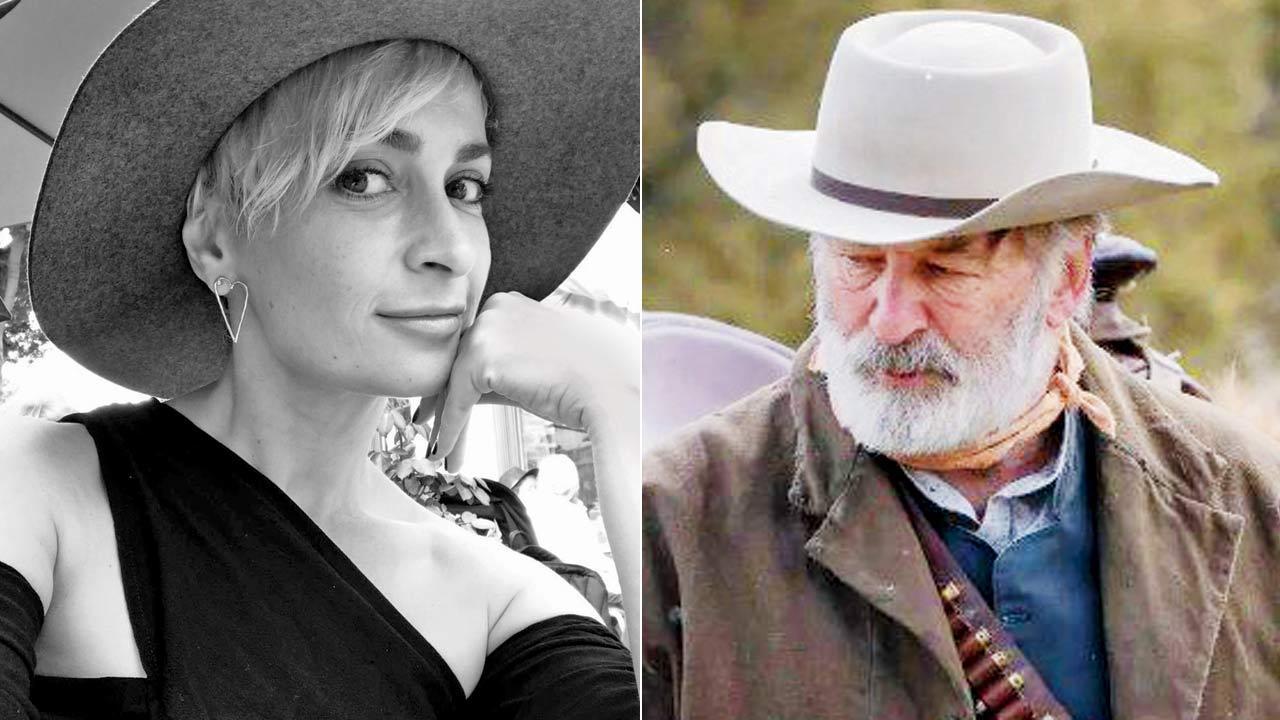
Olga Solovey, the mother of late cinematographer Halyna Hutchins, is boycotting the world première of Rust at a film festival in Poland on Wednesday, saying she views it as an attempt by Alec Baldwin to “unjustly profit” from her daughter’s death.
Rust is premièring at the International Film Festival of the Art of Cinematography Camerimage in the city of Torun three years after Hutchins was shot accidentally on set.
Baldwin, the lead actor and co-producer for Rust, was pointing a gun at Hutchins during a rehearsal on the set outside Santa Fe, New Mexico, in October 2021 when the revolver went off, killing Hutchins and wounding director Joel Souza. Baldwin has said he pulled back the hammer “but not the trigger” and the revolver fired.
Souza was expected to introduce the film at the festival, a popular industry event dedicated to the art of cinematography, and the première was being dedicated to Hutchins.
“It was always my hope to meet my daughter in Poland to watch her work come alive on screen,” said Solovey in a statement issued by her lawyer.
She said, “Unfortunately, that was ripped away from me when Alec Baldwin discharged his gun and killed my daughter. He continues to increase my pain with his refusal to apologise to me and his refusal to take responsibility for her death. Instead, he seeks to unjustly profit from his killing of my daughter.”
She added, “That is the reason why I refuse to attend the festival for the promotion of Rust, especially now when there is still no justice for my daughter.”
Hutchins, 42, was a Ukrainian cinematographer on the rise and a mother of a young son when she was killed. A New Mexico judge dismissed an involuntary manslaughter charge against Baldwin in the fatal shooting.
This story has been sourced from a third party syndicated feed, agencies. Mid-day accepts no responsibility or liability for its dependability, trustworthiness, reliability and data of the text. Mid-day management/mid-day.com reserves the sole right to alter, delete or remove (without notice) the content in its absolute discretion for any reason whatsoever
Nubia Z70 Ultra will be launched in China in the coming days, and the ZTE brand has started to reveal details about its upcoming flagship smartphone. Through multiple teasers posted to Weibo, Nubia has provided a first look at the phone in three colour options. The Nubia Z70 Ultra is confirmed to come with IP68 and IP69 ratings for dust and water resistance. It will feature a 6.85-inch 1.5K display and will be powered by a Snapdragon 8 Elite Extreme Edition chipset.
Nubia Z70 Ultra Design, Specifications Teased
Following the launch date announcement, Nubia published the first official images of the Nubia Z70 Ultra on Weibo. The renders show the phone in Amber, Black Seal, and Starry Sky Collection (translated from Chinese) colour options with thin bezels.
The Nubia Z70 Ultra’s display doesn’t have a notch or a hole for the selfie camera. The design language of the phone resembles that of the Nubia Z60 Ultra Leading Version with a few minor tweaks. The main rear camera is repositioned to the top left corner of the back panel, and it appears to have a smaller camera housing than its predecessor. The primary rear camera has a variable f/1.59 to f/4.0 aperture.
The Nubia Z70 Ultra is confirmed to be equipped with the latest Snapdragon 8 Elite Extreme Edition chip with LPDDR5X RAM and UFS 4.0 storage. This is believed to be an overclocked version of Qualcomm’s Snapdragon 8 Elite SoC. RedMagic used the same variant on the Red Magic 10 Pro series. It will ship with IP68 and IP69 ratings, and it is confirmed to offer AI call translation and AI translation features.
Nubia previously confirmed that the Z70 Ultra will feature a 6.85-inch display with 1.5K resolution, 144Hz refresh rate, 2,000nits of peak brightness and 95.3 percent screen-to-body ratio. The BOE-made display is touted to offer 430ppi pixel density. Its bezels will measure 1.25mm, according to the company.
The launch of Nubia Z70 Ultra will take place on November 21 at 2:00pm (11:30am IST) in China, and the company is yet to announce plans to launch the handset in other markets.
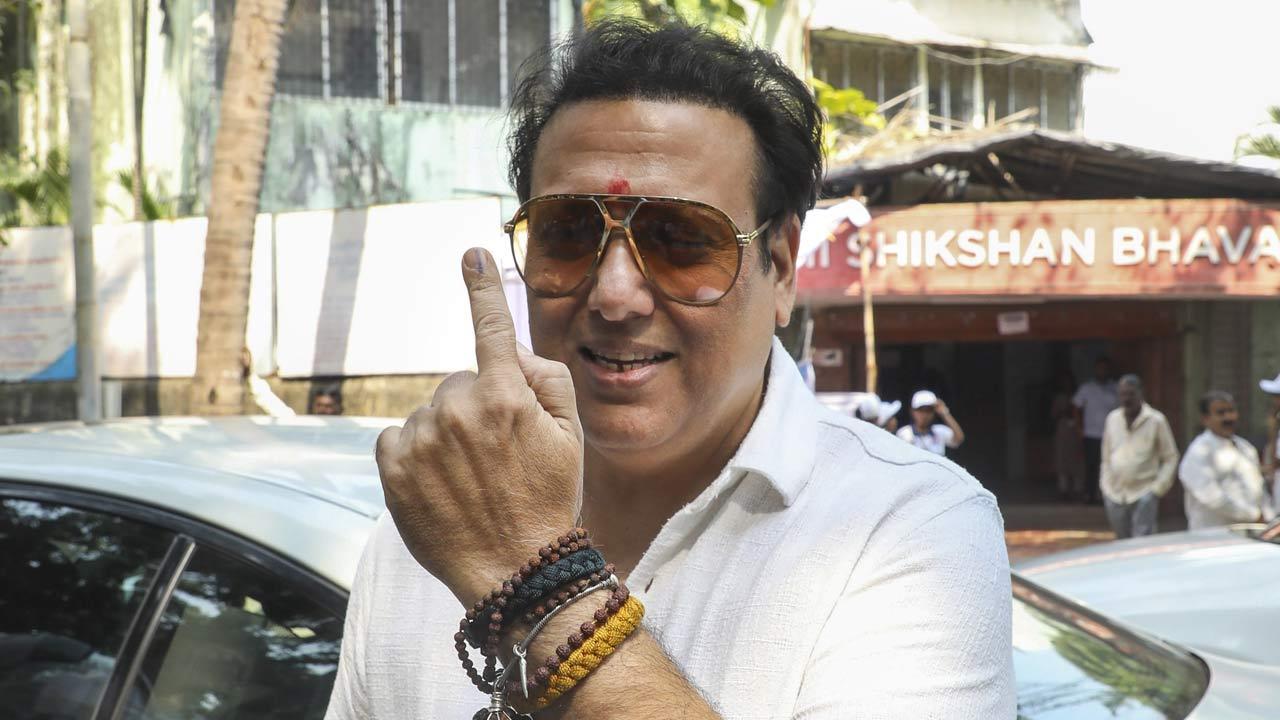
Actor-politician Govinda was seen casting his vote at a polling booth in the city on Wednesday despite his health issues. The actor was dressed in all-white, as he walked towards his car and limped a bit. He was seen flaunting his inked finger. He also interacted with the paparazzi as he posed for pictures. This marks his first public appearance after he was discharged from a Mumbai hospital last month post a self-inflicted gunshot wound.
When the paparazzi stationed at the polling booth asked him if he is doing fine now, post the accidental shooting incident, the actor said, “Sab achcha hai (All is well)”. He was then seen telling the paps “Arey kaahe chichiya rahe ho”.
Last month, Govinda reportedly misfired his gun while cleaning his closet during the wee hours of Tuesday. He suffered an injury to his foot. As per media reports, a small part of the lock of his gun was broken which didn’t inhibit the accidental firing of the gun.
The actor was set to head to Kolkata but prior to that he thought of organising his closet when the unfortunate incident happened because of the gun’s broken lock. At the time of the incident, there were 6 bullets loaded, and one misfired into his foot after which he was immediately rushed to the hospital in Juhu.
The polling for Maharashtra Assembly elections was conducted across 288 constituencies in the state. This time around, 4136 candidates are contesting elections across 288 constituencies in Maharashtra, the state with the highest GDP per capita, and by virtue of it, the highest economy.
This story has been sourced from a third party syndicated feed, agencies. Mid-day accepts no responsibility or liability for its dependability, trustworthiness, reliability and data of the text. Mid-day management/mid-day.com reserves the sole right to alter, delete or remove (without notice) the content in its absolute discretion for any reason whatsoever
The Australian government is billing its proposed ban as “world-leading”
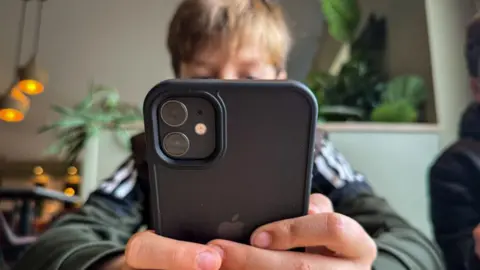
“I felt really scared to be honest,” says James, describing an incident on Snapchat that left him questioning whether it was safe to go to school.
The Australian boy, 12,had had a disagreement with a friend, and one night before bed the boy added him to a group chat with two older teenagers.
Almost instantly, his phone “started blowing up” with a string of violent messages.
“One of them sounded like he was probably 17,” James tells the BBC. “He sent me videos of him with a machete… he was waving it around. Then there were voice messages saying that they were going to catch me and stab me.”
James – not his real name – first joined Snapchat when he was 10, after a classmate suggested everyone in their friendship group get the app. But after telling his parents about his cyberbullying experience, which was ultimately resolved by his school, James deleted his account.
His experience is a cautionary tale that shows why the Australian government’s proposed social media ban on children under 16 is necessary, says his mother Emma, who is also using a pseudonym.
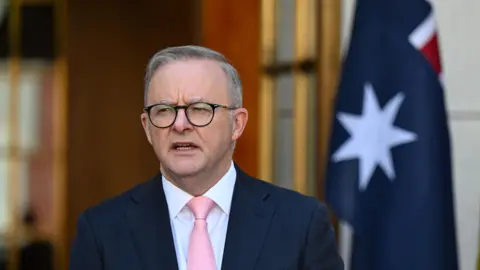
The laws, which were tabled in parliament’s lower house on Thursday, have been billed by Prime Minister Anthony Albanese as “world-leading”.
But while many parents have applauded the move, some experts have questioned whether kids should – or even can – be barred from accessing social media, and what the adverse effects of doing so may be.
What is Australia proposing?
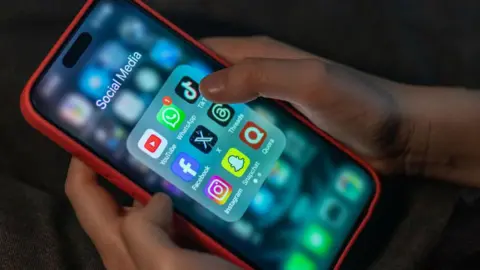
Albanese says the ban – which will cover platforms such as X, TikTok, Facebook and Instagram – is about protecting kids from the “harms” of social media.
“This one is for the mums and dads… They, like me, are worried sick about the safety of our kids online,” he said.
The new legislation provides a “framework” for the ban. But the 17-page document, which is expected to head to the Senate next week, is sparse on detail.
Instead, it will be up to the nation’s internet regulator – the eSafety Commissioner – to hash out how to implement and enforce the rules, which will not come into effect for at least 12 months after legislation is passed.
According to the bill, the ban will apply to all children under 16 and that there will be no exemptions for existing users or those with parental consent.
Tech companies will face penalties of up to A$50m ($32.5m; £25.7) if they do not comply, but there will be exemptions for platforms which are able to create “low-risk services” deemed suitable for kids. Criteria for this threshold are yet to be set.
Messaging services and gaming sites, however, will not be restricted, which has prompted questions over how regulators will determine what is and isn’t a social media platform in a fast-moving landscape.
A group representing the interests of tech companies such as Meta, Snapchat and X in Australia has dismissed the ban as “a 20th Century response to 21st Century challenges”.
Such legislation could push kids into “dangerous, unregulated parts of the internet”, Digital Industry Group Inc says – a fear also expressed by some experts.
EPA
Anthony Albanese says the ban is about showing Australian families his government “has their backs”
eSafety Commissioner Julie Inman Grant has acknowledged the gargantuan task her office will face when enforcing the ban, given “technology change is always going to outpace policy”.
“It will always be fluid, and this is why regulators like eSafety have to be nimble,” she told BBC Radio 5 Live.
But Ms Inman Grant has also raised concerns about the central idea behind the government’s policy, which is that there’s a causal link between social media and declining mental health.
“I would say that the evidence base is not settled at all,” she said, pointing to research from her own office which found that some of the most vulnerable groups, such as LGBTQ+ or First Nations teenagers, “feel more themselves online than they do in the real world”.
This is a sentiment echoed by Lucas Lane, 15, who runs an online business selling nail polish to boys. “This [ban] destroys… my friendships and the ability to make people feel seen,” the Perth teenager tells the BBC.
Ms Inman Grant would rather see tech companies clean up their platforms, as well as more investment in education tools to help young people stay safe online. She uses the analogy of teaching children to swim, rather than banning them from the water.
“We don’t fence the ocean… but we do create protected swimming environments that provide safeguards and teach important lessons from a young age,” she told parliament earlier this year.
Matthew Abbott
Julie Inman Grant, who leads Australia’s internet regulator, will be tasked with working out how to implement the ban
But parents like Emma see it differently.
“Should we really be wasting our time trying to help kids navigate these difficult systems when tech companies just want them on them all the time?” she says.
“Or should we just allow them to be kids and learn how to be sociable outside with each other, and then start these discussions later on?”
Amy Friedlander, a mother of three from the Wait Mate movement – which encourages parents to delay giving their kids smartphones – agrees.
“We can’t ignore all the positives that technology has brought into our lives. There are huge upsides, but what we haven’t really considered is the impact it is having on brains which aren’t ready for it.”
‘Too blunt an instrument’
Over 100 Australian academics have criticised the ban as “too blunt an instrument” and argued that it goes against UN advice which calls on governments to ensure young people have“safe access” to digital environments.
It has also failed to win the backing of a bipartisan parliamentary committee that’s been examining the impact of social media on adolescents. Instead, the committee recommended that tech giants face tougher regulations.
To address some of those concerns, the government says it will eventually introduce “digital duty of care” laws, which will make it a legal obligation for tech companies to prioritise user safety.
Joanne Orlando, a researcher in digital behaviour, argues that while a ban “could be part of a strategy, it absolutely can’t be the whole strategy”.
She says “the biggest piece of the puzzle” should be educating kids to think critically about the content they see on their feeds and how they use social media.
The government has already spent A$6m since 2022 to develop free “digital literacy tools” to try and do just that. However, research suggests that many young Australians aren’t receiving regular lessons.
Ms Orlando and other experts warn there are also significant hurdles to making the age-verification technology – which is required to enforce the ban – effective and safe, given the “enormous risks” associated with potentially housing the identification documents of every Australian online.
Getty Images
The government has said it is aiming to solve that challenge through age-verification trials, and hopes to table a report by mid-next year. It has promised that privacy concerns will be front and centre, but offered little detail on what kind of technology will actually be tested.
In its advice, the eSafety Commissioner has floated the idea of using a third-party service to anonymise a user’s ID before it is passed on to any age verification sites, to “preserve” their privacy.
However, Ms Orlando remains sceptical. “I can’t think of any technology that exists at this point that can pull this off,” she tells the BBC.
Will Australia succeed?
Australia is by no means the first country to try to restrict how young people access certain websites or platforms online.
In 2011, South Korea passed its “shutdown law” which prevented children under 16 from playing internet games between 22:30 and 6:00, but the rules – which faced backlash – were later scrapped citing the need to “respect the rights of youths”.
More recently France introduced legislation requiring social media platforms to block access to children under 15 without parental consent. Research indicated almost half of users were able to circumvent the ban using a simple VPN.
A law in the US state of Utah – which was similar to Australia’s – ran into a different issue: it was blocked by a federal judge who found it unconstitutional.
Albanese has conceded that Australia’s proposal may not be foolproof, and if it passes the parliament, it would be subject to a review.
“We know that technology moves fast. No government is going to be able to protect every child from every threat – but we have to do all we can,” he said when announcing the measure.
But for parents like Emma and Ms Friedlander – who have lobbied for the changes –it’s the message that the ban sends which matters most.
“For too long parents have had this impossible choice between giving in and getting their child an addictive device or seeing their child isolated and feeling left out socially,” Ms Friedlander says.
“We’ve been trapped in a norm that no one wants to be a part of.”
James says that since quitting Snapchat he’s found himself spending more time outside with friends.
And he hopes that the new laws could enable more kids like him to “get out and do the things they love” instead of feeling pressured to be online.
HP OmniBook Ultra Flip 14 was launched in India on Tuesday as the company’s latest laptop equipped with support for artificial intelligence (AI) features. It is available in two variants that are powered by Intel Core Ultra (Series 2) processors and a dedicated neural processing unit (NPU) capable of 48 trillion operations per second (TOPS). It features a 14-inch 2.8K OLED screen with support for inking and a haptic touchpad. According to the company, the OmniBook Ultra Flip 14 offers up to 21 hours of battery life on a single charge, with local video playback.
HP OmniBook Ultra Flip 14 Price in India, Availability
HP OmniBook Ultra Flip 14 Ultra 7 price in India is starts at Rs. 1,81,999 and the laptop is now available via Amazon, Flipkart, HP’s online store, and offline retail channels in Atmospheric Blue and Eclipse Grey colour options.
Pricing for the OmniBook Ultra Flip 14 Ultra 9 will be available for purchase via the same channels mentioned above, in a single Atmospheric Blue colourway.
HP OmniBook Ultra Flip 14 Specifications, Features
Both variants of the OmniBook Ultra Flip 14 sport a 14-inch 2.8K (2,880x,1,800 pixels) OLED touch screen display with a refresh rate that ranges between 48Hz and 120Hz, up to 500nits peak brightness, and Gorilla Glass 5 protection. The cheaper model features an Intel Core Ultra 7 256V processor with 16GB of LPDDR5X RAM, while the more expensive model has a Core Ultra 258V chipset, along with 32GB of LPDDR5X RAM.
HP has equipped the OmniBook Ultra Flip 14 with 1TB M.2 SSD storage. Both variants have a 9-megapixel IR camera. Connectivity options include Wi-Fi 7 and Bluetooth 5.4, and the laptop is equipped with two Thunderbolt 4 USB Type-C ports, one USB Type-C port, and a 3.5mm combo audio port.
The OmniBook Ultra Flip 14 packs a 6-cell 64WHr Li-Po battery that can be charged at 65W using via a USB Type-C port. HP claims that the laptop delivers up to 21 hours of local video playback on a single charge. It runs on Windows 11 and comes with a copy of Microsoft Office 2021. Both variants measure 31.37×21.62×1.49 cm and weigh 1.34kg.
After her open letter to Dhanush, bashing him for not sharing footage from their film for her new documentary, Nayanthara thanked all the producers who did.
Nayantahra‘s documentary, Nayanthara: Beyond the Fairy Tale, released on Netflix India on Monday on her 40th birthday, amid much fanfare and a little tension from her ongoing feud with former co-star and producer, Dhanush. Days after a scathing open letter to Dhanush, slamming him for not letting her use footage from their 2015 film Naanum Rowdy Dhan, Nayanthara has now thanked all the other producers who allowed her to use footage from their films “without hesitation or delay.” (Also Read – Nayanthara says people only questioned her for controversies in relationships: ‘None of the men were asked anything’)
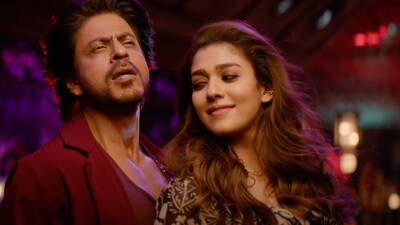
Shah Rukh Khan and Nayanthara starred together in Jawan.
Nayanthara’s thank you note to her producers
Nayanthara took to her Instagram handle on Wednesday night and shared a long thank you note, showing her gratitude to all the producers who issued NOCs (No Objection Certificates) for using the footage from their films, featuring her, in her new documentary. She wrote in her caption, “The most precious thing i’ve earned in these 20 years of my career is the friendships, love and respect i’ve got from the ones ive worked with. I really thank all the producers who have supported me in this endeavour for their goodwill and magnanimity always. Thank you (namaste, halo, and red heart emojis).”
In the note, Nayanthara wrote that she wanted to include footage from some of her filmography which hold “immense significance” in her life and are “close to my heart.” She thanked her producers for sharing “a piece of my most treasured moments.” She said she’ll always cherish their kindness and hopes that they continue to find “happiness in other people’s happiness.” The list of producers she listed included Shah Rukh Khan and wife Gauri Khan’s Red Chillies Entertainment, the production house of her Bollywood debut film, Atlee’s blockbuster action thriller Jawan, last year. Other notable names included Chiranjeevi, Ram Charan, and AR Murugadoss among others.
Nayanthara’s open letter to Dhanush
Last week, Nayanthara accused Dhanush of harbouring “vengeance” against her, following his legal notice to her, objecting the use of clips from a film he produced in her new documentary. She questioned whether Dhanush’s decision stemmed from a “personal grudge” rather than business concerns, alleging that he demanded ₹10 crore for three-second clips shot on personal devices during the making of the decade-old film. Nayanthara described the move as an “all-time low” for Dhanush, whom she referred to as a former friend.
Nayanthara will be next seen in action thriller Rakkayie.
Amazon Summer Sale is…
See more
News/Entertainment/Tamil Cinema/ Nayanthara thanks Shah Rukh Khan, Chiranjeevi for helping her with footage for documentary, giving NOCs ‘without delay’
El Ojo, a peculiar floating island located in the Paraná Delta of Buenos Aires Province, Argentina, has captivated attention due to its perfect circular shape and unusual movement. Measuring 387 feet (118 metres) in diameter, the island drifts gently within an equally circular lake, creating an otherworldly and striking sight. Its distinctiveness lies not only in its geometry but also in its eerie rotation, which causes it to grind slowly against the edges of the lake.
How the Formation Occurred
While its existence was known to the region’s inhabitants, the island gained broader attention after its discovery by the public in 2016 during research for a documentary. Since then, El Ojo has become a subject of mystery and speculation, with some locals associating it with ancient deities or even unidentified flying objects (UFO) activity.
The origin of El Ojo remains a matter of speculation. Scientists believe the island and its lake formed through a combination of erosion and water currents. Over time, the rotation caused by circular water flow has gradually shaped the island and the lake into their near-perfect forms. This natural process resembles similar phenomena observed elsewhere, such as the ice disks in Maine’s Presumpscot River. However, the exact timeline of its creation is unclear, with satellite imagery first capturing the island nearly 20 years ago.
Cultural Beliefs and Theories
Sergio Neuspiller, an Argentinian filmmaker and director, brought wider attention to El Ojo during his documentary research. He described its clear waters—an anomaly in the usually muddy delta—and its almost unreal symmetry in an interview given to El Observador. While some local communities revere the site, attributing it to divine or supernatural forces, others suspect the presence of a hidden Nazi base or UFO activity. These claims remain unsubstantiated.
El Ojo continues to intrigue scientists and storytellers alike. Despite its scientific explanation, its geometric precision and mystique ensure that it remains a focal point of fascination within the Paraná Delta. Researchers and enthusiasts continue to study and debate its origins, blending science with cultural lore in their attempts to understand its place in the region.