Anil Kapoor’s action thriller series 24 is set to return to streaming, with both seasons scheduled to be available on JioHotstar. Anil, who headlined the series as ATU Chief Jai Singh Rathod, will once again be at the forefront as the show makes its digital comeback.
Anil Kapoor’s action show 24 gets its OTT comeback.
24 OTT release date out
The series will begin streaming on April 24, with a staggered release schedule that sees eight episodes drop every Friday on JioHotstar. Originally aired on Colors TV, the first season of 24 premiered in October 2013 and concluded in December 2013, while the second season aired between July 2016 and October 2016. The show is one of Anil’s most prominent television projects.
Announcing the release, Anil shared a teaser confirming the show’s arrival on the platform. In the video, he described the return of 24 as a significant moment for the spy thriller genre, calling it “the ultimate action show” and stating that it would be available exclusively on JioHotstar.
Speaking about the series, Anil said that 24 remains one of the most significant projects of his career. He noted that while he has taken on several action-driven roles, the format and execution of 24 made it a distinct experience. He described the show as an “adrenaline rush,” stressing on its fast pace, constant tension, and real-time storytelling structure, which required sustained intensity both as an actor and as a storyteller. He added that the project continues to hold personal importance for him and expressed enthusiasm about its return to audiences through streaming.
The announcement has also renewed speculation around a potential third season. Earlier, Anil responded to a fan query on social media about Season 3 with a brief message: “Coming with 24 soon,” which sparked increased interest among viewers in a possible continuation of the series. However, no official confirmation regarding a new season has been made.
About 24
Directed by Abhinay Deo and Rensil D’Silva, 24 featured a supporting cast that included Neil Bhoopalam, Raaghav Chanana, Anita Raj, and Sapna Pabbi. The series followed counter-terrorism operations led by Kapoor’s character, unfolding in a real-time narrative format that set it apart from conventional television dramas.
Two-time Olympic medal-winning pistol shooter Manu Bhaker went incognito on the streets of Jaipur recently to enjoy some coconut water to beat the heat.
Bhaker, 24, Instagrammed this picture to her 1.5 million online followers as she stepped out in Rajasthan’s famous Pink City, wearing a mask and sunglasses, making her almost unrecognisable, as she calmly sipped on some naariyal paani, The post received over one lakh ‘likes.’
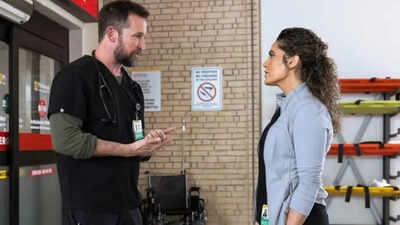
The Pitt’s season 2 finale is set to be an emotional rollercoaster. Dr. Michael “Robby” Robinavitch confides in a friend about suicidal thoughts, while Dr. Baran Al-Hashimi’s hidden medical history of seizures since childhood is revealed. These shocking developments leave viewers questioning the characters’ futures and the hospital’s stability.
Spoiler Alert: This article contains spoilers and key details from the series ‘The Pitt’. Reader discretion is advised if you haven’t watched it yet.‘The Pitt’ is heading into its season 2 finale with the kind of emotional momentum no one expected. The penultimate episode delivered two of the season’s most impactful moments back to back, and neither one is easy to shake.Noah Wyle’s beloved Dr Michael “Robby” Robinavitch admits his suicidal ideation, while Sepideh Moafi’s Dr Baran Al-Hashimi reveals a long-hidden medical secret. The finale airs Thursday, April 16, at 9 p.m. ET.
Dr Robby’s heartbreaking confession
Season 2 follows the workers at the Pittsburgh Trauma Medical Centre during a 15-hour shift on the Fourth of July. It is also Dr Robby’s last day before a three-month sabbatical, one that has colleagues, including Katherine LaNasa’s nurse Dana Evans and Fiona Dourif’s Dr Cassie McKay, genuinely worried about him.Episode 14, written by Wyle himself, features Robby in a quiet but devastating conversation with his old friend Duke, played by Jeff Kober, while standing near the ambulance bay. Duke, who has just received a potentially fatal aortic aneurysm diagnosis, opens up about regret and things he cannot change.The conversation shifts unexpectedly. Duke says, “I’m not talking about me,” and Robby realises what his friend already suspects.Robby admits, “Yeah, I don’t know if I want to be here anymore.” He continues, “I have purpose in there. I can be distracted in there. I don’t know that I want to be anywhere anymore.”When Duke asks about his plan, Robby says simply, “Ride.” Duke pushes further. “Toward what?” Robby says he does not know. “Away from what?” Duke asks. “Everything,” Robby replies.Duke delivers the episode’s most cutting line. “Well, that’s not riding, that’s running.” An ambulance arrives before the conversation can go any further.
Dr Al-Hashimi’s medical secret comes to light
Later in the episode, Al-Hashimi asks Robby for an honest second opinion on a patient’s chart. The moment initially feels like a peace offering between the two, given that Al-Hashimi is set to cover for Robby during his sabbatical. But it quickly turns into something far more complicated.Robby reads through the medical history, not realising the patient is Al-Hashimi herself. The chart reveals she has experienced seizures since the age of five. He pauses, removes his glasses, and asks, “Baran, is this you?”The revelation raises immediate questions. Could the seizures explain the moments of forgetfulness Robby has noticed throughout the shift? Does her condition affect her ability to treat patients?
What does the finale need to answer?
The season 2 finale of ‘The Pitt’ has no shortage of threads to resolve. Will Robby actually go through with his motorcycle trip after Duke’s confrontation? What happens now that Al-Hashimi’s secret is out? And what does all of this mean for the future of Pittsburgh Trauma Medical Centre?‘The Pitt’ season 2 finale airs Thursday, April 16 at 9 p.m. ET on HBO Max.
On a sweltering New York evening in August 1974, four young men from Queens walked on stage at a grimy bar in Lower Manhattan and launched into a set so short and ferocious that the audience barely had time to register what was happening before it was over.
Punk gave the world Ramones, Nirvana, piercings, studded leather, safety-pin jewellery, and a reminder: rock and roll has always been for people with little to lose.
The Ramones — Joey, Johnny, Dee Dee and Tommy; not related, just sharing an assumed surname — played about 20 songs in under 20 minutes. There were no solos, ballads or fog machines. Just a count-in of “One, two, three, four” and a wall of buzz-saw noise.
Something had begun. It didn’t even have a name yet.
Pinpointing when punk was born is the kind of exercise critics enjoy and musicians find tedious. But if one must draw a line in the sand, 1976 is a good place to do so.
In January that year, the first issue of Punk magazine hit newsstands, giving the movement its badge and banner. In April that year, Ramones released their debut album: 14 songs, across 29 minutes; the entire thing sounding like it was recorded in a disused garage by people who meant every bruising second of it.
That record, with the ripped jeans on its cover and its lunging energy, can be thought of as punk’s declaration of independence. It is 50 years old this month.
The venue that nursed this revolution into being was CBGB (short for Country, BlueGrass, Blues), a small, foul-smelling club in the East Village where owner Hilly Kristal paid little or nothing, but let bands go where their music led them.
Out of that crucible came not just Ramones but an entire scene: the rock band Television, with their angular, labyrinthine guitar interplay; the Patti Smith Group, mixing Beat poetry with rock primitivism; Blondie, led by Debbie Harry, who would conquer pop radio while never losing her street cred; Richard Hell and the Voidoids, whose guitarist Robert Quine played with a jittery, overloaded ferocity that sounded like a short-circuit in a church.
THE WHAT AND WHY
So what was punk, exactly? At its core, it was a reaction — loud, furious and deliberately opposed to sophistication — to the bloated excesses of mid-1970s rock.
By 1975, stadium rock had become a genre of spectacle: concept albums, orchestral arrangements, laser shows, bands that spent years between records perfecting their multi-layered production. Progressive rock, for all its technical brilliance, had achieved the remarkable feat of making guitar music feel airless and remote.
Punk seemed to say: “Enough. Let’s return to the three-chord song; let’s get back to volume, speed and, above all, attitude; and let’s remember what rock and roll was for before it became an industry.”
There was something deeply democratic about this. One did not need to spend years mastering an instrument to play punk. One simply needed conviction.
The legendary instruction printed in the 1977 British fanzine Sideburns — a diagram of three chord shapes with the caption “Now form a band” — was not satirical. It was a sort of manifesto. Punk lowered the barrier to entry and, in doing so, reminded everyone that rock and roll had always been music made by, and for, people who had nothing much to lose.
The legendary instruction printed in a 1977 edition of the British zine Sideburns: a diagram of three chord shapes with the caption “Now form a band”.
POLITICS, ANGER, AND THE SAFETY PIN
The UK, when it caught the punk virus in 1976, charged it with a different electricity.
America’s punk had been largely artistic and aesthetic in its rebellion. Britain’s version arrived at a moment of genuine social crisis: stagflation, mass unemployment, crumbling public services, a political establishment that had run out of ideas.Into this vacuum stepped Sex Pistols, managed by the impresario Malcolm McLaren, who understood spectacle as well as any prog-rock promoter but used it very differently.
Their 1977 single, God Save the Queen (“Don’t be told what you want to want / And don’t be told what you want to need / There’s no future, no future / No future for you”), released in Queen Elizabeth II’s silver jubilee year, was an act of cultural aggression so calculated and yet so genuinely felt that it was banned by BBC and still reached #2 on the UK singles charts.
Cover art for Sex Pistols’ God Save the Queen; 1977.
The Clash were the more politically articulate face of UK punk. Joe Strummer had genuine convictions about class, race and empire, and songs such as White Riot (“All the power’s in the hands / Of the people rich enough to buy it / While we walk the street / Too chicken to even try it… I wanna riot”) named specific grievances.
Siouxsie Sioux transformed punk’s confrontational impulse into something stranger and more theatrical, eventually seeding what would become another genre: Goth.
These were not people making music in a vacuum. They were shaping it against something.
And then there was the fashion.
The Clash were the more politically articulate face of UK punk, with genuine convictions about class, race and empire.
Punk’s visual aesthetic was as radical as its music, and perhaps more durable. Vivienne Westwood and McLaren’s Kings Road boutique, Sex, was punk’s sartorial laboratory: safety pins as jewellery, bin liners as dresses, hair dyed in improbable colours, teased into impossible shapes. Slashed shirts. Studded leather. DIY facial piercings.
The look said: “I’m not asking for your approval. In fact, I am actively soliciting your disapproval.” It was fashion that was calculated and disorganised at once.
THE PERSONALITIES: THEN AND NOW
Punk thrived because it was necessary, and it produced personalities to match its energy.
Iggy Pop, strictly speaking, predates punk. The Stooges’ raw, confrontational performances in the early 1970s, with Iggy stage-diving and projecting a barely-contained menace, established the template punk would follow. He is rightly considered the proto-godfather of the form and, at 78, continues to perform much as he always has.
Lou Reed’s Velvet Underground provided another strand: the idea that rock could be literary and uncomfortably direct. These were punk’s unwitting progenitors.
The founding generation now lie scattered across time.
Shoes by Vivienne Westwood and Malcolm McLaren; 1974. (Victoria and Albert Museum, London)
Johnny Ramone died in 2004; Joey in 2001; Dee Dee in 2002. Of the CBGB cohort, Patti Smith became an elder stateswoman of American culture, winning the National Book Award for her memoir and delivering a tribute to Bob Dylan at the 2016 Nobel Prize ceremony. Debbie Harry, now 80, still commands a stage.
In Britain, Joe Strummer of The Clash died in 2002, aged just 50, and was mourned by generations. John Lydon aka Johnny Rotten of Sex Pistols, now 70, has drifted so far right that he now sits at odds with his own insurgent past.
THE SECOND, THE THIRD, THE UNDYING WAVE
Punk is less visible today. It has mutated.
The second wave arrived in the American underground of the early 1980s and was harder, faster. This was music, such as the California band Black Flag’s, stripped to its angriest core. Bad Brains brought reggae-inflected intensity and instrumental virtuosity. Husker Du wrote pop hooks over hardcore fury in a way that was prescient of alternative rock.
The alternative rock boom of the 1990s — Nirvana, Sonic Youth, Pixies — was punk’s delayed explosion into mainstream culture.
Kurt Cobain wore the crown openly. And then, as mainstream assimilation is inclined to do, the form softened into something more palatable: Green Day, Blink-182, Avril Lavigne.
Punk-pop was technically proficient, radio-friendly, enormous fun; it carried the original spirit of rebellion, but fantastically diluted.
Whether that constitutes co-option or continuity is a debate that continues.
Punk magazine, launched in 1976, pays tribute to Blondie and Sex Pistols in editions the following year.
POST-PUNK
In the spirit of DIY that gave punk its essence, bands were soon taking the genre’s energy and twisting it into newer shapes.
Mark E Smith of The Fall made over 30 albums of deliberately abrasive, repetitive, near-genius sound that defied every convention, including punk’s own.
Ian Curtis of Joy Division, who died at 23, did not live to see how influential his band would be. Gang of Four’s brittle, funk-inflected agit-pop has been cited by virtually every significant indie band of the last four decades.
As a category, post-punk is useful insofar as it identifies a real historical phenomenon: what happened when the punk explosion met conceptual art, reggae and electronic music. It is less useful when applied retrospectively to anything with a guitar and an attitude.
Still, if a pigeonhole must exist, at least this one contains interesting birds.
BEYOND THE MUSIC
The film Jubilee (1978; directed by Derek Jarman) captures the movement at its most nihilistic: girl gangs, anarchic tableaus, a Britain in apocalyptic decay.
Zines, photocopied, stapled and distributed by hand, were punk’s literary form.
The ethics of punk (make your own thing, distribute it yourself, don’t wait for permission) is the direct ancestor of the internet’s creator culture.
Punk lives on, in basements and small venues, in virtually every city with a music culture.
It is alive in bands such as Idles, the Bristol group whose uncompromising anthems of masculinity, grief and anti-fascism have found large audiences. (“You are a Topshop tyrant / Even your haircut’s violent / You look like you’re from Love Island / He stood and the room went silent”, from Never Fight a Man with a Perm; 2018.)
It lives on in Gen Z, who revel in its logic of non-conformism and self-determination in an era of algorithmic conformity.
Fifty years on, what punk gave us is less a genre than a permission slip: to make noise, be difficult, say no, stand for something. Be anyone you choose to be; unapologetically, even unstylishly. That’s my favourite way punk changed the world.
Before punk had a name, Iggy Pop was already living it. This three-chord drone, equal parts menace and desire, is the ur-text of all that followed. Without it, there is no CBGB, no Ramones, no statement safety pins.
* New York Dolls: Personality Crisis (1973)
Shambolic, glamorous, perpetually on the verge of collapse — the Dolls are the missing link between glam rock and punk. Watch a video to see for yourself.
* Ramones: Blitzkrieg Bop (1976)
Two minutes and twelve seconds long, with arguably the most important opening salvo in rock history. “Hey ho, let’s go” is punk’s anthem: deeply ironic, since the Ramones were completely apolitical.
* Patti Smith: Gloria (1975)
Smith hijacked Van Morrison’s 1964 classic about lust and infatuation, rewrote parts of it, and made it an incantation about desire, blasphemy and reinvention. Her version opens with punk’s great literary line: “Jesus died for somebody’s sins but not mine.”
Patti Smith’s Horses; 1975.
* Television: Marquee Moon (1977)
This band put back everything punk said it didn’t need — virtuosity, complexity, extended solos — and made it feel urgent anyway. The title track’s 10-minute guitar interplay between Tom Verlaine and Richard Lloyd remains astonishing.
* Sex Pistols: Anarchy in the UK (1976)
If the Ramones lit the fuse, this was the explosion. Johnny Rotten’s opening sneer landed in Britain like a petrol bomb. Fifty years on, it still sounds dangerous.
* The Clash: White Riot (1977)
Two minutes of barely controlled fury announcing a band with real political intelligence and the riffs to match. Joe Strummer was angry about something specific, and you could tell.
* Buzzcocks: Ever Fallen in Love (1978)
Punk could be tender. Pete Shelley proved it more devastatingly than anyone: a song about romantic incompatibility played at furious speed, and one of the great songs of any era.
* Wire: Pink Flag (1977)
A skeletal riff, clipped vocals, no repetition, no waste. Wire were the Samuel Beckett of punk, stripping away everything until only the essential remained.
* Public Image Ltd: Public Image (1978)
Johnny Rotten’s first post-Pistols statement rejected punk’s own orthodoxies almost before they’d fully formed. A cold, bass-driven declaration of reinvention: Post-punk may have started here.
Joy Division; 1979.
* Joy Division: She’s Lost Control (1979)
Out of Manchester’s grey industrial landscape, Ian Curtis wrote dispatches from somewhere just beyond coherent thought. Bernard Sumner’s guitar, Curtis’s baritone lost in its own labyrinth… this defined the bleaker possibilities punk had set loose.
* Gang of Four: Damaged Goods (1978)
They’d read their Gramsci, absorbed the Situationists, and set it all to a jagged funk groove. Every guitar band of the last four decades owes Gang of Four a debt most can’t afford to repay.
* Black Flag: Rise Above (1981)
Hardcore punk at its most physically relentless. Henry Rollins-era Black Flag turned righteous rage into a rallying cry for a generation with no interest in the mainstream.
* Minor Threat: Straight Edge (1984)
Barely 45 seconds long, Ian MacKaye was a teenager when he wrote it and spent years insisting he hadn’t intended to start a religion. He started a religion. The Straight Edge movement would come to represent abstinence from drugs, independent music production, and access to that music for all.
* Bad Brains: Pay to Cum (1980)
Possibly the fastest song ever recorded, it holds reggae rhythms, hardcore fury, impossible technical precision. Proof that punk has no racial ownership, and has a musical vocabulary still not fully explored.
Cover art for the self-titled 1982 album by American band Bad Brains.
* Husker Du: Makes No Sense at All (1985)
Bob Mould found the exact intersection of hardcore fury and pure pop melody. Without Husker Du, there is no Nirvana.
* Nirvana: Smells Like Teen Spirit (1991)
The moment punk’s grandchildren crashed into the mainstream. Kurt Cobain was reportedly embarrassed by how big a hit the song became, which is itself a very punk response to success.
* Green Day: Basket Case (1994)
Punk-pop done right: the anxiety is real, the hooks immaculate. This was the song that brought punk to suburban bedrooms worldwide, for better and occasionally for worse.
As mainstream assimilation is inclined to do, punk softened into something more palatable with bands such as Green Day.
* Idles: Danny Nedelko (2018)
A love letter to immigration, named after a real friend, it became a singalong anthem for a Britain arguing bitterly with itself. Punk’s capacity for community-building anger did not expire with the 20th century.
* Mannequin Pussy: I Got Heaven (2024)
Philadelphia’s finest draw on hardcore, post-punk and noise rock with entirely contemporary fierceness. This is punk’s DNA expressing itself in a new generation that finds the old arguments over authenticity, identity and resistance still unresolved, and still urgent.
Divyanka Tripathi and Vivek Dahiya recently delighted fans by announcing their pregnancy. The couple, who are expecting their first child, have now reacted to their photograph being allegedly `misused` alongside reports of women embracing motherhood in their 40s. The couple raised their voice against their image being featured in a story about the IVF market in India. They clarified that their pregnancy is a case of natural conception, and not IVF.
Divyanka Tripathi slams misuse of her pregnancy pictures
Divyanka Tripathi took to her Instagram story to react to the reports, expressing her dissatisfaction over the misleading presentation. She acknowledged that every path to parenthood is beautiful and conversations around late motherhood are important; however, the publication should have verified before publishing, she said,. “Misleading Image usage. While we appreciate the advancements in medical science and what it means for so many, we’d like to clarify that our positive results are not due to IVF. It’s NATURAL CONCEPTION. That, too, ignites some kind of hope. Every path to parenthood is beautiful, and we support the awareness you are creating through the article. Only if you asked us if it stands true to us or not! We have a story leading us here, just that, this one isn’t ours,” the actress wrote.
Vivek Dahiya also reacted to the use of their photos in the article, and wrote, “We value responsible journalism and are surprised to see our picture placed next to an IVF story, when our journey was natural- simply isn’t right. Accuracy matters, and this wasn’t verified with us.”
Divyanka on conceiving at the age of 40
In her earlier vlog, Divyanka spoke about embracing motherhood at 40 and shared that it felt like the right time. “We stayed very positive, even though it took time for things to fall into place. Still, we always had faith in each other. Somehow, we had a strong feeling that something would happen by the end of 2025. That’s why I even stopped taking up work. I felt that if I started something new and then conceived, it might affect the work. I don’t know, but it felt like a strong instinct from God, and in a way, I was already preparing myself for this,” she said.
Meanwhile, Vivek had revealed that Divyanka had conceived naturally. “And by the way, for everyone who is curious to know, this is a natural pregnancy.” “All the modern methods that are available today to help people conceive have supported so many couples, and we truly appreciate science,” Divyanka added.
Divyanka and Vivek first met during the filming of the TV series Yeh Hai Mohabbatein and tied the knot in 2016.
Kolkata: It was not supposed to unfold this way. Chasing 182, Lucknow Super Giants were 128/7, their hopes thinning with every dot ball. The equation—54 runs off 24 deliveries—felt less like a target and more like a formality. Kolkata Knight Riders were finally sensing some closure, perhaps at the cost of complacency. Possibly because in the middle stood a 21-year-old playing just his third IPL game, his second under lights, who had stalled at two runs off eight balls.
Lucknow Super Giants’ Mukul Choudhary celebrates after winning the match against Kolkata Knight Riders. (REUTERS)
Choudhary didn’t panic though. He has never been wired that way. “I try to take the game deep,” he said later at the press conference. “If I stay till the end, I can win it.” Over the next four overs, Choudhary struck seven sixes, each more audacious than the previous, transforming inevitability into disbelief.
If the innings felt cinematic, its origins are rooted in something quieter, more resilient, a story you tend to hear more every IPL season. Choudhary was born in Jhunjhunu, Rajasthan, into a family that had already decided his future. His father, Dalip, had made a promise to himself long before his son was born—if he had a boy, he would make him a cricketer.
It was not a casual ambition. Dalip left his teaching job, sold his share of the family home, and moved closer to better training facilities. He ventured into unfamiliar businesses to fund the dream. His mother, Sunita, reshaped her life around her son’s schedule, eventually leaving her job to support his move to Jaipur. The odds of making it to the top are huge in a country like India, so many stories still tend to go sideways from here.
At the Aravalli Coaching Centre, Choudhary’s growth spurt made him a natural choice as a pacer. But coaches soon noticed a natural ability to clear boundaries with ease and duly shifted him to batting. He was still in his teens, so time wasn’t an issue. The disappointments stacked up but Choudhary’s belief didn’t waver. “One season has to click,” he kept telling himself.
That season arrived in 2025–26. He dominated the U-23 CK Nayudu Trophy, amassing 617 runs at an average near 103, striking at over 140. In the Syed Mushtaq Ali Trophy, he delivered cameos that resonated—an unbeaten 62 off 26 balls against Delhi among them—finishing with a strike rate nearing 200. The IPL followed, as it often does, swiftly and decisively. At the heart of this rise was the marked ability to hit sixes. “My genes are such and I am naturally built in a way that there is power in my shots, and also I do practice a lot. Everyday I hit around 100-150 sixes. For the last five-six months, I’ve been practising a lot and that has come into me,” he said.
But this skill required finesse and the cricketing nous to time those hits. He learnt that from LSG captain Rishabh Pant and head coach Justin Langer, who saw in him the potential to become “the scariest No. 6 or No. 7 in Indian cricket.” Pant helped unshackle his thoughts. “In the last match, I was not able to hit well after 4-5 balls and Rishabh bhaiya told me ‘don’t think so much, just do what you have been doing’. At the nets, Langer’s daily, focused sessions—10 to 15 minutes carved out specifically for Choudhary—added layers to his game and, perhaps more importantly, affirmed his place. “When someone like that shows faith,” Choudhary said, “you want to repay it.”
To understand this innings also requires understanding the belief behind it. It manifested last December at Ahmedabad, in a Syed Mushtaq Ali group league match against Delhi, where Choudhary had found himself batting with Rajasthan needing 25 off the final over. He brought it down to five off the last ball and told himself something simple, almost devotional: If my work has been honest, this will go for six. It did.
That belief traveled with him—to the IPL auction in Abu Dhabi, where LSG had secured him for ₹2.6 crore, and then to Kolkata, where it resurfaced when everything else seemed to falter. At Eden Gardens, the early signs were unremarkable. His first boundary came via a miscued slower bouncer dragged to deep square leg. But the next ball announced something else entirely. A missed yorker was whipped over long-on with a compact, wristy flourish that evoked the unmistakable imprint of MS Dhoni.
The comparison is not accidental. Choudhary is a self-confessed disciple of Dhoni—not only in strokeplay, but in philosophy. “I always wanted to be a finisher like him,” he said. Yet what defines Choudhary is not imitation but adaptation. Against pace, he showed fast hands and reach; against spin, composure. He refused singles and made it clear that this chase would pass through him or not at all. It sent the contest into something elemental—a greenhorn batter’s instincts against well-laid plans. By the time the final over arrived, the equation had softened to 14 runs needed before the script added one more twist: Choudhary began at the non-striker’s end.
It could have unraveled there. But Vaibhav Arora failed to keep the strike away. With 13 required off five balls, Choudhary took guard again, briefly dropping to his haunches—a habit he uses to reduce the noise. “It helps me gather my thoughts,” he explained later. “Push everything else aside.” The next ball, short and wide, was dispatched over deep midwicket. The following two deliveries, both yorkers, produced nothing. The game teetered again. But Choudhary, by now, was operating on something deeper than momentum.
“I knew he’d miss once,” he said. The miss came in the form of a full, wide ball and Choudhary carved it over extra cover for six. The rest was procedural—a scrambled bye, a roar, and then a still moment as he sank to his knees, looking skyward, hands folded.
Actor Shweta Tripathi, known for her nuanced performances across film and shows, has equally used her voice beyond the camera to advocate for social change.
Speaking on the sidelines of the Women`s Reservation Bill, Shweta emphasised how true progress comes when women are given proportionate opportunities across all spheres of life, further adding how the dynamics have started changing.
In a conversation with ANI, the Mirzapur star shared, “I feel like things are now changing. I feel like, there`s me, there`s Kiran Rao… There are also writers like Juhi Chaturvedi. There is no competition between men and women. But when it comes to the women population, whether it`s in the parliament, behind the camera, or in any industry, it has to be proportionate.”
Noting that the representation of women in Parliament has been low in comparison to the overall population, the actor explained how the changing laws will reach every household in the country.
“The representation of women in Parliament or in the Legislative Assemblies is still low in comparison to the population. But the policies, the laws, will affect every household. Women need to be heard and need to be accepted,” she added.
Shweta also weighed on the need to learn from the past to ensure a smooth and faster transition toward equality.
Acknowledging that the Women`s Reservation Bill marks a significant step forward, the challenge lies with its effective implementation, she said.
“This is the beginning, and everything has a beginning. It happens little by little… we will progress, we will go back two steps, and it`s very heartbreaking and very frustrating. It is the same with the Women`s Reservation Bill, but we have to be at it,” Shweta said.
The actor also spoke about how public figures must voice their thoughts on such matters, further explaining that the responsibility equally lies with everyone, including women themselves.
“Women don`t need to wait for superheroes to bring a change. They must be their own superheroes,” Shweta asserted.
The remarks came in the backdrop of the government`s ongoing plans to bring an amendment bill to increase the number of Lok Sabha seats to 816 from 543 seats. The idea is to have at least 273 seats reserved for women.
According to sources, the key agenda may include amendments to the 2023 Nari Shakti Vandan Act and the introduction of the Delimitation Commission Bill.
The sources said that the Centre has planned to take the 2011 census as the basis for delimitation and seat redistribution. Currently, the Lok Sabha has 543 seats. With a proposed 50 per cent increase, the number of seats will rise to 816, with 273 (about a third) reserved for women.
On the work front for Shweta Tripathi, she will be next seen in the much-awaited Mirzapur: The Film. It is set to hit theatres on September 4, 2026.
This story has been sourced from a third party syndicated feed, agencies. Mid-day accepts no responsibility or liability for its dependability, trustworthiness, reliability and data of the text. Mid-day management/mid-day.com reserves the sole right to alter, delete or remove (without notice) the content in its absolute discretion for any reason whatsoever
Tata Sons Pvt. Ltd. remains committed to build Air India Ltd. into a world-class airline, Chairman Natarajan Chandrasekaran said on Friday, even as India’s oldest airline navigates a “perfect storm”.
Natarajan Chandrasekaran, chairman of Air India Ltd. and holding company Tata Sons Pvt. Ltd. (AFP)
“Air Indians have shown great tenacity in dealing with a perfect storm, and we must continue with the same spirit that has been demonstrated,” Chandra, who is chairman of both Tata Sons and Air India, said during an employee townhall at the airline’s headquarters in Gurugram. He also met the broader leadership team of Air India and Air India Express.
“Tata Group remains committed to Air India Group. The board is fully supportive and will continue to work closely with the management team.”
Chandra’s comments, and the Air India townhall, comes against the backdrop of the resignation of Chief Executive Officer Campbell Wilson last week.
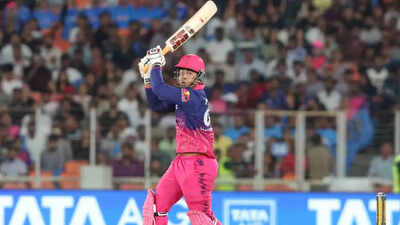
NEW DELHI: When will Vaibhav Sooryavanshi make his India debut? Should he already be part of the national set-up? When will fans see him in the India jersey? These questions are dominating conversations across social media.Sooryavanshi’s record-breaking IPL performances have sparked calls for an early India cap, but spin great Anil Kumble believes the 15-year-old should not be rushed.“The player himself probably answers that question,” Kumble said.He drew comparisons with the legendary Sachin Tendulkar, who forced his way into the national side as a teenager through consistent performances in the late 1980s.Kumble acknowledged that Sooryavanshi has shown encouraging signs, noting that the youngster is “doing all the right things.”“At this point in time, it’s a bit of pressure on a young lad to say, ‘I want you to play for India in two months’ time,'” he said.Highlighting the advantage of youth, the former India captain pointed out that time is firmly on Sooryavanshi’s side.
Watch
How Justin Langer’s belief helped Mukul Choudhary shine
“Even 10 years later, he’s going to be 25,” he remarked.Reiterating that there is no fixed timeline for success in cricket, Kumble said players can break through at different stages of their careers and still make a significant impact. He expressed confidence that Sooryavanshi’s performances will keep him firmly on the selectors’ radar.“For Vaibhav, it could be this year, next year, or maybe a couple of years later. But the way he is batting, he’s certainly someone the selectors will be watching closely,” Kumble added.