A video of Shah Rukh Khan and Ranveer Singh’s interaction is now circulating on social media.
Shah Rukh Khan lovingly touches Ranveer Singh’s cheek
In a video taken at the birthday bash, Ranveer can be seen interacting with Anant Ambani, Radhika Merchant and other guests. Shah Rukh taps the Dhurandhar actor’s shoulder as his manager Pooja Dadlani is kissing Ranveer’s cheek and lovingly cups his cheek while seemingly congratulating him. While it can’t be seen what Shah Rukh said, Ranveer nods and says ‘thank you’ before getting back to interacting with other guests.
The video is now circulating on Instagram and X (formerly Twitter), along with pictures of Ranveer and Shah Rukh at the bash. Posting a picture, one X user wrote, “They Are Like Family.” Another wrote, “Just see how Shah Rukh Khan is patting Ranveer Singh and touching his cheeks, probably congratulating him for Dhurandhar 2 success. And even SRK’s manager Pooja Dadlani is showing love to Ranveer.”
“#RanveerSingh x #SRK. the way SRK touched Ranveer’s cheek. Along with Anant and Radhika,” wrote one fan posting the video. Numerous others also commented that it looks like Shah Rukh is congratulating Ranveer on the success of the Dhurandhar films.
Recent work
Shah Rukh was last seen in the 2023 films Pathaan, Jawan, and Dunki, as well as a cameo in Salman Khan’s Tiger 3. Pathan grossed ₹1055 crore worldwide, while Jawan brought in ₹1160 crore. Dunki was not as successful, bringing in ₹454 crore worldwide. He took a break in 2024 and began shooting for Siddharth Anand’s King last year. The film also stars his daughter Suhana Khan, Abhishek Bachchan, Rani Mukerji, Deepika Padukone and others. It is slated for release this Christmas.
As for Ranveer, he tasted success with Aditya Dhar’s Dhurandhar, which was released in theatres in December and grossed over ₹1300 crore worldwide. The sequel, Dhurandhar: The Revenge, was released on March 19 and has crossed the ₹1600 crore mark worldwide. He will be seen next in Pralay, directed by Jai Mehta and produced by Hansal Mehta.
NEW DELHI: An old post by Jofra Archer has unexpectedly gone viral after a thrilling IPL 2026 clash, where David Miller played a powerful cameo for Delhi Capitals but fell just short of sealing victory against Gujarat Titans. His unbeaten 41 off 20 balls, packed with big hits, nearly turned the game around in a tense late-night finish.The game built up to a dramatic final over, with Miller leading the chase after briefly leaving the field due to a finger issue.
Watch
Rashid Khan opens up on surgery, poor last season and bowling rhythm
Despite the setback, he returned strongly, smashing two sixes and a boundary in a crucial over to bring Delhi back into contention. With only a few runs needed in the last moments, the match looked within reach.Things took a surprising turn when Miller declined a single on the second-last delivery, possibly showing a lack of confidence in his partner. That decision proved costly. On the final ball, bowled by Prasidh Krishna, Miller failed to make contact, and Jos Buttler quickly completed a run-out to hand Gujarat Titans a narrow win in a nail-biting finish.Soon after, Archer’s 2013 tweet resurfaced: “Miller mad? Cricket at 11:30,” perfectly matching the late-night drama of this match, which ended around the same time. The tweet was originally posted during a close South Africa vs Pakistan game, making the coincidence even more striking.Miller’s fearless approach almost delivered victory, but one bold call changed everything, turning a near-win into a heartbreaking loss.Earlier in the evening, Gujarat Titans put up a strong total led by Shubman Gill’s 70, supported by Jos Buttler’s 52 and Washington Sundar’s 55. Delhi started well through Pathum Nissanka and KL Rahul but collapsed after quick wickets, with Rashid Khan starring (3-17). David Miller’s late hitting revived hopes, but a final-ball run-out sealed a narrow Gujarat win.
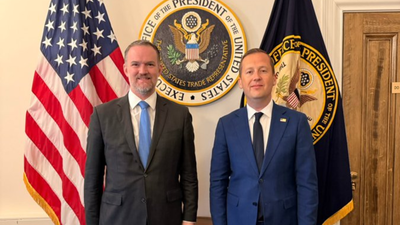
The United States has said it looks forward to hosting an Indian delegation in Washington later this month, indicating renewed momentum in bilateral trade engagement as both sides seek to advance the proposed trade agreement.“Highly Productive meeting with @USTradeRep Ambassador Greer to discuss advancing @POTUS trade priorities in South and Central Asia. The United States and India have previously agreed to a trade deal, and we look forward to welcoming an Indian delegation to Washington later this month.” Ambassador Sergio Gor posted on X after a meeting with US Trade Representative Jamieson Greer. The development comes as Foreign Secretary Vikram Misri is on a three-day visit to the US, where he is meeting senior officials to review bilateral ties, including trade, defence and technology, and to discuss regional and global developments such as the West Asia crisis.“The visit will provide an opportunity to review the full spectrum of India-US bilateral relations and advance ongoing cooperation across key areas,” the Ministry of External Affairs (MEA) said.India’s Ambassador to the US Vinay Mohan Kwatra said Misri’s visit “offers an opportunity to review with our US partners the full breadth of the India–US partnership, and to advance discussions across key pillars of our bilateral agenda – including trade, defence, technology, and exchange perspectives on regional and global developments.”Officials indicated that progress on the proposed bilateral trade agreement (BTA) is likely to be a key focus during the visit, with both sides looking to move forward on pending issues.The visit comes hours after the US and Iran agreed to a conditional two-week ceasefire that includes reopening of the Strait of Hormuz, a development with implications for global trade and energy flows.Earlier, Commerce and Industry Minister Piyush Goyal had held talks with USTR Jamieson Greer on the sidelines of the WTO ministerial meeting in Yaounde, discussing “next steps in the India-US BTA negotiations” and ways to deepen economic cooperation.India and the US had in February announced that they had finalised a framework for the first phase of the trade agreement, though it is yet to be signed.Officials said finalisation of the pact has been delayed due to changes in the US tariff framework following a Supreme Court ruling and subsequent tariff measures imposed by the Trump administration.A planned meeting of chief negotiators to finalise the legal text was postponed, with officials indicating that the interim agreement will be signed once clarity emerges on the revised US tariff architecture.The MEA said Misri’s visit follows External Affairs Minister S Jaishankar’s trip to Washington in February and reflects continued high-level engagement between the two countries.
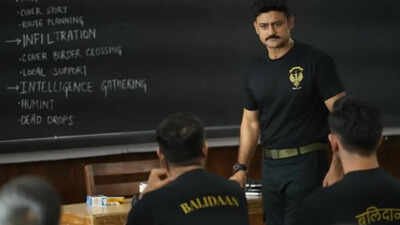
‘Dhurandhar: The Revenge’ has already become one of the biggest successes of recent times. At a time when audience attention spans are very low, the Ranveer Singh starrer managed to keep the audiences engaged despite its long runtime. Manav Gohil, who played IB deputy director Bansal in ‘Dhurandhar: The Revenge’, opened up about the film’s unusually long runtime. Both parts of the franchise are among the longest Bollywood films in recent years; the second part runs nearly four hours. In a recent interview, the actor explained that director Aditya Dhar was very particular about retaining all researched information, even if it made the film lengthy.
Manav Gohil on Aditya Dhar’s strict approach
In an interview with News 18, Manav Gohil said Aditya Dhar refused to compromise on details. He shared, “There’s so much information in the film. Aditya was very strict about not getting rid of any detail. What we had at hand was hardcore research-based information. He said, ‘Yeh sab dikhaana zaroori hai. He didn’t compromise on it. He was so tuned in all the way down to the minutest nitty-gritties of the storytelling. And people loved all of it.”
Watch
Pathaan Mocked As Dhurandhar Dominates Bollywood; SRK-Salman Vs Ranveer Sparks Generational Debate
The actor admitted the team felt they had shot a lot, but Aditya was firm about keeping everything.
Manav Gohil had no prior knowledge of the sequel
During the same interaction, Gohil revealed he was not told about a second part until much later. He said, “We all felt ki humne bahot zyada shoot kar liya hai. Hum shoot kiye hi ja rahe the, kiye hi ja rahe the (laughs). We knew that it was going to turn out to be a long film but we didn’t anticipate that it will be divided into two parts. We came to know of it when we were about to release the first film. That’s when we got a sense and were officially told that Dhurandhar: The Revenge will also be released.” Gohil revealed that he found out about the sequel only when the first film was nearing release.
Family’s reaction to ‘Dhurandhar’
Manav Gohil also opened up about how his family, especially his wife and actress Shweta Kawatra, reacted to ‘Dhurandhar’. Gohil said, “It was so difficult to watch it with Shweta. She had so many questions to ask me. I had to tell her that she needs to let me watch the film first for me to understand and answer all her questions.” He joked that after the film’s release, he suddenly became “important” for his family, with everyone asking him about the story during dinners.
Manav Gohil on screen time feedback
The actor also addressed the common complaint from fans about his limited screen time. He laughed and said, “Mujhe bhi aisa hi laga ki mera screen time kam kyun hai (laughs). And though people reacted very sweetly to my scenes and they told me that they loved my performance, they asked me, aur bhi hai kya?” (“I also felt the same like, why is my screen time so less? (laughs). And though people reacted very sweetly to my scenes and said they loved my performance, they kept asking, ‘Is there more?’”)Despite the short role, his performance as IB deputy director Bansal was appreciated by audiences. The movie stars Ranveer Singh, Sanjay Dutt, Sara Arjun, Arjun Rampal and many others in lead roles.
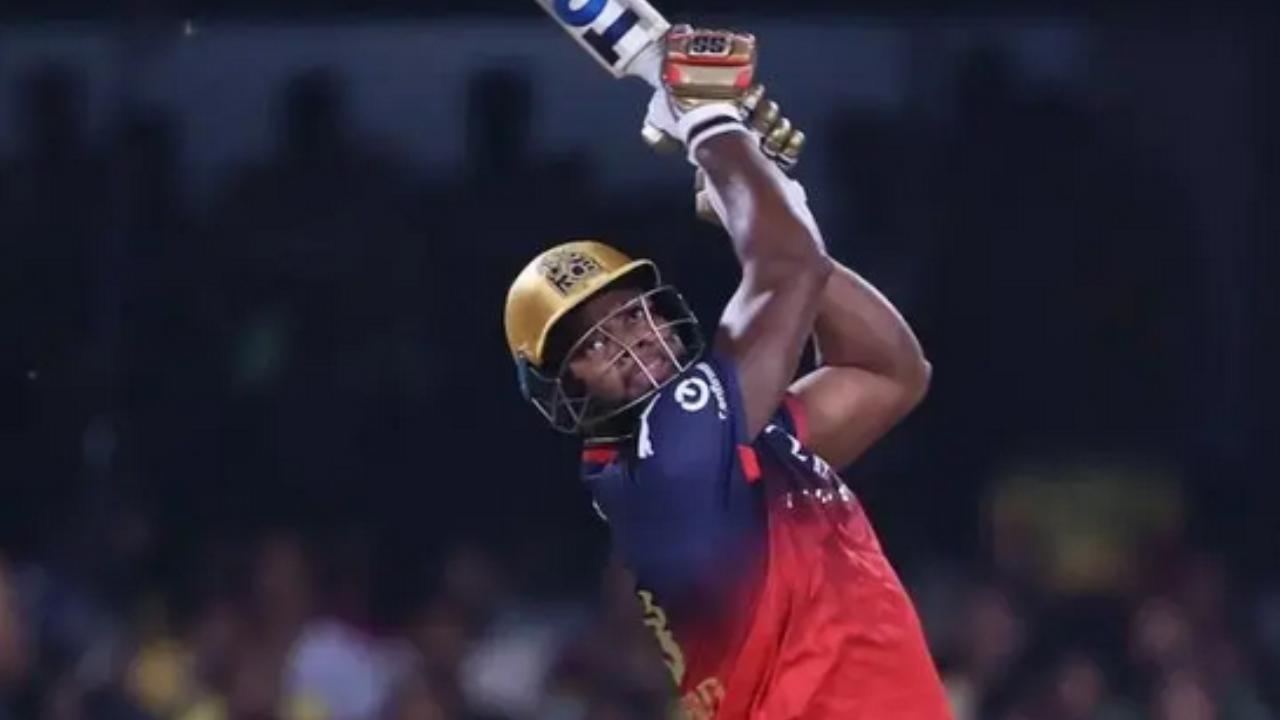
The Royal Challengers Bengaluru`s (RCB) star all-rounder Romario Shepherd recalled his journey from playing cricket in Guyana to representing one of the biggest franchises in the Indian Premier League (IPL).
He revealed that back then, he, along with his friends, used to shape a wooden piece into a ball and use coconut branches as a willow.
“I used to play cricket in a small opening in my yard. Sometimes we made the ball with wood or used coconut branches to make a bat. Whenever the ball hit your shin, there were no pads because we were barefoot, so you had to defend your foot,” he said.
A batsman now known for towering maximums was once a player trying to find gaps while batting.
“In the first game I played, I scored 129 and batted through the 40 overs, with no sixes. At that time, I was not a big hitter. All I knew was to find the gaps,” said the 31-year-old cricketer.
Shepherd then said that he aspired to become like former West Indies cricketer Dwayne Bravo.
“Whenever you listened to the radio, there was always one name you heard doing everything, batting, bowling and fielding, and that was Dwayne Bravo. I wanted to be like that guy,” he said.
His breakthrough in white-ball cricket came in 2018 during the Caribbean Premier League, where his performances quickly began drawing attention.
“2018 is when people started taking my white-ball cricket seriously. I started bowling a lot of yorkers and hitting the ball, and commentators like Ian Bishop were saying this kid has something about him,” he said.
The burly all-rounder then recollected the moment when he smashed a maximum to his childhood hero, Bravo.
“The first ball I faced was from Dwayne Bravo and I hit it for six ways back in the crowd. That was big for me because he was someone I looked up to,” said Shepherd.
In the IPL 2026, the Rajat Patidar-led RCB is placed in third position on the points table. So far, the side has secured victories in as many games, and has a net run rate (NRR) of +2.501 and four points.
IPL 2026, Royal Challengers Bengaluru vs Rajasthan Royals: Date and venue
Patidar and Co. will now lock horns with Rajasthan Royals (RR) on April 10 at the Assam Cricket Association Stadium in Guwahati.
Bollywood actor Akshay Kumar recently opened up about his childhood mischief with his friends during the latest episode of Wheel of Fortune. The actor introduced one of his childhood friends, Jinesh, from the live audience and took a trip down memory lane, recalling how the two had flunked three times between kindergarten and Class 9.
Akshay Kumar recalls failing in school thrice.
Akshay Kumar recalls failing thrice in school
While interacting with the contestants, Akshay pointed out that his friend Jinesh was sitting in the audience. He revealed that their bond dates back to kindergarten and left everyone surprised when he admitted, “Hum log KG se saath mein hain aur KG se 9th grade ke beech mein hum log teen-teen baar fail hue hain.”
When Akshay asked his friend why he kept failing, Jinesh had a hilarious reply. He said, “Main aapke saath time spend karta tha, uski wajah se! (Because I used to spend time with you).” Akshay carried the banter forward by revealing that Jinesh’s favourite hobby used to be cycling around town just to catch a glimpse of girls.
However, his friend quickly turned the joke back on him and quipped, “Kya lagta hai, main dekhta tha ya yeh? (What do you think, was I looking at the girls, or was he?)” leaving the audience in splits.
Akshay Kumar’s upcoming films
Apart from hosting Wheel of Fortune, Akshay is currently busy promoting his upcoming film, Bhooth Bangla. Helmed by Priyadarshan, the horror-comedy also stars Wamiqa Gabbi, Tabu, Paresh Rawal and Rajpal Yadav in key roles. The film marks Priyadarshan and Akshay’s reunion after 14 years.
The trailer of the film received mixed reactions from audiences. While some were excited to see Akshay return to the horror-comedy genre in his classic comic form, others were disappointed with the VFX quality and the reuse of old iconic dialogues to tap into nostalgia.
Before Bhooth Bangla, Priyadarshan and Akshay worked together in hit films such as Bhool Bhulaiyaa, Garam Masala, Bhagam Bhaag, De Dana Dan and more. Their successful collaboration is one of the main reasons why the film has generated significant buzz. Backed by Ektaa Kapoor, Akshay Kumar and Shobha Kapoor, the film is scheduled to release in theatres on April 17, with paid previews beginning on April 16 from 9 pm onwards.
Apart from this, Akshay also has Welcome to the Jungle in the pipeline, which stars Sanjay Dutt, Paresh Rawal, Arshad Warsi, Suniel Shetty, Raveena Tandon, Disha Patani and others in key roles. The film is scheduled to release in theatres on June 26. He also has another film with Priyadarshan, Haiwaan, in the pipeline, which stars Saif Ali Khan in a lead role.
“Based on the fuel industry’s rule of thumb of a 10 to 14-day lag between wholesale cost movements and those at the pump, drivers should expect prices on forecourts to level by next weekend and then fall – providing the ceasefire holds,” said Luke Bosdet, the AA’s spokesman on pump prices.
A ceasefire between the US and Iran would, as Donald Trump calls it, usher in a “golden age” for the Middle East. still the first day that truce It was one of the bloodiest days in the region since the war began on 28 February.
The US-Iran ceasefire is facing tensions as violence escalates in Lebanon and the Gulf, highlighting regional vulnerabilities and uncertainty over peace talks.
On April 8, when the President backed down from his dire threat to destroy Iranian civilization, everyone heaved a sigh of relief. Mr Trump had spent the past two weeks demanding that Iran reopen the Strait of Hormuz or face attacks on its power grid. However, less than 90 minutes before his deadline, Mr Trump announced a two-week ceasefire. Negotiators from the US and Iran are to meet to discuss a permanent end to the war. Their first meeting is scheduled to take place on April 10 in Islamabad, the Pakistani capital, which has played a central role in sending messages between the warring sides.
However, relief soon turned to fear: apart from the US, no one immediately stopped firing. The worst violence so far was in Lebanon, where Israel is fighting Hezbollah, an Iranian-backed Shiite militia, which joined the war on March 2 by firing rockets at Israel.
Pakistani Prime Minister Shehbaz Sharif had said that the ceasefire with Iran would also include Lebanon. His Israeli counterpart insisted that did not happen and Mr Trump offered no resistance. A few hours later Israel launched a coordinated wave of more than 100 airstrikes across the country. Hundreds of people were killed and injured; Hospitals were overwhelmed, and there was a shortage of blood.
Meanwhile, Iranian missiles and drones continued to rain across the Gulf. In Saudi Arabia they targeted a vital pipeline that carries 7 million barrels of oil a day to the Red Sea, allowing a portion of the kingdom’s oil exports to bypass the Strait of Hormuz. In Kuwait they targeted electricity and water desalination plants. The United Arab Emirates (UAE) said it was attacked more than 50 times. It was one of the deadliest days of Iranian attacks since the beginning of the war.
Some analysts saw this as a response to Israel’s actions in Lebanon. Others wondered whether this was a result of the decentralized manner in which Iran has fought this war. With its leaders holed up in bunkers and mobile-phone networks infiltrated by Israeli spies, communication is difficult; The regime’s most elite fighting force, the Islamic Revolutionary Guard Corps, has given field commanders the flexibility to launch attacks on their own initiative. Some may be unaware of the armistice, or may even choose to ignore it.
It is too early to know whether the ceasefire will actually be effective, let alone whether talks in Pakistan will be successful. This means it is too early to judge whether Iran or the US won the war (although this has not stopped both from claiming victory). If negotiations lead to an agreement, and Iran agrees to end its regional aggression in exchange for relief from US sanctions, both will certainly win; If they fail and the battle begins again, both may lose.
no safe port
Similarly, how the war ends will depend on how other countries in the region see the future. If the conflict between Iran and the US continues, the Gulf countries will have to steel themselves for further conflict. On the other hand, an agreement could mean that, over time, they would come to view Iran as a commercial competitor rather than a military threat.
However, it is clear that the Gulf countries have suffered the heaviest losses. The economic cost of the war has run into the billions of dollars: lost oil and gas revenues, damage to critical infrastructure, even the bill for air-defense interceptors. The reputational damage could be greater still. The war has exposed two catastrophic vulnerabilities – one geographical, the other geopolitical – for which the Gulf states have no easy solutions.
First, their dependence on the Strait of Hormuz. For most Gulf countries, the waterway is either their primary maritime link to global markets or their only link: they ship hydrocarbons and other commodities, and import everything from grain to cars. Iran’s ability to close the strait poses an existential threat; Its plan to collect toll on ships using the waterway smacks of extortion.
To be fair, it may not be able to implement this plan in peacetime, especially if Oman, which sits on the south side of the strait, does not go along with it. Yet officials across the Gulf are discussing alternatives to the strait. One, proposed under Joe Biden’s administration, would be a corridor of railways and pipelines that would stretch to Israel. Another will end up in Syria – which, remarkably, has been one of the safest places in the region over the past six weeks. They could also expand existing pipelines that terminate at the Red Sea or the Gulf of Oman.
Yet none of these provide a quick or reliable solution. Pipelines will take years to build and are easy targets, as the latest Iranian attack on Saudi Arabia has shown. Furthermore, the main customers for Gulf oil are in Asia, and the largest oil tankers are too heavy to transit the Suez Canal when fully loaded. Transporting crude oil to the Mediterranean Sea would be an expensive, slow solution. The same applies to imports: lorry fleets are a poor substitute for cargo ships.
Another weakness for the Gulf states is their dependence on an increasingly unreliable US. For decades, the presence of American troops on the Arabian Peninsula was meant to deter external attack. Mr Trump’s war has turned that logic upside down: Instead of preventing a conflict, the US started one. Publicly, most Gulf officials insist that the war will not change their relationship with the US. His personal views are more subtle. Some express a kind of buyer’s remorse about Mr. Trump, a president they worked hard to court. Less than a year ago he stood in the Saudi capital and declared an end to “interventionist” wars in the Middle East. Now he is fighting a war.
Yet when it comes to broader relations with the US, the Gulf countries have no clear choice. Britain and France are helping to shoot down drones over Qatar and the UAE, but their reluctance to commit to a post-war maritime mission in the Strait of Hormuz has upset some Gulf governments. In their view, Europe is unwilling and unable to play the role of a serious hard power.
Of course, they have other options too. Qatar will deepen its ties with Türkiye, which has deployed troops to the emirate since 2017. Saudi Arabia will strengthen the defense agreement signed with Pakistan in September. During the war South Korea sent an air-defense system to the United Arab Emirates; The closeness between the two countries has increased rapidly. However, even if such middle powers can help them diversify their relationships, they cannot become a substitute for a superpower.
great powers, little rest
This points to another lesson of the war. Arab states thought they could stay out of the competition between the US and its great-power rivals. When Russia invaded Ukraine, the Middle East sought to remain neutral. Vladimir Putin has not returned the favor. Russia has reportedly provided satellite imagery to Iran to help it attack targets in Arab states. Meanwhile, Volodymyr Zelensky arrives in the Gulf to offer help in shooting down drones: the Iranian Martyr models that have wreaked havoc across the region are, after all, the same ones that Russia is using against Ukraine.
There is also disappointment with China. It helped push Iran to accept Mr Trump’s ceasefire. But a country that imports most of its oil from the Middle East joined Russia in vetoing a UN Security Council resolution sponsored by Bahrain to authorize a military mission in Hormuz. Additionally, Russia and China have also been weak allies for Iran. The former provided targeting assistance but seemingly not much more. Post-war reconstruction is unlikely to help much if the US does not ease sanctions.
A few years ago everyone in the Middle East was eager to talk about the region’s new multipolar era. Now, for better or worse, America is at the center of events and its rivals are marginalized.
Yet one of America’s closest allies is also being viewed with suspicion. Outside the UAE, many Arab officials now consider Israel a destabilizing force in the region. They believe it dragged Mr. Trump into the war by misleading him about how easy it would be to topple the Iranian regime (a charge that unfairly acquits Mr. Trump). He also believes that its brutal bombing of Beirut on April 8 looks like an attempt to sabotage the US ceasefire with Iran.
All this leaves the Gulf countries in a dilemma. Before the war, there had been decades of relative peace in the region. It considered itself an entrepôt immune to the many conflicts of the Middle East. The US will keep it safe, even as it maintains close ties with Russia and China; For some, closer ties with Israel also offered the promise of a staunch ally against their enemy in Tehran. The war has overturned all those notions altogether.
Even as he gears up for the release of his new single Lie To Me today, British pop singer HRVY is looking forward to working with Indian artistes.
Hrvy/ Paul Edwards, 9122 records
Referencing English singer-songwriter Ed Sheeran’s collab with musician Arijit Singh in the 2025 track Sapphire, he tells us, “I absolutely loved the crossover. It’s always so cool listening to different languages and sounds mixed in one song. I would definitely love to collaborate with an Indian artiste in the future.”
HRVY, 27, already shares a connection with the country, having performed in Mumbai: “India is more vibrant and welcoming than I expected. Yes, it’s super busy, but what major city isn’t?” He also hopes to explore more of the country on his next visit. “People sometimes have a one-dimensional view, but it’s so diverse. I’d love to come back and visit other places.”
Food remains a major draw for him. Recalling his last trip, HRVY shares, “Us Brits are serious about our Indian food. I also crashed an after-party at an Indian wedding, it was so much fun. Such a welcoming culture!”
Speaking about Lie To Me he says, “Lie To Me” is basically about wanting the fantasy over the truth. You know something’s off, but you’d rather stay in it than face reality. It sounds quite upbeat, but the lyrics are a bit darker. It was actually inspired by my friend who was telling me a story whilst we was jn Sweden. He was telling about a situation and I told him the honest truth and that he was wrong, which he jokingly replied ‘I wanted you to lie to me, and tell me what I wanna hear’ and I replied ‘Thats a great song concept’ and the next day I went into the studio and wrote the song.”
Reflecting on how his sound has evolved since his early YouTube days, when he uploaded cover songs before releasing his debut single in 2013, HRVY says the change has come with age and experience.
“Back then, I didn’t have much of a clear direction or sound. Also, I didn’t really have much to talk or write about, as at 14-18 years, I hadn’t experienced enough of life to release anything that really meant something to me personally,” he shares, adding, “Now it’s way more intentional, but with a little more edge and a lot more honesty. Social media gave me a platform early on that I didn’t really understand how to use. But now that I’m older, I know what I stand for.”
He also acknowledges the growing role of digital platforms in shaping music careers today: “Social media basically runs the music industry now. It’s the biggest way for a song or project to gain attention, so now more than ever, it’s important for every artiste to use.”
Ask about dealing with online negativity, and Hrvy admits he’s learned to tune it out. “When I first started, I used to get into a lot of arguments in my comment sections, but I realised that it wasn’t worth my time or energy. I like to reply to some hate DMs now and then for fun, but I really just ignore it all,” he shares.
Speaking about his work, one of his most popular collaborations was with South Korean boy band NCT Dream. Recalling the experience, he says, “I remember sitting in hair and makeup at like 5am, half asleep, speaking to some of the boys, talking about our favourite artistes and them teaching me Korean words. We shot a music video over two days, and it was one of the craziest shoots I’ve ever done.”
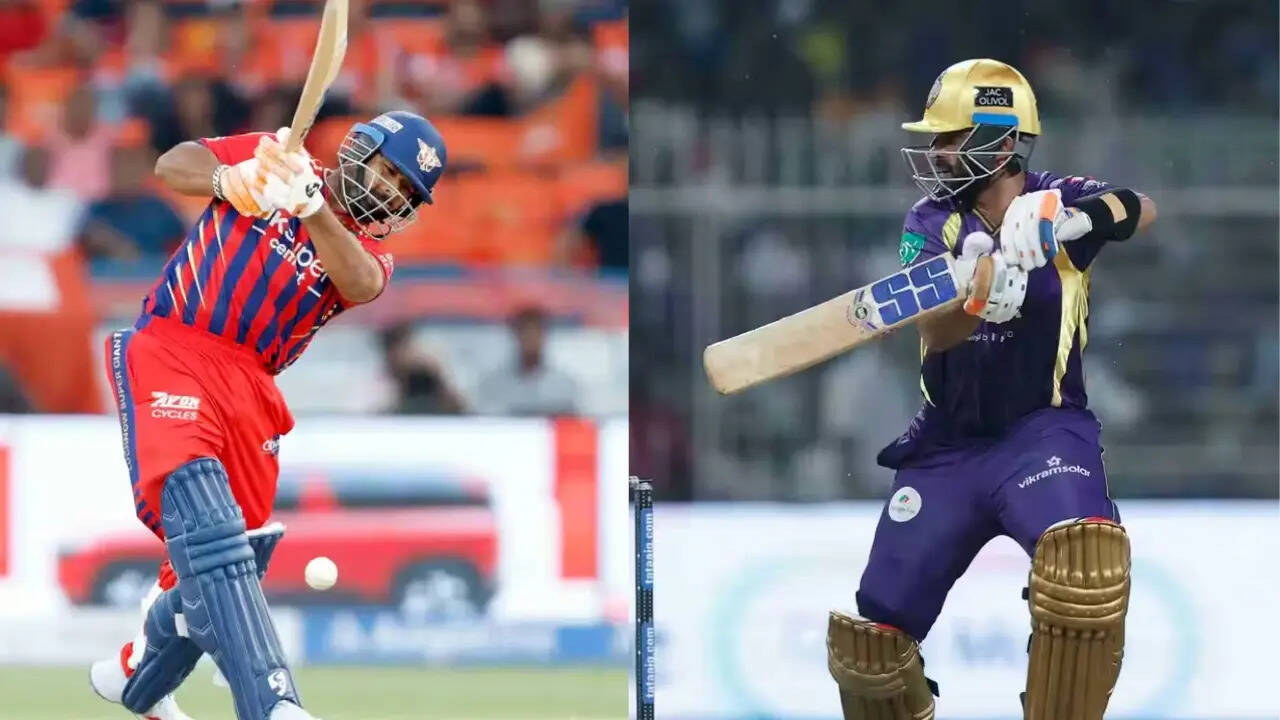
Kolkata Knight Riders take on Lucknow Super Giants at Eden Gardens in an IPL 2026 clash where both teams come in with different form. Three-time IPL champions KKR are yet to register a win after three matches and are looking for changes to turn things around. Lucknow Super Giants, on the other hand, come into the game after close a win over Sunrisers Hyderabad.
The contest will also be shaped by conditions at Eden Gardens, where the pitch has shown help for seam bowlers early on. There is also a weather factor, with rain around the City of Joy in recent days, although forecasts suggest the match may go ahead without major interruption.
KKR’s batting has struggled so far, while LSG’s bowling, especially in the powerplay, has been effective.
Stay with us TOI for all the live updates, key moments and analysis from this match between Kolkata Knight Riders and Lucknow Super Giants.