Tuesday, September 29, 2026
Home Blog Page 785

IPL teams face new BCCI rule as benched players lose field access on match days: Report

0
IPL teams face new BCCI rule as benched players lose field access on match days: Report


The BCCI has introduced another operational restriction for IPL teams, this time limiting the movement of benched players during matches. In the latest update to match-day regulations, players not among the 16 named on the team sheet will no longer be allowed to enter the field of play, even for routine duties such as carrying drinks, bats, or messages.

The IPL trophy. (X Images)

The move adds another layer to the board’s tightening of IPL protocols this season and is understood to have been communicated to franchises recently. As per the updated rule, only those included in the 16-player match list can perform on-field substitute duties during the game. Even among those stationed outside the playing XI, movement near the boundary has now been sharply restricted.

Only five players in bibs allowed around boundary

According to a Cricbuzz report, teams have been informed that no more than five players in bibs can remain active around the boundary rope at any given point during a match. That group can include players from within the nominated 16 as well as others from the squad, but the total number cannot exceed five. The remaining squad members may stay in the dugout, though they are not allowed to move through the area between the boundary line and the LED advertising boards.

The report also noted that the latest restriction is effectively tied to existing clauses in the IPL Match Playing Conditions. One of those clauses, 11.5.2, deals with the manner in which drinks may be carried to players on the field, stating that such movement should happen without wasting time and in proper cricket attire. Another, 24.1.4, relates to squad members who are not part of the match XI or not acting as substitute fielders, requiring them to wear training bibs while on the playing area, including the space between the boundary and the perimeter fencing.

The same report quoted team sources as saying: “Instructions have been passed to us only recently that all substitutes cannot move around during the match. They are also not allowed to carry drinks onto the field. Only the 16 named in the team for the match can do so. In addition to that, only five outside the playing XI can move around. The others can sit in the dugout, but cannot move between the boundary line and LED advertising boards.”

Also Read: DC vs GT LIVE Score, IPL 2026: Mukesh Kumar finds success against Sai Sudharsan, batters chops onto stumps

The development fits into a broader pattern of stricter enforcement seen this IPL season. In recent weeks, franchises were also informed of fresh operational rules covering match-day practice restrictions, access controls around training areas, limits on support staff movement, and tighter presentation protocols. This latest step appears to further standardise the match environment by narrowing who can be present around the field of play and when.

For teams, it means less flexibility at the boundary. For the IPL, it is another sign that match-day conduct is now more tightly regulated than before.


Assam Assembly Elections 2026: The battle for identity, power and ‘Assomiya Jatiyotabad’ india news

0
Assam Assembly Elections 2026: The battle for identity, power and ‘Assomiya Jatiyotabad’ india news


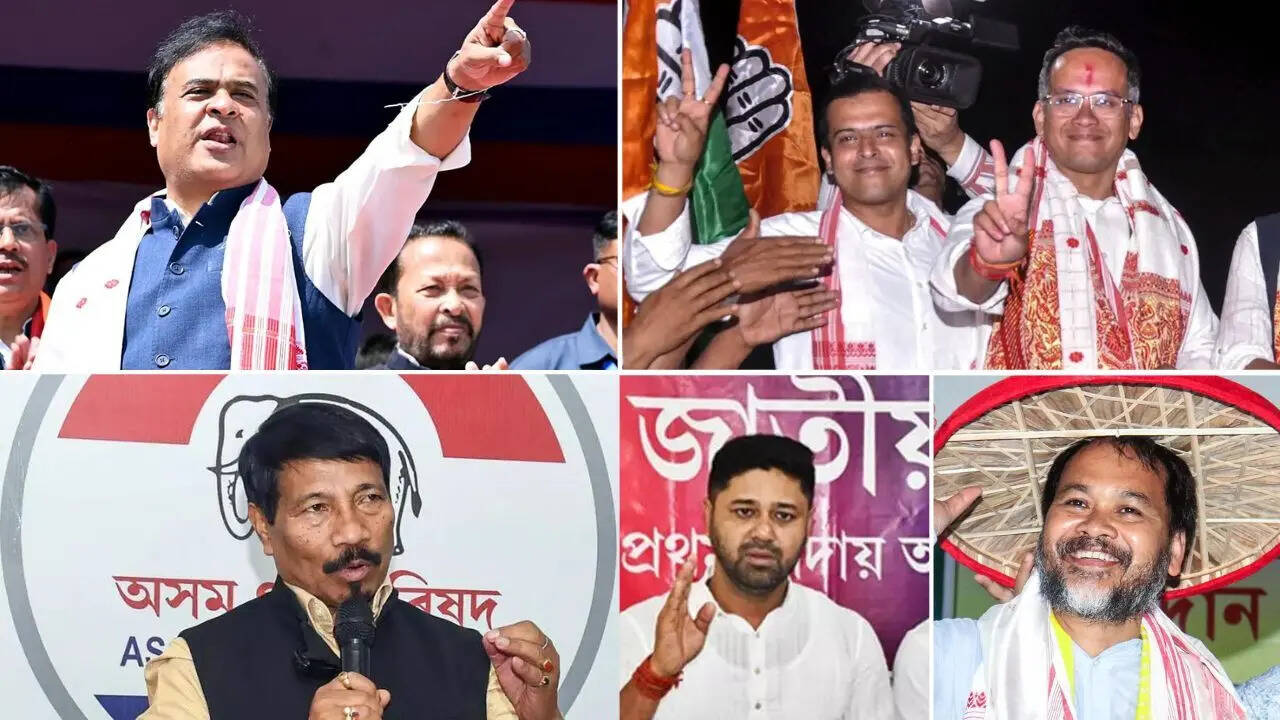
Himanta Biswa Sarma, Atul Bora (left); Gaurav Gogoi, Lurin Jyoti Gogoi, Akhil Gogoi (right)

New Delhi: As the people of the “tea state” prepare to elect a new government on April 9, “Assomiya Jatiyotabad” (Assam(ESE nationalism) remains a main issue for Assam. For decades, the state has grappled with concerns about protecting its cultural and demographic identity, especially from the threat of “outsiders”, primarily illegal immigrants.As the election campaign ended, what happened in the towns, villages and remote parts of the state was not just a visible political contest, but also a quiet, deep churning on identity politics.Therefore, the 2026 assembly elections are not just about who forms the next government, they are a high-stakes referendum on identity, power and the future direction of Assam politics.

Decline of regional parties?

One of the most significant changes in the political landscape of Assam is the decreasing autonomy of regional parties. Historically, Assam politics was shaped by strong regional movements that emerged demanding the protection of Assamese identity. The Assam movement led to the formation of political platforms like the Assam Gana Parishad, which at one time dominated the political narrative of the state. However, over the past few years, the relevance of these regional forces has come into question.Political analysts argue that the “hijacking” of Assamese Jatiyotabad by national parties, coupled with their superior organizational and financial resources, has pushed regional parties into alliances for survival.Columnist Brojen Deka said identity politics has long been at the center of Assam elections. “The protection of culture, language and identity has always been a matter of concern for the Assamese people. And it has been used in different ways by different political regimes,” he told PTI.He told that BJPComing to power in 2016 was also based on this issue.“If you look at the broader entry of the BJP into power in 2016, the election issue was ‘Jati, Mati, Bheti’ (community, land, home), which was a direct reference to protecting the indigenous identity. And even in the 2026 elections, it is still promising to take action against illegal Bangladeshis from the state,” he said.

Change in AGP’s political journey

The journey of the Assam Gana Parishad reflects the broader challenges faced by regional parties. The AGP which once positioned itself as the primary defender of Assamese identity and led governments in 1985 and 1996. Today, however, she finds herself as a junior ally within the BJP-led coalition.The party has its roots in the Assam Movement (1979–1985), which was a mass movement led by the All Assam Students Union and supported by the All Assam Gana Sangram Parishad. The movement focused on demands to identify and deport “illegal immigrants”, and saw widespread protests, strikes, and political mobilization across the state.The movement ended with the signing of the Assam Accord on 15 August 1985 after talks with its leaders by then Prime Minister Rajiv Gandhi. The agreement created a framework for detecting and deporting illegal immigrants, while also promising political and economic safeguards for the Assamese people.Soon after, the movement’s leaders moved into electoral politics. In October 1985, at a conference in Golaghat, several regional groups, including the Assam Jatiyatabadi Party and the Purbanchaliya Lok Parishad, came together to form the Assam Gana Parishad.Riding on the momentum of the Assam Accord and strong regional sentiment, the AGP contested the 1985 assembly elections focusing on protecting Assamese identity, economic development and greater state autonomy. The party fielded 107 candidates and won 64 seats, forming the first regional government in Assam. She returned to power again in 1996 on the same issue.However, the party’s influence has declined over the years.Highlighting the change, retired educationist Nav Kumar Mahanta said the party now contests very few seats and there have been significant changes in its candidate profile.“What is more worrying now is that this year, 13 of its 26 candidates are Muslims and many of them are Bengali-speaking, a community that the AGP had earlier viewed with suspicion of being illegal immigrants,” he said.He said that while the AGP’s approach was secular, it had historically maintained a distance from Bengali-speaking Muslims, a stance that appears to have evolved in recent years.

Rise of ‘Brand Himanta’

is at the center of this assembly election Himanta Biswa SarmaWho is seeking a second consecutive term as Chief Minister. In 2021, in a state historically defined by “casteism” and ethnic identity, the BJP leadership chose Sarma, a Brahmin, over incumbent Sarbananda Sonowal, who is from the indigenous Assamese community.Over the years, Sarma has crafted a distinct political persona often referred to as “Brand Himanta” or even colloquially as “Mama” (uncle), who blends aggressive rhetoric with welfare-driven governance. This time his campaign is based on a mix of strong messages and emotional appeals.As Hemant seeks a second term as CM, anti-Mia speeches, no-holds-barred approach, strong welfare pitch and caste, mati, bheti (identity, land, motherland) pitch have all become key pillars of his campaign strategy.Along with this, the BJP-led government has highlighted welfare schemes and infrastructure development to strengthen its support base. The ruling National Democratic Alliance (NDA) led by Himanta includes the Bharatiya Janata Party as well as Assam Gana Parishad, Bodoland People’s Front and Rabha-Hassong Joutha Manch.The stakes are high for BJP. After forming governments in 2016 and 2021, the party is now aiming for a third consecutive term, this time with the added ambition of securing a majority on its own.

Congress bank current Gaurav Gogoi

On the other side of the political spectrum, the Congress is attempting a comeback by projecting Gaurav Gogoi as its chief ministerial face.The party has launched an aggressive campaign against Sarma, targeting both his governance record and ideological positions. In a sharp attack earlier this year, Gogoi had questioned the chief minister’s credibility on identity politics.“How does he try to portray himself? Does he believe he is a great Hindu leader or a great Khilonjiya leader?” Gogoi asked on February 4, challenging Sarma’s claims of representing indigenous Assamese interests.He further argued that support for the Citizenship Amendment Act (CAA), is a deeply controversial issue in Assam. By invoking the term “Khilonjia”, which refers to the indigenous, “soil-born” communities of Assam, Gogoi tried to re-position the Congress within an identity discourse that traditionally favors regional and nationalist narratives.

opposition alliance

To counter the BJP’s electoral machinery, the Congress has formed a broad, six-party opposition alliance that includes the Left and regional forces.The alliance includes the Communist Party of India (Marxist), Communist Party of India (Marxist–Leninist) Liberation, All Party Hill Leaders Conference, Lurinjyoti Gogoi-led Assam Jatiya Parishad and Akhil Gogoi-led Raijor Dal. Together, they aim to strengthen anti-incumbency sentiment and present a united front against the ruling coalition.The alliance has announced candidates for 122 of the 126 seats, with the Congress contesting the highest share in 94 constituencies. Raijor Dal will contest on 11 seats, including two “friendly fights” with the Congress.Akhil Gogoi, who won from Sivasagar in the last election while in jail on sedition charges linked to the anti-CAA protests, is once again contesting from the same constituency. Over the years, he has built a strong grassroots image through sustained activism and mobilization.

Assam Poll: 3G

The BJP was collectively targeting the parties by treating them as a de facto faction even before they formally came together.The BJP labeled the trio the “3G”, derogatorily branding them as “Miya, Miya Pro and Miya Pro Max”, an apparent attempt to portray them as pro-Muslim. Also, it warned Lurinjyoti Gogoi that forming an alliance with the Congress would be tantamount to betraying “Assamese nationalism”.Both Gogois belong to the Ahom community, which is numerically small but socially and politically influential, especially in Upper Assam. The Ahom dynasty founded by Sukafa ruled the region for nearly 600 years until the advent of British rule in the early 19th century, making the political alignment of the community important across multiple constituencies.

Congress, BJP and ‘Jatiyotabad’ story

Interestingly, both the Congress and the BJP have at different points attempted to appropriate the narrative of Assamese nationalism.Analysts see this change as linked to the tenure of the former Chief Minister. Tarun GogoiWho sought to address identity concerns through measures such as updating the National Register of Citizens (NRC). The BJP later enhanced this narrative with its “Jati, Mati, Bheti” campaign and established itself as the leading defender of indigenous identity.This overlap has blurred ideological differences, leaving regional parties struggling to reclaim their original political space.

last election trends

The rise of the BJP in Assam has been dramatic.From just five seats in 2011, the party reached 60 seats in the 2016 assembly elections, ending the Congress’s 15-year rule under Tarun Gogoi. With the support of allies AGP and BPF, the NDA won 86 out of 126 seats and formed the government with Sarbananda Sonowal as chief minister.This momentum continued in 2021, when the BJP again won 60 seats and retained power, with Himanta Biswa Sarma taking over as the 15th Chief Minister of the state.Now in 2026, the party wants to further strengthen its position.

High-profile candidates and major competition

The 2026 election has turned out to be a crowded field, with 722 candidates contesting in 126 constituencies. Prominent names include Himanta Biswa Sarma, Gaurav Gogoi, Badruddin Ajmal, Assembly Speaker Vishwajit Daimary, Leader of Opposition Debabrata Saikia and senior ministers Ranoj Pegu, Chandramohan Patowary, Atul Bora, Keshab Mahanta, Ajanta Neog and Ashok Singhal.Regional leaders like Akhil Gogoi and Lurinjyoti Gogoi are also prominent contenders.

big question

As Assam enters this crucial election, the contest is not just about who will form the next government.Can BJP convert its dominance into majority alone? Can the Congress with its broad alliance present a credible challenge? And perhaps most importantly, can regional parties regain their relevance in a political landscape dominated by national powers?Despite its current limitations, analysts believe that regional politics is far from over.“The spirit of ‘Assomiya Jatiyotabad’ is very important to the Assamese voters and public. And people understand that only a strong regional voice can protect it,” PTI quoted Brojen Deka as saying.The 2026 Assam Assembly elections are, in many ways, a test of competing narratives. On one side is a powerful national party trying to consolidate its dominance and on the other is a fragmented but committed opposition trying to regain lost ground.And in between is the enduring question of Assamese identity, its meaning, its protectors and its future.



Allu Arjun Birthday: 'Raaka' star greets massive crowd outside home

0
Allu Arjun Birthday: 'Raaka' star greets massive crowd outside home


Allu Arjun celebrates his 44th birthday with fans as ‘Raaka’ first look drops - Watch
Tollywood star Allu Arjun’s birthday saw massive fan gatherings outside his residence, with enthusiastic celebrations including cheers and fireworks. Later, the actor unveiled the first look of his upcoming sci-fi epic, ‘Raaka,’ directed by Atlee. The striking poster reveals Arjun in a bold, bald avatar, hinting at a grand cinematic experience with multiple roles and a star-studded cast.

As Tollywood star Allu Arjun celebrates his birthday today, a huge number of fans gathered outside his house to catch a glimpse of the ‘Raaka’ star. Videos and photos circulating on the internet show the crowd cheering and whistling to celebrate the birthday of their favorite actor.

Fanfare outside Allu Arjun’s residence

In videos on X (formerly Twitter), the area near his house can be seen filled with excited fans. Many of them had brought multiple banners, posters, and cutouts of the superstar. There were loud cheers, whistles, and chants. Additionally, fireworks could be seen in the sky, making it look like a festive celebration.Later at midnight, Allu Arjun came out to greet his fans. Though he stayed within his premises, his presence alone thrilled the crowd. Dressed in a simple black T-shirt and white trousers, he smiled and waved warmly at his fans.Later in the day, Allu Arjun made another appearance for his fans. He was seen in a half-sleeved black shirt, black jeans, and dark sunglasses.

Allu Arjun’s first look in ‘Raaka’

On this special day, the makers of his upcoming film with director Atlee revealed the title and first look of the project. The film is titled ‘Raaka’. The poster shows Allu Arjun in a bold new avatar with a bald look and sharp features. He has kohl-lined eyes, a receding hairline, and a thick grey beard. He covers part of his face with a clawed hand and stares straight ahead.‘Raaka’ is set to be a grand sci-fi epic, where Allu Arjun is expected to be seen playing four different roles. The film features Deepika Padukone as the female lead. It is also reported that Mrunal Thakur, Janhvi Kapoor, and Rashmika Mandanna will be part of the project.


Israel strikes central Beirut without warning | US-Israel war on Iran News

0
Israel strikes central Beirut without warning | US-Israel war on Iran News


Israeli air raids have torn through densely populated commercial and residential districts in central Beirut without warning, striking the heart of the capital just hours after a ceasefire was announced in the United States-Israeli war with Iran.

Lebanon’s Ministry of Public Health said on Wednesday that dozens of people had been killed and hundreds wounded, stressing that the figures were preliminary and likely to rise as rescue workers sifted through the rubble.

Israel had already claimed that the truce did not apply to its conflict with Hezbollah in Lebanon, despite mediator Pakistan saying the agreement extended to that front as well.

The Israeli military described the bombardment as the largest coordinated strike of the current war, with more than 100 Hezbollah-linked targets hit within 10 minutes in Beirut, southern Lebanon and the eastern Bekaa Valley.

Several of the strikes landed in busy commercial areas, sending residents fleeing in panic as sirens wailed and glass and debris carpeted the streets.

Lebanon’s National News Agency said at least five neighbourhoods in Beirut’s central and coastal districts were hit.

The Israeli military said it had targeted missile launchers, command centres and intelligence infrastructure, and accused Hezbollah of using civilians as human shields.

Residents and local officials, however, insisted that the buildings struck were not military sites.

While Israel has regularly bombed southern and eastern Lebanon, as well as Hezbollah strongholds in Beirut’s southern suburbs, it had rarely carried out attacks in central Beirut since the latest round of fighting with the group began on March 2.

Israeli air strikes in Lebanon have killed more than 1,530 people so far, and have forced at least 1.2 million people to flee their homes.


Shubman Gill issues worrying injury update despite IPL return: ‘It’s something similar’ | Cricket News

0
Shubman Gill issues worrying injury update despite IPL return: ‘It’s something similar’ | Cricket News


Shubman Gill issues worrying injury update despite IPL return: 'It's something similar'

NEW DELHI: Shubman Gill issued a worrying update on his neck injury despite returning to action during IPL 2026 Match 14 between Delhi Capitals and Gujarat Titans at the Arun Jaitley Stadium on Wednesday. Delhi Capitals chose to bowl first against Gujarat Titans in their IPL 2026 clash at the Arun Jaitley Stadium, continuing their strong start to the season.

Watch

Yashasvi Jaiswal reveals RR dressing room mood after third straight win

While DC came into the game with two wins, Gujarat Titans were still searching for their first victory. The match also marked the return of GT captain Shubman Gill after he missed the previous game due to a muscle spasm.

Gill’s injury concern and return

Gill’s comeback was a boost for Gujarat, but his update on his fitness raised some concern. When asked about whether it was the same recurring injury he picked up during India’s home series against South Africa, he admitted, “It’s much better, thank you. Yes, it’s something similar.”This suggests the neck problem he faced earlier could still be lingering, even though he is fit enough to play.

DC vs GT news

At the toss, Delhi Capitals captain Axar Patel explained the decision to bowl first, pointing to pitch conditions and recent success while chasing.“We will bowl first. We’ve chased well in the last two matches and this is a fresh wicket. It’s been raining; there could be some moisture. Bowl first, have a look at the wicket, restrict them and chase down the score,” he saod.Delhi have looked strong so far with back-to-back wins, while Gujarat Titans have struggled, losing both their matches. With Gill back in the lineup, GT will be hoping to turn things around and get their campaign on track, but concerns over his fitness could remain a talking point going forward.


Report: Ragas by the River 2026

0
Report: Ragas by the River 2026


The rhythmic beat of drums welcomed music lovers to The Riverview Retreat, nestled along the tranquil Kosi River in Corbett, Uttarakhand — the venue for the third edition of Ragas by the River held from 21st to 23rd March.

The Ragas by the River Legend Award was presented to Ustad Amjad Ali Khan and Pandit Hariprasad Chaurasia (in the picture). (Courtesy Ragas by the River)

Kutle Khan and his troupe opened the festival in true rock star fashion with crowd favourites like Chhaap Tilak and Mast Qalandar. A lively khartal jugalbandi followed, drawing the audience into rhythmic applause. His powerful voice carried through a string of beloved tracks, including Sajna Tere Bina, Ali Maula, Piya Re, Afreen Afreen, and Yeh Jo Halka Halka. The audience sang along, many rising to their feet. Though the crowd craved more, he brought the evening to a fitting close with Aaj Jaane Ki Zid Na Karo. A lavish gourmet spread — featuring Kashmiri wazwan, Italian, and Pan-Asian cuisine — awaited guests thereafter.

The next morning unfolded in stark contrast. Gentle strains of ragas by Armaan Khan created a serene atmosphere. After rendering a soul-stirring Raag Miya ki Todi, he captivated listeners with Ab Mori Naiya Par, Albela Sajan Aayo Re, and Yaad Piya Ki Aaye. He also performed Qubool, which he composed for the 2025 film Haq, and Aaoge Jab Tum from Jab We Met. The 22-year-old son of Ustad Rashid Khan spoke about making Hindustani classical music more accessible: “It’s not rocket science — it’s something anyone can appreciate if they try.”

After breakfast, Kumaoni singer-songwriter Nikhil Saklani presented a vibrant set of Uttarakhandi folk and Pahadi songs on the sunny lawns. Following the Covid-19 lockdown, Saklani had travelled across villages in his home state, rediscovering traditional music and sharing its cultural context through an Instagram series. His performance blended storytelling with music. One composition addressed environmental challenges in the region. Another narrated how news of Lord Ram’s victory reached certain villages 11 days late —explaining why Diwali is celebrated later in Uttarakhand. He also recounted tales of mythical forest fairies and sang about a man-eating tiger that once terrorised the region, drawing in Jim Corbett himself. An original piece on life in the mountains rounded off his set, as audiences enjoyed traditional Garhwali cuisine for lunch.

By evening, a gentle breeze swept across the lawns of the festival’s hospitality partner, Taj Corbett Resort & Spa, where a stunning riverside stage had been set up. Actor Shekhar Suman, the master of ceremonies, opened proceedings with an impressive speech. “Where else would you find a setting like this?” he remarked, before quoting Sahir Ludhianvi. This year’s theme, Celebrating Legacies, honoured the gharanas and maestros who have shaped India’s musical heritage. Accordingly, The Ragas by the River Legend Award was presented to Ustad Amjad Ali Khan and Pandit Hariprasad Chaurasia.

As the sun dipped below the horizon, Amaan and Ayaan Ali Bangash took the stage. Their sarod recital featured Chhaap Tilak and ragas Jhinjhoti and Durga, marking the festival of Eid. “The kids and their fascination for tigers is the reason why we started coming so frequently to Corbett. It’s wonderful to have an amalgamation of nature and music coming together. It’s unusual and rare for us to play in this kind of setting and interact with the audience, which we can do here,” said Amaan Ali Bangash. “This place is as real as it can get. The festival is a kind of a homecoming as I have been here for all three years. It has been an honour and a pleasure,” he added.

Ustad Amjad Ali Khan followed, opening with Kabini from Celebrating Our Tigers, before moving into Ekla Cholo Re and Ganesh Kalyan. Mid-performance, he demonstrated the unique technique of playing the sarod with his fingernails. A magical moment unfolded as three generations joined him on stage — his sons and grandsons, Zohaan and Abeer — beginning with a stirring rendition of Vande Mataram.

The evening continued with Kaushiki Chakraborty’s tribute to six iconic female artists. Declaring herself “a proud rebel feminist,” she wondered why maternal legacies often go unrecognised. Her repertoire honoured legends like MS Subbulakshmi, Gauhar Jaan, Noor Jehan, Shobha Gurtu, Kishori Amonkar, and Begum Akhtar.

After dinner, flautist Rakesh Chaurasia captivated the audience with an engaging performance. Beginning with Raag Bageshri and moving into Raag Hansdhwani, he also paid tribute to Ustad Zakir Hussain with Lotus Feet. He concluded with Pahadi Dhun, reflecting on how the flute feels most at home in nature. The night ended on a lively note with retro tracks by Goa-based band A26.

The following morning began on a meditative note with Purbayan Chatterjee, returning for his third year. Accompanied by vocalist Ananya Wadkar, he presented a seamless blend of classical and contemporary music. The set featured devotional pieces, morning ragas, and an energetic jugalbandi. Inspired by the riverside setting, the performance concluded with Dekha Ek Khwab, Nadi Kinare, and a spirited rendition of Garaj Garaj.”

The final evening opened with Prithvi Gandharv’s tribute to ghazal legends Mehdi Hassan, Ghulam Ali, and Jagjit Singh. Joined later by Meenal Jain, the duo blended classical ghazals with contemporary elements, even incorporating English lyrics. The set also had a qawwali medley by Nusrat Fateh Ali Khan, and ended with Prithvi’s song Nirmohiya, which he had composed for Bandish Bandits.

After a delicious dinner of Rampuri cuisine, the grand finale featured Hariharan, who took the audience on a nostalgic journey through his vast repertoire. From Roja Jaaneman to Tu Hi Re, his performance seamlessly blended classical and film music. He also sang some retro songs, such as Oh Hansini in Kishore Kumar style, while inserting his groovy dance movements in between. Joined by his son Akshay for remixed tracks, Hariharan’s set carried on past midnight, closing the festival on an electrifying note.

This year’s event drew over 400 attendees from India and abroad, including a group of 50 music enthusiasts from Singapore. “In each edition of the festival, we try to create a blend – of male and female voices, instruments, Sufi and retro. People come here to experience blissful music in the lap of nature. My goal is to promote Indian classical music. We plan to expand the brand to various editions, such as Ragas by the Lake, Ragas by the Sea, and Ragas by the Sand. Wherever nature is, the ragas will follow,” said Vir Srivastava, festival director. “It is the most incredible experience. You have legends and their offspring and then their offspring – it can’t get better than this!” added actor Suchitra Pillai, who has anchored all three editions of the festival.

A freelance writer based in New Delhi, Neha Kirpal writes primarily on books, music, films, theatre and travel.


Dhurandhar: HC restrains Santosh Kumar from accusing Aditya Dhar of copying

0
Dhurandhar: HC restrains Santosh Kumar from accusing Aditya Dhar of copying


Dhurandhar: HC restrains Santosh Kumar from accusing Aditya Dhar of copying

The Bombay High Court, on April 8, has passed an interim order restraining filmmaker Santosh Kumar RS from making comments concerning the script of the Hindi film Dhurandhar. For the unversed, Santosh Kumar RS accused Dhurandhar makers, including writer-director Aditya Dhar, of copying the script. The latter flagged Santosh`s comments as defamatory.

Aditya Dhar gets relief from Bombay HC

Justice Arif S Doctor, while hearing the defamation suit filed by Dhar against Kumar on Wednesday, passed the order, noting that while Kumar had been served notice of the case, none appeared for him. The Court then proceeded to grant Dhar limited interim relief, noting that he had made out a prima facie case for the grant of such relief.

The court ordered, “Until the next date, the defendant (Kumar) shall be restrained from repeating words set out in the suit, and all other words of a similar nature. Issue notice,” while clarifying that the order is specifically against Kumar. It also noted that it will not operate till April 16, when the matter is next listed for further hearing.

Senior Advocate Birendra Saraf, who appeared for Dhar before the Court, argued that Kumar`s comments were deeply prejudicial and defamatory. “All I seek is, if he has a grievance about infringement, he himself said I am going to initiate legal proceedings. He can initiate legal proceedings, and I will respond to the same appropriately. But in the meantime, he can`t use such language,” Saraf told the court.

The Court granted Dhar interim relief, noting that the allegedly defamatory comments had been widely shared. The court concluded, “In my view, the plaintiff has made out a case for the grant of limited ad-interim relief.”

About the plagiarism case

Dhar`s defamation case comes after comments made by Kumar at a press conference held days after the release of the film Dhurandhar: The Revenge. Kumar allegedly accused Dhar and the makers of Dhurandhar of copying his registered script titled D Saheb.

After the press conference, Dhar sent a legal notice to Kumar, in which he denied any plagiarism and even cautioned Kumar against making any such further comment. However, when Kumar failed to respond to the legal notice, Dhar approached the Bombay High Court for relief. Dhar’s plea also sought an injunction and damages for statements made by Kumar, which the director claims are baseless and defamatory.


Bye, bye to the Trump trades| Business News

0
Bye, bye to the Trump trades| Business News


WHEN WAS peak Donald Trump? As America braces for midterm elections in November, pinpointing the moment when the president started to turn into a lame duck is becoming something of a parlour game. Was it his decision to strike Iran in late February, entangling America in another messy conflict in the Middle East and sending petrol prices soaring? Or the week before, when the Supreme Court declared many of his wanton tariffs unconstitutional? Or, perhaps, a month before that, when a rare public rebuke from the Federal Reserve defanged a criminal probe into the central bank?

U.S. President Donald Trump gestures, as he heads back to the Oval Office, on the day of the 2026 White House Easter Egg Roll, in Washington, D.C., U.S., April 6, 2026. REUTERS/Nathan Howard (REUTERS)

Ask the stockmarket and the answer is, in aggregate, much earlier. The share prices of companies that investors expected to benefit from a Trump presidency hit a high in mid-2025, relative to those most associated with his defeated predecessor, Joe Biden. Today a “long Trump, short Biden” basket is 20% below its peak, roughly where it was around the time of the election in November 2024.

Some of the picks touched on the big themes of Mr Trump’s campaign, such as bullying of NATO freeloaders (which boosted European armsmakers) or his carbon-cuddling (great for fossil fuels). These are doing relatively well. The president’s threats to invade Greenland and his grumbling over allies’ reluctance to join his Iranian campaign continue to shore up Europe’s defence industry. The war in Iran has pushed up the price of oil—and the profits of American oilmen.

Other Trump trades have also performed decently. Fannie Mae and Freddie Mac, government-backed enterprises that offer liquidity to America’s mortgage market, first soared on rumours that Mr Trump is keen on reprivatising them, unwinding state control in place since the global financial crisis of 2007-09. The pair, which Bill Ackman, a hedge-fund billionaire sympathetic to Mr Trump, recently called “stupidly cheap” and “asymmetry at its best”, are down from their peaks but much higher than they were in November 2024.

Where the president’s policies have been muddier, expected winners have often seen limp returns. A case in point is tariffs, Mr Trump’s all-purpose tool of economic and foreign policy. Domestic American manufacturers failed to benefit from reduced overseas competition even before the Supreme Court ruling, partly because of the inconstancy of presidential duty-setting.

Occasionally, investors can be right about the policy but wrong about the beneficiary. Private-prison operators like GEO Group or CoreCivic looked poised to mint it thanks to the mass deportations Mr Trump promised. The administration still looks intent on reaching its target of throwing out millions of illegal immigrants, and is pouring money into the effort. But much of the cash is going straight to Immigration and Customs Enforcement and other arms of the government. The chunk making it to the private sector is rather less than the market had been banking on.

And then there are the clear losers. The market value of Rumble, which runs a right-wing social network, more than doubled in the months after Mr Trump was elected. It is now back to where it was before election day 2024. More surprising still is the fate of Trump Media & Technology Group (ticker: DJT). It runs Truth Social, the main venue for big presidential announcements, and has dabbled in cryptocurrencies and nuclear fusion. Mr Trump is the majority shareholder (via a trust controlled by one of his sons). DJT peaked well before the 2024 election, and is now down by around 80% relative to that.

Yet the Trump trade looming over all others is not in the equity market. Rather, it is the bet that American Treasury bonds would fall in price and yields, which move inversely, would jump. Investors expected Mr Trump to blow up the deficit, heat up the American economy and potentially mess with the independence of the Fed. In the months ahead of the election, yields on 30-year Treasuries rose by 0.5 percentage points.

In office, the president has tried to live up to all three expectations. His varying success—stellar at the first, mixed at the second and poor at the third—resulted in disappointment to those shorting Treasuries. But then the energy shock from the Iran war pushed up inflation expectations. The yield on 30-year bonds is up by 0.4 percentage points since November 2024. The president is unpredictable—except, it seems, in his ability to depress the value of American debt.


IPL 2026: Axar Patel wins toss, DC to bowl first against GT

0
IPL 2026: Axar Patel wins toss, DC to bowl first against GT


IPL 2026: Axar Patel wins toss, DC to bowl first against GT

Axar Patel, captain of the Delhi Capitals, won the toss and chose to bowl first against the Gujarat Titans on Wednesday. The two teams are facing off at the Arun Jaitley Stadium in Delhi.

Delhi Capitals are the in-form team, having won both their opening matches of the season. Sameer Rizvi has been the star performer for them so far in IPL 2026. Meanwhile, the Gujarat Titans have struggled and lost both of their opening matches so far.

Axar Patel won the toss and decided to field first. DC have chased in their last two matches so far and would want to continue that trend.

“We will bowl first. We’ve chased well in the last two matches, and this is a fresh wicket. It’s been raining; there could be some moisture. Bowl first, have a look at the wicket, restrict them and chase down the score. We look at the match-ups, making it as difficult as possible for the batters and choose the best possible bowlers. Same XI for us,” Axar Patel said.

Meanwhile, Shubman Gill is back for the Gujarat Titans. The star Indian opener missed the last game due to injury.

“We were going to bat first anyway. Hopefully, if the weather stays like this, you know, there’ll be no dew in the second innings. (Will it be challenging as an opening batter?) I mean, it’s all about assessing the conditions in the first couple of overs. I think we’ve been having some good opening partnerships with Sai and me. So hopefully, you know, we have a good powerplay and then we can post some good totals along the board. I mean, it’s all about clicking in the one game, you know. Even in the last game, we came pretty close, losing by not that many runs. And I think it’s one, it’s one, just one guy, you know, sticking till the end, whether someone from the middle order or from the top order. And maybe today is the day. KK Kumar is out, and I come back in. The rest of the team is the same,” Shubman Gill said.

Confirmed Playing XI for both teams:

Gujarat Titans (Playing XI): Shubman Gill(c), Sai Sudharsan, Jos Buttler(w), Washington Sundar, Glenn Phillips, Shahrukh Khan, Rahul Tewatia, Rashid Khan, Kagiso Rabada, Mohammed Siraj, Ashok Sharma

Delhi Capitals (Playing XI): KL Rahul(w), Pathum Nissanka, Nitish Rana, Vipraj Nigam, Axar Patel(c), David Miller, Tristan Stubbs, Kuldeep Yadav, Lungi Ngidi, T Natarajan, Mukesh Kumar


Christians at the Crossroads: Will the UDF retain its traditional base? | india news

0
Christians at the Crossroads: Will the UDF retain its traditional base? | india news


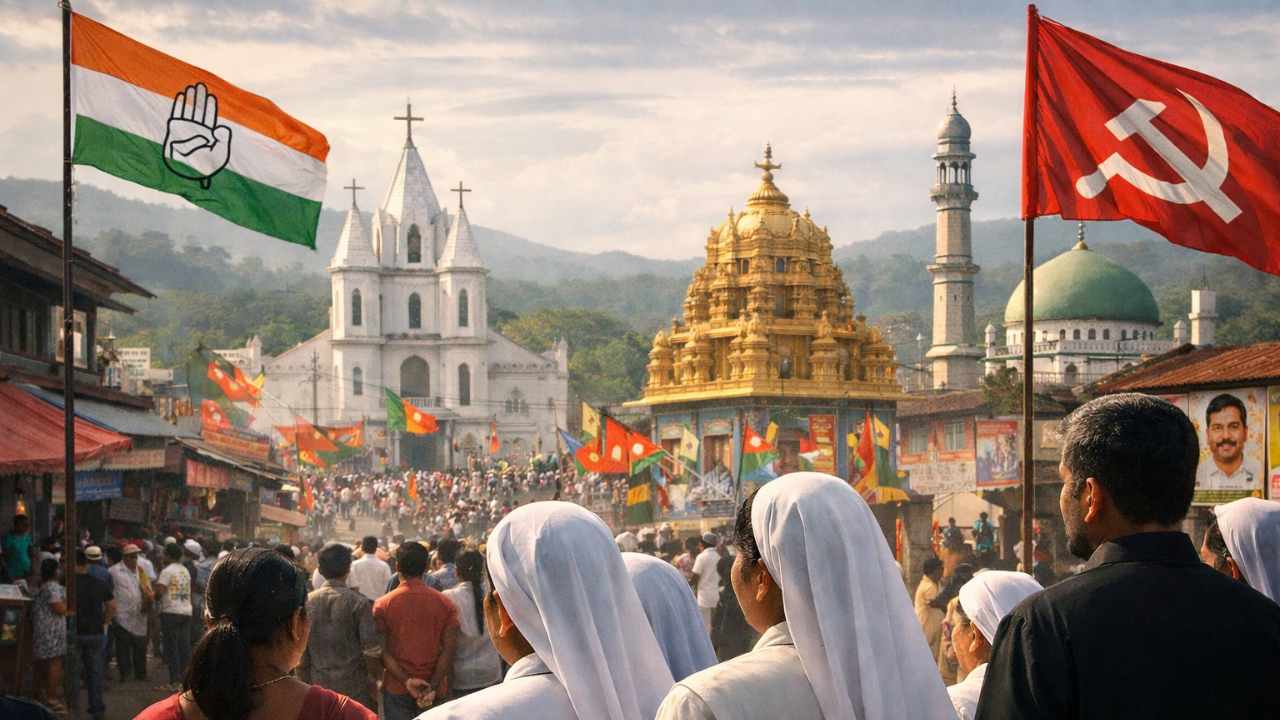
As the assembly elections in Kerala approach on April 9, the political landscape of the state has completely focused on minority communities, especially Christian voters. For decades, the United Democratic Front (UDF) has relied on Christian voters, particularly the Syrian Christian population in central Kerala, to secure key constituencies. However, in 2026, this traditional alignment is being tested by a combination of socio-economic concerns, political realignment and perceptions of communal bias, raising questions about whether the UDF can sustain its historical gains.Central Kerala, spanning districts like Kottayam, Idukki, Pathanamthitta, Ernakulam and Thrissur, has always been a decisive battle ground. Christian communities in the region, historically associated with the Congress, are evaluating the parties on the basis of current governance, performance and minority welfare rather than long-standing loyalties. Political defections have further complicated matters, particularly the shift of the Kerala Congress (M) from the UDF to the Left Democratic Front (LDF) in 2020, which reset local power dynamics and eroded the UDF’s once reliable vote bank.This complexity is further enhanced by the report and recommendations of the JB Kosi Commission, which examined the socio-economic conditions of the Christian community in Kerala. With over 4.87 lakh applications received, the Commission highlighted disproportionate minority welfare measures in favor of Muslims, which fueled political debate and influenced voter sentiment within Christian communities. In this backdrop, the UDF faces the dual challenge of dealing with the growing influence of the LDF and the inroads made by the LDF, as well as consolidating support among both Christians and Muslims. BJP In some constituencies.

How influential are Christian communities?

According to the 2011 census, Christians constitute about 18.38% of the population of Kerala, making them a major minority with electoral power concentrated in central Kerala. Districts like Kottayam, Idukki, Pathanamthitta, Ernakulam, Alappuzha, Thrissur and Wayanad have substantial Christian populations, who often form the decisive block in closely contested constituencies. Their presence in rubber-belt areas, plantations and coastal areas means that even minor changes in voting preferences can tilt the results, especially in swing seats like Thrissur and Aranmula.While the UDF has traditionally relied on Christian loyalty, the community is increasingly evaluating parties on governance, minority welfare and socio-economic performance. This change has created space for other parties, especially the BJP, to make efforts to reach out. Despite its Hindutva-driven politics, which emphasizes Hindu nationalism and has historically alienated minority communities, the BJP has made clear efforts to engage Christian voters. In a recent move, BJP leader Chandrashekhar sought the release of two nuns from Kerala arrested on human trafficking charges in Chhattisgarh, indicating sensitivity to Christian concerns. Yet, this outreach faces structural limits: Central government-related policies, such as the Foreign Contribution (Regulation) Amendment Bill, 2026, have reinforced perceptions of the BJP as anti-minority, making historical distrust difficult to overcome. Chandrashekhar’s own controversy over discrepancies in his election affidavit, though not fatal to his nomination, further complicates the party’s image among voters.The influence of Christians in Kerala is much greater than their numerical strength. Their high literacy rates, active participation in community organizations and engagement with socio-political issues make them discerning voters. For the BJP, expanding this base requires not only symbolic gestures, but also a careful balancing act: appealing to Christian concerns while maintaining its Hindutva-driven core ideology. Meanwhile, the UDF and LDF continue to keep Christian votes at the center of their electoral calculations, knowing that any realignment in this community could decisively reshape the political map of the state.

areas that can swing

Central Kerala remains a hotbed of political unpredictability, where small changes in voter sentiment can tip the balance. The constituencies here are shaped by a mix of religious diversity, industrial development and local issues, creating a fluid political landscape.Kunnathunad in Ernakulam is an example of this trend. Once predominantly agricultural, the area has developed into a commercial and industrial hub with rubber processing units, rice mills, small-scale factories and major facilities such as Kinfra and BPCL. These changes have not only boosted local revenues but also shifted voter expectations toward concrete development outcomes. Historically alternating between the UDF and LDF, the constituency became even more competitive in 2015 with the rise of Twenty20 (T20), which has attracted voters from both traditional fronts. With approximately 40% Christian (mostly Jacobite) and 20–22% Muslim population, this constituency reflects the complexity of minority vote patterns. While the LDF emphasizes infrastructure and local development, allegations of corruption and environmental concerns – such as industrial pollution affecting water bodies – have created opportunities for opposition parties.Thrissur has long been the scene of a three-way contest, making it one of the most closely watched constituencies in Kerala. The 2021 assembly election was decided by a narrow margin: the CPI candidate won with only 34.25% of the votes, defeating the Congress with 33.52%, while the BJP secured 31.30% of the votes. Entry of prominent personalities like actor turned politician Suresh Gopi A new layer of unpredictability has been added with Congress leader Padmaja Venugopal contesting for the BJP in the 2024 Lok Sabha elections. The Thrissur constituency is socially diverse, with significant Christian, Hindu and Muslim populations, making coalition dynamics and community alliances important for any candidate. Local issues, including urban development, industrial growth and employment opportunities, dominate the campaign narrative, while historic loyalties are being tested by emerging political players.Aranmula in Pathanamthitta district shows a long history of electoral ups and downs between the CPI(M) and the Congress. The constituency, currently represented by Minister Veena George, has seen frequent changes due to demonstration and issue-based voting. With a sizeable presence of Hindu and Muslim voters as well as Christians, Aranmula exemplifies the fluidity of voters in Central Kerala. The LDF’s focus on health care, education and infrastructure is balanced by the UDF’s criticisms on corruption and governance, while the BJP attempts to consolidate Hindu votes under the leadership of Kummanam Rajasekharan. These dynamics also introduce small changes in voter sentiment that are capable of altering the outcome, especially when voter coalitions are not strictly community based.Pathanamthitta, another important swing district, is heavily influenced by Syrian Christian voters and plantation-based communities. Local concerns include agricultural distress, human-wildlife conflict and implementation of welfare policies such as the JB Kosi Commission recommendations for Christians. The electoral behavior of the constituency is shaped by community-specific issues as well as broader debates on development and governance. Both the UDF and LDF continue to compete for minority support, while the BJP’s presence remains limited, attempting symbolic outreach but constrained by perceptions of a Hindutva-driven agenda.

What Issues Will Affect Christian Voting Behavior

Unlike earlier decades, where party loyalty often determined voting patterns, today’s Christian voter is more influenced by practical concerns. Man-wildlife conflict in hill districts, agrarian crisis among rubber planters and delayed implementation of JB Kosi Commission recommendations figure prominently in the minds of voters. These issues, which directly affect livelihoods and community well-being, are often more important than traditional political messaging or support from church leadership.The Koshy Commission report, which aimed to assess the socio-economic conditions of Kerala’s Christians, attracted widespread attention, pointing to alleged inequities in minority welfare policies that favored Muslims over Christians. Community leaders such as Father Sabin Thummullil of the Catholic Congress have highlighted the growing unease among sections of the Syro-Malabar Church. Acknowledging the historical loyalty of many Christian voters to the Congress, he emphasized that a large section now evaluates parties on governance, performance and implementation of welfare measures rather than on long-term loyalties.Measures taken by the LDF, including EWS reservation, minority scholarships distributed on the basis of population ratio and proactive minority welfare initiatives, have resonated with some Christian voters, potentially shifting support from the UDF. The main concern among politically conscious Christians is whether the UDF, if returned to power with the support of IUML, will sincerely implement minority welfare measures or continue practices perceived as communal appeasement.However, a significant factor influencing the election is the lack of a unified Christian voice. Communities are divided not only by denominations—Syro-Malabar, Latin Catholic, Jacobite, Orthodox—but also by age, geography, and socio-economic preferences. Father Thummullil says that although some voters remain loyal to the UDF, a growing number are willing to cross party lines if they get better results from the LDF or other alternatives.

Big risky gamble of UDF

The UDF’s path to power in 2026 depends on winning both Christian and Muslim votes. After defeats in two consecutive assemblies, the alliance cannot afford to take any section of the minority voters for granted. The UDF must maximize Muslim support without alienating Christian voters, who are inclined to look elsewhere if their concerns are ignored.Concerns over the UDF’s alleged soft stance towards groups like Jamaat-e-Islami Hind and the memory of the ‘fifth minister’ controversy have increased the challenges for the alliance. The ‘fifth minister’ controversy refers to the 2012 political controversy in Kerala during the UDF government led by Chief Minister Oommen Chandy, where the inclusion of a fifth minister from UDF ally, the Indian Union Muslim League (IUML), was criticized as excessive appeasement. The UDF cabinet initially contained four IUML ministers, but pressure grew for a fifth position, which led to the appointment despite resistance from the Congress; Opponents described this as a “surrender to blackmail”, which strained the unity of the coalition.Analysts say even minor mistakes in addressing the concerns of Christian voters – especially with regard to welfare policies, representation and implementation of Kosi Commission recommendations – could prove costly in closely contested constituencies.For the UDF, retaining its Christian base will require a nuanced approach that addresses governance, minority welfare and socio-economic concerns. The alliance must counter the appeal of the LDF, which has made visible efforts to implement welfare measures, acknowledge community grievances and consolidate its support among economically conscious Christians.

Political analysts have warned that the UDF cannot rely solely on historical loyalty or anti-BJP sentiment. Christian voters are evaluating parties on the basis of performance, accountability and long-term commitment to minority welfare.The 2026 assembly elections will test whether the UDF can readjust its strategy to retain minority support, whether the LDF can consolidate its gains, and whether the BJP can make inroads in traditionally non-aligned constituencies.