



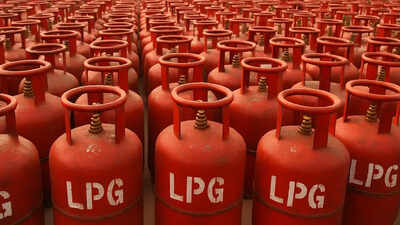
In wake of the Middle East conflict, India’s Liquified Petroleum Gas (LPG) imports have dropped sharply this month, falling to nearly half of February levels and extending the decline seen in March, according to shipping data. At the same time, domestic production has slipped about 10 per cent from its March peak, further tightening the overall supply.Ongoing disruptions to energy flows from the Gulf linked to the US-Iran war continue to unsettle global oil and gas markets, and a ceasefire in place for about a week has done little to improve the availability of cooking gas.
Where is India getting LPG from?
The United States has emerged as India’s largest LPG supplier so far this month, accounting for 142,000 tonnes, or 27 percent of total imports of 523,000 tonnes. The United Arab Emirates supplied 141,000 tonnes, followed by Saudi Arabia with 92,000 tonnes, Qatar with 82,000 tonnes, and Kuwait with 11,000 tonnes. Imports from Iran rose to 43,000 tonnes from 11,000 tonnes in March, while Argentina supplied 10,000 tonnes, an uncommon contribution.Also Read | Oil price shock loading: How India’s strong economic fundamentals will cushion the blow – explained in chartsData from Kpler quoted in an ET report shows that LPG imports averaged around 37,000 tonnes per day between April 1 and 14, largely unchanged from March but significantly lower than February’s 73,000 tonnes per day.“LPG is where the real tightness is,” said Nikhil Dubey, senior research analyst at Kpler. “Supply is expected to remain constrained, with very few alternatives available in the market outside Middle East Gulf producers. We are already seeing some shifts in trade flows, but replacement options are insufficient to offset the shortfall.”Prior to the conflict, Gulf nations accounted for roughly 54 per cent of India’s LPG consumption. While India has managed to move nine LPG carriers out of the Persian Gulf via the Strait of Hormuz, the heavy reliance on Gulf producers continues to limit its ability to scale up supplies. Industry executives noted that most global LPG volumes are tied up in long-term contracts, with only about 10 per cent available in the spot market, leaving limited room to secure additional cargoes even at higher prices.Also Read | First time in 7 years! India gets 4 million barrels of crude oil from Iran just ahead of Trump waiver expiry


