



Telegram’s old message editing feature will remain disabled until June 30, though the app was restored at midnight on Monday, a day after re-testing. NEET 2026 examinations were held.Since then, the controversy has centered on deeper questions about the nature of the app, its role in the country’s shadow educational economy and why the government considered the platform uniquely risky in the first place.National Testing Agency (NTA).Reuters reported that the Home Ministry’s Indian Cyber Crime Coordination Center submitted a 35-page report to the court as part of the government’s defense of the temporary ban, arguing that Telegram had not done enough to stop misinformation and fraudulent exam-related activity linked to the medical entrance exam leak controversy.The government’s concerns extend to Telegram’s privacy design, which includes features that allow users to converse without revealing their phone numbers, making it harder to trace identities than other widely used messaging apps like WhatsApp.
How do students use Telegram?
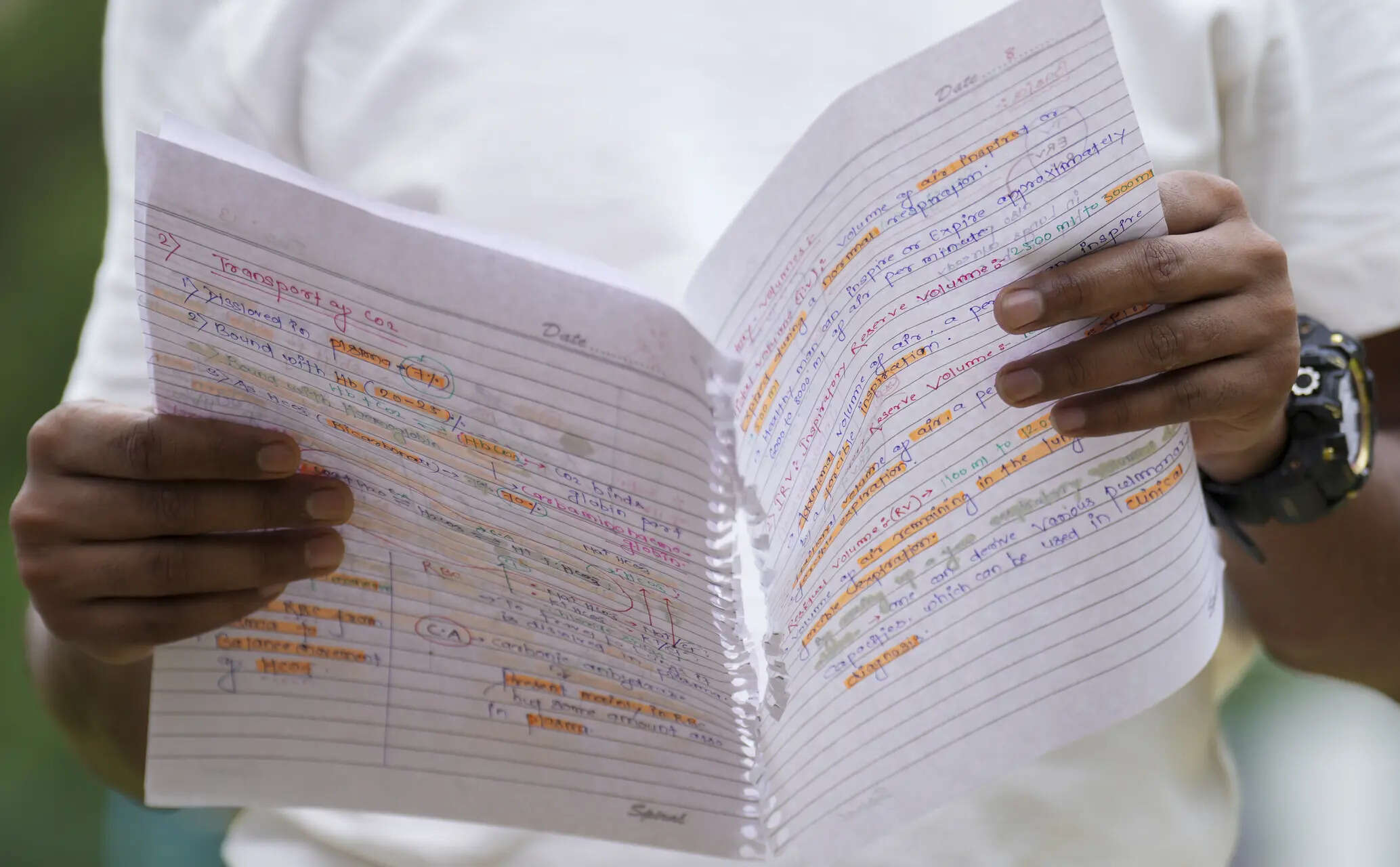
Telegram is popular among students because it works like a free, mobile-first study center. Students use it to connect to public channels for notes, current affairs PDF, revision sheets and lecture clips and join private groups for doubt-solving, peer discussions and exam updates. It supports channels, discussion groups, pinned posts, large file sharing, and access across devices.
Students use Telegram to disseminate information
Students also use Telegram as a library. The platform’s searchable posts and easy forwarding make it a convenient place to store and retrieve study material, especially for competitive exam preparation where speed matters. In practice, Telegram replaces the often fragmented WhatsApp forwarding chains with a more organized collection of lectures, PDFs, and revision materials.“For me, Telegram acts as a complementary educational tool rather than a replacement for standard sources. It also acts as a bridge between those who can afford expensive study materials and those who cannot”, said UPSC aspirant Anurag Pandey.“Banning Telegram is not a universal measure; there should be a strict standard operating procedure and clear punishment for those responsible for the paper leak,” he said.However, the same features that make Telegram useful for legitimate learning also make it an attractive platform for unauthorized distribution of educational content.
A clickbait on telegram channel
How paid educational content spreads for free
Subscription-based courses offered online range from thousands to several lakhs, depending on the programme, faculty and duration.However, on Telegram, lectures from these paid courses are often leaked and broadcast freely through channels, private groups, and mirror accounts, allowing users to access the content without paying the basic fee.This has turned Telegram into an informal redistribution network for premium educational content, especially in the test-prep market where scarcity and high demand make such content highly valuable.The same pattern extends to current affairs resources and e-newspapers. Many competitive exam aspirants rely on paid newspapers, magazines, anthologies and curated current affairs PDFs which are generally protected by paywalls or subscription models. Yet these materials are often uploaded to Telegram in scanned, PDF or forwarded formats and then shared widely at no cost. For students, this makes it a cheap and convenient alternative to paid access. For publishers and coaching institutes, this represents a direct loss of control over the content that was intended to be monetized.This dual use of Telegram has generated divided reactions from coaching institutes. While some seem to be relatively lenient and view the unofficial dissemination as indirect promotion, others are likely to drag the app to court.
Telegram’s copyright fight in court
There have been several instances when coaching institutes have filed cases against apps for copyright infringement.In 2022, Neetu Singh, a prominent educationist and author, filed a case against Telegram after her institute’s copyrighted educational content, including books and lecture videos, was repeatedly broadcast without authorization from multiple channels on the platform.The Delhi High Court said that merely removing one channel is not enough, as new channels keep emerging. It directed Telegram to disclose details of channels and related data such as emails, mobile numbers, IP addresses and server-related information.Telegram initially objected on privacy and jurisdictional grounds, saying that its servers were located outside India, and the disclosure would disrupt the privacy of its users, but ultimately complied with the order.Two years before the case, the High Court had banned Telegram from transmitting any copyrighted material related to a leading coaching institute based in Kota, Rajasthan.
Premium content on free circulation
Since then, the application has become increasingly visible as an intermediary through which educational copyrights are being infringed on a large scale, with numerous copyright-related lawsuits being filed against it.When a coaching institute creates content like recorded lectures, study notes, test series, question banks, mock tests, e-books and presentation slides, they automatically receive copyright protection under the Copyright Act, 1957.This act gives them exclusive rights to sell the material, reproduce and distribute copies, obtain licenses, make adaptations, and communicate it to the public.
India’s shadow education economy
Apart from schools and colleges, lakhs of students pay for private tuition, coaching centers and exam preparation classes. This is most visible in the competitive-exam ecosystem like NEET, JEE, UPSC. SSCBanking and state recruitment examinations, where coaching is often considered essential rather than optional.According to the Comprehensive Modular Survey (CMS) on Education, 2025, one in every three school students goes to private coaching.A 2021 report published in the South Asia Research Journal estimated India’s shadow educational economy to be around $40–70 billion. Telegram adds a digital layer to an already existing marketplace.It sits at the intersection of three aspects of the education economy: legitimate learning communities, paid coaching businesses, and third parties selling unauthorized content. Telegram makes the marketplace more anonymous and harder to police, allowing third parties to redistribute premium content without authorization.Therefore, the ongoing debate regarding Telegram extends beyond one platform. This reflects larger questions about the affordability of educational resources, the increasing reliance on coaching, the enforcement of copyright in the digital age, and the challenges of regulating online communities used by millions of students.The controversy has also highlighted a difficult balancing act for policymakers: protecting intellectual property and test integrity while ensuring that students are not excluded from educational opportunities because of cost. Whether Telegram is viewed as a learning tool, a copyright challenge, or a regulatory concern often depends on which side of the boat one sits.
criticism of the ban
After the ban on the platform, the opposition leader retweeted an ex-user’s post, Rahul Gandhi. The user claimed that his brother’s paid NEET PG notes, videos and study groups were all on the app, forcing him to send messages to pirates to access things he had already paid for.Gandhi’s post described the move as a “new move” to stop paper leaks, comparing it to “locking the victim’s door” rather than catching a thief. He also said that “millions of students” have been using Telegram for years for notes, test series, discussions and preparation, so cutting access did not solve the underlying problem.Ravi Maurya, another candidate, said, “Most of my notes are in digital format. I had uploaded them on Telegram so that I could access them any time, but restricting it completely led to frustration and losing access to my notes.”Telegram founder Pavel Durov criticized the ban, calling it punishment for the app’s more than 150 million users, and claiming the leaks may have migrated to other apps.


