



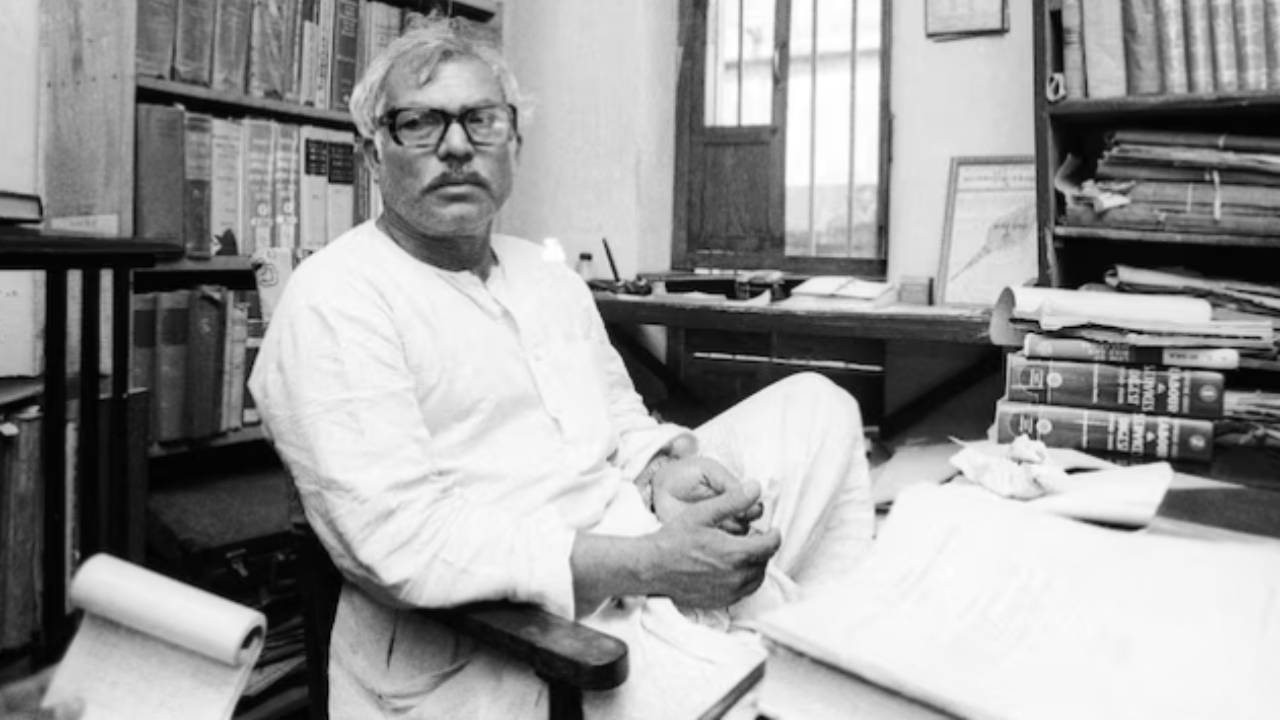
New Delhi: In the election season of Bihar, everyone wants to become ‘Jan Nayak’.When Prime Minister Narendra Modi launched the NDA campaign earlier this month by visiting socialist icon Karpoori Thakur’s ancestral village Karpoori Gram and paying a floral tribute at his memorial, it was more than a symbolic gesture. This was the first clear indication that this election would be fought over leadership as well as inheritance. On the other hand, since Rahul Gandhi missed Bihar in the first phase of the campaign, the Congress compensated by flooding the social media with clips of his ‘Voters Adhikar Yatra’, projecting him as the new mass hero walking among the people. Similarly RJD also announced Tejashwi YadavWho was named the CM face of the Grand Alliance, the “hero” of Bihar.Suddenly, Jan Nayak, once a term reserved for an ordinary person riding a bicycle from village to village, has become Bihar’s most controversial political title. And as parties struggle to claim it, the spotlight has returned to the man who first embodied it – Karpoori Thakur, the OG mass hero whose life and politics still define Bihar’s moral imagination.The Bharat Ratna awarded to Thakur last year added to that revival, but as rising moonThe author and professor at Georgetown University, Qatar, explains, “Karpoori Thakur never really left the consciousness of Bihar. He represents something deeper – a moral compass in a state where politics has become transactional.”Watch the full interview here
The man who went down in history by riding a bicycleKarpoori Thakur’s life is like a story, the rise of a man from the margins who became the face of a movement. Born in 1924 into the Nai (barber) community in Bihar’s Samastipur district, which currently constitutes barely 1.6% of the state’s population, Thakur’s journey was anything but ordinary.
Karpuri Thakur never really left the consciousness of Bihar. He represents something deeper – a moral compass in a state where politics has become transactional.
Uday Chandra, writer and professor
“He was one of the most remarkable leaders of post-independence Bihar – a socialist who came from an ordinary family and became chief minister twice,” says Chandra. “He campaigned from house to house, village to village, on an ordinary bicycle.”
Thakur’s politics combined Gandhian simplicity with Lohian egalitarianism. As Chief Minister, his historic decision to implement job reservations for backward classes in 1978, more than a decade before the Mandal Commission recommendations, remains one of the boldest claims of social justice in modern India. It was also one of the most controversial. The move triggered protests from the forward castes, but for millions of backward and extremely backward classes (EBCs), it was the first time the state acknowledged their claim to respect and opportunity.“He was known as a people’s hero because people saw in him someone who lived their struggles,” says Chandra. original storyTo understand the 2025 elections in Bihar, one has to first understand the ideological DNA of Karpoori Thakur. His era gave rise to a new grammar of power, where caste was not hidden under euphemisms but was talked about as a politics of representation.“Karpoori Thakur is the crux of Bihar’s OBC or peasant claim,” says Chandra. “The Lohia socialist tradition – from Karpoori to Lalu to Nitish – challenged the dominance of a small group of ‘forward castes’ and reorganized the politics of the region around social justice.”Today, when every alliance invokes the terminology of empowerment, they borrow Thakur’s language. His vision of ‘Samajik Nyay’ (social justice) is the foundation on which the identity politics of Bihar rests. The grand alliance led by RJD’s Tejashwi Yadav sees him as its ideological progenitor. Nitish Kumar and the BJP-led NDA hold him up as a shared OBC icon – a man who transcends caste boundaries.“Invoking Thakur today allows parties to reconnect with that social justice narrative, even if its moral edge has been blunted,” says Chandra. “For the NDA, this is a way to woo non-Yadav OBCs and appear inclusive. For the Grand Alliance, it is about reclaiming authenticity, tracing its lineage directly to the social justice movements of the 1970s.”In short, everyone wants a piece of Karpoori.symbolism on numbersThe irony is that Thakur himself comes from a community that is numerically too insignificant to form a vote bank. Barbers, or barbers, constitute just over 1.6% of the population of Bihar. Yet his political career has gone far beyond that figure.“In Bihar, symbolism goes far beyond mere numbers,” says Chandra. “Thakur’s appeal transcended his own sub-caste. He came to represent the politics of respect for all backward classes, especially the extremely backward castes (EBCs).”In fact, significant differences between OBCs and EBCs were institutionalized under Thakur’s government in the late 1970s, a policy that continues to shape Bihar’s electoral mathematics today. The EBC, which constitutes about 36% of the state’s population, is now considered the most decisive voting group.By invoking Thakur, both alliances are hoping to tap into that moral and emotional reserve. The NDA projects him as an inclusive figure in its Hindu OBC outreach, while the Grand Alliance portrays him as the ideological progenitor of its Lohia socialism.As Chandra says, “His own community mattered less than the broader social coalition he embodied.”between respect and developmentStill, elections cannot be won on nostalgia alone. Today’s Bihar is far away from the Bihar of Thakur era. Immigration, unemployment and the decline of public education dominate the concerns of young voters.So, is Thakur’s call beyond rhetoric?“Material aspirations have risen, but they are no different from respectability politics for most Biharis,” argues Chandra. “For many young voters, Thakur’s name still symbolizes honesty and equality – qualities largely absent in today’s transactional politics.”
Invoking Thakur today allows parties to reconnect with that social justice narrative, even if its moral edge has been blunted.
Uday Chandra, writer and professor
But he also offers a warning: “If parties use only his image without addressing unemployment, migration and the decline of public education, the symbolism will ring hollow. The challenge is to combine his ideals of opportunity and dignity for the marginalized with a credible development agenda.”In short, only Karpoori Thakur could have taken Bihar this far. Unless the parties pave the way, literally and metaphorically, their legacy risks becoming a prop rather than a promise.Who owns the inheritance?The race to claim the post of “OG Jan Nayak” has become a decisive sub-plot of Bihar elections 2025. Each of the major players, Nitish Kumar, Tejashwi Yadav and the BJP, see in Karpoori Thakur a reflection of their political aspiration, even if refracted through convenience. So who can actually claim their inheritance?“Nitish Kumar has inherited Thakur’s EBC base and pragmatic style of governance, but his changing alliances have eroded his credibility,” says Chandra.“Tejashwi Yadav radiates the Lohia spirit of social justice and youthful aspiration,” he adds, “but he is burdened with the excesses of dynasticism that Thakur abhorred.”As far as the BJP is concerned, it wants to mold Thakur into a broader Hindu OBC narrative, which sits uneasily with their secular and socialist ethos. Chandra says, “Perhaps the truest tribute to Karpoori Thakur would be to revive his moral politics of simplicity, integrity and courage – values that are now in short supply across the political spectrum.”moral center In a state that has long been characterized as a theater of caste arithmetic and regime change, Karpoori Thakur comes across as something more pious – a reminder that politics can be based on morality. His face on election posters is not just nostalgia; This is the desire for decency in public life.As the 2025 campaign gathers pace and Bihar prepares to vote in Phase 1 on November 6, parties may continue to fight over his legacy, each distorting his memory to fit their pitch. Yet, in the eyes of many voters, the OG mass heroes remain untouchable – the barber’s son who dared to dream of equality, the leader who rode a bicycle instead of a motorcycle, the chief minister who refused to compromise his ideals for convenience.Nearly four decades after his death, Karpoori Thakur can once again decide the future of Bihar not by his votes but by his vision.


