Thursday, October 1, 2026
Home Blog Page 1038

‘Ye tujhe chorr ke chala jaega’: Dina Pathak vehemently warned Supriya against marrying Pankaj Kapur

0
‘Ye tujhe chorr ke chala jaega’: Dina Pathak vehemently warned Supriya against marrying Pankaj Kapur


Actors Supriya Pathak and Pankaj Kapur are among Bollywood’s most loved veteran couples and have completed 38 years of togetherness. But did you know that their relationship saw a lot of protest from Supriya’s mother, actor Dina Pathak in the early days?

Pankaj Kapur and Supriya Pathak have been married for 38 years.

In a new interview with Hauterfly, Supriya appeared with her daughter Sanah Kapur. They talked at length about mother-daughter bonds, specially one that Supriya shared with Dina and how things got tense when she learnt about her relationship with Pankaj.

Dina Pathak disapproved of Pankaj and Supriya’s relationship

“My mother didn’t like him. My mother didn’t like me. Oh my god… My mother she didn’t think that it was this relationship would work. Okay it’s been 38 years now but if she was alive she would still say ke ‘yeh tere ko chhod ke chala jayega’ (that he will leave you) why because I have really no idea.”

Dina Pathak even tried to break them up with help of lies but to no avail. “My mother tried everything to tell me that Pankaj is not the right person. She kind of supposedly investigated on him and found out that ‘oh he vo daru bahut peeta hai’ (he drinks a lot of alcohol). He has never had a drop… had alcohol in his whole life. But she investigated and found this out. So she would kind of bring up the topic or she would come up with this ki ‘dekho ye toh ye karta hai, dekho ye toh ye karta hai’ (see he does this, see he does that). It went on for a long time.”

The straw that broke the camel’s back

But when Supriya had had enough, she gave her an ultimatum. “Eventually I told one day that ‘kuch aisa nahi hai (it’s nothing like that), I am getting married on such and such a day. You want to come you come, you don’t want to come don’t come.’ She looked at me very as if it’s the last straw… she said, ‘tume paneer pasand hai?’ (Do you like paneer?). I said I like paneer. She said, ‘achha nahi vo Punjabi hai na toh paneer…’ (Okay, well he’s Punjabi, so paneer…). That was her last straw—implying that if you don’t like paneer, you can’t get married to him. So that is how it was.”

Supriya noted that just before her mother passed away, her perspective shifted significantly: “She thought that Pankaj was the only right person. He became her favorite, the only one she wanted around.”

Supriya and Pankaj have a daughter named Sanah and a son named Ruhaan. He also has his oldest son, actor Shahid Kapoor from his first marriage to Neelima Azeem.


FanCode, Genius Sports make contrast bids for ISL, Federation Cup commercial rights; Capri Sports sole bidders for IWL, IWL 2 | Football News

0
FanCode, Genius Sports make contrast bids for ISL, Federation Cup commercial rights; Capri Sports sole bidders for IWL, IWL 2 | Football News


FanCode, Genius Sports make contrast bids for ISL, Federation Cup commercial rights; Capri Sports sole bidders for IWL, IWL 2
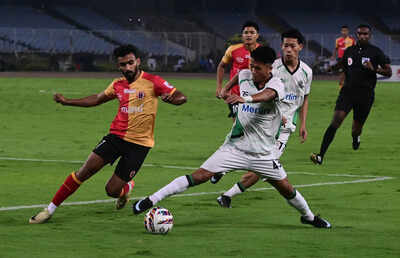
ISL football match between East Bengal FC and Mohammedan Sporting Club (PTI Photo)

New Delhi: Dream11-owned FanCode and Genius Sports have emerged as the two bidders for commercial rights of the Indian Super League (ISL) and Federation Cup on a 15+5 year model that was floated earlier this month. Capri Sports, subsidiary of Capri Global, is the only party interested in rights for the Indian Women’s League (IWL) and IWL 2.After a long day where the tender document was presented to the 14 ISL clubs for the first time and the three bids were evaluated on the basis of their technical and financial aspects, it was back to the drawing board for all involved. Genius Sports, the official data feed provider for the English Premier League, the Championship and the Scottish league, made a bid of approximately Rs 2,129 crore over 20 years.Beyond being a data provider, Genius Sports’ technology is also used for real-time betting odds. This could prove a hurdle at a later stage as betting is illegal in India.FanCode, meanwhile, went with a more pragmatic approach of Rs 36 crore each year with 5 percent increments, amounting to approximately Rs 1190 crore, nearly half of what Genius Sports bid. The AIFF and the ISL clubs will now reconvene over the next couple of days to mull over the specifics of the tender document and the bids. One club that Timesofindia.com spoke to said the decision would take a few days.Capri Sports are the only contenders for the IWL and IWL 2 having made a bid of Rs 150 crore over 20 years. GMR Sports, which had attended the pre-bid meeting, didn’t make a bid in the end. It is understood that the entity behind multiple sporting ventures, including IPL’s Delhi Capitals, had asked for more time but that was not agreed to by the AIFF. The Indian football federation had already pushed the bid due date from March 20 to March 26. As far as the tender is concerned, it would go beyong the media rights. It would entail sponsorship, advertising, digital and data initiatives, merchandising, and event-linked commercial opportunities — creating a long-term deal that consolidates the full commercial ecosystem of Indian club football.During the initial stages, AIFF had introduced a strict eligibility requirement: companies had to purchase the Request for Proposal (RFP) for Rs 2.5 lakh, and only those entities were allowed to submit bids.


E-cheques coming soon? RBI unveils Payments Vision 2028, plans wider oversight of digital players

0
E-cheques coming soon? RBI unveils Payments Vision 2028, plans wider oversight of digital players


E-cheques coming soon? RBI unveils Payments Vision 2028, plans wider oversight of digital players

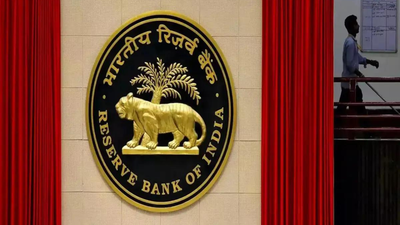
The Reserve Bank of India (RBI) on Friday unveiled its ‘Payments Vision 2028’ document, outlining a roadmap that includes exploring electronic cheques, expanding regulatory oversight to digital platforms, and strengthening safeguards in the fast-growing payments ecosystem, PTI reported.The central bank said it will examine the introduction of e-cheques to combine the advantages of paper instruments with the speed and reliability of digital payments. “To leverage the unique benefits of paper-based instruments and the speed and reliability of electronic payments, and cater to new business use cases, the introduction of electronic cheques in India shall be explored,” the RBI said.Alongside, the RBI is considering widening the regulatory ambit to include entities such as e-commerce marketplaces and centralised platforms that play a growing role in facilitating digital transactions.“In addition, e-commerce marketplaces and centralized platforms have been assuming significant responsibilities that could have implications on the orderly functioning of the payments ecosystem. These aspects shall be examined in detail and, if required, the scope of direct regulations shall be extended to cover such entities,” the document said.The vision document also proposes allowing users to enable or disable transactions across digital payment modes, similar to controls available for card transactions.To address fraud risks, the RBI is exploring a “shared responsibility framework” under which both the issuing bank and the beneficiary bank would share liability in cases of unauthorised digital transactions.The central bank also plans to review cheque design and security features, introduce a Domestic Legal Entity Identifier (DLEI) framework for better transaction traceability, and bring in a Cyber Key Risk Indicators (KRI) framework for non-bank payment system operators.Other initiatives include exploring white-label solutions in the Aadhaar Enabled Payment System (AePS), developing interoperability in the Trade Receivables e-Discounting System (TReDS), and introducing a ‘Payments Switching Service’ to ease customer migration across platforms.The RBI said it will also review the cross-border payments ecosystem to improve efficiency and streamline authorisation processes, alongside publishing periodic reports on global and domestic payment trends.Additionally, the central bank aims to enhance access to payment data and reimagine the card payments ecosystem by promoting secure tokenisation, improved transparency in pricing, and greater choice for users and merchants.


‘Only Madhavan said yes; Arjun, Sanjay, Akshaye weren't sure’

0
‘Only Madhavan said yes; Arjun, Sanjay, Akshaye weren't sure’


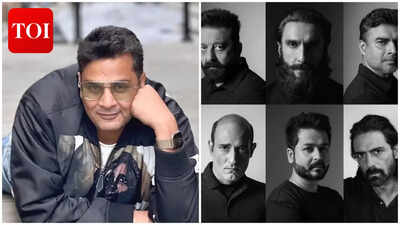
‘Only R Madhavan said yes immediately; Arjun Rampal, Sanjay Dutt and Akshaye Khanna weren't sure’: Mukesh Chhabra on Dhurandhar casting
Aditya Dhar’s Dhurandhar has been dominating conversations ever since its first instalment, winning both critical acclaim and audience love. While the film’s performances have been widely praised, casting director Mukesh Chhabra has now revealed that getting its star-studded ensemble on board wasn’t easy.

Aditya Dhar’s Dhurandhar has been dominating conversations ever since its first instalment, winning both critical acclaim and audience love. While the film’s performances have been widely praised, casting director Mukesh Chhabra has now revealed that getting its star-studded ensemble on board wasn’t easy.

‘Only R Madhavan agreed instantly’

In a recent interaction with Hindustan Times, Mukesh Chhabra opened up about the casting process.“Initially, even Arjun Rampal, Sanjay Dutt and Akshaye Khanna were not sure about being a part of the film. Only R Madhavan said yes. For the others, it took time,” he said.He added that the scale of casting evolved over time. “Aditya and I were considering so many people, and honestly, earlier we had never thought we would cast so many big stars. We had a very different kind of actors in mind. Then I pushed him to think bigger.”

Watch

Dhurandhar 2 Screening Attracts Bollywood Stars; Allu Arjun’s “RVS On Fire” Triggers Meme Frenzy

‘It all fell into place gradually’

Chhabra further explained how the ensemble slowly came together.“When you start a film, you wonder how so many big actors will come on board. At first, none of this was there, but gradually, as we discussed, it started falling into place,” he said. Talking about the hesitation among actors, Chhabra highlighted a key concern in multi-starrers — screen time.“Madhavan and Arjun were on the set only for 12 days. Most actors usually worry about how much screen time they will get. We told them that here, impact is what matters,” he shared.“If you look at Madhavan’s part, with only 12 to 14 days of work, the impact of the role is huge,” he added.


SRH`s head coach Daniel Vettori heaps praise on stand-in captain Ishan Kishan

0
SRH`s head coach Daniel Vettori heaps praise on stand-in captain Ishan Kishan


SRH`s head coach Daniel Vettori heaps praise on stand-in captain Ishan Kishan

The upcoming edition of the Indian Premier League (IPL) is all set to kick off from March 28.

Ahead of the league, Sunrisers Hyderabad`s (SRH) head coach Daniel Vettori spoke about stand-in captain Ishan Kishan. He said that the left-handed batsman has been around for a long period in the league and he brings his own confidence.

“I think Ishan`s been around in the IPL for a long period of time now. He`s been with a number of teams and he`s been highly successful, so, he brings in his own confidence around that,” he said.

Kishan has been appointed SRH`s stand-in captain as regular skipper Pat Cummins will miss the initial stage of the upcoming league. The pacer is dealing with a back injury.

The head coach then said that Kishan has been appointed as the skipper, considering that he led his state team in the Syed Mushtaq Ali Trophy. He also said that the left-handed batsman will lead the team from front along with his fellow teammate, Abhishek Sharma, who has been appointed as the vice-captain.

“The fact that he`s led the U19s and his state team and they won the Syed Mushtaq Ali Trophy this year brings a confident person, a confident player and a really confident leader and those are the attributes that we really looked at when he was appointed. His combination with Abhishek, they`re good friends, they know the team exceptionally well and I really feel like those two will lead from the front this season,” said Vettori.

The first match of the tournament is scheduled to be played between the defending champions, Royal Challengers Bengaluru (RCB) and Sunrisers Hyderabad (SRH) on March 28 at the M. Chinnaswamy Stadium in Bengaluru.

IPL 2026, Royal Challengers Bengaluru vs Sunrisers Hyderabad: Full Squads

Royal Challengers Bengaluru: Virat Kohli, Josh Hazlewood, Swapnil Singh, Bhuvneshwar Kumar, Jacob Duffy, Krunal Pandya, Jitesh Sharma (WK), Venkatesh Iyer, Phil Salt (WK), Rajat Patidar (C), Nuwan Thushara, Romario Shepherd, Tim David, Devdutt Padikkal, Yash Dayal, Rasikh Salam, Jordan Cox, Jacob Bethell, Vicky Ostwal, Mangesh Yadav, Suyash Sharma, Vihaan Malhotra, Abhinandan Singh, Kanishk Chouhan, Satvik Deswal.

Sunrisers Hyderabad: Harshal Patel, Jaydev Unadkat, Pat Cummins, Heinrich Klaasen (WK), Travis Head, Liam Livingstone, Ishan Kishan (WK), Kamindu Mendis, Brydon Carse, Zeeshan Ansari, Abhishek Sharma, Shivam Mavi, Jack Edwards, Harsh Dubey, Salil Arora (WK), Nitish Kumar Reddy, Amit Kumar, Praful Hinge, Smaran Ravichandran, Eshan Malinga, Sakib Hussain, Aniket Verma, Shivang Kumar, Krains Bhaveshbhai Fuletra, Omkar Tarmale.

(With PTI Inputs)


Review: India-Pakistan Relations: A Saga of Endless Disputes, by Satish Chandra

0
Review: India-Pakistan Relations: A Saga of Endless Disputes, by Satish Chandra


India-Pakistan relations By Satish Chandra, apt subtitles Saga of endless controversiesIt is very timely. Its 18 chapters cover all the major issues that have plagued bilateral relations, some since 1947. Many books have been written on Pakistan by learned scholars and diplomats, but this is a concise and easy-to-read collection of issues ranging from Jammu and Kashmir, sharing of river waters and terrorism to the disputes in Junagadh, Hyderabad, Jinnah House in Mumbai, alienated assets including the Rann of Kutch. Declaration of war. Interestingly, the book also covers topics that are not bilateral in nature but are important for a better understanding of Pakistan’s dual actions on key issues like the merger under pressure of Kalat State, the saga of NWFP (now Kyber Pakhtunkhwa) merger with Pakistan and the appalling treatment of the country’s minorities.

Jinnah House in Mumbai (Ritesh Uttamchandani)

Satish Chandra’s extensive experience in a number of key government positions, including High Commissioner to Pakistan and Founding Secretary of India’s National Security Council Secretariat (NSCS) (in 1998, the erstwhile Joint Intelligence Committee (JIC) was reorganized into the NSCS), puts him in a uniquely unique position to review a relationship that has by far been India’s most difficult to manage.

When I opened the book, the first page presented was related to the erstwhile princely state of Mangrol, which, with Babariaism, had acceded to India in 1947, even though Pakistan claimed it along with Manawadar on the basis of specific claims made by the Nawab of Junagadh.

My family originates from Mangrol on the coast of the Kathiawar peninsula. My grandfather, Barrister CN Chinoy, who was Diwan of Rajkot State in the late 1930s and early 1940s, often advised the Sheikh of Mangrol on state matters. We had a deep friendship with Sheikh and his family. For the record, Major Mohammed Ali Raz Shaikh of 16 Light Cavalry, a scion of the princely state of Mangrol, had earned the Vir Chakra (posthumously) for bravery in action against enemy armor in the Sialkot sector on 8 September 1965. I remember reading in the memoirs of Lieutenant General (retd) Harbaksh Singh that when he visited the hospital as GOC-in-C of Western Command, a mortally wounded Major Mohammad Ali Raz Shaikh tried to stiffen his body. Even saluting his commander as he lay there taking his last few breaths. So much for Pakistan’s imagination about the two-nation theory!

Junagadh is also covered in some detail. In April 1947, its Diwan, Khan Bahadur Abdul Qadir Mohammad Hussain, rejected allegations of Junagadh’s desire to accede to Pakistan and the impression was given that its constitutional advisor, Nabi Baksh, would advise the Nawab to accede to India. It is noteworthy that when Sir Shah Nawaz Bhuttu (Benazir’s grandfather) was appointed Diwan in May 1947 and he remained in that position during the crucial period of independence in mid-August, Junagadh suffered a complete reversal. Interestingly, the book states that after the Nawab fled to Pakistan, the Begum of Junagadh met Mr. Prakash, India’s first High Commissioner to Pakistan, and told him that her son wanted to choose India. He requested that he be installed as the Nawab. Delhi saw no merit in the idea, although in the case of Mir Osman Ali Khan, the Nizam of Hyderabad the following year, after Operation Polo, he was brought into the political mainstream of independent India under a constitutional role, leading to the formal integration of Hyderabad into the Indian Union. The difference between the two situations was that the Nizam had not fled India.

Operation Polo in Hyderabad was a major success and ended with the Nizam being allowed to return and continue as constitutional head. The commander of Operation Polo was none other than General Rajendrasinhji, who later became the first COAS.

There is a story popular in Junagadh. When the Nawab fled in the face of popular demonstrations led by Samaldas Gandhi (nephew of Mahatma Gandhi), he not only left behind one of his Begums, who had to return from the tarmac at the last minute to collect her child, but apparently filled her place with one of his favorite dogs. Apparently, the Begum was not among the favorites of the eccentric Nawab Muhammad Mahabat Khanji III. The author writes that his interest in Junagadh after his escape focused particularly on the fate of the many dogs he left behind. When the Indian representatives entered the Nawab’s palace they found “a dog on every chair in the drawing room”.

The story of Jammu and Kashmir and its merger with India is well known, but the bias and prejudice of the Western powers needs to be recounted for the record. After Pakistan retaliated to the UN Secretary General, the UNSC changed the agenda item from Pakistani aggression to the broader India-Pakistan question, also expanding UNCIP’s mandate to cover irrelevant issues like Junagadh.

On the one hand, Joseph Korbel, president of UNCIP and father of Madeleine Albright, proved to be the most prejudiced. This can be gauged from his book. danger in kashmir.

The author mentions that UNMOGIP’s presence in the subcontinent after the Shimla Agreement is completely unjustified. A body established to monitor the 1949 ceasefire line, it no longer has any jurisdiction after the CFL was converted into the Line of Control (LOC) through a bilateral agreement in 1972. Terminating UNMOGIP, however, is the sole prerogative of the UN Security Council and it has decided not to do so due to vested interests. India has done well by denying UNMOGIP any special privileges, even if Pakistan favors it.

The author describes an extraordinary fact, how at the time when Pakistan was waging a war against India in Kashmir after independence, the Reserve Bank of India paid ₹Rs 75 crore from its cash balance and total ₹Rs 228 crore (partly in pounds sterling) to the offensive from its issuance and banking divisions. Mahatma Gandhi fasted to ensure that Pakistan’s demands were met, and the Indian government had to capitulate. Surprisingly, India also took over Pakistan’s pre-partition debt and allowed it to repay it in 50 installments from 1952. It is a different matter that the “deformed, mutilated and worm-eaten” state, as Jinnah himself lamented, reneged on its responsibilities.

Another irony of history pointed out by the author is that after the signing of the Kalat-Pakistan Standstill Agreement in 1947, the Kalat State invited India to enter into a similar agreement recognizing its independence and requested Delhi to allow the establishment of a trade agency. In fact, Kalat State National Party President Ghaus Baksh Bizenjo met Indian National Congress President Maulana Abul Kalam Azad in Delhi to seek help in maintaining their independence. Kalam agreed that Baluchistan was an independent entity and was never actually a part of undivided India, but advised that India could do nothing in the matter. The author has described the thinking of the Congress as “devoid of the spirit of real politics”. Pakistan backed down and later through military pressure forced the Khan of Kalat to sign the instrument of accession, even though the standstill agreement remained in force.

The author describes the many ups and downs of the NWFP saga, the crucial role of “Frontier Gandhi” Khan Abdul Ghaffar Khan (also known as Badshah Khan), British manipulation, the use of communal violence by the Muslim League for regional gain and the failure of the Congress to maintain its hold on the province when it could have opted for India, had its Legislative Assembly voted on the issue. He says that if the Congress had not walked out of the provincial governments, thereby eroding Badshah Khan’s popular relationship with the people, the Muslim League would never have achieved the strength that it did with the support of officials like Olaf Caro. Nehru finally succumbed to Mountbatten’s repeated insistence to agree to a referendum in the NWFP on the issue of “Pakistan or New India” and the rest is history!

The author details Pakistan’s appalling record of mistreating its minorities from the beginning, particularly the majority of the exodus from West Pakistan in 1947–48. In contrast, the exodus from East Pakistan occurred gradually, peaking in 1971 when the Pakistani Army carried out genocide against East Pakistanis, especially Hindu minorities. The author considers the root cause of this to be the politics of hatred and violence spread by the Muslim League and its two-nation theory. The treachery of the British officials encouraged this sentiment.

The author says that Pakistan is beyond relaxation on this aspect and will leave no stone unturned to weaken India, which will leave India with no option but to adopt punitive policies to stop Pak-sponsored terrorism. In his view, the disintegration of Pakistan in its present form is the only permanent solution to the problem.

The chapter on evacuee property also throws new light on Jinnah’s properties, especially on the specific claims made by Pakistan while he was unwilling to give justice to refugees who fled Pakistan, especially on the property of Seth Shivratan Chandralal Mohatta in Karachi. In contrast to Pakistan’s dual stance, India tried to work in the interest of the displaced regardless of religion.

The chapter on financial and commercial issues shows how ridiculous it was that India inherited all the foreign debt of undivided India as well as had to pay Pakistan more than its fair share of the Reserve Bank balance while Pakistan was attacking Kashmir in 1948.

The chapter on the battle of Kutch is interesting. This is one of the few disputes that India agreed to mediate in the 1960s because Pakistan kept raising it, even though the alignment between the Maharaos of Kutch and Sindh had been settled decades earlier. I dealt with coastal security and Harami Nala issue during my tenure with NSCS and visited the disputed areas along the G-Pillar Line, which extends westwards from BOP 1175. After obtaining India’s consent for the alignment of the vertical line between BOP 1175 and BOP 1153, Pakistan challenged the horizontal G-Pillar line to boost its speculative claims to the east in the Creek area.

On the Durand Line, Satish Chandra has rightly underlined that the line was never clearly defined and the oft-referenced 1893 agreement did not make it a sacred international border. Soon after the British left, the Afghans rejected all treaties made with them, including the Durand Line, and called for an independent Pashtunistan. It was the only country that opposed Pakistan’s entry into the United Nations. Over the years, no Afghan government/regime, including the Taliban, has ever recognized the Durand Line. I was pleasantly surprised to see that a reference was made to me and the ‘colonial cartographic mischief’ used for the Durand Line issue was mentioned.

Sujan Chinoy, former ambassador, is the Director General of the Manohar Parrikar Institute for Defense Studies and Analyses.


KBC fame tehsildar Amita Singh Tomar arrested in Rs 2.5 crore scam case

0
KBC fame tehsildar Amita Singh Tomar arrested in Rs 2.5 crore scam case


KBC fame tehsildar Amita Singh Tomar arrested in Rs 2.5 crore scam case

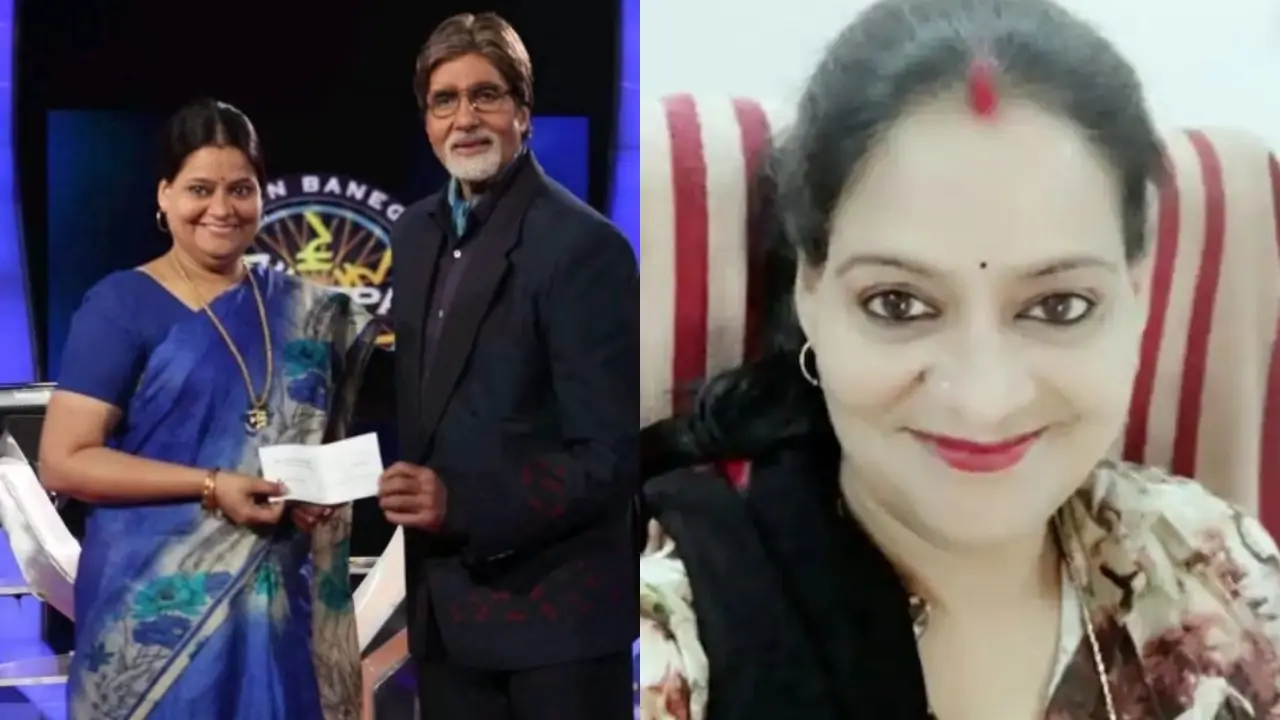
Amita Singh Tomar, a woman tehsildar who once gained national recognition after winning Rs 50 lakh on Kaun Banega Crorepati, has been arrested in Gwalior over an alleged Rs 2.5 crore flood relief scam. The official is accused of diverting funds meant for victims through fake accounts, with multiple arrests already made in the case.

KBC fame Amita Singh Tomar arrested

Amita Singh Tomar was arrested on Thursday in connection with alleged irregularities that took place in 2021 in Baroda tehsil, an official said, adding that she has been lodged in a jail in neighbouring Shivpuri after being produced in court.

“A team led by Baroda Sub-Divisional Officer of Police (SDOP) Avneet Sharma arrested Tomar from her home in Gwalior’s Chandravadni Naka. Tomar was the tehsildar of Vijaypur but was removed from the post by Collector Arpit Verma on Wednesday,” the official said.

Tomar had earlier applied for anticipatory bail in the High Court as well as the Supreme Court, but her appeals were rejected, he added. According to court records, the prosecution claims that Tomar played a key role in authorising paperwork that allowed money intended for flood victims to be diverted.

The official said 22 patwaris (revenue officials) and one tehsildar have been arrested so far in the 2021 flood relief ‘scam’, which involves Rs 2.5 crore allegedly being transferred into fake bank accounts for the purpose of embezzlement.

Some 110 persons have been named in the FIR in the matter, he added. The case is being probed by the SDOP of Baroda, a tehsil in Sheopur district, said Superintendent of Police Sudhir Kumar Agarwal.

“Tomar had been absent from her duties, and a police team subsequently traced her and arrested her in Gwalior,” the SP said.

About Amita Singh Tomar

Tomar had appeared on KBC Season 5 and won Rs 50 lakh as a contestant on the show hosted by Amitabh Bachchan.

In recent years, Amita Singh Tomar has been at the centre of controversies over her social media posts, where she criticised administrative actions. She also sparked outrage after making objectionable remarks on a post related to the Constitution.


Why hasn’t Mitchell Starc joined Delhi Capitals yet? Alyssa Healy gives blunt reply | Cricket News

0
Why hasn’t Mitchell Starc joined Delhi Capitals yet? Alyssa Healy gives blunt reply | Cricket News


Why hasn’t Mitchell Starc joined Delhi Capitals yet? Alyssa Healy gives blunt reply
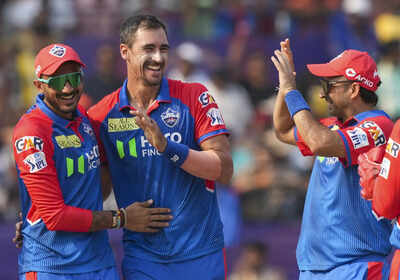
Delhi Capitals Mitchell Starc, with captain Axar Patel, left, and Mohit Sharma (PTI Photo)

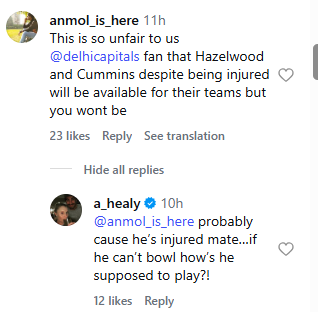
Injuries have already begun to reshape plans for several teams ahead of the Indian Premier League 2026 season, with a number of key players unavailable at the start. Among the biggest concerns are the absences of Australian fast bowlers Mitchell Starc, Pat Cummins and Josh Hazlewood, all of whom are expected to miss at least the opening phase. While Hazlewood has already linked up with Royal Challengers Bengaluru, and Cummins’ recovery is being monitored by Sunrisers Hyderabad, the situation around Starc remains uncertain. According to head coach Daniel Vettori, a decision on Cummins’ availability will be taken in the next 10 to 12 days. In contrast, Starc’s return timeline is still unclear, with Delhi Capitals awaiting clearance from Cricket Australia. The uncertainty around Starc sparked reactions from fans, one of whom questioned his absence on social media after spotting him at a golf course alongside his wife Alyssa Healy and other athletes.

Alyssa Healy response to a fan

Alyssa Healy response to a fan

“This is so unfair to us Delhi Capitals fan that Hazelwood and Cummins despite being injured will be available for their teams but you wont be,” the fan wrote. Healy responded sharply, defending Starc’s situation. “Probably cause he’s injured mate…if he can’t bowl how’s he supposed to play?!” She added, “If he was fully fit he’d be there.” Delhi Capitals had built much of their bowling strategy around Starc’s pace and ability with the new ball, and his absence has forced the team to reassess their plans. Despite that setback, the franchise believes it has the depth to compete, combining experienced names with new additions. Last season, Delhi Capitals started strongly with four consecutive wins but lost momentum later, eventually finishing fifth and missing out on the playoffs for the fourth year in a row. As IPL 2026 begins on March 28, Delhi will be aiming to end that run and finally push for their first title, even as they navigate early challenges with key players unavailable.


Maa Ka Sum: Mona Singh, Mihir Ahuja lead series about love and algorithms

0
Maa Ka Sum: Mona Singh, Mihir Ahuja lead series about love and algorithms


Maa Ka Sum: Mona Singh, Mihir Ahuja lead series about love and algorithms

Prime Video today announced April 3 as the worldwide premiere date of its Prime Original lighthearted drama Maa Ka Sum. Directed by Nicholas Kharkongor and produced by Babita Ashiwal under the banner of Eunoia Films, this heartwarming series celebrates the refreshing bond between a single mother and her 19-year-old son, built on friendship, mutual trust, and the freedom to support each other as they grow together.


View this post on Instagram


A post shared by prime video IN (@primevideoin)

About Maa Ki Sum

Written by Ravinder Randhawa and Sumrit Shahi, Maa Ka Sum stars the versatile and talented Mona Singh, along with Mihir Ahuja, Angira Dhar, and Ranveer Brar in lead roles. The eight-episode series will premiere exclusively on Prime Video in Hindi with subtitles in Tamil, Telugu, Kannada and Malayalam, across India and over 240 countries and territories worldwide on April 3. 

Maa Ka Sum follows Agastya, a bright math prodigy in his late teens, played by Mihir Ahuja, who sees the world through graphs, numbers, and algorithms. For him, every problem has a logical solution, even finding the perfect partner for his single mother, Vinita, portrayed by Mona Singh. Enter Project Mom: Equation ya Emotion? But what begins as Agastya’s carefully crafted plan soon turns into a quirky and heartwarming ride, where logic collides with real emotions, unexpected encounters, and the unpredictability of life. With humour, warmth, and a touch of math, Maa Ka Sum offers a fresh and layered take on the mother-son dynamic.

`Tenderness, friction and quiet understanding`

Producer Babita Ashiwal shared, “What drew me to this series was its warmth and the heartfelt way it looks at relationships. At its core, it’s the story of a boy in his late teens trying to make sense of love and adulting through math and data. It’s the kind of story that feels instantly relatable, full of humour, and the little lessons we all pick up while figuring life out. Maa Ka Sum is a wholesome family watch that promises to entertain everyone, from young adults to older audiences.”

“Stories rooted in relationships have a timeless appeal because they reflect emotions and bonds that feel deeply universal,” said Nikhil Madhok, Director & Head of Originals, Prime Video India. “At the heart of Maa Ka Sum is a mother-son relationship portrayed with a rare freshness and emotional depth. This series captures the tenderness, friction, and quiet understanding of this bond in an honest and deeply relatable way. Mona and Mihir are terrific in their roles. We are delighted to bring this story to our customers across the world on April 3rd.”


Three dead after helicopter crash in Hawaii

0
Three dead after helicopter crash in Hawaii


The helicopter, which was carrying one pilot and four passengers,crash-landed about 100 yards off a beach, officials say.