Thursday, October 1, 2026
Home Blog Page 1057

US mortgage rates hit over six-month high at 6.38% as borrowing costs rise in peak homebuying season

0
US mortgage rates hit over six-month high at 6.38% as borrowing costs rise in peak homebuying season


US mortgage rates hit over six-month high at 6.38% as borrowing costs rise in peak homebuying season

Borrowing costs for homebuyers in the US rose further this week, with the average long-term mortgage rate reaching its highest level in more than six months and adding pressure during the peak spring housing season.Mortgage buyer Freddie Mac said the benchmark 30-year fixed mortgage rate increased to 6.38% from 6.22% a week earlier. The rate was 6.65% at the same time last year. The latest level is the highest since September 4, when the average stood at 6.5%, AP reported.Rising mortgage rates typically translate into higher monthly repayments, reducing the purchasing power of prospective buyers. The increase follows a brief easing phase –just four weeks ago the average rate had dipped below 6% for the first time since late 2022 — before climbing again amid concerns that surging oil prices linked to the Iran war could keep inflation elevated.Rates on shorter-term home loans also moved higher. The average 15-year fixed mortgage, widely used by borrowers refinancing their loans, rose to 5.75% from 5.54% in the previous week. A year ago, the rate was 5.89%, Freddie Mac said.Mortgage pricing is shaped by several factors, including the Federal Reserve’s policy stance and investor expectations in the bond market regarding inflation and economic growth. Lenders generally track movements in the 10-year US Treasury yield while setting home loan rates.The yield on the 10-year Treasury note climbed to 4.39% at midday Thursday, compared with around 4.26% a week earlier. Bond yields have been rising as higher energy prices increase expectations of persistent inflation, pushing up long-term borrowing costs across the economy.Inflation concerns may also delay interest-rate cuts by the Federal Reserve. Although the central bank does not directly determine mortgage rates, its decisions on short-term rates influence bond markets. At its most recent policy meeting, the Fed chose to keep rates unchanged, with Chair Jerome Powell pointing to heightened uncertainty surrounding the economic outlook following the Iran war.The US housing market has been struggling since mortgage rates began climbing sharply in 2022 from pandemic-era lows. Sales of previously owned homes remained largely flat last year, hovering near a three-decade low, and have continued to show weakness this year, declining in both January and February compared with year-earlier levels.Affordability pressures remain a major challenge for buyers, even though price growth has moderated or fallen in several metropolitan areas. Wage gains have not kept pace with property values, limiting access to homeownership for many households.While the current mortgage rate is still lower than a year ago — potentially benefiting buyers who can manage higher borrowing costs — the recent uptrend has made many prospective purchasers cautious just as seasonal demand typically strengthens.Reflecting this hesitation, mortgage applications dropped 10.5% last week from the previous week, according to the Mortgage Bankers Association. Applications for both home purchases and refinancing declined.“Higher borrowing costs, affordability pressures and economic uncertainty are likely prompting some prospective buyers to delay purchase decisions,” MBA chief executive Bob Broeksmit said.


CSK’s risky call: Injured Spencer Johnson replaces injured Nathan Ellis | Cricket News

0
CSK’s risky call: Injured Spencer Johnson replaces injured Nathan Ellis | Cricket News


CSK’s risky call: Injured Spencer Johnson replaces injured Nathan Ellis
Spencer Johnson has not played any competitive game since last year’s IPL.

NEW DELHI: The announcement of Spencer Johnson as a replacement for the injured Nathan Ellis for the 2026 Indian Premier League (IPL) by the Chennai Super Kings (CSK) has created quite an uproar. There had been a bit of mystery around Johnson’s signing as a replacement player.The 30-year-old was earlier signed by Quetta Gladiators in the Pakistan Super League (PSL) but pulled out of the tournament citing personal reasons. A few days later, he joined the five-time IPL champions for Rs 1.5 crore (US$160,000). Interestingly, Johnson’s PSL salary was higher than his IPL deal, as he was contracted with the Gladiators for approximately PKR 56 million (around ₹1.87 crore or $200,000).

Watch

CSK host fan engagement event at Chepauk ahead of IPL 2026

A day after his official announcement, CSK on Wednesday posted on X that the left-arm quick will join the squad between April 21 and 23. The reason remains unknown. TimesofIndia.com reached out to Kasi Viswanathan, Chief Executive Officer (CEO) of CSK, but multiple calls went unanswered.Johnson has not played any competitive cricket since the last IPL, where he featured for Kolkata Knight Riders. KKR had acquired his services for Rs 2.80 crore, and the lanky pacer played four matches, picking up just one wicket. He was later released ahead of the 2026 mini auction.An update on Johnson was provided by former Australian fast bowler Ryan Harris, who is currently the coach of South Australia, on the eve of the Sheffield Shield final against Victoria.“Spencer is jumping around a little bit,” Harris said, referring to him pulling out of the PSL and then joining the IPL.“He got some good news, I think four or five days ago, about his back,” Harris said. “Finally, the crack in his back has healed. He’s had quite a frustrating eight to ten months. So the good news is he’s back bowling. He’s building up again.“IPL, I think there might be an opportunity. We’re still waiting to see what happens there. He’s obviously got to do a fair bit of bowling before he goes back into competitive cricket. So we’re working on that as we speak.“But it would be good to see Spence back playing cricket. He’s obviously had some bad luck over the last two years.”

He feels that although he is only going at about 60%, the ball is coming out nicely. He is bowling more and trying to build up. It is now about getting enough bowling load into his body to allow him to play.

Ryan Harris | South Australia coach

Johnson, who has played five ODIs and eight T20Is for Australia, is recovering from a back injury.Harris also revealed that the pacer has resumed bowling but is currently operating at just over half pace, and he is working on modifying his action to stay fit.“We’ve been doing that ever since he’s been able to roll his arm over,” Harris said.“We’ve been just tweaking a couple of things, and he’s doing really well. He had a bowl the day before yesterday. I wasn’t there, but I reviewed some video. We’ve been very conscious of what he’s trying to achieve, trying to straighten him up a little and take some pressure off his back.“But he’s done it really well. He feels that although he’s only going at about 60%, the ball is coming out nicely. As we speak, he’s bowling more and trying to build up. It’s now about getting enough bowling load into his body to allow him to play.”

Poll

Is it a wise decision for CSK to replace Nathan Ellis with another injured player?

Only time will tell whether the Australian quick will reach peak fitness by the time he joins the CSK squad, but this is curious that an IPL team has replaced an injured player with another injured player.TimesofIndia.com has learnt that the supply of available players has taken a hit, as several cricketers who went unsold in the IPL mini auction are currently playing in the PSL.Johnson became the third player after Zimbabwe’s Blessing Muzarabani and Sri Lanka’s Dasun Shanaka to snap up IPL deals despite being contracted in the PSL. However, with Bangladesh players not being considered and IPL teams reluctant to pick players from Associate nations, franchises are struggling to find replacements.CSK will open their campaign in IPL 2026 on March 30 against the Rajasthan Royals in Guwahati.


Rising cost of health care in Kerala

0
Rising cost of health care in Kerala


Sunil Jose (name changed), an employee of a private company in Kozhikode, recently took his daughter to a corporate-run hospital in the city after she complained of fever, cold and headache. The doctor suggested several medical tests to diagnose his condition.

Jose tried to find out the provisional bill amount. He says, “Without blinking, the staff said the cost could be around ₹10,000! I managed to escape from there by making some flimsy excuse.”

Jose then went to another health care institution in the cooperative area, where the total bill for treatment did not exceed ₹1,000. Clinical trials were also less.

The episode reflects some of the contradictions of the much-touted Kerala model of health care – people associated with the health care sector say that a large number of people depend on private hospitals or hospitals offering specialized treatment even for minor ailments and spend heavily out of their own pockets on health.

Additionally, global private equity companies are investing heavily in private hospitals, both big and small, in the state, raising concerns about the way forward. Parallelly, a large number of small private hospitals, which used to provide affordable health care, especially in rural areas, have been closing or reducing their operations over the past few years.

The Competition Commission of India (CCI) on March 17, 2026, approved a proposal by Singapore-based company Bentley Asia Holdings II Pte Ltd to acquire additional stake in Baby Memorial Hospital (BMH), Kozhikode, controlled by US-based global private equity firm Kohlberg Kravis Roberts & Co. (KKR). Along with this, CCI also approved the acquisition of certain shareholding by BMH in Unimed Health Care Pvt. Ltd. Ltd., which operates two multi-specialty hospitals in Hyderabad under the Star Hospitals brand name through secondary purchase.

In September 2025, it was reported that BMH had acquired a majority stake in Mitra Hospital in Kozhikode. In July 2024, KKR had invested around ₹2,500 crore to secure 70% shares in BMH. Earlier it had taken over the 350-bed Chazhikattu Multi-Specialty Hospital in Thodupuzha, Idukki for an undisclosed amount.

In 2023, Quality Care India, backed by another US firm, Blackstone, invested about ₹3,300 crore to pick up more than 80% shares of KIMS Health. In 2024, Aster DM Healthcare’s Indian operations merged with Quality Care, creating one of the largest hospital chains in India.

PK Sasidharan, former head of the department of general medicine at the Government Medical College, Kozhikode, says it is natural for “business giants” to invest money in what he calls the “sick care industry” in Kerala because people here have the ability to pay for their medical treatment.

Per capita private health expenditure in Kerala has increased from ₹7,636 in 2013-14 to ₹13,343 in 2021-22, the National Health Accounts report said. The report also shows that 59.1% of the total health expenditure in the state in 2021-22 was private in nature and 32.5% was borne by the government. The corresponding figures for 2013–14 were 76% and 24% respectively.

A Althuff, professor, community medicine, Government Medical College, Thiruvananthapuram, says the state can achieve higher life expectancy, cheaper medical costs and lower infant and maternal mortality rates due to better awareness of health and hygiene, comprehensive health care facilities and availability of nutritious food among other factors, which are the hallmarks of the Kerala model of health care.

“Recently, we are facing challenges like high disease burden. Diabetes, blood pressure, cancer, mental health issues and other lifestyle-related problems are on the rise. Along with this, more road accidents are also coming up. The elderly population in the state is increasing in both size and proportion. Hence, the cost of health care will obviously increase,” he believes. Dr. Althuff points out that the large number of people seeking medical treatment and their willingness to pay is driving large private equity firms to Kerala.

Small hospitals are closing

Meanwhile, Indian Medical Association (IMA) Kerala branch state secretary, Roy R. Chandran claims that although the number of corporate hospitals with 500 or more beds has increased by at least 65% in the last 10 years, small private hospitals with around 20 beds in rural areas or small towns have closed during this period.

According to data available with the IMA, a total of 1,306 institutions providing outpatient (OP) services and 444 institutions providing inpatient (IP) services were closed in the last five years in Kerala. A total of 148 OP clinics and 262 IP institutions were closed between 2016 and 2021.

On the other hand, the number of beds and private hospitals has also increased across the state. IMA officials say that between 2021 and 2026, the number of hospitals will increase from 3,677 to 5,402 and the number of beds will increase from 80,267 to 82,557.

The IMA blames the closure of small private hospitals on strict enforcement of certain provisions of the Clinical Establishments (Registration and Regulation) Act 2018.

Dr Chandran says some of the equity firms that are on the acquisition spree do not have any previous experience in the health care sector, although some of them have interest in the insurance industry.

consequences of corporatization

The background paper at the United Nations University-International Institute for Global Health symposium held in Kuala Lumpur, Malaysia in April 2025 claims that the corporatization of health care in India has introduced a layer of managerial oversight driven by commercial principles, which often limits the professional autonomy of doctors.

In corporate hospitals, specialist doctors are offered higher salaries but are expected to meet revenue-linked targets, including quotas for admissions, diagnostic tests and therapeutic procedures. It is also affecting small and medium-sized private and charitable hospitals, many of which are now taking loans, hiring specialist consultants and investing in expensive medical equipment to remain competitive. As a result, health care costs have increased rapidly, reducing or denying access to care to economically disadvantaged patients, and contributing to financial hardship for those seeking treatment. The newspaper says corporatization has also strained doctor-patient relationships, leading to a breakdown in trust and increased incidents of violence against doctors and hospital staff.

Focus on making profits

Dr. Sasidharan claims that the dominance of private enterprises in the health care sector can have far-reaching consequences. “They mainly focus on making profits from patients who can either pay through health insurance schemes or cover their expenses. This has resulted in Kerala having state-of-the-art five-star hospitals in the private sector and tertiary care hospitals in the government sector. Along with this, profit-making avenues are being promoted in the AYUSH sector in the name of welfare,” he says.

Government’s stance

Chief Minister Pinarayi Vijayan recently laid the foundation stone of the Kerala Institute of Organ and Tissue Transplantation in Kozhikode, highlighting the state government’s concerns over rising health care costs in the private sector. Mr Vijayan said a large number of private hospitals were charging high rates for medical treatment and they also varied from one institution to another.

Meanwhile, Health Minister Veena George says the department is focusing on improving treatment options in government hospitals, including developing infrastructure and launching new and advanced methods. She says, “Treatment is either free or provided at subsidized rates. According to a report by the National Statistical Office, the cost of treatment is coming down significantly in Kerala due to government intervention. However, now deliberate efforts are being made to divert patients coming to government hospitals to corporate-owned hospitals. This needs to be opposed.”

‘Adaptation, not commercialization’

However, Harish Maniyan, group chief executive officer of BMH, says “consolidation” of institutions and pumping of “private investment” has been happening in Kerala’s health care sector for more than a decade. He says this should not be seen as “professionalization”, but as “adaptation” to a more complex care environment.

In an email response, Mannion explained that it is important to distinguish between health care cost inflation and price increases.

“Costs are rising across India due to advanced diagnostics, modern infrastructure, specialist manpower, digital systems and quality standards. Responsible private investment often improves governance, procurement capacity and long-term planning. Scale can drive sustainability rather than pricing. In a market like Kerala, where patients are highly informed and cost conscious, irrational pricing is neither viable nor sustainable,” he says.

According to Manian, the average revenue per bed in Kerala is the lowest in the country. He says this shows that private equity investment in the market has not resulted in higher treatment costs.

Mannion claims that the future cannot depend primarily on out-of-pocket spending and that protection from financial risk is necessary. “It would be wrong to assume that insurance participation leads to an ‘insurance-only’ model. Health care financing will remain hybrid – combining government schemes, programs like MediSep, corporate coverage, private insurance and self-payment segments,” he says.

He believes that Kerala’s strength has always been a balanced partnership between public health leadership and responsible private participation and the real determinant is governance and ethical leadership, not the source of capital.

Dr. Sasidharan believes that health care is an issue that should be handled only by governments. “Family doctors or general practitioners are the most important doctors in the community to provide primary care with public health concerns. However, they have been sidelined,” he says.

Reiterating his opinion, Dr. Althaf says that public health mechanisms should be strengthened to address people’s fears, while disease prevention should be a priority area.



Dhurandhar 2 actor Mustafa Ahmed slams propaganda label, defends Aditya Dhar: ‘Voh kisi Mukesh ya Mahesh ko le skte the’

0
Dhurandhar 2 actor Mustafa Ahmed slams propaganda label, defends Aditya Dhar: ‘Voh kisi Mukesh ya Mahesh ko le skte the’


Dhurandhar: The Revenge may be enjoying a dream run at the box office, but the conversation around the film has not been limited to its success alone. Amid growing online debate over the film being called “propaganda”, actor Mustafa Ahmed has weighed in and defended Aditya Dhar.

Mustafa Ahemed defends Dhurandhar The Revenge against the propaganda claims.

Mustafa Ahmed denies allegations of Dhurandhar 2 being a propaganda

Speaking about the film being called propaganda, Mustafa, who essays the role of Ranveer Singh’s right-hand man Rizwan in Dhurandhar 2, said,”Ek insaan ka propaganda, dusre insaan ka agenda hota hai. Mera naam Mustafa Ahmed hai. Aditya ji ko mere saath kaam karne ki kya zarurat hai? Woh agar kisi propaganda ki taraf ja rahe hain, toh kisi Mukesh ya Mahesh ko bhi le sakte the. Itna koi kisi ke liye kyun karega? Agar kisi ka agenda hai, main sabki respect karta hoon (One person’s propaganda is another person’s agenda. My name is Mustafa Ahmed. Why would Aditya ji need to work with me? If he were really pushing some propaganda, he could have just cast someone named Mukesh or Mahesh too. Why would anyone go to such lengths for someone? If someone has an agenda, I respect everyone’s views).”

He further added that he had not compromised his values for the role. He said, “Main kahin pe bhi jaakar, jaise log bolte hain ki apne fame ke liye zameer bech diya ya kuch, maine aisa kuch nahi kiya. Main bas apni baat kar sakta hoon, apne tareeke se bol sakta hoon, aur apne liye bol sakta hoon. Is kirdaar ne aisa kuch nahi kiya, na hi maine apne aas-paas aisa kuch dekha jiske liye mujhe laga ho ki yeh sahi nahi hai (Wherever I go, people say things like I sold my conscience for fame or something, but I haven’t done anything like that. I can only speak for myself, in my own way, and for my own choices. This character hasn’t done anything like that either, nor have I seen anything around me that made me feel this was wrong).”

In the film, Mustafa plays one of the Indian spies operating in Pakistan to dismantle the terror network. His character, Rizwan, initially joins Arshad Pappu’s gang, but in Dhurandhar 2, he turns against him and joins Ranveer Singh’s character as his trusted aide.

Mustafa is a celebrity trainer-turned-actor who has worked with several A-list stars, including Hrithik Roshan, Ranveer Singh, Yami Gautam and Vicky Kaushal. He began his acting journey with a small role in Yami Gautam’s Dhoom Dhaam and has now gained wider attention with Aditya Dhar’s Dhurandhar: The Revenge.

About Dhurandhar: The Revenge

The film is the sequel to the 2025 blockbuster Dhurandhar and also stars Arjun Rampal, Rakesh Bedi, Sara Arjun and Sanjay Dutt in key roles, apart from Ranveer Singh in the lead. The film opened to a bumper ₹145 crore at the box office and has collected ₹643 crore domestically and ₹1000 crore worldwide in just seven days. It is expected to outperform its first instalment, which collected ₹1300 crore globally.


India Women’s captain Harmanpreet Kaur hungry for more, in more ways than one

0
India Women’s captain Harmanpreet Kaur hungry for more, in more ways than one


It’s not every day you get to interview an Indian World Cup-winning captain. I happened to get lucky and get about a minute of the Indian women’s cricket team captain, Harmanpreet Kaur’s time recently, in the middle of a packed media interaction where every second felt contested.

Events like these are part of the job. You show up, wait your turn, and hope you can get a question in that is worth carrying. But when someone of Harmanpreet’s stature is in the room, the dynamic changes. There is a visible urgency. Reporters from across organisations gather, each trying to edge forward, each hoping to get that first bite before the opportunity slips away.

I tried to do the same. In the end, one minute was all I could manage.

By the time I got my turn, there was already a sense of fatigue in the room. Her manager was trying to wrap things up. There was talk that this would be the final interaction before she stepped away for lunch. At one point, someone even asked if food could be brought into the room. Harmanpreet herself admitted she had not eaten in a while.

Still, she smiled, turned her attention forward, and signalled she was ready for one more question.

That moment, brief as it was, carried its own pressure. I had found out about the event barely a day earlier. There had been little time to prepare, and even less time to refine what I wanted to ask. In situations like this, instinct takes over. You go with what feels right and hope it lands.

Looking back, it may not have been the most inventive question. I asked whether India’s first Women’s ODI World Cup win could help break the mental barrier that had held the team back for years, and whether it could lead to a more dominant phase for the Women in Blue.

The answer, however, carried far more clarity than the question.

“As a captain, I really want to see our team winning more titles. Earlier, we were coming close but couldn’t cross that line. Now we’ve experienced what it takes to win. It’s about maintaining that standard. We have a lot of matches and tournaments coming up, and hopefully we can bring more trophies home,” Harmanpreet said.

It was a straightforward response, but one that captured a significant shift. For years, India’s women’s team had been defined by how close it came. They reached finals, showed signs of promise but the last step often remained out of reach. That narrative changed in Navi Mumbai on November 2, 2025.

What comes next is often harder.

Winning once can be a breakthrough. Sustaining that level requires a different mindset. Harmanpreet’s words reflected that transition. The focus is no longer on crossing the line, but on staying there.

That challenge will come into sharper focus soon, with the next major test being the Women’s T20 World Cup in June 2026, where India will look to build on their recent success.

The interaction itself took place on the sidelines of an event where a stand at a new cricket stadium called the Omaxe State in Dwarka is set to be named after her. The venue, part of a 30,000-capacity project, will include ‘The Pink Stand,’ a dedicated section designed with single women and families in mind, an attempt to make the matchday experience more accessible.

Omaxe MD Mohit Goel said the decision to name a stand after Harmanpreet was aimed at recognising both her journey and the wider growth of women’s sport in India, adding that the introduction of the Pink Stand was driven by a need to make stadium spaces more inclusive.

In many ways, the setting mirrored the moment Indian women’s cricket finds itself in. There is recognition now, and there is momentum. But there is also expectation.

As the brief interaction wrapped up, Harmanpreet was quickly ushered away, finally heading towards the lunch she had been waiting for.

But the line lingered.

Hungry for more.

Moments earlier, it had been about something as simple as a missed meal. But in her answer, it carried a different weight. A team that has finally crossed the line is no longer satisfied with just getting there.

And for Harmanpreet Kaur, that hunger, on and off the field, may well define what comes next.

– Ends

Published By:

sabyasachi chowdhury

Published On:

Mar 26, 2026 21:53 IST


Vijay condemns insulting remarks on women by Ponraj Vellaichamy, questions the DMK government for not taking any action

0
Vijay condemns insulting remarks on women by Ponraj Vellaichamy, questions the DMK government for not taking any action


Former advisor of the late APJ Abdul Kalam and Dravida Munnetra Kazhagam (DMK) supporter Ponraj Vellaichamy sparked a huge row on social media for his derogatory remarks referring to female cadres of the Tamilaga Vettri Kazhagam (TVK) as ‘prostitutes.’ Several members of TVK have publicly slammed the comments made by Ponraj after the comments surfaced on social media. Actor-turned-politician and TVK chief Vijay has now reacted to the comments, slamming Ponraj and the DMK government for shielding him.

Actor and Tamilaga Vetri Kazhagam (TVK) chief Vijay has reacted to the recent derogatory comments made on women cadres. (PTI Photo) (PTI03_04_2026_000186A) *** Local Caption *** (PTI)

What Vijay said

Taking to his X account, Vijay wrote a strongly worded statement in Tamil, which roughly translates to: “A mercenary individual, functioning as a supporter of the DMK with words that fall short of honoring and praising my mother, sister, and younger sisters—who are truly worthy of the pride and reverence of this land—has resorted to criticism that has spilled from their mouth. On behalf of the Tamilaga Vettri Kazhagam, I condemn in the strongest terms the opportunistic gamblers who operate under the embrace and support of the DMK leadership. I also strongly condemn the DMK government for taking no action whatsoever against such persons.”

He continued, “Thinking to provoke the T.V.K., this act—which insults all women collectively—will ensure, by the unanimous decision of the mother clan in the upcoming election, that the evil force DMK is firmly, firmly, firmly destined to swallow the land.”

What caused the outrage?

Ponraj, who maintains a pro-DMK stance, stated in an interview: “Tamil Nadu is an intellectual state—a state that excels in literacy rates and educational standards. We must thank Vijay for exposing the fact that, even in such a state, there exists a mob of ignoramuses. It is an unruly, uncultured mob of ignoramuses. It is a mob of prostitutes—women who declare, ‘I do not need a husband; I only want Vijay.’ We must commend Vijay for revealing to the world the existence of this mob of ignoramuses—a fan base teeming with prostitutes—who claim they will be whatever he desires: a younger sister, an elder sister, or even a wife.”

Tamilaga Vettri Kazhagam (TVK) general secretary Aadhav Arjuna also slammed the remarks made by Ponraj, and said, “Even if one were to claim that he is a great man who worked in a position of great responsibility, it appears that Ponraj has consistently acted without even a shred of basic morality or essential human dignity after later turning into a DMK supporter.”

Vijay will contest the upcoming Tamil Nadu Assembly elections. He had earlier declared that the 2026 Tamil Nadu Assembly elections would be a direct contest between “pure force TVK and evil force DMK.” Positioning TVK as the true representative of the people, Vijay had also said, “The competition is between the Tamil Nadu people and Stalin sir. Vijay and people are like blood and flesh; no one can separate them.”


Trump says Iran ‘begging’ for deal to end war as Tehran issues new demands | US-Israel war on Iran News

0
Trump says Iran ‘begging’ for deal to end war as Tehran issues new demands | US-Israel war on Iran News


Trump says US, Israel wiped out navy and air force, as Iran lawmakers plan to collect tolls for transiting ships.

Tehran has formally responded to Washington’s 15-point plan to end the US-Israel war on Iran, asserting its “natural and legal right” over the Strait of Hormuz, as US President Donald Trump claimed it was “begging to make a deal”.

The Islamic Revolutionary Guard Corps-affiliated Tasnim news agency cited an “informed source” as saying that Iran had sent its official response to a US proposal to end the nearly monthlong war on Wednesday night and was awaiting a response.

Recommended Stories

list of 3 itemsend of list

The Tasnim report published Thursday appeared to contradict Trump’s claim, laying out conditions that signalled a continued hardening of Tehran’s position.

These included an end to “aggressive acts of assassination” that have decapitated Iran’s leadership, from late Supreme Leader Ali Khamenei to security chief Ali Larijani, “compensation and war reparations”, and an end to hostilities from “all resistance groups that took part in this battle throughout the region”.

Signs of indirect Iranian engagement came as US special envoy Steve Witkoff claimed on Thursday that Tehran was seeking an “off-ramp”.

Speaking during a cabinet meeting at the White House, Witkoff said there were “signs” Iran had realised there was no alternative to negotiation.

“We will see where things lead, and if we can convince Iran that this is the inflection point with no good alternatives for them other than more death and destruction,” Witkoff told reporters.

He confirmed Pakistan had been acting as a mediator, adding that the US had “multiple reach outs from the region and others who want to play a role in ending this conflict, peacefully” and pinning blame on Iran for “stalling talks”.

But the source cited in Tasnim’s report slammed the US proposal, claiming that the US sought to “deceive the world by presenting an apparently peaceful image that seeks an end to the war” to keep oil prices low and prepare for “ground invasion”.

The source indicated that Washington’s bombings of the country during peace talks had eroded trust regarding its “willingness to negotiate at any point”.

‘Lousy fighters, but great negotiators’

Presenting Iran as being on the back foot, US President Donald Trump said the country was “begging to make a deal”. “We are absolutely obliterating Iran,” he said Thursday, claiming to have “completely” wiped out the navy and air force. He called Iranians “lousy fighters, but great negotiators”.

His comments, including claims that the US was “way ahead of schedule” in the war came as the economic and humanitarian toll of the conflict mounted, with Iran continuing to effectively block the Strait of Hormuz – a critical waterway through which a fifth of global oil supplies pass –  leadding to fuel shortages spreading worldwide, and sending companies and countries scrambling to contain the fallout.

Alluding to an earlier remark about Iran giving the US a “very big present” as a concession, he said that the country was letting 10 oil tankers transit the Strait of Hormuz as an apparent goodwill gesture. On the same day, Iranian media had reported that lawmakers were seeking to pass legislation to collect tolls for transiting ships.

Reporting from Washington, Al Jazeera’s Alan Fisher said Trump was “running into problems domestically – long lines at airports to get through security, the cost-of-living crisis getting worse, fuel becoming much more expensive. He needs reaffirmation from his cabinet that he’s doing a good job.

“Now, from people I speak to, they still believe that Donald Trump wants to see this war done within the four-to-six week timescale that he’s talked about,” said Fisher. “He wants to be able to say: ‘See, it was done. I predicted it. I was right.’”

In other comments, US Vice President JD Vance echoed Trump, saying the “conventional military” in Iran had been “effectively destroyed” during the war. Vance said Iran no longer had a navy and “they don’t have the ability to hit us like they could of, even a few weeks ago.”

The Reuters news agency cited a Pakistani source as saying that Israel had taken Foreign Minister Abbas Araghchi and Iranian Parliament Speaker Mohammad Baqer Qalibaf off its list of targets after Pakistan urged Washington to press Israel not to target people who could be negotiating partners.


Malaika Arora shuts down dating rumours with Sorab Bedi

0
Malaika Arora shuts down dating rumours with Sorab Bedi


Malaika Arora shuts down dating rumours with Sorab Bedi, says ‘I don’t need a partner’: ‘Arhaan and me have a good laugh’
Malaika Arora is unfazed by her relationship status and the constant speculation around her personal life. The actress recently addressed ongoing dating rumours with Sorab Bedi and opened up about companionship, independence, and being a single mother, making it clear that she is in no rush to find a partner.

Malaika Arora is unfazed by her relationship status and the constant speculation around her personal life. The actress recently addressed ongoing dating rumours and opened up about companionship, independence, and being a single mother, making it clear that she is in no rush to find a partner.In a conversation with Curly Tales, Malaika reacted to frequently being linked with people she is seen with, including recent rumours involving Sorab Bedi. Dismissing the chatter, she said, “It’s irritating now. I just treat it as a joke.” She added that she and her son Arhaan Khan have learned to laugh it off. “Arhaan and me, [we] have a good laugh about a lot of these things,” she shared.

Watch

Malaika Arora hints at second marriage; says ‘never say never’

No pressure to find love

Having been married to Arbaaz Khan for 19 years before their separation in 2017, and later in a relationship with Arjun Kapoor until 2024, Malaika said she doesn’t feel the need to actively seek companionship.“I can’t plan these things. If it has to happen, it will happen. Right now, I’m so happy exploring all of this that’s going on in my life, and I’m… [to] be able to build things from scratch [is] keeping me going. That’s what’s really motivating me, and I think yes, of course, companionship, a partner, all that is… it’s wonderful,” she said.

‘I’m complete on my own’

While she acknowledged that having a partner is a beautiful part of life, Malaika emphasised that it is not a necessity for her. The actress reiterated that any relationship she chooses to be in will be entirely on her terms. “If I have to be with somebody, I’ll do it on my own terms,” she concluded, reinforcing her stance on independence and self-worth.


Shubman Gill pulls no punches, slams Impact Player rule: ‘It takes skill out of the game, makes it one-dimensional’

0
Shubman Gill pulls no punches, slams Impact Player rule: ‘It takes skill out of the game, makes it one-dimensional’


Gujarat Titans captain Shubman Gill didn’t hold back on his views regarding the Impact Player rule, calling it a factor that diminishes the skill element in cricket. On Wednesday, most IPL captains shared similar concerns with the BCCI during the meeting, voicing their reservations about the rule that has sparked debate since its introduction. While the IPL has confirmed that the Impact Player option will remain in place until the 2027 season, the team leaders made it clear they are not entirely convinced, highlighting how it changes the dynamics of the game and strategy. The Impact Player rule has somewhat diminished the role of all-rounders, giving teamsan extra option waiting in the dugout.

Shubman Gill makes his feelings clear about Impact Player Rule. (AP)

Shubman has voiced his strong opposition to the Impact Player rule, insisting that cricket should remain an 11-player contest. He argued that on the pitches and grounds used in the IPL, allowing an extra batsman disrupts the balance of the game and diminishes the role of skill, making the format less authentic in his view.

“Personally for me, I don’t think there should be Impact Player. I think cricket in general is an 11-player game, and on wickets where we play, on the grounds that we play, adding an extra batsman is, I think, it takes the skill out of the game,” Shubman said in the pre-match press conference.

Following his critique of the Impact Player rule, Gill emphasised the importance of traditional skills in cricket. He highlighted that when a team has a set number of batters, there’s a particular expertise required to recover if wickets fall, ensuring the scoreboard keeps ticking and the team posts a competitive total.

“There is a certain skill in the game that you need to have, you know, when you have a certain number of batters, and if a couple of your batters get out, there is a certain amount of skill that you need to have to still get the scoreboard moving and get your team to a good score,” he added.

Also Read – IPL 2026 second phase schedule announced by BCCI, Sunrisers Hyderabad to host Rajasthan Royals on April 13

Gill also argued that the rule oversimplifies the game, making it less nuanced. He pointed out that chasing a tricky 160 or 180 on a testing wicket is far more thrilling than chasing 220 on a flat track, highlighting how challenging conditions bring out true skill and strategic thinking in cricket.

​“I think with that one extra player, it’s making the game more one-dimensional, and it’s taking a little bit of the skill out of the game. There is, chasing 180 on a challenging wicket or 160 on a challenging wicket is, for me, personally way more exciting than chasing 220 on a flat wicket,” he said.

Impact Player will be there till 2027

The 26-year-old further stated that the captains did convey their reservations to the BCCI about the rule, but it will remain in place till the 2027 season.

​“So I mean it’s gonna be there till 2027, it’s something that we also spoke about in the captains’ meeting yesterday and hopefully you know I understand it makes the game bit more entertaining but let’s see, it’s there, it’s up to them what the BCCI is gonna take their decision but personally I don’t like it that much,” he concluded.


WTO reform push: India flags dysfunctional dispute system at MC14, seeks review of e-commerce duty moratorium

0
WTO reform push: India flags dysfunctional dispute system at MC14, seeks review of e-commerce duty moratorium


WTO reform push: India flags dysfunctional dispute system at MC14, seeks review of e-commerce duty moratorium

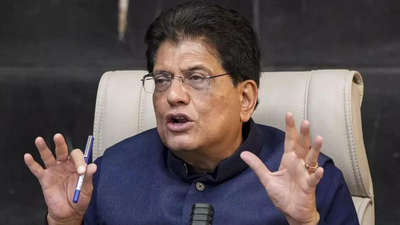
India on Thursday urged members of the World Trade Organisation (WTO) to restore a fully functional dispute settlement system, saying the current mechanism has deprived countries of effective redressal, PTI reported.Speaking on the opening day of the WTO’s 14th ministerial conference (MC14) in Yaounde, Cameroon, commerce and industry minister Piyush Goyal stressed the need to revive the automatic and binding nature of dispute resolution within the global trade body.“A dysfunctional Dispute Settlement System has deprived Members from effective redressal. We must restore the automatic and binding dispute settlement system,” he said.The WTO’s dispute settlement mechanism has faced prolonged disruption since 2009 after the US blocked appointments to the Appellate Body.Goyal also called for a reassessment of the moratorium on customs duties on electronic transmissions, which WTO members have periodically extended since 1998. India has repeatedly raised concerns over the potential revenue implications of the arrangement.“In the absence of a common understanding among Members on the scope of the moratorium on customs duties on electronic transmissions and given its potentially significant implications, the continued extension of this moratorium warrants careful reconsideration,” he said.The four-day MC14 is scheduled to conclude on March 29.On broader WTO reforms, Goyal emphasised that any restructuring should be transparent, inclusive and member-driven, with development concerns at the centre. He underlined that core principles such as non-discrimination, consensus-based decision-making and equity must be upheld. The minister added that the principle of special and differential treatment (S&DT) should be made precise, effective and operational.On agriculture negotiations, he said a permanent solution on public stockholding for food security purposes, the special safeguard mechanism and cotton are long-pending mandated issues that member countries “must deliver on them on priority”.“India remains committed to negotiating a comprehensive Fisheries Subsidies Agreement that balances current and future fishing needs, protects the livelihoods of poor fishers, with appropriate and effective S&DT,” Goyal said.He also stated that incorporating plurilateral outcomes into the WTO framework should be based on consensus and should not undermine the rights of non-participants or impose additional obligations on them.“We will engage constructively to show that WTO remains central to global trade and strive to Reform it to remain responsive, Perform in delivering on development, equity, and inclusiveness, and Transform to better serve the interests of the poor, vulnerable, and marginalized people, anchored in consensus and multilateralism,” he said.Other WTO members also highlighted the need for reforms. According to a statement from US Trade Representative Jamieson Greer, the organisation has struggled to address systemic issues such as persistent trade imbalances, structural excess capacity, economic security and supply chain resilience.“As ministers, our focus should be on reforms that would make the WTO more responsive to Members and improve our ability to achieve outcomes that optimize our trading relationships,” Greer said, adding that countries should consider making the e-commerce duty moratorium permanent.Separately, a ministerial statement by the G-33 grouping of developing countries reiterated that public stockholding for food security remains a crucial policy tool for developing and least developed nations.“We urge all WTO Members to work together in reaching a permanent solution on this issue as per the Ministerial mandates,” the statement said.China also called for restoring a fully functioning dispute settlement mechanism at the earliest to strengthen the WTO’s role in global economic governance. The UK said it wanted to “improve accountability by reinstating a functioning dispute settlement system”.EU trade commissioner Maros Sefcovic warned that inaction could weaken the rules-based trading system. “Maintaining the status quo is not an option — we cannot go on as we are. If we do, we risk erosion of the rules-based system and the WTO sliding into irrelevance. Therefore, I strongly believe we must act urgently to reform the WTO,” he said