The trailer of the Ryan Gosling starrer `Project Hail Mary` features a mysterious alien presence that instantly grabs attention and that’s Rocky. Rocky may look unfamiliar, but he quickly turns out to be the heart of Project Hail Mary. As the story unfolds, he becomes astronaut Ryland Grace’s unlikely companion, bringing warmth, intelligence, and an emotional depth that transforms the film into a unique buddy journey.
No CGI for Project Hail Mary
When the filmmakers ofProject Hail Mary set out to bring Rocky to life, they made a bold call, he wouldn’t be created later through CGI, but would exist physically on set throughout the shoot. “What’s so great about Rocky in the book is the way he’s described as a character that looks like he’s made of rocks, has no face, has five leg-arms that he can use for various different purposes,” Miller says. Instead of simplifying that complexity, the team leaned into it, building the character through puppetry and advanced animatronics to ensure he could perform alongside Ryan Gosling in real time.
Creating five-legged alien
For creature effects supervisor Neil Scanlan, Rocky was never just a design challenge but a co-lead. “One of the great attractions of this film is that Rocky is the second player,” he says, emphasizing the film’s buddy dynamic. That thinking extended to the set, where puppeteer James Ortiz and his team operated Rocky live, giving Gosling a real scene partner to react to. “I was alone on camera for many months, so once we got to the Rocky portion, I was very relieved to have company,” Gosling adds, highlighting how the character’s physical presence directly enhanced performance and authenticity.
That commitment to realism went beyond Rocky himself. “What’s fun about the movie is that there is no green screen in the movie whatsoever. Not a single green or blue screen was used,” Miller revealed, noting that the ship was fully built as a practical set. While the film still features thousands of VFX shots, the approach was clear: use technology to enhance reality, not replace it. The result is a seamless blend of puppetry and visual effects that ensures Rocky isn’t just seen on screen, he’s felt.
Presented by Amazon MGM Studios and distributed by Sony Pictures Releasing International, Project Hail Mary will release in Indian cinemas on 26 March 2026, in English, Hindi, Tamil, and Telugu, across IMAX and other premium large formats.
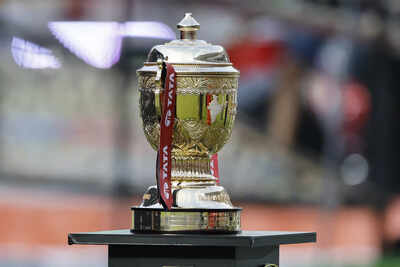
The BCCI has officially unveiled the schedule for the second phase of the Indian Premier League 2026, confirming fixtures from April 13 to May 24.The remaining league-stage fixtures, comprising 50 matches, will be staged across 12 venues in India. These include Bengaluru, Mumbai, Chennai, Kolkata, Delhi, Ahmedabad, Hyderabad, Lucknow, Jaipur, Dharamsala, Raipur and New Chandigarh. The phase begins with Sunrisers Hyderabad facing Rajasthan Royals in Hyderabad. The revised plan comes after the board had initially released only the first 20 fixtures, up to April 12, due to the announcement of assembly election dates in states such as Assam, West Bengal and Tamil Nadu. The remaining schedule was finalised later, ensuring minimal disruption to the tournament. Despite concerns around a potential energy and fuel crisis impacting logistics or attendance, the tournament will proceed as planned without any reduction in matches.
IPL 2026 Full Schedule
Match
Date
Day
Time
Home
Away
Venue
1
28-Mar-26
Sat
7:30 PM
Sunrisers Hyderabad
Royal Challengers Bengaluru
Bengaluru
2
29-Mar-26
Sun
7:30 PM
Kolkata Knight Riders
Mumbai Indians
Mumbai
3
30-Mar-26
Mon
7:30 PM
Chennai Super Kings
Rajasthan Royals
Guwahati
4
31-Mar-26
Tue
7:30 PM
Gujarat Titans
Punjab Kings
New Chandigarh
5
01-Apr-26
Wed
7:30 PM
Delhi Capitals
Lucknow Super Giants
Lucknow
6
02-Apr-26
Thu
7:30 PM
Sunrisers Hyderabad
Kolkata Knight Riders
Kolkata
7
03-Apr-26
Fri
7:30 PM
Punjab Kings
Chennai Super Kings
Chennai
8
04-Apr-26
Sat
3:30 PM
Mumbai Indians
Delhi Capitals
Delhi
9
04-Apr-26
Sat
7:30 PM
Rajasthan Royals
Gujarat Titans
Ahmedabad
10
05-Apr-26
Sun
3:30 PM
Lucknow Super Giants
Sunrisers Hyderabad
Hyderabad
11
05-Apr-26
Sun
7:30 PM
Chennai Super Kings
Royal Challengers Bengaluru
Bengaluru
12
06-Apr-26
Mon
7:30 PM
Punjab Kings
Kolkata Knight Riders
Kolkata
13
07-Apr-26
Tue
7:30 PM
Mumbai Indians
Rajasthan Royals
Guwahati
14
08-Apr-26
Wed
7:30 PM
Gujarat Titans
Delhi Capitals
Delhi
15
09-Apr-26
Thu
7:30 PM
Lucknow Super Giants
Kolkata Knight Riders
Kolkata
16
10-Apr-26
Fri
7:30 PM
Royal Challengers Bengaluru
Rajasthan Royals
Guwahati
17
11-Apr-26
Sat
3:30 PM
Sunrisers Hyderabad
Punjab Kings
New Chandigarh
18
11-Apr-26
Sat
7:30 PM
Delhi Capitals
Chennai Super Kings
Chennai
19
12-Apr-26
Sun
3:30 PM
Gujarat Titans
Lucknow Super Giants
Lucknow
20
12-Apr-26
Sun
7:30 PM
Royal Challengers Bengaluru
Mumbai Indians
Mumbai
21
13-Apr-26
Mon
7:30 PM
Rajasthan Royals
Sunrisers Hyderabad
Hyderabad
22
14-Apr-26
Tue
7:30 PM
Kolkata Knight Riders
Chennai Super Kings
Chennai
23
15-Apr-26
Wed
7:30 PM
Lucknow Super Giants
Royal Challengers Bengaluru
Bengaluru
24
16-Apr-26
Thu
7:30 PM
Punjab Kings
Mumbai Indians
Mumbai
25
17-Apr-26
Fri
7:30 PM
Kolkata Knight Riders
Gujarat Titans
Ahmedabad
26
18-Apr-26
Sat
3:30 PM
Delhi Capitals
Royal Challengers Bengaluru
Bengaluru
27
18-Apr-26
Sat
7:30 PM
Chennai Super Kings
Sunrisers Hyderabad
Hyderabad
28
19-Apr-26
Sun
3:30 PM
Rajasthan Royals
Kolkata Knight Riders
Kolkata
29
19-Apr-26
Sun
7:30 PM
Lucknow Super Giants
Punjab Kings
New Chandigarh
30
20-Apr-26
Mon
7:30 PM
Mumbai Indians
Gujarat Titans
Ahmedabad
31
21-Apr-26
Tue
7:30 PM
Delhi Capitals
Sunrisers Hyderabad
Hyderabad
32
22-Apr-26
Wed
7:30 PM
Rajasthan Royals
Lucknow Super Giants
Lucknow
33
23-Apr-26
Thu
7:30 PM
Chennai Super Kings
Mumbai Indians
Mumbai
34
24-Apr-26
Fri
7:30 PM
Gujarat Titans
Royal Challengers Bengaluru
Bengaluru
35
25-Apr-26
Sat
3:30 PM
Punjab Kings
Delhi Capitals
Delhi
Match
Date
Day
Time
Home
Away
Venue
36
25-Apr-26
Sat
7:30 PM
Sunrisers Hyderabad
Rajasthan Royals
Jaipur
37
26-Apr-26
Sun
3:30 PM
Chennai Super Kings
Gujarat Titans
Ahmedabad
38
26-Apr-26
Sun
7:30 PM
Kolkata Knight Riders
Lucknow Super Giants
Lucknow
39
27-Apr-26
Mon
7:30 PM
Royal Challengers Bengaluru
Delhi Capitals
Delhi
40
28-Apr-26
Tue
7:30 PM
Rajasthan Royals
Punjab Kings
New Chandigarh
41
29-Apr-26
Wed
7:30 PM
Sunrisers Hyderabad
Mumbai Indians
Mumbai
42
30-Apr-26
Thu
7:30 PM
Royal Challengers Bengaluru
Gujarat Titans
Ahmedabad
43
01-May-26
Fri
7:30 PM
Delhi Capitals
Rajasthan Royals
Jaipur
44
02-May-26
Sat
7:30 PM
Mumbai Indians
Chennai Super Kings
Chennai
45
03-May-26
Sun
3:30 PM
Kolkata Knight Riders
Sunrisers Hyderabad
Hyderabad
46
03-May-26
Sun
7:30 PM
Punjab Kings
Gujarat Titans
Ahmedabad
47
04-May-26
Mon
7:30 PM
Lucknow Super Giants
Mumbai Indians
Mumbai
48
05-May-26
Tue
7:30 PM
Chennai Super Kings
Delhi Capitals
Delhi
49
06-May-26
Wed
7:30 PM
Punjab Kings
Sunrisers Hyderabad
Hyderabad
50
07-May-26
Thu
7:30 PM
Royal Challengers Bengaluru
Lucknow Super Giants
Lucknow
51
08-May-26
Fri
7:30 PM
Kolkata Knight Riders
Delhi Capitals
Delhi
52
09-May-26
Sat
7:30 PM
Gujarat Titans
Rajasthan Royals
Jaipur
53
10-May-26
Sun
3:30 PM
Lucknow Super Giants
Chennai Super Kings
Chennai
54
10-May-26
Sun
7:30 PM
Mumbai Indians
Royal Challengers Bengaluru
Raipur
55
11-May-26
Mon
7:30 PM
Delhi Capitals
Punjab Kings
Dharamshala
56
12-May-26
Tue
7:30 PM
Sunrisers Hyderabad
Gujarat Titans
Ahmedabad
57
13-May-26
Wed
7:30 PM
Kolkata Knight Riders
Royal Challengers Bengaluru
Raipur
58
14-May-26
Thu
7:30 PM
Mumbai Indians
Punjab Kings
Dharamshala
59
15-May-26
Fri
7:30 PM
Chennai Super Kings
Lucknow Super Giants
Lucknow
60
16-May-26
Sat
7:30 PM
Gujarat Titans
Kolkata Knight Riders
Kolkata
61
17-May-26
Sun
3:30 PM
Royal Challengers Bengaluru
Punjab Kings
Dharamshala
62
17-May-26
Sun
7:30 PM
Rajasthan Royals
Delhi Capitals
Delhi
63
18-May-26
Mon
7:30 PM
Sunrisers Hyderabad
Chennai Super Kings
Chennai
64
19-May-26
Tue
7:30 PM
Lucknow Super Giants
Rajasthan Royals
Jaipur
65
20-May-26
Wed
7:30 PM
Mumbai Indians
Kolkata Knight Riders
Kolkata
66
21-May-26
Thu
7:30 PM
Gujarat Titans
Chennai Super Kings
Chennai
67
22-May-26
Fri
7:30 PM
Royal Challengers Bengaluru
Sunrisers Hyderabad
Hyderabad
68
23-May-26
Sat
7:30 PM
Punjab Kings
Lucknow Super Giants
Lucknow
69
24-May-26
Sun
3:30 PM
Rajasthan Royals
Mumbai Indians
Mumbai
70
24-May-26
Sun
7:30 PM
Delhi Capitals
Kolkata Knight Riders
Kolkata
The venues for the playoff matches are yet to be announced and will be confirmed at a later stage.
Actor Sayani Gupta is all set to explore a new side of storytelling as she makes her directorial debut with the short film Aasmani. Not just directing, she has also written and produced the film, making it a very personal project close to her heart. The film stars veteran actor Revathi as the protagonist, along with Daria Bedi, who is being introduced in this film.
Sayani Gupta talks about making her directorial debut
A graduate of the Film and Television Institute of India, Sayani shared that this moment has been years in the making. “Making a film has been a 17-year-long dream ever since I stepped foot into film school,” she said. “All these years, with every set I’ve been on as an actor, that desire has only grown stronger. In a world ridden with so much chaos and atrocity, cinema can truly act as a medium for discourse, resistance, evocation, and perhaps even a balm.”
“Aasmani is a film about love, companionship and freedom with themes of redundancy, values and loss,” Sayani said. “It’s a story about these spunky women (of different age groups) who know their minds and worth. I hope for the film to be a spot of sunshine, love and joy for anyone who watches it.”
Sayani has always been known for picking unique and meaningful roles. From Margarita with a Straw toFour More Shots Please!, Article 15, Pagglait, Fan, JollyLLB2 Axone, etc., she has built a strong and diverse filmography over the years.
About Aasmani
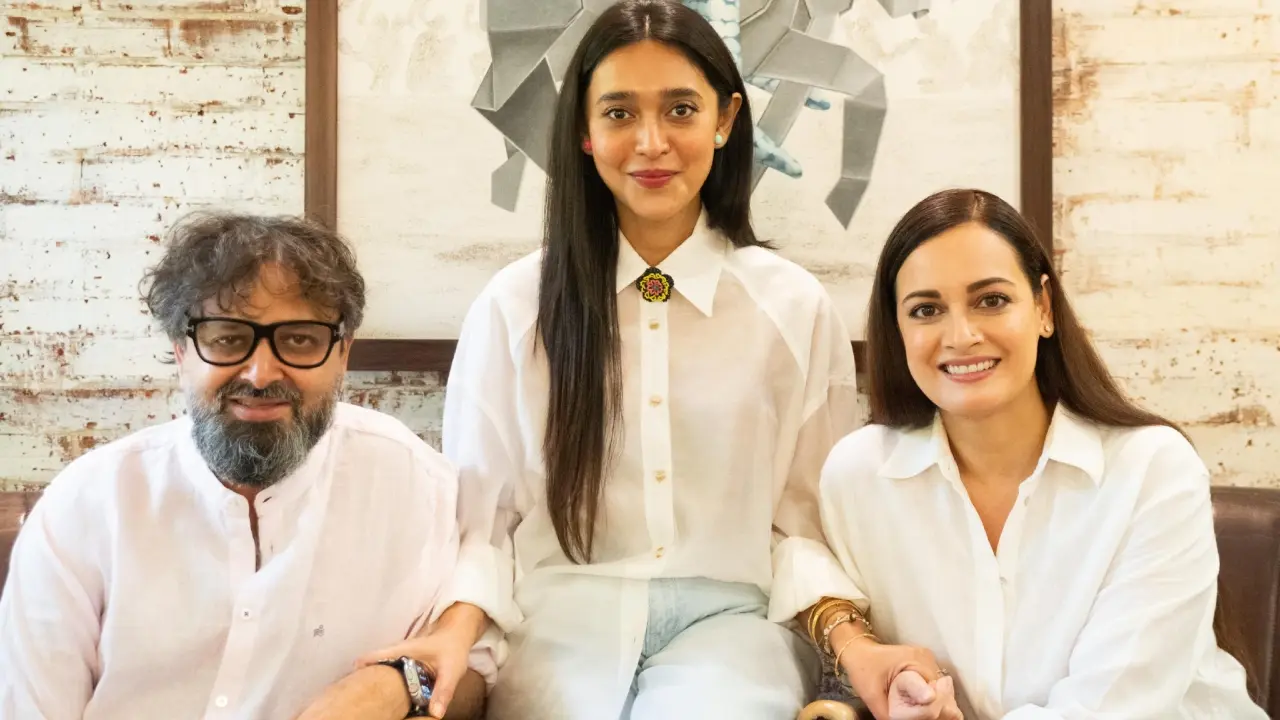
Aasmani is produced by Sayani Gupta Movies along with the Sumitra Gupta Foundation for Arts and One India Stories. The film is backed by names like Nikkhil Advani, Dia Mirza and Ananya Rane as Executive Directors.
The film also marks the first project from the Sumitra Gupta Foundation for Arts, while One India Stories presents it as their second release. For the makers, Aasmani is not just a film but a step towards telling more heartfelt and meaningful stories.
We are excited to see what this Magic Trio of Sayani Gupta, Nikkhil Advani and Dia Mirza has created.
The film`s script has won multiple international awards already. And the film is all set for its world premiere.
The IPL 2026 is all set to kick off from March 28. So far, the schedule of only first 20 matches has been released due to state elections.
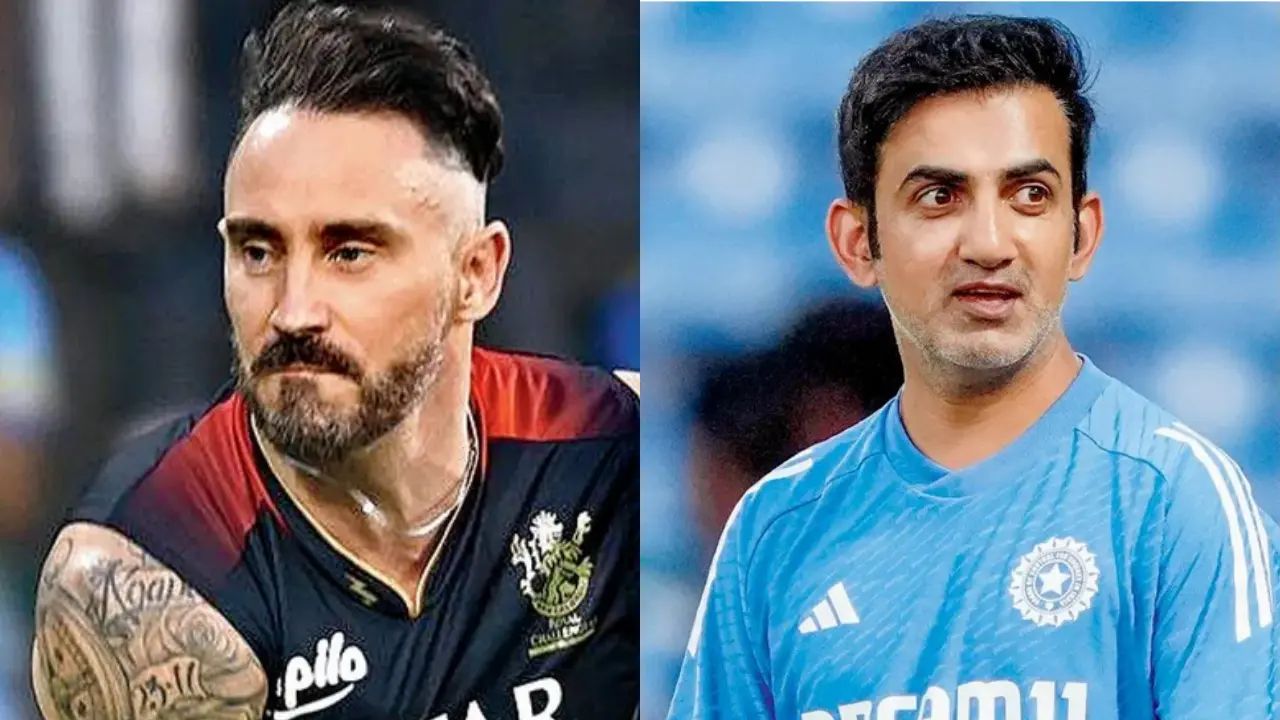
Ahead of the league, former South African cricketer Faf du Plessis heaped praise on Gautam Gambhir and also spoke about the Indian as a leader.
The South African said that Gambhir is always seen as a villain when it comes to playing against him.
“My perspective of Gambhir is obviously very different from the guys who play with him. He`s always the villain in the story when it comes to playing against him, but you respect that. And I think that`s the key thing with Gautam Gambhir, he`s so competitive. He does not worry for one second about being liked by anyone,” he said.
The former cricketer also said that a team would always want to beat Gambhir, considering the way he carries himself as the opposition. Faf also said that the Kolkata Knight Riders (KKR) was a stronger team under the leadership of Gambhir.
“From the outside, as a fellow leader playing against him, you want to beat him because of the way he carries himself as the opposition, but you respect the fact that he sets such high standards. That`s what good leaders do, and he`s created that since the day he started playing. If you look at his record, you have to take your hat off and say, from a leadership perspective, KKR with him was a stronger team,” he said.
KKR will begin their IPL 2026 campaign by playing a clash against the Mumbai Indians (MI) on March 29 at the Wankhede Stadium in Mumbai.
IPL 2026, Kolkata Knight Riders vs Mumbai Indians: Full Squads
Gulf Cooperation Council Secretary-General Jasem al-Budaiwi has accused Iran of imposing fees for ships to pass safely through the Strait of Hormuz. Experts say such fees are in breach of international maritime law.
Ola Electric Mobility Ltd. has once again called for #EndICEAge amid an oil shock brought on by the Iran war. That, even as its EV sales languish at the lowest since listing.
Ola Electric Managing Director Bhavish Aggarwal. Ola Electric’s EV sales in February 2026 fell to the lowest since listing in August 2024. (PTI)
The company, which at the time of listing was India’s largest electric two-wheeler maker, is offering discounts of up to ₹50,000, with prices for the Gen 3 S1 X (2kWh) and Roadster X (2.5 kWh) starting at ₹49,999, so that “more Indians who are thinking of moving beyond ICE can take that step now”, Bhavish Aggarwal, chairman and managing director at Ola Electric wrote on X.
As part of the #EndICEAge campaign, Ola Electric is also offering:
Service Trust Guarantee: The company will provide free Ola cab vouchers in the event of any service delays beyond the stipulated timeframe.
Buyback Guarantee: Assured buyback value of up to 60% on its EVs.
Extended Warranty: Eight years as standard for Ola Electric’s S1 scooters and Roadster motorcycles.
The starting price of ₹49,999 on Ola S1 X (2 kWh) and Roadster X (2 kWh) — along with benefits of up to ₹50,000 across the portfolio — is valid up to 31 March 2026.
“Rising fuel prices and the current geopolitical situation are clear reminders of why India must accelerate its journey towards energy independence,” Aggarwal wrote on X. “Every EV on the road reduces our dependence on imported oil. We are going to do whatever it takes to accelerate India’s move beyond ICE!”
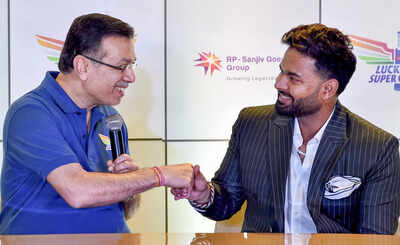
Lucknow Super Giants (LSG) owner Sanjiv Goenka with Rishabh Pant (PTI Photo)
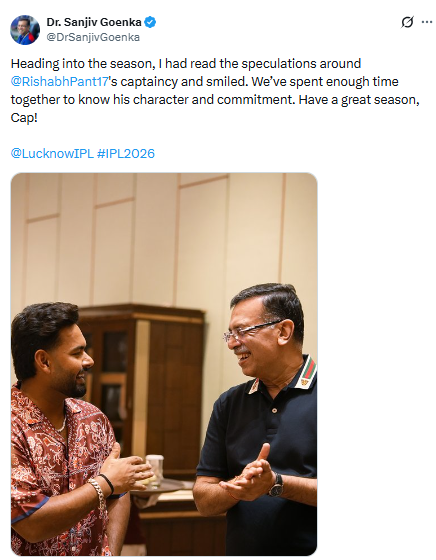
Sanjiv Goenka, owner of Lucknow Super Giants, has firmly shut down speculation surrounding Rishabh Pant’s captaincy ahead of IPL 2026, calling out what he implied were baseless reports doing the rounds.Pant had come under heavy criticism after a disappointing IPL 2025 campaign. Bought for a massive Rs. 27 crore at the mega auction, expectations were sky-high, but the left-hander struggled to deliver, scoring just 269 runs in 13 matches at an average of 24.45. As a result, rumours began circulating that LSG were considering a leadership change before the new season.
Watch
IPL 2026: Ishan Kishan steals the show at captains meet
Goenka, however, made his stance clear with a public message backing Pant’s leadership and character.
Sanjiv Goenka post
“Heading into the season, I had read the speculations around @RishabhPant17’s captaincy and smiled. We’ve spent enough time together to know his character and commitment. Have a great season, Cap!” Goenka wrote on X.This is not the first time such rumours have surfaced. During IPL 2025, similar claims gained traction on social media, suggesting Pant could even be dropped due to concerns over his hefty price tag. The wicketkeeper-batter responded strongly at the time, calling out the spread of misinformation.“I understand fake News gives more traction to content, but let’s not build everything around it . Little sense and credible news will help more rather making fake news with agenda. Thanks, have a good day . Let’s be responsible and sensible what we put out on social media,” Pant had posted.With the noise around his role addressed, focus now shifts back to cricket. Pant’s form will be under close watch when LSG begin their IPL 2026 campaign against Delhi Capitals at the Ekana Stadium in Lucknow on April 1.
Actor Ram Charan suffered an injury on Wednesday while shooting an action sequence for Buchi Babu Sana’s sports drama Peddi. While the actor’s family or the film’s team did not address the news initially, the news had leaked through sources. His cousin, actor-producer Niharika Konidela, was shocked when she first heard the news through a reporter. She even chided him politely for the way the news was broken to her before cutting the conference short.
Niharika Konidela froze for a while after a reporter informed her of Ram Charan’s injury.
Niharika Konidela shocked to learn of Ram Charan’s injury
Niharika was in Tirupati on Wednesday to promote her upcoming horror-comedy Rakasa, starring Sangeeth Shobhan, Nayan Sarika, and Getup Srinu. Towards the end of their interaction with the press, a reporter suddenly asked Niharika about Ram’s injury, terming it as an ‘accident’ on the Peddi set. She looked wide-eyed and shocked as soon as she heard it, saying ‘Huh?’ and looking around to see if anybody knew more.
When somebody sitting by her explained what happened, she gently chided the reporter, saying, “Sir, itla shocking ga cheptara sir? Nenu flight nunchi parigettukuntu, I didn’t even…(Sir, is this how you tell me? I ran here from the flight and didn’t even…)” When the reporter interrupted and asked her if she didn’t know about it despite her looking shaken, she replied, “I didn’t even use my phone, sir,” charting down her reaction to ‘concern’ for her brother.
Despite her shock, Niharika continued to answer one more question, even as she looked to her team for information. She then ended the press conference by saying, “Sir, miru bhayapedtunaru (Sir, you are scaring me). Sorry, I’m not able to do this. I need to take that call.” She immediately asked her team for her phone so she could call her family.
What happened to Ram Charan
A source from Ram’s team confirmed to Hindustan Times on Wednesday morning that the actor had sustained an injury near his eye while shooting an action sequence for Peddi. He had to get four sutures, and the source clarified that it was not his eye that was injured. Later in the day, Team Peddi also confirmed it in a press note, calling it a ‘minor injury to the left eye’.
His father, actor Chiranjeevi, revealed on Instagram on Thursday that Ram had to undergo eyelid surgery. “Dr. Sudhakar Prasad garu, Your timely and skilful surgery on Charan’s eyelid has truly been a blessing. What was a moment of concern for us was eased entirely by your precision, care, and expertise. Your craftsmanship made all the difference, and we are truly grateful. Thank you,” he wrote, thanking the doctor.
In a country of 1.5 billion people, what Amartya Sen has called intuitively rational, there are many views on what India’s national interest actually is. At the risk of sweeping generalizations, these views, as they exist in the public sphere today, can be broadly classified into two types.
LPG tanker ‘Shivalik’ arrives at Mundra port in Gujarat after safely transiting the Strait of Hormuz in Gujarat on March 16. (PTI)
The first argues that Jawaharlal Nehru’s world-view and its long-term influence on the Indian state have undermined the national interest since the birth of the nation. We are told that the present regime is trying very hard to revive it through several efforts and interventions. The second view is tantamount to saying that the present regime is destroying India’s national interest by erasing the hard-earned achievements and credibility of the past.
Facts, counter-facts, selective facts and WhatsApp University facts abound for both sides of the debate. It is futile to even try to argue with either side. Perhaps a more appropriate exercise is to formulate a broad framework keeping in mind the strategy of any national interest to India.
1. Medium to long-term assessment of the central geopolitical contradiction
Any national interest strategy is as good or bad as its assessment of the world order. India became an independent country at the same time as the world entered the rivalry between two ideologically opposed superpowers: the US and the Soviet Union. It was also the beginning of a great decolonization wave in the world, with India being the largest former colony to become a democracy. That it has survived as a country and as a democracy is no small feat.
Like large parts of the world, India and its neighborhood were also the theater of great Cold War rivalries. In fact, one could well argue that the final act in the collapse of the Soviet Union, the Afghanistan War, was played out in this region. The disintegration of the Soviet Union and, with it, socialism, ushered in the era of a US-dominated world order.
The world is still under significant American dominance. But there is a growing perception, and rightly so, that in China, we now have a country that is beginning to challenge American dominance. This challenge is coming in a very different way from the era of Soviet Union and American competition. The competition for hegemony between the US and China is more about controlling the source code of the global economy than the constitutional codes of countries or the world.
2. What does this reversal of geopolitical contradictions mean for India?
India has come a long way from the days of its ship-to-mouth existence that required it to import wheat from the US. It has also come a long way from engaging in security mediation between the Soviet Union and the US as it did during various military conflicts in the past. But India is critically dependent on the US and China today in different ways than it was on the US or the Soviet Union during the Cold War.
With the adoption of globalization, especially in finance and services, India’s fortunes are inherently linked to the US economy and the global economic order headed by it. Take away our service exports, remittances sent by NRIs and portfolio investments flowing into our financial markets – all of which are largely rooted in the US-led global economic order – and the Indian economy will either fall into a forex crisis or have to declare force majeure on its domestic elite, who have begun to take a certain, one might say, First World, standard of living for granted.
China, over the past few years, has emerged as India’s largest source of imports because it can make almost everything – from low-tech to high-tech – more effectively and economically than India. Of course, China’s physical dominance is not limited to India alone. However, what India is also realizing now, as it tries to expand its manufacturing footprint into more high-tech goods, is that China’s support is as essential to kick-start this process as was support from the Soviet or American camp for building our steel factories after independence.
In short, disengagement from the US or China, or managing the world churn caused by the China-US rivalry through mediation, is not a feasible option for India.
3. The Iran war shows that protecting India’s national interests requires an awkward action to set aside the Sino-US rivalry amid flying projectiles
It is difficult in itself to reconcile the US and China, especially when the US has an irascible and aggressive President and China has an active border dispute with India and a vested interest in keeping Indian power in check in the Indian Ocean region. It must be removed at a time when the global economy has been dealt the biggest energy shock ever due to the war in West Asia, making it even more difficult.
However, disruptions now appear to be the norm rather than exceptions in the world. This decade alone has seen four major events: a once-in-a-century pandemic, a war in Europe that lasted longer than World War I, a generational technological shock in the form of AI, and, now, war in West Asia. All these crises have caused/will cause significant suffering and hence have diverted attention and, more importantly, resources from India’s challenge of dealing with the central paradox described above.
4. Preparing for an environment where disruption is the norm rather than the exception requires strategic flexibility
Why did Donald Trump back out of his three-point tariffs on China that he imposed last year? The Chinese threatened to cut off supplies of rare earths to the US, which would have crippled a large portion of US industrial activity. China’s physical influence – its indispensability to global supply chains – is immense in the world today.
For the US, this leverage serves as its tremendous potential, as the dollar is the dominant currency in the world. If the US imposes economic sanctions on a country, commercial transactions with the rest of the world become difficult and expensive.
Like many other countries, India too does not have any such strategic advantage. This puts it in a position where it must try to minimize the potential pain if the two superpowers decide to exert their influence in a hostile manner against India. In the short term, this could take the form of diversification beyond the US-China basket, sometimes through trade deals or technological collaboration with other countries. But the long-term solution is only one: either acquire leverage or immunity against the practice of such leverage.
5. The guiding framework for building such resilience for India should be “Land, Peace and Bread” in a democratic framework
A specific national interest optimization problem should target three simultaneous and interrelated objectives: protecting the country’s sovereignty, maintaining domestic order, and ensuring a decent standard of living for citizens. In the case of India, this effort will have to abide by the constraints imposed by democracy.
Taken as a whole, India’s military capabilities are not impressive. However, they are being eclipsed by increasing Chinese capabilities. India’s inadequacy is also reflected in the lack of its other strategic security measures. For example, what else explains the fact that despite India being a more populous country than China, India’s strategic petroleum reserves are a tiny fraction of China’s? To achieve these objectives a country needs economic strength.
Today India is a much more peaceful society than it was a few decades ago. Much of this relative peace is the result of economic growth over the past three decades. Even though the development process has been entangled in inequality, it has led to a valuable increase in the power of the nation state to provide economic palliatives. However, this material peace is more inclined towards uncertainty than prosperity. The increasing demands on the fiscal pool are slowly but steadily leading to instability.
Certainly, politics in India is more devilish than kind, as it is deeply rooted in nefarious, rent-seeking political finance. The latter has created an environment where private accumulation is increasingly divorced from activities that would protect and enhance the goals of the national interest. This is best reflected in the situation where the largest share of the country’s breadwinners are in the bread-growing business (agriculture), who are doomed to live under a structural viability crisis. Private capital is largely shying away from promoting investment in job creation activities even as it seeks greater profits from trade and rent-related sectors.
6. So, what needs to be done to protect India’s national interests?
Let us start with what will not protect it.
Putting all your eggs in one of the two competing great power rivalry camps, or even appearing to do so, is the biggest mistake anyone can make. Unlike in the past, the US is now purging and torturing its own satellites. It doesn’t make any sense, and more importantly, there’s no point in even trying to become one right now. China, unlike the Soviet Union, is not interested in acquiring camp followers who would benefit from socialist philanthropy. Given the very low levels of per capita income and the ongoing demographic decline, China views its future from the perspective of insecurity. The challenge is to understand these contradictions and resolve them rather than isolate or confuse ourselves in the hope of pitting one against the other, which was, to some extent, a practical strategy during the Cold War.
The pursuit of democratic legitimacy may not be the great Indian trick of balancing increased economic relief with dishonest political finance. This has become a vicious cycle in our political economy. The balance that a healthy capitalist democracy must strive for and maintain is in managing the conflicting terms of trade between workers and capital, where creative destruction ensures that the overall strength of the economy continues to grow rather than stagnate.
The only way to overcome these two challenges is to make them an integral part of political discourse that appreciates these nuances rather than vacillating between narcissism and nihilism. The latter is exactly what our political debate has become.
It is tempting to blame individual political actors on both sides of the spectrum for this not happening. However, it is more appropriate to see this as a major philosophical crisis for theorists and practitioners of Indian political economy. Social issues like caste and religion have been the most heated debates in Indian politics in the last three and a half decades. However, overall, there has been a consensus on economic strategy: economic reforms coupled with reforms fueled by majority political finance.
When charlatans pretending to be scholars want to portray standalone acts of commission or omission as the ultimate act for or against India’s national interest, they are trying to hide this massive bipartisan bankruptcy. With each crisis, which causes more suffering to an already distressed people, the emptiness of such arguments becomes more apparent.
7. But what about Pakistan?
Many people may ask this question. As a hostile neighbor, Pakistan must become an extremely important component of our national security strategy. But national security strategy is a small subset of national interest strategy. Countries which mistake the first for the second end up exactly like Pakistan or North Korea. India and Indians deserve and must do better.
Prime Minister Narendra Modi has spoken about effects of the US-Iran war on India.
Indian Prime Minister Narendra Modi will be holding an online meeting with chief ministers of states and UTs — barring those going to polls soon — on Friday as fears mount around a reported fuel “crisis” and related issues in the country, triggered by the widening conflict in West Asia after the US and Israel attacked Iran four weeks ago.
The government and oil companies have said India has about 60 days of oil stock cover, and has arranged one full month of LPG supply. The government said on Thursday that there is no shortage of petrol, diesel, or LPG, calling reports of shortages as a “deliberate misinformation campaign” aimed at triggering panic buying.
There are also rising online searches about a possible “lockdown” in India, a claim being made mainly on social media suggesting that PM Narendra Modi hinted at a “Covid-style lockdown” while addressing Parliament on the ongoing West Asia crisis. A closer look at his speeches in Lok Sabha and Rajya Sabha shows that the claim is misleading.
The ‘lockdown’ claim
Speculation intensified after the government announced an all-party meeting to discuss the crisis and its implications for India’s economy and supply chains. Several posts and online discussions suggested that Modi referred to the possibility of a lockdown while speaking about the global impact of the ongoing conflict in West Asia.
This triggered searches such as “India lockdown again”, “lockdown news”, and “Is lockdown coming back in India?” across the internet.
What PM Modi actually said
In his speeches in the two Houses of Parliament earlier this week, Prime Minister Narendra did refer to the Covid-19 pandemic, but only as an example of how the country handled a global crisis.
Modi said India had previously navigated disruptions during the Covid period and emphasised the importance of national unity during difficult times.
He urged citizens to remain “prepared and united, just as it had stood together during the COVID-19 pandemic”. He warned that global disruptions caused by the war could have long-term economic consequences.
“As we can see, the situation regarding this war is changing moment by moment. Therefore, I would also say to my fellow citizens that we must be prepared for every challenge. There is a strong possibility that the adverse effects of this war will last for a long time. But I assure the people of the country that the government is alert, ready, and working with full seriousness on strategy, taking every necessary decision,” PM Modi said.
However, the word “lockdown” was not used in either speech.
Key facts
The speculation about a possible lockdown appears to have been driven by a combination of factors: Ongoing disruptions in global supply chains due to the ongoing conflict in West Asia; concerns about oil and gas supply through the Strait of Hormuz; reports of restrictions on LPG supply and fuel-saving measures in some countries; and public memories of the nationwide lockdown imposed during the Covid-19 pandemic.
These developments revived memories of pandemic-era restrictions, leading many people to assume that the government might be preparing for similar measures.
As for the current situation, India apparently does not face any Covid-related emergency that would warrant a lockdown. The country currently has very few active Covid cases and the public health situation remains under control. The war-related crisis is seeing other measures.
The government’s focus has been on mitigating the economic and supply-chain impact of the West Asia conflict, particularly disruptions to oil, gas and fertiliser shipments.
Prime Minister Narendra Modi did not mention a lockdown in his recent Parliament speeches. He referred to the Covid-19 period only to highlight how the country faced earlier global disruptions with unity and preparedness.
…Read More
The government and oil companies have said India has about 60 days of oil stock cover, and has arranged one full month of LPG supply. The government said on Thursday that there is no shortage of petrol, diesel, or LPG, calling reports of shortages as a “deliberate misinformation campaign” aimed at triggering panic buying.
There are also rising online searches about a possible “lockdown” in India, a claim being made mainly on social media suggesting that PM Narendra Modi hinted at a “Covid-style lockdown” while addressing Parliament on the ongoing West Asia crisis. A closer look at his speeches in Lok Sabha and Rajya Sabha shows that the claim is misleading.
The ‘lockdown’ claim
Speculation intensified after the government announced an all-party meeting to discuss the crisis and its implications for India’s economy and supply chains. Several posts and online discussions suggested that Modi referred to the possibility of a lockdown while speaking about the global impact of the ongoing conflict in West Asia.
This triggered searches such as “India lockdown again”, “lockdown news”, and “Is lockdown coming back in India?” across the internet.
What PM Modi actually said
In his speeches in the two Houses of Parliament earlier this week, Prime Minister Narendra did refer to the Covid-19 pandemic, but only as an example of how the country handled a global crisis.
Modi said India had previously navigated disruptions during the Covid period and emphasised the importance of national unity during difficult times.
He urged citizens to remain “prepared and united, just as it had stood together during the COVID-19 pandemic”. He warned that global disruptions caused by the war could have long-term economic consequences.
“As we can see, the situation regarding this war is changing moment by moment. Therefore, I would also say to my fellow citizens that we must be prepared for every challenge. There is a strong possibility that the adverse effects of this war will last for a long time. But I assure the people of the country that the government is alert, ready, and working with full seriousness on strategy, taking every necessary decision,” PM Modi said.
However, the word “lockdown” was not used in either speech.
Key facts
The speculation about a possible lockdown appears to have been driven by a combination of factors: Ongoing disruptions in global supply chains due to the ongoing conflict in West Asia; concerns about oil and gas supply through the Strait of Hormuz; reports of restrictions on LPG supply and fuel-saving measures in some countries; and public memories of the nationwide lockdown imposed during the Covid-19 pandemic.
These developments revived memories of pandemic-era restrictions, leading many people to assume that the government might be preparing for similar measures.
As for the current situation, India apparently does not face any Covid-related emergency that would warrant a lockdown. The country currently has very few active Covid cases and the public health situation remains under control. The war-related crisis is seeing other measures.
The government’s focus has been on mitigating the economic and supply-chain impact of the West Asia conflict, particularly disruptions to oil, gas and fertiliser shipments.
Prime Minister Narendra Modi did not mention a lockdown in his recent Parliament speeches. He referred to the Covid-19 period only to highlight how the country faced earlier global disruptions with unity and preparedness.
Follow all the updates here:
Mar 26, 2026 5:54:52 PM IST
India petrol pump situation Live Updates: Fuel stations to get three days of credit from oil firms, says govt
With some petrol pumps, especially in smaller towns, finding difficulty in lifting fuel after oil companies put them on cash-and-carry, the oil ministry said on Thursday that steps have been taken to increase credit to petrol pumps to over three days from earlier allowed one day.
While the Iran war has disrupted the supply of half of the crude oil (raw material used to make fuels like petrol and diesel), the country has secured enough crude supplies from elsewhere for the next 60 days.
On LPG, whose supply has been scarce because of the shutting down of Strait of Hormuz, the waterway that shipped a bulk of Indian supplies, the ministry said 8 lakh tonnes of LPG cargoes have been secured and one full month of supply is “firmly arranged”.
Separately, Indian Oil Corporation (IOC), Bharat Petroleum Corporation Ltd (BPCL) and Hindustan Petroleum Corporation Ltd (HPCL) put out posts to say their petrol pumps were operating normally and there was no shortage of any fuels.
Mar 26, 2026 5:45:22 PM IST
US-Iran war impact in India Live Updates | Govt releases fuel stock details of ’60 days, 8 lakh tonnes’
India has about 60 days of oil stock cover and has arranged one full month of LPG supply, the government said on Thursday, adding that there is no shortage of petrol, diesel, or LPG. It called reports of shortages as a “deliberate misinformation campaign”.
Amid reports of panic buying and long queues at petrol pumps and LPG distributors, the ministry of petroleum and natural gas, for the first time since the war in West Asia broke out, released stock details of crude oil, fuels and LPG as it rushed to calm nerves.
In parallel, state-owned oil marketing companies also said there is no shortage and supplies remain stable.
“Every Indian refinery (which turns crude oil into fuels like petrol and diesel) is running at over 100 per cent utilisation,” the government said.
“Actual stock cover is around 60 days right now (including crude stocks, products stocks and the dedicated strategic storage in caverns) even as we are on the 27th day of the Middle East crisis.”
It added that crude supplies remain stable despite tensions around the Strait of Hormuz, with higher volumes from alternative sources offsetting any disruption.
The ministry said all 1 lakh-plus retail fuel outlets across the country are open and dispensing fuel without interruption. “Not a single outlet has been asked to ration supply.”
In its statement, the oil ministry said all petrol pumps across the country are adequately stocked and operating normally, with no rationing of petrol or diesel.
Mar 26, 2026 5:34:55 PM IST
India petrol, diesel prices live updates: Nayara Energy hikes prices
Nayara Energy, India’s largest private fuel retailer, has increased petrol prices by ₹5.3 per litre and diesel by ₹3 per litre amid global disruption to energy supplies in view of the US-Iran war that has been going on for almost a month now.
India fuel ‘crisis’ amid West Asia Live Updates: Govt says well-prepared to manage economic, logistical challenges
As global trade routes, particularly through the Strait of Hormuz, face disruptions, the Centre has maintained that India is well-prepared to manage any economic or logistical challenges. Friday’s meeting between the PM and CMs is expected to further streamline coordination between the Centre and states to effectively navigate the crisis.
Prime Minister Modi has assured that India has sufficient crude oil reserves and robust arrangements for continuous supply. He has told Parliament that the expansion of strategic petroleum reserves and diversification of energy imports from 27 to 41 countries over the past decade to reduce dependency on any single source.
On the safety front, government authorities reiterated that there is no cause for panic, with Indian embassies actively assisting citizens in affected regions. Evacuation plans remain in place, with the safety of Indians abroad as the top priority, news agency ANI reported.
Mar 26, 2026 5:27:50 PM IST
India petrol, diesel situation updates: What ministers told all-party meet
The Centre held an all-party meeting chaired by defence minister Rajnath Singh on Wednesday, where the government briefed about the situation in West Asia and how India is dealing with its impact.
All Union ministers part of the Cabinet Committee on Security — Rajnath Singh, home minister Amit Shah, external affairs minister S Jaishankar and finance minister Nirmala Sitharaman — represented the government. Health minister J P Nadda and parliamentary affairs minister Kiren Rijiju were also part of the meeting.
A detailed briefing by foreign secretary Vikram Misri, along with remarks from external affairs minister S Jaishankar and petroleum minister Hardeep Singh Puri, highlighted that India’s energy security “remains stable”, with “adequate availability” of crude oil, LPG, and fertilisers.
The government underscored that multiple shipments have already reached India, with more expected in the coming days, backed by the country’s strong refining capacity. It also emphasised proactive diplomatic outreach, noting that New Delhi is in touch with all parties involved and ensuring uninterrupted supply lines, calling it a “diplomatic success.”
Mar 26, 2026 5:26:14 PM IST
India fuel ‘crisis’ amid West Asia war: Do not panic, says Omar Abdullah as petrol pumps see queues
Amid concerns triggered by rumours of fuel shortages in parts of the country, Jammu and Kashmir CM Omar Abdullah urged people not to panic. Addressing reports of long queues at petrol pumps in Jammu, Abdullah said, “My earnest request is that you stop camping outside petrol pumps otherwise, I will shut all the petrol pumps for the next few days.” He termed the situation “regrettable,” noting that while the central government has clarified there is no shortage of petrol, diesel, or LPG, people continue to rely on misinformation circulating on social media.
He further stressed that no directive has been issued to limit fuel usage and appealed to citizens to avoid panic buying. “There is a meeting of all CMs with PM Modi tomorrow online, and I will attend that,” Abdullah added, reiterating that the supply situation remains stable.
Mar 26, 2026 5:23:21 PM IST
India fuel crisis live updates: PM Modi to hold online meeting
Prime Minister Narendra Modi will hold an interaction with Chief Ministers on Friday evening via video conferencing to review state-level preparedness amid the ongoing West Asia conflict.
However, sources told news agency ANI that CMs of poll-bound states will not be attending the meeting. These include Kerala’s Pinarayi Vijayan, West Bengal’s Mamata Banerjee, Tamil Nadu’s MK Stalin, Assam’s Himanta Biswa Sarma, and Puducherry’s N Rangasamy.