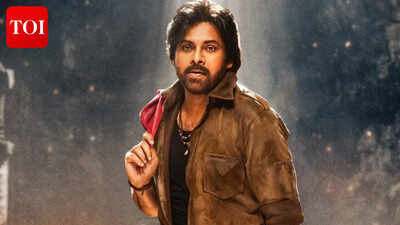
Director Harish Shankar dismisses online trolls targeting his film ‘Ustaad Bhagat Singh,’ stating he doesn’t take them seriously as they lack identity and accountability. He emphasizes his focus on the film’s output and his personal achievement in releasing it under pressure, asserting he only reacts to abusive language or crossed limits.
Director Harish Shankar has given a strong reply to trolls targeting the box office result of ‘Ustaad Bhagat Singh.’ The film received mixed reactions, and social media saw heavy trolling after its release. However, Harish made it clear that he is not affected by such comments. Infact he said that he is happy with the film’s output and believes successfully releasing the movie under pressure is his real achievement and added that he worked beyond his limits and stands by his effort.
Harish Shankar says trolls have no identity
Speaking about online trolling, Harish Shankar said he does not take trolls seriously. In conversation with India Today, he stated, “They troll everything, but I don’t take them seriously.” He further explained, “They don’t have an identity… if I say something, I take responsibility for it.” According to him, trolls lack accountability and often hide behind fake profiles. His strong words show his firm stand against anonymous criticism on social media.
Harish Shankar on handling online trolling and social media abuse
Harish Shankar mentioned that trolling is currently rampant among celebrities. But he reacts only when things go beyond limits. He said, “I respond only when abusive language is used or when limits are crossed.” He added that he blocks such users or even takes serious action if needed. The director made it clear that he does not allow negativity to affect his work or mindset.
Harish Shankar recalls early criticism
Harish revealed that facing criticism is not new to him. He shared, “When I wanted to become a director, even my parents questioned me.” He added that because of such early criticism, online trolling does not bother him now. He also mentioned that he could have left social media platforms long ago if he took trolls seriously. Despite everything, Harish Shankar remains focused and confident in his journey.
About ‘Ustaad Bhagat Singh’
Featuring Pawan Kalyan in the main role, ‘Ustaad Bhagat Singh’ was released on March 26, and the masala entertainer received mixed reviews. Sreeleela, Raashii Khanna, Sakshi Vaidya, and Vamsi have played key roles, while the film’s background score is composed by Thaman.
Star Manchester City midfielder Rodri has dismissed any talk of a rift with Vinicius Junior following his boycott of the 2024 Ballon d’Or ceremony. The Spanish international picked up the 2024 men’s award ahead of the Real Madrid star.
“I have nothing against Vini Jr.,” Rodri told Spanish radio station Onda Cero. “I have maximum respect for him, for everything he did that Ballon d’Or year as well. It’s other people who decide who wins the Ballon d’Or. They tried to put us against each other, but that’s not the case.”
Tensions flared when City fans unveiled a tifo at the Etihad Stadium during their 2024 encounter, taunting Real Madrid and Vini Jr. for boycotting the event after he did not win the most prestigious individual award in men’s football.
The duo have since faced each other regularly, with UEFA drawing the two clubs against each other in six of the last seven UEFA Champions League campaigns. The most recent of these encounters came in the Round of 16, with the Spanish club once again advancing.
“It doesn’t matter if they arrive at the match in a good or bad moment, Real Madrid is always Real Madrid,” he added.
Rodri, who has a year left on his contract, has now fuelled speculation about a possible return to Spain, most likely with Real Madrid.
“Playing at the Bernabeu is incredible. It’s a very intimidating place,” said the Spanish international. “The fact that I played for Atltico Madrid does not stop me from playing for Real Madrid. You cannot refuse the best clubs in the world.”
Rodri played for the red side of Madrid, the Rojiblancos, for a single season in 2018/19 before his €70 million move to Manchester City. Prior to that, he was with Villarreal CF, where he progressed through the ranks from their B team.
“I hadn’t planned to play outside of Spain in my career but Manchester City came up as an option in 2019 and I said yes,” he elaborated. “I have one year left on my contract at Man City. At some point, we’ll have to sit down and talk. Real Madrid is not a closed door for me,” he told Onda Cero.
When Steve Carell first considered auditioning for The Office, the odds were stacked against him, and the show itself. A remake of Ricky Gervais’ cult British series, the American version was widely dismissed as unnecessary, even doomed. In fact, many in the industry advised Steve to stay far away.
Steve Carell as Michael Scott in The Office
Appearing on Amy Poehler’s podcast Good Hang, Steve recalled the hesitation surrounding the show at the time. Even Amy admitted she initially thought, “This is a terrible idea. No one can be as good as Ricky Gervais, no one can do that show.” It was a sentiment echoed across Hollywood, where expectations for the remake were low at best.
The role no one wanted him to take
Back then, Steve was filming Anchorman: The Legend of Ron Burgundy (2004) alongside Paul Rudd, who didn’t hesitate to weigh in. “Rudd pulled me aside and was like, ‘Don’t do it, man. Don’t audition,’” Steve told Amy. “It was like, ‘There is no way.’”
The warnings didn’t stop there. Steve said many in the industry told him not to touch NBC’s The Office remake with a “10-foot pole.” Still, he chose to ignore the noise, and that decision would go on to define his career.
Even then, success was far from guaranteed. Steve revealed, “Our pilot was the lowest testing pilot in the history of NBC. People really hated it. They actively hated it. And I don’t quite know how it got legs after that.”
What if he had listened?
It’s difficult to imagine The Office without Steve’s awkward yet oddly endearing take on Michael Scott. His version of the character struck a delicate balance, cringe-worthy yet human, ridiculous yet relatable. But that performance almost never happened.
Steve admitted he deliberately avoided watching The Office in full to avoid imitation. “I watched a minute of one and he was so good and so specific and so funny, I thought, ‘If I watch a second more, I’m just gonna go on an audition with that,’” he said. “I won’t be able to even imagine it a different way.”
That decision allowed him to create a version of Michael Scott that stood on its own, one that would eventually resonate with audiences worldwide.
What followed was unexpected. Over nine seasons and 201 episodes, The Office evolved from a critically doubted remake into one of television’s most beloved sitcoms. Steve earned six Emmy nominations, and his performance helped turn the show into a cultural phenomenon, especially after his breakout film The 40-Year-Old Virgin (2005).
Today, it’s hard to picture anyone else in that role—or to imagine the show achieving the same legacy without him. As for a return, Steve has remained firm. Speaking earlier, he said, “I think it’s maybe best to leave well enough alone and just let it exist as what it was… It was a special thing.”
Sometimes, the biggest risks quietly become the most defining choices.
MS Dhoni’s return to the IPL has once again set off plenty of chatter, this time around how he might be used by Chennai Super Kings. There is curiosity over whether he will feature as an Impact Player or continue in his usual role behind the stumps. Dhoni has managed a troublesome knee over the past couple of seasons, and with his career nearing its final phase, questions around his workload and role are only growing louder ahead of the new season.
MS Dhoni will once again return in CSK’s yellow jersey for IPL 2026. (PTI)
Dhoni had a relatively quiet IPL 2025, batting lower down the order in almost every game, which raised a few questions. He finished with 196 runs from 14 matches, averaging 24.50 at a strike rate of 135.17. Most of his outings came late in the innings, where he was used to add quick runs in the closing overs and give the team a final push when required.
Amid the ongoing debate around Dhoni’s role in the IPL, veteran India spinner Ravichandran Ashwin offered a clear and firm take on the matter. He questioned the idea of using Dhoni as an Impact Player, stressing that a player of his stature should either be fully involved or not feature at all.
“I do not agree that he has to stay on the impact list. If he is in the squad, he has to play. If he does not want to, he should not play the entire season, that is it. I am not in agreement with him being an impact player,” he said on ‘Ash ki Baat’.
“Dhoni will have a critical role to support CSK’s new bowling line-up”
Expanding further on Dhoni’s role, the former CSK spinner shared his view on how the veteran could be used this season. He pointed to Dhoni’s importance behind the stumps and in guiding the side, while also explaining how the team’s batting structure could shape when he comes out to bat.
“I think Dhoni will have a critical role to support this new bowling line-up on the field. I was also there last year. MS wants that he plays the last three overs. But the top order did not score many times and he had to go up. This time, they have added power in the top order to avoid this. Maybe this time, out of 14 games, he will get to bat higher only in 3-4 games, or else he will only come in the end. His biggest role will be in keeping, setting the field, and giving a shoulder to Ruturaj,” he stated.
He worked many jobs over time, including packing biscuits in a factory, selling coconuts outside a hospital, working at toll booths, making deliveries for Amazon, etc.
This led to the creation of Gupiyo, a name inspired by the guppy fish, which is known for its ability to adapt to different environments. Image: Instagram
In the booming corporate landscape of Bengaluru, parking has quietly become one of the most persistent problems. Large campuses, limited space and long walking distances have turned a basic necessity into a daily struggle for thousands of employees. The solution to this challenge is a start-up called Gupio, founded by 30-year-old Gurumurthy, whose entrepreneurial journey is as remarkable as the solution he creates.
Gurumurthy’s story begins in Hanumasagar Tanda in Karnataka’s Davanagere district, where he grew up in extreme poverty. His uncle played a crucial role in the beginning, bringing him to NR Pura, 150 km away, and supporting his education till SSLC. However, due to financial pressure at home, Gurumurthy had to leave his 8th grade studies and work as a daily wage labourer.
After a year, his uncle convinced the family to send him back to school. This time, Gurumurthy took a firm decision – he would continue his education and also earn money for it himself. That choice will define the years to come.
Working weekends, study weekdays
He followed a strict routine during his studies. Every Friday evening, he would travel from Shivamogga to Bengaluru by train and work in a marriage hall till Saturday and Sunday. By the weekend, he would earn around Rs 1000, which helped finance his education.
After this he will return to Shivamogga on Monday morning and go to college. Despite this effort, financial difficulties forced him to stop his education after PUC (12.)th). Having studied entirely through the Kannada medium, he once dreamed of becoming a chartered accountant, but circumstances did not allow him to pursue it.
After this Gurumurthy went to Bengaluru in search of work. He held many jobs over time, including packing biscuits in a factory, selling coconuts outside a hospital, working at toll booths, delivering for Amazon, and working as a salesman at Croma.
Limited English communication initially cost them their opportunities, but they gradually improved through customer-facing roles in mobile showrooms and retail jobs. Each role enhanced his understanding of people, work, and existence.
At one time, under family pressure, he appeared for the police recruitment examination. He passed the physical test and appeared in the written examination, but he decided to withdraw from the examination before the result was declared. He felt strongly that his future lay in building a business rather than working in a government job.
From a dropped idea to a practical solution
His first business idea was to create a technology-enabled garage where customers could monitor vehicle servicing through live CCTV. Due to lack of funds this idea could not come to fruition.
He then turned his attention to a more immediate problem – parking management at corporate locations. This led to the creation of Gupiyo, a name inspired by the guppy fish, which is known for its ability to adapt to different environments. The company was built on the idea of providing customized parking solutions based on customer needs.
Making Gupio with Rs 7500 and tireless efforts
Getting your first customer requires persistence. Gurumurthy approached a corporate parking security manager repeatedly for about three months before securing his first contract.
The company started with an initial investment of Rs 7500 from his own savings. The additional amount came from a bank loan taken in July 2023 by pledging his wife’s gold jewellery. In the first three months, he was the only employee, handling the operations, coordination and execution himself.
Today, Gupio works with many leading companies in Hyderabad, Pune, Chennai and Delhi. The start-up provides organized parking solutions near workplaces and arranges pick-up and drop services when parking spaces are away from the office premises.
The company now has 130 employees across India and handles around 3000 cars and 6000 bikes every day. Its turnover has reached Rs 6 crore, and it has started expanding into technology-driven services, including a vehicle monitoring facility introduced earlier this year.
Personal life built in adverse circumstances
Along with his professional journey, Gurumurthy also built a personal life through determination. He married his college sweetheart despite opposition from both their families and today has two children, a 5-year-old daughter and a 2-year-old son.
His past continues to shape his decisions. Recalling his struggles for food and education, Gurumurthy has ensured that all Gupio employees are provided free food, accommodation and meals. This helps them save their earnings and create financial stability.
Gurumurthy’s journey is not based on sudden success but on sustained effort over time. From working as a daily wage laborer to leading a budding start-up, his story shows how perseverance and clarity of purpose can slowly create opportunities even in difficult circumstances.
first published:
March 26, 2026, 17:15 IST
newsIndia From Zero to Millions: How Gupio’s Founder Turned a Struggle into a Parking Solution
Disclaimer: Comments represent the views of users, not of News18. Please keep discussions respectful and constructive. Abusive, defamatory, or illegal comments will be removed. News18 may disable any comments at its discretion. By posting you agree with us terms of use And Privacy Policy.
After a year, his uncle convinced the family to send him back to school. This time, Gurumurthy took a firm decision – he would continue his education and also earn money for it himself. That choice will define the years to come.
Working weekends, study weekdays
He followed a strict routine during his studies. Every Friday evening, he would travel from Shivamogga to Bengaluru by train and work in a marriage hall till Saturday and Sunday. By weekends, he would earn around Rs 1000, which helped finance his education.
After this he will return to Shivamogga on Monday morning and go to college. Despite this effort, financial difficulties forced him to stop his education after PUC (12.)th). Having studied entirely through the Kannada medium, he once dreamed of becoming a chartered accountant, but circumstances did not allow him to pursue it.
After this Gurumurthy went to Bengaluru in search of work. He held many jobs over time, including packing biscuits in a factory, selling coconuts outside a hospital, working at toll booths, delivering for Amazon, and working as a salesman at Croma.
Limited English communication initially cost them their opportunities, but they gradually improved through customer-facing roles in mobile showrooms and retail jobs. Each role enhanced his understanding of people, work, and existence.
At one time, under family pressure, he appeared for the police recruitment examination. He passed the physical test and appeared in the written examination, but he decided to withdraw from the examination before the result was declared. He felt strongly that his future lay in building a business rather than working in a government job.
From a dropped idea to a practical solution
His first business idea was to create a technology-enabled garage where customers could monitor vehicle servicing through live CCTV. Due to lack of funds this idea could not come to fruition.
He then turned his attention to a more immediate problem – parking management at corporate locations. This led to the creation of Gupiyo, a name inspired by the guppy fish, which is known for its ability to adapt to different environments. The company was built on the idea of providing customized parking solutions based on customer needs.
Making Gupio with Rs 7500 and tireless efforts
Getting your first customer requires persistence. Gurumurthy approached a corporate parking security manager repeatedly for about three months before securing his first contract.
The company started with an initial investment of Rs 7500 from his own savings. The additional amount came from a bank loan taken in July 2023 by pledging his wife’s gold jewellery. In the first three months, he was the only employee, handling the operations, coordination and execution himself.
Today, Gupio works with many leading companies in Hyderabad, Pune, Chennai and Delhi. The start-up provides organized parking solutions near workplaces and arranges pick-up and drop services when parking spaces are away from the office premises.
The company now has 130 employees across India and handles around 3000 cars and 6000 bikes every day. Its turnover has reached Rs 6 crore, and it has started expanding into technology-driven services, including a vehicle monitoring facility introduced earlier this year.
Personal life built in adverse circumstances
Along with his professional journey, Gurumurthy also built a personal life through determination. He married his college sweetheart despite opposition from both families and today has two children, a 5-year-old daughter and a 2-year-old son.
His past continues to shape his decisions. Recalling his struggles for food and education, Gurumurthy has ensured that all Gupio employees are provided free food, accommodation and meals. This helps them save their earnings and create financial stability.
Gurumurthy’s journey is not based on sudden success but on sustained effort over time. From working as a daily wage laborer to leading a budding start-up, his story shows how perseverance and clarity of purpose can slowly create opportunities even in difficult circumstances.
stay ahead, read fast
Scan the QR code to download the News18 app and enjoy a seamless news experience anytime, anywhere.
A fresh controversy has emerged around Dhurandhar 2 after a Pakistani singer claimed he was paid Rs 46 lakh by the film’s team for the use of his popular track “Hawa Hawa.”
Pakistani singer claims he got paid by the film`s team
The singer revealed that the makers had officially acquired rights to the song, stating, “They paid me Rs 46 lakh for it.” His statement has sparked widespread discussion online, with many questioning the details of the deal and how the track was incorporated into the film.
“Hawa Hawa,” which has long been a popular number across borders, reportedly features in Dhurandhar 2 as part of its soundtrack or background score. The claim has reignited conversations about cross-border collaborations in the entertainment industry, especially at a time when such associations often draw public and political scrutiny.
According to the singer, the agreement was straightforward, with the production team approaching him for the rights and completing the transaction professionally. His remarks suggest that there was no dispute over payment, but the revelation itself has surprised many fans who were unaware of the behind-the-scenes arrangement.
The development has also led to mixed reactions on social media. While some users appreciated the transparency and professionalism involved in acquiring rights, others debated the decision to include a Pakistani track in a major Indian film, given the sensitive nature of cross-border artistic exchanges.
All about the movie and claims
So far, the makers of Dhurandhar 2 have not publicly responded to the singer’s claims. However, the revelation has added another layer of intrigue to the film, which has already been making headlines for its performances, storyline, and post-release discussions.
This incident once again highlights how music continues to transcend borders, even amid complex dynamics. It also sheds light on the often unseen business side of filmmaking, where negotiations and rights acquisitions play a crucial role in shaping the final product.
As conversations continue to unfold, the claim has certainly brought attention to “Hawa Hawa” and its place in Dhurandhar 2, while also sparking a broader debate about collaboration, ownership, and the evolving landscape of the entertainment industry.
Strategists at Goldman Sachs now project Brent crude to average about $105 in March and rise to $115 in April. (AI image)
As a direct fallout of the US-Iran war and rising crude oil prices, Goldman Sachs has adopted a more cautious view on Indian equities, revising its rating to “marketweight,. The global brokerage has also lowered its target for the Nifty, and cautioned that an earnings downgrade cycle driven by an energy shock is likely to emerge. The bank has reduced its 12-month Nifty target, for end-March 2027, to 25,900 from an earlier 29,300. This suggests expected returns of about 13% in rupee terms and 12% in dollar terms over the next year, which is lower than the 19% upside projected for the MXAPJ index. It expects these returns to be supported partly by earnings growth of 8% and 13% in calendar years 2026 and 2027, respectively, along with a modest re-rating in valuations to a lower fair value multiple of 19.5 times, compared with its earlier estimate of 20.8 times, as earnings downgrades take effect.The firm said persistently high oil prices amid tensions around the Strait of Hormuz have weakened India’s macroeconomic outlook and are expected to lead to downward revisions in profit estimates over the coming quarters, according to an ET report.Earlier this week, Bernstein also trimmed its year-end Nifty target to 26,000 and warned that, in a worst-case scenario, the benchmark index could fall to as low as 19,000.Goldman Sachs further noted that returns are likely to be skewed toward the latter part of the period. “We see risks tilted to the downside in the next 3 to 6 months as we think the market may not be pricing in the full extent of the earnings downgrades, and low earnings visibility in the near-term could demand a higher risk premium,” it said.The firm added that, historically, forward returns tend to remain subdued when valuations are in the 18–20 times range during an earnings downgrade phase. However, it pointed out that equities have typically recovered once earnings stabilise after about two to three quarters, as has been seen during past energy-related shocks.Strategists at Goldman Sachs now project Brent crude to average about $105 in March and rise to $115 in April, before gradually easing to $80 in the fourth quarter and stabilising at that level through 2027. The report highlights that, within Asia, India is particularly exposed to potential energy supply risks due to its relatively lower per capita income and heavy reliance on energy imports.The change in global energy dynamics has led the firm to significantly revise its outlook for India’s macroeconomic indicators. Since the onset of the Iran conflict, Goldman has cut its 2026 GDP growth forecast for India by 1.1 percentage points to 5.9%, increased its inflation projection by 70 basis points, widened the current account deficit estimate to 2% of GDP, lowered its outlook for the rupee, and factored in an additional 50 basis points of rate hikes in 2026.Its latest internal estimates for calendar year 2026 now assume real GDP growth of 5.9%, average CPI inflation of 4.6%, a current account deficit of 2% of GDP, a fiscal deficit of 4.7% of GDP, a year-end repo rate of 5.75%, and an average Brent crude price of $85 per barrel.Goldman also expects the weaker macro environment to eventually reflect in corporate earnings. Its VAR-based analysis indicates that if oil prices remain about $45 per barrel higher on average for three months, India’s full-year earnings growth could decline by roughly 9%, which is a larger impact compared to the estimated 6% hit to earnings for the MXAPJ index.
NEW DELHI: Pakistan pacer Shaheen Shah Afridi grabbed attention during a PSL 2026 captains’ presser on Wednesday when he avoided a question about Pakistan’s struggling national team. As a journalist brought up the team’s recent poor performances and asked questions to Pakistani players present in the presser individually, Afridi stepped in and told him to focus only on the Pakistan Super League. The moment quickly went viral, especially since Pakistan cricket has been under heavy criticism after recent losses.
Watch
IPL 2026: Ishan Kishan steals the show at captains meet
Watch:During the interaction, Afridi made it clear he didn’t want to address bigger issues, saying questions should stick to the league. In the viral clip, he is heard telling the reporter, “Don’t ask about Pakistan. We are currently playing the Pakistan Super League (PSL), so ask questions on PSL only. When we will be playing for Pakistan, then you can ask questions about Pakistan, and we will answer those questions.” His response came as fans continue to question the form of key players and the overall state of Pakistan cricket.Amid the controversy, attention is now on the upcoming PSL season. Defending champions Lahore Qalandars are aiming for a strong start in the opening match on Thursday. Pakistan were knocked out of the 2026 T20 World Cup Super 8 stage despite beating Sri Lanka, as their net run rate was too low compared to New Zealand and England. They needed a much bigger win to qualify but fell short. This marks their fourth straight ICC tournament without reaching the semi-finals, highlighting ongoing struggles in crucial moments.
Aamir Khan sent his best wishes to the team of Dhurandhar.
What Aamir said
Speaking on the second day of the International Film Festival of Delhi (IFFD) 2026, Aamir said, “I have not seen the film yet. But I hear only praises of the film. Dhurandhar 1 and now Dhurandhar 2. Both the films have done exceptionally well, and my very best wishes to the team.”
Meanwhile, Aamir also spoke about his own film Sitaare Zameen Par being screened at the festival. He said, “It’s a real pleasure that our film ‘Sitaare Zameen Par’ is being screened at the Delhi Film Festival. And I think this is the first year of the festival? First time, yeah. And I’m really happy that our film is being screened here. It’s a film that Prasanna has directed and both of us are very happy and proud of the film and what it says. And it gives us an opportunity to interact with audiences over here, which I think mostly are young films.”
About Dhurandhar
Dhurandhar 2 is a sequel to the 2025 hit Dhurandhar, which was released last December. The film showed how Hamza infiltrates a Baloch gang in Lyrari, Pakistan, to bring down a terror outfit. The sequel delves into the backstory of how Jaskirat turns into Hamza due to his circumstances. Ranveer, Sara Arjun, Arjun Rampal, R Madhavan, Rakesh Bedi, Danish Pandor, and others reprised their roles in the film. The first Dhurandhar earned ₹1300 crore worldwide and is still playing in theatres three months after its December release. The sequel is expected to do even better.
Organised by the Delhi Tourism & Transport Development Corporation (DTTDC) in association with the Government of Delhi, with KPMG as knowledge partner, the International Film Festival of Delhi is a government-led, city-wide festival that will run from March 25 to 31 across various venues in New Delhi.