Tuesday, September 29, 2026
Home Blog Page 1221

Sameera Reddy's mother-in-law apologises for ‘corporate’ son Akshai Varde who mistook actor for Lara Dutta

0
Sameera Reddy's mother-in-law apologises for ‘corporate’ son Akshai Varde who mistook actor for Lara Dutta


Actor Sameera Reddy revealed in a recent interaction that her husband, businessman Akshai Varde, mistook her for Lara Dutta when they first met. On The Wedding Story with Hautterfly, the businessman also spoke about the first time they met during a film shoot. His mom, Manjri Varde, apologised to her daughter-in-law for her ‘corporate’ son.

Akshai Varde and Sameera Reddy have been married since 2014 and have two children; she shares a close relationship with her mother-in-law.

How Sameera Reddy’s husband mistook her for Lara Dutta

Sameera spoke about how she first met Akshai during the promotions of the Tezz movie in 2012. She said, “So, the way we met, first of all, is the fun part. I saw Akshai on a shoot, and I was riding a bike for my film Tezz promotions. And, this big bike came in for me to ride for the PR shoot. And Akshai was on the bike. He thought I was Lara Dutta. So, he came for the shoot,” while laughing.

Disagreeing that he came to the shoot for Lara, Akshai clarified and stated that he decided to provide a bike from his company, Vardenchi Motorcycles, and be on the shoot because he was told it would be a good opportunity. He also added, “He said, the actress, Sameera Reddy. In my head, I’m picturing Lara Dutta. Because, you know, I was not connected. It didn’t matter to me who it was. So, when I reached on the shoot, they’re like, oh this is the actress. And in my head I’m thinking, something’s wrong. It doesn’t look like the person I was picturing.”

Mother-in-law apologises to Sameera Reddy

After a clip of the interview was posted on Sameera and Akshai’s Instagram accounts in a joint post, her mother-in-law Manjri apologised, writing, “I heartily apologise for my corporate son!!!! He hardly saw movies, some Hollywood ones….. But see, life brings such crazy, wonderful surprises.” Fans thought it was hilarious that she was apologising on behalf of her son.

One person seemed to agree with Akshai, as they commented, “For me, even now, both are the same person.” Another joked about the close relationship Sameera and Manjri share, writing, “I refused to believe this story !! I’m convinced you married him because you saw @manjrivarde and fell in love.” One Instagram user even wrote, “You’re lucky to have AkshaiBhai as your husband, and even luckier to have AkshaiBhai’s mom as your bestie.”

Some fans also thought it was ‘cute’ to see Akshai talking, leaving comments like, “He is so cute! We hardly see him talking. Touchwood, you guys.” Sameera married Akshai on January 21, 2014, in a Maharastrian ceremony. Their son, Hans Varde, was born on May 24, 2015, and their daughter named Nyra Varde, was born on July 12, 2019.


Stock market today (March 18, 2026): Which are the top gainers and losers in Nifty50 & BSE Sensex? Check list

0
Stock market today (March 18, 2026): Which are the top gainers and losers in Nifty50 & BSE Sensex? Check list


Stock market today (March 18, 2026): Which are the top gainers and losers in Nifty50 & BSE Sensex? Check list

Benchmark equity indices Sensex and Nifty closed nearly 1 per cent higher on Wednesday, extending their recovery for a third straight session amid a slight easing in crude oil prices and supportive global cues.The 30-share BSE Sensex rose 633.29 points, or 0.83 per cent, to settle at 76,704.13. During the session, it surged as much as 929.38 points, or 1.22 per cent, to hit an intraday high of 77,000.22.The 50-share NSE Nifty climbed 196.65 points, or 0.83 per cent, to end at 23,777.80.

Nifty50 top gainers

  • Jio Financial Services (4.47%)
  • Eternal (3.38%)
  • Tech Mahindra (3.24%)
  • Infosys (2.78%)
  • HCL Tech (2.74%)
  • Mahindra & Mahindra (2.74%)
  • Adani Ports (2.67%)
  • TCS (2.06%)
  • Axis Bank (2.05%)
  • Kwality Wall’s (1.90%)

Nifty50 top losers

  • Coal India (-1.53%)
  • NTPC (-1.27%)
  • Hindustan Unilever (-1.07%)
  • Cipla (-1.05%)
  • Sun Pharma (-0.90%)
  • Hindalco (-0.39%)
  • Apollo Hospitals (-0.39%)
  • HDFC Bank (-0.28%)
  • ITC (-0.27%)
  • Tata Consumer (-0.27%)

BSE Sensex top gainers

  • Eternal (3.38%)
  • Tech Mahindra (3.24%)
  • Infosys (2.78%)
  • HCL Tech (2.74%)
  • Mahindra & Mahindra (2.74%)
  • Adani Ports (2.67%)
  • Tata Consultancy Services (2.06%)
  • Axis Bank (2.05%)
  • Larsen & Toubro (1.84%)
  • Kwality Wall’s (1.90%)

BSE Sensex top losers

  • NTPC (-1.27%)
  • Hindustan Unilever (-1.07%)
  • Sun Pharma (-0.90%)
  • HDFC Bank (-0.28%)
  • ITC (-0.27%)
  • Tata Steel (-0.02%)

“Domestic markets extended their recovery, supported by opportunistic buying after the recent sell-off. The rebound was broad-based, driven by a combination of short covering and value buying, with leadership from IT, realty, and auto sectors, alongside strength in mid and smallcap stocks,” Vinod Nair, Head of Research at Geojit Investments Limited, said, PTI quoted.Ajit Mishra, SVP – Research at Religare Broking, said markets maintained a positive bias for most of the session but profit booking in the final hours trimmed some gains. He noted that the sharp rebound in IT stocks was a key highlight of the day’s trade.The broader market also participated in the rally. The BSE MidCap Select index advanced 2.39 per cent, while the SmallCap Select index gained 1.59 per cent.Sectorally, BSE Focused IT jumped 2.95 per cent, followed by IT (2.82 per cent), realty (2.67 per cent), BSE MidSmall Private Banks Quality Tilt (2.48 per cent), services (2.45 per cent), telecommunication (2.44 per cent) and consumer discretionary (2.08 per cent). Metal stocks emerged as the only laggards.A total of 3,202 stocks advanced on the BSE, while 1,088 declined and 142 remained unchanged.Analysts said geopolitical tensions, continued weakness in the rupee and the possibility of renewed volatility in crude oil prices are likely to keep investors cautious in the near term.“From a strong three-day rebound, due to supportive global cues, markets are expected to remain cautious as investor sentiment may continue to be sensitive to developments in West Asia, movements in crude oil prices and continued FIIs activity. While a near-term relief rally may persist, its sustainability will depend on de-escalation in geopolitical tensions and moderation in energy prices,” Siddhartha Khemka, Head of Research, Wealth Management at Motilal Oswal Financial Services Ltd, said.Brent crude, the global oil benchmark, slipped 0.10 per cent to USD 103.3 per barrel.In Asian markets, South Korea’s Kospi surged 5 per cent and Japan’s Nikkei 225 climbed 2.87 per cent, while Shanghai’s SSE Composite and Hong Kong’s Hang Seng also ended higher. European markets were trading in positive territory, and the US market had closed higher on Tuesday.Foreign Institutional Investors (FIIs) sold equities worth Rs 4,741.22 crore on Tuesday, according to exchange data. Domestic Institutional Investors (DIIs), however, bought stocks worth Rs 5,225.32 crore.


FIH Hockey World Cup: India and Pakistan to face each other

0
FIH Hockey World Cup: India and Pakistan to face each other


FIH Hockey World Cup: India and Pakistan to face each other

The Indian men`s team has been drawn alongside arch-rivals Pakistan, strong contenders England and Wales in the group stage of the FIH Hockey World Cup to be co-hosted by the Netherlands and Belgium later this year. During the draw ceremony held here on Tuesday at the iconic Wagener Stadium in Amsterdam, the Indian women`s team was placed alongside China, England and South Africa in the prestigious tournament, scheduled to be held from August 15 to 30.

Both the Indian men`s and women`s teams, placed in Pool D in their respective categories, will play their matches in the Netherlands, according to the International Hockey Federation (FIH), which added that the full match schedule will be announced on Wednesday. Germany, the reigning men`s champions who clinched their third World Cup title in 2023 in Bhubaneswar by defeating Belgium, have been placed in Pool B alongside Belgium, France and Malaysia.

“The draw was done by hockey legends Naomie van As, Barbara Neelen and Teun de Nooijer, as well as DJ La Fuente, who was announced as Dutch Ambassador for the World Cup during the ceremony,” said FIH in a release. FIH president Tayyab Ikram said he hoped the tournament would help foster peace at times “when our world is torn apart by conflict”.

“Today`s draw marks another major milestone on the road to the most prestigious FIH event, the FIH Hockey World Cup. The upcoming edition, for both women and men, co-hosted by two hockey powerhouses, promises to be a resounding success,” said Ikram. “We are very grateful to both Belgium and the Netherlands for hosting our top athletes and the global hockey community in less than six months` time. In today`s fractured world, sport — and events such as this in particular — can play a substantial role in bringing people together. It can foster peace at times when our world is torn apart by conflict,” he said.

One
No. of times India have won the Hockey World Cup — in 1975

How the World Cup will play out

Pool Stage
Four pools (A, B, C, D) of four teams playing round-robin matches

Secondary Pool Stage
The top two  teams from each pool advance to the new “Super 4” pools (E and F).

Knockout Stage
The top two from the Stage 2 pools (E and F) advance to the semi-finals.

Teams that finish third or fourth in the pool stages move into classification pools (G and H) to determine final rankings from 9th to 16th place.

This story has been sourced from a third party syndicated feed, agencies. Mid-day accepts no responsibility or liability for its dependability, trustworthiness, reliability and data of the text. Mid-day management/mid-day.com reserves the sole right to alter, delete or remove (without notice) the content in its absolute discretion for any reason whatsoever


Ishan Kishan to lead SRH in Pat Cummins’ absence; Abhishek Sharma appointed his deputy

0
Ishan Kishan to lead SRH in Pat Cummins’ absence; Abhishek Sharma appointed his deputy


Sunrisers Hyderabad have made a big call ahead of IPL 2026, handing Ishan Kishan the responsibility of leading the side in the opening matches as Pat Cummins continues his recovery from injury. The Indian wicketkeeper-batter, fresh from playing a key role in the country’s recent T20 World Cup success, will take charge on an interim basis. Meanwhile, Abhishek Sharma has been named vice-captain, adding another young voice to the leadership group for the early part of the season.

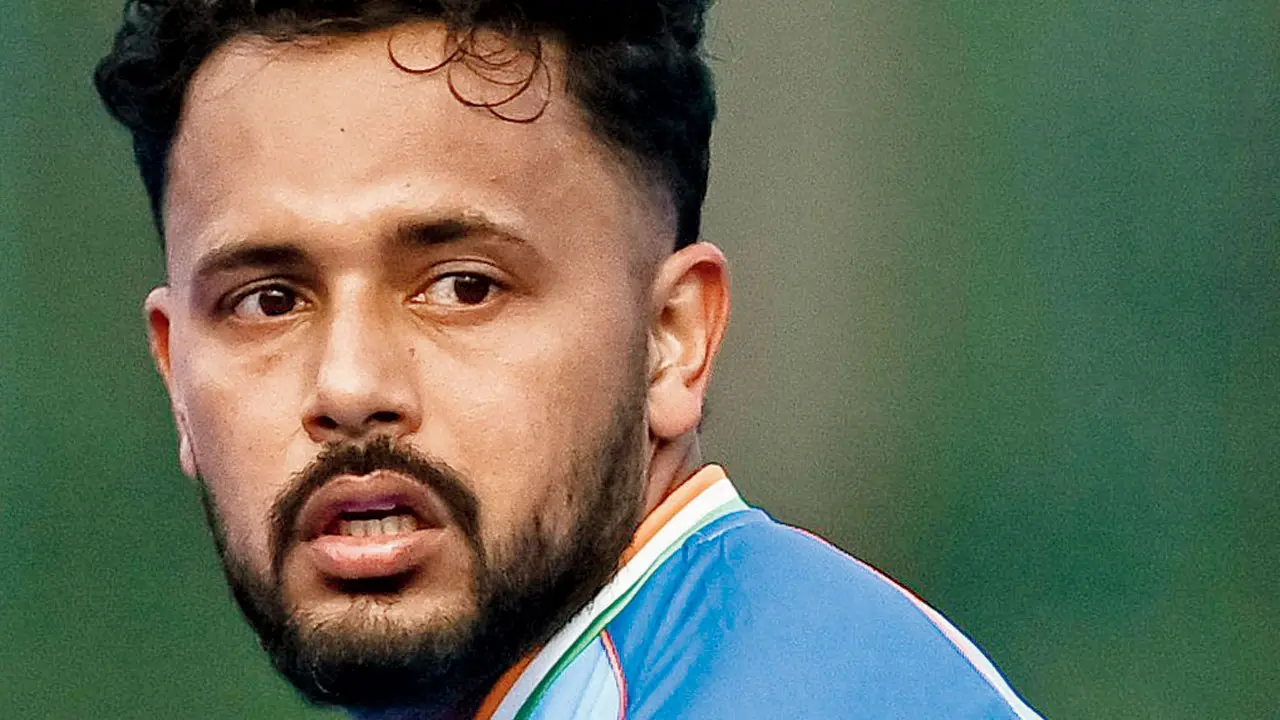
Ishan Kishan named SRH's interim captain. (PTI)
Ishan Kishan named SRH’s interim captain. (PTI)

“Pat Cummins will miss a few games while recovering from injury. Until he recovers, Ishan Kishan will be the Captain and Abhishek Sharma will be the Vice-Captain,” SRH announced on X.

It was a bold move from SRH, considering Kishan had only joined the side last season, but the franchise had invested INR 11.25 crore in him. His first campaign was a mixed one, as he managed 354 runs in 14 matches at a strike rate of 152.58, with a century and a half-century highlighting his performances.

Meanwhile, Ishan has been in terrific form since returning to the Indian team, playing a key role in the title-winning campaign. He scored 317 runs, including three centuries, one of which came in the final against New Zealand. He is expected to slot in at No. 3 in SRH’s batting order, with Abhishek Sharma and Travis Head likely to open the innings, giving the top order a strong and aggressive look.

Over the years, Kishan has put together a strong IPL record, playing more than 100 matches across different teams. The left-hander has scored nearly 3000 runs, striking at a healthy rate, while registering a century and several half-centuries along the way.

Abhishek Sharma named SRH’s interim vice-captain

Meanwhile, Abhishek, who has been on a sharp rise in international cricket, has been named Ishan Kishan’s deputy. The duo currently occupy the top two spots in the ICC T20I batting rankings, underlining their impact at the highest level. Abhishek had a mixed T20 World Cup as he arrived at the tournament with plenty of expectations but endured a rough start, recording three successive ducks in Group A games against the USA, Pakistan, and the Netherlands. He showed signs of recovery with a composed half-century against Zimbabwe in the Super 8 stage, building some momentum ahead of the final. When it mattered most, he delivered on the big stage, smashing 52 off just 21 balls, including the fastest fifty of the 2026 edition in 18 deliveries, powering India to a massive total of 255.


Ranveer Singh hails unprecedented response to songs

0
Ranveer Singh hails unprecedented response to songs


Will this affect Dhurandhar 2’s release? Watch the full video to know what’s happening.

Ranveer Singh recently set the stage on fire at the grand audio launch of ‘Dhurandhar: The Revenge’ in Mumbai, expressing deep gratitude for the “unprecedented” anticipation surrounding the sequel. Directed by Aditya Dhar, the spy action thriller is already rewriting history with advance bookings surpassing Rs.130 crore worldwide. During the high-energy event, Singh interacted with fans about their favorite tracks and highlighted the film’s massive appeal across international markets.Ranveer Singh said the team is thankful for the excitement in India and other countries. Videos showed Ranveer entering with lots of energy as the crowd cheered loudly. He greeted the fans and chatted with them at the event.

Watch

Will this affect Dhurandhar 2’s release? Watch the full video to know what’s happening.

Ranveer Singh hears fans’ favorite tracks

According to India Today, during the chat, Ranveer asked the crowd about their favorite songs from the first film, and many picked tracks like ‘Ishq Ishq’, ‘Shararat’, and ‘Karvaan’. In response, he said, “This is what makes it special, as everyone has their own favourites and all of them are different.”

Ranveer Singh on the team’s joy and global hype

Talking about the response to the film, Singh added, “Our entire team is so happy and excited. Also, we are so humbled and grateful for the response to the first part of the film. We are so humbled with the kind of excitement and anticipation that we have seen for the second part; it is unprecedented”. He also discussed the film’s global appeal, noting that audiences not only in India but worldwide are eagerly awaiting its release.

Ranveer Singh film’s record bookings

Directed by Aditya Dhar, the film hits screens on March 19, following paid preview shows on March 18. According to Sacnilk reports, these previews have already grossed about Rs 40.54 crore in advance bookings. Overseas, it’s off to a strong start too, with opening weekend advances pegged at roughly Rs 60 crore. Total advance sales have now surpassed Rs 130 crore.

‘Dhurandhar 2’ details

‘Dhurandhar 2’ is a spy action thriller picking up from the first film’s storyline, centered on missions and secret operations. It releases in Hindi, Tamil, Telugu, Malayalam, and Kannada. The cast includes Arjun Rampal, Sanjay Dutt, R. Madhavan, Sara Arjun, and Rakesh Bedi, with production by Jio Studios and B62 Studios.


Thomas Cup and Uber Cup badminton draw: India set for though start – see full groups list here | Badminton News

0
Thomas Cup and Uber Cup badminton draw: India set for though start – see full groups list here | Badminton News


Thomas Cup and Uber Cup badminton draw: India set for though start - see full groups list here
India’s Lakshya Sen (Photo by AP)

NEW DELHI: India’s badminton teams are heading into a challenging start at the upcoming Thomas Cup and Uber Cup, with both men’s and women’s sides drawn against strong opponents, including defending champions China. The tournament will be held in Horsens, Denmark from April 24 to May 3.

Watch

Cricket stars gather for Kuldeep Yadav’s grand wedding reception | Star-studded night

The Indian men’s team has been placed in Group A alongside China, Canada, and Australia. This is a tricky group, especially considering India had lost to China in the quarterfinals in the last edition.Similarly, the women’s team also finds itself in a difficult spot, grouped with China, along with hosts Denmark and Ukraine. In the previous edition, the Indian women were knocked out in the quarterfinals after losing to Japan.

India’s record in the tournament

India’s men had made history in 2022 by winning their first-ever Thomas Cup title, defeating Indonesia in the final. That win remains a big confidence booster for the team.This time too, there are positives. Lakshya Sen has been in great form recently and even defeated a top Chinese player on his way to finishing runner-up at the All England Championships. His performance could be key for India.Both Indian teams qualified based on world rankings. The tournament will feature 16 teams divided into four groups. Each group will play round-robin matches, and the top two teams will advance to the quarterfinals.Thomas Cup Draw

  • Group A: China, India, Canada, Australia
  • Group B: Japan, Malaysia, England, Finland
  • Group C: Chinese Taipei, Denmark, Korea, Sweden
  • Group D: Indonesia, France, Thailand, Algeria

Uber Cup Draw

  • Group A: China, India, Denmark, Ukraine
  • Group B: Japan, Malaysia, Turkey, South Africa
  • Group C: Chinese Taipei, Indonesia, Canada, Australia
  • Group D: Korea, Thailand, Bulgaria

Banner Insert


Coke Studio Bharat returns with season 4 with folk, Sufi songs; Rekha Bhardwaj, Faheem Abdullah to be part of it

0
Coke Studio Bharat returns with season 4 with folk, Sufi songs; Rekha Bhardwaj, Faheem Abdullah to be part of it


Coke Studio Bharat is back with its fourth season, bringing together veterans such as Rekha Bhardwaj and Mame Khan alongside emerging voices including Faheem Abdullah and Aditya Rikhari, in a lineup that spans folk, Sufi, devotional and contemporary sounds from across the country.

Season 4 is expected to go deeper into India's local musical terrains, with the first track set to drop shortly.
Season 4 is expected to go deeper into India’s local musical terrains, with the first track set to drop shortly.

The lineup also includes artists such as Kulte Khan, Arsalan Nizami, Madhur Sharma, Ashok Maskeen, Vaibhav Pani, Mohammad Faiz, Ravator, Khwaab, and Utpal Udit.

The season draws from a wide range of Indian musical traditions – Rajasthani folk, Kashmiri narrative forms, Banaras-rooted accounts, Sufi lineage from Punjab – while also making room for contemporary takes on personal storytelling and modern love, the organisers said in a statement.

“Every generation rediscovers its roots in its own way. Coke Studio Bharat provides a space where that rediscovery happens through collaboration. Season 4 is about preserving the spirit of tradition while allowing it to breathe in a new context,” said Rekha Bhardwaj.

Aditya said the platform allows the core of a song to remain intact even as its sound expands. “Season 4 feels intimate in its writing, but expansive in how it’s heard,” he added.

Faheem Abdullah, who broke out with the blockbuster success of the title track of the Hindi movie Saiyaara, said the season had enabled him to fuse his roots with a broader sound.

“Music carries memory, identity and emotion. Being a part of Coke Studio Bharat gives me the chance to bring that world of storytelling to a national platform,” he said.

Season 3 had delivered chart-topping tracks, including Arz Kiya Hai, a modern reinterpretation of India’s poetry culture that topped Indian music charts, and the festival-ready Holi Aayi Re. Season 4 is expected to go deeper into India’s local musical terrains, with the first track set to drop shortly.

Shantanu Gangane, IMX Lead at Coca-Cola India and Southwest Asia, said the platform had consistently demonstrated the power of regional languages, traditional instruments and untold stories at scale.

“Over the last three seasons, we’ve seen a powerful narrative of regional languages, traditional instruments and untold stories being presented at scale. Season 4 accelerates that approach and showcases culture and music from the heartlands at a national and global stage,” he added.

Devraj Sanyal, Chairman and CEO of Universal Music Group India and South Asia, said Coke Studio Bharat represented the kind of creative ecosystem India’s music industry needed.

“Our prime directive is simple – to build the most compelling music with the most exceptional artists, and in doing so, help shape culture here in India and beyond,” he added.

“In today’s world, the consumer is no longer a passive listener but an active participant by way of being a superfan shaping culture alongside us. That makes our prime directive simple – to build the most compelling music with the most exceptional artists, and in doing so, help shape culture here in India and beyond,” he concluded.


Israel is an apartheid state; Peace in West Asia a long shot: Gideon Levi

0
Israel is an apartheid state; Peace in West Asia a long shot: Gideon Levi


Israel is waging a war against Iran and has launched a ground attack against Hezbollah in Lebanon. Despite the ceasefire, Israeli attacks continue in Gaza, while enduring violence continues in the occupied West Bank. “For Israel, the military option is not the last option, but the first option,” says Israeli journalist and author Gideon Levi in ​​a conversation with The Independent. The HinduMr. Levy said Israel’s militarism “is very destructive, and it also shapes the mentality of people in this country.” He also talked about Israel’s beheading strategy, the status of the Palestine question and the scope for peace with Iran. Edited excerpts.

Iran-Israel war live updates

Let’s start with the ongoing war on Iran. Do you think Israel and the US are winning the war or have they completely misjudged the Iranian response?

As it seems now, there will be no clear winner in this war. There will be a heavy price to pay for this, which is already being paid. Both sides, the United States and Israel, started this war without any thought. The cause of regime change in Iran may be a legitimate cause and may even be necessary for the security and independence of the region, but I am not sure it can be achieved by force. And even if, let’s say, a miracle happens and the regime in Iran falls; and then what? Does anyone know who will replace this regime in Iran? We are facing the same problem with Hamas in Gaza. Israel does not want Hamas. Hamas is indeed a bad organization, but no one has any idea who can replace Hamas. So if you don’t have an endgame, a clear endgame, don’t start a war. And now we are at the stage where it has become more and more complicated, there is more and more bloodshed, more and more destruction, more and more countries are getting involved. I mean, almost half the area there is already war-torn. Who will benefit from this apart from arms dealers and the arms industry?

Israel has always used decapitation as a tactic to achieve its objectives. On February 28, the Supreme Leader of Iran was assassinated. Ali Larijani was just murdered. Do you think such killings have helped Israel become a safe country?

Not at all, with a capital letter. First of all, I doubt the legality of such actions. I mean you don’t kill heads of state unless you’re facing Hitler, which is not the case (here). But let’s leave aside the moral and legal question. What did Israel gain from all the killing over the years? The replacement is almost always more radical than its predecessor. Do you think Khamenei’s son will be more liberal than his father, or vice versa? So I don’t think it’s legal. I don’t think it’s legal, but most of all, it serves no purpose because ultimately you have to think about who will replace all those leaders.

How do you view this war from Israel’s side? Iran’s missiles are still attacking Israel. Is it as bad as it is made out to be on social media?

It always looks bad from outside. I know this from struggles I’ve covered elsewhere. I was always more scared before going there than after going there, because people, human beings, always create a new routine for themselves. We have very, very good security systems, warning systems; We get an alert as soon as a missile is launched in Iran, thousands of kilometers away. If there are shelters, we are already going into shelters. But this is not a normal life. I just came out of the shelter. You are going many times during the day and night. The economy is paralyzed, there is no education system, and there are very few flights abroad. I mean, this can’t remain a routine for long. That’s why people internalize it. I have to tell you the figures are amazing – 93-94% Jewish Israelis support this war, which is almost the same figure as North Koreans. I think they’ll reconsider when it becomes more complicated. For years, Iran was portrayed as a great monster in the Israeli media. So people support any fight against the great demon, but things may change.

What is your opinion about Iran?

This is rhetoric. Calling for death to Israel and death to the United States is ugly, but it is not an existential threat. What was really troubling was Iran’s creation of all kinds of proxies around Israel. in the north, Hezbollah; in the south, Hamas; The Houthis in Yemen – it’s a whole circle of fire. So I don’t say Iran is something Israel can ignore, but I’m not sure military power is the answer or the solution. I still believe that we could have achieved a lot through diplomacy, especially in terms of nuclear capabilities. I am not sure we gave enough room for diplomacy. Let me remind you that the Americans canceled the (2015) agreement, not the Iranians.

Israel has been at war continuously for the last 30 months – in Gaza, now in Iran, in Lebanon, etc. How is this ongoing conflict shaping Israeli society?

First of all, we cannot ignore the cost of the other party, which is 100 times heavier. As we speak, there are approximately 6 to 7 million people in the Middle East (West Asia) who have been uprooted from their homes forever. 2 million in Gaza, more than 3 million in Iran, almost 1 million in Lebanon. this is unacceptable. So let’s not forget the cost of the other side, and that of Israel, of all those people who lost their lives. So that in itself is very disturbing. Now the military option for Israel is not the last but the first option. It is very destructive, and it also shapes the mentality of people in this country. And the mentality of Israel and the Israeli people is very aggressive, very militaristic. It doesn’t promise much in terms of any society.

When you wage war, all you think about is will I win? Do I have enough troops, enough technology, enough weapons? Also think about the social cost, economic cost, mental cost, educational cost, moral cost and all of these are not being taken into account.

How do you see the future of the Palestinian question? You yourself said that for peace and stability in the region you need to find a solution to the Palestinian question.

So, unfortunately, Palestinians always pay the biggest price. And they are now completely out of the limelight, and the solution to their problem, which is now 100 years old, is getting further and further away. And they get nothing (from the world) except condemnation and declaration. And they do not achieve anything. They achieved nothing in the last decade. Nothing but bloodshed, gruesome killings, massacres and transfers. We’re all talking about Gaza. I travel to the West Bank at least once a week. What people are going through there is not life. They now live in cages. In many cases they cannot leave their villages, massacres occur on a daily basis.

For the Palestinian people, a solution to the Palestinian problem is now more distant than ever. In my view, the two-state solution missed its chance. This is a train that left the station carrying 700,000 Jewish residents. Nobody is going to vacate the West Bank. Israel never intended to do this. And I fear they will end up like the Native Americans. There is also a danger that Israel will use the wars to displace at least some of them (Palestinians). Plans still exist for both Gaza and the West Bank. I don’t think Israel has given up on it. This is no longer possible, but it may come back. And each such war makes their situation worse, even though without solution to their problem there will never be stability and peace in the Middle East (West Asia). Never.

This bleeding will continue, people without citizenship, perhaps the only people without citizenship in the world, people without any rights, this bleeding will continue. And as long as this bleeding continues, nothing will be solved.

So how long do you think Israel can keep this up? On the one hand, this uncontrolled militarism in the region and, inside, systemic alienation against Palestinians?

This has been going on in Israel for a long time. The question is not how long Israel can continue this. The question is, what kind of Israel will we become? Throughout all those conflicts Israel has also been changing, and not for the better, but for the worse. This is not the Israel we knew 10 and 20 years ago, and it will become more and more violent, more and more nationalist, more and more racist, and more and more militaristic. We are seeing this happening even as we speak. And the question is, for how long will the world let it continue like this?

The world, which knew very well how to handle the first apartheid state, namely South Africa, is completely passive about the second apartheid state, and a part of it continues to embrace Israel.

So you’re saying that Israel is an apartheid state?

How else can you describe it when there are two people, one has all the rights and the other has none? How else can you define it? I don’t know any other definition.

At present, Israel is also carrying out large-scale attacks in Lebanon. What does Israel want to achieve in Lebanon? Can they find a military solution to the Hezbollah problem?

We had already tried it two or three times – we had a buffer zone, we conquered half of Lebanon, and it achieved nothing. Israel has not become a safer place. There is a huge opportunity now because we are facing a government, for the first time in history, a government in Lebanon that is, in fact, prepared to do anything possible to open a new page with Israel, and to disarm Hezbollah. But we don’t give them a chance. We will gain nothing by destroying Lebanon. We tried it. We destroyed Lebanon, we occupied Lebanon, and Hezbollah is no less strong today than it was 10 years ago, five years ago, maybe even stronger politically.

Why is there so much opposition to diplomacy in Israel?

First of all, it is always easier for the ruling class or government to have a military adventure. Because its glory is greater, and it unites those around you. And you know, it’s nationalistic and militaristic. And when the environment is so nationalistic and militaristic, as in Israel, there is no room for diplomacy. So any politician who goes for diplomacy now will commit political suicide, and they know it. So it’s a vicious cycle. This environment, this mentality is being created by politicians. And then they can’t change it. It would be very difficult to take us back to the 1990s when Israel was actually willing to try diplomacy.

Let me take you back to Iran. What do you think the end game is? Will there be peace or will there be prolonged conflict?

So first of all, as I said earlier, because there is no intention to even touch the Palestinian problem, there will be no peace and stability in the coming future. Because of this, you really need to concentrate. First of all, it is the source of everything. I do not say that Iran is attacking Israel because of the Palestinian question. No, but the Palestinian question gives Iran justification to attack Israel. And the same for Hezbollah and the same for Hamas.

Right now, we can only seek some kind of stability, that is, first of all, ending the war with Iran through an agreement between the United States and Iran. I still believe it’s possible. I don’t see any alternative. Because Iran is very strong. They can assimilate, and they proved it in history with the war against Iraq. And Israel can’t take it for years. No way. Therefore, I hope that some compromise will definitely be reached. I think Donald Trump already realizes how much of a fuss he’s made here, and he’ll try to minimize the damage now. And now reducing the damage means climbing down from the tall tree he climbed and trying to reach a new agreement.

Once Donald Trump pulls out of Iran, Israel cannot continue to assert itself in Iran. No way. In Lebanon, yes, in Iran, no. So at least we’ll neutralize this war with Iran, and we’ll have some kind of stability again. But again, it will only be for a few years and then we will be back to the same place.

published – March 18, 2026 06:28 pm IST


Not just energy: How the Iran war could trigger a global food crisis | US-Israel war on Iran News

0
Not just energy: How the Iran war could trigger a global food crisis | US-Israel war on Iran News


Amid the ongoing war in Iran, the soaring price of oil since shipping was disrupted through the Strait of Hormuz has caused great alarm.

On March 2, Ebrahim Jabari, a senior adviser to the commander-in-chief of Iran’s Islamic Revolutionary Guard Corps (IRGC), announced that the Strait of Hormuz – through which 20 percent of the world’s oil and gas is transported – was “closed”, a move that sent oil prices soaring higher than $100 per barrel.

But experts say a parallel crisis is looming – a considerable threat to global food security, caused by a looming shortage of fertiliser, essential for food production.

INTERACTIVE - Strait of Hormuz - March 2, 2026-1772714221

Why is there a shortage of fertiliser?

Nearly half of the world’s traded urea – the most widely used fertiliser – and large volumes of other fertilisers are exported from Gulf countries via the Strait of Hormuz, making global agriculture highly exposed to any disruption there.

Recent disruptions to gas supplies and shipping have already forced fertiliser plants, which use natural gas to manufacture fertiliser, in the Gulf and beyond to shut or cut their output.

After its LNG facilities were attacked, Qatar’s state-run energy firm, QatarEnergy, halted output at what is the world’s largest urea plant after it shut down gas output.

Since LNG output from Qatar has dropped off, India has cut output from three of its own urea plants. Bangladesh has also shut four out of its five fertiliser factories.

The US is already close to 25 percent short of fertiliser supply for this time of year.

Compounding shortages, urea export prices from the Middle East have surged by about 40 percent, rising from just less than $500 to a little more than $700 per metric tonne as of last Friday, according to Argus, a specialist energy and commodities price reporting agency. The price is currently close to 60 percent higher than this time last year.

How much of the world’s fertiliser does the Gulf produce?

According to one shipping services company, the Signal Group, 20 percent of the world’s fertiliser originates in the Gulf, while 46 percent of global urea supply comes from the Gulf.

Qatar Fertiliser Company (QAFCO), considered the world’s largest urea supplier, alone supplies 14 percent of the world’s urea.

Analysis by Kpler, a data and analytics company, shows that as much as one-third of global fertiliser trade could be disrupted if the closure of the Strait of Hormuz persists – only a handful of Indian, Pakistani and Chinese-flagged vessels have been allowed to pass safely in recent days.

According to Morningstar analyst Seth Goldstein, nitrogen fertiliser prices could roughly double from current levels and phosphate prices could climb by about 50 percent, the Reuters news agency reported this week.

Which countries depend the most on this fertiliser?

As of 2024, Asian countries were most heavily dependent on Gulf fertiliser exports, receiving 35 percent of Gulf urea exports, 53 percent of sulphur exports and 64 percent of ammonia exports, according to Kpler.

These exports are particularly vital for key agricultural markets, particularly India, Brazil and China, with significant volumes also going to Morocco, the United States, Australia and Indonesia.

India is particularly dependent on the Middle East for fertilisers, sourcing more than 40 percent of its urea and phosphate fertilisers from the region.

Meanwhile, Brazil is almost entirely reliant on imports for its fertiliser supply, nearly half of which transit through the Strait of Hormuz.

Why will fertiliser shortages hit food production so hard?

The timing of this disruption is especially bad because it falls in the middle of sowing season, or spring plantation season, which generally runs from mid-February to early May in the Northern Hemisphere.

For commercial farming, fertiliser is essential for almost every crop if growers want strong yields. But different crops require different kinds and amounts of fertiliser.

The world was already reeling from a urea shortage when Europe was forced to cut its supplies after it lost access to cheap Russian gas, in the wake of the onset of Russia’s war on Ukraine in 2022.

Additionally, Beijing restricted fertiliser exports, including urea, to ensure supplies for Chinese farmers first.

What does this mean for global food security?

Several of the biggest importers of Gulf fertilisers – including India, Brazil and China – are also among the world’s largest food producers.

India is one of the world’s largest producers of agriculture and food products such as rice, wheat, pulses and fruit. In 2024, Indian rice accounted for roughly a quarter of the world’s rice exports.

According to the US Department of Agriculture, Brazil now accounts for nearly 60 percent of global soya bean exports. The country also exports sugar and corn.

China is a major tea producer, supplying tea leaves worldwide as well as other agricultural staples such as garlic and mushrooms.

Hence, a prolonged fertiliser shortage and a hike in fertiliser prices could lead to some farmers skipping fertiliser use entirely. This would reduce crop yields.

That could affect food security worldwide. Lower yields for staple crops like rice, wheat, maize and soya beans would restrict global supply. In turn, that would be likely to hike food prices and potentially create localised shortages, especially in import‑dependent countries.


Interactive_Cost_OilPrices_Food-1773140062


Rupee slumps to record low even as Goldman Sachs warns of 95/dollar levels| Business News

0
Rupee slumps to record low even as Goldman Sachs warns of 95/dollar levels| Business News


Goldman Sachs Group Inc. has warned that the Indian Rupee (INR) could tumble to 95 against the US Dollar (USD), even as the local currency fell to a record low today.

The rupee has fallen 5.3% against the US dollar so far this year, putting it on track for its steepest annual decline since 2022. (Reuters)

INR-USD fell to an intraday low of 92.4875, surpassing its previous record close of 92.4575 set last Friday. The Reserve Bank of India (RBI) has been actively intervening in the markets to cushion the slide, according to traders, as the fallout from the Iran war widens India’s current account deficit.

Widening Deficits

“The rupee remains under pressure in our view, given the current account deficit is widening,” Santanu Sengupta, Goldman Sachs’ chief economist for India, said Wednesday in an interview with Bloomberg TV.

Goldman Sachs recently revised its outlook for India, cutting growth forecasts for this year to 6.5% from 7%, while raising inflation estimates by 30 basis points. The firm predicts the current account deficit will expand to 1.2% of GDP this year, up from 2025 levels.

One basis point is one-hundredth of a percentage point.

RBI Monetary Policy

While India’s inflation rate remains within the RBI’s target range for now, a prolonged weakness in rupee combined with surging oil prices could force Governor Sanjay Malhotra’s hand.

The RBI kept the repo rate unchanged in February, signaling a long pause, but Goldman’s Sengupta believes that if energy costs filter through to the consumer, then the RBI will be forced to tighten. “That question will come up further down the line rather than now,” he said.

But instead of immediate rate hikes, the central bank is expected to provide liquidity support to keep the economy buoyant.

India’s Fiscal Shield

The Indian government is expected to lean on fiscal tools rather than monetary policy to absorb the shock. To protect consumption, New Delhi may lower excise duties on fuel or ramp up fertilizer subsidies—a critical sector for the rural economy, which has remained resilient due to low food prices.

“The government, in our view, will do all it takes to really protect that sector from full inflation,” Sengupta said, estimating the subsidy bill could rise by 0.3% of GDP.

ALSO READ | RBI’s defence of rupee is weighing on forex reserves

Despite the geopolitical headwinds, Goldman remains “fairly optimistic” about the Indian economy’s underlying strength, though much depends on the duration of the Iran conflict and the trajectory of crude oil prices.