The Board of Control for Cricket in India (BCCI) on Sunday hosted the annual Naman Awards in New Delhi, where the country’s five ICC World Cup-winning teams from the 2025/26 season were honoured. Among them was the Suryakumar Yadav-led side that lifted the 2026 T20 World Cup.
Sanju Samson won the Player-of-the-Tournament award at T20 World Cup 2026
The T20 World Cup champions were the final team to be called on stage as the BCCI rolled out the red carpet for each of the title-winning squads. As the players queued up to walk onto the stage, KL Rahul — who was present at the ceremony and had earlier been honoured as part of the Champions Trophy-winning side — called out to Sanju Samson.
Initially unaware of who had called him, Samson soon realised it was Rahul and broke from the queue to walk straight to his teammate before embracing him.
The brief moment between the two stars quickly caught the attention of fans and soon went viral on social media.
Samson was named Player of the Tournament in the 2026 T20 World Cup after a historic campaign, scoring 321 runs at a strike rate close to 200 in just five innings to guide India to the title.
Despite not featuring regularly early in the tournament, Samson produced a stunning 97 not out in the must-win Super 8 clash against the West Indies before hammering 89 in the semifinal against England and repeating the same score in the final against New Zealand.
Speaking to broadcasters on the sidelines of the ceremony, Samson likened India’s triumphant run in the tournament to a movie and admitted that the achievement had still not fully sunk in.
“Not yet. Even when I wake up in the morning, I’m like, ‘Has it really happened?’ So honestly, that’s the feeling,” Samson said while reflecting on India’s triumph.
The wicketkeeper-batter also asserted that India are well placed to continue dominating global cricket in the years to come.
“But I feel that in the coming years, with the quality of players we have in our country, this will be repeated. It’s not going to be something that happens once in a while. The kind of players coming through means India will do this more and more often,” he added.
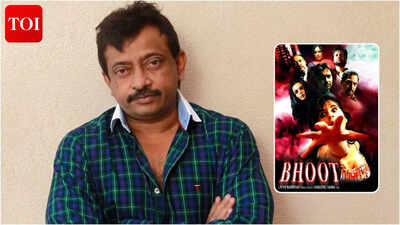
Filmmaker Ram Gopal Varma shared a chilling anecdote about his 2003 horror hit ‘Bhoot’. He revealed that the Mumbai apartment used for filming, chosen for its relatability, has remained unoccupied for over two decades since the movie’s release. The film, starring Ajay Devgn and Urmila Matondkar, depicted a couple moving into a haunted flat. Read on to know more in detail.
Ram Gopal Varma‘s ‘Bhoot’, starring Ajay Devgn, Urmila Matondkar, Nana Patekar, Rekha, and others, was released in 2003 and to date is one of the iconic horror movies made in Bollywood. While speaking about the movie that still gives chills down the spine, RGV recently revealed interesting anecdotes about the film.
Ram Gopal Varma reveals the flat where ‘Bhoot’ was shot is still vacant
‘Bhoot’ (2003) recently made it to the Red Lorry Film Festival, and on the second day of the event, Ram Gopal Varma engaged with fans after the film’s screening.During the interaction, Ram Gopal Varma revealed that initially they were going to shoot the movie in a haveli; however, since it had become a typical place in the movies, they eventually zeroed down to an apartment in Lokhandwala, Mumbai, for filming. News 18 Showsha quoted him saying, “The more relatable it is, the more palpable it is.”RGV shared that the movie was filmed in one apartment in just 30 days. He said, “I want to tell you an interesting tidbit. The film was shot in 2002. It’s been more than 20 years, and even today, that flat is still vacant! It became quite famous after the film was released, and nobody wants to stay in that apartment. It’s in the Lokhandwala Complex. I forgot the name of the building.”
More about ‘Bhoot’
Ram Gopal Varma-directed ‘Bhoot’ went on to become a huge hit at the box office. The movie is about a young couple (Ajay Devgn and Urmila Matondkar) who move into a new apartment. Soon, they realize that their house is haunted as supernatural incidents start occurring. The events eventually result in Urmila’s character going into psychological turmoil.The movie also featured Fardeen Khan and Tanuja in key roles. It was released in theaters on May 30, 2003.RGV made a sequel, ‘Bhoot Returns.’ Released on October 12, 2012, it unfortunately tanked at the box office.
When Time magazine named Safina Hussain one of 16 Women of the Year 2026, she was standing outside at a philanthropy conference in Mumbai, looking skyward so she could see the stars. “This almost never happens in Mumbai,” he told me later. “I felt very inspired.”
Safina Hussain
Making the impossible visible has been Safina’s life’s work. For two decades, he has searched for girls in India’s most forgotten villages with names like Maafi (Forgive me for being a girl) and Missed Call (We asked God for a boy, but he missed the call).
Even before I met Safina Hussain, I knew I would love her.
As a mother of three girls – engineers, athletes, dreamers – I feel a deep gratitude for the women who made those futures possible. and Safina Hussain, founder of Educate Girls, are with the fighters.
We met at the Jaipur Literature Festival earlier this year. Safina sitting in front of me is looking beautiful in teal blue silk saree and long navy coat. She smiled when she saw me holding Every Last Girl, the book she was about to launch.
The book is full of heart-wrenching stories. But it also offers hope with several strategies to get girls in school. An innovative approach involves staging village plays dramatizing the life and death effects of illiteracy.
Safina speaks with intensity and clarity. We talk about his childhood, the process of writing his book, and the impact of winning the prestigious Ramon Magsaysay Award. Here are edited excerpts of our conversation.
Safina, are you a reader?
My parents divorced when I was young. My mother remarried and my stepfather was an alcoholic. We lived in a one-room public flat in Delhi. I always lived in my own world, a girl with her nose in a book.
There used to be a mobile library outside Naoroji Nagar in Delhi which used to come to our neighborhood and I read a lot of books from there.
I read books with all kinds of titles, like The Merchant of Venice, which I later realized was a translation of The Merchant of Venice. I read a lot of things, but I read everything in Hindi.
There was a vegetable market in Saket, and that was a place where comic books were available on rent cheaply, and I read all those comic book digests – whatever I could get my hands on.
You went from Hindi comic books to Nobel Prize-winning Korean author Han Kang – how did this journey happen?
I started studying in English, which was difficult at first. I started with simple books like Enid Blyton and the Nancy Drew series. In high school, I moved to Oscar Wilde, GB Shaw, etc.
Now I’m discovering a lot of female authors – books like The Vegetarian (by Han Kang) and Butter (by Asako Yuzuki). There’s incredible writing, like Bunny (Mona Awad), highly imaginative, and Sally Rooney. I like these young women with fresh voices.
And now you’re the author of a book? What prompted you to write this judgment?
I was giving a speech in Oxford when the moderator later said to me, “There’s been a lot written about you – I’ve read your articles and media reports – but nothing in your own voice.”
It shocked me, because it was true. We did a lot, but never shared our journey, thoughts or ideas in our own voice. He sowed the seed.
The hardest part was deciding how to write the book and what it should be about. It took time. Then in 2019, after a TED talk, I visited the TED Bookstore in Vancouver and looked at books by TED speakers. That gave me confidence: If I could give a TED talk, maybe I could turn it into a TED book.
What made you decide this book should be – an academic book, a memoir, or something else?
That was the most difficult decision. Writing about gender and education can take a deeper, academic direction – or just be a collection of stories. There were many ways to reach it.
Eventually, I realized I wanted to write a human book – one that tells the story and makes the case for girls’ education in a simple, jargon-free way. This is not a sector book or an NGO book. This is truly a book for you, me and everyone else.
What is the core message you want to convey to readers through this book?
Sitting in cities, we think that the problem of girls’ education has been solved – but it is not so. The book brings that reality back into focus, showing that work doesn’t get done just because a woman heads the Reserve Bank or because some women are in high positions. This is not done until every last girl reaches school with real options.
I also want the reader to see that this is solvable. This is not disappointing. We have data, algorithms to identify out-of-school girls, and community volunteers who support educating girls like Team Balika, who say, “Every girl in my village should go to school.”
This isn’t just a book about the problem – it’s about finding solutions and taking immediate action while we still can to change the lives of these girls.
Can you tell us about your process for writing the book?
I started by asking myself what I really wanted to write. Then I created a framework: part one is the girls’ world, part two is the beginning of the movement, part three is getting the momentum going.
Once I had that, I focused on one chapter at a time. Most of it came from my own experiences – work, conversations, observed stories – so once I knew what to include, formatting was surprisingly quick.
I devoted one to two days each week entirely to the book, blocking off the entire day for writing.
Then I was lucky enough to be nominated for the Rockefeller Bellagio Residency in Italy, which gave me an entire month with no family and no dinners to cook—just time to book. I came up with a manuscript in pieces and, in about three weeks, brought it together for my publisher. That residency gave me the focus and closure I needed.
You shared a small part of your story in your book. was it hard?
I didn’t want the book to be entirely about my trauma, even though I had a difficult childhood. This will not do any good to the girls.
At the same time, if I only told the girls’ stories and never acknowledged my own life experience, it would seem a little dishonest, as if I was an outsider simply observing. So I’ve shared some of my story, but the heart of the book is the girls.
Can you talk a little about how your own life has shaped the work you do for girls’ education?
My childhood was difficult. There was violence, there was abuse and at that time we didn’t even have words for it. We didn’t have the vocabulary, and society also made you feel like you were somehow at fault, that you weren’t a “good girl”, that you should shut up.
Due to all this, I could not continue my education after 12th. It was a difficult time – everyone around me said: “Marry her, get over it, otherwise what will she do?” I was lost. I also stayed in Krishna Ashram for some time, tried many ways, but to no avail.
Then an aunty stood up for me. I lived in his house for two years and he gave me a lot of love. And then, slowly, I came back to education. I went straight to the London School of Economics. I was 21 years old, and everyone entering was like 18 years old, but I said to myself: It’s okay, I can be a mature student.
I had no money, so I did everything – washing dishes and working on the cash till in vegetarian cafes, restocking books in the library, tutoring, working as a naan and rotis maker in Southall, doing bookkeeping for small businesses – just to survive. That entire journey gave me the strength that I can survive, I can stand.
So when I see girls now – like Halima, whose mother died during Covid, who had to run the household and then, four or five years later, when she wants to come back to education, she suddenly becomes “older” and ineligible – I completely understand that guilt, that shame, that feeling of being left behind. Much of this book actually came from that place.
You have received international recognition from the prestigious Ramon Magsaysay Award 2025. How has it affected you?
It has changed the type of energy and motivation the entire team gets. It’s like, Oh my God, now we’ve got this—go, go, go! The sense of responsibility is much greater.
And now, to be named one of Time’s 16 Women of the Year – what’s that been like?
It feels like our girls are being seen on the global stage.
When TIME reached out for an interview, we had a feeling something was going on, but then nothing was confirmed…we were kept in the dark until the official announcement!
When it came out and I saw that list – Teyana Taylor, Sheryl Lee Ralph, Chloé Zhao, Mel Robbins – I was humbled and, honestly, a little overwhelmed. I went out. The sky of Mumbai was so clear that you could see the stars. I stood there thinking about our girls.
(Sonya Dutta Chaudhary is a Mumbai-based journalist and founder of Sonya’s Book Box, an exclusive book service. Every week, she brings you specially curated books to give you a deeper understanding of people and places. If you have any reading recommendations or reading dilemmas, write to sonyasbookbox@gmail.com. Views expressed are personal)
New Delhi: Indian men’s cricket team player Sanju Samson with a trophy during the BCCI Naman Awards 2026. (PTI Photo)
Sanju Samson, the standout performer and Player of the Tournament in India’s 2026 Men’s T20 World Cup victory, admitted he still wakes up in disbelief at winning the title on home soil. Yet, he is confident that India’s continuous stream of emerging talent ensures more triumphs in the years ahead.“Not yet, I am still like, when I get up in the morning, I’m like, ‘has it really happened’. So honestly, that’s the feeling. But I feel that in the coming years, with the quality of players we have in our country, this is going to be repeated. The number of players who are coming up in India is definitely going to do this more and more often,” Samson told broadcasters at the BCCI awards in New Delhi on Sunday.Samson’s tournament performance was extraordinary. Despite not being part of India’s starting XI, he amassed 321 runs in just five innings at a strike rate approaching 200. His innings included a match-winning 97* against West Indies in the Super Eight stage, followed by 89 in both the semi-final against England and the final versus New Zealand.Reflecting on his journey, Samson said, “You can only dream where you want to go, but you can’t definitely ride the path towards it. So my life or my career has been one of the best examples. I definitely wanted to do this a couple of years ago. I want to win a World Cup for my country, but it had its own plan, its own script. So, it’s more like a movie. I enjoyed it.“As I said before, I wanted to do something like this, then I got pulled out of my journey, and then suddenly, the team wanted me to contribute, and that’s when I actually mentally flipped a bit… I think, before that, in the New Zealand series, the focus was all about me.“But in the World Cup, the focus is all about the team, what the team requires. And in the Zimbabwe game, right from that moment, everyone wanted me to contribute. I had a role to play. So that’s when the shift happened and the confidence that, okay, ‘the team needs you, Sanju’, and let’s do what you can to the best. So that’s where everything started from.“And then I had the experience, I was working mentally. I was working physically, so I knew that I was ready, and I knew that this was meant for me, so I just had to do what I know best.”Samson’s story was not the only one of perseverance. Fast bowler Mohammed Siraj, who joined the squad late as a replacement for the injured Harshit Rana, described his journey to a second T20 World Cup medal as almost miraculous. “I was not in the initial squad, then I got it, played a game, and now I have been part of two World Cup-winning squads. I would say it’s a miracle for me,” he said.
The metropolis faces a test not only of its security framework, but also of the idea that has defined it for decades – a sanctuary of stability in one of the most volatile neighborhoods
An alert issued by the UAE Ministry of Interior warning residents of Dubai and Abu Dhabi of a possible Iranian missile attack was displayed on their mobile phones shortly before a missile was intercepted in Dubai. (AFP)
For decades, Dubai has presented itself to the world as the Middle East’s ultimate success story – a city built on stability, security and ambition. A global hub where finance, tourism and aviation meet. A place where immigrants chase opportunity and investors invest billions. In an area often associated with unrest, Dubai Has built his reputation on forecasting. But the shadow of the Iran conflict is now testing that carefully crafted image.
Over the past two weeks, Iran has fired nearly 2,000 drones and missiles toward the United Arab Emirates, according to officials, many of which were aimed at Dubai, the Gulf’s financial and tourism capital. For residents of the city’s glittering skyline, the conflict is no longer distant geopolitics. It’s something they can hear.
CNN International’s Paula Hancox says Dubai has created itself a bubble of security. “…This has become essentially clear when we look at the large number of missiles and drones coming into this country and the Gulf countries. According to the Ministry of Defence, they say they are intercepting more than 90 percent of those fired at the UAE,” Hancox said. He said that in the last fortnight the UAE has been singled out the most for missiles and drones by Iran.
Hancox said, “There are a growing number of countries around the world that are trying to protect the UAE. But essentially, this reputation as a bubble of security in the middle of a tough neighborhood, which the UAE had very carefully constructed, is being damaged.”
Hancox said there were several incidents of collisions around Dubai Airport, which affected operations. “There were holidaymakers here and many in transit. There were a lot of people stuck here wanting to get out. Both Abu Dhabi and Dubai are really trying to allow as many planes to fly as possible and get people away from the area. But the fact is there’s still missile and drone activity happening, so it’s a very impacted program right now,” Hancox said.
across DubaiResidents are receiving regular emergency alerts on their phones, warning that the country’s air defense systems are responding to incoming threats. Officials say the loud sounds echoing in the night sky are those of hostile drones and interceptors destroying missiles in the air.
According to the UAE Defense Ministry, since tensions escalated, the country’s defense systems have included 285 ballistic missiles, 15 cruise missiles and more than 1,567 drones.
Nevertheless, not every projectile has been stopped. Nearly 100 drones and two ballistic missiles have attacked the ground, posing one of the most visible security challenges the UAE has faced in decades. In a city known for its futuristic skyline and luxurious lifestyle, the sounds of the explosions were a disturbing reminder that regional conflict can reach even the most carefully guarded places.
CNN-News18’s Arunima says attempts to target the heart of Dubai with drones have been seen – including the business district. “Drones are worrying people, they are annoying, but people are living their lives. There is a little worry about what will happen next, but there is no panic,” says Arunima. She also describes how her phone was vibrating strongly with alerts from authorities about how security forces were intercepting drones and missiles and that people should take precautions.
Arunima says authorities have forbidden people from recording or filming any attacks or interceptions. “People are now taking these alerts seriously,” he said.
These attacks have had a tragic human cost. Authorities say six people have been killed, including citizens of the United Arab Emirates, Pakistan, Nepal and Bangladesh. More than 141 people were injured, including minor to moderate injuries. These include citizens of India, Egypt, Philippines, Ethiopia and Sri Lanka.
In a country where nearly 90 percent of residents are expatriates, the list of multinational casualties underscores a harsh reality: Dubai’s global workforce is directly exposed to the consequences of regional geopolitics.
Attacks are no longer abstract. Explosions were heard in parts of Dubai, including near the Dubai International Financial Center – the heart of the city’s banking and corporate district. Sometimes smoke has been seen rising into the sky.
Officials confirmed that debris from an intercepted missile hit the facade of a building on Sheikh Zayed Road, Dubai’s main commercial artery. Another drone crash caused a small fire at a residential building in Dubai Creek Harbour, forcing authorities to evacuate residents before firefighters could bring the blaze under control.
Two drones were also intercepted near Dubai International Airport, causing minor injuries to three people and one Indian national was slightly injured. Officials say flight operations are continuing as normal, but the symbolism of a drone falling so close to one of the world’s busiest airports has not gone unnoticed.
For Dubai, security is not just a military concern – it is central to the city’s economic model. From banks operating in the Dubai International Financial Center to aviation giants like Emirates and the city’s huge tourism industry, Dubai thrives on the perception that it is untouched by the volatility surrounding the region. That notion is now under pressure.
The broader economic impact of the conflict is already beginning to be seen. According to the World Travel and Tourism Council, the Middle East’s tourism sector is losing at least $600 million in international tourist spending every day due to the ongoing conflict involving Iran. Air travel disruptions, shaken passenger confidence and reduced connectivity are affecting major regional hubs including Dubai, Abu Dhabi, Doha and Bahrain.
Overall, these hubs typically handle around 5.26 lakh passengers per day. But nearly two weeks of airspace disruption, flight rerouting and operational uncertainty have begun to put pressure on the region’s aviation ecosystem, driving up airfares and forcing airlines to rethink routes. Before the conflict began, the Middle East was expecting about $207 billion in international visitor spending in 2026. Even temporary disruption could translate into massive losses for a region where aviation and tourism are central pillars of the economic strategy.
For Dubai, the stakes are especially high. Tourism contributes significantly to the emirate’s economy, while its airports serve as one of the world’s most important transit hubs linking Asia, Europe and Africa. The city’s global brand – carefully built over three decades – rests on the promise that business can continue uninterrupted, even if the region around it is unstable.
Yet, beyond the missiles and economics, another battle is quietly unfolding: the battle over narrative. Authorities have charged 21 people under cybercrime laws for filming and sharing videos of Iranian missile and drone attacks. The accusers reportedly also include a 60-year-old British tourist. Authorities say spreading such footage could spread panic and undermine public confidence, and have issued a strict advisory warning residents against circulating such material online.
This action shows how sensitive the authorities are to protecting the country’s image during a crisis. For decades, Dubai’s greatest strategic advantage has been its reputation as a safe and stable global hub.
For now, daily life continues in Dubai. Flights are operating, hotels are open and financial markets are functioning. The UAE leadership says its defense systems are successfully blocking most incoming threats and the country is fully prepared to counter any attempts to undermine national security.
But something intangible has shifted. For the first time in years, residents of one of the world’s most futuristic cities are hearing the sound of air defense systems thundering across the night sky.
Dubai’s rise has always been based on resilience. In just a few decades, it transformed from a minor desert trading port to a global metropolis. Now, as the Iran conflict reverberates across the region, the city faces a different kind of test. Not just because of its security infrastructure, but because of the idea that has defined it for decades – a sanctuary of stability in one of the world’s most volatile neighborhoods.
Place :
Dubai, United Arab Emirates (UAE)
first published:
March 16, 2026, 07:18 IST
newsWorld Missiles over Dubai: How the Iran war has breached the security bubble of the Gulf’s safest city
Disclaimer: Comments represent the views of users, not of News18. Please keep discussions respectful and constructive. Abusive, defamatory, or illegal comments will be removed. News18 may disable any comments at its discretion. By posting you agree with us terms of use And Privacy Policy.
MUMBAI: India’s choc-a-block equity-raise calendar is shifting gears, with many companies pushing back fundraises amid West Asia-driven market volatility. Deals remain on hold, not off. “The immediate impact is that investors are less willing to add risk through new deals in the near term. This isn’t so much a pricing issue but a case of biding time to see how far these events go, and to assess their overall structural and economic impact in both the near and long term,” said UBS India ECM head Abhishek Joshi. Uniqus Consultech’s partner Raghuram K said companies are adopting a “wait-and-watch approach until the ongoing crisis stabilises,” after which they are likely to proceed with IPOs. India has raised about $5 billion through equity issuances so far in 2026, down from $6 billion in Q1 2025, according to LSEG. IPOs accounted for $1.7 billion of that tally, compared with $2.3 billion a year earlier.
“The IPO momentum has tapered off in 2026 due to market conditions, weak post-listing performance-of 100+ IPOs in the past year, 30% delivered negative listing-day returns and 65% now trade below issue price-and the West Asian conflict, reflected in sharply lower IPO subscriptions, with median demand at 3x versus 28x in April-Dec 2025,” said Ambit ECM head Vikas Khattar. He added that “with market volatility remaining elevated, the fundraising environment has turned more cautious, particularly for companies planning near-term IPO launches.” Bankers insist the pause is tactical rather than structural. “Markets operate in windows and while recent events may have temporarily put a pause on IPO activity, fundamentally not much has changed in terms of investors’ belief in the growth and strength of the Indian economy,” Joshi said. Raghuram echoed the sentiment. “India’s structural growth story remains strong. With year-end earnings awaited, companies are likely to prefer a more stable market environment to discover the right valuation,” he said. Equirus Capital investment banking head Bhavesh Shah said short-term delays are unlikely to materially affect full-year IPO activity given strong domestic liquidity and rising retail participation.” Nor is India alone. Geopolitical tensions are injecting volatility into equity markets globally as investors assess the economic fallout of unfolding developments. Among emerging nations, India is now the second hottest IPO destination after the Czech Republic, which raised $4 billion through listings in Q1 2026. In Q1 2025, India held the top spot, according to LSEG. Khattar said investor preferences are also shifting. “With rising geopolitical uncertainty, investors are prioritising stronger near-term earnings visibility and more conservative valuation multiples,” he said, adding that companies are also “optimising” IPO sizes. Some of the companies listed this month, like Clean Max Enviro Energy Solutions, Omnitech Engineering, and PNGS Reva Diamond Jewellery, had reduced their IPO sizes. The year has seen 20 listings so far, according to LSEG, with a few more expected in March. For now, bankers are advising companies to stay ready so they can move quickly when the market window reopens. “Our advice is to stay prepared and be ready on the sidelines to tap the right window when it arrives,” Joshi said. Over 200 companies have filed draft prospectuses with the markets regulator, with several awaiting listing, while over 100 others, including NSE, are preparing to enter the IPO process. Bankers said activity could match or exceed last year’s levels once market stability improves, with many keeping their fingers crossed.
As Conan O’Brien prepares for another exciting night as Oscars host in 2026, his unwavering supporter, Liza Powel O’Brien, stands proudly by his side. A gifted playwright and former copywriter, Liza crossed paths with Conan in 1999 during a comedic segment on television. Since tying the knot in 2002, they have welcomed two delightful children, Neve and Beckett.
As Conan O’Brien takes the stage to host the Oscars 2026, his second year in a row, his wife is supportive of him. When he hosted the 2025 show, his wife stood by his side. Here’s all about his wife Liza Powel O’Brien.
What is Liza Powel O’Brien’s profession?
Liza Powel is a playwright and television host, and has written at least 12 plays over the course of her career. Liza has a master of fine arts degree (MFA) in fiction writing from Columbia University’s School of the Arts. She also earned a bachelor’s degree at Vassar College in New York, which served as the inspiration and subject of her 2019 play, ‘The Great Experiment.’ According to her official site, the play was set in 1865, four years after Vassar was established, with the following premise: “Freshman year means new horizons, questionable decisions, toxic friendship and epic culture clashes. At the radically progressive ‘first female college,’ it also marks the birth (of) a whole new era.”
Liza Powel O’Brien has written a dozen of plays
Liza is an accomplished playwright who has written at least a dozen plays, each developed and presented at venues like the Geffen Playhouse, the Blank Theatre, Unscreened LA, the Lark Theatre and Ojai Playwrights Conference.Beyond The Great Experiment, her work has included Ruthie Goes Shopping, John Wayne Times, The Distinguished Gentleman and Lucky, to name a few. Her full-length play, Apostrophe, was first presented during the 2020 Ojai Playwright’s Conference. It premiered on June 10, 2022, at Whidbey Island Center for the Arts in Langley, Wash.
How did Liza Powel meet Conan O’Brien?
Liza was a copywriter for the advertising agency Foote, Cone & Belding when she first met Conan in 1999. The agency was tapped to do a remote segment for Late Night with Conan O’Brien, where they worked with their “worst advertisers” to give them a commercial makeover. Liza was part of the team that worked on a commercial for Hilton Furniture. Conan visited the agency’s offices, where he met Liza and the rest of the FCB team, and as the talk show host tells it, he fell for her right away. “Somewhere, in the vault at NBC, there’s footage of me literally falling for my wife on camera,” Conan said of their meeting during a 2012 interview with Piers Morgan.
Liza Powel married Conan O’Brien in 2002
Conan and Liza tied the knot in the bride’s hometown of Seattle on January 12, 2002, at the St. James Cathedral. The couple welcomed their first child, daughter Neve, on October 14, 2003. According to Neve’s LinkedIn, she has been a student at Yale University since 2022 and is expected to graduate in 2026. Liza had their second child, son Beckett, on Nov. 9, 2005.
Liza Powel hosted ‘Significant Others’ podcast
Liza hosted, narrated and wrote episodes for the Significant Others podcast on her husband’s podcast network, Team Coco. The nonfiction podcast “tells the story of a talented, difficult and little-known individual who altered the destiny of their better-known partner, child, sibling or friend and impacted the world they left behind,” per the show’s description.
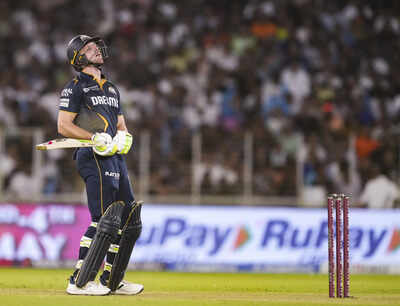
Gujarat Titans’ Jos Buttler (PTI Photo/Arun Sharma)
Former Indian cricketer Aakash Chopra has highlighted key concerns for the Gujarat Titans ahead of the IPL 2026 season, pointing to their reliance on the top-order and star batter Jos Buttler’s lacklustre form as potential trouble spots.The Titans reached the IPL 2025 playoffs but fell to the Mumbai Indians in the Eliminator. Their success last season largely stemmed from standout performances by Sai Sudharsan (759 runs), Shubman Gill (650), and Jos Buttler (538).In a recent YouTube video, Chopra explained that Gujarat’s batting strategy leans heavily on the top three. “What are their weaknesses? They can be called weaknesses or challenges. A slight overdependence is still seen on the top three. It’s great if they replicate what they did last year, which means the top three together bat till the 14th or 15th over, and at least one of them should 100 per cent be there till the 15th over. You should only be one down by the 14th or 15th over,” he said.Chopra also flagged Jos Buttler’s recent struggles, calling his form “pedestrian” compared to his past standards. He stressed that if Buttler continues to falter, it could pose problems for the Titans, as both openers cannot be expected to consistently carry the scoring load.“However, the truth is that Jos Buttler’s current form is very, very pedestrian. We have not seen Jos Buttler playing more ordinary than this in any World Cup edition. He was seen struggling in good conditions this time. So will that be a bit of an issue for the Gujarat Titans? You want to start with Jos Buttler, but what if the form isn’t good? Both openers can’t score runs every time,” Chopra added.Buttler’s poor run in the ICC Men’s T20 World Cup 2026, held in India and Sri Lanka, saw him accumulate just 87 runs across eight matches.Gujarat Titans are set to begin their IPL 2026 campaign on March 31, facing Punjab Kings at the PCA Stadium in New Chandigarh.
Actor Priyanka Chopra returned to the Oscars this year as a presenter. The Indian star, one of the rare South Asian stars in Hollywood, appeared as a presenter at the 98th Academy Awards in a strapless white gown from Dior. And even as some fans went gaga, a large section of the internet and her own fans were left disappointed and not suitably impressed.
Priyanka Chopra arrives at the Oscars on Sunday, March 15, 2026, at the Dolby Theatre in Los Angeles. (Photo by Jordan Strauss/Invision/AP) (Jordan Strauss/Invision/AP)
Priyanka Chopra at the 2026 Oscars
Priyanka graced the Oscars red carpet with husband, singer Nick Jonas, on Sunday night at the Dolby Theatre in Los Angeles. Priyanka’s gown had a fitted bodice that accentuated her silhouette, while the skirt flowed with a dramatic high slit and feather-like detailing. She paired the ensemble with pointed black heels and a large diamond necklace. The actor kept her hair sleek and straight, completing the look. Husband Nick complemented her in a classic black velvet tuxedo with a crisp white shirt and bow tie.
Fans not impressed
The attempt was clearly to pay homage to the timeless red carpet aesthetic of Hollywood’s golden era. However, to many, it fell flat, with many calling it dull and bland. “Girl, you had so much potential to do better, but this is just bad,” wrote one fan on X (formerly Twitter), adding a crying emoji for good measure. Another chimed in, “Usually she dresses so well, but this look just doesn’t land!” One comment summed up the internet’s response as it read: “She can do so much better.”
There was particular criticism of Priyanka’s hair and styling. “The jewellery is interesting, but I don’t like the dress or the hair. When she nails it, she really nails it. But she often disappointingly misses,” wrote one. A slightly more detailed analysis of her look on Twitter read, “Something about her styling always looks so HEAVY to me, and I am not talking about her body. I don’t like the bottom half of the dress or the shoes. The necklace is overpowering, and so is her hair. Idk, I think she’s a very pretty woman, but she almost always misses for me.”
But many praised Priyanka for carrying off the look despite the styling. “She’s looking hot, DESPITE that horrible corset and sticky chipku hair,” marvelled one.
What is Priyanka doing at the Oscars
Ahead of her appearance, Priyanka had also shared a glimpse of her preparations with fans on Instagram Stories. In a short clip posted earlier in the day, the actor was seen getting ready for the ceremony while dressed in the elegant white Dior creation, heading to the big show with Nick Jonas by her side. The actor is expected to appear on stage as a presenter during the ceremony later in the evening.