Tuesday, September 29, 2026
Home Blog Page 1305

Farah Khan says underworld pressured Shah Rukh Khan, Salman Khan, Aamir Khan in 90s; recalls threat to Karan Johar

0
Farah Khan says underworld pressured Shah Rukh Khan, Salman Khan, Aamir Khan in 90s; recalls threat to Karan Johar


Choreographer and filmmaker Farah Khan recently opened up about the darker side of Bollywood during the 1990s while speaking on a podcast with Ranveer Allahbadia. During the conversation, she spoke about the influence of the underworld on the film industry at the time and recalled a frightening incident linked to the premiere of Karan Johar‘s Kuch Kuch Hota Hai.

Farah Khan revealed Bollywood's dark past in the 1990s, including underworld threats to Shah Rukh Khan, Salman Khan and Aamir Khan.
Farah Khan revealed Bollywood’s dark past in the 1990s, including underworld threats to Shah Rukh Khan, Salman Khan and Aamir Khan.

Farah on Hindi film industry and the underworld

Reflecting on the evolution of Hindi cinema, Farah said that the 1980s was a particularly weak phase for Bollywood. She revealed that when she was in college, many people in her circle preferred watching Hollywood films instead of Hindi movies because of the quality of films being made at the time. According to her, the decade represented one of the lowest points for mainstream Hindi cinema.

Speaking about the changes that followed in the 1990s, Farah said the industry also had to deal with the growing influence of the underworld. She recalled a shocking incident from the early days of her career when film producer Mukesh Duggal was shot. Farah said she remembers being on a film set around 1993 or 1994 when news of the incident spread, highlighting how dangerous the environment around the industry had become during that time.

Farah on Khans being pressurised by the underworld

During the podcast, Ranveer asked whether Bollywood’s biggest stars, Shah Rukh Khan, Salman Khan and Aamir Khan, were also pressurised by the underworld in the 1990s. Farah confirmed that such pressure did exist.

When Ranveer asked her if the three Khans were pressurised by the underworld, Farah said, “Yes.” When further questioned about Shah Rukh receiving a call, she said, “ThatI don’t know. But, I know that during Duplicate or Kuch Kuch Hota Hai premiere, Karan had got a underworld threat, and it was very scary. Everyone was discussing whether the premiere should be cancelled or we should go ahead with it.”

About Farah’s YouTube journey

Currently, Farah has found massive success on YouTube with her cooking vlog series featuring her long-time cook Dilip. She launched the channel in April 2024, and it quickly went viral thanks to the duo’s humorous banter, simple recipes and candid celebrity interactions. The channel has grown to nearly 3 million subscribers, while Farah also has around 4.5 million followers on Instagram.

In the videos, Farah and Dilip often visit the homes of Bollywood personalities or invite them into her kitchen, where they cook, chat and share behind-the-scenes stories from the industry. The vlog has featured several well-known names, including Kajol, Ajay Devgn, Malaika Arora, Chunky Panday, Riddhima Kapoor Sahni, Dhanashree Verma, comedian Munawar Faruqui, and actor Shruti Haasan, among others. The show’s popularity has also turned Dilip into a fan favourite, with viewers enjoying the light-hearted chemistry between him and Farah as they cook dishes ranging from butter chicken to street-style snacks.


Laxman recalls iconic partnership with Dravid against Australia in Kolkata Test

0
Laxman recalls iconic partnership with Dravid against Australia in Kolkata Test


Laxman recalls iconic partnership with Dravid against Australia in Kolkata Test

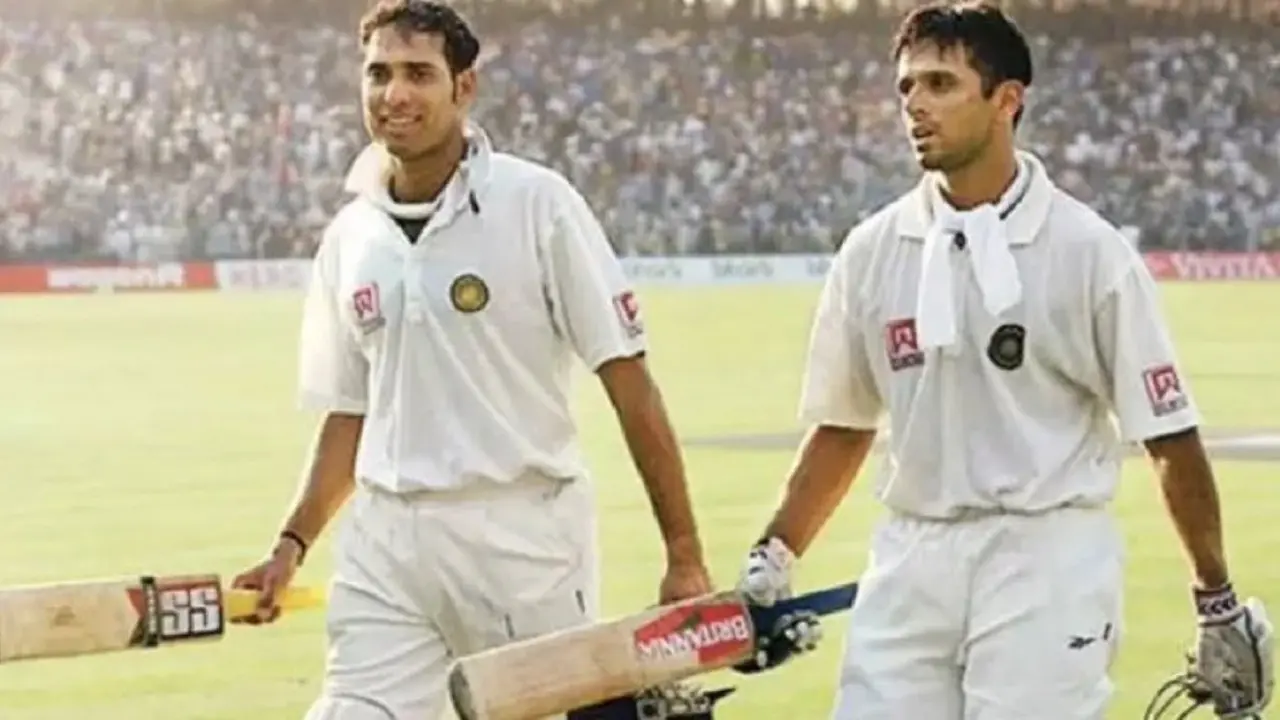
Former Team India cricketer VVS Laxman recollected the memories of his iconic partnership with Rahul Dravid during the historic Kolkata Test match in 2001. Speaking about the run stand, he said that it was built on belief, patience and resilience when the game seemed to slip away from India.

Marking the 25 years of the unforgettable innings at Eden Gardens, Laxman shared an image along with Dravid on his official social media handle.

“25 years ago at Eden Gardens, Rahul and I shared a partnership that will forever remain special. In a moment when the game looked beyond us we chose belief, patience and resilience. That stand was not just about runs but was about trust, teamwork and fighting for every session. Grateful to have shared that journey with Rahul and to be part of a Test that reminded us all that in cricket comebacks are always possible,” he wrote.

In India`s second innings, opening batsman Shiv Sunder Das departed on 39 runs in 99 balls, including seven boundaries. Fellow opening batsman Sadagoppan Ramesh smashed 30 runs in 43 balls, with the help of six boundaries.

Legendary batsman Sachin Tendulkar was dismissed on 10 runs off 23 balls, which included two boundaries. Skipper Sourav Ganguly returned to the pavilion on 48 runs off 81 deliveries, laced with eight boundaries.

Laxman and Dravid played a crucial role in the second innings. Facing 452 balls, Laxman garnered 281 runs, including 44 boundaries, whereas Dravid registered 180 runs after facing 353 balls, including 20 boundaries.

The duo stitched together a monumental 376-run partnership. On Day 4 alone, the pair batted through the entire day without losing a wicket, adding 335 runs in oppressive Kolkata heat.

Their innings stood out, considering the physical challenges both batsmen faced. Dravid showcased his masterful strokes while battling a viral fever, and Laxman endured severe back spasms.

Riding on their performances, Team India declared on 657 runs for the loss of seven wickets.

Australia were eventually bowled out for 212, handing India a famous 171-run victory, one of only a handful of occasions in Test history where a team has won after being forced to follow on.

(With ANI Inputs)


The damage to the world economy from the Iran war will be severe, but uneven

0
The damage to the world economy from the Iran war will be severe, but uneven


Big oil shocks, a generation of economists has been taught, are a relic of the distant past, when energy production was concentrated in the Middle East and the world economy was not so energy-efficient. Over the past two weeks, however, the old way of thinking has returned from the scrapheap. A big enough shock in the Gulf, it turns out, can still initiate a profound crisis. And the shock emanating now from the Strait of Hormuz is huge.

A big enough shock in the Gulf, it turns out, can still initiate a profound crisis

Iranian missiles have trapped about 15% of global oil supplies on the far side of the strait. That is roughly twice the disruption the world suffered in the 1970s, offsetting the fact that the energy-intensity of the world economy has fallen by half since then. Although the International Energy Agency (iea) announced on March 11th the release of up to 400m barrels from emergency reserves, that is only a temporary fix, subject to bottlenecks of its own. Prices rose after the announcement.

Read all our coverage of the war in the Middle East

About a fifth of the world’s shipments of liquefied natural gas (LNG) have been halted, too, and the shock is spreading to other commodities. The price of fertiliser, which is made using natural gas, is surging, stoking fears of food shortages. Sulphur, a by-product of oil-refining, is getting more expensive as well, which will in turn affect copper-smelting. A dearth of helium is imperilling production of computer chips. The IMF has urged governments to prepare for the “unthinkable”.

No way out

In light of the effective closure of the strait, and the lack of an assured means to reopen it, price movements have, if anything, been modest. Crude oil was only about $25 a barrel above pre-war levels as The Economist went to press, having fallen back after Donald Trump said on March 9th that his “little excursion” in Iran was already “very complete, pretty much”.

But every day that passes without America’s president making good on that pledge, it becomes harder for the market to balance supply and demand. Nobody knows what price would be necessary to shave 15% off the world’s appetite for oil permanently. If the Strait of Hormuz remains closed just until the end of the month, some analysts reckon crude could surge to $150 or even $200 a barrel. That would be a recipe for global recession and a surge in inflation—a repeat of the “stagflation” of the 1970s. Even in a middling scenario, in which some oil trickles through the strait but most shipping remains disrupted, the damage to the world economy would be severe.

Severe, but uneven. Look at America’s financial markets and you would not conclude economic Armageddon was nigh. The S&P 500 index of stocks is down by a modest 1.5% in March. The yield on ten-year Treasury bonds has risen, but not yet exceeded its high over the past three months. Look at Europe and things seem a little worse: European stocks are down 5-6% on the month. In Asia things look even more troubling: Japanese stocks are off 7.3%; South Korean ones by over 10%.

In other words, financial markets are expecting some regions to suffer more than others. Since 2019 America has been a net energy exporter, owing to its fracking boom, meaning that parts of its economy benefit from higher oil prices. Its economy is also far less oil-intensive than it once was. Since the 1970s the ratio of oil consumption to real GDP has fallen by more than 70%, as vehicles have become more efficient and cheap natural gas has replaced oil in heating and power generation. Although America’s exports of LNG have grown in recent years, they have not done so to the degree that would be necessary to equalise gas prices with Europe, where they are now more than five times as high.

Still, American consumers are already feeling the pain at the petrol pump, where low tax rates mean prices are especially sensitive to movements in the oil market. A rule of thumb holds that every $10 rise in oil adds roughly 25 cents to the price of a gallon of gasoline. Average pump prices have climbed by nearly 20% since the war began, a number that will rise more the longer the war goes on. And if consumers spend less on other goods as a result, the economy will suffer a hit to local demand, even as its oilmen rake in higher profits.

That would not be something that the Federal Reserve, grappling with above-target inflation even before the war, will be in a position to offset easily with lower interest rates. Traders still foresee rate cuts, but fewer than they did before the war: their expectation of where rates will be a year from now has risen by 0.4 percentage points since the end of February, to about 3.3%. This is putting upward pressure on Treasury yields, which might otherwise be expected to fall in times of global stress.

More at risk of an inflationary shock is Europe. To wean itself off Russian gas delivered by pipeline, it has come to rely heavily on LNG. The iea recently projected that it would need to import a quarter of global shipments of the stuff. That leaves Europe exposed to soaring LNG prices.

A bidding war for LNG has ignited on the spot market, with shipments redirected in response to higher offers. Clean Mistral, a tanker, had been sailing to Spain from America when it abruptly turned and headed for Asia instead. Europe’s benchmark gas price climbed above €56 ($65) a megawatt-hour on March 9th, more than 75% higher than before the war began, though it has since eased slightly.

For now, a repeat of the energy shock that followed Russia’s invasion of Ukraine in 2022—when gas prices briefly topped €300 a megawatt-hour, inflation in the euro area rose above 11% and the continent’s economy stagnated for more than a year—looks unlikely. Nonetheless, higher gas prices will still feed into inflation—especially in Britain, where gas still fuels almost 30% of power generation (see chart 1). Central bankers often try to ignore energy shocks, since they should cause just a passing jump in inflation. But that works only if ordinary people expect inflation to subside again—a questionable assumption after several years of inflation above central banks’ targets of 2%.

Goldman Sachs, a bank, estimates that after periods of high inflation a 10% increase in energy prices raises long-run inflation expectations in the EU by around 0.12 percentage points, roughly three times the normal effect. If disruptions in the Strait of Hormuz persist for five more weeks, the bank reckons euro-area inflation could rise by nearly a percentage point over the next year.

Indeed, before the war traders had been betting that the ECB would soon begin cutting interest rates. Now they expect the opposite. Markets are predicting two quarter-point rate increases by the end of the year as investors reassess the inflation outlook. The central bank could find itself unable to succour the economy just as the squeeze on consumers and companies from rising energy prices starts to hurt. If it raises rates, it could even intensify the pain.

Asian economies are more exposed still. The region depends far more heavily on imported energy. The Gulf supplies between 40% and 80% of seaborne crude bought by China, India, Japan and South Korea, along with a large share of their gas. In 2025 Asia absorbed roughly 87% of the crude and 86% of the LNG passing through the Strait of Hormuz.

Although China imports more than 11m barrels of crude a day, government and commercial stockpiles cover more than 100 days of imports. LNG storage should last over 40 days. Officials have already begun bolstering domestic supply, ordering refiners to suspend exports of diesel and petrol. China’s controls on fuel prices shield consumers from higher crude costs; much of the burden will fall on state-owned refiners rather than households.

East of Hormuz

The rest of Asia, though, will not be so lucky. Imports account for 87% of Japan’s energy consumption and 84% of South Korea’s, according to the iea. Both also rely heavily on oil from the Gulf. Japan gets about 95% of its oil from the Middle East, with roughly 70% routed through the Strait of Hormuz. South Korea buys about 70% of its oil and around a fifth of its LNG from the region. Strategic reserves offer some cushion, but a lasting rise in prices would sharply inflate import bills.

Higher energy costs are weighing on currencies that were drooping to begin with. On March 9th the South Korean won briefly approached 1,500 per dollar, its weakest level since 2009. The slide in South Korea’s equity markets has been severe enough to rattle politicians. Lee Jae-myung, the president, is so alarmed he has announced a 100trn won ($68bn) scheme to stabilise the stockmarket and has promised to cap fuel prices.

Companies and consumers in the rich world are likely to prevail in bidding wars for scarce commodities; their governments, though increasingly indebted, can afford to provide handouts. It is poorer Asian countries that are likely to bear the brunt of the energy shock, bringing strain on both the public finances and the external balance of payments.

India spends roughly 3% of GDP a year on imported oil and Thailand nearly 5% (see chart 2). When prices rise, bills swell quickly. Goldman Sachs reckons that a lasting jump from $70 a barrel to $85 would sap Thailand’s current-account balance by about 1.2% of GDP and India’s by roughly 0.6%—and the current price is higher. Wider deficits tend to weaken currencies. India’s rupee recently fell to a record low against the dollar, raising the cost of imports and so amplifying the economic pain.

Another risk lies in remittances. Millions of Bangladeshi, Indian and Pakistani workers in the Gulf send money home. Damage to Gulf economies will reduce those inflows and so harm those countries’ balance of payments. To make matters worse, on March 10th the United Nations warned that food prices could rise too, on account of higher energy, fertiliser and transport costs.

Public finances will also take a hit. Many governments suppress retail fuel prices through subsidies, tax cuts or self-denial at state-owned oil firms. This cushions households from oil shocks but shifts the burden onto the state. India, for instance, was already spending more than $30bn a year subsidising retail energy. The poorest economies may have little choice but to accept shortages and rationing. Many simply cannot afford soaring LNG prices. Fertiliser plants are shutting across South-East Asia. The Philippines has ordered government offices to switch off computers at lunch and cut back on air-conditioning; Bangladesh has brought forward the Eid holiday. In the most distressed cases, governments with fragile finances, such as Pakistan’s, which relies on IMF lending, may find themselves unable to pay swelling bills for imports.

Most Gulf countries are unlikely to be brought to the brink of crisis, given that many of them have huge stashes of petrodollars tucked away. But they could well suffer the deepest recessions, and the most fundamental shock to their economic models. Iran has struck oilfields, refineries, ports and airports across the region—the infrastructure that underpins their prosperity. Although a Saudi pipeline can reroute some oil to Yanbu, a port on the Red Sea, most oil produced in the region is now trapped there.

Going without the flow

Overflowing storage is forcing oil companies to suspend production—and thus forgo billions of dollars of revenue a week. If the strait remains closed until April and production takes two months to recover, annual hydrocarbon output could fall by roughly 12-16% in Saudi Arabia and the UAE, Goldman Sachs estimates. Losses in Bahrain, Kuwait and Qatar could exceed a quarter of annual production.

Oil is not the only industry under strain. The Gulf has also become a big exporter of metals and chemicals, but the conflict is forcing those plants to close, too. A big Qatari aluminium smelter has suspended production. An even bigger one in Bahrain has halted exports.

Tourism has also been hammered. In Bahrain and the UAE the industry accounts for more than 12% of GDP—above the global average. Missile strikes not only halt those flows in the short term; they also dent them long after the fighting stops. Excise and value-added tax receipts—increasingly important sources of government revenue—atrophy along with visitor numbers. Property markets dependent on foreign buyers may also slide.

All told, a two-month conflict could cause GDP to contract by double digits in Bahrain, Kuwait and Qatar, with declines of roughly 8% in the UAE and about 5% in Saudi Arabia, according to Goldman Sachs. Worse, the conflict threatens the region’s economic model. For years its monarchies have marketed themselves as safe, stable hubs for capital and talent. That image is now tainted.

Mr Trump may believe he can limit the war’s economic damage by reining in the fighting if markets panic. But much harm has already been done. And unlike in the trade wars he has initiated, he does not control all the levers. “We are the ones who will determine the end of the war,” growled a spokesman for Iran’s Revolutionary Guards this week.



When Rashmika Mandanna fought with family to work with Vijay Deverakonda twice: ‘It was a bad fight at home’

0
When Rashmika Mandanna fought with family to work with Vijay Deverakonda twice: ‘It was a bad fight at home’


Actors Rashmika Mandanna and Vijay Deverakonda got married on February 26 in Udaipur. But the journey to their happily ever after hasn’t been easy for both of them. Amid controversy over an alleged leaked audio clip of Rashmika’s mother, Suman, speaking about her ex-fiance Rakshit Shetty, a video of the actor speaking about how she had to fight to work a second time has resurfaced.

Rashmika Mandanna and Vijay Deverakonda tied the knot in an intimate wedding in Udaipur on February 26.

When Rashmika Mandanna fought with family to work in Dear Comrade

The videos, taken at the pre-release event of the 2019 film Dear Comrade, show Rashmika looking sombre as she speaks about everything she has been through. She says, “I came to the film industry after fighting with my parents, family and friends. There’s a perception that it’s not safe for girls. I still persevered despite not having a film family background.”

She then reveals that her family was sceptical about her working with Vijay again after their 2018 hit Geetha Govindam. “When Bharat (Kamma) sir sent me the script, I really wanted to do it. But it took a lot to convince my family. It was a bad fight at home. They said, no, don’t do a second film with Vijay. I said, it’s not important who I’m doing it with,” says Rashmika. The actor was trolled for weeks after the film’s release for sharing a kiss with Vijay onscreen.

Vijay also acknowledges the issues Rashmika faced due to working with him when he says, “Our dear Lilly (Rashmika’s role). She is the most important character; she’s the soul, she represents every woman, and Lilly is the one who will be remembered after watching the film. We searched a lot for who could play her. Once Rashmika okayed it, I know how tough it was for her. She did it despite it affecting her personal life. People said whatever they felt like. But she gave her life for Lilly. I thank you, Rashmika; you’ve done such a beautiful job.”

Rashmika and Vijay never worked together again after Dear Comrade, despite their pair being a massive hit. They are now finally working together again in Ranabaali.

Rashmika Mandanna warns legal action against circulation of audio

The audio that went viral, taken during an interview or a private conversation, is allegedly of Suman talking about Rakshit and how Rashmika’s work in Geetha Govindam caused issues. Taking cognisance of it, the actor wrote on her Instagram stories, “It has been 8 years since a sustained campaign of misinformation, harassment, and targeted attacks from a section of the media and individuals online had started against me.”

Stating that the clip was being taken ‘out of context’ and clarifying that it was a ‘private conversation’, she also added, “This constitutes a serious invasion of privacy and the circulation of misleading and defamatory material.” She gave platforms 24 hours to remove the material, threatening them with legal action if they did not. Rashmika and Rakshit met in 2016 on the sets of Kirik Party and got engaged in 2017. They broke off the engagement in 2018.


Explosion at Amsterdam Jewish school 'a deliberate attack' says mayor

0
Explosion at Amsterdam Jewish school 'a deliberate attack' says mayor


Security had been increased at Jewish public institutions following an earlier incident in Rotterdam.


Middle East turmoil: After IndiGo and Air India, now Akasa Air to levy fuel surcharge – check details

0
Middle East turmoil: After IndiGo and Air India, now Akasa Air to levy fuel surcharge – check details


Middle East turmoil: After IndiGo and Air India, now Akasa Air to levy fuel surcharge - check details

Akasa Air on Saturday announced that it will introduce a fuel surcharge ranging from Rs 199 to Rs 1,300 on domestic and international flight tickets booked from March 15, citing a sharp rise in aviation turbine fuel (ATF) prices amid escalating geopolitical tensions in the Middle East.In a post on X, the airline said the surcharge will apply to all bookings made from 00:01 hrs on March 15, 2026, and will not be applicable to tickets booked before that time. The airline said the additional charge will be levied per sector and will vary depending on the duration of the flight.

Akasa cites sharp rise in ATF prices

“There has been a significant increase in the price of aviation turbine fuel, driven by evolving geopolitical developments in the Middle East,” Akasa Air said in its statement.“As fuel represents a significant portion of airline operating costs, this impacts the cost of operations across the aviation industry,” it added.The airline said it remains focused on offering “warm and efficient customer service, reliable operations, and affordable fares while maintaining the highest standards of operational efficiency”, and added that it will continue to monitor the operating environment and review the fuel surcharge periodically.

Move follows Air India, IndiGo fare actions

Akasa’s decision comes after larger Indian carriers Air India Group and IndiGo also moved to pass on part of the fuel cost burden to passengers.Earlier, IndiGo said it will levy an additional fuel charge of Rs 425 to Rs 2,300 on all new domestic and international bookings made from 00:01 hrs on March 14, citing “the significant surge in fuel prices following the ongoing geopolitical issues”.IndiGo said IATA’s jet fuel monitor showed an over 85% rise in fuel prices for the region, adding that ATF represents a major share of airline operating costs.Air India Group had earlier introduced a fuel surcharge ranging from Rs 399 to $200 on flights beginning Thursday, saying that without the move, some services may not cover operating costs and could face cancellation.

Middle East conflict driving fuel cost pressure

The latest surcharge announcements come as the widening conflict in the Middle East continues to disrupt global oil supplies and push up jet fuel prices worldwide.Attacks on commercial shipping and oil infrastructure in the Gulf region, along with disruption through the Strait of Hormuz, have tightened supplies and driven a steep increase in fuel prices. Airlines are also facing added operational costs due to airspace restrictions and longer rerouted flights, which burn more fuel.Industry experts said long-haul international routes are likely to feel the greatest impact, though domestic fares may also remain under pressure if fuel prices stay elevated.With Akasa now joining Air India Group and IndiGo, Indian flyers are set to face higher ticket costs across more carriers as airlines respond to the sustained spike in fuel expenses.


No Pakistan player fined for T20 World Cup exit: PCB | Cricket News

0
No Pakistan player fined for T20 World Cup exit: PCB | Cricket News


No Pakistan player fined for T20 World Cup exit: PCB

The Pakistan Cricket Board on Saturday dismissed reports claiming that members of Pakistan’s squad for the ICC Men’s T20 World Cup had been fined for failing to reach the semifinals of the tournament.PCB spokesperson Amir Mir rejected the reports circulating in sections of the media suggesting that financial penalties had been imposed on the players.

EXCLUSIVE: Rahul Dravid on iconic Eden Gardens win against Australia in 2001

“No player has been fined but yes the board is thinking about working out a formula for players because they get lot of incentives when they perform well,” Mir told reporters here.Mir added that Pakistan players currently earn close to PKR 6–7 crore each, and the board is exploring ways to link accountability more closely with performance.“But nothing is final and no player has been fined,” he added.Some reports had claimed that every Pakistan player was fined PKR five million following the team’s exit from the global event without making the last four.Pakistan cricketers receive central contracts that include monthly retainers, along with match fees, tour payments and bonuses for victories in different formats.Apart from these earnings, players also receive a share from the logo sponsorship deals secured by the board.Last year, it was also agreed that the players would receive a three percent share of the annual revenue that the PCB earns from the International Cricket Council, which is estimated to be close to USD 34 million per year.

Banner Insert


Celebrities wish Aamir Khan on his birthday through social media

0
Celebrities wish Aamir Khan on his birthday through social media


Aamir Khan's 61st birthday: Actors like Saira Banu, Jackie Shroff, Armaan Malik, and more send their best wishes
Bollywood’s Mr. Perfectionist, Aamir Khan, celebrated his 61st birthday with a flood of social media wishes. Stars like Jackie Shroff and Saira Banu shared heartfelt messages, with Banu recalling Khan’s support for Dilip Kumar. Singer Armaan Malik expressed admiration for Khan’s perfectionism, while ex-wife Kiran Rao sent warm greetings. Fans also lauded Khan’s impactful filmography.

As Aamir Khan turned 61, fans and celebrities alike could not help but celebrate the auspicious occasion. The ‘Lagaan’ actor has been receiving a plethora of wishes through social media. Here is a look at some of the celebrities who showered the actor with some love and warm messages on his birthday.

Jackie Shroff shares birthday wishes for Aamir Khan

Actor Jackie Shroff recently took to his social media account in order to share birthday wishes for Aamir Khan. He took to his account and shared a photo of Khan where he could be seen wearing a black bowler hat and a dark jacket, while looking away from the camera. He posted the photo along with the caption, “Big Hugs, Bhidu! #aamirkhan and #HappyBirthday”, while also tagging the actor’s production company account.

Shah Rukh Khan–Aamir Khan Hug At Arjun Tendulkar Wedding Sparks Massive Fan Frenzy

Saira Banu pens an emotional note about Aamir Khan as he turns 61

Veteran star Saira Banu also wished Aamir Khan on his birthday celebrations by sharing throwback photos of him and Dilip Kumar. She recalled how great a person Khan was and how he became a “pillar of support” for her late husband. Her post contained a lengthy caption where she wrote, “Aamir has always been, in my experience, one of the most gracious, thoughtful, and gentle person one could hope to know. His admiration for Dilip Sahib was never merely that of an admirer from afar. It was a regard born of genuine affection that revealed itself time and again through the years.” She further talked about how when Kumar was sick, Aamir Khan was one of the main people who was there to provide support and help through everything. She concluded her post by adding, “There can truly be only one Aamir.”

Armaan Malik wishes Aamir Khan a happy birthday, says he relates a lot to the actor

Armaan Malik also praised Aamir Khan on his birthday and talked about how much he relates to the actor. While talking to the host of Radio Nasha, DJ Karam, the playback singer revealed that “Unki jo ek perfectionism ki jo ek trait hai na woh mujhme bhi hai, and I feel like I relate a lot with him, the way he is as a person as a creative person” (Hi trait of perfectionism is something that I also have). He continued to wish him on his 61st birthday, and further added that he would love to work with him again.

Kiran Rao wishes a happy birthday to her forever Sikander

Filmmaker Kiran Rao, who was married to Aamir Khan for 16 years, also did not back away from wishing him a happy birthday. The star reshared a video compilation from his production company’s account on her stories. Along with the video, she added the caption, “HBD to my forever Sikander,” along with a series of heart and celebration emojis.

Fans also wish Aamir Khan on his birthday

Many fans and netizens alike also posted about the actor’s birthday. One person’s post read, “Being south indian I watched multi genre masala films & thought that was cinema this man changed my opinion with his filmography proving that cinema is not just MASALA it can deliver a msg entertainment, life lessons Happy Birthday Cinema @AKPPL_Official #HappyBirthdayAamirKhan,” while another fan shared, “i can’t thank Aamir Khan enough. the films you’ve made didn’t just entertain me, they truly changed my life. forever grateful. (heart emoji) #Aamirkhan @AKPPL_Official”


Vladimir Putin has benefited hugely from the Iran war

0
Vladimir Putin has benefited hugely from the Iran war


Between 22 and 26 February, the Hong Kong-flagged 20-year-old tanker Sara temporarily switched off her transponder to take on three loads of Russian oil from small vessels off the Omani coast. It then headed to Singapore, where it planned to hand over the cargo to another “shadow” ship, possibly bound for China. But on March 6, the day after the US issued a 30-day sanctions waiver allowing Indian refiners to buy Russian crude, Sara suddenly changed course. Now it is scheduled to reach a refinery in western India on March 14.

For Vladimir Putin (AP) the relief couldn’t have come at a better time.

The ship’s U-turn is a metaphor for the dramatic reversal in the fortunes of Russia’s energy industry since its beginning. Iran war. actual completion of strait of hormuz About 15% of the world’s oil is trapped in the Gulf. In December Brent crude, the global oil-price benchmark, touched a five-year low of $59 a barrel, and the industry predicted a “superglut”; Now it’s around $100. This makes it harder to stay away from the Russian barrel. On March 12, the Trump administration extended its waiver to enable all countries to buy Russian oil pre-loaded on tankers.

For Vladimir Putin, relief could not have come at a better time. Before the Iran war, it looked as if Russia’s oil revenues and its economy were finally sinking. Many refiners in India and China, the country’s biggest customers, had halted purchases around November, before US sanctions took effect on its two biggest producers, Rosneft and Lukoil. By February, export volumes had fallen by a fifth; This means that even with low prices, the Kremlin’s oil-and-gas revenues were 44% lower than a year earlier (see Chart 1). Its budget deficit reached 3.4 trillion rubles in just two months, nine-tenths of the entire 2026 target (see Chart 2).

Now Brent is back to where it was on average in the year of Russia’s full-scale invasion of Ukraine. Robin Brooks of the think-tank Brookings Institution believes that should Hormuz remain closed longer, Russia could get another “2022-style windfall” – enough to offset the $300 billion of central bank reserves frozen by the West that year.

The most immediate benefit of the Gulf crisis for Russia is the chance to clear the huge shipment backlog that had accumulated at sea due to a lack of buyers. India has already increased its purchases by nearly half, helping reduce Russia’s water inventories by more than 10% to 122 million barrels (see Chart 3). China’s imports have also increased. This helps traders rather than Russia’s finances, as the shipments have already been sold. But it seems likely that the Trump administration, officially or not, will take an even lenient stance toward Russia’s new barrel. This would benefit Russia on three fronts: higher prices for its goods; humiliated Western sanctions; and potential Chinese support for new projects.

First take the prices. The absence of Gulf oil has created a shortage of alternative crude oil. Russia is more attractive than other countries: it is similar in quality to most Middle Eastern oil, and therefore cheaper and easier to process for Asian refiners (the Gulf’s main customers). Supply is now so tight that demand for Urals crude is now priced at a premium to Brent when supplied to India (see Chart 4).

It may even provide an idea of ​​how much profit sellers of Russian crude can expect to make today. China’s independent “teapot” refineries, which buy much of it, use “trigger pricing” to pay for imports. Suppliers can give them up to two months after delivery to set a price indexed to Brent, giving buyers time to raise cash through product sales. Refiners, meanwhile, will have to post margins based on the spot price of the cargo. Tom Reed of price-reporting agency Argus Media says Brent is now rising so fast that many tykes are struggling to meet margin calls. This gives suppliers the option to “force trigger” deals at peak prices.

Sergei Vakulenko, formerly of Russian oil company Gazprom Neft, estimates that every $10 increase in the price of Brent in a month increases Russia’s energy exports by $2.8 billion, of which some $1.6 billion goes to the Kremlin. High gas prices provide little pocket change (most of Russia’s LNG is sold by a private firm, and piped exports are well below 2022 volumes). This would help meet Russia’s budget for 2026, which had assumed oil prices at $59 a barrel to buy additional time to wage war. It will also mechanically boost GDP.

Meanwhile the energy crisis is making it harder for Western countries to tighten sanctions – another bonus for Mr Putin. Earlier, the Trump administration seemed willing to get a little tougher on Russia by imposing “secondary tariffs” and beefing up its shadow fleet. However, with the latest loosening, America’s credibility has been weakened, says Rachel Ziemba of the think-tank Center for a New American Security. It also widens differences with the European Commission, which had proposed a blanket ban on maritime services for Russian oil exports, a move intended to be coordinated with the US and other G7 members. That sanctions package also appears unlikely to pass after Hungary and Slovakia opposed it.

What’s even more worrying is that the looming gas crisis could force European countries to back out of a commitment to stop buying Russian LNG from next year. Hungary and Slovakia, which are due to stop receiving piped gas from Russia in 2027, may also withdraw. “We cannot afford to fight two wars at the same time,” says one European official.

The war in the Gulf also worries China, which typically receives a third of its LNG from the region. This could bring it even closer to Russia – the third benefit. The crisis has made China acutely aware of its vulnerability to maritime chokepoints. The country has huge reserves of crude oil – 1.3 billion barrels, equivalent to about four months of imports – but its gas reserves, which are hard to store, cover only 40 days. Drawing on those reserves now would force it to restock through the summer, when China may face tough competition against Europe, Japan and other buyers for spot LNG cargoes.

This makes overland gas-supply options attractive – and Russia offers one. In recent years the Kremlin has lobbied hard for China to support the Power of Siberia 2, a 2,600 km pipeline that could more than double Russia’s gas exports to the country. The two governments signed a memorandum of understanding last year, but talks on price, quantity commitments and take-or-pay terms have stalled as China has taken a tough stance. It is possible that China will now offer a slightly better price, improving the prospects of the project. Over time it could even buy more from Russia’s giant LNG projects in the Arctic.

luck that can’t last

Thane Gustafson of Georgetown University says the remarkable turnaround in Russia’s fortunes may yet prove to be a “sugarcoating” that does little to solve its deeper problems. Ukraine’s frequent attacks on Russian oil facilities have forced energy companies to divert what little capital they had earmarked for new drilling into repairs. Sanctions, low prices and greedy tax authorities have further reduced the industry’s ability to invest in new production. Analysts believe Russia has only 300,000 barrels per day of spare capacity, making it unlikely to replace most of the Gulf’s missing 10m-15m b/d in the near term. John Kennedy, a former British trade official in Russia, says, “There is every incentive for Ukraine to redouble its attacks to ensure that Russian production remains at risk.” It also cannot produce much LNG.

Could higher prices give Russian oil companies the ability to increase production over the long term? Perhaps, but the industry faces a dilemma. Companies make large investments only when prices are expected to remain high for a long time – meaning the Gulf War lasted well beyond March. But a prolonged crisis could push Brent above $150 a barrel, destroying demand and accelerating the shift away from petroleum, reducing the gains from higher prices. The Kremlin could in any case raid the bounty for revival, leaving little room for increased production. Meanwhile chaos in the Gulf could lead to the collapse of OPEC, turning Russia and its former allies, not least Saudi Arabia, into competitors.

So the Iran war is not a game-changer for Russia. It was in a much better position before 2022, when it could sell hydrocarbons to the entire world, its oil companies could partner with Western majors and its energy infrastructure was not crippled by strikes and sanctions. Mr. Vakulenko believes higher oil prices and a little more leverage would probably offset 20% of that loss. But, he says, they will not stop Russia’s oil production from falling by 3% per year. As money and manpower have been poured into the war machine, the civilian economy has been completely ruined. Nor will more money translate into military success on the battlefield: Russia’s lack of progress is not that it lacks financial firepower, but that it cannot project military force. Hormuz has brought Russia to Chinese level. But that can’t fix all its problems.


ISL 2026 | ‘We can break Inter Kashi’s defence,’ says Kratky

0
ISL 2026 | ‘We can break Inter Kashi’s defence,’ says Kratky


ISL 2026 | ‘We can break Inter Kashi’s defence,’ says Kratky

Mumbai City FC have made a solid start to the 2026 ISL season — they are unbeaten in their first four games (two wins and two draws). However, they face a tricky test away from home on Sunday, when they lock horns with Antonio Lopez Habas’s defensively astute Inter Kashi at the Kishore Bharati Krirangan in Kolkata.

Inter Kashi were promoted after winning the I-League last season, and have already shown they can go toe to toe with well-established clubs, particularly thanks to their robust defensive tactics, which has seen them concede just thrice in four games (despite being down to 10 men in one of them). Nevertheless, The Islanders’s coach Petr Kratky insists his team can penetrate their backline.

“They are very well drilled. Their defensive mindset and defensive transitions are very good. But I believe that we can create chances and score goals. It’s all about our approach [to the game]. We want to show a good attitude. We want to play attacking football. Obviously, against Inter Kashi it will be hard, but I believe in my team’s ability to break it [their defence],” Kratky told reporters on Friday.

Mumbai City’s left flank, comprising winger PN Noufal and full-back Aakash Mishra proved to be a thorn in Delhi Sporting Club’s defence in their last game (a 2-2 draw), and Kratky hopes the rest of the team can take a leaf out of their book, to bolster the attack. “I’m very happy with our team’s start in certain areas, like the left side. Hopefully, they can keep going and produce not only on the left side but also on the right,” added Kratky.

Ex-AIFF general secy Das dies at 66

Kushal Das

Former All India Football Federation (AIFF) general secretary Kushal Das, who played a vital role in organising the 2017 FIFA U-17 World Cup in India, died at the age of 65 on Friday. Das held the role of general secretary for 12 years before retiring in 2022.