Tuesday, September 29, 2026
Home Blog Page 1306

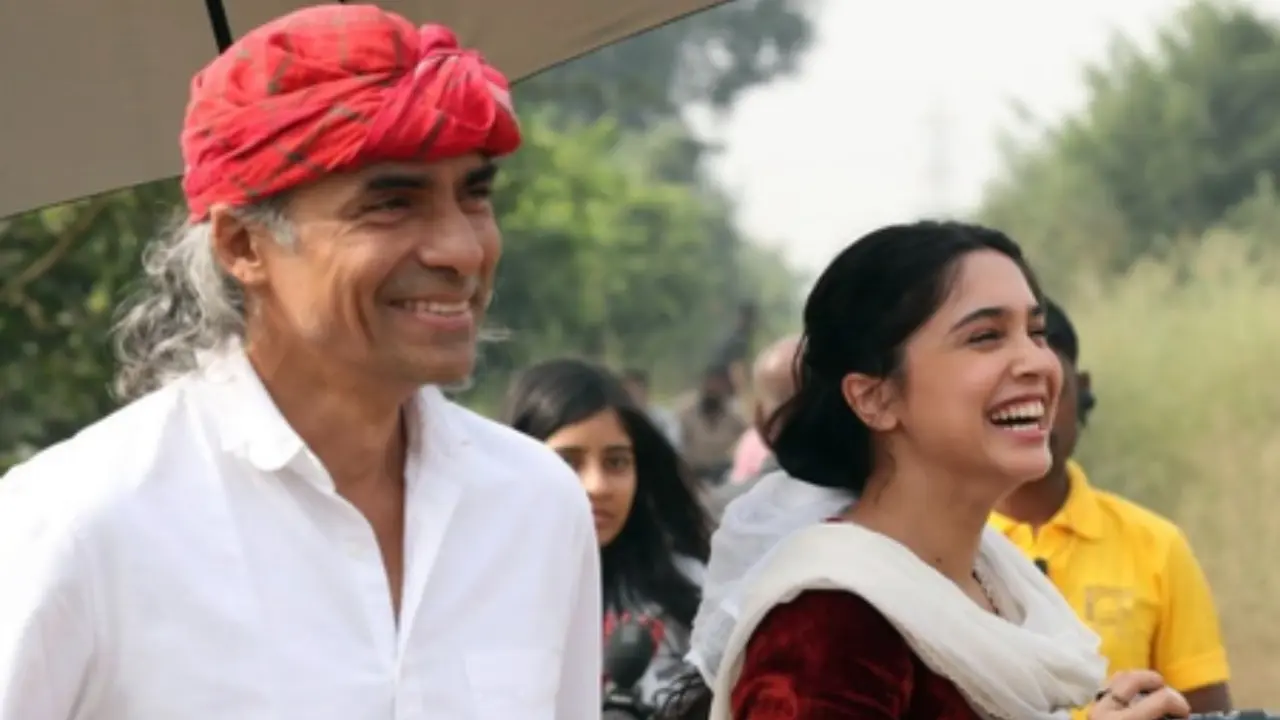
Sharvari reveals she manifested being part of Imtiaz Ali`s film 3 years ago

0
Sharvari reveals she manifested being part of Imtiaz Ali`s film 3 years ago


Sharvari reveals she manifested being part of Imtiaz Ali`s film 3 years ago

On Friday, Bollywood actress Sharvari has expressed her gratitude to filmmaker Imtiaz Ali. The actress is set to headline the upcoming film Main Vaapas Aaunga helmed by Imtiaz.

Sharvari thanks Imtiaz Ali

The actress took to her Instagram, and shared a series of pictures. The first picture is the BTS picture from the sets of the film featuring Imtiaz and her. The second picture is the note that she penned for the director. The third picture is of a masterclass session between Imtiaz Ali and Mani Ratnam.

She wrote, “To say that I have been a huge fan of your cinema would be an understatement. Today as our teaser drops, I can`t help but go back to the day when I attended a masterclass 3 years ago that you were conducting for Mani sir. I sat there in the audience hearing about your craft, your vision, your characters and how you see this beautiful world you create on the big screen”.


View this post on Instagram


A post shared by Sharvari 🐯 (@sharvari)

She further mentioned, “I remember I put up a story on Instagram that day manifesting to be a part of your films someday. Little did I know I would see a teaser that ends with ‘A FILM BY IMTIAZ ALI’ which stars MEE. Main Vaapas Aaunga`s journey for me as a young actor who is hungry to be moulded into different lives on screen has been the most fulfilling one only and only because of your encouragement and belief. From the recce to finishing shoot and all the conversations over multiple lunches and dinners will be my most cherished memories. Thankyou sir! You are not just a one of a kind filmmaker but also a person”.

Main Vaapas Aaunga teaser

The film promises a poignant story of love and longing and also reunites the powerful musical trio of Imtiaz Ali, A. R. Rahman and Irshad Kamil. 

The teaser suggests that the story unfolds across two timelines and hints at a love story set during the Partition of India. Diljit Dosanjh appears to serve as the narrator who bridges the past and the present. Meanwhile, Naseeruddin Shah is seen lying on a hospital bed, dealing with an age-related illness, suggesting that Vedang Raina may be portraying the younger version of his character


End is near for England’s World Cup-winning tearaway pacer: ‘I’ve started thinking about other things’

0
End is near for England’s World Cup-winning tearaway pacer: ‘I’ve started thinking about other things’


England tearaway pacer Mark Wood is at a stage where he has started thinking about life after cricket.

His fans would keep their fingers crossed for sure! (REUTERS)

Wood has not played any cricket since the first Ashes Test last year, and several months on, is still nursing a knee injury. And he is not getting any younger. At the age of 36, he very well knows the end might be near. However, he wants to give it one more go.

Also Read: Yuvraj Singh in high demand: why cricketers knock on his door in their hour of need?

“I’ve started thinking about other things, doing podcasts, doing my coaching badges.

“I’ve now started to try and think for the first time about what I should do if this doesn’t go well,” he told the Tailenders podcast.

Talking about what shape his knee is in, Wood, whose Ashes appearance in November had been preceded by no cricket for 15 months on account of an elbow injury followed by knee surgery, said: “It’s six-week blocks, it’s not day by day, it’s specialists and rescans every six weeks. It’s been improving since what I got told had been an explosion in my knee in Australia.

“So every six weeks has been an improvement. I’ve started running now and I’m hoping by the next block it’s in a position where maybe I can start lightly bowling.”

Fantastic but unlucky with injuries

Wood has not had a voluminous career in terms of the number of matches thanks to multiple injuries he has picked up over the years, but he has been full of impact. He was part of the English teams that won the 2019 World Cup at home and the 2022 T20 World Cup in Australia. In 2015, he was also part of the Ashes-winning team at home.

To date, he has featured in 38 Tests, 70 ODIs and 38 T20Is, and boasts more than 250 international wickets. At the height of his power, he and Jofra Archer, another threatening prospect, threw some real scare into the opposition teams.

“It’s real slow going with the stage I’m at in my career. It’s quite a fine balance, where if I push this too hard then that could be it,” he explained how careful he has to be with his injury now.

Wood was sorely missed during the 2026 T20 World Cup held in India and Sri Lanka, with the English team bowing out in the semifinals after a narrow defeat to eventual champions India at the Wankhede Stadium.


How Migrant Workers Have Been Affected by Iran’s Strikes

0
How Migrant Workers Have Been Affected by Iran’s Strikes


new video loaded: How Migrant Workers Have Been Affected by Iran’s Strikes

Since the U.S.-Israeli attack on Iran began, Iran has fired hundreds of missiles and drones in retaliation at Gulf countries. Iranian officials say that they are attacking U.S. military bases and American interests in the Gulf countries, not civilian targets. Our reporter Vivian Nereim talks with Katrin Bennhold about how migrant workers have been affected.

By Vivian Nereim, Katrin Bennhold, Leila Medina, James Surdam and Parin Behrooz

March 14, 2026


Why is gold prices falling despite US-Iran war tensions and oil above $100? Here’s what experts say

0
Why is gold prices falling despite US-Iran war tensions and oil above 0? Here’s what experts say


Why is gold prices falling despite US-Iran war tensions and oil above $100? Here’s what experts say

Gold prices have slipped in recent sessions even as geopolitical tensions escalated in West Asia, surprising investors who typically view the precious metal as a safe-haven during periods of uncertainty.It has been 14 days of intense military exchanges involving the United States, Israel and Iran. Over this period, benchmark indices Nifty and Sensex have declined more than 5% each, while crude oil has crossed the $100 mark, unsettling global markets. Traditionally, such conditions tend to support precious metals. However, that pattern has not played out this time. Silver prices on the Multi Commodity Exchange have fallen by more than Rs 14,000, or about 5%, while gold prices have also edged lower, according to an ET report.Market participants say the recent decline, despite the onset of war, may appear counterintuitive because gold is typically viewed as a refuge during geopolitical turmoil. But several overlapping factors are shaping the current trend.Ponmudi R, CEO of Enrich Money, said the sharp spike in crude oil prices and rising geopolitical tensions initially triggered a broad risk-off sentiment, prompting investors to raise cash and trim leveraged positions across asset classes. “In such phases, even traditional safe-haven asset like gold can face short-term selling pressure as investors liquidate holdings to meet margin calls or rebalance portfolios,” he said.He added that the strength of the US dollar has also played a key role. In times of global uncertainty, capital often flows into the dollar and US Treasuries, which typically weighs on precious metals because they are priced in dollars. The Indian rupee weakened past the 92.3475 mark against the US dollar, hitting a fresh all-time low on Thursday.Another factor has been profit-booking after the strong rally in gold earlier this year and in 2025. With prices already at elevated levels, some investors chose to lock in gains as volatility increased. Ponmudi said the recent weakness appears to be more of a short-term adjustment rather than a structural shift in long-term demand for precious metals as safe-haven assets.Jigar Trivedi of IndusInd Securities also noted that the current scenario differs because crude oil has a direct relationship with inflation. Higher oil prices tend to push inflation higher, which can negatively affect the economy and force the US Federal Reserve to reassess its policy stance. The Fed is currently monitoring employment and inflation trends closely, with a medium-term target of keeping inflation near 2%.A stronger dollar typically puts pressure on gold prices as it makes the metal more expensive for buyers using other currencies, dampening demand. Trivedi added that once the war premium fades, investors are likely to refocus on underlying fundamentals such as monetary policy, the dollar index and central bank purchases.

What should investors do now?

“We reiterate investing in gold over supportive fundamentals and market uncertainties. Any decline in prices over dollar rally or ease in tensions provides opportunity to accumulate/invest in gold,” Tata Mutual Fund said in a report, ET quoted.The report added that corrections following strong rallies are natural and do not undermine the long-term bullish outlook for precious metals. Structural factors supporting gold remain intact, including geopolitical fragmentation, supply constraints and sustained central bank purchases as countries diversify reserves away from fiat currencies. Global central bank buying of gold has nearly doubled over the past decade.For silver, which has declined about Rs 14,000 or 5% since the conflict erupted, the report said geo-economic conditions along with structural and cyclical fundamentals could continue to support prices. Investors may consider accumulating on declines, especially given the broader supportive backdrop for precious metals. Silver’s outlook, in particular, remains tied to a recovery in industrial demand, and a staggered investment approach may be suitable for medium- to long-term exposure.(Disclaimer: Recommendations and views on the stock market, other asset classes or personal finance management tips given by experts are their own. These opinions do not represent the views of The Times of India)


Ram Gopal Varma breaks silence on influencing Dhurandhar: ‘Aditya Dhar was inspired by Satya, mixed it with patriotism'

0
Ram Gopal Varma breaks silence on influencing Dhurandhar: ‘Aditya Dhar was inspired by Satya, mixed it with patriotism'


Filmmaker Ram Gopal Varma has finally reacted to the ongoing debate about similarities between Dhurandhar and his cult classic Satya. The discussion began after a video comparing scenes from the two films went viral on social media, suggesting that director Aditya Dhar may have borrowed heavily from RGV’s iconic gangster drama.

Filmmaker Ram Gopal Varma stated that influences are common in filmmaking. Despite the discussions, RGV continues to support Dhurandhar, praising its sequel's trailer and hinting at exciting developments in the storyline.
Filmmaker Ram Gopal Varma stated that influences are common in filmmaking. Despite the discussions, RGV continues to support Dhurandhar, praising its sequel’s trailer and hinting at exciting developments in the storyline.

Ram Gopal Varma on inspiring Dhurandhar

Interestingly, RGV had earlier praised Dhurandhar on social media and posted multiple tweets in support of the film after its release. However, after the comparison video started circulating online, the veteran filmmaker addressed the issue in a recent interview. Speaking to DNA, RGV said that influence is an inevitable part of filmmaking. “See, whether Aditya Dhar did it consciously or not, eventually, all filmmakers will go back to something they’ve seen, or they got inspired by, and they’re bound to be influenced.”

RGV further explained that even his own films have been shaped by earlier works. He revealed that his 1989 film Shiva drew inspiration from Bruce Lee’s Return of the Dragon and Sunny Deol’s Arjun. Similarly, he admitted that Satya also carried elements influenced by classic gangster films like The Godfather and Goodfellas.

“So likewise, when I spoke to Aditya, he told me, ‘I was mainly influenced by Satya and Company, and then I mixed them, and put some patriotism’. That was his first idea,” RGV added.

RGV’s statement indicates that Aditya openly acknowledged drawing inspiration from Satya and Company while developing the concept for Dhurandhar. According to the filmmaker, such influences are common in cinema and integral to the creative process.

Despite the online debate, RGV has continued to support the franchise. When the trailer of Dhurandhar 2 was released recently, he shared an enthusiastic reaction on social media.

“This is STRATOSPHERIC LEVEL .. @AdityaDharFilms is on a RAMPAGE of REVENGE #Dhurandhar2 (sic).”

About Dhurandhar 2

Fans are now buzzing not just about the release date of Dhurandhar: The Revenge, set for 19 March 2026, with paid previews starting the night before, but also about what the sequel’s storyline will explore. Trailer reactions and online discussions suggest viewers are speculating whether The Revenge will delve deeper into the mysterious identity of Bade Sahab, a shadowy figure teased in post‑credit scenes, and how RAW agent Ranveer Singh’s character will confront a broader geopolitical web of betrayal and espionage hinted at in the film’s promotional material.

Some fans are also debating if the sequel will reveal more about the legacy of Akshaye Khanna’s Rehman Dakait‑inspired character, despite his apparent fate in the first film. Meanwhile, the original Dhurandhar remains one of the biggest blockbusters in recent memory, grossing over ₹1,300 crore worldwide and ranking among the highest‑grossing Indian films of all time, breaking numerous box office records along the way.


‘If he plays at No. 3..’: Former CSK star suggests ideal position for Sanju Samson | Cricket News

0
‘If he plays at No. 3..’: Former CSK star suggests ideal position for Sanju Samson | Cricket News


'If he plays at No. 3..': Former CSK star suggests ideal position for Sanju Samson

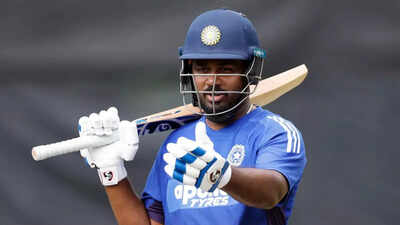
Former India batter Suresh Raina believes that Sanju Samson should occupy the No.3 position for Chennai Super Kings in the upcoming Indian Premier League 2026 season, stating that the move would bring better balance to the team’s batting order.Samson heads into IPL 2026 in excellent form after an impressive campaign in the ICC Men’s T20 World Cup, where he produced a string of strong performances. The wicketkeeper-batter scored back-to-back half-centuries in the Super 8s against West Indies, the semifinal against England, and the final against New Zealand while opening the innings.

Raina suggests reshaping CSK’s top order

Despite Samson’s success as an opener, Raina believes CSK should retain Ruturaj Gaikwad and Ayush Mhatre at the top of the order. According to Raina, Samson at No.3 would provide stability and help connect the top order with the middle order.“He was the captain of the Rajasthan Royals for so many years. I think his role will be clear here. If Sanju plays at number three, it will be good according to me, because then Dewald Brevis will come at number four,” Raina said while speaking on JioHotstar.Raina further explained that such a batting order would strengthen CSK’s lineup.“Shivam Dube will come at number five. At number six, it depends on who you bring — whether it is Prashant Veer, Akhil Hussain or Noor Ahmed. It will also depend on how many overseas fast bowlers they choose to play,” he added.

Samson backed to take wicketkeeping role

Raina also backed Samson to handle the wicketkeeping duties for CSK, suggesting that veteran captain MS Dhoni might only play a finishing role with the bat. “Sanju will be there as a keeper. We saw the atmosphere he created during the World Cup. His role will become very important at number three,” Raina said.He added that allowing Gaikwad and Mhatre to open would give CSK a more experienced middle order.“When Brevis comes in with Sanju and then Shivam Dube after him, it becomes very important to have someone like Sanju who brings experience,” Raina explained.Samson’s blockbuster move to CSKSamson joined CSK ahead of IPL 2026 after being traded from Rajasthan Royals in exchange for Ravindra Jadeja and Sam Curran before the auction. The Kerala-born batter brings considerable IPL experience, having played 177 matches and scored 4707 runs at an average of 30.95.

Banner Insert


India’s Nobel Prize paradox: A long gap for laureates and why Mahatma Gandhi remains the most famous non-winner | India News

0
India’s Nobel Prize paradox: A long gap for laureates and why Mahatma Gandhi remains the most famous non-winner | India News


Almost 130 years after Alfred Nobel’s death, the prize named after him continues to be among the world’s most coveted honours, recognising extraordinary achievements in fields such as physics, chemistry, medicine, literature, peace, and economic sciences.A widely recounted, though sometimes disputed, story about the Swedish businessman, chemist, and inventor of dynamite suggests that the idea of the Nobel Prize may have been born out of an unusual moment of introspection. In 1888, a French newspaper mistakenly published Alfred Nobel’s obituary, confusing him with his deceased brother, and reportedly described him as the “merchant of death” who had made a fortune “by finding ways to kill more people faster than ever before.” Disturbed by the prospect of leaving behind such a legacy, Nobel is believed to have reconsidered how he wished to be remembered.When Alfred Nobel died in 1896 in San Remo, Italy, his will directed that the bulk of his fortune be used to establish prizes for those who had “conferred the greatest benefit to humankind.” Since 1901, the Nobel Prizes have been awarded annually by institutions such as the Royal Swedish Academy of Sciences, the Karolinska Institute, the Swedish Academy, and the Norwegian Nobel Committee.Yet, despite its long and celebrated association with intellectual excellence, India has seen relatively few Nobel laureates in recent decades. While individuals of Indian origin continue to appear on the global stage, the country itself has experienced long gaps between Nobel recognitions.

India’s history at Nobel stage

India’s first Nobel Prize was awarded in 1913 to Rabindranath Tagore for Literature. Rabindranath Tagore became the first Asian Nobel laureate, honoured for his “profoundly sensitive, fresh, and beautiful verse.” In science, C.V. Raman won the Physics Nobel Prize in 1930 for discovering the Raman Effect, a groundbreaking insight into light scattering.

Hargobind Khorana (Physiology/Medicine, 1968), Venkatraman Ramakrishnan (Chemistry, 2009), and Kailash Satyarthi (Peace, 2014) are among other laureates who have brought global recognition to India. In addition, several Indian-origin scholars like Amartya Sen (Economics, 1998) and V.S. Naipaul (Literature, 2001) have been honoured for their contributions while affiliated abroad. Together, these achievements highlight India’s rich intellectual tradition.However, the intervals between such recognitions have often been long, prompting debate about the country’s research ecosystem, institutional support for fellowship, and the pathways through which groundbreaking work gains global visibility.

.

India’s last Nobel Prize in a science category was C.V. Raman in Physics, 1930. From 1930 to 2026, that makes it 96 years without a Nobel in Physics, Chemistry, or Physiology/Medicine.

Why Mahatma Gandhi remained the missing laureate – A case study

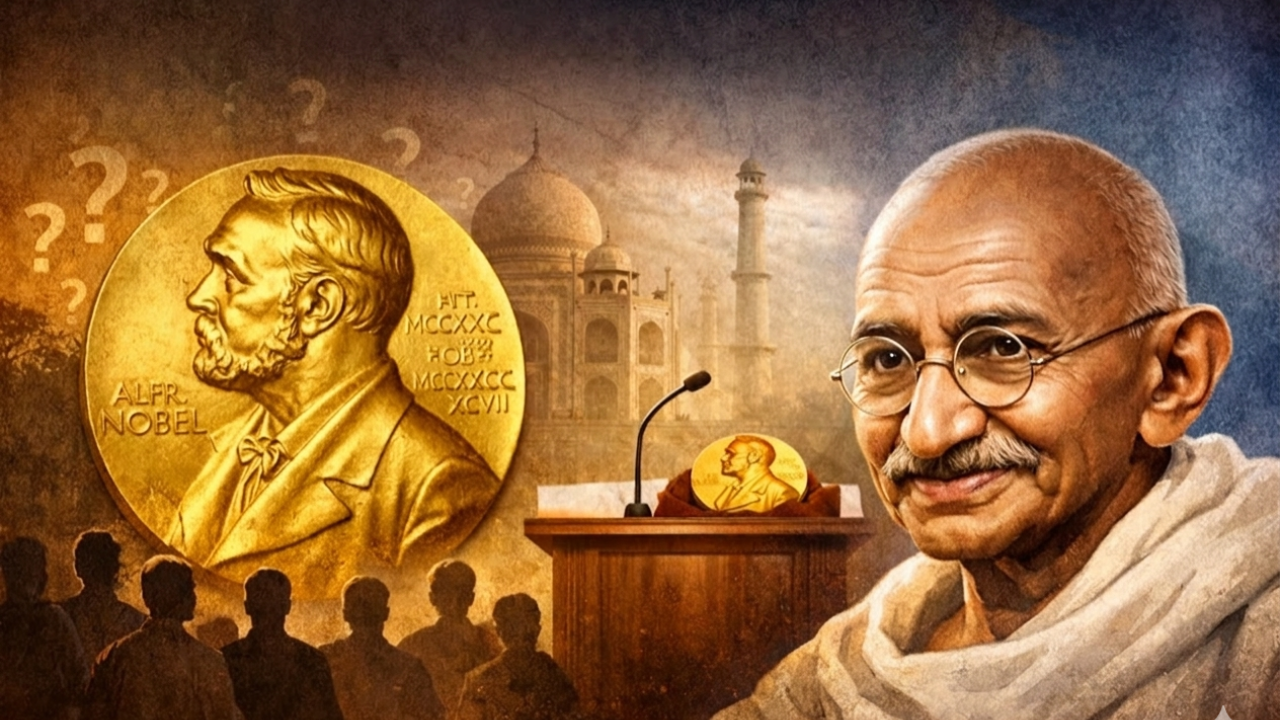
However, the prize seems to hold complex layers beyond recognizing achievement alone, as the story of Mahatma Gandhi illustrates. Widely revered as the most powerful symbol of non-violence in the 20th century, Gandhi pioneered satyagraha, a philosophy of peaceful resistance, first in South Africa and later during India’s struggle for independence.Mahatma Gandhi, affectionately known as Bapu, was nominated for the Nobel Peace Prize five times- in 1937, 1938, 1939, 1947, and shortly before his death in January 1948. Yet he was never selected for the recognition. Historians and Nobel scholars point to several reasons. Committee members admired him personally, but they were cautious about awarding the prize amid complex political conflicts, particularly the communal violence surrounding India’s partition. Some advisers questioned whether Gandhi’s efforts were primarily nationalist rather than universally applicable, while others interpreted statements he made in 1947 as less than strictly pacifist. Up to 1960, the Nobel Peace Prize was awarded almost exclusively to Europeans and Americans, and Mahatma Gandhi did not fit the traditional profile of laureates of that era.After his assassination, the Nobel Committee seriously considered a posthumous award, which was allowed under the rules at the time, but ultimately decided against it, citing that there was “no suitable living candidate.” Øyvind Tønnesson, Peace Editor from 1998–2000, wrote in his piece “Mahatma Gandhi: The Missing Laureate” that nobody had ever been awarded the Nobel Peace Prize posthumously. However, according to the statutes of the Nobel Foundation in force at that time, the prizes could, under certain circumstances, be awarded posthumously. This means it would have been possible to give Gandhi the prize.Mahatma Gandhi left no organization, property, or will, which complicated the practicalities of awarding the prize. Later, members of the committee publicly regretted his omission, and his legacy has often been invoked as a moral benchmark. When the Dalai Lama was awarded the Peace Prize in 1989, the committee chairman described it as “in part a tribute to the memory of Mahatma Gandhi.” Nelson Mandela also referred to Gandhi’s ideals as a guiding force in his own struggle against apartheid.

Why has India not produced frequent Nobel winners?

It is important to note that the absence of frequent Nobel wins does not necessarily translate into a lack of scientific or literary excellence or merit. However, it does raise a deeper and important question: why do some countries consistently produce Nobel laureates while others, despite immense intellectual potential, experience prolonged gaps?

How Someone Actually Wins a Nobel Prize | The Secret Selection Process Explained

To understand this pattern, it is worth examining the structural, institutional, and cultural factors that may shape the journey from promising research to Nobel-winning discovery and external factors that might be at play. Nobel nominations are kept secret for years – The Norwegian Nobel Committee keeps all nominations confidential for 50 years, including details about who nominated them, how many people, and the names of all who were shortlisted. This means we often don’t know who was proposed or considered, making it impossible to judge how close India’s scholars or leaders came to winning in many cases. Mahatma Gandhi, for instance, was nominated multiple times before his death, but the public only came to know the details decades later from archival research.The Rule of Three – A Nobel Prize can be shared by up to three individuals, which excludes research teams, laboratories, or entire collaborative groups. Many groundbreaking discoveries can be the result of large team efforts, making it difficult to single out a few individuals as having made the highest contribution. As a result, many achievements by large research groups or think tanks may remain underrepresented. This is one reason why some major contributions from India or Indian-origin scientists may not have led to a Nobel Prize despite their significance. However, this rule does not apply to the Nobel Peace prize.

–

Brain drain – According to a 2024 study by A. Shaji George and Dr. T. Baskar on brain drain in India, many skilled professionals are leaving the country due to limited opportunities and better prospects abroad. India has seen a steady exodus of talented researchers and scientists, many leaving in search of better funding, modern labs, and opportunities to collaborate internationally. With R&D investment at only ~0.64% of GDP and a limited number of academic positions, talented individuals often face difficult choices between pursuing their research dreams or seeking stability abroad. Overseas institutions appear to provide greater resources, better fellowships, access to global networks, and recognition, which can be felt to some as hard to achieve at home. Strengthening domestic research support and infrastructure could help retain this talent, allowing India’s brightest minds to thrive while boosting the country’s global scientific impact.The social safety with conventional career options – Choosing research as a career in India often comes with institutional and social concerns. PhD scholars have reported facing limited job opportunities, uncertain career paths, and modest funding or fellowships. In addition, parental or societal pressure for more stable employment can weigh heavily. Researchers also experience pressure to publish for placement rather than long-term innovation, which can compromise the pursuit of groundbreaking work. These challenges create a perception of instability, influencing career choices and sometimes prompting talented individuals to pursue more conventional or secure paths in other fields.Historical trend: Euro-American dominanceUp to 1960, most Nobel Prizes were awarded to Europeans and Americans. Early breakthroughs in physics, chemistry, medicine, and literature were concentrated in Western institutions, while research from countries like India had limited access to international networks and global visibility. The Nobel Peace Prize during this period was almost exclusively awarded to Western laureates, frequently raising questions about whether the horizon of the Norwegian Nobel Committee was too narrow to recognize contributions from non-Western and post-colonial nations.Excessive focus on publicationsDespite being globally ranked 3rd in research publications, it is paradoxical that India has seen a long gap in Nobel recognitions. PhD scholars in India often report that the work culture prioritizes publications, particularly in high-impact journals, over long-term innovation. As Bhargav Jyoti Bora and Anshid, two PhD scholars in chemistry, told TOI:“Here, the work is mainly focused on the publication. People are looking for better impact factor journals so that they can get jobs. Otherwise, there is no option for placement.”This pressure to publish for career survival can limit the pursuit of novel or risky ideas, which are often the foundation of globally recognized research. He contrasts this with the approach of many Nobel laureates:“If you look at people who have got the Nobel Prize, their entire career is based on one topic, or several aspects of one topic. All their students work on similar topics, which helps them create novel or Nobel-worthy ideas” they added.This focus on immediate career needs often limits deep, long-term exploration of a single research area.Limited funding and R&D expenditureLimited funding and infrastructure remain major bottlenecks. Tushar Goyal, a JRF researcher at Jawaharlal Nehru University, said while speaking to TOI that these challenges continue to hinder high-quality research.“Without financial support, many scholars become dependent on part-time jobs and gigs to meet their basic needs. It hampers their academic focus and research quality. India’s R&D expenditure is approximately 0.64% of GDP, significantly lower than in many research-intensive economies.The Non-NET fellowship, which provides Rs 8,000 per month for PhD students in central universities, was last revised in 2012. Despite significant increases in the cost of living, the fellowship amount has remained unchanged for the last 14 years,” he added.Another factor contributing to India’s relatively low R&D spending is the limited participation of the private sector. According to a written reply to a parliamentary question in the Rajya Sabha in 2025 by Jitendra Singh, minister of state (independent charge) for science and technology, the private sector accounts for only about 36% of India’s Gross Expenditure on Research and Development (GERD), whereas in several advanced economies, private industry contributes over 70% of total R&D spending.Anshid, a PhD scholar in chemistry, adds that “It is very difficult for faculties, especially new ones, to get funding. The research infrastructure is minimal in universities or institutes. Students have to struggle to get access to instruments or labs, wasting valuable research time.”Other students often face similar frustrations, making it harder to complete ambitious projects or pursue high-impact research.Collaboration often driven by resourcesAnother issue that emerged from conversations with researchers is the nature of research collaborations. They further highlighted how research-based collaborations, which should ideally foster shared knowledge and innovation, are often pursued for material support instead. Bhargav Bora observes:“Most collaborations are not for knowledge or field similarity, or even for gaining insights. The main purpose is access to instruments and funding. Ideally, collaboration should help in better understanding the field, then it will be beneficial for a better idea.”This practical approach can limit intellectual exchange, which is often essential for groundbreaking discoveries.Career uncertainty and societal pressureResearch in India can often feel like a precarious career choice. Limited job opportunities and uncertain career paths make it difficult for young researchers to plan long-term.PhD scholars also opened up on the societal and parental expectations that favour more stable professions. “There is pressure to choose a secure job,” one scholar said, adding that many researchers feel compelled to prioritise publications for placements rather than pursuing long-term innovative work.Together, these factors contribute to a sense of instability within the research ecosystem, shaping career choices and sometimes pushing talented individuals toward more conventional career paths.Cinema, often called the mirror of society, has also explored how the lives of scientists intersect with institutional and social pressures. Films like Ek Doctor Ki Maut (1990), a masterpiece of parallel cinema, directed by Tapan Sinha, portray how groundbreaking research can be met with apathy, indifference, and sheer skepticism. The film follows Dr. Dipankar Roy (played by Pankaj Kapur), who discovers a cure for leprosy but is ridiculed by the medical association and the scientific community for his claim that, as a side effect, the vaccine could treat women’s infertility. Bureaucratic hurdles further stall his work, and his passionate devotion to the discovery comes at the cost of neglecting other aspects of his life. In the film, he has set up a lab within his own home, highlighting his obsessive devotion to research and how such dedication can blur the line between professional pursuit and personal life and how bureaucratic, social, and institutional pressures can stifle scientific inquiry and groundbreaking discoveries.Outdated coursework and limited global exposure Many PhD programs in India still rely on outdated coursework, which may not fully align with current global debates or modern research methodologies. Tushar Goyal, JRF researcher at JNU and media educator, highlights another challenge, “Limited opportunities for international exposure and collaborations restrict integration into global academic networks. Without such exposure, even high-quality research can remain under-recognized internationally.”Updating curricula and creating more pathways for international collaboration could help researchers gain skills, perspectives, and networks essential for achieving global visibility.The role of translation in global recognitionDitsa Mandal, a research scholar in Liberal Arts at IIT Hyderabad, observes that translation infrastructure also plays a crucial role in determining whether literary works gain global recognition. She notes, “Translation infrastructures are the most important criteria determining a work’s capability to travel—publishers willing to invest in certain kinds of works and languages, the presence of skilled translators, grants, representation in international book fairs, and academic promotion abroad all affect visibility. Literary works with limited translation funding may remain locally visible but not globally celebrated.”This insight underscores how structural support, not just literary merit, shapes the reach and recognition of works on the international stage.

Global recognition: How awards reflect research ecosystems

Awards like the Nobel Prize not only honor individual scholars but also signal the strength of a country’s research ecosystem. Tushar Goyal notes that such recognition lends credibility to both the researcher and their institution, reflecting long-term support, funding, and intellectual freedom. Factors like media coverage, translation, and international collaborations also play a critical role. Research published in widely accessible languages or circulated through global networks is more likely to be cited, discussed, and nominated for prestigious awards, highlighting the importance of international exposure and academic partnerships.

The road ahead

Who receives a Nobel Prize, and who does not, often remains a matter of speculation, as the Nobel Committee keeps nominations confidential for 50 years and many factors may shape the final decision. The decisions are complex and not always predictable. India’s journey with the Nobel Prize reflects a complex interplay of history, institutional structures, and global visibility. Yet it is not a story of failure; intellectual excellence continues to thrive through persistent inquiry, innovation, and resilience. From the literary contributions of Rabindranath Tagore to C. V. Raman’s discoveries on the scattering of light, India has produced thinkers whose work has had global impact. The country has long produced minds that have shaped global thought. Strengthening research ecosystems, maintaining robust scientific infrastructure, fostering meaningful collaboration, and valuing long-term dedication can help ensure that future Nobel-worthy discoveries reflect not only individual brilliance but also the country’s systemic strength on the global stage.



Kim Soo Hyun’s legal team reiterates underage dating allegations

0
Kim Soo Hyun’s legal team reiterates underage dating allegations


Kim Soo Hyun’s legal team reiterates underage dating allegations with the late actress Kim Sae Ron
South Korean star Kim Soo Hyun’s legal team has again refuted claims of dating Kim Sae Ron during her minority. They asserted their relationship began only after she became an adult, questioning how an adult relationship could breach dignity. This comes as a lawsuit demanding 2.

South Korean superstar Kim Soo Hyun has once again denied any romantic relationship with late actress Kim Sae Ron when she was a minor. During a recent court hearing, the actor’s legal team reiterated that all such allegations against Kim Soo Hyun are false.

Kim Soo Hyun’s legal team denies dating allegations

As per the Korean news outlet Chosun, during the hearing, Kim Soo Hyun’s legal team reiterated that the allegations against him of dating Kim Sae Ron when she was underage are untrue. They argued, “The actual relationship began after the other party reached adulthood,” adding, “Unverified rumors cannot be grounds for contract termination, and it is difficult to understand how a relationship between adults could constitute a violation of the duty to maintain dignity.”This took place as the 22nd Civil Division of the Seoul Central Division Court was hearing the case filed by Company A against Kim Soo Hyun and his agency, Gold Medalist, demanding damages worth approximately 2.8 billion Korean won.

Kim Soo Hyun has previously addressed the allegations

This is not the first time that Kim Soo Hyun has addressed allegations against him. Previously, the actor held a press conference where he said, “I’ll address the biggest concern: I did not date the deceased when she was a minor. We dated five years ago for about a year, long before ‘Queen of Tears’ aired.”

The case is now nearing its end

In February this year, Park Jeong-ho, commissioner of the Seoul Metropolitan Police Agency, confirmed that they are about to conclude the case. “We are conducting the investigation diligently, and it is in the final stages. We expect to reach a conclusion soon,” he said during a recent press briefing.Disclaimer: The information in this report is based on a legal hearing as reported by a third-party source. The details provided represent allegations made by the parties involved and are not proven facts. The case is ongoing, and a final verdict has not been reached. The publication does not claim that the allegations are true.


Mohammad Kaif speaks about Team India spinner Kuldeep Yadav`s wedding

0
Mohammad Kaif speaks about Team India spinner Kuldeep Yadav`s wedding


Mohammad Kaif speaks about Team India spinner Kuldeep Yadav`s wedding

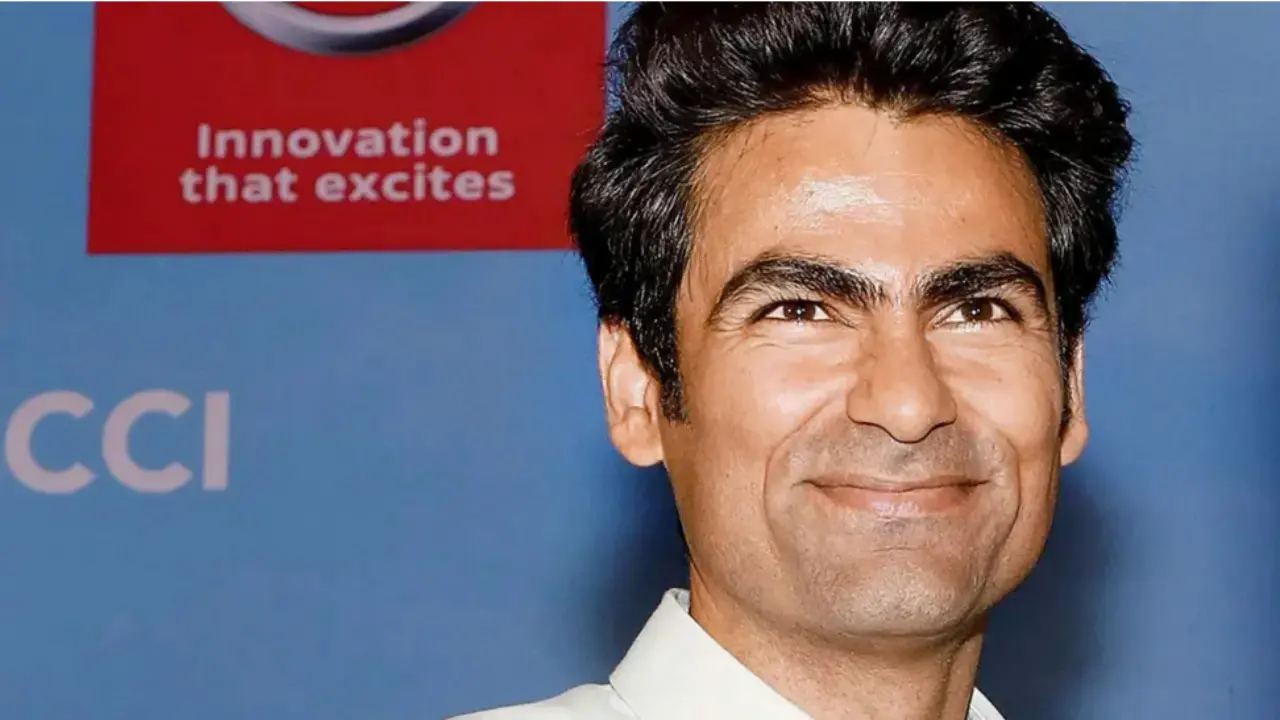
Former Team India cricketer Mohammad Kaif reached Dehradun on Saturday to attend the wedding of star spinner Kuldeep Yadav, who will be tying the knot with his fiancée, Vanshika.

Speaking outside the airport, Kaif congratulated the spinner. “Many congratulations to him. Kuldeep hails from our Kanpur. It`s going to be great fun,” he said.

He then heaped praise on Team India, which clinched back-to-back T20 World Cup titles.

“The Indian team is doing exceptionally well. They`ve won back-to-back World Cups,” said Kaif.

Earlier, according to reports, Kuldeep and Vanshika got engaged in June last year in a private ceremony in Lucknow, which was attended by only close family members.

The news about their wedding comes shortly after Team India`s dominance in the recently concluded global showpiece. The “Men in Blue” defeated New Zealand by 96 runs at the Narendra Modi Stadium in Ahmedabad.

Reflecting on the victory, the spinner expressed happiness and stated that when you participate in an ICC event, the aim is always to win the title.

“It is an important victory. The tournament went very well for us, and we have been preparing for this for a long time. This is what you play cricket for. Every time you participate in an ICC tournament, you want to win the trophy. I congratulate the team and also thank the fans for supporting us,” he said.

T20 World Cup 2026: Final summary

Batting first in the final, the “Men in Blue” posted a mammoth total of 256 runs for the loss of five wickets in 20 overs. Sanju Samson, Abhishek Sharma, and Ishan Kishan smashed half-centuries. Facing 46 balls, Samson scored 89 runs with the help of five boundaries and eight maximums. Abhishek also garnered 52 runs in 21 balls, including six boundaries and three maximums. Ishan smashed 54 runs off 25 deliveries, laced with four boundaries and four maximums. Later, burly all-rounder Shivam Dube also played a fiery cameo of an unbeaten 26 runs in just eight deliveries.

Chasing a target of 256, New Zealand was bowled out for 159 runs in 19 overs. Team India`s lead pacer Jasprit Bumrah returned with figures of four for 15 in four overs. Hardik Pandya, Varun Chakaravarthy, and Abhishek also chipped in with one wicket each.

(With ANI Inputs)


MS Dhoni’s last IPL season? Ex-cricketer makes big prediction | Cricket News

0
MS Dhoni’s last IPL season? Ex-cricketer makes big prediction | Cricket News


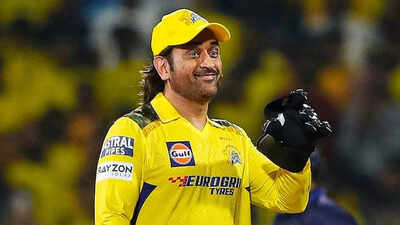
MS Dhoni's last IPL season? Ex-cricketer makes big prediction
MS Dhoni (Image credit: BCCI/IPL)

NEW DELHI: Former India all-rounder Irfan Pathan believes the upcoming edition of the Indian Premier League could be the “last time” fans see MS Dhoni playing for Chennai Super Kings.As the IPL 2026 season approaches, discussions around Dhoni’s retirement have once again gathered momentum.

Gautam Gambhir reflects on India’s World Cup win and backing Sanju Samson in the tournament

Speculation intensified after CSK traded Sanju Samson from Rajasthan Royals, a move that many believe could allow the veteran to further reduce his on-field role while continuing to mentor the team.“CSK is incomplete without MS Dhoni. This season might be the last time we see him in the yellow jersey and it’s tough to imagine CSK and the IPL without him,” Irfan said on JioHotstar’s ‘Game Plan’.“As soon as the IPL comes around, we start seeing Mahendra Singh Dhoni again, which means he is fully prepared for it, and he is looking very fit as well,” he added.The 44-year-old joined the CSK camp in Chennai earlier this month and has been training with the squad led by captain Ruturaj Gaikwad.Pathan said Dhoni’s role could increasingly focus on guiding the team and helping develop the next generation of leaders within the side.“This season, Dhoni will play an important role in bringing everyone together. I’m not sure how many games he will play. But his presence in the dressing room will help a lot.“Sanju will benefit because he will be part of the leadership group as well. Ruturaj Gaikwad is the leader. But as a group, two or three guys are being groomed for the future. That is where MS Dhoni comes in. I hope he makes a difference.“Questions about his fitness, batting position, and whether he will play all games will still come up. The CSK team management will take it step by step. They will definitely look to give him a perfect farewell by lifting their sixth IPL trophy.”Dhoni has featured in 278 IPL matches across two franchises — CSK and Rising Pune Supergiant during the 2016 and 2017 seasons when CSK were suspended — scoring 5,439 runs in the tournament.Last season, he was mostly seen in brief cameo roles during the death overs, scoring 196 runs from 13 innings.CSK CEO Kasi Viswanathan, however, has stated that the veteran will be available for the full season and is expected to play “all matches” in the 2026 campaign.Pathan also feels the time has come for younger players to gradually take on more responsibility within the franchise.“We have seen him take responsibility for a number of years now, but I think this is the time for the baton to pass on to the likes of Ayush Mhatre, Dewald Brevis, Shivam Dube and Ruturaj Gaikwad, who is a young captain as well.“CSK’s ideology has changed. It will be key for the youngsters to learn from MS Dhoni’s experience, and for him to take the players ahead alongside him. It is a very exciting team on paper. In terms of six-hitting ability and intent, I am really looking forward to seeing the fearlessness from this young CSK side.”The trade between CSK and Rajasthan Royals means Ravindra Jadeja has returned to his former franchise, while Rajasthan have also parted ways with Jos Buttler.Former India cricketer and coach Sanjay Bangar believes Rajasthan’s younger players must now step up following the departure of two experienced batters.“First they let go of Jos Buttler, and now there is no Sanju Samson as well. The young batsmen in the team will have to take the lead,” Bangar said.“It will be a good start for Riyan Parag, playing three games at home. He will get home support in Guwahati as a local boy, coming here for the first time as a full-time captain. He will definitely want to perform well in front of his home fans, but it won’t be easy for the Rajasthan Royals.”Former India opener Abhinav Mukund also raised concerns about Sunrisers Hyderabad’s early fixtures and the availability of their captain Pat Cummins.“SRH have some difficult games coming up at the start, and you don’t know whether Pat Cummins is fully available or not. They haven’t made any statement yet, so we’ll have to wait for that because he has been a lynchpin for them,” he said.SRH will begin their campaign against defending champions Royal Challengers Bengaluru on March 28 before travelling to face Kolkata Knight Riders on April 2 and returning home to take on Lucknow Super Giants on April 5.

Banner Insert