Tuesday, September 29, 2026
Home Blog Page 1335

How Sachin Tendulkar helped Sanju Samson, and many others: Dial S for solutions | Cricket News

0
How Sachin Tendulkar helped Sanju Samson, and many others: Dial S for solutions | Cricket News


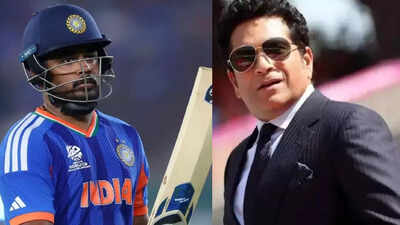
Dial S for solutions: How Sachin Tendulkar helped Sanju Samson, and many others
Sanju Samson, and Sachin Tendulkar

As he stepped up to receive his Player of the Tournament award after India had clinched the T20 World Cup Sunday, an emotional Sanju Samson recalled how he felt broken, his dreams shattered, after a wretched run of form. Fortunately for Samson, help was just a call away.Samson became the latest in a long line of Indian batters to seek help from the God of cricket, Sachin Tendulkar. Like the others, he wasn’t disappointed.Go Beyond The Boundary with our YouTube channel. SUBSCRIBE NOW!“When I was sitting outside in Australia (during the T20Is in Oct) … I wasn’t playing a game, I thought about what mindset is required,” Samson said, “I reached out to ‘Sir’ and had long conversations with him.”

Poll

What aspect of Sachin Tendulkar’s mentorship do you think is most beneficial?

Samson spoke from the heart about the value of Sachin’s guidance — “that clarity, game preparation, awareness and game sense”. He revealed, “Even the night before the final, Sir called me up to check how I am feeling.”

Sanju Samson opens up on T20 World Cup journey, and title win

There’s a reason Sachin has been referred to as a ‘university of batting’ by Sunil Gavaskar, himself once a mentor to Tendulkar. Former India head coach and former South African opening batter Gary Kirsten, too had referred to Tendulkar in similar terms.Despite spending over a decade away from international cricket, Tendulkar still keenly watches games and makes sharp observations about a batter’s technique. The Master doesn’t air these observations publicly, but if the player approaches him, he is always known to be ready to help.‘Tendulkar brings honesty to table & keeps things simple’Cast your mind back to India’s 2011 World Cup, when Yuvraj Singh endured a horrendous time with the bat a year before the event. Questions swirled over whether he should even make the squad. During the camp, as the left-hander battled a dip in both form and fitness, Tendulkar told him, “You will matter when it matters most.” Yuvraj went on to become Player of the Tournament.In 2014, Virat Kohli said he was a psychological wreck after he could score just 134 runs in 10 innings on his maiden England tour as pacer James Anderson traumatised him outside off-stump. After his return, Kohli sent an SOS to Tendulkar and the two worked for a few days at the indoor nets at the Bandra Kurla Complex.Kohli later said that their conversations weren’t just about technical adjustments or batting. “It was about how he coped with such times… One thing he told me was, ‘You should always do what works for you.’ Before the game, if you do not feel like batting in the nets, don’t bat in the nets. You should never do it just because other people are batting for half an hour in the nets,” Kohli had mentioned during an interview with The Cricket Monthly.Kohli then went on to smash four hundreds in Australia in the 2014-2015 Border-Gavaskar Trophy.Before the England tour in 2025, newly-crowned Test captain Shubman Gill too admitted that he had sought Tendulkar’s advice on how to succeed in English conditions.His advice to Gill about defending straight and scoring square enabled him to log 754 runs in the five-match series.“The best thing about ‘Master’ is that he knows what conditions he is talking about. He makes people who approach him understand how to go about playing in certain conditions, respect them and do what works for them,” says Atul Ranade, Tendulkar’s childhood friend and currently Mumbai’s Ranji team fielding coach.Modern-day cricketers have plenty of coaches they can approach. Why then do they still turn to Tendulkar for advice? “What he brings to the table is honesty,” Ranade explained, “He’ll also keep it as simple as possible, which makes it easy for the person to understand.”Out of favour batter Prithvi Shaw, who scored a Test hundred on debut in Oct 2018 against the West Indies, didn’t just receive technical tips while training at the Mumbai Cricket Association ground, but was also told to mend his ways. “Waapas track pe aaja (Better get back on track),” Tendulkar reportedly told the captain of the India U-19 team that won the World Cup in New Zealand in early 2018.“He’s always there for them; he always has time to give back to the game. He’s always ready to help in whatever way that he can,” Ranade said.Ranade remembered when in 2014, Sachin and Ranade were playing a game of badminton just a few months after the batsman’s retirement. “He (Tendulkar) told us: ‘Don’t disturb me unless one phone call comes’. Puzzled, we asked, ‘Who will call?’‘Rohit will call,’ he replied,” said Ranade. Rohit Sharma had just started opening for India in ODIs, and as expected, his call came. Tendulkar stopped the game to speak with him for nearly half an hour.Ranade said Tendulkar also played a major role in getting Sharma to the Mumbai Indians from the Deccan Chargers in 2011.“It was Tendulkar who decided to get Rohit from the Deccan Chargers to the Mumbai Indians, a team he was captaining at that point of time in the IPL. This happened right in front of me. It was a career-changing, life changing decision for Rohit. So, Tendulkar hasn’t just helped cricketers with their technique or mindset, but also with life altering decisions,” the former Mumbai seamer said. “Basically, he has been helping out cricketers for many, many years,” Ranade says. Rohit went on to lead the Mumbai Indians to five IPL championships.


India’s easing of FDI rules gives limited opening to China firms| Business News

0
India’s easing of FDI rules gives limited opening to China firms| Business News


India’s decision to ease FDI rules for neighbouring countries may reopen the door to China, but strict ownership limits mean large firms such as BYD Co. and Great Wall Motor Co. will still face same screening requirements.

The changes in FDI rules underscore India's push to attract capital, while highlighting continued caution toward China.
The changes in FDI rules underscore India’s push to attract capital, while highlighting continued caution toward China.

On Tuesday, New Delhi relaxed FDI rules for investments from countries sharing a land border with India, allowing automatic approval for non-controlling stake of up to 10%, subject to compliance requirements. The changes underscore India’s push to attract capital, while highlighting continued caution toward China.

“We are opening up in a strategic and calibrated manner,” Amardeep Singh Bhatia, secretary in the Department of Commerce told reporters in New Delhi. “It’s a changing world and the opening up doesn’t mean that concerns with regards to security have gone away.”

The easing stops well short of restoring full parity for investors from neighboring countries, who will continue to face additional scrutiny and restrictions compared with other foreign firms. While the move signals a cautious thaw with China and an effort to bolster growth amid Middle East-driven uncertainty, companies such as BYD and other major investors would still face ownership and regulatory hurdles before making major commitments.

India had introduced the so-called Press Note 3 rules in April 2020, mostly aimed at tightening scrutiny of investments amid deteriorating ties with China, which culminated in a Himalayan clash later that year. Economic relations between the neighbouring nations have since shown signs of thawing as high US tariffs reshaped global trade flows.

“The selective easing signals a pragmatic recognition of an important macroeconomic reality,” said Madhavi Arora, chief economist at Emkay Global Financial Services. “India remains a capital-constrained economy that requires need for deeper integration with global capital and global technology transfers and know-how.”

New Timeline

The changes set a 60-day approval timeline for investments in sectors such as electronic components, rare earth magnets and wafers. Officials familiar with the matter in New Delhi said the move aims to balance strategic concerns with economic needs. While wider restrictions stay in place, it could increase inflows from private equity and venture capital in non-strategic sectors, the officials said, declining to be identified.

A spokesperson for the industry department didn’t respond to an email seeking comments. India has retained safeguards by giving concessions only to investors who hold up to 10% non-controlling stakes.

“It’s a fairly cautious opening as no country can do manufacturing without some cooperation from China and especially in the electronics sector,” said Ashok Malik, New Delhi-based partner at The Asia Group, a business consulting firm. India has “started manufacturing and there is need for more tie-ups with Chinese equipment manufacturers”.

Companies had sought automatic approval for up to 26% Chinese ownership in Indian joint ventures, industry officials said, declining to be identified.

New Delhi had last year rejected BYD’s $1 billion investment proposal with a local partner, while another Chinese carmaker, Great Wall Motor, exited India after failing to secure regulatory clearances. Even so, BYD is considering assembling semi-knocked-down kits in the country, Bloomberg News previously reported.

For global funds, the relaxation provides clarity and will help improve capital inflows, said Pratibha Jain, general counsel and head of strategy at Everstone Group. “By bringing greater clarity to the treatment of beneficial ownership and minority participation in global fund structures, the revised policy addresses a long-standing ambiguity for the private equity and venture capital industry.”


Ex-rapper Balendra Shah sweeps to power in Nepal landslide election victory | Elections News

0
Ex-rapper Balendra Shah sweeps to power in Nepal landslide election victory | Elections News


Rastriya Swatantra Party, founded just four years ago, set to dominate new parliament with near two-thirds majority.

A political party led by a rapper-turned-politician has won a sweeping parliamentary majority in Nepal, official results show, capping one of the most dramatic elections in the country’s recent history.

The Rastriya Swatantra Party of Balendra Shah, a 35-year-old former civil engineer and hip-hop artist known simply as “Balen”, secured 182 seats in the 275-member lower house of parliament, the Election Commission said on Thursday, with 125 won directly and a further 57 through proportional representation.

Recommended Stories

list of 2 itemsend of list

The Nepali Congress party finished in second place, with 38 seats. The Marxist party of veteran four-time Prime Minister Khadga Prasad Sharma Oli, whose government was ousted in a youth-led uprising last year, won just 25 seats.

Shah himself defeated the 74-year-old Oli in his own constituency.

Oli, who had dominated Nepali politics for years, congratulated his rival on X, wishing him a “smooth and successful” term.

The September 2025 protests that reshaped the country’s political landscape were initially set off by a government ban on social media, but rapidly swelled into a mass movement against corruption and economic stagnation, leaving at least 77 people dead.

Shah, whose music had long targeted those same grievances, emerged as a figurehead of the unrest, his song Nepal Haseko, or Nepal Smiling, accumulating more than 10 million YouTube views during the turmoil.

His path to likely prime minister, from engineer to rapper to Kathmandu’s first independent mayor in 2022, reflects a generational shift in a country where more than 40 percent of the nearly 30 million population is under 35, yet whose established party leadership has long remained in its 70s.

Shah said his victory was a signal of refusal to take “the easy way out” and a reckoning with the “problems and betrayals that have affected the country.”

The RSP, founded the same year as his mayoral win, ran a highly organised campaign backed by diaspora funding, particularly from Nepali communities in the United States.

Nepalese journalist Pranaya Rana described Shah to Al Jazeera as embodying “the outsider spirit that many young Nepalis are looking for to shake up the status quo.”

India’s Prime Minister Narendra Modi called the vote a “proud moment” in Nepal’s democratic journey, pledging close cooperation with the incoming government.

Under Nepal’s constitutional process, parties must now submit names to fill proportionally allocated seats before parliament is formally summoned by the president. A new prime minister, who will need the support of at least half of all members, is not expected to be confirmed for several days.


Leaders aplenty but can Mumbai Indians get back to winning ways

0
Leaders aplenty but can Mumbai Indians get back to winning ways


Kolkata: The timing couldn’t have been better—weeks after winning the T20 World Cup, Suryakumar Yadav is set to return to Mumbai Indians, but not as captain. Not many IPL franchises can claim to have a World Cup winning captain in their ranks, Mumbai Indians now have two. For a dynasty searching for its next act, this could be one return worth remembering. But only if they play it right.

Hardik Pandya will lead Mumbai Indians in IPL 2026. (PTI)

For nearly two decades, Mumbai Indians defined the rhythm of the IPL. Titles came in clusters, and a culture of calm authority developed under Rohit Sharma. The franchise mastered the art of identifying young talent and pairing it with global stars. But the last few seasons have felt oddly transitional, their gears stuck in uncertainty as many wins were frittered away as close defeats. It hurt their pride, but that has yet to manifest into a lasting riposte.

Mumbai Indians came close last year, only to be bested by a match-winning 41-ball 87 from Shreyas Iyer in the second Qualifier. The problem certainly isn’t batting, at least not for a side that scored 228/5 and 203/6 in their last two matches in the previous IPL. Bowling too shouldn’t be a worry, especially when you have Jasprit Bumrah spearheading it. Yet they haven’t won the IPL since 2020.

Bowling needs rethink

Part of the problem has been a strategy that Mumbai Indians thought didn’t need any tinkering. Like making Trent Boult open the bowling as the left-arm seamer. Till the league phase, it worked fine as Boult pulled down the run rate before capping the death overs with his accurate yorkers. In the knockouts however, Boult conceded 94 runs in nine overs, taking just the wicket of Prabhsimran Singh.

For Mumbai to retain Boult (at ₹12.5 crore) for this season was natural, because two failures shouldn’t undo the good work throughout the league. But Mumbai Indians are also slowly inching towards a point where only a trophy will validate their process and philosophy. Unfortunately, those title ambitions still hinge heavily on their bowlers, including Hardik Pandya who chose not to bowl much once Jasprit Bumrah was declared fit for the campaign.

Three overs in the Eliminator, two in the Qualifier, this was pretty much how Pandya chose to not exert himself once it was clear he didn’t need to bowl his full quota. That was last year though. With the bowling roster largely unchanged, Mumbai Indians need him to bowl more slower bouncers, maybe even open the bowling too if they want to translate the heft of a franchise studded with World Cup winners.

At the heart of that attack remains Bumrah, arguably the most complete T20 fast bowler of the modern era. Bumrah’s ability to control both the Powerplay and the death overs provides captains with strategic flexibility. And as has been underscored in this T20 World Cup, that weapon could be again used creatively — in shorter bursts, in smaller middle-over spells to break partnerships.

But in comparison to other teams, Mumbai’s spin options haven’t always been dominant match-winners. Sure they have Mitchell Santner, a proven customer in these conditions, but on slower IPL pitches—particularly at Chennai or Lucknow in the previous season—Mumbai’s spin bowlers have often looked underprepared and inexperienced. They had a chance to address that in the auction but Mumbai retained almost all their key players to go in with the lowest purse, targeting some base-price players, with Quinton de Kock being one of them.

Batting looks settled

Not that they needed de Kock, especially with Ryan Rickleton looking in fine fettle. But the onus will again expectedly fall on Sharma who has steadily evolved into the early architect, absorbing the new ball, identifying match-ups, and allowing younger partners to play freely. His presence also carries symbolic weight. For a franchise that built its identity around his leadership, the transition to Pandya with Yadav in the core may work best if it feels collaborative rather than abrupt.

This is crucial because the middle overs belong unmistakably to Yadav while Pandya has come down the order. Batting at No. 3 or No. 4, Yadav becomes the pivot around which everything spins. If the openers start quickly, he accelerates. If early wickets fall, he reconstructs while keeping the scoring rate alive. Few players in world cricket possess that duality. With him on strike, bowlers are forced to reimagine lengths because a good delivery can be turned into a scoring opportunity by a flick of the wrists or a sudden shuffle across the crease. In the World Cup triumph, that fearless elasticity became India’s middle-overs engine.

Around him, Mumbai’s strategy will be to pack the lineup with boundary-hitting options—the sort of hitters who can maintain the tempo Yadav prefers. Ring in Tilak Varma, Sherfane Rutherford, Will Jacks—who had a strike rate of 176.56 and hit 14 sixes in this T20 World Cup—and Naman Dhir to this line-up and there is very little Mumbai Indians would want to change this time. The real test though would be whether Mumbai Indians can turn their individual brilliance into collective momentum—the same formula that once made them the league’s most formidable team.


'Allu Arjun should also act in Hollywood,' says Revanth Reddy

0
'Allu Arjun should also act in Hollywood,' says Revanth Reddy


'Allu Arjun should also act in Hollywood,' says Telangana CM Revanth Reddy: 'We used to compare our Telugu films with Bollywood'
A. Revanth Reddy on Thursday praised Allu Arjun and expressed hope that the star would one day take Telugu cinema’s talent to Hollywood as well. The Chief Minister made the remarks while inaugurating Allu Cinemas, a new theatre complex associated with the actor’s family.

A. Revanth Reddy on Thursday praised Allu Arjun and expressed hope that the star would one day take Telugu cinema’s talent to Hollywood as well. The Chief Minister made the remarks while inaugurating Allu Cinemas, a new theatre complex associated with the actor’s family.Addressing the gathering at the event in Hyderabad, Reddy said the success of the Telugu film industry shows that talent is the real factor behind achievements in cinema today.

‘Allu Arjun should excel in Hollywood as well’

Speaking about Allu Arjun’s growing popularity, the Chief Minister said the actor should not limit himself to pan-India success but should also aim for international recognition.“In future, Allu Arjun should excel not only in pan-India films but also in Hollywood. Our sound – the talent of Telugu actors – should reach there as well. Till now, we used to compare our Telugu films with Bollywood only in terms of collections,” Reddy said.

‘Language barriers in cinema are gone’

The Telangana CM further said that the film industry has moved beyond language barriers and that talent is now the most important factor for success.“Language barriers in the movie industry have disappeared long ago. Today, only talent makes the difference,” he stated.According to him, the Telugu film industry should now aim to compete at a global level rather than comparing itself with neighbouring industries.“The Telugu film industry should be in a position to compete with Hollywood, not with neighbouring states or even Bollywood anymore,” he added.

Government promises support to the film industry

Revanth Reddy also assured that the Telangana government would extend full support to the film industry in the state. He said the government wants the film sector to become an important part of Telangana’s success story.The Chief Minister also praised Allu Arjun and his family for their efforts in building the Allu Cinemas theatre complex, calling it a significant contribution to the cinema exhibition sector.


The heart of a village in Odisha was attacked with missiles and drones

0
The heart of a village in Odisha was attacked with missiles and drones


For the last 10 days, mobile phone screens keep shining day and night in almost every house of Manikapur village. Mothers plead with their sons to return home; Wives urge their husbands to stay safe; And sisters, their voices echoing parents’ concern, tell their brothers not to chase money at the expense of their lives.

Since the war between Iran and the United States-Israel alliance began in the last week of February, in almost all 750 households in Manikapur village in southern Odisha district Ganjam, families have resorted to video calls whenever they feel the need to check in on their loved ones. Almost every family in Manikapur has at least one member working in the Gulf.

Udayanath Barik, 35, sarpanch of Manikapur Panchayat and himself a veteran of foreign migration, says that villagers prefer to work in Gulf countries because the wages are higher than in India. “As employees gain experience and learn new things, their pay increases,” he says.

There is no estimate of the number of people from India or Odisha stranded as migrants in the war zone.

A girl is seen collecting ration for her family at her Panchayat office, as her parents work in the Gulf region, in Manikapur, Ganjam district of Odisha. | Photo courtesy: Vishwaranjan Raut

son and husband

Manikapur, barely 5 kilometers from National Highway 16, looks like a small town set in an almost rural landscape. The main street of the village, lined with attractive houses, gives the impression of a prosperous settlement. They are houses built by non-resident immigrants chasing their dollar-dream abroad.

Most of the international migrant workers in the village have only studied up to class 12th. As boys move into their 20s, their aspirations extend beyond the village, beyond India.

50 year old Namita Singh never paid much attention to the news. Whenever she got time, she would watch entertainment channels. “Now I can’t miss the news,” she says. “They show updates about the war (in West Asia), where I have two sons. They are both 20. I’m always worried about them,” says Singh.

Namita, who has been a housewife all her life, has now learned to differentiate between bombs and missiles. She says, “My sons work in Jordan. They send me video clips of their neighborhood, sometimes showing missiles intercepting in the sky or debris falling to the ground. Every conversation ends with the same assurance that they are safe.”

Their neighbour, 60-year-old Reena Jena, who lost her husband several years ago, no longer needs the help of a tech-savvy youth to connect with her son over smartphone calls. His son, Ramesh Jena, works as a handyman and security guard in Abu Dhabi, the capital of the United Arab Emirates.

A few houses away, 70-year-old Abhi unnecessarily speaks loudly, hiding his nervousness in front of his wife and the wives of his three sons. “My two sons work near Dubai and one is in Qatar,” he says. “When we see missiles flying in the sky on television and hear about attacks in Gulf countries, we always tell them to be alert and stay indoors. Life is more important,” he says.

Aged parents of a family are seen at their home in Manikapur in Ganjam district of Odisha as their two sons are stuck in the Gulf region for work. | Photo courtesy: Vishwaranjan Raut

Migration and life abroad

“Working hours often exceed 12 or 13 hours a day. There are eight people sitting on bunk beds in a 120-square-foot room, and the food is not always to our liking. What matters most is the savings from salaries,” Ajay, 23, who works in Jordan, admitted over a phone call. The amount they send back home can range between ₹20,000 to ₹60,000 per month.

The village sarpanch, who worked in the UAE, Malaysia and Saudi Arabia between 2008 and 2019, did odd jobs like tailoring, welding and gas cutting. Over time, they acquired additional skills in the workplace, which helped them move up to better-paying assignments.

What has changed, he and others say, is that villagers are now finding it easier to live abroad. There are several reasons for this loss of fear: smartphone and Internet access, the past experiences of early immigrants, and greater investment in education and exposure for children whose parents worked abroad, giving them a better quality of life.

140 Indians including 60 Telugus stranded in Bahrain were brought to Kochi by air.

It is not just Manikapur village from where men migrate. Several nearby villages – Maheswapur, Kanipur, Luchapada, Kairasi, Vikrampur, Khojapali, Bhikapada and Chandipatha – have a large number of migrant workers employed abroad, especially in Gulf countries. In fact, Khallikote block of Ganjam district is the center of migration of workers to foreign destinations.

Barik explains in detail how the system operates. Local agents and large consulting companies have been active in this area for a long time. They often advertise in local newspapers looking for workers, although in many cases, word of mouth plays an important role in reaching potential candidates.

These networks do not work in isolation. Youth who want to do a job abroad start preparing in advance. Families arrange for a consultation fee of between ₹70,000 and ₹1 lakh, which usually includes a one-way air ticket and documentation costs. Potential migrants are usually expected to have some kind of skills certification, obtained either from formal institutions or informal training setups, to make the migration process easier.

Most jobs are in semi-skilled labor categories: sewing, construction support, security work, and industrial labor.

A grandmother is under stress as her grandson is working in the gulf country of Manikapur in Ganjam district of Odisha. | Photo courtesy: Vishwaranjan Raut

Social mobility and marriage

In Odisha, the aspiration to earn a respectable income abroad is driven by two key social factors: building concrete village houses to impress daughters and financing expensive weddings for daughters.

Single storey, 2 to 3 room dwellings are common in rural Odisha. However, Manikapur presents a paradox. Many of the houses have been converted into two-story concrete structures. The steel doors and tiled facades reflect the villagers’ eagerness to invest heavily in houses that would be distinct from their neighbours.

While family members send money from the Gulf countries, those left behind oversee the construction of houses. Once the concrete house is built, other priorities gradually take over.

Marriage places additional financial burden on families. In Manikapur, dowry (often referred to as cash gift) usually ranges from ₹1 lakh to ₹5 lakh. Apart from cash, gold jewellery, furniture, utensils, quintals of paddy and clothes for relatives are considered essential components of marriage arrangements. A large community feast is also an essential part of weddings in this region.

When a government team visited the village to inquire about the migrant workers, 65-year-old Mukta Gowda came forward with a barrage of questions. She was curious to know how the ongoing crisis abroad would affect her two sons (one works in Dubai and the other in Russia) and her grandson, who is also in Dubai.

“If there were strong employment opportunities here, we would not have sent our people abroad. Apart from meeting daily needs, social obligations require huge expenditure. About two and a half decades ago, I spent ₹7 lakh and ₹9 lakh on the marriage of my two daughters,” recalls Gowda, adding that it was not easy to repay the borrowed amount.

A survey launched by Aid-at-Action, an international non-profit organization, to assess the extent of migration in Manikapur village has found that 62 members of the 61 families listed so far are working in other countries.

Read this also Iran war and the uncertain future of migrants

on the shore

Many villagers migrating abroad are often unprepared for unexpected events such as the conflicts that occur periodically in West Asia.

“Whenever someone migrates abroad, the district administration should be informed so that the state government can respond effectively in case of crisis,” says Jyoti Prakash Brahma, senior manager of Aid-at-Action, an organization that works on migration issues.

According to Brahma, most of the migrants come from marginal farming families and lack stable sources of income. “The government has launched several livelihood programs that people can explore before deciding to migrate abroad,” he says.

When the war broke out, the issue of security of migrants in Gulf countries started resonating in political circles. Former Chief Minister Naveen Patnaik wrote on social media platform

From conversations with family members and people stranded in the war-hit Gulf countries, the people of Manikapur are unlikely to return anytime soon. Village sarpanch Barik says from his experience, “Migrant workers often surrender their passports with their employers. If they want to return home, it takes a lot of convincing for the employers to agree to their request.” Furthermore, migrant workers do not always have easily available money to travel back home. Chief Minister Mohan Charan Majhi has expressed concern over reports about several Odia migrant workers stranded in West Asian countries. He has instructed the Chief Secretary to keep a close watch on the situation.

So far, the Odisha Family Directorate, which was set up two years ago as a one-stop point of contact for migrants in distress, has received around 200 telephone calls from people from the Gulf. A nodal officer has been appointed to coordinate with the Ministry of External Affairs and facilitate the safe return of migrants.

A woman makes a video call with her son, who is on his way to work in the Gulf region from his native village Manikapur in Odisha’s Ganjam district. | Photo courtesy: Vishwaranjan Raut

those left behind

In an effort to maximize savings for their families, many workers return home only every two or three years.

Young wives often waited years to see their husbands again. In their absence, the responsibility of managing children’s education, caring for elderly in-laws and accessing government welfare schemes falls squarely on their shoulders. Many children go years without seeing their father.

One villager, requesting anonymity, said that prolonged separation sometimes strains family relationships and creates discord among those left behind.

“Women hardly have any space to share their concerns. In my husband’s absence, it is difficult to deal with the emotional and social void. Even going to my parents to decompress is not always possible, as male members there are also away for work,” says Sarita (name changed to protect privacy), who got married last year.

In another nearby village, Paika Kaneipur, 45-year-old Surajya Muduli is worried. Her husband works in Saudi Arabia, while her son works in Jordan. “Women like us learn to support each other during crises at home,” she says.

Speaking over phone from Saudi Arabia, Surjya’s husband Akshay Muduli says, “Who in the world would want to stay away from their family? I worked in different parts of India, but the earnings were never enough to meet my needs. Ultimately, I had to go to Saudi Arabia.”

satyasundar.b@thehindu.co.in

Edited by Sunalini Mathew


TOISA 2025 Team of the Year nominees: Celebrating success as a team on the global stage | More sports News

0
TOISA 2025 Team of the Year nominees: Celebrating success as a team on the global stage | More sports News


TOISA 2025 Team of the Year nominees: Celebrating success as a team on the global stage
TOISA 2025 Team of the Year nominees

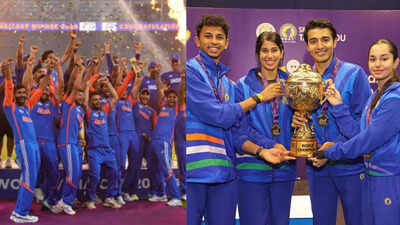
The eighth edition of the Times of India Sports Awards (TOISA) is set to take place on March 21, 2026, in Lucknow, celebrating the accomplishments and inspiring stories of India’s leading athletes from a wide range of sports. The TOISA 2025 awards will recognise performances recorded between January 1 and December 31, 2025, highlighting remarkable achievements at global championships and major international competitions. More than 45 award categories will honour both established sporting legends and rising stars who have made the nation proud.The winners will be selected by an esteemed jury of sporting greats, including Abhinav Bindra, PR Sreejesh, Mithali Raj, Devendra Jhajharia, Sharath Kamal, and Leander Paes, ensuring that the awards reflect credible and expert recognition of excellence in Indian sport.Team of the YearIndia Women’s Cricket TeamMajor Achievement in 2025ICC Women’s World Cup ChampionsThe “Women in Blue” etched their names in history by capturing their maiden ICC World Cup trophy. Defined by fearless batting and a clinical bowling unit, the team’s unbeaten run silenced critics and sparked a nationwide revolution in women’s sports, proving that the new era of global cricket belongs to India.India Men’s Cricket TeamMajor Achievements in 2025Won ICC Champions TrophyBecame Asia Cup (T20) ChampionsIn a display of absolute white-ball mastery, the men’s team secured a rare “Double Crown” in 2025. By conquering the Champions Trophy and reclaiming the Asia Cup, the squad demonstrated unparalleled strategic depth, producing match-winners in every high-pressure situation to reinforce India’s status as the world’s cricketing superpower.India Men’s Hockey TeamMajor Achievements in 2025Asian Cup ChampionsThe “Men in Blue” reclaimed their throne as the kings of the continent by winning the 2025 Asia Cup in Rajgir. Dominating the final with a 4-1 victory over South Korea, the team secured direct qualification for the 2026 World Cup. Under Harmanpreet Singh’s leadership, the squad blended Olympic-medal experience with explosive new talent to re-establish Asian supremacy.India Men’s & Women’s Kabaddi TeamsMajor Achievements in 2025World Cup Champions (Double Gold)India asserted absolute global dominance at the 2025 Kabaddi World Cup in Wolverhampton. The men’s team edged out a gritty England side in a 44-41 thriller, while the women’s team delivered a tactical masterclass to overwhelm the hosts 57-34. The “Double Gold” campaign proved that despite the sport’s global expansion, the heart of Kabaddi remains firmly in India.India National Shooting TeamMajor Achievements in 202513 Medals at the ISSF World ChampionshipsThe Indian marksmen and women delivered a precision-perfect performance in Cairo, finishing in the top three of the global medal tally. Led by breakout stars like Suruchi Singh, who set a new Junior World Record, and Samrat Rana, the contingent’s haul of 3 Golds and 10 other medals signalled India’s intent to dominate the range heading into the next Olympic cycle.India Women’s Cricket Team for the BlindMajor Achievements in 2025Inaugural Blind Women’s T20 World Cup ChampionsIn a landmark moment for inclusivity, India’s blind cricketers became the first-ever T20 World Champions. Their journey was a masterclass in resilience and sensory precision, sweeping through the tournament undefeated. This victory transcended the sport, transforming the athletes into national icons and setting a global benchmark for disability sports.India Squash TeamMajor Achievements in 2025Squash World Cup ChampionsReaching an unprecedented peak in racquet sports, the Indian squad clinched their first-ever Squash World Cup title. Combining veteran composure with youthful speed, the team navigated a grueling draw to lift the trophy in Chennai, marking 2025 as the year India officially became a top-tier powerhouse on the glass court.India Women’s Ice Hockey TeamMajor Achievements in 2025Bronze at the IIHF Women’s Asia CupDefying the odds and geographical limitations, the “Ice Tigresses” secured a historic maiden bronze at the IIHF Asia Cup. Competing against elite winter-sport nations, their podium finish is a testament to sheer grit and rapid technical evolution, marking the most significant milestone for winter sports in Indian history.

Banner Insert


Maniesh Paul jokes that his life peaked when he was 8 years old

0
Maniesh Paul jokes that his life peaked when he was 8 years old


Maniesh Paul jokes that his life peaked when he was 8 years old

Actor and television host Maniesh Paul shared a humorous and satirical post on his social media where he reflected on the idea of a “perfect life”.

He joked that the only time when everything looked truly in place was when he was 8 years old.

Taking to his social media account, Maniesh shared a stylish photograph of himself walking down a hotel corridor dressed in a black suit and smart glares.

The actor used the image to deliver a tongue-in-cheek write-up about life and responsibilities that are associated with adulthood.


View this post on Instagram


A post shared by Maniesh Paul (@manieshpaul)

The text on the picture read, “No debt. Ideal weight. 8 hours of sleep. Mental health on track. Right nutrition. Zero alcohol. This was my peak. I was 8. Enjoy!”

Along with the post, Maniesh captioned it: “Beat this.”

On the professional front, Maniesh kick-started his career in Delhi, as a host at various cultural events in schools and colleges.

He was then seen in Ghost Bana Dost in the role of a ghost. Maniesh, then went onto act in many serials such as Radhaa Ki Betiyaan Kuch Kar Dikhayengi, Zindadil, Ssshhhh…Phir Koi Hai and Kahani Shuru with Love Guru.

In Bollywood, Maniesh made his debut in a lead role of the computer geek Mickey in Mickey Virus.

The actor later appeared in Akshay Kumar and Katrina Kaif starrer Tees Maar Khan in 2010.

Maniesh was last seen in Sunny Sanskari Ki Tulsi Kumari. The film featured Varun Dhawan, Janhvi Kapoor, Sanya Malhotra, Rohit Saraf and Akshay Oberoi, and was directed by Shashank Khaitan and produced by Karan Johar.

The actor also is popular as a host, and has anchored various reality shows and also live Bollywood and television events.

This story has been sourced from a third party syndicated feed, agencies. Mid-day accepts no responsibility or liability for its dependability, trustworthiness, reliability and data of the text. Mid-day management/mid-day.com reserves the sole right to alter, delete or remove (without notice) the content in its absolute discretion for any reason whatsoever


Kerosene to be distributed mainly through ration shops

0
Kerosene to be distributed mainly through ration shops


Kerosene to be distributed mainly through ration shops

NEW DELHI: Kerosene oil, which has made a comeback for household use across several states and UTs, will be primarily made available through ration shops and, in some cases, from retail outlets of public sector oil marketing companies for cooking and lighting purposes. The Centre on Thursday allocated 48,000 kilolitres (kl) of additional kerosene to states on top of the regular quota of 1 lakh kl for use as cooking fuel.Most of the states have phased out kerosene use in the last 10 years, and consumers will have to either dig out their old stoves or hunt for new ones.

Centre Urges Citizens To Avoid Panic Booking As India Assures Stable LPG, Fuel Supply Amid War

Similarly, several eateries that have moved from coal-fired tandoors to gas-based ovens will now have to go back to the old fuel and fix the tandoors.Officials said the provision of increased allocation has been made considering that it’s relatively simple to manufacture the fuel on an industrial scale by refining crude oil and can be used for cooking.“It was found to be an easy additional source for fuel for cooking purposes when we looked at alternative options in the light of reduced availability of LNG due to the conflict in West Asia. There have been demands from some of the coastal states to increase the allocation since a lot of kerosene is used by fishing boats,” said an official.A petroleum ministry circular said that the scale and criteria for distribution of kerosene will be decided by state and UT govts. They will also ensure that the kerosene allocated for PDS isn’t diverted for adulteration of petrol, diesel or for any other “unintended use”. They will also consider prioritising allocation of the fuel to rural households.It added that states and UTs may lift the entire allocation of kerosene within 45 days, and no carry-forward would be allowed for unlifted quantity. The ministry said that in kerosene-free districts, the food and civil supply department can identify 1-2 rural locations in every district for delivery and distribution of PDS kerosene.There are about five lakh ration shops across India. “We are fully prepared to take up this task and had made the request to govt early this week. This will bring some relief to the poor and rural population. The oil marketing companies will provide kerosene to states, and it will then be delivered to ration shops for sale. In most cases, around half a litre per capita per month would be distributed,” said Biswambhar Basu, national general secretary of All India Fair Price Shop Dealers’ Association.


Sanjay Manjrekar gives a blunt reaction to India`s T20 World Cup win

0
Sanjay Manjrekar gives a blunt reaction to India`s T20 World Cup win


Sanjay Manjrekar gives a blunt reaction to India`s T20 World Cup win

Sanjay Manjrekar has brewed a fresh storm by claiming that India`s T20 World Cup wins cannot be compared to their ODI WC wins under Kapil Dev in 1983 and MS Dhoni in 2011. The former Indian cricketer`s comment came after India celebrated a historic World T20 final win in Ahmedabad.

Manjrekar took to X to express his thoughts on India`s T20 World Cup win. The cricket commentator declined to place any of the three T20 World Cup victories in the same breath as the ICC ODI World Cups.

“In time, we need to put these world titles given out every year in proper perspective. India’s T20 WC wins don’t come remotely close to their 50 overs WC wins of 1983 under Kapil Dev and 2011 under Dhoni in terms of its pure challenge & its sanctity,” Manjrekar posted.

With the World T20 win, India moved closer to Australia`s total of 10 ICC trophy wins. India is now at 8, with a record three T20 World Cup titles to their name. However, Australia have won six ODI World Cups, compared to India`s two.

How India won a record third T20 World Cup

India defeated New Zealand by 96 runs in the final of the T20 World Cup 2026. The Suryakumar Yadav-led team lost just once throughout the tournament, against South Africa in Super-8, on their way to the title. India faced the West Indies in a must-win match and came up trumps thanks to Sanju Samson`s match-winning innings. This was followed by a high-scoring thriller against England at the Wankhede Stadium in the semi-final, where another Samson masterclass cemented India`s place in the final against New Zealand. Abhishek Sharma and Sanju Samson starred with the bat in the final before Bumrah delivered his magic as India secured back-to-back T20 World Cup wins.

India broke various records en route to the title win. Team India became the first team to successfully defend their World T20 crown, having started the tournament as the defending champions. Also, they became the first host nation ever to win a T20 World Cup with their triumph in Ahmedabad in the final. Suryakumar Yadav joined the list of MS Dhoni, Kapil Dev, and Rohit Sharma as India`s World Cup-winning captains.