Tuesday, September 29, 2026
Home Blog Page 1338

Kerala nurses on war path over long pending pay revision

0
Kerala nurses on war path over long pending pay revision


On a sultry Tuesday morning (March 10, 2026), before life in the city came to a standstill, a few nurses at a super specialty hospital located on the banks of the vast Kochi backwaters in Kerala’s Ernakulam district arrived at the entrance of their workplace.

Instead of rushing to see their patients, as they normally did, the nurses, dressed in their usual attire, waited for others to join them. As the minutes passed, more nurses arrived and the crowd began to grow.

Someone brought a banner with the name of the United Nurses Association, a group of nurses from private hospitals in the state, printed on it in big bold letters. Some other people started sloganeering. Their voices echoed throughout the luxury hospital building, with some protesters even waving the organization’s white flag.

similar scenes keep happeningThousands of nurses in some other private hospitals in the state have also been protesting for the past few weeks demanding a basic monthly salary of ₹40,000. Other demands include better staffing levels and patient-carer ratios.

As the day progressed, the crowd of nurses outside the hospital increased significantly. The summer sun started setting with its full intensity. However, the scorching heat could not defeat the resolve of the nurses as the sloganeering continued with renewed vigour.

Standing amidst the crowd was Harsha P. Jacob, waving the loose fabric of her cotton kurta to get some air. She was there with more than a hundred nurses who were protesting. Nine months pregnant, she was due to start her maternity leave in a few days.

‘long overdue’

If she had not come to the protest, her friends would have understood. But this was one opposition she could not stay away from. So day after day, from morning to evening, she stood, raising her voice along with the rest of her colleagues, demanding a raise. “The pay revision has been pending for a long time. We are struggling to survive. The salary is very low and we have to run our family on this,” says Harsh.

are campaigning heavilyIn calling for a pay increase, protesters also said they are not shirking their responsibilities to the patients who have been left in their care.

Rahul Parakkaran, a male nurse at the hospital, says, “It’s not that we don’t care about the patients. It hurts us that we have to do this, when our patients are inside we stand here and don’t do our duty; they are like our family.”

These were lines that many other nurses later repeated in unison. The nurses say they were forced to go on an indefinite strike after their repeated appeals for wage revision fell on deaf ears for years.

“We have been forced to do this. Some of our colleagues are still taking care of the patients inside, ensuring that the care of the patients remains unaffected,” assured Rahul, who works as a team leader of nurses in the operating theater at the hospital.

As of Wednesday, 429 private hospitals across the state expressed their desire to revise the minimum wage to ₹32,700. | Photo Courtesy: H. Vibhu

As the protest entered its second day, the nurses decided to adopt some innovative protest methods that would increase their visibility and garner public support. Rahul told them that they would collect donations among themselves and make porridge, a symbolic gesture to show the hospital management that the community is struggling to survive in the current economic conditions.

The crowd of nurses listened attentively as Rahul, along with other UNA officials, explained the difficulties faced by their community. They raised slogans calling for a better tomorrow.

This act had an electrifying effect on the protesters. The growing crowd of agitators started moving towards the hospital. They shouted: “We want justice!”

As they raised slogans and marched towards the hospital, the security personnel immediately stopped them. When vehicles entering and exiting the hospital had difficulty moving smoothly, the protesters were allowed inside the gate, where they sat down and continued their protest.

Sheetu Antony, a native of Kottayam, has been working at the hospital for more than nine years.

“I came with my uniform,” Sheetu says, patting the bag on her shoulder. “We are ready to resume work once the hospital agrees to our terms,” she says.

struggle of freshers

“The minimum wage should be increased. We are here because no one cares about how much we are being paid. It is only after this protest that people are realizing how low our salaries actually are. I see how much the new joiners have to struggle; they are not remunerated well for the work they do. I am also here for them,” she says.

KC Sijo, a fresher who recently joined the hospital, interrupts and says how he has been put on probation for 1.5 years.

He further said, “It is quite difficult for newcomers. We are underpaid everywhere. My friends in other professions earn higher salaries. We chose this job because of our love for the profession. But at such low salaries, it is difficult to survive in this economy.”

According to the association, the salary has not been increased since 2019. The last pay revision was implemented in April 2018, after which the salary increased by approximately ₹20,000.

Jasmine Shah, national president of UNA, says, “Wage revision should be done every three years or at least every five years. We have been demanding the revision for a long time. We had to resort to strike as our demands were not being heeded.”

He further said, “The current salary in the private sector is inadequate to take into account the rising cost of living. It is not even at par with government hospitals. Nurses in a government hospital get around ₹60,000 per month for the same services that we provide in private hospitals.”

token strike

Before taking the step, the nurses had gone on a statewide symbolic strike on February 21. With their demands unheeded, the nurses went on strike on 4 March. During this strike, one-third of the nurses in private hospitals continued to provide their services.

The widespread agitation prompted the state government to issue a draft notification to revise the minimum wages for employees in the private health sector. It has proposed a revised salary for GNM/B.Sc. Staff Nurses ranging from ₹25,450 to ₹30,800. However, the association and the nurses are not satisfied and have decided to continue their strike.

UNA launches indefinite strike on Monday (March 9, 2026). The changed scenario after the government notification forced nurses to also revise their strategies. It was decided that the nurses who were earlier asked to stay back and perform their duties would join the protest.

Nevertheless, a portion of the nurses who were part of the association still showed up to hospitals to assist in critical care, even as protests intensified across the state.

“These nurses are providing their services so that the care of patients in critical emergency care is not disrupted,” says Rahul.

“We gave private hospitals time to transfer patients to other hospitals if needed,” says Shah.

Opinion of hospital owners

At the same time, hospital owners consider the strike illegal and their demands unacceptable.

Anwar M. Ali, general secretary of the Kerala Private Hospital Association, says, “The strike is illegal because the UNA did not give the mandatory 14-day notice before starting the protest. There is a minimum wage structure that has to be followed. You cannot demand a minimum wage of ₹40,000. How can small hospitals bear this increased financial burden? This may lead to closure of small hospitals.”

They argue that increased wages could ultimately make health care more expensive in the state.

He added, “If such high wages are paid, hospitals may have to pass the cost on to the public, making treatment more expensive and potentially disrupting the health care sector.”

As of Wednesday (March 11, 2026), 429 private hospitals have agreed with UNA to revise the minimum wage to Rs 32,700, points out Sha, while the association represents nurses in only 490 private hospitals in the state.

INTUC State President K. Chandrasekaran promised his supportFor nurses, employees in the private educational and health sectors were exploited without thought.

No standards apply to medical treatment in private hospitals, and many of them exploit patients. However, most of these hospitals pay only low salaries to nurses,He says.

CITU national vice president and trade union leader K. Chandran Pillai says private hospitals are required to comply with the minimum wages notified by the government.

The demands of the striking nurses include a basic monthly salary of ₹40,000, improvement in staffing levels and patient-carer ratio. | Photo Courtesy: H. Vibhu

“In institutions where minimum wages are not being implemented, unions can intervene and put pressure on the management to implement wage revisions,” he says.

fear of the future

Even when striking at work, protesters also fear that they will be harassed if they resume work.

“This is a fear in the minds of most nurses. But we are here on the protest path because we cannot survive on the low salaries. Now it is time that we are compensated properly,” says Anita Mathayi, a nurse for more than two decades.

“Don’t call us angels, treat us like humans,” protesters demanded as the strike entered another grueling day.

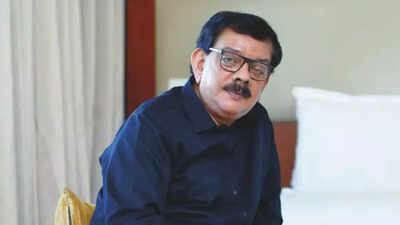
Priyadarshan criticises large entourages on a film set

0
Priyadarshan criticises large entourages on a film set


Priyadarshan criticises large entourages on a film set: 'I will see 30 people who are doing nothing on a set and still getting money'

Stars bringing in huge entourages has been the talk of the town for a while now. t. In recent years, it has become common for actors to arrive on set with teams that can sometimes include as many as 20 people, along with demands for multiple vanity vans. Many producers and some actors also have spoken about it and voiced their concern as this increases the overall film’s budget and is a burden for the makers. Now filmmaker Priyadarshan has also opened up on. According to the veteran filmmaker, this practice not only inflates production costs but also disrupts the working environment on set.Priyadarshan, who recently worked on films such as ‘Bhooth Bangla’ starring Akshay Kumar and ‘Haiwaan’ featuring Saif Ali Khan, said he feels drained by the sheer number of people present during shoots.In an interview with The Hollywood Reporter, the filmmaker explained how the crowd around actors often interferes with the filmmaking process. “I only get exhausted seeing the people around actors. On a floor, if I am working with three actors, I will see 30 people who are doing nothing and just standing around. I cannot see my visuals through the camera. They are blocking my view. I have never seen this in any other place than Bollywood.”The 69-year-old director further criticised the practice, pointing out that many individuals on set contribute little while still being paid. “So many people come onto the set, do nothing and still make money. This exhausts me. I hate it. It’s the only thing I dislike about Bollywood.”Recently, trade analyst Komal Nahta had also spoken on this issue. Speaking to Faridoon Shahryar on his YouTube channel, Nahta recalled witnessing a star arriving with a large team even for a simple event appearance in Jodhpur. “Even for an appearance, an actor will come with eight to nine people. A big star came with a costume designer, social media manager, photographer, two bouncers despite us providing security, a makeup artist and a hairdresser. He literally came wearing a suit, got down from the flight and reached the venue,” he said.Nahta went on to highlight how even the smallest tasks can lead to hefty charges. “And the costume designer, just to justify her payment…” he said, before demonstrating the act of adjusting a collar. According to him, the stylist simply fixed the actor’s collar and charged a substantial fee for it. “That is all she did, and the organiser had to pay her Rs 20,000,” he said.


Irfan explains how Samson`s presence for CSK against RR will be advantage

0
Irfan explains how Samson`s presence for CSK against RR will be advantage


Irfan explains how Samson`s presence for CSK against RR will be advantage

The upcoming edition of the Indian Premier League (IPL) is all set to kick off from March 28. So far, the schedule of only the first 20 matches has been announced due to the state elections.

Ahead of the league, Chennai Super Kings (CSK) is all set to lock horns with Rajasthan Royals (RR) on March 30th at the Assam Cricket Association Stadium in Guwahati.

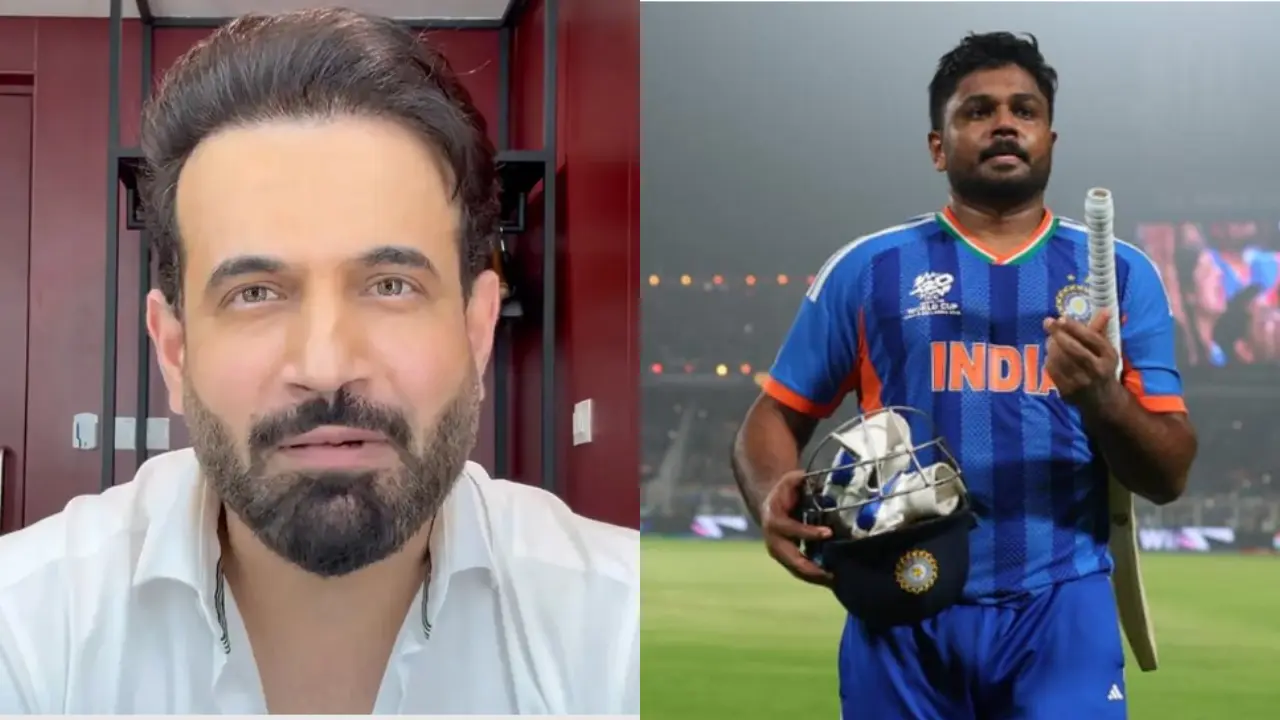
Ahead of the match, former Team India cricketer Irfan Pathan feels that Sanju Samson, who has been traded to CSK from RR, will have an important role to play. He said that the Kings will also seek the inside information from the Kerala-born cricketer.

“Samson`s presence will make a lot of difference for CSK because no one knows the Rajasthan Royals better than him. From that perspective, you will get inside information from Sanju about how that team plays, how they approach the powerplay, the middle overs, their mindset and even their bowling as well,” he said.

The former cricketer then said that Sanju will be a huge advantage for Chennai, considering the form and experience he has of playing in Guwahati. He expressed excitement to see how CSK`s young players perform.

“All the youngsters in Rajasthan Royals have played with and under Sanju, so he will be a huge advantage for CSK, not just in terms of the form he will carry from the T20 World Cup, but the experience of playing in Guwahati will also come in handy for him in the first game. I am very excited to see how CSK are going to fare this season because they have brought in some very exciting young players,” said Pathan.

Chennai Super Kings` Fixtures

March 30 (Mon) Rajasthan Royals vs CSK, ACA Stadium, Guwahati, 7:30 pm

April 03 (Fri) CSK vs Punjab Kings, MA Chidambaram Stadium, Chennai, 7:30 pm

April 05 (Sun) RCB vs CSK, M. Chinnaswamy Stadium, Bengaluru 7:30 pm

April 11 (Sat) CSK vs Delhi Capitals, MA Chidambaram Stadium, Chennai 7:30 pm

Chennai Super Kings` squad for IPL 2026

Ruturaj Gaikwad (C), MS Dhoni, Sanju Samson, Dewald Brevis, Ayush Mhatre, Kartik Sharma, Sarfaraz Khan, Urvil Patel, Anshul Kamboj, Jamie Overton, Ramakrishna Ghosh, Prashant Veer, Matthew William Short, Aman Khan, Zak Foulkes, Shivam Dube, Khaleel Ahmed, Noor Ahmad, Mukesh Choudhary, Nathan Ellis, Shreyas Gopal, Gurjapneet Singh, Akeal Hpsein, Matt Henry, Rahul Chahar.

(With ANI Inputs)


Yami Gautam to appear in key hospital scene cameo in Dhurandhar 2

0
Yami Gautam to appear in key hospital scene cameo in Dhurandhar 2


Yami Gautam to appear in key hospital scene cameo in Dhurandhar 2

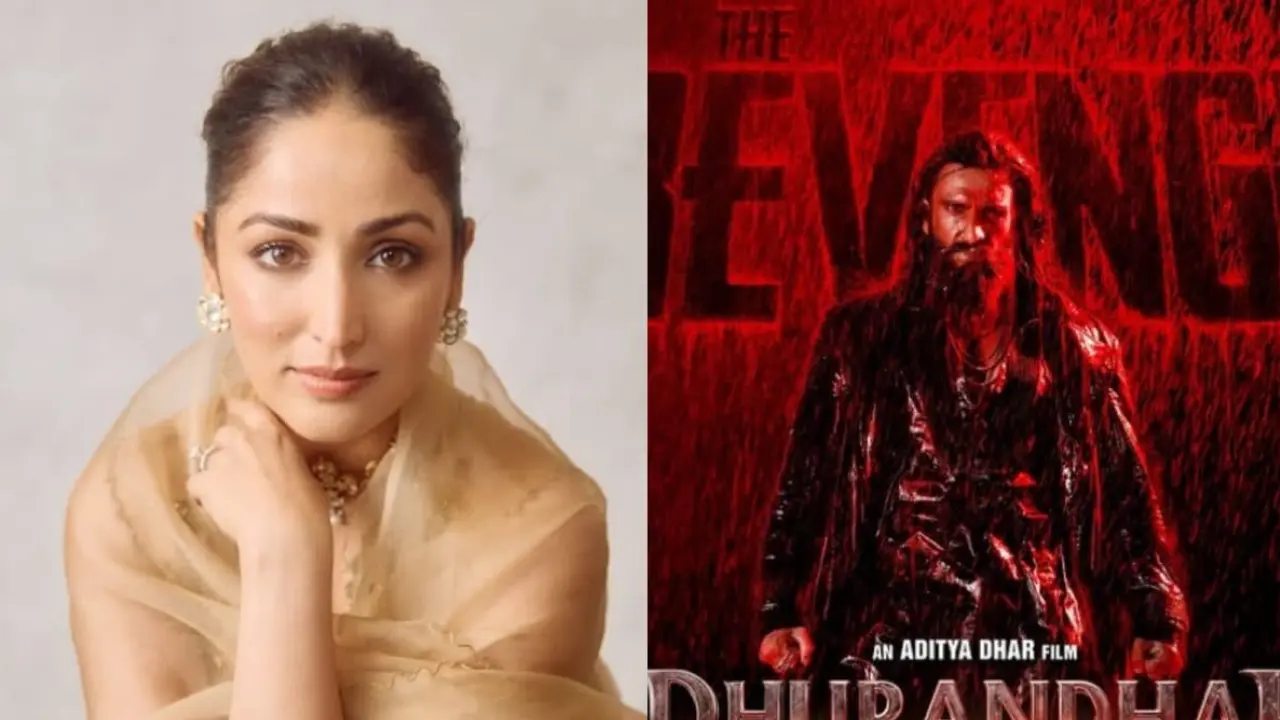
Actress Yami Gautam is reportedly set to make a special cameo appearance in the upcoming espionage thriller Dhurandhar 2, adding an interesting twist to the highly anticipated sequel starring Ranveer Singh. While the makers have kept most details about the film under wraps, new reports suggest that Gautam’s role will be part of a crucial hospital sequence that plays an important role in the story.

Yami Gautam to make a smashing cameo in this scene

The spy thriller is directed by Aditya Dhar and is expected to expand the narrative of the first Dhurandhar film while bringing new layers to the storyline. According to reports, Yami’s appearance will not be a brief moment. Instead, her cameo is said to take place within a pivotal hospital scene that significantly pushes the plot forward.

Sources indicate that the hospital sequence is designed to introduce an important turning point in the film’s narrative. The scene is expected to carry both emotional and strategic weight, suggesting that Gautam’s character may be connected to a major development that affects the protagonist’s mission.

Interestingly, the cameo is also said to create a narrative connection with the blockbuster film Uri: The Surgical Strike, which was also directed by Aditya Dhar and starred Vicky Kaushal. Reports suggest that the cameo could subtly link the two cinematic worlds, possibly hinting at a broader storytelling universe centred around themes of national security and covert operations.

The film already features a strong ensemble cast that includes Sanjay Dutt, R. Madhavan and Arjun Rampal alongside Ranveer Singh. With such a powerful lineup, the addition of Yami Gautam’s cameo has further increased curiosity among fans eager to see how her role fits into the high stakes narrative.

All about Dhurandhar

Dhurandhar 2 continues the story of Hamza, a covert Indian operative played by Ranveer Singh. The sequel is expected to explore deeper espionage operations, cross border conflicts and the protagonist’s personal journey as he navigates dangerous missions and complex challenges.

The film is scheduled for a theatrical release on March 19, 2026 and anticipation is already building following the early buzz surrounding the project. As excitement continues to grow, Yami Gautam’s mysterious hospital scene cameo has become one of the most talked about aspects of the film.

Although the makers have not officially revealed the full details of her character, reports suggest that Gautam’s appearance could leave a lasting impact on the story and possibly set up future developments within the franchise.


Rakul Preet, Jackky Bhagnani talk about new venture to bring global brands to India| Business News

0
Rakul Preet, Jackky Bhagnani talk about new venture to bring global brands to India| Business News


Actors Rakul Preet and Jackky Bhagnani are continuing their partnership in the field of entrepreneurship, collaborating with Invision Brands to bring global brands including easyGym, 5àsec and Blenz Coffee to India. Invision operates as part of the Franchise India Group.

Actors Rakul Preet and Jackky Bhagnani, and Franchise India Chairman Gaurav Marya,

The actors, along with Gaurav Marya, Chairman, Franchise India Group, made the announcement at a special launch event held in Mumbai. The partnership is expected to roll out the three brands – easyGym, a fitness chain from the UK-based easyGroup recognised for its modern gyms and accessible pricing, 5àsec, the French textile care and dry-cleaning brand, Blenz Coffee, the Canadian café brand from Vancouver, popular for its handcrafted beverages – across major Indian cities through a franchise network.

In a conversation with HT following the official announcement, actors Rakul Preet and Jackky Bhagnani, and Franchise India Chairman Gaurav Marya, spoke about what drew them to the venture, the vision behind it, and the opportunities they see in India’s growing lifestyle and wellness sectors. They further highlighted how the partnership aims to create new avenues for first-time entrepreneurs through the franchise model.

At the outset, would you like to elaborate on this venture and tell us about the brands that we will be seeing in India as part of it?

Marya: This is about Jackky and Rakul investing into InVision. InVision is a platform or a company which is bringing global brands to the Indian subcontinent, Gulf countries and Southeast Asia.

So we announced three brands. One is 5àsec, which is the world’s largest dry cleaning company, comes from France, runs in 40 countries, 2,000 stores, by far the largest company with 60 years of history.

The second brand we’re bringing in is easyGym, which is a part of easyGroup from Europe and runs gyms in London and Paris. We already opened up the first one in NCR, which is operational in Model Town. And then the third is Lenz Coffee, which comes from Canada, again a 33-year-old brand, very well known and established in Canada.

So we’re very excited at Franchise India, we are super excited to have them (Rakul and Jackky) as partners because they both not only just believe in these three concepts, but they are true entrepreneurs, very committed to building businesses as co-founders and work like that.

What is the one part that piqued your interest – was it personal or professional? If it is something that is personal, what is it that made you invest your time and believe in it?

Jackky: I think for all three it’s personal, and I’ll tell you why. I’ve lost 75 kgs, so for me, working out in the right environment is like taking a shower. If I don’t work out, then I feel like I’ve not showered. It’s that second nature to me now.

Coffee, that’s the only vice I have, I drink a lot of coffee. So as soon as I heard about Lenz Coffee and the blends which they have, we were very, very excited. And for 5àsec, we all send our stuff for laundry, but when we heard the statistics – that India’s market is two and a half lakh crores, out of which 95% is unorganized. So there’s a huge scope for someone like 5àsec to come in and do a billion dollar valuation.

5àsec might be bringing in a relatively new concept. But for cafes and lifestyle, the market is already very crowded. So what do you think is the gap that these international brands would be filling?

Marya: I mean, if you look at all three categories, for per capita consumption in India, we are the lowest and we feel that there is still a big opportunity out there. If you look at just the coffee space, coffee is directly proportional to the Infra story of India. India has 240 airports, we’re building another 100.

So just travel retail, there will be 340 airports. And so in Blenz, we are doing all travel retail, we’re doing corporate infrastructure, we’re doing capital locations like campuses or hospitals and the likes of them. And then we’ll also do high street.

Similarly, in gyms, there is not so much, only the large company which is now owned by Tata. We are the second or the third largest player in the same space. So we feel that there’s not much competition. As far as national brands are concerned, we have only four brands in India, in the fitness space. And there’s still a big wide market open.

Rakul, you have already co-founded a brand. We see a lot of celebrities stepping into entrepreneurship. Why do you think you’re stepping into the lifestyle and wellness space at this point, what pushed you towards it?

Rakul: I think the first time I ventured into entrepreneurship was back in 2015. Films are my first love, but I’ve always been someone who’s believed that why should you do only one thing? And when I met Jackky, I think he’s also individually been an investor and both of us have the same mind, the process of investing or doing partnerships in the fields that we’re passionate about.

Now, why is it important? Well, it’s passion and people who know us know that we’re very wellness driven to begin with. If we can have that small impact on society by bringing that change, India is shifting towards wellness. I think the way the youth and that shift that’s happening right now, especially post the pandemic is very evident.

I think this is why when you said that it is a crowded market, I don’t think it is as compared to the population that we have. So it’s a great space to grow in.

And we are absolutely very, very passionate about it. He’s lost 75 kilos. I’m an army girl. Fitness has always been a way of life. Both of us are coffee lovers.

Also, the spending ability is increasing and people are buying expensive clothes. There is no organized sector to sort of get your laundry done. So I think the consumer market is absolutely changing in the way they see things.

What is the rollout plan for these brands and can we see them in tier two and tier three cities also?

Marya: We are starting from a tier two city, which is Chandigarh. Blends Coffee will open first in Chandigarh and we chose that city because we feel that it also appreciates lifestyle. But we’ll go to all cities, all major cities, all leading shopping malls of India.

5àsec is opening next month in Hyderabad in Jubilee Hills so this is a state of art location. easyGym has already started. We feel that between these three brands, 250 locations will open up in the first five years. So that’s a good rollout, but one by one. And each location also has to sustain and also to give good service to end customers.

For local and first-time entrepreneurs, how do you think this will create more opportunities?

Jackky: The way the youth of India is thinking today, the 20-year-olds are way more aware of what they want to do, what they don’t want to do. Everyone would prefer if we could be an entrepreneur rather than do a nine to six job. All the brands, which Invision Brands is bringing will give birth to a lot of young entrepreneurs.

And I feel that Mr. Marya and Rakul and me, we come from a belief that while making a lot of wealth, if we can do well for the country, that’s the lethal combination we want to build.

For Rakul and Jackky, why did you choose to partner with Invision? What drew you to partner with them?

Rakul: I think we’re both believers that it’s always the person over anything else. Our interactions with Mr. Gaurav have been very, very exciting and I think the passion that he brings into anything that he does and his, you know, obviously history of the work that he’s done and his Franchise India has done. So I think all of that together, interesting conversations, passion driven thoughts led to this.

These are established international brands. How do you think these global brands will adapt to the preferences of Indian consumers while retaining their own identity?

Marya: All three brands which we have chosen are fit for India as they are globally, because our Indian customer is also very aware. We opened up Easy Gym. It has the best equipment, best in class use matrix. And similarly, when we’re doing coffee, we will have the best blends and probably roasted in India. We have chosen roasting in India, we want to be also offering Indian coffee.

With 5àsec, we have the best technology. We have the number one fabric care company.

So we understand fabrics. So we feel that consumers who are looking for a high quality service, there will be some feedback on further adaptability for making it even more inclusive. But we’ll continue to bring those changes.


Somalia warns against any Israeli base plans on Somaliland | US-Israel war on Iran News

0
Somalia warns against any Israeli base plans on Somaliland | US-Israel war on Iran News


Somalia has warned that its territory cannot be used as a launching pad for military operations, after two media reports that said Israel is planning to establish a military base in the breakaway region of Somaliland, directly across the Gulf of Aden from Yemen.

“Somalia does not want to see its territory pulled into external confrontations or used in ways that could further destabilise an already sensitive region,” Ali Omar, Somalia’s state minister for foreign affairs, told Al Jazeera on Thursday.

Recommended Stories

list of 3 itemsend of list

The warning from Mogadishu comes after US outlet Bloomberg and Sweden’s public radio Ekot reported this week about Israeli plans for a military installation near the strategic port city of Berbera on the Gulf of Aden.

The reports come as the US‑Israeli war on Iran edges towards its second week, with the Strait of Hormuz effectively closed and the Houthis warning that they are prepared to enter the conflict.

In comments to Bloomberg, Somaliland’s presidency minister, Khadar Abdi, said Somaliland would pursue a “strategic relationship” with Israel that “encompasses a lot of things.” He added that the possibility of an Israeli base had not yet been discussed yet, but that it “will be analysed at some point.”

Omar said the “Federal Government is the only authority empowered to enter into international security or military arrangements on behalf of the country.”

“Any discussions about foreign military facilities on Somali territory that take place outside that framework simply have no legal standing,” he said.

Somaliland declared independence from Somalia in 1991, but had not secured recognition from any UN member state until Israel’s move to recognise the breakaway region in December. Somalia, however, continues to claim Somaliland, which has governed itself independently for more than three decades.


Somaliland officials have not divulged what was agreed upon with Israel when they established full diplomatic ties in December.

On January 1, its Ministry of Foreign Affairs flatly denied allegations from the Somali government that any military arrangements were under discussion with Israel, insisting its engagement with Israel was “purely diplomatic.” Shortly after, a ministry official told Israel’s Channel 12 that a base was “on the table and being discussed”.

In February, Khadar Hussein Abdi, Somaliland’s minister of the presidency, told the news agency AFP he “could not rule out” allowing Israel to establish a military presence.

Israel recognised Somaliland as an independent state on December 26th, becoming the first country to do so after more than three decades of failed bids by the breakaway region.

The Somali minister’s remarks come as the US-Israeli war on Iran escalates. The Strait of Hormuz, through which about 20 percent of global oil and gas supplies transit, has effectively been closed amid Iranian threats of attacks on shipping.

Elsewhere in the region, Israel has intensified attacks on Lebanon, killing at least 687 people and wounding more than 1,500, according to Lebanese authorities. It launched the attacks last Monday after the Lebanese armed group Hezbollah, a close Iranian ally, fired rockets in retaliation for the US-Israeli killing of former Iranian Supreme Leader Ali Khamenei.

Yemen’s Houthis, another key ally of Tehran, have so far not been directly involved in the war, but they have said they are prepared to enter the conflict.

The group, which controls northern, western and central Yemen, has previously warned against an Israeli presence in Somaliland, describing it as a “hostile stance” and “legitimate target”.

Amid the growing focus on shipping lanes in the Middle East, attention has also turned to the Bab al-Mandeb Strait, a narrow waterway linking the Red Sea with the Gulf of Aden and the Indian Ocean, through which roughly 12 percent of global trade passes.

Yemen’s Houthis have previously enforced a blockade on Israel-linked ships in the area in support of Palestinians in Gaza during Israel’s genocidal war.

The US embassy in Djibouti this week repeated a warning to US citizens against being near Camp Lemmonier, the US’s largest base in Africa, a sign of concern that the conflict could spread.

“The Red Sea and the Gulf of Aden are critical corridors for global trade and regional security, and instability there affects the entire Horn of Africa,” Omar told Al Jazeera.

“When regional tensions rise, civilian populations are always the most vulnerable,” Omar told Al Jazeera, adding that, “steps that could expose Somali communities to unnecessary risks or draw them into wider geopolitical conflicts are not in the interest of our people”.


$256K in, what’s next for Nepal? Competitive cricket, infra boost and a hand from India | Cricket News

0
6K in, what’s next for Nepal? Competitive cricket, infra boost and a hand from India | Cricket News


$256K in, what’s next for Nepal? Competitive cricket, infra boost and a hand from India
Nepal’s Sompal Kami celebrates the wicket of Scotland’s Tom Bruce during the T20 World Cup cricket match between Nepal and Scotland in Mumbai.

NEW DELHI: Rome wasn’t built in a day. It is a proverb so weathered by time it often feels like a cliché, yet for the burgeoning cricketing nation of Nepal, it remains a North Star. Writing on his blog, the American author James Clear, famous for his work, “Atomic Habits”, takes the adage further: “I think it’s better to remember the other side of this story: Rome wasn’t built in a day, but they were laying bricks every hour.“For Nepal, the latest brick arrived in the form of a bank transfer. The International Cricket Council (ICC) on Wednesday announced that $256,154 would be funnelled into the accounts of the Cricket Association of Nepal from the 2026 T20 World Cup prize pool. While the sum may seem meagre to the giants of the sport, it exceeded the earnings of established associates like Namibia, Canada, and Oman.

T20 World Cup final: Fans in Ahmedabad go wild | India create history

“Actually, Rome is just the result; the bricks are the system,” Clear further notes. “The system is greater than the goal.”Nepal’s recent campaign was a study in the “Jekyll and Hyde” nature of a rising power. There was the heartbreak of a four-run loss to England on their opening matchday, two back-to-back humblings against Italy and West Indies, and an eye-catching seven-wicket victory over Scotland.

Nepal Cricket

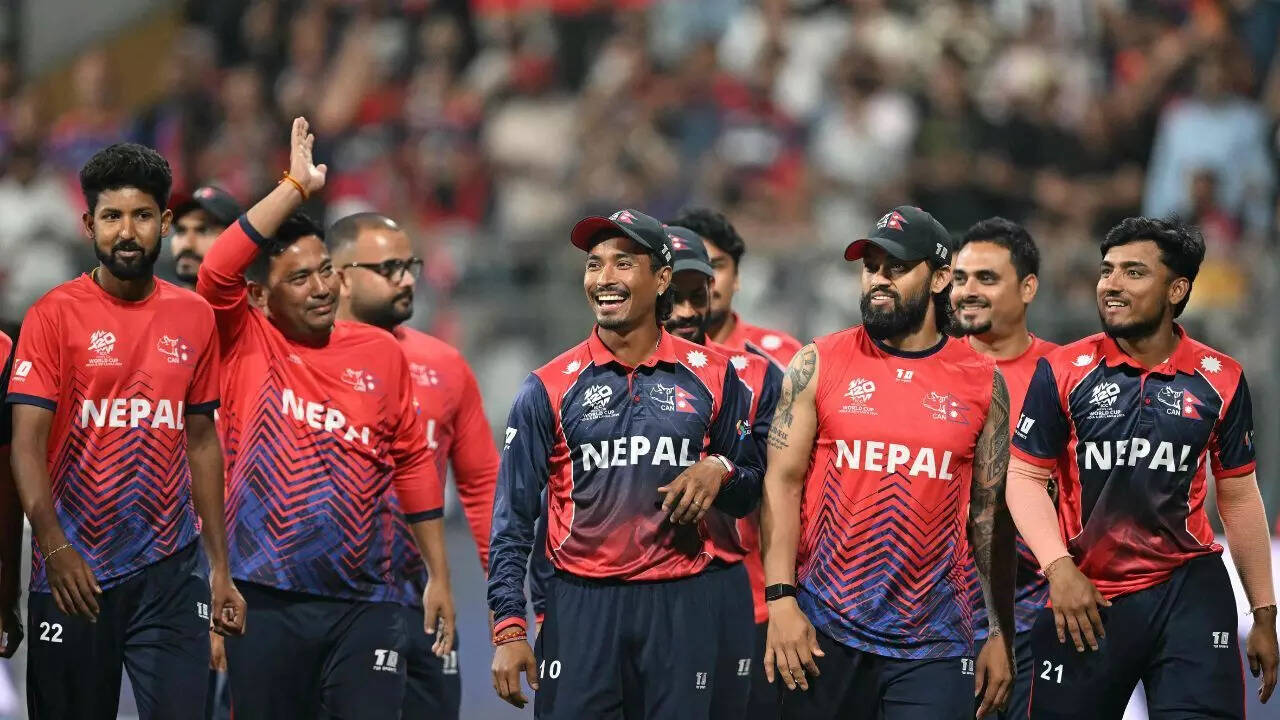
Nepal’s players greet supporters after their victory in the 2026 ICC Men’s T20 Cricket World Cup group stage match against Scotland at the Wankhede Stadium in Mumbai on February 17, 2026. (Photo by Punit PARANJPE / AFP)

But as the dust settles on their third World Cup appearance, a question still lingers in the air. How does a nation fueled by the world’s most passionate fans turn “almost” into “always”?

The Jekyll and Hyde of the global stage

To understand Nepal’s performance, one must look past the scorecard. For Umesh Patwal, the former head coach of Nepal, the tournament was about making a statement that transcends participation.

If we can get people like Kushal Bhurtel, Dipendra Airee, or Rohit Paudel to start finishing games, that gap will close. They do not have enough match-winners at the higher level yet.

Umesh Patwal | Former Nepal coach

“I always feel that to make a statement, you have to win a match,” Patwal tells TimesofIndia.com during an exclusive conversation. “People only follow the champions. They finished very well in the last game on a very high note, which is a great thing.”However, the “hurdle” remains the final inch. Nepal came within the barest of margins of upsetting South Africa in their 2024 campaign and pushed England to the brink this time.According to Patwal, the missing ingredient isn’t talent, but the clarity of roles in high-pressure moments.“Sometimes it’s just about knowing who needs to take that extra effort to finish the game,” Patwal explains. “They are not sure who is supposed to be the match-winner. Once they start believing, like Sandeep [Lamichhane] is supposed to be the main bowler, and then the batting must follow. If we can get people like Kushal Bhurtel, Dipendra Airee, or Rohit Paudel to start finishing games, that gap will close. They don’t have enough match-winners at the higher level yet.“

nepal cricket

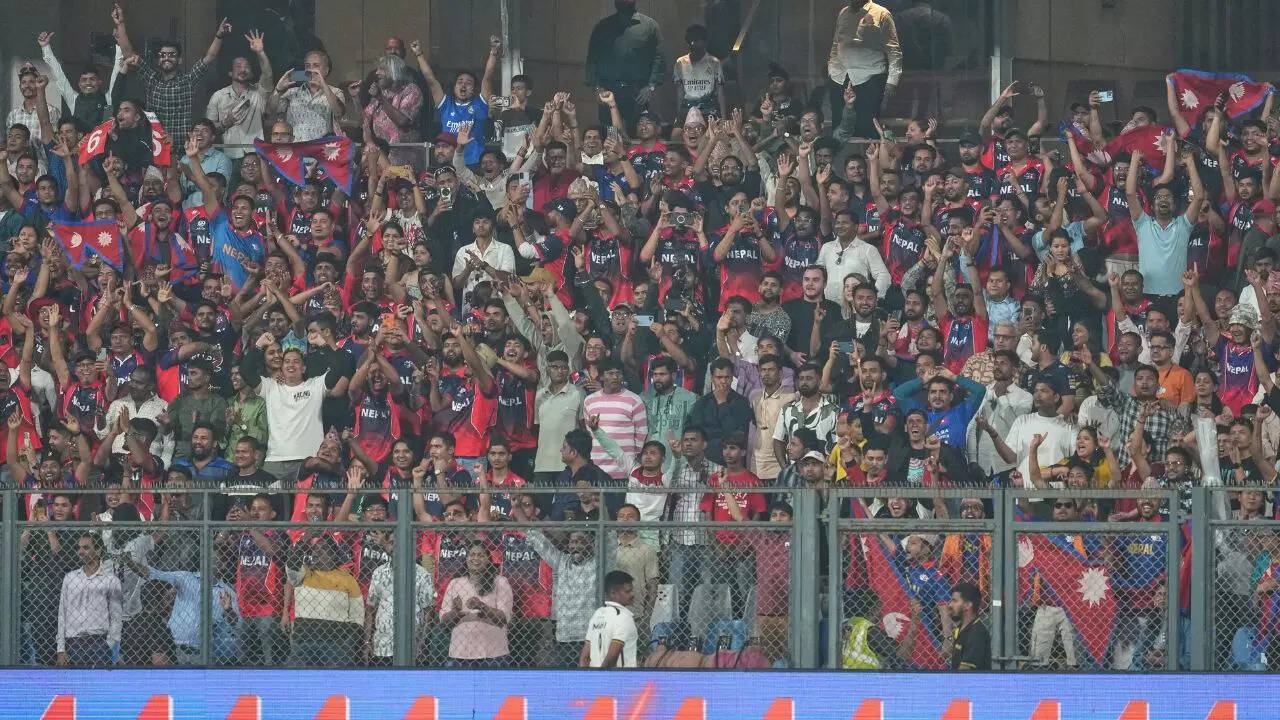
Nepalese cricket fan cheer after their team won against Scotland during the T20 World Cup cricket match in Mumbai, India, Tuesday, Feb. 17, 2026.(AP Photo/Rafiq Maqbool)

Gyanendra Malla, the former captain and a titan of Nepali cricket, shares this bittersweet sentiment.“I was expecting a bit more, actually,” Malla admits. “After the first match, expectations were very high. We couldn’t show our 100% potential in the middle games, but the way we played the first and last match, that is the brand of cricket we want to show the world.”Meanwhile, Nepal’s captain Rohit Paudel was, on the one hand, disappointed but he called it a good exposure for his team. “I think good exposure, good experience playing in this World Cup. We wanted to qualify for the second half, but unfortunately we could not do that. So hopefully next time,” he told reporters after Nepal’s historic win against Scotland. He added: “It took us 12 years to win a World Cup game. I’ll place it higher.”

We need a longer season. The school cricket and domestic base should be a seasoned culture, not just a 15-day tournament. We need to work on multi-day formats. That is how you build game awareness.

Gyanendra Malla | Former Nepal captain

The Nepalese structure: From Districts to Departments

If the “system is greater than the goal”, Nepal’s system is a unique, tiered architecture that relies heavily on institutional support. Nepal’s talent pipeline is filtered through provinces and government “departments”.The journey begins at the sub-district level, where local teams compete in regional tournaments. From this grassroots pool, the promising talents are selected for their district teams. These district teams then face off within their respective Provinces. The standout performers from these intra-province clashes are eventually directed into a selection pool, from which the final provincial teams are formed to compete in the Prime Minister (PM) Cup.The PM Cup is the undisputed crucible of Nepali cricket. It is a ten-team national league featuring seven provincial sides and three “departmental” giants: the Army, the Police, and the Armed Police Force (APF).

Nepal Cricket Team

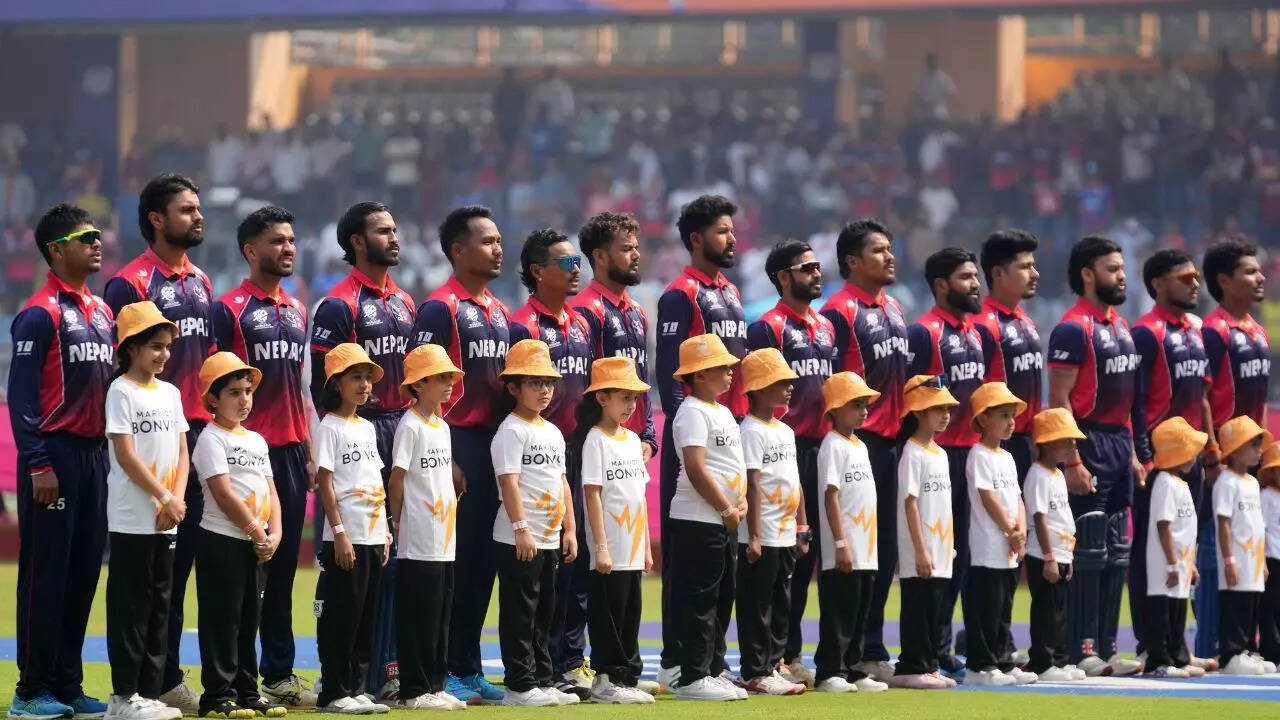
Nepal players stand up for the national anthems before the start of the match during the T20 World Cup cricket match between Nepal and West Indies in Mumbai, India, Sunday, Feb. 15, 2026. (AP Photo/Rafiq Maqbool)

These departments act as the unofficial guardians of the sport, providing salaries and stability to players who might otherwise be forced to seek labour abroad.Those who emerge from the PM Cup are summoned to national training camps, where raw talent is honed, and the final squad for the national team is distilled.Nevertheless, the current structure is too short. “We need a longer season,” Malla insists. “The school cricket and domestic base should be a seasoned culture, not just a 15-day tournament. We need to work on multi-day formats. That is how you build game awareness.”

Most of the players are actually working as police or army, but not full-time. For the top tier, they earn enough to look after their families. But for the district players, they are actually putting their own money in. They are investing in themselves.

Gyanendra Malla | Former Nepal captain

The money gap: passion vs profession

In Nepal, cricket is a religion and its priests are often underpaid. While the top 15 to 20 players under central contract earn a “good enough” living by local standards, the story for the rest of the pyramid is one of sacrifice.“Most of the players are actually working as police or army, but not full-time,” Malla says. “For the top tier, they earn enough to look after their families. But for the district players, they are actually putting their own money in. They are investing in themselves.”

Rohit Paudel

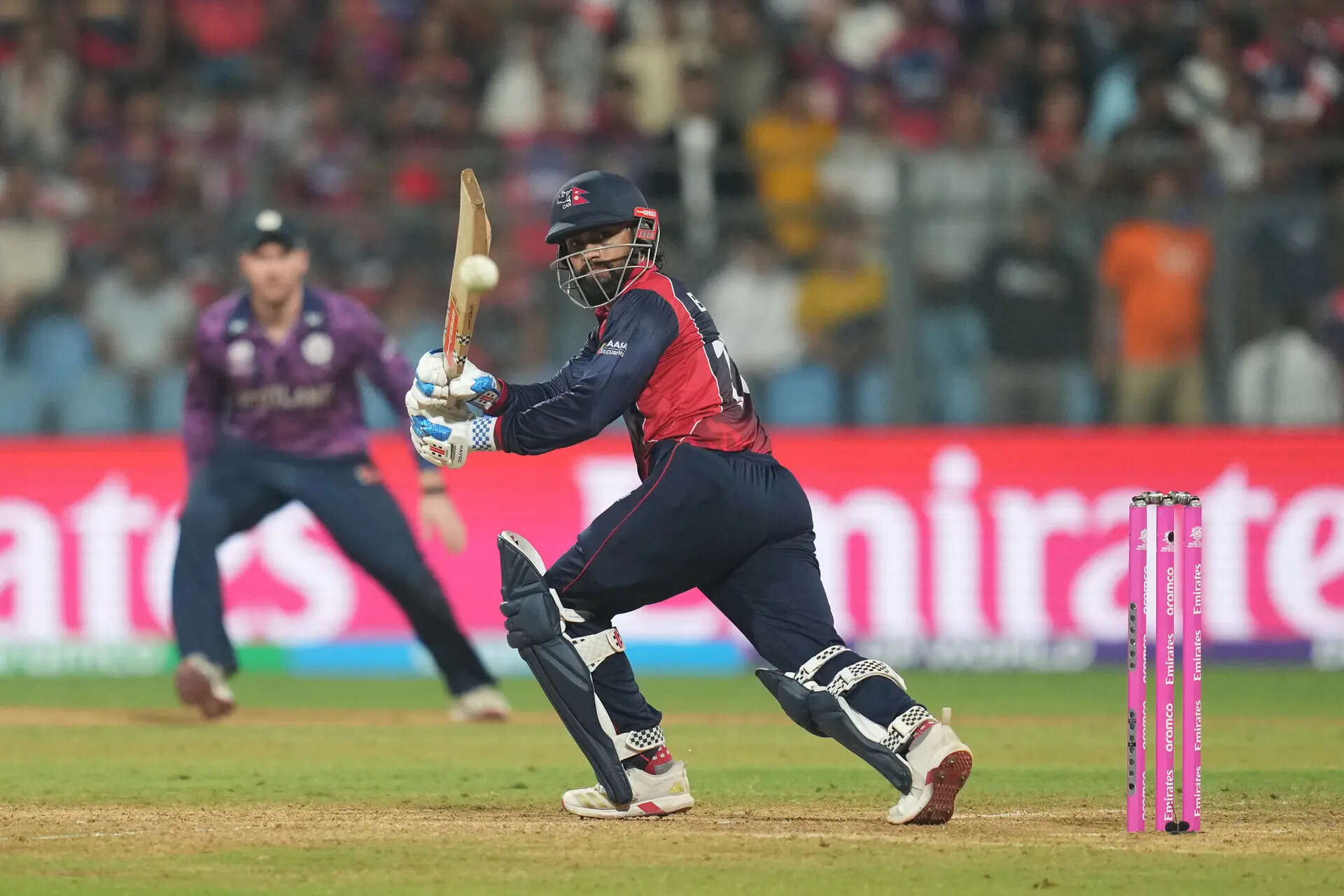
Nepal’s captain Rohit Paudel plays a shot during the 2026 ICC Men’s T20 Cricket World Cup group stage match between Nepal and Italy at the Wankhede Stadium in Mumbai on February 12, 2026. (Photo by Punit PARANJPE / AFP)

This financial precarity often forces players to seek revenue elsewhere, leading to friction with management over “distractions” like social media.During the World Cup, head coach Stuart Law directed players to reduce their focus on social media. Patwal, however, views this as a survival mechanism.“Social media is a part of these guys because they don’t make any money,” Patwal says bluntly. “When I was there for two years, we didn’t get a single penny paid as a salary. In a country like Nepal, the only way for these guys to be seen as heroes and get across is through the media. I’m happy for them if they are making some money through it.”

The “champion mindset” Nepal is lacking

What is the next brick? For Patwal, it’s not just about playing more matches; it’s about changing the “environment”. He argues that playing against big teams is useless if you don’t understand how they think.“I don’t think just playing international matches helps. How long have New Zealand or South Africa been playing? Have they won the World Cup?” Patwal asks. “We have this poor mentality where we think playing makes you a cricketer. You have to be in the culture. My advice is that at least six of these players should be exposed to the IPL or the Big Bash.”

If someone like Sanju Samson needs that help, you can understand the struggle for these Nepalese players. They do not have those local heroes to model themselves after, the match-winners who have actually been there and done it.

Umesh Patwal | Former Nepal coach

Patwal believes that even if players like Rohit Paudel or Dipendra Airee don’t make the starting XI in the IPL, “just being with the team, seeing the training part, the eating habits, the sleeping habits, that is a big churn out.”“Even Sanju Samson (Player of the Tournament in T20 World Cup 2026) credited Sachin Tendulkar for his performances,” Patwal adds.“If someone like Samson needs that help, you can understand the struggle for these Nepalese players. They don’t have those local heroes to model themselves after, the match-winners who have actually been there and done it.”Malla echoes the sentiments of Patwal and believes Nepal’s geography is its greatest untapped resource.

Nepal Scotland T20 WCup Cricket

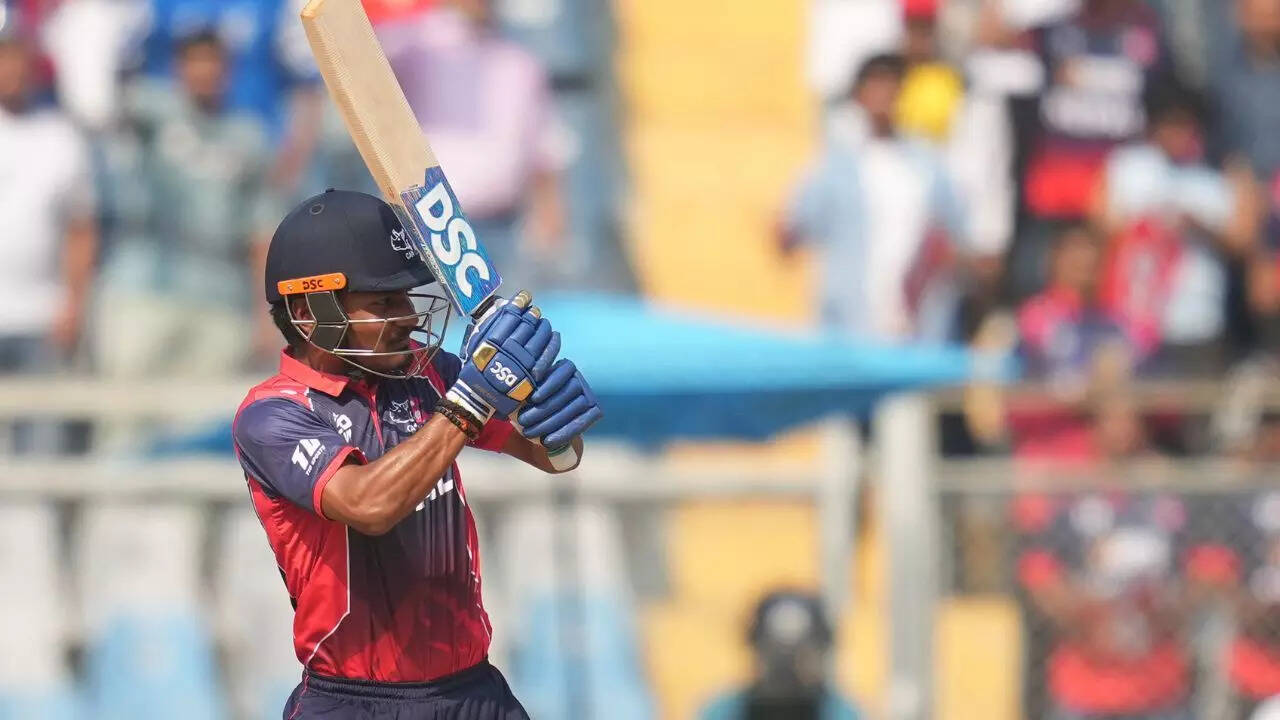
Nepal’s Kushal Bhurtel plays a shot during the T20 World Cup cricket match between Nepal and Scotland in Mumbai, India, Tuesday, Feb. 17, 2026.(AP Photo/Rafiq Maqbool)

“We are blessed to have four Test-nation neighbours, but we are not using that as a strength,” Malla says. “Playing regularly against India’s ‘A’ or ‘B’ sides, or even Ranji Trophy teams, would help our boys learn the thinking pattern of the big guys. We need help from the BCCI to grow as a nation and eventually become a Test nation ourselves.”

A new identity unfolding

For decades, Nepal’s global identity was tied strictly to its geography, the soaring peaks of the Himalayas and the bravery of the Gurkhas. Today, that identity is shifting.

They have the skill. They were the best runners between wickets, the best fielding side. They just need to sit among champions. Once they do, the finishing will come.

Umesh Patwal | Former Nepal coach

“Before this, Nepal was renowned only for mountains,” Malla says with a smile. “Now, the new identity is cricket. It is uniting all the people, even through our sorrows. It’s the next big thing for our country.”

Poll

What do you think is the biggest challenge for Nepal’s cricketing success?

The bricks are being laid, hour by hour.The prize money from the ICC will likely go toward the “bricks” of better nets and local travel, but the “Rome” of Nepal cricket, a Test-playing nation with a world-beating finish, requires something more.“They have the skill,” Patwal concludes. “They were the best runners between wickets, the best fielding side. They just need to sit among champions. Once they do, the finishing will come.”

Banner Insert


Internet calls Kunal Kemmu ‘misogynist’ for his ‘plan pregnancy’ remark on Deepika Padukone's 8-hour shift demand

0
Internet calls Kunal Kemmu ‘misogynist’ for his ‘plan pregnancy’ remark on Deepika Padukone's 8-hour shift demand


Last year, Deepika Padukone sparked a major debate in Bollywood when she advocated an eight-hour work shift for actors to support work–life balance. Recently, Kunal Kemmu reacted to her demand for shorter working hours after becoming a mother, stating that one should plan their career wisely during the nine-month period of pregnancy. His remarks did not sit well with a section of people, with many social media users now himcalling him misogynistic.

Kunal Kemmu receives backlash for his comments on Deepika Padukone's 8-hour work shift demand.
Kunal Kemmu receives backlash for his comments on Deepika Padukone’s 8-hour work shift demand.

What Kunal Kemmu said about Deepika Padukone’s 8-hour shift demand

During a chat with Soha Ali Khan on her podcast, Kunal argued that one cannot expect to work less while being paid more. He added that if someone wants that kind of control, they should become a producer and invest their own money in a project.

He said, “Then you decide you want to work for 2 hours only, and you will know that you won’t be able to finish the film on time, or the project will cost so much and I will lose money. It’s very easy to do on somebody else’s part. So I am saying, empower yourself and reach a position where it’s possible for you to do this. You can’t say, you give me a job, but now I’ll tell you how you pay me and when I will show up at work. I am saying this in general.”

When Soha explained that it can be difficult for some women who choose to become mothers at the same time their careers are peaking, Kunal responded, “But you still have a choice, there’s an incubation period of nine months, you can plan it. You have decided to be a mother, so you can plan it. Unless you are an accidental mother, it’s a different story. You have to plan it right naa, your planning can’t affect the way the world is working. It goes for men also, it’s a mindset thing, it’s not a man-woman thing.”

Internet reacts to Kunal Kemmu’s comment

His statement soon surfaced on Reddit, where many users expressed their displeasure. One Reddit user wrote, “Incubation period of 9 months, plan it?!! What is he talking about? A group project?!!! This person is a parent & a husband.” Another commented, “All of these so-called men are closet misogynists and have a patriarchal mindset.”

Another wrote, “Eww, this is such a patriarchal and deeply sexist thought process. Male actors have always had in and out time. Ajay never shoots on Sundays, Akshay only allots 8 hours to all his producers, Govinda used to come 8 hours late on sets, but that’s all acceptable because they are men. Unfortunately this is where you can see that Kunal is not very progressive.”

A further comment read, “Such a producer’s take…and this man is a dad? Ask literally any new parent, you can’t plan anything for the first few years of a baby’s life. How is a woman supposed to schedule a film months in advance?” Another wrote, “Kunal Khemu masked his misogyny so far very well.”

However, some users defended him. One wrote, “He is making sense. I don’t know what’s wrong with people shaming anyone without listening properly. He does mention ‘unless you’re an accidental mother, ‘ which means in that case, timings will be shifted.”

About Deepika Padukone’s 8-hour shift demand

In 2025, Deepika Padukone reportedly exited Spirit, directed by Sandeep Reddy Vanga, due to her alleged demand for an eight-hour work shift and a share in the film’s profits. The actor reportedly wanted to work no more than eight hours a day during the shoot so she could spend time with her daughter, Dua.

Following Spirit, the makers of the sequel to Kalki 2898 AD also announced that Deepika would not be part of the project, citing commitment issues. Soon after her exit, reports surfaced online claiming that she had demanded a seven-hour work shift and an increase in her pay, which allegedly led to the fallout.


25 years on, the Aussie still haunted by the defeat at the hands of India: ‘One of my poorest decisions’

0
25 years on, the Aussie still haunted by the defeat at the hands of India: ‘One of my poorest decisions’


What happened 25 years ago still haunts the Aussies! And that match really changed the direction of Indian cricket. John Buchanan, who was the Aussie coach at the time, is scarred by the unexpected defeat even today, and he accepts he made a massive blunder in the game that gave India, led by VVS Laxman and Rahul Dravid, a great opportunity to get back into the game.

What an extraordinary game of cricket it was! (Getty)

Coming into the match on the back of their win in the first Test in Mumbai, which was their 16th victory in a row, when the Aussies posted 445 and bowled India out for a paltry 171 at the Eden Gardens in Kolkata, the match and series appeared theirs – to all intents and purposes. However, they decided to enforce the follow-on and Laxman (281, highest Test score by an Indian at the time) and Dravid (180) punished them in the second innings.

Also Read; Cricket legend Viv Richards bigs up India’s ‘next level’ T20 World Cup win, also praises the team’s 12th man

India went on to win the match after a Harbhajan Singh hat-trick, and later the series after dispatching the Aussies one more time, in Chennai. India had been given an inch, and they ended up taking a mile. Buchanan, in an interview with Sportstar recently, kind of admitted the decision to enforce the follow-on continues to bother him, even after so many years.

What if Australia had decided otherwise?

“I regard it as one of my poorest decisions as a coach, but it was not just about enforcing the follow-on. The game was set up nicely, and we had a big lead [274 runs]. My job was not to get caught up in the emotion of what was going on the field. But I did,” Buchanan, who led Australia to back-to-back World Cup titles in 2003 and 2007, said.

“As the players walked in, my job was to make them sit down quickly and say what our options were. I think they still would have gone there [to enforce the follow-on], but I didn’t take the time to get them to think that if we had batted, we would have batted India out of the game. Our objective was to go there to win the series. But we enforced the follow-on, and the rest is history,” added Buchanan, considered one of the brilliant coaching minds in the history of the game.


Rekha, Salman Khan, Aamir Khan, Rani Mukerji, Vicky Kaushal, others attend Sooraj Barjatya's daughter wedding reception

0
Rekha, Salman Khan, Aamir Khan, Rani Mukerji, Vicky Kaushal, others attend Sooraj Barjatya's daughter wedding reception


Many celebrities on Thursday evening attended the wedding reception of Eesha Barjatya, the daughter of filmmaker Sooraj Barjatya, and Abhishek. Several photos of the guests arriving at the event venue in Mumbai emerged on social media platforms.

Rekha, Salman Khan, Aamir Khan, and Rani Mukerji were seen at Sooraj Barjatya's daughter's wedding reception.
Rekha, Salman Khan, Aamir Khan, and Rani Mukerji were seen at Sooraj Barjatya’s daughter’s wedding reception.

Salman Khan, Aamir Khan, Rani Mukerji attend Sooraj Barjatya’s daughter’s wedding reception

In a video, Rekha was seen attending the event wearing a green, golden and beige saree. She smiled while posing for the paparazzi. Salman Khan was seen arriving at the event with tight security. He was dressed in a royal blue shirt, a matching blazer and trousers. He also opted for a black tie and matching shoes. The actor smiled as he posed for the paparazzi.

Aamir Khan was seen at the venue with his son Junaid Khan. The duo also smiled and posed for the camerapersons stationed at the venue. For the occasion, Aamir wore a blue shirt under a dark coloured suit and matching pants. Junaid opted for a dark blue kurta and white pyjamas.

Vicky Kaushal, Tabu, Siddhant Chaturvedi, Sonali Bendre were seen too

Actor Rani Mukerji was part of the festivities too. She wore a white and green embellished suit. Vicky Kaushal attended the event with his father, Sham Kaushal. Vicky was seen in a beige suit. Anupam Kher and Anil Kapoor opted for ethnic outfits as they attended the event together.

Tabu, Rajkumar Hirani, Sonu Sood, Supriya Pathak, Imtiaz Ali, Udit Narayan, Siddhant Chaturvedi, Sonali Bendre, Sharvari, Neena Gupta, Jackie Shroff, Rakesh Roshan, Boman Irani, Sunny Deol, Shaan, Boney Kapoor, and Dilip Joshi, among many other celebrities, were also spotted attending the event.

In a few videos, Barjatya was seen with the newlyweds, Eesha and Abhishek, as they posed for the paparazzi. For the occasion, Eesha wore an embellished silver saree-gown. Abhishek opted for a blue suit.

About Barjatya’s family, his career

Barjatya married Vineeta Barjatya in 1986. The couple have three children–Eesha, Avnish and Devaansh. In 2019, Barjatya’s son, Devaansh, tied the knot in Mumbai. Many celebrities, including Salman, Rekha and Madhuri Dixit, had attended the wedding reception then.

Barjatya made his directorial debut with Maine Pyar Kiya in 1989. His other films include Hum Aapke Hain Koun (1994), Hum Saath-Saath Hain (1999), Vivah (2006), and Prem Ratan Dhan Payo (2015). He won the National Film Award for Best Direction for Uunchai (2022).