Sunday, September 27, 2026
Home Blog Page 1351

Who bombed the Iranian girls’ school, killing more than 170? What we know | US-Israel war on Iran News

0
Who bombed the Iranian girls’ school, killing more than 170? What we know | US-Israel war on Iran News


As the United States-Israeli war on Iran closes in on two weeks, one specific attack stands out as the bloodiest incident of the conflict so far.

On February 28, during the opening hours of the assault on Iran, a missile struck a girls’ school in southern Iran, killing more than 170 people – most of them schoolgirls.

Recommended Stories

list of 1 itemend of list

Since then, Israel and the US have tried to distance themselves from the attack, even as evidence mounts that the US was responsible for the killings. To critics, the bombing of the school has become emblematic of the horrors of the war that the US and Israel have unleashed, and that Iran has responded to by launching thousands of missiles and drones not just at Israel and US facilities across the region, but also at Gulf neighbours who have tried hard to not get sucked into the conflict.

So what do we know about the totemic incident that has shaped, for many, the early days of the war?

What happened in the Iran school strike?

The girls’ school, Shajareh Tayyebeh, was located in the city of Minab, near a base belonging to the Islamic Revolutionary Guard Corps (IRGC).

It was hit by a missile on February 28 at approximately 10:45am local time (07:15 GMT), a peak hour for classroom activity. The blast destroyed the two-storey building, causing the roof to collapse on students and teachers inside.

At least 170 people, most of them children, were killed. Dozens of others were injured.

The school is located in Minab, in Iran’s strategic Hormozgan province, which overlooks the Strait of Hormuz and hosts several IRGC naval facilities.

While Iran immediately attributed the strike to the US-Israel coalition, both nations denied responsibility.

Satellite images showed the school intact earlier that morning. US and Israeli air raids had begun across Minab and other parts of Hormozgan that morning.

A still image from video shows what experts say to Reuters appears to be a U.S. Tomahawk missile hitting near the Shajareh Tayyebeh girls' school
A screengrab shows what experts say appears to be a US Tomahawk missile hitting near the Shajareh Tayyebeh girls’ school in Minab, Hormozgan province, Iran, on February 28, 2026, amid the US-Israeli war with Iran [Handout/Mehr News via Reuters]

Who does Iran blame for the attack?

Iran blamed both the US and Israel for the strike.

On February 28, Iranian Foreign Minister Abbas Araghchi shared a photo of the attack, which he said destroyed the girls’ school and killed “innocent children”.

“These crimes against the Iranian People will not go unanswered,” Araghchi wrote in a post on X.

Iran’s Ministry of Foreign Affairs spokesperson Esmaeil Baghaei also slammed the “blatant crime” and urged action from the United Nations Security Council.

What does the evidence point to?

Footage from the scene suggests the school was likely hit by a Tomahawk missile.

Preliminary investigations suggest the school may have been hit by a US missile because of a targeting error, though the exact circumstances remain under investigation.

Analysts say the strike may have been caused by outdated targeting information, as the school is on the same block as buildings used by the IRGC’s navy and the site of the school was originally part of the base.

For years the school had been separated and had its own walls and entrances.

“It seems that the United States Central Command did not keep its target list up to date,” Mark Cancian, a retired Marine Corps colonel and senior adviser with the Washington-based Center for Strategic and International Studies think tank, told Al Jazeera.

“Apparently, the building shifted some years ago from military use to the school and the Central Command targeting cell did not pick up that change,” he added.

The Shahid Absalan clinic, under the supervision of the IRGC navy’s medical command, is about 238 metres (780 feet) from the site, while the Seyed al-Shohada IRGC cultural complex is 286 metres (938 feet) away.

The adjacent Martyr Absalan Specialised Clinic (lower centre, in yellow), which opened in early 2025 and was separated by an independent civilian entrance, and which sustained no damage during the latest bombardment
The adjacent Martyr Absalan Specialised Clinic (lower centre, in yellow), which opened in early 2025 and was separated by an independent civilian entrance, sustained no damage during the latest bombardment [Google Earth/Al Jazeera]

What has the US said about the strike?

US President Donald Trump initially suggested that Iran itself may have been responsible for the strike – even though there was no evidence then, nor now, suggesting any Iranian role in the attack.

“Based on what I’ve seen, that was done by Iran,” Trump said on Saturday. “We think it was done by Iran because they are very inaccurate, as you know, with their munitions. They have no accuracy whatsoever. It was done by Iran.”

Pete Hegseth, the US defence secretary, was standing behind Trump at the time. He declined to endorse Trump’s assessment and instead reiterated that the Pentagon was investigating the incident.

However, The New York Times reported on Wednesday that the school was hit by a US Tomahawk missile because of a targeting error. The newspaper, citing US officials, said the investigation was ongoing, but preliminary findings indicated the US was responsible.

Asked by reporters about the report, Trump said: “I don’t know about it.”

Trump also told reporters on Monday that Iran “also has some Tomahawks” – a claim widely dismissed by military experts.

Secretary of State Marco Rubio said last week that the US would not intentionally target a school.

“Members of [Trump’s] administration have been saying an investigation is under way and that they can’t comment on an open investigation,” Al Jazeera’s Mike Hanna reported from Washington, DC.

What has Israel said?

Israel has denied any involvement.

“We have checked multiple times and have found no connection between the [Israeli army] and whatever happened in that school,” Israeli military spokesman Lieutenant Colonel Nadav Shoshani said.

What are Democrats asking for in the US?

Nearly all US Senate Democrats have signed a letter to Hegseth calling for a “swift investigation

“The results of this school attack are horrific. The majority of those killed in the strikes were girls between the ages of 7 and 12 years old. Neither the United States nor the Israeli government has ‌yet taken responsibility for this attack,” the letter, signed by 46 senators, said.

The letter asked for answers to a series of questions, including whether US forces conducted ⁠the strikes, what steps the military has taken to prevent and ⁠mitigate civilian harm, and what role artificial intelligence tools have played in operations.

If the US role is confirmed, “it would be embarrassing for the military since they have otherwise conducted a pretty sound operation. It will feed some of the antiwar sentiment in Congress and in the population”, Cancian said.

Has this happened before?

For all of the US’s claims of targeting only military facilities and individuals, its armed forces have a long history of killings – followed at times, with cover ups – of civilians.

During the 1999 NATO bombing of Yugoslavia, the US struck an annex of the Chinese embassy in Belgrade after misidentifying the building as a Yugoslav military facility.

The strike killed three Chinese journalists and injured more than 20 people.

Washington later said the bombing occurred because intelligence analysts relied on outdated maps, which mistakenly identified the embassy compound as a military target.

The incident triggered a major diplomatic crisis with China, leading to large protests outside US diplomatic missions in Beijing and other cities.

Chinese students break through a line of police officers at the US embassy in Kiev, Ukraine, 11 May 1999, during their protest against the bombing of the Chinese embassy in Belgrade
Chinese students break through a line of police officers at the US embassy in Kyiv, Ukraine, on May 11, 1999, during a protest against the bombing of the Chinese embassy in Belgrade and against the NATO bombing campaign on Yugoslavia [File: Sergei Supinsky/EPA]

“In 1991, during Desert Storm, the US also struck the Amiriyah bunker in Baghdad, believing it was a command-and-control facility,” Cancian explained.

“It held only civilians and 403 were killed,” he added.

Operation Desert Storm was the US-led air and ground campaign of the Gulf War, launched after Iraqi leader Saddam Hussein invaded Kuwait in 1990. The coalition began a massive aerial bombardment of Iraq in January 1991 aimed at crippling Iraq’s military infrastructure, leadership networks and command centres before launching a ground offensive.

In this case, two precision-guided bombs penetrated the bunker, killing more than 400 people, many of them women and children. The attack became one of the deadliest civilian casualty incidents of the war and drew widespread international condemnation.

At the time, the US relied primarily on intelligence-gathering satellites, four-star General Merrill McPeak told Al Jazeera in 2021.

“It never occurred to us that it was a place where civilians went to take shelter – we thought of it as a military bunker in which command and control facilities resided,” said McPeak to journalist Sofia Barbarani. McPeak was chief of staff of the US Air Force during the Gulf War.

In the Belgrade case, the CIA dismissed one mid-level intelligence officer responsible for identifying the target. Six senior managers were also reprimanded.

No criminal charges were filed. However, the US later paid $28m to the Chinese government for damage to the embassy and $4.5m to the families of the victims.

In the Amiriyah case, the US military did not classify the strike as an error, and no personnel were fired or disciplined. US officials maintained that the bunker was a legitimate military target that was also being used to shelter civilians.

Decades earlier, in what came to be known as the My Lai massacre in 1968, US soldiers killed between 347 and 504 civilians, and gang-raped women, in a village during the Vietnam War. The US military initially covered up the war crime, but an expose by journalists Seymour Hersh and Ronald Ridenhour brought the horrors of My Lai to the attention of the world, fuelling antiwar sentiment in the US and prompting calls for accountability.

Though 26 soldiers were charged, only one – Lieutenant William Calley Jr, the leader of the platoon involved – was convicted. He was given a life sentence, but that was commuted: He eventually served only three-and-a-half years of house arrest.

Though the investigation into the Minab school bombing is still on, experts say that even an official acknowledgement that the US was responsible might only lead to limited consequences.

“If the error can be traced to a single person, then there is the possibility of disciplinary action,” Cancian said.

“However, the secretary [Hegseth] has repeatedly said to service members, ‘I have your back,’ so the possibility of action is lower,” he added.


‘He doesn’t need to say sorry’: Gautam Gambhir backs Arshdeep Singh after Daryl Mitchell incident in T20 World Cup final | Cricket News

0
‘He doesn’t need to say sorry’: Gautam Gambhir backs Arshdeep Singh after Daryl Mitchell incident in T20 World Cup final | Cricket News


‘He doesn't need to say sorry’: Gautam Gambhir backs Arshdeep Singh after Daryl Mitchell incident in T20 World Cup final
Gautam Gambhir and Arshdeep Singh (Image credit: Instagram)

NEW DELHI: India head coach Gautam Gambhir has strongly defended pacer Arshdeep Singh following his on-field altercation with Daryl Mitchell during the final of the 2026 ICC Men’s T20 World Cup, saying he would have been “absolutely fine” even if the bowler had not apologised after the incident.Go Beyond The Boundary with our YouTube channel. SUBSCRIBE NOW!The flashpoint occurred in the 11th over of New Zealand’s innings at the final in Ahmedabad. After Mitchell smashed Arshdeep for two consecutive sixes, the Indian pacer fielded the ball on his follow-through and threw it back towards the batter, with the ball striking Mitchell on the pads.

Gautam Gambhir reflects on India’s World Cup win and backing Sanju Samson in the tournament

Although Arshdeep apologised to the New Zealand vice-captain after the match, the International Cricket Council later fined the pacer 15 per cent of his match fee for a Level 1 breach of the ICC Code of Conduct. One demerit point was also added to his disciplinary record.Arshdeep was found guilty of breaching Article 2.9 of the ICC Code of Conduct, which relates to throwing a ball at or near a player in an inappropriate or dangerous manner during an international match. The charge was levelled by on-field umpires Richard Illingworth and Alex Wharf, along with third umpire Allahuddien Paleker and fourth umpire Adrian Holdstock. Match referee Andy Pycroft imposed the sanction, which Arshdeep accepted, eliminating the need for a formal hearing.However, Gambhir played down the controversy and insisted the bowler’s reaction was a natural expression of competitive spirit.“That is okay. You’re representing your country. You’re bound to show aggression. There’s nothing wrong with that. No bowler likes to get hit for two sixes. And that is the kind of response I want to see from my players. And that there is nothing wrong. Or in fact, even if sorry is not said, I was absolutely fine with it. I was absolutely fine. He doesn’t need to say sorry. Yes, it’s good on him that he apologised. But on a cricket field, there are no friends. Neither are there any enemies,” Gambhir said in an interview to ANI.He also suggested that such moments are often exaggerated in the modern era due to social media scrutiny.“Your job is to represent your country. Your job is to win a game of cricket for your country. And you don’t want to get hit for two sixes. And that was fine. I thought we should not blow all these things out of proportion because these things used to happen before. Today, because of social media, things escalate a lot,” he added.The incident came in a match that ultimately ended in historic fashion for India, as the hosts crushed New Zealand by 96 runs to lift their third T20 World Cup title — becoming the first side to defend the trophy and win it on home soil.


Gulshan Devaiah about his 2023 film 8 AM Metro being rediscovered

0
Gulshan Devaiah about his 2023 film 8 AM Metro being rediscovered


Gulshan Devaiah about his 2023 film 8 AM Metro being rediscovered

When 8 AM Metro released in 2023, it might not have made a mark at the box office, but leading man Gulshan Devaiah knew that it told an honest story. Today, his belief in the slice-of-life film, also starring Saiyami Kher, is being rewarded as it is winning love following its release on Prime Video on February 15.  
 
Revealing that he is receiving messages from fans saying that Raj Rachakonda’s directorial venture resonated with them, Devaiah shared, “People are writing to me that they saw themselves in the characters, that it reminded them of their losses that were never fully grieved.”

8 AM Metro first dropped on Zee5, almost a year after its theatrical release. Last month, it landed on Prime Video and reached a wider audience. Reflecting on the movie’s long road to viewers, Devaiah said that such small films face structural challenges in a system that is focused on big-scale entertainers. “There is no ecosystem for smaller, personal films like 8 AM Metro. Such movies are too small for big theatrical distribution, and sometimes not ‘algorithm-friendly’ enough for streaming platforms. So, they struggle to find a permanent home. Theatres prioritise large-scale spectacles. Films like ours sometimes slip through the cracks despite having an audience.”

May 19, 2023
When the film released in theatres

May 10, 2024
When it first streamed on Zee5

Feb 15, 2026
When it landed on Prime Video and found a wider audience


Have you heard? Aishwarya Rai`s global presence inspired Priyanka Chopra

0
Have you heard? Aishwarya Rai`s global presence inspired Priyanka Chopra


Have you heard? Aishwarya Rai`s global presence inspired Priyanka Chopra

Beauty inspires beauty

Actor Priyanka Chopra has opened up about leaving Hindi cinema at the peak of her career to explore opportunities in Hollywood in 2016. Speaking on a podcast, she admitted the move came during a challenging phase for her in Bollywood. “Nothing is an easy ride. When life gets tough, you pick yourself up, take a moment to feel the pain, and then pivot,” she said. Priyanka said that her move was also inspired by the global presence of Aishwarya Rai Bachchan and her friend Mindy Kaling. “There were very few Indian actors in American pop culture, and I wanted to understand why,” she added.

The comeback
Priyanka will return to Indian cinema with SS Rajamouli’s upcoming film ‘Varanasi’, also starring Mahesh Babu and Prithviraj Sukumaran


Harbhajan Singh’s wife Geeta Basra poses in a green saree on Instagram

0
Harbhajan Singh’s wife Geeta Basra poses in a green saree on Instagram


Harbhajan Singh’s wife Geeta Basra poses in a green saree on Instagram

Ex-India spinner Harbhajan Singh’s wife Geeta Basra delighted her two million Instagram followers with her latest post, in which she’s seen posing in a green saree with some silver embroidery work.


View this post on Instagram


A post shared by Geeta Basra (@geetabasra)

The post received almost 10,000 ‘likes’ with several fans praising her look. 

“You look so stunning, wrote one fan, while another added: “Absolutely gorgeous look.” 


Dhurandhar 2 advance booking crosses $2 million in US; Ranveer Singh film set to beat Baahubali, Animal, RRR records

0
Dhurandhar 2 advance booking crosses  million in US; Ranveer Singh film set to beat Baahubali, Animal, RRR records


Dhurandhar: The Revenge is arguably the most anticipated Hindi film in years. Directed by Aditya Dhar, the film is a sequel to the 2025 blockbuster Dhurandhar, bringing back Ranveer Singh as Hamza aka Jaskirat, an Indian spy in Pakistan. The film’s immense buzz can be gauged by its staggering advance booking numbers, which are touching the million-dollar mark with over a week left for the release.

Dhurandhar 2 stars Ranveer Singh as Hamza, an Indian spy in Pakistan.

Dhurandhar 2 advance booking

The trailer of Dhurandhar 2 was launched on Saturday, as Jio Studios and B62 Studios released a 4-minute glimpse into the world of Jaskirat Singh Rangi. The advance bookings for paid previews worldwide opened right after that. In North America, theatres opened advance bookings for the rest of the opening weekend as well, while Indian cinemas are waiting until later this week.

As a result, the advance bookings for Dhurandhar 2 have surged ahead in the US and Canada. According to trade estimates, by Tuesday’s end, the spy thriller had raked in over $750K for premiere shows alone. The advance booking for opening day has comfortably crossed $1 million, and the opening weekend mark has now reached a staggering $2 million. Given that the film releases on March 19, these are astounding figures.

In India, where advance booking opened just for paid previews on Wednesday, the film has still sold over 3.5 lakh tickets, grossing a whopping ₹19 crore.

Dhurandhar 2 set to beat Animal, RRR

Currently, the record for the biggest premiere of an Indian film in the US belongs to Ranbir Kapoor’s Animal, which earned $1.2 million from paid previews. With $700K in advance bookings, Dhurandhar 2 is almost certain to beat that mark. The film should also set a new record for the opening weekend in North America. Two pan-India films – RRR and Pushpa 2 – are perched at the top with openings of $3.46 million and $3.34 million, respectively. Baahubali 2 also earned around $3 million in its opening weekend almost a decade ago. Trade projections suggest that Dhurandhar 2 could reach $4 million in the US in its first weekend.

All about Dhurandhar 2

Directed by Aditya Dhar, Dhurandhar 2 stars Ranveer Singh in the lead. The heavily anticipated film also stars R Madhavan, Arjun Rampal, Sanjay Dutt, Danish Pandor, Rakesh Bedi, and Sara Arjun. Part 1 was a mega success, earning ₹1300 crore worldwide, including $20 million in the US. The sequel is expected to repeat its success.


Middle East turmoil hits cricket: Afghanistan vs Sri Lanka series in UAE postponed | Cricket News

0
Middle East turmoil hits cricket: Afghanistan vs Sri Lanka series in UAE postponed | Cricket News


Middle East turmoil hits cricket: Afghanistan vs Sri Lanka series in UAE postponed
Afghanistan vs Sri Lanka series postponed (Pic credit: ACB)

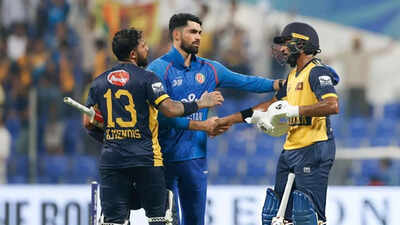
NEW DELHI: The white-ball series between Afghanistan and Sri Lanka has been postponed after escalating tensions in the Middle East disrupted travel and logistics, the Afghanistan Cricket Board confirmed on Wednesday.Go Beyond The Boundary with our YouTube channel. SUBSCRIBE NOW!The bilateral series, originally scheduled to begin on March 13 in the United Arab Emirates, has now been pushed to late 2026 due to ongoing regional uncertainties and flight restrictions affecting team movements.In a statement, the Afghanistan board explained that preparations had been completed after receiving the necessary sanction from the Emirates Cricket Board to stage the matches across two venues.“Following the receipt of the required sanction from the Emirates Cricket Board (ECB), preparations had been finalised to host the matches at both venues. However, in early March, unforeseen developments created logistical constraints that affected travel arrangements and operational planning for the series,” the ACB said.The tour would have marked Afghanistan’s first time hosting Sri Lanka in a bilateral series and was set to feature six white-ball matches. Three T20 Internationals were scheduled to take place at the iconic Sharjah Cricket Stadium on March 13, 15 and 17, before the action shifted to Dubai International Cricket Stadium for three One-Day Internationals on March 20, 22 and 25.According to the ACB, several consultations were held with key stakeholders before the final decision was taken. The board confirmed that meetings involving venue authorities and organisers were conducted to monitor the evolving situation.“To address the situation, the Afghanistan Cricket Board held a series of consultations with key stakeholders, including the Emirates Cricket Board, Sharjah Cricket Stadium and Dubai International Cricket Stadium,” the statement said.Despite efforts from all sides to proceed with the event, the logistical challenges remained beyond operational control.The ACB said the Sri Lanka Cricket board was kept informed throughout the process and agreed to the postponement. The UAE is expected to remain the preferred venue when the series is rescheduled.“Despite the collective efforts of all parties to proceed with the event as planned, the logistical challenges remained beyond operational control, leading to the decision to postpone the series and explore rescheduling options,” the ACB added.


Maersk to levy surcharge as crisis rages

0
Maersk to levy surcharge as crisis rages


Maersk to levy surcharge as crisis rages

NEW DELHI: Integrated shipping and logistics company Maersk has decided to levy a temporary emergency bunker surcharge on new cargo bookings to ensure the cross-border movement of essential items amid the ongoing crisis in West Asia. However, the surcharge is subject to regulatory approvals and will apply globally, including India, without exception from March 25, a company official said.The evolving security situation continues to be challenging, impacting logistics and customer supply chains, the company official added.As of now, Maersk is not taking any bookings to and from the UAE, Oman, Iraq, Kuwait, Jordan, Qatar, Bahrain, and Saudi Arabia. New bookings are being taken from, and to markets such as India and other non-affected countries in the far east, Europe, etc., the official said. Explaining the rationale behind the move, the company official said that around 20% of global fuel moves through the Strait of Hormuz, and the current situation surrounding the strait has significantly impacted global access to fuel.


Kanye West ordered to pay $140K in Malibu mansion renovation lawsuit

0
Kanye West ordered to pay 0K in Malibu mansion renovation lawsuit


A handyman had sought $1.7m (£1.267m) from the rapper over claims of unpaid work, medical expenses and being unfairly fired.


Group to prevent human-elephant conflict linked to high elephant deaths

0
Group to prevent human-elephant conflict linked to high elephant deaths


A long-term intervention run and designed by the Assam government and environmental NGO World Wildlife Fund (WWF) to reduce crop devastation by elephants in its forest areas is actually linked to more accidental deaths of elephants, according to a study. conservation Biology Have reported.

Launched in Sonitpur district in 2003, Assam’s Anti-Robbery Squad (ADS) worked with local villagers and the forest department to protect their farms and drive away elephants en masse. The purpose of the squads was to seek safety for humans while avoiding direct conflict that could result in elephants being killed by snaring or poaching. Versions of this type of security exist around the world.

Assam increased ADS presence in 2008 and continues to launch new squads today. They are part of the official national guidelines to deal with human-elephant conflict and are also present in West Bengal, Odisha and Chhattisgarh. one 2019 Review Regarding various ways of responding to human-elephant conflicts, the Union Environment Ministry stated that ADS operations were “not systematic” and that their effectiveness was reduced by “local mobs” opening fire on elephants.

Using 20 years of data on elephant deaths in Sonitpur, mapped over this period to villages in the region with the presence of ADS, the study found an approximately 2–3-fold increase in accidental elephant deaths associated with villages that did not have ADS compared to villages that did not have ADS. The elephants did not die due to direct conflict with villagers, but were found in ditches or ditches, killed by electric shock, or had fallen into the path of oncoming trains. The study showed that there was no apparent effect on human mortality.

Nitin Sekar, lead author of the study, said the results contradicted their original hypothesis: “We were all prepared for evidence that there would be no effect on mortality. We were expecting it to reduce human and elephant mortality. But this was a surprise.”

Mr. Shekhar began the analysis when he was the National Lead for Elephant Conservation at WWF-India, with the idea of ​​statistically pinpointing the impact of ADS. He is now a director at Conservation X Labs.

E. Somanathan, professor at the Economics and Planning Unit of the Indian Statistical Institute, Delhi, and head of the Research Center on Economics of Climate, Food, Energy and Environment, designed the statistical analysis in the study. He said the increase in deaths, although statistically conclusive, may not be directly apparent to people in the area, who believed the intervention had reduced elephant as well as human mortality.

“The whole purpose of WWF-India’s intervention is conservation, so they were not expecting this,” Mr Somanathan said.

Although the team was prepared for the fact that the data would not be good enough to draw any conclusions, they did not expect actual conclusions.

“The death rate from elephant conflict has increased by 200%,” Mr Somanathan said. “Doubling or tripling is a big impact. It’s such a big number that it requires careful examination of the program. The people driving away the elephants have to be relooked at. The program needs to think carefully about how it’s doing it.”

Although the study began in 2019, the authors added several controls to their data to account for other mitigating factors, causing it to take longer to be published.

‘Raises more questions’

“Although contrary to one of the hypotheses underpinning the ADS program, this finding is consistent with the concerns of many experts on human-elephant conflict,” the paper says.

Pranab Chanchani, head of species conservation, and Aritra Kshetri, national head of elephant conservation at WWF-India, however, cautioned that the link between elephant deaths and ADS actions is weak.

Villages of Sonitpur district were selected as the population of interest of the study. | Photo Credit: DOI: 10.1111/kobi.70204

“The ADS study found a strong correlation between ADS ‘presence’ and elephant mortality data, and thus raises important questions about prevalent human-elephant conflict management strategies,” Mr Chanchani and Ms Chettri wrote in an email.

“But the ADS study also has several important shortcomings that limit direct attribution or causal inference, and so the study raises more questions than it answers.”

organized guarding

Assam is home to more than 5,000 wild elephants, the second largest population of large mammals in India. Sonitpur, in north-central Assam, is part of one of five priority scenarios for elephant conservation, as identified by the Elephant Task Force in 2010 – and is home to about 1.9 million people.

When WWF conceptualized the ADS in 2003, there was already a decades-long history of lost forest area, Mr. Chanchani and Ms. Chettri said. Elephants displaced from their habitat started inhabiting areas other than crop lands, tea gardens and the banks of the Brahmaputra river. Locals harassed and chased them, leading to increased mortality for both. WWF believed that if ADS conducted protection activities, it could reduce overall elephant mortality rather than leaving communities to fend for themselves.

ADSs were formed in villages where there had been recent incidents of crop raiding, encouraging the community to join hands with the widely distrusted forest department to deal with elephants. Each ADS had 10-15 male volunteers, who were provided with searchlights and firecrackers to keep the elephants away. Department officials collaborated with ADS and used information received from them to drive elephants away from farms.

However, according to the new study, the sound and light likely created a “fear landscape,” forcing the elephants to throw caution to the wind and wander into more dangerous situations.

“Although caution is warranted given the modest sample size in the field and the uncertain quality of postmortem data, these findings suggest that, in communities with ADS, elephants may be less likely to notice threats such as ditches, lethal wires or an oncoming train because they were too frightened or distracted by those chasing them (or perhaps even by a perceived greater likelihood of being chased),” the paper reads.

However, Mr Chanchani and Ms Chettri also cautioned that while data on elephant deaths is taken over several years, ADSs are only active during the harvest season, meaning some deaths may be falsely attributed to ADS activity. He also said that there is no ground truth in the study.

A villager tries to drive away a herd of wild elephants resting in the Bholaguri tea garden in Sonitpur district in September 2014. | Photo Credit: Ritu Raj Konwar

develop control

The study used 20 years of data collected by WWF-India’s ground team in Assam and human and elephant mortality data collected by the forest department. Given that the hypothesis was that ADS would reduce elephant mortality, the researchers attempted to rule out several alternative explanations.

The agricultural area within a village is more attractive to elephants as it provides more nutrition than foraging in forest areas. By adjusting this, the study could find out whether there was a higher than normal presence of elephants in the area. The second and third variables were the fraction of the area around the village made up of elephant habitat and the change in the distance from the village to areas accessible to elephants along elephant movement routes. The study also accounted for increases in human population and the intensity of light at night, a common proxy for the extent of evolution.

The researchers also took other variables into account. For example, ADS was more likely to be introduced in villages where there had been recent conflict incidents. Since human or elephant deaths are not so common in these incidents, another incident would be unlikely to occur so soon after the launch of ADS, as one incident would have just occurred. This may have been interpreted as a result of the ADS itself.

So in the analysis, the team excluded the year of ADS formation as well as the previous two years from comparing mortality rates in years with active ADS. When they found that the result was an increase rather than a decrease in elephant deaths, they simply excluded the year in which the ADS was formed from the comparison of mortality rates in years with active ADS. The result was the same, Mr. Somanathan explained.

Another bias they noted was under-reporting – because villagers generally had a poor relationship with the department. With ADS improving these relationships, it may be that the number of deaths remains the same and is now officially being overcounted. Even when the study included controls for potential undercount bias, there was still an overall increase in elephant mortality associated with ADS.

Due to a lack of data, the study was unable to tell whether ADSs are capable of protecting more crops than previously thought.

stop and check

Given the proliferation of anti-looting squads across India, the study raises serious concerns about the effectiveness of such interventions – and raises questions about why this result was not detected earlier.

“We are talking about 14 additional deaths in the same number of years,” Mr Shekhar said. “ADS remain active for months over the course of many years. The only way to detect this relationship is through statistics. It seems highly unlikely to me that anyone in the field would have detected this effect.”

Both Mr Shekhar and Mr Somanathan called for a re-evaluation of this and other interventions to reduce human-elephant conflict, including electrified fences and the use of sound and light in innovative ways.

“This is a good example of why we need more evaluation,” Mr. Shekhar said. “We should not rapidly expand an intervention without evaluating its impact. It is also generally ideal not to make any major policy decisions based on a single study. The best next step would be quick, rigorous evaluation of ADS by other groups.”

Mr Chanchani and Ms Chettri agreed that further study is needed – while noting that ADSs are also constantly evolving to match needs on the ground.

“We believe it would be prudent to adopt a strategy in which ADSs optimally improve their functions, particularly with respect to pursuit,” they wrote. “Until data to the contrary become available, we think the alternative (disorganized stalking) is unlikely to have better outcomes for people and elephants.”

Mridula Chari is a freelance journalist based in Mumbai.