Sunday, September 27, 2026
Home Blog Page 1357

Sivakarthikeyan says wife Aarthy takes care of his finances: ‘Nothing would have been possible without her’

0
Sivakarthikeyan says wife Aarthy takes care of his finances: ‘Nothing would have been possible without her’


Sivakarthikeyan is basking in the success of his recent home production, Thaai Kizhavi, which is doing well at the box office. The film’s cast and crew met for the success meet, where Sivakarthikeyan shared a note of gratitude for his wife Aarthy. He said that Aarthy takes care of his finances and has been instrumental in his success.

Sivakarthikeyan spoke about his wife Aarthy and how she has been a great pillar of strength for him.

What Sivakarthikeyan said

During the success meet of the film, Sivakarthikeyan went on stage and thanked everyone for their support and love. He shared that the film’s success boosts him to tell rooted and original stories. He went on to thank his wife, Aarthy and said in Tamil, “I still am not aware of my bank account details. My finances are taken care of diligently by my wife, Aarthy. Every time I make an expense, I ask her to give me money. Her oversight of my finances has helped me become a producer. If not for her, nothing would have been possible.”

He continued, “Thaai Kizhavi is a tribute to every sister, every mother and every homemaker, who, no matter what the income is, try to keep it somehow and save money.”

About Thaai Kizhavi

Thaai Kizhavi revolves around an ageing, female moneylender named Pavunthaayi (Radikaa Sarathkumar). A fierce matriarch, she lives with her daughter Suruli (Raichal Rabecca), as her three sons leave her to fend for herself. But when Pavunthaayi is on her deathbed, the sons come to know that she has hidden jewels worth lakhs somewhere and try to get their share.

It is directed by Sivakumar Murugesan. The film crossed the ₹50 crore mark globally in 10 days of release.

Meanwhile, Sivakarthikeyan married Aarthy on August 27, 2010. The couple tied the knot in a traditional ceremony in Chennai before he entered the film industry. They have been together for 15 years and have three children.

About his career so far

Sivakarthikeyan started his career by performing mimicry and stand-up comedy on stage when he was still in college. In 2006, he took a three-month break from studies to be part of the comedy reality TV show, Kalakka Povathu Yaaru, winning the second season. While the 2008 Ajith Kumar-starrer Aegan was supposed to be his film debut, his portions were cut out.

His debut was in 2012 with the film Marina, and he also played a supporting role in the Dhanush-starrer 3 the same year. His life turned around in 2013 with the box office successes of Kedi Billa Killadi Ranga and Varuthapadatha Valibar Sangam. He went on to deliver successes in Doctor, Don, and Amaran.

On the work front, he was last seen in Sudha Kongara’s Parasakthi.


How India perfected the art of peaking

0
How India perfected the art of peaking


New Delhi: Peaking at the right time is an old cliche, but also one of the most decisive truths in sport. The discussion around it was one of the most common themes in the T20 World Cup. From journalists to players, the phrase appeared every once in a while.

India won the T20 World Cup beating New Zealand in the final on Sunday. (PTI)

South Africa, yet again, were on the receiving end of that truth. Unbeaten, winning all games, adapting to different conditions and opponents – it looked like they were the team to beat. Whilst being favourites.

India, meanwhile, demonstrated the opposite: tournaments are rarely won by the team that starts the fastest. Instead, they are won by the one that finds its rhythm when the stakes are highest. Their defeat to South Africa could have disrupted momentum, but instead it sharpened India’s batting approach and unlocked a level that was unparalleled in the five games that followed.

After their defeat, a recalibration in approach saw their overall scoring rate climb from 8.3 to 11.6. The difference is drastic across all phases of the game. The Powerplay became more explosive, the middle overs saw sustained attack and the death overs batting surged.

India were tested early, in their opening game against USA on a tricky pitch. They were cautious and thus, rather than peaking early and plateauing, India’s batting curve rose as the tournament progressed.

The hiccup against South Africa served as a turning point as it revealed how flexible the team’s philosophy really is. India had entered the tournament with a clear commitment to attacking cricket but their response after that loss suggested a willingness to rethink their innings rather than stick rigidly to a set template.

After the loss, assistant coach Ryan ten Doeschate mentioned they had three options. First, get the batters to temper their Powerplay approach and be a little smarter. Second, let them continue just the way they are. Three, bring in a right-hander at the top as well and make a change somewhere in the middle. India went in with a blend of the first and third options.

Where that acceleration happened in the innings illustrates it further. The Powerplay became noticeably more intense. According to CricViz, India was already scoring briskly at the top with a run rate of 8.9 in the first six overs before the South Africa fixture. But after that, that figure surged to 12.2.

Openers Abhishek Sharma and especially Sanju Samson maintained their aggressive roles, increasing their overall strike rate from 179 to 191, but the bigger transformation came just after them.

It was after the loss that India moved from having Tilak Varma at No 3 to having Ishan Kishan there. Having all of Abhishek, Samson and Kishan in the Top 3 was an advantage for India but that meant one of them had to bat out of position. Kishan embraced that role well. It also helped break the older combination that was all-leftie Top 3, with Samson replacing Varma in that position.

Earlier, a position that functioned as a stabilising role, the tempo changed dramatically with Kishan. The strike rate from that slot leapt from 119 to 193 afterwards, suggesting that India moved away from anchoring and instead prioritised maintaining momentum even after the Powerplay ended.

That shift had an effect on the middle overs. Before the South Africa game, India’s run rate in overs 7-15 was 7.3. After the fixture, that climbed to 11.4, indicating that the middle order began attacking far more proactively.

Players batting between No 4 and No 6 reflected this change as well. Their combined strike rate rose from 137 to 185, showing that the aggression was not limited to the top order but ran deep into the line-up.

The finishing phase remained strong too. India had already been productive in the final five overs, scoring at 10.7 runs per over. But over the matches, that rate increased further to 13.5.

The change was not just about scoring faster but also about the nature of shot-making. India’s average sixes per match increased from 9.2 to a whopping 15, reflecting a far, far more boundary-heavy approach. They balanced it further with fewer dot balls combined with more boundary hitting as it dipped from 39.1 to a 25.9.

They ended up scoring 963 runs in the last four matches alone. In many ways, the response to the South Africa defeat highlighted one of India’s biggest strengths in the format – adaptability. Rather than abandoning their attacking mindset, the team refined it, pushing the tempo earlier and ensured that momentum carried through the middle overs instead of building only toward the end.

India’s numbers after that loss suggest a side willing to reassess and reassemble soon after a batting unit that was not tied to a single formula, but capable of reshaping its strategy when the situation demanded it. Their approach since then was a lesson in what peaking at the right time looks like.


Flipperachi cancels India performance amid Middle East tensions

0
Flipperachi cancels India performance amid Middle East tensions


Flipperachi, rapper behind Dhurandhar's viral track FA9LA, cancels India performance amid Middle East tensions
Flipperachi, the Bahraini rapper who gained popularity in India after his track FA9LA featured in the spy thriller Dhurandhar, will no longer be performing at the upcoming UN40 Music & Beyond Festival in India due to the ongoing situation in the Middle East.

Flipperachi, the Bahraini rapper who gained popularity in India after his track FA9LA featured in the spy thriller Dhurandhar, will no longer be performing at the upcoming UN40 Music & Beyond Festival in India due to the ongoing situation in the Middle East.Sharing the update on Instagram, Saregama India announced that the artist will not be able to travel for the event this weekend.

Festival organisers confirm cancellation

In a statement posted online, the organisers said, “In light of the current situation in the Middle East and Bahrain, Flipperachi will not be able to perform at UN40 this weekend. While we were excited to have him on the lineup, the circumstances make it difficult for him to travel at this time. We continue to look forward to an amazing weekend of performances and unforgettable moments at UN40.”The post also noted that although fans will miss the rapper on the lineup, the festival will still feature several performances and experiences across the weekend.

Dhurandhar Sparks Frenzy On Netflix As Pakistani Viewers Call It “Best Bollywood Film Ever” | WATCH

UN40 festival to be held in Bengaluru, Mumbai show also cancelled

The UN40 Music & Beyond Festival is scheduled to take place at the NICE Grounds on March 14 and 15. The event will feature a lineup of artists including Himesh Reshammiya, Talwiinder and Raja Kumari, among others.Flipperachi was also scheduled to perform in Mumbai on March 13 at the Phoenix Marketcity. However, the event listing on District.in currently shows the show as cancelled. The rapper has not yet issued a separate statement regarding the Mumbai performance.Earlier, while announcing the show, Flipperachi had expressed excitement about performing in India. “India has shown me incredible love, and Mumbai is a city I’ve always wanted to perform in. The energy, the people, the culture, it all feels very familiar. This show is going to be loud, emotional and unforgettable. Mumbai, get ready,” he had said. Flipperachi’s track FA9LA became widely popular among Indian audiences after it was used as the background score for Akshaye Khanna’s entry scene in Dhurandhar. The high-energy track quickly gained traction on social media and music platforms, emerging as one of the standout musical moments from the film’s soundtrack.


‘Our children are not safe’: Iran says it cannot play 2026 FIFA World Cup | Football News

0
‘Our children are not safe’: Iran says it cannot play 2026 FIFA World Cup | Football News


'Our children are not safe': Iran says it cannot play 2026 FIFA World Cup
The United States will co-host the 2026 FIFA World Cup alongside Canada and Mexico. (Image credit: X)

NEW DELHI: Iran’s sports minister Ahmad Donyamali said on Wednesday that the country cannot participate in the 2026 FIFA World Cup after the United States killed Iran’s Supreme Leader Ali Khamenei, according to a report by Al Jazeera citing Reuters.“Considering that this corrupt regime [the US] has assassinated our leader, under no circumstances can we participate in the World Cup,” Ahmad Donyamali told state television on Wednesday, according to the report.

Gautam Gambhir reflects on India’s World Cup win and backing Sanju Samson in the tournament

The latest round of conflict between Israel and the United States on one side and Iran on the other began on February 28. The West Asia conflict has also disrupted global energy supply chains.Ahmad Donyamali said the conditions required for participation in the FIFA World Cup do not exist.“Our children are not safe and, fundamentally, such conditions for participation do not exist. Given the malicious actions they have carried out against Iran, they have forced two wars on us over eight or nine months and have killed and martyred thousands of our people. Therefore, we certainly cannot have such a presence,” Donyamali said, according to the Al Jazeera report citing Reuters.The United States will co-host the 2026 FIFA World Cup alongside Canada and Mexico. The tournament will feature 104 matches, beginning at Estadio Azteca in Mexico City on June 11 and culminating at MetLife Stadium in East Rutherford, New Jersey, with the final on July 19.All of Iran’s group-stage fixtures are scheduled to be played in American cities, including Los Angeles and Seattle.Donyamali’s remarks came after Gianni Infantino, president of FIFA, said in an Instagram post on Wednesday that Iran’s participation in the World Cup would be welcomed by US President Donald Trump.“President Trump reiterated that the Iranian team is, of course, welcome to compete in the tournament in the United States,” Gianni Infantino said in the social media post.Earlier, Mehdi Taj, president of the Football Federation of the Islamic Republic of Iran (FFIRI), also questioned Iran’s participation in the tournament following the recent attacks, saying it would be difficult for the country to approach the competition with optimism.“After this attack [on Iran], we cannot be expected to look forward to the World Cup with hope. If the World Cup is like this, who in their right mind would send their national team to a place like this?” Taj said on Iranian state television.


Exclusive | Radhika Madan on Subedaar: If it scares me, I make sure that I do it

0
Exclusive | Radhika Madan on Subedaar: If it scares me, I make sure that I do it


Exclusive | Radhika Madan on Subedaar: If it scares me, I make sure that I do it

Radhikka Madan has left spellbound with her performance in Subedaar. The actress is known for her realistic roles on big screen which often leaves the audience admiring her craft. In an exclusive conversation with mid-day, Radhikka got candid about her role in Subedaar, experience while working with Anil Kapoor and more. 

Radhikka Madan on picking rustic characters

Radhikka often goes for scripts that have raw and rustic characters, again with Subedaar we seen an interesting arc to her role. She said, “I think my choice is always led by the character that I am seeing, the script that there is. If it scares me, I make sure that I do it and Subedaar was one such film. I had to learn Kabaddi for it, had to train it for 4 months. It`s not there in the film but at least, it didn`t make it to the final cut but it translates in the body language that Sharma has and it was a new dialect, a challenging dialect, UP ka dialect tha which I haven`t done in the past. So, I just go for those things and if it`s challenging me and scaring me, in a way, I make sure I do those projects and try to add as much truth and soul in it as I can.”

Sharing an anecdote from the shoot, Radhikka opened up about how was it playing Anil Kapoor`s daughter, “I feel really privileged to have played the daughters of such legends, be it Dimple Ma’am, Irrfan sir, or Anil sir. They all have one thing in common that they haven’t let the child inside them die. It’s still alive. It’s still thriving. And that is really inspiring for me. They still have that hunger. They still bring their all every single day on set. And the grace that they have makes the other person also bring in their 200 percent or give their 200 percent. It lifts the people around them as well. I feel really grateful to have experienced that with all of them. And it was such a joy playing Anil sir’s daughter in this one. The father-daughter story is the core of the film. The rest of the things are amazing, but the soul lies in the relationship they share and the relationship that they have to mend by the end of the film.”

On doing roles which are realistic

When asked about picking roles that evoke realism, Radhikka shared what goes behind choosing a project or character, “I think more than the realistic approach, it is the truth that an artist tries to find in every scene or every project that they do, and I strive to do the same. My whole purpose of going on set is to find some element of truth in whatever scene I am doing and give my all to it. That is the high that I get. When you become that person, when their world becomes your world, their inner world becomes your world, that is what I strive to do. I don’t think of it as an approach. I think of it as becoming the person, and I think that is the most basic thing that we can do as actors, or aim to do as actors.”

Radhikka surely knows that kind of roles she wishes to play, when asked to choose between glam and rustic, the diva replied, “I do have Govinda in my blood and I’ve grown up watching all the commercial films, so I would like to do both action-led roles and other genres. I feel like I can do anything and everything. I don’t want to be put in a box.”


FDI policy shift seen as pragmatic move; experts say eased norms may boost capital flows with safeguards

0
FDI policy shift seen as pragmatic move; experts say eased norms may boost capital flows with safeguards


FDI policy shift seen as pragmatic move; experts say eased norms may boost capital flows with safeguards

The government’s move to relax foreign direct investment rules for China and other nations sharing land borders with India has drawn support from experts, who say the step attempts to strike a balance between attracting capital and protecting strategic interests. They also noted that the proposal for a 60-day fast-track approval window for investments in selected sectors could provide greater predictability to investors, reported PTI.Neha Aggarwal, Partner at Deloitte India, said clearer norms on beneficial ownership bring long-awaited certainty to India’s FDI framework. “With foreign investment moderating in recent months, a 60-day approval timeline strikes a pragmatic balance between attracting capital and safeguarding strategic interests, while enabling supply-chain integration and access to advanced technologies,” she said.Shardul S Shroff, Executive Chairman of Shardul Amarchand Mangaldas & Co, said the proposed expedited route for investments in sectors such as manufacturing and electronics components is a positive step, though its scope may remain limited as majority ownership and control must stay with domestic entities.“Given this stringent requirement, the expedited route may have limited applicability,” Shroff said, PTI quoted.Rudra Kumar Pandey, Partner at the firm, said allowing investments of up to 10 per cent without prior government approval introduces a practical threshold within the Press Note 3 regime. “By ensuring the exemption is available only where the investing entity is not controlled by persons from land-bordering countries, minority investments up to 10 per cent can proceed more smoothly while retaining safeguards around control ownership,” he said.Think tank GTRI said easing restrictions could open space for cross-border investments, but the scale of manufacturing growth in India will depend on wider economic factors. Founder Ajay Srivastava said the policy should be seen as an opportunity to attract deeper manufacturing investments over time. “The policy change is best seen as an opportunity for India to attract more substantial manufacturing investment over time. To realise this potential, India must further strengthen its competitiveness by lowering the cost of manufacturing,” he said.Rahul Turki, Partner and Global Value Chain Ecosystem Leader at Grant Thornton Bharat, said the decision could ease hurdles for global private equity and venture capital funds with minority stakes. “From an investment perspective, this move could unlock capital flows into startups, deep-tech ventures, and manufacturing value chains such as electronics components and solar supply chains,” he said.Krishan Arora, Partner and Leader, Indirect Tax and India Investment Advisory at Grant Thornton Bharat, added that the revised guidelines could facilitate greater trade with neighbouring countries such as China and Bangladesh, while promoting ease of doing business, strengthening manufacturing in sectors like electronics and solar, and attracting higher inbound investment


Abhishek Sharma retains top spot in ICC T20I batting rankings

0
Abhishek Sharma retains top spot in ICC T20I batting rankings


Abhishek Sharma retains top spot in ICC T20I batting rankings

Team India`s swashbuckling batsman Abhishek Sharma has retained the top position in the latest ICC Men`s T20I rankings, which were updated by the International Cricket Council (ICC).

The latest ICC T20I rankings were updated after the “Men in Blue” clinched the shortest format world title. In the title clash of the T20 World Cup 2026 against New Zealand, Team India emerged victorious by 96 runs at the Narendra Modi Stadium in Ahmedabad. They won back-to-back titles and became the first team to win three Men`s T20 World Cup titles in the tournament`s history.

Abhishek, who struggled to find himself among the runs in the entire tournament, played a crucial role in the final. He registered three consecutive ducks in the initial phase of the tournament.

Later in the final, the left-handed batsman scored 52 runs off 21 deliveries, laced with six boundaries and three maximums. With this, the “Men in Blue” received a strong start to their innings against the “Black Caps”.

After registering a stunning half-century, the 25-year-old cricketer retained the top rankings with 875 rating points.

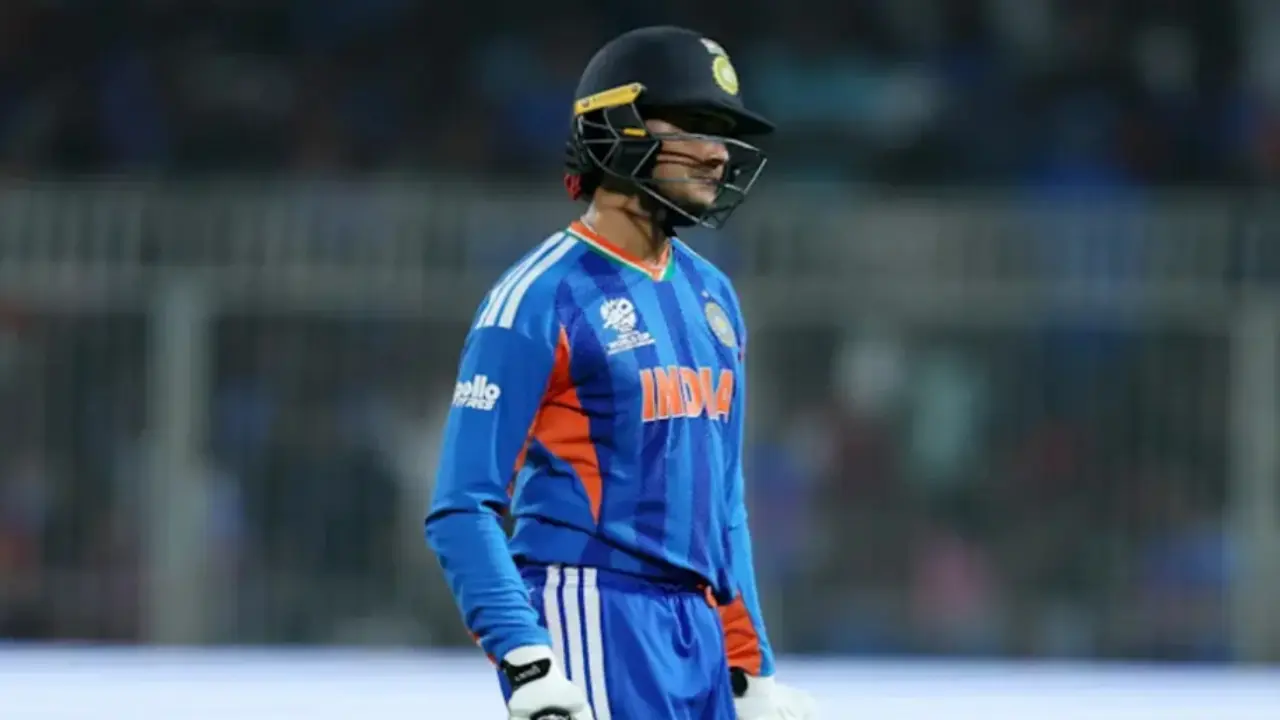
His teammate Ishan Kishan is placed in the second spot. With 871 rating points, Kishan has moved two places up on the list.

The left-handed batter Kishan earned a new career-high rating, while New Zealand`s Tim Seifert (up four places to sixth) and England`s Jacob Bethell (up 17 rungs to 16th) also improved to the best marks of their career following some dominant knocks during the T20 World Cup.

T20 World Cup 2026: Final summary

Batting first in the final, the “Men in Blue” posted a mammoth total of 256 runs for the loss of five wickets in 20 overs. Sanju Samson, Abhishek, and Ishan smashed half-centuries. Facing 46 balls, Samson scored 89 runs with the help of five boundaries and eight maximums. Abhishek also garnered 52 runs in 21 balls, including six boundaries and three maximums. Ishan smashed 54 runs off 25 deliveries, laced with four boundaries and four maximums. Later, burly all-rounder Shivam Dube also played a fiery cameo of an unbeaten 26 runs in just eight deliveries.

Chasing a target of 256, New Zealand was bowled out for 159 runs in 19 overs. Team India`s lead pacer Jasprit Bumrah returned with figures of four for 15 in four overs. Hardik Pandya, Varun Chakaravarthy, and Abhishek also chipped in with one wicket each.

(With ANI Inputs)


Ship crew film drone strike on oil facility at Oman’s Salalah port | Conflict

0
Ship crew film drone strike on oil facility at Oman’s Salalah port | Conflict


NewsFeed

Crew on-board a nearby vessel at Oman’s Salalah port filmed the moment a drone struck the oil facility. The secretary-general of the Gulf Cooperation Council (GCC) has hit out at Iran for the attack.


Kareena Kapoor opens up about female actors working after getting married, becoming a mom: If you don't want to give…

0
Kareena Kapoor opens up about female actors working after getting married, becoming a mom: If you don't want to give…


Actor Kareena Kapoor has offered her perspective on the working hours and shifts in the film industry for female actors after they get married and become mothers. Kareena has spoken about the matter months after actor Deepika Padukone demanded 8-hour shifts so that she could be with her daughter, Dua. Speaking with Hollywood Reporter India, Kapoor stressed the importance of defining parameters right from the start of a project.

Kareena Kapoor was last seen in Rohit Shetty's 2024 film Singham Again.
Kareena Kapoor was last seen in Rohit Shetty’s 2024 film Singham Again.

Kareena Kapoor on women wanting to do 8-hour shifts

“Everything needs to be really well-planned, and you have to be very clear right from the beginning. I will say, ‘This is what I can do, because I have two children. I need to come back. Obviously, even if you’re married, have children, and as a woman, if you do not want to give that time, you should be able to have that freedom to say, ‘This is what I want. I can only work this number of hours.’ It’s fine to say that way before a film starts.”

Last year, a row emerged over Deepika’s demand for an 8-hour shift following her exit from Sandeep Reddy Vanga’s Spirit and Nag Ashwin’s Kalki 2. She exited Spirit after her demands weren’t met. Vyjayanthi Movies announced that she was no longer a part of the Kalki 2898 AD sequel. In their statement, they had said that they decided to part ways with Deepika after “careful consideration,” adding that a film like Kalki deserves a higher level of “commitment.”

Later, speaking with CNBC-TV18, Deepika had said that “male superstars” have been doing an 8-hour shift for years, but it “never made headlines.” Deepika reacted when she was told she was facing a lot of pushback for her decision. She had said, “By virtue of being a woman, if that’s coming across as being pushy or whatever, then so be it. But it is no secret that a lot of superstars, male superstars, in the Indian film industry, have been working for eight hours for years, and it’s never made headlines…A lot of them only work for eight hours Monday to Friday. They do not work on weekends.”

About Kareena’s next film

Kareena recently wrapped up filming for Daayra, an upcoming investigative crime thriller directed by Meghna Gulzar. The film also stars Prithviraj Sukumaran. The film, jointly produced by Junglee Pictures and Pen Studios, is slated for a theatrical release in 2026. Daayra explores how a disturbing act can trigger equal and opposite reactions, shaping public opinion and raising complex moral questions.

The film delves into the grey areas of justice and truth, encouraging audiences to reflect rather than offering easy answers, according to the press release. Daayra tells a story that will compel viewers to reflect on society and its institutions. With filming now complete, the film has entered the post-production phase.


'Good cinema is going through deep struggle, we're in difficult phase of filmmaking', says Vishal Bhardwaj: It's so sad

0
'Good cinema is going through deep struggle, we're in difficult phase of filmmaking', says Vishal Bhardwaj: It's so sad


Good cinema is going through a deep struggle, said Vishal Bhardwaj. This was the case in the pre-OTT era and even now, with filmmakers taking their projects to streaming platforms and being told the film should be released in theatres first.

Vishal Bhardwaj said that theatrical movies faced a challenge in the past with the advent of satellite television. (PTI)

The casualty of this is “cinema of the heart and sensibility”, added the director. Twenty years ago, it would have been easy to raise money for films such as his own Haider, Vikramaditya Motwane’s Udaan and Anurag Kashyap’s Gangs of Wasseypur that were released in theatres and celebrated by discerning audiences.

Not any more.

“Now you won’t be able to raise money for them. Now there is a straight demarcation, ‘This is the subject, take it to OTT’ and OTT people say, ‘No, we don’t want it, release it in theatres first, then we will take it here’. Good films are getting beaten in the process,” Vishal told PTI.

What is needed is a “revolutionary step”, and we don’t know when that will happen and whether it will be through a film or a new medium, he said.

The current theatrical landscape, Vishal went on to explain, is difficult for filmmakers, with his contemporaries and directors he admires now telling their stories on streaming platforms.

“We are in a very strange and difficult phase of filmmaking. I think it’s global… The films to be made for theatres have taken a totally new turn,” Vishal said.

Referring to his contemporaries — Anurag, Dibakar (Banerjee), Shriram (Raghavan), Vikramaditya and Imtiaz (Ali) –he said most are working for OTT. And even if they do make films for theatres, it doesn’t always work.

“… It’s so sad. I don’t remember Vikram’s last film in theatres. I am Vikram’s fan. I am Dibakar’s great fan, they make great cinema,” Vishal added.

According to the director, theatrical movies faced a challenge in the past with the advent of satellite television. Then, the gap between a film’s release in theatres and its arrival on TV would be five to six months. Today, a film is released in theatres and is on some OTT platforms eight weeks later.

“If you want to make films for theatres, you have to look at yourself from a new perspective. By doing all that, how do you still keep yourself alive in that film is a challenge. In between, OTT platforms were making originals, but that’s also now less… Good cinema is going through a deep struggle, which is always the case anyway,” the filmmaker said.

“To make people go, ‘I want to see it now, I don’t want to wait for eight weeks’, to create that lure, you have to do all kinds of things. What is happening is, the ones who are getting defeated are the cinema of the heart, cinema of the sensibilities,” he said.

The days following the release of his 2003 film Maqbool, starring Irrfan Khan, Pankaj Kapur, Tabu and Piyush Mishra, were great for directors, Vishal said.

“Around 2004-2005, and before the pandemic, it was the golden period. You could make anything, you could release anything, people used to come to theatres for films like Haider. Gangs of Wasseypur becomes a cult… Khosla Ka Ghosla, Oye Lucky Lucky Oye, Udaan…”

The filmmaker, who most recently released Shahid Kapoor and Triptii Dimri-starrer O Romeo, said the advent of OTT, rising ticket prices and the shortening gap between the theatrical window and the films’ arrival and other such factors have led to the dip in theatrical business.

“I was in Delhi, and a few of my friends were going to watch my film. So they said, ‘Give us ₹6,000, we are going to watch your film’. They were three. I said, ‘Why 6,000? They said, ‘You don’t know, the ticket price is ₹1,900 rupees per seat in that (hall)’. Everyone must be having their reasons, the theatres, and the infrastructure of the theatres, the taxes, or whatever.”

“People say they will watch it on OTT. But there is so much content available on OTT, not just Indian, but globally, there is so much available. We need a revolutionary step, and we don’t know when that will happen and whether it will be through a film or a new medium?”