The MA Chidambaram Stadium has thrown up numerous unforgettable cricketing memories, none more indelible than the second tie in Test history, between India and Australia in Sept 1986. It’s also the scene of many a stirring Indian victory, including the two-wicket win in the decider of an epic three-Test series vs Australia in 2001.
Come Thursday, India will hope to invoke the spirit of that triumph orchestrated by VVS Laxman after having played themselves into a point of no return at this World Cup. To keep their campaign afloat, they must put the embarrassing meltdown against South Africa behind and focus on Zimbabwe.
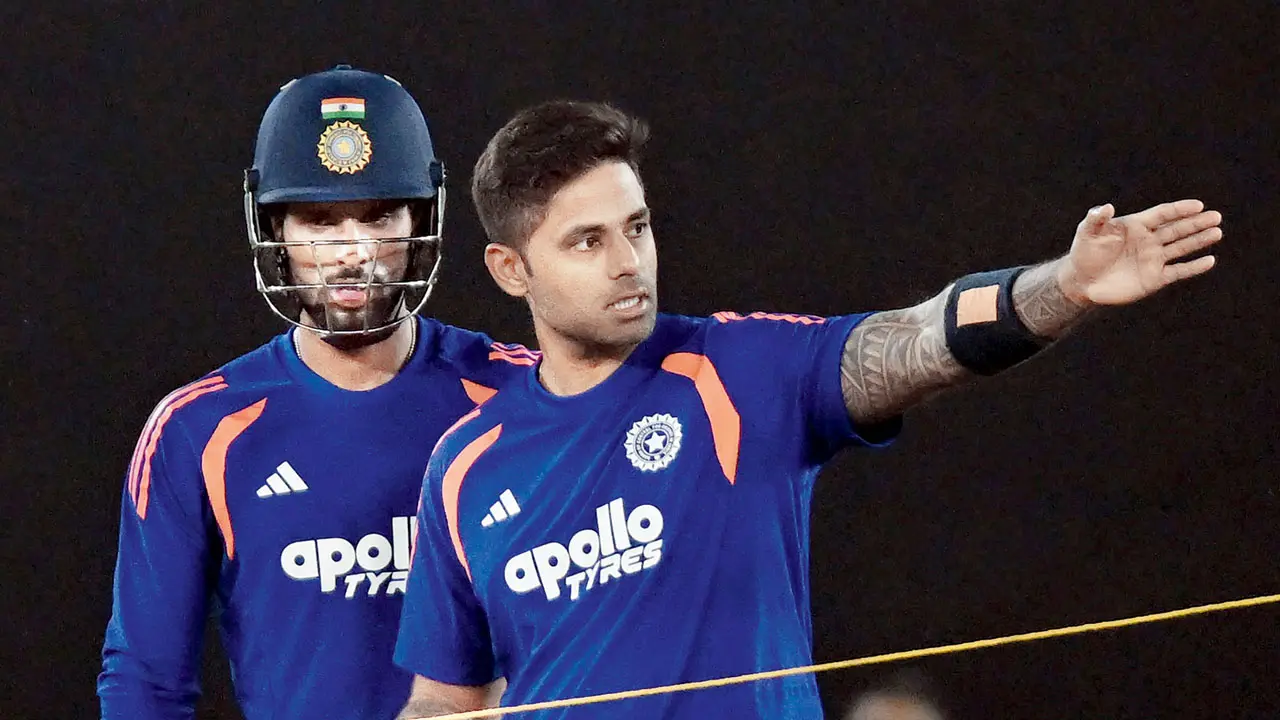
Plenty has been said of the ‘tactical blunders’ that came back to bite Suryakumar Yadav’s men in Ahmedabad. The reality is that India had one bad day at the office; they can’t afford another, so it’s important that they imbibe lessons from the 76-run lashing.
The left-handedness that dominates the Indian batting has been a talking point, with the clamour to bring back Sanju Samson gathering pace. Forgotten is the fact that Samson played himself out of the XI with a string of low scores. Though Abhishek Sharma is low on confidence, India will be better off trying to get him in the right headspace because when he’s flowing, he’s unstoppable. He should thus get at least one more opportunity to play himself back to form.
If India needs relief from a plethora of lefties at the top, it won’t be the worst idea for Tilak Varma and Suryakumar to swap places. Having harped on flexibility, India have been stubborn in their game plans. Suryakumar at No. 3, where he has had great success, will break the tedium of a left-heavy top three. Of equal necessity is a good start — India’s highest opening stand in five ties, which have yielded four first-over wickets, is just 25!
32.00 Suryakumar’s average at No. 3 across 32 innings
Though Shahid Kapoor’s acclaimed performance in ‘O’ Romeo’ impressed critics, the film struggled to connect with mass audiences, which hurt its box office run. Its earnings stand at Rs 60.25 crore in India and Rs 94.45 crore globally. Director Vishal Bhardwaj, however, maintains that the movie is a success and says he is deeply proud of what the team created.
Shahid Kapoor was expected to bounce back on top after the release of ‘O’ Romeo’ in theaters. Though his performance was praised, the film failed to pull the audience into cinema halls. And of course, the same was reflected in the box office numbers. Now, let’s take a look at how much the film has earned on Day 13.
‘O’Romeo’ box office collection Day 13 (second Wednesday)
The audience had high expectations from the Vishal Bhardwaj directorial, but it failed to deliver them. The film earned over 30 crore in the first weekend; however, after that, the numbers started showcasing a downward trend. Now, according to the Sacnilk report, the romantic revenge drama has earned Rs 1.2 crore at the box office on Day 13 (second Wednesday).
Total and worldwide collection
With that, the total collection of the film stands at Rs 60.25 crore in India. Meanwhile, as per the same report, the worldwide earnings of the movie are 94.45 crore.
As per the report, the Shahid Kapoor starrer had an overall 7.07% Hindi occupancy on Wednesday, February 25, 2026.
More about ‘O’Romeo’
Directed by Vishal Bhardwaj, the movie features Shahid Kapoor as Ustara and Triptii Dimri, the female lead, as Afsha Qureshi. The movie also stars Nana Patekar, Avinash Tiwary, Vikrant Massey, Farida Jalal, Tamannaah Bhatia, and Disha Patani.The film was released in theaters on February 13, 2026.Meanwhile, even though the film is showcasing a low box office performance, filmmaker Vishal Bhardwaj shared that it will be one of his most successful movies. He added that he is proud of his product and will never be ashamed of it.
Warning: This video contains graphic imagery of the victims of stabbings and shootings, as well as images of those killed in street violence
One of the most powerful and feared criminal organisations in Mexico has unleashed a wave of violence across 20 Mexican states, following the death of drug lord Nemesio Oseguera Cervantes, better known as “El Mencho”, shortly after being captured amid a bloody firefight in Jalisco.
Members of the Jalisco New Generation Cartel (CJNG) have turned many towns and cities where the cartel is active into war zones.
BBC international correspondent Quentin Sommerville travelled to Culiacán in northern Sinaloa state, another Mexican cartel hotspot at war with itself after the removal of its cartel leader in 2024, Ismael “El Mayo” Zambada, who is now in prison in the US.
The BBC followed two paramedics in Culiacán, Julio César Vega and Héctor Torres, who attend to victims following violent incidents. Héctor said the violence in Culiacán had never been so bad or gone on for so long.
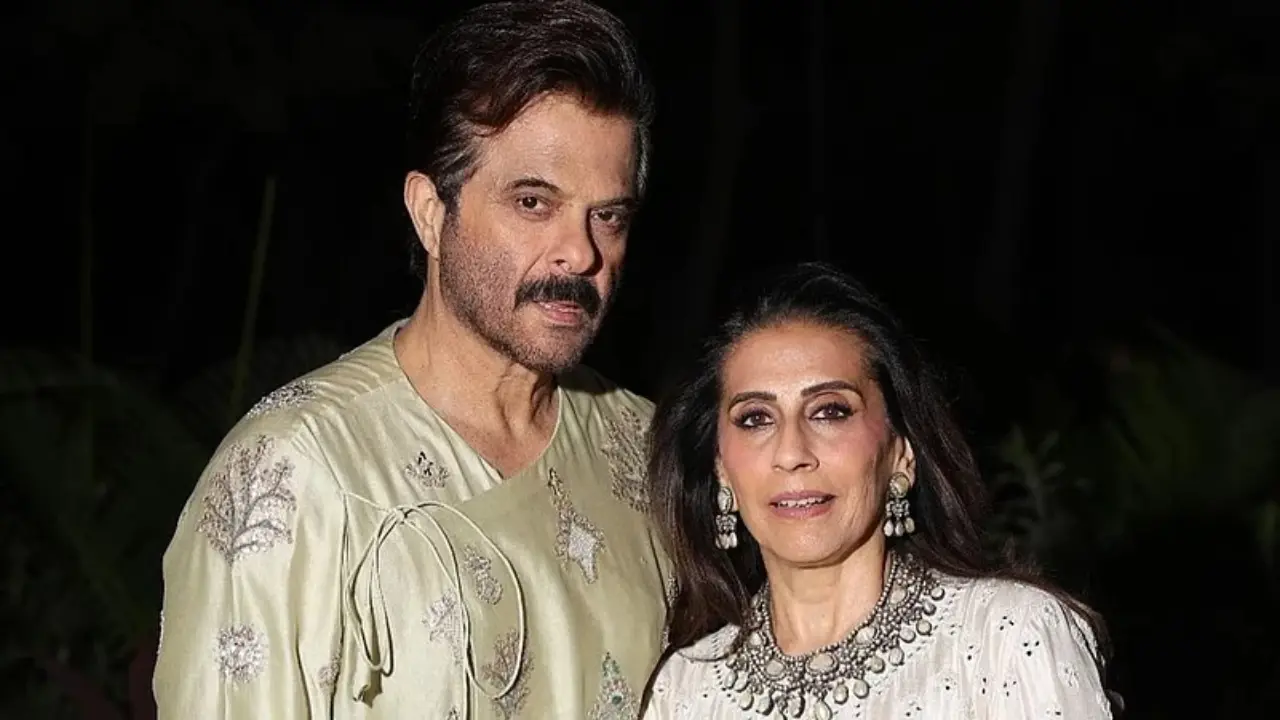
Recently, at the trailer launch of Subedaar, actor Anil Kapoor spoke about how his family- including his wife Sunita and their three children- keeps him grounded. He revealed that no one treats him like a celebrity at home and even shared that he occasionally asks his wife for pocket money before heading to a shoot.
Anil Kapoor on family keeping him grounded
Talking about how his family keeps him grounded, Kapoor said, “No one is my fan at home. As I was leaving today for the trailer launch, I told my wife I was heading out. She asked, ‘Which film?’ She has no idea what’s happening in my professional life- and that’s the kind of family I come from. They treat me exactly the same. Sometimes I even ask for Rs 10,000–15,000 in cash before going for a shoot.”
Kapoor has often spoken highly of his wife Sunita, crediting her for playing a significant role in his journey as an actor. He has previously shared that during their dating years, Sunita supported him financially while he was struggling to establish himself in the industry.
About Subedaar
The trailer of Subedaar plunges into India’s rugged heartland, where illegal sand mining fuels a land ruled by fear and silence. Retired Subedaar Arjun Maurya returns -disciplined, battle-scarred, and grieving- until his path collides with Prince (Aditya Rawal).
Kapoor anchors the film with simmering intensity, delivering the powerful line, “Fauji hai, seene mein goli jhel sakte hai, beizzati nahi.” What follows is a tense and brutal face-off, while his strained relationship with his daughter Shyama (Radhikka Madan) deepens the emotional stakes. Gritty yet deeply human, the film promises a searing clash of ego, pain, and survival.
Speaking about the role, Kapoor said, “Playing Subedaar Arjun Maurya has been one of the most powerful and emotionally demanding experiences of my career. The character is defined by discipline, sacrifice, and deep personal loss. It also marks my first collaboration with Suresh Triveni, Vikram Malhotra and Prime Video. Their commitment to scale and authenticity gave us the freedom to tell this story with the intensity it deserves.”
Sanju Samson of India (Photo by Pankaj Nangia/Getty Images)
Defending champions India national cricket team are weighing changes to their struggling opening partnership ahead of a must-win Super Eights encounter against Zimbabwe national cricket team in Chennai on Thursday. With semi-final qualification hanging in the balance, India are considering wicketkeeper-batter Sanju Samson as a possible option at the top of the order in their second Super Eights fixture.
Is this the end of the T20 World Cup for India? Greenstone Lobo predicts results
Opener Abhishek Sharma has endured a lean run, including three successive ducks, compounding India’s problems. The defending champions began the Super Eights with a heavy 76-run loss to South Africa national cricket team, leaving them with little room for error. The qualification equation is now simple. Win the remaining two matches and progression remains largely in India’s control. Slip up, and they could be forced to rely on other results. Batting coach Sitanshu Kotak confirmed that combinations are being debated internally. “There can be changes, yes,” Kotak told reporters. “And obviously, it goes without saying that we discuss, because there are two leftie openers, number three is left-handed.” Although he played down concerns over the left-heavy top order, Kotak admitted that repeated early dismissals had prompted reflection. “I personally don’t think that there is any problem there but because we lost a wicket in the first over in three games, obviously, any team would think,” he said. India’s batting core is dominated by left-handers, a pattern opponents have exploited. Sides such as Pakistan national cricket team, Netherlands national cricket team and South Africa have opened with off-spin, dismissing one of the openers in the very first over. In the defeat to South Africa, Ishan Kishan fell for a fourth-ball duck after captain Aiden Markram began with off-spin. Samson, a right-hander who featured earlier in the tournament against Namibia when Abhishek was unwell, could offer balance at the top.
The change from “Kerala” to “Keralaam” aligns the state’s official name with the spoken language, Malayalam.
The proposal started in June 2024.
The Union Cabinet on Tuesday, February 24, approved the proposal to officially change the name of Kerala to “Keralaam”. Union Minister Ashwini Vaishnaw confirmed that the change would require an amendment to the First Schedule of the Constitution of India, where the state is currently listed as “Kerala”.
The change from “Kerala” to “Keralaam” aligns the state’s official name with the spoken language, Malayalam. Although the variation seems small in English, “Keralaam” holds cultural and linguistic significance for the people of the state, being commonly interpreted as “land of coconuts”.
Prime Minister Narendra Modi reacted to the decision on
The decision of the Union Cabinet to change the name of Kerala to Keralam reflects the wishes of the people of the state. This is in line with our efforts to strengthen our connect with our glorious culture. https://t.co/pdzsgiU1l2-Narendra Modi (@narendramodi) 24 February 2026
Ashwini Vaishnav said the Kerala (Change of Name) Bill, 2026 will now be sent to the Kerala Assembly for formal review.
How did the process start?
The proposal began in June 2024 when the Kerala Assembly unanimously passed a resolution for the name change. The state government later forwarded the request to the Centre.
The resolution said: “The name of our State is ‘Kerala’ in the Malayalam language. The States were formed on the basis of language on November 1, 1956. Kerala Piravi Day is also on November 1. Since the time of the national freedom struggle, there has been a strong demand for the formation of a united Kerala for the Malayalam speaking people. But the name of our State is recorded as ‘Kerala’ in the First Schedule of the Constitution. The House appealed unanimously. The Central Government should Will take immediate steps as per Article 3 of the Constitution to amend ‘Keralaam’.
Under Article 3 of the Constitution, Parliament has the right to change the name of a state. According to reports, there were procedural issues in the first attempt to pass the resolution, after which it was re-introduced.
What will happen next after cabinet approval?
With the Union Cabinet approving the proposal, the formal constitutional process under Article 3 will now begin.
As per procedure, the President will first send the bill to the Kerala Assembly to seek its opinion. Once the Assembly responds, the Center will proceed to the next step.
After that, the President’s recommendation will be obtained for introducing the Kerala (Change of Name) Bill, 2026 in Parliament. If Parliament passes the bill and the President assents, “Kerala” will officially replace “Kerala” in the Constitution as well as in all legal and administrative records.
Strong support from Malayali community in UAE
The decision has been warmly welcomed by the Malayali community in the UAE, where around one million Malayalis live, The Times of India reports.
For many people in the Gulf, the state has always been “Kerala” in daily speech, even though “Kerala” is used in official documents such as passports, airline tickets and maps. Now that the change is closer to becoming official, the development has sparked pride, humor and even some practical concerns among expatriates.
Those who spoke to UAE-based outlet Khaleej Times described the move as a natural improvement, like Bombay becoming Mumbai or Madras being renamed Chennai. They believe that this change restores the state’s traditional Malayalam identity rather than the colonial-era version.
Mr Prakash Purayath, general secretary of the Indian Association Sharjah (IAS), said that in Malayalam, the state “is always called Keralam.” “The name Kerala is often seen in official documents from the colonial era and onwards,” he said.
He explained that the word probably originated from “Cheram”, associated with the Chera dynasty or from “Kera”, meaning coconut tree and “Alam”, meaning land. Together they mean “land of coconut trees.” He added, “This is a classic case of surname versus surname. When a state reclaims its original name, it is often a powerful act of linguistic and cultural affirmation.”
“The world seems to be understanding how we talk all the time,” said Mini Thomas, a school teacher in Kollam.
But not all voices are supportive. Nisar Thalangara, president of the Indian Association Sharjah and representative of the Kerala Muslim Cultural Center (KMCC), felt that it would have been better to retain “Kerala”. According to him, “Kerala” is a more international term while “Keralaam” sounds more local.
He also suggested that a public survey could have been conducted before taking such a decision and said that keeping the existing name could have helped attract more international visitors.
Congress MP Shashi Tharoor, who represents Thiruvananthapuram, humorously asked whether residents would now be referred to as “Keralaites,” “Keralaites” or simply “Malayalis.”
He said, “‘Carlamite’ sounds like a microbe and ‘Carlamian’ sounds like a rare earth mineral…! The CMO may want to launch a competition for new words as a result of this election excitement.”
One user wrote, “In creating its own states, this is a very good step for the nation to start recognizing the richness of its culture. Hope the people of Kerala will realize the importance of nationalist life, which is the only holistic way to move towards prosperity inside and out.”
Why does this decision also have political importance?
The approval is also being seen in a political context as the BJP-led government at the Center supporting the proposal has indicated that it is ready to support the demand raised by the Kerala Assembly. For the party, supporting the Malayalam form of the state’s name fits into its larger narrative of promoting cultural roots and linguistic identity.
Language has often been a sensitive issue during the debate over the three-language formula and Hindi in Kerala. The state government has said that students can learn multiple languages, but Hindi should not be made mandatory.
At the same time, the Center has repeatedly said that Indian languages should be encouraged in governance and education. Last year, Union Home Minister Amit Shah had said, “Hindi is a friend of all languages and Hindi and other Indian languages together enhance our self-respect.”
The timing of approval is also important. This decision has come before the assembly elections to be held in the state in the first half of this year. The BJP is trying to expand in Kerala, where the Left and Congress generally get strong support. By supporting the name change passed by the Kerala Assembly, the Center can show that it is responding to the demand raised within the state. This move will help the party appear supportive of Kerala’s cultural identity.
Why is the name change of West Bengal still pending?
After the Cabinet approved Kerala’s proposal, West Bengal Chief Minister Mamata Banerjee reacted, saying, “We have nothing against any state. Kerala’s proposal has been accepted because there is an understanding between the BJP and the CPM.”
“They (BJP) will not remain in power forever. We will achieve the name of Bengal for our state,” he said.
The attempt to change the name of the state is not new. It was in 1999 when the Left Front government led by Jyoti Basu had suggested options like “West Bengali” and “Bangla”. Over the years, different governments in the state have tried several versions.
After Mamata Banerjee assumed power in 2011, her government proposed “Paschim Banga” in English and Bengali, but the Center did not approve it. A few years later, in 2016, another attempt was made under three different names: “Bengal” in English, “Bangla” in Bengali and “Bengal” in Hindi. This proposal was rejected. The Center said only a similar name could be considered.
In 2018, the assembly passed another resolution, this time choosing only “Bangla”. The state government said the change will also help in avoiding being called last in official meetings due to alphabetical order. Mamata Banerjee had told that in West Bengal one often gets a chance to speak later in meetings when the level of attention is low.
Still the proposal could not move forward. In a written reply in the Rajya Sabha, junior home minister Nityanand Rai said, “A change in the name of a state requires a constitutional amendment after considering all relevant factors.”
Concern was also expressed by the Ministry of External Affairs. According to The Hindu, officials felt that the name “Bangla” could be confused with Bangladesh in international forums.
The issue remains active as Trinamool MP Ritabrata Banerjee again raised the issue in the Rajya Sabha in February last year.
Place :
Delhi, India, India
first published:
February 25, 2026, 10:15 IST
newsIndia Kerala became Keralam, but why now? Time for name change, process explained + failed Bongo/Bengali dialect of Bengal
Disclaimer: Comments represent the views of users, not of News18. Please keep discussions respectful and constructive. Abusive, defamatory, or illegal comments will be removed. News18 may disable any comments at its discretion. By posting you agree with us terms of use And Privacy Policy.
The Kerala High Court is hearing the plea against the upcoming release of The Kerala Story 2 on Wednesday. On Tuesday, the Kerala HC observed that the upcoming film The Kerala Story 2 – Goes Beyond depicts a state like Kerala where everyone lives in communal harmony in a negative light.
The Kerala Story 2 releases in theatres on 27 February.
In the latest update on news agency PTI, the producer of ‘The Kerala Story 2 – Goes Beyond’ has told the Kerala High Court that the pleas opposing the film’s release were “premature, misconceived and not maintainable”.
What the makers said about the film
Justice Bechu Kurian Thomas heard the petitions in detail at 3 pm. The film’s producer, Vipul Amrutlal Shah, submitted an affidavit in which he contended that the censor board, CBFC, was the sole expert authority constituted under the Cinematograph Act, 1952, to examine films in their entirety and certify them for public exhibition.
“The supervisory jurisdiction of this court does not extend to substituting its own assessment of a film’s content for the expert judgment of the certifying authority,” he has said in his affidavit. He has also denied the allegations in the pleas against the movie and termed them as “an abuse and misuse of the process of law”.
About the title
Regarding the film’s title, he has said that the qualifier ‘Goes Beyond’ in the film’s name was “not decorative”.
“It is a deliberate and conspicuous textual signal, prominently displayed in the teaser at multiple timestamps, that the film’s narrative extends beyond the geography of Kerala. The definite article ‘The’ in the title is a reference to the first film in the franchise and does not restrict the film’s subject matter to Kerala alone.”
“A scenario where any individual or group can effectively veto the exhibition of a certified film simply by threatening disorder would render meaningless both the CBFC certification process and the constitutional guarantee of free expression,” the affidavit said.
The Kerala Story 2 explores themes of religious conversion and coercion, set across Kerala, Rajasthan, and Madhya Pradesh. Starring Ulka Gupta, Aditi Bhatia, and Aishwarya Ojha, the film arrives in cinemas on February 27.
The Bangladesh Cricket Board (BCB) has clarified whether Indian cricketers will feature in the inaugural Women’s Bangladesh Premier League (WBPL), scheduled to be held from April 4 to 14. The Board of Control for Cricket in India (BCCI) currently bars male players from participating in overseas T20 leagues unless they retire from Indian cricket.
However, no such restriction applies to female cricketers. Indian stars such as Smriti Mandhana, Jemimah Rodrigues, Harmanpreet Kaur, Richa Ghosh, Shreyanka Patil and Deepti Sharma have featured in leagues in the West Indies, Australia and England, in addition to playing in the Women’s Premier League (WPL) at home.
On Wednesday, February 25, Rubaba Dowla, chairperson of the BCB Women’s Wing and the WBPL Governing Council, responded positively when asked about the participation of Indian players. She confirmed that there are no country-specific restrictions regarding their involvement in the Women’s BPL.
“We are open to all,” Dowla told the reporters. “There is no country-specific restriction. Whoever shows interest, and whichever teams want to bring such players, they can do so. It is open to all, so we will see,” she added.
WBPL PREPARATIONS UNDERWAY
On Wednesday, February 25, the BCB officially kicked off preparations for the inaugural WBPL by conducting its first coordination meeting at the Sher-e-Bangla National Cricket Stadium in Mirpur.
Dowla also said that players from around the world have already expressed interest in the tournament, adding that any final decisions and recruitment will be made after direct discussions with the players.
“Several international players have already shown interest,” Rubaba told reporters following the coordination meeting at Mirpur.
“The teams will then contact the players and finalise recruitment. There are some well-known star players who have expressed interest,” she said.
The head of the WBPL governing body indicated that the inaugural edition is likely to start in Chattogram and finish in Dhaka. She noted that the board intends to mirror the IPL’s framework regarding the cap on overseas players allowed in the final XI.
That said, player acquisition will not be conducted through an auction; instead, franchises will select their squads via a draft process.
As for Jemimah, Mandhana and Harmanpreet, the trio are currently in Australia for a three-match ODI series against the seven-time world champions. Mandhana was also part of the Royal Challengers Bengaluru squad that clinched the 2025 Women’s Premier League (WPL) title.
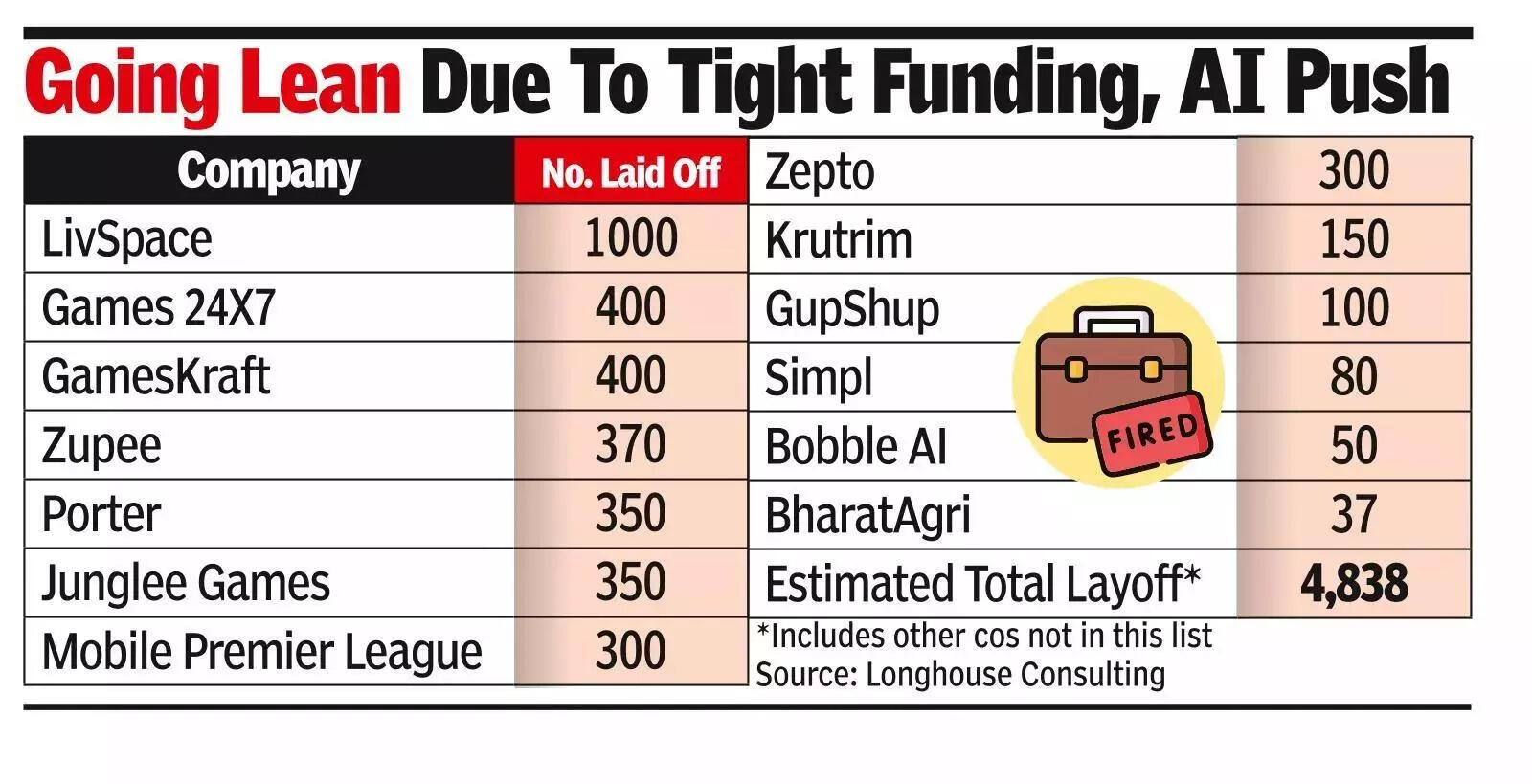
MUMBAI: Indian startups have laid off more than 4,500 employees since July last year, data sourced from executive search firm Longhouse Consulting showed. The sudden ban on online real-money gaming which nudged many startups to shut overnight has pushed the numbers up but much of it also has to do with the selective flow of capital into companies and investor pressure to turn profitable. This means leaner teams and focus only on filling up roles that are key to growth.
Besides, with firms increasingly betting on AI and many founders building AI-first startups, the approach by design now is to have smaller headcount. Consider home decor startup Livspace, for instance, which recently sacked 1,000 staff in AI push. “Investors are now rewarding startups that can achieve significant milestones with optimised headcounts. By building lean, startups are not just reacting to tighter funding environment; they are de-risking their models against macroeconomic volatility. This lean by design approach allows for longer runways,” said Viswanath PS, MD & CEO at Randstad India. Even early stage startups looking to raise growth funds need to show at least a path to profitability early in the game now, said Anshuman Das, CEO and founder at Longhouse. “From the start, hence, they are designing the companies very differently. They are not doing big hiring in all functions but only adding incremental hires and senior hiring wherever it is a must,” Das said. Also, as many startups head for IPO, they are cutting costs and trying to turn in a profit, Das said. “Much of the big money in 2024 and 2025 flowed into quick commerce. Sectors such as traditional SaaS are not attracting big money with the AI economy taking over,” said Das.Real-money gaming startups aside, companies including Porter, Zepto, Krutrim and Zupee have also sacked people during the period, the data showed. “There are some targeted corrections, especially in roles that were over-hired during the boom phase. Every hire has to justify itself. If not, the position is reconsidered. Hiring is definitely more selective and strategic,” said Aditya Narayan Mishra, MD & CEO at CIEL HR. The pace of layoffs, though, has moderated in recent times and even as entry-level hiring remains cautious, demand for specialists with 4-10 years of experience has grown. Green-tech and AI-first ventures will lead job creation, said Viswanath, adding that as companies look to optimise operational costs, many jobs will move to tier two hubs. Traction will also be seen in hiring for remote tech roles by overseas startups, said Das.
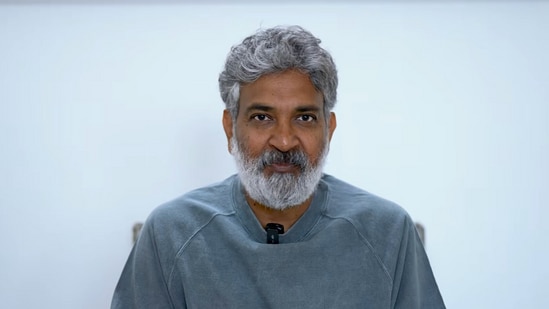
In a major technological leap for Indian cinema, filmmaker SS Rajamouli on Wednesday unveiled the country’s most advanced Motion Capture facility at Hyderabad’s Annapurna Studios, revealing that crucial sequences of his upcoming film Varanasi, starring Mahesh Babu and Priyanka Chopra, were shot using the cutting-edge technology.
SS Rajamouli said he utilised the Motion Capture facility in the making of crucial sequences in his upcoming film Varanasi.
Christened the A&M MoCap Lab, the facility marks a collaboration between actor Nagarjuna’s Annapurna Studios and producer Shobu Yarlagadda’s Mihira Visual Labs. The lab is powered by Hollywood-based Animatrik Film Design, a global leader in motion capture technology.
The unveiling signals what industry insiders describe as a defining moment in India’s creative and technological evolution. Rajamouli, who previously launched India’s first Dolby cinema processing facility at Annapurna Studios, described the Motion Capture lab as a long-awaited milestone for domestic filmmakers.
“India has always had some of the world’s best technicians contributing to major global productions, but what we lacked was an advanced facility right here at home. When I look back at some of my previous films like Baahubali, Eega, etc., I reminisce about how I could have made them even better if I had access to motion capture technology back then in India,” Rajamouli said, in a press statement.
“With the introduction of A&M’s Motion Capture technology, that gap has finally been bridged. This will change how Indian filmmakers envision and execute their stories, as we will no longer need to outsource. I have visited several Motion Capture facilities across the world, but what A&M offers is the perfect blend of precision and performance. We utilised this facility in the making of crucial sequences in Varanasi, and the results were simply fantastic,” the filmmaker added.
The facility’s launch comes as Annapurna Studios completes 50 years of its legacy in Indian cinema, underscoring its continued push toward innovation. Nagarjuna described the lab as a transformative addition to India’s filmmaking infrastructure.
“For decades, Indian filmmakers have aspired to tell large-scale stories that match global standards, but access to high-end technology was often a limitation. At Annapurna Studios, our vision has always been to stay at the forefront of filmmaking technology by bringing creativity and innovation together. At a time when Indian cinema is reaching audiences across the world, we wanted to raise the bar even higher. With A&M, filmmakers can now bring everything from epic adventures to intricate science fiction dramas to life right here in Hyderabad,” Nagarjuna said, in a press statement.
Yarlagadda, known for backing the global blockbuster Baahubali, framed the initiative as part of a larger ambition to build world-class production ecosystems within India.
“For Indian cinema to truly compete on a global stage, it is essential to create advanced technology ecosystems within the country,” he said, adding, “This Motion Capture facility at Annapurna Studios brings together creative ambition and technological excellence. At Mihira Labs, our focus has always been on enabling filmmakers with tools that meet international standards, and partnering with Annapurna Studios and Animatrik allows us to do exactly that. Seeing a filmmaker like SS Rajamouli utilise our A&M MoCap facility for Varanasi reinforces our belief that the future of Indian storytelling will be driven by innovation built at home.”
Brett Ineson, President and CTO of Animatrik Film Design, whose company has contributed to Hollywood blockbusters such as Avengers: Endgame and Spider-Man: No Way Home, said the collaboration represents India’s moment to embrace high-end storytelling technology.
“This collaboration represents a significant step in enabling filmmakers and creators to tell more immersive, emotionally rich stories with the highest global standards,” Ineson said in a press statement.
CV Rao, CTO of Annapurna Studios, elaborated on the lab’s technical capabilities, highlighting its role as a powerful previsualization tool.
“This state-of-the-art facility will serve as a powerful previsualization tool for filmmakers, enabling them to meticulously plan and refine their creative vision well before stepping onto a live set. Directors and cinematographers can experiment with camera blocking, lens choices, camera movements, and frame rates in a dynamic virtual environment, allowing critical creative decisions to be finalised during the motion capture stage, prior to principal photography. This not only elevates the quality of execution but also optimises time and cost efficiencies by minimising expensive trial-and-error during live shoots,” Rao said.
Looking ahead, Annapurna Studios aims to collaborate with Indian and international filmmakers, game developers and animation studios seeking a production partner in Asia that delivers world-class quality and speed.