Tuesday, September 29, 2026
Home Blog Page 1657

The 50: Ridhi Dogra schools Nehal Chudasama on loyalty

0
The 50: Ridhi Dogra schools Nehal Chudasama on loyalty


The 50: Ridhi Dogra schools Nehal Chudasama on loyalty

Actress Ridhi Dogra continues to emerge as one of the most balanced and fearless players on The 50. In a tense argument with Nehal Chudasma, Ridhi questioned her loyalty after Nehal failed to vote for Karan Patel, someone who was clearly part of her alliance.

Ridhi Dogra takes a stand for loyalty

For Ridhi, loyalty is not selective. It is the foundation of any alliance. During the confrontation, Ridhi firmly pointed out that standing with your team matters most when they are vulnerable. Her calm yet assertive tone reflected leadership rather than aggression.

Ridhi schooled Nehal on the importance of commitment in the game, stating that alliances cannot survive if members don’t stand by each other in crucial moments. Her clarity struck a chord with the rest of the house.

What stood out was how the majority of the team rallied behind Ridhi. Many contestants seemed to agree with her stance, reinforcing her position as someone who plays with integrity and consistency.

Instead of getting emotional, Ridhi handled the situation with maturity. She emphasized that strategy without loyalty creates cracks within a team, something she refuses to allow within her circle.

With the house backing her viewpoint, Ridhi once again proved that strong leadership isn’t about raising your voice, it’s about standing firm in your principles. On The 50, she continues to command respect, not demand it.

Karan Patel`s eviction 

In an emotional episode of The 50, actor Karan Patel bid farewell after a shocking multi-contestant elimination that left the house stunned. The unexpected twist saw five contestants voted out in one go, dramatically shifting alliances and altering the course of the game

As the host, known as The Lion, began announcing the names, tension gripped the room. Karan’s name was called first, and the actor appeared visibly shaken. Fellow contestants gathered around him in support as the weight of the moment sank in. Later, reflecting on his exit, Karan broke down while sharing what truly overwhelmed him. “It was just the thought of going home and seeing my daughter,” he said, struggling to contain his emotions. The heartfelt confession struck a chord, revealing that beyond strategy and competition, family remained his biggest strength. 

Alongside Karan, contestants including Chahat Pandey, Aarya, Bhavya, and Maxtern were also eliminated after receiving the lowest votes from their co-contestants. The house atmosphere quickly turned heavy, with friendships tested and unspoken tensions surfacing.


TCS is not afraid of AI, revenue cannibalisation, CEO Krithi Krithivasan says| Business News

0
TCS is not afraid of AI, revenue cannibalisation, CEO Krithi Krithivasan says| Business News


Tata Consultancy Services Ltd. is “not afraid” of AI or “revenue cannibalisation” due to AI tools used by clients. In fact, India’s largest IT services firm is pushing employees to use AI tools to deliver work faster and cheaper.

TCS CEO Krithi Krithivasan at the Nasscom Technology and Leadership forum in Mumbai on Wednesday, 25 February 2026. (Reuters)

“We are telling associates that if you find that you can do something faster, better, cheaper with AI, you should probably go and tell your customers (about that) even if it cannibalises revenue,” TCS CEO Krithi Krithivasan said at the Nasscom Technology and Leadership Forum in Mumbai.

“We are not afraid this technology will take away our livelihood. We believe it’s going to open up more, so you enjoy the benefits the more you do, and not by resisting the change.”

Krithivasan’s take on AI comes even as the Nifty IT index has declined nearly 21% in February so far, putting the gauge of India’s top IT stocks on track for the worst monthly performance in nearly 23 years.


Cigarettes after tax: The post-February crisis, and how smokers are reacting | India News

0
Cigarettes after tax: The post-February crisis, and how smokers are reacting | India News


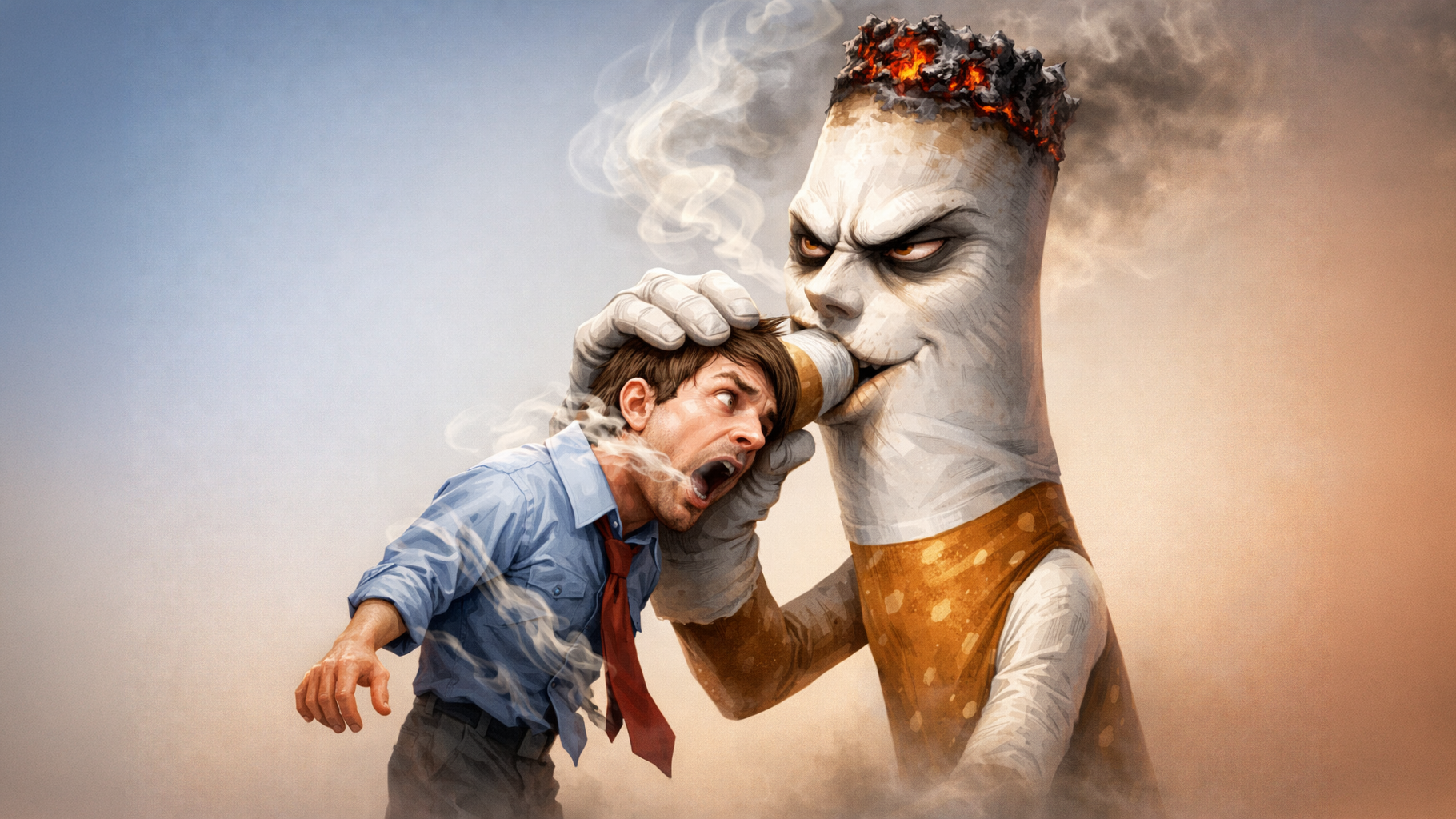
Australia’s $40 cigarettes and the rise of tobacco smugglersWhen cigarette prices began climbing across India in early February, the effect was immediate and oddly chaotic. Smokers paid different prices for the same pack on the same street. Retailers blamed wholesalers. Wholesalers blamed the new tax regime. What was framed as a clean public health reform quickly revealed a messier economic story.Popular culture has long understood what policymakers sometimes underestimate. In Money Heist, the Professor insists the real vulnerability is never the vault but the system around it. Apply enough pressure and the cracks appear elsewhere. In The Wolf of Wall Street, excess is not driven by morality but by margins; when the spread is wide enough, someone will step in to capture it. And in Gangs of Wasseypur, power does not shift with speeches but with control over supply. Whoever controls distribution controls the street.India’s 2026 tobacco overhaul sits at the intersection of those three insights. Raise taxes sharply and you do not just change behaviour. You change incentives, redistribute margins and test the resilience of the supply chain. What follows is less a story about cigarettes than about what happens when policy pressure meets market reality.

The scale of the problem

Although the most recent nationally representative surveys predate the 2026 reforms, they remain the clearest benchmark of India’s tobacco burden. According to the Global Adult Tobacco Survey (2016–17), approximately 267 million individuals aged 15 and above, nearly 29% of the adult population, consume tobacco in some form in India. Of these, an estimated 130 million are smokers. The World Health Organisation (WHO) reports that India accounts for nearly 12% of the world’s total smokers.Tobacco use patterns vary significantly across regions and demographics. A survey from 2013 conducted by the International Institute of Population Sciences in collaboration with the ministry of health and family welfare found that Kolkata records the highest smoking rate in the country, with 56.6% of its population identified as smokers. The data further reveals a stark gender disparity in the city: 82% of men and 23.5% of women smoke. Meanwhile, Uttarakhand reports the highest prevalence of beedi smoking. A 2008 health ministry report estimated that around 100 million people — largely from economically disadvantaged and less educated communities — smoke beedis. The report also linked beedi smoking to approximately 200,000 deaths due to tuberculosis, highlighting the severe health consequences associated with tobacco use in India.Since February 1, the legal trade has fractured into what smokers describe as a landscape of sticker-shock and secrecy: packs sold at more than 20 % above MRP, wholesalers hoarding stock, retailers charging different prices to different customers, and a growing presence of non-compliant foreign brands entering through porous borders.

India’s 2026 cigarette tax hike takes effect

In late 2025, the government enacted a sweeping tax reform to raise cigarette prices further. A December 2025 order imposed high specific excise duties (Rs2,050–8,500 per 1,000 sticks, depending on length) effective Feb 1, 2026. This stacked atop the existing 40% goods-and-services tax (GST). After implementation, the total tax share on cigarettes will jump from roughly 55% to about 66% of retail price. GST on cigarettes was hiked from 28% to 40%, and a new National Health Cess was introduced.Finance Minister Nirmala Sitharaman, announcing major Goods and Services Tax (GST) rate cuts, said the new two-tier system would ease the burden on the common man. “That special rate of 40% has also been proposed, and it’s been cleared and will apply only to paan masala, cigarettes, gutka, and other tobacco products such as chewing tobacco, products like zarda, unmanufactured tobacco, and Bidi,” she said during the GST Council meeting.Cigarette prices have increased by a minimum of Rs 22 to 25 per pack of 10 sticks following the implementation of additional excise duty from Sunday.

What happened on the ground

The immediate aftermath of the February 2026 tax announcement was marked by confusion and disruption across several Indian cities. Even before the revised duties formally came into effect, retailers began reporting acute shortages and sharp price increases. In Ahmedabad, paan-shop owners said cigarette and paan masala stocks had “virtually disappeared” from shelves in the days leading up to the deadline. Wholesalers were accused of hoarding inventory or supplying retailers only at the full printed maximum retail price, and in some cases above it, in anticipation of the higher taxes.Several shopkeepers reported being forced to procure stock at or near MRP, effectively paying around Rs 10 more per pack than usual, which eroded their margins. To compensate, they began charging customers a premium. Cigarettes were sold at Rs 1–2 above the printed price per stick, with loose cigarettes sometimes marked up by Rs 2–4. One retailer noted that when he ordered ten packs, he often received only six or seven. Consumers, meanwhile, complained that full packs were frequently unavailable and that they were offered only loose cigarettes at inflated rates.Similar accounts emerged from Delhi. In Mayur Vihar, street vendors said wholesalers had abruptly “stopped giving cigarettes”, creating what they described as artificial scarcity. One shopkeeper, who previously sold around 15 packets a day, said sales had fallen to just three after the tax hike announcement. Eventually, he stopped stocking cigarettes altogether, citing constant disputes with customers over prices. Vendors also observed that the price of a popular pack had jumped from roughly Rs 200 to Rs 360 even before the new tax structure officially took effect, almost doubling in a matter of weeks. As prices rose, consumption appeared to fall. Customers who once bought five cigarettes a day were now purchasing only two or three.Reports from other regions, including parts of Kullu district, reflected the same pattern. Stocks began disappearing from shelves in mid-January as the tax increase became imminent. Smokers alleged that both wholesalers and retailers were deliberately withholding supply in anticipation of higher margins once the revised prices were implemented.After the hike, cigarettes were routinely sold at more than 20 per cent above the printed MRP, with sellers citing “new rates” or ongoing shortages. Yet some traders privately admitted that profiteering, rather than taxation alone, was driving the spike. One conceded that in many outlets the prevailing selling price already exceeded what the officially revised prices would be.Consumers described the situation as exploitative. “You cannot justify overcharging simply because the product is taxed more,” said one smoker. “If the government revises GST, that is one thing, but selling cigarettes above the MRP is illegal and unfair.” Another regular smoker pointed to the lack of clarity in policy communication. Although the new rates were effective from 1 February, sellers began raising prices immediately after the January announcement, despite regulations requiring existing stock with old MRPs to be sold at the printed price. The result, he said, was “mayhem, chaos and confusion.” In February, he claimed to have paid four different prices for the same brand, including two different prices at the same shop on the same day.The absence of consistent interpretation and enforcement created extraordinary price variation, sometimes even within individual outlets. On the ground, both smokers and shopkeepers focused less on public health objectives and more on immediate financial pressures. As one Delhi retailer put it, the tax hike “did not increase my income; it only increased the income of the people above us,” a reference to manufacturers and wholesalers.

Rising taxes, rising illicit trade in India

India saw the surge coming. Illicit cigarettes already account for 26.1 % of the market by volume, according to Euromonitor International, making the country the world’s fourth-largest illicit cigarette market. The Tobacco Institute of India estimates illicit volumes are now nearly one-third of legal cigarette sales, more than double the 12.6 % share recorded in 2012.Industry estimates put annual tax losses at Rs 21,000–23,000 crore through 2024.The core economic mechanism is straightforward. When taxes push up legal cigarette prices, illicit cigarettes (untaxed and cheaper) also rise in price because of demand, but remain relatively affordable. That widening price differential increases profit margins for illegal sellers, encouraging smuggling and counterfeiting.

Australia’s $40 cigarettes and the rise of tobacco smugglers

The trajectory mirrors developments in Australia, where cigarette taxes rose steeply over a decade, eight hikes in ten years, to drive smoking down. The policy worked and smoking rates declined steadily.But the unintended consequence was dramatic. Australia now has the most expensive cigarettes in the world: a mid-market pack averages about 55 Australian dollars (nearly US $40), almost double the price in New York City. Those prices created a powerful incentive for illicit supply.However, economists warn Australia’s tobacco tax has now “passed a tipping point”. Regular excise hikes have not further reduced smoking rates (already low) but have exploded the black market. The Australian Treasury estimates that roughly 20% of cigarettes for sale are now illegal. Some state officials claim it may be even higher. In 2024 police seized illicit stock worth A$1.8m in Sydney alone (piles of contraband packs). Organized crime has moved in: state premiers reported tobacco smuggling linked to syndicates, and even firebomb attacks on shops selling contraband.The financial fallout is stark. Federal tax receipts peaked in 2019-20 and have since plummeted. By 2024, the Budget forecast tobacco excise will fall from A$7.4bn to A$6.7bn over the next few years – the lowest real revenue in a decade, despite higher rates. Economists like Bob Breunig of ANU argue that each further tax increase is now merely shifting consumers to illicit sources, with “every time we raise excise at this point we are not reducing smoking at all”. In short, Australia’s case shows how relentless tax hikes can top out: once legal cigarette prices become wildly higher than alternatives (licit or illicit), the fiscal incentive tips the balance to the black market.

The UK and other high-tax markets

Australia’s experience is mirrored in other high-tax countries. Take the United Kingdom, which has among the highest cigarette prices in Europe (regular hikes and plain packaging rules). Legal sales in the UK have collapsed in recent years: HM Revenue & Customs data show duty-paid cigarettes fell by ~45% from 2021 (23.6 billion sticks) to 2024 (13.2 billion). A KPMG study (for industry) found that by 2024 over one in four cigarettes consumed in the UK was illicit. (Illicit packs can sell for as little as £5–7, versus ~£15 legal.) The lost tax revenue was enormous – on the order of £3–4 billion per year. Here again, aggressive anti-smoking policies (taxes, flavours ban, generational restrictions) have driven some smokers underground. The lesson is that when demand persists, a parallel contraband market will emerge if it’s profitable and enforcement is stretched.Other countries tell similar stories. For example, illicit cigarettes from Eastern Europe and Asia circulate widely across the EU, wherever prices differ. In the US, high-tax states (New York, California) see border smuggling from low-tax states, though data suggest tight enforcement can mitigate it. Even in Singapore and Malaysia (with notorious price gaps) sophisticated smuggling networks exist. On the prohibition side, Bhutan’s decade-long sales ban (2010–21) offers a cautionary tale: despite a strict ban and high taxes on imports, smuggling became rampant and tobacco use barely fell (prevalence ~25% before and after). Bhutan eventually lifted its ban (after 2021) partly because illicit trade overwhelmed the legal gap. In short, any extreme measure – very high taxes or total bans – can invite a persistent black market unless accompanied by robust enforcement and viable legal alternatives.

India approaching the same crossroads

India’s tobacco curb has entered a delicate phase. The intent behind the 2026 overhaul is clear: discourage consumption, raise revenue and align policy with global public-health standards. But markets rarely respond in straight lines. They respond to incentives.The early signs, hoarding, arbitrary pricing, shrinking legal supply and a visible uptick in untaxed brands, suggest that taxation alone cannot carry the burden of reform. If price becomes the only instrument, the system strains at its weakest points: border controls, supply chains and enforcement capacity. The result is not simply fewer cigarettes, but a reshaped market.The lesson from Australia, the United Kingdom and elsewhere is not that taxes fail. It is that taxes, when pushed beyond a threshold without equal investment in enforcement and cessation support, change who profits from smoking. The lesson from high-tax economies is not that taxes fail. It is that taxes without enforcement capacity create parallel markets. India’s real test is not how high it can push prices, but whether it can prevent its own policy from financing the shadow economy.


Sesko’s late strike seals crucial win for Manchester United at Everton

0
Sesko’s late strike seals crucial win for Manchester United at Everton


Sesko’s late strike seals crucial win for Manchester United at Everton

Manchester United boss Michael Carrick praised the impact of super-sub Benjamin Sesko after the Slovenian`s cool finish earned a 1-0 win at Everton on Monday night. Sesko is yet to start in Carrick`s six matches in charge but has come off the bench to net in three of his last four appearances with vital goals. 

The 22-year-old also scored a late winner against Fulham and rescued a point against West Ham deep into stoppage time in United`s previous outing. Sesko started the move that led to the winning goal as all of United`s 200 million ($270 million) trio of attacking signings last summer combined to great effect. Matheus Cunha picked out the run of Bryan Mbeumo, who squared for Sesko to slot home his sixth goal in seven appearances since Ruben Amorim was sacked in January. 

Michael Carrick

Victory lifted United into the Premier League`s top four, three points clear of Liverpool and Chelsea in the battle for a place in next season`s Champions League. “It was a ruthless finish, I like the way he put it away with real confidence,” said Carrick, who has five wins and one draw since taking charge at Old Trafford. “Great play from Matheus and Bryan to set it up. Delighted for Ben again, coming on and making the difference.” 

United did not hit the height of sparkling performances to beat title challengers Arsenal and Manchester City in Carrick`s first two matches in charge during an uninspired clash at the Hill Dickinson Stadium. But the former Middlesbrough boss was delighted with a third clean sheet in six games. United had held opponents goalless just twice in 29 matches this season before Carrick`s arrival. “We had to do a lot of work. Credit to Everton they made it difficult, made us defend our box a lot. 

The spirit with which we defended the box was top class,” added Carrick. Goalkeeper Senne Lammens made a couple of vital saves to continue an impressive debut season at United for the 23-year-old Belgian. “Senne was oustanding tonight,” said Carrick. “You couldn`t hope for much more from a goalkeeper. It was an exempalary performance, so delighted for him. “You want (a goalkeeper) to take the chaos away and Senne is that. That calmness and composure helps those in front of him.”

Five
No. of wins for Man Utd in their last six EPL games 

Three
No. of goals scored by Sesko after coming on as a substitute in the last four matches

This story has been sourced from a third party syndicated feed, agencies. Mid-day accepts no responsibility or liability for its dependability, trustworthiness, reliability and data of the text. Mid-day management/mid-day.com reserves the sole right to alter, delete or remove (without notice) the content in its absolute discretion for any reason whatsoever


Taylor Swift celebrates Opalite success by sharing make-up-free BTS photo

0
Taylor Swift celebrates Opalite success by sharing make-up-free BTS photo


Taylor Swift celebrates Opalite success by sharing make-up-free BTS photo

Musician Taylor Swift left everyone in awe as she shared a series of makeup-free moments while celebrating her song Opalite climbing to the top of the Billboard Hot 100 chart. 

The global pop icon marked the milestone by posting candid memories, thanking fans for helping her score her second No.1 from the same album, a feat she says she hasn’t achieved since her 2014 album 1989.


View this post on Instagram


A post shared by Taylor Swift (@taylorswift)

Swift took to Instagram, where she shared a string of videos and pictures of herself from the making of Opalite.

For the caption, she wrote: “Just a few Opalite memories to celebrate the Hot 100 1 you guys just got this song!! I can’t even sum up my excitement and I’m so blown away by the love you’ve shown this song and video.”

Putting the achievement into perspective, the singer noted that the last time she experienced a similar milestone was during the era of 1989, which was released in 2014 and went on to become one of the most defining albums of her career.

“To put this into perspective… This is actually the first time I’ve had two Hot 100 1s off of one album since my album 1989 came out in 2014, nearly twelve years ago!”

She concluded: “I know that’s a lot of numbers but it all adds up to me being so thankful to the fans who helped make this happen by welcoming this song into your lives with open arms. Seriously bouncing off the walls about this!! Just wanted to say THANK YOU, might go buy a giant pretzel at the mall to celebrate, iykyk.”

Swift is known for her autobiographical songwriting and artistic reinventions. She is the highest-grossing live music artist, the wealthiest female musician, and one of the best-selling music artists of all time.

This story has been sourced from a third party syndicated feed, agencies. Mid-day accepts no responsibility or liability for its dependability, trustworthiness, reliability and data of the text. Mid-day management/mid-day.com reserves the sole right to alter, delete or remove (without notice) the content in its absolute discretion for any reason whatsoever


How banks, billionaires aided Epstein after his 2008 conviction | Banks News

0
How banks, billionaires aided Epstein after his 2008 conviction | Banks News


In 2008, after years of allegations from teenage girls who said they had been abused inside the property, Jeffrey Epstein secured what was later described as one of the most extraordinary plea deals in modern US legal history.

He pleaded guilty to procuring a minor for prostitution and served fewer than 13 months of an 18-month prison sentence, much of it on work release, avoiding federal sex-trafficking charges that can carry a life sentence.

Recommended Stories

list of 4 itemsend of list

Despite his new status as a registered sex offender, Epstein retained the trappings of wealth and influence. He preserved his foothold in financial circles and rebuilt his relationships among billionaires and senior bankers.

Al Jazeera has reviewed the latest documents published by the United States Department of Justice (DOJ) on January 30, 2026, gathered during federal investigations into Epstein. The files shed new light on how, despite his conviction, he remained embedded within elite financial networks for years. Epstein was later charged in 2019 with sex trafficking involving minors before his death by suicide in federal custody.

The records show that, between 2008 and 2019, Epstein’s survival depended on something less visible, a banking system that continued to process his money and a network of willing financiers. As long as this remained, the gates to power did not close. And in return, Epstein offered a different kind of access.

Jes Staley: The banker who kept the doors open

Epstein and Staley had a longstanding relationship dating back to Staley’s time at JPMorgan Chase in the early 2000s, and their contact continued well after Epstein’s 2008 conviction.

In JPMorgan’s third-party complaint against Staley, drawing on allegations by the US Virgin Islands (USVI), it states that he visited Epstein’s Palm Beach residence in January 2009 while Epstein was serving his sentence after pleading guilty to procuring a minor for prostitution.

According to the filing, that visit “corresponded with Epstein wiring $2,000 to a woman with an Eastern European surname”.

The USVI further alleges that, in late August 2009, after Staley emailed Epstein to say he would be in London the following week, the latter asked whether he would “need anything” during the trip.

Staley allegedly replied, “Yep.” The complaint states that on August 31, 2009, Epstein wired $3,000 to the same woman.

Meanwhile, the latest files reviewed by Al Jazeera show further sustained communication between the two men after Epstein had become a registered sex offender.

Emails disclosed in litigation reveal exchanges that were personal in tone and, at times, suggestive.

In July 2010, Epstein asked Staley, “What character would you like next?” after referencing “Snow White”. Staley replied: “Beauty and the Beast.” The exchange later featured prominently in regulatory scrutiny of their relationship.

Another email sent to Epstein by an unnamed individual the same day stated that “the snow white was f***** twice as soon as she put her costume [on]”.

At this time, Epstein remained a lucrative client for JPMorgan. His accounts reportedly held more than $200m and generated significant revenue for the bank. According to The New York Times, Staley acted as one of Epstein’s strongest internal advocates, becoming his “chief defender”.

Internal emails cited in the report show executives debating whether Epstein was an honourable person and whether the relationship should continue. Staley, however, insisted that the relationship was safe.

JPMorgan ultimately severed ties with Epstein in 2013.

The closeness of the relationship later became central to regulatory action in the United Kingdom. Correspondence between Barclays and the Financial Conduct Authority (FCA) claimed Staley had ceased contact with Epstein well before joining Barclays.

However, the FCA found that Staley had remained in contact with Epstein in the days leading up to the announcement of his appointment as chief executive in October 2015. In 2023, the FCA fined and banned him from holding senior roles in financial services, concluding he had been “reckless” in his representations about the nature of the relationship.

The practical consequence of those earlier decisions was significant. As long as Epstein remained banked by a global financial institution, he retained the infrastructure required to operate, move funds, manage accounts and present himself as a legitimate financier.

Leon Black: The billionaire who kept paying

If banks provided Epstein with the tools to access money, billionaires provided Epstein with legitimacy in elite circles.

Leon Black, cofounder of Apollo Global Management, reportedly paid Jeffrey Epstein $158m between 2012 and 2017 for tax and estate planning advice, according to an independent review conducted by the law firm Dechert and commissioned by Apollo.

The payments came years after Epstein had pleaded guilty in Florida and registered as a sex offender.

Court documents released in subsequent investigations also contain allegations from a woman who told prosecutors that Epstein asked her to massage both Black and Jes Staley, and that sexual contact occurred during those encounters. Black has denied wrongdoing.

In 2021, Guzel Ganieva publicly accused Black of sexual abuse and coercion, alleging that he introduced her to Epstein and attempted to pressure her into sexual contact with him.

Black responded that he had engaged in a consensual relationship with Ganieva, denied any coercion and rejected the allegation that he sought to force her to have sex with Epstein.

Litigation followed, with claims and counterclaims filed in New York courts. In 2023, Ganieva’s lawsuit was dismissed. Black has consistently denied wrongdoing.

New documents viewed by Al Jazeera, contained within the DOJ files, shed light on how disputes within this circle were managed.

The file is a draft transcript of a secretly recorded meeting on August 14, 2015 at Le Bernardin in New York between Black (identified as “JD”) and Ganieva.

In the transcript, Black confronts Ganieva over what he describes as a $100m demand. He outlines what he calls “three different directions” the dispute could take. He proposes what he describes as a “15 million dollar package”, including “a million dollars a year for 12 years” and an additional 2 million pounds ($2.7m at the current exchange rate) to be invested for UK residency purposes.

If she goes public, he warns, “you could end up with nothing … and will probably land you in jail”. At one point, he states, “But this is total extortion.”

Other filings and reporting indicate that Epstein advised Black during this period, helping to arrange meetings and suggesting surveillance as the dispute escalated, offering a glimpse into how Epstein operated within a network where he was trusted in moments of personal and financial vulnerability.

The professional relationship between Black and Epstein endured for years after 2008, with public reporting indicating they remained in contact until shortly before Epstein’s arrest in 2019.

Deutsche Bank: The slow retreat

After JPMorgan ended its relationship with Epstein in 2013, Deutsche Bank became his primary banker.

According to reporting by The New York Times, payments from Leon Black to Epstein continued to flow through accounts at Deutsche Bank. At least one transfer was reportedly flagged internally as unusual, according to people familiar with the matter.

In 2020, New York’s Department of Financial Services fined Deutsche Bank $150m for compliance failures related to its handling of Epstein and other high-risk clients.

Regulators found the bank had processed millions of dollars in suspicious transactions, including payments to individuals described as young women, without filing required suspicious activity reports in a timely manner.

Deutsche Bank acknowledged shortcomings in its controls and said it had strengthened its compliance systems.

Epstein remained a client until 2018, a decade after his conviction. By the time Deutsche Bank terminated the relationship, Epstein had been a registered sex offender for 10 years.


IND vs ZIM | Will Sanju Samson play vs Zimbabwe? Sitanshu Kotak hints at change in batting order

0
IND vs ZIM | Will Sanju Samson play vs Zimbabwe? Sitanshu Kotak hints at change in batting order


India batting coach Sitanshu Kotak has hinted that the hosts might make a change in the batting order in their do-or-die clash against Zimbabwe. India play Sikandar Raza’s side on Thursday, February 26. The co-hosts have their backs to the wall after their heavy loss against South Africa earlier in the Super 8 stage.

Speaking in Chennai a day ahead of the match, Kotak revealed that there are conversations about switching the batting line-up and giving Sanju Samson a look-in. The left-hand-heavy batting line-up of the Indian team has struggled throughout the tournament. Barring Ishan Kishan, both Abhishek Sharma and Tilak Varma have struggled, leaving India scampering against spin in the middle overs of the game.

Off-spin bowling has exposed India’s issues in the top order, forcing the tall batting line-up to stutter for the majority of the innings. Kotak said that the team management has recognised the issue and are discussing potential changes that can be made.

“Yes, there can be changes. It goes without saying that we do discuss these things. We have two left-handed openers and a left-hander at number three, and opposition teams are bowling off-spinners. I personally don’t think there is any problem there. But, because we lost wickets in the first over in three games, any team would think,” Sitanshu Kotak said in the pre-match press conference on Wednesday, February 25.

“Obviously, we are thinking. Let’s see how it goes. We never decide the team early. Obviously, it’s not fair to start telling your plan in advance. But, definitely there will be thoughts,” he added.

‘DON’T WANT TO PUT PRESSURE ON ABHISHEK’

The Indian team’s 76-run loss against South Africa has pushed them back to the wall. Not only do India have to win two of their own matches, they would also have to hope for favourable results from South Africa and West Indies to qualify for the semi-final of the tournament.

However, that is going to be difficult if opener Abhishek Sharma continues his poor patch of form.

Speaking about the opener, Kotak said that he does not like to focus on one individual in the entire line-up. The batting coach said that while Abhishek has lacked momentum since coming back from illness, he would not like to put the batter under more pressure than he already is.

“Abhishek has gotten out three times (for a duck). His health was a concern. After that, he hasn’t had momentum. In the last game, he looked good. Overthinking about one individual, I don’t like it. We are playing with six batters and two all-rounders. We can’t be focusing too much on one individual. If we do that, that person will also be under pressure. When he was scoring hundreds, 70s and 80s in 20 balls, scoring hundreds in 40-50 balls, nobody was discussing that,” Sitanshu Kotak said.

“Our job is to keep him in a good frame of mind. Once he starts hitting the ball, you will see the same Abhishek again. I think it’s not far,” he concluded.

India play Zimbabwe at the MA Chidambaram Stadium in Chennai. The match is set to begin at 7 pm IST. India are likely to make at least one change in their line-up. Axar Patel is likely to replace Rinku Singh, while Samson might get a look-in as well.

T20 World Cup | T20 World Cup Schedule | T20 World Cup Points Table | T20 World Cup Videos | Cricket News | Live Score

– Ends

Published By:

Kingshuk Kusari

Published On:

Feb 25, 2026


Sandeepa Dhar talks about the pressure to undergo cosmetic procedures

0
Sandeepa Dhar talks about the pressure to undergo cosmetic procedures


Sandeepa Dhar talks about the pressure to undergo cosmetic procedures

Actress Sandeepa Dhar opened up about the unrealistic beauty standards for females in the entertainment industry and whether they push actresses toward cosmetic procedures.

Sandeepa Dhar on the pressure to undergo cosmetic procedures

Sandeepa stated that these cosmetic procedures are now not only limited to actresses, but common women who are not public figures are also undergoing the knife to feel more confident about their appearance.

Sandeepa was asked, “Do you feel actresses face additional pressure to appear flawless? And do beauty standards sometimes push them toward cosmetic procedures?”

Answering the question, she told IANS, ” It is not limited to actresses anymore. Many young women who are not in the public eye are opting for cosmetic procedures. Earlier, people assumed only film stars did it, but today it has become common.”

She added that these days every woman wishes to feel like the heroine of her own story. However, Sandeepa warned that it is a dangerous path if it stems from feeling inadequate.

“We are creating unrealistic beauty standards that make people believe they are not enough. This needs to change, and it will only change when our immediate circles—friends and family—encourage us to embrace ourselves as we are,” she went on to explain.

Sandeepa concluded, pointing out that comparison truly is the thief of joy. “You can never be happy if you constantly measure your life against someone else’s”, she shared.

Sandeepa Dhar on Do Deewane Seher Mein

Work-wise, Sandeepa recently graced the screen with Siddhant Chaturvedi and Mrunal Thakur`s Do Deewane Seher Mein.

Revealing why she decided to be a part of the movie, Sandeepa said, “There were a few reasons why I decided to be part of the film. The first, of course, was the story. After a long time, someone was making a sweet love story that is not typical. It is about two flawed individuals and how they gradually embrace their imperfections and learn to accept each other. That felt refreshing to me. There are very few stories where the hero and heroine are aware of their flaws and still choose acceptance.”

“The second reason was my character, Naina. On the surface, she appears perfect, and her life seems flawless. But internally, she is lonely and emotionally broken. The film explores her journey in depth. Portraying that dichotomy—looking perfect on the outside while carrying turmoil within—was both challenging and exciting for me as an actor”, she added.


Before it looks good, it has to work: Rethinking what design really means

0
Before it looks good, it has to work: Rethinking what design really means


When most of us hear the word “design,” we tend to picture fashion shows, curated living rooms or graphic art. Things that look good, that feel ‘designed’, that are ‘surface’, and therefore, non-essential.

Design goes beyond aesthetics; it influences comfort, safety, accessibility, and systems in daily life. (MIT Institute of Design)

And while it can feel that way sometimes, that’s only because so much of design actually swims underneath the surface. Good design lives in decisions that shape our everyday existence. In seamless moments when things work. And, when poorly designed, in daily inconveniences. When you think about it, just for a second, you realise that design shapes everything: how we sit, how we move, how we pay, how we learn, how we trust.

For students considering design as a serious discipline, and for parents trying to understand its relevance, the real shift is this: design isn’t merely about making things prettier, though aesthetics do play a part. Its real function lies in making systems work better.

Here are ten ways design quietly elevates our everyday lives.

1. Design as Comfort

Comfort is almost always engineered, not accidental.

Modern life places sustained demands on the human body. We sit longer, commute farther, stare at screens for hours. In that context, comfort is not indulgence. It is performance infrastructure.

Ergonomic furniture, climate-responsive architecture and even the spacing of seats in a metro coach reflect deliberate choices about posture, circulation and cognitive fatigue. In cities like Delhi, where summer temperatures regularly cross 40 degrees, ventilation systems and shaded transit corridors are not luxuries. They are design responses to climate.

Comfort doesn’t announce itself. But when design gets it wrong, your body knows it.

2. Design as Invisibility

You know something is designed really well when you don’t think in terms of ‘design’.

Consider how millions use UPI platforms such as Google Pay or PhonePe with such ease every day. The clarity of icons, the sequence of prompts, the reassuring transaction sound. Each element reduces hesitation.

And there’s a lot of work that goes into that. Good interface design removes friction because designers iterate till they’ve hit the perfect balance between ease and efficacy. It anticipates confusion before it arises because designers study user groups and their interactions with the product till it becomes second nature to them. When it all succeeds, users don’t stop to admire it. They simply complete the task at hand.

The invisibility of design isn’t absence. It is precision.

3. Design as Safety

Safety is the bedrock of strong design. It isn’t dramatic or attention-seeking. In the most well-designed products and spaces, it is almost unnoticeable.

Take, for instance, the shape of a motorcycle helmet. The grip on a staircase railing. The brightness of street lighting in residential neighbourhoods. These look like aesthetic decisions, but aren’t. Each of these is based on calculations about human behaviour.

In India, where two-wheelers dominate the roads, helmet design determines not just protection but adoption. If it is too heavy, too hot or poorly ventilated, it won’t be worn consistently. Product design, in that sense, shapes survival.

Safety works best when it asks no effort from the user. And that effortlessness comes from design.

4. Design as Access

Inclusion and access are features that don’t happen by default. They require thoughtful and empathetic design.

Tactile paving on railway platforms for the visually impaired, ramps integrated into public buildings for those who need wheelchairs to get around, voice-enabled digital interfaces in regional languages for the millions who can’t read comfortably. These aren’t add-ons, but commitments to inclusion.

India’s digital public infrastructure has shown how interface clarity can bring first-time users into formal financial systems. When instructions are intuitive, adoption expands across age, geography and literacy levels.

Applying that same approach to our physical infrastructure opens doors, literally.

5. Design as Persuasion

Design guides choice long before we realise it.

Why does one website feel credible while another feels suspicious? The layout of a news homepage. The placement of a “Buy Now” button. The colour of a political campaign poster. Typography, spacing, information hierarchy and colour signals influence perception within seconds, often without us being aware of it.

In crowded information environments, persuasion is not only about argument. It is about presentation. The same message, structured differently, produces different responses.

Design frames the story before the story begins.

6. Design as Emotion

We feel design before we analyse it.

Walk into a temple lit for a festival, or watch an animated film that makes you unexpectedly tear up. Light, colour, proportion and sound create emotional texture.

Indian cinema has long understood the power of production design, from elaborate mythological sets to hyper-real urban landscapes. Global studios like Pixar have demonstrated time and again how colour palettes, character proportions and environmental design evoke empathy across cultures.

And that’s not a small thing. Emotion creates stronger memories. Emotion can trigger action. Emotion can guide decisions. And it often stems from clever design.

7. Design as Systems

Humans aren’t just creatures of habit; we’re creatures of systems.

And we’re constantly building them. From your morning routine to the Delhi Metro, it’s all systems. One is suited to you, and the other to millions of commuters. It is ticketing logic, colour-coded lines, signage placement, crowd flow management and maintenance protocols working in coordination.

Systems design anticipates scale. It plans for peak hours. It considers breakdowns before they occur. It connects moving parts into a coherent experience.

When systems are thoughtfully designed, cities function with less friction. When they are not, inefficiency becomes everyday reality.

8. Design as Storytelling

Every space tells a story.

Retail environments guide you through curated journeys. Museums use spatial sequencing to build narrative arcs. Even school classrooms can be designed to signal authority or collaboration.

In architecture, materials and light communicate values. A courthouse, a temple and a startup office each tell different stories before a word is spoken.

Storytelling is not confined to books and films. It is embedded in our built environment, our lived spaces.

9. Design as Sustainability

The environmental cost of poor design is no longer abstract.

Traditional Indian architecture used courtyards, jaali screens and shaded verandahs to regulate temperature without heavy energy use. Contemporary sustainable buildings are revisiting these principles with modern materials.

Packaging redesign can reduce plastic use at scale. Product lifecycle thinking can extend usability and reduce waste.

When done right, environmental responsibility begins at the drawing board.

10. Design as Future-Building

The future isn’t discovered. It is designed.

Electric vehicles, wearable health devices and smart urban infrastructure begin as design challenges. Engineers make them technically viable. Designers make them usable and desirable.

Technologies fail when they ignore how people actually behave. They succeed when they integrate seamlessly into everyday routines.

The future does not arrive fully formed. It is imagined, prototyped and refined. Again and again.

The Real Work of Design

The mistake we make is that we assume design is mere decoration applied at the end. In reality, it is thinking applied at the beginning. It determines how comfortably we live, how safely we travel, how inclusively we build and how responsibly we consume. It shapes behaviour before behaviour becomes habit.

For students, this means design is not a narrow creative pursuit. It is a discipline that intersects with technology, psychology, business and culture. For the rest of us, it means the industries shaping tomorrow will compete not only on products, but on experience. And experience is structured through design.

Learning to See the World Differently

The world doesn’t just need things that are aesthetically appealing. It needs systems that work better, spaces that are inclusive and technologies that respond to human realities and challenges.

That work belongs to design. To design effectively, one must first learn to see differently. To question assumptions. To understand human behaviour as deeply as materials and technologies. To move fluidly between craft, research, systems and strategy. This is where education matters.

With one of the world’s youngest populations and largest talent pools, India stands at a pivotal moment. As industries evolve and global markets shift, the country’s demographic dividend will matter only if it is matched with the right kind of education. How institutes approach design thinking is where aspiration meets execution. The difference lies in whether design is taught as a technical skill – or cultivated as a way of thinking. Institutes that embrace the latter are shaping professionals equipped to respond to complexity with innovation, frugality and clarity.

At MIT Institute of Design, design education is framed in precisely this way. Established in 2006 and now a constituent of MIT Art, Design & Technology University, the institute positions design at the intersection of traditional arts, scientific inquiry and emerging technologies.

Rather than isolating design into narrow specialisations from the outset, the institute’s learning philosophy rests on three interrelated domains: skill, knowledge and formation – concepts that echo the Indian philosophical triad of Sadhan, Sadhana and Sadhya.

Skill refers to the tools and techniques through which ideas take tangible form. Knowledge builds the multidisciplinary base that informs thoughtful problem-solving. Formation, the most critical layer, develops lateral thinking and conceptual clarity – enabling students to translate insight into meaningful solutions.

This philosophy stems from the institute’s broader mission: to promote design as a craft that contributes to life on the planet, to study emerging user aspirations, to integrate research and industry collaboration, and to nurture professionals capable not only of employment but of entrepreneurship.

In an era defined by technological acceleration and social change, such ambition is necessary. That ambition translates into a wide spectrum of postgraduate and specialised programmes, spanning design management, immersive media, game design, AI-enabled design, transportation design, fashion communication, user experience design and more. The breadth reflects an understanding that design today is interdisciplinary, technology-infused and future-facing.

Among these offerings are programmes that respond directly to the defining shifts of our time – from artificial intelligence to the reinvention of global fashion systems.

Designing in an AI-Enabled World

Amid anxieties that AI will replace designers, this programme begins with a different premise: AI will not replace designers. In fact, designers who understand and shape AI will define its impact.

The M.Des in AI-Enabled Design positions design judgment, human values and contextual intelligence at the centre of AI innovation. Rather than focusing solely on coding or engineering, the curriculum trains students to critically evaluate AI outputs, understand bias, and design meaningful human-machine interactions. Framed through a Human + Machine Hybrid Design philosophy, students learn to orchestrate socio-technical systems where automation supports, rather than overrides, human insight.

Graduates emerge prepared for roles such as AI Experience Designer, Generative Design Specialist, UX Designer and Innovation Strategist – roles that demand both technological fluency and ethical clarity.

Fashion Beyond the Runway

The M.Des Fashion Futures programme responds to a global fashion ecosystem that is increasingly shaped by sustainability, technology and entrepreneurship.

Offered with pathways in Fashion Design, Fashion Communication and Fashion Retail Management, the two-year studio-based programme integrates research, industry collaboration and cross-disciplinary learning.

By embedding sustainability, innovation, AI and entrepreneurial thinking into the curriculum, the programme prepares graduates not only to create garments or campaigns, but to rethink fashion systems.

Careers emerging from this ecosystem span fashion marketing, retail strategy, merchandising, brand development and design leadership, reflecting the evolving demands of the industry.

Designing the Next Decades

India’s median age is under 30. Its young population is ambitious, connected and impatient to participate in shaping the future. But demographic advantage alone does not guarantee progress. It must be matched with education that develops not only employability, but judgment.

The challenges ahead – climate change, rapid urbanisation, AI integration, shifting consumer behaviour – are design challenges as much as they are technological or economic ones. They demand professionals who can think critically, act ethically and build systems that work at scale.

Institutes that recognise this responsibility are not merely preparing students for jobs. They are preparing them to shape industries.

The decades ahead won’t just be defined by technological breakthroughs, but by how wisely those breakthroughs are shaped for human life. For India’s young designers, the opportunity is not just to adapt to change, but to shape its direction.

Note to the Reader: This article has been produced on behalf of the brand by HT Brand Studio and does not have journalistic/editorial involvement of Hindustan Times.



Did Sanjay Leela Bhansali get a heart attack on 63rd birthday? Love & War director's family issues statement

0
Did Sanjay Leela Bhansali get a heart attack on 63rd birthday? Love & War director's family issues statement


Sanjay Leela Bhansali celebrated his 63rd birthday on Tuesday (February 24). The filmmaker has been busy with the production work of his upcoming film Love and War, starring Ranbir Kapoor, Alia Bhatt and Vicky Kaushal. After reports claimed that Bhansali suffered a heart attack and was rushed to a hospital, his family has released an official statement to clear the air.

Sanjay Leela Bhansali's team has released a statement on his health. (Photo by SUJIT JAISWAL / AFP) (AFP)
Sanjay Leela Bhansali’s team has released a statement on his health. (Photo by SUJIT JAISWAL / AFP) (AFP)

Official statement

As per a statement released from his family, “Mr Sanjay Leela Bhansali is doing absolutely fine. He has gone in for a routine medical check-up and there is no cause for concern.”

The note further stated, “We sincerely appreciate the love, care, and concern for shown by everyone. Thank you for your continued support and warm wishes.” The statement via Instagram Stories on the account of Bhansali productions.

About the filmmaker’s career

Sanjay Leela Bhansali is not only a film director but also a producer, screenwriter, editor and music composer. He has received several awards, including seven National Film Awards. He was also awarded the Padma Shri in 2015. He made his directorial debut with Khamoshi: The Musical in 1996.

The filmmaker earned praise and achieved success with Hum Dil De Chuke Sanam in 1999 and Devdas in 2002. He won the National Film Award for Best Feature Film in Hindi for directing Black in 2005. His other films include Saawariya in 2007 and Guzaarish in 2010. With Guzaarish, he made his debut as a music composer.

After that, he helmed Goliyon Ki Raasleela Ram-Leela in 2013, Bajirao Mastani in 2015, Padmaavat in 2018 and Gangubai Kathiawadi in 2022. In 2024, Bhansali unveiled his music label, named Bhansali Music. He also made his debut on the OTT platform by directing the web series Heeramandi.

Recently, Bhansali co-produced Siddhant Chaturvedi and Mrunal Thakur’s love drama titled Do Deewane Seher Mein. The film also stars Ila Arun, Joy Sengupta, Ayesha Raza, Viraj Gehlani, Sandeepa Dhar, and Naveen Kaushik. Directed by Ravi Udyawar, the film is presented by Zee Studios and Sanjay Leela Bhansali’s Bhansali Productions.