Music composer and singer Palash Muchhal, who was recently in the news after his wedding with batter Smriti Mandhana was called off, has found some relief regarding a suit. As per the latest update from news agency PTI, the Bombay High Court has restrained actor-producer Vidnyan Mane from making defamatory remarks against the composer.
Palash Muchhal has composed music for several songs, such as Tu Hi Hai Aashiqui and Naach Basanti.
Palash Muchhal gets relief in suit
A bench of Justice Milind Jadhav, in its February 11 order, noted that Vidnyan Mane’s comments were “prima facie insinuating and per se defamatory”. Palash has filed a suit against Mane seeking damages and a permanent injunction for making defamatory statements against him and his family.
“The defendant (Mane) is restrained from making any further references and insinuations of the kind and nature attacking the plaintiff (Muchhal) and his mother, which are made in the said interviews, which are prima facie defamatory,” the court said.
The composer’s advocates Siddesh Bhole and Shreyansh Mitare had submitted to the court that there was a commercial dispute between the parties. But Mane’s comments in the interview refer to an incident that is alleged to have occurred on November 23, 2025, which have harmed not just Muchhal’s reputation but also that of his family members.
The bench posted the matter for further hearing on March 11.
About the complaint
Mane, a resident of Sangli, had approached the police last month, had filed a complaint. As per the complaint, Palash met Mane in Sangli on December 5, 2023. As Mane showed interest in investing in film production, Muchhal said he could invest in his upcoming project ‘Nazaria’ as a producer, he claimed. After the film was released on OTT platforms, Mane can earn a profit of ₹12 lakh on an investment of ₹25 lakh, Muchhal told him, and also offered him a role in the film, the complaint alleged. The two met twice after that, and Mane allegedly gave a total of ₹40 lakh to Muchhal as of March 2025. The project, however, did not get completed, so Mane demanded his money back but allegedly got no response. He then approached Sangli police. He also accused Palash of cheating on Smriti before their marriage.
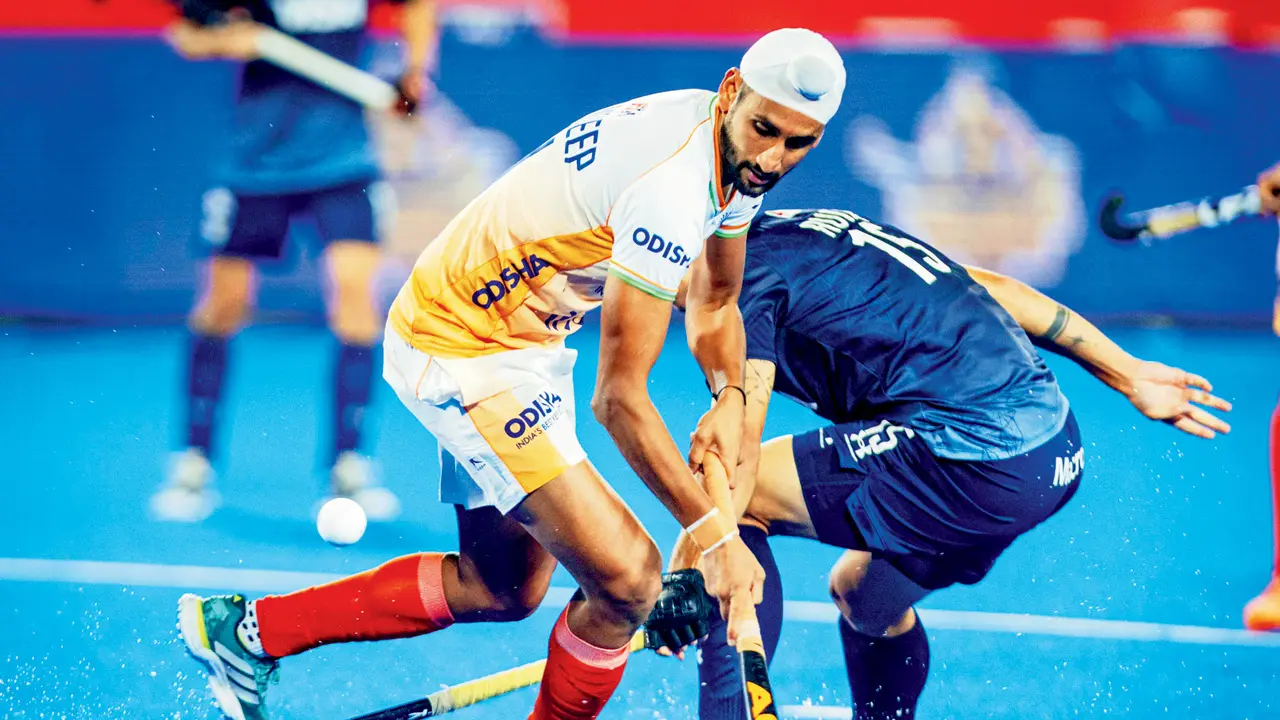
Hockey India President Dilip Tirkey is as disappointed as the 15,000 hockey fans, who packed the Birsa Munda Stadium in Rourkela, only to see Team India get hammered 0-8 by Argentina in their FIH Pro League match on Thursday night.
Argentina’s Tomas Domene slotted in four goals (15th, 20th, 26th, 60th) while Tomas Ruiz (14th), Lucio Mendez (22nd), Ignacio Ibarra (25th) and Nicolas della Torre (30th) added one each as Team India suffered their worst defeat since the 2010 Commonwealth Games gold medal match in New Delhi where they went down by a similar scoreline.
“It’s indeed disappointing, but I will put it down to a bad day at the office. Remember this is the same team that won a bronze medal at the 2024 Paris Olympics,” former India captain Tirkey told mid-day over the phone from Bhubaneswar on Friday.
Dilip Tirkey
“I felt bad for all the fans, who turned up to cheer for the team, because despite the first day [India lost to Belgium 1-3 on Wednesday in their FIH Pro League season-opener] still over 15,000 came for the Argentina match, but it was unfortunate because the full team did not play well,” added Tirkey, obviously referring to the series of defensive lapses that cost India dearly.
Surprisingly, India’s most consistent scorer over the years, skipper Harmanpreet Singh had two attempts at a penalty stroke [Argentina goalkeeper Tomas Santiago, who saved the first shot, was adjudged to have moved before the stroke was taken, leading to a second attempt awarded to Harmanpreet] early in the match, but missed both. “Had Harmanpreet converted that stroke, India would have gone up 1-0 and the result could have been different,” felt Tirkey, 48.
It’s a crucial year for Indian hockey with the Asian Games and the World Cup scheduled later on, but Tirkey insisted there’s no need to panic. “I’m sure the team will bounce back and ensure the standard of Indian hockey is maintained,” he concluded. India play Belgium again on Saturday followed by Argentina on Sunday.
Sunny Deol began the year on a strong note with the release of Border 2, which reaffirmed his stardom by earning over Rs 400 crore at the box office. Interestingly, the film was released a month after the box office hit Dhurandhar, starring Ranveer Singh, which featured a viral dialogue referencing Deol’s iconic film titles.
Sunny Deol on Dhurandhar dialogue
Directed by Aditya Dhar, Dhurandhar included the line, “Ghayal hoon, isiliye Ghatak hoon,” which quickly went viral. Ghayal and Ghatak are among Sunny Deol’s most popular films. In a recent interview with ANI, Sunny was asked about the use of his film titles and whether he or the makers received any royalty for it.
Reacting to the question, the actor smiled and said he found the gesture sweet. He said, “Nahi, humare jo director hai, he is a great fan. Unhone meri picture dekhi hai aur unhone Ghayal, Ghatak, yeh sab filmein dekhi hai. So I think just out of respect, maybe he used the dialogue. I mean, they have used the titles, which is very sweet.”
The film, Dhurandhar, released on December 5, also stars Akshaye Khanna, Sanjay Dutt, R. Madhavan, Arjun Rampal, Sara Arjun, Rakesh Bedi, Saumya Tandon, and Gaurav Gera, among others, in supporting roles. The first installment of a two-part film series depicts an anti-terror covert operation in which an undercover agent infiltrates Karachi`s criminal and political underworld in Pakistan.
The film has shattered several box office records. Despite its OTT release, it continued its monstrous run in theatres. It earned over Rs 850 crore and became the highest-grossing Hindi film, beating Pushpa 2.
Meanwhile, the sequel to Dhurandhar, titled Dhurandhar: The Revenge, is set to release in theatres on March 19. The story will continue after Ranveer Singh’s character, Hamza Mazhari, kills Akshaye Khanna’s Rahman Dakait. The film is expected to clash with Toxic: A Fairytale for Grown-Ups, starring Yash.
Sunny Deol’s work front
Sunny has teamed up with Aamir Khan and Preity Zinta for Lahore 1947, which is scheduled for release on Independence Day 2026. Apart from this, he has a Netflix project titled Ikka and another film, Gabru.
He will also be seen in Nitesh Tiwari’s Ramayana Part 1, where he plays the role of Hanuman. The film also stars Ranbir Kapoor, Yash, and Sai Pallavi, and is slated for a Diwali release this year.
In a world where relationships have become more explicit and more complex, a curious psychological phenomenon has been quietly gaining attention – gamophobia, the fear of commitment or marriage.It’s sometimes more than just cold feet, nervousness before a proposal, or hesitation about settling down. Gamophobia is a deeply rooted, lived experience that can color every relationship, shape life choices, and define what love looks like for many individuals. Increasingly, mental health professionals, authors, and even everyday couples are referring to this concept not just as a fancy term, but as a real emotional resistance.27 year old IT professional Ankur Halder has it right – Like Abhay Deol I say Life No will meet again“I don’t want two bodies and one life.” The word “gamophobia” comes from the Greek gamos (marriage) and phobia (fear). At its core, it talks about the fear of getting married or entering into a long-term intimate commitment. Yet, in practice, it is far more subtle. People who struggle with gamophobia are not necessarily afraid of love or companionship. Instead, they fear the permanence, vulnerability, expectations, and potential loss of autonomy that may result from lifelong attachment.But why has this fear become more visible now? Why are more people willing to call themselves “afraid of commitment”? Is this merely a symptom of a generation without choices, or are its roots rooted in deeper psychological and social changes? And importantly – what does this look like in a place like India, where marriage still holds cultural solemnity, unlike many parts of the world?To explore these questions, we must go beyond the labels and into the lived realities that echo homophobia in the twenty-first century.
The Many Faces of Gamophobia
Gamophobia is not a clinical diagnosis in major psychiatric manuals such as the DSM-V; It is a loosely defined term used in the psychological, cultural, and pop-psychology fields. Nevertheless, its emergence reflects real emotional and relational patterns that therapists see every day.For some people, this manifests as anxiety or nervousness when conversations about the future become serious. For others, it shows up as long-term sabotage in the relationship – starting off strong, pulling away, or falling into a self-indulgent breakup before things even get real. Some people experience insomnia, avoidance, or physical symptoms at the thought of connecting their lives with another.Importantly, gamophobia is not just about the fear of marriage. This can be expressed as:
fear of dependency or insecurity
Fear of repeating past relationship trauma
fear of losing one’s identity
fear of failure in love
Fear of social expectations related to marriage
For a growing number of young Indians, this fear is not abstract. It unfolds at a very specific moment – when romance begins to take hold.
Relationships in this country rarely hang out in emotional limbo. They are expected to finish. They have to be formalized. They should move towards marriage.And often at this very threshold some change occurs.
When loving is easy, but not forever
Aarav, 32, who works in an MNC in Mumbai, said he has been in three serious relationships in the last decade. Each followed a similar rhythm: an intense beginning, emotional intimacy, shared holidays. For months, sometimes years, everything seemed certain.Then there were talks of meeting the parents. About the deadline. About “where is this going”, and began to back off.“I don’t know what happens,” he says. “It’s like something goes off. I start imagining all the ways it could go wrong. What if I lose my freedom? What if I’m not ready? What if I choose wrong and can’t undo it?”Gamophobia often manifests in this way. Individuals easily form romantic bonds. They are affectionate, attentive, emotionally connected. But as a relationship approaches formal commitment – engagement, marriage, shared finances – the anxiety increases. The future stops feeling romantic and begins to seem irreversible.
does not equal the inability to love
One of the most persistent myths about gamophobia is that it indicates emotional immaturity or an inability to feel deeply. This notion couldn’t be further from the truth.People who struggle with commitment anxiety often fall deeply in love. They can be attentive partners, emotionally available in the present, and truly invested in their relationships. The difficulty is not in affection. It lies in anticipation.For some people, fear is rooted in childhood experiences. For others, it stems from witnessing marital dissatisfaction. And for many in contemporary India, it arises from the burden of making the “right” decision in a world that offers both endless choices and irreversible outcomes.In that sense, gametophobia is less about rejecting love and more about fearing a mistake that can’t be undone.A 29-year-old woman (choosing to remain anonymous) grew up watching her parents argue behind closed doors while maintaining a public image. Divorce was never discussed. Silence was easier than separation.“When people talk about marriage,” she says, “I don’t imagine romance. I imagine staying even when you’re unhappy.”Children absorb much more than they understand. When marriage is viewed as a matter of endurance rather than companionship, commitment begins to subconsciously resemble prison.
Why is the fear of commitment increasing?
culture of choice and comparison
We live in an age where the options, especially romantic options, seem endless. Dating apps, social media, global mobility, and curated images of the “perfect relationship” create the illusion of infinite possibility. When one believes the next swipe may be better, commitment to one person can paradoxically feel limiting rather than reassuring.This reflects deep cognitive patterns of comparison, fear of missing out, and an abundance of choice. Instead of limiting options that feel comfortable, this can create anxiety about losing out on potential options forever.
individual identity over collectivity
In recent decades, individualism has become central to people’s sense of self. Career goals, personal development and self-discovery are given more priority than ever. Although this is empowering, it also changes the way we view relationships. Commitment begins to feel like a trade-off – balancing autonomy with attachment. Ankur Halder said, “I believe that a healthy relationship should be two independent individuals living together. Relationships today have evolved, unlike older generations like my grandparents, where partners were often highly dependent on each other. I appreciate that relationships now allow for more individuality.”
witness to the breakdown of relationships
We grow up surrounded by stories of failed marriages, divorces and high-profile celebrity breakups. Watching relationships break down shapes our views about commitment – making it seem risky rather than romantic.
Trauma and Attachment Styles
How we connect emotionally is influenced by early life experiences. People with avoidant attachment often fear losing independence in close relationships. People with anxious attachment may fear abandonment even in healthy partnerships. Someone who has had an initial friendship end suddenly may struggle to fully commit to their partner, worried that closeness will lead to inevitable loss.
Changing gender roles and expectations
Traditional roles, such as men as sole breadwinners and women as primary caregivers, have changed, but old expectations don’t disappear overnight. Women do not want to be tied down to domestic duties, and years of social conditioning have made many feel that, at some point, they will have to sacrifice their dreams to meet relationship expectations. People everywhere often find themselves balancing new possibilities with inherited norms, creating tension in romantic relationships as they decide who does what, how decisions are made, and what each partner should contribute.
Gamophobia in India: Between tradition and modernity
In India, marriage has long been considered a central life milestone – expected, celebrated, and often organized by the family. Urbanization, increasing female workforce participation and exposure to global culture have changed the way young Indians think about partnerships. Emotional well-being and personal growth matter more than ever.At the same time, entrenched expectations also persist:
Marriage as a family responsibility
pressure to settle quickly
Fear of “what people will say”
arranged marriage traditions
Gender expectations around roles
In this environment, gametophobia can take unique forms. For some people, it becomes a resistance against pressure, a boundary against social pressure. For others, it reflects genuine uncertainty about whether traditional marital structures align with their evolving identity.Adding another layer of complexity, leaving a partner in India is often socially difficult. Relationships aren’t just between two individuals – they involve familial expectations, societal judgments and, in many cases, children. In India, many people hesitate to end a relationship for fear of the stigma of separation or the impact on their children, even if they feel unfulfilled. This has led to a common misconception: persisting despite unhappiness is often interpreted as evidence of commitment or love, when instead it may reflect social pressures and obligations.
Intergenerational values also play a role. Many Indian families value patience and sacrifice in relationships. While admirable, these ideals may inadvertently silence emotional needs. Young adults may find themselves torn between honoring tradition and honoring their own urgency.Mental health awareness is still developing in India. Anxiety over commitment may be dismissed as stubbornness or irresponsibility rather than understood as an emotional complex. Without language for their fears, many individuals internalize the guilt instead of seeking support.
Not all fears are pathology
It is important to recognize that gametophobia is not always dysfunctional. Fear can be protective, especially after painful or unstable relationships. This may indicate a need for clarity, healing, or strong identity building.In a society that often equates marriage with success, it’s not necessary to pause or question. This may be wisdom.Challenging traditional marriage norms, Ankur said, “My view about marriage is somewhat skeptical. While I understand that this works well for many people, I have noticed that most marriages seem complicated and full of ongoing issues. This has forced me to question whether the institution itself is necessary, or whether commitment can exist in other forms.Gamophobia is a mirror. It reflects personal insecurities and broader cultural change. It reminds us that commitment is not just a social contract, but an emotional decision shaped by history, identity, and context.The growing visibility of commitment anxiety in India and beyond doesn’t mean a generation is incapable of love. This shows that people are thinking more deeply about the demands of love.And perhaps, in asking those difficult questions, we are not walking away from commitment but learning to approach it with greater awareness.After all, love is not weakened by contemplation.It is strengthened by selection.
Actor Ranveer Singh and Farhan Akhtar’s Excel Entertainment are reportedly at loggerheads following the actor’s exit from Don 3, with reports claiming that the production house is seeking ₹40 crore in compensation to recover pre-production expenses. As the fallout continues to make waves, the Producers Guild of India is expected to hear both sides later this month in an attempt to mediate the dispute.
In August 2023, Farhan Akhtar released an announcement video revealing that Ranveer Singh will be the new Don in the third film of his franchise.
Beyond just resolving the immediate standoff, a report suggests that the Guild may also use the case as a catalyst to frame clearer industry guidelines, particularly around entourage expenses.
Producers Guild of India to meet Farhan, Ranveer
Following Farhan’s reported ₹40 crore compensation demand from Ranveer after his exit from Don 3, Mid-Day reports that the Producers Guild of India is likely to meet both parties by the end of February in a bid to resolve the dispute.
The report quoted sources from the Producers Guild of India mentioning that the matter has not been formally tabled at its general meeting yet, but is lined up for February-end.
“No formal complaint has been placed before the general body. But both sides will be heard informally,” said a senior Guild member.
Another source shared that following the informal meetings at the month-end, both parties will be given a 10-day window to attempt a mutual resolution, saying, “If talks fail, the body is likely to escalate the issue to the Cine & TV Artistes Association (CINTAA). CINTAA’s involvement would ensure that both producer and artiste’s interests are balanced.”
Beyond the immediate dispute, the case, where Farhan’s production banner has reportedly sought compensation for losses linked to pre-production expenses, scheduling disruptions, and entourage-related costs, is also likely to serve as a key reference point in discussions around policy reform concerning rising production budgets. The source mentioned that the producers today “are bearing disproportionate financial pressure due to expanding entourage. Seeing that stars’ entourages remain bloated, as evident from this case, it’s best to put guidelines in place”.
What do we know about the dispute
There are several reports claiming that Farhan Akhtar’s Excel Entertainment has reportedly demanded ₹40 crore in damages from Ranveer following the actor’s rumoured exit from the much-anticipated project Don 3. The rift between the two reportedly began after Ranveer opted out of the film, a move that the production house claims led to substantial financial losses.
Excel Entertainment has reportedly sought compensation for sunk development costs, as well as losses stemming from delays in scheduling, planning, and other related commitments. A letter accessed by Variety India is said to mention that the production house had to release several departments, even advising heads of departments (HODs) to seek work outside the project.
Citing the alleged financial setback, Farhan’s team now wants Ranveer to compensate the company for the losses incurred. The report a source saying that Ranveer “claims he exited the project because he was unhappy with the script”.
“He repeatedly requested changes and was dissatisfied with the final draft. Excel, on the other hand, maintains that it moved ahead with pre-production only after Singh gave his approval,” Variety quoted a source as saying.
It is said that Ranveer and Excel Entertainment held a two-hour-long meeting recently, which reportedly did not yield any resolution.
In August 2023, Farhan released an announcement video revealing that Ranveer will be the new Don in the third film of his franchise. Shah Rukh Khan and Amitabh Bachchan had played the role in earlier Hindi versions, with Prabhas and Ajith Kumar playing the role in Telugu and Tamil. There was no update on the film after that.
The boycott chatter might be a thing of the past, but everyone is waiting to see whether the T20 World Cup 2026 Group A contest between India and Pakistan witnesses handshakes between the players from both teams. Just last year, the two traditional rivals played three matches against each other in the Men’s Asia Cup, and plenty of bad blood was on display as the games were played against the backdrop of the Pahalgam terror attack and Operation Sindoor. The controversy erupted after the group-stage game, when the Indian players refused to shake hands with the Pakistan players.
Pakistan will take on India in the ICC Men’s T20 World Cup on Sunday. (PTI)
The stance was then followed in the next two games. The same was replicated in the Women’s World Cup, the U19 Asia Cup, the U19 World Cup and the Rising Stars Asia Cup. Now everyone is waiting to see what happens when the two teams take the field at the R Premadasa Stadium in Colombo on Sunday.
On the eve of the game, Pakistan captain Salman Ali Agha was asked about the same, and he gave a pointed answer, saying it is up to India whether they want to play the game with the right spirit.
“The game should be played in the same spirit. And what I expect, obviously, does not matter. But I feel that the game should be played the same way as it has been since the beginning of cricket. And the rest is up to them and whatever they want to do,” Agha told reporters during the pre-match press conference on Saturday.
When another question was asked whether there would be handshakes, Agha replied, “You will find out about that tomorrow.”
Last year, a huge row erupted after the Indian players refused to shake hands with the Pakistan contingent after the Asia Cup game. This ruffled feathers within the Pakistan Cricket Board (PCB), and the PCB officially complained to the International Cricket Council (ICC) about match referee Andy Pycroft, who it said failed to uphold the spirit of the game.
The PCB demanded an apology from Pycroft, and the game against the UAE was delayed by 1 hour as the Pakistan board was engaged in back-channel talks with the ICC. The PCB then shared a video of Pycroft speaking to the team manager and head coach Mike Hesson about the incident.
The game against the UAE and Pakistan did get underway. However, the on-field issues between India and Pakistan continued.
‘Can’t change history’
Heading into the T20 World Cup Group A match against India, the odds are heavily stacked against Pakistan, considering the head-to-head record between the two teams in the tournament. In the competition, the two teams have squared off eight times, with India winning seven of those matches. The lone victory for Pakistan came in 2021 when the side led by Babar Azam thrashed India by ten wickets.
“We do not have a good record against India, but we can’t change history. Every day is a new day,” Agha said.
“The magnitude of this game is always big. We were always prepared for all kinds of scenarios (when asked whether the boycott impacted Pakistan’s performance),” he added.
According to reports, the upcoming marquee match is likely to be attended by ICC chairman Jay Shah and PCB chief Mohsin Naqvi. The Bangladesh Cricket Board (BCB) president, Aminul Islam, is also expected to make his presence felt.
Car fuel tank design: If you have ever driven different cars, you may have noticed that the fuel tank is not always on the same side. Some cars have it on the right, while others place it on the left. Many drivers wonder why there is no standard position. The answer lies in engineering design, safety planning, and global manufacturing practices.
The main reason behind the fuel filler position is vehicle design. Car manufacturers plan the placement of the fuel tank during the early stages of development. Engineers consider several factors, such as the exhaust system, suspension setup, underbody layout, and available space.
Modern cars are built on platforms that are shared across multiple models and even different countries. Once the fuel tank position is decided for a platform, it usually remains the same for all models based on that structure. Changing it would require redesigning important components, which would increase cost and complexity.
Add Zee News as a Preferred Source
Safety and structural planning
Safety is another important factor. Engineers carefully choose the position of the fuel tank and filler pipe to reduce risks during a crash. The tank is usually placed away from major impact zones and heat sources such as the exhaust system.
In side-impact collisions, structural strength plays a key role. The placement of the filler pipe and tank must align with crash safety standards. This is why the decision is more about safety and engineering balance rather than driver preference.
Traffic rules in different countries also influence the design of cars. In countries like India, the UK, and Japan, vehicles drive on the left side of the road. In the United States and most of Europe, vehicles drive on the right. Some manufacturers consider refuelling convenience when selecting the filler side, but there is no universal rule.
Today, both right-side and left-side fuel tanks are common worldwide. Drivers can easily check the correct side by looking at the small arrow next to the fuel gauge symbol on the dashboard, which points to the side where the fuel cap is located.
Scotland Squad: George Munsey, Michael Jones, Brandon McMullen, Richie Berrington(c), Tom Bruce, Michael Leask, Matthew Cross(w), Mark Watt, Oliver Davidson, Brad Wheal, Brad Currie, Safyaan Sharif, Finlay McCreath, Chris Greaves, Zainullah Ihsan
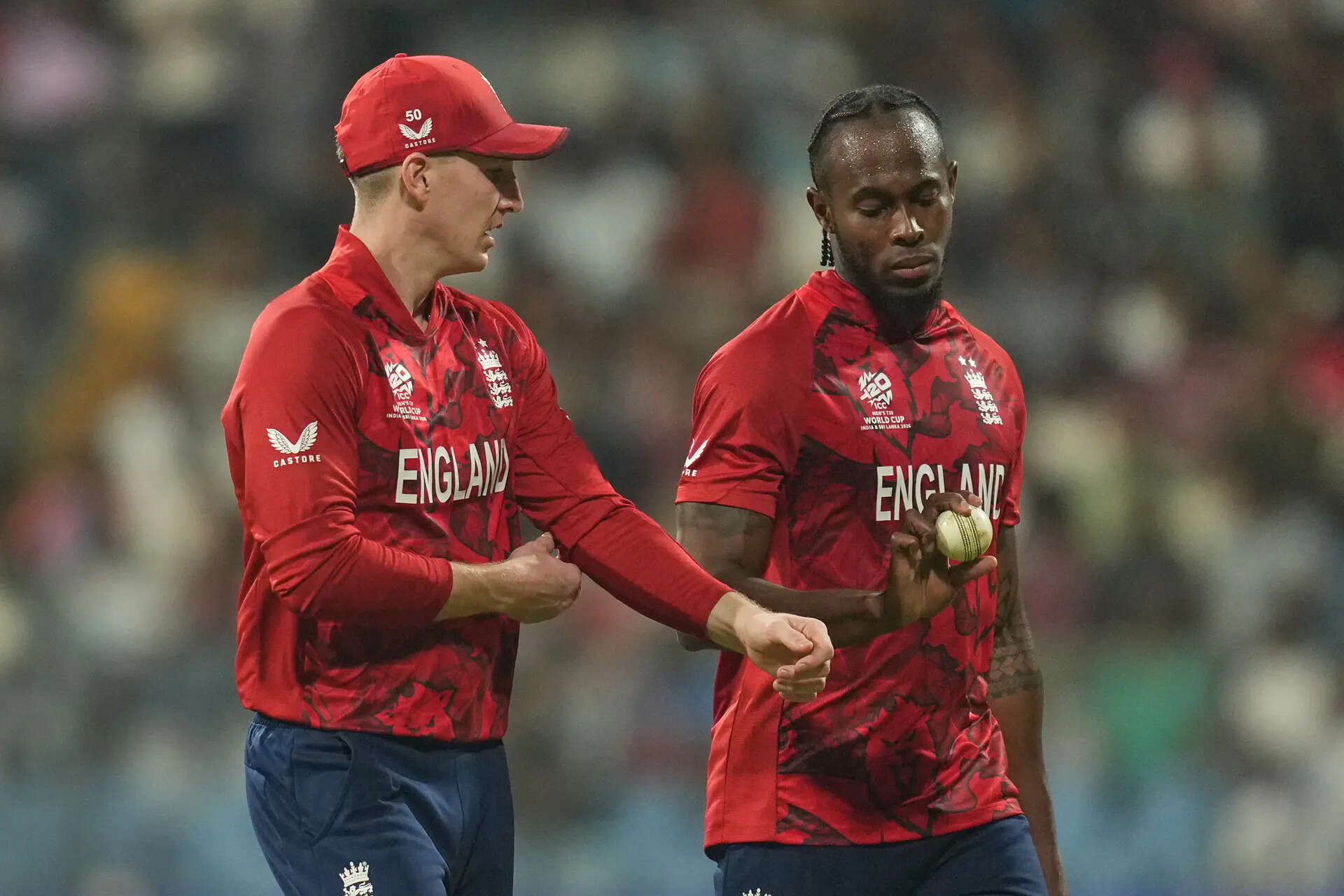
England Squad: Philip Salt, Jos Buttler(w), Jacob Bethell, Tom Banton, Harry Brook(c), Sam Curran, Will Jacks, Jamie Overton, Jofra Archer, Liam Dawson, Adil Rashid, Luke Wood, Josh Tongue, Rehan Ahmed, Ben Duckett
Trust and security in Artificial Intelligence (AI) are fundamentally different frameworks that often produce contrasting design decisions, evaluation methods, and architectural choices.
The same dimensions of AI design are understood and implemented quite differently depending on whether the overarching goal is security or trust. (Image: Unsplash)
Security primarily focuses on preventing direct harm from an AI system through internal technical controls and safeguards. It asks: Does the model make accurate predictions? Does it resist adversarial attacks? Are data and infrastructure secure from external threats? Security is largely an intrinsic property, which can be measured through controlled test environments and technical benchmarks.
In contrast, trust is a more inclusive concept that encompasses fairness, explainability, privacy, robustness, governance, and social impact across the board.
A system may be technically secure yet be highly unreliable, and conversely, internal security verification provides minimal assurance to external stakeholders.
the great ideological divide
This distinction matters because satisfying internal benchmarks and technical security standards is necessary but insufficient to build trust. Organizations can create systems that pass all security tests, achieve high accuracy on the data held and implement robust infrastructure, yet deploy tools that may systematically harm certain populations or make decisions that users cannot understand or verify.
The same dimensions of AI design – explainability, performance, fairness, privacy, and robustness – are understood and implemented completely differently depending on whether the overarching goal is security or trust.
1. Explainability (debugging vs understanding)
In the security paradigm, interpretability is primarily an engineering tool; Developers generate explanations for model predictions to debug failures, identify weak points in the decision boundary, and diagnose where the system breaks down.
Whereas, in the belief model, explanations serve a fundamentally different purpose. They enable end-users and domain experts to understand decisions in their own conceptual language and verify the logic against their expertise.
For example, a medical diagnostic model designed for security can explain itself to engineers through feature importance scores and attention maps.
The same model designed for confidence will explain to physicians using clinical language, highlighting which symptoms and test results contributed to the diagnosis that physicians can verify against their medical knowledge. These are not identical interpretations as they reflect different audiences and different purposes.
2. Performance and Benchmarks (Internal Testing vs. Verifiable Proof)
Security treats performance as something that is intrinsically valid. Does the model achieve 95% accuracy on the test set? Does it withstand adversarial attacks in a laboratory setting?
These are engineering questions answered through controlled benchmarking.
However, trust requires external validation and verifiable proof.
To make AI trustworthy, it demands third-party verification: independent auditors, preferably with access to proprietary models through privacy-preserving mechanisms such as trusted execution environments, that certify performance and bias characteristics.
The EU AI Act and the emerging regulatory framework clearly require this distinction.
3. Fairness and Bias (Discrimination vs. Equality)
Protection-oriented fairness focuses on preventing the system from explicitly using protected characteristics (race, gender, age) in decision making.
This leads to designs that exclude sensitive characteristics or enforce “fairness through anonymity” – the assumption that removing demographic data will prevent discriminatory outcomes.
This approach repeatedly fails because algorithms may detect proxy variables that encode protected characteristics – a gender-blind credit scoring system could discriminate against women if the model finds that certain phone types or app choices are related to female identity, even if gender is excluded from the input.
The algorithm’s optimization objective – predicting loan default – is agnostic to the developer’s intentions; If the training data contains historical gender bias, the model will find shortcuts to that pattern. Trust-oriented fairness addresses this by continuously auditing across demographic groups, testing for both direct and indirect discrimination, and confirming that performance generalizes equally.
4. Privacy (Data Security vs. User Control)
Security-oriented privacy emphasizes protecting data from unauthorized access: encryption, access controls, secure storage, and preventing data breaches. The focus is on privacy – ensuring that no one can access or misuse personal information.
Trust-oriented privacy centers on user agency and informed consent: Do users know what data is being collected and why? How is it used? Can they access, correct or delete their information? Do they have any meaningful choice about what is stored?
Privacy by design in the trust paradigm means minimizing data collection, obtaining explicit consent for each use, implementing transparent data-handling practices, and respecting user rights regardless of technical feasibility.
5. strength
Security-oriented robustness focuses on adversarial attacks. For example, a vision system robust against adversarial attacks can withstand small perturbations designed by attackers to lead to misclassification.
Confidence-oriented robustness asks whether the system generalizes reliably across real-world situations and diverse populations.
A diagnostic AI system may be trained robustly against adversarial examples, but it silently fails when deployed in a different hospital with different patient demographics, equipment, or clinical workflows.
Recent research clearly shows this difference: models adversarially trained to be robust against one type of perturbation (for example, specific image distortions) often become less robust against other, unexpected perturbations.
6. Ethics and Accountability
Security defines ethics as compliance: Does the system meet ethical guidelines? Have we done a risk assessment? Do we document bias mitigation strategies? These are important but mainly process-oriented.
Trust defines ethics as relational integrity: Is the system really fair to all the groups it affects? Do stakeholders feel that their values are respected? Is responsibility clear when the system causes harm? Does the governance reflect the interests of affected parties, not just developers?
This requires ongoing engagement with diverse stakeholders, monitoring of real-world impacts, and adapting governance as ethical issues arise.
Algorithms designed for hiring may claim ethical compliance by documenting bias-mitigation techniques and internal fairness audits.
It earns trust by demonstrating that hiring outcomes are consistent across demographics, that candidates understand how they are evaluated, that recruiters maintain meaningful human judgments, and that the company adjusts the system based on feedback about fairness concerns.
Designing AI for security focuses on preventing exploitation and system failure through rigorous internal testing, adversarial robustness and threat modeling, strong security controls (access management, encryption, monitoring), disciplined technical documentation of specifications and risks, and penetration testing.
On the other hand, designing for trust moves forward by ensuring that the system credibly meets stakeholders’ needs in context, which requires involving stakeholders throughout the lifecycle, building transparency into the process (auditability, model provenance and training-data documentation), providing friendly interpretation to multiple audiences (end-users, domain experts, regulators), externally validating performance through third-party review, maintaining meaningful human oversight rather than box-ticking, supporting diverse populations. And situations include monitoring real-world outcomes and maintaining governance. Feedback loops that adapt when there is evidence of ethical or performance issues.
investment required for trust
Obviously construction tools for trust often come with a price. Yet these investments are essential when trust matters – in health care, finance, criminal justice, hiring, lending and any area where AI decisions directly impact human well-being.
Current regulatory frameworks are increasingly recognizing this gap.
The EU AI Act classifies certain applications as “high risk” and calls for extensive documentation, external auditing and transparency for those systems because security alone is insufficient.
NIST’s AI risk management framework explicitly addresses multiple dimensions of reliability, not just security or accuracy.
Emerging standards, such as the ISO/IEC framework, are developing criteria for verifiable reliability based on objectivity, interpretability, and robustness.
As AI becomes increasingly involved in decision making that affects millions of people, the difference has become fundamental, not just academic. Organizations that recognize and invest in differences are more likely to create systems worthy of genuine trust.
Security is an essential foundation. There is no doubt about it. But trust is a broader social and relational asset. After all, no one wants to trust a system they know is insecure or unreliable.
–
(Views expressed are personal)
About the author: Professor Balaraman Raveendran heads the Department of Data Science and Artificial Intelligence (DSAI), Wadhwani School of Data Science and Artificial Intelligence (WSAI), Robert Bosch Center for Data Science and Artificial Intelligence (RBCDSAI) and Center for Responsible AI (CeRAI) at IIT Madras. His research interests focus on learning from and through interactions and span the areas of geometric deep learning and reinforcement learning. Additionally, he is associated with the Center for Responsible AI (CERAI), where his work aims to promote the responsible development and deployment of AI technologies across various domains, as well as ensuring that they are transparent, fair, and aligned with social values.
Filmmaker Vignesh Shivan penned a heartfelt Valentine’s Day tribute to wife Nayanthara, emphasizing how love enriches life. He shared a family photo, expressing gratitude for their bond. The couple’s fairytale journey, from their first meeting on ‘Naanum Rowdy Dhaan’ to becoming parents, continues to inspire. Both are actively working on upcoming projects.
Vignesh Shivan believes in expressing love out loud, and on Valentine’s Day, he poured his heart out in a love letter to his wife Nayanthara. Rather than relying on ornate prose, the filmmaker kept his notes honest and heartfelt.On Saturday, February 14, Vignesh Shivan posted a picture with his wife, superstar Nayanthara, and their two kids, and described how love truly completes life. “Open your hands … and you hold nothing. Then see inside your heart, and you hold one true love. That one person who makes you feel love every second of your life. Then just be happy! You are richer than kings, blessed by the angels, won enough in life, and kissed by the universe,” he said. Vignesh Shivan also extended wishes to his fans and followers. “Happy Valentine’s Day to everyone who believes in love beyond anything,” he added.Check out the post here.Vignesh Shivan has often described Nayanthara as his anchor and strength. From meeting on the sets of the 2015 film ‘Naanum Rowdy Dhaan’ to becoming a family of four, the couple’s love story is nothing less than a fairytale. In her Netflix documentary, Nayanthara recalled the moment they first met. “We were filming on the roads of Pondicherry, and I was waiting for my shot. I saw Wikki talking about a scene with Vijay Sethupathi sir. For some strange reason, I looked at him differently that day. The first thing I thought was that he is a cute guy,” the superstar said. Vignesh Shivan also revealed how she texted him after completing the shoot. “After finishing the shoot, she sent a text saying, ‘I miss being on sets.’ I said, ‘Same here, ma’am.’” The couple tied the knot in 2022. Though romance and adoration wither or become non-existent after marriage in most relationships, Vignesh Shivan never misses an opportunity to celebrate his beautiful bond with his wife Nayanthara, and vice versa.On the professional side, Vignesh Shivan’s next is ‘Love Insurance Kompany’. Nayanthara, on the other hand, has ‘Patriot’ also starring Mammootty and Mohanlal in the pipeline. She will also be seen in Yash starrer, ‘Toxic’s as Ganga, that is slated for a release on March 19, 2026.