Monday, September 28, 2026
Home Blog Page 2041

‘Crypto winter’: Why is Bitcoin crashing despite Trump’s support? | Crypto News

0
‘Crypto winter’: Why is Bitcoin crashing despite Trump’s support? | Crypto News


Crypto markets came under pressure this week when the price of the world’s most popular cryptocurrency, Bitcoin, tumbled to its lowest level in more than a year.

On Thursday afternoon, the price of Bitcoin fell below $66,000 and was hovering at about $62,900 on Friday morning.

Recommended Stories

list of 3 itemsend of list

The fall in the price of the digital asset kicked off in the last weekend of January, when it fell below $80,000.

In October last year, Bitcoin hit an all-time peak of more than $127,000 before falling back to about $90,000 in December.

Following its latest tumble, Bitcoin is currently down by about 30 percent more since the start of the year.

Here’s what we know about what’s going on in the world of cryptocurrency:

Why is the price of Bitcoin falling?

Volatility in other markets is one of the main drivers.

Analysts say a sell-off of global stocks amid geopolitical uncertainty and recent volatility in the price of gold and silver are part of the reason for the drastic fall in the price of Bitcoin.

“Institutional demand has reversed materially,” CryptoQuant, an organisation which provides analysis of global markets to cryptocurrency investors, wrote in a report on Wednesday.

The report noted that US exchange-traded funds (ETFs) – a form of pooled investment – which had been buying up Bitcoin last year, are selling it this year.

Deutsche Bank analysts wrote in a note to clients this week that these ETFs “have seen billions of dollars flow out each month since the October 2025 downturn”, referring to investors in the funds cashing out of them.

Furthermore, they added that specialised US spot Bitcoin ETFs suffered outflows of more than $3bn in January this year, following outflows of about $7bn and $2bn in November and December 2025, respectively.

“This steady selling in our view signals that traditional investors are losing interest, and overall pessimism about crypto is growing,” the analysts said.

Adam Morgan McCarthy, product specialist at Kaiko, an organisation that provides crypto market data and analyses, told Al Jazeera: “The fall in Bitcoin prices has been largely tied to less interest in the markets and lower trading volumes. This leads to less liquidity, so any move higher or lower is exacerbated.”

He explained that the crypto market relies heavily on “hype-driven” cycles where people buy due to a fear of “missing out” on an opportunity.

“This hype forms the foundation of trading volumes, and that is what we mean by liquidity. Essentially, more trading volumes mean more liquidity, as it makes it easier to quickly buy and sell Bitcoin,” he said.

“Right now, that foundation is disappearing and this tends to happen during bear markets or ‘crypto winters’, making it much harder to effectively trade assets, and they become even less appealing then. So it’s quite a vicious circle that leads to these downward spirals,” he added.

A “crypto winter” is an extended period of declining or stagnant prices, something that can be driven by worsening macroeconomic conditions or tightening market regulations, among other reasons.

Volatility in gold and silver prices in the past two weeks has also dampened market sentiment, affecting the price of cryptocurrencies. Analysts say geopolitical instability and the prospects of a rising US dollar have led investors to sell precious metals, resulting in the sudden downturn.

Then, last week, prices came back sharply, with the price of gold hitting a record peak of almost $5,595 an ounce, while silver hit an all-time high of nearly $122.

But this peak did not last long, and this week, the prices of these precious commodities plunged – again – with gold falling to $4,872.83 per ounce on Thursday and silver falling to $77.36 an ounce.

Other cryptocurrencies like Ether, the second-largest cryptocurrency, have also fallen. The price of Ether has fallen by 19 percent this week, closing at $1,854 late on Thursday.

Does this mean ‘crypto-friendly’ policies in the US aren’t working?

The price of Bitcoin soared after United States President Donald Trump’s return to the White House last year, with analysts expecting he would adopt a “crypto-friendly” regulatory regime.

At a Bitcoin conference in July 2024, as part of his pre-election rally, Trump had said the US is the “crypto capital of the planet” and pledged to also create a Bitcoin “strategic reserve” if he became president.

In March 2025, on taking office, Trump announced his government would create a national strategic crypto reserve which would include five cryptocurrencies – Bitcoin and Ether as well as smaller currencies XRP, Cardano and Solana.

In July last year, Trump also announced the GENIUS Act, a new cryptocurrency legislation that would establish regulations and consumer protections for “stablecoin”, a type of cryptocurrency whose value is linked to a fixed currency or commodity.

Then, last month, the US also unveiled draft legislation that would create a regulatory framework for cryptocurrency, which, if signed into law, would clarify financial regulators’ jurisdiction over the cryptocurrency sector.

The US president has a personal interest as his family owns the cryptofirm World Liberty Financial (WLFI).

Last March, WLFI launched its own “stablecoin” – a dollar-pegged cryptocoin backed by US treasuries – called USD1.

But the president’s personal interest in cryptocurrencies and supportive policies have not shielded the digital asset from external market factors.

Have we seen ‘crypto winters’ before?

Yes.

A crypto winter was triggered after Bitcoin peaked in December 2017 and then tumbled in December 2018 due to intense regulatory crackdowns in the US, Canada and other countries, among other reasons.

Another such winter occurred in November 2022 after a peak in October 2021, due to the FTX currency exchange scandal. In November that year, crypto exchange FTX initiated US bankruptcy proceedings after a liquidity crisis prompted intervention from regulators around the world.

In a Thursday briefing note, analysts at Kaiko said the downward trend in prices “truly accelerated” after Trump appointed Kevin Warsh as the new Federal Reserve Chair.

Warsh will replace Jeremy Powell, who Trump has lambasted for not lowering interest rates.

The Kaiko briefing note stated: “Powell’s recent announcement on January 28th that interest rates would remain unchanged, combined with the appointment of the new Chairman, constituted a true turning point, acting as a catalyst for a sharp acceleration of the decline. The reaction was all the more pronounced given that the crypto market, particularly sensitive to changes in the macroeconomic regime, was already weakened,” the report said.

What will happen next?

Hougan noted that crypto winters typically last for about 13 months and assured investors that the current “winter” will not last for long.

“As a veteran of multiple crypto winters, I can tell you that the end of those crypto winters feels a lot like now: Despair, desperation, and malaise. But there is nothing about the current market pullback that’s changed anything fundamental about crypto,” he said in his report.

“I think we’re going to come roaring back sooner rather than later. Heck, it’s been winter since January 2025. Spring is surely coming soon,” he added.


Engaged 2: Elvish Yadav and Jiya Shankar returns as hosts for sequel

0
Engaged 2: Elvish Yadav and Jiya Shankar returns as hosts for sequel


Engaged 2: Elvish Yadav and Jiya Shankar returns as hosts for sequel

JioHotstar Sparks is back with a newest chapter of its reality show ENGAGED: Season 2 – Another Chance at Love and this time, love does more than just knock; it explores what truly happens after heartbreak when people gather the courage to try again. This season brings together individuals who have seen the many sides of love: those who’ve been cheated on, those who admit they made mistakes, and those who simply weren’t ready the first time love came their way. Now, they are choosing to open their hearts once more, hoping this time it leads to something real and lasting.

Engaged Season 2 – Another chance at Love follows their emotional journeys as they reconnect with themselves and with potential partners, navigating the triggers, vulnerabilities, and hopes that shape relationships today. At its heart, the show captures the very human process of learning, unlearning  and understanding what commitment truly means in the real world.

Elvish Yadav shares excitement on Engaged 2

Guiding them through this experience are the hosts – Elvish Yadav and Jiya Shankar, who step into the role of modern-day jodi makers offering perspective, support, and insight as connections begin to form.

Speaking of the new season, Elvish Yadav said, “People think finding love again is easy, just swipe, talk, done. But trusting again after you’ve been hurt is the real challenge. I’ve seen how fear makes people run from good things. Here, we’re pushing people to face that fear instead of hiding behind an attitude. Because at the end of the day, love rewards honesty, not drama.”

Adding her perspective to it, Jiya Shankar said, “Heartbreak changes you, but it doesn’t have to close you. I truly believe every relationship teaches us something about who we are and what we deserve. This show is beautiful because it gives people the space to grow before they choose again. Watching these journeys reminded me that love isn’t about perfection, it’s about emotional readiness and mutual respect. And sometimes, the right love comes when you’re finally ready to receive it.”

All about the show

Unlike traditional competition formats, the series focuses on emotional growth and genuine bonds, allowing multiple love stories to find their own path forward. As the journey unfolds, some relationships may move toward a meaningful new beginning, while others may once again face the fear of heartbreak.
Because sometimes love isn’t about finding “the one” the first time, it’s about having the courage to say yes when it finally feels right.
Engaged Season 2 – Another chance at Love is a story of love, risk, and the power of second chances.


From Ez Ez to Naam Karu Bada, rap tracks that have taken over audiences playlist

0
From Ez Ez to Naam Karu Bada, rap tracks that have taken over audiences playlist


From Ez Ez to Naam Karu Bada, rap tracks that have taken over audiences playlist

Rap music is no longer a niche, it’s a cultural wave. From film soundtracks to independent drops, rap tracks today are shaping pop culture, dominating reels, and becoming everyday anthems for a generation that values raw emotion and unfiltered storytelling. Be it swag, ambition, or street style, these songs have cracked the code of virality and here’s a look at the top trending rap tracks that have audiences hooked –

Dhurandhar – Title Track

Hard-hitting and unapologetically intense, the Dhurandhar title track sets the tone with its aggressive beats and commanding presence. Designed to match the film’s gritty energy, the track, composed by Shashwat Sachdev and sung by Hanumankind, Jasmine Sandlas and others, quickly caught attention for its scale and powerful delivery, making it a favourite among fans who like their rap bold and dramatic.

Naam Karu Bada – Tu Yaa Main

Sung by Adarsh Gourav, Naam Karu Bada stands out for its confident, street-style energy and fresh underground pulse. Blending attitude with ambition, the track perfectly taps into the youth mindset, chasing dreams, claiming space, and saying it loud. Composed by Sez On The Beat with lyrics by 7Bantaiz, its catchy hook and intent are helping it find a strong fan base beyond the film.

Ez Ez – Dhurandhar

Cool, effortless, and dripping with swag, Ez Ez lives up to its name. The track brings an explosive energy matched with intense visuals, making it instantly replay-worthy. Performed by Diljit Dosanjh, Shashwat Sachdev and Hanumankind, it’s the kind of song that slips easily into party playlists and late-night listening sessions alike.

Walking On Water – DIVINE

DIVINE continues to prove why he remains one of the most influential voices in Indian hip-hop. Walking On Water is reflective yet powerful, blending personal growth with lyrical depth. The track resonated widely for its honesty and maturity, striking a chord with listeners who’ve followed his journey from the streets to the spotlight.

10/20 – Emiway Bantai

Raw, fearless, and unmistakably Emiway, 10/20 delivers punchlines with attitude and precision. Known for his independent and unfiltered style, Emiway keeps it real in this track, which quickly received love for its energy and vibe.

These tracks prove that rap is not just trending, it’s shaping the sound of now. With artists constantly pushing boundaries and audiences hungry for authenticity, this wave shows no signs of slowing down.


No title defence! India suffer double quarterfinal exit at Badminton Asia Team Championships | Cricket News

0
No title defence! India suffer double quarterfinal exit at Badminton Asia Team Championships | Cricket News


No title defence! India suffer double quarterfinal exit at Badminton Asia Team Championships

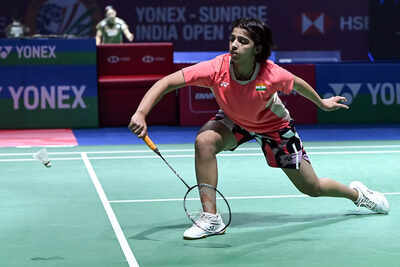
NEW DELHI: India’s campaign at the Badminton Asia Team Championships ended in disappointment on Friday as both the women’s and men’s teams were knocked out in the quarterfinals.The defending champion women’s team crashed out after a 0-3 loss to a second-string China, with the absence of star shuttler PV Sindhu proving costly. India failed to get off to a strong start as world No. 42 Tanvi Sharma, who had impressed earlier in the tournament, lost in straight games to world No. 10 Gao Fang Jie, struggling to match her opponent’s pace and power. In the doubles, Gayatri Gopichand and Treesa Jolly fought hard against world No. 4 Jia Yi Fan and Zhang Shu Xian but went down in two close games after letting slip advantages in both. Facing elimination, Rakshitha Ramraj battled for 69 minutes in the second singles before losing in three games, sealing India’s exit and ending their title defence.Earlier in the day, the men’s team also bowed out after a 1-3 defeat to Korea, hampered by the absence of key players Lakshya Sen and Satwiksairaj Rankireddy. Lakshya was rested due to back pain, while Satwik was unavailable for personal reasons. Ayush Shetty suffered a heartbreaking loss in the opening singles, missing several match points in an 84-minute contest against Yoo Tae Bin. The makeshift doubles pair of Chirag Shetty and Hariharan Amsakarunan then lost in straight games. Kidambi Srikanth briefly revived India’s hopes with a straight-games win in the second singles, but the second doubles defeat for Pruthvi Krishnan and K Sai Pratheek sealed Korea’s victory.


‘We will soon see our ozone-hole moment on climate. Only then will we take action’

0
‘We will soon see our ozone-hole moment on climate. Only then will we take action’


Veerabhadran Ramanathan, 81, recently won the Crawford Prize (in Geology), often considered a precursor to the Nobel.

.

They discovered that chlorofluorocarbons (CFCs), which were common refrigerants at the time, were, in fact, potent greenhouse gases. While working at the US National Aeronautics and Space Administration (NASA)’s Langley Research Center in the 1970s, a young man from a village in Tamil Nadu discovered that one tonne of CFCs could have the same warming effect as 10,000 tonnes of carbon dioxide. His findings made the front page of The New York Times.

For half a century, his work has added important nuances to our understanding of how climate works. His research has formed the basis of international agreements. He has advised four Popes on climate change.

What does that mean for where we are today? Excerpts from an interview.

* Your life has been shaped by “productive accidents”: going to a school in Bangalore where you didn’t speak the language, taking an unfulfilling job in refrigeration, completely changing the focus of your PhD advisor. Do you think your successes came despite these obstacles, or because of them?

I had my early education in Tamil-medium schools in Trichy and Madurai. The Swedish Academy has a photo of me with my teacher, in tie and shirt – but no shoes. School provided shirt and tie. In those days (1950s) many parents could not buy shoes for their children.

During summer it was unbearable heat, we could not stay inside. There was no fan, no electricity. We couldn’t even go out. You cannot walk barefoot on burning ground. So the children used to play in the verandah.

Now imagine what happens in such places when the temperature rises by five or ten degrees. For me, this is the main issue of climate change. Now rich people like me emit heat-trapping pollutants, but the poor have to bear the brunt.

In 2014, I spoke to Pope Francis about this climate injustice in the parking lot of St. Peter’s Basilica. In his encyclical (or papal letter) published a year later, he described climate change as a moral sin.

A year later, I was on stage with the Dalai Lama for his 80th birthday celebration in California. After listening to me, he said: “Tell me, Dr. Ramanathan, how can you clean the external environment without cleaning the internal environment?” The Pope’s words and the Dalai Lama’s words were echoing in my ears until I incorporated social change as a key component of climate solutions in my work.

Coming back to education, it was in Tamil until my father was transferred to Bangalore. Suddenly, everything was in English. I didn’t understand a single word. I went from the top to the bottom of the class. Somehow – and this is where personality matters – I decided that my teachers didn’t know what they were talking about. That’s why I was failing. So, I started learning on my own.

More importantly, I lost my fear of the unknown. This gave me the opportunity to visit many areas, from the climate of Mars and Venus to the climate of Earth; From carbon dioxide as the sole warming agent, to CFCs, to pollution.

However, my grades were poor. I did not get admission in Indian Institute of Technology. I went to Annamalai University. After that I took a job in refrigeration, which I disliked. Customers were sending back new refrigerators within weeks because refrigerants, CFCs were leaking as the machines were not designed for Indian conditions. Those leaking CFCs stuck in my mind.

Once leaked, CFCs remain in the air for 50 to 100 years. Nature eliminates them by moving them into the stratosphere, where ultraviolet light breaks them down, releasing chlorine.

* That’s why the ozone layer was depleting…

Correct. Chlorine is highly reactive; In this way it kills germs and bleaches the clothes.

Anyway, bored, I set out to face the defining accident of my life. I joined the Indian Institute of Science (IISc) in Bengaluru, primarily as my ticket to the US.

The then Director assigned me the project of making an advanced instrument to measure temperature fluctuations in turbulent fluids. I made it in three years and it worked like magic.

It taught me what I was good at, as well as what my future challenge was: fundamental research.

I still remind all the youth: everyone is good at something. Take your time to find out what it is. Once you find it, you have found your career and you will excel.

Within a few months, I was invited to study for a PhD under the renowned Professor Robert Seuss at Stony Brook University in New York. I was dreaming of completing my PhD, getting a job at General Motors, buying a Chevy Impala and returning to my native Kumbakonam after becoming a hero.

* But your advisor changed the field to the atmospheres of Mars and Venus.

If you ask my friends, they’ll tell you I was depressed for a month, watching my dreams fade away. That accident… it pulled me into the climate.

But when I graduated, no one hired me. Who wanted to be an expert in the atmospheres of Mars and Venus? Then NASA was being accused of destroying the ozone layer, so they hired me to figure out how stratospheric ozone depletion would affect the climate.

Then I read a paper (1974) by two chemists – Mario Molina and F. Sherwood Rowland, who later won a Nobel for their work – which showed that CFCs destroy the ozone layer. This struck a chord.

Working in the evening, I calculated that one ton of CFCs warms the planet equivalent to 10,000 tons of CO2. I didn’t even tell NASA. I have just sent the paper. When it hit the front page of The New York Times, all was forgiven.

Till then CO2 was seen as the main problem. Later, a team led by me realized that non-CO2 gases like methane cause significant warming.

* In 1980, you published a seminal paper on warming…

With NASA engineers, I designed a satellite experiment to measure how the atmospheric envelope of gases traps heat.

People thought there was only one blanket. My CFC discovery catalyzed the discovery of a whole set of blankets for different gases like CFCs, hydrofluorocarbons or HFCs, methane, nitrous oxide, ozone. In 1985, I led an international team and showed that these non-CO2 gases were making significant contributions to warming, depending on the time frame. Suddenly, the problem was more serious than previously thought.

Working with meteorologist Roland Madden, we used observations to predict that by 2000, warming will exceed natural variability. Had done this.

* Now people, including governments, are saying that it is very difficult to cut emissions. There are people who argue that we should just put aerosols in there and geoengineer our way out of it. Is that a good idea?

no it’s not.

In an emergency, it can slow down the temperature rise. But aerosols dramatically reduce sunlight reaching the surface. Think of it like mirrors on a blanket: The mirrors reflect sunlight, but the dark particles absorb sunlight. So, brown clouds both reflect and trap heat, reducing what reaches the ground by three to ten times.

This affects the monsoon. Also, global warming makes the ocean warmer. Therefore, the Indian subcontinent is influenced by two opposing forces, making it difficult to predict.

Another problem with the approach is that we continue to release CO2 and other pollutants into the atmosphere while the monsoons dry up and the oceans become acidic.

Then, in 2018, working with two colleagues, I made a prediction that is unfortunately coming true: warming will exceed 1.5 degrees Celsius (above pre-industrial levels) by 2030.

At that time, the United Nations said: not until 2045. People said: There goes Ramanathan crying wolf.

But the planet’s temperature has crossed 1.5 degrees Celsius. By 2030, when it becomes permanent, extreme events will intensify.

* You have informed four Popes. Some say you were the primary architect of the science behind Laudato Si’, the subtitle of Pope Francis’ letter: On the Care of Our Common Home. Is faith more effective than science alone in bending the curve?

Trust is the key. I see this as the main – perhaps the only – hope.

* Why?

Climate resilience rests on three pillars: Mitigation to reduce pollution. Adaptation to inevitable changes. and social change so that we can survive and thrive.

Science-faith alliance is essential for social change. I also work with “Embracing Mother” Amma in Kerala and Amma in Vellore, one of whom has built a sustainable village and a school dedicated to educating girls in rural areas.

A tried-and-tested way of reaching people is through their faith leaders.

Many people think that climate change is happening somewhere else. It’s not touching them yet. We are lagging behind on mitigation. I worry that in about five years, maybe even sooner, we’ll see an ozone-hole moment on climate.

Going back to CFCs, chemists published their papers in 1974-75. The industry attacked him brutally. Ten years later, in 1985, the ozone hole appeared. Two years after that, we had the Montreal Protocol.

I think the ozone hole moment in the climate will come soon. Only then will we take action.

Over the next 10 years and beyond, climate change will enter our living rooms around the world.

* I ran out of water in my house. That’s how I got into it.

This says it all. Water and food will be my first focus for India. In the next five to fifteen years, India should focus on rural women and the urban poor.

On the positive side, we can still fix it.

But we cannot rely only on mitigation. We need to adapt now.

(Mridula Ramesh is a climate-tech investor and writer. She can be reached at tradeoffs@climateaction.net)


ICC T20 World Cup: Nora Fatehi, Badshah, Sivamani, Rishab Rikhiram Sharma to perform at opening ceremony

0
ICC T20 World Cup: Nora Fatehi, Badshah, Sivamani, Rishab Rikhiram Sharma to perform at opening ceremony


If you’re in Mumbai on February 7 to catch the opening match of the ICC Men’s T20 World Cup 2026, get ready not just for a cricket spectacle, but also for a special musical treat.

Nora Fatehi, Badshah, and Sivamani will be part of the ICC T20 World Cup event, which will take place on Saturday.

On Friday, ICC announced that popular rapper Badshah, actor Nora Fatehi, neo-classical music virtuoso Rishab Rikhiram Sharma and legendary percussionist Sivamani will headline the official opening ceremony of the ICC Men’s T20 World Cup 2026.

Excited about his performance, Badshah, in a press note, said, “I’m incredibly excited to be part of this global celebration of sport, entertainment and culture. Music just like cricket brings people together, and I can’t wait to bring my energy to this incredible stage.”

Rishab Rikhiram Sharma added, “I’ve always believed the sitar belongs in bold, unexpected spaces. Places that don’t just change how people perceive it, but how they respect it. Opening for the ICC T20 World Cup wasn’t something I imagined, but it’s a powerful step in taking Indian music to a truly global stage. I’m thrilled to share my sound in this historic moment, and even more honoured to share the stage with maestro Sivamani alongside 60,000 fans in attendance!”

Sivamani stated, “Music and cricket both speak a universal language. Performing at the T20 opening in Mumbai is an honour for me. It’s a celebration of India’s energy and love for the game, and I’m excited to connect with the audience through rhythm before the match begins.”

India is in Group A with arch-rivals Pakistan, Namibia, the Netherlands, and the USA, and will start their campaign against the USA in Mumbai on February 7.

If Team India pulls off a successful title defence, they will become the first team to defend their T20 WC title, and this will mark their third T20 WC trophy, making them the most successful team in the tournament’s history.

India T20 WC squad: Suryakumar Yadav (c), Abhishek Sharma, Tilak Varma, Sanju Samson, Shivam Dube, Ishan Kishan, Hardik Pandya, Arshdeep Singh, Jasprit Bumrah, Harshit Rana, Varun Chakaravarthy, Kuldeep Yadav, Axar Patel, Washington Sundar, Rinku Singh.


T20 World Cup 2026 | Mohammed Siraj likely to replace Harshit Rana: Sources

0
T20 World Cup 2026 | Mohammed Siraj likely to replace Harshit Rana: Sources


T20 World Cup 2026 | Mohammed Siraj likely to replace Harshit Rana: Sources

Ahead of the T20 World Cup 2026, Team India`s pacer Harshit Rana has been ruled out after sustaining an injury. Star pacer Mohammed Siraj is likely to come in as his replacement, sources told news agency ANI.

Rana sustained an injury during the T20 World Cup 2026 warm-up match against South Africa. Additionally, Team India skipper Suryakumar Yadav said during the press conference that the pacer is not looking good, and physios are having a look at his injury.

“Harshit was not looking good after the warm-up game. The physios are assessing it,” he said.

With doubts lingering over Washington Sundar`s participation in the marquee event, Rana’s exit adds to the worries of the Indian management.

The T20 World Cup 2026, which is set to kick off from Saturday, February 7, will be co-hosted by India and Sri Lanka. Team India is placed in Group A of the tournament along with Namibia, the Netherlands, Pakistan, and the United States of America (USA).

The “Men in Blue” will begin their campaign on the opening day against the USA at the Wankhede Stadium in Mumbai. They will then lock horns against Namibia on February 12 at the Arun Jaitley Stadium in Delhi.

The high-voltage clash between arch-rivals, India and Pakistan, is scheduled to be played on February 15 at the R Premadasa International Cricket Stadium in Colombo. 

The Suryakumar Yadav-led men`s team will conclude their group stage matches by playing against the Netherlands on February 18 at the Narendra Modi Stadium in Ahmedabad.

The “Super 8” stage of the marquee event will begin from February 21. Semi-final 1 and semi-final 2 of the tournament are scheduled on March 4 and 5, respectively.

The title clash of the T20 World Cup 2026 is scheduled to be played on March 8, with the venue yet to be confirmed.

India`s squad for T20 World Cup 2026 (prior to Harshit Rana`s injury)

Suryakumar Yadav (C), Abhishek Sharma, Tilak Varma, Sanju Samson (WK), Shivam Dube, Ishan Kishan (WK), Hardik Pandya, Arshdeep Singh, Jasprit Bumrah, Harshit Rana, Varun Chakaravarthy, Kuldeep Yadav, Axar Patel, Washington Sundar, Rinku Singh.

(With ANI Inputs)


Vijay's neighbours complain about lost peace in their upscale area due to massive crowd: ‘How can anyone live here?’

0
Vijay's neighbours complain about lost peace in their upscale area due to massive crowd: ‘How can anyone live here?’


Ahead of the Tamil Nadu elections, Vijay’s Tamilaga Vettri Kazhagam (TVK) office in Panaiyur saw a massive turnout of volunteers to pick up optional nomination forms. The upscale neighbourhood, however, wasn’t happy with the massive turnout, with many complaining to the media about the loss of peace.

Actor Vijay is venturing into politics with his Tamilaga Vettri Kazhagam (TVK) party soon.

Neighbours complain about road blockage, chaos in Panaiyur

Thousands of TVK volunteers and Vijay fans turned up at the party office to pick up their forms. Thanthi TV reported that more than 3000 people turned up at Panaiyur on Friday. While this made Vijay’s party and his fans happy, the neighbourhood wasn’t having it. PTTV and Polimer News posted videos of the chaos that ensued outside the TVK office. The traffic could be seen coming to a standstill as police tried to manage the crowd.

“We won’t just sit quietly anymore. We’ve come here, spending money, thinking we could stay peacefully in ECR (East Coast Road). Look around, there’s such a huge crowd here, can anyone even live here?” complained one neighbour, while another said, “We can’t even walk freely on our streets. They are setting up barricades. It’s extremely difficult.” The videos also show the neighbours arguing and stating that the association will be forced to involve itself.

Vijay’s final film Jana Nayagan yet to be certified

H Vinoth’s Vijay, Bobby Deol, Mamitha Baiju and Pooja Hegde-starrer Jana Nayagan was supposed to be released in theatres on January 9 for Pongal. However, with the film yet to be certified by the CBFC, the producer, KVN Productions, approached the Madras High Court for resolution.

Three court cases later, it is unclear whether the film is with the revising committee, as the producer and the censor board remain mum. Jana Nayagan will be Vijay’s final film, as he plans to contest the upcoming Tamil Nadu assembly elections.


Setback for Maruti Suzuki as India drops small car concessions in CAFE-III norms| Business News

0
Setback for Maruti Suzuki as India drops small car concessions in CAFE-III norms| Business News


India has scrapped a planned concession for small cars in upcoming fuel-efficiency rules after automakers including Tata Motors Ltd. and Mahindra & Mahindra Ltd. argued it would benefit only one company—Maruti Suzuki India Ltd., a government document shows.

Maruti Suzuki controls 95% of India's small car market. (HT Auto)
Maruti Suzuki controls 95% of India’s small car market. (HT Auto)

A September 2025 draft of the Corporate Average Fuel Efficiency-III, or CAFE-III, norms had proposed leniency for petrol cars weighing 909 kg or less—a carve-out widely seen as favouring Maruti Suzuki, which controls 95% of India’s small‑car market. India’s power ministry has now removed that exemption and tightened other parameters, increasing pressure on all automakers to ramp up electric and hybrid car sales, according to the latest 41-page draft reviewed by Reuters.

The new CAFE-III norms curb over-compensation for vehicle weight, aim to level the field between light and heavy fleet manufacturers, and are designed to deliver real-world efficiency gains, the document states. They introduce “a substantially steeper reduction pathway” for emissions.

The power ministry did not respond to a request for comment.

CAFE-III Norms — EV, Hybrid in Favour?

Transport accounts for about 12% of India’s energy use and is a major driver of petroleum imports and carbon emissions. Passenger vehicles make up nearly 90% of transport-related emissions, the document says.

CAFE-III norms dictate permissible CO2 emissions across a manufacturer’s fleet of passenger cars weighing less than 3,500 kg. Updated every five years, they push automakers towards cleaner technology including electrification, compressed natural gas and flex-fuel.

The new rules will apply from April 2027 for five years and are central to auto makers’ product and powertrain investment plans. It was not immediately clear when the rules will be finalised.

The September draft would have allowed fuel-consumption targets to rise faster with vehicle weight, easing compliance for makers of heavier cars such as M&M, Tata Motors and Volkswagen, while tightening demands on lighter-fleet players such as Maruti. That imbalance prompted the carve-out. The revised plan reduces the extent to which heavier vehicles gain more relaxed targets.

“Manufacturers with heavier fleets… are required to achieve stronger intrinsic efficiency improvements,” the document said.

A credit system will reward companies that sell more EVs and plug-in hybrids, and pooling of fuel-consumption performance between companies will be allowed. Non-compliance will draw penalties of up to $550 per car.

The revised plan aims to cut average fleet emissions to about 100 grams/km over the five years to March 2032 from 114 grams/km. With credits, that could fall to as low as 76 grams/km if electric models reach 11% of total car sales by 2032.


TikTok told to change 'addictive design' by EU or face massive fines

0
TikTok told to change 'addictive design' by EU or face massive fines


TikTok says it plans to challenge the “categorically false and entirely meritless” accusations.