The Reserve Bank of India (RBI) on Wednesday removed the requirement for non-bank entities to obtain prior approval for tie-up arrangements to facilitate outward remittance services through banks in India, PTI reported.The central bank also issued a revised operating framework for facilitating outward remittance services by non-bank entities through Authorised Dealer (AD) Category-I banks.“On a review, it has been decided to dispense with the process of granting of the approvals by the RBI for such tie-ups and instead Authorised Dealers are advised to comply with instructions…while facilitating cross-border outward remittance of funds for non-trade current account transactions using a third-party entity in online mode…,” the RBI said.Online mode includes websites, online platforms, software applications and mobile applications.Under the earlier 2016 framework, non-bank entities were required to obtain specific RBI approval before entering into tie-up arrangements with authorised dealer banks for outward remittance services.Under the revised norms, AD banks will now be solely responsible for ensuring compliance with FEMA regulations and Know Your Customer (KYC) requirements.The framework also mandates that customers using third-party online platforms for remittances must be clearly informed about the foreign exchange rate quoted by the AD bank, the validity period of the rate, and the total estimated transaction cost.Customers will also have to be informed about the exact foreign exchange amount to be credited and the maximum time required for the beneficiary account to receive the funds.
Manchester City overcome Crystal Palace 3-0 to cut Arsenal’s Premier League lead to two points as season finale looms.
Published On 13 May 202613 May 2026
Manchester City’s second string eased past Crystal Palace 3-0 on Wednesday to climb just two points behind Premier League leaders Arsenal, with two games remaining of a captivating title race.
Pep Guardiola made six changes from the side that beat Brentford 3-0 at the weekend, with Erling Haaland and Jeremy Doku among those on the bench, while Palace boss Oliver Glasner also made tweaks.
Recommended Stories
list of 4 itemsend of list
First-half goals from Antoine Semenyo and Omar Marmoush put City in control at a damp Etihad, and a late strike from Savinho added gloss to the scoreline.
The tide appeared to have turned in City’s favour in the title race over recent weeks, but last week’s costly 3-3 draw at Everton put Arsenal firmly back in the box seat.
The City players experienced the agony of seeing a stoppage-time equaliser for West Ham against Arsenal ruled out following a VAR check on Sunday as the Gunners battled to a 1-0 win.
City opened the scoring in style in the 32nd minute after Phil Foden produced an exquisite back pass to set up Semenyo, who finished coolly past Dean Henderson into the far corner of the goal.
They doubled their lead eight minutes later, with Foden again the provider, touching the ball to Marmoush, who celebrated his third Premier League goal of the season.
John Stones, departing at the end of the campaign, came on as a substitute towards the end of a forgettable second period to a rousing reception.
Minutes later, Rayan Cherki ran with the ball from his own half before setting up Savinho, who swept the ball past Henderson.
The three-goal win takes City to 77 points, two behind Arsenal. City now have a superior goal difference of plus-one and have scored seven more goals.
City take on Chelsea in the FA Cup final at Wembley on Saturday, gunning for a domestic cup double after lifting the League Cup earlier this season.
Before kickoff on Wednesday, Guardiola explained his multiple changes, saying: “When the schedule is so tight, everybody is fit; everybody needs to help.”
Despite the narrow gap, Mikel Arteta’s Arsenal remain overwhelming favourites to win their first Premier League title since 2004.
If the Gunners overcome relegated Burnley next Monday, City must beat Bournemouth, who are chasing Champions League qualification, the following day to keep the title race alive.
On May 24, the final day of the season, Arsenal travel to Palace, while City, currently on a 14-game unbeaten run in the league, host Aston Villa.
Foden said the title race was still alive.
“It’s a team game at the end of the day. If you want to win titles and trophies, it’s about a full squad and everyone playing their part,” Foden told Sky Sports.
“The aim is to keep pushing and keep them on their toes. We’ve seen a lot of things can happen on the final day.
“I’ve experienced it many times, when the game doesn’t go your way. We just have to keep pushing and doing our part.”
Palace’s focus is on the UEFA Conference League final against Rayo Vallecano in Leipzig on May 27, Glasner’s final match in charge of the south London club.
For nearly 15 years, Rohit Mehra (name changed), a 43-year-old marketing professional in Pune, believed he was doing well with money. He had a stable job, avoided unnecessary loans, paid his bills on time, and saved regularly. Every raise made him feel more secure.
Smart financial planning can turn future worries into confidence
But one evening, while planning for his son’s higher education, Rohit looked at his bank balance and felt a strange discomfort. The money was there, but the confidence was missing. The future looked more expensive than his savings made him feel prepared for.
That was when he realized the hard truth: his salary had grown for years, but his money had not grown with the same intent.
The comfort trap of savings
Rohit’s story is familiar to many Indian families. We are taught to study hard, find a stable job, avoid risk, and save as much as possible. For households that have seen uncertainty, money in the bank feels like safety, dignity, and control.
A growing bank balance gives comfort. It makes you feel disciplined and responsible. But savings alone may not be enough to build wealth or meet big life goals.
A savings account is important for emergencies and easy access, but it is not designed to keep pace with rising education costs, medical bills, lifestyle expenses, and retirement needs. Over time, inflation quietly reduces the value of idle money. The balance may look stable, but its buying power may not be.
Rohit had saved carefully, but he had not invested with a clear plan. That was the gap.
When a family goal becomes a wake-up call
The turning point came when Rohit estimated the cost of their son’s higher education. Tuition was only one part of it. Once they added living expenses, travel, insurance, gadgets, and other costs, the total came out far higher than expected.
Rohit was not worried because he had been careless. He was worried because he had been careful and still felt underprepared. He had earned steadily, spent sensibly, and saved regularly. Yet an important family goal still felt stressful.
The reason was simple. He had saved money, but he had not assigned it to specific goals. Emergency funds, education money, retirement savings, and general surplus were all pooled together. But life does not need money all at once. It needs different amounts at different times.
Every rupee needs a role
A financial planner helped Rohit separate his money by purpose.
Money for emergencies had to remain liquid and accessible. This was not meant to chase returns, but to protect the family during job loss, medical needs, or sudden expenses. This is where fixed deposits fit in.
Money for retirement needs long-term growth. Since retirement was still decades away, options such as equity mutual funds or index funds could help build wealth gradually. His financial planner advised him to explore equity mutual funds to benefit from the long-term growth as his retirement was 15 plus years away.
Money for his son’s education needed a different approach, as he needed money in three years. The short tenure made market risk uncomfortable. At the same time, leaving it idle in a savings account would not help enough. This is where Rohit was advised to explore bonds as they come with a fixed maturity and provide regular payouts.
This was the missing piece in Rohit’s plan: an option that offered fixed maturity and guaranteed payouts while not being shielded from market volatility.
Why bonds become relevant
Rohit began learning about government bonds and listed corporate bonds through online bond platforms such as Jiraaf. Until then, he had assumed bonds were complicated or meant mainly for large investors. He soon realized they could play a practical role in a family’s financial plan.
Listed corporate bonds usually come with defined coupon payments and a fixed maturity period. This helps investors understand the expected income pattern, timeline, and payout structure before investing. For goals such as education, home renovation, or building a second income stream, this visibility can be useful.
Investment-grade corporate bonds in India can offer returns of around 8% to 14% per annum, depending on the issuer, tenure, credit rating, and risk profile. For Rohit, the appeal was not just the return, but the ability to match an investment to a goal.
For someone used to depending only on salary, this was an important shift. He began to see that money, when planned well, could also generate regular cash flows and support the household.
Risk exists everywhere
Rohit’s planner also made one point clear: no investment is completely risk-free.
Equities can build long-term wealth, but they can be volatile in the short term. Real estate may feel stable, but it needs large capital, can be difficult to sell quickly, and may not always offer liquidity when required. Precious metals such as gold and silver can help during uncertain times, but their prices also move with global cues, currency changes, and investor sentiment.
Bonds, too, carry risks such as credit risk, interest rate risk, and liquidity risk. The point is not to avoid risk completely. The point is to understand the risk and choose what fits the goal, timeline, and comfort level.
For Rohit, this changed the question from “Which investment has no risk?” to “Which risk makes sense for this goal?”
From saving money to planning money
Rohit did not stop putting money in the bank. Liquidity remains important for every family. What changed was his habit of treating the bank account as the final home for all surplus income.
Some money stayed liquid for emergencies. Some moved toward long-term growth. Some was assigned to fixed-income options, including listed corporate bonds, for medium-term goals.
For the first time, his money had a map.
That map did not remove all the worries. Education was still expensive, retirement still needed discipline, and family responsibilities remained. But Rohit was no longer depending only on salary and savings. He was giving every rupee a clearer purpose.
The lesson for salaried India
Rohit’s story reflects a quiet problem in many Indian homes. We work hard, save sincerely, delay our own wishes, and try to protect our families. Yet we often forget to ask whether our money is working as hard as we are.
A salary supports today’s lifestyle. Savings protect the present. Investments prepare the future.
Your salary may rise year after year, but unless your money is given direction, it may stay exactly where it was.
Note to the Reader: This article is part of Hindustan Times’ promotional consumer connect initiative and is independently created by the brand. Hindustan Times assumes no editorial responsibility for the content.
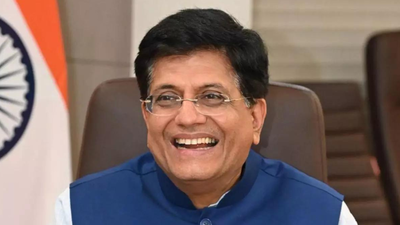
Commerce and Industry minister Piyush Goyal on Wednesday asked exporters to target $1 trillion in goods and services exports in the current financial year, after India recorded an all-time high outbound shipment value of $863.11 billion in 2025-26, PTI reported.“This year, let’s aspire for a $1 trillion exports target. It’s possible,” Goyal said at an event in the national capital.According to PTI, India’s overall exports rose 4.6 per cent in FY26 despite global uncertainties, including high US tariffs, the Russia-Ukraine conflict and the West Asia crisis.Merchandise exports increased 0.93 per cent to $441.78 billion in 2025-26 from $437.70 billion in the previous fiscal, while services exports surged to a record $421.32 billion from $387.55 billion registering an 8.71 per cent growth.The minister said achieving the $1 trillion milestone would require an additional $137 billion in exports, translating into a growth rate of around 16-17 per cent.Goyal said India is expanding market access for domestic goods and services through a series of free trade agreements (FTAs).India has concluded nine trade agreements since 2021, including those with Mauritius, the UAE, Australia, Oman, New Zealand, the European Union, the UK and the European Free Trade Association (EFTA) bloc. A framework for an interim trade agreement with the US has also been finalised.“Four of which (FTAs) are already operational and another 5 will be operational in the next 12 months,” Goyal said.Trade agreements with Mauritius, the UAE, Australia and the EFTA bloc are currently operational.The minister added that India is also negotiating FTAs with several other countries and regions, including Chile, Maldives, Canada, Israel, the Gulf Cooperation Council (GCC), the Eurasian Economic Union (EAEU), Mexico and the Southern African Customs Union (SACU).“We are trying to expand the Mercosur preferential trade agreement (PTA) to a much more robust trading arrangement,” he said.Goyal said the global business community is increasingly looking to engage with India because of its large domestic market and skilled workforce.The commerce ministry also held a virtual meeting with over 1,100 participants, including industry bodies, on Wednesday to improve awareness and utilisation of benefits under FTAs, especially among small and micro enterprises.
The bill falls short, but vote shows cracks are starting to appear in Republican support for the US-Israel war on Iran.
Three Republican senators have joined Democrats in the United States Senate in voting to advance a bill to limit President Donald Trump’s ability to strike Iran without congressional approval.
While the bill ultimately fell short in a 50-49 tally on Wednesday, the vote showed that cracks in the support for the war are starting to show in Trump’s Republican Party.
Recommended Stories
list of 3 itemsend of list
It was the seventh such vote since the start of the war, and it received the highest level of support so far.
Democratic Senator John Fetterman – a pro-Israel hawk – sided with the Republican majority, single-handedly helping Trump’s party block the bill.
Republican Senator Lisa Murkowski broke ranks with her own party for the first time and voted in favour of the War Powers Resolution. Susan Collins – who is facing a tough re-election battle in Maine – voted for the resolution for the second time.
Rand Paul, a Kentucky libertarian who has consistently voted to curb the president’s war authorities, was the third to vote for the resolution.
Trump never sought congressional authorisation to go to attack Iran, although the US Constitution gives lawmakers the sole authority to declare war.
Since the start of the conflict, Democrats have repeatedly put forward bills under the War Powers Resolution of 1973 to limit Trump’s authority to order the US military into hostilities without authorisation from Congress.
The law was passed in the wake of the Vietnam War to curb what was seen at that time as executive overreach to take the US to war.
Senator Tim Kaine, one of the Democrats leading the efforts to advance the vote, underscored the “progress” in Wednesday’s vote.
“My colleagues and I have been forcing votes to stop the war against Iran – and we’re making progress,” Kaine wrote on X. “Today, our War Powers Resolution got 49 votes. My colleagues are hearing more and more from their constituents: end this costly and unnecessary war.”
Such bills are unlikely to pass in the Republican-controlled Senate and House of Representatives and would almost certainly be vetoed by Trump if they are approved. Still, the votes put pressure on Republicans to make their position on an increasingly unpopular war known on the record.
A Reuters/Ipsos poll released earlier this week suggested that two-thirds of US voters do not think Trump has clearly explained why the country has gone to war with Iran.
Trump has blocked the Strait of Hormuz in response to US and Israeli attacks, sending oil prices soaring.
Despite the ceasefire that came into effect last month, the Iranian blockade continues absent of a comprehensive deal to end the war. A US naval siege in Iran has worsened the energy crisis.
The average price of one gallon of petrol in the US has surpassed $4.50 ($1.18 per litre), up from less than $3 ($0.78 per litre) before the war. That spike has fuelled inflation overall in the US economy.
On Tuesday, before he departed for China, a reporter asked Trump whether the financial situation of Americans would factor into his negotiations to end the war with Iran.
“Not even a little bit,” Trump said. “The only thing that matters when I’m talking about Iran: They can’t have a nuclear weapon. I don’t think about Americans’ financial situation. I don’t think about anybody.”
Trump’s comments sparked criticism from his rivals, but US Vice President JD Vance said on Wednesday that there was a “misrepresentation” of the president’s remark.
“Of course, the president and I, and the entire team, we care about the American people’s financial situations,” he said.
Iran has repeatedly denied seeking a nuclear weapon, and Trump’s own intelligence chief, Tulsi Gabbard, told lawmakers last year that Tehran is not building one.
As per the AMFI March 2026 mutual fund data released in April 2026, the flexi-cap mutual fund category attracted inflows of Rs. 10,054 crores. Within the equity mutual funds category, flexi-cap funds recorded the largest inflows for the eighth consecutive month. So, what are flexi-cap funds, how are they different from multi-cap funds, how have they performed, and which one should an investor choose? We will discuss all these points in this article.
Understanding flexi-cap vs multi-cap funds
What is a flexi-cap mutual fund?
A flexi-cap fund is an open-ended equity fund that invests a minimum of 65% of its total assets in equity and equity-related instruments. The fund invests across large, mid, and small-cap stocks, with no minimum fixed allocation rule for each category. The fund manager allocates dynamically to each category based on market conditions.
A flexi-cap fund provides the fund manager with the much-needed flexibility to adapt to changing market conditions. For example, during a broader bull run, usually mid and small-cap stocks outperform. During such times, the fund manager can increase allocation to these categories.
Similarly, during times of economic uncertainty, the fund manager may pare down exposure to mid and small-cap stocks to mitigate volatility and increase allocation to large-cap stocks, which are relatively stable.
In another scenario, where mid and small-cap stocks have run up significantly and valuations have turned expensive, the fund manager can reduce allocation to these categories. Thus, the fund manager has the flexibility to increase or decrease allocation to a particular category or categories depending on the perceived risk-reward opportunity.
In a flexi-cap fund, the role of a fund manager is very important, as they decide the allocation to each category. If the fund manager’s decision is right, the fund outperforms, and investors earn good returns. If the market moves in the opposite direction, the fund will underperform, and investors may incur losses.
Many investors compare flexi-cap funds to multi-cap funds, as both funds invest across large, mid, and small-cap stocks. However, the way the funds invest in these categories is different. Hence, let us first understand what multi-cap funds are, and then compare the two funds.
What is a multi-cap mutual fund?
A multi-cap fund is an open-ended equity fund that invests at least 75% of its total assets in equity and equity-related instruments. The minimum 75% equity allocation is as follows:
Minimum 25% investment in large-cap companies
Minimum 25% investment in mid-cap companies
Minimum 25% investment in small-cap companies
A multi-cap fund follows the minimum 25% fixed allocation rule to each of the 3 categories, irrespective of market conditions. Thus, it provides an investor with decent exposure to all categories across market capitalisation, all through a single scheme. Beyond the minimum 25% fixed allocation, the fund manager can allocate incremental amounts to each category based on market conditions.
A multi-cap fund provides investors with the stability of large-caps and the growth potential of mid and small-caps. As a multi-cap fund follows a fixed allocation rule, it limits the fund manager’s role and flexibility. The fund provides diversification to investors across market capitalisation.
How have the 2 categories performed?
The returns given by the 2 categories are as follows.
Fund category
1-year
3-years
5-years
Multi-cap funds
7.18%
17.90%
16.25%
Flexi-cap funds
4.39%
14.75%
13.42%
Source: Value Research Online website
Note: The above data is as of 4th May 2026. The 1-year returns are absolute, and the 3- and 5-year returns are CAGR. The past performance is not an indicator of future performance.
The table above shows that the multi-cap funds category has delivered better returns than the flexi-cap funds category over the 1-, 3-, and 5-year periods. These are overall category returns. Within each category, individual mutual fund schemes would have given higher returns.
Which fund should an investor choose?
An investor must analyse their need to choose between the two funds. Flexi and multi-cap funds give investors exposure to all market categories across market capitalisation. However, multi-cap funds maintain a minimum 25% fixed allocation to each category, whereas flexi-cap funds allocate dynamically to each category based on market conditions.
As an investor, if you are looking for a fixed, rule-based minimum allocation to each market category across market capitalisation, you should go for a multi-cap fund. However, if you want the fund manager to dynamically allocate across categories based on market conditions, you should go for a flexi-cap fund. Thus, it is a choice between rule-based, fixed allocation or strategy-based, flexible allocation.
As both funds have a high equity allocation, they are suitable for investors with an aggressive risk profile. Investments in these funds must be made for the long term (5 years or more) to benefit from the power of compounding and create wealth to fulfil your financial goals.
Flexi-cap and multi-cap funds are categorised under the broader equity mutual funds category for taxation purposes. The taxation of capital gains for both funds is the same. If the mutual fund units are redeemed within 12 months of purchase, the gains are categorised as short-term capital gains and taxed at 20%. If the mutual fund units are redeemed after 12 months of purchase, the gains are categorised as long-term capital gains. In a tax year, long-term capital gains up to Rs. 1.25 lakhs are exemption from taxation. The incremental long-term capital gains are taxed at 12.50%.
Reserve Bank Governor Sanjay Malhotra has said the government may eventually have to raise petrol and diesel prices if the ongoing Middle East crisis continues for a prolonged period, PTI reported on Wednesday.Speaking at a conference in Switzerland on Tuesday, Malhotra said the disruption in oil and gas supplies due to the conflict and blockade of the Strait of Hormuz has begun impacting India, which remains heavily dependent on energy and fertiliser imports.Referring to the crisis, the RBI governor said if it continues for a longer duration, it is a “matter of time that the government will actually pass on some of these price increases”.The government has so far not increased retail petrol and diesel prices despite the conflict in West Asia that began on February 28.Malhotra also said the government has remained fiscally prudent and continues on the path of fiscal consolidation.The comments come amid rising pressure on India’s external sector due to elevated crude oil prices and a weakening rupee, which has slipped below the 95 mark against the US dollar.Prime Minister Narendra Modi had earlier called for measures such as reducing fuel consumption and lowering edible oil usage to help conserve foreign exchange reserves.As global crude oil prices surge amid the prolonged Middle East conflict and disruptions around the Strait of Hormuz, India has so far avoided major increases in petrol and diesel prices, choosing instead to absorb the pressure through state-run oil marketing companies (OMCs), tax adjustments and supply management measures.The Centre has repeatedly asserted that there is no fuel shortage in the country and no plan to introduce rationing of petrol, diesel or LPG despite disruptions in global energy shipments linked to the Iran conflict and the Strait of Hormuz crisis.“There is no need to panic. There are sufficient supplies. There is no rationing in place. It’s not going to happen,” Oil Secretary Neeraj Mittal said recently at the CII Annual Business Summit.Officials said India currently maintains around 60 days of fuel stocks and nearly 45 days of LPG inventories despite continuing volatility in global energy markets.
OMC losses mount as crude prices surge
The government’s decision to hold retail fuel prices steady despite rising international crude rates has increased pressure on state-run oil companies.According to official discussions reviewed during recent government briefings, OMCs are estimated to be losing between Rs 1,000 crore and Rs 1,200 crore every day because of elevated crude prices and unchanged pump rates.Under-recoveries are estimated to have approached nearly Rs 2 lakh crore during the first quarter of 2026.The current crisis intensified after shipping movement through the Strait of Hormuz — a key global oil transit route handling nearly one-fifth of global crude flows — came under severe disruption during the Iran conflict.Brent crude prices surged above $110 per barrel during the latest phase of the crisis, sharply increasing import costs for major oil-consuming countries like India. India imports nearly 90 per cent of its crude oil requirements, making the economy highly vulnerable to global energy price shocks.
Govt focuses on supply stability, inflation control
The Centre has simultaneously attempted to prevent inflationary shocks and avoid panic in domestic fuel markets.Officials said India has increased procurement from alternate suppliers and secured additional energy cargoes to maintain uninterrupted supplies.“We have procured from other sources. We have procured from other countries. We have increased procurement from existing countries and that has kept us going in terms of supply management in the short run,” Mittal said.The government has also absorbed part of the global price shock through excise duty adjustments on petrol and diesel. Officials estimate the revenue impact of fuel-related tax reductions at nearly Rs 1.6 lakh crore.Prime Minister Narendra Modi on Sunday (May 10) urged citizens to conserve fuel, reduce unnecessary imports and avoid wasteful consumption as rising oil prices increase pressure on India’s import bill and foreign exchange reserves. The Prime Minister also encouraged greater use of public transport, carpooling, electric vehicles and work-from-home arrangements wherever possible. The government has described these as precautionary steps rather than emergency restrictions.
Pressure likely to continue
Fuel prices remain among the most politically sensitive economic issues in India because increases in petrol and diesel rates directly affect transport costs, food prices and household budgets.While the Centre has so far avoided large retail fuel price increases, analysts say prolonged suppression of prices could further strain OMC finances if crude prices remain elevated for a longer period.
Experts cite range of factors as overdose deaths drop to nearly 70,000 in 2025, a 14 percent decline over the previous year.
Published On 13 May 202613 May 2026
The United States Centers for Disease Control and Prevention (CDC) has released data showing that deaths from drug overdoses fell by nearly 14 percent in 2025, continuing a third consecutive year of decline.
The data released on Wednesday shows that the US saw nearly 70,000 predicted overdose deaths in 2025, down from more than 81,000 in 2024.
Recommended Stories
list of 3 itemsend of list
The downward trend has been welcomed in the US, which has struggled with a devastating overdose crisis fuelled largely by synthetic opioids.
Overdose deaths peaked during the COVID-19 pandemic, with 110,000 recorded in 2022, a surge associated with social isolation and obstacles to accessing treatment services.
“I’m cautiously optimistic that this represents really a fundamental change in the arc of the overdose crisis,” Brandon Marshall, a Brown University researcher who studies overdose trends, told The Associated Press news service.
Experts have attributed the decline to various factors, such as wider availability of the overdose treatment naloxone, commonly sold under the brand Narcan.
Testing strips that can detect fentanyl are also more common now, and regulatory changes in China have limited access to the chemicals used to manufacture the drug.
While overdose deaths declined in most US states in 2025, seven states saw increases. In Arizona, Colorado and New Mexico, overdose deaths increased by 10 percent or more.
The administration of President Donald Trump, however, has pointed to the decrease overall as validation of its crackdown on drug trafficking. In a statement earlier this month, the White House said that drug overdoses continue to be one of the country’s “most urgent public health challenges”.
That theme was reprised on Wednesday by Kash Patel, Trump’s appointee as director of the Federal Bureau of Investigation (FBI).
In a social media post, Patel asserted that his agency has seized enough fentanyl to kill more than 200 million Americans in 2025 and 2026. That sum amounts to more than half of the country’s population.
Former Attorney General Pam Bondi previously stated that, during Trump’s first 100 days in office, the government had saved the lives of 119 million people through drug seizures. Bondi later increased the estimate up to as many as 258 million lives. Experts have widely panned such claims as overblown.
The Trump administration has cut government programmes aimed at preventing overdoses, prompting criticism from activists.
Last month, for instance, the administration announced that the government would no longer pay for testing strips that help drug users ensure that illicit substances are not tainted with fentanyl.