Wall Street’s main indices traded cautiously on Monday after last week’s record-setting rally as renewed concerns over stalled US-Iran peace talks and rising oil prices weighed on investor sentiment, Reuters reported.The Dow Jones Industrial Average was nearly flat in early trade, slipping 3.54 points, or 0.01 per cent, to 49,605.62.The S&P 500 rose 11.38 points, or 0.15 per cent, to 7,410.31, while the Nasdaq Composite gained 10.19 points, or 0.04 per cent, to 26,257.27.Both the S&P 500 and Nasdaq touched fresh record highs during the session after ending at all-time highs on Friday.Investor sentiment turned cautious after US President Donald Trump swiftly rejected Iran’s response to a US peace proposal, reviving fears that the 10-week conflict could drag on and continue disrupting shipping through the Strait of Hormuz.The tensions pushed Brent crude prices up nearly 3 per cent.Despite the surge in oil prices, markets have remained resilient in recent weeks, supported by strong corporate earnings, optimism around semiconductor companies and a solid US jobs report.Investors are now closely watching upcoming US inflation data due on Tuesday, which is expected to show a rise in consumer prices amid higher energy costs linked to the Middle East conflict.Producer price data and monthly retail sales figures are also scheduled later this week.“The worry list is long, but the economy keeps proving the bears wrong,” Robert Edwards, chief investment officer at Edwards Asset Management, said.“Big tech has regained its leadership, backed by solid and growing revenue and earnings. These names sit at the center of every major secular theme,” he added.Among sectoral moves, the S&P 500 energy index rose 1.5 per cent as oil prices advanced, while the materials sector gained 1.3 per cent tracking higher precious metal prices.Markets are also awaiting a meeting later this week between Trump and Chinese President Xi Jinping, where discussions are expected on Iran, Taiwan, artificial intelligence, nuclear weapons and a possible extension of a critical minerals agreement.The earnings season is beginning to wind down after a strong run led largely by technology companies.Tech networking giant Cisco and semiconductor equipment maker Applied Materials are among major companies scheduled to report this week, while Nvidia and Walmart are due later this month.Among stocks, Intel rose 3.5 per cent after surging 14 per cent on Friday following reports of a preliminary chip-manufacturing agreement with Apple.Qualcomm jumped 8.6 per cent to a record high.Fertiliser maker Mosaic fell 2.1 per cent after withdrawing its annual phosphate production forecast.Fox Corp gained 4 per cent after reporting third-quarter revenue above Wall Street expectations.Airline stocks came under pressure as rising oil prices threatened margins. Southwest Airlines, Delta Air Lines, Alaska Air and United Airlines fell between 1.8 per cent and 2 per cent.
There’s a pattern I’ve started noticing with budget Bluetooth speakers lately. Earlier, anything under Rs. 5,000 usually meant weak audio, poor battery life, or a body that couldn’t survive a day outdoors. That gap has narrowed now. A lot of brands are pushing bigger drivers, IP ratings, app-based EQ controls, and bass-focused tuning into speakers that cost less than a dinner outing for a group.
Pool parties need reliable sound, and these waterproof Bluetooth speakers under Rs. 5,000 deliver surprisingly balanced audio. (Pexels)
Ijaj Khan is a tech journalist and Senior Content Producer at HT Tech, where he translates the fast-paced world of consumer tech, gaming, and AI into stories that spark curiosity and connection. Always on the lookout for the next big trend, he believes technology should be as relatable as your everyday conversations. When he’s not decoding gadgets and innovations, you’ll likely find him hopping across cities, chasing new adventures, and sampling cuisines that tell their own stories.
Read moreRead less
I’ve tested and reviewed more than 30+ portable speakers over the last few years across price categories, from small travel speakers to large party units. Most budget speakers still focus more on marketing terms like “extra bass” or “party mode” than actual sound balance, but a few models stand out because they get the basics right: stable Bluetooth connectivity, usable battery backup, clean vocals, and enough low-end response for outdoor listening.
For this guide, I focused on waterproof or splash-resistant speakers priced under Rs. 5,000 that are practical for pool parties, travel, terraces, and casual home use. I also compared them against similarly priced rivals to see which ones offer value beyond branding.
The JBL Go 3 remains one of the easiest speakers to recommend if portability matters more than loudness. It is compact enough to fit into a sling bag or side pocket, but still delivers clear audio for personal listening or small gatherings. It uses JBL Pro Sound with a 4.2W output and supports Bluetooth 5.1 for stable wireless pairing. The IP67 water and dust resistance rating makes it suitable for poolside use, beach trips, or travel. Battery backup lasts around five hours depending on volume levels.
This is not a speaker meant for large rooms or parties, but for solo listening, hotel stays, or desk setups, it still holds up well in 2026.
Specifications
Connectivity
Bluetooth 5.1
Playback time
Up to 5 hours
Reasons to buy
Extremely compact and portable design.
Rugged, waterproof, and dustproof (IP67 rating).
Punchy sound quality for its small size.
Durable fabric build with a convenient carry loop.
Reason to avoid
Battery life is average compared to larger speakers.
Lacks a 3.5mm auxiliary input for wired connections.
What are buyers saying on Amazon?
Users frequently praise the JBL Go 3 for its incredible portability and ruggedness, making it perfect for travel or poolside use. While some wish for longer battery life, most agree that the sound output is impressively loud and clear for such a tiny device.
Why choose this product?
Choose this if you need a grab-and-go speaker that can withstand the elements. It is an excellent choice for outdoor enthusiasts or anyone wanting a lightweight, reliable companion for music on the move.
Every product review clearly lists the Pros and Cons, giving you a balanced view.
Brand Confidence
We focus on products from brands with a proven reputation and long-standing market trust.
The Tribit StormBox 2 is one of the more balanced speakers in this category. Instead of pushing only bass, it focuses on fuller sound output with dual 48mm drivers and 360-degree audio projection. The speaker delivers 34W output and supports Bluetooth 5.3 with a long wireless range. Tribit claims up to 24 hours of battery life, and in regular use, it performs better than most speakers in this segment. The IPX7 water resistance also makes it safer for outdoor use.
One useful addition here is app support. You get EQ presets and sound customisation options through the Tribit companion app, which is still uncommon in this price range. XBass mode adds extra low-end response without making vocals sound muddy.
Specifications
Playback Time
Up to 24 hours (60% volume, XBass off)
Bluetooth Range
Up to 30m (100ft)
Battery
2 × 2600mAh (3.7V)
Reasons to buy
Powerful 34W output (2 × 17W)
360° surround sound with XBass
Up to 24 hours playback
IPX7 waterproof (floats on water)
100ft Bluetooth range
Reason to avoid
Heavier than average (580g)
Takes 4 hours to fully charge
XLBass mode shortens battery life
What are buyers saying on Amazon?
Reviewers are blown away by the booming bass and 360° sound, calling it the best value speaker under Rs. 4,000. The 24-hour battery and IPX7 waterproofing make it a favorite for beach and pool use.
Why choose this product?
Choose this if you want premium sound quality, all-day battery, and true waterproofing without paying JBL prices. Ideal for outdoor enthusiasts, pool parties, and anyone who values bass.
boAt’s Stone series has become common in the budget speaker market because the company usually focuses on louder tuning and outdoor-friendly designs. The Stone 352 Pro follows the same approach. It offers 14W stereo output with Bluetooth 5.3 support and up to 12 hours of playback. The IPX7 water resistance rating means accidental splashes or rain should not be a concern. There’s also support for TWS pairing if you want stereo output using two units.
The RGB lighting adds a party-focused touch, although audio performance is the bigger reason to consider it. It works well for casual gatherings, balcony listening, and everyday use where portability matters.
Heavier and bulkier than entry-level portable speakers.
Buttons can feel a bit stiff to operate.
What are buyers saying on Amazon?
Buyers love the deep bass and loud audio quality, noting that it outperforms many rivals in the same price segment. The long battery life is a standout feature for those using it for parties or long outdoor sessions.
Why choose this product?
Choose this if you want a budget-friendly speaker that delivers big sound and solid endurance. It is ideal for home use or small gatherings where you need a bit more volume and punch than a tiny pocket speaker can provide.
The Zebronics Axon 100 targets buyers who want louder sound output without crossing the Rs. 5,000 mark. It pushes 90W output using quad drivers, dual tweeters, and passive radiators. In my experience, speakers in this category often overemphasise bass and lose clarity at high volumes. The Axon 100 handles that better than expected, especially for Bollywood tracks, EDM playlists, and outdoor listening.
It supports Bluetooth 5.3 alongside AUX and USB playback. The IPX5 rating provides basic water resistance, while TWS pairing allows stereo expansion. Battery backup is rated at around six hours at moderate volume. If your priority is volume over compact size, this one makes more sense than smaller travel speakers.
Specifications
Audio output
10W – 15W (varies by peak load)
Connectivity
Bluetooth, FM Radio, microSD, USB
Battery
Built-in rechargeable
Charging port
Micro USB / Type-C (check specific model batch)
Lighting
Built-in RGB LEDs
Reasons to buy
Massive 90W output with quad drivers
Dual passive radiators for heavy bass
Premium leather-like finish with a carry strap
Latest Bluetooth 5.4 for stable range
True Wireless Stereo (TWS) support
Reason to avoid
Large and heavy compared to “pocket” speakers
Battery life drops significantly at max volume
High price point compared to basic portables
What are buyers saying on Amazon?
Customers are blown away by the sheer volume and “thumping” bass this speaker produces. The premium build and aesthetic design make it a favourite for outdoor gatherings, though its weight is a common point of discussion.
Why choose this product?
Choose this if you prioritise loud, room-filling sound above all else. It is the best option for large outdoor groups, picnics, or as a primary home entertainment speaker where portability is still needed occasionally.
The Stone 1200 Pro sits closer to the party speaker category than a compact Bluetooth speaker. It uses 76.2mm drivers and delivers 60W sound output with a focus on bass-heavy playback. Bluetooth 5.3 support keeps wireless pairing stable, while USB playback adds flexibility. Battery backup is rated at up to 7.5 hours. Carry straps make transportation easier, especially for outdoor use or short trips.
This speaker works best in larger rooms or terrace setups where smaller speakers usually struggle. TWS support is also available for users planning multi-speaker setups.
Specifications
Connectivity
Bluetooth 5.3, USB
Playback time
Up to 7.5 hours (at 50% volume)
Reasons to buy
60W boAt Signature Sound
Massive 76.2mm drivers with dual passive radiators
Up to 7.5 hours playback at 50% volume
IPX6 water-resistant
TWS mode to pair two speakers
Dynamic RGB LED lighting
Reason to avoid
Heavy at 2.25 kg — less portable than compact speakers
Battery life drops below 6 hours with RGB on
Takes 3–4 hours to fully charge
What are buyers saying on Amazon?
Buyers praise the loud, bass-heavy sound and solid build quality, calling it excellent value under Rs. 5,000 for party use. Most love the RGB lighting and TWS pairing feature, though many note it’s heavier than expected for a “portable” speaker.
Why choose this product?
Choose this if you want a mid-sized party speaker with powerful sound, deep bass, and light show effects at a budget-friendly price. Perfect for small gatherings, home entertainment, or outdoor use where portability isn’t the top priority.
The Zebronics Prima is one of the more feature-heavy speakers in this price segment. It combines dual passive radiators, full-range drivers, and tweeters to produce a wider sound profile than most compact speakers. It supports Bluetooth 5.4 connectivity along with AUX and USB options. The three EQ modes are genuinely useful depending on whether you are listening to music, podcasts, or movies. The splash-resistant body and TWS pairing support make it practical for outdoor gatherings. Integrated media controls are also easy to access during playback. For users looking for feature variety instead of only loud sound, the Prima is worth considering.
Specifications
Drivers
2 × 11.8cm full-range + 2 × 2cm tweeters
Impedance
4Ω (full-range), 8Ω (tweeter)
Connectivity
BT, AUX, USB, FM, microSD
Reasons to buy
Massive 90W RMS power output
Four-driver setup with dual passive radiators
Bluetooth 5.4 connectivity
Built-in RGB lighting effects
Supports AUX, USB, FM radio, microSD
Reason to avoid
Heavy (3.4 kg) — not truly portable
RGB lights reduce battery life
Plastic build feels less premium
What are buyers saying on Amazon?
Customers are impressed by the powerful bass and visual appeal of the RGB lights. Many call it the best budget party speaker under ₹5,000, though some note it’s too bulky for frequent carrying.
Why choose this product?
Choose this if you need a stationary party speaker with thunderous bass and light shows. Best for home entertainment, gaming setups, or small events where portability isn’t a priority.
The Xiaomi Sound Outdoor Speaker is among the strongest all-rounders in this list. It combines a 30W setup with a dedicated woofer, tweeter, and dual passive radiators, which helps deliver cleaner separation between vocals and bass.
The IP67 rating gives it solid protection against water and dust, making it suitable for pool areas and travel. Battery life stretches up to 12 hours on a single charge, and Bluetooth 5.4 keeps connectivity stable. One standout feature is multi-speaker connectivity support for up to 100 units, although most users will realistically use TWS mode with two speakers.
For buyers who want balanced sound, portability, and durability without spending beyond Rs. 5,000, this is one of the better options available right now.
Specifications
Playback time:
Up to 12 hours
Reasons to buy
30W Hi-Quality sound output
IP67 fully waterproof & dustproof
Up to 12 hours playback
Wireless stereo pairing (TWS)
Floats on water
Reason to avoid
Battery life drops at high volume
Available colors are limited
Slightly heavier than expected
What are buyers saying on Amazon?
Users praise the clean, balanced sound and solid build quality, saying it competes well with speakers twice the price. The IP67 rating and floating capability make it a hit for pool and beach trips.
Why choose this product?
Choose this if you want a reliable, mid-power outdoor speaker from a trusted brand. Perfect for travellers and fitness enthusiasts who need durability and good sound at a fair price.
Which One Should You Pick?
If portability is the priority, the JBL Go 3 still makes sense. For balanced audio and longer battery life, the Tribit StormBox 2 is the safer pick. If you want a louder sound for gatherings, the Zebronics Axon 100 and boAt Stone 1200 Pro deliver more output than compact speakers.
The Xiaomi Sound Outdoor Speaker feels like the most practical all-around option in this list because it balances sound quality, waterproofing, battery backup, and portability without leaning too heavily into one area.
Disclaimer: At Hindustan Times, we help you stay up-to-date with the latest trends and products. Hindustan Times has an affiliate partnership, so we may get a part of the revenue when you make a purchase. We shall not be liable for any claim under applicable laws, including but not limited to the Consumer Protection Act, 2019, with respect to the products. The products listed in this article are in no particular order of priority.
Like all tech journalists, I review and test devices with complete editorial independence. Brand partnerships and commercial relationships do not influence product recommendations included in my articles.
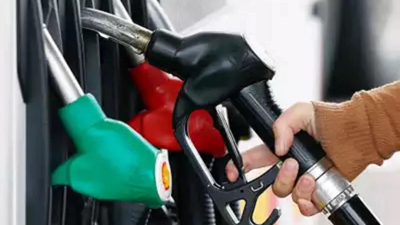
India has sufficient fuel inventories and there is no plan to ration petrol, diesel or LPG supplies despite continuing disruptions in global energy markets, Oil Secretary Neeraj Mittal said on Monday, PTI reported.Addressing the CII Annual Business Summit, Mittal said the country has maintained adequate fuel and LPG stocks during the ongoing West Asia crisis and has diversified imports to manage supply risks.“There is no need to panic. There are sufficient supplies. There is no rationing in place. It’s not going to happen,” Mittal said.He said India has maintained around 60 days of fuel inventories and nearly 45 days of LPG stocks over the past 67 days of market disruption.The remarks came a day after Prime Minister Narendra Modi urged fuel conservation, reduced imports and restraint in gold purchases amid pressure on India’s foreign exchange reserves from rising global energy prices.Mittal said the government has secured additional energy cargoes, increased procurement from alternative suppliers and absorbed part of the global price shock through excise duty cuts on petrol and diesel.India, the world’s third-largest oil importer and consumer, has also accelerated efforts to expand domestic oil exploration, strategic reserves and alternative fuel programmes including green hydrogen, ethanol blending and sustainable aviation fuel, he said.“For a country like India which consumes 5 million barrels a day, to have a 90-day reserve would be putting a lot of money in a box without using it at all,” Mittal said while discussing strategic reserves, PTI quoted.He added that the government was exploring “creative ways” to expand strategic reserves while generating returns from stored crude.Mittal said the government has spent the past 67 days managing supply disruptions arising from geopolitical tensions and shipping constraints in global energy markets.“The constraint has not changed at all. In fact, it is a shade worse,” he said.Despite the challenges, India managed to move all 14 of its ships out of the conflict-hit Strait of Hormuz, he added.The official said India’s large refining capacity had helped cushion supply shocks, enabling the country to meet domestic fuel demand while continuing exports of refined petroleum products.Mittal also highlighted demand-management measures adopted by the government, including prioritising LPG supplies for household cooking use.Following requests from industry, the government later allowed 70 per cent industrial LPG supplies as well.He said nearly 100 per cent digital tracking of LPG cylinder deliveries had helped curb diversion and black-market sales.“There is no need to panic. There’s sufficient supplies. There is no rationing in place. It’s not going to happen,” Mittal reiterated.On fuel prices, petrol and diesel continue to be sold at rates unchanged for nearly two years despite a sharp increase in international crude prices following the West Asia conflict.A top government source said the “default mode of the government is to keep the prices and supplies stable”.However, state-run oil marketing companies are estimated to be incurring daily losses of Rs 1,000 crore to Rs 1,200 crore because of rising input costs.Mittal said the Centre had absorbed a substantial part of the price burden through excise duty cuts on petrol and diesel, resulting in a revenue impact of around Rs 1.6 lakh crore.“Government uses all sorts of tools,” he said, adding that India had remained “a relative oasis of calm” compared with countries that imposed fuel rationing and stricter demand curbs during the crisis.
A United States citizen who was on the hantavirus-hit MV Hondius cruise ship is the latest to test positive for the virus while a French traveller has developed symptoms as the ship is being evacuated and passengers are returning to their home countries.
Passengers began flying home on military and government planes after the ship anchored near Tenerife, the largest of Spain’s Canary Islands, on Sunday.
Recommended Stories
list of 3 itemsend of list
At least eight people who were on board the ship had earlier been confirmed or were suspected of having contracted the hantavirus. Three people have died while at least one person is in intensive care.
Previously, officials from the Spanish Ministry of Health, the World Health Organization (WHO) and the cruise company Oceanwide Expeditions had said none of the more than 140 people who had been on board the MV Hondius was showing symptoms of the virus, but that has since changed.
As passengers are being flown home for testing and monitoring, health officials are racing to determine where and how the outbreak may have started.
There are no conclusive answers yet, but the trail has led investigators to Argentina, from which the MV Hondius departed on April 1.
Here’s what we know so far:
Passengers evacuated from the hantavirus-stricken cruise ship MV Hondius arrive at Eindhoven airport in the Netherlands on May 10, 2026 [Peter Dejong/AP]
What happened on the ship?
Passengers on the MV Hondius anchored at Tenerife were evacuated and escorted to shore by officials in full protective gear on small boats on Sunday. They were then put on planes that began to fly to several destinations on Sunday and Monday.
WHO Director-General Tedros Adhanom Ghebreyesus was present to oversee the process and to reiterate that people on Tenerife as well as the general public were at low risk of contracting hantavirus.
Maria Van Kerkhove, WHO’s top epidemiologist, said at a news conference on Saturday that the agency recommended to all governments involved that passengers be tested and monitored for at least 42 days after suspected exposure to the virus.
Where have passengers been evacuated to?
Planes flying out of Tenerife carried passengers from more than 20 countries. Spanish passengers were the first to be evacuated to a military hospital in Madrid while Norway sent an ambulance plane for its citizens.
At least one of the 17 American passengers evacuated has tested positive for the virus but was not showing symptoms, US health officials said. A plane carrying US passengers was due on Monday to arrive in Omaha, Nebraska, where they were to be quarantined.
French Health Minister Stephanie Rist revealed on Sunday that one of five French passengers had developed symptoms on a flight home to France on Sunday. The woman’s condition has rapidly deteriorated in Paris since then. Earlier, Prime Minister Sebastien Lecornu said all five were being put into isolation “until further notice”.
A Japanese national travelled to the UK on a flight arranged by the British government and will be monitored for up to 45 days, Japan’s Ministry of Foreign Affairs said. Authorities in the United Kingdom said passengers would be quarantined in hospital for 72 hours, followed by six weeks of self-isolation.
In the Netherlands, an evacuation plane carrying 26 people from different countries landed in the city of Eindhoven on Sunday evening. Dutch citizens were being put into a six-week self-quarantine at their homes.
Others from Germany, Greece, India, Portugal, Argentina, Belgium, Ukraine, Guatemala, the Philippines and Montenegro were set to be quarantined by local officials or transported home.
On Monday, German authorities reported that four Germans had been transported from the Netherlands to Frankfurt University Hospital, from which they will be taken to their home cities and quarantined. None has tested positive.
Australian authorities, meanwhile, sent an evacuation plane due to arrive on Monday to transport nationals from Australia, New Zealand and some Asian countries.
A Spanish passenger is sprayed with disinfectant by Spanish government officials before boarding a plane to return home on May 10, 2026 [AP]
Where are the other passengers who left the ship earlier?
At least 34 passengers and crew had already disembarked from the ship by May 2, the day the WHO first received reports of an outbreak of severe respiratory illnesses on the ship as it was docked off Cape Verde.
Some got off at their own stops while some were evacuated because they had become unwell.
Six British army medics parachuted onto the remote South Atlantic British territory of Tristan da Cunha on Saturday, where one passenger had disembarked on April 14. The passenger is now suspected of having the virus, and the soldiers were delivering medical personnel with supplies and oxygen.
Four other people are currently hospitalised: One is in intensive care in Johannesburg, South Africa; two are in the Netherlands; and one is in Switzerland. They include a doctor on the ship and a crew member.
Three people have died – one died on board the ship and a close contact of theirs later died in hospital. It is unclear at which point the third person died.
Where did the hantavirus outbreak start, and where has it spread?
Hantavirus infects humans who breathe in air contaminated with virus particles from infected rodents’ urine, droppings or saliva.
The current outbreak is linked to the Andes strain, which is endemic in rural parts of South America. It is the only form known to spread between humans.
It is not yet known where the initial contamination took place. Health officials are currently tracing the outbreak in Argentina, from which the ship departed.
The first people to develop symptoms were an elderly Dutch couple on the cruise ship, and they are among the three fatalities. It is not known if they were the first to contract hantavirus, however.
Local media in Argentina reported that the couple had visited a landfill site in Ushuaia, a popular tourist spot in southern Argentina’s Patagonia region, in search of a rare bird. There has been speculation that one person in the couple could have been exposed to rodent droppings there.
However, local health officials in Ushuaia said this is unlikely, telling reporters that the area has not recorded a hantavirus case since 1996.
However, some experts said examinations in the area are required to be certain of this because sometimes ecosystems change and vectors can move locations.
The resulting negative attention on Ushuaia has cast a shadow on local businesses, according to local media reports. The city is considered the “gateway to Antarctica” with most shipping expeditions departing from there. There is now a concern that the outbreak could reduce tourist numbers.
Last week, Argentinian health officials were deployed to the site with plans to take samples of rats in the area of the landfill and examine them for hantavirus.
Where else could the virus have come from?
There have also been suggestions that the couple, who had been travelling in the region for several months, may have been exposed to the virus in Chile or in other parts of Argentina where the Andean strain is endemic.
Argentinian media have reported that the couple arrived in Argentina on November 27. They then crossed into southern Chile and went on to Uruguay by car and remained there from March 13 to 27 when they returned to Argentina.
Hantavirus is endemic across most of Chile except in the country’s far north. The Andes strain, in particular, is endemic in Chile’s Aysen region. Chile shares a long border with Argentina.
Chilean health authorities last week confirmed the couple’s presence in the country but said they travelled “during a period that does not correspond to the incubation period, so the exposure to the virus would not have occurred in our country”.
The last similar transmission of the hantavirus from human to human was recorded in Chile in 2019, authorities added.
Uruguay’s Ministry of Public Health said last week that there is no risk of transmission associated with the couple in the country as their symptoms began several days after they left the country, meaning they were not symptomatic during their stay in Uruguay.
The Centre on Monday said India has “ample” fertiliser stocks to meet demand for the upcoming Kharif sowing season and appealed to farmers not to resort to panic buying amid concerns triggered by the Middle East situation, PTI reported.Addressing an inter-ministerial briefing on recent developments in Middle East, Aparna S Sharma, Additional Secretary in the Department of Fertilizers, said the country’s fertiliser security remains “comfortable and well managed”.“India’s fertiliser security remains comfortable and well managed,” Sharma said.She said the government has ensured sufficient domestic production as well as imports of urea and other key nutrients to meet demand during the peak Kharif season.According to the Department of Agriculture’s assessment, fertiliser requirement for Kharif 2026 stands at 390.54 lakh tonnes.“As on date for the season of Kharif 2026, based on the fertiliser requirement that has been assessed by the Department of Agriculture, the stock is more than 51 per cent,” Sharma said.She noted that the current stock position is significantly higher than the usual benchmark of around 33 per cent of seasonal demand.“So the fertiliser stock is comfortable, and the MRP of major fertiliser remains very much the same,” she added.The official said India has secured additional imports to strengthen availability ahead of the sowing season, which is expected to intensify over the next 15-20 days.“Further 12 lakh tonnes of DAP (di-ammonium phosphate), 4 lakh tonnes of triple super phosphate, and 3 lakh tonnes of ammonium sulfate have been secured for the country. This will ensure adequate availability for the peak season,” Sharma said.India has also secured 7 lakh tonnes of NPK complexes from global suppliers.The government said domestic fertiliser production and imports have remained strong despite global supply disruptions.After the recent crisis period, domestic production stood at 76.78 lakh tonnes while imports were 19.94 lakh tonnes.“So a total of 97 lakh metric tonnes of fertiliser has been added to the availability after the crisis situation,” Sharma said.The Centre said urea plants across the country are operating at full capacity while phosphatic and potassic fertilisers are also being produced normally.The government also highlighted that maximum retail prices (MRPs) of major fertilisers have remained unchanged despite a sharp increase in global prices.At present, the MRP of neem-coated urea remains fixed at Rs 242 per 45 kg bag, while DAP is priced at Rs 1,350 per 50 kg bag.Sharma acknowledged that there had been “some panic buying initially” but urged farmers not to hoard fertilisers.“There has been some panic buying initially. Our appeal is that ample stock is available,” she said.The Centre said states are actively monitoring hoarding, diversion and black marketing of fertilisers.“Regarding the demand management measures, the state level already efforts are being made, and we have the state level interventions to ensure that the fertilisers are not misused or hoarded, or they are not black-marketed,” Sharma said, PTI quoted.The government is also promoting balanced use of fertilisers and alternative soil nutrients through agricultural universities and Krishi Vigyan Kendras to reduce excessive dependence on chemical fertilisers.An empowered group of secretaries is reviewing the fertiliser situation every week, Sharma said.India’s urea production has increased significantly over the last decade, rising from 225 lakh tonnes in 2014-15 to 306.67 lakh tonnes in 2024-25.However, the country still imported more than 100 lakh tonnes of urea in the last fiscal year to meet domestic demand.The Centre has projected fertiliser subsidy expenditure at Rs 1,70,805 crore for 2026-27, though officials indicated the subsidy burden could rise further because of higher import costs linked to global price volatility.
Members of the British Army have parachuted onto the remote Atlantic island of Tristan da Cunha to help a British national with suspected hantavirus.
Two paratroopers jumped in tandem with an intensive care nurse and a specialist doctor. Medical supplies were also delivered.
The patient left MV Hondius, the cruise ship hit by a deadly outbreak of the virus, in mid-April at Britain’s most remote inhabited overseas territory, where he lives.
Captain George Lacey, who jumped with the the Pathfinders Platoon, said high winds made it the mission “a particularly tricky one”.
He said the team would be on the island for a few days awaiting recovery, because “sadly, you can’t parachute back off the island”.
The Centre on Monday announced that the Viksit Bharat Guarantee for Rozgar and Ajeevika Mission (Gramin) Act, or VB-G RAM G Act, 2025, will come into force across India from July 1, replacing the Mahatma Gandhi National Rural Employment Guarantee Act (MGNREGA) after nearly two decades.The government has pitched the new legislation as a “next-generation rural development framework” aligned with the Viksit Bharat 2047 vision, promising to expand guaranteed wage employment from 100 days to 125 days annually while integrating rural jobs more closely with infrastructure creation, climate resilience and village-level planning.In a separate notification, the rural development ministry confirmed that the MGNREGA Act, 2005, will stand repealed from July 1, 2026.The Centre, however, assured that the transition would be “seamless and uninterrupted”.“Ongoing works under MGNREGA as on June 30 shall be saved and carried over to the new framework seamlessly,” the notification said.The ministry added that existing e-KYC-verified MGNREGA job cards would remain valid until new “Gramin Rozgar Guarantee Cards” are issued.Workers will not be denied employment because of pending e-KYC verification, while fresh registrations for those without job cards will continue at the gram panchayat level, the government said.Draft rules related to wage payments, grievance redressal, allocation norms and transitional provisions are currently being prepared in consultation with states and Union Territories and will soon be opened for public consultation.The Centre described gram panchayats as the “central pillar” of rural transformation under the new framework.
What changes under the new law?
The biggest change is the increase in guaranteed rural employment from 100 days under MGNREGA to 125 days annually for rural households seeking unskilled manual work.
The new Act reorganises permissible works into four broad categories:
Water security projects
Core rural infrastructure
Livelihood-related infrastructure
Extreme weather mitigation works
Under MGNREGA, works were categorised around activities such as water conservation, drought proofing, irrigation, flood control, land development and renovation of traditional water bodies.The new framework also introduces “Viksit Gram Panchayat Plans” (VGPPs), which will serve as convergence-based local development plans prepared by gram panchayats and approved by gram sabhas.According to the government, all projects under the Act must emerge from these village development plans to ensure “need-based and saturation-focused” rural development.Officials say the law seeks to move beyond a purely “demand-driven wage programme” towards a convergence-led rural development model with stronger local planning and infrastructure creation.The inclusion of extreme weather mitigation projects has also been projected as a response to growing climate vulnerabilities in rural India.
How will the transition happen?
The Centre said the transition from MGNREGA to the VB-G RAM G Act would be smooth, with all ongoing projects migrating into the new framework.Incomplete public assets and ongoing projects will be prioritised for completion.Existing MGNREGA job cards linked with e-KYC will remain temporarily valid until new cards are issued under the revised system.The government has also clarified that fresh works may be opened during the transition period if existing projects are insufficient to meet labour demand.
What remains unchanged?
Several key worker protections remain intact under the new framework.Employment must still be provided within 15 days of demand, failing which workers become eligible for unemployment allowance payable by state governments.Wages will continue to be transferred directly into bank or post office accounts through DBT and must be paid weekly or within a fortnight after muster roll closure.The law also retains compensation provisions for delayed wage payments.
What are the new administrative features?
Attendance at worksites will now be captured through a face authentication-based system.However, the government said exceptions would be permitted in cases involving poor connectivity, technical failures or other genuine difficulties.Another major feature is the restriction on undertaking works during peak agricultural seasons. States will notify sowing and harvesting periods to avoid labour shortages in agriculture.
How will funding work?
The funding pattern under the new framework marks a departure from MGNREGA.Under the VB-G RAM G Act:
Northeastern and Himalayan states will receive 90:10 Centre-state funding
Other states and Union Territories with legislatures will follow a 60:40 ratio
Union Territories without legislatures will receive 100 per cent central funding
The material expenditure component has been capped at 40 per cent at the district level.Under MGNREGA, the Centre fully bore wage costs, while material costs were shared in a 75:25 ratio between the Centre and states.A major change flagged by critics is that MGNREGA was demand-driven, requiring the Centre to allocate additional funds whenever work demand increased.Under the new law, allocations to states will follow normative limits, with expenditure beyond sanctioned allocations to be borne by state governments.
Why does the government say the new law is needed?
The government argues that the new framework modernises rural employment by integrating livelihood generation, infrastructure development and climate resilience into a single framework.Officials say the enhanced 125-day employment guarantee, convergence-led planning and uninterrupted work availability during transition are among the key improvements over MGNREGA.The Centre has also highlighted provisions such as:
Mandatory appointment letters
Free health check-ups for workers aged 40 years and above
Equal work, equal pay and equal opportunity provisions for women working in different shifts
Creation of a National Reskilling Fund for workers who lose jobs
Weekly working hour cap of 48 hours
Mandatory overtime payments
At least one weekly rest day for workers
What concerns are being raised?
Opposition parties and labour rights groups have strongly questioned the repeal of MGNREGA instead of strengthening the existing framework.Congress leader Jairam Ramesh described the move as “yet another lazy headline-grabbing exercise” and alleged that the only guarantee under the new law was one of “extreme centralisation” and weakening of rural labour rights.“The only guarantee that VB-G RAM G offers is that of extreme centralisation and weakening of the bargaining power of rural labour,” Ramesh said on X.He also questioned why operational details were still unavailable despite the law being scheduled for implementation from July 1.Activists have also expressed concern that mandatory face-authentication attendance could exclude workers in remote regions with weak internet access or elderly workers facing authentication failures.Others fear that shifting the programme’s focus towards convergence and long-term planning may dilute its original strength as a legal guarantee for immediate wage employment.There are also concerns that restricting work during peak agricultural seasons may reduce earning opportunities for landless labourers.Critics have additionally demanded clarity on whether the expanded 125-day guarantee will be backed by sufficient budgetary support, pointing to recurring delays in wage payments and fund releases under MGNREGA in recent years.
India’s health care system is entering a decisive decade. The country is witnessing rapid expansion in medical infrastructure, digital health systems, AI adoption and healthcare access. Yet behind this momentum lies a structural challenge that requires far greater national attention: Can India really build a future-ready health care ecosystem without making significant investments in medical research, advanced health care training and technology-based clinical education? This question becomes especially relevant on National Technology Day.
Health Care (Getty Images/iStockphoto)
Over the years, India’s health care discourse has primarily focused on infrastructure expansion, affordability and service delivery. These remain important priorities. However, the next phase of health care transformation will increasingly depend on something deeper: the country’s ability to create indigenous innovation ecosystems, strengthen research and development, and create technologically capable health care human resources at scale.
Today health care systems are not evaluated solely by the number of hospitals they build. They are evaluated based on their research potential, training preparedness, technology integration and quality of clinical outcomes. In that context, India stands at an important crossroads of opportunity and risk.
India produces one of the world’s largest groups of medical graduates, nursing professionals and allied health workers. The expansion of medical colleges and training seats has been significant. Yet the quality of training, practical clinical performance, and outcome-oriented education remains uneven across institutions and geographic regions. The gap between theoretical education and real-world clinical readiness remains persistent, and in a rapidly evolving medical landscape, this gap is becoming more consequential.
Modern healthcare is being reshaped by the increasing number of patients, complex disease profiles, precision medicine, robotic interventions, AI-assisted diagnostics and constantly evolving treatment protocols. Traditional education models alone cannot prepare health care professionals for this level of complexity. What is needed is a systemic shift towards simulation-based training, deep learning and a continuous skill development framework that reflects real-world scenarios.
Therefore, technology must move beyond being an enabler to become the foundational layer of health care capacity-building. This makes a case for much greater investment in health care-focused research and development, skills and institutional capacity building. According to UNESCO estimates, India’s gross expenditure on R&D is about 0.6 to 0.7% of GDP, much lower than advanced economies that invest above 2 to 3%. Within this already limited allocation, health care innovation, medical simulation and training technologies receive only a fraction of the attention relative to their strategic importance.
इस कम निवेश के दीर्घकालिक प्रभाव हैं। Countries that are leading in health care innovation are not only strengthening their domestic systems; They are shaping global standards in biotechnology, medical devices, AI-enabled diagnostics, simulation-based training and digital therapeutics. They are exporting not just products, but protocols, platforms and intellectual capital.
India cannot aspire to become a global healthcare leader by relying on imported technologies and externally developed training ecosystem. चुनौती केवल गोद लेने के बारे में नहीं है। यह अंतर्जात क्षमता के निर्माण के बारे में है।
हालाँकि, निर्माण के लिए एक मजबूत नींव है। Initiatives such as Ayushman Bharat Digital Mission, IndiaAI Mission and comprehensive digital public infrastructure reflect a clear policy direction towards integrating technology into governance and service delivery. Similarly, the National Education Policy 2020 has opened avenues for multidisciplinary, technology-enabled and flexible learning ecosystem. ये महत्वपूर्ण बिल्डिंग ब्लॉक हैं. But now they must translate into deep, systemic adoption within health care education and research.
One of the most serious shortcomings lies in the fragmentation of technology adoption. Institutions often purchase advanced tools without embedding them in structured curriculum, assessment systems, or measurable learning outcomes. Technology risks becoming symbolic rather than transformative. To address this, India must focus on three parallel priorities.
First, strengthening the medical R&D ecosystem through sustained funding, institutional collaboration and incentives for academia-industry partnerships. Research should not be confined to isolated centers of excellence, but should become a distributed national capacity with linkages between medical colleges, research institutes, startups and health care providers.
Second, a national effort towards skill development and sustained capacity building is required. Health care professionals must be equipped not only with foundational knowledge but also with adaptive skills that evolve along with technology. Simulation-based training, AI-assisted learning systems, and immersive clinical environments should become standard components of medical and nursing education. This is especially important to bridge the urban-rural divide in training quality.
Third, health care training itself should be treated as critical national infrastructure. Just as physical infrastructure enables economic growth, training infrastructure determines the quality and flexibility of health care delivery. Investments in simulation laboratories, digital training platforms and competency-based assessment systems should be scaled up with the same urgency as hospital expansion.
Global experience offers valuable lessons. The US has institutionalized simulation-based training in medical education, with a structured accreditation framework and outcome-based assessment. The UK National Health Service integrates simulation into continuous professional development, ensuring that skills are regularly updated. Singapore has invested in national-scale simulation centers that combine research, training and clinical excellence under an integrated ecosystem. Israel’s strong academic-industry collaboration model has enabled medical research to be rapidly translated into deployable technologies.
इन प्रणालियों में सामान्य सूत्र स्पष्ट है। Technology adoption is deeply integrated with research, training, and measurable outcomes. इसे ऐड-ऑन के रूप में नहीं माना जाता है. भारत इन सिद्धांतों को अपने संदर्भ में अपना सकता है। This will include setting national standards for simulation-based education, encouraging research collaboration, incorporating the technology into accreditation frameworks, and ensuring equitable access to advanced training tools across all sectors.
At the same time, India must address structural challenges such as funding shortfall, faculty training gaps, limited industry-academia alignment and absence of standardized assessment metrics for technology-enabled learning. These are not insurmountable obstacles, but they require coordinated policy, institutional commitment and a long-term vision. It is not intended to replace human expertise with technology. यह मानवीय क्षमता को बढ़ाने के लिए है।
In a country with huge healthcare demands, workforce shortages and regional disparities, scalable and intelligent training systems are essential. A student in a Tier 2 or Tier 3 city should have access to the same quality of intensive education and clinical preparation as a premier institution. This can be possible if technology is used correctly.
The health care systems of the future will be built at the intersection of medicine, data, AI, simulation, and education. Nations that invest early and strategically in these interconnectedness will define global leadership.
India has the scale, talent and policy momentum to lead. It now needs to focus more on research, skills and capacity building as the main pillars of health care transformation.
On National Technology Day, the conversation must move beyond celebrating innovation in isolation. The real test will be in whether India can build the institutional depth, research capacity and training ecosystem needed to translate technological potential into measurable health care outcomes. The future of healthcare won’t just take shape inside hospitals. It will be shaped inside research laboratories, simulation centres, classrooms and innovation ecosystems that prepare health care professionals for the complex world ahead.
(Views expressed are personal)
This article is written by Dr. Heera Lal, Secretary, National Integration, Government of Uttar Pradesh and Dr. Aadith Chinnaswamy, COO and Co-Founder, MediSim VR.
UK Prime Minister Keir Starmer says he will prove ‘doubters’ wrong, as he faces growing calls to resign after disastrous local election results for Labour.
He has vowed to ‘put Britain at the heart of Europe’ and to nationalise key company, British Steel.