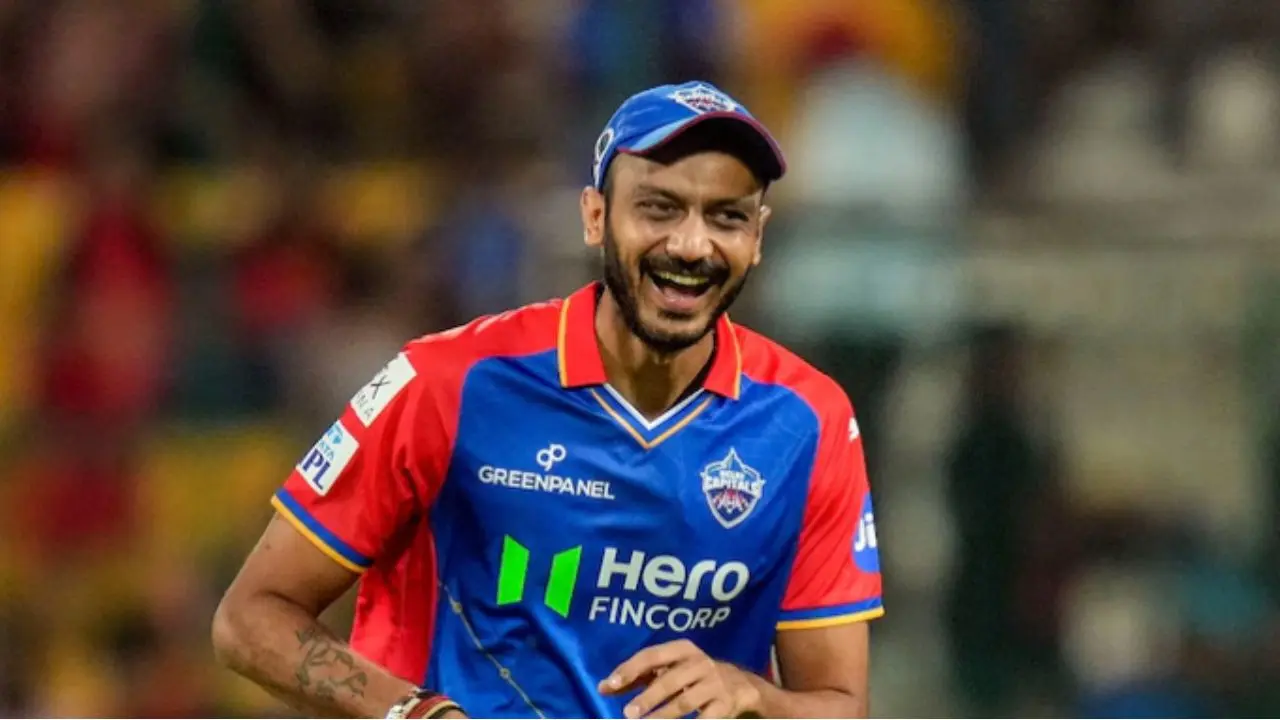
Axar Patel won the toss, and the Delhi Capitals will bowl first against the Royal Challengers Bengaluru. The two teams are set to face off at the M.Chinnaswamy Stadium in Bengaluru.
After winning the toss, Axar Patel was happy to bowl first. The DC captain predicted a slow wicket and hence preferred to chase the total.
“I am going to bowl first. The wicket looks nice and hard. Since it’s a day game, it might be a bit slow. Also, Chinnaswamy is usually a chasing ground, so we would like to chase. That’s why we decided to bowl first. We are going with the same XI. (On having a long break) If you’re winning, the break would be bad. But since we lost the last two matches, the break helped us regroup. Now we are back together as a unit and ready to start with fresh momentum. Obviously, we are looking at the opposition, but we are focusing on our own strengths and sticking to our plans. We`ll follow our plans and see what happens.” Axar Patel said.
RCB captain Rajat Patidar admitted that he was looking to bat first anyway and put up a big total on the board.
“Happy to bat first because we were planning to bat first on this track. It`s a day game, looking a good surface. So we`ll put a good total on the board and put them under pressure. (On the green initiative) Yeah, I think we wear this jersey to show our commitment to sustainability and encourage everyone to make green choices for the planet. (Changes) No, we are playing with the same side. (On playing well at the Chinnaswamy) Of course, there was a lot of planning behind it. And as you know, this year we have a final at Chinnaswamy, so we have to win all the home matches.” Patidar said.
Confirmed Playing XI for both teams:
Delhi Capitals (Playing XI): Pathum Nissanka, KL Rahul(w), Sameer Rizvi, Axar Patel(c), David Miller, Tristan Stubbs, Auqib Nabi Dar, Lungi Ngidi, Kuldeep Yadav, T Natarajan, Mukesh Kumar
Royal Challengers Bengaluru (Playing XI): Virat Kohli, Philip Salt, Devdutt Padikkal, Rajat Patidar(c), Jitesh Sharma(w), Tim David, Romario Shepherd, Krunal Pandya, Bhuvneshwar Kumar, Suyash Sharma, Josh Hazlewood
Director Ali Abbas Zafar is on a tight schedule as he cans scenes with Ahaan Panday of Saiyaara (2025) fame for his yet-untitled film. The team has locked dates for a key song sequence from April 18 to 21 at Gold Studio in Juhu, Mumbai.
According to sources close to the production, the track is being mounted as a high-energy, character-defining moment. “The song isn’t a break in the narrative. Ali wants the song to push the story forward. It’s got attitude, movement, and a certain rawness that matches Ahaan’s character.”
Actors Hrithik Roshan and Ryan Gosling gave fans an unexpected cultural crossover moment last month. The two connected for a virtual conversation ahead of Ryan’s Hollywood film Project Hail Mary’s release in India. While Ryan opened up about his alien co-star Rocky, Hrithik remembered his sci-fi film Koi Mil Gaya (2003) and his onscreen bestie Jadoo, an extraterrestrial being. Ryan’s co-actor Priya Kansara, who was the voice of Mary in Project Hail Mary, has now shared her love for Hrithik, his film and Jadoo with us. “Koi Mil Gaya is a classic, like Jadoo… We used to sing ‘Jadoo Jadoo’ when we were little. There’s only a few movies in the world that have wonderful aliens, right? E.T. (E.T. the Extra-Terrestrial), Koi Mil Gaya and Project Hail Mary. It’s a very niche amount of films that we can rely on. Also, I’m a big Hrithik Roshan fan as well. I’ve watched so many of his movies growing up. Ryan and Hrithik’s video was really cool, like two worlds colliding.”
Ryan Gosling, Priya Kansara and Hrithik Roshan
When asked if she would like to share the screen with Hrithik some day, an excited Priya replies, “Oh my God, please. Somebody make that happen. I would be so down for that.” Priya goes on to name Hrithik, Aishwarya Rai Bachchan and Aamir Khan as her favourites, giving a special mention to Aamir’s Lagaan (2001) and 3 Idiots (2009). Sharing her possible Bollywood plans, the British actor says, “Yeah, never say never. I grew up watching Bollywood movies and they have a very special place for me. So if the right story or the right people came along and something was on the horizon, then who knows? We’ll see.”
Sharing her experience of working with Ryan, Priya says, “Oh, Ryan Gosling is awesome. I was nervous because he’s a brilliant actor, so you feel a bit of imposter syndrome, like, ‘Is he going to realise that I’m useless and I can’t do this job or support him?’ But he was so warm and open. I learned a lot working with him.” Talking about how Ryan was on set, Priya reveals, “He is very focused. Ryland’s a funny character, a bit dorky, and Ryan exemplifies that. I appreciated how calm, collected and kind he is all the time. There were some really stressful days on set when there’s so much to shoot, he’s in a wire because he’s doing zero gravity and 15 people are telling him different things. But Ryan never gets overwhelmed, at least not visibly.”
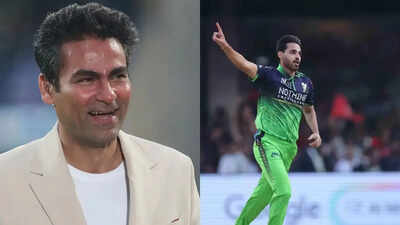
NEW DELHI: Former India cricketer Mohammad Kaif praised veteran pacer Bhuvneshwar Kumar for his match-winning spell against Delhi Capitals, where he rattled the top order early. Defending a target of 176, Bhuvneshwar struck in the powerplay to reduce DC to 18/3, finishing with impressive figures of 3/26. His strong form this season continues, with 10 wickets in six matches, showing he still has the ability to trouble top batters with swing.
Watch
Ajinkya Rahane press conference: On another defeat, Cameron Green and more
Kaif took to X (formerly Twitter) to reflect on Bhuvneshwar’s journey and raised the possibility of a national comeback.“There are moments when one gets emotional. Watching Bhuvi bowl so beautifully today brought back memories of the days when he was just 17. I was the UP captain, and was impressed by his control and swing. But selectors said he was too young. I insisted. Bhuvi made his Ranji debut, got Sachin Paaji for duck in the final. He’s 36 now, still troubles the best of batsmen with his swing. India comeback? Why not, Bhuvi still has it in him,” he wrote.Bhuvneshwar, who last played for India in 2022, has taken 294 wickets in international cricket and recently became only the second bowler overall to reach 200 IPL wickets.Despite Bhuvneshwar’s early breakthroughs, Delhi Capitals recovered well in the chase. KL Rahul and Tristan Stubbs scored crucial fifties, while David Miller finished the game with a quick unbeaten cameo.Earlier, Royal Challengers Bengaluru managed 175/8, with Phil Salt top-scoring. In the end, DC secured the win and moved up the table, while RCB missed a chance to strengthen their position.
Former Wimbledon champion Marketa Vondrousova is at the centre of a major controversy after being charged in connection with a doping-control violation that could carry a suspension of up to four years.
The International Tennis Integrity Agency (ITIA) has accused the Czech star of “refusing or failing to submit to sample collection without compelling justification” following an out-of-competition test in December.
According to reports, a doping control officer arrived at her residence late in the evening for a random test. Vondrousova later said she felt unsafe and unsettled during the visit, claiming the officer did not properly identify themselves and that the encounter triggered severe anxiety. She has denied any intention to evade testing, insisting her response was driven by fear rather than wrongdoing.
‘I REACHED A BREAKING POINT’
The 2023 Wimbledon champion, known for her calm on-court presence, revealed on Instagram that she has been dealing with significant mental health struggles. In her post, she said the incident came after months of injuries, sleep problems, and emotional exhaustion, adding that prolonged online abuse and personal stress had left her feeling vulnerable.
Courtesy: Marketa Vondrousova Instagram
She also referenced the 2016 attack on fellow Czech player Petra Kvitova, who was injured during a violent knife assault at her home in what authorities described as an attempted burglary. Vondrousova suggested that awareness of that incident contributed to her heightened fear when approached unexpectedly at her door.
In her Instagram statement, Vondrousova wrote: “It is very tough for me to talk about this, but I want to be transparent with you about my mental health. I reached a breaking point after months of physical and mental stress.” She added that she “could not process the situation rationally” at the time and that concerns about personal safety influenced her reaction.
The ITIA has confirmed that an investigation is ongoing and that Vondrousova has been formally charged, though she has not been provisionally suspended and remains eligible to compete while the case is reviewed. If found guilty, she could face a ban of up to four years under tennis anti-doping regulations.
The missiles were fired near the city of Sinpo on North Korea’s east coast at about 6:10am on Sunday (21:10 GMT, Saturday), South Korea’s military said in a statement. It added that South Korea had bolstered its surveillance posture and was closely exchanging information with the United States and Japan.
Japan’s government posted on social media that the ballistic missiles were believed to have fallen near the east coast of the Korean Peninsula. No incursion into Japan’s exclusive economic zone was confirmed.
South Korea’s presidential office said it has held an emergency security meeting, according to media reports.
Such tests violate United Nations Security Council resolutions against North Korea’s missile programme. The diplomatically isolated country rejects the UN ban and says it infringes on its sovereign right to self-defence.
The launches come as China and the US prepare for a summit in mid-May, in which Chinese President Xi Jinping and his US counterpart, Donald Trump, are expected to discuss North Korea.
North Korea has made “very serious” advances in its ability to turn out nuclear weapons, with the probable addition of a new uranium enrichment facility, International Atomic Energy Agency chief Rafael Grossi said on Wednesday.
Late last month, North Korean leader Kim Jong Un said his country’s status as a nuclear-armed state was irreversible and that expanding a “self-defensive nuclear deterrent” was essential to national security.
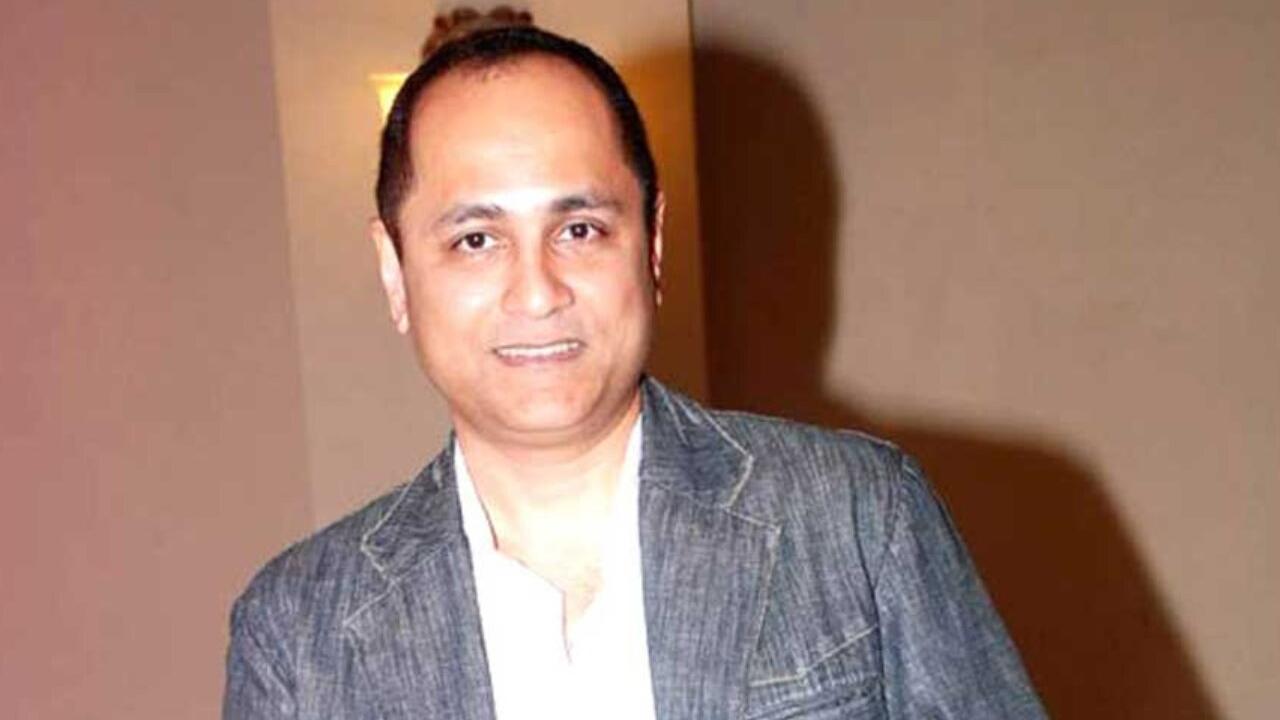
Filmmaker and producer Vipul Amrutlal Shah recently won a 16-year-long cheque dishonour case linked to his 2009 film London Dreams. On Thursday, April 15, the Metropolitan Magistrate Court in Andheri delivered a judgment in Vipul’s favour, bringing closure to a long legal battle. Vipul’s lawyer released a statement, mentioning that while justice might have been delayed in the case, it was not denied.
Vipul Amrutlal Shah wins 16-year-old cheque bounce case
Vipul’s advocate released a statement that read, “Vipul Amrutlal Shah has finally won a 16-year-old, long-drawn cheque-bouncing case against the producers of London Dreams. In 2009, Mr Shah, through his company Sunshine Pictures Private Limited, had extended a loan to the producers to complete their film. The repayment cheque issued by the producers was dishonoured by their bank upon presentation.”
Vaibhav Sooryavanshi has quickly become one of the biggest talking points of the Indian Premier League, thanks to his fearless approach at the crease from the very first ball. Unfazed by reputations, he has already taken on some of the best in the business, including Jasprit Bumrah, Josh Hazlewood and Bhuvneshwar Kumar. His intent and confidence have stood out in every outing so far. Meanwhile, Rajasthan Royals head coach Kumar Sangakkara believes the youngster should simply focus on enjoying his cricket, adding that it’s best not to overhype him too early.
Rajasthan Royals’ Vaibhav Sooryavanshi has been in sensational form this season in IPL. (PTI)
“My message to Vaibhav is simple: enjoy everything. Whether it’s 100 off 35 balls, 50 off 15, or a first-ball duck — you’re allowed to score runs, and you’re allowed to fail. It’s part and parcel of cricket,” the RR director of cricket said on the high expectations surrounding the young gun.
“Vaibhav is such an exciting young player. People talk about talent, but they should also understand the amount of work he puts in at the nets. He reads the game really well, anticipates situations, and plans against bowlers effectively.”
Fresh from his U-19 World Cup heroics, where he was named Player of the Tournament, Sooryavanshi wasted no time making an impact in IPL 2026. He announced himself with a blistering 52 off just 17 balls against five-time champions Chennai Super Kings in the opening game and has carried that form forward, boasting a strike rate of over 263 after five innings.
He set the tone early with a first-ball six off Jasprit Bumrah in the clash against the Mumbai Indians, and later went after Josh Hazlewood in the game against the RCB, smashing three fours and a six in quick succession.
“Sooryavanshi will figure things out as he goes along”
The young sensation was dismissed for a golden duck by an unheralded Praful Hinge in their last match against Sunrisers Hyderabad.
On his failure against SRH, Sangakkara said he will figure things out as he goes along.
“The nature of opening in T20 cricket today is all-out attack. He’ll figure things out as he goes along. For a player like that, sometimes the less said, the better.
“I just want him to remain that 15-year-old kid who goes out and bats with a sense of wonder. That’s how he’ll truly progress. Low scores will happen to him and to everyone else, but I’m very happy to have Vaibhav with us,” Sangakkara added.
While Akshaya Tritiya is seen as an auspicious day to buy gold in Indian culture, but nowadays, people invest their money in not just gold but in other ways too. Here are our Bollywood celebrities talking about how they invest their money on Akshaya Tritiya.
Akshaya Tritiya traditions of celebs
Pankaj Tripathi
I am not a person who buys gold as such, it’s my wife who does it for our family. ‘Akshaya’ means something that never ends, and for me, that is my craft, so I invest in myself on this day. That reflects in taking care of my health, focussing on my fitness and eating habits, and the most important, is to let my mind evolve. As an actor, it’s important to evolve with the time and new developments.
Shweta Tripathi
Now I am producing films and theatre plays, so I am more focused on that. While this is a very auspicious day to invest and start something new, I am going to invest my money in creative gold this year. I want to put my money in creating something beautiful and worthwhile as a producer.
Karan Tacker
As a practice, we always just buy some piece of metal, which ideally is gold on this day. But presently, it has shifted from physical gold to buying and investing in bonds. I think it’s a great day that allows everyone to save a little money and buy a piece of something that allows them an investment for the future, and we do the same too in our family.
Arjan Bajwa
For Akshaya Tritiya, I have been buying silver or gold coins over the years, but since the past year, I brought in a new tradition: I now buy plants for my house. Plants surely create a positive environment indoors as well , and more greenery creates a festive atmosphere in home space .
Abhilash Thapliyal
Every year on Akshaya Tritiya, while gold and silver prices seem to be setting new records, we stick to a much more ‘stable’ investment and buy a broom. This tradition actually began when we first moved to Mumbai, on the suggestion of our house help at the time, and since then, we repeat it every year, including on Dhanteras. What started as her belief, has now become a ritual we genuinely value. There’s also a deeper significance to it. A broom is associated with Goddess Lakshmi and symbolises clearing away negativity to welcome prosperity. So in a way, before inviting abundance in, we make space for it.
Aahana S Kumra
I feel that whichever day you decide to buy anything, makes the day special. Yet, Akshay Tritiya is very auspicious and I believe you should invest in something valuable on this day. So I ensure to buy a piece of gold or jewellery, even if something small, as a family.
Pooja Gor
For me, Akshaya Tritiya is about abundance and continuity. While I don’t necessarily buy something every year, but when I do, its a symbolic gesture. Mostly something meaningful like a piece of gold or a thoughtful investment. The tradition, to me, is less about the object to buy and more about the intention. It’s an opportunity to acknowledge gratitude & hope for lasting prosperity. Its more about the mindset than the purchase.
Mumbai: In Mumbai, where old buildings standing on prime real estate are known to get into the redevelopment maze, a structure built in 1972 has chosen a different path – reimagining its past instead of fading away.
Mumbai, India. April 14, 2026 – View of the Pancharatna skyscraper near Charni Road railway station in south Mumbai, India. April 14, 2026. (Photo by Raju Shinde/HT Photo) (Raju Shinde)
The Panchratna building, a landmark building near the Opera House that was once the center of India’s diamond trade, through which about 90% of the country’s diamond deals passed, has now returned to its original incarnation – evidence of this is the queue of clothes drying outside the apartment windows on the upper floors. This became possible because diamond traders shifted their business from here to Bharat Diamond Bourse (BDB), Bandra Kurla Complex (BKC) and Surat, Gujarat. 121 of its 144 flats, which once served as offices for prominent diamond traders, are now home to families.
While the influx of houses, which were converted into offices, started in 2011 when diamond traders started moving their business to BDB, it was only recently that the building reached full occupancy. Flat buyers at that time found economic merit in leasing space for commercial use, with many opting to rent living space in the surrounding area.
Today, the real estate prices of residential and commercial locations here are in between ₹from 40,000 ₹Rs 55,000 per sq ft for space between 700 to 1200 sq ft.
Chirag Patel, a businessman who moved here eight years ago, said: “I moved to Panchratna because it offers the best view of the sea. After the building was converted from commercial to residential I decided to take advantage of the opportunity given its proximity to the most important neighbourhoods.”
Chandrika Nagaraj, who has lived here for 37 years, is happy to be surrounded by many neighbours, unlike the times when it became a commercial hub. “The building has the best view of the sea. People like to come here as schools, colleges, hospitals and even the railway station are nearby. Even after the diamond market shifted to BKC, the building continues to have tight security,” Nagaraj said.
creating a commercial hub
Built 54 years ago, the 25-storey Pancharatna was envisioned as a part-commercial, part-residential centre. Keeping in mind the growing diamond trade in the city, six floors from the ground floor were designed for commerce, which at that time was being conducted mainly from the congested Dhanaji Street in Kalbadevi (about 3 kilometers from the Opera House). Considering the seventh floor as a shelter area, 144 flats were built in the upper 18 floors. The building was designed in such a way that the residential spaces faced the Arabian Sea, commanding a grand view of the Queen’s Necklace, Malabar Hill and Nariman Point, while the commercial spaces overlooked the busy streets outside.
However, within about three years of its completion the diamond trade boomed and most of the residential apartments in Panchratna were converted into offices by diamond traders and others associated with the trade, making it one of the most expensive commercial locations in Asia at that time.
In 2002, the Brihanmumbai Municipal Corporation (BMC) officially recognized the change in view of the demand for space and the Diamond Hub status, and the Standing Committee passed a resolution allowing Pancharatna to convert its residential floors to commercial tenants.
“Each flat was converted into three commercial units in 2002, leaving only 10 residential flats. However, today, the commercial properties have again been converted into residential and 121 families are occupying flats on the upper floors,” said Naresh Mehta, secretary of Pancharatna Co-operative Housing Society.
The 25-storey tower became the center of Mumbai’s diamond trade in the early 80s, and within a short time, the market expanded into 10 adjacent buildings in the area, including Prasad Chambers, Modi Chambers and Parikh Chambers, with around 4,500 stores. Traders from abroad, especially Belgium and Israel, were often seen in small shops along the causeway.
Since almost all the safes were kept in the Pancharatna, merchants from all over the area would return to the building in the evening to keep the precious stones safe. About 60% of the world’s diamond processing passed through the opera house. According to estimates by business leaders, at its peak the building generated an annual turnover of more than Rs 20 lakh. ₹5,000 crores.
“During the glorious period, we installed 386 CCTV cameras for round-the-clock surveillance and deployed 32 security guards in the building as it recorded between 10,000 and 12,000 footfall every day. Today, the number is less than half and the building still sees around 4,000 visitors every day, especially in the offices on the first six floors,” Mehta said.
According to the Commerce Ministry, in 2010-11, India imported 150 million carats of rough diamonds and exported 59.9 million cut and polished diamonds worth $18.24 billion, with about 90 per cent of the deals concluded in the Opera House area – where diamond traders, graders and dealers felt safe despite the area always being crowded.
One dealer said, “The crowd provided anonymity to the dealers who joined the crowd, wrapped the precious stones in tissue paper and kept them in their pockets and safely carried the diamonds off the streets.”
However, the excitement began to fade after July 13, 2011, when a powerful improvised explosive device exploded in the lane between Pancharatna Bhawan and Prasad Chambers at around 6.55 pm that day, killing and injuring several people. It was part of one of three coordinated bombings; The other two were at Zaveri Bazaar (10 minutes before the Pancharatna blast) and the other near Kaburtarkhan in Dadar (10 minutes after). Overall, 27 people lost their lives and 127 were injured in the three blasts.
“Everything changed after the 13/7 bombings,” Mehta said. “After the bomb blasts, the diamond trade started moving from the Opera House area to BDB, which had been standing ready since October 2010.”
Spread over 20 million square feet and shaped like a diamond, the BDB has 2,500 offices and an ultra-modern security setup with armed guards, a facility that was absent in the Opera House area, where traders had to take their diamonds to the Pancharatna safes every evening for safekeeping. Furthermore, BDB provided a complete eco-system for traders – apart from trading, there were also opportunities for grading, banks and dealers.
The timeless charm of Panchratna
Rajan Parikh, vice-president of the Mumbai Diamond Merchants Association, said that although traders were nostalgic about the Opera House area, they felt it was necessary to move forward with the times – given the facilities offered by the BDB it was the destination. “Large area availability, modern security systems, avenues to promote individual businesses, banks and travel agents – everything is available under one roof,” Parikh said.
“Pancharatna, however, still holds a special place in our minds – given the proximity to Charni Road station, we fondly look back at the food we get here, the ambiance of South Mumbai and the connectivity to the suburbs. We all made money and developed our businesses there,” Parikh said, adding that many diamond traders still maintain small office spaces in Panchratna even after shifting their main business operations to the BDB.
Mehta said: “The building was far ahead of its time – planned for the future. The commercial floors were centrally air-conditioned and had 12 modern lifts – six for the first six floors that face the lane and the remaining six for the upper 18 residential floors.”
Kirit Bhansali, chairman of the Gem and Jewelery Export Promotion Council (GJEPC), agreed. “The winning fact was that since most of us lived in South Mumbai, we got freshly cooked lunch from our homes, while some elderly people went home for lunch. The Opera House area also provided some great food options,” Bhansali said, adding that after moving to BKC, “most of us miss the food shops in the Opera House”.
Another proud owner of commercial space is Popley & Sons Jewellers. “We have had a commercial space in the building since 1978 and have been operating from there,” said Rajeev Popley, director of Popley Group of Jewellers. “This area is special despite most of the market shifting to BKC and Surat markets. We never thought of moving out of the building. Besides, the area is well connected to other parts of the city,” he said.