Tuesday, September 29, 2026
Home Blog Page 600

Tanguy Destable: 5 key things to know about Natalie Portman's boyfriend after pregnancy reveal

0
Tanguy Destable: 5 key things to know about Natalie Portman's boyfriend after pregnancy reveal


Actor Natalie Portman is expecting her third child. Sharing the news exclusively with Harper’s Bazaar, the 44-year-old revealed that she and her partner Tanguy Destable are pregnant. “Tanguy and I are very excited,” she said. “I’m just very grateful. I know it’s such a privilege and a miracle.”

Natalie Portman and Tanguy Destable are pregnant (AFP and Instagram)

New chapter after divorce

The pregnancy marks a new phase in Portman’s life following her split from ex-husband Benjamin Millepied, with whom she finalized her divorce in February 2024 after 11 years of marriage. Her relationship with Destable became public earlier this year, with reports confirming the two had started dating months after the divorce.

Natalie Portman family

The Oscar-winning actor is already a mother to two children, son Aleph, 14, and daughter Amalia, 9, whom she shares with Millepied. She recently spoke about her children, noting that her 14-year-old ‘started a clothing line called Vanté. I’m very proud of him. He really just did it all on his own. And so I wore one of his shirts on stage. So I just kind of felt like a banner for him. It was very exciting’.

She has described her children as a constant source of joy and inspiration.

“My kids are always a source of excitement, because you just see them develop into the individuals they are,” she told Jenna Ortega. “Also, I’ve been spending a lot of time with my friends, with their kids and my kids; that’s pretty fun.”

5 key things about Tanguy Destable

French roots and early musical journey

Destable hails from Morlaix, a small town in Brittany, France. “I grew up in a small-town of Brittany in the 90s and it was hard to find band members … so I decided to buy a sampler and synth to replace the drummer and bass player,” Destable said in a past interview. “I couldn’t find and do it all by myself.”

Career – Tepr

Destable, who performs under the name Tepr, is an electronic music producer known for working with artists like Yelle and Woodkid. He has also contributed to film scores and performed internationally, including at the 2016 Rio Olympics.

In recent years, he collaborated with Lady Gaga on a Dom Perignon project and worked on soundtracks for multiple films and series.

Relationship with Natalie Portman

Destable has been dating Natalie Portman since last year. Their relationship marks Portman’s first public romance since her split from Millepied, whom she divorced in February 2024.

Both bring children from previous relationships

Both Destable and Portman are parents. He shares two sons with his former partner, French actress Louise Bourgoin.

Life in Paris

Destable is based in Paris, where Portman has also lived for years after relocating during her marriage to Millepied.

“Paris, of course, is just a dream,” Portman said. “I’m so lucky to get to live here and have an enormously stimulating city life with incredible friends.”


From Hormuz to household finance: How global oil shocks can filter into Indian homes

0
From Hormuz to household finance: How global oil shocks can filter into Indian homes


From Hormuz to household finance: How global oil shocks can filter into Indian homes

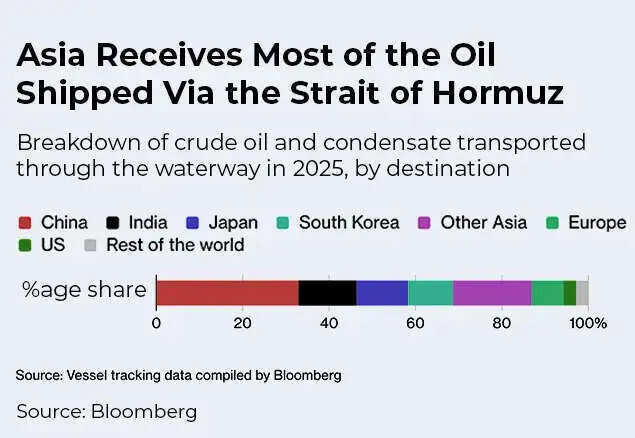
The Iran–US conflict has pushed global oil markets into turmoil, with tensions still simmering despite a two-week ceasefire window, since April 8, intended to enable negotiations. The peace talks amid the fragile truce have so far failed to yield any breakthrough, though diplomatic sources indicate preparations for a second round of talks are already under way. The standoff nevertheless has spilled into one of the world’s most critical energy chokepoints. The US began enforcing a naval blockade around the Strait of Hormuz, targeting vessels linked to Iranian oil exports and disrupting traffic through a narrow corridor that carries nearly 20 per cent of global crude supply.The US naval blockade, imposed this week after failed peace talks, has compounded earlier disruptions by directly targeting Iranian exports and turning back vessels moving through the Strait of Hormuz.However, in the most recent development on Friday, Iran declared the Strait of Hormuz “completely open” to commercial vessels for the duration of the Lebanon ceasefire, marking a temporary easing of tensions in the key global energy chokepoint. However, the relief from the reopening will take time to filter through global markets as freight flows, pricing, and risk premiums adjust gradually, while the effects of the earlier disruption continue to work through the system. The durability and effectiveness of the truce will ultimately depend on how sustainably current arrangements hold, shaping the overall impact of this move.

Crude share

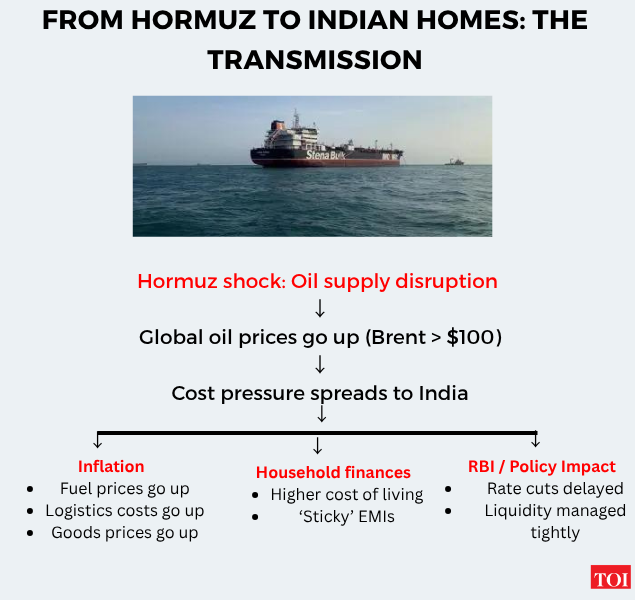
The result is a layered supply shock. Brent crude has swung past the $100 per barrel mark at multiple points during the crisis, reflecting not just immediate supply constraints but a sustained risk premium tied to prolonged instability in one of the world’s most critical oil corridors.For India, the developments are more than a distant geopolitical flashpoint. The country imports over 80 per cent of its crude oil requirement, with a significant share routed through the Gulf. Any disruption,whether a full blockade or even tighter enforcement,feeds directly into domestic costs.What begins as a military and strategic confrontation at sea quickly sets off an economic chain reaction: from crude oil to fuel prices, from fuel to inflation, from inflation to interest rates, and ultimately into household finances.

Watch

‘International Law Must Be Respected’: India Urges Restoration Of Safe Navigation In Hormuz At UNGA

Oil shock to inflation: The first link

India’s heavy reliance on imported oil makes it sensitive to global price swings. It’s like a 2025 Reserve Bank of India study estimated, that a 10 per cent increase in global crude oil prices could raise headline inflation by around 20 basis points, although the actual impact depends on fuel taxes and pricing decisions.

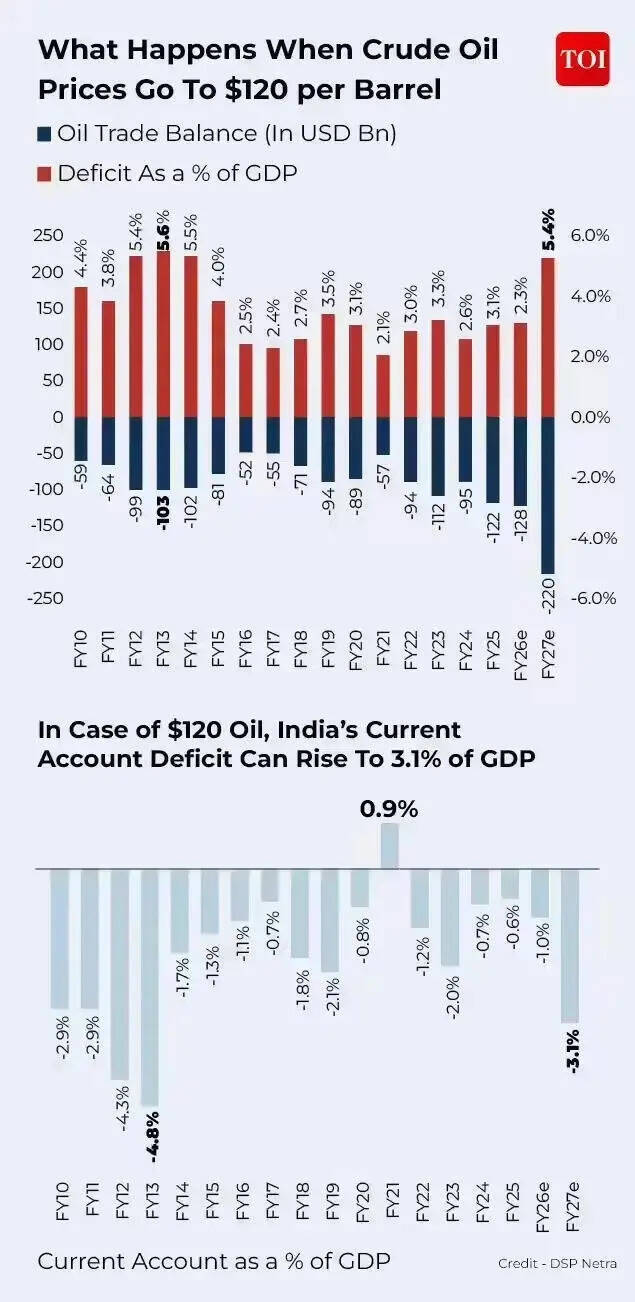
What happens when crude oil prices go to $120 per barrel

Petrol, diesel, and LPG prices respond first. But the broader impact is felt through logistics. Higher diesel costs raise freight rates, which in turn increase the price of everything from vegetables to consumer goods.Within weeks of sustained price increases, these pressures begin to show up in headline inflation.However, the transmission into core inflation, excluding food and fuel, is less immediate and depends on how deeply cost pressures spread across sectors.This was explained by Vivek Iyer, Partner and Financial Services Risk Advisory Leader at Grant Thornton Bharat, talking to TOI, “Core inflation is a function of demand side shocks or supply side shocks. The RBI monetary policy is usually used to address the demand side shocks and the fiscal policy to address the supply side shocks. The geopolitical tensions will have an impact on headline inflation but don’t see an impact on core inflation as the domestic growth story for India continues to be strong.”

The RBI’s response: Watching, not reacting

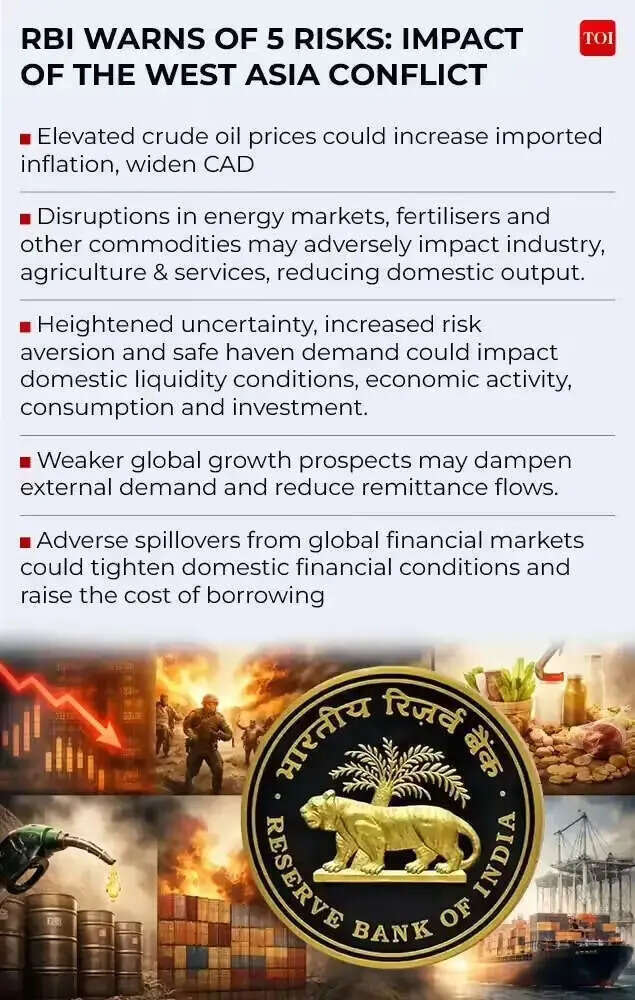
Since tensions around the Strait of Hormuz began escalating in late February, the Reserve Bank of India has not taken any oil-specific action but it has adjusted its stance to manage the resulting financial volatility.The central bank has maintained its policy rate unchanged through this period, even as global crude prices turned volatile, signalling a preference for stability over reactive tightening. At the same time, it has stepped up liquidity monitoring, with periodic interventions in money markets to keep short-term rates aligned with its policy corridor.In its latest policy communication, the RBI flagged global commodity prices and geopolitical risks as key uncertainties for the inflation outlook, indicating that external shocks, rather than domestic demand, are driving current price risks.

RBI flags 5 risks from West Asia conflict

That distinction matters. When inflation is imported through oil rather than generated by overheating demand, central banks tend to avoid aggressive rate hikes that could unnecessarily slow growth.As Vivek Iyer of Grant Thornton Bharat said, “We don’t expect the interest rate to be on a higher side, as in a globally slow economy and with growth for India being domestically driven, RBI will take a measured approach while keeping a close watch on how inflation expectations evolve.”Thus, the implication is clear: while rate cuts may be delayed, a sharp tightening cycle remains unlikely unless oil shocks begin to feed more persistently into core inflation.

The three levers: How central banks respond

So far, the Reserve Bank of India has held policy rates steady and focused on managing liquidity, even as crude prices turned volatile amid disruptions around the Strait of Hormuz.But if oil prices remain elevated—or spike further—policy choices could begin to shift. Central banks typically respond through three channels, and early signs of some of these are already visible.1. Delayed rate cutsMarkets had begun pricing in a gradual rate-cut cycle earlier this year, particularly after the Reserve Bank of India held rates steady in its February 2026 policy review while signalling comfort with the disinflation trajectory.However, that outlook has become less certain since late February, as tensions around the Strait of Hormuz began disrupting oil flows and pushing crude prices higher. In its April 2026 policy communication, the RBI flagged global commodity volatility and geopolitical risks as key uncertainties, effectively tempering expectations of near-term easing.If crude prices remain elevated:

  • Expected relief on EMIs will be delayed: Rate cuts that were earlier anticipated in the first half of the financial year could be pushed further out.
  • Borrowing costs not come down for longer: Even without fresh hikes, banks are likely to keep lending rates elevated in line with the RBI’s cautious stance.
  • The easing cycle could shift further into the year: Policy may prioritise inflation stability over growth support until oil-driven pressures show signs of easing.

2. Higher-for-longer interest ratesEven without fresh rate hikes, central banks can signal caution—and that shift is often enough to keep financial conditions tight. This dynamic is already visible in market expectations as crude volatility complicates the inflation outlook.A recent example comes from the US Federal Reserve, which through 2024 repeatedly pushed back expectations of rate cuts despite easing inflation. The result was a sustained period of elevated global borrowing costs, as markets adjusted to the idea that rates would stay higher for longer than initially anticipated.A similar pattern could play out in India.If inflation risks linked to oil persist:

  • Lending rates are likely to stay higher: Banks tend to price loans off policy expectations, not just current rates.
  • Borrowing costs will not come down: From home loans to personal credit, interest costs may not ease quickly.
  • Discretionary consumption could soften gradually: With EMIs and credit costs not coming down spending on non-essential goods may not go up and may even see softening if prices go up

This “higher-for-longer” environment does not require active tightening. It works through signalling, where central banks hold rates steady but communicate enough uncertainty to prevent markets from pricing in early easing. What is important to note is that RBI has already cut repo rate by 1.25% in this easing cycle, but the ongoing conflict will delay further rate cuts, in effect dampening hopes of lower EMIs and borrowing costs.3. Tighter liquidity conditionsCentral banks can also respond to persistent inflation by reducing the amount of money circulating in the financial system.In India, the Reserve Bank of India has used this approach in past tightening phases. During the inflation surge in 2022 and 2023, the RBI began withdrawing the excess cash that had been pumped into the system during the pandemic.It did this by encouraging banks to park more money with the central bank through instruments such as variable rate reverse repo (VRRR) auctions. In simple terms, banks had less easy cash to lend, and the cost of borrowing in short-term markets began to rise.This meant that even before the full effect of interest rate hikes was felt across the economy, borrowing was already becoming more expensive at the margins.A similar approach could come into play again if oil-driven inflation persists.This can happen through measures such as:

  • Selling bonds to absorb excess liquidity
  • Increasing reserve requirements for banks
  • Actively managing surplus funds in the banking system
.

Unlike interest rate changes, liquidity tightening works in the background. But as seen in earlier cycles, it can still push up borrowing costs and slow credit growth across the economy.

Watch

‘Hormuz Disruptions Could Hit Growth’: RBI Governor Malhotra Flags Oil, Inflation Risks After MPC

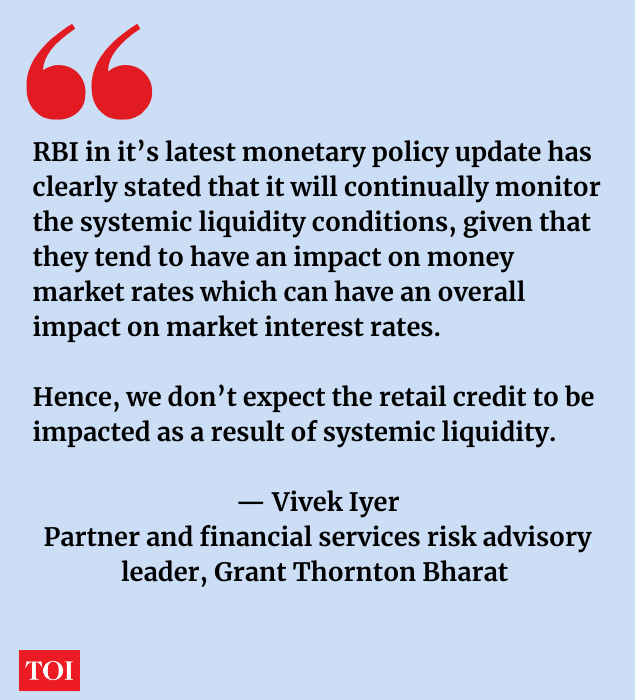
That said, the Grant Thornton partner noted that while the RBI continues to monitor systemic liquidity given its influence on money market rates, this may not directly translate into tighter retail credit conditions.

.

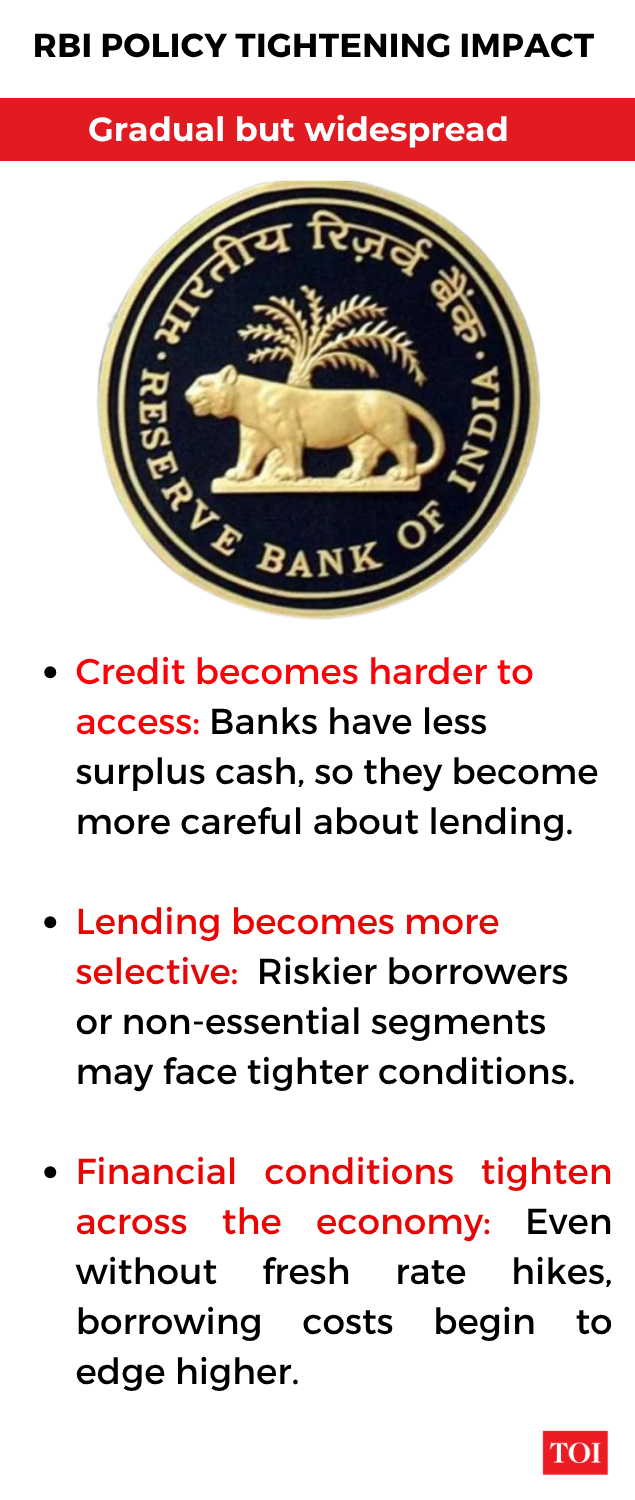
The key shift: Subtle tightening without rate hikes

The current phase is not one of aggressive policy action, but of calibrated restraint.Even without rate hikes, financial conditions are already tightening at the edges:

  • Rate cuts are being delayed
  • Lending rates remain sticky
  • Liquidity is being managed more actively

If oil prices remain elevated, these trends could deepen, gradually translating global disruptions into tighter financial conditions at home.

How Households feel the impact

For households, the effect of an oil shock is rarely immediate, but it is persistent.Fuel bills are usually the first to rise. This is followed by higher grocery costs as transportation expenses feed into food prices. Over time, borrowing costs remain elevated, delaying relief on EMIs. However, for now the government has kept the petrol and diesel prices unchanged by slashing excise duties.

.

Home loan EMIs stay elevatedFloating-rate borrowers see limited benefit if rate cuts are pushed back, increasing total interest outgo over the life of the loan.Costlier consumer creditCar loans, personal loans, and credit card interest rates remain high, discouraging discretionary spending.Savings see partial upsideHigher deposit rates can benefit savers, but this often coincides with slower economic momentum, which can affect income growth.

The ‘double squeeze’

The most significant pressure comes from the combination of two forces:

  • Rising cost of living driven by fuel-led inflation
  • Elevated borrowing costs due to delayed monetary easing

This “double squeeze” gradually compresses disposable incomes. Even without a sudden shock, the cumulative effect is visible; households spend more on essentials while financial flexibility declines.Fuel costs rise. Food becomes more expensive. EMIs remain sticky. Wage growth does not always keep pace.

From global conflict to local budgets

The current crisis is a textbook case of how tightly linked global geopolitics and domestic economics have become.A blockade in the Strait of Hormuz is not just a strategic manoeuvre, it is a disruption with global economic consequences. For India, the transmission runs through oil prices, inflation dynamics, and financial conditions before finally reaching household budgets.For now, there is no immediate shock to household finances. But if disruptions persist, the impact will not come as a sudden jolt, it will build gradually, tightening budgets over time.What begins in a narrow shipping lane thousands of kilometres away can, and often does, end up reshaping financial decisions at home.



Glory trailer: Pulkit Samrat and Divyenndu turn brutal in search of vengeance

0
Glory trailer: Pulkit Samrat and Divyenndu turn brutal in search of vengeance


Glory trailer: Pulkit Samrat and Divyenndu turn brutal in search of vengeance

The power-packed trailer of Glory, a riveting series about revenge and ambition, was unveiled on Friday. With a murder mystery at its core, the series is set in the high-stakes world of Indian boxing, where the ring becomes a battleground for personal conflicts, buried secrets, and emotional reckoning. The Netflix series has been created by Karan Anshuman and Karmanya Ahuja.

Glory trailer released

Marking a first-of-its-kind launch, Netflix brought the world of Glory to life by hosting a LIVE boxing face-off between Pulkit Samrat and professional boxer Neeraj Goyat, which blurred the lines between fiction and reality to create an immersive experience.

The trailer of Glory shows the dynamics beyond the family open into a world where every character has a stake. Sikandar Kher’s Kookie Gulati looms over Shaktigarh, as Ashutosh Rana’s Viju Sanghwan drives the boxing rivalry. Meanwhile, Sayani Gupta’s Joyna is on her toes, digging into Nihal’s death, uncovering deeper links, while Kashmira Pardeshi’s Bharti stands at the centre, as a sharp and unpredictable character.

About Glory

The power-packed cast of Glory includes Divyenndu, Pulkit Samrat, Suvinder Vicky, Jannat Zubair, Ashutosh Rana, Sikandar Kher, Sayani Gupta, Yashpal Sharma, Kashmira Pardeshi and Kunal Thakur. 

At its core, Glory is the story of a fractured family forced back together. Raghubir Singh (Suvinder Vicky) is a formidable boxing coach who is obsessed with Olympic glory but struggles to hold together a legacy that is slowly unravelling under the weight of strained relationships. Meanwhile, his sons Dev (Divyenndu) and Ravi (Pulkit Samrat) return to Shaktigarh to reveal the truth behind the brutal assault on their sister Gudiya (Jannat Zubair) and the mysterious death of a rising Olympic boxing star, Nihal Singh. 

Speaking about the series, Tanya Bami, Director, Series, India at Netflix, said, “ With Glory, we set out to do something truly first-of-its-kind: a sports crime thriller that asks what ambition, legacy, truth, and revenge really mean when they collide at the highest stakes. Set against the fiercely competitive world of boxing and the thirst for Olympic gold, Glory goes far beyond conventional sports drama, layering intense emotion with a suspense-driven core that keeps audiences on the edge of their seats. With Karan Anshuman`s singular creative vision at the helm, and an exceptional ensemble in Divyenndu, Pulkit Samrat, Survinder Vicky, Sikander Kher, Ashutosh Rana, Sayani Gupta, and Jannat Zubair, we believe this series will be the perfect binge watch .”

Creator and director Karan Anshuman shared, “At its heart, Glory is about the pursuit of Olympic gold — the most exalted idea of physical achievement — and the darkness that can gather around that dream. The series explores how inherited ambition, violence, and the hunger for greatness can corrupt everything around it.”

Karmanya Ahuja added, “In Glory, boxing is language. It is how people express grief, love, rage, ambition, and even silence. The ring becomes an altar for personal expression.”

Produced by Mohit Shah and Karan Anshuman under the Atomic Films banner, the story is written by Anshuman, Ahuja, and Vaibhav Vishal, and directed by Anshuman and Kanishk Varma. Glory premieres on Netflix on May 1, 2026.


Sixth time lucky: INR 25.2 crore Cameron Green finally delivers for KKR with 55-ball 79

0
Sixth time lucky: INR 25.2 crore Cameron Green finally delivers for KKR with 55-ball 79


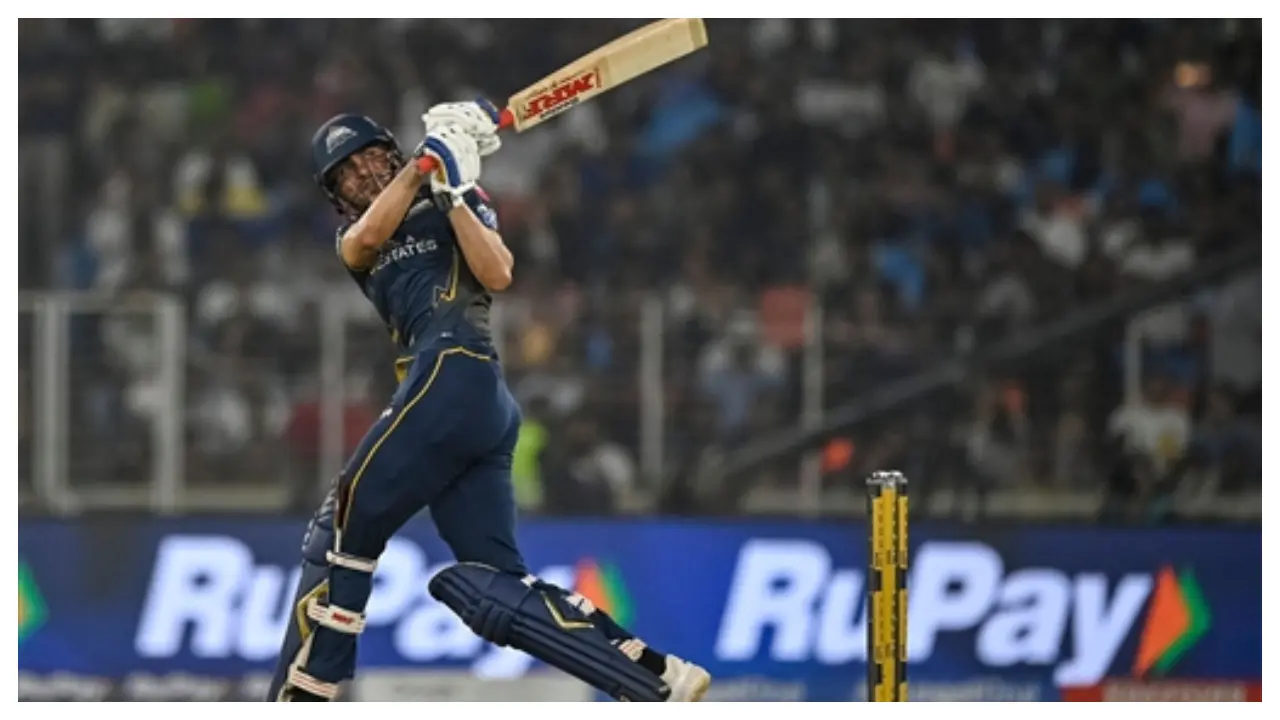
Cameron Green finally underlined his value to Kolkata Knight Riders with a crucial 34-ball half-century, guiding them out of trouble against Gujarat Titans. Walking in with the side under pressure after losing three early wickets, Green counter-attacked with intent, taking on quality bowlers, including Rashid Khan, to shift the momentum. The innings came at an important time for the INR 25.2 crore signing, who had faced scrutiny after a quiet start to the season. He looked composed and positive, finding boundaries regularly to steady the innings. He fought hard till the end and scored 79 off 55 balls, which was laced with seven fours and four sixes as Kolkata Knight Riders were all out for 180.

Cameron Green finally lived up to the price tag with a half-century vs Gujarat Titans. (ANI Pic Service)

There was a slice of fortune too. An outside edge flew past the wicketkeeper, and later, Washington Sundar put down a straightforward chance near the boundary soon after Green reached his fifty/

The Aussie all-rounder came under early scrutiny this season after not being cleared by Cricket Australia to bowl in the opening matches. The 26-year-old featured purely as a batter in his first three games while completing his recovery from a lower back injury. That restriction only added to the pressure, especially as his returns with the bat were modest. Before Friday’s knock, Green had managed just 56 runs across five innings, raising questions over his role and impact in the side during the early phase of the tournament.

Also Read – BCCI takes action after Romi Bhinder found guilty; ACU ‘unsatisfied’ with RR manager’s protocol breach explanation

He began cautiously and looked out of rhythm early on, crawling to 27 off 28 balls. However, the dismissal of Rovman Powell proved to be a turning point, as Green took charge of the innings. He went after Rashid Khan in the very next over, striking a boundary and a six to shift the momentum. That brief burst seemed to free him up, and he soon began to find gaps more consistently, lifting the scoring rate.

Cameron Green misses century

Green then stitched together a crucial 60-run partnership with Anukul Roy for the fifth wicket, reviving Kolkata Knight Riders’ hopes of reaching the 200-mark. Just when things looked stable, the innings took another hit as Anukul and Rinku Singh fell in quick succession, putting the pressure back on.

A quick cameo from Ramandeep Singh offered brief relief, but his departure, followed by Sunil Narine, left KKR reeling at eight down, with their hopes of a big total fading again.

In the end, the GT bowlers made it tough for Green to go for the century as he kept losing his batting partner and eventually, under pressure in the last couple of overs, he failed to give the team a finishing touch and eventually got out on the last ball of the innings.


Sylvester Stallone reveals Frisco King is in production, shares BTS pics

0
Sylvester Stallone reveals Frisco King is in production, shares BTS pics


Sylvester Stallone reveals Frisco King is in production, shares BTS pics

Hollywood star Sylvester Stallone has revealed that the fourth season as well as a spin-off series of Tulsa King titled Frisco King is in production and even shared a glimpse of it on social media. 

Stallone took to Instagram, where he shared a picture from the sets of comedy and crime drama television series. In the image, Stallone and Jackson are seen holding on to the script and sharing a laugh while standing alongside the maker of the show.


View this post on Instagram


A post shared by Sly Stallone (@officialslystallone)

“From one king to another Frisco King is now in production! #FriscoKing,” he wrote as the caption.

For the unversed, Tulsa King had come out first in 2022. The series stars Stallone as Dwight “The General” Manfredi, an American Mafia caporegime who has been recently released from prison in New York and is sent to Tulsa, Oklahoma, where he begins to set up a criminal organization. It is Stallone`s first leading role in a scripted television series.

The series also stars Andrea Savage, Martin Starr, Jay Will, Max Casella, Domenick Lombardozzi, Vincent Piazza, A. C. Peterson, Garrett Hedlund, and Dana Delany. Tulsa King was renewed for a second season, which premiered in 2024.

Paramount later confirmed the third season. The third season premiered in 2025.

A fourth season as well as a spin-off series called Frisco King which stars Samuel L. Jackson, have both been ordered.

Regarding Stallone, in a film career spanning more than five decades, he has received numerous accolades, including a Golden Globe Award and a Critics` Choice Award, as well as Academy Award and BAFTA Award nominations.

He is one of only two actors in history alongside Harrison Ford to have starred in a box-office No. 1 film across six consecutive decades.

In March 2026, it was announced that Stallone and filmmaker Quentin Tarantino would co-direct and co-write a 6-part miniseries featuring gangsters, showgirls, boxing, and music. The series is set to be shot in black and white, using 1930s cameras.

This story has been sourced from a third party syndicated feed, agencies. Mid-day accepts no responsibility or liability for its dependability, trustworthiness, reliability and data of the text. Mid-day management/mid-day.com reserves the sole right to alter, delete or remove (without notice) the content in its absolute discretion for any reason whatsoever


IPL 2026: KL Rahul’s homecoming meets RCB’s Chinnaswamy dominance | Cricket News

0
IPL 2026: KL Rahul’s homecoming meets RCB’s Chinnaswamy dominance | Cricket News


IPL 2026: KL Rahul’s homecoming meets RCB’s Chinnaswamy dominance
Delhi Capitals’ KL Rahul during a practice session in Bengaluru. (PTI Photo)

BENGALURU: When KL Rahul walked into the M Chinnaswamy Stadium on Friday evening, it was with his usual swagger — but also a quiet sense of homecoming. From security personnel to ground staff, familiar faces paused to greet the homegrown star, who acknowledged them with a smile. The venue, after all, remains a second home for the Delhi Capitals’ senior pro. It’s a ground where he honed his craft and one where he will hope to rediscover rhythm after a stop-start campaign so far.Up against his former side, Royal Challengers Bengaluru, on Saturday afternoon, Rahul will be eager to make the most of familiar conditions. After a prolific 2025 season in which he amassed 539 runs, the elegant opener has managed just 111 from four outings this year, with a highest score of 92 against Gujarat Titans. Few can question his pedigree, but consistency has eluded him. RCB, however, know better than most how dangerous Rahul can be if he settles in.Go Beyond The Boundary with our YouTube channel. SUBSCRIBE NOW!At a venue where 200-plus totals have become the norm, Delhi Capitals will be desperate for a turnaround. The larger challenge, though, lies in halting a rampaging RCB unit that has made the Chinnaswamy a fortress this season.The surface here can be unforgiving for erring bowlers, and Capitals will need a marked improvement from their attack. Skipper Axar Patel and fellow spinner Kuldeep Yadav are yet to find their rhythm, while the pace unit has lacked continuity. Auqib Nabi, who enjoyed a breakthrough domestic season, has featured only once, with Lungi Ngidi, Mukesh Kumar and T Natarajan preferred options so far. On a ground where variations and execution are key, that inconsistency could prove costly.ALSO READ: Impact role again on the cards for Virat Kohli?The struggles are not limited to bowling. Barring the promising Sameer Rizvi, the batting line-up has lacked stability. Experienced campaigners like David Miller, Pathum Nissanka, Nitish Rana and Tristan Stubbs have all blown hot and cold, leaving the side searching for a collective effort. The visitors, however, have had time to regroup. They arrived early in the city from Chennai and have put in the hard yards at the BCCI Centre of Excellence.For RCB, it has taken more than a decade to turn Chinnaswamy into a stronghold. This season they have been near flawless, winning all three home games in high-scoring encounters. Their campaign, much like last year, has been built on depth and shared responsibility rather than individual brilliance.While Phil Salt is yet to explode to his full potential, Virat Kohli has already donned the Orange Cap. Tim David’s finishing prowess and Devdutt Padikkal’s solidity at the top have further strengthened the batting unit. Leading the charge, however, has been skipper Rajat Patidar, who has been in imperious touch, scoring 222 runs in five matches at a strike rate in excess of 200.“His batting has been unbelievable,” Josh Hazlewood said on the eve of the game. “He walks in and can hit the first ball for four or six. He hasn’t just maintained momentum, he’s taken it to another level, especially in that 7-15 over phase.”RCB, who will don their green jerseys for the fixture, face a fresh challenge in what will be their first day game of the season. But with momentum and form on their side, they will back themselves to extend their dominance.


Widow, 86, back in France after being held by ICE

0
Widow, 86, back in France after being held by ICE


Marie-Thérèse had moved to the US after reuniting with her long-lost love, an American man who died in January.


Dhurandhar 2: Ram Gopal Varma highlights his disagreement in the film

0
Dhurandhar 2: Ram Gopal Varma highlights his disagreement in the film


Dhurandhar 2: Ram Gopal Varma highlights his disagreement in the film

Aditya Dhar`s Dhurandhar 2 has been largely receiving positive reviews ever since its release on March 19 this year. Filmmaker Ram Gopal Varma has been one of the biggest supporters of the film and has been publicly lauding the film. However, after showering the film with a barrage of praises, he has now voiced concerns over how Dawood Ibrahim has been portrayed in the film.

Ram Gopal Varma criticises Dhurandhar 2

Shortly after the film’s release, Varma took to social media to shower it with praise, even calling Dhurandhar 2 the best film after Sholay. He described it as a “quantum leap” in Indian cinema, referred to Dhar as his “new guru”. He had even met Aditya Dhar and Yami Gautam after the release of the film. 

However, in a recent YouTube conversation with writer Hussain Zaidi, Varma admitted that one particular aspect did not work for him.

Speaking about the film’s depiction of Dawood, shown as ‘Bade Sahab’ and the mastermind behind terror operations based out of Pakistan, Varma said he disagreed with the way the character has been presented.

“The only element I disagree with is that… I feel that the portrayal of Dawood Ibrahim… They might have their own sources (but) I think it is being shown incorrectly,” he said.

He clarified that while he cannot claim absolute authority, the version shown in the film does not align with what he believes to be true. “It’s not like I can say that with authority. But it is not falling in line with what I know.”

Varma further suggested that, based on what he has heard over the years, Dawood Ibrahim has been largely inactive by choice. According to him, the underworld figure may have stepped away from criminal activities nearly two decades ago.

He also admitted that such portrayals exist in a grey area, where neither side can definitively prove or disprove the truth. As he put it, no one can claim complete certainty about such narratives.

Danish Iqbal on playing Dawood 

The actor who plays Bade Sahab was kept a mystery throughout the first part and was only revealed in part 2. Talking about the same, Danish told mid-day, “I initially thought it was just one film and that I would be a part of it. But when the first part released, I realised I would be in part two. Meanwhile, the mention of Bade Sahab created such a buzz. Even I was surprised. There was so much speculation, with people guessing names like Emraan Hashmi, Salman Khan, and many others. Everyone was casting their favourite actor as Bade Sahab.”

Box Office success continues

Despite the ongoing debate, Dhurandhar 2 continues to perform strongly at the box office, reportedly earning Rs 1733.2 crore worldwide. Headlined by Ranveer Singh, the film also features R. Madhavan, Arjun Rampal, Sara Arjun, and Gaurav Gera. Together, the two films in the franchise have crossed Rs 3,000 crore globally.


IPL 2026: Gujarat Titans race to 71/1 in 6 overs chasing KKR`s total of 180

0
IPL 2026: Gujarat Titans race to 71/1 in 6 overs chasing KKR`s total of 180


IPL 2026: Gujarat Titans race to 71/1 in 6 overs chasing KKR`s total of 180

The Gujarat Titans started off strongly while chasing KKR`s total of 180 runs. GT openers Shubman Gill and Sai Sudarshan both found their rhythm early on to take the hosts to 71/1 at the end of the powerplay.

Shubman Gill started off with a bang, scoring 34 runs in just 15 balls. The GT skipper looked in supreme form as he attacked the KKR bowlers from the off. His innings included 4 fours and 2 sixes.

Gill was well supported by Sudarshan, who looked in impeccable touch too. The southpaw scored 22 in 16 balls before being dismissed by Sunil Narine. Jos Buttler came in at number 3 and scored 14 runs in 5 balls at the end of the powerplay.

The Gujarat Titans still have Washington Sundar and Glen Philips in the dugout, and the Gujarat Titans will be the favourites to win the match. A win would take GT into the top 4 in the table.

Earlier, the Kolkata Knight Riders managed to score 180 runs at the end of their 20 overs against the Gujarat Titans. KKR started off poorly but finished well, largely due to the brilliant innings from Cameron Green.

Ajinkya Rahane departed for zero in the first over, and his dismissal was followed by Angkrish Raghuvanshi, who was dismissed for 8 runs in 4 balls. Tim Seifert soon joined the list as he departed for 19 runs in 14 balls. 

With GT struggling, Green controlled the innings and scored 79 runs in just 55 balls to take the visitors to a competitive total. 

For GT, Kagiso Rabada was the star bowler as he finished his four overs with 3/29. Meanwhile Siraj too chipped in with two wickets.

KKR are still winless in the IPL this season, while the Gujarat Titans will move into the top 4 with a win tonight.

Confirmed playing XI for both teams:

Gujarat Titans (Playing XI): Shubman Gill(c), Sai Sudharsan, Jos Buttler(w), Washington Sundar, Glenn Phillips, Rahul Tewatia, Rashid Khan, Ashok Sharma, Kagiso Rabada, Mohammed Siraj, Prasidh Krishna

Kolkata Knight Riders (Playing XI): Tim Seifert, Sunil Narine, Ajinkya Rahane(c), Cameron Green, Angkrish Raghuvanshi(w), Rovman Powell, Rinku Singh, Ramandeep Singh, Anukul Roy, Vaibhav Arora, Kartik Tyagi


India supplies 40% of US smartphone imports, replaces China: Report

0
India supplies 40% of US smartphone imports, replaces China: Report


India supplies 40% of US smartphone imports, replaces China: Report

India is rapidly strengthening its position in global electronics trade, now supplying about 40 per cent of the smartphones imported by the United States that were previously sourced from China.According to a recent report by McKinsey & Company, cited by ANI, the United States has been actively diversifying its import sources and has replaced about two-thirds of the goods it previously sourced from China, valued at more than $80 billion. India and ASEAN economies have played a significant role in this shift.“India, for example, increased smartphone exports to the United States to levels equal to roughly 40 per cent of what China had supplied,” the report stated.India’s rise in smartphone exports has been particularly notable, with shipments to the US increasing sharply despite the long geographical distance of around 13,000 kilometers. This reflects the country’s growing role in global electronics manufacturing and supply chains.The report also highlighted that ASEAN economies replaced about two-thirds of US laptop imports that had earlier come from China, pointing to a broader shift in manufacturing bases across Asia.It noted that global trade remained resilient in 2025 despite concerns of a slowdown. Both US imports and Chinese exports reached new highs during the year, while overall global trade grew faster than the global economy.Among emerging economies, India stood out for expanding trade across regions. However, while overall exports remained largely unchanged, smartphones were a key exception and drove export growth.The report said the shift in trade patterns is being driven by domestic priorities and geopolitical realignments. Advanced economies and China are increasingly reorienting trade away from geopolitically distant partners, while emerging economies like India continue to expand trade across markets.It also pointed to changes in other regions. ASEAN strengthened its position as a manufacturing hub by importing more inputs from China and exporting finished goods to the United States. Brazil increased commodity exports to China, replacing goods that China had earlier sourced from the US.