Tuesday, September 29, 2026
Home Blog Page 601

IPL 2026: Impact role again on the cards for Virat Kohli? | Cricket News

0
IPL 2026: Impact role again on the cards for Virat Kohli? | Cricket News


IPL 2026: Impact role again on the cards for Virat Kohli?
Royal Challengers Bengaluru’s Virat Kohli during a warm-up session. (ANI Photo)

BENGALURU: Ahead of Royal Challengers Bengaluru’s previous outing against Lucknow Super Giants, Virat Kohli cut an unusual figure. The superstar opener went through his pre-match routine with his knee strapped, already nursing an ankle niggle picked up during the away game against Mumbai Indians. When the team sheet was announced, his name appeared in an unfamiliar column — among the reserves.Go Beyond The Boundary with our YouTube channel. SUBSCRIBE NOW!For a player who thrives on being in the thick of the action, watching from the dugout would have been far from ideal. Yet, Kohli made his presence felt when it mattered, walking in to open the innings during the chase as an Impact Player. It was the first time Kohli was seen in that role. He slipped seamlessly into top gear, scoring 49 off 34 balls to steer the chase.After the win, Kohli revealed the extent of his discomfort. “My knee was a bit sore last game. Even health-wise, I’ve been under the weather for four or five days,” he said.Not one known to be a strong advocate of the Impact Player rule, Kohli nevertheless embraced the role when circumstances demanded it. Given the intensity with which he approaches the game, adapting to such situations may become necessary as the season progresses.Teammate Josh Hazlewood confirmed that Kohli is set to feature against Delhi Capitals on Saturday, though he did not rule out the possibility of him continuing as an Impact Player.“I think he’ll definitely play. It’s just whether he’s right to take the field. It’ll be precautionary, and we’ll keep using the Impact Player role for as long as he needs to,” Hazlewood said.Highlighting the utility of the rule, the Australian pacer added, “He’s probably fortunate we’ve got that option. A lot of teams use it for someone coming back from injury or carrying a niggle. It’s invaluable when your main skill can still contribute.”Hazlewood, however, acknowledged that keeping Kohli away from the field is easier said than done. “Obviously I’d love to have him on the field. He’s got great energy, one of our best fielders. But knowing him, he’s not a great watcher of cricket. He loves to be out there and having an impact. So I think he’ll be with the physios trying to get back out there.”


LizLaz breaks silence on Virat Kohli's 'like' on her photo: 'I feel sorry for him'

0
LizLaz breaks silence on Virat Kohli's 'like' on her photo: 'I feel sorry for him'


LizLaz breaks silence on Virat Kohli's 'like' on her photo: 'I feel sorry for him'

Virat Kohli has been the talk of the town for his like on a German model LizLaz’s pictures. This got blown up since Friday morning and social media quickly erupted, with many users drawing comparisons to his 2025 ‘likegate’ involving Avneet Kaur. LizLaz who is a musician and vlogger whose post unexpectedly turned into a viral talking point has finally broken silence on it. She has now reacted to Virat’s like on her post and the reactions that have followed. She said during a chat with Hindustan Times, “It was crazy because I woke up and then I was all over the news,” she tells us, adding, “I don’t even know when he liked the picture, I learnt through the news. So many people found the articles done on me on many different platforms and sent them to me in my DMs. I got so many messages today, people were super excited about it.”Even after Kohli later removed the like, LizLaz says she felt more sympathy than disappointment. “No, I felt a bit sorry for him actually!,” she says. “I was so happy that he liked it, but then him unliking it, I felt a bit bad for him because I don’t even know how it became such a big story. How did people notice, how did they make it news… that was probably not his intention behind it, but still I am grateful for it and I appreciate the support from him.”Meanwhile, a resurfaced clip from one of LizLaz’s earlier interviews has also been circulating online, in which she openly admitted to being a fan of Kohli. That admiration, she explains, began during her first visit to India last year. What was meant to be a short stay with a close friend in Bengaluru soon turned into a months-long journey across the country, including stops in Goa, Mysuru, Mumbai, Chennai and Hyderabad.“One of my best friends is from Bangalore, so I just wanted to visit them. I thought I am going to stay for maybe two weeks and then leave. But then I enjoyed it a lot, so I stayed for many months. I also started traveling around all over South India, Goa, Mysore, even Coorg, Mumbai, Chennai, Hyderabad, and then also the north later. And this trip is when I got introduced to cricket as a sport. I didn’t watch it before or anything. I was born in South Africa but brought up in Germany, where the national sport is only football.”That trip also introduced her to the Indian Premier League. Watching matches with friends from Bengaluru turned her into a supporter of Royal Challengers Bengaluru, and naturally, a fan of Kohli.“It was obviously the IPL last year, so I started watching with my Bangalorean friends. It was contagious. I was also becoming a Royal Challengers Bangalore fan. And obviously, if you support RCB, Virat Kohli is the most exciting player to watch. He’s just so good. So I was happy about him liking the picture.”The viral moment has already brought unexpected professional interest her way. “There have been so many queries. But I am taking my time. I am passionate about music and vlogging. And if I get music opportunities in India, why not? Maybe I will visit again soon. I wish I was there for the IPL this time.”


Neeraj Chopra, Sumit Antil complain of harassment by Dronacharya Awardee coach Naval Singh

0
Neeraj Chopra, Sumit Antil complain of harassment by Dronacharya Awardee coach Naval Singh


Paralympic gold medallist Sumit Antil has accused Dronacharya awardee coach Naval Singh of mental harassment and verbal abuse in a complaint submitted to the Sports Authority of India (SAI). Antil, supported by Olympic champion Neeraj Chopra, alleges that Singh’s conduct has been detrimental to athletes.

Antil, a gold medallist at the Tokyo 2020 and Paris 2024 Paralympics, alleged that Naval had repeatedly targeted him and Neeraj Chopra, and claimed that the coach crossed professional boundaries by abusing their families.

“He mentally harassed us and abused our, as in mine and Neeraj’s, families. He seems mentally unstable,” Antil told PTI.

One of India’s leading medal hopes in the F64 category for the 2028 Los Angeles Paralympics, Antil said the situation escalated over time, forcing him to file a formal complaint with the authorities.

“He would deliberately share recordings of his abusive rants with our managers, so that they reach us.”

SAI acknowledged that it has received the complaint and said the matter is being taken up with the concerned federation. However, the body clarified that Naval Singh is not its employee and is currently engaged by the Athletics Federation of India (AFI) as part of the National Coaching Camp.

“A complaint has been received from Sumit Antil, Paralympic Gold Medalist, alleging verbal abuse by Coach Mr. Naval Singh. The complaint has also been supported by other athletes, including Neeraj Chopra,” a SAI source said.

“The coach in question is not a SAI employee and is training another leading athlete as part of National Coaching Camp organised by AFI.”

Naval, who was conferred the Dronacharya Award in 2015, is currently coaching Sachin Yadav. Sachin had finished fourth at the World Championships last year, ahead of Neeraj Chopra, who placed eighth while managing an injury.

Antil said his complaint has also been endorsed by Neeraj Chopra and fellow para javelin throwers Navdeep Singh and Sandeep Chaudhary.

“It has been a week since we complained to D G SAI (Hari Ranjan Rao) and CEO TOPS (Target Olympic Podium Scheme). TOPS CEO (N S Johal) wanted us to (make a) compromise in the first hearing.”

“We ignored this matter for a long time but decided to complain after it became too much. I filed the complaint and Neeraj bhai, Navdeep Singh and Sandeep Chaudhary endorsed it.”

Antil also questioned the response from the authorities after the complaint was filed.

“Point is if athletes of our stature are not heard then what can others expect. The complaint has not even got an acknowledgement till now.”

He further raised concerns over the coach’s intent and suggested that his actions could be linked to competitive interests.

“And, I am unable to understand why this coach is doing what he is doing. Maybe he wants Sachin Yadav to beat Neeraj bhai because Sachin trains with him,” he alleged.

– Ends

Published By:

Saurabh Kumar

Published On:

Apr 17, 2026 21:57 IST


Record number of Rohingya refugees died at sea last year, UNHCR says | Refugees News

0
Record number of Rohingya refugees died at sea last year, UNHCR says | Refugees News


The UN refugee agency has warned of an ‘unmarked graveyard for thousands of desperate Rohingya refugees’ in South Asia

The United Nations refugee agency has revealed that nearly 900 Rohingya refugees were reported dead or missing in the Bay of Bengal and the Andaman Sea in 2025.

This was the deadliest year on record for maritime movements in South and South East Asia, and thousands of people continue to make the dangerous journeys in 2026, the UN said on Friday.

Recommended Stories

list of 3 itemsend of list

Speaking to reporters in Geneva, the UNHCR’s spokesperson, Babar Baloch, described the area as an “unmarked graveyard for thousands of desperate Rohingya refugees”, noting that some 5,000 are thought to have drowned at sea over the last decade.

Hundreds of thousands of Rohingya refugees began fleeing Myanmar in 2017 amid an ethnic cleansing campaign. They largely settled in refugee camps in Bangladesh, which continues to give refuge to those fleeing today.

However, humanitarian aid in the country has been reduced due to funding shortfalls, and there is limited access to education and opportunities in the camps, prompting people to attempt the dangerous sea crossings.

More than 2,800 Rohingya have done so this year, the majority leaving from Cox’s Bazar in Bangladesh or Rakhine State in Myanmar in the hope of reaching Malaysia or Indonesia.

While Baloch says that most wish to return to Myanmar once conditions allow, “ongoing conflict, persecution, and the absence of citizenship prospects leave them with really little hope” of doing so.

In recent years, over half of those making the sea journeys have been women and children, who are at risk of trafficking and exploitation.

Deadly journeys

Earlier this month, an overcrowded trawler carrying about 250 Rohingya refugees and Bangladeshi nationals sank in the Andaman Sea. It was on its way to Malaysia from the southern Bangladeshi port of Teknaf when it experienced rough seas and heavy winds on April 8. While the Bangladeshi coastguard said it had rescued nine people, hundreds more are missing.

The UNHCR hopes that highlighting the record death toll will make people aware of “what the Rohingyas are going through inside Myanmar and in the refugee camps and in the wider region”, and prompt solutions to avoid another record toll in 2026.


Manish Raisinghani recalls hustling beyond Sasural Simar Ka success

0
Manish Raisinghani recalls hustling beyond Sasural Simar Ka success


Manish Raisinghani recalls hustling beyond Sasural Simar Ka success

Actor-filmmaker Manish Raisinghani, who is known for his performance in shows like Kaahin Kissii Roz, Kahiin to Hoga, Kkehna Hai Kuch Mujhko, Teen Bahuraniyaan, Sasural Simar Ka, and Ek Shringaar-Swabhiman, feels when success arrives before you are ready for it or the spotlight grows brighter than your mind can bear, it’s easy to settle into the comfort of recognition. But he believes that every spotlight becomes a starting point and not a destination. 

Manish Raisinghani talks about his Sasural Simar Ka days 

He said, “When your character is a superstar, one can easily slip into the comfort of that spotlight. But while Sameer Gheewala in Teen Bahuraniyaan and Siddhant in Sasural Simar Ka were living their stardom, Manish was busy flirting with life and also was quietly building another dream in the world of Indie-filmmaking. After 13-hour shoots, I’d stop being Siddhant and go back to being a student of cinema, in front of and behind the camera. Avika (Gor) and I would shoot short films before and after work; while the characters were shining on screen, we were hustling in the shadows.” 

“Somewhere along the way, those little experiments turned into us being on a hat-trick opportunity to Cannes and even a film brushing past the Oscars nomination. So while one world saw the stars, another world was watching the storytellers grow. We didn’t sit in the comfort of that spotlight; we quietly built another stage. We chose to build another sun. So I totally believe in enjoying the spotlight, but never forget to create your own sunrise,” he added. 

For him, neither staying true to the character nor adapting to constant script changes is challenging. He explained staying true is the foundation; adapting is the skill. He said, “Scripts change, scenes evolve, but the emotional core of the character should remain intact. That’s your anchor point. Storytelling is a collective process, so improvisation to suit the character and the script changes is a part of the process. Scripts may flip; I just have to ensure my character doesn’t lose the plot.” 

Sharing his thoughts on the evolving nature of content and different platforms, he said, “Today you have everything—films, OTT, TV, micro dramas, each with its own swag, speed, and screen size.” Emotions are the same, but platters are different to suit the context of how the content is going to be consumed.” 

On transitioning in TV, OTT and Micro-dramas

“Let’s be honest, as an audience, we’re all here for the same thing: that emotional kick, that dopamine hit. What’s really changed is how we consume it. Some stories are on an absolute Dhurandhar scale, which need a theater full of whistles and seetis… and some need headphones, a blanket, and a little guilty pleasure. So it’s all about context,” he added. 

He mentioned that a show stays relevant when it knows not just its audience but their mood, their moment, and their medium. He said, “That`s exactly why content is made, keeping in mind the grammar of how it`s going to be consumed. Because the same scene can feel epic on a big screen and is absolutely distracting when you have only one earphone while doing another activity, watching it alongside your main job.” 

“So I don’t think shows need to fight for attention or find their relevance years later; if the soul of the show is in the right place, it will find its audience when the context is right. A show like Friends is still my best friend when I want someone to make me laugh. It’s about making sure your story fits so perfectly in its space that it becomes unskippable. Audiences evolve, but the core emotions are the same. Screens may shrink or expand, but if the emotion hits right, the skip button also respectfully steps aside,” Manish ended.


India-EU FTA to boost Ferrari’s accessibility, act as demand catalyst: Regional Head| Business News

0
India-EU FTA to boost Ferrari’s accessibility, act as demand catalyst: Regional Head| Business News


New Delhi: Italian luxury carmaker Ferrari expects the proposed India–EU Free Trade Agreement (FTA) to significantly improve accessibility and accelerate demand in the Indian market, even as it maintains its global strategy of limited volumes and brand exclusivity.

While India remains a relatively small market for ultra-luxury performance cars, Ferrari sees strong structural tailwinds, from rising wealth to improving infrastructure and growing enthusiast culture.

Charles Antoine Geneste, Head of Southeast Asia and India at Ferrari, said the anticipated reduction in import duties could materially lower entry barriers for potential buyers while aligning with the company’s long-term India strategy.

“The FTA is great news for us. We see it as an improvement of accessibility for our cars and a catalyst to accelerate the demand that we are already witnessing in India,” Geneste told HT Auto.

FTA to lower effective prices, improve access

Currently, completely built units (CBUs) attract import duties upwards of 100% in India. Under the proposed FTA framework, duties could reduce significantly, potentially to around 30%.

“With the information we have today, a reduction in import duty from around 110% to 30% could translate into roughly a 30% reduction in retail price for customers,” Geneste said.

He added that Ferrari intends to pass on the benefits of any duty reduction directly to customers. Interestingly, the company is already preparing buyers for a post-FTA scenario.

“Customers can already walk into dealerships, configure their cars, and effectively align deliveries with the expected implementation timeline of the FTA,” he noted.

Not volume-driven, but demand-responsive

Despite the potential for increased demand, Ferrari reiterated that its global philosophy will remain unchanged, prioritising exclusivity over scale. “Our strategy is not volume-driven. As our founder said, we will always produce one car less than the demand,” Geneste said.

This approach will continue to guide allocations in India as well, even if demand surges post-FTA. “We will follow demand with a balanced and strategic approach, but always maintaining the same philosophy, focusing on quality, community, and long-term engagement rather than volumes,” he added.

India evolving into a strategic growth market

While India remains a relatively small market for ultra-luxury performance cars, Ferrari sees strong structural tailwinds, from rising wealth to improving infrastructure and growing enthusiast culture. “India is a developing market, but all indicators (from infrastructure to customer appetite) are moving in the right direction,” Geneste said.

He pointed to expanding track infrastructure and increased brand-led activities as key enablers of market maturity.

Ayush Trivedi, Country Manager, Ferrari India, highlighted the natural alignment between the brand’s core values and India’s evolving consumer mindset. “There is an organic alignment between Ferrari’s values (innovation, performance, pushing limits) and the aspirations of Indian customers today,” Trivedi said.

FTA may bring new buyers, but passion remains key

Ferrari expects the FTA to bring in new customers and potentially accelerate purchase decisions. However, it emphasised that buying behaviour in this segment is not purely price-led.

“A Ferrari purchase is not just price-driven. It’s about passion, connection with the brand, and being part of a global community,” Geneste said.

India already has a relatively young and growing customer base, and the company expects this trend to continue.

Beyond pricing and products, Ferrari is investing in building a broader ownership ecosystem in India, spanning track experiences, community engagement, and brand immersion.

The company plans to expand its on-ground presence through curated events, driving experiences, and initiatives that bring the Maranello experience closer to Indian customers. “Our goal is to be closer to our clients, create more experiences, and build a strong community. It’s a long-term journey,” Geneste said.

Ferrari is also looking to replicate global brand experiences locally, including showcasing its full portfolio (from road cars to motorsport heritage) in India.

Outlook: Long-term play with policy tailwinds

Ferrari’s India strategy remains firmly long-term, with the FTA acting as a potential inflection point rather than a fundamental shift in approach. “India is a growing market and will evolve into a more mature one over time. We are here for the long run,” Geneste said.

As policy tailwinds align with rising demand and improving ecosystem readiness, India could gradually become a more prominent market in Ferrari’s global portfolio, albeit on its own terms of exclusivity and brand ethos.


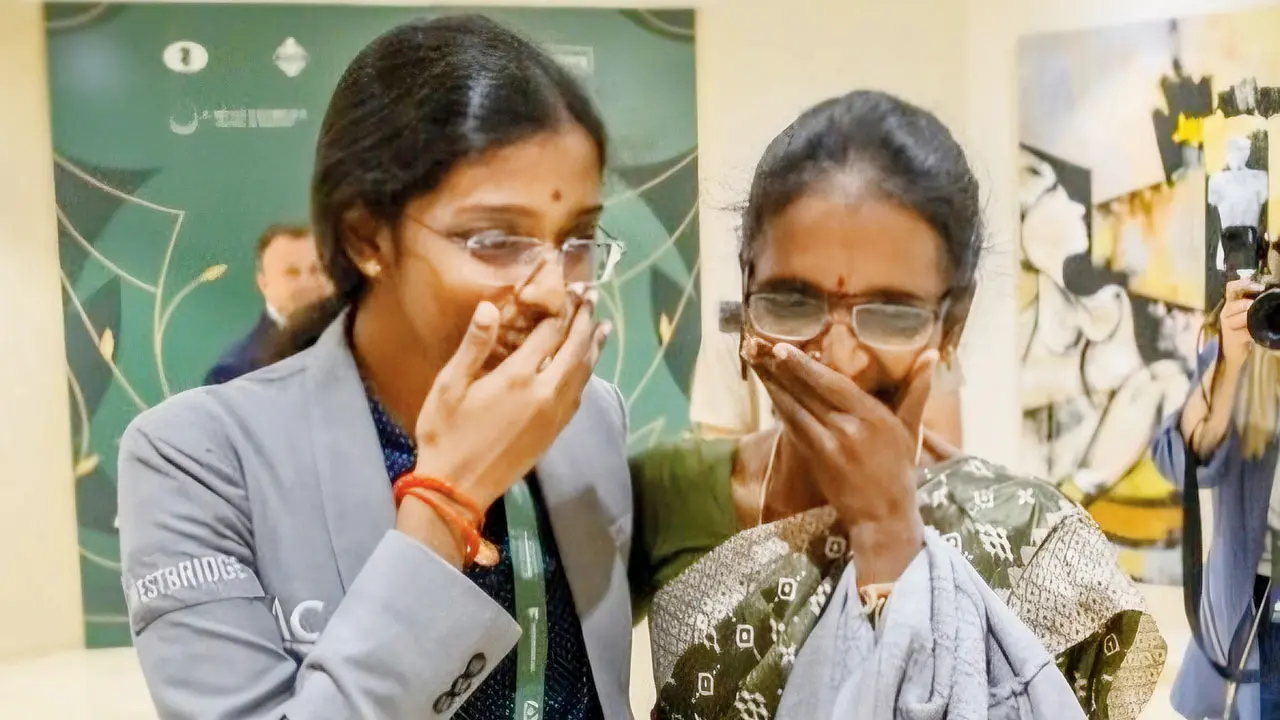
Mother’s presence is among Vaishali’s biggest strengths

0
Mother’s presence is among Vaishali’s biggest strengths


Mother’s presence is among Vaishali’s biggest strengths

The newly-crowned Candidates champion R. Vaishali, a soft-spoken and unassuming presence often seen with her mother by her side, stands out for her quiet intensity, shaped by strong values and a grounded upbringing, the kind of Indian sportsperson who lets her game do the talking. What truly shapes her is the ecosystem she comes from — a deeply committed chess family that has quietly nurtured excellence without seeking the spotlight, and in that understated, almost self-effacing journey lies her greatest strength.

On Wednesday, Vaishali, the lowest-rated player in the eight-woman field at the Candidates tournament in Paphos, Cyprus, let her quiet game do the talking, springing a fine victory over Kateryna Lagno to seal a place in the World Championship showdown against Ju Wenjun later this year. For long, Vaishali, 24, had lived in the shadow of her younger and more celebrated brother, R. Praggnanandhaa, who had qualified for the Open section of the Candidates tournament, but a string of underwhelming performances knocked him out of contention early in the 14-round competition, ending his hopes of challenging D. Gukesh for the world title later this year.

Even after Praggnanandhaa`s chances faded, the spotlight never quite turned to Vaishali, who is deeply close to her brother and would have felt his disappointment, perhaps even her own dip in morale. But the quiet presence of her mother, always by their side in a saree and with a calm, unreadable expression, seemed enough to steady her and remind her that not all was lost. With 8.5 points, she sealed the title this time, a step up from last year in Toronto when Vaishali had qualified for the Candidates but finished joint second, narrowly missing out on a shot at the World Championship.

Silence and few words have long been her forte, shaped in a middle-class household where her father worked as a bank branch manager and her mother was a homemaker. Vaishali, who became only the third Indian woman Grandmaster after Koneru Humpy and D. Harika in December 2023, quietly rose through the ranks. She collected age-group titles in plenty and earned her International Master title in 2021, before stepping into the spotlight at the Chess Olympiad in Mamallapuram, Chennai in 2022, where she clinched a historic individual bronze and also helped the team secure a bronze. In Cyprus, that same quiet confidence held firm, even with her cast as the underdog.

She did have momentum on her side, having qualified for the Candidates by winning the FIDE Women`s Grand Swiss tournament in 2025 just as she had in 2023. But in a field packed with heavyweights like Norway Chess champion Anna Muzychuk, women`s World Rapid champion Aleksandra Goryachkina, world blitz champion Bibisara Assaubayeva, and two of China`s finest in Zhu Jiner and former Candidates winner Tan Zhongyi, the odds were anything but in her favour. In fact, India`s Divya Deshmukh, the World Cup winner last year, was seen as a stronger contender than Vaishali, but she paid little heed to the noise and quietly kept working her way to the top.

Even as conflict in the Middle East raged, creating uncertainty and prompting Humpy to pull out of the event given Cyprus` proximity to the war zone, the Chennai-born player — part of the first brother-sister duo to both become Grandmasters — stayed the course and kept up her preparations. Vaishali, who had made headlines as a 12-year-old by defeating Magnus Carlsen in a simultaneous exhibition during his visit to her hometown in 2013, endured a see-saw run at the Candidates. She built momentum with a draw and two wins, but a loss to Zhu Jiner briefly halted her surge.

Even going into the penultimate round, the contest remained wide open, with Vaishali among two players on 7.5 points and Zhu Jiner close behind on 7, all still in contention for the title. But it was her trademark calm and assurance that came to the fore in a nearly five-hour-long slugfest against Kateryna Lagno, a result that ultimately sealed her passage to the World Championship. Next up for her is the World Championship, where across the board will sit Ju Wenjun, the reigning five-time women`s world champion, and it goes without saying that Vaishali will draw strength and quiet confidence from her mother, even if she is not in sight, but somewhere close to the playing arena.

This story has been sourced from a third party syndicated feed, agencies. Mid-day accepts no responsibility or liability for its dependability, trustworthiness, reliability and data of the text. Mid-day management/mid-day.com reserves the sole right to alter, delete or remove (without notice) the content in its absolute discretion for any reason whatsoever


Mark Wahlberg does not want to force his Catholic faith on his kids

0
Mark Wahlberg does not want to force his Catholic faith on his kids


Mark Wahlberg does not want to force his Catholic faith on his kids

Hollywood star Mark Wahlberg is a devout Catholic and shares that while he has always “tried to be an example” to his children, he is keen for them to make their own decisions when it comes to spirituality.

The 54-year-old actor has Ella, Michael, Brendan, and Grace with wife Rhea Durham.

He told Us Weekly magazine: “I’ve only tried to be an example to my kids and not force my faith on them. And hopefully they see that it really works for me, and they gravitate towards it on their own.”

Wahlberg’s youngest daughter, Grace, recently celebrated her First Communion and he is “very, very happy” with the teenager`s commitment to her faith, reports femalefirst.co.uk.

He said: “After being baptised and making your communion, you’re actually making a commitment to pursue this relationship with God throughout your adult life. It’s a beautiful thing.”

Meanwhile, the actor is known for his early morning gruelling workout regime and recently premiered his 4am Club Challenge series on YouTube.

Wahlberg has dismissed people who don`t believe he really does get up so early.

He told E! News: “I really do this. I`ll get up at three o`clock—if I get to bed at a decent time. I always try to get eight hours of sleep. This is my daily routine, and I try to get as much done before I go to work or before I`m getting the kids up.”

While the actor feels some social media stars only show off their workouts “for the `gram”, he is keen for fans to see his authentic experiences.

He said: “We`re trying to share what we do and how we become successful, and we want to challenge people to be the best versions of themselves.”

He hopes the 4am Club Challenge proves to be inspirational.

The actor said: “There`ll be a big content component to reward people and give them the recognition that they deserve for what they`ve accomplished in their fitness journey. And then inspire other people at home who look just like them who don`t think it`s possible.

“It`s not about what I`m doing, it`s really about what you`re doing, challenging people to be the best versions of themselves. Whenever your 4am is, that`s all that matters. You get in there, you kill it and then you`re gonna have a better chance of being successful at everything else that you do.”

This story has been sourced from a third party syndicated feed, agencies. Mid-day accepts no responsibility or liability for its dependability, trustworthiness, reliability and data of the text. Mid-day management/mid-day.com reserves the sole right to alter, delete or remove (without notice) the content in its absolute discretion for any reason whatsoever


World Hemophilia day: The bleed that never really stops | India News

0
World Hemophilia day: The bleed that never really stops | India News


This disorder doesn’t announce itself. There’s no visible mark, no obvious sign, just blood that refuses to stop when it should. For the millions living with hemophilia worldwide, this invisible reality shapes everything from childhood play to the menstrual cycle, from a minor cut to the prospect of surgery.Every year on April 17, World Hemophilia Day puts a spotlight on this often-overlooked condition. The date was chosen by the World Federation of Haemophilia (WFH) to push governments and policymakers toward something deceptively simple: better treatment, better access, better care. The fact that this push is still necessary, decades after the day was established, tells you something about how quietly hemophilia gets sidelined.At its core, hemophilia is a disorder of clotting. The body is missing or low on specific proteins known as Factor VIII or Factor IX, which tell blood to stop flowing after an injury. Without them, even internal bleeding into joints or muscles can become life-threatening. It is rare, inherited, and above all, widely misunderstood.The condition is also deeply tied to genetics. Because hemophilia is linked to the X chromosome, men are far more likely to be diagnosed with it. A boy born to a carrier mother has a 50 per cent chance of having it. But the idea that hemophilia “only affects men” is a myth that quietly erases millions of women who carry the gene, and who face their own set of risks like heavy periods, complications during childbirth, and unexpected bleeds.That erasure is part of what World Hemophilia Day is trying to fix, not just in policy, but in perception.

The daily reality: Pain, precautions, and the constant risk of bleeding episodes

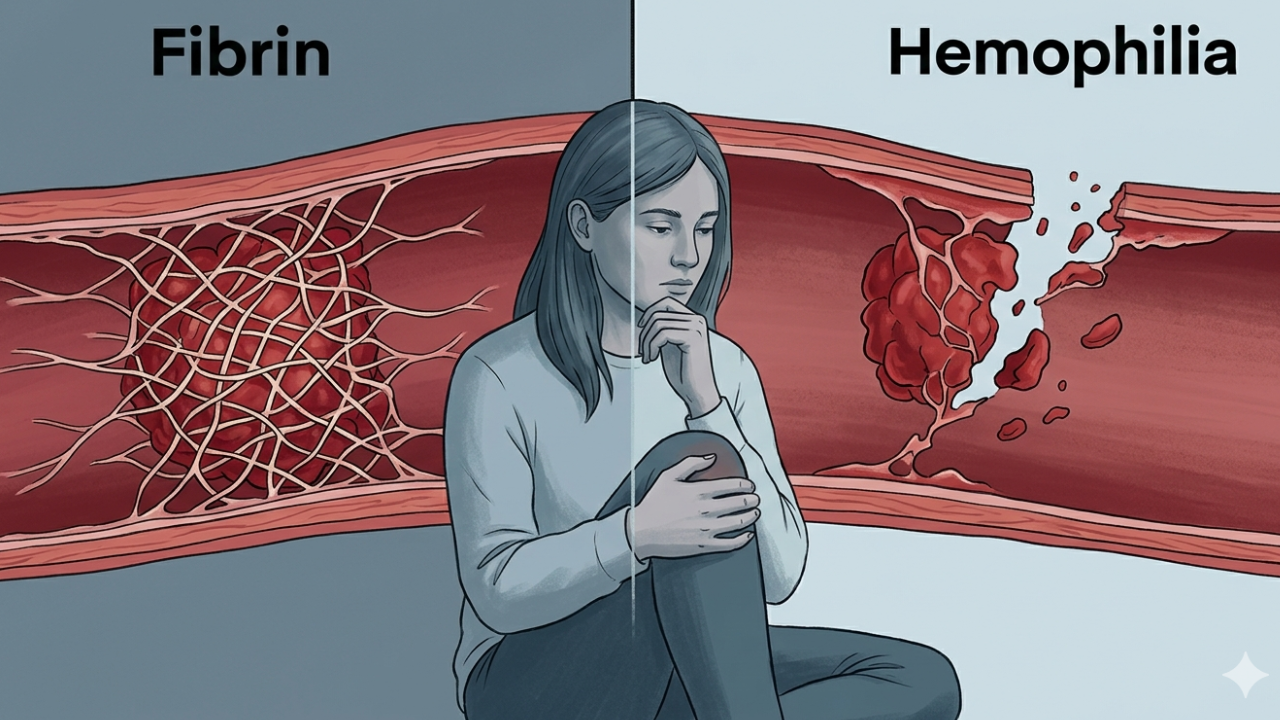
Most people picture hemophilia as a problem with cuts. Someone bleeds, and it refuses to stop; that’s the image. The reality is both less dramatic and way more serious than that.Here’s what actually happens when the body tries to stop bleeding: first, the injured blood vessel contracts, narrowing itself to slow the flow. Then platelets swarm the area, clumping together to form a temporary plug. Finally, clotting proteins in the blood weave a mesh of fibrin over that plug, a tight, strong seal that holds the wound closed while the body heals underneath.

AI generated image

For someone with hemophilia, the first two steps usually work fine. The vessel contracts. The platelets show up. But the third step, which involves the fibrin clot, either doesn’t form or forms so thin and fragile that it gives way. The bleeding doesn’t stop. Or it stops briefly and starts again.This is why the common assumption, that a person with hemophilia will bleed to death from a paper cut, is largely wrong, but not entirely reassuring. Small surface cuts are rarely the danger. The danger lives deeper.

When the body bleeds into itself

Internal bleeding is where hemophilia becomes life-altering. Blood has nowhere to go inside a joint or a muscle except to pool, press, and damage. The knees, elbows, and ankles are the most common areas that are targets. Over time, repeated bleeding into a joint, even when treated, breaks down cartilage, stiffens tissue, and causes a kind of arthritis that arrives decades too early.What makes this harder to manage is how ordinary the triggers are. A bumped knee during a morning commute. An elbow knocked against a doorframe. Injuries so minor that a person without hemophilia wouldn’t register them. For some, there is no trigger at all; bleeding begins mid-stride, in the middle of an otherwise unremarkable day. These are called “spontaneous bleeds”, and they are exactly what they sound like: unpredictable, uninvited, and urgent.The clock matters here. Unlike a cut that a bandage can address, an internal bleed has to be treated very fast with clotting factor infusions, before the pressure and damage compound. Waiting, or not recognising the bleed in time, means more pain, more joint damage, and a prolonged recovery time.This is the daily arithmetic of living with hemophilia: measuring risk against routine, reading the body for early signals, and carrying the knowledge that an ordinary Tuesday can turn very complicated very fast.“Patients suffering from hemophilia face multiple level of daily challenges. One of the primary issues is the constant risk of spontaneous bleeding, especially into joints, which can lead to chronic pain, swelling and reduced mobility over time. Managing the condition required regular infusions of clotting factor, frequent hospital visits, and strict adherence to treatment schedules which can be physically exhausting and a financial burden,” says Dr Geetika Jassal, Medical Spokesperson, Cryoviva Life Sciences.

From Diagnosis to delay: Why early detection still remains a global challenge

For a condition that has been documented for centuries, hemophilia remains very easy to miss.The reasons are layered. Hemophilia exists on a spectrum, severe, moderate, and mild, and each level behaves differently enough that it can look like three separate conditions. Someone with severe hemophilia may show signs early in childhood: unexplained bruising, bleeding after a minor fall, swollen joints that shouldn’t be swollen. But someone with mild hemophilia may go years, sometimes decades, without a single obvious episode. Their blood has just enough clotting factor activity to handle everyday scrapes and cuts. It’s only when something bigger happens like a surgery, a tooth extraction, a serious accident, or childbirth, that the body’s quiet insufficiency finally surfaces.By that point, the diagnosis often arrives as a shock.The family history gapMany families request newborn testing when hemophilia runs in their line. It’s a reasonable precaution, and it catches a significant number of cases early. But roughly one in three babies diagnosed with hemophilia carry a new genetic mutation, one that didn’t exist in either parent. No family history. No reason to look. Just a result that arrives without warning, often after something has already gone wrong.This means that for a substantial portion of people living with hemophilia, the condition was never on anyone’s radar until it announced itself.“Early indications of hemophilia are usually subtle and may be mistaken for normal childhood injuries. These include frequent bruising, prolonged bleeding from minor cuts, recurrent nosebleeds, and excessive bleeding after injections, vaccinations or dental procedures. In infants particularly, swelling in joints presenting as irritability or reduced movement of limb may go untreated. Many parents dismiss these signs as normal or routine problems which may delay the diagnosis. Since the symptoms are not always dramatic early on, hemophilia is often misdiagnosed or identified only after a major bleeding event or surgical complications,” Dr Jassal added.The women who get missedThen there is the group most consistently overlooked: women.The longstanding assumption that hemophilia is a male disease has quietly shaped how doctors ask questions and how women understand their own symptoms. A woman who carries the hemophilia gene can experience heavy menstrual cycles that go on too long, bleeding complications after childbirth, or wounds that take longer to heal than they should. These are real symptoms with a real cause. But without the right questions being asked, or the right awareness in the room, they can get misdiagnosed or dismissed entirely.

AI generated image

The diagnosis, when it finally comes, sometimes follows years of being told that nothing is wrong.What detection actually looks likeWhen hemophilia is suspected, the process is straightforward: a blood test checks whether clotting is happening properly, and if not, factor assays identify which protein is missing and how severely. The tests exist and so does the knowledge. The gap is rarely about medicine, it’s more about whether anyone thought to look in the first place.That gap is widest in low-income countries, where access to specialist care is limited and awareness among general practitioners is uneven. But it exists in well-resourced healthcare systems too, quietly, in the mild cases that never triggered alarm, in the women whose symptoms were explained away, in the newborns whose mutations arrived unannounced.Early detection changes outcomes significantly. It allows families to prepare, doctors to intervene before joint damage sets in, and individuals to understand their own bodies before a crisis forces the conversation. The medicine has moved forward. The awareness, in too many places, is still catching up.“Early diagnosis of hemophilia is crucial to prevent irreversible joint damage, life threatening bleeding episodes and long-term disability. Identifying the condition early allows for initiation of prophylactic clotting factor therapy, which significantly improves the quality of life and long term outcomes. However significant gaps in awareness still exists and continue to remain a major concern. Early signs such as prolonged bleeding after minor injuries, easy bruising or joint swelling are often overlooked or misdiagnosed, especially by primary healthcare providers,” said Dr Jassal.

From plasma bags to precision medicine: The evolution of Hemophilia treatment

In 1964, when the first effective treatments for haemophilia were taking shape, the options were basic by any measure. Cryoprecipitate which is a frozen concentrate made from plasma, was essentially as good as it got. For most patients, treatment meant getting to one of a handful of cities that had the right equipment, hoping there was supply, and managing everything else through caution and luck.The distance between that world and this one that we currently inhabit is enormous.Treatment for hemophilia has moved from plasma-derived products to recombinant clotting factor concentrates, and more recently to extended half-life therapies that reduce how often patients need infusions. Where patients once injected clotting factors intravenously multiple times a week, newer therapies can be given less frequently. Some can be administered under the skin rather than into a vein, which marks a significant difference for children and for anyone living far from a medical facility.

AI generated image

Then came emicizumab, a bispecific antibody that works differently from traditional factor replacement altogether. It is administered subcutaneously, requires less frequent dosing, and does not trigger the inhibitor development that undermines traditional factor concentrates in some patients the kind of treatment that, a generation ago, would have seemed implausible.And now, at the frontier: gene therapy. Unlike all previous treatments, gene therapy requires only a single administration and works by prompting the liver itself to produce Factor VIII or IX the body doing what it was never able to do before, as cited by Science Direct. The FDA approved two gene therapies for hemophilia B, Hemgenix in 2022 and Beqvez in 2024, and one for severe hemophilia A. These are not incremental improvements. They are a different category of medicine.“Recent studies in hemophilia is exploring the well-advanced approaches such as gene therapy, and stem cell-based strategies, mainly aimed at addressing the root cause rather than just managing the symptoms. Stem cell research is still largely in the experimental stages, with the ongoing studies mainly evaluating its potential to enable sustained production of the clotting factors. While these kinds of developments hold the long-term promise, they are not the part of routine clinical practices,” said Dr Jassal.

Where does India stand?

India carries the world’s second largest burden of hemophilia, with an estimated 136,000 cases, yet the country that recently completed its first in-human gene therapy trial for the condition is also one where most of those patients still manage bleeds with rest, ice, and whatever else they can find. That contradiction sits at the heart of hemophilia care in India today: world-class science at one end, and a vast, underserved majority at the other.The insurance and money problemHemophilia sits in an awkward place in India’s healthcare economy, too rare to attract sustained policy attention, too expensive to treat without it. Private health insurance is largely out of reach for most affected families, and hemophilia’s classification as a low-volume, high-cost disease means insurers have little incentive to cover it well.The result is that economic circumstances dictate treatment in ways they shouldn’t. For a large share of patients, factor replacement therapy remains something they read about rather than receive. Instead, they manage with RICE (rest, ice, compression, elevation), alongside adjunct medications and wet products like fresh frozen plasma or cryoprecipitate whenever available. These aren’t treatments so much as ways of getting through the day.“In India, very much limited access to select research settings and specialized centres as well, with current standard care still centred around clotting factor replacement and new non factor therapies whenever it is available,” Dr Jassal said.The picture overall is of a system still treating a chronic condition as a series of emergencies. The cost of untreated hemophilia, hospitalisations, surgeries, long-term disability, lost productivity, ultimately burdens families and health systems which could be prevented by early care.



Neha Dhupia supports Patralekhaa after she slams people for body shaming her

0
Neha Dhupia supports Patralekhaa after she slams people for body shaming her


Neha Dhupia supports Patralekhaa after she slams people for body shaming her

Actress Neha Dhupia has spoken in support of actress and producer Patralekhaa after she was subjected to body-shaming comments. The actress who recently gave birth to a baby girl hit back at trolls for commenting on her body. The actress, who is married to actor Rajkummar Rao, welcomed their child last year.

Neha Dhupia supports Patralekhaa

Hitting back at the trolls, Patralekhaa said that her body is naturally changing as a part of bringing a new life into this world. Reiterating the sentiment, Neha called out the unnecessary scrutiny faced by women every day regarding their appearance, especially new mothers.

In her latest post, Neha said that instead of judging others, it would be more beneficial if one worked on improving their own mindset.

Re-sharing Patralekhaa`s post on her Instagram Stories, Neha wrote, “Commenting on someone’s body has to stop. Especially a new mom who’s grown a whole human being inside her and is nurturing life with everything she has. Before judging us fix your own thinking… Sending love Patra. (sic)”

Patralekhaa slams body shamers

Earlier today, Patralekhaa bashed social media pages for body-shaming her when she appeared for the special screening of her recently released film Toaster. The film marked her debut as a producer with Rajkummar. 

She said that she has recently given birth to her first child and is also working on two films simultaneously.  Patralekhaa further stressed that changes in the body are a natural part of pregnancy. The CityLights actress urged all to show some empathy and kindness instead of passing judgment without thinking.

She wrote on the photo-sharing app, “Pap pages! What`s happened to me!? is that I have just given birth! Yes, I have gained the weight, which seems like an unnatural phenomenon to you all. I have not sat and eaten a mountain, I just delivered a baby and produced two films simultaneously which are not easy jobs”.

“If I could I would not be this way. But that`s how my body has reacted to pregnancy. For God`s sake please learn to be a little kind,” added Patralekhaa.

Rajkummar and Patralekhaa embraced parenthood on November 15, last year, as they welcomed their baby girl on their 4th wedding anniversary.