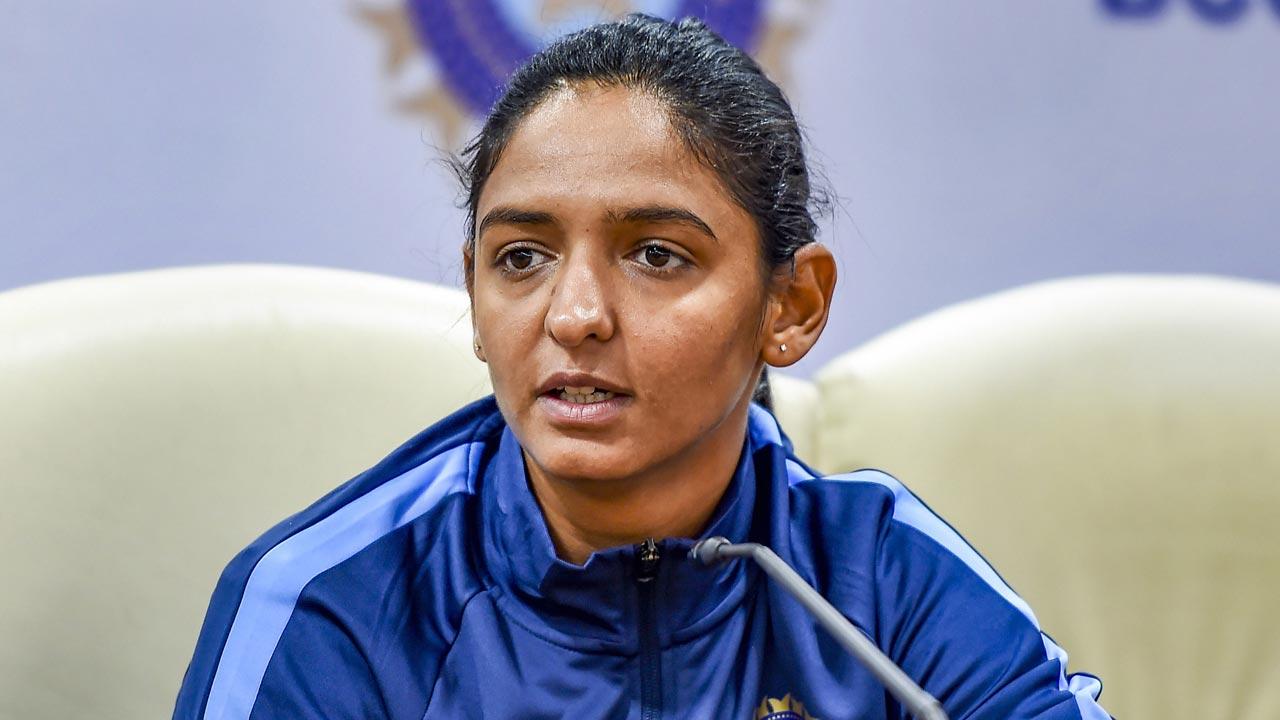
Emphasising the need to give all players adequate opportunities ahead of the T20 World Cup, India captain Harmanpreet Kaur on Thursday said her side is confident and keen to make the most of the five-match T20I series against South Africa, starting here on Friday. Harmanpreet also said that her side is brimming with confidence following their ODI World Cup triumph. India recently registered T20I series wins over Australia and Sri Lanka.
The skipper stressed that the matches against South Africa would offer a valuable opportunity to fine-tune combinations and build momentum ahead of the global event to be held in England and Wales from June 12 to July 5. “We want to take this opportunity very seriously and play our best cricket here. It`s a great chance for us to come together and prepare well before the World Cup,” Harmanpreet said at the pre-series press conference. India feature in Group A alongside Australia, Bangladesh, Pakistan, South Africa and the The Netherlands. Harmanpreet underlined that giving opportunities to all players in the five-match series would be a priority.
“These matches are important to ensure all players get equal opportunities so that we are fully ready as a unit going into the World Cup. At the same time, we are here to win,” she noted. “After the ODI World Cup, the team is quite confident. Wherever we are going, we are going with full confidence. The team is in good shape and this series is very important for us before the World Cup.” On the opposition, Harmanpreet described South Africa as a “balanced side” with strong all-round options, noting their consistency in reaching the latter stages of ICC events. “They have very good players and quality all-rounders, which is very important in T20 cricket. They have been playing competitive cricket over the last few years and reaching finals regularly,” she said.
“Playing against a strong team like South Africa always gives you confidence if you do well. That`s why we wanted to face them before the World Cup.” Speaking about conditions in Durban, Harmanpreet said the team had a productive training session and found the weather comparable to Indian conditions, though pitches would pose a different challenge. “The weather is quite similar to India. The only difference is the pitch, but we are getting used to it and hopefully will give our best,” she said. Harmanpreet also expressed excitement about young all-rounder Anushka Sharma, who has impressed in domestic cricket and the Women`s Premier League. The 22-year-old is an off-spin bowling all-rounder. “She is a great talent and has done well whenever she has got the opportunity.
Bringing her here is about giving her exposure and experience before the World Cup,” she said. Reflecting on recent mixed results across formats, Harmanpreet said the team remains focused on the bigger picture. “Sometimes you win, sometimes you lose, but it`s important to focus on what lies ahead. Our main target is the T20 World Cup, and we want to play good cricket leading into it to regain full confidence,” she said. On team combinations, she indicated that selections have been guided by South African conditions, particularly the need for multiple pace options, while maintaining faith in the spin attack led by experienced players like Deepti Sharma. She also confirmed that the team management has backed continuity in the wicket-keeping department, while keeping options open based on fitness and domestic performances.
This story has been sourced from a third party syndicated feed, agencies. Mid-day accepts no responsibility or liability for its dependability, trustworthiness, reliability and data of the text. Mid-day management/mid-day.com reserves the sole right to alter, delete or remove (without notice) the content in its absolute discretion for any reason whatsoever
Sony Entertainment Television is all set to bring back the much-loved dance reality show India’s Best Dancer with an exciting new season, blending legacy, nostalgia, and top-tier talent. Season 5 promises to raise the bar yet again, with a fresh theme titled ‘India Wala Dance’, celebrating the diverse and vibrant dance culture of the country.
Jaaved Jaaferi returns as judge
Adding to the excitement, veteran performer Jaaved Jaaferi joins the judging panel this season. Known for his iconic style, sharp observations, and unmatched energy, Jaaved’s presence is expected to bring a unique charm to the show. A pioneer of dance on Indian television, he seamlessly combines experience with entertainment, making him a perfect fit for a season that celebrates India’s rich dance heritage.
The recently released promo offers a glimpse into what viewers can expect. In his signature style, Jaaved shares his enthusiasm, saying, “Kabhi socha hai tees by tees ke stage par, kya ek sau chalis crore log naach sakte hain? Bilkul naach sakte hain, kyunki jab India’s Best Dancer pe hoga ‘India Wala Dance’, toh saara India naachega.” His words reflect the spirit of inclusivity and celebration that defines this season.
He further announces the premiere details, inviting audiences to tune in from May 9, airing every Saturday and Sunday at 9:00 PM. The show is set to have Karisma Kapoor as well on the judges panel.
Season 5 aims to go beyond just competition, focusing on storytelling through dance and highlighting talent from across the country. With ‘India Wala Dance’ as its central theme, the show is set to showcase a wide range of styles from classical and folk to contemporary and fusion bringing together performers from different regions and backgrounds.
On the work front
Jaaved Jaaferi’s addition to the panel not only adds credibility but also a sense of nostalgia for fans who have followed his journey in dance and entertainment. His mentorship is expected to inspire contestants while offering audiences both entertainment and insight.
As anticipation builds, viewers can gear up for a season filled with powerful performances, emotional moments, and a celebration of India’s unity through dance.
Punjab Kings Head Coach Ricky Ponting outlined the key elements (Image: IANS)
Ricky Ponting, head coach of Punjab Kings, has shed light on the philosophy behind the team’s impressive run in IPL 2026, emphasizing trust, clarity, and a strong team environment as key pillars of success. Punjab Kings continued their dominant start to the season with a convincing win over Mumbai Indians, extending their unbeaten streak to five matches. With nine points from five games, PBKS sit comfortably at the top of the table and remain the only unbeaten side in the competition so far.Building the Right EnvironmentSpeaking about his coaching approach, Ponting highlighted the importance of creating a positive and empowering atmosphere within the squad.“For me, it starts with creating the right environment where every player feels valued and on the same page. As a coach, I’m there to support and challenge them, not to control them. Even when they fail, they need to know that’s part of the game. In T20 cricket, you only need a few players to step up on any given day, Ponting said on Jiostar.Ponting also pointed to the importance of clearly defined roles within the squad, something that influenced Punjab’s strategy during the auction.“It’s about building a strong group with clearly defined roles. That was a big part of our auction strategy as well, getting the right people in to shape the culture.”He further explained that backing players with confidence has translated into performances on the field.“When players feel supported, like someone like Prabhsimran Singh or Shashank Singh, they respond with performances, and that’s what ultimately drives results.” Ponting added.
Match Summary: MI vs PBKS
Punjab Kings continued their unbeaten run in IPL 2026 with a dominant seven-wicket win over Mumbai Indians at Wankhede.Mumbai posted 195/6, powered by Quinton de Kock’s unbeaten century. However, PBKS chased it down comfortably in 16.3 overs, thanks to a match-winning partnership between Prabhsimran Singh (80*) and Shreyas Iyer (66).
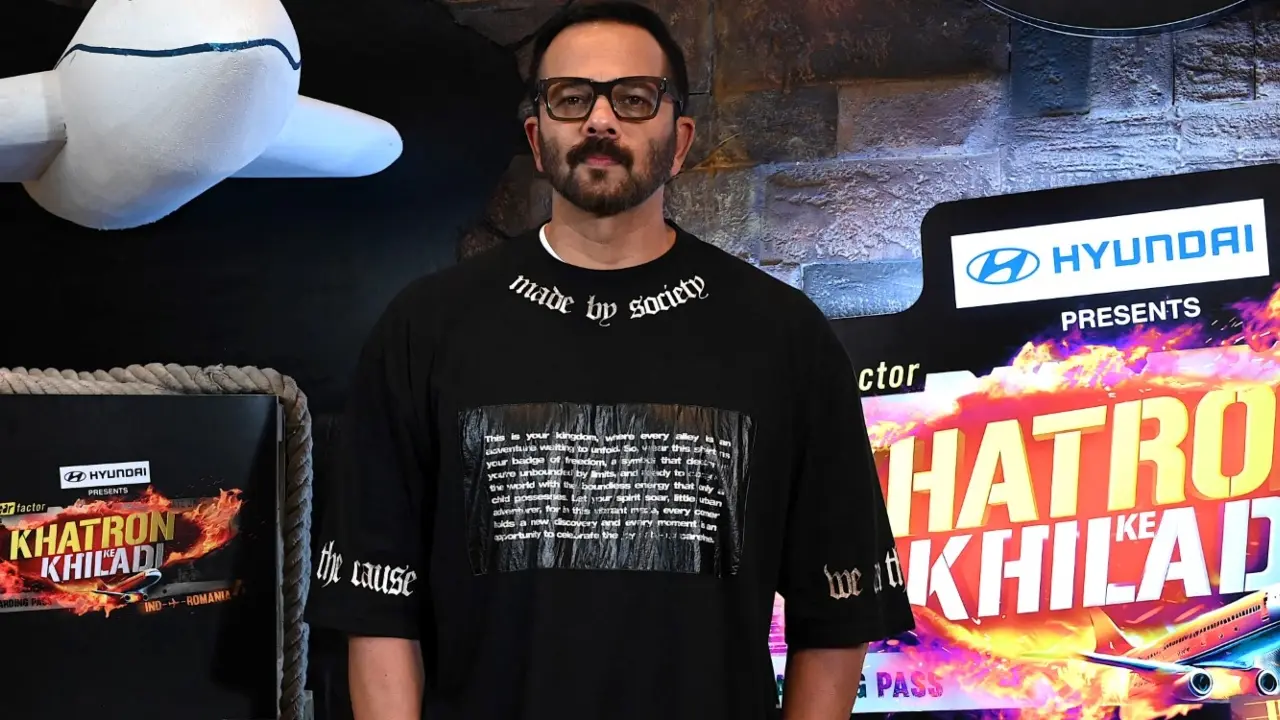
The firing incident at Rohit Shetty’s residence in February created a stir. While several accused were presented in the MCOCA court and a shooter was nabbed, the case has gained momentum again as one more criminal has been arrested. A joint team of the Uttar Pradesh Special Task Force (STF) and the Mumbai Police Crime Branch on Thursday arrested a wanted criminal allegedly involved in the firing incident.
15th accused arrested in Rohit Shetty’s firing incident
The accused, identified as Pradeep Kumar alias Gaath, was apprehended from the Chhadami Mattha area on the Agra-Etah Road under Bah police station limits in Agra at 3:56 pm, an official statement said.
According to police, the firing took place on the night of February 1, 2026, at `Shetty Tower` in Mumbai`s Juhu area. The attack was allegedly carried out at the behest of the notorious Shubham Lonkar gang to extort money and instil fear within the film industry and among the public.
Investigations revealed that the accused, a resident of Ashok Nagar in Agra, was motivated by the Lonkar gang`s presence on Facebook and Instagram. He admitted to participating in the crime along with associates Sunny, Deepu, and Sonu to establish “dominance” in the underworld.
“The arrest was the result of technical analysis and intelligence sharing between the Mumbai Crime Branch and the Uttar Pradesh STF,” the statement said.
The Mumbai Police had registered a case under various sections of the Bharatiya Nyaya Sanhita, the Arms Act, the Maharashtra Police Act, and the stringent Maharashtra Control of Organised Crime Act (MCOCA). Pradeep is the latest addition to the list of arrests in this high-profile case. Previously, eight other accused, including Pradeep Sharma alias Golu, Deepak, and Vishnu Kushwaha, were nabbed in joint operations.
Following his arrest, the accused was handed over to the Mumbai Police team at the Bah police station. The Mumbai Police Crime Branch will take the accused on transit remand and follow further legal proceedings, the statement added.
About the shooting incident at Rohit Shetty’s residence
For the uninitiated, five rounds were fired at filmmaker Rohit Shetty’s Juhu residence. The investigation by the Mumbai Crime Branch revealed that the vehicle used in the firing was sourced from Pune. After the incident, the probe was underway, and all those linked to Shubham Lonkar are being traced and arrested.
Brazilian football star Neymar Jr penned a heartfelt note to partner Bruna Biancardi on the occasion of her 32nd birthday.
Sharing a picture of the couple, Neymar captioned the post: “Congratulations beautiful. May it be a year filled with lots of happiness. Those of us who are close to you know how special it was for us to have God place you in our lives. I love you.” The post received a whopping 1.7 million likes.
More than five tonnes of gold remain held up at customs without clearance. (AI image)
Banks have put a pause on fresh import orders for gold and silver from overseas suppliers. Large quantities of gold and silver are stranded at customs, as a formal government notification permitting bullion imports has yet to be issued, according to trade sources.Typically, the Directorate General of Foreign Trade, operating under the Ministry of Commerce and Industry, issues a notification at the beginning of each financial year specifying the banks authorised by the Reserve Bank of India to import gold and silver. The previous directive, released in April 2025, remained valid until March 31, and banks are currently awaiting a new order.The absence of new shipments could tighten domestic availability, given that India, the world’s second-largest consumer of gold and the largest buyer of silver, depends almost entirely on imports to meet demand, according to a Reuters report.Lower domestic demand may exert downward pressure on global bullion prices, while also helping to reduce India’s trade deficit and lend support to the rupee, which has been among the weaker Asian currencies this year.Officials have taken several steps to ease pressure on the currency, including recently advising refiners to limit spot dollar purchases.Banks had anticipated that the Directorate General of Foreign Trade would release its annual notification in early April, as is customary. However, with no announcement yet, more than five tonnes of gold remain held up at customs without clearance, according to a Mumbai-based bullion dealer at a private bank quoted by Reuters.The continued delay has created uncertainty, prompting banks to refrain from placing fresh orders with overseas suppliers, the dealer said.In addition, about eight tonnes of imported silver are also awaiting customs clearance, sources noted. Another bullion dealer pointed out that placing new orders makes little sense when earlier shipments are still stuck.India’s gold consumption declined to 710.9 metric tonnes in 2025, marking a five-year low, as per data from the World Gold Council. Meanwhile, inventories built from earlier imports are gradually being drawn down, with the market increasingly relying on sales from exchange-traded funds that are witnessing outflows, sources added.“There is a need to bring clarity and ensure imports resume,” said Surendra Mehta, secretary at the India Bullion and Jewellers Association.Mehta cautioned that continued disruption in imports could lead to supply shortages and push up premiums after Akshaya Tritiya, the country’s second-largest gold-buying festival.A bullion dealer based in Kolkata suggested that the government may be slowing imports to manage the trade deficit, as rising prices of oil, gas and fertilisers following the Iran conflict are expected to increase India’s import bill in April.
Preity Zinta has finally responded to a long-running social media moment involving Salman Khan, closing a humorous exchange that began over a decade ago and has since become part of internet pop culture.
Preity Zinta responds to Salman Khan’s nostalgic tweet. (Twitter)
How Preity Zinta responds to Salman Khan’s viral 2014 tweet
Years later, on April 11, 2026, Salman brought the conversation full circle with a congratulatory message, writing, “Well done Zinta, congratulations Zinta, team is playing well,” acknowledging the team’s performance and consistency.
Responding on X on April 16, Preity shared an enthusiastic note celebrating her team’s success and spirit. She wrote,
“Yes Yes Yessss !!!! Congratulations @PunjabKingsIPL for this win… So much maturity from @prabhsimran01 & wow @arshdeepsinghh. Happy to see you shine. Amazing team work under the capable leadership of Sadda Sarpanch @ShreyasIyer15 & @RickyPonting. That was an awesome catch Shreyas! Best I’ve ever seen. I’m grinning ear to ear.”
How internet reacted
Her response quickly gained attention, with fans resurfacing Salman’s original tweet and reacting to the playful exchange between the two.
One user commented, “Yes yes yes with laughing emojis”, reacting to Preity’s cheerful tone. Another fan wrote, “Someone shouted ‘Bye! Time out’ from the back of the class when our teacher didn’t end the class. That line was such a rage back then.”
The conversation soon turned into meme material, with users revisiting the 2014 tweet and sharing nostalgic reactions. One user remarked, “Salman loves her.” Another added, “Salman has too much control issues to date someone like Preity. Remember she went up against Dawood in court and that Wadia billionaire she was dating. Woman of steel!!!”
Salman and Preity have shared a warm and friendly bond over the years. The two actors have worked together in several films, including Har Dil Jo Pyar Karega (2000), Chori Chori Chupke Chupke (2001), Dil Ne Jise Apna Kahaa (2004), Jaan-E-Maan (2006), and Heroes (2008).
Who are the Hindu refugees of Bengal – a political faction built on caste, numbers and displacement
Hindu refugees in West Bengal have emerged as a significant electoral force, reshaping political dynamics beyond the traditional and convenient Hindu-Muslim binary. (PTI)
Hindu refugees in West Bengal are not a single, indivisible group or an individual. It is a layered social formation, increasingly structured by caste, clustered by geography, interpreted by history, and consolidated over decades into one of the most decisive political factions in the state. Over the past decade, Hindu refugees in West Bengal have emerged as a decisive electoral force, reshaping political dynamics beyond the traditional and convenient Hindu-Muslim binary.
At the broad level, this population falls under the Scheduled Caste (SC) matrix of Bengal. There are about 60 subcastes in the state, many of them originating in erstwhile East Bengal (present-day Bangladesh).
They ranged from partition in 1947 to the later stages of the 1950s, 60s and 1971. Districts such as Cooch Behar, Nadia, South and North 24 Parganas became the primary sites of their settlement, where refugee colonies gradually transformed into permanent, but still disputed settlements. In this scenario, some communities dominate numerically and politically.
Hindu refugees of West Bengal
West Bengal’s Hindu refugees have evolved from a displaced population to a politically pivotal constituency, which has shaped the state’s electoral landscape in complex ways. However, like most caste groups, these communities are internally diverse. Some sections are native to Bengal, while others trace their origins to migration into the region.
Namasudras are one of the largest classes, spread throughout Bengal with an estimated population of about 40 lakhs. Historically organized and politically aware, they have maintained a consistent presence in the state legislative assembly and remain at the center of any electoral calculations involving voters of refugee origin. However, like all other caste groups, every class has populations on both sides; While one group is native to Bengal, the other migrated to Bengal.
In North Bengal, the Rajbanshis, approximately 42 lakh (as per 2011 census and future projections by government departments), represent another important block. Once holding a dominant political position in the region, their influence has changed over time, but importance has not diminished. Their demographic strength continues to shape the politics of the northern districts.
Along with these larger groups, there are also smaller but strategically important communities. The Malo community, centered in Nadia, is limited in numbers, but has a reputation for intellectual and political expression that often far exceeds its size.
The Suri community, with around 3 lakh voters, has produced several MLAs and has maintained a distinct electoral imprint. Occupational castes such as the Dhobi and Rabidas (cobbler) communities form additional layers within this broader refugee identity. Overall, these are not marginal populations. They are structured, self-aware and selectively decisive. Most importantly, over time a large portion of this population settled in the state.
It is now within this caste-based framework that the Matua community emerges not as a distinct entity, but as one of its most visible and politically organized expressions.
Centered in Thakurnagar, the Matuas trace their origins to the reformist movement led by Harichand Thakur and later shaped by his son, Guruchand Thakur. The word ‘Matua’, which is derived from ‘Matoyara’, once denoted spiritual absorption. However, over time, it has become a symbol of collective identity while negotiating the question of citizenship.
Thakurnagar has evolved into much more than a geographical location in itself. This is a political signaling point. Yet, even within this relatively organized structure, the core issue remains unresolved. Some sections of the community struggle with documentation deficiencies, and in some cases, the shadow of being classified as Bangladeshi citizens persists despite decades of residence.
A West Bengal government document states, “The influx of refugees from the erstwhile East Pakistan was a major event in Indian history. The 1971 census figures show that the population of displaced persons in the state is about 60 lakhs, as the West Bengal government told the Planning Commission in 1974. According to the report of the Rehabilitation and Resettlement Committee, the number was estimated at 80 lakhs in 1981. Refugees, relief and dealing with the sudden influx of refugees And to address the problems of immigrants, the Department of Refugee Relief and Rehabilitation was merged with the Department of Land and Land Reforms in 2016 to ensure greater coherence and improvement in systemic efficiency in providing services to the people. The department is now focusing on distribution of freehold title deeds and development of infrastructure of resettlement colonies.
The paradox of Bengal’s refugee politics
A population that is deeply embedded in the social and electoral fabric of the state faces uncertainty over legal affiliation. Citizenship, which should have been a settled matter, remains elastic, enforced, promised and deferred in political cycles.
Deep Halder, a writer and political analyst who has worked on Bengali Hindu refugees, said, “It is as difficult to predict as it is to predict who Bengal will vote for in this election. Bengali Hindu refugees do not come as a block. Moreover, to suggest that the pain of partition will establish a clear Hindu-Muslim binary for the erstwhile Bengali Hindu refugees would be a flawed argument.”
He said, “On CAA and NRC, Bengali Hindu refugees were divided as they are now on SIR. Bengali Hindu refugees are also divided on the basis of caste. While in the first wave of migration from the former East Pakistan, now Bangladesh, upper caste Bengali Hindus moved to West Bengal and other parts of India, subsequent waves included mostly lower caste Hindus. And their voting choices have also evolved over time.”
Elaborating on the Matuas, he said, “Take the Matuas. Their vote has shifted from the Congress to the Left to the TMC and to the BJP and is now believed to be divided between the BJP and the TMC. Their voting choices in 2026 will be guided mostly by current realities and not by the pain of 1947.”
Successive governments have dealt with these communities with caution. Recognition has been expanded, representation enabled, but final decision has often been deferred. The result is a constituency that is both irreconcilable and unresolved.
Professor Badri Narayan Tiwari, Vice-Chancellor of Tata Institute of Social Sciences (TISS) and an author, explained the situation in Bengal and the Hindu refugee matrix.
Professor Tiwari said, “What we are seeing in Bengal is a contested redefinition of Bengali Hindu identity. Both the Trinamool Congress and the BJP, under the leadership of Mamata Banerjee, have aggressively mobilized identity in sentiment and strategy, but the BJP has created a deep inroads among groups like the Matua by converting marginalization into political gain through some of its policies, including the CAA.”
He further added, “While many Hindu refugees have long since assimilated into the Bengali middle class and have left a living refugee consciousness, sections like the Matuas are still negotiating representation and respect within mainstream Bengali culture. The community remains politically vulnerable. It is within these fractures, and not in old binaries, that electoral power is now being built.”
As elections approach, this layered caste matrix becomes the blueprint for political strategy. Namasudra base was assessed, Rajbanshi sentiment was monitored, Matua integration was closely monitored. Each section has weight and together, they shape the results.
Three generations after displacement, Hindu refugees in Bengal are no longer defined solely by migration. It is now defined by caste structure, numbers, political relevance and the constant wait for closure.
Handpicked stories, in your inbox
A newsletter featuring the best of our journalism
first published:
April 17, 2026, 11:31 IST
newsIndia Citizenship circus: How three generations of Hindu refugees became Bengal’s permanent hostage vote
Disclaimer: Comments represent the views of users, not of News18. Please keep discussions respectful and constructive. Abusive, defamatory, or illegal comments will be removed. News18 may disable any comments at its discretion. By posting you agree with us terms of use And Privacy Policy.
Photographer Advait Vaidya is a prominent name in the Indian fashion and entertainment industry. He has shot some of the biggest models and stars around, and routinely posts pictures from his shoots on his Instagram. But surprisingly, it was his picture of a little-known German model that made headlines – and memes – recently. Indian cricketer Virat Kohli liked a picture of German model Liz Laz, clicked by Advait, which was spotted by social media users, leading to memes, jokes, and more.
Virat Kohli seemed to like a picture featuring Liz, sparking hilarious memes on social media.
Virat Kohli’s like on German model’s picture
Advait and Liz posted the picture jointly on Instagram in January, and got several thousand likes on it too. “Some golden hour shots,” Liz captioned the picture. But the picture came to the forefront on Thursday as Advait noticed Virat had liked it. The photographer shared a screenshot of Instagram’s notification about Virat’s like on his stories. He also shared a video detailing the like, and wrote, “How does one react to this.. When the Goat, @virat.kohli .. Likes your Post.. me and @lizlaz_tv are still rubbing our eyes to check if it’s actually happening.. haha.. Thank you Goat.”
Memes galore
This immediately led to fans laughing about how Virat had to apologise last year after liking a picture shared by the fan club of actor Avneet Kaur. “I’d like to clarify that while clearing my feed, it appears the algorithm may have mistakenly registered an interaction. There was absolutely no intent behind it. I request that no unnecessary assumptions be made. Thank you for your understanding,” Virat had shared back then.
Recalling that, one social media user quipped, “Anushka should make him put out an apology again.” Another chirped, “High time Virat gets an alt account to escape these headlines.” One referred to Virat’s wife, actor Anushka Sharma, and their son Akaay, and joked, “Anushka Sharma, take this phone from Akaay. He is liking random pictures again.” One summed up the sentiment: “Algorithm strikes again, Virat?”
Who is Liz?
LizLaz describes herself as a “Vlogger, Foodie and Singer” in her Instagram bio. Based in Germany, she mentions she is part South African, part German, and has a Master’s degree in Psychology. Liz, who has close to half a million Instagram followers now, frequently collaborates with Indian artists and photographers as well.