Tuesday, September 29, 2026
Home Blog Page 627

Wayne Rooney’s wife Coleen`s grand b`day bash

0
Wayne Rooney’s wife Coleen`s grand b`day bash


Wayne Rooney’s wife Coleen`s grand b`day bash

England football great Wayne Rooney’s wife Coleen celebrated her 40th birthday in style over the Easter weekend, with latest pictures revealing the extent to which the couple splurged on Coleen’s special day.

According to British tabloid The Sun, a grand marquee was set up on the lawns of the Rooneys’s £20mn (approximately Rs 253cr) mansion in Cheshire, with a large illuminated 40 overlooking a pond in their estate. The walls of the marquee were decorated with Penguin book covers.


View this post on Instagram


A post shared by Julie Perry Events (@julieperryevents)

The furniture was adorned by tea lights and roses, while a flowering tree was set up in the centre of a pop-up bar. Irish singer Dermot Kennedy performed some of his hits on a mini stage, before a DJ took over for the rest of the night. Coleen was dressed in a lavender outfit, while Wayne sported a semi-casual look, pairing a white t-shirt with a navy blue blazer.


Kangana Ranaut defends Deepika Padukone's 8-hour work shift demand: 'She is the top-most actress, she has earned it'

0
Kangana Ranaut defends Deepika Padukone's 8-hour work shift demand: 'She is the top-most actress, she has earned it'


A year after Deepika Padukone’s 8-hour work shift demand sparked a debate across the film industry, actor-turned-MP Kangana Ranaut has become the latest from the fraternity to back her. In a new podcast, Kangana said Deepika has ‘earned’ the right to demand that as the top-most actress and a mother.

Kangana Ranaut has lent her support to Deepika Padukone.

Kangana backs Deepika

Last year, Deepika made a shock exit from Sandeep Reddy Vanga’s Prabhas-starrer Spirit, reportedly over her demand to work only 8 hours in a day as a new mother. The actor later also left the sequel to Kalki 2898 AD. Deepika’s demand was met with mixed reactions, with many calling it logical, while others argued it was impractical in the film industry.

On the ANI podcast, Kangana said that work-life balance evolves over time and with experience. On the work hours debate, the National Award-winning actor said, “I don’t think there should be an issue created out of this because if you see where she (Deepika Padukone) is coming from, she has earned that place. She has a daughter; she’s a mother now and the top-most actress. If today she is keen to work for eight hours, she has earned it.”

The actor recalled a conversation with Deepika when they were younger and pushed themselves to work 12-14 hours, but admitted that those things change with time. “Deepika and I, when we were together, she said that they were working on Imtiaz’s film or something. She said, ‘We have a 12-hour shift.’ In response, I said that I work for only 10 hours. She’s like, you know, that’s amazing. So there was a time when we wouldn’t settle for anything less than 12-14 hours because we were ferocious. We wanted it. We were at it. We were going for it. We wanted to be successful and wanted all these things. Let me just conclude it with this. You know, when you’re new, you’re coming up, and you are replaceable. Your place is different. She (Deepika), being where she is, she’s a mother. She’s got a family to look after.”

Deepika and the 8-hour-shift debate

Last year, after her exit from Spirit and the Kalki sequel, Deepika Padukone found herself in the middle of a heated debate over work shifts for actors in films. The makers of Kalki, in their statement, said that the film deserves a higher level of “commitment.” Many celebrities, including Kangana, supported Deepika.

The actor still has her hands full with two big films. She will be first seen in Atlee’s Raaka opposite Allu Arjun. She also has a role in Shah Rukh Khan’s King. Kangana, on the other hand, was last seen in Emergency, where she portrayed Indira Gandhi. The actor will soon make her international debut in a horror-drama film titled Blessed Be the Evil.


Forced to drop out: Yemen’s children trade school for survival | Education News

0
Forced to drop out: Yemen’s children trade school for survival | Education News


Sanaa, Yemen – At 7am, Qasim, 14, rises and begins his daily struggle. He leaves his family’s rented apartment, carrying a white sack about one metre long and half a metre wide. He hopes to fill it by 11:30am.

Qasim collects plastic bottles. A sack full of these bottles can earn him up to 1,500 Yemeni riyal, about $3. Buyers gather these items to be recycled in factories.

Recommended Stories

list of 3 itemsend of list

That money helps Qasim buy lunch for his six-member family. In the afternoon, he can be a child again, sometimes playing football with other children in the neighbourhood.

But that’s when it’s the turn of Qasim’s brother, 12-year-old Asem, to collect bottles, which he then sells at night. That helps cover the family’s dinner costs.

To Qasim and Asem, schooling is a luxury that the family cannot afford. Instead, the priority is meeting the family’s daily living expenses.

“I was studying at a government school in Sanaa. When I reached the fourth grade in 2024, I stopped going to the classroom. I wanted to help provide for my family, and my brother did the same in 2025,” Qasim tells Al Jazeera, wiping his hollow cheeks with his right hand.

“Sitting in the classroom would not feed me,” Qasim says in a low voice as he gazes at his sack in a busy neighbourhood in Sanaa.

For more than a decade, Yemen has been embroiled in a bloody conflict between the Iran-backed Houthis and the Saudi-backed government, a strife that has affected almost all population groups, including schoolchildren.

Nowadays, the United Nations Children’s Fund (UNICEF) estimates that 3.2 million school-aged children in Yemen are out of school, and 1.5 million displaced children are at risk of permanent school dropout.

Although fighting on the country’s front lines has largely stopped since an April 2022 ceasefire, millions of children remain deprived of access to schooling.

‘Waste of time and cash’

Years of war have altered countless parents’ attitudes towards education. Fathers no longer feel guilty seeing their children work instead of studying.

Qasim’s father, Abdu, a 48-year-old daily wage worker, admits that he does not have regrets about seeing his children outside the classroom, collecting plastic bottles every day.

The real pain he feels, he says, is when he cannot meet the family’s basic needs.

“Seeing a hungry child is more painful than seeing a child drop out,” says Abdu.

Abdu has not left Sanaa since the war began in 2014, and he has seen how university and high school graduates have suffered.

“I sometimes work on construction sites as a guard or a digger or a porter, and I find graduates doing or seeking similar jobs,” Abdu tells Al Jazeera.

He adds, “Why should I let my children spend years at school and then come to work in such jobs? They can start working now instead.”

During the fourth Riyadh International Humanitarian Forum last year, Yemen’s Minister of Planning and International Cooperation, Waed Badhib, said that the war had inflicted heavy losses on the national economy exceeding $250bn, and led to unemployment rates rising to 35 percent.

“Parents spent lots of money on their children’s education,” Abdu notes. “Today, so many of them cannot land the jobs for which they were trained. It feels like what they did was a waste of time and cash.”

A child’s right

Widespread unemployment among graduates has led many parents to disparage the benefits of an education. But Mahmoud al-Bukari, an academic and the deputy head of the social affairs labour office in Taiz, explains that – in the long run – they could be seriously harming their children’s prospects.

“Difficult living conditions force parents to send their children to work in any job, as long as it provides for their basic needs,” al-Bukari tells Al Jazeera. “These parents may not realise that they are not solving the problem, even if it appears they are. In the long run, this means the loss of their children’s future and the creation of further social and economic problems for both individuals and society.”

Al-Bukari added that children who enter the workforce expose themselves to risks. “Regardless of the circumstances, a child’s true place is in school, not in the workforce,” he says.

It’s a point further reinforced by Afrah al-Humaiqani, a sociology professor in Aden. She points out that depriving children of education is a violation of their human rights, and forcing them to enter the workforce can create a personality plagued by anxiety and stress, as they worry about making enough money, rather than learning or playing with friends.

“Children should not be denied education; they should not be deprived of fulfilling their aspirations,” al-Humaiqani says. “A child might want to be a lawyer, a doctor, or a pilot. But when parents deny them from realising their dreams, this will hinder economic development, sustainable development, and cultural and scientific progress.”

Al-Humaiqani says that parents should not be absolved of their responsibility to their children, and should be held accountable for not allowing them to go to school. “Depriving children of their education is not a private or a family matter,” she says, “but rather an issue that affects the present and future of the nation.”

Depleted education sector

More than 2,400 schools in Yemen are either destroyed, partially damaged, or being used for other purposes, according to Save the Children.

With this number of schools out of order, the classrooms that are functioning have become overcrowded, and teachers are not able to look after each student. This leads to a decline in the quality of education, according to the children’s organisation.

The issue can’t be separated from the wider economic crisis in Yemen, brought on by the country’s war.

Public servants, including teachers, have remained unpaid for years in northern Yemen, where the Houthis dominate, and others in government-controlled territories have not received their salaries regularly.

That has forced hundreds of teachers in government schools to quit, find other work, or, at best, continue the job despite being poorly motivated.

“Teachers have been neglected in wartime, and their situation has not changed much after the 2022 truce,” Fatima Saleh, a schoolteacher in Sanaa, tells Al Jazeera. “If educators are neglected or devalued, they cannot instill the love for education among students.”

Saleh describes teachers as the “engine” of the educational process. “If this engine is dysfunctional, two problems arise: students get minimal learning benefits, and they lose interest in school.”

Once the learners lose interest in the classroom, Saleh explains, “they start seeking an alternative, and that is how dropouts have kept increasing in the country”.

She adds, “The way teachers feel, how they look, and how they behave, leaves an impact on the learner’s psychology and motivation. So, think about the feelings, appearance, and behaviour of a constantly needy teacher. They become pathetic in front of students.”

Saleh argues that teachers are role models for students, but that the war has eroded their status. “My philosophy is that a hungry, indebted teacher cannot be an inspiration for students,” she says.

Fixing the economy

Mohammed Abdu al-Samei, a journalist and researcher focused on social issues, says that the truce in Yemen has not left a tangible positive impact on education, and that the millions of school dropouts are the proof.

The calm on the front lines, according to al-Samei, cannot fix the economic issues or improve the living situation of teachers. “Without addressing economy-related problems and establishing lasting peace, more children will be deprived of access to education,” al-Samei tells Al Jazeera.

He adds that the aid activities of international organisations have shrunk in Yemen, and the required humanitarian funding has not been met.

“Aid programmes have been a lifeline for many groups in Yemen, and their decline has impacted many children’s access to education,” al-Samei says.

Meanwhile, Qasim has stopped waiting for the government or aid groups to help him return to school. That is no longer his goal.

He knows that, for now, he can get by selling the plastic bottles he collects. His next aim is to learn a trade and make a living.

“I want to be excellent in painting, carpentry, or welding,” says Qasim. “I try to learn any skill I can in this city. I will not return to the classroom.”



Yash says Toxic A Fairy Tale for Grown-Ups is unique and original like Hollywood film Sinners: ‘It is very layered’

0
Yash says Toxic A Fairy Tale for Grown-Ups is unique and original like Hollywood film Sinners: ‘It is very layered’


Toxic: A Fairytale for Grown-Ups is one of the most anticipated films of the year. The film is set to mark Kannada star Yash’s big-screen return after four years, and is set to release in theatres on June 4. Yash and Namit Malhotra, who is the producer of Ramayana, were in conversation with The Movie Report on their YouTube channel, where Yash said that he is excited to present Toxic for the audience. (Also read: Toxic release date postponed: Yash pushes back film by 3 months due to ‘current uncertainty in the Middle East’)

Yash in Toxic: A FairyTale for GrownUps (left) and Michael B Jordan in Sinners.

What Yash said about Toxic

During the chat, when Yash was asked about Toxic, he said, “Toxic is another unique film, and I think it also has a similar ambition [like Ramayana]. Both Namit and me have similar vision to showcase our talent and storytelling in the international platform, and Toxic also started with that intent. That is why we shot it in English as well.”

‘It is a very unique, large-scale action film’

He continued, “On the surface level, Toxic might look like a gangster film but it is very layered. It is something where one understands a person’s dilemmas and dark side in a very unsual way. Most of the things are told through metaphors and that is what is unique about the story. It has got the commercial elements, and we have got some great performances. Lot of popular stars in the country have come together and that itself is unique about Toxic, because generally for five actresses to come together who are doing well in their respective industries, with director Geetu Mohandas on board… It is a very unique, large-scale action film. It is an original IP, and these days it is very difficult to find those. We think about business and we go behind franchises but this is an unique IP. It is something like Sinners, which was also unique and interesting and people accepted it and enjoyed it. Toxic is going to be an original and refreshing gangster film.”

Toxic, directed by Geetu Mohandas, also stars Nayanthara, Kiara Advani, Huma Qureshi, Rukmini Vasanth, and Tara Sutaria in the lead roles.

The 2025 release, Sinners, recently made history by receiving a record-breaking 16 nominations at the Oscars. Michael B. Jordan won his first Oscar for Best Actor for his dual role in the film. Directed by Ryan Coogler, the film stars Jordan in twin roles, as brothers who return to 1930s Jim Crow-era Mississippi to escape their past, only to confront a supernatural evil and vampires.


RCB’s golden era? Sanjay Bangar predicts title spree for Royal Challengers Bengaluru

0
RCB’s golden era? Sanjay Bangar predicts title spree for Royal Challengers Bengaluru


Royal Challengers Bengaluru could be on the cusp of a defining phase in their history, with former India cricketer Sanjay Bangar suggesting that the franchise may be entering a sustained period of dominance in the Indian Premier League.

Having finally broken their title drought last season, RCB appear to have carried that momentum into IPL 2026. Bangar believes that the impact of that maiden championship could go far beyond a single trophy, potentially laying the foundation for a winning culture that sustains success over multiple seasons.

Speaking on JioStar, Bangar pointed to the cyclical nature of dominance in the IPL, where teams such as Chennai Super Kings and Mumbai Indians enjoyed prolonged spells at the top. According to him, RCB now have the ingredients to follow a similar trajectory.

“As a team, there are phases, like there was a phase for CSK and MI when they just seemed invincible. I believe that this is RCB’s time,” Bangar said, underlining the confidence that comes from both consistency and finally lifting the title.

He further explained that success often has a ripple effect within a franchise. A championship win not only boosts player morale but also strengthens belief across the management and ownership, creating an environment where sustained success becomes achievable.

“The success that the team has had in terms of consistency, not necessarily just the championship, but having won that championship, the confidence is high. It rubs off on the management and the owners as well, and then you can go on a roll,” he added.

Bangar went a step further, suggesting that RCB could be on the verge of building a legacy similar to the IPL’s most decorated sides. He envisaged a scenario where the Bengaluru-based franchise not only competes consistently but also collects multiple titles in quick succession.

“I believe that it’s not only about winning one championship, but this could be a phase for RCB where, maybe, for three or four years in a row, they can do something really special and be in that top group of IPL teams where Kolkata Knight Riders, MI and CSK have won multiple championships. I foresee RCB sitting in that special bracket very soon,” he said.

RCB’s current form lends weight to that optimism. They sit at the top of the IPL 2026 standings with four wins from five matches, displaying the kind of balance and consistency that defined their title-winning campaign last season.

They will next face Delhi Capitals at the M Chinnaswamy Stadium on April 18, with another strong performance likely to further fuel talk of a potential golden era for the franchise.

IPL 2026 | IPL Schedule | IPL Points Table | IPL Player Stats | Purple Cap | Orange Cap | IPL Videos | Cricket News | Live Score

– Ends

Published By:

Amar Panicker

Published On:

Apr 16, 2026 16:07 IST


PM Modi, Austrian Chancellor Stocker hold talks, sign MoUs to boost trade, tech ties

0
PM Modi, Austrian Chancellor Stocker hold talks, sign MoUs to boost trade, tech ties


PM Modi, Austrian Chancellor Stocker hold talks, sign MoUs to boost trade, tech ties

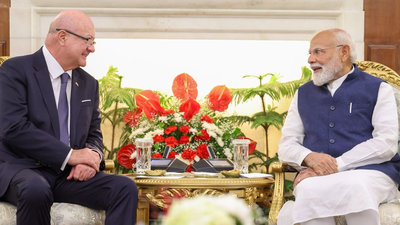
Prime Minister Narendra Modi met Austrian Chancellor Christian Stocker in New Delhi’s Hyderabad House on Thursday, holding wide-ranging talks as the two sides exchanged MoUs. Stocker is currently on a four-day visit to India, his first since taking office last year. According to the ministry of external affairs, the meeting focused on strengthening bilateral cooperation across sectors including trade, investment, technology, renewable energy and cultural exchanges. The two sides also discussed regional and global developments and explored coordination in multilateral forums. After the meeting the two sides also exchanged the MoUs (Memorandum of understanding). PM Modi also hailed the historic India-EU FTA, saying that it marked a new golden chapter New Delhi’s relations with the bloc.Speaking at a joint press conference, PM Modi welcomed Chancellor Stocker, saying, “I extend a warm welcome to you on your first visit to India. We are delighted that you chose India for your first trip outside Europe. This reflects your vision and your commitment to India–Austria relations. After four decades, the visit of an Austrian Chancellor to India is extremely significant. Following the historic India–European Union Free Trade Agreement in 2026, a new golden chapter has begun in the relations between India and the European Union.”The Prime Minister further highlighted the challenging global circumstances shaping the discussions. He said, “Today, the entire world is going through a very serious and tense situation, and its impact is being felt by all of us. In such a challenging global environment, India and Austria are in agreement that solutions cannot be found through conflict. Whether it is Ukraine or West Asia, we support a stable, sustainable, and lasting peace. We also agree that reform of global institutions is essential to address rising global challenges. Eliminating terrorism from its roots is our shared commitment.”He added, “… Chancellor Stoker’s visit will inject new energy into trade and investments… We will combine Austria’s expertise with India’s speed and scale to ensure reliable technology and supply chains for the entire world. We will also strengthen our partnership in defense, semiconductor, quantum, and biotechnology… The MoU signed today between IIT Delhi and Austria’s Montan University is a shining example of this knowledge action... In 2023, we signed a comprehensive migration and mobility agreement with Austria. Now, under this agreement, we will also advance mobility in the nursing sector. We will also strengthen joint research and startup collaboration… We are also launching the India-Austria Working Holiday Program today… India and Austria are unanimous in this tense global environment that military conflict cannot solve problems. Be it Ukraine or West Asia, we support a stable, sustainable, lasting peace.”Earlier, the Austrian Chancellor paid homage to Mahatma Gandhi at Rajghat. The MEA said, “Remembering Bapu and his ideals. Federal Chancellor Dr. Christian Stocker of Austria paid homage to Mahatma Gandhi at Rajghat, laying a wreath and reflecting on Gandhiji’s enduring message of peace, non-violence and global harmony.”Ahead of the bilateral meeting, EAM S Jaishankar met Chancellor Stocker and described the interaction as productive. In a post on X, he said, “Delighted to call on Federal Chancellor Dr Christian Stocker of Austria, as he begins his first official visit to India.” He added, “Confident that his discussions with PM Narendra Modi tomorrow will open new avenues for greater cooperation across various domains.”The Austrian leader is visiting India at the invitation of PM Modi and is accompanied by a delegation that includes Federal Minister of Economy, Energy and Tourism Dr Wolfgang Hattmannsdorfer, along with senior officials and business representatives. An exchange of memoranda of understanding followed the talks, along with press statements, while the Prime Minister is set to host a lunch in honour of the visiting dignitary.The visit comes as part of ongoing high-level engagement between India and Austria, following PM Modi’s visit to Austria in July 2024, and reflects a shared intent to expand cooperation in priority and emerging sectors.


'Ek Din' trailer 2: Sai's Hindi and Junaid's romantic charm wins over fans

0
'Ek Din' trailer 2: Sai's Hindi and Junaid's romantic charm wins over fans


'Ek Din' trailer 2 drop and netizen reactions: Sai Pallavi's Hindi and Junaid Khan's romantic charm wins over fans - Watch

Sai Pallavi and Junaid Khan starrer ‘Ek Din’ is gearing up for its theatrical debut and expectations are sky high. The makers have now dropped the second trailer on Thursday and it reveals key plot points. The film hits screens on May 1, 2026.

‘Ek Din’ trailer 2 drops

The new trailer for ‘Ek Din’ gives audiences a clearer look at the story. It carries the tagline, “A day that changed everything.” Viewers get hints about the central romance and emotional twists. Many noted its fresh feel despite some familiar notes.

Netizens share reactions to the ‘Ek Din’ trailer 2

Social media lit up right after the trailer launch. One user wrote, “Speechless… The final trailer cut is nothing short of a masterpiece.. Cant wait to experience this one.” Another commented, “Gooooo Junnuuuuuu.” Fans also said, “Can’t wait to see MEERA” and “So so so looking forward for this movie.” Positive notes highlighted the charm and performances.

Watch

Fans Defend Sai Pallavi After Trolls Mock Her For Wearing Swimsuit

Junaid Khan and Sai Pallavi impress

Comments praised the lead pair’s on-screen presence. One viewer noted, “Lovely trailer! With some really fresh & relevant vibes. Junaid khan going to steal the show with his charm & acting skills Welcome sai pallavi, you have spoken so good hindi dialogues.” Another simply added, “Waiting to watch.” Sai Pallavi makes her Hindi film debut here. Junaid Khan continues to build on his early work with this romantic role.

‘Ek Din’ is a remake of the Thai film ‘One Day’

‘Ek Din’ is an official remake of the 2016 Thai movie ‘One Day’. The second trailer shows several plot similarities to the original. The story follows a shy man who gets one special day with the woman he loves. ‘Ek Din’ will not enjoy a solo release. It shares the date with Riteish Deshmukh‘s ‘Raja Shivaji’. The Hollywood sequel ‘The Devil Wears Prada 2’, starring Meryl Streep and Anne Hathaway, also arrives the same day.The first trailer for ‘Ek Din’ had drawn an average response earlier this year. This second one aims to build stronger excitement ahead of the May 1, 2026 release. Directed by Sunil Pandey, the film promises a feel-good love story.

Watch

Ek Din – Official Teaser​​​​​​​​​​​​​​​​​​​​​​​​​​​​​​​​​​​​​​​​​​​​​​​​​​​​​​​​​​​​​​​​​​​​​​​​​​​​​​​​​​​​​​​​​​​​​​​​​​​​​​​​​​​​​​​​​​​​​​​​​​​​​​​​​​​​​​​​​​​​​​​​​​​​​​​​​​​​​​​​​​​​​​​​​​​​​​​​​​​​​​​​​​​​​​​​​​​​​​​​​​​​​​​​​​​​​​​​​​​​​​​​​​​​​​​​​​​​​​​​​​​​​​​​​​​​​​​​​​​​​​​​​​​​​​​​​​​​​​​​​​​​​​​​​​​​​​​​​​​​​​​​​​​​​​​​​​​​​​​​​​​​​​​​​​​​​​​​​​​​​​​​​​​​​​​​​​​​​​​​​​​​​​​​​​​​​​​​​​​​​​​​​​​​​​​​​​​​​​​​​​​​​​​​​​​​​​​​​​​​​​​​​​​​​​​​​​​​​​​​​​​​​​​​​​​​​​​​​​​​​​​​​​​​​​​​​​​​​​​​​​​​​​​​​​​​​​​​​​​​​​​​​​​​​​​​​​​​​​​​​​​​​​​​​​​​​​​​​​​​​​​​​​​​​​​​​​​​​​​​​​​​​​​​​​​​​​​​​​​​​​​​​​​​​​​​​​​​​​​​​​​​​​​​​​​​​​​​​


Gopichand heaps praise on badminton star Viktor Axelsen following his retirement

0
Gopichand heaps praise on badminton star Viktor Axelsen following his retirement


Gopichand heaps praise on badminton star Viktor Axelsen following his retirement

Denmark`s flag-bearer for badminton Viktor Axelsen, 32, brought down the curtain on his illustrious career on Wednesday, claiming recurring back issues have left him unable “to compete at the highest level.” The two-time Olympic gold medallist and former No. 1 is adored all around the world, and ex-India badminton player and Chief National Coach Pullela Gopichand is no exception.

“He’s had a remarkable career. He’s been a great athlete as well as a great ambassador for the sport, which has been dominated by Asians, so it was good to see Viktor represent Europe so well. Axelsen was a big part of the transition from the Lin Dan and Lee Chong Wei era to the current one,” Gopichand, an All England Open winner in 2001, told mid-day.

Pullela Gopichand. Pic/AFP

The 1998 Commonwealth Games men’s singles bronze medallist also shed light on what set the Dane apart from his rivals. “He had a unique playing style and was a great entertainer for the sport. His physicality, especially his height [six feet, four inches], is different from the other players. He was very strong defensively and demonstrated great speed to execute his defensive plays. Plus, he had a big smash to attack when the opportunity came,” explained Gopichand, 52.

While Axelsen’s imposing frame no doubt aided his reach, Gopichand believes it may have been as much a bane for him.

“Badminton is one of those sports where having that extra reach upwards can help, but the reach down can be a challenge. Even when it comes to playing closer to the body, it can be tricky.  Having said that, being stable at taller heights, in terms of having a defensive base, then becomes vital for a player, and Viktor had that stability. But you can say [it was a bit of a bane] too, because he had to work a lot harder on his hip and back mobility,” opined Gopichand, who added that Axelsen is “somebody who is not happy to be on the journey if he doesn’t have a chance to win,” which even the Dane alluded to in his retirement post.

Gopichand also lavished praise on the two-time World Championship winner for imparting his knowledge to two of India’s young shuttlers Lakshya Sen and Ayush Shetty — both have had the opportunity to train with him in Dubai previously.

“It’s very nice on his part [to work with Sen and Shetty]. The experience that he has and how he can articulate it to youngsters… It’s phenomenal for any young athlete [to learn from him], and they will no doubt benefit from it,” concluded the Arjuna Awardee.

Two
No. of Olympic gold medals won by Viktor Axelsen (2020, 2024)

Five
No. of BWF World Tour Finals won by Viktor Axelsen

183
No. of weeks Viktor Axelsen spent as World No. 1; a mark only surpassed by Malaysia’s Lee Chong Wei (349).


Exclusive | Krushna Abhishek on him, wife Kashmera Shah meeting maami Sunita after a decade: Ice break ho gayi finally

0
Exclusive | Krushna Abhishek on him, wife Kashmera Shah meeting maami Sunita after a decade: Ice break ho gayi finally


Actor-couple Krushna Abhishek, who are participants on a comedy cooking reality show were in for a surprise when his maami Sunita Ahuja arrived as a guest ending their decade over family feud.

Krushna Abhishek, Sunita Ahuja and Kashmera Shah during Laughter Chefs.

Talking about the emotional moment, Krushna said, “This was one of the most memorable episodes we have done during Laughter Chefs. I didn’t know. The creatives and channel kept it a secret. I didn’t know that Sunita ji is coming, even Kashmera didn’t know. Bharti, who is the host of the show also didn’t know about it until it was announced. It was a shock for everyone and such an emotional moment because after such a long time we were meeting maami,”

“Especially it was for Kashmera because ek do baar in the past I have seen maami at events but Kashmera to 10 saal mein takrai bhi nahi hai unse. So it was one of the most especial moments which we will remember for life. So bohot maza aaya .”

Getting emotional about the time he has spent with Govinda and Sunita growing up, Krushna says,“Sunita maami ne mujhe bache ki tarah pala hai, badha kiya hai, main unke ghar par raha hun 8 saal. We had a joint family. Kal humari itni baatein Hui hai, jo ice break hui. Jo band kamre mein hona tha wo channel ne stage pe kar diya,” he concludes.

Also Read: Exclusive | Krushna Abhishek reacts to Govinda claiming he’s ‘forced’ to insult him on TV: He has next level…

Krushna Abhishek and wife Kashmera had a much public fallout with actor uncle Govinda and his wife Sunit Ahuja over a decade back, with them indulging in public jibes and not talking to each other for years at a stretch.

About Krushna and Govinda’s feud

The conflict between Krushna and Govinda started when the later expressing displeasure at Krushna for making jokes about him on television. Sunita also distanced herself from Krushna and his family. Several years ago, Kashmera’s tweet about ‘people who dance for money’ had offended Sunita, who thought it was aimed at Govinda.

Matters escalated, with Krushna accusing Govinda of not visiting his children in the hospital, and Govinda labelling his nephew a “liar”leading to a rather public showdown.

In 2024, Sunita had said the reason she won’t be a part of comedian Kapil Sharma’s show is because of Krushna and wife, Kashmera Shah’s presence. However, in recent years, Krushna tried making amends through several interviews.


Tamil Nadu elections 2026: Will TVK’s solo gamble split votes or fulfil Vijay’s CM dream? | India News

0
Tamil Nadu elections 2026: Will TVK’s solo gamble split votes or fulfil Vijay’s CM dream? | India News


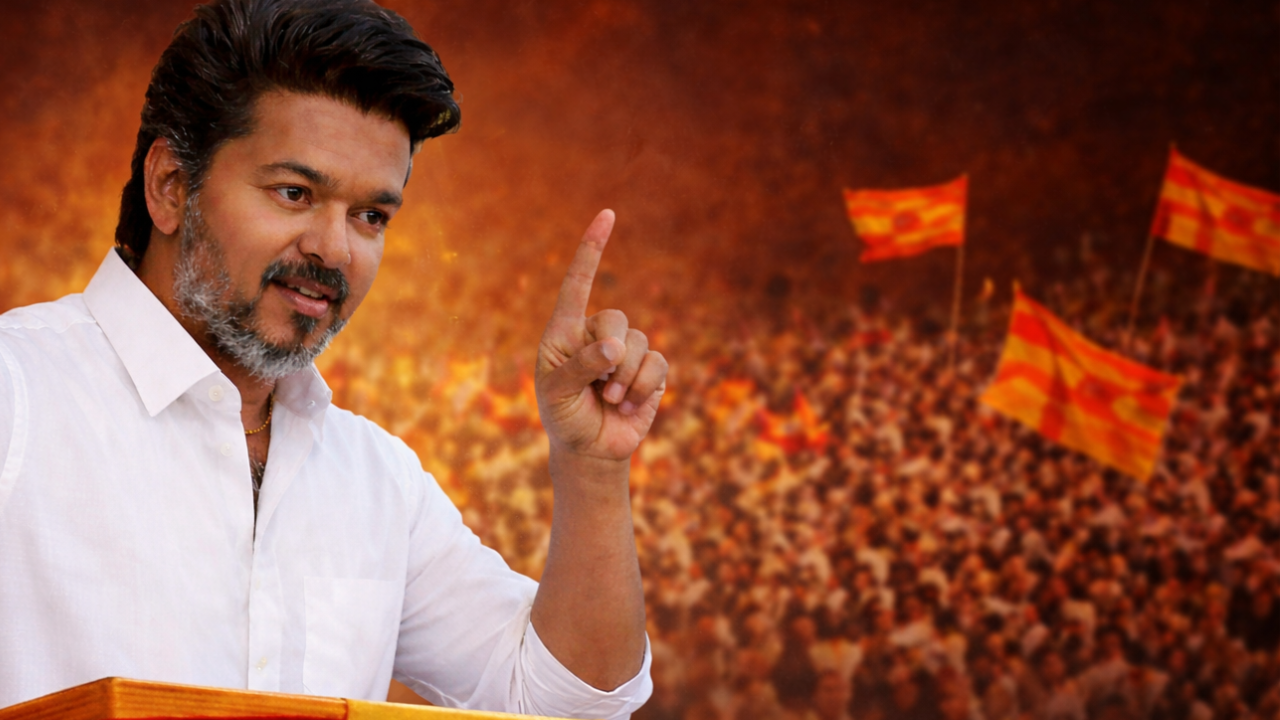
Actor Vijay has made his first political bet, with a bold but risky strategy.By taking the Tamilaga Vettri Kazhagam (TVK) into the 2026 Tamil Nadu Assembly election without allies, he is stepping into a political arena where alliances have historically determined winners. In a state long dominated by the Dravida Munnetra Kazhagam (DMK) and the All India Anna Dravida Munnetra Kazhagam (AIADMK), electoral success has typically depended on coalition-building as much as on individual popularity.

TVK’s decision to go solo, therefore, is not just a strategic choice but a structural challenge to how politics has functioned in the state for decades. It raises a central question as campaigning gathers pace; will TVK’s decision to go solo emerge as the defining flashpoint of this election, or will it prove to be a mere structural hindrance that ultimately reinforces the dominance of established Dravidian parties?

History check: Do solo players actually succeed in Tamil Nadu?

Tamil Nadu’s electoral system has, for decades, rewarded coalition depth and organisational spread over standalone appeal.Since the late 1960s, power has alternated almost exclusively between the Dravida Munnetra Kazhagam (DMK) and the All India Anna Dravida Munnetra Kazhagam (AIADMK), both of which have consistently depended on alliances and entrenched cadre networks to convert vote share into seats.This pattern is visible across election cycles. In 2021, the DMK-led Secular Progressive Alliance, comprising the Indian National Congress, Communist Party of India (Marxist), Viduthalai Chiruthaigal Katchi and others, secured a decisive majority. The AIADMK-led NDA, which included the Bharatiya Janata Party, still retained over 60 seats despite losing power.

Go further back, and the trend holds.In 2011, the AIADMK stitched together a broad coalition with parties such as the Desiya Murpokku Dravida Kazhagam, translating alliance arithmetic into a landslide victory.In 2006, the DMK returned to power not on its own, but as part of a pre-poll alliance with Congress and Left parties. Even though it fell short of a majority on its own, the coalition ensured both vote consolidation and post-poll stability, reinforcing the centrality of alliances in the state’s electoral framework.The only partial deviation came in 2016, when the AIADMK under J Jayalalithaa retained power with a largely standalone contest. But even this was not a typical “solo breakthrough.” It reflected the strength of an already entrenched political force with an established vote base and organisational depth, rather than the success of a new, standalone entrant. Thus, the historical record is clear: Tamil Nadu’s elections have rarely rewarded standalone challengers, that too one without an established voter base.

The solo strategy: Assertion or overreach?

TVK has categorically ruled out alliances with both the AIADMK-led NDA and other regional players, framing its campaign as a clean break from entrenched Dravidian politics. Party leaders have been explicit: the objective is not incremental power-sharing, but a direct bid for leadership.TVK chief coordinator K A Sengottaiyan had said it early on this year that Vijay entered politics not to become a deputy chief minister, but with the objective of becoming the chief minister, in an apparent reference to reports that he was being offered the deputy CM’s post in a potential AIADMK-NDA arrangement after the election.This positioning gives TVK ideological clarity and preserves its anti-establishment appeal, particularly among urban voters and first-time entrants to the electorate. It also allows Vijay to avoid being subsumed within legacy party structures.However, in electoral terms, a solo contest significantly raises the threshold for success. Without alliance arithmetic, TVK must independently convert visibility into votes across 234 constituencies, a task that demands booth-level depth, not just mass mobilisation.

Watch

Tamil Nadu Elections 2026: M.K. Stalin vs AIADMK — Will Vijay Be the X-Factor?

The NTK precedent: Visibility without conversion

A useful contemporary parallel is Naam Tamizhar Katchi (NTK), led by Seeman and the trajectory it has followed over the past decade.NTK has consistently chosen to contest independently across elections, positioning itself as an ideological alternative rooted in Tamil nationalism. In 2016, NTK contested widely and secured a modest but noticeable vote share (around 1 per cent), marking its emergence as a statewide player.By 2019 (Lok Sabha), its vote share rose to roughly 3-4 per cent, indicating growing traction, particularly among younger voters.In 2021, the party contested all 234 Assembly seats and secured around 6-7 per cent vote share statewide, a significant jump in electoral presence.Yet, across these cycles, one outcome has remained unchanged – no seats won in the Assembly.Even in constituencies where NTK polled strongly, its votes were dispersed rather than concentrated, limiting its ability to cross winning thresholds under the first-past-the-post system.For a first-time entrant like Tamilaga Vettri Kazhagam, the comparison is instructive. The challenge is not merely to attract voters, but to convert dispersed support into concentrated victories; something that has historically proven difficult for solo players in the state.

The ‘vote-cutter’ dilemma

Rivals, particularly within the NDA, have already framed TVK as a potential spoiler. Leaders including Piyush Goyal have argued that a fragmented opposition could work to the advantage of the ruling DMK by splitting anti-incumbency votes.TVK’s core support base, youth, urban middle classes, and politically disengaged voters, overlaps significantly with segments the AIADMK-led alliance is attempting to consolidate. This creates a structural risk: TVK may erode opposition vote share more than it challenges the DMK’s core base.An alliance, by contrast, would have altered this dynamic. It would have reduced the number of direct competitors in key constituencies and allowed TVK to plug into an existing electoral network, benefiting from established cadre strength, caste coalitions, and booth-level mobilisation. More importantly, it could have expanded the party’s reach beyond its current urban and youth-heavy base by leveraging partners with deeper rural penetration.By going solo, it forgoes these network advantages and instead faces the full cost of building an organisational footprint from scratch in a highly competitive field. This increases the risk of vote fragmentation in its core pockets while limiting its ability to convert social appeal into geographically broad, booth-level electoral gains.

From crowds to constituencies

Tamilaga Vettri Kazhagam (TVK)’s campaign has demonstrated strong crowd-pulling capacity, with large turnouts during Vijay’s nomination filings and rallies. His long-standing popularity as a film star adds to this momentum, giving the party visibility that few first-time entrants enjoy.But Indian electoral history offers repeated caution: crowd density and celebrity appeal do not reliably translate into vote share.The challenge is organisational. Established parties like the DMK and the AIADMK possess entrenched cadre networks, local influencers, and booth-level machinery built over decades. TVK, by contrast, is still in the process of ground structuring.Without this micro-level apparatus, even a favourable swing in sentiment, however amplified by Vijay’s personal appeal, can dissipate by the polling day.

Target constituencies and dual contests

By contesting from both Perambur and Tiruchirappalli East, Vijay is signalling an attempt to straddle urban and semi-urban electoral terrains. These are precisely the zones where voter volatility is highest, and where TVK’s message may find traction.Yet, these are also constituencies where multi-cornered contests tend to produce fragmented mandates. Here, the margin for error is narrow: TVK must not only mobilise support but also ensure it is not merely redistributing opposition votes.

Narrative vs structure

TVK’s campaign narrative, focused on anti-corruption, governance reform, and youth-centric economic promises, is calibrated to tap into emerging dissatisfaction. Proposals such as employment-linked incentives, support for creators, and a push towards localised job generation aim to differentiate the party from the welfare-heavy Dravidian model that has dominated the state’s politics.The messaging is particularly targeted at younger voters, first-time job seekers, and sections of the urban middle class who are increasingly vocal about employment opportunities and economic mobility. It also attempts to position TVK as a forward-looking alternative that prioritises structural change over incremental welfare expansion.But elections in Tamil Nadu have historically hinged as much on organisational strength and alliance management as on narrative appeal. Established players like the DMK and AIADMK combine policy messaging with deep grassroots networks, caste coalitions, and booth-level mobilisation strategies that ensure vote conversion.On both counts, TVK remains an untested entity, raising questions about whether its narrative can translate into electoral outcomes in a system where messaging alone has rarely been sufficient.

Experience gap: A political vulnerability?

The party’s pitch is also being tested by a parallel line of attack from opponents, centred on inexperience. Recently, senior Congress leader P Chidambaram drew a sharp distinction between cinema and governance, saying, “Governance is not cinema, there are no retakes,” in a pointed reference to Vijay’s political debut.He went further, questioning the party’s preparedness and public engagement, remarking that the new entrant “has no political experience” and highlighting the need for debate and interaction in politics.However, Vijay had once turned this into a pitch of having no set agendas and just working for the people. Responding to criticism over the party’s inexperience, Vijay, earlier this year, had said, “We have no experience in looting.” He added that his government would rely on administrative support, stating, “I will do it.”At the meeting, he also called on supporters to take a pledge: “My vote is my right. No one can buy us. Our vote is for whistle.”

Thus, while TVK has drawn large crowds, translating that momentum into consistent, booth-level voter outreach remains a different challenge altogether. Building a statewide electoral machine requires not just visibility, but sustained ground engagement across constituencies.

What’s at stake

For the ruling M K Stalin and DMK, TVK’s presence could prove advantageous if it fragments opposition votes in closely contested constituencies, particularly in urban and semi-urban belts where margins are often narrow. Even a modest split in anti-incumbency votes could tilt outcomes in the currently-ruling party’s favour.For the AIADMK under Edappadi K Palaniswami, however, TVK represents a direct strategic threat. The party is attempting to consolidate anti-DMK sentiment, and any diversion of votes, especially among youth and urban voters, could weaken its revival efforts.For TVK itself, the election is existential. A credible vote share, even without significant seat wins, could establish it as a durable political force. A weak conversion rate, however, risks reinforcing the perception that it is merely a spoiler rather than a serious contender.

The final test

Going solo gives TVK full control over its narrative, candidate selection, and long-term positioning. It allows Vijay to present a clear, uncompromised alternative to both DMK and AIADMK, and to consolidate an anti-establishment identity that alliances often dilute.But the risks are structural, not just strategic.Without alliance partners, every vote TVK attracts must translate into a winning margin on its own. In a first-past-the-post system, even a respectable vote share can result in minimal or no seats if that support is spread thinly across constituencies. The NTK trajectory shows how this pattern can persist across election cycles.There is also the vote-split effect. If TVK draws disproportionately from anti-DMK voters, particularly in urban and semi-urban constituencies, it could weaken the AIADMK-led bloc more than it challenges the incumbent. In close contests, even a 5–10 per cent diversion can tilt outcomes decisively without delivering seats to the third player.Organisational depth is another constraint. Unlike DMK and AIADMK, which rely on decades-old cadre networks, caste coalitions, and booth-level mobilisation, TVK is still building its ground machinery. That gap becomes critical on polling day, when turnout management and last-mile voter outreach often determine results.Yet, the upside scenario cannot be dismissed.If TVK manages to concentrate its support in select constituencies, leverages Vijay’s personal appeal effectively, and converts its visibility into targeted vote blocs, it could break the pattern that has historically constrained solo entrants. Even a modest cluster of wins would be enough to establish it as a credible third force.The 2026 election, therefore, is not just about whether Vijay can win. It is about whether a new entrant can rewrite the rules of a system that has, for decades, rewarded alliances over assertion.In that sense, TVK’s solo gamble is less a conventional campaign strategy and more a structural stress test of Tamil Nadu’s electoral politics. The real question now is whether this new, rapid appeal can translate into electoral outcomes, or whether the weight of established networks and alliances will once again prove decisive.