Tuesday, September 29, 2026
Home Blog Page 628

Tamil Nadu elections 2026: Will TVK’s solo gamble split votes or fulfil Vijay’s CM dream? | India News

0
Tamil Nadu elections 2026: Will TVK’s solo gamble split votes or fulfil Vijay’s CM dream? | India News


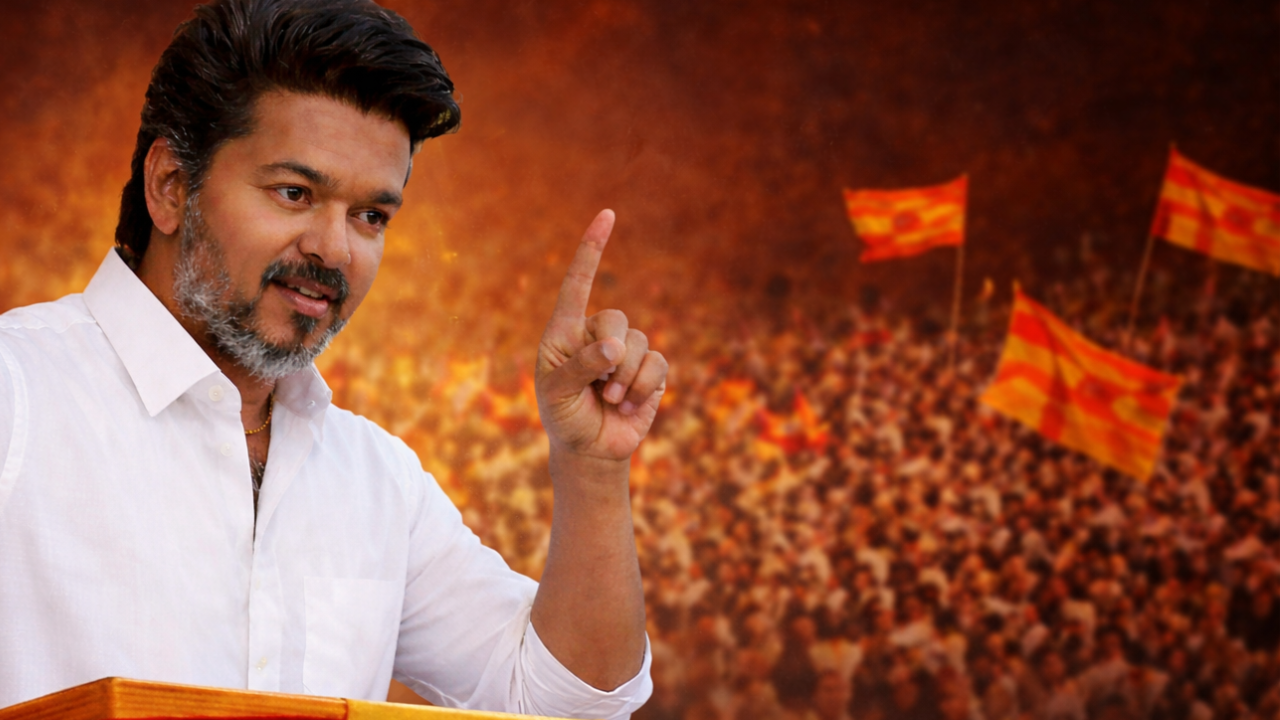
Actor Vijay has made his first political bet, with a bold but risky strategy.By taking the Tamilaga Vettri Kazhagam (TVK) into the 2026 Tamil Nadu Assembly election without allies, he is stepping into a political arena where alliances have historically determined winners. In a state long dominated by the Dravida Munnetra Kazhagam (DMK) and the All India Anna Dravida Munnetra Kazhagam (AIADMK), electoral success has typically depended on coalition-building as much as on individual popularity.

TVK’s decision to go solo, therefore, is not just a strategic choice but a structural challenge to how politics has functioned in the state for decades. It raises a central question as campaigning gathers pace; will TVK’s decision to go solo emerge as the defining flashpoint of this election, or will it prove to be a mere structural hindrance that ultimately reinforces the dominance of established Dravidian parties?

History check: Do solo players actually succeed in Tamil Nadu?

Tamil Nadu’s electoral system has, for decades, rewarded coalition depth and organisational spread over standalone appeal.Since the late 1960s, power has alternated almost exclusively between the Dravida Munnetra Kazhagam (DMK) and the All India Anna Dravida Munnetra Kazhagam (AIADMK), both of which have consistently depended on alliances and entrenched cadre networks to convert vote share into seats.This pattern is visible across election cycles. In 2021, the DMK-led Secular Progressive Alliance, comprising the Indian National Congress, Communist Party of India (Marxist), Viduthalai Chiruthaigal Katchi and others, secured a decisive majority. The AIADMK-led NDA, which included the Bharatiya Janata Party, still retained over 60 seats despite losing power.

Go further back, and the trend holds.In 2011, the AIADMK stitched together a broad coalition with parties such as the Desiya Murpokku Dravida Kazhagam, translating alliance arithmetic into a landslide victory.In 2006, the DMK returned to power not on its own, but as part of a pre-poll alliance with Congress and Left parties. Even though it fell short of a majority on its own, the coalition ensured both vote consolidation and post-poll stability, reinforcing the centrality of alliances in the state’s electoral framework.The only partial deviation came in 2016, when the AIADMK under J Jayalalithaa retained power with a largely standalone contest. But even this was not a typical “solo breakthrough.” It reflected the strength of an already entrenched political force with an established vote base and organisational depth, rather than the success of a new, standalone entrant. Thus, the historical record is clear: Tamil Nadu’s elections have rarely rewarded standalone challengers, that too one without an established voter base.

The solo strategy: Assertion or overreach?

TVK has categorically ruled out alliances with both the AIADMK-led NDA and other regional players, framing its campaign as a clean break from entrenched Dravidian politics. Party leaders have been explicit: the objective is not incremental power-sharing, but a direct bid for leadership.TVK chief coordinator K A Sengottaiyan had said it early on this year that Vijay entered politics not to become a deputy chief minister, but with the objective of becoming the chief minister, in an apparent reference to reports that he was being offered the deputy CM’s post in a potential AIADMK-NDA arrangement after the election.This positioning gives TVK ideological clarity and preserves its anti-establishment appeal, particularly among urban voters and first-time entrants to the electorate. It also allows Vijay to avoid being subsumed within legacy party structures.However, in electoral terms, a solo contest significantly raises the threshold for success. Without alliance arithmetic, TVK must independently convert visibility into votes across 234 constituencies, a task that demands booth-level depth, not just mass mobilisation.

Watch

Tamil Nadu Elections 2026: M.K. Stalin vs AIADMK — Will Vijay Be the X-Factor?

The NTK precedent: Visibility without conversion

A useful contemporary parallel is Naam Tamizhar Katchi (NTK), led by Seeman and the trajectory it has followed over the past decade.NTK has consistently chosen to contest independently across elections, positioning itself as an ideological alternative rooted in Tamil nationalism. In 2016, NTK contested widely and secured a modest but noticeable vote share (around 1 per cent), marking its emergence as a statewide player.By 2019 (Lok Sabha), its vote share rose to roughly 3-4 per cent, indicating growing traction, particularly among younger voters.In 2021, the party contested all 234 Assembly seats and secured around 6-7 per cent vote share statewide, a significant jump in electoral presence.Yet, across these cycles, one outcome has remained unchanged – no seats won in the Assembly.Even in constituencies where NTK polled strongly, its votes were dispersed rather than concentrated, limiting its ability to cross winning thresholds under the first-past-the-post system.For a first-time entrant like Tamilaga Vettri Kazhagam, the comparison is instructive. The challenge is not merely to attract voters, but to convert dispersed support into concentrated victories; something that has historically proven difficult for solo players in the state.

The ‘vote-cutter’ dilemma

Rivals, particularly within the NDA, have already framed TVK as a potential spoiler. Leaders including Piyush Goyal have argued that a fragmented opposition could work to the advantage of the ruling DMK by splitting anti-incumbency votes.TVK’s core support base, youth, urban middle classes, and politically disengaged voters, overlaps significantly with segments the AIADMK-led alliance is attempting to consolidate. This creates a structural risk: TVK may erode opposition vote share more than it challenges the DMK’s core base.An alliance, by contrast, would have altered this dynamic. It would have reduced the number of direct competitors in key constituencies and allowed TVK to plug into an existing electoral network, benefiting from established cadre strength, caste coalitions, and booth-level mobilisation. More importantly, it could have expanded the party’s reach beyond its current urban and youth-heavy base by leveraging partners with deeper rural penetration.By going solo, it forgoes these network advantages and instead faces the full cost of building an organisational footprint from scratch in a highly competitive field. This increases the risk of vote fragmentation in its core pockets while limiting its ability to convert social appeal into geographically broad, booth-level electoral gains.

From crowds to constituencies

Tamilaga Vettri Kazhagam (TVK)’s campaign has demonstrated strong crowd-pulling capacity, with large turnouts during Vijay’s nomination filings and rallies. His long-standing popularity as a film star adds to this momentum, giving the party visibility that few first-time entrants enjoy.But Indian electoral history offers repeated caution: crowd density and celebrity appeal do not reliably translate into vote share.The challenge is organisational. Established parties like the DMK and the AIADMK possess entrenched cadre networks, local influencers, and booth-level machinery built over decades. TVK, by contrast, is still in the process of ground structuring.Without this micro-level apparatus, even a favourable swing in sentiment, however amplified by Vijay’s personal appeal, can dissipate by the polling day.

Target constituencies and dual contests

By contesting from both Perambur and Tiruchirappalli East, Vijay is signalling an attempt to straddle urban and semi-urban electoral terrains. These are precisely the zones where voter volatility is highest, and where TVK’s message may find traction.Yet, these are also constituencies where multi-cornered contests tend to produce fragmented mandates. Here, the margin for error is narrow: TVK must not only mobilise support but also ensure it is not merely redistributing opposition votes.

Narrative vs structure

TVK’s campaign narrative, focused on anti-corruption, governance reform, and youth-centric economic promises, is calibrated to tap into emerging dissatisfaction. Proposals such as employment-linked incentives, support for creators, and a push towards localised job generation aim to differentiate the party from the welfare-heavy Dravidian model that has dominated the state’s politics.The messaging is particularly targeted at younger voters, first-time job seekers, and sections of the urban middle class who are increasingly vocal about employment opportunities and economic mobility. It also attempts to position TVK as a forward-looking alternative that prioritises structural change over incremental welfare expansion.But elections in Tamil Nadu have historically hinged as much on organisational strength and alliance management as on narrative appeal. Established players like the DMK and AIADMK combine policy messaging with deep grassroots networks, caste coalitions, and booth-level mobilisation strategies that ensure vote conversion.On both counts, TVK remains an untested entity, raising questions about whether its narrative can translate into electoral outcomes in a system where messaging alone has rarely been sufficient.

Experience gap: A political vulnerability?

The party’s pitch is also being tested by a parallel line of attack from opponents, centred on inexperience. Recently, senior Congress leader P Chidambaram drew a sharp distinction between cinema and governance, saying, “Governance is not cinema, there are no retakes,” in a pointed reference to Vijay’s political debut.He went further, questioning the party’s preparedness and public engagement, remarking that the new entrant “has no political experience” and highlighting the need for debate and interaction in politics.However, Vijay had once turned this into a pitch of having no set agendas and just working for the people. Responding to criticism over the party’s inexperience, Vijay, earlier this year, had said, “We have no experience in looting.” He added that his government would rely on administrative support, stating, “I will do it.”At the meeting, he also called on supporters to take a pledge: “My vote is my right. No one can buy us. Our vote is for whistle.”

Thus, while TVK has drawn large crowds, translating that momentum into consistent, booth-level voter outreach remains a different challenge altogether. Building a statewide electoral machine requires not just visibility, but sustained ground engagement across constituencies.

What’s at stake

For the ruling M K Stalin and DMK, TVK’s presence could prove advantageous if it fragments opposition votes in closely contested constituencies, particularly in urban and semi-urban belts where margins are often narrow. Even a modest split in anti-incumbency votes could tilt outcomes in the currently-ruling party’s favour.For the AIADMK under Edappadi K Palaniswami, however, TVK represents a direct strategic threat. The party is attempting to consolidate anti-DMK sentiment, and any diversion of votes, especially among youth and urban voters, could weaken its revival efforts.For TVK itself, the election is existential. A credible vote share, even without significant seat wins, could establish it as a durable political force. A weak conversion rate, however, risks reinforcing the perception that it is merely a spoiler rather than a serious contender.

The final test

Going solo gives TVK full control over its narrative, candidate selection, and long-term positioning. It allows Vijay to present a clear, uncompromised alternative to both DMK and AIADMK, and to consolidate an anti-establishment identity that alliances often dilute.But the risks are structural, not just strategic.Without alliance partners, every vote TVK attracts must translate into a winning margin on its own. In a first-past-the-post system, even a respectable vote share can result in minimal or no seats if that support is spread thinly across constituencies. The NTK trajectory shows how this pattern can persist across election cycles.There is also the vote-split effect. If TVK draws disproportionately from anti-DMK voters, particularly in urban and semi-urban constituencies, it could weaken the AIADMK-led bloc more than it challenges the incumbent. In close contests, even a 5–10 per cent diversion can tilt outcomes decisively without delivering seats to the third player.Organisational depth is another constraint. Unlike DMK and AIADMK, which rely on decades-old cadre networks, caste coalitions, and booth-level mobilisation, TVK is still building its ground machinery. That gap becomes critical on polling day, when turnout management and last-mile voter outreach often determine results.Yet, the upside scenario cannot be dismissed.If TVK manages to concentrate its support in select constituencies, leverages Vijay’s personal appeal effectively, and converts its visibility into targeted vote blocs, it could break the pattern that has historically constrained solo entrants. Even a modest cluster of wins would be enough to establish it as a credible third force.The 2026 election, therefore, is not just about whether Vijay can win. It is about whether a new entrant can rewrite the rules of a system that has, for decades, rewarded alliances over assertion.In that sense, TVK’s solo gamble is less a conventional campaign strategy and more a structural stress test of Tamil Nadu’s electoral politics. The real question now is whether this new, rapid appeal can translate into electoral outcomes, or whether the weight of established networks and alliances will once again prove decisive.


‘I’ll quit cricket’: Virat Kohli forced to eat his words after playing as Impact Player for RCB against LSG

0
‘I’ll quit cricket’: Virat Kohli forced to eat his words after playing as Impact Player for RCB against LSG


Virat Kohli has long been among the senior players critical of the Board of Control for Cricket in India’s Impact Player rule, introduced in the Indian Premier League in 2023. At a time when peers like Rohit Sharma were used as Impact Players, and debates swirled around whether MS Dhoni could be deployed similarly, Kohli had made his stance clear last year within the Royal Challengers Bengaluru camp — he would rather “quit cricket” than play as one.

Royal Challengers Bengaluru's Virat Kohli plays a shot during the Indian Premier League 2026 match against Lucknow Super Giants (ANI Pic Service)
Royal Challengers Bengaluru’s Virat Kohli plays a shot during the Indian Premier League 2026 match against Lucknow Super Giants (ANI Pic Service)

On Wednesday at the M Chinnaswamy Stadium, that stance came full circle. A half-fit Kohli was named as an Impact Player for RCB’s clash against Lucknow Super Giants, and went on to script a match-defining 49 that powered his side to a five-wicket win and the top of the table.

‘I will quit cricket’

Those words were not said in a public interview, but were revealed by former RCB teammate Swastik Chikara, who spoke about Kohli’s firm stance on the rule.

ALSO READ: CSK dealt crushing injury setback as Khaleel Ahmed ruled out of IPL 2026 in huge blow

Speaking to RevSportz last year, Chikara recalled Kohli’s clarity on the matter, that he would only play if fully fit and would not embrace the Impact Player role.

“Virat bhaiya said, ‘Jab tak cricket khelunga, jab tak main poora fit hoon. Ye Impact Player ki tarah nahi khelunga. Main sher ki tarah khelunga. I will field for the full 20 overs and then bat. The day I have to play as an Impact Player, I will quit cricket’.”

What led to the switch?

Kohli had picked up an ankle injury during the match against Mumbai Indians last week at the Wankhede Stadium, five deliveries into the 10th over of RCB’s innings. He received treatment on the field before walking off and did not take part in the second innings.

Ahead of the LSG clash, Kohli was seen training with a heavily strapped left leg, sparking doubts over his availability. He went through light running drills but did not appear to be moving freely.

While captain Rajat Patidar made no mention of Kohli at the toss, the veteran was left out of the starting XI. However, he came in as an Impact Player in the second innings and opened alongside Phil Salt.

Despite the fitness concerns, Kohli looked in sublime touch, taking on Mohammed Shami and Prince Yadav with a flurry of boundaries. He raced to 40 off his first 20 balls, setting the tone in the powerplay, before falling just short of a half-century, dismissed by Avesh Khan.

His brisk knock ensured RCB chased down 147 in just 15.1 overs.

‘Still not 100%’

Kohli later admitted he was far from fully fit but was pleased with his approach.

“I’m still not 100%. My knee was a bit sore last game. Even health-wise, I’ve been under the weather for four or five days,” he said.

“I started off well, so I was happy with my intensity. Would have liked to finish the game, but sometimes you have to take conditions into account.”


Jerax trailer: Chaos and comedy ensues when a copy machine finds its own life

0
Jerax trailer: Chaos and comedy ensues when a copy machine finds its own life


Jerax trailer: Chaos and comedy ensues when a copy machine finds its own life

Kannada Zee5 unveiled the trailer of the original series ‘Jerax’, a six‑episode fantasy comedy thriller that has been attracting attention ever since its title and lead cast were announced. Produced by actor Dhananjaya of Daali Pictures and written and directed by Srinidhi Bengaluru, Jerax brings together a strong set of veteran actors, led by Nagabhushana, Payal Chengappa, Manju Pavagada, Om Prakash Rao, Srivatsa, Yashwanth Shetty, Vijaya Prasad, Thukali Santhu, Jagappa, Siddu Mandya, and Sudhakar Gowda among others.

What is Jerax about?

In the town of Rayadurga, Prakasha (Nagabhushana) is the kind of young man no one really notices, a xerox shop worker who hopes life might one day acknowledge him. His world changes the moment a curious piece of Thayitha merges with his old copying machine. Suddenly, copies stop being copies. They start walking, speaking, remembering.

A duplicate of one man becomes the catalyst for another. A small lie becomes a larger threat. As identical faces begin appearing in unexpected corners of the town, Rayadurga starts to fracture, socially, politically, emotionally. And behind it all stands Prakasha, watching as the line between the life he wanted and the life, he unleashed dissolves into something darker, stranger, and impossible to reverse.

Team talks about Jerax

Producer Daali Dhananjaya shares, “What fascinated me about Jerax from the beginning was how the story hides a philosophical punch behind a seemingly bizarre idea. A xerox machine that prints humans sounds outrageous, but the emotional truth beneath it is painfully real, what happens when people refuse to face their own shadows? The series explores loneliness, power, guilt, and the kind of moral collapse that can begin in silence. We were drawn to its courage. This is not just a thriller or a fantasy; it’s a mirror held up to the parts of ourselves we do not want copied.”

Director and writer Srinidhi Bengaluru adds up, “Jerax was born from a very simple fear, what if the version of you that you try to hide suddenly stood in front of you? The duplicates in the show are not monsters; they are reflections. Through Malavalli’s politics, relationships, and chaos, I wanted to explore how identity breaks, multiplies, and corrupts under pressure. I didn’t want the fantasy to be an escape; I wanted it to feel like an intrusion into everyday life. When the extraordinary enters the ordinary, the truth of a person becomes impossible to mask, and that’s the heartbeat of Jerax.”

Actor Nagabhushana said, “Prakasha is a man the world never really looked at, until he begins creating versions of it. Playing him demanded stepping into a space where innocence, insecurity, love, and obsession are constantly shifting. He is not evil, but he becomes dangerous; he is not powerful, but he becomes responsible for overwhelming consequences. Jerax forced me to explore how fragile a person becomes when they are starved of visibility, and how power can turn that fragility into something unpredictable. It’s a character who keeps slipping away from definition, and that is what made him both haunting and human.”


South African opposition figure Malema sentenced to five years in prison

0
South African opposition figure Malema sentenced to five years in prison


Malema is appealing against the decision to prevent him from being taken to prison on Thursday.


Digger trailer: Tom Cruise looks unrecognisable with grey hair and beer belly

0
Digger trailer: Tom Cruise looks unrecognisable with grey hair and beer belly


Digger trailer: Tom Cruise looks unrecognisable with grey hair and beer belly

Hollywood action star Tom Cruise appears to be back to save the world – this time with a comic twist! The actor will be next seen in Alejandro G Inarritu`s Digger, with a special look unveiled at CinemaCon.

According to The Hollywood Reporter, Warner Bros dropped the project details during the studio`s Las Vegas presentation, with both Cruise and Inarritu in attendance.

In the footage, Tom Cruise seems quite unrecognisable as he sports a new look with grey hair, wrinkles, and a beer belly, strutting around his mansion and nursing his sick cat.

With that noticeable Southern accent, the actor features as an oil baron, whose company may have set off an ecological disaster that can quickly trigger a nuclear war. Also, features in the footage are John Goodman as an ailing US President who implores Cruise`s character to fix his mess.

“We can`t control the course of nature, at least we can control the narrative,” Tom Cruise declares, as quoted by The Hollywood Reporter.

Speaking at the CinemaCon, the Mission: Impossible actor couldn`t help but gush over the idea of working with Inarritu, saying, “This was the kind of movie that I wanted to make movies. The movie is wild, it`s funny, and I can`t wait for you all to see it.”


View this post on Instagram


A post shared by Tom Cruise (@tomcruise)

Director Innaritu also explained how he first had the idea of Digger nine years ago and that he has been discussing it with Cruise over the past seven years.

“Watching Tom Cruise becoming Digger Rockwell, I was not prepared for that. Embodying this character, this is another kind of fearless… this role could be his most challenging, hire-wire act,” he said.

Besides Cruise in the lead role, the film also stars Sandra Huller, Jesse Plemons, Riz Ahmed, Michael Stuhlbarg, Sophie Wilde, and Emma D`Arcy.

This story has been sourced from a third party syndicated feed, agencies. Mid-day accepts no responsibility or liability for its dependability, trustworthiness, reliability and data of the text. Mid-day management/mid-day.com reserves the sole right to alter, delete or remove (without notice) the content in its absolute discretion for any reason whatsoever


Shreyas Iyer to Jasprit Bumrah: 5 players battle to watch in today’s IPL 2026 match between MI and PBKS | Cricket News

0
Shreyas Iyer to Jasprit Bumrah: 5 players battle to watch in today’s IPL 2026 match between MI and PBKS | Cricket News


Shreyas Iyer to Jasprit Bumrah: 5 players battle to watch in today's IPL 2026 match between MI and PBKS
5 key battles to watch in today’s IPL 2026 match between MI and PBKS

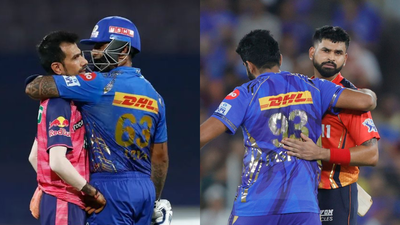
Mumbai Indians (MI) will take on Punjab Kings (PBKS) in Match 24 of IPL 2026 at the Wankhede Stadium on April 16, with the two teams entering the contest on contrasting trajectories.Punjab Kings have been one of the standout sides this season, remaining unbeaten with three wins from four matches and sitting comfortably in third place. In contrast, Mumbai Indians are struggling in ninth position, having lost three consecutive games after their opening win. Adding to MI’s concerns is the fitness of Rohit Sharma, who is doubtful for the clash due to a hamstring injury.

Watch

Shashank Singh on Punjab’s strong start, Priyansh’s growth & team mentality | IPL 2026

Historically, this rivalry has been one of the most evenly matched in IPL history, with both teams tied at 17 wins each from 34 encounters. This will be their first meeting since IPL 2025 Qualifier 2, where Shreyas Iyer’s match-winning knock powered PBKS into the final. MI will be eager to turn the tide on their home turf and revive their campaign.Here are the 5 key battles to watch in today’s clash at Mumbai

Suryakumar Yadav vs Yuzvendra Chahal

The battle between Suryakumar Yadav and Yuzvendra Chahal is one of the most tactical matchups in the IPL, often occurring during the middle overs where Yadav looks to accelerate and Chahal aims to deceive with flight and trajectory. Suryakumar Yadav has scored 116 runs in 13 encounters against Chahal but has been dismissed four times.

Hardik Pandya vs Marco Jansen

Hardik Pandya has maintained a strong upper hand in his individual battles against Marco Jansen, particularly in the IPL where he remains undefeated against the left-arm pacer. Across all T20 formats, Pandya has successfully negated Jansen’s height and bounce, scoring 49 runs off 32 balls without losing his wicket.

Shreyas Iyer vs Jasprit Bumrah

Shreyas Iyer has been exceptionally successful at neutralizing Jasprit Bumrah in the IPL, being dismissed by the pacer only once in 11 T20 innings. One of the most famous moments in this rivalry occurred in IPL 2025 Qualifier 2, where Iyer hit a perfectly-placed Bumrah yorker for a boundary to win the game for Punjab Kings.

Arshdeep Singh vs Ryan Rickelton

Arshdeep has had the edge, dismissing Rickelton twice in six innings. PBKS are likely to target the MI opener early with left-arm pace, especially given Rickelton’s vulnerability against this angle, having fallen five times to Arshdeep and Marco Jansen combined.

Shardul Thakur vs Prabhsimran Singh

A high-intensity powerplay battle. Prabhsimran has scored quickly against Thakur, maintaining a high strike rate, but Thakur’s knack for picking crucial wickets keeps this contest evenly poised.


Strait of Hormuz disruptions hit! India’s LPG imports halve from February levels, domestic output also hit

0
Strait of Hormuz disruptions hit! India’s LPG imports halve from February levels, domestic output also hit


Strait of Hormuz disruptions hit! India’s LPG imports halve from February levels, domestic output also hit
The United States has emerged as India’s largest LPG supplier so far this month. (AI image)

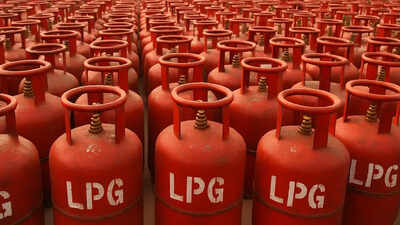
In wake of the Middle East conflict, India’s Liquified Petroleum Gas (LPG) imports have dropped sharply this month, falling to nearly half of February levels and extending the decline seen in March, according to shipping data. At the same time, domestic production has slipped about 10 per cent from its March peak, further tightening the overall supply.Ongoing disruptions to energy flows from the Gulf linked to the US-Iran war continue to unsettle global oil and gas markets, and a ceasefire in place for about a week has done little to improve the availability of cooking gas.

Where is India getting LPG from?

The United States has emerged as India’s largest LPG supplier so far this month, accounting for 142,000 tonnes, or 27 percent of total imports of 523,000 tonnes. The United Arab Emirates supplied 141,000 tonnes, followed by Saudi Arabia with 92,000 tonnes, Qatar with 82,000 tonnes, and Kuwait with 11,000 tonnes. Imports from Iran rose to 43,000 tonnes from 11,000 tonnes in March, while Argentina supplied 10,000 tonnes, an uncommon contribution.Also Read | Oil price shock loading: How India’s strong economic fundamentals will cushion the blow – explained in chartsData from Kpler quoted in an ET report shows that LPG imports averaged around 37,000 tonnes per day between April 1 and 14, largely unchanged from March but significantly lower than February’s 73,000 tonnes per day.“LPG is where the real tightness is,” said Nikhil Dubey, senior research analyst at Kpler. “Supply is expected to remain constrained, with very few alternatives available in the market outside Middle East Gulf producers. We are already seeing some shifts in trade flows, but replacement options are insufficient to offset the shortfall.”Prior to the conflict, Gulf nations accounted for roughly 54 per cent of India’s LPG consumption. While India has managed to move nine LPG carriers out of the Persian Gulf via the Strait of Hormuz, the heavy reliance on Gulf producers continues to limit its ability to scale up supplies. Industry executives noted that most global LPG volumes are tied up in long-term contracts, with only about 10 per cent available in the spot market, leaving limited room to secure additional cargoes even at higher prices.Also Read | First time in 7 years! India gets 4 million barrels of crude oil from Iran just ahead of Trump waiver expiry


Cannes 2026: Mukesh Chhabra`s debut production Gudgudi to be screened

0
Cannes 2026: Mukesh Chhabra`s debut production Gudgudi to be screened


Cannes 2026: Mukesh Chhabra`s debut production Gudgudi to be screened

Soon after the mega success of the box office phenomenon, Dhurandhar and Dhurandhar The Revenge, casting director Mukesh Chhabra has now achieved another significant feat by venturing into production with Gudgudi. Starring Ahsaas Channa, Gudgudi has been officially selected under the Marché du Film segment at the 79th Cannes Film Festival, 2026, running from 12 to 23 May, 2026.

Mukesh Chhabra reacts to Gudgudi`s Cannes selection

“Words can’t justify how I feel to see Gudgudi make its way to the 79th Cannes Film Festival. It’s an esteemed, global platform, and I feel grateful to be able to showcase our vision, Indian cinema’s vision, our capability and celebrate the teamwork that went behind creating this piece of work,” shares Mukesh Chhabra. 

“It’s a proud moment for India and a global opportunity to bring focus to Indian talents. This opportunity reinforces the growing global recognition of Indian craft, and I truly feel honoured to be a part of this milestone,” he adds.

Directed by Manisha Makwana, Gudgudi marks the first-ever production of Mukesh Chhabra, becoming a significant addition to his body of work.


View this post on Instagram


A post shared by White Peacock Films (@whitepeacockfilms)

Announcing the selection on social media, the makers shared a poster and penned a heartfelt caption that read, “Presenting Gudgudi Our yet another special film that has found its way to Cannes… and we honestly couldn’t be more grateful to share this moment with all of you. This is a dream come true with dream team manishamakwana18 ahsaassy_.” 

It added, “Thank you for all the unconditional love, belief, and support you’ve given us along the way…it truly means everything (red heart emoji)”

Mukesh Chhabra reveals 3 actors rejected Rahman Dakait`s role

After Dhurandhar`s release, Akshaye Khanna gained significant attention for his role as Rahman Dakait, a notorious Lyari ganglord. However, he was not the first choice for the role, in fact, he was the fourth actor approached, as three actors had earlier turned it down. 

In a conversation with Bollywood Hungama, casting director Mukesh Chhabra revealed that three actors rejected the role for unusual reasons. Without naming them, he said, “Ek actor South se thhe, aur baki do Bollywood ke thhe. They gave me a very weird logic. They said, ‘Ye ensemble cast hain (This is an ensemble cast).’ ‘Ye toh Ranveer ki picture hain (This is Ranveer Singh`s picture).’ I said okay leave, and Aditya [Dhar] is a cool guy and he said it is fine. He was sure about his film. I did feel bad because we think of an actor after a lot of thought.”


IPL 2026: Mumbai Indians name Krish Bhagat as Atharva Ankolekar`s replacement

0
IPL 2026: Mumbai Indians name Krish Bhagat as Atharva Ankolekar`s replacement


IPL 2026: Mumbai Indians name Krish Bhagat as Atharva Ankolekar`s replacement

The Mumbai Indians (MI) are all set to clash against the Punjab Kings (PBKS) in the IPL 2026 match on Thursday at the Wankhede Stadium in Mumbai.

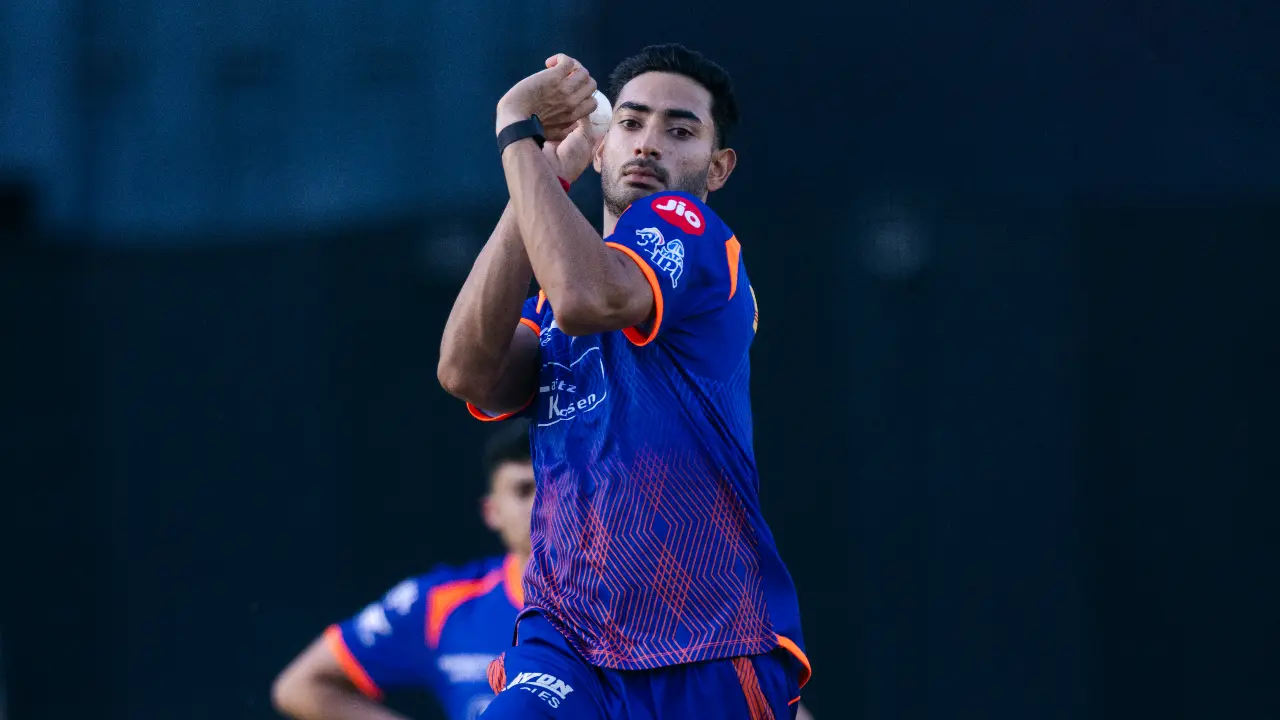
Ahead of the match, MI`s management has named Krish Bhagat as the replacement for Atharva Ankolekar, who has been ruled out of the league due to injury.

Bhagat, who plays for Punjab, is a right-arm pacer and is also handy with the bat. The franchise`s official social media handle shared a post, providing an update on Akolekar`s replacement. “Mumbai Indians sign Krish Bhagat as a replacement player. Mumbai Indians have named Krish Bhagat as a replacement for Atharva Ankolekar, who has been ruled out of IPL 2026,” read the post`s caption.

Additionally, it will be interesting to see if Mumbai`s veteran batsman Rohit Sharma manages to make his appearance for the match.

Earlier, the right-handed batsman had retired hurt on the score of 19 runs during the match against Royal Challengers Bengaluru (RCB). However, there are speculations that the 38-year-old batsman will likely feature in the match as an Impact Player.

The clash will be one to watch out for as the opponent team will be led by Shreyas Iyer, who is well aware of Wankhede`s conditions.

IPL 2026, Mumbai Indians vs Punjab Kings: Full Squads

Mumbai Indians: Hardik Pandya (c), Quinton de Kock (wk), Danish Malewar, Robin Minz (wk), Ryan Rickelton (wk), Sherfane Rutherford, Rohit Sharma, Suryakumar Yadav, Atharva Ankolekar, Raj Bawa, Corbin Bosch, Will Jacks, Mayank Rawat, Naman Dhir, Mitchell Santner, Shardul Thakur, Tilak Varma, Ashwani Kumar, Trent Boult, Jasprit Bumrah, Deepak Chahar, AM Ghazanfar, Mayank Markande, Mohammad Izhar, Raghu Sharma.

Punjab Kings: Marcus Stoinis, Yuzvendra Chahal, Shashank Singh, Praveen Dubey, Lockie Ferguson, Shreyas Iyer, Ben Dwarshuis, Vishnu Vinod (WK), Xavier Bartlett, Yash Thakur, Azmatullah Omarzai, Vyshak Vijay Kumar, Arshdeep Singh, Marco Jansen, Nehal Wadhera, Prabhsimran Singh (WK), Harpreet Brar, Priyansh Arya, Suryansh Shedge, Cooper Conolly, Mitchell Owen, Pyla Avinash, Harnoor Singh, Musheer Khan, Vishal Nishad.


Daisy Shah shares she was inappropriately touched by a filmmaker in South: ‘That just put me off’

0
Daisy Shah shares she was inappropriately touched by a filmmaker in South: ‘That just put me off’


Actor Daisy Shah, who made her Bollywood debut opposite Salman Khan in Jai Ho (2014), has opened up about an uncomfortable incident which took place in Mumbai when a filmmaker had come to the city to conduct auditions. The filmmaker’s behaviour put her at unease, recalled the actor in an interview with The Free Press Journal. (Also read: Daisy Shah hopes Palaash Muchhal, Smriti Mandhana get back together after wedding fiasco: ‘We don’t know actual truth’)

Daisy Shah has opened up about a distressing incident in her life.

What Daisy said

She said, “I was touched badly by one of the filmmakers in South. He had come to Mumbai for casting. We were 6-7 girls who went to meet him. He was meeting everyone of us individually. But I didn’t like because he touched me and he was holding my hand.”

She added, “I’ve always been apprehensive about people touching me. The reason why I don’t get massage done is because I don’t like being touched, even by a woman…by a man is a different story altogether. So that just put me off. I told him ‘I will get back to you’ but I never got back to him.”

The actor did not name the filmmaker she was talking about.

About Daisy Shah

Daisy began her career as an assistant to choreographer Ganesh Acharya and appeared as a background dancer in several Bollywood songs before stepping into acting. She made her lead debut in Kannada cinema with Bhadra and Bodyguard, and later rose to fame in Bollywood with Salman Khan’s Jai Ho (2014). She went on to appear in films like Hate Story 3 (2015) and has participated in dance reality shows and television appearances as well.

Most recently, Daisy was seen in Amjad Khan’s web series Red Room, which also featured Amit Gaur, Anuj Sachdeva, Reena Aggarwal and Reeva Chaudhary in key roles. Apart from acting, Daisy is quite active on YouTube, where she shares her daily routines with fans through her vlogs. She currently enjoys a following of around 50,000 subscribers.

On the work front, Daisy is set to star as the female lead in an upcoming, yet-to-be-titled thriller directed by Palash Muchhal. The film also stars Shreyas Talpade.