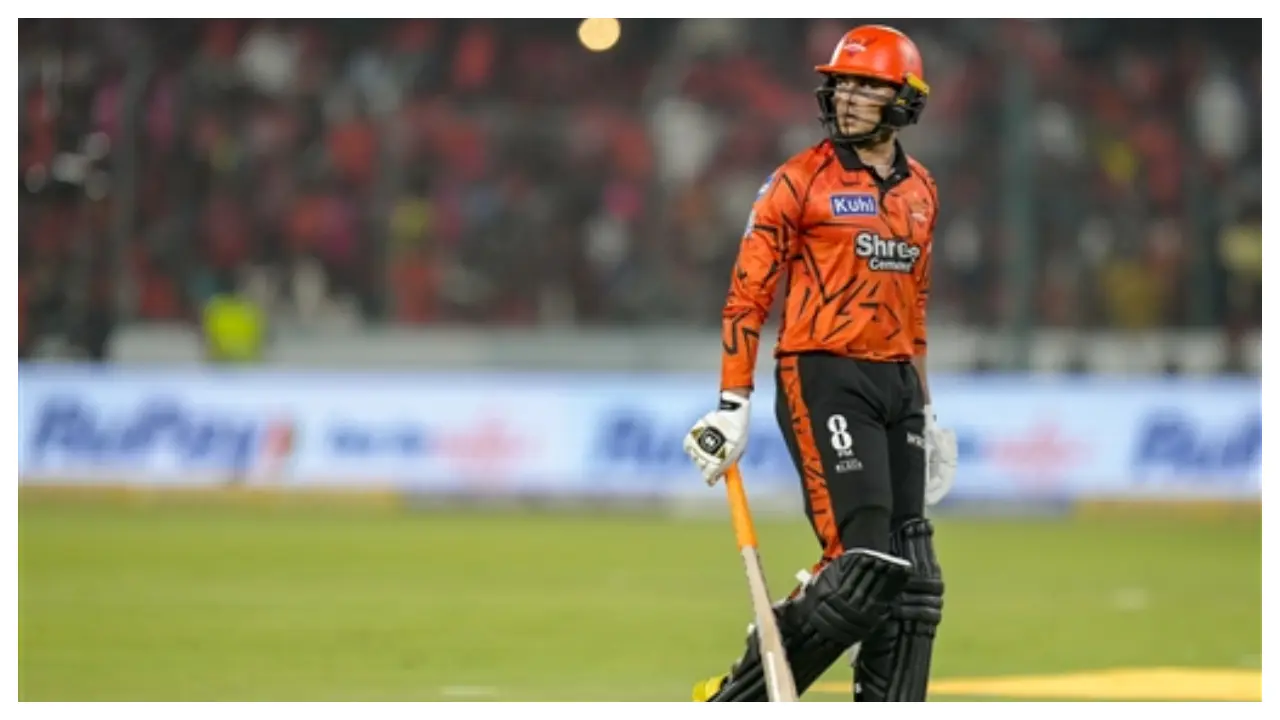
The Sunrisers Hyderabad scored 89 runs for the loss of 2 wickets at the end of 10 overs against the Rajasthan Royals. The hosts struggled to get going after losing Abhishek Sharma on the first ball of the innings.
Abhishek Sharma was dismissed for a golden duck as he top-edged the first ball straight to third man. Jofra Archer got rid of the dangerous Abhishek Sharma to give RR a fast start in the match. Abhishek, who scored his first half-century of the season in the last match, failed to repeat his heroics.
After the powerplay, captain Riyan Parag got the wicket of Travis Head. The Australian star tried to increase the scoring rate but departed after being caught at long on. Head made 18 runs off 18 balls.
SRH captain Ishan Kishan was still going strong at the halfway stage of the innings. The southpaw scored 56 runs in 31 balls to give SRH a chance to score a competitive total. He was joined by Heinrich Klassen in the middle.
For RR, Archer and Parag were the best bowlers, taking a wicket each. The visitors will hope to restrict SRH to a low total and get their fifth win of the season.
Earlier, Riyan Parag won the toss and elected to bowl first. The Royals made two changes to the team, and Sooryavanshi will come in as an impact player.
“We’ll be bowling first. A new wicket for us, first time it’s been used this season as well. So hopefully there’s a little bit of stickiness at the start. We’ve chased down a lot of totals here. We fell short in 2024, so hopefully not the case this time. We’ve got two changes. Brijesh steps out, and Tushar Deshpande comes in.” Parag said.
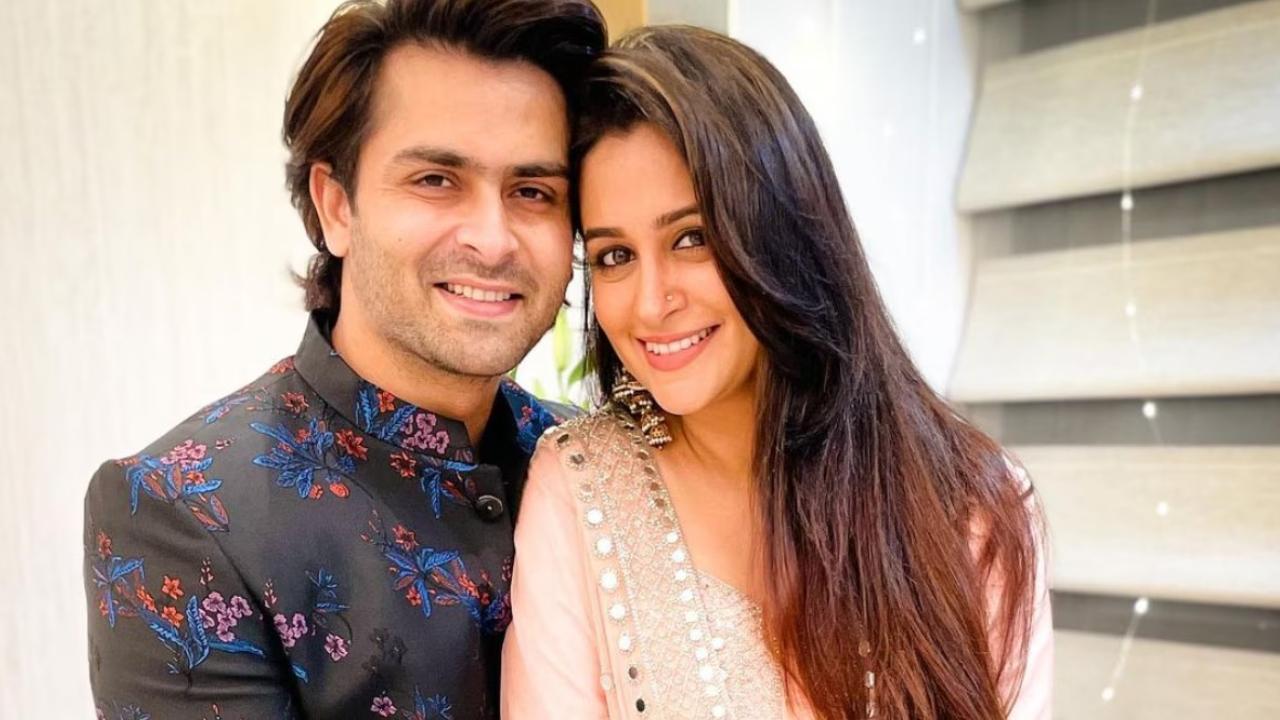
Television actor Shoiab Ibrahim recently opened up about his wife Dipika Kakar`s liver cancer relapse, and revealed that he is extremely worried for her in his YouTube vlog. Dipika Kakar has been undergoing treatment for liver cancer. Her health struggles have resurfaced as she had to undergo another surgery in March after a 1.3 cm cyst reoccurred.
Shoaib Ibrahim expresses worry about Dipika Kakar`s health
In his latest vlog, Shoaib said, “Pichle 10-12 days se jabse recurrence hua hai na mujhe health anxiety hone lagi. Apne aap ko lekar nahi, Dipika ko lekar ghabrahat si hone lagi hai. Jaise ki hakla sa isko kuch bhi hota hai na toh main ghabra jata hoon. Raat mein so rahi hai aur iske feet dukh rahe hai toh main ghabra jaonga.
(In the past 10-12 days, ever since the recurrence, I have started getting health anxiety, not about me but about Dipika. I start getting tense when something happens to her. If her legs ache, I get worried.”
Shoaib said he has not been able to upload videos regularly as he is busy taking care of Dipika`s health and accompanying her to hospitals. He also revealed that he is going to consult another doctor to get a second opinion.
He said, “Hafte bhar ke baad aaj main vlog bana raha hoon. Abhi Dipika ke saath doctor ka visit shuru hua hai. Jaise ki aap logon ne bola tha aur hamara bhi ye hi sochna tha ki second opinion lena chahiye. Woh chalta rahega. We are going to consult a doctor at Tata Memorial Hospital and unse bhi hum opinion lenge. Maine uske baare mein zyada post nahi kiya hai. Ye sab chal raha hai. Hum aur bhi opinions le rahe hain. Hum Tata Memorial Hospital jaa rahe hai.”
(I am making a vlog after one week. We have been busy visiting doctors. As you all suggested, we also think we should get a second opinion. We are going to consult a doctor at Tata Memorial Hospital and take their opinion. I have not posted much about this. We are trying to take as many opinions as possible)
Shoaib added, “Kya reason hai kis wajah se recur ho raha hai. Ho jata hai. He has asked us to undergo more tests, MRIs and blood tests. Then we will be told about the line of treatment, wait karna hai ya monitor karna.”
(We met the doctor, and he has advised us to run some more tests. The reason is that she has undergone surgery, and it has reoccurred again; now we want to know the cause. We want to know the real reason for recurrence)
Dipika reveals cyst recurrence had left her shaken
Last week, Dipika revealed in her YouTube vlog that the recurring cyst had shaken her. She added, “The recurrence that happened with the 1.3 cm cyst has shaken me. I am a little scared now that it shouldn’t happen again. I have started dieting, but I feel anxious. One thing I have understood is that we ladies are stronger than we think we are. Our bodies are so complex. The hormonal changes in our body—irrespective of any illness—we go through so much, and yet we smoothly function in our lives.”
Wall Street opened the week on a cautious note, with key indices slipping on Monday as the collapse of US-Iran peace talks over the weekend rekindled geopolitical concerns and clouded the outlook for equities.Dow Jones Industrial Average fell 356.14 points, or 0.72%, to 47,572.11, while the S&P 500 dropped 22.25 points, or 0.33%, to 6,794.64 and the Nasdaq Composite declined 81.74 points, or 0.36%, to 22,821.15 as of 09:40 a.m. ET, Reuters reported.The setback reflects fading optimism from last week’s ceasefire, with investors reassessing risk amid lingering uncertainty around the conflict and its economic implications.Adding to the pressure was the US military blockade of all maritime traffic entering or leaving Iranian ports and coastal areas, a move aimed at increasing pressure on Tehran.The CBOE Market Volatility Index, the market’s fear gauge, climbed to 20.61 points, indicating a pickup in market volatility.“We expect renewed pressure on risk assets and upward moves in oil early this week,” said Benjamin Jones, global head of research at Invesco, Reuters quoted.“There has been a de-escalation in the armed conflict but the scale of the de-escalation and lack of clarity on when trade flows will resume leaves us broadly still in the same place — status quo — from an economic perspective,” he added.
Goldman Sachs drags financials after earnings
Hopes of support from corporate earnings were dampened after Goldman Sachs shares fell 4.1% due to weakness in its fixed income, currencies and commodities division.“We don’t see the market really paying too much attention to the earnings beat. And it’s all because of prospects of higher inflation, weaker economic activity and a Fed that may be forced to stay on hold for a long, long time,” said Peter Cardillo, chief market economist at Spartan Capital Securities.Financial stocks declined 0.6%, adding to the broader market weakness.
Oil above $100 lifts energy stocks
Oil prices climbed back above $100 per barrel, intensifying inflation concerns after recent data showed a sharp rise in US consumer prices.Energy stocks were the only major sector in positive territory, with Chevron, Exxon Mobil and ConocoPhillips rising 1.8%, 1.2% and 2%, respectively, pushing the sector 1.2% higher.Travel-related stocks declined, with Delta Air Lines and JetBlue Airways falling 2.9% and 2.4%, respectively, on concerns that higher oil prices could increase fuel costs.Industrial supplies distributor Fastenal’s shares fell 2.6% after earnings, while Sandisk gained 4% as it is set to join the Nasdaq-100 index on April 20.The shift in sentiment was also visible across other asset classes, with investors moving toward the safe-haven US dollar while trimming exposure to equities.Declining issues outnumbered advancers by a 2.43-to-1 ratio on the NYSE and by a 1.7-to-1 ratio on the Nasdaq.The S&P 500 posted 6 new 52-week highs and 11 new lows, while the Nasdaq Composite recorded 30 new highs and 51 new lows.Later in the day, data on existing home sales in the US is due, and Federal Reserve Governor Stephen Miran is scheduled to speak, which could offer further direction to markets.
Actor and model Ruby Rose has made a shocking revelation, accusing singer Katy Perry of sexual assault.
Ruby Rose commented on a Coachella-related post on Threads and alleged that Katy Perry had sexually assaulted her nearly two decades ago at a club in Melbourne. Detailing the assault, Ruby alleged that Katy had “rubbed her” vagina in the model’s face, much to her disgust.
Ruby Ross reveals Katy Perry sexually assaulted her
On Threads, Complex Music had posted about Katy Perry’s reaction to Justin Bieber’s Coachella set. Chiming in, Ruby Rose commented, “Katy Perry sexual assaulted me at Spice Market nightclub in Melbourne. Who gives a shit what she thinks”
Ruby’s comment instantly went viral, and fans urged her to tell more.
…Ruby Rose responded to a complex music post on Katy Perry’s reaction to Justin Bieber’s Coachella set by saying that Katy Perry sexually assaulted her??? and goes on to say she kept it a secret because Katy helped secure her US visa?? And I don’t see anyone talking about… pic.twitter.com/hpg2FnKi9e
Responding to a comment, the model and actress recalled, “She didn’t kiss me. She saw me ‘resting’ on my best friends lap to avoid her and bent down, pulled her underwear to the side and rubbed her disgusting vagina on my face till my eyes snapped open and I projectile vomited on her.”
“After it, I threw up on her. I told the story publicly but changed it to be a ‘funny little drunk story’ because I didn’t know how else to handle it. Later, she agreed to help me get my US visa. So I kept it a secret. But I DID tell y’all she wasn’t a good person. Instead, I got attacked by… everyone,” she further claimed.
She also said she does not want to file a report against the singer. Moreover, she said she isn`t afraid of Katy suing her as she has photos and multiple eyewitnesses, as the incident happened in public.
Ruby Rose on the courage to open up about sexual assault
Ruby further noted how deeply the incident affected and scarred her, “I was only in my early 20s. I’m now 40. It has taken almost 2 decades to say this publicly. Though I am so grateful to have made it long enough to find my voice, it just shows how much of an impact trauma and sexual assault takes.”
Opening up about the emotional impact of going public with the claim, she wrote, “Before I open up about something incredibly raw and traumatic, I tell myself, ‘It’s ok, you don’t need people to believe you, you just need to get it out of your poor body, before it gives you cancer.’ But then I see this post and… tears consume me, in a good way. Thank you.”
Riyan Parag and Sanju Samson (Image credit: BCCI/IPL)
NEW DELHI: Rajasthan Royals captain Riyan Parag and Sanju Samson share a strong bond from their time together at the franchise. Parag has often spoken about how much he learned from Samson during his stint with the Royals before the latter’s move to Chennai Super Kings last year. During the toss for the IPL 2026 clash between Rajasthan Royals and Sunrisers Hyderabad, Parag made a special mention of his former captain.After winning the toss and opting to bowl, Parag said: “We will be bowling first. A new wicket for us, first time it has been used this season as well. So hopefully there is a little bit of stickiness at the start. We have chased down a lot of totals here. We fell short in 2024, so hopefully not the case this time. We have got two changes. Brijesh steps out, and Tushar Deshpande comes in. Hetty gets a rest, and Pretorius makes his debut.“Reflecting on his journey to captaincy, he added: “It has been a journey. I was under (Sanju Samson) Bhaiya for the longest time, and then Sanga (Kumar Sangakkara, the head coach and Director of Cricket) did really well in improving me with all the decisions and involved me in all the tactical and strategic meetings. Now I think I have taken the onus up. Had to make a lot of tough calls, but happy to be here.”Parag was appointed Rajasthan Royals captain ahead of IPL 2026 following Samson’s trade to Chennai Super Kings.Sunrisers Hyderabad skipper Ishan Kishan also confirmed two changes to his side.“We have got two changes from the last game, (Praful) Hinge coming in (and veteran Jaydev Unadkat misses out, Harshal Patel is among the impact players),” Ishan said.Speaking about leadership, he added: “I think I have been doing this for a long time. I was a leader in Under-19 India, I have been doing it for my state team, and I think it makes you more aware of the situation, more focused on the game. You look to do more for your team because it’s never about individual performance; it is always about teamwork. So we have done it, and I think we are doing it in a very good manner. I think obviously it makes a difference when you are the captain of the team, and you have been doing well. It shows a lot of maturity, that a player has a certain amount of growth in him now. So it did help me a bit in the last few years when I’ve been a leader of my side and done well for the team. It made me come back to the Indian side. So what else can you ask for?.”Rajasthan Royals (Playing XI): Yashasvi Jaiswal, Dhruv Jurel(w), Riyan Parag(c), Lhuan-dre Pretorius, Donovan Ferreira, Ravindra Jadeja, Jofra Archer, Nandre Burger, Sandeep Sharma, Ravi Bishnoi, Tushar Deshpande.Rajasthan Royals Impact Subs: Vaibhav Sooryavanshi, Shimron Hetmyer, Ravi Singh, Shubham Dubey, Brijesh SharmaSunrisers Hyderabad (Playing XI): Abhishek Sharma, Travis Head, Ishan Kishan(w/c), Heinrich Klaasen, Salil Arora, Aniket Verma, Nitish Kumar Reddy, Harsh Dubey, Shivang Kumar, Praful Hinge, Eshan Malinga.SRH Impact Subs: Smaran Ravichandran, Sakib Hussain, Liam Livingstone, Shivam Mavi, Harshal Patel.
Priya Kapur, the wife of late business tycoon Sunjay Kapur, took to her social media account to remember her husband on their ninth wedding anniversary. This also marks their first anniversary since Sunjay`s death. She shared throwback photos from their wedding and posted a photo of a romantic and tender handwritten note Sunjay had written for her.
Priya Kapur expresses her love for Sunjay on their anniversary
Priya posted a series of glimpses from their traditional Punjabi wedding on Instagram. She was seen wearing an intricate red and gold kurta with heavy jewellery and a dupatta wrapped around her head and shoulders, while Sunjay wore a white kurta-pyjama with a pink pagdi.
She wrote, “Happy Anniversary, J (heart emoji) Last year, on our 8th, we celebrated with your Dosco friends. It was loud, warm, full of laughter. You looked at me and said you wanted us to be together for the next 7 lifetimes. I’m holding you to that, J.”
Priya also posted the handwritten note Sunjay gave her on their seventh anniversary, writing, “On our 7th, you wrote the most beautiful note for me. The most precious gift. I have carried every word with me. I always will. You were not just my husband. You were my soulmate, my safe place, my heartbeat. With you, I found home. Loving you was the easiest and most beautiful thing I have ever known. You made the ordinary feel magical.”
She ended her caption on a heartfelt and poignant note. “You are not in my past, my love. You are waiting for me in my future. Our story isn’t over. Happy Anniversary, my forever. Like the quote you found for “US”: ‘This is just the beginning of our time together…7 years of marriage and 7 lives together. And if I could live life again, I would repeat every mistake, so long as it leads me back to you.’ P.S. I love you. Always.”
Rani Kapur claims she is scared of Priya Kapur
Although it has been months since Sunjay`s demise, the legal battle over his estate shows no signs of slowing down.
Recently, his mother, Rani Kapur, broke her silence on the ongoing dispute with Priya Kapur, calling it deeply painful. Alleging attempts to take over assets built by her late husband, she questioned her removal from the RK Family Trust and expressed fear over the situation.
Rani said, “It`s very hurtful for me because my husband made this trust (RK Family Trust) and gave everything to me. This girl (Priya Kapur) tried to take over everything my husband built all his life. We moved from Bombay to Delhi, we built the house. That house I built sitting under a tree. She thinks she`s got it. Luckily, I have this house, and I`ve been away from Delhi since my son died. I`ve not gone back. I`m scared now. What is she going to do to me?”
“She (Priya Kapur) wouldn`t have had the guts to have a dispute if Sunjay Kapur had been alive today.” She further suggested that she was extremely close to her son, noting that he rarely made decisions without her involvement.
The sun over Amritsar today, April 13, carried a familiar, sharp intensity. To visitors, the city is alive with Baisakhi celebrations. You can smell the ripening grain, hear the dhol beats, and feel the spiritual energy of the Golden Temple.But just a few hundred meters away, behind a narrow, unassuming alleyway, the air grows still. Here, within the red-brick walls of Jallianwala Bagh, the clock has been frozen for 107 years.It is not just a garden; it is a crime scene that remains the most profound scar on the conscience of the British Empire.On this day in 1919, the “promise” of British justice was revealed to be a hollow shell, replaced by ten minutes of calculated, cold-blooded slaughter that changed the course of India’s freedom struggle.
A city under the iron heel
To understand the tragedy, one must understand the situation of British-ruled Punjab in early 1919. The First World War had ended, and Indian soldiers, who had fought valiantly for the Crown, returned home expecting the reward of self-governance. However, instead of rewarding this loyalty with self-rule, the British implemented reforms through the Government of India Act 1919. These reforms fell far short of expectations, introducing “dyarchy” in the provinces while retaining key ministerial powers—such as military, finance, and law—under British control.To make matters worse, they were met with the Anarchical and Revolutionary Crimes Act of 1919, infamously known as the Rowlatt Act.This “Black Act” granted the colonial government emergency powers to intern anyone suspected of “sedition” without trial for up to two years. It was a legislative gag order. It sparked widespread anger. Protests broke out in several cities, including Amritsar.The tension reached a breaking point on April 10, 1919. Two beloved local leaders, Dr Saifuddin Kitchlew and Dr Satyapal, were summarily arrested and deported to Dharamshala.
Violence followed, and the British administration responded with force. Punjab was effectively placed under martial law. Into this tense atmosphere walked Reginald Dyer, the man who would soon become synonymous with the massacre.The time was perfect for Dyer. He was called in to restore order, but his diary and subsequent testimonies revealed he was looking for something far more sinister, a chance to punish an entire race for the defiance of a few.
April 13, 1919: The harvest of blood
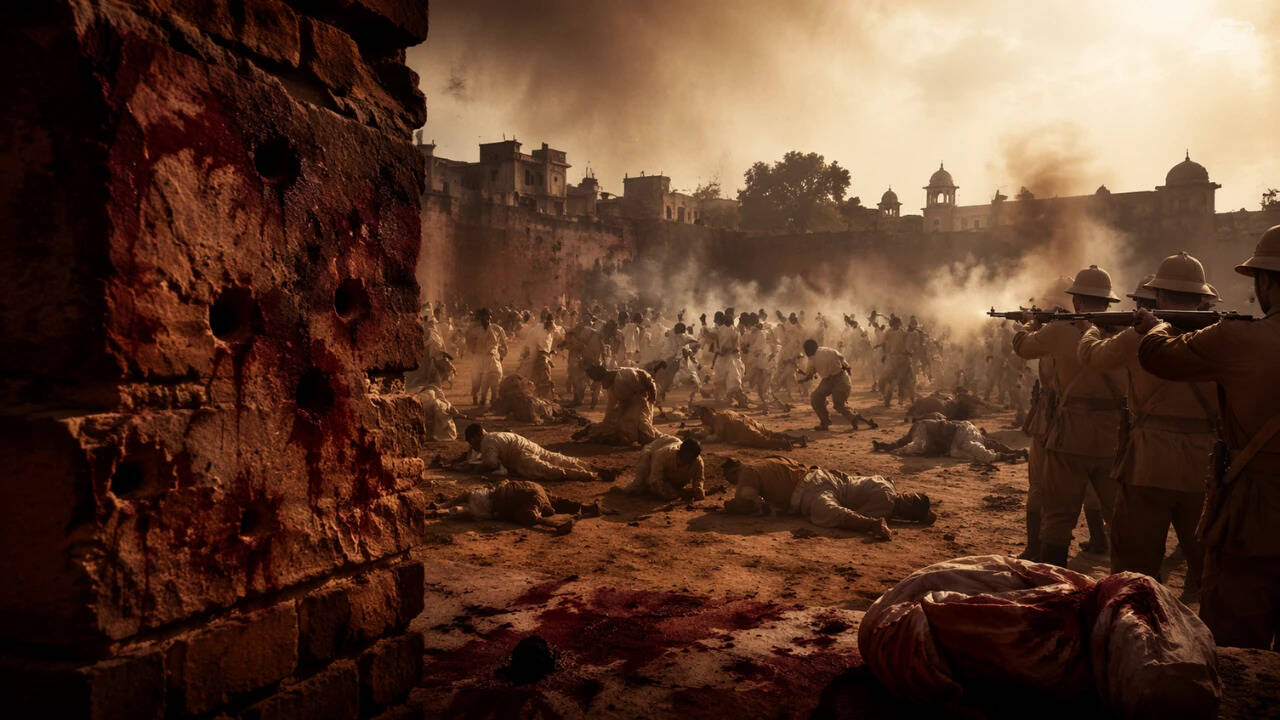
The morning of Baisakhi was deceptive. While Dyer patrolled the city, reading out a proclamation that banned all public gatherings, the message never reached the thousands of pilgrims arriving from rural Punjab. They were in the city to celebrate the harvest and visit the Golden Temple. By mid-afternoon, a crowd began to swell in Jallianwala Bagh—a seven-acre plot of uneven land surrounded by the backs of houses.According to the Hunter Commission Report, by 5 pm, nearly 15,000-20,000 people had gathered. Some were there to hear speeches protesting the Rowlatt Act, but many were families, women, children and the elderly, resting in the shade after a long journey.Eyewitness accounts suggest the crowd included men, women, and children. There were no weapons, no signs of organised rebellion, just people assembled in an open space.Few could have imagined that within minutes, the ground beneath their feet would turn into a killing field.At 5:15 pm, General Dyer entered the Bagh. He didn’t come with a megaphone to ask the crowd to disperse. He didn’t come with water cannons or lathis. He came with 50 soldiers armed with .303 Lee-Enfield rifles.He took a position on a raised mound near the main entrance. Because the entrance was so narrow, he had to leave his two armoured cars with mounted machine guns outside.
In his later testimony, Dyer admitted a chilling truth, “If I could have got the armored cars in, I would have used them.”Without a word of warning, the firing began.What followed that evening remains one of the darkest chapters in India’s colonial history — a massacre that shook the conscience of a nation and exposed the brutal face of British rule.
Ten minutes of eternity
For ten minutes, the only sounds in Amritsar were the mechanical crack-crack-crack of rifles and the primal screams of the trapped. They fired not in the air, not to disperse.Dyer ordered his men to fire specifically where the crowd was thickest. As people scrambled toward the five narrow exits, they found most of them locked or blocked by soldiers.The geography of the Bagh ensured it was a death trap. To the north, south, and west were high walls. To the east, the soldiers. People tried to scale the walls, only to be picked off like targets in a shooting gallery.In one corner of the Bagh stood a deep, open well. In a desperate, frantic bid to escape the leaden rain, hundreds of people, mothers holding their infants, young boys, and the aged, leapt into its depths. They chose the mercy of drowning over the brutality of the bullet. Today, that well is glassed over, but 107 years ago, it was filled to the brim with the bodies of the dead and the dying.The firing stopped only when the ammunition ran out. As per official records, exactly 1,650 rounds had been expended.
General Dyer then gave his final order of the day: to leave. There would be no medical aid. No ambulances. No water for the parched throats of the wounded. He enforced a curfew, meaning anyone who stepped out to look for their loved ones would be shot on sight. That night, the Bagh was a graveyard of moans under a silent moon.It was not just a massacre. It was a moment of collective trauma.
The ‘moral stature’ of a monster
What makes Jallianwala Bagh uniquely horrifying isn’t just the body count, but the “cold logic” Dyer used to justify it. The incident drew criticism even in Britain. While some defended Dyer, others were appalled. The Hunter Commission was set up to investigate the events.Though it condemned Dyer’s actions as excessive, the consequences were limited. He was relieved of duty but not formally punished. During the Hunter Commission hearings, Dyer was asked if he had taken any steps to disperse the crowd before firing.“No, at the time it did not occur to me. I had made up my mind… if they were going to give me an opportunity of using my guns, I was going to take it.”He famously stated that his intention was not just to clear the park, but to “strike terror throughout the Punjab” and to reduce the “moral stature” of the rebels. When asked why he didn’t tend to the wounded, his response was a chilling reflection of the colonial psyche, “It was not my job.”
On April 19, 1919, Dyer implemented the notorious “crawling order,” which mandated that Indians crawl on their hands and knees to pass through the street where a British missionary had been attacked.In his view, the Indians were children who needed a bloody lesson in “discipline.”His words shocked many but for Indians, they confirmed what they had already witnessed.In Britain, sections of society even hailed him as a hero. The House of Lords in London later supported him, and a fund started by the Morning Post raised £26,000 for him—the “Saviour of the Punjab.” This endorsement of mass murder was the final nail in the coffin of Indian loyalty to the Crown.
The official lie vs the human truth
The fallout of the massacre saw a desperate attempt at a colonial cover-up. The official British report, the Disorders Inquiry Committee (Hunter Commission), stated that 379 people had died.However, the Indian National Congress, which conducted its own independent inquiry led by Madan Mohan Malaviya and Motilal Nehru, estimated the death toll to be over 1,000, with more than 1,500 wounded. The names of many victims were never recorded because they were pilgrims whose families back in the villages simply never saw them return.
The aftermath: The sleeping giant awakes
Jallianwala Bagh was the catalyst that turned a petitioning freedom movement into a revolutionary one.News of the massacre spread slowly due to censorship, but when it did, it ignited outrage across the country.One of the strongest responses came from Rabindranath Tagore. The first Asian Nobel Laureate renounced his Knighthood in a scathing letter to the Viceroy, Lord Chelmsford. He wrote, “The time has come when badges of honor make our shame glaring in the incongruous context of humiliation.”
The massacre also deeply affected Mahatma Gandhi, who intensified his campaign against British rule. The man who had once recruited soldiers for the British in WWI became their most formidable foe. He launched the Non-Cooperation Movement in 1920, declaring that cooperation with a “Satanic” government was a sin.“This satanic government cannot be mended, it must be ended”, he wrote in his magazine, Young India.It marked a turning point in India’s freedom struggle, pushing many towards a more resolute demand for independence.Moderates who had once believed in gradual reform began to lose faith in British intentions.A 20-year-old young man who witnessed the carnage, Udham Singh, took a handful of the blood-soaked earth and swore revenge. He waited 21 years. In 1940, at Caxton Hall in London, he assassinated Michael O’Dwyer, the Lieutenant-Governor of Punjab who had sanctioned Dyer’s actions.
A scar that never healed
For the people of Punjab, Jallianwala Bagh became a symbol of pain and resistance. The site itself, once an ordinary garden, transformed into sacred ground.Bullet marks on the walls, the narrow entrance, and the Martyrs’ Well still stand as silent witnesses.Over time, the massacre came to represent the brutality of colonial rule in its rawest form. It exposed how power could be used without accountability and how innocent lives could be extinguished without warning.
Memory and justice
More than a century later, the question of justice still lingers.There has never been a formal, unequivocal apology from the British government. Expressions of regret have been made, but for many, they fall short of acknowledging the scale of the atrocity.In 2013, British PM David Cameron called it a “deeply shameful event,” and in 2019, Theresa May expressed “deep regret.”On the centenary of the massacre, the tragedy once again came into global focus. Leaders, historians, and descendants of victims called for a fuller recognition of what happened.But even in 2026, a full, unconditional apology remains absent from the British parliament.For India, however, Jallianwala Bagh is not just about apology. It is about remembrance.
The human stories
The exact number of deaths may never be known. What is known is the scale of human suffering. Bodies lay piled over one another. The wounded were left without medical help for hours due to curfew restrictions. Families searched for loved ones through the night.Beyond numbers and politics lie the personal stories, many lost to time.
A father who never returned home. A child separated from their family in the chaos.Villagers who came for a festival and never made it back.These are the stories that give Jallianwala Bagh its enduring emotional weight.History records the event. Memory carries the pain.
A nation remembers
Today, visitors who walk into Jallianwala Bagh do so in silence. The space feels different, heavier. The past lingers in the air.People pause by the well. They run their hands over bullet-scarred walls. They read the names etched in stone.It is not just a memorial. It is a reminder.A reminder that freedom was not given. It was fought for, often at an unimaginable cost.
The legacy
Jallianwala Bagh became a turning point that reshaped India’s freedom movement. It united people across regions and communities in shared grief and anger.It forced the world to confront the realities of colonial rule.And it left behind a legacy that continues to define India’s understanding of justice, resistance, and dignity.
Why it still matters
On April 13, 1919, the people gathered at Jallianwala Bagh had no idea they were stepping into history.They came for a meeting, for a festival, for a moment of togetherness.What they encountered instead was violence that would echo through generations.More than a century later, the screams still reverberate from the walls.As India marks 107 years since that day, the story of Jallianwala Bagh remains deeply relevant.It is a reminder of the cost of unchecked power, the fragility of civil liberties and the strength of collective memory.It also underscores how a single event can alter the course of history. The massacre did not silence India — it strengthened its resolve.Not just in the walls of Jallianwala Bagh, but in the memory of a nation that refuses to forget.
United States President Donald Trump’s threat to begin blockading the Strait of Hormuz soon after talks in Islamabad between Washington and Tehran ended without a deal is a substantial escalation in the war on Iran, analysts say.
In a social media post on Sunday, Trump said the US Navy “will begin the process of BLOCKADING any and all Ships trying to enter, or leave, the Strait of Hormuz”.
Recommended Stories
list of 3 itemsend of list
Trump’s comments have raised concerns about the status of the two-week ceasefire between the US and Iran announced last week.
Chris Featherstone, a political scientist at the University of York, told Al Jazeera that Trump’s threat to blockade the Strait of Hormuz is “absolutely an escalation” in the US and Israel’s war on Iran.
“Trump is using the threat of the blockade as a tool in the negotiations with Iran. Trump has said Iran holds no cards, and this attempt to leverage a blockade on Iran would constitute an attempt to further pressure Iran to comply with US goals in the negotiations,” he said.
What could the blockade look like? Here’s what we know:
What sort of blockade is the US threatening?
Shortly after the US and Israel began strikes on Iran on February 28, Iran essentially took control of the Strait of Hormuz, a vital chokepoint for the global energy market. Before the war began, 20 percent of the world’s oil and liquefied natural gas (LNG) supplies were shipped through the strait.
After the Pakistan-brokered ceasefire came into force on Wednesday, Tehran confirmed it would allow shipping through the Strait of Hormuz for the duration of the two-week agreement, easing a disruption that had sent global oil and gas prices soaring.
However, it has been unclear whether Iran has been collecting fees for passage during the ceasefire. During the war, only a few ships from specific countries considered friendly to Iran and those that paid tolls were granted safe passage.
After weekend talks in Pakistan ended without a deal, Trump threatened to blockade the Strait of Hormuz and also accused Iran of “extortion”. He added that the US Navy would hunt down and interdict ships in international waters that had paid Iran a toll to traverse the strait.
Later, the US military said it would block all maritime traffic entering and exiting Iranian ports, including those in the Gulf and the Gulf of Oman. The blockade is to begin at 10am Washington, DC, time (14:00 GMT) on Monday.
The US military’s Central Command (CENTCOM), which has responsibility for operations in the Middle East, told the Reuters news agency that the US military will enforce a blockade in the Gulf of Oman and the Arabian Sea east of the Strait of Hormuz and it will apply to all vessels regardless of flag.
“Any vessel entering or departing the blockaded area without authorisation is subject to interception, diversion and capture,” it said.
“The blockade will not impede neutral transit passage through the Strait of Hormuz to or from non-Iranian destinations.”
Iran’s armed forces, however, said the US “imposition of restrictions on the movement of vessels in international waters is an illegal act and amounts to piracy”.
Jason Chuah, professor of maritime law at City St George’s, University of London, and the Maritime Institute of Malaysia, told Al Jazeera that Washington’s actions wouldn’t be a classic blockade but a case of “sanctions with warships doing the bidding of President Trump”.
“It would be much more like a steady pattern of stopping, boarding and seizing vessels thought to be linked to Iran, essentially sanctions enforcement at sea,” he said.
(Al Jazeera)
Is this legal under international maritime law?
Chuah said the legality of such a blockade by the US is “tricky”.
“The United States is not a party to the United Nations Convention on the Law of the Sea, but that does not mean it is free to blockade as it sees fit,” he said. “The basic rules about freedom of navigation and passage through key waterways are widely accepted as customary international law, so they bind states whether they’ve signed the treaty or not.”
He added: “Now, if you want to call something a blockade in legal terms, you’re really in the territory of the law of armed conflict at sea – think the San Remo Manual on International Law Applicable to Armed Conflicts at Sea. That, however, assumes you’re in an actual armed conflict, that you’ve declared the blockade, that it’s effective and that it’s applied even-handedly to neutral ships. That framework sets a high lawfulness bar for blockades.”
Chuah said that even if Trump uses sanctions as a justification for Washington’s actions regarding Iranian ports, it does not fully resolve the legal issues.
“Even quite robust domestic sanctions don’t automatically give you the right under international law to stop foreign ships on the high seas without consent or backing from the United Nations Security Council. At best, sanctions may justify why you act but not always where you can act,” he said.
Will other countries join the US in the blockade?
So far, only the United Kingdom has clearly stated that it will not join Trump’s blockade of Iranian ports.
In an interview with BBC 5 Live on Monday, British Prime Minister Keir Starmer said he is focusing on reopening the Strait of Hormuz “as quickly as possible” to reduce global energy prices.
“We’re not supporting the blockade, and all of the marshalling diplomatically, politically and capability, … that’s all focused, from our point of view, on getting the strait fully open,” he said.
Meanwhile, China has urged calm on all sides.
Keeping the critical waterway safe, stable and unimpeded serves the common interests of the international community, Ministry of Foreign Affairs spokesperson Guo Jiakun said, adding that China stands ready to work with all sides to safeguard energy security and supplies.
Featherstone noted that one of the standout features of the US-Israel war on Iran has been how many US allies, such as the UK, have been unwilling to get involved.
“Given this blockade would be occurring in the midst of the negotiations over a ceasefire, risking the talks falling apart, it’s unlikely any allies would want to get involved now,” he said.
“As with other elements of this war, the [US] administration hasn’t outlined the purpose of this potential blockade. US allies will likely want to know the purpose of the blockade before they commit and risk reprisals,” he added.
How could a US blockade hurt Iran?
Even though Iran has become accustomed to US sanctions and has continued to function during the war, a blockade like this could inflict more damage on Iran’s economy.
The unified command of the Iranian armed forces has said ports in the Gulf and the Sea of Oman are “either for everyone or for no one”, state broadcaster IRIB reported.
“The Armed Forces of the Islamic Republic of Iran consider defending the legal rights of our country a natural and legal duty and, accordingly, exercising the sovereignty of the Islamic Republic of Iran in the territorial waters of our country is the natural right of the Iranian nation,” IRIB quoted Iran’s military as stating.
“Enemy-affiliated vessels” will not have the right to pass through the Strait of Hormuz while other vessels will be allowed passage, subject to regulations by Tehran, the statement said.
“The criminal US’s imposition of restrictions on the movement of vessels in international waters is an illegal act and amounts to piracy.”
If the security of the ports is threatened, no port in the region “will be safe”, the statement said.
Reporting from Doha, Qatar, Al Jazeera’s diplomatic editor James Bays said Washington’s blockade may seek to hit the Iranian economy, which has been doing well despite the war by continuing to get its oil supply through the Strait of Hormuz.
“It’s almost a race to the damage on Iran’s economy, a country that’s had sanctions since 1979, that’s very economically resilient although it has deep economic problems,” he said.
Featherstone said Iran is relatively used to the US having a stranglehold on its economy.
“Iran has experienced enormous US sanctions for decades, and for most of that time, the US sanctions regimes have prevented any nation that trades with the US from trading with Iran,” he said.
“However, after the extent of the US and Israeli strikes on Iran, this would impact their ability to rebuild,” he added.
What will happen to Iranian mines in the strait?
On Wednesday, the Islamic Revolutionary Guard Corps (IRGC) released a map of the Strait of Hormuz showing a safe route for ships to follow through the strait, avoiding mines it has laid.
The map appears to direct ships farther north towards the Iranian coast and away from the traditional route closer to the coast of Oman.
In a statement, the IRGC said all vessels must use the new map for navigation due to “the likelihood of the presence of various types of anti-ship mines in the main traffic zone”.
In his Truth Social post on Sunday about the blockade of the Strait of Hormuz, Trump said US forces will begin clearing the mines that Iran has placed in the strait and added that NATO countries like the UK would help in the process.
But on Monday, Starmer told BBC 5 Live that while the UK has “minesweeping” capacities, it would not get involved in “operational matters”.
Meanwhile, Japan said it has yet to decide whether to deploy its Self-Defence Forces for minesweeping operations in the Strait of Hormuz.
Chief Cabinet Secretary Minoru Kihara told reporters that Japan is urging progress towards a comprehensive understanding between the US and Iran.
“What is most important is that de-escalation, including securing the safety of navigation through the Strait of Hormuz, is actually achieved,” Kihara said, according to the Kyodo News agency.
‘Safe’ routes through the Strait of Hormuz have been announced by Iran’s IRGC, providing new entry and exit pathways for maritime traffic [Screengrab/Al Jazeera]
What does Trump’s blockade mean for shipping in the strait?
During the US-Israel war on Iran, Tehran has allowed a small number of ships from certain countries it considers “friendly nations”, such as India, China, Japan, Turkiye and Pakistan, to pass through the strait.
Some vessels that also paid a toll to Iran were allowed to pass. At least two tolls for ships are believed to have been paid in Chinese yuan in what appears to be a strategy to weaken the US dollar and avoid US sanctions. China, which buys 80 percent of Iran’s oil, already pays Tehran in yuan.
On Friday, Iran said it was considering a proposal to charge future tolls in its own currency, the rial.
Chuah told Al Jazeera that the effects of Washington’s blockade of Iranian ports would spill over quickly to Indian, Chinese, Japanese, Turkish and other countries’ shipping.
“You don’t have to be Iranian to get caught up in it [the blockade]. If there’s any Iranian link in the cargo, financing or ownership chain, you’re suddenly in the risk zone,” he said.
He warned that insurance premiums will likely rise, making global banks nervous. He said the global tanker market will also start to fragment into separate risk tiers.
“The moment interdictions begin, neutral shipping starts to feel a lot less neutral,” he said.
He added that the bigger picture of such a blockade is also worrying.
“If major powers start routinely stopping ships based on who they’re linked to rather than where they are or what they’re doing, that chips away at the stability of the whole system. The real issue isn’t just Iran – it’s what this does to the rules everyone else relies on,” he said.
Both Sunrisers Hyderabad and Rajasthan Royals have made quite a few changes ahead of their fixture at the Rajiv Gandhi International Stadium on Monday, April 13. As many as three debutants could take the stage tonight.
Having won the toss, Rajasthan Royals’ captain, Riyan Parag opted to bowl first. He mentioned that they have two changes. Shimron Hetmyer who has been a mainstay in the Royals outfit misses out and the 20-year-old South African star, Lhuan-dre Pretorious comes in. In addition, the uncapped pacer, Brijesh Sharma is benched for the experienced Tushar Deshpande.
For Hyderabad, they have decided to do away with their experienced pacers in Jaydev Unadkat and Harshal Patel. Instead Praful Hinge come in and Sakib Hussain, as said by Ishan Kishan at the toss. But it should be noted that both Harshal and Sakib are in the Impact Sub list, meaning that plans could change if need be.
SRH vs RR: Who is Lhuan dre Pretorious?
Lhuan dre Pretorious is regarded as one of South Africa’s most exciting young batting prospects, known for his aggressive strokeplay and confidence at the crease. A left handed wicketkeeper batter, he built his reputation as a fearless top order hitter capable of taking on bowlers early.
His rapid rise saw him break into the international setup as a teenager, where he made headlines by becoming the youngest South African to register a 150 on Test debut. Having already gained IPL exposure with Rajasthan Royals last season, he returns with growing expectations around his ability to provide explosive starts.
SRH vs RR: Who is Praful Hinge?
Praful Hinge is a Vidarbha seamer who has quietly impressed in the domestic circuit with his consistency and work rate. Primarily known for his red ball performances, the right arm pacer has shown an ability to maintain discipline across long spells while chipping in with crucial wickets.
Though still relatively new to the T20 format, he has demonstrated control and composure when given opportunities. Picked up by Sunrisers Hyderabad for Rs 30 lakh, Hinge now finds himself stepping into a higher intensity setup where his adaptability will be closely watched.
SRH vs RR: Who is Sakib Hussain?
Sakib Hussain is an emerging fast bowler from Bihar who has steadily worked his way up through domestic cricket. He first caught attention as a teenager with a standout T20 performance, showcasing his knack for picking wickets in short bursts. Since then, he has continued to develop, highlighted by a strong showing in the Ranji Trophy where he claimed a six wicket haul.
Previously part of Kolkata Knight Riders without featuring in a game, Hussain now gets another opportunity at the IPL level with Sunrisers Hyderabad, where he will be aiming to convert potential into performance.
Legendary singer Asha Bhosle died at the age of 92. The singer, one of the most acclaimed and celebrated in the Indian music industry, breathed her last at Mumbai’s Breach Candy Hospital on Sunday. Actor Zeenat Aman shared a moving tribute for the late singer on her Instagram account, recalling an incident when she met her in Kolkata. She said that despite getting hurt in an accident, the singer still showed up to perform, covered in bruises. (Also read: Asha Bhosle laid to rest with full state honours; son Anand Bhosle performs last rites as loved ones, fans gather)
Asha Bhosle passed away on Sunday due to multi-organ failure in Mumbai.
When Zeenat said about Asha Bhosle
Zeenat took to her Instagram account and wrote a long note to talk about her connection to the late singer. She began, “I am grieving the loss of a legendary talent today. Asha ji’s was a voice that captivated generations, and it was my supreme privilege that she sang so many of the film songs picturised on me. ‘Dum Maro Dum’, ‘Chura Liya’, ‘Do Lafzon Ki’, ‘Meri Soni Meri Tamanna’, ‘Khatouba’… the list goes on. One could perhaps say, Asha ji gifted me the soundtrack to my success! How very many hours I have spent with her voice in my ears and how much love I have received for lip-syncing along…”
‘She had been in an accident’
She continued, “My own association with Asha ji was long and warmly cordial. While she was always very affectionate when we met, I truly got an insight to her character about a decade ago. We were both due to appear at a musical evening in Kolkata, and when Ashaji arrived I was horrified to see that she was covered in bruises and nicks. It turned out that she had been in an accident the previous day, but was determined to keep her professional commitment! Lo and behold, she took the stage by storm and kept the giddy audience in her thrall for many hours. Mind you, Asha ji was well into her 80s by this point, and it’s safe to say I left the event both impressed and inspired. So thank you, Asha ji, for the music and the grace. Your voice shall never fade.”
On Monday, when Asha was kept at her residence for loved ones to pay tribute, she was wrapped in an Indian flag as a mark of respect. Videos show the singer receiving state honours as police wrap her casket adorned with white lilies in tricolour. The final respects continued at her residence at Lower Parel till 3 PM, after which the funeral procession proceeded to Shivaji Park crematorium in Dadar. The last rites were performed at 4 PM.
Asha died on Sunday morning due to multi-organ failure at the age of 92 at Breach Candy Hospital. She was hospitalised due to a chest infection and extreme exhaustion. She is survived by her son, Anand Bhosle, and her granddaughter, Zanai. Condolences poured in for the family after news broke on Sunday, with many expressing shock over her passing.